Implementing Work Requirements on a National Scale: What We Know from State Waiver Experience

Published: May 20, 2025

On May 18, the House Budget Committee advanced a budget reconciliation bill that includes significant changes to the Medicaid program. As anticipated, Medicaid work requirement provisions are included and preliminary estimates released by the Congressional Budget Office (CBO) show that this provision would reduce federal spending by $280 billion over ten years, nearly half of all estimated Medicaid savings in the bill.

If enacted, all states would be required to condition initial and continued Medicaid expansion eligibility on meeting work requirements and to exempt certain individuals from the requirements. KFF analysis shows that 92% of Medicaid adults are either working (64%) or have circumstances that may qualify them for an exemption. In previous analysis, CBO has found that a Medicaid work requirement would not have any meaningful impact on the number of Medicaid enrollees working.

States would have flexibility in some areas, including determining how many months to “look back” to verify compliance at application and renewal and whether to require more frequent verifications in between renewal periods. States would be encouraged to use available information (through “data matching”) to verify individuals’ compliance with the requirements. The provisions raise many operational and implementation questions, particularly considering the experience of Arkansas and Georgia with implementing work requirements through waivers:

  • Enrollee Awareness / Outreach. Requiring all states to impose Medicaid work requirements would require extensive outreach and education in every state. In Arkansas, lack of awareness and confusion about work requirements (imposed in 2018) were common. Despite robust outreach efforts, many enrollees in Arkansas were not successfully contacted. The state noted in a recent waiver request that its complex 2018 work requirement policies caused “confusion and uncertainty,” resulting in people not knowing whether they were subject to the requirements.
  • Exemptions. While proponents of work requirements describe them as applying to “able-bodied” adults, some people with disabilities (or serious or complex medical conditions) will be subject to the requirements, as they don’t meet criteria to receive SSI but qualify for Medicaid through the ACA expansion. Similar to the proposed federal legislation, Arkansas adopted safeguards including “medically frail” and “good cause” exemptions and “reasonable accommodations” to try to protect coverage of people with disabilities or other challenges; however, many enrollees struggled to access these safeguards and reported difficulties navigating the process to qualify for an exemption.
  • Data Matching. The bill raises questions about the capacity and ability of state systems (and staff) to accurately “data match” (e.g., using payroll and other data) the work or exemption status of millions of individuals. How effective states are with data matching will likely impact how many individuals will need to submit proof of work hours or exemption status, and ultimately the number of individuals at risk of losing coverage. States with older or weaker systems or less integration may be less effective. But even with effective systems, not all work can be verified through existing data sources. More informal work (like “gig work”) may lack traditional employment records or pay stubs and may not be reflected in state data systems. Many people with low incomes may have inconsistent hours or income, which could create additional hurdles. Arkansas successfully data matched about two thirds of enrollees, exempting them from reporting work hours or exemption status. Among those who had to actively report, about 70% did not obtain an exemption or report compliance, ultimately resulting in over 18,000 people losing coverage.  Arkansas recently highlighted (in its new waiver request) that limitations with “data matching” led to some individuals with medical conditions or disabilities that prevented them from working to “fall through the cracks” when the state implemented its work policies in 2018.
  • Verification at Application. Only one state (Georgia) has experience conditioning Medicaid eligibility at application on meeting work requirements. Over 18 months since Georgia launched its “Pathways” program, the state has only enrolled 7,000 individuals—far short of the state’s own estimated enrollment of 25,000 adults in the first year and 64,000 over 5 years. The state’s interim waiver evaluation revealed that work requirements had a significant impact on lowering program enrollment, particularly for adults ages 50-64.
  • Administrative Costs. Implementing work requirements involves complex systems changes (e.g., developing or adapting eligibility and enrollment systems), enrollee outreach and education, and staff training. According to GAO, federal and state administrative costs to implement Medicaid work requirements are sizeable. Recent investigative reporting found Georgia’s “Pathways” program has cost the federal and state government more than $86 million (as of the end of 2024), with three-quarters spent on consulting fees. GAO recently confirmed it is examining the costs of Georgia’s Pathway program, with a report expected this fall.
  • Targeted Work Supports. Research has shown that access to affordable health insurance and care promotes individuals’ ability to obtain and maintain employment, helping people manage chronic conditions and supporting people’s ability to work jobs that may be physically demanding. While most Medicaid adults are already working, some states have launched initiatives to support employment for Medicaid enrollees, without making employment a condition for eligibility. Montana created “HELP-Link,” a free voluntary workforce support program for eligible expansion adults (funded only with state dollars), which also helps participants address barriers to work including transportation and child care. A study of Montana’s Medicaid expansion, including HELP-Link, found an increase of four to six percentage points in labor force participation among low-income, non-disabled adults ages 18-64 following expansion, compared to higher-income non-Medicaid Montanans and to the same population in other states. While federal Medicaid funds cannot be used for work supports (e.g., to help individuals overcome barriers to work like child care and transportation), CBO has found that targeted work supports can help boost employment. Unlike welfare reform, the Medicaid work requirement in the reconciliation bill does not provide supports like child care, transportation, or job training.

The bill seeks to implement work requirements on a national scale, including requiring states to verify individuals’ monthly work status and implement a long list of exemptions—policies that proved challenging for Arkansas and Georgia to operationalize and led to 18,000 people losing coverage in Arkansas, without increasing employment. CBO’s hefty estimated federal savings from the proposed national Medicaid work requirements signals an expectation that the draft policies under consideration would result in significant coverage loss and prevent many people from enrolling.

Marketplace Enrollees with Unpredictable Incomes Could Face Bigger Penalties Under House Reconciliation Bill Provision

Published: May 19, 2025

New legislative proposals released this week could potentially expose Marketplace enrollees to higher costs if their income at the end of the year differs from what they originally estimated. Most Marketplace enrollees (92% in 2025) receive a tax credit to help pay their premiums, and the vast majority of those receive the credit in advance to lower their monthly payments, rather than when they file their taxes.

To receive the Advance Premium Tax Credit (APTC), Marketplace enrollees must estimate their income for the upcoming year. If, by the time they file their taxes over a year later, their income is different, they must reconcile the tax credit they received with what they were eligible for. This could result in receiving additional assistance or having to repay some or all of the credit back to the federal government. The ACA currently caps how much low and middle-income enrollees must repay. Currently, individuals with incomes between 100% and 400% of the federal poverty level (FPL) have a capped repayment amount, regardless of how much their income changes. Repayment limits range from $375 to $1,625 for an individual, on a sliding scale based on income. Premium tax credits are only available for people whose income is above the poverty level.

At least three current policy issues could affect Marketplace enrollees with volatile incomes:

  1. A recent Trump Administration proposed rule suggests there could be a widescale practice of people with incomes below poverty inflating their expected incomes to exceed the poverty level to gain eligibility for premium tax credits. In response, the proposed rule would require some applicants to submit additional documentation to support their expectation that their income will exceed poverty in the coming year. Additionally, individuals who do not file their taxes and reconcile their premium tax credits would become ineligible for these tax credits in future years. These potential changes could reduce federal spending on tax credits and address concerns about fraud, but could also pose challenges and reduce coverage for enrollees with less predictable income.
  2. Additionally, the House Reconciliation bill would codify the proposed rule described above. It would similarly require certain Marketplace applicants to present documentation verifying expected changes in their income before they can enroll in subsidized coverage. In addition it would eliminate repayment caps on the premium tax credit, meaning enrollees would have to repay the full amount of their excess premium tax credit.
  3. Later this year, enhanced premium tax credits are set to expire unless Congress extends them, meaning that tax credits will be lower for all subsidized enrollees and people with incomes over four times poverty will no longer be eligible for premium tax credits. Because the original ACA did not include any repayment caps for people with incomes over four times poverty, even a small increase in a household’s income putting them over that threshold would mean they have to pay back the entire premium tax credit.

To explore the challenges families may face in predicting their annual income, this analysis uses data from the 2023 Survey of Income and Program Participation (SIPP). It compares each family’s estimated annual income — based on the first three months of reported monthly income — to their actual income at the end of the year.

Key Findings

  • Many Americans experience high income volatility, in particular potential ACA Marketplace shoppers. One in five people aged 19-64 were in families that saw more than a 20% difference in their income, split approximately equally between people who ended up with higher income and those who ended up with lower income.
  • People with less stable work are more likely to have high income volatility. For example, among people aged 19-64, families in which someone lost a job were more likely to have a 20% swing in their family income.
  • For those near poverty, predicting annual income may be especially difficult. Many people with incomes just above poverty at the beginning of the year end up below poverty by the end of the year, and conversely many who start out with incomes below poverty end up with incomes above poverty. More than half (61%) of people with starting incomes below poverty end the year with an income more than 20% different than their income during the first three months of the year.

Income Volatility Among ACA Marketplace Shoppers:

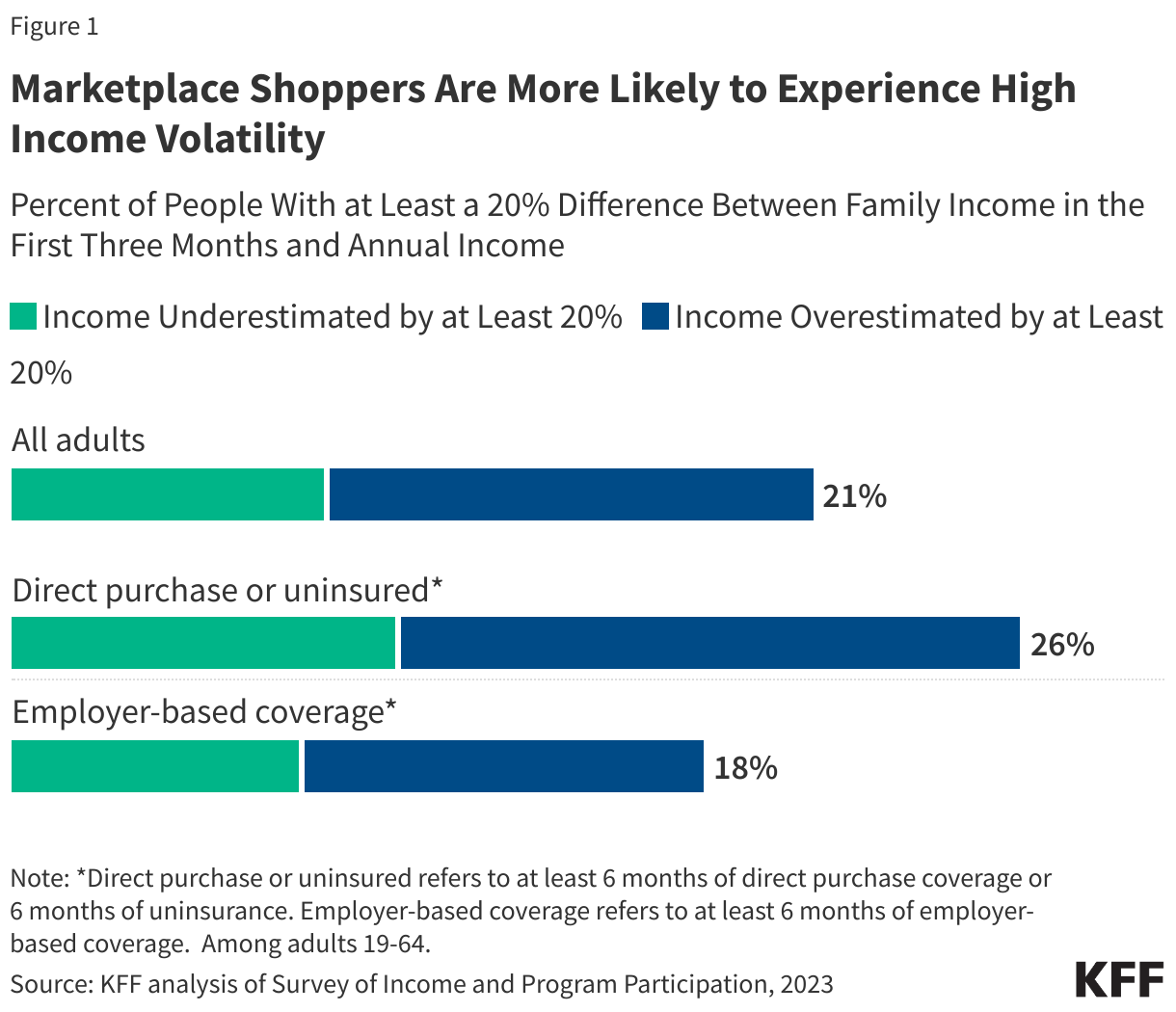
Overall, one in five people (21%) aged 19-64 were in families that had high levels of income volatility, defined here as a difference of at least 20% between the estimated annual income based on the first three months of the year and the families’ actual income. People potentially shopping on the Marketplaces—those that had at least 6 months of non-group coverage or uninsurance—experience higher levels of income volatility than others. In 2023, more than one in four (26%) adults aged 19–64 with non-group coverage or who were uninsured for at least six months had high income volatility—higher than 18% among those with employer-based coverage.

Having an uninsured adult family member is associated with high income volatility: 29% people aged 19 to 64 in a family with at least one person who was uninsured for at least one month had high income volatility, compared to 19% for people in a family without an uninsured member during the year. In 2023, 9.5% of the population under age 65 were uninsured, the majority (73.7%) in families with at least one full-time worker in the family. Unaffordable coverage is the most cited reason for being uninsured.

Repayment caps currently in effect protect Marketplace enrollees with high levels of income volatility from large tax bills for excess premium tax credits. For example, consider a 56-year-old individual in Boulder County, CO, who estimated their annual income would be $40,000 (266% of the federal poverty level for 2025), but ultimately earned $55,000 (365% FPL). They would have received $7,123 in advance premium tax credits but were only ultimately eligible for $4,774—an excess of $2,349. Under current rules, their repayment would be capped at $1,625, limiting the amount they owe to about 3% of their income. If the repayment caps were eliminated, however, they would be responsible for repaying $2,349.

Marketplace Shoppers Are More Likely to Experience High Income Volatility

Income Volatility Among Families near Poverty:

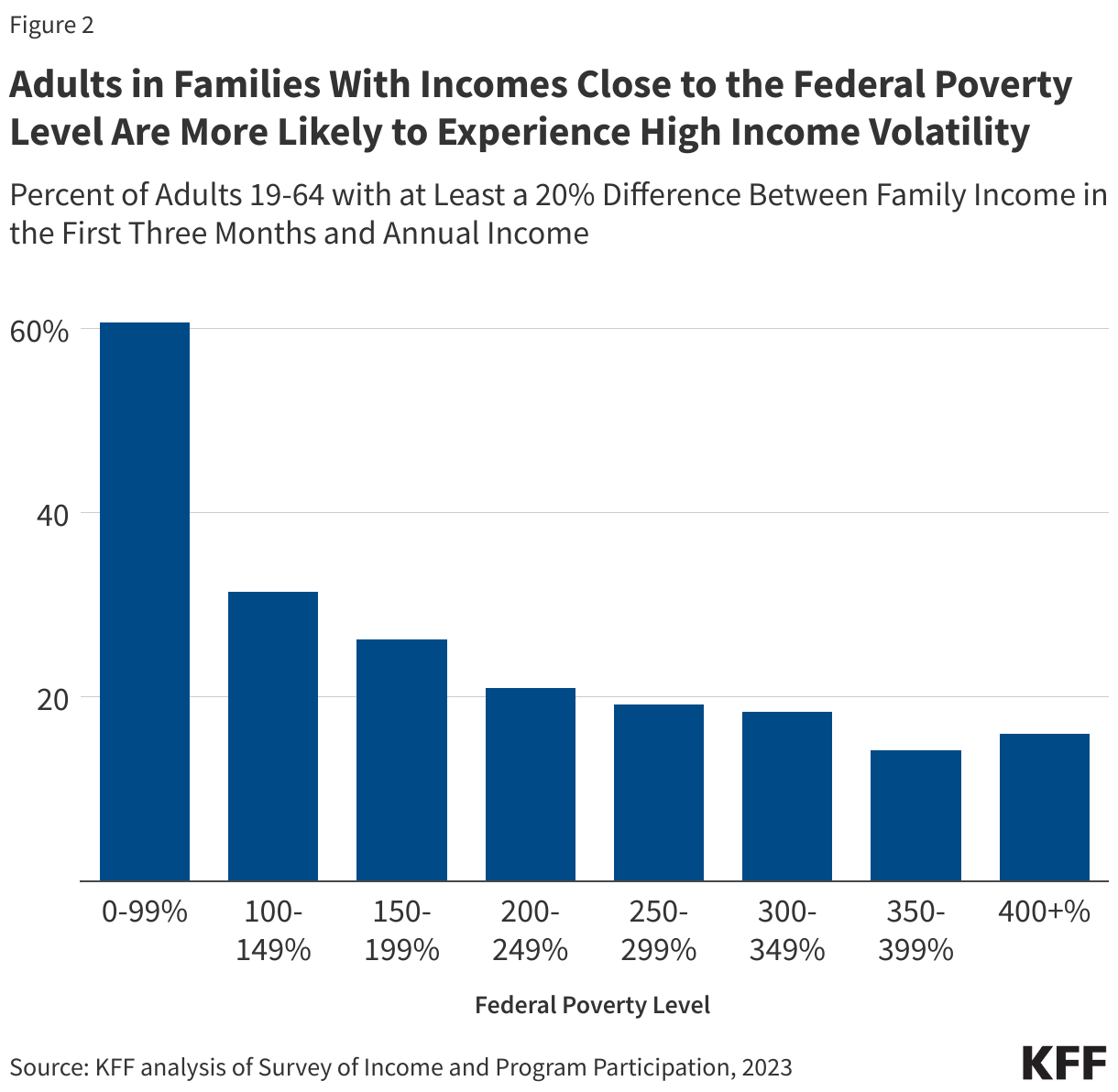
People with family incomes close to the threshold for qualifying for a premium tax credit (100%) have particularly volatile incomes. Among adults aged 19–64 in families with incomes between 100% and 150% of FPL during the first three months of the year, nearly one-in-ten ended the year with incomes below the poverty line. Conversely, many people with incomes below poverty during the first three months of the year finish the year with an income above the poverty line (30%). These people may lose out on potential subsidized coverage if they had assumed that their income would be below poverty.

The high share of people near poverty moving across the poverty threshold reflects the significant income volatility many low-income families experience. 3 in 5 adults living in poverty (61%) and nearly one in three (31%) of those with incomes between 100% and 150% of the federal poverty level (FPL), saw their annual income differ by more than 20% from what they earned in the first three months of the year. Under current IRS rules, households that fall below the poverty line are not required to repay the full premium tax credit they received, as long as their income estimate was made in good faith.

Adults in Families With Incomes Close to the Federal Poverty Level Are More Likely to Experience High Income Volatility

Common Causes of Income Volatility:

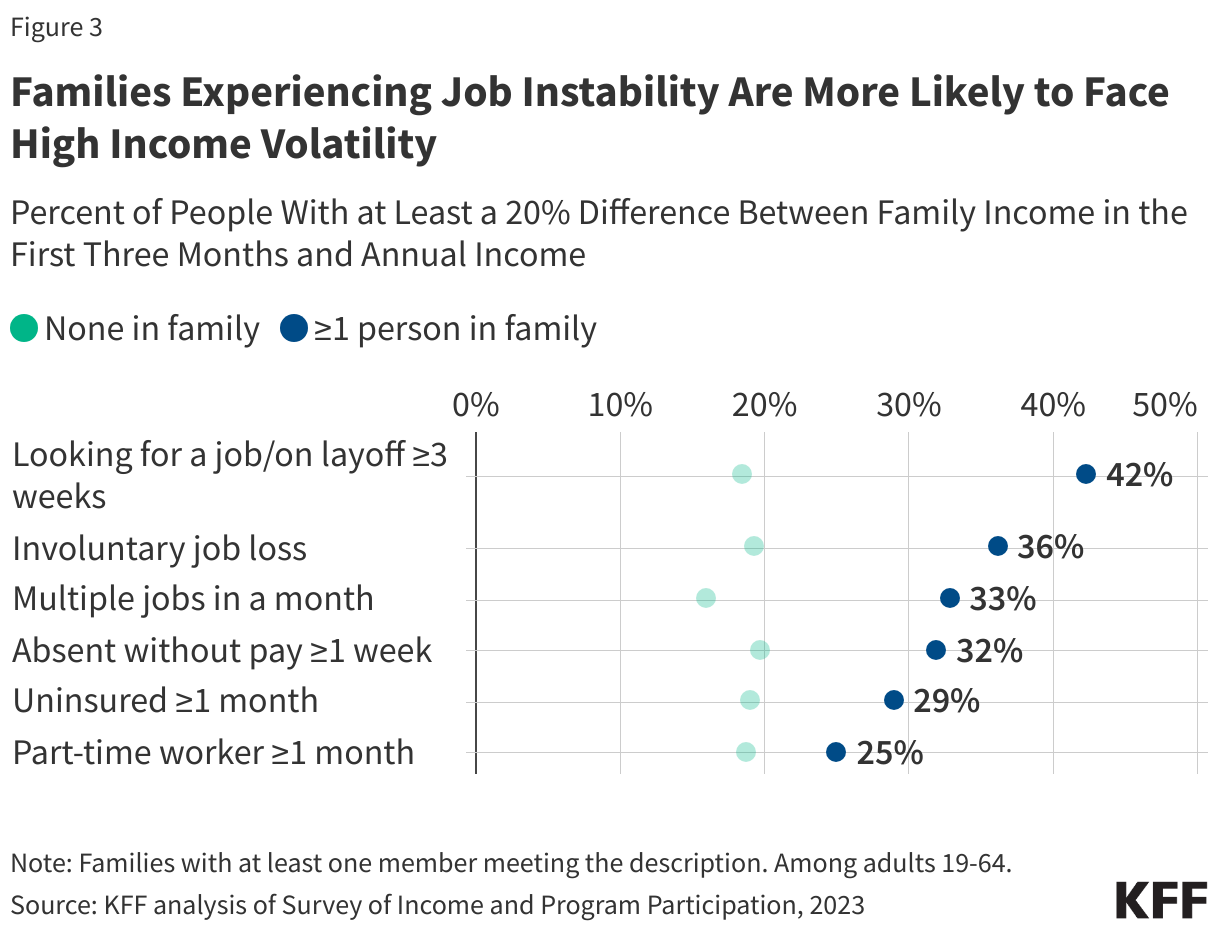
A family’s poverty level can change for many reasons, including shifts in household income or changes in family structure, such as birth, marriage, or divorce. In some cases, such as among seasonal workers, families may anticipate uneven income over the year. In others, these changes are unexpected. Families with an adult that was laid off during the year were more likely to have high income variability. Among adults aged 19 to 64, 42% of those in families where someone was looking for work or had been laid off for at least three weeks during the year experienced high-income volatility, compared to 18% of those in families without such disruptions. Other factors associated with high income volatility among non-elderly adults included:

  • Involuntary job loss for someone in the family during the year (36% vs 19%)
  • Someone in the family having multiple jobs during the year (33% vs 16%)
  • Having someone in the family who was absent without pay from a job (32% vs 20%) for at least one week during the year.

Unpredictable annual income is often tied to the type of work someone does and how they are paid. For example, workers who are paid hourly but have irregular shifts may find it difficult to estimate their total earnings over the course of a year. Similarly, those in contract or gig economy jobs often don’t know in advance how many hours they will be able to work. Certain occupations are particularly associated with high income volatility: 38% of families with a packager, 32% with a landscaper or childcare worker, and 30% with a truck driver, food preparation worker, or security guard experienced high levels of income volatility. Additionally, 25% of households with a part-time worker had high income volatility.

Families Experiencing Job Instability Are More Likely to Face High Income Volatility

Families Whose Incomes Exceeds the APTC Eligibility Thresholds

In 2022, the Inflation Reduction Act increased premium tax credits for all subsidized enrollees and expanded eligibility for premium tax credits to individuals in families with annual incomes above 400% of the FPL for the first time, but this provision is set to expire after 2025. Unless extended, individuals who see income increases beyond 400% of poverty, may become ineligible for the tax credits that subsidized their coverage. Fifteen percent of adults aged 19 to 64 with incomes between 350% and 450% of FPL experienced high income volatility. Among families with incomes between 100% and 400% of FPL after the first three months of the year, 9% of adults ended the year above 400% of FPL, while 2% ended the year below the poverty line.

More than 1 in 10 Adults With Estimated Incomes Between 100% and 400% of Poverty End the Year Outside That Range

Without premium tax credits, many potential Marketplace shoppers may not have the financial resources to enroll in coverage. For others, the risk of misestimating their income—and facing large repayment obligations—may discourage them from applying. Current rules cap the amount that households with incomes between 100% and 400% of the federal poverty level (FPL) must repay if they receive excess premium tax credits. However, proposals included in the Ways and Means reconciliation bill would eliminate these repayment caps, potentially exposing households with volatile incomes to significant tax burdens.

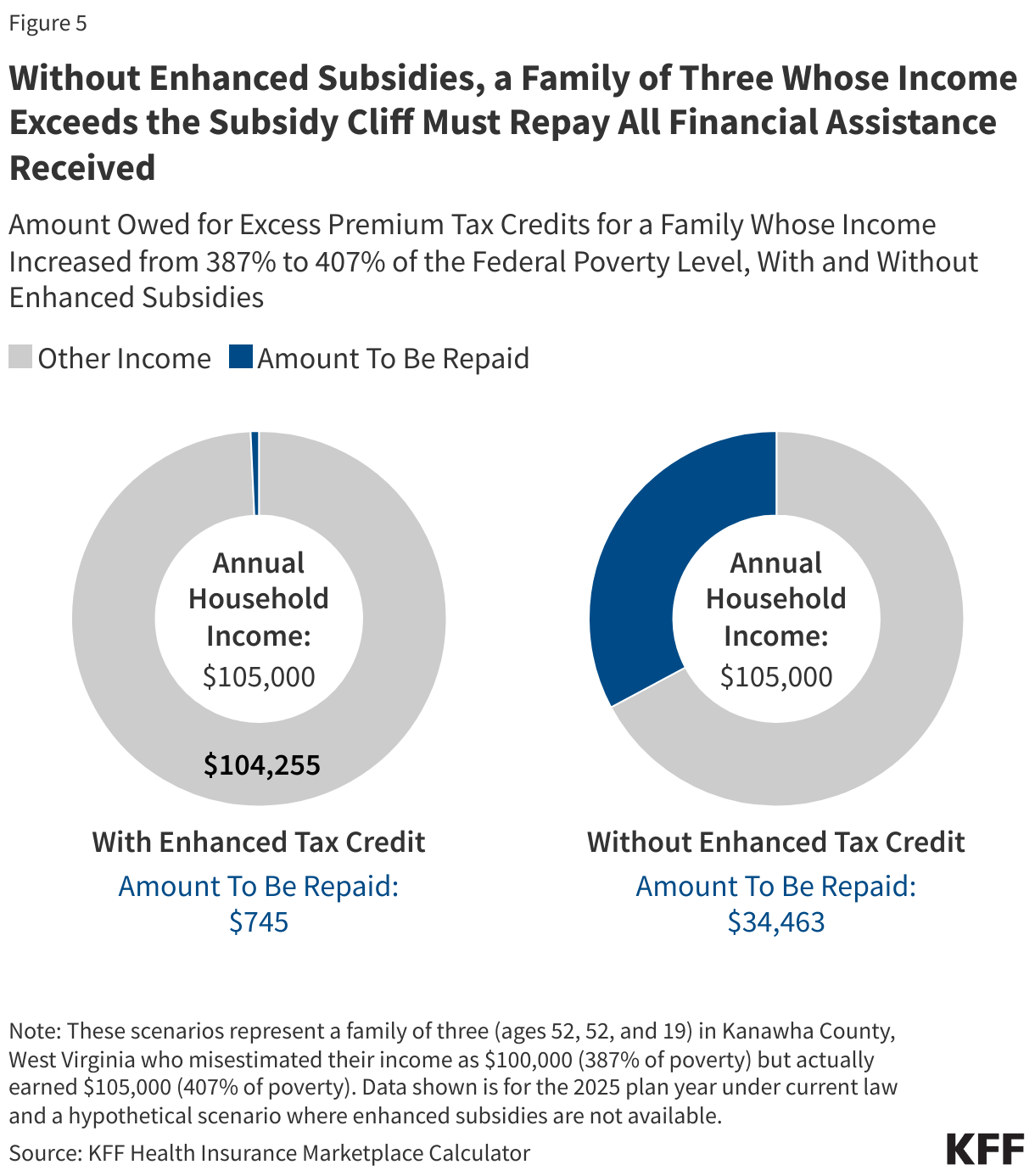
Although repayment caps do not apply to households with incomes above 400% of FPL ($60,240 for an individual in 2025), the enhanced premium tax credits currently limit the amount such enrollees may need to pay for ACA Marketplace coverage. That is, even if their income exceeds expectations, they may remain eligible for some level of premium subsidy. For example, consider a family of three (aged 52, 52, and 19) in Kanawha County, WV, who estimated their income at $100,000 (387% FPL) but ultimately earned $105,000 (407% FPL). With the enhanced subsidies, they would receive a $34,463 premium tax credit but would have been eligible for $33,718—a difference of $745. They would be required to repay only the $745 when filing taxes—less than 1% of their annual income. If the enhanced subsidies expire, however, this family’s income above 400% of poverty would disqualify them for any tax credits . By falling off the subsidy cliff, they would be required to repay the entire premium tax credit of $34,463, or about 33% of their annual income.

Without Enhanced Subsidies, a Family of Three Whose Income Exceeds the Subsidy Cliff Must Repay All Financial Assistance Received

Methods

The Survey of Income and Program Participation (SIPP) reports the incomes and other characteristics for households and household members for each month during the year. The annual income used in this analysis approximates the modified adjusted gross income used to determine eligibility for premium tax credits. Total personal income during the reference year was summed up for each member of the family, except from the following sources:

  • Income received from means-tested transfer programs (including SSI, TANF, GA, and the Veterans Pension program)
  • Amount received from VA benefit payments for a service-connected disability, other VA payments, G.I. Bill benefits, or VA Insurance proceeds
  • Amount received in workers’ compensation, employer disability payments, or payments from a sickness, accident, or disability insurance policy
  • Amount received in survivor benefits from Veterans’ compensation or pension, income from a paid-up life insurance, Black Lung Benefits, workers’ compensation, or other survivor income
  • Amount of child support or alimony payments received

The estimated annual income of each family, based on its reported household income during the first three months of the year, was compared to the actual annual income of the family at the end of the year to see how well the early year income predicted the annual amount. Families where the annual income predicted by the first three months was either 20 percent below or above the actual annual amount were considered to have “high income volatility.”

Families were defined by SIPP and included in the analysis if they had data for 12 months, had at least one adult whose annual earned income exceeded $1000, and whose reference person was at least 15 years old; adults within a family were also required to have 12 months of data. The income to poverty ratio (%FPL) was calculated using the 2022 federal poverty guidelines and the estimated annual income from the first three months of the year.

10 Things to Know About U.S. Funding for Global Health

Published: May 15, 2025

Note: The funding data in this resource represents Congressionally appropriated amounts, but not actual obligations or disbursements, determinations that are made by the Executive Branch. As such, it does not reflect recent changes that have been implemented by the Trump administration as a result of its foreign aid review. For more information, see KFF’s Overview of President Trump’s Executive Actions on Global Health. This resource was originally published on February 4, 2025, and will be updated as needed to reflect additional developments.

Introduction

U.S. engagement in global health is multifaceted and includes a broad range of activities, one of which is financially supporting health efforts worldwide. As the largest donor to global health in the world, the U.S. supports bilateral efforts, directly funding implementation of global health activities in partner countries, and multilateral health institutions (i.e., international organizations that pool support from multiple donors for one or more areas of global health). Here are 10 things to know about U.S. funding for global health:

1. U.S. global health funding totals approximately $12 billion but only represents less than 1% of the federal budget.

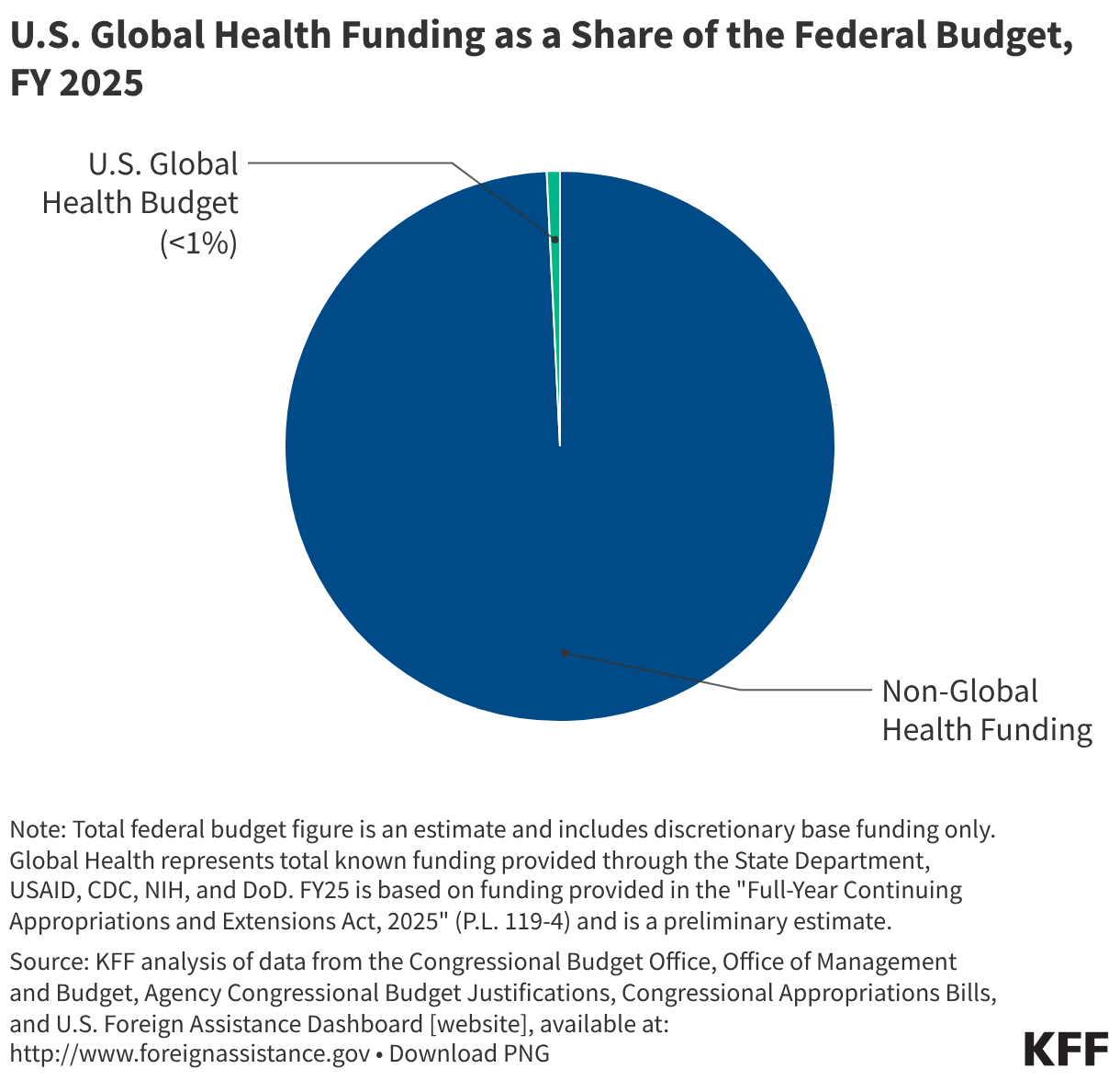
U.S. global health funding, most of which is part of the broader U.S. foreign aid budget that includes funding for development, economic, and humanitarian assistance programs, totaled $12.4 billion (through regular appropriations) in FY 2025 but accounted for less than 1% of the federal budget, which totaled approximately $1.6 trillion (see Figure 1). In some years, on top of regular appropriations, global health funding is also provided through emergency supplemental funding to address disease outbreaks, but this funding generally makes up a small piece of the federal budget pie.

Figure 1

U.S. Global Health Funding as a Share of the Federal Budget, FY 2025 (Pie Chart)

2. U.S. funding for global health is complex!

Funding supports multiple program areas at several agencies and departments for both bilateral and multilateral efforts and is provided both annually and in emergency situations.

Program Areas

The U.S. government supports global health efforts aimed at addressing numerous areas, funding programs to address HIV (through PEPFAR, the President’s Emergency Plan for AIDS Relief), tuberculosis (TB), malaria (through PMI, the President’s Malaria Initiative), maternal and child health (MCH), nutrition, family planning and reproductive health (FP/RH), neglected tropical disease (NTDs),  global health security, as well as the vulnerable children program and other public health threats, which include programs for cross-cutting health activities like the Health Reserve Fund and the global health workforce through the Global Health Workforce Initiative (see more detail on program areas below).

Agencies/Departments

The U.S. supports these efforts via several agencies, departments, and accounts. Agencies and departments that receive funding for global health include the U.S. Department of State (State), U.S. Agency for International Development (USAID), Centers for Disease Control and Prevention (CDC), National Institutes of Health (NIH), and the Department of Defense (DoD). In addition, funding is provided through several accounts at State and USAID including: the Global Health Programs (GHP) account at State and USAID, Contributions to International Organizations (CIO) and International Organizations and Programs (IO&P) accounts at State, and the Assistance for Europe, Eurasia and Central Asia (AEECA), Development Assistance (DA), Economic Support Fund (ESF) and International Disaster Assistance (IDA) accounts at USAID (see more detail on agencies, departments, and accounts below).

Bilateral and Multilateral Funding

Funding is provided bilaterally, directly supporting the implementation of global health activities in almost 80 partner countries that span six regions across the globe (see more detail on bilateral efforts below), and multilaterally, providing support to international organizations that pool funding from multiple donors for one or more areas of global health. Multilateral health institutions the U.S. supports through financial contributions include the Global Fund to Fight AIDS, Tuberculosis and Malaria (Global Fund), Gavi the Vaccine Alliance (Gavi), United Nations Children’s Fund (UNICEF), World Health Organization (WHO), Pan American Health Organization (PAHO), Joint United Nations Programme on HIV/AIDS (UNAIDS), United Nations Population Fund (UNFPA), TB Drug Global Drug Facility, and the Pandemic Fund (see more detail on these multilateral health efforts below).

Regular Annual and Emergency Supplemental Appropriations

Finally, U.S. funding for global health is comprised of funding provided through the regular appropriations process, which takes place annually (see more detail on the federal budget process below), and through emergency supplemental funding for disease outbreaks, which often takes place during public health emergencies.

3. U.S. global health funding is determined annually through a multi-step process that involves the President and Congress.

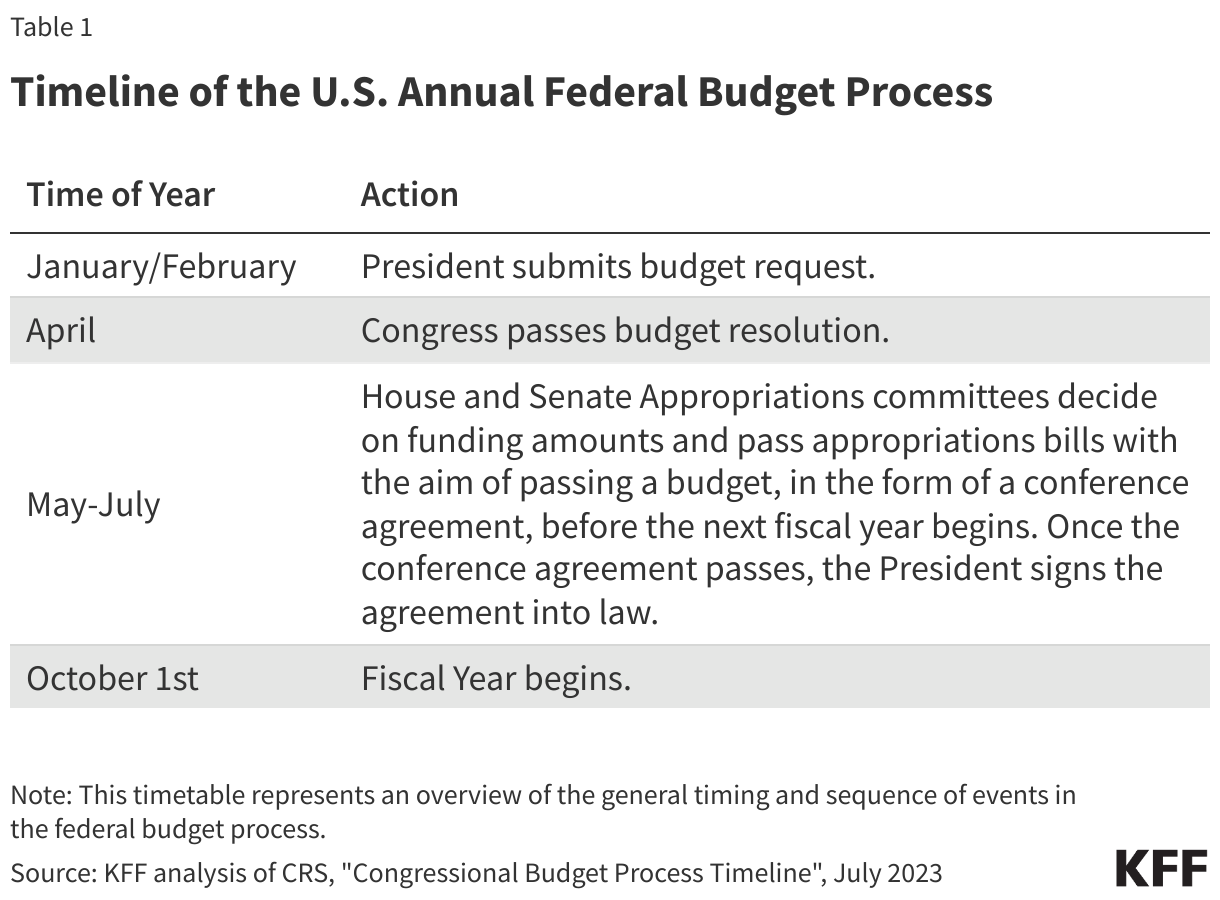
U.S. funding for global health is discretionary1  and determined annually through the U.S. federal budget process, which is initiated by the President and is ultimately set by Congress (see Table 1), which specifies most, but not all, funding (about 99% each year) by agency and program area in annual appropriations bills. Funding for some global health activities that are not specified by Congress are determined at the agency level (more details in the following section).

Timeline of the U.S. Annual Federal Budget Process

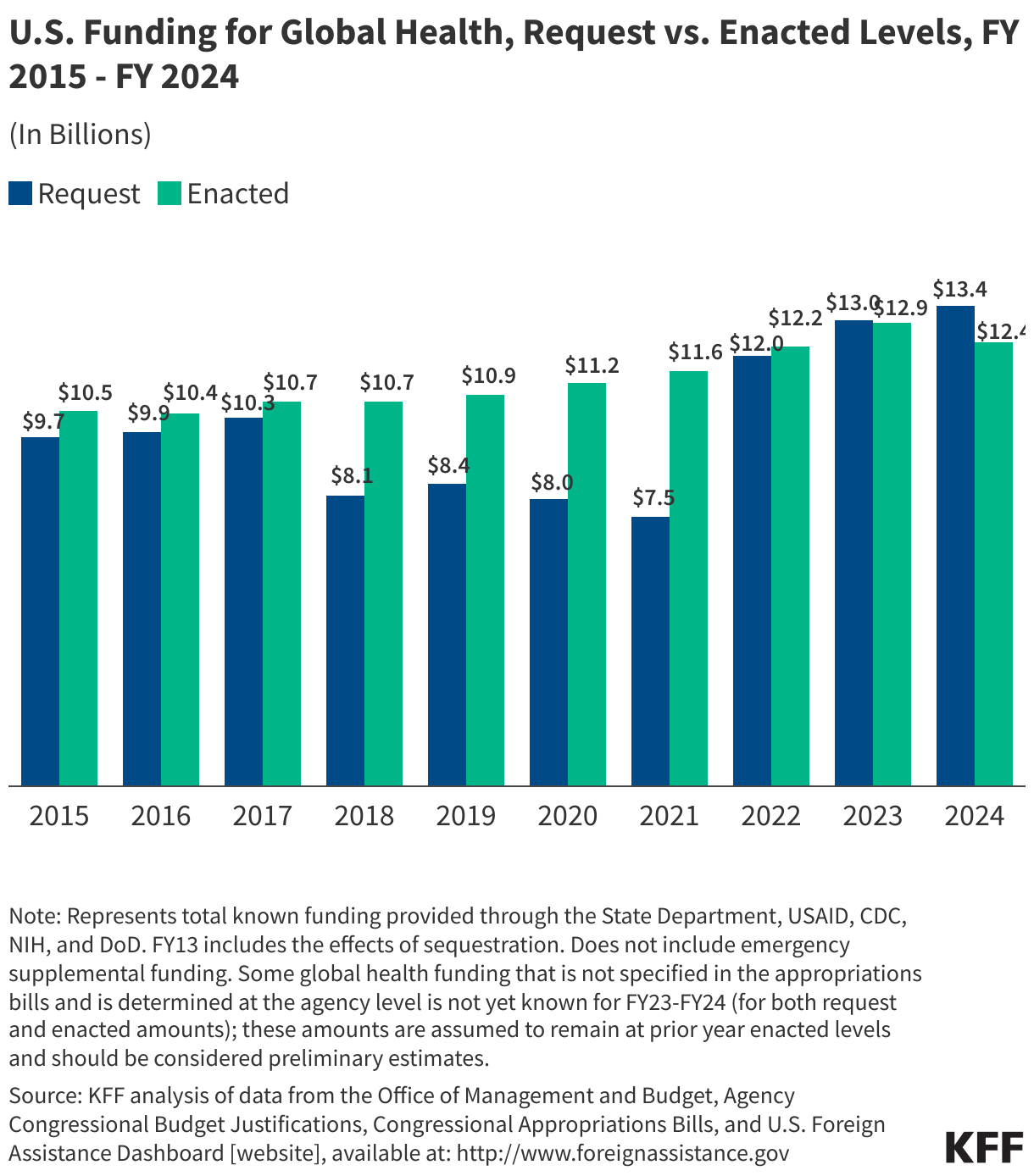
The President’s request often differs from Congress’ enacted levels; in some years, the difference between the request and enacted levels is negligible, while in others, it is significant. For instance, from FY 2018 – FY 2021, the President’s request was significantly lower than what Congress ultimately approved (see Figure 2). Until recently (FY 2023 and FY 2024), Congress provided higher funding levels than the President’s request over the past decade.

Figure 2

U.S. Funding for Global Health, Request vs. Enacted Levels, FY 2015 - FY 2024

4. The majority of U.S. funding for global health is channeled through the Department of State and U.S. Agency for International Development.

The U.S. government funds and carries out its global health efforts through multiple agencies and departments, although most funding is provided by Congress to the Department of State (State) (52%), which advances U.S. objectives and interests worldwide through developing and implementing the President’s foreign policy; followed by the U.S. Agency for International Development (USAID) (33%), which supports long-term and broad-based economic growth in countries and advances U.S. foreign policy objectives; National Institutes of Health (NIH) (7%), which conducts biomedical and behavioral science research and is one of the world’s leading research entities on global health; and Centers for Disease Control and Prevention (CDC) (6%), which focuses on disease control and prevention and health promotion. In addition, a small portion (2.5%) of global health funding is channeled through the Department of Defense (DoD) (see Figure 3).

Figure 3
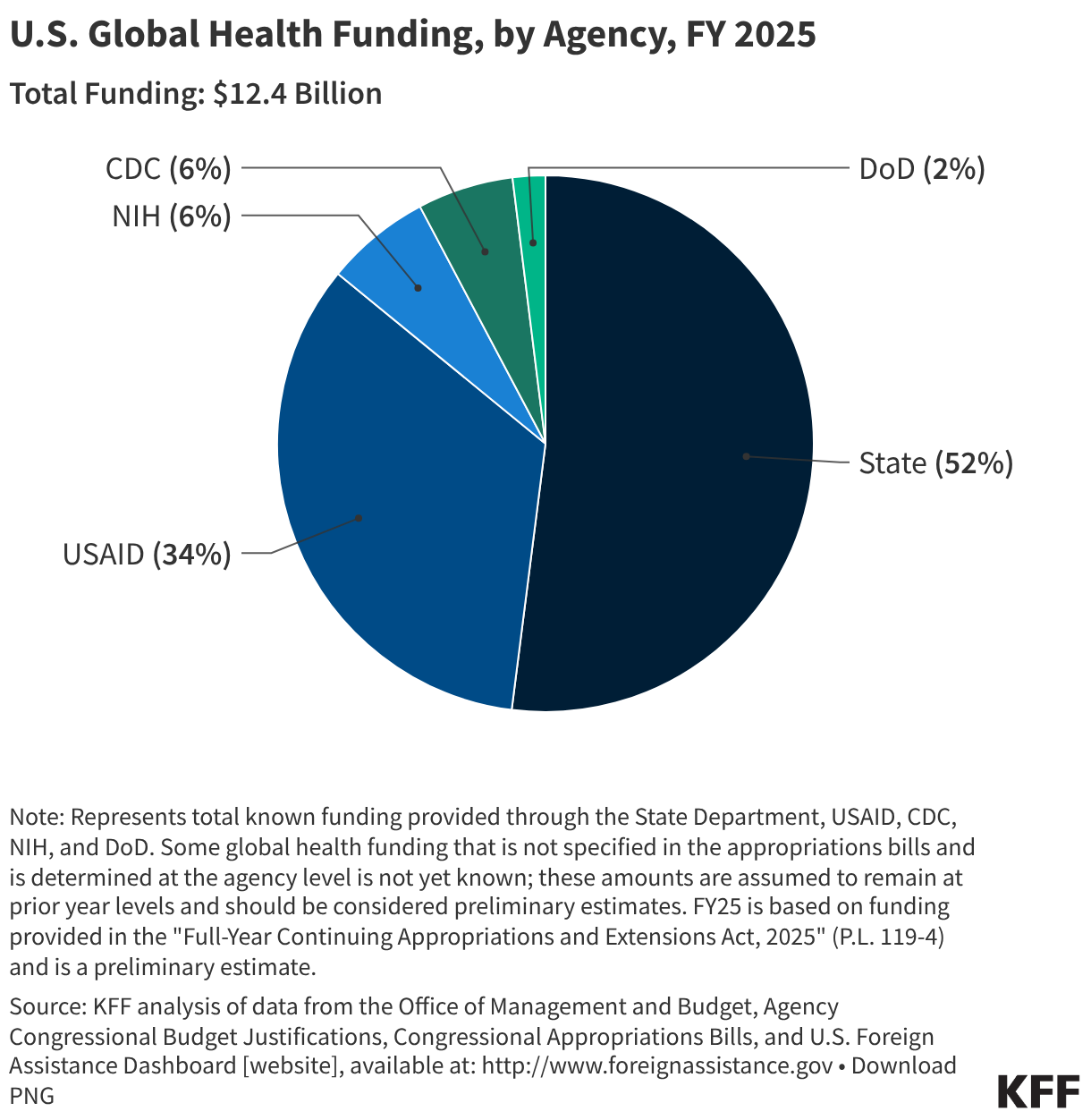
U.S. Global Health Funding, by Agency, FY 2025 (Pie Chart)

As mentioned earlier, most global health funding amounts are specified by Congress in annual appropriations bills, though some amounts are determined at the agency-level (see Table 2). State and USAID funding is provided in the State, Foreign Operations and Related Programs (SFOPs) appropriations bill; CDC and NIH funding is provided in the Labor, Health and Human Services (Labor HHS) appropriations bill, and DoD funding is provided in the Department of Defense appropriations bills. Within these bills, Congress specifies funding levels for global health program areas (e.g. HIV, TB, MCH, GHS, etc.) under the Global Health Programs (GHP), Contributions to International Organizations (CIO) and International Organizations and Programs (IO&P) accounts at USAID and State as well as for global health programs at CDC. Congress does not specify global health funding amounts under some accounts at USAID2  and some amounts3  at NIH and DoD, and instead provides this authority to the administration.
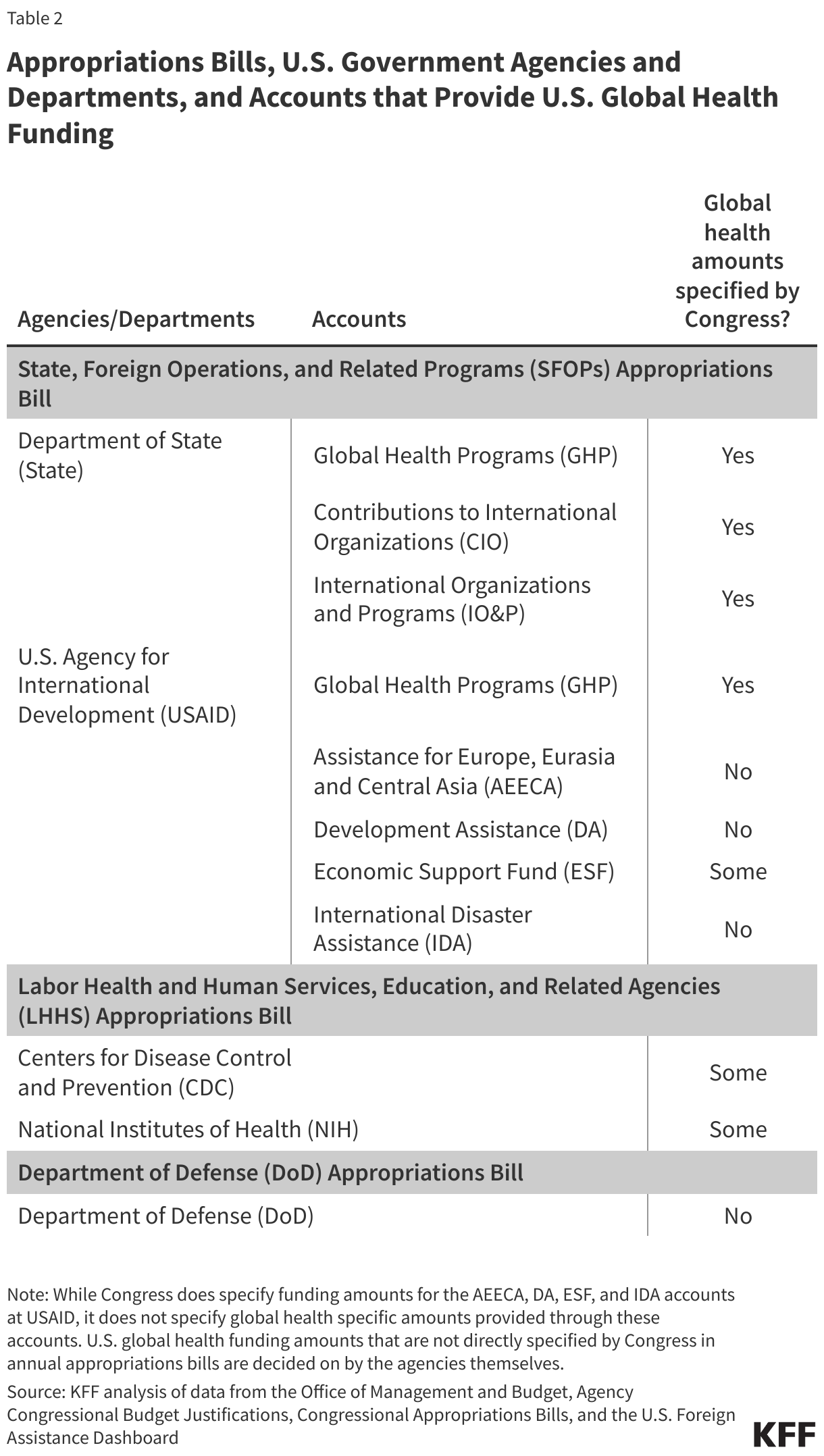
Appropriations Bills, U.S. Government Agencies and Departments, and Accounts that Provide U.S. Global Health Funding

5. Global health funding has been mostly flat for more than a decade with some exceptions, including increases in some years to respond to outbreaks and for some program areas.

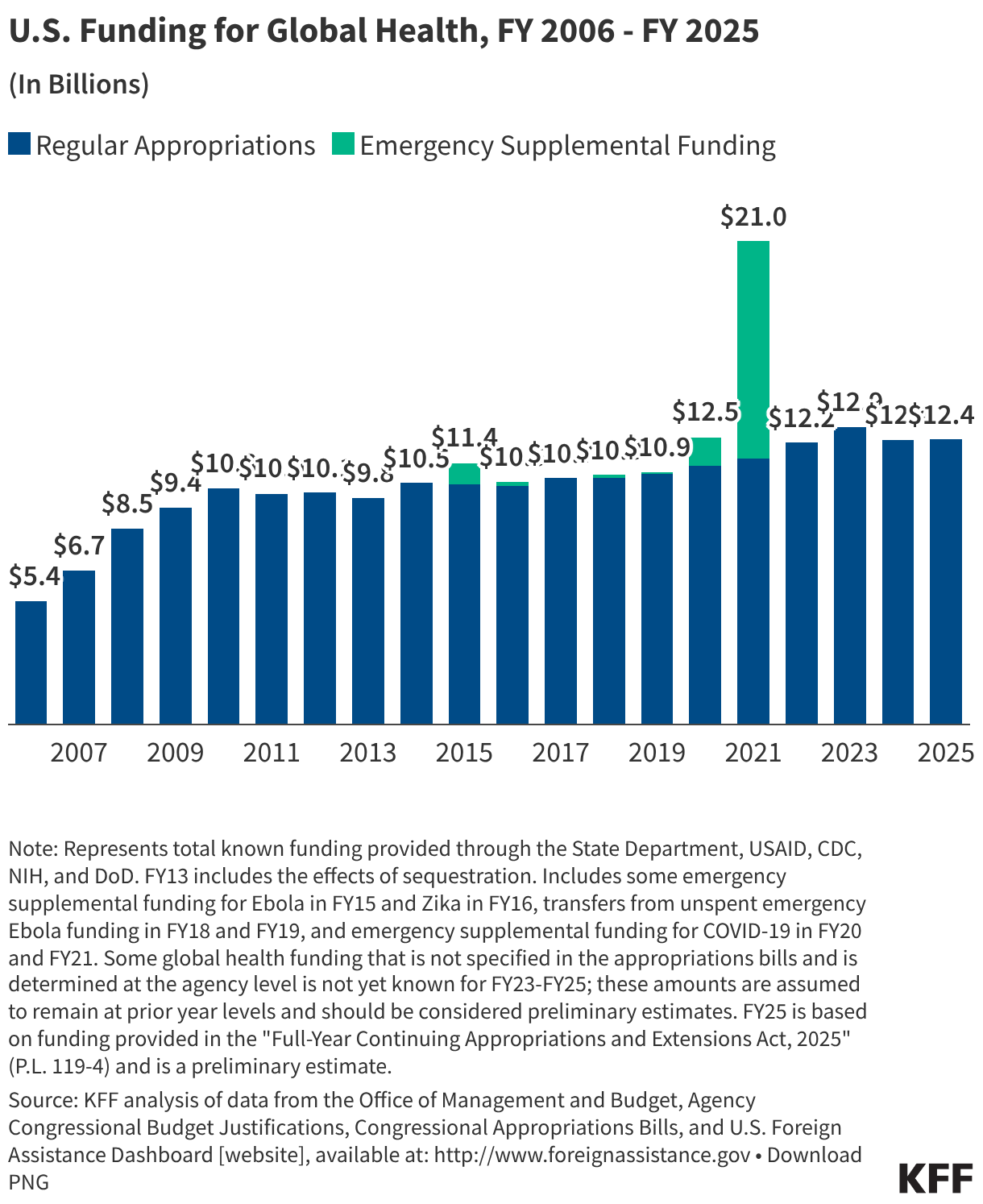
The U.S. investment in global health grew significantly in the early 2000s, in large part because of the creation of major global health organizations and initiatives like the Global Fund in 2001 and PEPFAR in 2003. However, funding has been relatively flat since 2010, with spikes in some years due to the U.S. emergency response to disease outbreaks. U.S. global health funding is comprised of funding provided through the regular appropriations process, with additional funding provided some years through emergency supplemental funding for disease outbreaks, such as Ebola (FY 2015), Zika (FY 2017), and COVID-19 (FY 2020-2021). All additional funding provided through emergency supplemental appropriations must be approved by Congress, and this funding is on top of any regularly appropriated funding. Overall, global health funding reached its highest level to date in FY 2021, largely due to the U.S. global response to the COVID-19 pandemic (that year, emergency funding represented 45% of U.S. global health funding and regular appropriations accounted for 55%); without emergency funding, the high point was in FY 2023 ($12.9 billion). In FY 2025, global health funding was provided through a continuing resolution (CR) which maintained the prior year (FY 2024) amount of $12.4 billion (see Figure 4).

Figure 4

U.S. Funding for Global Health, FY 2006 - FY 2025 (Stacked column chart)

6. Bilateral HIV accounts for the largest share (nearly 50% through regular appropriations) of U.S. global health funding.

The majority of U.S. global health funding is provided for specific areas including bilateral HIV or PEPFAR, tuberculosis, malaria or PMI, maternal and child health, nutrition, family planning and reproductive health, neglected tropical disease, and global health security (see Table 3), with some additional funding provided for other efforts including contributions to the World Health Organization (WHO) and Pan American Health Organization (PAHO).4 

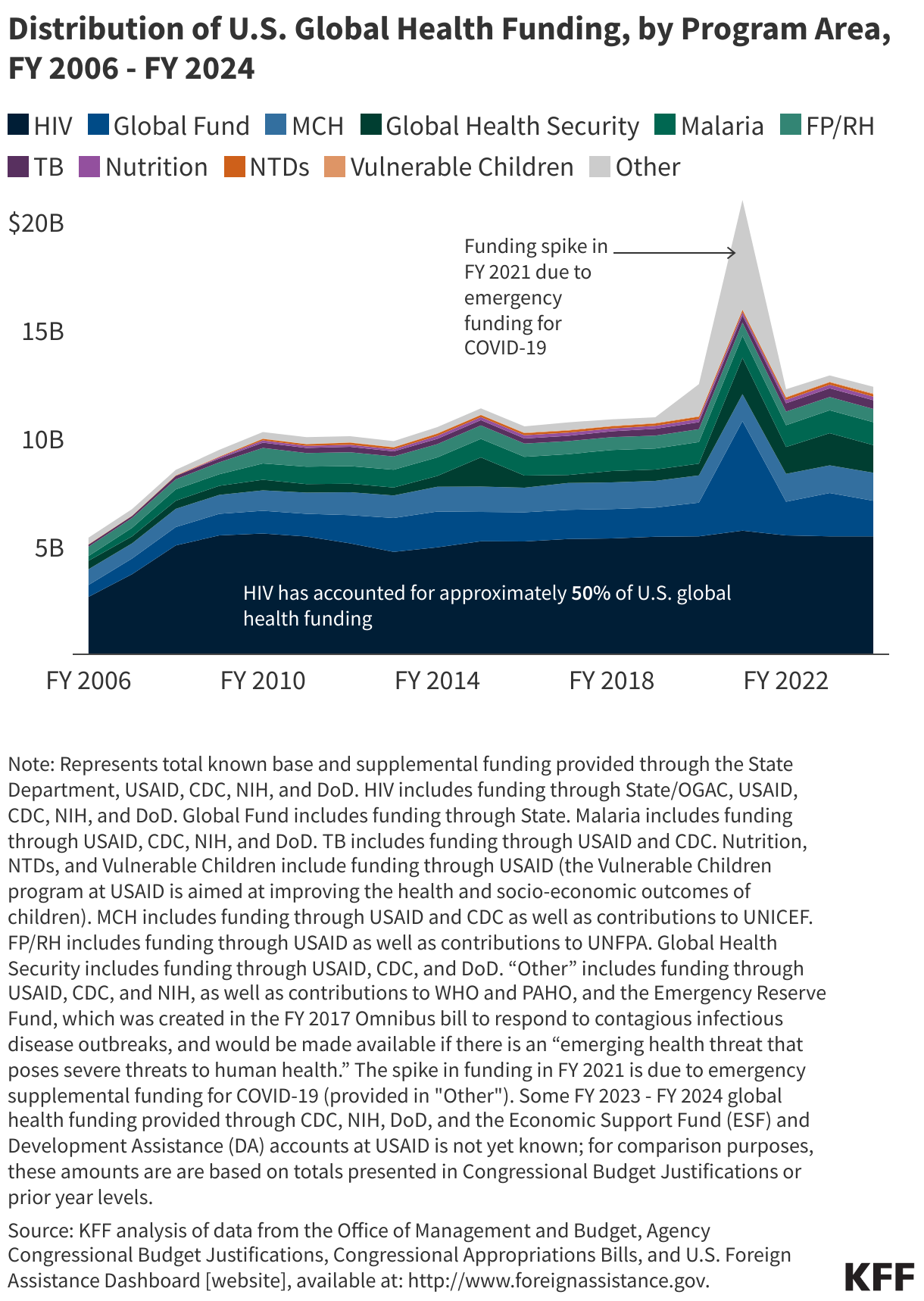
Since FY 2006, most U.S. global health funding over time through regular appropriations has been directed to bilateral HIV programs, accounting for approximately 50% of U.S. global health funding in most years (see Figure 5). The Global Fund (learn more about the Global Fund in the multilateral discussion below) accounted for the next largest share over the period, followed by maternal and child health and malaria. More recently, the U.S. has emphasized global health security more, with funding for these efforts increasing considerably during the COVID-19 pandemic and afterward. Consistent with this trend, in FY 2025, the latest year of data available, most funding was provided to HIV efforts ($5.4 billion or 44%), followed by the Global Fund ($1.7 billion or 13%) and maternal and child health and global health security (both $1.3 billion or 10%) (see Figure 6). These shares may differ during times of emergency, when significant funds have been provided on a one-time basis to address emerging outbreaks.5 
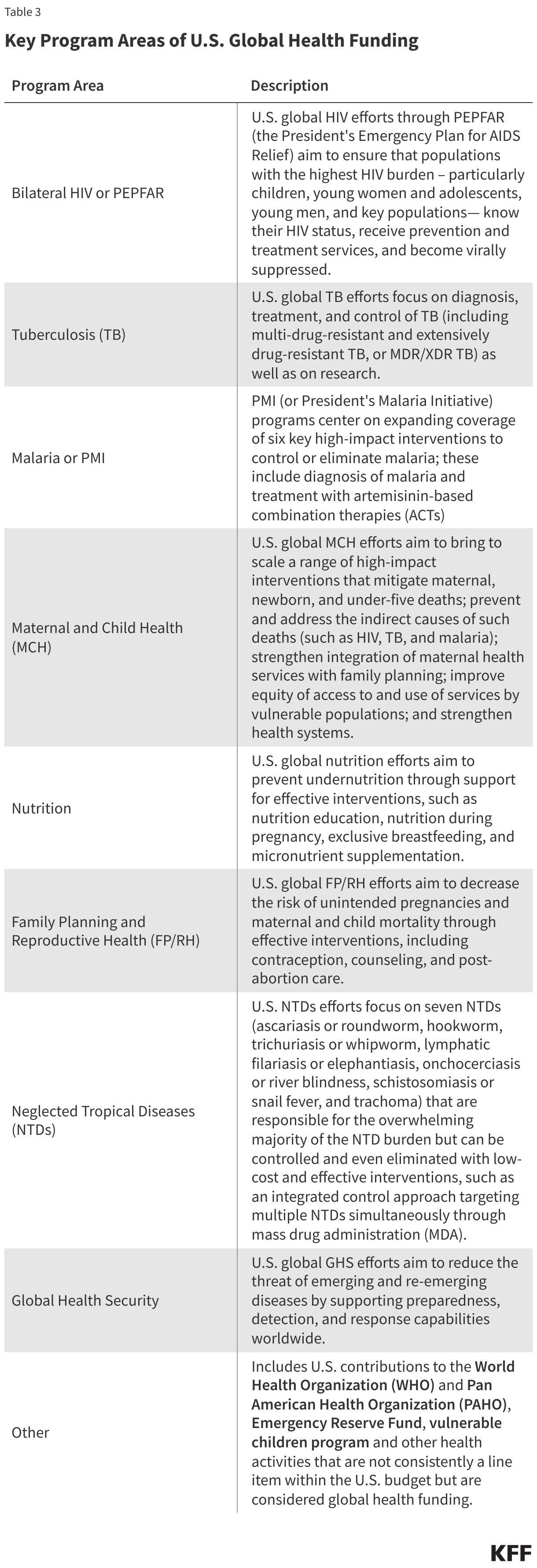
Key Program Areas of U.S. Global Health Funding

Figure 5

Distribution of U.S. Global Health Funding, by Program Area, FY 2006 - FY 2025

Figure 6

U.S. Global Health Funding (in millions), By Program Area, FY 2025

7. Most U.S. global health funding (approximately 80%) is for bilateral programs reaching almost 80 countries in six regions.

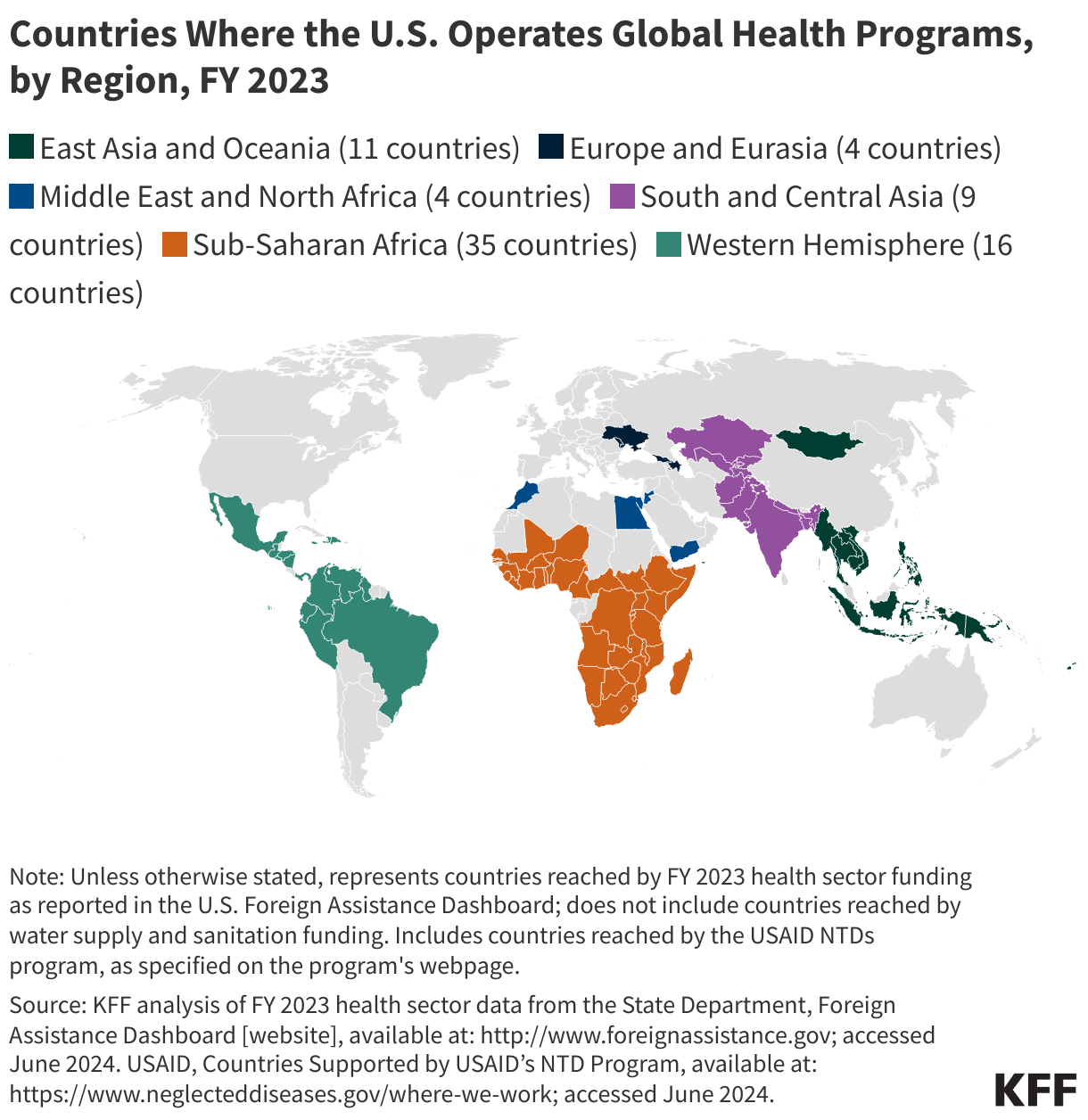
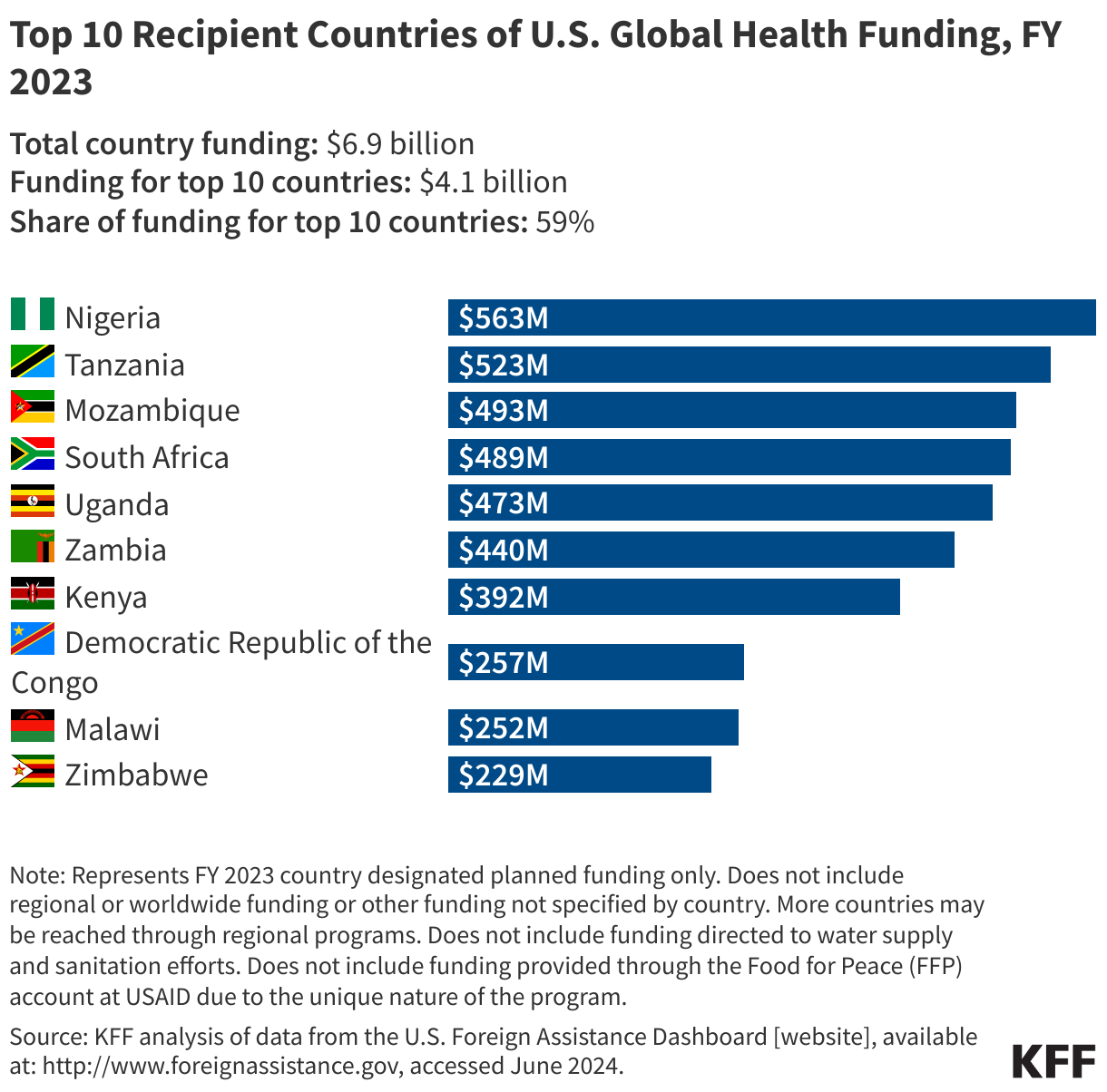
In FY 2023, the most recent year country-specific amounts are available, 81% of U.S. global health funding was provided bilaterally (country-to-country, directly funding implementation of global health activities in partner countries) spanning six regions (see Figure 7). While this funding was directed to almost 80 countries, with additional countries receiving support through U.S. regional programs and contributions to multilateral organizations, ten countries accounted for almost 60% of U.S. bilateral support for global health (Figure 8).

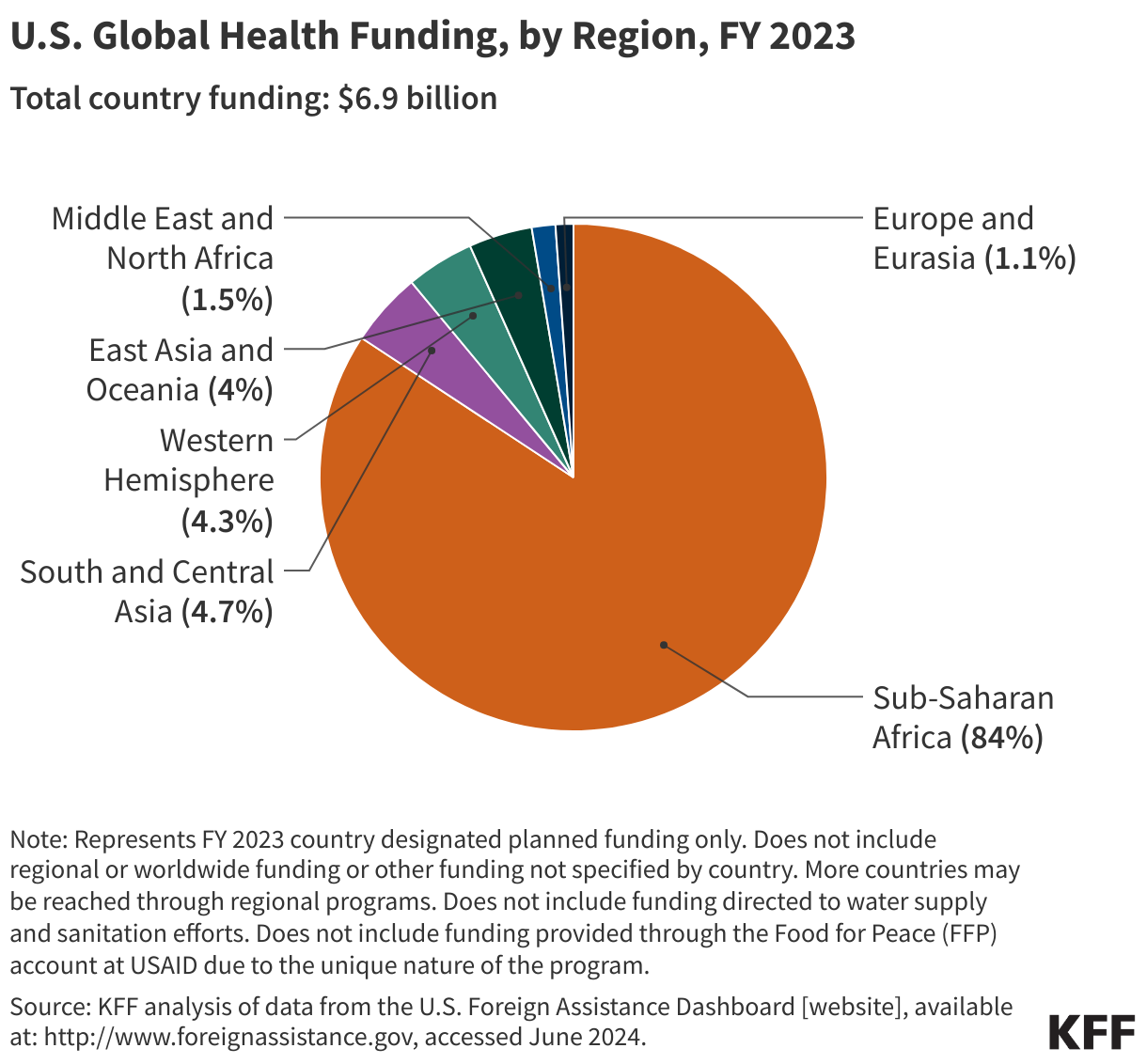
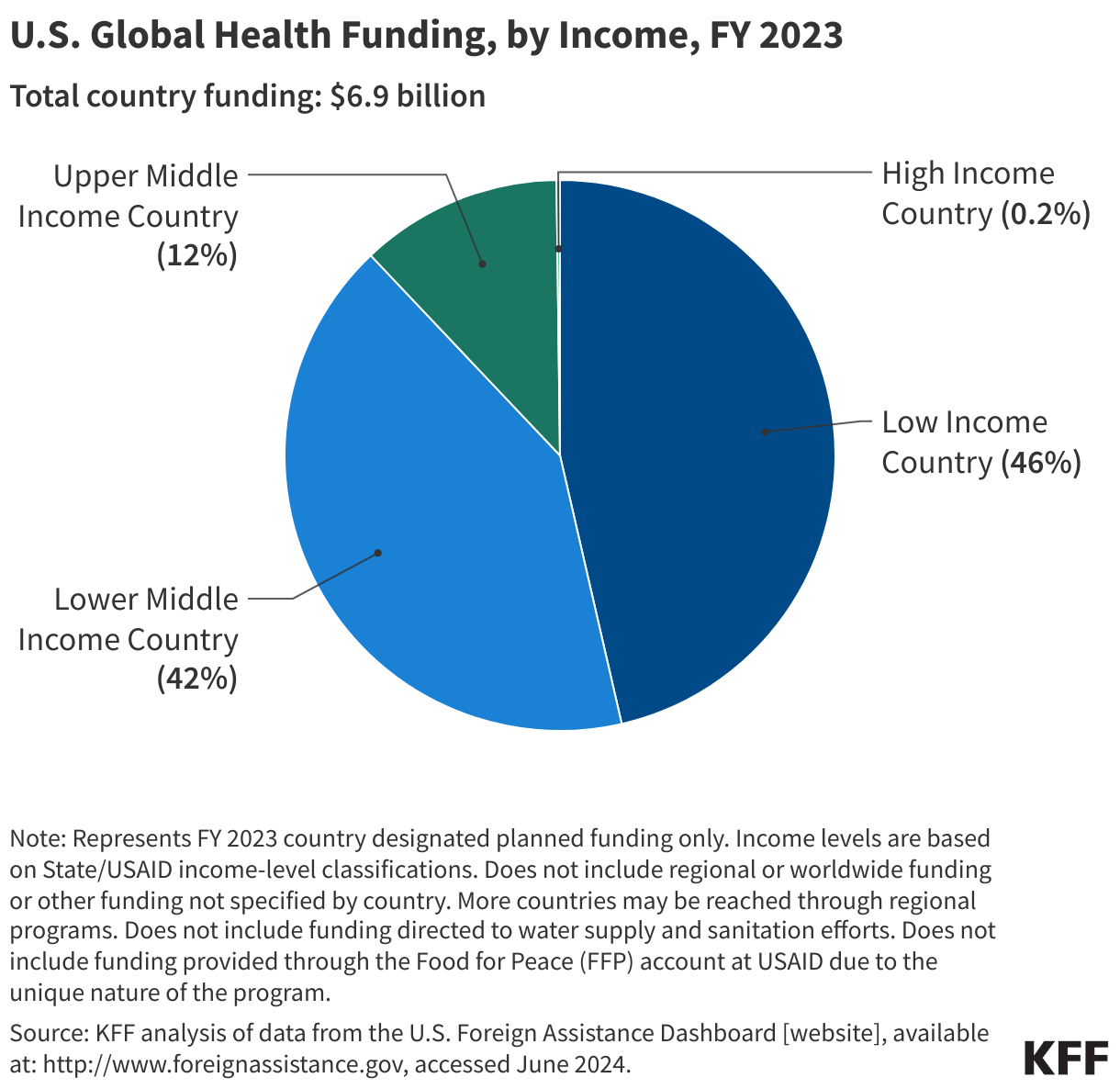
Looking by region, most U.S. bilateral support for global health programs in FY 2023 was provided in sub-Saharan Africa (84%), followed by South and Centra Asia (5%) and the Western Hemisphere (4%) (Figure 9). Looking by income, the majority (88%) of U.S. funding for global health was provided to low and lower-middle-income countries (46% and 42% respectively) (see Figure 10).

Figure 7

Countries Where the U.S. Operates Global Health Programs, by Region, FY 2023

Figure 8

Top 10 Recipient Countries of U.S. Global Health Funding, FY 2023

Figure 9

U.S. Global Health Funding, by Region, FY 2023

Figure 10

U.S. Global Health Funding, by Income, FY 2023

8. Approximately a fifth of U.S. global health funding supports multilateral organizations.

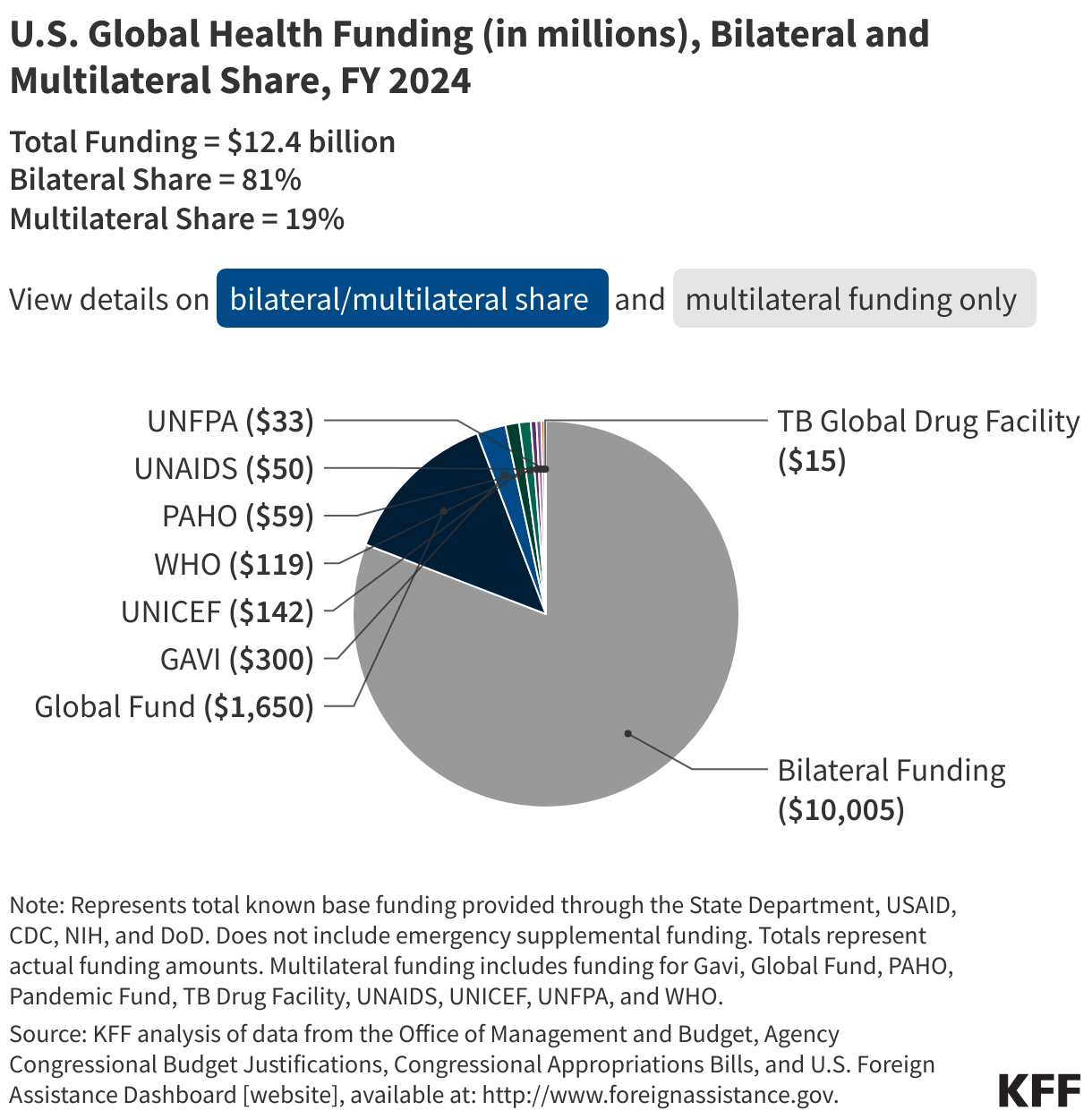
While the majority of U.S. funding for global health is provided bilaterally (81%), the U.S. has a long history of engagement with multilateral health organizations, which pool support from multiple countries for one or more areas of global health, and provides about a fifth (19%) of its global health funding to support6  these institutions (see Figure 10). Multilateral initiatives complement U.S. bilateral global health efforts, helping make progress toward U.S. goals in various program areas, and in some cases, multilateral support allows the U.S. to reach a larger number of countries.

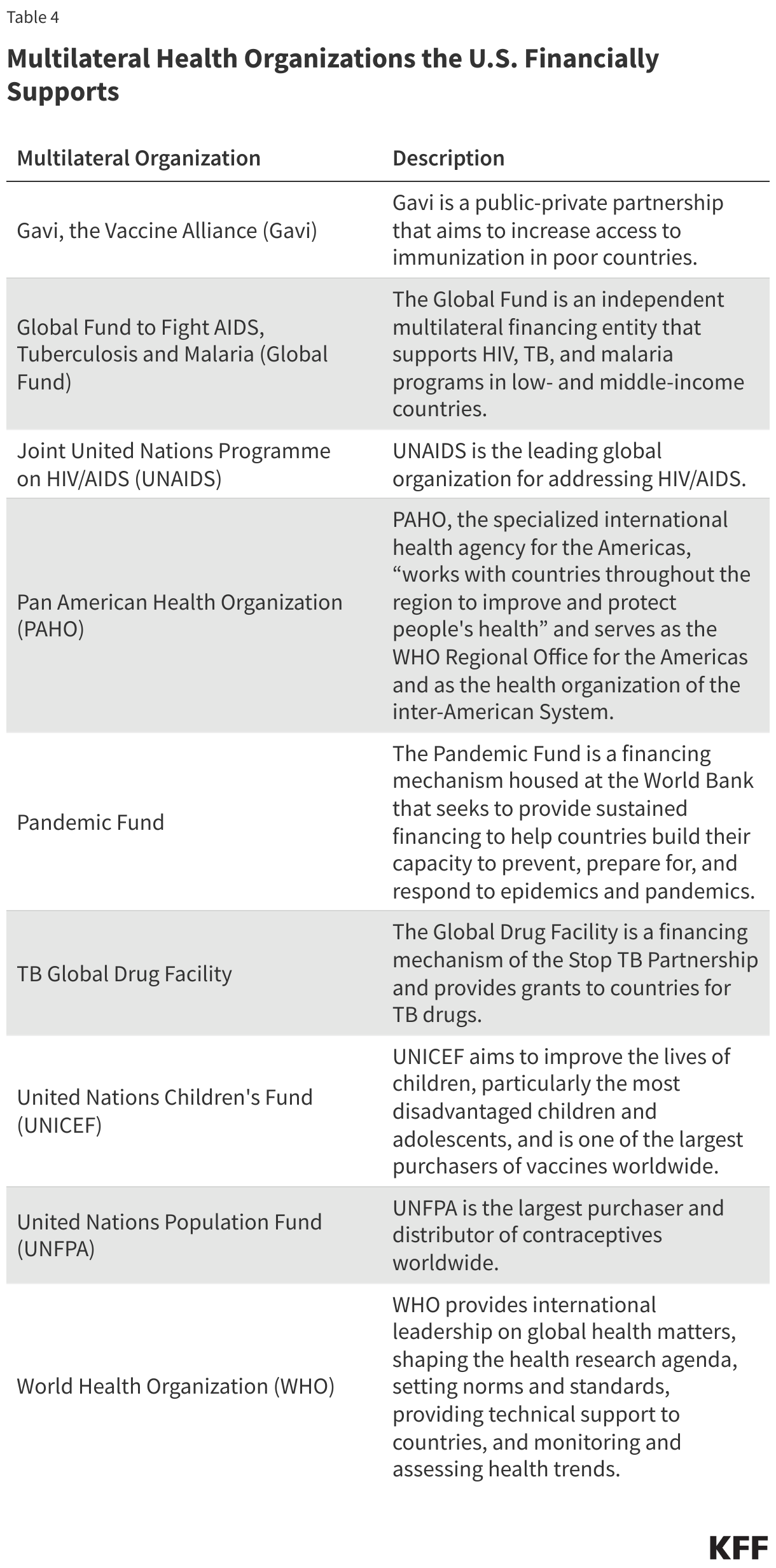
As mentioned earlier, multilateral health institutions the U.S. supports include the Global Fund to Fight AIDS, Tuberculosis and Malaria (Global Fund), Gavi the Vaccine Alliance (Gavi), United Nations Children’s Fund (UNICEF), World Health Organization (WHO), Pan American Health Organization (PAHO), Joint United Nations Programme on HIV/AIDS (UNAIDS), United Nations Population Fund (UNFPA), TB Drug Global Drug Facility, and the Pandemic Fund (see Table 4). The Global Fund is the largest multilateral recipient by far of U.S. global health funding followed by Gavi (see Figure 11).

The U.S. provides funding to these organizations every year, with the exception of UNFPA due to ongoing political debates about abortion and the invocation of the Kemp-Kasten Amendment, which has been used by the President to prohibit funding to UNFPA in some years (see the KFF Kemp-Kasten explainer for more detail). During its first term, the Trump Administration also temporarily suspended funding to the WHO in 2020, though these actions were reversed by the Biden Administration in 2021 and the funding was ultimately provided. Most recently in 2025, as one of the first actions taken during its second term, the Trump Administration issued an executive order to formally withdraw from the WHO and suspend funding. In addition, the Pandemic Fund, a newer multilateral financing mechanism launched in 2022 aimed at helping countries build their capacity to prevent, prepare for, and respond to epidemics and pandemics, has not received funding from the U.S. since 2022. However, Congress has included provisions in recent appropriations bills to transfer up to a certain amount of global health funding toward the entity if a public health emergency arises.

Nevertheless, the U.S. is often the largest or one of the largest donors to multilateral health efforts. For example, compared to other donors, the U.S. ranks first in donor support to the Pandemic Fund (accounting for 41% of its funding), the WHO (accounting for 14% of its funding), and the Global Fund (accounting for 33% of its funding) and third in donor support to Gavi (accounting for 13% of its funding). In 2025, several of these multilateral health institutions will have replenishment conferences where the U.S. and other donors will pledge their support for the next funding cycle (see the KFF tracker on U.S. support to four multilateral health institutions).

Multilateral Health Organizations the U.S. Financially Supports

Figure 11

U.S. Global Health Funding (in millions), Bilateral and Multilateral Share, FY 2025

9. The U.S. provides over 40% of total donor government assistance for global health.

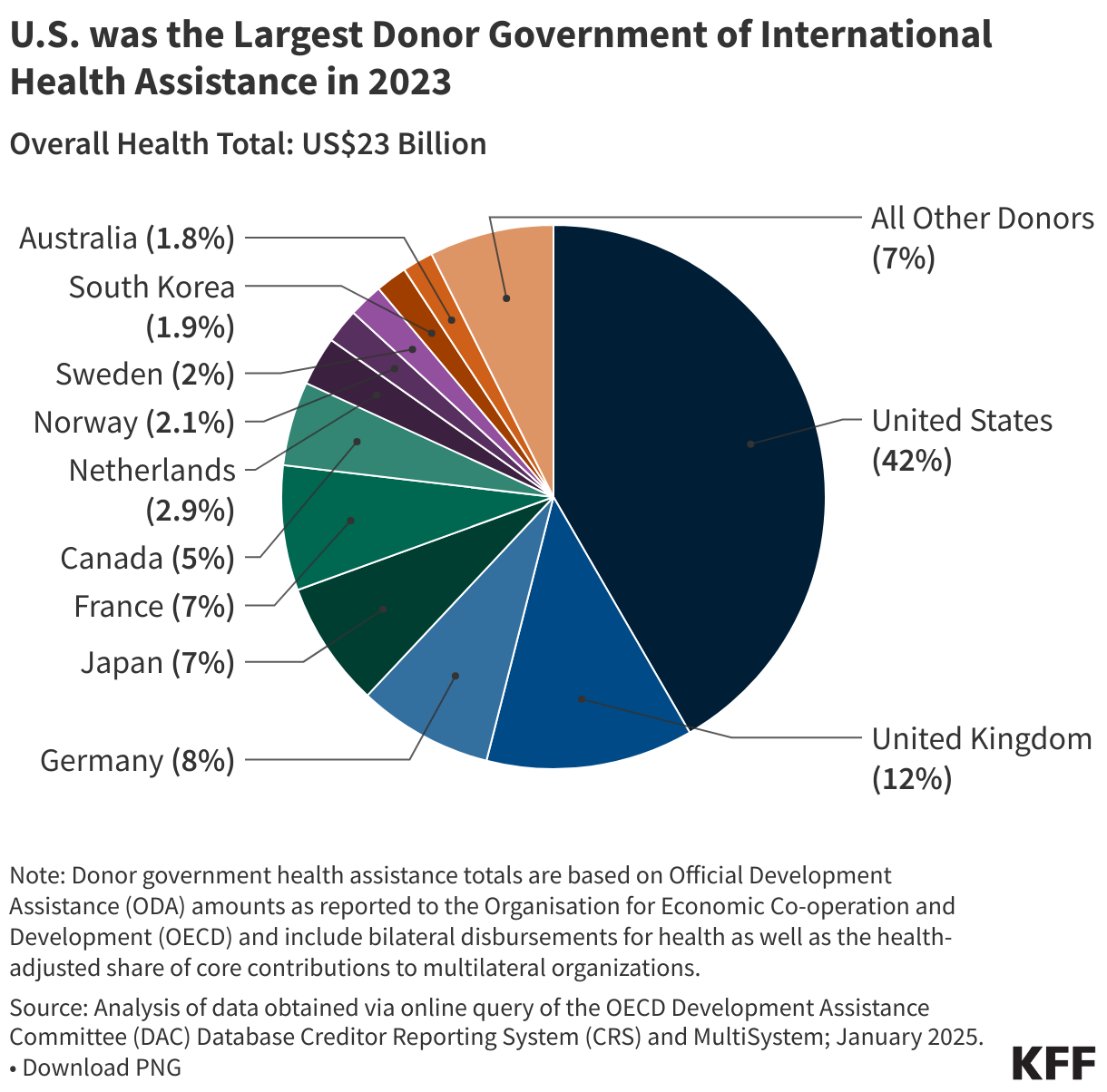
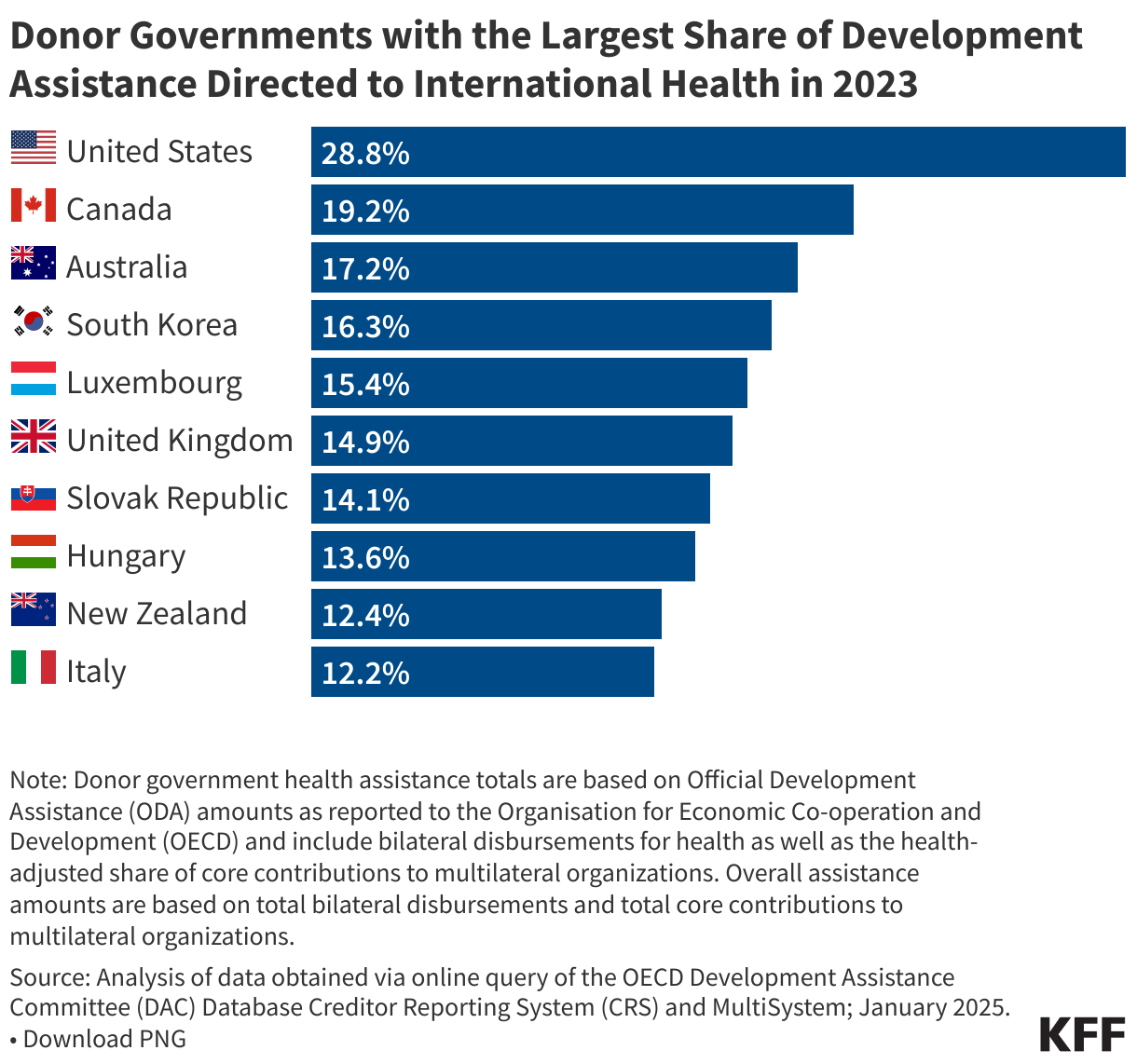
The U.S. plays an integral role in international assistance for health and provides support for global health in the form of Official Development Assistance (ODA) for health. ODA is financial support from donor governments to low- and middle-income countries for areas such as economic development, health, education, governance, or infrastructure, which is provided both bilaterally and through multilateral organizations. The U.S. is the largest donor to global health, providing 42% of all international health assistance among major donor governments (see Figure 12).7  In addition, the U.S. has historically devoted a larger share of its foreign assistance to health than any other donor government, contributing almost 30% of its foreign assistance to global health in 2023 (see Figure 13).

Figure 12

U.S. was the Largest Donor Government of International Health Assistance in 2023 (Pie Chart)

Figure 13

Donor Governments with the Largest Share of Development Assistance Directed to International Health in 2023 (Bar Chart)

10. Congress and the Administration can place requirements and/or restrictions on U.S. global health funding.

Congress: In addition to specifying funding levels for global health programs, Congress can also specify statutory requirements and policy provisions that:

  • direct how funds are spent,
  • determine which organizations receive funding, and
  • shape the implementation and scope of global health activities.

For instance, one statutory requirement that directs how U.S. foreign assistance, including global health funding, is spent is the Helms Amendment, which prohibits the use of foreign assistance to pay for the performance of abortion as a method of family planning or to motivate or coerce any person to practice abortion. In terms of more general global health policy provisions included in appropriations bills, an example of a common provision is one that directs agencies to provide reports to Congress on certain program areas. A more recent policy provision included in the FY 2024 appropriations bill was a one-year reauthorization of PEPFAR.

Administration: The administration can also place requirements and restrictions on global health funding. For instance, starting with the Reagan administration, the “Mexico City Policy” (MCP)8  has required foreign NGOs to certify that they will not “perform or actively promote abortion as a method of family planning” using funds from any source (including non-U.S. funds) as a condition of receiving U.S. global health assistance. It has been instituted and rescinded along party lines, and expanded over time, by executive action shortly after a new administration takes office. More recently, the Trump administration issued an executive order initiating the U.S. withdrawal from the World Health Organization (WHO) and halting all funding to the multilateral organization.
  1. As opposed to mandatory funding, which is funding that is dictated and set by law. Mandatory spending, which includes funding for entitlement programs such as Social Security, Medicare, Medicaid, and veteran’s programs, remains essentially unchanged from year to year, as funding levels for these programs are set by the laws that authorize and govern them. ↩︎
  2. Congress specifies some Economic Support Fund (ESF) funding amounts at USAID (i.e. funding for family planning and reproductive health through the ESF account is often specified by Congress but funding for HIV through this account is not specified by Congress) and does not specify funding amounts for the Assistance for Europe, Eurasia and Central Asia (AEECA), Development Assistance (DA), and CIO accounts at USAID. ↩︎
  3. Congress specifies some funding amounts for NIH and DoD in annual appropriations bills, including funding for the Fogarty International Center (FIC) at NIH and funding for global HIV at DoD. ↩︎
  4. Areas that receive global health funding and are not a part of the key program areas listed were combined into an “other” category. “Other” includes U.S. contributions to the World Health Organization (WHO) and Pan American Health Organization (PAHO), as well as funding for the Emergency Reserve Fund, which was created in the FY 2017 Omnibus bill to respond to contagious infectious disease outbreaks and would be made available if there is an “emerging health threat that poses severe threats to human health.” It also includes funding for “other public health threats,” which includes funding for health activities that are not consistently a line item within the U.S. budget (for example, in the FY 2024 budget, the U.S. provided funding to cross-cutting health activities through the Health Reserve Fund and to the global health workforce through the Global Health Workforce Initiative). ↩︎
  5. In the years where emergency supplemental funding for disease outbreaks has been provided, funding has gone to general global health activities, though sometimes funding is provided for specific global health programs including bilateral HIV (i.e. through emergency COVID-19 funding in FY 2021), the Global Fund (i.e. through emergency COVID-19 funding in FY 2021), and global health security (i.e. through emergency Ebola funding in FY 2015, FY 2018, and FY 2019; emergency Zika funding in FY 2016; and emergency COVID-19 funding in FY 2021). ↩︎
  6. Represents “assessed” or “core” funding— funding that is specified by Congress and generally used to support essential functions and operations. The U.S. also provides funding to multilateral organizations through “voluntary” or “non-core” contributions—funding that is used for specific projects or initiatives the U.S. seeks to support. Unlike core funding, non-core funding is not specified by Congress in annual appropriations bills. ↩︎
  7. Totals are based on Official Development Assistance (ODA) amounts as reported by donor governments to the Organisation for Economic Co-operation and Development (OECD) and include bilateral disbursements for health as well as the health-adjusted share of core contributions to multilateral organizations. Bilateral health amounts are based on three OECD sectors from the Credit Reporting System (CRS) database: (1) Health; (2) Population Policies & Programs and Reproductive Health (includes HIV/AIDS & STDs); and (3) Other Social Infrastructure and Services – Social Mitigation of HIV/AIDS. The health-adjusted share of donor government core contributions to multilateral organizations is calculated by applying the health share of a multilateral organization’s total disbursements (as reported in the CRS database) to the donor government’s core contribution for that multilateral organization (as reported in the OECD’s “Member use of the multilateral system” database). ↩︎
  8. The Mexico City Policy was renamed “Protecting Life in Global Health Assistance” by President Trump during his first term. ↩︎

Major Federal and State Funding Cuts Facing Planned Parenthood

Published: May 15, 2025

Planned Parenthood clinics have provided sexual and reproductive health services across the country since 1916 and currently serve over 2 million patients a year through close to 600 clinics across the United States. In many communities Planned Parenthood is the only clinic offering reproductive health care, including contraception, sexually transmitted infection testing and treatment, abortion services, pregnancy testing, cancer screenings like Pap smears and breast exams, and other preventive services. One third of Planned Parenthood’s revenue comes from state and federal government funding, including Medicaid, to provide health care services. According to Planned Parenthood’s 2022-2023 Annual Report, abortion services make up 4% of all the health services they provide, and federal funds rarely go toward abortion care (only in cases of rape, incest and life-threatening situations). The vast majority of the state and federal funding goes to reimburse reproductive and preventive services. “Defunding” Planned Parenthood has long been a priority of Republican leadership at both state and federal levels and was highlighted as a priority in Project 2025. There are currently multiple efforts at the federal and state level to limit funding to Planned Parenthood.

According to newly released KFF Health Tracking Poll data, one in three women (32%) say they have gone to a Planned Parenthood clinic for care, as well as one in ten men (11%) (Figure 1). Nearly half of Black women have gone to a Planned Parenthood clinic. Over four in ten individuals with Medicaid say they have received services at Planned Parenthood and one third of those with private insurance. One in five Republican women and four in ten Democratic women have received care at a Planned Parenthood clinic.

One in Three Women Have Received Health Care Services at a Planned Parenthood Clinic

There are currently three major efforts underway to cut funding to Planned Parenthood that could result in major reductions in services and staff, and ultimately, could result in clinic closures.

1. Medicaid

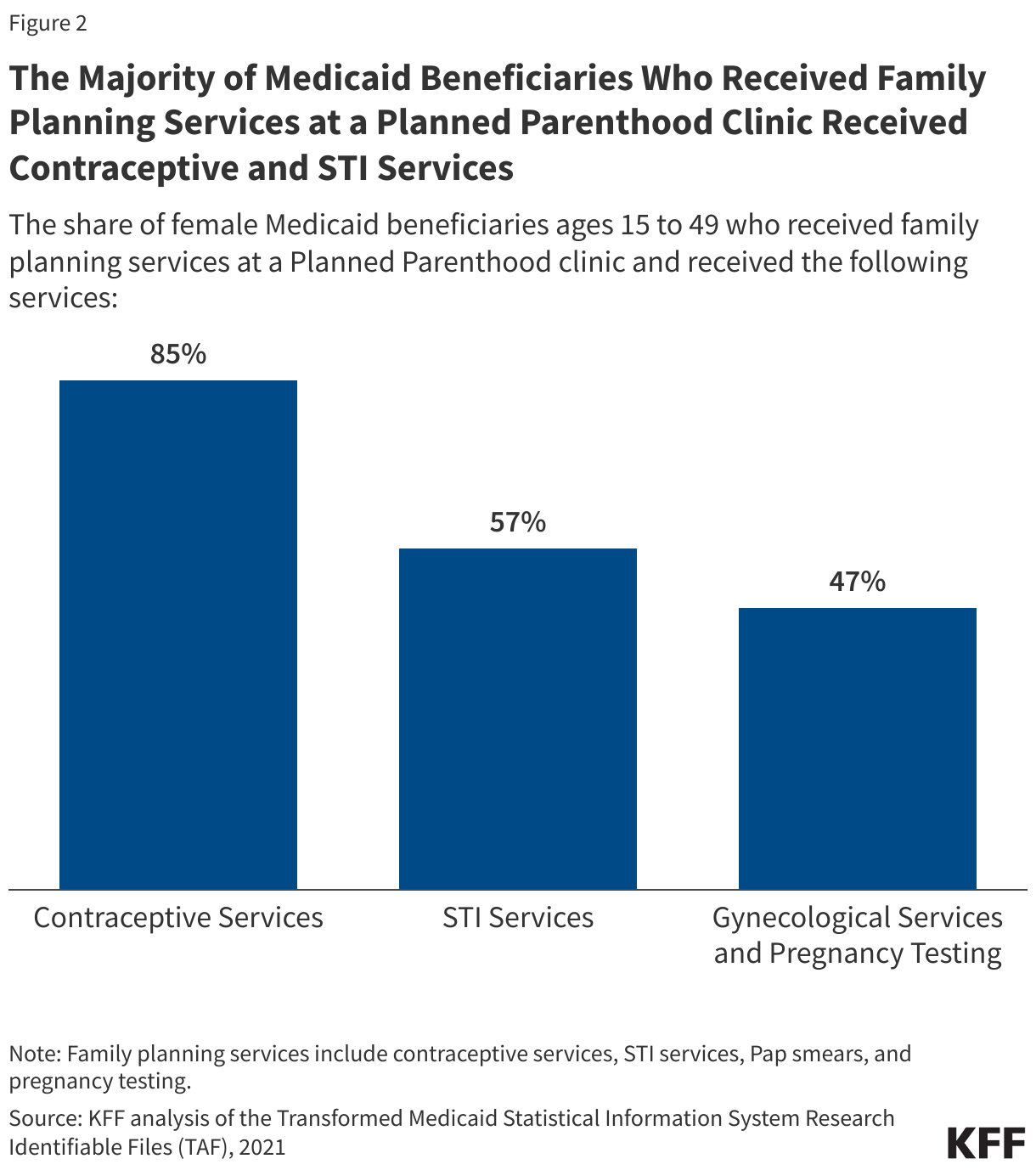
There have been efforts by anti-abortion groups and policymakers to exclude Planned Parenthood clinics from participating in the Medicaid program for many years because of their involvement in the provision of abortion services, even though federal funds cannot be used to pay for abortion services outside of cases of rape, incest, and life endangerment. KFF analysis shows that in 2021, one in 10 women on Medicaid who obtained family planning services got their care at Planned Parenthood. The share ranges from three in ten women with Medicaid in California (29%), to no women in in North Dakota and Wyoming where Planned Parenthood does not have a presence. Among the Medicaid patients who used Planned Parenthood for their family planning care, 85% obtained contraceptive services and about half got STI and/or gynecological care (Figure 2).

The Majority of Medicaid Beneficiaries Who Received Family Planning Services at a Planned Parenthood Clinic Received Contraceptive and STI Services

Republicans in Congress are currently considering a reconciliation financing bill that would ban federal Medicaid payments to Planned Parenthood and other Medicaid essential community providers across the country for services they provide to Medicaid beneficiaries. The Congressional Budget Office estimates that this will increase federal Medicaid spending by $300 million over ten years. In 2017, when Republicans were in the majority, they made a similar attempt to exclude Planned Parenthood from Medicaid via the reconciliation bill to repeal and replace the Affordable Care Act. While that bill did not pass, it would have cut off all federal payments to Planned Parenthood, including Medicaid reimbursement for contraceptive, STI, and preventive care for one year. The network of safety net providers, including health centers, health departments, and outpatient hospital sites likely would not have had the capacity to fully absorb the loss of Planned Parenthood in many communities in 2017, nor would they today. Prior research in Texas found that removing Planned Parenthood from the Texas family planning waiver program resulted in reduced contraceptive continuation and an increase in Medicaid covered births.

Several states have also attempted to exclude Planned Parenthood from their state Medicaid programs. Texas eventually terminated Planned Parenthood from its full-scope Medicaid program in 2021, and other states (South Carolina, Idaho, Tennessee) also have pending Section 1115 waiver applications at Centers for Medicare & Medicaid Services that would allow them to do the same. The Supreme Court is currently considering a case about South Carolina’s efforts to exclude Planned Parenthood from participating in their state’s Medicaid program and whether Medicaid beneficiaries can sue if they cannot freely choose their provider so long as they are willing and qualified to provide care, which is one of the federal provisions of the Medicaid law. The Supreme Court will likely rule on this in June and if the court rules in favor of South Carolina, states will have greater latitude to exclude Planned Parenthood from their Medicaid program.

2. Title X

The Trump Administration is currently withholding Title X funds from all nine of the Planned Parenthood grantees in the Title X program, which amounts to $20.6 million to provide services to low-income and uninsured people, saying the grantees are not aligned with the president’s opposition to Diversity, Equity, and Inclusion. In addition, other grantees that include Planned Parenthood clinics in their networks have received notices that that their funding is being withheld. Altogether, 144 Planned Parenthood clinics in 20 states are affected by the Title X decision to withhold funding (Figure 3).

Figure 3

While Title X makes up a smaller share of funding that supports services at Planned Parenthood clinics compared to Medicaid, these funds enable clinics to provide free and low-cost contraceptive methods, STI testing and treatment, pregnancy tests, cancer screenings like Pap smears and breast exams, and other preventive services. Already, two Planned Parenthood clinics in Utah and four Planned Parenthood clinics in Michigan have announced they will close due to Title X funds being withheld.

President Trump’s budget proposes terminating the $286 million appropriation for the Title X program. Furthermore, Project 2025 calls for reinstating the Title X regulations from the first Trump Administration that prohibited clinics from participating in the program if they had co-located abortion services or provided abortion referrals. This blocked 410 Planned Parenthood clinics from participating in Title X funding until the Biden Administration reversed the Trump Administration regulations.

3. Teen Pregnancy Prevention

Six Planned Parenthood affiliates receive funds from the Federal Teen Pregnancy Prevention (TPP) program to implement programs and develop, test, and evaluate innovative approaches to prevent teen pregnancy across the United States. These grantees, funded in 2023, have received $5.6 million annually to reach populations with the greatest unmet need with the goal of improving the optimal health of adolescents and reducing teen pregnancies and sexually transmitted infections.

On March 31, 2025, the TPP grantees were notified that the continuation applications due on April 15, 2025, would require them to demonstrate alignment with current Presidential Executive Orders, many of which are in direct conflict with the content in the evidence-based programs the grantees are funded to implement. This includes Executive Orders that ban the promotion of racial equity and gender inclusivity, current tenets of the TPP program (and also the care provided by family planning clinics). The funding opportunity the grantees applied under was called “Advancing Equity in Adolescent Health through Evidence-Based Teen Pregnancy Prevention Programs and Services” and applicants had to demonstrate as part of their grant application the extent to which they were committed to advancing health equity. Five of the six Planned Parenthood TPP grantees have filed a lawsuit against the Trump administration asking the Court to set aside the new alignment requirements and order HHS to allow grantees to continue receiving funding under the initial grant agreement. President Trump’s budget also proposes eliminating the Teen Pregnancy Prevention program along with Title X.

Implications of Potential Federal Medicaid Reductions for Addressing the Opioid Epidemic

Published: May 14, 2025

National opioid overdose deaths have declined since mid-2023 and provisional 2024 data suggest the decline is continuing. Despite recent improvements, opioids were still involved in over 79,000 deaths in 2023—well above pre-epidemic levels. The opioid epidemic’s impact remains widespread with nearly three in ten adults (29%) reporting in a 2023 KFF poll that they or a family member experienced an opioid addiction.

Medicaid provided coverage to nearly half (47%) of all nonelderly adults with opioid use disorder (OUD) in 2023, according to data from the National Survey on Drug Use and Health (NSDUH). State-level NSDUH data from 2021-2022 show even higher Medicaid coverage rates among adults with OUD in states that expanded Medicaid under the Affordable Care Act (ACA). In recent years, state Medicaid programs have also expanded access to OUD treatment and medications, which reduce the risk of overdose death.

The Trump administration’s opioid policies emphasize expanding access to medication treatment and naloxone. At the same time, the House and Senate are working on legislation to meet the requirements in the budget resolution, specifying cuts to Medicaid of up to $880 billion or more over 10 years. To meet the required federal budget cuts, a newly introduced House bill proposes a number of provisions that could affect Medicaid eligibility and coverage stability for adults with OUD including work requirements and increased eligibility determinations. Such changes would contribute to reductions in Medicaid enrollment and increases in the uninsured and would come at a tenuous moment for the opioid epidemic, as deaths have begun to decline, but future progress is not certain. Amid this evolving policy landscape, this brief analyzes Medicaid coverage and treatment of adults with OUD using data from NSDUH and Medicaid claims data.

Medicaid is the main source of coverage for adults with opioid use disorder and among those receiving treatment services.

Medicaid covers 47% of all nonelderly adults with OUD and is the primary coverage source among those receiving treatment services. Specifically, Medicaid covers over half (56%) of those receiving medication for opioid use disorder (MOUD) and roughly two-thirds (64%) of adults receiving outpatient treatment and peer support services (Figure 1). MOUD treatment, recommended by clinical guidelines, reduces risk of all-cause and overdose mortality.

Medicaid Covers Nearly Half of All Nonelderly Adults with Opioid Use Disorder and Most Adults Receiving Treatment

Most adults with OUD in Medicaid are eligible through Medicaid expansion.

Overall, 61% of adult Medicaid enrollees diagnosed with OUD—about 900,000 adults—are eligible through Medicaid expansion (Figure 2), with state-level rates ranging from 33% in Arkansas to 95% in Illinois (Appendix Table 1). In expansion states, over two-thirds of Medicaid enrollees with OUD qualify through ACA expansion (Figure 2), facilitating access to medication treatment and other care. A number of provisions in the House bill would affect the expansion group, including work requirements and cost sharing requirements. Such changes could lead to coverage losses or disruptions, including for adults with OUD, potentially limiting or interrupting access to treatment. Research indicates that MOUD treatment cessation is linked to significantly increased mortality risk, with individuals experiencing a six-fold higher mortality risk in the four weeks immediately after discontinuing treatment.

Over 6 in 10 Adult Medicaid Enrollees Diagnosed with OUD are Covered Through Medicaid Expansion Nationally

Other federal actions may also affect opioid response efforts.

The restructuring of Health and Human Services (HHS) by the Trump administration folds the Substance Abuse and Mental Health Services Administration (SAMHSA) into a new agency, reduces staff, and may eliminate certain opioid-focused programs. Additionally, the reported dismissal of the entire staff administering the NSDUH—a key source of national data collecting data for over 50 years about trends in mental health and substance use disorders—-could limit access to key data used to monitor and respond to the opioid crisis. The President’s discretionary budget request for 2026–which has not been adopted to date–proposes just over $1 billion in cuts to SAMHSA programs, including cuts to programs funding clean syringe exchanges and safe supplies. The discretionary budget decisions will be part of the budget appropriations process.

Methods

Medicaid Claims Data:This analysis used the 2021 T-MSIS Research Identifiable Files including  the inpatient (IP), long-term care (LT), other services (OT), and pharmacy (RX) claims files merged with the demographic-eligibility (DE) files to identify Medicaid expansion enrollees and those diagnosed with OUD and those who receive MOUD.

Identifying Opioid Use Disorder: OUD diagnoses were identified using an algorithm adapted from the Behavioral Health Service Algorithm (BHSA) reference codes provided by the Urban Institute. The BHSA identifies OUD using a combination of ICD-10 diagnosis codes, procedure codes, service codes, and National Drug Codes (NDCs) which are used to identify OUD and MOUD. Medication treatment (MOUD/MAT) includes medications that the FDA has approved for OUD treatment. (See: Victoria Lynch, Lisa Clemans-Cope, Doug Wissoker, and Paul Johnson. Behavioral Health Services Algorithm. Version 4. Washington, DC: Urban Institute, 2024.)

Enrollee Inclusion Criteria:Enrollees were included if they were ages 19-64, had full Medicaid or CHIP coverage for at least one month, and were not dually eligible for Medicare.

State Inclusion Criteria: To assess the usability of states’ data, the analysis examined quality assessments from the DQ Atlas for OT claims volume and OT managed care encounters and compared the share of adults diagnosed with any mental illness (AMI) in each states’ Medicaid data to estimates for adult Medicaid enrollees from the 2021-2022 restricted National Survey on Drug Use and Health (NSDUH). States were excluded if: (1) they received a “High Concern/ Unusable” rating on the relevant DQ Atlas assessment measure, and (2) their Medicaid estimate of AMI differed from the NSDUH estimate by more than 15.1 percentage points (the 75th percentile of all differences).

If at least 70% of a state’s Medicaid enrollees were covered by either managed care or by fee for service, only the corresponding DQ Atlas indicator was considered (i.e. managed care encounters volume or claims volume (FFS)). For states with more mixed delivery systems, both sets of indicators were considered; in these cases; a “High Concern/Unusable” rating on either measure, combined with a difference above 15.1 percentage points, led to exclusion. Based on these criteria, Mississippi was excluded, leaving 49 states and D.C. in the analysis.

Although Idaho and Virginia expanded Medicaid before 2021, their adult expansion enrollees primarily appear within the traditional adult eligibility group. Missouri is excluded due to its mid-2021 expansion. Consequently, these states are excluded from Figure 2.

National Survey on Drug Use and Health: This analysis uses data from the 2023 National Survey of Drug Use and Health (NSDUH), a nationally representative survey that, among other topics, collects information about symptoms of substance use disorders, including OUD. Respondents meet NSDUH’s OUD definition if they meet DSM-V criteria related to prescription opioids or heroin. Following NSDUH’s current methodology, individuals who misuse only fentanyl are not included in the OUD treatment definition; sensitivity analyses indicate that this exclusion minimally affects results (adding 10 observations) and does not meaningfully alter rates reported in Figure 2. Consistent with NSDUH’s approach to calculating SUD treatment rates among those needing treatment, the denominator includes respondents receiving outpatient therapy for OUD or prescription medication for OUD (MOUD).

Medicaid-Enrolled Adults Diagnosed with Opioid Use Disorder (OUD), Covered Through Medicaid Expansion

The U.S. President’s Emergency Plan for AIDS Relief (PEPFAR)

Published: May 13, 2025

Note: This fact sheet largely reflects activities prior to the second Trump administration, which has issued numerous executive actions that directly affect global health efforts, and has been updated to highlight key recent actions that may affect PEPFAR. See also the KFF fact sheet on the Trump administration’s foreign aid review and the status of PEPFAR.

Key Facts

  • Although the U.S. has been involved in efforts to address the global AIDS crisis since the mid-1980s, the creation of the President’s Emergency Plan for AIDS Relief (PEPFAR) in 2003 marked a significant increase in funding and attention to the epidemic. Now, 20 years in, PEPFAR reports saving an estimated 26 million lives and is currently providing HIV prevention and treatment services to millions.
  • PEPFAR is the largest commitment by any nation to address a single disease in the world, credited with not only saving millions of lives but also helping to change the trajectory of the global HIV epidemic.
  • PEPFAR funding is comprised of U.S. bilateral funding and U.S. contributions to multilateral organizations addressing HIV, primarily the Global Fund to Fight AIDS, Tuberculosis and Malaria (Global Fund).1 
  • To date, U.S. funding for PEPFAR has totaled over $120 billion, growing from $1.9 billion in FY 2004 to $6.5 billion in FY 2025; FY 2025 funding, which Congress provided through a continuing resolution, includes $4.8 billion provided for bilateral HIV efforts and $1.7 billion for multilateral efforts ($50 million for UNAIDS and $1.65 billion for the Global Fund).2 
  • PEPFAR has been reauthorized by Congress four times, most recently in March 2024 for one year. Although that authorization expired on March 25, 2025, PEPFAR is a permanent part of U.S. law and, other than a set of eight time-bound provisions, continues as long as Congress appropriates funding for the program.
  • More broadly, PEPFAR is – for the first time in its two-decade history – facing significant challenges that could impede its ability to fulfill its mission. The Trump administration has instituted a review of all foreign assistance, including for PEPFAR, as well as a funding freeze. These actions have already resulted in significant disruption and limitation of PEPFAR’s scope and services, and it is unknown whether the administration will recommend further changes to PEPFAR and how or if Congress will respond to these recommendations.

Global Situation

HIV, the virus that causes AIDS (“acquired immunodeficiency syndrome” or Advanced HIV Disease), has become one of the world’s most serious health and development challenges. Today, there are approximately 39.9 million people living with HIV, and tens of millions of people have died of AIDS-related causes since the beginning of the epidemic (see the KFF fact sheet on the global HIV epidemic).3 

Box 1: Snapshot of Global Epidemic Today

  • Number of people living with HIV: 39.9 million
  • Number of people newly infected with HIV: 1.3 million
  • Number of AIDS-related deaths: 630,000
  • Number of people with HIV on treatment: 30.7 million

Notes: Reflects 2023 data.

U.S. Government Efforts

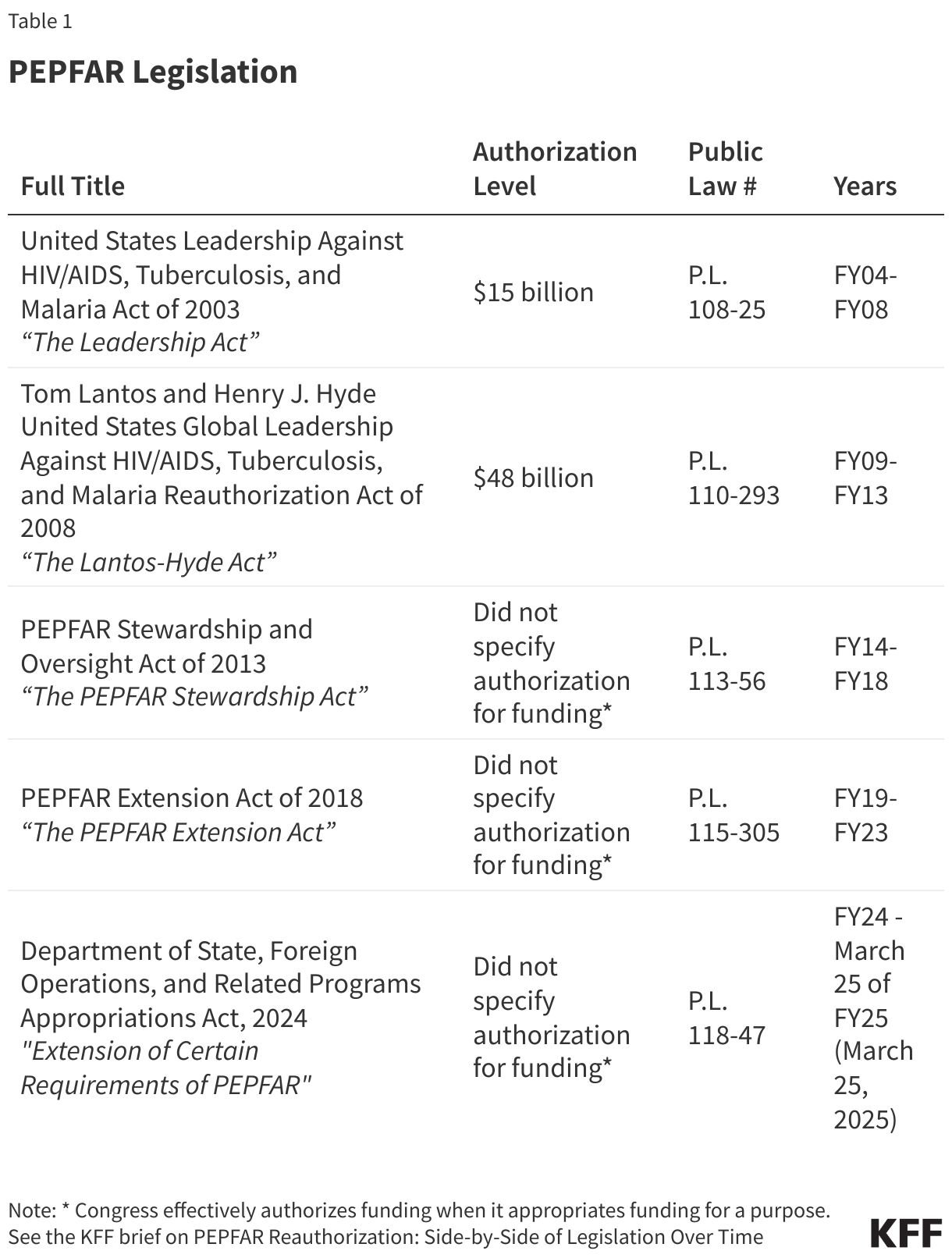
Although the U.S. has been involved in efforts to address the global HIV/AIDS crisis since the mid-1980s,4  the creation of the President’s Emergency Plan for AIDS Relief (PEPFAR) in 2003 marked a significant increase in funding and attention to the epidemic.5  PEPFAR, the U.S. government’s global effort to combat HIV and the largest global health program devoted to a single disease, is credited with saving millions of lives and helping to change the trajectory of the global HIV epidemic. It was announced in January 2003 during President George W. Bush’s State of the Union and authorized by Congress that same year through the Leadership Act (see Table 1). The Leadership Act governs PEPFAR’s HIV response, as well as U.S. participation in the Global Fund (an independent, international multilateral financing institution that provides grants to countries to address HIV, TB, and malaria) and bilateral assistance for TB and malaria programs.6  Congress has updated, extended, and made changes to the program through the Lantos-Hyde Act of 2008, the PEPFAR Stewardship Act of 2013, the PEPFAR Extension Act of 2018, and more recently, a short-term reauthorization of PEPFAR that extended certain timebound provisions through late March 2025, when they were allowed to lapse (see Table 1 and the KFF brief on PEPFAR reauthorization legislation over time). This short term reauthorization signaled a departure from the program’s long history of strong bipartisan support across multiple Congresses and administrations when, in an increasingly partisan environment, it was caught up in the broader U.S. political debate over abortion (see the KFF brief on PEPFAR’s short term reauthorization). This and other rapidly-evolving developments, including the Trump administration’s review of foreign assistance, has introduced significant uncertainty about PEPFAR’s future, including its reauthorization prospects, although PEPFAR is a permanent part of U.S. law and will continue as long as Congress continues to provide funding to it.

PEPFAR Legislation

Organization

PEPFAR’s original authorization established new structures and authorities, consolidating all U.S. bilateral and multilateral activities and funding for global HIV/AIDS. Several U.S. agencies, host country governments, and other organizations are involved in implementation.7 

PEPFAR is overseen by the U.S. Global AIDS Coordinator, who is appointed by the President, confirmed by the Senate, and reports directly to the Secretary of State, as established through PEPFAR’s authorizing legislation.8  The Coordinator holds the rank of Ambassador and leads the Office of the Global AIDS Coordinator (OGAC) at the Department of State.9  The Coordinator has primary responsibility for the oversight and coordination of all U.S. global HIV activities and funding across multiple U.S. implementing agencies and departments. In addition, the Coordinator serves as the U.S. Government’s board member to the Global Fund (the U.S. Government holds a permanent seat on the Global Fund’s Board). The Coordinator is dual-hatted as the U.S. Special Representative for Global Health Diplomacy and also leads the broader Bureau of Global Health Security and Diplomacy, which brings together PEPFAR with global health security and global health diplomacy functions.10  Currently, the President has not yet nominated a Coordinator and it is unclear when or whether someone will be nominated.

In addition to the Department of State, other implementing departments and agencies for HIV activities include: the U.S. Agency for International Development (USAID), PEPFAR’s largest government implementing agency (the Trump administration has moved to dissolve USAID, creating uncertainty about how PEPFAR’s implementation will be managed by the U.S. government going forward); the Department of Health and Human Services, primarily through the Centers for Disease Control and Prevention (CDC); the Departments of Labor, Commerce, and Defense (DoD); and the Peace Corps.11  As the Trump administration continues its review of foreign assistance and pursues reorganization of global health programs, Congress has yet to weigh in and it is unclear what the future of PEPFAR will look like.

Key Activities and Results

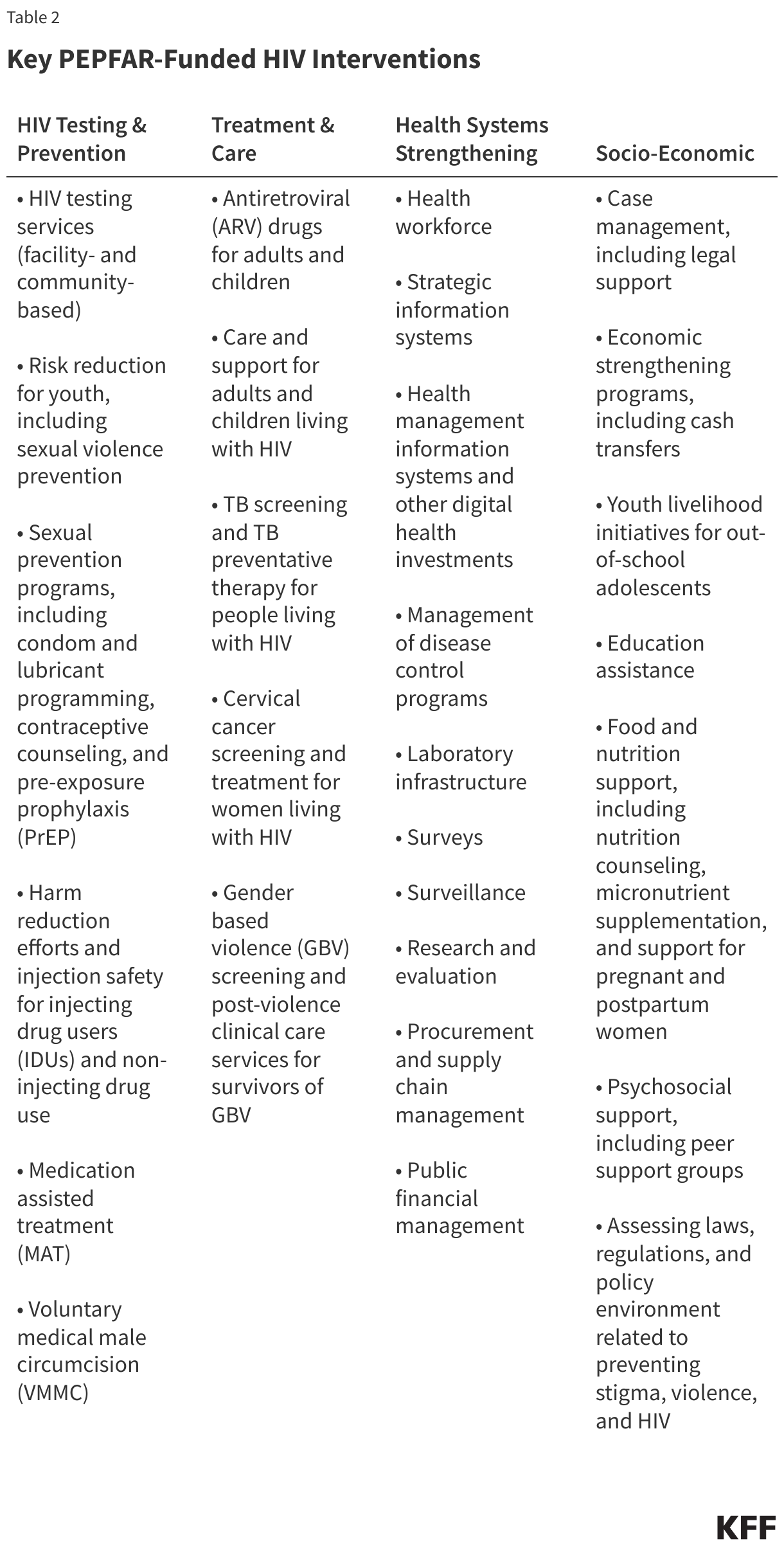
PEPFAR reports saving an estimated 26 million lives and its activities have focused on expanding access to HIV prevention, treatment, and care interventions. These have included provision of antiretroviral treatment, pre-exposure prophylaxis, voluntary male circumcision, condoms, and other commodities related to HIV services (see Table 2).12 ,13  In addition, PEPFAR has launched specific initiatives in key strategic areas. For example, in 2015, PEPFAR launched DREAMS, a public-private partnership that aims to reduce HIV infections in adolescent girls and young women.

The latest results reported by PEPFAR indicate that it has:

  • supported testing services for 83.8 million people in FY 2024;
  • prevented 7.8 million babies from being born with HIV, who would have otherwise been infected;
  • provided care for more than 6.6 million orphans, vulnerable children (OVC), and their caregivers;
  • supported training for nearly 342,000 new health care workers; and
  • supported antiretroviral treatment for 20.6 million people.14 

Additionally, it reports that PEPFAR reached 2.3 million adolescent girls and young women with HIV prevention services in FY 2024, and new diagnoses among this population have declined, with the higher rate of initiation of pre-exposure prophylaxis (PrEP) to prevent HIV infection in countries implementing the DREAMS initiative compared to areas without DREAMS programming.15  The Trump administration’s foreign aid review and funding freeze have limited PEPFAR’s activities to those defined in a limited waiver, significantly scaling back PEPFAR’s scope to what the waiver defines as “life-saving HIV services,” which include only certain activities: HIV treatment and care, prevention of mother-to-child transmission (PMTCT), pre-exposure prophylaxis (PrEP) for pregnant and breastfeeding women, and HIV testing.

Key PEPFAR-Funded HIV Interventions

Countries Reached

Historically, PEPFAR bilateral programs were carried out in more than 50 countries.16  Additional countries are reached through U.S. contributions to the Global Fund. PEPFAR currently requires 25 countries17  and the Asia, Western Hemisphere, and West Africa regional programs to develop “Country Operational Plans” (COPs) and “Regional Operational Plans” (ROPs), respectively, to document annual investments and anticipated results.18  OGAC reviews and the Global AIDS Coordinator approves COP/ROPs.

Funding19 

Total PEPFAR funding20  includes bilateral funding for HIV activities conducted by U.S. implementing agencies as well as U.S. contributions to the Global Fund and UNAIDS,21  as specified by Congress for PEPFAR in annual appropriations bills.22  It represents the majority of U.S. global health funding (about 53% in recent years23 ) and is the largest commitment by any nation to address a single disease in the world. To date, PEPFAR funding has totaled over $120 billion, with funding reaching $6.5 billion in FY 2025 (in FY 2025, PEFPAR funding was provided through a continuing resolution, which maintained the prior year amount; see figure).

U.S. Funding for the President's Emergency Plan for AIDS Relief (PEPFAR),FY 2004 - FY 2025

PEPFAR’s creation marked a significant increase in the amount of funding provided by the U.S. for HIV. Trends in funding for bilateral programs and contributions to multilateral organizations are as follows (see the KFF fact sheet on the U.S. Global Health Budget: Global HIV Funding, Including PEPFAR and U.S. Global Health Budget: The Global Fund):

  • Bilateral HIV Funding: The majority of PEPFAR funding (ranging from 70-77% each year over the past decade) is provided for bilateral programs through the State Department (most of which is then transferred to other agencies), USAID, CDC, and DoD. Bilateral funding rose rapidly from $822 million in FY 2003 (the year before PEPFAR) to a peak of $5.0 billion in FY 2010. Between FY 2010 and FY 2013, it declined by more than $750 million. While it has risen since then, bilateral funding in FY 2025 ($4.8 billion), which Congress provided through a continuing resolution, was still $233 million below its peak level, and funding has been mostly flat for the past several years.
  • Multilateral Contributions: The U.S. also supports global HIV efforts through contributions to the Global Fund and UNAIDS. Support for the Global Fund, which accounts for most of the multilateral contributions, increased rapidly in its early years and fluctuated over time; it reached its highest level to date ($2.0 billion) in FY 2023. In FY 2025, funding for the Global Fund, which represented a carry-over from FY 2024 levels due to the continuing resolution, was $1.65 billion, $375 million less than the FY 2023 level, though this is due to a legislative requirement that limits the amount the U.S. can contribute to the Global Fund to not more than 33% of all contributions.24  The U.S. contribution to UNAIDS was $45 million for most years over the past decade, but increased to $50 million in FY 2022, where it has remained.
  • Emergency Funding: In FY 2021, an additional $3.8 billion in emergency supplemental funding was provided for bilateral HIV ($250 million) and the Global Fund ($3.5 billion) to address COVID-19.25 

Spending Directives26 

PEPFAR has included several spending directives, or earmarks, from Congress over the course of its history, many of which have changed over time:

  1. The Leadership Act, PEPFAR’s original authorization, included the following spending directives: 55% of funds were to be spent on treatment; 15% on palliative care; 20% on prevention, of which at least 33% be spent on abstinence-until-marriage programs; and 10% on OVC. While these were included as “sense of Congress” recommendations, the treatment, OVC, and abstinence-until-marriage earmarks were made requirements as of FY 2006.
  2. The Lantos-Hyde Act relaxed some of these directives for the FY 2009 – FY 2013 period: while still requiring that 10% of funds be spent on programs targeting OVC, it changed the treatment earmark from 55% to requiring that at least half of bilateral HIV assistance be spent on treatment and care. It removed the 33% abstinence-until-marriage directive and replaced it with a requirement of “balanced funding” for prevention to be accompanied by a report to Congress if less than half of prevention funds were spent on abstinence, delay of sexual debut, monogamy, fidelity, and partner reduction activities in any host country with a generalized (high prevalence) epidemic.
  3. The PEPFAR Stewardship Act, The PEPFAR Extension Act, and recent short-term reauthorization have maintained the language in the Lantos-Hyde Act. With the expiration of the short-term reauthorization, eight timebound provisions have now lapsed.

PEPFAR & The Global Fund

The U.S. is the single largest donor to the Global Fund. Appropriations for the U.S. contribution to the Global Fund totaled approximately $31.5 billion from FY 2001 through FY 2025.27  This includes, $3.5 billion in FY 2021 emergency funding that the U.S. government provided to the Global Fund to help the organization address the impacts of COVID-19 (in addition to the $250 million in emergency funds provided to bilateral HIV for COVID-19-related efforts).28 

The Global Fund provides another mechanism for U.S. support by funding programs developed by recipient countries, reaching a broader range of countries, and supporting TB, malaria, and health systems strengthening (HSS) programs in addition to (and beyond their linkage with) HIV.29  To date, over 120 countries30  have received Global Fund grants. Most Global Fund support (52%) has been committed to HIV and HIV/TB programs,31  followed by 29% to malaria, 15% to TB, and 4% to other health issues.32  The original authorization of PEPFAR, and subsequent reauthorizations, included a limit on annual U.S. contributions to the Global Fund that prevented them from causing cumulative U.S. contributions to exceed 33% of the Global Fund’s total contributions (see the KFF fact sheet on the Global Fund). 33 ,34 

  1. KFF analysis of The Global Fund: https://data-service.theglobalfund.org/downloads. ↩︎
  2. Totals represent funding specified by Congress in annual appropriations bills and/or identified by agencies for the Department of State, USAID, CDC, and DoD. In addition, international HIV research activities are supported by the NIH Office of AIDS Research (OAR) through its annual appropriated budget, but these amounts are not considered part of PEPFAR. See KFF’s “Breaking Down the U.S. Global Health Budget by Program Area” for additional information. ↩︎
  3. UNAIDS. 2024 UNAIDS Global AIDS Update: The urgency of now – AIDS at the crossroads; July 2024. ↩︎
  4. The U.S. first provided funding to address the global HIV epidemic in 1986. Then, in 1999, President Bill Clinton announced the Leadership and Investment in Fighting an Epidemic (LIFE) Initiative to address HIV in 14 African countries and in India. Later, in 2002, President George W. Bush announced the International Mother and Child HIV Prevention Initiative focused on 12 African and two Caribbean countries. ↩︎
  5. PEPFAR. 2009 Annual Report to Congress; Jan. 2009. ↩︎
  6. U.S. Congress. P.L. 108-25; May 27, 2003. ↩︎
  7. KFF. The U.S. Government and Global Health, Sep. 2022. CRS. PEPFAR Reauthorization: Key Policy Debates and Changes to U.S. International HIV/AIDS, Tuberculosis, Malaria and Programs and Funding; Jan. 2009. ↩︎
  8. U.S. Congress. Public Law No: 108-25; May 27, 2003. ↩︎
  9. U.S. Department of State. “Leadership – Bureau of Global Health Security and Diplomacy” webpage, https://www.state.gov/leadership-bureau-of-global-health-security-and-diplomacy. ↩︎
  10. Department of State. “ Leadership – Bureau of Global Health Security and Diplomacy,” webpage, https://www.state.gov/leadership-bureau-of-global-health-security-and-diplomacy/. ↩︎
  11. PEPFAR. “About Us,” webpage, https://www.state.gov/about-us-pepfar/. ↩︎
  12. Table 2 categorization is based on interventions laid out in the PEPFAR Financial Classification Reference Guide, used for program budgeting. See: PEPFAR Financial Classifications Reference Guide, June 2024. ↩︎
  13. KFF. Funding for Key HIV Commodities in PEPFAR Countries; July 2021. ↩︎
  14. PEPFAR. PEPFAR Latest Global Results; December 2024. ↩︎
  15. The 15 African countries that are implementing DREAMS include Botswana, Cote d’Ivoire, Eswatini, Haiti, Kenya, Lesotho, Malawi, Mozambique, Namibia, Rwanda, South Africa, Tanzania, Uganda, Zambia, and Zimbabwe. PEPFAR. DREAMS Country Fact Sheets; June 27, 2020; PEPFAR. PEPFAR Latest Global Results; December 2024. ↩︎
  16. PEPFAR, “Where We Work” webpage, https://www.state.gov/where-we-work-pepfar/; PEPFAR 2023 Country Operational Plan Guidance for all PEPFAR Countries; and CDC’s “Where We Work” webpage, https://www.cdc.gov/global-hiv-tb/php/where-we-work/. ↩︎
  17. The 25 countries that are required to complete a FY23 COP are Angola, Botswana, Burundi, Cameroon, Cote d’Ivoire, Democratic Republic of the Congo, Dominican Republic, Eswatini, Ethiopia, Haiti, Kenya, Lesotho, Malawi, Mozambique, Namibia, Nigeria, Rwanda, South Africa, South Sudan, Tanzania, Uganda, Ukraine, Vietnam, Zambia, and Zimbabwe.  PEPFAR. “Where We Work” webpage, https://www.state.gov/where-we-work-pepfar/. ↩︎
  18. PEPFAR. 2023 Country and Regional Operational Plan Guidance and Technical Considerations; Feb. 2023. ↩︎
  19. U.S. Congress. Public Law No: 112-25; Aug. 2, 2011. White House Office of Management and Budget (OMB). OMB Report to the Congress on the Joint Committee Sequestration for Fiscal Year 2013; March 1, 2013. KFF analysis of data from: Congressional appropriations bills and reports; Federal Agency Budget and Congressional Justification documents; ForeignAssistance.gov; KFF personal communication with the Office of Management and Budget. ↩︎
  20. Overall PEPFAR funding technically includes support for bilateral HIV and TB activities, as well as contributions to multilateral organizations (specifically, the Global Fund and UNAIDS). This analysis only focuses on bilateral funding for HIV and contributions to multilateral organizations. ↩︎
  21. UNAIDS is the Joint United Nations Programme on HIV/AIDS, the U.N. system’s coordinating body that serves to help galvanize worldwide attention to AIDS. ↩︎
  22. Totals represent funding specified by Congress for PEPFAR in annual appropriations bills and/or identified by agencies for the Department of State, USAID, CDC, and DoD. In addition, international HIV research activities are supported by the NIH Office of AIDS Research (OAR) through its annual appropriated budget, but these amounts are not considered part of PEPFAR. See KFF’s “Breaking Down the U.S. Global Health Budget by Program Area” for additional information. ↩︎
  23. Includes bilateral funding for HIV as well as U.S. contributions to UNAIDS and the Global Fund to Fight AIDS, Tuberculosis and Malaria through regular appropriations. ↩︎
  24. U.S. Congress. Public Law No: 118-47; March 23, 2024. ↩︎
  25. KFF analysis of data from the “American Rescue Plan Act of 2021” (P.L. 117-2). ↩︎
  26. U.S. Congress. Public Law No: 108-25; May 27, 2003. U.S. Congress. Public Law No: 110-293; July 30, 2008. U.S. Congress. Public Law No: 113-56; Dec. 2, 2013. U.S. Congress. Public Law No: 115-305; Dec. 11, 2018. U.S. Congress. Public Law No: 118-47; March 23, 2024. ↩︎
  27. Includes funding through regular appropriations and emergency supplemental funding. KFF analysis of data from: Congressional appropriations bills and reports; Federal Agency Budget and Congressional Justification documents; ForeignAssistance.gov; KFF personal communication with the Office of Management and Budget. ↩︎
  28. KFF analysis of data from the “American Rescue Plan Act of 2021” (P.L. 117-2). ↩︎
  29. Congress states that the Global Fund is the multilateral component of PEPFAR in the following: U.S. Congress. Public Law No: 110-293; July 30, 2008. U.S. Congress. Public Law No: 113-56; Dec. 2, 2013. ↩︎
  30. Does not include countries that may have received funding through multi-country or regional programs. Additional countries may be reached through multi-country or regional programs. ↩︎
  31. Of the 52% committed to HIV and HIV/TB programs, 39.4% was for HIV activities and 12.3% was for HIV/TB activities. ↩︎
  32. In 2020, some donor governments provided COVID-specific emergency contributions to the Global Fund in addition to their contributions to core activities. For the purposes of this fact sheet, these COVID-specific amounts have been excluded as they cannot be attributed to a specific area, such as HIV, TB, or malaria. The Global Fund. Data Explorer; accessed July 2024: https://data.theglobalfund.org/. ↩︎
  33. U.S. Congress. Public Law No: 108-25; May 27, 2003. U.S. Congress. Public Law No: 110-293; July 30, 2008. U.S. Congress. Public Law No: 113-56; Dec. 2, 2013. U.S. Congress. Public Law No: 118-47; March 23, 2024. KFF. PEPFAR Reauthorization: Side-by-Side of Legislation Over Time, brief. ↩︎
  34. See the KFF. The U.S. & The Global Fund to Fight AIDS, TB and Malaria, fact sheet; and KFF. PEPFAR Reauthorization: Side-by-Side of Legislation Over Time, brief. ↩︎

Mapping Hospitals By Congressional District

Published: May 12, 2025

The House and Senate are working on legislation to meet the requirements in the budget resolution, which targets cuts to Medicaid of up to $880 billion or more over 10 years. Although it is unclear what specific policies will be included in the final reconciliation bill, significant reductions in Medicaid spending would likely impact hospitals given that the program accounted for about one fifth (19%) of all spending on hospital care in 2023. Reductions in payments to hospitals, coupled with an increase in the number of uninsured Americans, resulting from Medicaid spending cuts or other policy changes would likely have implications for hospital finances, access to hospital services, the quality of patient care, and local economies (in that hospitals are the sixth largest employer in the country across industry subsectors).

The interactive map below shows the number of hospitals in each congressional district as reported in the American Hospital Association Annual Survey Database, updated through May 7, 2025. These counts include different types of hospitals, such as general, children’s, psychiatric, and long-term care hospitals. Federal hospitals, such as hospitals operated by the Department of Veterans Affairs, are excluded. (See Methods for additional information). Key takeaways include:

  • There is at least one hospital in each of the 435 congressional districts, and as many as 69 hospitals in one district (KS01, which covers a large portion of the state).
  • The large majority of congressional districts (94%) include at least five hospitals, most (61%) include at least ten hospitals, and about one in six (18%) include at least twenty hospitals.
  • The average congressional district includes 14 hospitals.
  • Republican congressional districts have 17 hospitals, on average, and Democratic districts have 10 hospitals, on average. Republican congressional districts may have more hospitals in part because they include some districts with large land areas, such as North Dakota, South Dakota, and Wyoming, each of which is one congressional district.
Every Congressional District Has At Least One Hospital

This work was supported in part by Arnold Ventures. KFF maintains full editorial control over all of its policy analysis, polling, and journalism activities.

Methods

This analysis uses the American Hospital Association (AHA) Annual Survey Database, which represents all hospitals in the United States and its associated areas. The analysis reflects the hospitals included in the 2023 data release, updated to reflect closures, openings, and other changes identified and reported by the AHA as of May 7, 2025. Federal hospitals—such as hospitals operated by the Department of Veterans Affairs—were excluded from the analysis.

This analysis excludes hospitals identified in the data as a unit of a parent hospital, meaning that counts are conservative in areas where these units operate. Hospital systems differ in how they designate hospitals within their system as units. For instance, one system might identify a children’s hospital that is close to an affiliated general hospital as a unit, while another system may not. As another example, there are some cases where health systems in a given metropolitan area treat hospitals from different locations as units of a parent hospital (which are excluded from the count), while in other similar scenarios these hospitals are treated as being separate.

Hospitals were matched to congressional districts in effect for the 119th Congress using the Census Geocoding Services Web Application Programming Interface (API). The Census Geocoding Services API is a government product that uses the Census Bureau Data API but is not endorsed or certified by the Census Bureau. Matches were based on latitude and longitude when available—which was the case for the large majority of hospitals—or based on address. In instances where addresses could not be matched to a congressional district, the address was first matched to latitude and longitude using Google Maps and was then matched to a congressional district.

Implications of Congress Eliminating Major Biden Era Regulations for Medicaid

Published: May 9, 2025

The Biden administration finalized several major Medicaid regulations with the intent of improving access to Medicaid services. Collectively, the rules span hundreds of pages of text, are extremely complex, and were set to be implemented over several years, with measurable increases in federal Medicaid spending. Overturning the rules would reduce regulation of managed care companies, nursing facilities, and other providers; increase barriers to enrolling in and renewing Medicaid coverage, and roll back enrollee protections, payment transparency, and requirements for improved access.

As Congress looks to meet the adopted budget resolution’s requirement of cutting federal Medicaid spending by up to $880 billion or more over ten years, overturning the Biden era rules could achieve some of those savings. Early leaked documents pointed to federal savings of $420 billion over ten years to roll back “major Biden Health rules,” although it is unclear which rules are included in the total and what the source is for the estimate. It is also unclear whether repealing all of the rules will be permissible under the Senate’s rules governing reconciliation legislation, which specify that provisions in reconciliation may not be “extraneous” to the federal budget.

To count as “savings” for the purposes of reconciliation, the federal budgetary effects of legislation changes must be estimated or “scored” by the Congressional Budget Office (CBO), raising the question of to what extent CBO will count repealing Biden era rules as savings for Medicaid. CBO has published its practices around how to incorporate administrative and judicial actions into cost estimates, explaining that after regulations are finalized, the effects of the rules are considered part of current law. The effects of repealing the regulations through legislation would, therefore, be included in a cost estimate, provided new regulations replacing the Biden rules aren’t proposed and assuming the courts don’t overturn any of the regulations (as new administrative or judicial action would change current law and may affect costs estimates). As of now, the only regulation for which savings are likely to be reduced because of administrative and judicial action is the requirement for nursing facilities to maintain minimum staffing levels (details below).

Major Medicaid health rules that could be repealed as part of reconciliation include the following:

  • The Access rule addresses several dimensions of access: increasing provider rate transparency and accountability, standardizing data and monitoring, and increasing opportunities for Medicaid enrollees to provide feedback on state Medicaid policies through a new beneficiary advisory committee, with the goal of improving access to care.
  • The rule requires states to compare fee-for-service (FFS) payment rates for primary care, obstetrical and gynecological care, and outpatient mental health and substance use disorder services to Medicare rates, and publish the analysis every two years, with the first analysis published by July 1, 2026.
  • In addition, by July 1, 2026, states must publish all FFS rates on a publicly available and accessible website and make updates within one month of a payment rate change.
  • The rule also included many provisions governing access to home care (also known as home- and community-based services or HCBS), which include ensuring that at least 80% of spending on certain services be spent on compensation for direct care workers and requiring states to report the number of people on waiting lists for care.
  • The Managed Care rule addresses Medicaid managed care access, financing, and quality, including strengthening standards for timely access to care (e.g., through the establishment of national maximum wait time standards for certain “routine” appointments) and states’ monitoring and enforcement efforts. The rule requires states to submit annual payment analysis and establishes a ceiling on state directed payments to institutional providers like hospitals at “average commercial rates” or ACR. Other supplemental payments in fee-for-service use Medicare as the payment ceiling, which is generally substantially below what commercial insurers pay.
  • The Long-Term Care Facility (LTC) Staffing rule establishes minimum staffing standards for nursing facilities, requires state Medicaid agencies to report the percent of Medicaid payments for institutional LTC that are spent on worker compensation, and provides funding for people to enter careers in nursing homes. It is unclear whether changes to the staffing rule would count as savings for reconciliation purposes because the US District Court for Northern Texas ruled to overturn the key staffing standards in early April. CBO generally does not account for district court rulings in its cost estimates but the Trump administration has signaled that it will not appeal the ruling, suggesting that in this case, the District Court decision may stand.
  • Two rules streamline Medicaid enrollment and renewal processes for the Medicare Savings Program(MSP) and for Medicaid, CHIP and the Basic Health Program. The first rule helps eligible Medicare beneficiaries more easily access Medicaid coverage of Medicare premiums and cost sharing through the MSP while the second rule streamlines application and enrollment processes in Medicaid, aligns renewal policies for all Medicaid enrollees, including requiring states to renew eligibility only every 12 months for all Medicaid enrollees (a new requirement for people who qualify on the basis of age or disability pathways as 12-month renewals were already required for children and adults by the Affordable Care Act), facilitates transitions between Medicaid, CHIP, and subsidized Marketplace coverage, and eliminates certain barriers for children in CHIP. The rule also updates documentation and recordkeeping requirements to reduce payment errors based on insufficient documentation. Many provisions in the MSP rule have already taken effect and many states are already in compliance with other provisions ahead of scheduled implementation timelines. CBO estimates that repeal of these rules would reduce federal Medicaid spending by $170 billion over ten years and reduce Medicaid coverage by 2.3 million by 2034.

VOLUME 22

Public Trust in Vaccine Information, Misrepresented Vaccine Studies, and HIV and PrEP Stigma


Summary

This volume examines findings about trusted sources of vaccine information from the latest KFF Tracking Poll on Health Information and Trust. It also explores how the misrepresentation of scientific studies, legal developments, and evolving public health guidance are contributing to the spread of false health narratives around vaccines, HIV and PrEP. Lastly, it summarizes new research on the use of generative AI to counteract vaccine misinformation, highlighting both its potential and limitations.


Featured: Latest KFF Tracking Poll on Health Information and Trust Finds Trust in Doctors for Vaccine Information Remains High, With Partisans Divided on Trust in Other Sources

The latest KFF Tracking Poll on Health Information and Trust finds that individual doctors remain the most trusted sources of reliable vaccine information among the public, while trust in other sources is lower and often characterized by large partisan gaps.

Large majorities of adults and parents say they have at least a “fair amount” of trust in their own doctor (83%) or their child’s pediatrician (81%) to provide reliable information about vaccines. Fewer, but still majorities, trust vaccine information from government health agencies including their local public health department, the CDC, and the FDA, while about half trust pharmaceutical companies and half of parents trust their children’s school or daycare.

While majorities across partisans express trust in their doctor or child’s pediatrician to provide vaccine information, Democrats are more likely than Republicans to trust their doctor (93% v. 78%) or, among parents, their child’s pediatrician (91% v. 73%) as a source of reliable vaccine information. Additionally, larger shares of Democrats compared to Republicans express trust in vaccine information from government health agencies, though this gap has narrowed since the start of President Trump’s second term as trust has declined among Democrats and risen among Republicans. For example, 70% of Democrats and 51% of Republicans now say they trust the CDC for reliable vaccine information, a gap of 19 percentage points. In 2023 under the Biden administration, that gap stood at 48 percentage points (88% of Democrats vs. 40% of Republicans).

Republicans, in turn, are much more likely than independents and Democrats to trust President Trump and HHS Secretary Robert F. Kennedy, Jr. on vaccines. Three quarters of Republicans say they trust President Trump (74%) and Secretary Kennedy (73%) to provide reliable information about vaccines, making Republicans as likely to trust President Trump and Secretary Kennedy as they are to trust their own doctor on the subject.

Most Democrats Trust Government Health Agencies To Provide Reliable Vaccine Information, While Republicans Are More Trusting of Trump and RFK Jr.

The poll also finds that fewer than half the public express “a lot” or “some” confidence in government health agencies to carry out key responsibilities, including ensuring the safety and effectiveness of prescription drugs (46%) or vaccines (45%), responding to outbreaks of infectious diseases (42%), or acting independently without interference from outside interests (32%). Across partisans, half or fewer express at least “some” confidence in these agencies to carry out each of these responsibilities.

Across Partisanship, Half or Fewer Are Confident in Government Health Agencies To Carry Out Key Responsibilities

Recent Developments

Flu Vaccine Study Misrepresented Online Amid Severe Season

SimonSkafar / Getty Images

Influenza deaths in the United States during the 2024-2025 flu season are higher than in previous years. Although the flu vaccine can prevent severe illness, hospitalization, and death, rates of vaccination have declined since 2020. The effectiveness of seasonal flu vaccines can vary year-to-year based on how similar the vaccine is to the circulating virus, but vaccines can offer protection against severe outcomes even when they are not well-matched to circulating strains. Data from the CDC supports the effectiveness of this season’s vaccine to protect against serious outcomes, and past data show that protecting against these outcomes is a primary benefit of the flu vaccine. As influenza deaths rise, the CDC continues to recommend that everyone 6 months of age and older receive a flu vaccine every season, with rare exceptions.

But some social media posts are sharing findings from a preprint study from researchers at the Cleveland Clinic to suggest that the flu vaccine is unsafe or ineffective without sharing context about the outcomes evaluated. The study, which has not yet been peer-reviewed, looked at more than 53,000 healthcare workers during the 2024-2025 flu season and found a higher rate of infection among those who were vaccinated. However, the authors explain that flu vaccine effectiveness depends on how closely the vaccine strains match the circulating virus in a given year. The study also did not evaluate the severity of illness, such as hospitalization or death, which are the primary outcomes vaccines are intended to prevent. Protection against infection with the flu can vary, but vaccines are consistently shown to reduce the risk of serious illness. After the study was posted online, a Cleveland Clinic spokesperson clarified to PolitiFact that the study did not represent the general public and does not suggest that flu vaccination increases the risk of flu.

After the study appeared on medRxiv, social media posts began circulating with misleading claims that the flu vaccine is ineffective or harmful. For example, one account that has previously shared false claims about vaccines online wrote, “Just like the COVID jabs and pretty much any other ‘vaccine’ it appears that the flu shot is an abject failure. In a preprint study from the Cleveland Clinic, employees that got the flu shot had a 27% HIGHER chance of contracting the flu.” Another post called for the removal of the flu vaccine from the market, “pending large prospective studies of their safety and effectiveness.” These posts do not acknowledge that the study did not evaluate severe outcomes. Their claims about the vaccine’s effectiveness, therefore, are misleading and unsupported by the study’s findings.

Despite these claims, most Americans remain confident in the flu vaccine’s safety. KFF’s latest April Tracking Poll on Health Information and Trust shows that most of the public (74%) is at least “somewhat confident” in the safety of the flu vaccines. While majorities across partisans express confidence in the safety of the flu vaccines, Democrats are more likely than Republicans to say they are “very” or “somewhat confident” vaccines for the flu are safe (88% v. 68%).

Misleading Claims About HIV and PrEP Resurface Amid Preventive Care Challenge

YinYang / Getty Images

Stigmatizing claims about HIV and PrEP, a medication that can be taken to prevent HIV, continue to circulate online, reinforcing barriers to prevention. Such rhetoric has resurfaced in response to the Supreme Court case Kennedy v. Braidwood Management last month. The case challenges the Affordable Care Act’s preventive services mandate, which requires PrEP (as a highly rated preventive service) be covered without cost-sharing for most people with private insurance.
In their filings, the plaintiffs argue that requiring insurers to cover PrEP violates their religious beliefs “by making them complicit in facilitating homosexual behavior, drug use, and sexual activity outside of marriage between one man and one woman,” and that it promotes “homosexual behavior, prostitution, sexual promiscuity, and intravenous drug use.” A 2021 scoping review published in AIDS and Behavior found that PrEP-related stigma is common, often focusing on judgments about having sex without a condom or having multiple sex partners. Such beliefs may contribute to low uptake: in 2023, only 31.3% of people aged 16 and older with indications for PrEP were prescribed the drug.

However, the body of research around PrEP use and sexual risk behaviors is mixed as limitations make it difficult to draw generalizable conclusions. A 2018 systematic review found no conclusive evidence that PrEP use leads to increased sexual risk behaviors. On the contrary, the review found that offering PrEP services provides an opportunity for at-risk populations to access sexual health care, testing, treatment, and counseling that they would not otherwise receive. Multiple studies have shown that when taken as prescribed, PrEP reduces the risk of acquiring HIV through sex by about 99% and through injecting drug use by at least 74%. 

Polling Insight: A 2023 KFF poll found that about eight in ten adults (82%) say it would be more difficult to reduce the number of new HIV infections in the U.S. if PrEP were no longer required to be covered by insurance. The share who say PrEP no longer being covered will make it more difficult to reduce new HIV infections includes majorities across partisanship, and a majority of lesbian, gay, bisexual, and transgender adults.

A Majority Of U.S. Adults Say It Will Be More Difficult To Reduce New HIV Infections If Cost Of PrEP Is Not Covered

In addition, most adults (76%) – including majorities across party and race and ethnicity — view HIV/AIDS as a serious issue in the U.S., and almost two-thirds of adults (63%) are not sure if people in the U.S. who need medication to prevent getting HIV are able to get it.

Fast Track Designation for Bird Flu Vaccine Contributes to Claims that Threat of Bird Flu is Manufactured

Lu ShaoJi / Getty Images

Online conversations about bird flu spiked on April 10 after a vaccine manufacturer announced that the FDA had granted Fast Track designation to its mRNA vaccine candidate. The designation is meant to speed up the development and review process for promising vaccines targeting major public health threats. In this case, it will help accelerate clinical trials for the vaccine, which began Phase 1 in November 2024 with federal funding.

The day before the announcement, a self-described news account with over 369,000 followers on X posted that Pfizer and Moderna were in talks with the government to develop bird flu vaccines. Although HHS had previously awarded $590 million to Moderna to support development, Pfizer has not received the same designation or funding. Still, among the more than 10,000 comments on the post, many of the most-engaged-with responses amplified the idea that preparing for a potential outbreak suggests the threat is exaggerated or manufactured. Others have misrepresented the meaning of “fast track,” falsely suggesting that the vaccine is being rushed without proper safety testing, when, in reality, the designation allows for more frequent communication with the FDA and eligibility for priority and rolling review—it does not mean safety protocols are bypassed.


AI & Emerging Technology

AI-Generated Messages Show Mixed Results in Correcting Vaccine Misinformation

Delmaine Donson / Getty Images

A study from a researcher at the University of Michigan explored how generative AI can help public health communicators craft messages tailored to specific audiences. The experiment tested AI-generated corrections for vaccine misinformation, customized to match personality traits like extraversion or beliefs in pseudoscience. Participants rated their agreement with vaccine misbeliefs before and after receiving a correction, which was either AI-generated or drawn from real-world examples.

Messages tailored to extraversion performed as well as high-quality generic messages, especially among those who scored high in extraversion. But, messages aimed at people with strong pseudoscientific beliefs were ineffective and, in some cases, backfired, reinforcing skepticism. The study’s author concluded that while well-targeted AI-generated messages show promise, some messages may be counterproductive, underscoring the need for human oversight. The study adds to research examining the use of AI in public health communication. A 2023 systematic review in Journal of Medical Internet Research found that conversational AI tools can be effective in vaccine communication, especially when messages are personalized.

The findings highlight both the potential and limitations of using AI in public health messaging. KFF polling has shown that trust in AI-generated content remains low: most of the public (56%) – including half of adults who use AI — are not confident that they can tell the difference between what is true and false when it comes to information from AI chatbots.

About The Health Information and Trust Initiative: the Health Information and Trust Initiative is a KFF program aimed at tracking health misinformation in the U.S., analyzing its impact on the American people, and mobilizing media to address the problem. Our goal is to be of service to everyone working on health misinformation, strengthen efforts to counter misinformation, and build trust. 


View all KFF Monitors

The Monitor is a report from KFF’s Health Information and Trust initiative that focuses on recent developments in health information. It’s free and published twice a month.

Sign up to receive KFF Monitor
email updates


Support for the Health Information and Trust initiative is provided by the Robert Wood Johnson Foundation (RWJF). The views expressed do not necessarily reflect the views of RWJF and KFF maintains full editorial control over all of its policy analysis, polling, and journalism activities. The Public Good Projects (PGP) provides media monitoring data KFF uses in producing the Monitor.

Poll Finding

KFF Survey of Immigrants: Views and Experiences in the Early Days of President Trump’s Second Term

Published: May 8, 2025

Findings

During his second term, President Trump has implemented an array of immigration policy changes focused on restricting immigration and increasing interior enforcement efforts. While these policies have been a frequent topic of political discourse, the perspectives and experiences of immigrants themselves are often overlooked. To address this gap, this report includes new insights from a KFF Survey of Immigrants about their views and experiences during the early days of President Trump’s second term. This survey builds on the 2023 KFF/LA Times Survey of Immigrants and a KFF Survey of Immigrants in 2024 which examined claims about immigrants that circulated during the presidential election cycle. A companion report based on focus groups with Hispanic immigrants who are undocumented or living with an undocumented family member highlights the broad impacts of shifting immigration policies on this group.

Key Terms and Groups

Immigrants: In this report, immigrants are defined as adults residing in the U.S. who were born outside the U.S. and its territories. This includes naturalized citizens, lawfully present immigrants, and immigrants who are likely undocumented. Likely undocumented immigrants are included in total but cannot be reported separately due to insufficient sample size.

Naturalized citizens: Immigrants who said they are a U.S. citizen.

Lawfully present immigrants: Immigrants who said they are not a U.S. citizen but currently have a green card (lawful permanent status) or a valid work or student visa.

Key Takeaways

  • Immigrants’ worries about detention or deportation have risen sharply since 2023, even among lawfully present immigrants and naturalized citizens, and many say these worries are affecting their health. Four in ten immigrants overall (41%) now say they worry about the possibility that they or a family member could be detained or deported, up 15 percentage points from 2023 (26%). Six in ten lawfully present immigrants report being worried about immigration enforcement, as do about a quarter of naturalized citizens. About six in ten (59%) Hispanic immigrants (many of whom are noncitizens) say they worry about detention or deportation, roughly three times the share of Asian immigrants (19%) who say the same. These immigration-related fears have negatively affected immigrants’ health and well-being, with one-third of immigrants overall saying they’ve experienced worsening health conditions, increased stress and anxiety, or problems eating or sleeping since January due to concerns about their or a family member’s immigration status, rising to 41% among lawfully present immigrants.
  • As the Trump administration ramps up immigration enforcement across the country, some lawfully present immigrants report avoiding their normal activities. About one in eight (13%) immigrants overall, including one in five lawfully present immigrants, say they or a family member have limited their participation in at least one day-to-day activity like going to a community event, work, or seeking medical care due to concerns about drawing attention to someone’s immigration status. Amid increased immigration enforcement, about one-third of immigrants say they have seen or heard reports of ICE (Immigration and Customs Enforcement) presence in their community. About a third of immigrants are unsure whether ICE and CBP (Customs and Border Protection) can make arrests at “sensitive locations” such as schools, hospitals, and churches.
  • Amid confusion and fears, some immigrants have taken precautionary actions to prepare for possible immigration enforcement. Three in ten immigrants overall say they have taken at least one precautionary step like seeking out information about immigrants’ rights or consulting an immigration attorney to prepare for possible immigration enforcement, rising to 46% among lawfully present immigrants. One in twelve (8%) immigrants say they personally know someone who has been detained, deported, or arrested because of their immigration status since January, rising to about one in seven (14%) among lawfully present immigrants.
  • Four in ten immigrants say they feel “less safe” since President Trump took office, and a similar share expect their financial situation to worsen in the coming year. Substantial shares of both lawfully present immigrants (44%) and naturalized citizens (34%) report feeling less safe. More broadly, two-thirds of immigrants disapprove of how President Trump is handling his job, and a similar share say things in the U.S. have gotten off on the wrong track. Immigrants also convey unease about the future in open-ended responses describing how President Trump has affected their lives, expressing concerns about the cost of living and the availability of work.
  • Immigrants who identify with the Republican Party have generally positive views of President Trump and life in the U.S., though some express concerns. A majority of Republican immigrants say they approve (75%) of President Trump’s job performance, with substantial shares saying they feel safer since he took office (52%) and that they expect their financial situation to improve in the coming year (40%). However, there are some signs of discontent among Republican immigrants; while four in ten (42%) say President Trump’s actions so far have been “better” than they expected, about one-third (36%) say his actions have been “worse” than expected, and one-quarter disapprove of his job performance.
  • Most immigrants disapprove of President Trump’s handling of key policy areas and many of his immigration-related measures, but about half approve of his handling of border security (54% approve) and the decision to send additional military forces to the U.S.-Mexico border (53% approve). President Trump’s worst approval rating among immigrants is on his handling of inflation (75% disapprove), and majorities also disapprove of his performance on foreign policy (66%), and immigration (62%). A large majority oppose the administration’s efforts to end birthright citizenship (79%), and a smaller majority oppose efforts to deport more people living the U.S. illegally (57%). Immigrants who are Republican or lean toward the party are much more approving of President Trump’s performance and his policies, but 41% of Republican immigrants disapprove of his handling of inflation, and this group is split on his efforts to end birthright citizenship (52% approve, 48% disapprove).

Worries about being detained or deported are much higher among immigrants now than in 2023, including among lawfully present immigrants and naturalized citizens. Fielded largely before President Trump invoked the Alien Enemies Act to deport people to El Salvador and the legal case involving Kilmar Abrego Garcia made national headlines,1  the latest KFF Survey of Immigrants finds that overall, four in ten (41%) immigrants worry they or a family member could be detained or deported, up from 26% in 2023. As the Trump administration expands its focus beyond undocumented immigrants, the latest KFF Survey of Immigrants finds worries about detention and deportation have also risen among immigrants who are naturalized citizens and those who are lawfully present. About six in ten (61%) lawfully present immigrants now say they are worried about being detained or deported, roughly twice the share (33%) who said this in 2023. About twice as many naturalized citizens also say they now worry that they or a family member could be detained or deported compared to 2023 (23% vs. 12%). Worries about being detained or deported have also increased substantially among Hispanic immigrants (59% vs. 41%) and parents (50% vs. 32%). Hispanic immigrants are about three times as likely as Asian immigrants to say they worry about themselves or a family member being detained or deported (59% vs. 19%), likely reflecting the fact that a larger share of Hispanic immigrants are noncitizens.

In addition to these worries, one in twelve immigrants (8%) say they personally know someone who has been arrested, detained, or deported due to their immigration status since President Trump took office in January, rising to 14% among lawfully present immigrants and 13% among Hispanic immigrants.

Range plot showing percent of immigrants who say they or a family member could be detained or deported, from 2023 and 2025. Reported by total, immigration status, household citizenship status, parent status, and race and ethnicity.

In addition to worries about detention and deportation, about four in ten (43%) immigrants overall say they worry they or a family member could have their legal immigration status revoked, rising to six in ten (63%) lawfully present immigrants. About half of Hispanic immigrants (54%) and immigrant parents (52%), and about a quarter of naturalized citizens (25%) and Asian immigrants (27%), say they worry about their own or a family member’s legal immigration status being revoked. Overall, about half of all immigrants (48%), rising to seven in ten (72%) lawfully present immigrants, say they worry that they or someone in their family could either be detained or deported or have their legal status revoked. While the survey does not have sufficient sample size to report on the worries of likely undocumented immigrants, recent focus groups with Hispanic immigrants who are undocumented or have an undocumented family member detail how immigration-related fears and worries are affecting their daily lives.

Split bar chart showing percent who say they worry they or a family member could be detained or deported or could have their legal immigration status revoked. Results shown by total immigrants, immigration status, parent status, and race and ethnicity.

About a third (32%) of immigrants overall say they have experienced negative health repercussions due to worries about their own or a family member’s immigration status since January, rising to four in ten (41%) lawfully present immigrants. This includes about three in ten (31%) immigrants who report increased stress, anxiety, or sadness, one in five (20%) who report problems sleeping or eating, and one in eight (12%) who report worsening health conditions such as diabetes or high blood pressure as a result of immigration-related worries. Lawfully present immigrants are about twice as likely as naturalized citizens to report at least one of these negative health impacts (41% vs. 20%), as are Hispanic immigrants compared to Asian immigrants (43% vs. 17%). About four in ten (38%) immigrant parents of children under 18 say they have experienced at least one of these negative health effects due to concerns about immigration status since January. These negative effects on health are echoed in a companion report about the experiences of Hispanic immigrants living in an undocumented family, many of whom reported health impacts for themselves and their children, such as insomnia, feelings of isolation and stress, and avoiding medical care.

Split bar chart showing percent of immigrants who say they have had specific negative health impacts because of worries about their own or a family member's immigration status.

Impacts of Immigration Enforcement on Activities and Community

One in five (21%) lawfully present immigrants say they or a family member have limited their participation in activities outside the home since January due to concerns about drawing attention to someone’s immigration status. This includes about one in five lawfully present immigrants who say they or a family member have avoided traveling (18%), one in ten who have avoided going to church or other community spaces or activities (9%) or seeking medical care (9%), and smaller shares who have avoided applying for a government program that helps pay for food, housing, or health care (7%), going to work (5%), or taking a child to school or attending school events (2%). Even among immigrants who are naturalized citizens, about 5% say they or a family member have avoided at least one of these things. About one-third (35%) of immigrants overall say they know anyone (including non-family members) who has done at least one of these things, including about almost half (45%) of lawfully present immigrants and a quarter of naturalized citizens. In focus groups among Hispanic adults who are undocumented or living in a family with an undocumented family member, many participants told stories about how they are avoiding doing these activities and generally seeing fewer people out in their neighborhoods, while some said they try to avoid leaving their homes entirely due to fears about immigration enforcement.

Split bar chart showing percent of immigrants who say they or a family member have avoided specific activities. Results shown by total immigrants, naturalized citizens, and lawfully present immigrants.

Amid heightened immigration enforcement under the Trump administration, about one-third (36%) of immigrants say they’ve seen or heard reports of ICE in their community, even if they’re unsure those reports are true. About one in five immigrants say they saw or heard ICE being at store or business (22%) or a workplace employing immigrants (19%). Fewer said they heard about ICE being at or near a school (13%) or at a health care facility (6%).

Bar chart showing percent of immigrants who say they have seen or heard reports about ICE in their community, and in which locations they were seen.

As immigrants report avoiding some activities, many say they are unsure whether immigration enforcement activity can take place at “sensitive locations” such as hospitals, schools, and churches. As legal challenges continue over the Trump administration’s authority to do so, about a third (36%) of immigrants say they’re unsure whether ICE or CBP can arrest people at these “sensitive locations.” Four in ten (43%) say they think immigration enforcement arrests can take place at these places, while an additional one in five (21%) say they cannot. Confusion about this policy was echoed in KFF focus groups with Hispanic immigrants living with an undocumented family member, some of whom reported avoiding these places amid fears of immigration enforcement activity. In addition to confusion about this specific policy, one-third (36%) of immigrants say they feel they don’t have enough information about U.S. immigration policy to understand how it affects them and their family, though most (63%) say they do.

Stacked bar chart showing percent who, when asked if ICE and CBP can arrest immigrants at schools, hospitals, and churches, say "Yes," "Not sure," and "No."

Amid confusion and worries, three in ten (30%) immigrants say they or a family member have taken steps to understand their rights or prepare for possible interactions with immigration authorities, rising to nearly half (46%) of lawfully present immigrants. This includes one in five immigrants who say they or a family member have sought out information about immigrants’ legal rights (20%) or who have started carrying proof of immigration status (17%). About one in ten say they or a family member have made a plan in case someone in the family is detained or deported (13%) or consulted an immigration attorney or other professional (9%). Lawfully present immigrants are more than twice as likely to say they or a family member have done at least one of these things compared to naturalized citizens (46% vs. 17%). In focus groups with Hispanic immigrants who are likely undocumented or have undocumented family members, some participants said they spoke with their children about potential scenarios involving detention, deportation, and/or family separation and said that they had assigned a local guardian for their children in case of such an event.

Split bar chart showing percent of immigrants who say they or a family member have taken specific steps to understand their rights or prepare or interactions with authorities since January. Results shown among total immigrants, naturalized citizens, and lawfully present immigrants.

Four in ten (40%) immigrants say most people in the U.S. are not welcoming to immigrants, and one in ten report experiencing discrimination or mistreatment since January. While majorities of immigrants say most people in their neighborhood (72%) and in their state (68%) are welcoming to immigrants, far fewer (31%) say the same about most people in the U.S. overall. Further, about one in seven immigrants (14%) say they have experienced discrimination or mistreatment based on their race or ethnicity, appearance, accent, or immigration status since January, and similar shares say they have been criticized or insulted for speaking a language other than English (12%) or have been told they should “go back to where they came from” (12%).

Percent of immigrants who say, when asked if people in specific places are welcoming to immigrants, say "Yes," "Not sure," or "No."

Despite ongoing changes to U.S. immigration policy, most immigrants say they want to stay in the U.S. Overall, most (59%) immigrants say that, thinking about the future, they want to stay in the U.S., while one in eight (12%) say they want to move back to the country they were born in, 5% want to move to another country, and a quarter (24%) say they are “not sure.”

Immigrants’ Views of the U.S. Three Months into President Trump’s Second Term

Two-thirds (65%) of immigrants feel things in the U.S. have gotten off on the wrong track, while a third (34%) say things are going in the right direction. Most immigrants, regardless of citizenship status, say things in this country are on the wrong track, with majorities of both naturalized citizens (63%) and lawfully presents immigrants (73%) alike saying this. Similar to the public as a whole, immigrants’ views about where the country is headed are driven largely by partisan identification. About nine in ten (87%) immigrants who are Democrats or lean toward the party say things are on the wrong track, while about seven in ten (71%) who identify as Republicans or lean that way say the opposite—that things are going in the right direction.

Mirrored bar chart showing percent of immigrants who say they feel things in this country are generally going in the right direction or have gotten off on the wrong track. Results shown by total immigrants, party identification, and immigration status.

About four in ten (43%) immigrants overall expect their financial situation to get worse in the coming year, while about a fifth expect it to get better and one-third expect it to stay the same. Fielded both before and after President Trump’s announcement and subsequent 90-day pause of widespread tariffs, the latest KFF Survey of Immigrants finds that how immigrants view their economic futures varies widely by partisanship. A majority (57%) of immigrants who are Democrats think their financial situation will get worse, whereas a plurality of Republicans (40%) think it will get better. Yet, on this question, even three in ten (30%) Republican immigrants say they think their financial situation will get worse in the coming year.

Stacked bar chart showing percent of immigrants who say they expect their financial situation to get better, to stay about the same, or to get worse. Results shown by total immigrants, party identification, and immigration status.

About two-thirds (64%) of immigrants overall disapprove of Trump’s handling of his job as president, but there are wide divides by party identification. Similar to U.S. adults overall, nearly nine in ten (87%) immigrants who are Democrats disapprove of the way President Trump is handling his job as president, whereas three-quarters (75%) of immigrants who are Republican say they approve. Overall, majorities of both immigrants who are naturalized citizens (60%) and those who are lawfully present immigrants (70%) say they disapprove of the way President Trump is handling his job.

Stacked bar chart showing percent of immigrants who say they "strongly approve," "somewhat approve," "somewhat disapprove," and "strongly disapprove," of how Donald Trump is handling his job as president. Responses shown by total immigrants, party identification, and race and ethnicity.

A majority (57%) of immigrants say the Trump administration’s actions are worse than they expected, including about a third (36%) who say they are a lot worse.” While immigrants who identify as Democrats are much more likely to say the Trump administration’s actions have been worse than they expected, even among Republicans, about one-third (36%) say the Trump administration’s actions at are least “a little worse” than they expected.

Stacked bar chart showing percent of immigrants who say the Trump administration's actions so far have been "a lot better," "a little better," "about what you expected," "a little worse," or "a lot worse" than what they expected. Results shown by total immigrants, party identification, and immigration status.

About half (49%) of immigrants say President Trump’s actions have had a generally negative impact on them and their family, while one in seven (14%) report a positive impact and about a third (36%) say they have had no real impact.” About seven in ten (69%) immigrants who are Democrats say the president’s actions have had a generally negative impact on them and their family, whereas about four in ten (45%) Republicans say his actions have had a generally positive impact. Across citizenship status, partisanship, and race and ethnicity, about three in ten or more immigrants say President Trump’s actions since taking office have had “no real impact” on them and their families.

Stacked bar chart showing percent of immigrants who say, since President Trump took office, his actions have had a generally positive impact, generally negative impact, or no real impact on themselves and their family.

When asked to describe how they have been negatively affected by President Trump’s actions, the largest share express concerns about the economy and impacts to their financial situation, including inflation and rising prices as well as job losses (57% among those who report a negative impact). Some (18%) say the president’s actions have caused increased stress and anxiety, while others say his actions have caused immigration-related fears (17%) like worrying about deportation or experiencing more hostility because they are an immigrant. Among immigrants who say they have been positively affected by President Trump’s actions, many (27%) said they feel more secure because of the administration’s actions on the border and immigration, or that they generally like President Trump (20%).

In Their Own Words: How Immigrants Have Been Affected By President Trump’s Actions 

In a few words, can you describe how Trump’s actions as President have affected you and your family?

Among those who said generally negative impact and mentioned the economy:

“The way he has acted has brought down the economy such as food, gas, education, and healthcare.”— 56 year-old Vietnamese immigrant man in California

“Cost of living is going up. I’m a small business owner and the current sense is that our material cost will substantially increase and our customer base is shrinking due to cost.”—60 year-old Norwegian immigrant man in California

“Although we don’t bear the brunt of these negative impacts, it’s clear Trump is actively making things harder for a middle class family like mine by imposing high tariffs and dealing with economic issues badly.” —20 year-old Chinese immigrant man in California

“Cost of everything is even higher, economy is able to crash, my retirement account is going the wrong way.” —42 year-old Indian immigrant man in California

Among those who said generally negative impact and mentioned immigration-related fears:

“Now my entire family feels unsafe and worried that the police will stop us and have negative behavior and/or be aggressive with us. Additionally, we’re very worried that the tariffs for Mexico and Canada will make the prices in the United States go up a lot.” —55 year-old Colombian immigrant woman in Texas

“It has significantly increased the uncertainty despite me being here legally. It often feels like my status is constantly at risk, making it difficult to feel truly secure in this country. There’s always the looming fear of complications when reentering from another country, adding an extra layer of stress and unpredictability. The ever-changing immigration landscape has made the process more complicated, creating a sense of anxiety and instability. This uncertainty has reached a point where America no longer feels like a safe, secure, or reliable place to build a future, forcing many to question whether staying here is truly sustainable in the long run.” —27 year-old Indian immigrant woman in Pennsylvania

“Every day there’s anxiety, frustration because of not knowing where the country is heading toward. There’s a lot of sadness and indignation. My children are scared by what they hear at school.” —40 year-old Mexican immigrant woman in California

“The fear that my husband or I will be detained by ICE and not knowing what will happen to our children is our greatest fear.” —35 year-old Mexican immigrant woman in California

“I couldn’t travel outside the US to see my parents at my home country, because of changing laws everyday.” —33 year-old Indian immigrant woman in North Carolina

Among those who said generally positive impact:

“Given us a sense of security against the criminal illegal alien; we are thankful for holding to the rule of law and protecting the US against this invasion” —53 year-old Salvadorian immigrant woman in California

“Seeing all the work that he [President Trump] has done in the short time that he has been office is absolutely amazing. I am feeling so much better about our country now that he is our President.” —54 year-old Sri Lankan immigrant woman in California

Four in ten (40%) immigrants, including 44% of lawfully present immigrants and a third (34%) of naturalized citizens, say they feel “less safe” since President Trump took office, but most (52%) Republican immigrants say they feel safer. Overall, about four in ten immigrants (42%) say they feel “about the same in terms of safety,” while 18% report feeling “safer” since President Trump took office. Feelings about safety are strongly shaped by partisanship, with about half of immigrants who are Republicans (52%) saying they feel “safer” and a similar share of immigrants who are Democrats saying they feel “less safe” (57%) since President Trump took office.

Stacked bar chart showing percent of immigrants who say, since President Trump took office, they and their family feel safer, less safe, or feel about the same in terms of safety.

Immigrants’ Views of President Trump’s Performance and Policies

Most immigrants disapprove of the way President Trump is handling inflation (75%), foreign policy (66%), and immigration (62%), but a slim majority (54%) say they approve of how he is handling border security. Recent polls of the general public similarly find that President Trump gets his lowest marks for handling inflation and somewhat higher approval on immigration-related issues.

Stacked bar chart showing percent of immigrants who say they "strongly approve," "somewhat approve," "somewhat disapprove," and "strongly disapprove" of how President Trump is handling certain policy areas.

President Trump’s job approval among immigrants across various domains varies widely by partisanship, but across groups his lowest marks are on handling inflation. Large shares of Republican immigrants approve of how President Trump is handling border security (97%), immigration (81%), and foreign policy (75%). A smaller majority (59%) of Republican immigrants approve of how he is handling inflation. Large shares of immigrants who are Democrats say they disapprove of how President Trump is handling border security (68%), immigration (81%), foreign policy (87%), and inflation (92%). On most policy areas, the views of immigrants who are lawfully present immigrants are similar to those who are naturalized citizens, but lawfully present immigrants are more likely to disapprove of how President Trump is handling immigration than naturalized citizens (72% vs. 54%). Slim majorities of naturalized citizens (54%) and lawfully present immigrants (55%) alike approve of how he is handling border security.

Split bar chart showing percent of immigrants who say they strongly or somewhat approve of how President Trump is handling specific policy areas. Results shown by total immigrants, party identification, and immigration status.

Majorities of immigrants disapprove of the administration’s efforts to end birthright citizenship (79%) and to deport more people living in the U.S. illegally (57%), but many approve of sending additional military forces to the U.S. border (53% approve). A Pew Research Center survey conducted earlier this year found that among the public overall, majorities disapproved of the Trump administration’s efforts to end birthright citizenship, but majorities approved of increasing deportations and sending more troops to the U.S. Mexico border.

Stacked bar chart showing percent of immigrants who say they strongly approve, somewhat approve, somewhat disapprove, or strongly disapprove of specific immigration-related actions by the Trump administration.

Republican immigrants are more likely than those who identify as Democrats to support the Trump administration’s immigration policies but remain divided on ending birthright citizenship. On each of the three immigration policies polled, immigrants who are Republican are much more likely than Democrats to say they approve of the administration’s efforts. Notably, while about eight in ten or more Republican immigrants say they approve of the administration’s efforts to deport more people and send additional troops to the U.S.-Mexico border, Republican immigrants are split on efforts to end birthright citizenship (52% approve, 48% disapprove). Immigrants who are naturalized citizens and lawfully present immigrants have similar views on all three of the immigration policies polled.

Split bar chart showing percent of immigrants who say they strongly or somewhat approve of specific immigration-related actions by the Trump administration. Results shown by total immigrants, party identification, and immigration status.

Methodology

The KFF Survey of Immigrants: Views and Experiences in the Early Days of President Trump’s Second Term was designed and analyzed by public opinion researchers at KFF. The survey was conducted March 6-April 13, 2025, online and by telephone among a nationally representative sample of 511 U.S. immigrants in English (394), Chinese (20), Spanish (83), Korean (13), and Vietnamese (1). The sample was reached through the SSRS/KFF Immigrants Panel either online (n=469) or over the phone (n=42). The SSRS/KFF Immigrants Panel is a nationally representative probability-based panel of immigrants where panel members were recruited randomly in one of three ways: (a) Through invitations mailed to respondents randomly sampled from an Address-Based Sample (ABS) provided by Marketing Systems Groups (MSG) through the U.S. Postal Service’s Computerized Delivery Sequence (CDS); (b) a random digit dial telephone sample of prepaid cell phone numbers obtained through MSG from a dual-frame random digit dial (RDD) sample provided by MSG or (c) calling back telephone numbers from recent SSRS RDD polls whose final disposition was “language barrier,” meaning the person answering the phone spoke a language other than English or Spanish.

An initial invitation letter to the survey was sent to panel members via USPS asking them to take the survey online or by calling a toll-free number. Invitation letters were also sent via email to panelists who provided an email address during registration. Outbound call attempts were also made to panelists who provided a phone number. Online respondents received a $10 electronic gift card incentive, and phone respondents received a $10 incentive check by mail.

The sample was weighted to match the sample’s demographics to the national U.S. adult immigrant population using data from the 2023 American Communities Survey. The demographic variables included in weighting are home ownership, number of adults in household, presence of children in household, census region, length of time in the U.S., English proficiency, citizenship status, gender, age, race/ethnicity, education, and country of origin. Weights account for recontact propensity and the design of the panel recruitment survey.

In order to ensure data quality, cases were removed if they failed both quality checks: (1) had over 30% item non-response, and (2) had a length less than one quarter of the mean length by mode. In addition, respondents were asked their country of birth, and if they stated they were born in the U.S., they were asked to re-confirm that response. A small percentage of respondents (n=7; 1%) re-confirmed that they were born in the U.S. Based on this last criterion, 7 cases were removed.

The margin of sampling error including the design effect for the immigrant adults sample is plus or minus 7 percentage points. Numbers of respondents and margines of sampling error for key subgroups are shown in the table below. For results based on other subgroups, the margin of sampling error may be higher. Sample sizes and margins of sampling error for other subgroups are available by request. Sampling error is only one of many potential sources of error and there may be other unmeasured error in this or any other public opinion poll. KFF Public Opinion and Survey Research is a charter member of the Transparency Initiative of the American Association for Public Opinion Research.


GroupN (unweighted)M.O.S.E.
Total Immigrant adults511± 7 percentage points
Party ID
Democrat/Lean Democrat250± 9 percentage points
Independent/Other126± 13 percentage points
Republican/Lean Republican131± 13 percentage points
.
Immigration status
Naturalized citizen334± 8 percentage points
Lawfully present immigrant142± 12 percentage points

Endnotes

  1. Most (n=322) interviews were completed before deportation flights began on March 15, 2025 and before Kilmar Abrego Garcia’s case made national news. Abrego Garcia’s court case was filed on April 1, 2025 when 474 interviews had been completed. Since the bulk of survey interviews were conducted before President Trump invoked the Alien Enemies Act to deport immigrants to El Salvador, it’s possible that views on his handling of immigration may have shifted since the poll was conducted.   ↩︎