How Much and Why ACA Marketplace Premiums Are Going Up in 2027

Authors: Matt McGough, Jared Ortaliza, Ashley Ferguson, Imani Telesford, Shameek Rakshit, Lynne Cotter, and Cynthia Cox
Published: Aug 3, 2026

Note: This brief was originally published on July 8 and updated on August 3, 2026 to include proposed 2027 rates from all 50 states and the District of Columbia.

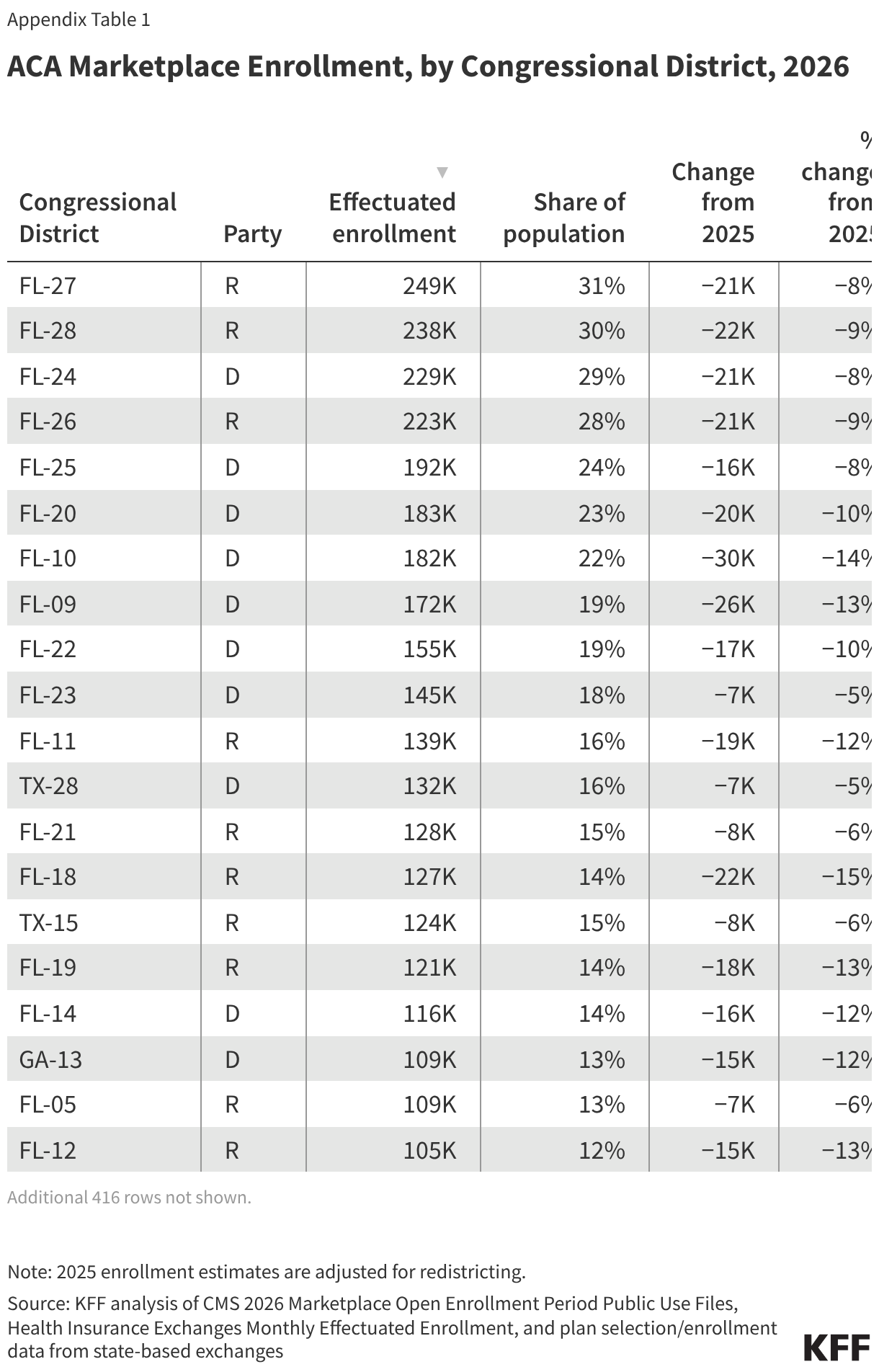
ACA Marketplaces insurers are proposing a median premium increase of 15% in 2027, according to KFF’s updated analysis of 276 insurers with publicly available filings across all 50 states and the District of Columbia. This is the second consecutive year of double-digit premium hikes. Last year’s median nationwide proposed rate change was 18%, and the median finalized rate change was 20%. While this proposed rate change is lower than last year, it represents the second-highest requested rate change since 2018, as premium growth had been relatively flat in this market for several years.

Based on detailed filings from 16 states and DC, rising healthcare prices—as in prior years—remain the primary driver of 2027 premium increases. Insurers cite higher costs for health services, general economic inflation, and labor shortages. They also point to factors unique to the individual market: the expiration of enhanced premium tax credits at the end of 2025 and a related increase in the risk pool’s morbidity, as contributing to rising rates for 2027.

The full analysis and other data on health costs are available on the Peterson-KFF Health System Tracker, an online information hub dedicated to monitoring and assessing the performance of the U.S. health system.

Tracking Implementation of the 2025 Reconciliation Law: Medicaid Work Requirements

Updated on:

The 2025 reconciliation law, once called the “One Big Beautiful Bill,” signed by President Trump on July 4, 2025, requires 44 states (including DC) to condition Medicaid eligibility for adults in the Affordable Care Act (ACA) Medicaid expansion group and certain enrollees in 1115 waiver programs on meeting work requirements starting January 1, 2027. Currently, 41 states (including DC) have expanded their Medicaid programs under the ACA to nearly all adults with income up to 138% FPL ($21,597 for an individual in 2025). In June 2026, CMS released a list of states with 1115 waiver programs that include individuals who will be subject to work requirements. The list identifies waiver programs in three non-expansion states Georgia, Tennessee, and Wisconsin, as well as in five expansion states, Hawaii, Massachusetts, New York, Oregon, and Utah (Figure 1).  

ACA Medicaid Expansion Enrollees and Certain Medicaid Section 1115 Waiver Enrollees Will Be Required to Meet Work Requirements in 44 States. (Choropleth map)

To implement Medicaid work requirements, states will need to make important policy and operational decisions, implement needed system upgrades or changes, develop new outreach and education strategies, and hire and train staff, all within a relatively short timeframe. The information tracked here can serve as a resource to understand Medicaid work requirements and state options, gauge readiness, and track implementation of the requirements, including:

This resource will be updated to include guidance from the Centers for Medicare and Medicaid Services (CMS), information on state policy decisions as they are made, and new data when available.

Continue scrolling to learn more about the Medicaid work requirements in the 2025 reconciliation law.

Tracking Implementation of the 2025 Reconciliation Law Medicaid Work Requirements

Updated on:

CMS Guidance and Information

Operational and Implementation Questions

Table

Tracking Implementation of the 2025 Reconciliation Law Medicaid Work Requirements

Updated on:

The 2025 reconciliation law requires states to condition Medicaid eligibility for adults in the ACA Medicaid expansion group on meeting work requirements starting January 1, 2027; however, states have the option to implement requirements sooner through a state plan amendment (SPA) or through an approved 1115 waiver.

State Plan Amendments (SPAs)

States may choose to implement work requirements prior to the required January 1, 2027 implementation date through a state plan amendment. Nebraska is the first state to announce that it will begin enforcing federal work requirements early through a state plan amendment, starting May 1, 2026. Two other states are also planning to implement before January 2027–Montana on July 1, 2026 and Iowa on December 1, 2026. Arkansas has announced that it plans to launch a soft implementation of work requirements on July 1, 2026 but will not disenroll individuals prior to January 1, 2027.

1115 Waivers

Since the start of the second Trump administration, several states have submitted waivers to implement work requirements. However, states are unlikely to be moving forward with proposed 1115 waivers at this time due to the passage of federal work requirements. States that plan to implement federal work requirements early will do so through a state plan amendment. Currently, Georgia is the only state with a Medicaid work requirement waiver in place following litigation over the Biden administration’s attempt to stop it. Georgia’s waiver will expire December 31, 2026; the state is required to come into compliance with the new federal requirements effective January 1, 2027.

Early Implementation and Waiver Status

The map below identifies states that have indicated they will implement federal work requirements early through a state plan amendment and the one state (Georgia) that has implemented work requirements through an 1115 waiver.

States Implementing Work Requirements Early and/or With Approved Work Requirement Waivers (Choropleth map)

Tracking Implementation of the 2025 Reconciliation Law Medicaid Work Requirements

Updated on:

KFF Resources on Medicaid Work Requirements

Work requirements overview:

50-state survey of Medicaid eligibility and enrollment policies:

Medical frailty exemption:

Implementation of work requirements:

Research and analysis on Medicaid and work:

1115 work requirement waivers:

Work requirements implications and state experience:

Arkansas work requirement experience:

KFF Polling on Work Requirements:

Beyond the Data by KFF CEO Drew Altman:

Overview of President Trump’s Executive Actions on Global Health

Published: Aug 3, 2026

Note: Originally published on Jan. 28, 2025, this resource is updated as needed, most recently on August 3, 2026, to reflect additional developments. 

Starting on the first day of his second term, President Trump began to issue numerous executive actions, several of which directly address or affect U.S. global health efforts.* This guide provides an overview of these actions, in the order in which they were issued. The “date issued” is date the action was first taken; subsequent actions are listed under “What Happens/Implications.” See an accompanying timeline of events specific to the foreign aid review and USAID dissolution.

President Trump’s Executive Actions on Global Health

Initial Rescissions Of Harmful Executive Orders And Actions, January 20, 2025
PURPOSE: Initial rescissions of Executive Orders and Actions issued by President Biden.

Among these orders are several that addressed the COVID-19 pandemic and global health security, such as Executive Order 13987 (Organizing and Mobilizing the United States Government To Provide a Unified and Effective Response To Combat COVID-19 and To Provide United States Leadership on Global Health and Security),  which among other things established the National Security Council Directorate on Global Health Security and Biodefense and a Senior Director position to oversee it.
What Happens Next/Implications: Given that most of the provisions in the COVID-19 and Global Health Security actions issued by President Biden are no longer current or relevant, the rescissions of these actions are likely to have minimal effect on government policies. One exception may be the elimination of the Directorate of Global Health Security and Biodefense and its Senior Director at the National Security Council, which were responsible for interagency coordination on global health security matters during the Biden Administration. The elimination of this office echoes a similar move made during the first Trump Administration to eliminate an NSC Directorate for Global Health Security, and raises questions about who and which offices at NSC (and across the government) will fill this coordination role in the new Administration. More rescissions of other Biden administration Executive Actions may be issued at a later date.
Withdrawing The United States From The World Health Organization, January 20, 2025
PURPOSE: To withdraw from the World Health Organization (WHO).
“The United States noticed its withdrawal from the World Health Organization (WHO) in 2020 due to the organization’s mishandling of the COVID-19 pandemic that arose out of Wuhan, China, and other global health crises, its failure to adopt urgently needed reforms, and its inability to demonstrate independence from the inappropriate political influence of WHO member states.  In addition, the WHO continues to demand unfairly onerous payments from the United States, far out of proportion with other countries’ assessed payments. China, with a population of 1.4 billion, has 300 percent of the population of the United States, yet contributes nearly 90 percent less to the WHO.”

ACTIONS: The United States intends to withdraw from the WHO. 
The Presidential Letter to the Secretary-General of the United Nations signed on January 20, 2021, that retracted the United States’ July 6, 2020, notification of withdrawal is revoked.
Executive Order 13987 (Organizing and Mobilizing the United States Government to Provide a Unified and Effective Response to Combat COVID–19 and To Provide United States Leadership on Global Health and Security), which, among other things, called for “engaging with and strengthening the World Health Organization” is revoked.
Assistant to the President for National Security Affairs shall establish directorates and coordinating mechanisms within the National Security Council apparatus as necessary and appropriate to safeguard public health and fortify biosecurity.
The Secretary of State and Director of the Office of Management and Budget shall take actions to pause future transfer of any U.S. funds, support, or resources to WHO; recall and reassign U.S. government personnel or contractors working in any capacity with WHO; and identify credible and transparent U.S. and international partners to assume necessary activities previously undertaken by WHO.
The Director of the White House Office of Pandemic Preparedness and Response Policy shall review, rescind, and replace the 2024 U.S. Global Health Security Strategy.
The Secretary of State shall immediately inform the Secretary-General of the United Nations, any other applicable depositary, and the leadership of the WHO of the withdrawal.
While the withdrawal is in progress, Secretary of State will cease negotiations on the WHO Pandemic Agreement and the amendments to the International Health Regulations, and states that “actions taken to effectuate such agreement and amendments will have no binding force on the United States.”
What Happens Next/Implications: President Trump initiated a process to withdraw from the WHO during his first term in office, a process that takes a year to finalize, and halted funding. This time period was not met when President Biden took office and he reversed this decision and restored funding. Now, after issuance of a formal letter of withdrawal United Nations and WHO, the process will be initiated once again. Such a letter has been issued, indicating that membership will end as of January 22, 2026.Per the Executive Order, U.S. government representatives may not work with WHO. While U.S. representatives attended the Executive Board meeting in February (the U.S. previously held a seat on the Executive Board), no representatives attended the World Health Assembly in May, where world leaders adopted the Pandemic Agreement. On May 30, the White House released details on the President’s Budget Request for FY 2026, requesting eliminated funding for WHO. Further, on June 3, the administration asked Congress to rescind funds previously appropriated for fiscal years 2024 and 2025, including contributions to WHO. However, for both the FY 2026 appropriations and FY2024-25 rescissions, Congress will determine the final funding levels. As the largest donor to WHO providing approximately 16%-18% of the organization’s revenue, the absence of U.S. funding will have an impact WHO’s operations, as will the loss of U.S. technical expertise. See: KFF Fact Sheet and Quick Take

Update: The formal withdrawal of the U.S. government from the WHO became effective on January 22, 2026.
Reevaluating And Realigning United States Foreign Aid, January 20, 2025
PURPOSE: To pause funding and review all U.S. foreign assistance to assess alignment with American values.

The U.S. “foreign aid industry and bureaucracy are not aligned with American interests and in many cases antithetical to American values. They serve to destabilize world peace by promoting ideas in foreign countries that are directly inverse to harmonious and stable relations internal to and among countries.”

“It is the policy of United States that no further United States foreign assistance shall be disbursed in a manner that is not fully aligned with the foreign policy of the President of the United States.”

Calls for:

90-day pause in U.S. foreign development assistance (new obligations or disbursements) to assess programmatic efficiencies and consistency with U.S. foreign policy.
Review of U.S. foreign assistance programs by the responsible department and agency heads under guidelines provided by the Secretary of State, in consultation with the Director of OMB.
Responsible department and agency heads, in consultation with the Director of OMB, will make determinations within 90 days of this order on whether to continue, modify, or cease each foreign assistance program based upon the review recommendations, with the concurrence of the Secretary of State.
New obligations and disbursements may resume for a program prior to the end of the 90-day period if a review is conducted, and the Secretary of State or his designeein consultation with the Director of OMB, decide to continue the program in the same or modified form.  Additionally, any other new foreign assistance programs and obligations must be approved by the Secretary of State or his designee, in consultation with the Director of OMB.
The Secretary of State may waive the pause for specific programs.
What Happens Next/Implications: Almost all global health programs are funded through foreign aid appropriations and are therefore subject to this order. The order temporarily freezes any new U.S. government spending (obligations or disbursements) through these programs, which could interrupt implementation of programs for which funds have not yet been obligated. It also calls for a 90-day review of all foreign aid programs. Key developments are as follows:
On January 24, 2025, A Notice on Implementation of the Executive Order was issued by USAID which, among other things, calls for stop-work orders to be issued for all existing foreign assistance awards (not just new obligations and disbursements). It notes that waivers have been granted for: foreign military financing for Israel and Egypt and emergency food assistance (and related expenses) and, on a temporary basis, salaries and related administrative expenses, including travel, for U.S. direct hire employees, personal services contractors, and locally employed staff. The stop-work order on existing awards halted U.S. global health (and other foreign assistance) programs that were already underway, placing key programs at risk of not being able to provide critical services, and affecting access for individuals on the ground, unless a waiver was received.
On January 28, the Secretary of State  issued a blanket waiver for life-saving humanitarian assistance programs, which also lays out a process for requesting additional waivers (more information is here). This guidance also states that the waiver does not apply to “activities that involve abortions, family planning, conferences, administrative costs [unless associated with waived activities], gender or DEI ideology programs, transgender surgeries, or other non-life saving assistance.”
On February 1, PEPFAR, the global HIV/AIDS program, was granted a limited waiver enabling it to resume or continue “urgent life-saving HIV treatment  services”, defined as a set of care and treatment services and prevention of mother-to-child transmission services.
On February 4, some additional services for other global health programs  – tuberculosis; malaria; acute risks of maternal and child mortality, including severe acute malnutrition; and other life-threatening diseases and health conditions – deemed to be “lifesaving” were also granted a limited waiver to allow them to resume or continue.
On February 6, a lawsuit was filed by Democracy Forward and Public Citizen Litigation Group, on behalf of the American Foreign Service Association and American Federation of Government Employees, challenging the foreign aid funding freeze, the plan to put most staff on leave, and the fact that staff had already been placed on leave; on February 7, they filed a temporary restraining order (TRO). That same day, a temporary restraining order was issued by the U.S. District Court in the District of Columbia preventing the government from placing additional staff on leave or evacuating staff back to the U.S., and requiring reinstatement of all staff already placed on leave, until February 14. The court did not grant a TRO on the funding freeze, on the grounds that the plaintiffs in this case did not demonstrate that the freeze caused them irreparable harm. On February 13, the court extended the TRO through February 21 (further actions are described below, as this case was combined with another for purposes of the court’s consideration).
On February 10, a lawsuit was filed in the U.S. District Court for the District of Columbia on behalf of two U.S. organizations seeking emergency relief from the freeze on funding for foreign assistance (AVAC v. United States Department of State).
On February 11, a lawsuit was filed in the U.S. District Court for the District of Columbia on behalf of several U.S. organizations challenging the executive order and subsequent actions freezing foreign aid and dissolving USAID, and asking the court to temporarily restrain and preliminarily and permanently enjoin Defendants from implementing these actions (Global Health Council v. Trump).
On February 13, the court, in a ruling pertaining to the February 10 and February 11 lawsuits brought by numerous U.S. organizations, issued a TRO preventing the Trump administration from “suspending, pausing, or otherwise preventing the obligation or disbursement of appropriated foreign-assistance funds in connection with any contracts, grants, cooperative agreements, loans, or other federal foreign assistance award that was in existence as of January 19, 2025; or issuing, implementing, enforcing”, or “otherwise giving effect to terminations, suspensions, or stop-work orders in connection with any contracts, grants, cooperative agreements, loans, or other federal foreign assistance award that was in existence as of January 19, 2025.”
On February 14, the parties filed a joint status report proposing an expedited preliminary injunction briefing schedule.
On February 18, the government filed a required status report stating that, despite the TRO, it had the authority to cancel contracts and suspend grant awards.
This was followed by a February 19 request by the February 10 plaintiffs (AVAC v. Department of State) for an emergency motion to enforce the TRO and to hold the defendants in civil contempt.
The defendants filed a required response on February 20, stating that they have not violated the TRO and should not be held in contempt, which was again opposed by the plaintiffs. Also on February 20, the February 11 plaintiffs (Global Health Council v. Trump) filed a response to the defendant’s status report with a motion to enforce the TRO.  The court reaffirmed the TRO on February 20 (but did not hold the defendants in contempt), stating it was prepared to hold a hearing on the preliminary injunction motions in both cases by March 4, 2025 and that the TRO would be in place through March 10, 2025, or the date the Court resolves the preliminary injunction motions, whichever is sooner.
The plaintiffs filed an emergency order to enforce the TRO on February 24, due to continued lack of payment, and the court issued a motion to enforce on February 25. The government appealed, (asking for a stay pending appeal) but this was denied by the court. The government then appealed to the Supreme Court and was granted a stay until February 28 while the case was considered.
On March 5, the Supreme Court denied the government’s request to vacate the federal district court’s TRO, sending the order back to the district court to clarify the government’s obligations for ensuring compliance with the TRO.
On March 6, the federal district court judge ordered the government to release all payments that were due to plaintiffs as of February 13, by Monday, March 10 at 6pm, and on March 10, the federal district court judge preliminarily enjoined the government from taking certain actions related to the foreign aid freeze.
On March 10, Secretary Rubio announced that a six-week review had been completed and that 83% of programs at USAID (5,200 contracts) had been cancelled. That same day, the court  preliminarily enjoined the government from enforcing actions taken to implement the foreign aid freeze (requiring it to reverse any terminations, suspensions, and stop-work orders and to pay for any work completed by February 13). The court stated that the government was “enjoined from unlawfully impounding congressionally appropriated foreign aid funds and shall make available for obligation the full amount of funds that Congress appropriated for foreign assistance programs in the Further Consolidated Appropriations Act of 2024.”
On April 1, the government filed an appeal with the U.S. Court of Appeals for the District of Columbia challenging the preliminary injunction issued on March 10.
On April 17, the administration extended the foreign aid review for another 30 days from the original deadline of April 20, 2025.
On May 2 and May 30, the White House released information on its budget request for FY 2026, proposing significant decreases, and in some cases eliminations, of funding for global health activities. However, Congress will determine the final funding levels.
On June 3, the administration asked Congress to rescind previously appropriated funds for fiscal years 2024 and 2025, including $8.3 billion in foreign assistance, of which at least $1.2 billion was designated for global health. However, Congress will need to approve any potential rescissions.
• On August 13, the U.S. District Court of Appeals for the District of Columbia Circuit partially vacated the March 10 preliminary injunction in the cases GHC v. Trump and AVAC v. State Department which required the government to make congressionally appropriated foreign assistance funds available for obligation. The appeals court ruled that the plaintiffs did not have the authority to challenge the President’s impoundment of funds. Instead, the court ruled that challenges of impoundment should be brought forward by the Comptroller General.
• On August 28, the U.S. District Court of Appeals for the District of Columbia Circuit amended its opinion, clarifying that while plaintiffs did not have the authority to challenge impoundment of foreign assistance funds through the Impoundment Control Act, they could seek relief through the Administrative Procedures Act. Following this amended opinion, plaintiffs in GHC v. Trump and AVAC v. State Department cases motioned for a preliminary injunction in the U.S. district court on September 1. On September 3, the U.S. district court granted the preliminary injunction, ordering defendants to obligate expiring foreign assistance funds before the end of the fiscal year on September 30. On September 4, defendants appealed this preliminary injunction and requested a stay on the preliminary injunction pending the resolution of the appeals case, from both the district court and appeals court. These requests were both denied on September 5. On September 8, defendants requested a stay of the preliminary injunction as it pertained to funds included in the President’s proposed rescissions package from the U.S Supreme Court. On September 9, the Chief Justice of the Supreme Court granted a partial administrative stay of the preliminary injunction, and on September 26, the court granted the partial stay, allowing the administration to rescind the $4 billion that was in rescission package. Further legal proceedings in the case are currently stayed as the parties await the outcome of a separate legal case.
• On July 27, 2026, plaintiffs in the GHC v. Trump case filed a motion requesting a summary judgment which would compel defendants to, among other things, obligate remaining foreign assistance and global health funds set to expire on September 30, 2026.

The 90-day review of foreign assistance was initially supposed to go through April 19, 2025, however, has been granted a 30-day extension. No formal results of the review have been announced.
America First Policy Directive To The Secretary Of State, January 20, 2025
PURPOSE: To put core American interests first in foreign policy.

The foreign policy of the United States “shall champion core American interests and always put America and American citizens first.”

“As soon as practicable, the Secretary of State shall issue guidance bringing the Department of State’s policies, programs, personnel, and operations in line with an America First foreign policy, which puts America and its interests first.”
What Happens Next/Implications: The State Department is responsible for the supervision and overall strategic direction of foreign assistance programs administered by the State Department and USAID, which includes the vast majority of global health assistance. It also directly oversees PEPFAR, the global HIV/AIDS program, and many aspects of global health diplomacy for the U.S. Priorities and approaches for these and other global health programs are likely to be shaped by how the White House and State Department leadership define “America First” foreign policy and American interests, and how that definition is implemented in practice.

Update: On September 18, the State Department released the America First Global Health Strategy, its new vision for U.S. global health engagement. The strategy is built around three pillars — “making America safer, stronger, and more prosperous” — and prioritizes funding for direct service support, such as commodities and health workers, includes plans for country co-investment, and seeks to transition program management operations from U.S. leadership to country ownership. The State Department is entering into multi-year bilateral agreements with recipient countries and implementation of these new agreements will begin sometime in 2026.
Defending Women From Gender Ideology Extremism And Restoring Biological Truth To The Federal Government, January 20, 2025
PURPOSE: To define sex as an immutable binary biological classification and remove recognition of the concept of gender identity.

• The order states that “It is the policy of the United States to recognize two sexes, male and female” and directs the Executive Branch to “enforce all sex-protective laws to promote this reality”. Elements of the order that may affect global health programs are as follows:
Defines sex as “an individual’s immutable biological classification as either male or female”.  States that “sex” is not a synonym for and does not include the concept of “gender identity” and that gender identity “does not provide a meaningful basis for identification and cannot be recognized as a replacement for sex.”
Directs the Secretary of Health and Human Services to provide the U.S. Government, external partners, and the public clear guidance expanding on the sex-based definitions set forth in the order within 30 days.
Directs each agency and all Federal employees to “enforce laws governing sex-based rights, protections, opportunities, and accommodations to protect men and women as biologically distinct sexes, including when interpreting or applying statutes, regulations, or guidance and in all other official agency business, documents, and communications.
Directs each agency and all Federal employees, when administering or enforcing sex-based distinctions, to use the term “sex” and not “gender” in all applicable Federal policies and documents.
Directs agencies to remove all statements, policies, regulations, forms, communications, or other internal and external messages “that promote or otherwise inculcate gender ideology”, and shall cease issuing such statements, policies, regulations, forms, communications or other messages. Directs agencies to take all necessary steps, as permitted by law, to end the Federal funding of gender ideology.
Requires that Federal funds shall not be used to promote gender ideology and directs agencies to ensure grant funds do not promote gender ideology.
Rescinds multiple executive orders issued by President Biden, including: “Preventing and Combating Discrimination on the Basis of Gender Identity or Sexual Orientation” (13988) and “Advancing Equality for Lesbian, Gay, Bisexual, Transgender, Queer, and Intersex Individuals” (14075).
What Happens Next/Implications: This order is broad, directed to all federal agencies and programs. Because PEPFAR, and some other U.S. global health programs, serve people who are members of the LGBTQ community, guidance and implementation could affect the ability of these programs to reach individuals and organizations and provide them with services. In addition, the order will likely result in the removal of existing protections based on sexual orientation and gender identity, which had been provided in agency guidance for global health and development programs. Implementation guidance has been issued and all federal agencies must comply.

Update: On January 27, 2026, citing this order (among others) the Trump administration released details of the “Promoting Human Flourishing in Foreign Assistance (PHFFA)” policy which significantly expands the Mexico City Policy (see below) to also prohibit the promotion of “gender ideology” and to apply to significantly more funding and organizations.
Memorandum For The Secretary Of State, The Secretary Of Defense, The Secretary Of Health And Human Services, The Administrator Of The United States Agency For International Development, January 24, 2025
PURPOSE: To reinstate Mexico City Policy and direct review of programs per the Kemp-Kasten Amendment.

• Revokes President Biden’s Presidential Memorandum of January 28, 2021 for the Secretary of State, the Secretary of Defense, the Secretary of Health and Human Services, and the Administrator of the United States Agency for International Development (Protecting Women’s Health at Home and Abroad).
Reinstates President Trump’s Presidential Memorandum of January 23, 2017 for the Secretary of State, the Secretary of Health and Human Services, and the Administrator of the United States Agency for International Development (The Mexico City Policy).
Directs the Secretary of State, in coordination with the Secretary of Health and Human Services, to the extent allowable by law, to implement a plan to extend the requirements of the reinstated Memorandum to global health assistance furnished by all departments or agencies.
Directs the Secretary of State to take all necessary actions, to the extent permitted by law, to ensure that U.S. taxpayer dollars do not fund organizations or programs that support or participate in the management of a program of coercive abortion or involuntary sterilization.
What Happens Next/Implications: The Mexico City Policy is a U.S. government policy that – when in effect – has required foreign NGOs to certify that they will not “perform or actively promote abortion as a method of family planning” using funds from any source (including non-U.S. funds) as a condition of receiving U.S. global family planning assistance and, when in place under the Trump administration, most other U.S. global health assistance. First announced in 1984 by the Reagan administration, the policy has been rescinded and reinstated by subsequent administrations along party lines since, and expanded over time, including a significant expansion during the first Trump administration; it was widely expected that the President Trump would reinstate it in his second term and expand it further. The memorandum calls for the implementation of a plan to extend the requirements to global health assistance furnished by all departments or agencies; until the plan is ready, the scope of the new memorandum is unknown.

The memorandum also directs the Secretary of State to review programs under the Kemp-Kasten amendment, a provision of U.S. law that states that no U.S. funds may be made available to “any organization or program which, as determined by the [p]resident of the United States, supports or participates in the management of a program of coercive abortion or involuntary sterilization.” It has been used in the past to prevent funding from going to UNFPA. See: KFF Mexico City Policy explainer and related resources and Kemp-Kasten explainer.

Update: On January 7, 2026, the Trump administration announced that it had formally withdrawn from membership and participation in UNFPA, also citing the Executive Order on “Withdrawing the United States from and Ending Funding to Certain United Nations Organizations and Reviewing United States Support to All International Organizations.”

Update: Three interim final rules expanding and implementing the Mexico City Policy, now called the Promoting Human Flourishing in Foreign Assistance (PHFFA) Policy, were issued on January 27, 2026:
Protecting Life in Foreign Assistance
Combating Gender Ideology in Foreign Assistance
Combating Discriminatory Equity Ideology in Foreign Assistance Rules
This latest expansion now includes most non-military foreign assistance and applies to U.S. NGOs, international organizations, and foreign governments, as well as foreign NGOs. In addition to abortion, it also now prohibits the promotion of “discriminatory equity ideology” and “gender ideology.”

Renewed Membership in the Geneva Consensus Declaration on Promoting Women’s Health and Strengthening the Family, January 24, 2025
PURPOSE: To rejoin the Geneva Consensus Declaration.

The United States informed signatories of the Geneva Consensus Declaration of its intent to rejoin immediately. Established in 2020, the declaration, led by the United States, has the following objectives: “to secure meaningful health and development gains for women; to protect life at all stages; to defend the family as the fundamental unit of society; and to work together across the UN system to realize these values.”
What Happens Next/Implications: The Geneva Consensus Declaration, initially crafted and signed by the U.S. – along with 31 other countries at the time – was meant to enshrine certain values and principles related to women’s health and family, including a rejection of the “international right to abortion.”  The Biden administration withdrew from the Consensus in 2021.
Review of and Changes to USAID, January 27, 2025
Reorganization of the Department of State, April 22, 2025
PURPOSE: To review and potentially reorganize USAID “to maximize efficiency and align operations with the national interest,” which may include the suspension or elimination of programs, projects, or activities; closing or suspending missions or posts; closing, reorganizing, downsizing, or renaming establishments, organizations, bureaus, centers, or offices; reducing the size of the workforce at such entities; and contracting out or privatizing functions or activities performed by federal employees.What Happens Next/Implications: Related to but separate from the Executive Order on reevaluating and realigning foreign aid and on the America first policy directive to the Secretary of State, the administration has made changes to and begun a review of USAID, the U.S. government’s international development agency which oversees and/or implements most U.S. global health programs (see, The U.S. Government and Global Health). Key developments are as follows:
On January 27, senior USAID career staff were placed on leave and hundreds of other staff were let go.
On February 2, the USAID website was taken down.
On February 3, the USAID building in DC was closed, which has prevented other staff from accessing it.
The President appointed Secretary of State Rubio as Acting USAID Administrator on February 3. Secretary Rubio has said that the agency has “conflicting, overlapping, and duplicative functions that it shares with the Department of State” and that its systems and processes are not “well synthesized, integrated, or coordinated, and often result in discord in the foreign policy and foreign relations of the United States.” President Trump and other administration officials have called for dissolving the agency altogether. Formal notification of the intent to review the agency was sent by Secretary Rubio to Congress on February 3.
On February 4, a notice was posted on the USAID website stating that on February 7, all USAID direct hire personnel would be placed on administrative leave globally, with the exception of “designated personnel responsible for mission­ critical functions, core leadership and specially designated programs.” The notice also said that staff posted outside the United States would need to return to the U.S. within 30 days.
On February 6, a lawsuit was filed by Democracy Forward and Public Citizen Litigation Group, on behalf of the American Foreign Service Association and American Federation of Government Employees, challenging the foreign aid funding freeze, the plan to put most staff on leave, and the fact that staff had already been placed on leave; on February 7, they filed for a temporary restraining order (TRO). That same day, a temporary restraining order was issued by the U.S. District Court in the District of Columbia preventing the government from placing additional staff on leave or evacuating staff back to the U.S., and requiring reinstatement of all staff already placed on leave, until February 14. The court did not grant a TRO on the funding freeze, on the grounds that the plaintiffs in this case did not demonstrate that the freeze caused them irreparable harm. On February 13, the court extended the TRO through February 21, at which time, the court determined that further preliminary injunctive relief was not warranted and the TRO was ended, allowing the government to dismiss USAID staff.
On February 11, a lawsuit was filed in the U.S. District Court for the District of Columbia on behalf of several U.S. organizations challenging the executive order pausing foreign aid, and subsequent actions freezing foreign aid and dissolving USAID, and asking the court to temporarily restrain and preliminarily and permanently enjoin Defendants from implementing these actions. In a February 13 ruling, a federal court issued a TRO preventing the Trump administration from freezing foreign aid assistance but stated that the proposed injunctions related to USAID were overbroad (in a separate case, the district court ended the TRO on dismissing USAID staff – see above).
On February 13, a lawsuit was filed in the U.S. District Court for the District of Maryland by 26 former and current employees of USAID, suing Elon Musk and DOGE for taking actions to control and dissolve the agency. On February 18, the plaintiffs filed a motion for preliminary injunction. The defendants responded on February 24 and the plaintiffs replied on February 26. On March 18, the court granted a preliminary injunction, requiring the defendants to reverse many of the actions taken to dissolve USAID, and on March 21, the defendants filed an appeal on the preliminary injunction. On March 25, the U.S. 4th Circuit Court of Appeals granted the defendants’ motion for a temporary stay on the preliminary injunction, allowing DOGE to resume its efforts to dissolve USAID, until March 27. The following day on March 28, the court granted defendants’ motion for a stay, clearing the path for DOGE to continue its work dissolving USAID.
On February 18, a lawsuit was filed in the U.S. District Court for the District of Columbia on behalf of the Personal Services Contractor Association (representing USAID personal service contractors) challenging the suspension of foreign assistance and the actions related to USAID, including “steps to dismantle USAID, cripple its operations, or transfer its functions to the State Department without Congressional authorization”. On February 19, the plaintiffs filed a motion for a temporary restraining order. On March 6, the court denied the TRO request.
On March 28, Secretary Rubio announced that the Department of State and USAID have notified Congress on their intent to “undertake a reorganization that would involve realigning certain USAID functions to the Department by July 1, 2025, and discontinuing the remaining USAID functions that do not align with Administration priorities.” Additionally, nearly all the remaining USAID staff received notice that they would be subject to a final reduction-in-force.
On April 22, Secretary Rubio announced the Department of State’s reorganization plan and new organization chart. The plan states that it would consolidate functions and remove non-statutory programs that are “misaligned with America’s core national interests.”
On April 28, a lawsuit was filed by a group of labor unions, non-profits, and local governments challenging the administration’s moves to drastically reshape several federal agencies without congressional approval (American Federation of Government Employees v. Trump). The district court issued a TRO on May 9 and preliminary injunction on May 22 ordering the administration to pause large-scale reductions in force, program eliminations, and other actions related to federal agency restructuring. An emergency motion by the government for a stay pending appeal of the district court’s preliminary injunction was denied on May 30.
On May 2 and May 30, the White House released information on its budget request for FY 2026, noting the reorganization of USAID into the Department of State.
On May 29, the Department of State notified Congress of its reorganization plans, including absorbing USAID’s continued functions.
On June 13, the district court in American Federation of Government Employees v. Trump ruled that the actions of the Department of State, including the reorganization announcement and notification to Congress, were in violation of the preliminary injunction.
On July 8, the U.S. Supreme Court granted the government’s request for a stay of the preliminary injunction pending resolution of the appeals case in American Federation of Government Employees v. Trump, allowing the government to move forward with large-scale reductions to federal agency operations and workforces, including at the State Department.
On April 20, 2026, a congressional notification was sent to Congress outlining plans for USAID to use remaining funds, including $2 billion in FY25 funding from the Global Health Programs (GHP) account, to close out the agency and terminated awards.

While initially created through Executive Order in 1961 as part of the State Department, the Foreign Affairs Reform and Restructuring Act of 1998 established it as an independent agency within the executive branch. As such, the Executive branch does not have authority to dissolve it without Congress, and Congress also requires notification first as well as consultation on any proposed changes.

Update: On July 1, 2025, USAID was dissolved (with most employees being separated from the agency; any remaining personnel were separated by September 2, 2025). Remaining functions/activities were transferred to the State Department.
Withdrawing the United States From and Ending Funding to Certain United Nations Organizations and Reviewing United States Support to All International Organizations, February 4, 2025
PURPOSE: To review United States participation in all international intergovernmental organizations, conventions, and treaties and to withdraw from and end funding to certain United Nations (U.N.) organizations.

The U.S. “helped found” the U.N. “after World War II to prevent future global conflicts and promote international peace and security.  But some of [its] agencies and bodies have drifted from this mission and instead act contrary to the interests of the United States while attacking our allies and propagating anti-Semitism.”
States that the U.S. “will reevaluate our commitment to these institutions,” including three organizations that “deserve renewed scrutiny”:
a) the U.N. Human Rights Council (UNHRC; the U.S. will not participate in and withhold its contribution to the budget of the body),
b) the U.N. Educational, Scientific, and Cultural Organization (UNESCO; the U.S. will conduct a review of its membership in the body within 90 days), and
c) the U.N. Relief and Works Agency for Palestine Refugees in the Near East (UNRWA; reiterates that the U.S. will not contribute to the body).
Requires that within 180 days:
a) the Secretary of State, with the U.S. Ambassador to the U.N., conduct a review of all international intergovernmental organizations of which the U.S. is a member and provides any type of funding or other support, and all conventions and treaties to which the United States is a party, to determine which organizations, conventions, and treaties are contrary to the interests of the United States and whether such organizations, conventions, or treaties can be reformed; and
b) the Secretary of State to report the findings of the review to the President, through the National Security Advisor, and provide recommendations as to whether the U.S. should withdraw from any such organizations, conventions, or treaties.
What Happens Next/Implications: With a long history of multilateral global health engagement, the U.S. is often the largest or one of the largest donors to multilateral health efforts (i.e., multi-country, pooled support often directed through an international organization). It provided $2.4 billion in assessed or core contributions in FY 2024 – 19% of overall U.S. global health funding – as well as more funding in voluntary or non-core contributions.

The U.S. is also a signatory or party to numerous global health-related international conventions, treaties, and agreements; these include those that played a role in the global COVID-19 response (such as the International Health Regulations). It often has participated in negotiations for new international instruments, although the Trump administration indicated in a Jan. 20, 2025, Executive Order, listed above, that the U.S. would no longer engage in the Pandemic Agreement (sometimes called the “Pandemic Treaty”) negotiations.

This Executive Order will have immediate impacts via the ordered actions related to the three U.N. organizations specified, much as the impacts of the Jan. 20, 2025, Executive Order on the World Health Organization (WHO, which initiated U.S. withdrawal from membership and halted U.S. funding) are already being seen. Beyond these, additional impacts of this Executive Order will be determined by the findings and recommendations of the international organizations and conventions review, particularly if U.S. support for or membership in some international organizations is recommended to be reduced or eliminated and if it recommends the U.S. withdraw from any international agreements.

The 180 day review of all international intergovernmental organizations goes through August 3, 2025.

Update: On January 7, 2026, the Trump administration announced that it had formally withdrawn from 66 international organizations, including United Nations entities and non-UN entities.  
Memorandum For The Heads Of Executive Departments And Agencies, February 6, 2025
PURPOSE: The memorandum seeks to “stop funding Nongovernmental Organizations that undermine the national interest and administration priorities”.

The memorandum:
States: it is Administration policy “to stop funding NGOs [Nongovernmental Organizations] that undermine the national interest.”
Directs heads of executive departments and agencies to review all funding that agencies provide to NGOs and “to align future funding decisions with the interests of the United States and with the goals and priorities of my Administration, as expressed in executive action; as otherwise determined in the judgment of the heads of agencies; and on the basis of applicable authorizing statues, regulations, and terms.”
What Happens Next/Implications: This memo aligns with other Executive actions that target federal funding for global health and foreign assistance programs. Implementation of this memo could result in the Administration halting funding to global health NGOs they determine “do not align with administration priorities.” No criteria for how this determination will be made has been provided.

The majority of U.S. global health assistance is channeled through NGOs. In FY22, for example, 62% of U.S. global health funding was provided to NGOs as prime partners (45% to U.S.-based NGOs and 17% to foreign-based NGOs) and others are likely sub-recipients of U.S. assistance.* As such, this Order could have a significant impact on NGOs if it is determined that they do not align with administration policies. *Source: KFF analysis of data from www.foreignassistance.gov.
Addressing Egregious Actions of The Republic of South Africa, February 7, 2025
PURPOSE: To stop U.S. support for South Africa due to its “commission of rights violations in its country or its ‘undermining United States foreign policy, which poses national security threats to our Nation, our allies, our African partners, and our interests.”

“It is the policy of the United States that, as long as South Africa continues these unjust and immoral practices that harm our Nation:
(a)  the United States shall not provide aid or assistance to South Africa; and
(b)  the United States shall promote the resettlement of Afrikaner refugees escaping government-sponsored race-based discrimination, including racially discriminatory property confiscation.”

ACTIONS:
All executive departments and agencies, including USAID, shall, to the maximum extent allowed by law, halt foreign aid or assistance delivered or provided to South Africa, and shall promptly exercise all available authorities and discretion to halt such aid or assistance.
The head of each agency may permit the provision of any such foreign aid or assistance that, in the discretion of the relevant agency head, is necessary or appropriate.
The Secretary of State and the Secretary of Homeland Security shall take appropriate steps, consistent with law, to prioritize humanitarian relief, including admission and resettlement through the United States Refugee Admissions Program, for Afrikaners in South Africa. A plan shall be submitted to the President through the Assistant to the President and Homeland Security Advisor.
What Happens Next/Implications: South Africa receives a significant amount of global health assistance, particularly for HIV/AIDS, from the United States government. The executive order allows the heads of U.S. agencies to permit the provision of foreign aid or assistance under this order at their discretion. On February 10, the U.S. Embassy and Consulates in South Africa announced that PEPFAR would not be impacted by this Executive Order and could continue under the limited waiver already granted to the foreign aid funding freeze. No other exceptions have yet been announced.

The Government of South Africa has issued a statement in response to the Executive Order that, among other things, expresses concern “by what seems to be a campaign of misinformation and propaganda aimed at misrepresenting our great nation.”

Notes and Sources:

*There are several other Executive Actions issued by the President that instruct all government agencies on a variety of topics and as such broadly affect global health program operations but are not specific to global health. These include, for example, Executive Actions withdrawing from the Paris Agreement under the United Nations Framework Convention on Climate Change and ending DEI programs. These are not included in this resource.

Sources: White House, https://www.whitehouse.gov/presidential-actions/; State Department, www.state.gov.

U.S. Foreign Aid Freeze & Dissolution of USAID: Timeline of Events

Published: Aug 3, 2026

Starting on his first day of his second term in office, President Trump and his administration have taken several executive actions that directly impact U.S. global health efforts. This timeline, which is a companion resource to components of KFF’s Overview of President Trump’s Executive Actions on Global Health, provides a detailed overview of actions, including counter-actions, related to the administration’s efforts to freeze all U.S. foreign aid, dissolve the U.S. Agency for International Development (USAID), which implements most U.S. global health programs, and reorganize the Department of State. It will be updated as needed to reflect additional developments. 


Medicaid/CHIP Monthly Enrollment Tracker

Published: Jul 31, 2026

Note: The data presented below are updated monthly as new Medicaid/CHIP enrollment data become available.

This tracker presents the most recent data on monthly Medicaid and Children’s Health Insurance Program (CHIP) enrollment reported by the Centers for Medicare & Medicaid Services (CMS) as part of the Performance Indicator Project. It includes data for Medicaid and CHIP and reports enrollment data for children and adults. The data are generally the most recent data available and are useful for reporting trends in Medicaid enrollment. However, the data only capture full-benefit enrollees, excluding those who receive limited benefits, such as those who receive family planning services only, and consequently, do not provide a full count of the total population enrolled in Medicaid. Additionally, these data cannot be used to monitor changes in enrollment by eligibility pathway, including for adults in the Medicaid expansion group. Enrollment data for the full Medicaid population is available here, and for more information on how implementation of Medicaid work requirements is affecting Medicaid expansion enrollment, please see Tracking Implementation of the 2025 Reconciliation Law Medicaid Work Requirements.

Following implementation of the Affordable Care Act’s (ACA) Medicaid expansion in January 2014, Medicaid enrollment increased as adults with income up to 138% of the federal poverty level (FPL) gained coverage. As more states adopted the expansion, Medicaid enrollment peaked at just over 75 million in March 2017 before declining steadily until the start of the COVID-19 pandemic in March 2020. By February 2020, enrollment had dropped to 71 million.

At the start of the pandemic, Congress enacted legislation that included a provision that Medicaid programs keep people continuously enrolled in exchange for enhanced federal funding. As a result, national Medicaid/CHIP enrollment increased to a record high of 94 million enrollees in March 2023 when the continuous enrollment provision ended. The unwinding of this provision started on April 1, 2023, and millions were disenrolled from Medicaid over the subsequent 16 months. By September 2024, national Medicaid/CHIP enrollment had dropped to 80 million. Medicaid enrollment stabilized briefly at the end of 2024 but began declining again in March 2025.

Passage of the 2025 reconciliation bill in July 2025 included significant changes to Medicaid that are expected to reduce Medicaid enrollment over the next 10 years relative to what would have been expected under current law. For the first time, the law conditions Medicaid eligibility for Medicaid expansion enrollees on meeting work and reporting requirements. These work requirements, which will go into effect in January 2027, or sooner at state option, represent the largest source of enrollment declines in the law. The bill also restricts eligibility for certain immigrant populations starting in October 2026, which is also expected to affect Medicaid enrollment.

The figures below show Medicaid and CHIP enrollment from February 2020 through the most current month of available data. Figures include enrollment for adults and children in Medicaid/CHIP and for Medicaid only and CHIP only. Key enrollment data and trends as of April 2026 include:

  • There were 73.9 million people enrolled in Medicaid/CHIP nationally (Figure 1). Medicaid enrollment declined by 5 million or 6% from April 2025 through April 2026 (Table 1).
  • Total Medicaid/CHIP enrollment has decreased in all states since April 2025. Enrollment changes since April 2025 vary from a less than 1% decrease in Iowa to a 20% decrease in Indiana (Figure 2).
  • Child enrollment in Medicaid/CHIP decreased in all states and DC but Hawaii from April 2025 through April 2026. Adult enrollment has decreased in all but five states (IA, MO, NC, OK, SD) (Figure 2).
  • There were 66.7 million people enrolled in Medicaid and 7.1 million people enrolled in CHIP (Figure 1). Since April 2025, Medicaid enrollment has decreased in all states and DC but Iowa while CHIP enrollment has increased in eighteen states (AL, CA, CT, DE, FL, HI, IL, MO, NJ, NM, NC, ND, RI, SC, TN, VT, WA, WI).
  • Total Medicaid/CHIP enrollment was 3% higher in April 2026 compared to enrollment in February 2020, prior to the pandemic. However, in the 49 states and DC with complete enrollment data by age, the number of children enrolled in Medicaid/CHIP declined by 631,000 or 2% from February 2020 to April 2026 (Figure 2 and Table 1).
National Enrollment in Medicaid/CHIP, February 2020 to April 2026 (Line chart)
Annual Percent Change in Medicaid/CHIP Enrollment (April 2025 to April 2026) (Column Chart)
Total Medicaid/CHIP Enrollment, Selected Time Periods (Table)

Note: The data on unwinding renewal outcomes presented below were last updated on September 12, 2024; since most states have now completed the Medicaid unwinding, the information will not be updated again.

As of September 12, 2024 and with nearly complete unwinding data for most states: 

  • Over 25 million people were disenrolled (31% of completed renewals) and over 56 million people had their coverage renewed (69% of completed renewals).  
  • Disenrollment rates varied across states from 57% in Montana to 12% in North Carolina, driven by a variety of factors including differences in renewal policies and procedures as well as eligibility expansions in some states.  
  • Among those who were disenrolled, nearly seven in ten (69%) were disenrolled for paperwork or procedural reasons while three in ten (31%) were determined ineligible.  
  • Among those whose coverage was renewed during the unwinding, 61% were renewed on an ex parte, or automated, basis, meaning the individual did not have to take any action to maintain coverage. 

State Data on Renewal Outcomes

The data on unwinding-related renewal outcomes presented in this section rely primarily on monthly reports that states were required to submit to the Centers for Medicare & Medicaid Services (CMS) during the unwinding period. The data also reflect updates to the monthly reports that states submit three months after the original report submission to account for the resolution of pending cases and any other changes in renewal metrics. For 13 states, data were pulled from dashboards or reports published on state websites that provide more complete information, and for a few additional states, updated monthly reports were pulled from state websites because they were more timely than what is reported on the CMS website. 

To view archived data for specific states, click on the State Data - Archived tab.


As of September 12, 2024, States Have Reported Renewal Outcomes for Nearly Nine Out of Ten People Who Were Enrolled in Medicaid/CHIP Prior to the Start of the Unwinding (Donut Chart)


Medicaid Disenrollments

  • As of September 12, 2024, at least 25,198,000 Medicaid enrollees had been disenrolled during the unwinding of the continuous enrollment provision. Overall, 31% of people with a completed renewal were disenrolled in reporting states while 69%, or 56.4 million enrollees, had their coverage renewed.
  • There is wide variation in disenrollment rates across reporting states, ranging from 57% in Montana to 12% in North Carolina. A variety of factors contribute to these differences, including differences in renewal policies and system capacity. Some states adopted policies that promote continued coverage among those who remain eligible and/or have automated eligibility systems that can more easily and accurately process renewals while other states have adopted fewer of these policies and have more manually-driven systems. In addition, North Carolina and South Dakota adopted Medicaid expansion and other states increased eligibility levels for certain populations (e.g., children, parents, etc.) during the unwinding, which may have lowered disenrollment rates in these states.

At Least 25,198,000 Medicaid Enrollees Have Been Disenrolled and 56,378,000 Have Had Their Coverage Renewed, as of September 12, 2024 (Stacked Bars)


  • Across all states with available data, 69% of all people disenrolled had their coverage terminated for procedural reasons. However, these rates vary based on how they are calculated (see note below). Procedural disenrollments are cases where people are disenrolled because they did not complete the renewal process and can occur when the state has outdated contact information or because the enrollee does not understand or otherwise does not complete renewal packets within a specific timeframe. High procedural disenrollment rates are concerning because many people who are disenrolled for these paperwork reasons may still be eligible for Medicaid coverage. 

(Note: The first tab in the figure below calculates procedural disenrollment rates using total disenrollments as the denominator. The second tab shows these rates using total completed renewals, which include people whose coverage was terminated as well as those whose coverage was renewed, as the denominator. And finally, the third tab calculates the rates as a share of all renewals due, which include completed renewals and pending cases.)

Of All People Who Were Disenrolled, 69% Were Terminated for Procedural Reasons, as of September 12, 2024 (Stacked Bars)

Medicaid Renewals

  • Of the people whose coverage has been renewed as of September 12, 2024, 61% were renewed on an ex parte basis while 39% were renewed through a renewal form, though rates vary across states. Under federal rules, states are required to first try to complete administrative (or “ex parte”) renewals by verifying ongoing eligibility through available data sources, such as state wage databases, before sending a renewal form or requesting documentation from an enrollee. Ex parte renewal rates varied across states from 90% or more in Arizona, North Carolina, and Rhode Island to less than 20% in Pennsylvania and Texas. 

Overall, 61% of People who Retained Medicaid Coverage Were Renewed Through Ex Parte Processes, as of September 12, 2024 (Stacked Bars)

Federal Data on Renewal Outcomes

The data presented here are cumulative unwinding metrics published by CMS. These counts and percentages may differ from the above data, which present renewal metrics reported on state websites when state-reported data are more complete.  

Figure 1 below shows cumulative renewal data reported by CMS during states’ unwinding periods. Renewal data for the months after the end of states’ unwinding period are excluded. The data reflect updated unwinding data reported by states three months after the original monthly reports as they become available.   

Cumulative Medicaid Renewal Outcomes for Reporting States Through August 2024 (Stacked Bars)

For questions about this tracker, please contact KFFTracker@kff.org

Note: The state data presented below were last updated on September 12, 2024; since most states have now completed the Medicaid unwinding, the information will not be updated again. 

The data presented here provide state-level data on enrollment trends and renewal outcomes during the unwinding period. Figure 1 shows total Medicaid enrollment by month starting in January 2023 and, once disenrollments resumed in a state, the cumulative percent change in Medicaid enrollment relative to the month before Medicaid disenrollments started (this baseline month will differ across states). Figure 2 shows renewal metrics for each month of a state’s unwinding period (or cumulative data for the unwinding period for some states). 

For total national Medicaid enrollment, click on the Enrollment Data tab.

Related Resources - Archived

Resources on unwinding data

Resources on state policies and preparations for the unwinding

Resources on pre-pandemic enrollment patterns and coverage transitions

KFF’s unwinding explainer

Five Key Facts About People Experiencing Homelessness

Published: Jul 31, 2026

Editorial Note

This brief, originally published on September 9, 2025, was updated with the most recently available data on July 31, 2026.

According to the most recent data available from the U.S. Department of Housing and Urban Development (HUD), nearly 746,000 people were experiencing homelessness on a single night in January 2025, an over 30% increase from 2019, but also a 3% decrease from the highest levels ever recorded in 2024. The links between homelessness and health are complex, and past KFF research found that people with prior experiences of homelessness have disproportionate physical and mental health needs and face greater socioeconomic challenges compared to those who have never experienced homelessness. People experiencing homelessness who are unsheltered also experience higher rates of chronic homelessness, chronic disease, mental illness, and substance abuse than those who are sheltered.

This data note reviews trends in homelessness and characteristics of people who are homeless using data from HUD’s Point-in-Time (PIT) count of sheltered and unsheltered people experiencing homelessness. The PIT count is generally conducted on a single night during the last ten days of January. While the PIT count is the primary nationally standardized measure to track trends in homelessness over time, these estimates likely undercount the total number of people experiencing homelessness, particularly among the unsheltered, due to challenges locating individuals who are unsheltered, local staffing capacity, and weather. The PIT count also does not include people who are staying with family or friends, referred to as “doubling up”, in other unstable housing situations, or living in permanent supportive housing.

These data capture a look at homelessness amid a number of federal policy changes aimed at clearing homeless encampments, limiting provisions for housing alternatives, and potentially resulting in institutionalization among people experiencing homelessness. President Trump signed an executive order in July 2025 on homelessness, mental health, and substance use that encouraged states to remove unhoused people from public spaces, following nationwide passage of Supreme Court-backed local laws making it easier for law enforcement to ticket, fine, or arrest people sleeping on public property. HUD proposed to shift homelessness services spending away from “Housing First” programs–which provide immediate housing without preconditions such as sobriety or mandatory mental health treatment—towards “transitional housing” programs, and require local homelessness services entities to cooperate with law enforcement to prohibit homeless encampments, but was blocked by court ruling in June 2026. Most recently, the Department of Justice (DOJ) issued an opinion in June 2026 and a notice in July 2026 challenging the longstanding interpretation of the Olmstead Supreme Court decision, signaling narrower federal enforcement of the integration mandate, which has helped spur state investment in rental assistance, supportive housing, and community services for people with disabilities. These changes could potentially result in fewer community services and increased institutionalization among people experiencing homelessness. 

1. From 2019 to 2025, the number of people experiencing homelessness on a single night increased by over 30% to nearly 746,000 people, with nearly four in ten (36%) staying in unsheltered locations.

The HUD PIT survey counts people experiencing homelessness in both sheltered and unsheltered settings on a single night. People are counted as unsheltered if they sleep in locations not ordinarily used as a regular sleeping accommodation, such as cars, parks, abandoned buildings, or campgrounds. The remainder of people experiencing homelessness were in sheltered locations, with nearly six in ten (56%) staying in emergency shelters and nearly one in ten (8%) in transitional housing, which is temporary housing with supportive services (Figure 1).

Between 2019 and 2025, the number of people experiencing homelessness rose by 31%. This increase was primarily driven by the growth in the number of people staying in emergency shelters and experiencing unsheltered homelessness, while the number of people in transitional housing declined over the same period. According to HUD, rising housing costs and the end of the COVID-19 public health emergency in May 2023, which ended the eviction moratorium and other income and safety net programs, drove recent increases. Counts of people experiencing homelessness peaked in 2024 and then decreased 3% from 2024 to 2025, with nearly 60% of the decrease driven by a reduction in the number of people in emergency shelters.

Beyond shifts in sheltered and unsheltered homelessness, the share of people experiencing homelessness identified as “chronic homelessness”—defined by HUD as having a disability, including physical, mental, developmental, substance use-related, or HIV/AIDS-related disabilities, and experiencing long-term or repeated episodes of homelessness of at least 12 months—increased from 19% in 2019 to 23% in 2025 (from about 106,000 to 170,000). However, the share of adults experiencing homelessness who were veterans fell from 8% in 2019 to 5% in 2025 (from about 37,000 to 33,000), similar to their share of the general adult population (6%). An increase in housing assistance programs from the Department of Veterans Affairs (VA) in recent years likely drove this decrease.

From 2019-2025, The Number of People Experiencing Homelessness Increased Over 30%, With Nearly 40% Unsheltered in 2025 (Stacked column chart)

2. In 2025, over eight in ten (82%) people experiencing homelessness were adults, with decreases in the number of people experiencing homelessness seen across age groups since 2024 except among adults ages 55 and older.

On a single night in January 2025, there were about 612,000 adults and 134,000 children experiencing homelessness, with adults consistently representing about eight in ten of all people experiencing homelessness since 2019 (Figure 2). The number of children experiencing homelessness increased 25% from 2019 to 2025. However, after several years as the fastest-growing age group among people experiencing homelessness, the number of children experiencing homelessness fell 10% (from about 148,000 to 134,000) from 2024 to 2025. Most households with children experiencing homelessness are sheltered, as children made up less than one in ten (4%) unsheltered people in 2025. Housing insecurity during childhood is associated with negative health outcomes later in life, including anxiety and depression. The number of adults experiencing homelessness fell 11% among adults ages 18-24 and 2% among adults ages 25-54 from 2024 to 2025 but increased among those ages 55 and older by 2%. While long-term data for these specific age ranges are not available prior to the 2023 PIT count, research found that adults born between 1955 and 1965 have comprised a disproportionate share of single adults experiencing sheltered homelessness across several decades, suggesting that the aging of this cohort has contributed to the recent rise in adults ages 65 and older experiencing homelessness.  

Eight in Ten People Experiencing Homelessness Were Adults in 2025, with Increases Seen Only Among Adults Ages 55 and Older (Stacked column chart)

3. In 2025, Southern and Western states had higher shares of people who were experiencing homelessness who were unsheltered compared to other parts of the country.

States in the Northeast and West had higher rates of people experiencing homelessness per 10,000 people than elsewhere in the country on a single night in January 2025 (Figure 3). The share of people experiencing homelessness who were unsheltered by state were highest in Southern and Western states, including in California (64%), Oregon (61%), Arizona (56%), and Georgia (54%). In contrast, the shares of people experiencing homelessness who were unsheltered were lowest in New York (4%) and Massachusetts (6%), despite these states having relatively high rates of people experiencing homelessness per 10,000 people. These patterns may reflect a combination of local factors, including climate, housing costs, shelter capacity, right to shelter laws, and law enforcement policies that bring more people into emergency shelters or other sheltered housing.

In 2025, Shares of People Experiencing Homelessness Who Were Unsheltered Were Highest in Southern and Western States (Choropleth map)

4. In 2025, about seven in ten (67%) people experiencing homelessness were people of color.

White (33%), Black (31%), and Hispanic (27%) people each accounted for about three in ten of people experiencing homelessness on a single night in January 2025, with other racial and ethnic groups making up smaller shares (less than 5%) (Figure 4). Black, Hispanic, AIAN, and NHPI people made up a disproportionate share of the people experiencing homelessness compared to their share of the total population.

In 2025, About Seven in Ten People Experiencing Homelessness Were People of Color (Pie Chart)

5. From 2019 to 2025, the share of adults experiencing homelessness with serious mental illness (SMI) or substance use disorder (SUD) remained stable, suggesting that rising homelessness reflects broader factors affecting both people with and without these conditions.

In 2025, about a quarter (24%, or 146,000) of adults experiencing homelessness on a single night in January met HUD’s SMI definition and nearly one in five (18%, or 112,000) had SUD according to HUD’s definition in the point-in-time count, about a 1% decrease from 2019 (Figure 5). SMI and SUD often co-occur—about one-quarter of people with SMI also have an SUD—but HUD’s publicly available data do not report the overlap of these conditions. The prevalence of SMI and SUD represents an outsized share of the population of adults experiencing homelessness as about 5-6% of adults overall have SMI according to the National Survey of Drug Use and Health (NSDUH) and 3% of adults in the general population meet NSDUH criteria for severe SUD. While homelessness among adults increased sharply from 2019 to 2025, the share of adults with SMI or SUD changed little, suggesting the increase was not concentrated among people with behavioral health conditions, and likely reflects broader pressures, such as rising housing and living costs. A Government Accountability Office (GAO) report found that a $100 increase in median rental price was linked to a 9% increase in estimated homelessness rate. Other research found increases in the number of people experiencing homelessness from 2019 to 2024 were more strongly associated with reductions in eviction moratoriums and climate-related events.

From 2019-2025, The Share of Adults Experiencing Homelessness with a Serious Mental Illness or Substance Use Disorder Remained Stable (Stacked column chart)