5 Key Facts About Medicaid and Pregnancy

Published: May 29, 2025

Improving maternal and infant health is a national priority at the state and federal level. In the face of preventable maternal mortality, stark racial and ethnic disparities, and large gaps in the availability of maternity and reproductive health care in many communities, policymakers, clinicians, and other health care stakeholders have turned to the Medicaid program to improve the health of women and children.

As a primary payer for maternity care in the U.S., the Medicaid program is an integral component of maternal and infant health in the country. Many federal initiatives aiming to improve maternal and infant health include policies to strengthen the Medicaid program, and many state program leaders cite improving maternal and child health as a top priority. President Trump and other conservatives have called for increasing the birth rate. At the same time, Congress is considering changes to Medicaid that would reduce federal spending on the program and lead to an estimated 7.6 million people losing Medicaid coverage and becoming uninsured. This brief examines Medicaid’s pregnancy and postpartum coverage and its support for strengthening and improving maternal health outcomes.

1. Medicaid finances over four in ten births nationally and nearly half of births in rural communities.

Medicaid is the largest single payer of pregnancy-related services, financing 41% of births nationally in 2023 (Figure 1) and over half of births in four states (Louisiana, Mississippi, New Mexico, Oklahoma). The program plays a particularly large role in rural areas, paying for nearly half (47%) of all births in rural communities and helping to shore up financing for hospitals in rural areas suffering from provider shortages. Rural counties in states with more expansive Medicaid eligibility criteria for pregnancy coverage are more likely to have hospitals that provide obstetric services than rural counties in states with more restrictive program eligibility thresholds. Recognizing the importance of assuring that pregnant people have access to care, federal Medicaid law also explicitly prohibits out-of-pocket charges for any pregnancy-related care, an important protection for pregnant people covered by the program, as out-of-pocket health expenses for maternity care can reach thousands of dollars.

Nationally Medicaid Covers Four in Ten Births, but in Four States it Covers Over Half of Births

2. All states have chosen to extend Medicaid eligibility to pregnant people beyond the federal minimum requirements.

By federal law, the minimum Medicaid eligibility level for pregnant women is 138% of the federal poverty level (FPL), which is $36,770 for a family of three. Many states also use the federal Children’s Health Insurance Program (CHIP) program to extend eligibility to pregnant women at higher income levels. However, nearly all states, across partisan divides, have used their flexibility to set Medicaid income eligibility criteria for pregnancy above the minimum requirement so that more pregnant people can qualify for coverage. As a result, the median eligibility limit (Figure 2) for pregnancy coverage in Medicaid and CHIP is well above the minimum requirement in states that voted for President Trump (205% FPL) and states that voted for former Vice President Harris (217% FPL).

Many states chose to broaden eligibility for pregnant people during the 1980s, in part responding to high rates of infant mortality, particularly in southern states. Recognizing the importance of prenatal care for both maternal and infant health outcomes, states embraced the opportunity to cover pregnant people and get them into care as early as possible.

States Across the Political Spectrum Use the Medicaid Program to Prioritize Coverage for Pregnant People

3. States use Medicaid to strengthen and improve maternal health care quality and outcomes.

Amid a national crisis in maternal health, characterized by high rates of maternal mortality and morbidity, regional shortages in maternity clinicians, closures of maternity wards in rural and urban communities, and ongoing concerns about reproductive care access, several states are leveraging their Medicaid programs to improve the quality of maternity care and maternal health outcomes. These efforts include increased investment in outreach and education to enrollees and providers about maternal health issues; expanded coverage for benefits such as doula care, home visits, and substance use disorder and mental health treatment; and use of new payment, delivery, and performance measurement approaches. For example, South Dakota has created a pregnancy care management program that offers enhanced reimbursement to providers for care coordination and meeting prenatal and postpartum care program objectives.

KFF research has found that most states cover a broad range of maternity care services, including prenatal screenings, folic acid supplements, labor and delivery, and breastfeeding supports (Figure 3). In addition, a growing number of states have expanded benefits beyond traditional maternity services in recent years, such as for doula services and home visiting programs, to promote better maternal and infant health outcomes and reduce racial/ethnic health disparities. Some states are focusing on other support services. For example, Nebraska, Tennessee, and New Jersey are piloting programs that provide nutrition counseling and medically indicated meals for pregnant/postpartum individuals. In the face of federal funding cuts, these program enhancements may be difficult or impossible for states to continue to support.

Figure 3 is titled, "Medicaid Covers Many Services Throughout Perinatal Period" Services that states have reported covering include these categories: Prenatal Care and Delivery, Postpartum Care, and Counseling and Support Services.

4. Medicaid expansion broadens access to Medicaid coverage before pregnancy, providing an important pathway to primary and preventive care that has been demonstrated to improve pregnancy outcomes.

Decades of research has found that pre-pregnancy health is a key determinant of both maternal and infant outcomes. Coverage prior to pregnancy provides access to important primary and preventive care as well as the opportunity to assess and manage chronic diseases that affect pregnancy, including hypertension, obesity, and diabetes. KFF research finds that Medicaid expansion covers 38% of women ages 19-49 enrolled in the program. Women in Medicaid expansion states are more than twice as likely (Figure 4) to be enrolled in the program prior to becoming pregnant compared to women in non-expansion states (59% vs. 26%). Conversely, most women in non-expansion states obtained Medicaid coverage only after becoming pregnant, with about one-third (34%) enrolling after the first trimester. As a result, Medicaid expansion is associated with increased use of prenatal services as well as lower rates of adverse birth outcomes such as low birthweight newborns. Federal law stipulates that children born to women covered by Medicaid are automatically eligible and enrolled in the program for the first year of their life.

Medicaid Expansion Helps Women Obtain Health Coverage Before Pregnancy

5. Individuals who qualify for Medicaid during pregnancy face an income eligibility cliff one year after giving birth, but the cliff is not as steep in expansion states.

Until recently, Medicaid pregnancy coverage ended at 60 days postpartum. This changed with a provision in the American Rescue Plan Act (ARPA) of 2021 that gave states a new option to extend postpartum coverage to 12 months. Today, all but two states (Arkansas and Wisconsin) have adopted this optional eligibility extension, which means that birthing parents can stay covered for a year.

Medicaid eligibility levels for parents are much more restrictive than those related to pregnancy, which means that in all states some new parents no longer qualify for Medicaid after the postpartum period, but there is a divide in access to coverage between expansion and non-expansion states. In states that have adopted the Medicaid expansion, new parents with income below 138% FPL can retain Medicaid eligibility and those with income above that level are generally eligible for subsidized coverage in the Marketplace. In contrast, in states that have not adopted Medicaid expansion, more low-income parents are at risk of becoming uninsured just as their children enter the toddler years because adults with incomes below the poverty level do not qualify for subsidies in the Marketplace and because of the extremely low Medicaid eligibility levels for parents (Figure 5). For example, in Texas, parents in a family of three only qualify for continued Medicaid coverage after the postpartum period if they make less than $3,900 a year (15% FPL). Across all non-expansion states, median eligibility for parents is 33% FPL, which is approximately $8,800 annually for a family of three.

Medicaid expansion offers continuous coverage following the postpartum period for many parents and promotes access to care for many parents’ ongoing health needs, including conditions that may have been identified during pregnancy but require ongoing care and treatment. This includes many chronic diseases that are leading causes of adverse maternal health outcomes, such as hypertension and other cardiovascular conditions as well as depression and other mental health conditions. KFF research shows that women in Medicaid expansion states are able to retain coverage for longer periods after a delivery. The program’s coverage of contraception and family planning can help people prevent, plan, and space subsequent pregnancies for optimal outcomes.

In Most States that Have Not Expanded Medicaid, Eligibility for Parents is Below the Federal Poverty Line

The Ryan White HIV/AIDS Program: The Basics

Published: May 29, 2025

Key Facts

  • The Ryan White HIV/AIDS Program, first enacted in 1990, is the largest federal programdesigned specifically for people with HIV, serving over half of all those diagnosed. It is a discretionary grant program dependent on annual appropriations from Congress.
  • It is the nation’s safety net program for people with HIV, providing outpatient HIV care, treatment, and support services to those without health insurance and filling in gaps in coverage and assisting with costs for those with insurance limitations.
  • Most Ryan White clients are low-income, male, people of color, and half are gay and bisexual men and other men who have sex with men.
  • The program is the third largest sourceof federal funding for HIV care in the U.S., following Medicare and Medicaid and is the largest source of HIV discretionary funding. Funding is distributed to states/territories, cities, and HIV organizations in the form of grants. In FY 2024, the Ryan White HIV/AIDS Program was funded at $2.6 billion, which includes continued funding for the federal “Ending the HIV Epidemic” (EHE) initiative, created by President Trump during his first term.
  • While the Ryan White Program has a long history of bipartisanship, the Trump administration has indicated that it will seek to eliminate the EHE, including its funding, end one part of the Ryan White program, and move the remainder of Ryan White into a new HHS agency as part of a larger departmental reorganization.

Overview

The Ryan White HIV/AIDS Program (Ryan White), the largest federal program designed specifically for people with HIV in the United States, serves over half of people in the U.S. diagnosed with HIV. First enacted in 1990, Ryan White has played an increasingly significant role as the number of people living with HIV has grown over time and people with HIV are living longer. It provides outpatient care and support services to individuals and families affected by HIV, functioning as the “payer of last resort,” by filling in the gaps for those who have no other source of coverage or face coverage limits or cost barriers. Multiple “parts” of the program (described below) can purchase health insurance on behalf of clients, which is often less expensive than paying for drugs alone and offers broader health coverage (which is different from when the program pays directly for medical costs as those must relate specifically to HIV).

The program has been reauthorized by Congress four times since it was first created (1996, 2000, 2006, and 2009) and each reauthorization has made adjustments to the program. The current authorization lapsed in FY 2013, but the program has continued to be funded through the annual appropriations process as there is no “sunset” provision or end date attached to the legislation. The program is currently administered by the HIV/AIDS Bureau (HAB) at the Health Resources and Services Administration (HRSA) of the Department for Health and Human Services (HHS), which provides funding to state, local, and community-based grantees to provide HIV services across the country.

The Ryan White Program has been a central component of the federal government’s Ending the HIV Epidemic (EHE) initiative, launched in 2019 under the first Trump Administration. New EHE funding has allowed the program to serve new people and brought others who had fallen out of care, back in. However, questions have been raised about whether the Trump administration will support the EHE going forward.

Clients

More than half a million Ryan White clients received at least one medical, health, or related support service through the program in 2022, with many receiving multiple types of services:

  • More than half (59%) had incomes at or below the federal poverty level (FPL) (which in 2022 was $13,590 for a single person or $27,750 for a family of four); 28% had incomes between 101% and 250% FPL.
  • Nearly one-fifth (18%) were uninsured, a decrease from 28% in 2013, prior to major coverage expansions under the Affordable Care Act (ACA). Most clients (82%) have some form of insurance coverage: Medicaid is the primary payer for Ryan White clients, covering 39%, including those dually eligible for Medicare. Other coverage includes: private insurance (20%), Medicare only (10%), and other or multiple sources of insurance (12%).
  • Clients are largely male (72%); 25% are female and 3% are transgender. Approximately half (46%) are between the ages 45 and 64, up from 22% in 2016. More than one-third (39%) are between 25-44. Smaller shares are under 25 (4%) or over 64 (12%). Differing from the U.S. population overall, most clients are people of color (72%), including 45% who are Black and 25% who are Hispanic. Just over one-quarter of clients (25%) are White. Half (52%) are gay and bisexual men, or men who have sex with men.
Ryan White Clients & U.S. Population, by Race/Ethnicity, 2022

Structure & Funding

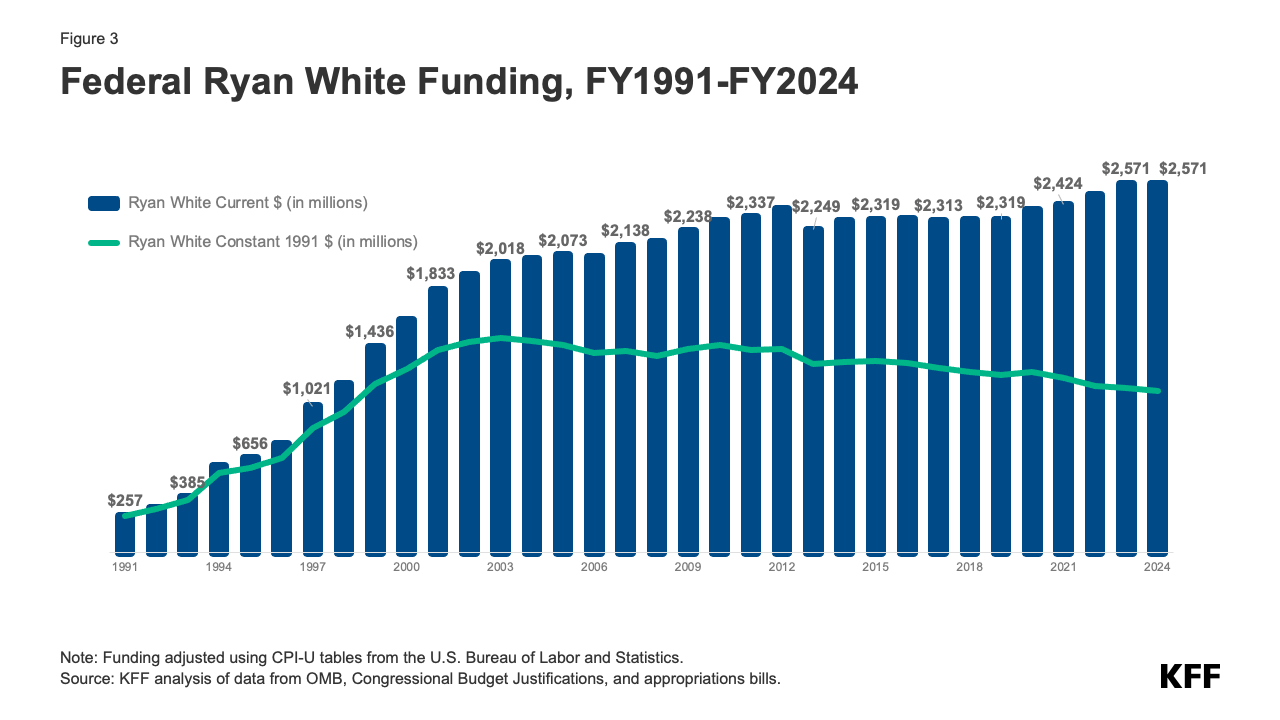
The Ryan White Program is the third largest source of federal funding for HIV care in the U.S., after Medicare and Medicaid. In FY24 funding for the program totaled $2.6 billion in FY 2024. Federal funding for the program, which is appropriated by Congress annually, began in FY1991 and increased significantly in the mid-1990s, primarily after the introduction of highly active antiretroviral therapy (HAART). For many years thereafter, funding continued to increase, first slowing down and then, eventually, flattening out. This trend began to shift modestly when new funding as part of the EHE Initiative marked the first significant increase to the program in many years. Since then, funding for EHE has risen substantially, increasing to $165 million in FY 2024. (See Figures 2 and 3)

Ryan White HIV/AIDS Program Funding Increases Were Driven by EHE Funding, FY 2014 - FY 2024

However, funding for the Ryan White Program overall has not kept pace with inflation and does not necessarily meet the needs of a rising number of clients. (See Figure 3).

The Ryan White HIV/AIDS Program is composed of “Parts,” each with a different purpose and funded as a separate line item through annual Congressional appropriations. Funding is provided to states and territories (Part B) cities (Part A), and to providers, community-based organizations (CBOs), and other institutions (Parts C, D, and F), in the form of grants (described in detail in Table 1). In recognition of the varying nature of the HIV epidemic, grantees are given broad discretion to design key aspects of their programs, such as specifying client eligibility levels and service priorities. However, there are requirements, including that, unless granted a waiver, grantees must spend 75% or more of funds on “core medical services” under Parts A through C and that all state AIDS Drug Assistance Programs (ADAPs) must have a minimum formulary for medications

Description of the Ryan White Program, by Part, FY24

Ryan White HIV/AIDS Program & Care Outcomes

While many clients have gained coverage under the ACA, Ryan White continues to play a critical role as a safety net provider for those who remain uninsured or underinsured, helping to fill the gaps for clients with insurance, including assisting with insurance affordability and access to support services. Notably, Ryan White clients are significantly more likely to have sustained viral suppression compared to those without program support (68% v. 58%) and this pattern was observed across all coverage types. Viral suppression affords optimal health outcomes at the individual level and, because when an individual is virally suppressed they cannot transmit HIV, a significant public health benefit.

Key Issues

First enacted as an emergency measure, the Ryan White Program has grown to become a central component of HIV care in the U.S., playing a critical role in the lives of many low and moderate-income people with HIV. Looking ahead, there are several key issues facing the program that will be important to monitor, including:

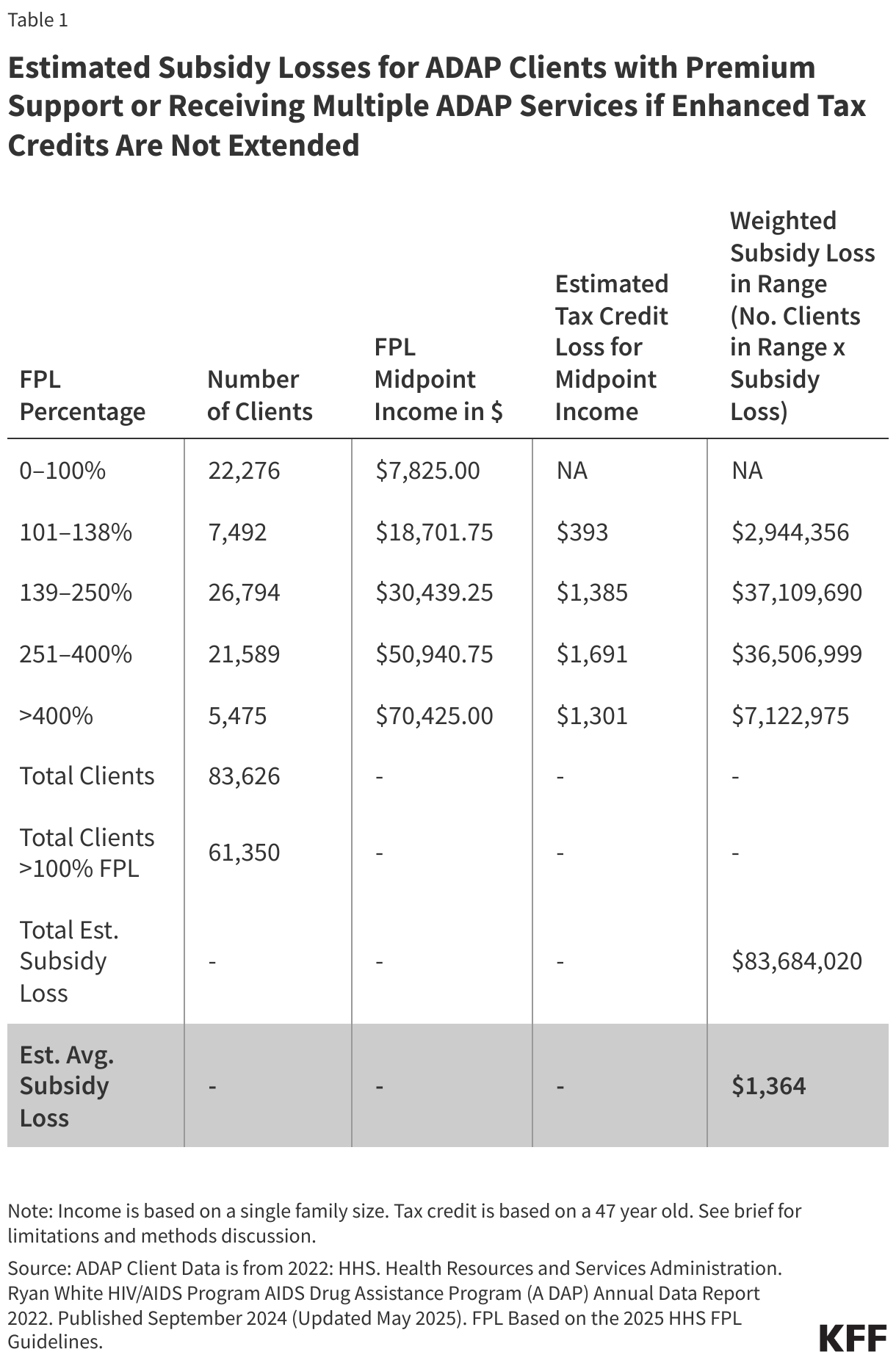
  • Future funding. As a federal grant program, funding is dependent on annual appropriations by Congress, and funding levels do not necessarily correspond to actual need (i.e. the number of people seeking services or the costs of services) and, as noted above, the program’s funding has not kept pace with inflation. As a result, not all states and communities have been able to meet the needs of people in their jurisdictions. Additionally, the Trump administration has proposed eliminating Part F of the program in its preliminary budget released in May 2025, and, in an earlier leaked budget document, proposed to eliminate the EHE. It has yet to be seen whether Congress will continue to appropriate funding to Part F or EHE and at what level.
  • Structural changes and commitment to HIV. The Trump administration has also been actively scaling back the nation’s HIV response through staffing and funding cuts which have impacted HHS significantly, including HRSA/HAB. These changes could make program management, grant delivery, and data collection/analysis more challenging. This administration also plans to move HRSA to a new agency, the Administration for a Healthy America, but it is unclear how this will work and what impact it will have on the program.
  • Major changes to the health policy landscape. The Trump administration and Congress are implementing or exploring significant, broader health policy changes that could impact the Ryan White Program. These include efforts to restrict access to gender affirming care, including in the Ryan White Program, as well as proposals to substantially change the Medicaid program which could lead to large coverage losses for individuals and/or cost-shifting to states and the Ryan White.

5 Key Facts About Nursing Facilities and Medicaid

Published: May 28, 2025

The substantial Medicaid savings in the reconciliation bill that has been passed by the House could have major implications for nearly 15,000 federally certified nursing facilities and the 1.2 million people living in them. Nursing facilities provide medical and personal care services for older adults and people with disabilities, and Medicaid covered 44% of long-term institutional care costs in 2023. In response to cuts in federal Medicaid spending, states could opt to lower Medicaid reimbursement rates for nursing facilities, which could result in reductions in staffing that are tied to lower nursing facility quality and poorer outcomes. A separate Medicaid provision would tighten eligibility by reducing the home equity limit overtime, making it more difficult for people to qualify for nursing facility, home care and other long-term care services.

The proposed legislation would also put a moratorium on implementing a Biden-era rule intended to help address long-standing concerns about staffing shortages and the quality of care in nursing homes. The Congressional Budget Office (CBO) estimates that eliminating the rule would save $23.1 billion over 10 years. Even if the legislation does not pass, a recent court decision overturned the first-ever minimum staffing ratios for nursing facilities that were part of the rule. The Trump administration is considered unlikely to appeal the court’s decision. Amid debates to limit federal Medicaid support, this brief provides information on how Medicaid programs support nursing facilities and the people living in them.

1. Medicaid is the primary payer for over 6 in 10 residents in nursing facilities.

As of July 2024, there were 1.2 million people living in nursing facilities, over 60% of whom had Medicaid as a primary payer. The share of people living in nursing facilities with Medicaid as their primary payer has remained steady, but the total number of residents living in nursing facilities decreased by 10% over the last decade. The decline in the total number of nursing home residents over the past decade may in part reflect a preference for home-based care, including care in assisted and independent living facilities, rather than in nursing facilities.

Medicaid is the primary payer for nursing facility care, providing long-term care services not offered by Medicare. Medicare covers up to 100 days of skilled nursing facility care following a qualifying hospital stay and does not cover long-term nursing facility care, custodial nursing facility care, or nursing facility care that does not follow a qualifying hospital stay. Despite Medicaid’s primary role in funding nursing facility services, KFF polling shows that four in ten people identify Medicare as the main source of coverage for low-income people in nursing facilities.

Medicaid is the Primary Payer For Over 6 in 10 Residents in Nursing Facilities

2. Medicaid paid for 44% of the $147 billion that the US spent on institutional long-term care in 2023.

Medicaid is the primary payer for long-term care (LTC) in the US, paying for at least 44% of institutional LTC and 69% of home care. Unlike Figure 1, which reflects the number of people using any nursing facility care, including short-term skilled care paid for by Medicare and other post-acute care payers, Figure 2 reflects spending on long-term institutional care only and excludes short term skilled care paid for by Medicare and other payers. The institutional care services in Figure 2 include costs for long-term nursing facility stays, intermediate care facilities, and continuing care retirement communities. The costs attributable to each type of facility are unknown because the National Health Expenditures data do not break these costs out separately. There are fewer nursing facility residents and nursing facilities than there were a decade ago, and more people use home care now than nursing facility care, leading to the higher U.S. spending on home care.

Medicaid Paid for 44% of the $147 Billion That the US Spent on Institutional Long-Term Care in 2023

3. Medicaid enrollees who use institutional long-term care are more likely to be 65+, White, and enrolled in Medicare when compared to those using home care.

In 2021, there were 1.4 million people who used Medicaid institutional LTC throughout the year. This includes about 1.3 million people who used Medicaid nursing facility care and 0.1 million people who used care in an intermediate care facility. Figure 1 reports fewer people using nursing facility care since it captures the number of people in a nursing facility in a given month while Figure 3 reflects nursing facility use over the course of the year. Most Medicaid enrollees who use institutional LTC are ages 65 and older while most who use home care are under 65. Most Medicaid enrollees using institutional LTC are dually enrolled in Medicare, compared to just over half of those using home care. People who use institutional LTC are also more likely to be White than those using home care.

Medicaid Enrollees Who Use Institutional Long-Term Care Are More Likely to Be 65+, White, and Enrolled in Medicare When Compared to Those Using Home Care

4. Medicaid financing for nursing facilities is complex.

There are four main sources of Medicaid funding for nursing facilities including:

  • Payments from the state to nursing facilities that are tied to specific patient care (known as fee-for-service or FFS base payments),
  • Payments from a private health plan to nursing facilities that are tied to specific patient care in cases where the state is paying private health plans to provide Medicaid benefits (known as managed care payments),
  • Payments from nursing facility residents (which represent patient cost sharing), and
  • Supplemental payments from states to nursing facilities that are not tied to specific patients.

According to the Medicaid and CHIP Payment and Access Commission, fee-for-service payments are the largest source of Medicaid spending (57%) followed by managed care payments (29%). Residents paid 9% of the total, and the remaining 5% came from supplemental payments to providers.

Under current law, states are permitted to finance the non-federal share of Medicaid spending through multiple sources including healthcare-related taxes or “provider taxes”, though legislation that has been passed by the House would prohibit states from establishing any new provider taxes or increasing the rates of existing taxes. CBO estimates that the moratorium would save $89.3 billion over 10 years. Provider taxes are defined as state taxes where at least 85% of the tax burden falls on health care items or services or entities that provide or pay for health care. All but six states finance part of the state share of nursing facility spending with provider taxes on nursing facilities, and the moratorium or new or addition taxes could limit states’ options to fund their share of nursing facility costs in the future, potentially resulting in reduced Medicaid spending, coverage, and payment rates to nursing facilities. States may also finance the state share of payments with intergovernmental transfers or certified public expenditures for the 6% of nursing facilities that are publicly owned (although this varies across the states from less than 1% in the District of Columbia and Connecticut to 43% in Wyoming).

Most States Levy Provider Taxes on Nursing Facilities to Help Finance the State Share of Medicaid Spending

5. Substantial cuts to Medicaid could undermine efforts to increase nursing facility staffing levels.

Research finds that higher staffing levels in nursing facilities have been consistently tied to better outcomes for residents and are closely tied to overall quality of care. States are currently leveraging Medicaid to support nursing facility staffing efforts through higher payment rates, but those payment rates may be unsustainable if Medicaid spending is significantly cut. In a 2024 survey of state Medicaid programs, most states (45 of 49 reporting states) reported increasing nursing facility FFS base rates in both FY 2024 and FY 2025 in response to staffing shortages. Several states reported particularly significant nursing facility base rate increases, including Iowa with a 25.49% base rate increase and Ohio with a 17% increase.

Beyond increasing payment rates, states are making efforts to bolster nursing facility staffing by leveraging Medicaid to strengthen the nursing facility direct care workforce. These strategies include increases to minimum wage that would apply to workers in nursing facilities (eight states), strengthening direct care worker benefits (five states), and requiring nursing facilities to pass reimbursement increases through to the workforce (six states). Other strategies adopted by state Medicaid programs include efforts to promote and subsidize health care careers, increased payments to nursing facilities for maintaining higher levels of staffing, and incentive payments for demonstrating that a certain share of a nursing facility’s total revenue was spent on workforce compensation and benefits.

Substantial Cuts to Medicaid Could Undermine Efforts to Increase Nursing Facility Staffing Levels

This work was supported in part by The John A. Hartford Foundation. KFF maintains full editorial control over all of its policy analysis, polling, and journalism activities.
Utilization of Health Care Services by Medicaid Expansion Status

Published: May 28, 2025

Legislation passed by the House of Representatives on May 22nd includes a number of Medicaid provisions that would cut federal Medicaid spending by more than $700 billion over the next ten years and notably increase the number of people without health insurance. Provisions that would only apply to states that have adopted the ACA expansion account for more than half of all of the savings estimated by CBO. Some critics of Medicaid expansion have argued that expansion diverts resources away from other groups of Medicaid enrollees, including people with disabilities and children, and that expansion enrollees are “able-bodied” implying they have minimal health care needs. However, data show that expansion states spend more per enrollee overall and on each eligibility group than non-expansion states and that nearly half of expansion enrollees have a chronic condition. This data note builds on a previous analysis about Medicaid expansion enrollees to understand more about their health care utilization patterns compared to other enrollees. Specifically, this data note analyzes 2021 Medicaid claims data to compare utilization of health care services among Medicaid expansion enrollees with other Medicaid enrollees in expansion states and to compare utilization of health care services among adult Medicaid enrollees living in expansion and non-expansion states.

In expansion states, adults covered through the ACA expansion use more services than other adults who are eligible on the basis of having low-income (Figure 1). While some groups claim that expansion adults are primarily “able-bodied” adults with minimal health needs, analysis of 2021 Medicaid claims data finds that expansion adults were more likely to use prescription drugs (62% vs. 55%) and behavioral health treatment (30% vs 23%) compared to other adults. High utilization of these services by expansion adults likely reflects that one-third have a chronic physical health condition and a quarter have a chronic behavioral health condition. However, their utilization rates were lower than rates among adults who qualified on the basis of having a disability.

In Expansion States, Health Care Utilization Among Medicaid Expansion Adults Is Higher Than Other Adults, but Lower Than Utilization Among Adults Eligible on the Basis of Disability

Medicaid enrollees in expansion states are more likely to use health care services than similar enrollees in non-expansion states (Figure 2). Though some groups suggest that Medicaid expansion takes resources away from traditional Medicaid enrollees, analysis of 2021 Medicaid claims finds that rates of health care utilization among adults in expansion states is higher than utilization among adults in non-expansion states. About 90% of adults eligible for Medicaid on the basis of disability in expansion states used any health care services, compared with just 77% of adults eligible on the basis of disability in non-expansion states. Similarly, excluding adults who qualified through the expansion pathway, 75% of other adults in expansion states (those who qualified for Medicaid on the basis of low-income) used health care services, while just 66% of their counterparts in non-expansion states had any utilization. Notably, expansion adults had similar utilization rates as adults eligible on the basis of disability in non-expansion states.

A state’s expansion status is not the sole reason for the variation in utilization rates. Rather, there are a variety of factors that may contribute to this variation, including substantial differences in state adoption of optional long-term care and behavioral health care programs; provider participation in such programs; and variation in the duration and scope of covered benefits as well as cost sharing requirements.

CMedicaid Enrollees in Expansion States Are More Likely to Use Services Than Similar Enrollees in Non-Expansion States

These differences in utilization persist for specific services for low-income adults and people with disabilities (Figure 3). Adults eligible on the basis of low-income (excluding those eligible through the ACA expansion) in expansion states had notably higher utilization of certain services than those in non-expansion states, including outpatient care (64% vs 58%) and prescription drugs (55% vs 47%).

Similarly, among adults eligible on the basis of disability, utilization of certain services needed to manage their conditions is higher in expansion states than in non-expansion states. In expansion states, 81% of adults with disabilities had any claims for prescription drugs compared to just 63% of those in non-expansion states. These enrollees in expansion states were also over twice as likely to use long-term care (25% vs 12%) and had higher utilization of behavioral health treatment services (62% vs 44%) as those in non-expansion states.

When controlling for health status, enrollees in expansion states still had higher rates of utilization than those in non-expansion states (Figure 3). Enrollees who qualified on the basis of disability and who had three or more diagnosed chronic conditions had the highest utilization rates of prescription drugs, long-term care, and behavioral health treatment in both expansion and non-expansion states, compared to all other adult enrollees. However, within this group of adults with particularly high health care needs, those in expansion states had higher utilization than those in non-expansion states for prescription drugs (98% vs. 93%), long-term care (33% vs. 23%), and behavioral health treatment (84% vs. 78%). (The measure of overall utilization for those with chronic conditions is not reported since enrollees have to have at least one health care claim to have a chronic condition diagnosis.)

Medicaid Enrollees in Expansion States Are More Likely to Use Services Than Similar Enrollees in Non-Expansion States

Methods

Medicaid Claims Data: This analysis uses the 2021 T-MSIS Research Identifiable Demographic-Eligibility and Claims Files (T-MSIS data) to identify Medicaid expansion enrollees, utilization, and chronic conditions.

State Inclusion Criteria:

  • Expansion states: Though Idaho and Virginia expanded Medicaid prior to 2021, adult expansion enrollees primarily show up in the traditional adult eligibility group. Therefore, those expansion states are excluded.
  • Non-expansion states: Mississippi was also excluded from this analysis due to data quality concerns flagged by the DQ Atlas.

Enrollee Inclusion Criteria: Enrollees were included if they were ages 19-64, had full Medicaid coverage for at least one month, and were not dually enrolled in Medicare. Dually enrolled individuals were excluded from these calculations since they may not have had sufficient claims in T-MSIS to identify utilization.

Identifying Utilization: This analysis defines health care utilization in T-MSIS using the following methods:

  • Any utilization: Where CLM_TYPE_CD equals 1, 3, 4, A, C, D, U, W, or X
  • Inpatient hospital: Where TOS_CD equals 001, 060, 061, 090-093, and 132
  • Outpatient care: Where TOS_CD equals 002-008, 012, 028, 042, 134, 135
  • Drugs: Where TOS_CD equals 033, 034, and 131; or where TOS_CD equals 145 and the claim is in the RX file
  • Long-term care: See our brief on long-term care users for methods
  • Behavioral health treatment: SUD and mental health treatment are identified using the Behavioral Health Service Algorithm (BHSA) reference codes provided by The Urban Institute.

Defining Chronic Conditions (Figure 3): This table identifies Medicaid enrollees with three or more chronic conditions. This analysis used the CCW algorithm for identifying chronic conditions (updated in 2020). This analysis also included in its definition of chronic conditions substance use disorder, mental health, obesity, HIV, hepatitis C, and intellectual and developmental disabilities. In total, 35 chronic conditions were included.

Proposed Medicaid Federal Match Penalty for States that Have Expanded Coverage for Immigrants: State-by-State Estimates

Published: May 22, 2025

Editorial Note: This piece was originally published on May 21, 2025 and was updated on May 22, 2025 to reflect revisions made in the version of the bill passed by the House. However, the key provision that it analyzes – penalizing states by lowering the enhanced ACA Medicaid expansion match rate if a state uses state-only funds to provide health coverage to undocumented immigrants – was not included in the final version of the BBB that passed in both chambers of Congress and was signed into law by President Trump.

Introduction

The House reconciliation bill will substantially reduce federal Medicaid spending and coverage and increase the number of uninsured according to estimates from the Congressional Budget Office (CBO). The bill includes a provision that would penalize states that expand coverage for immigrants by reducing the federal Medicaid matching rate for the Affordable Care Act (ACA) Medicaid expansion population from 90% to 80% for states that either provide health coverage or financial assistance to purchase health coverage to certain groups of immigrants. However, the groups of immigrants receiving coverage that would subject states to the penalty was revised several times before the bill was passed by the House:

  • The initial version of the bill passed by the House Energy and Commerce committee would reduce federal Medicaid funding for states that provide coverage to immigrants who were not a qualified alien or otherwise lawfully residing in the United States—affecting 14 states and DC that have expanded coverage to undocumented immigrants with their own funds.
  • A revision made to the bill before it was considered by the House Rules Committee removed “otherwise lawfully residing” immigrants from coverage that could be provided without the penalty, effectively broadening the penalty to an additional 19 states that have taken up a federal option available in Medicaid and the Children’s Health Insurance Program (CHIP) to expand coverage for lawfully residing children and pregnant people.
  • Per amendments made to the final version of the bill passed by the House, the penalty was limited to states providing coverage to immigrants who are not a “qualified alien” or a “child or pregnant woman who is lawfully residing in the United States” covered under the Medicaid option for these groups. This change appears to largely apply the penalty to the 14 states and DC that cover undocumented immigrants with state funds. However, because the exception is more limited than the prior language, which excluded states covering “otherwise lawfully residing” immigrants from the penalty, additional states that cover lawfully residing groups through other pathways could be affected.

KFF data show that 14 states plus DC cover children regardless of immigration status, including 7 states plus DC who cover at least some adults regardless of status, that would be affected by the current version of the provision. In Utah and Illinois, the provision could result in federal funding and coverage losses for the entire ACA Medicaid expansion population, since the states have “trigger” laws that require them to terminate the expansion if federal funding decreases. As noted, additional states that have expanded coverage for lawfully residing immigrants could be affected by the penalty.

This analysis examines the potential impacts of this policy change on state Medicaid spending, including state-by-state estimates of potential losses in federal financing (and increases in state spending) if the 14 states and DC that cover immigrants regardless of immigration status maintain their programs. It also presents enrollment data for these programs to estimate the number of people who may be at risk for coverage losses if states eliminate these programs based on KFF analysis of publicly available state enrollment data, budget documents, and media reports. Losses in federal financing and coverage may be larger if additional states are affected by the provision.

If states maintained their coverage programs, they would need to find ways to offset the loss of federal funding. This could include increasing state tax revenues, decreasing spending on non-Medicaid services such as education, or making other Medicaid cuts. If states eliminated their programs, there would likely be increased uninsured rates and barriers to care for immigrant families and negative impacts for the U.S. economy and workforce due to the role immigrants play.

Potential Impacts on State Spending if States Maintain Coverage and are Subject to the FMAP Penalty

The analysis assumes that, starting in fiscal year (FY) 2027, expenditures for people eligible in the ACA Medicaid expansion would be matched at 80% instead of 90% in the 14 states and DC that offer coverage for people regardless of immigration status. This analysis does not make assumptions about specific state behavior and instead illustrates the potential impact on state Medicaid spending if all states maintained their existing coverage programs in response to this policy change. CBO projected that the provision to penalize states the 14 states and DC that offer state funded coverage to undocumented immigrants would result in federal savings of $11 billion between 2025 and 2034 and a coverage loss of 1.4 million people. This estimate accounts for assumptions about state behavioral responses and other secondary effects.

A reduction in the expansion match rate or “FMAP” for the 14 states and DC with state-funded coverage for people regardless of immigration status could shift $92 billion in costs from the federal government to the states over the next ten years if the states maintained their programs (Figure 1). State Medicaid spending increases across the states range from $30 billion in California to $300 million in Vermont or from 8% in Oregon and Washington to 3% in Massachusetts, Vermont, New York, and Minnesota. The cost shift would be larger if additional states that cover lawfully residing immigrants are affected by the penalty.

Reducing the ACA Medicaid Expansion FMAP in States that Cover Undocumented Immigrants with their Own Funds Could Shift $92 Billion in Costs to the States Over the Next Ten Years

In addition, there would be large Medicaid spending and enrollment declines in Utah and Illinois if their ACA expansion coverage was eliminated per their current state “trigger” laws. Utah and Illinois have laws in place that automatically end expansion if the federal match rate were to drop, meaning the provision could result in funding and coverage losses for the entire ACA Medicaid expansion population in these states. Prior KFF analysis found that if states drop their ACA Medicaid expansion coverage altogether, 78,000 (or 23%) of Medicaid enrollees could lose coverage in Utah and 840,000 (or 28%) of Medicaid enrollees could lose coverage in Illinois by FY 2034. This would result in a decrease of about $11 billion in federal Medicaid spending in Utah and $96 billion in Illinois over a ten-year period. It’s likely many of these expansion enrollees would become uninsured and gains in financial security, access to care, and health outcomes associated with Medicaid expansion would be reversed.

If states maintained their current coverage, they would need to find ways to offset the loss of federal funding. This could include increasing state tax revenues, decreasing spending on non-Medicaid services such as education, which is the largest source of expenditures from state funds, or making other Medicaid cuts. Given the size of the federal Medicaid funding cuts in the reconciliation bill, states would likely face substantial challenges in efforts to replace the loss of federal funds and significant pressure to drop their current coverage programs.

Potential Impacts on Coverage if States Eliminate Coverage to Avoid the FMAP Penalty

More than 1.9 million people could lose health coverage if states eliminate their state-funded coverage for immigrants regardless of immigration status to avoid the penalty. About 1.9 million people are enrolled in state-funded coverage programs for immigrants based on enrollment data from 7 of the 14 states providing coverage to children and DC and 6 of the 7 states and DC providing coverage to at least some adults (Table 1). This includes roughly 1.6 million adults and about 300,000 children, although data are not available from six states that cover children (Illinois, Maine, Massachusetts, New York, Rhode Island, and Washington) and Minnesota does not report separate data for adults and children. As such, these data undercount the number of people enrolled in these programs and at risk for coverage losses. Moreover, the dates of the enrollment data vary across states. If additional states that cover lawfully residing immigrants eliminate coverage to avoid the penalty, coverage losses would also be larger. As noted, CBO estimates that 1.4 million people would become uninsured by 2034 due to original version of the penalty which applied to states covering undocumented immigrants; this estimate represents a different time period than these enrollment data and makes assumptions about state behaviors in response to the provision.

States could avoid the FMAP penalty by eliminating their programs, but there would likely be increases in the uninsured rate and barriers to accessing care among immigrant families. Although most immigrants are working, they are often employed in jobs that do not offer employer-sponsored health coverage and undocumented immigrants are prohibited from enrolling in federally funded coverage options. As such, without these programs most will not have access to an affordable coverage option and become uninsured. People who are uninsured often delay or go without needed care, which can contribute to health conditions becoming worse and more costly. Reduced coverage and access to care may also negatively impact the U.S. economy and workforce due to lost productivity since immigrants play an outsized role in many occupations including health care, construction, and agriculture.

Nearly Two Million People Are Enrolled in State-Funded Coverage Programs for Immigrants Based on Partial Enrollment Data from 10 of 14 States and DC

Methods

State spending estimates under the proposed policy change follow the methods outlined in a prior KFF analysis, with a few exceptions:

  • The FMAP is reduced from 90% to 80% in the 14 states and DC with state-funded coverage regardless of immigration status (for Figure 1 estimates).
  • The policy change is implemented in FY 2027.

To determine the cost shift to states, the analysis calculates the difference in state Medicaid spending under the proposed policy change and KFF’s baseline projections of state Medicaid spending over the next ten years.

VOLUME 23

New Vaccine Requirements, Anti-mRNA Narratives, and Disputed Gender-Affirming Care Report


Summary

This volume highlights how new vaccine requirements and the spread of anti-mRNA sentiments are fueling confusion and distrust. It also examines reactions to a federal report on gender-affirming care for minors and investigates how TikTok is being used to promote false health claims through deepfake personas targeting young women.


Recent Developments

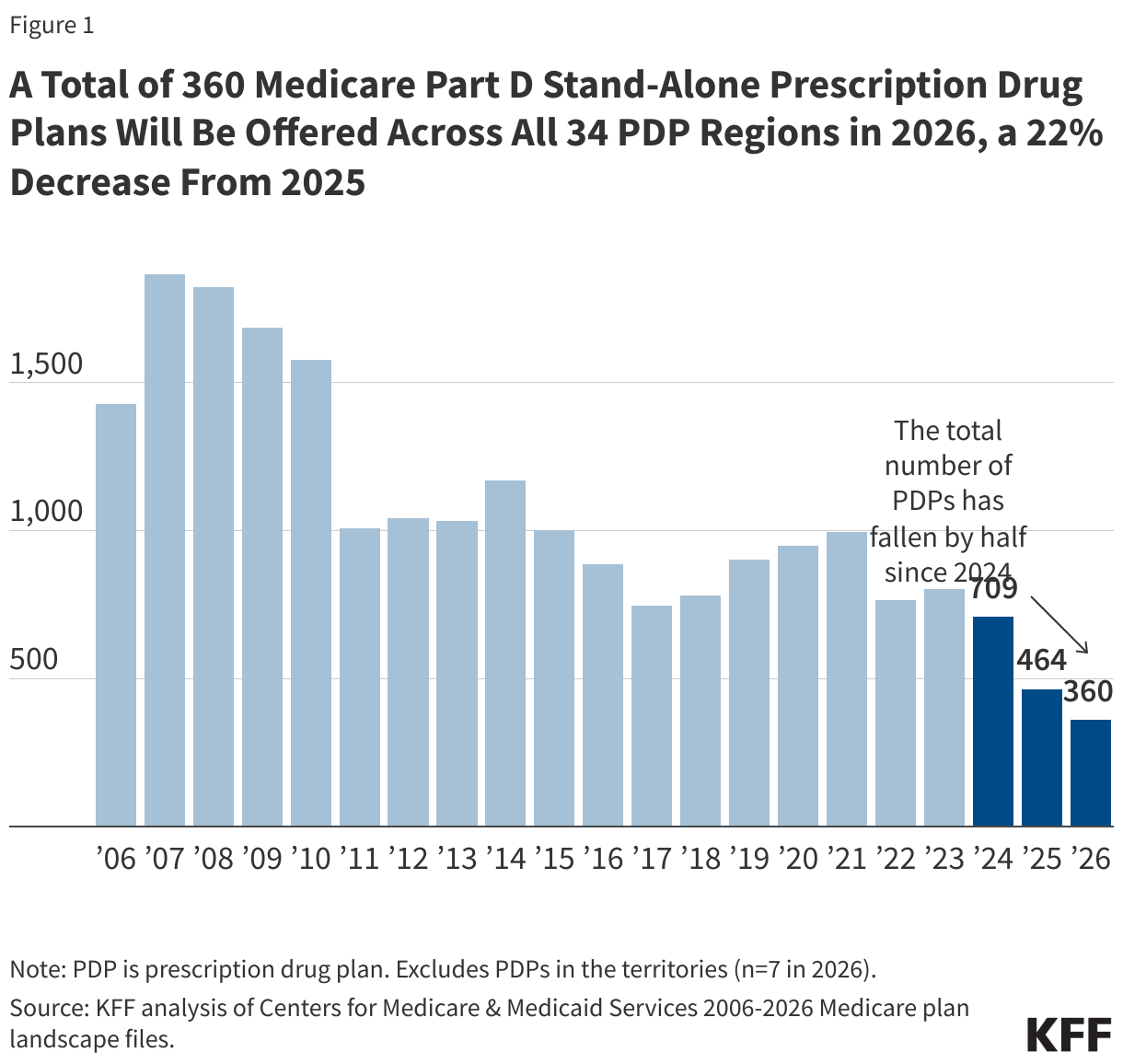
HHS’ New Placebo Requirements for Vaccine Approval Prompt Confusion About Existing Procedures

jiang suying / Getty Images

The Department of Health and Human Services (HHS) announced that it will require all new vaccines to undergo placebo-controlled trials before approval, framing this as a shift from existing practices. A placebo-controlled trial is a study that compares participants who receive an experimental vaccine to a control group that receives a placebo—an inert substance—to help isolate the effects of the vaccine from other factors. While many vaccines, including COVID-19 vaccines, were tested this way, the American Medical Association (AMA) and the World Health Organization (WHO) do not consider placebos ethical when withholding a known effective vaccine could expose participants to unnecessary risk. In such cases, researchers use other rigorous methods, such as comparing a new vaccine to an approved one to evaluate differences in safety, immune response, and effectiveness. The HHS announcement has led to questions about the safety of existing vaccines among those unfamiliar with how clinical trials are designed and why placebo use is not always appropriate.

Online discussion about placebo-controlled trials spiked on May 1 and May 4, following news reports of HHS’ new policy. Some posts with large engagement argued that placebo-controlled trials should not be used when a vaccine is known to be protective, aligning with the AMA and WHO. Others misleadingly presented the policy change as evidence that past vaccine trials lacked proper oversight or were “corrupt.” A widely shared post from a medical doctor and lawyer with over 900,000 followers called the update long overdue and said it would finally hold vaccine makers to higher safety standards. Others expressed genuine confusion about study designs by expressing a lack of knowledge about how often placebo groups are used in clinical trials.

Polling Insights:

As regulatory guidelines surrounding vaccines change, KFF’s latest Tracking Poll on Health Information and Trust finds that fewer than half the public say they currently have at least “some” confidence in federal government health agencies to ensure the safety and effectiveness of vaccines approved for use in the U.S. While half or fewer across partisans express confidence, Democrats are somewhat more likely than independents and Republicans to say they have “a lot” or “some” confidence in federal health agencies to ensure vaccines are safe and effective.

Stacked bar chart showing the level of confidence people have in federal health agencies like the CDC and FDA to perform several agency duties.

Changing COVID-19 Booster Testing Standards Add to Uncertainty Around Safety

Thanasis / Getty Images

Social media conversations have also reflected concern and skepticism about COVID-19 boosters after HHS officials stated that these boosters may be held to stricter evidence requirements that could treat them as entirely new products. This framing has led to confusion about what qualifies as a “new vaccine,” particularly in contrast to updated COVID-19 boosters. While a new vaccine may target either a novel or existing pathogen using new technology or formulations, COVID-19 boosters are updates to previously approved vaccines designed to target evolving strains of the same virus. Unlike brand-new vaccines, which undergo extensive clinical trials, updated COVID-19 boosters were previously approved using existing safety data from the original vaccine, along with lab and animal studies showing that the updated shot produces a strong immune response to new variants. Experts warn that the shift could delay access to boosters as new strains of viruses spread, while weakening trust in long-standing safety procedures.

Confusion about boosters began to grow after the FDA questioned data around boosters and delayed full approval of Novavax’s updated COVID-19 vaccine, calling it a new product and requesting additional trial data. Novavax, a protein-based alternative to mRNA vaccines, has been authorized for emergency use since 2022 after a large placebo-controlled trial showed high efficacy and few serious adverse effects. The updated version targets newer variants and functions as a booster for individuals who have previously been vaccinated. Prior to the FDA’s decision to apply new product standards for all COVID-19 boosters for people under 65, some high-profile social media accounts reacted to the Novavax delay with concern about boosters. One X account with approximately 3.7 million followers called for the COVID-19 vaccines to be banned, calling them “worthless” and “dangerous.” Another post, from a physician with one million followers, falsely claimed that new variants are invented to justify continued booster campaigns.

mRNA Vaccine Concerns Gain Political Traction Despite Scientific Consensus

Luis Alvarez / Getty Images

Misleading information about mRNA vaccines continues to circulate online, contributing to support for policy proposals that aim to ban the technology. Extensive research and real-world data show that mRNA vaccines have a strong safety profile and offer protection against severe illness, hospitalization, and death from infectious diseases, like COVID-19, and potentially cancer. But a group of legislators in Minnesota recently introduced a bill that would classify mRNA vaccines as “weapons of mass destruction,” with criminal penalties of up to 20 years in prison. Although unlikely to pass, the bill represents the growing reach of concern about mRNA technology. Similar measures have emerged in other states: Iowa, Montana and Idaho have considered proposals that would impose criminal penalties on providers. 

Social media conversations continue to reflect unsubstantiated concern about mRNA vaccines, sometimes showing support for legislation aiming to ban them. One Texas doctor with over 500,000 followers, previously suspended for sharing false information about vaccines, said that Minnesota legislators were “lead[ing] the way” with the proposal. Another widely shared post featured a video of a doctor with a revoked medical license recommending that viewers and their families “not get vaccinated, ever again, with an mRNA vaccine.” These conflict with the broad scientific consensus supporting mRNA vaccines and contribute to doubt about COVID-19 vaccines. According to the FDA, serious adverse effects from the COVID-19 vaccines—which are predominantly mRNA-based in the United States—occur in fewer than 1 in 200,000 vaccinated individuals, and research has shown that COVID-19 vaccines have saved tens of millions of lives globally.

Polling Insights:

New KFF polling shows that mRNA technology is obscure to much of the public. About twice as many adults think vaccines that use mRNA technology are “generally safe” (32%) as say they are “generally unsafe” (16%), but about half (52%) report not knowing enough about this technology to say. In addition, nearly half of the public (45%) report having heard the false claim that mRNA vaccines can alter a person’s DNA — a myth related to COVID-19 vaccines that began circulating early in the pandemic. While just 3% think this false claim is “definitely true” and one quarter say it is “definitely false” (24%), most fall in the malleable middle, saying it is either “probably true” (26%) or “probably false” (45%). However, there are important differences by party identification and ethnicity when it comes to believing or leaning toward believing the myth that mRNA vaccines alter DNA, with at least one-third of Republicans (37%), independents (33%), and Hispanic adults (38%) saying the claim is either “definitely true” or “probably true.”

Stacked bar chart showing the level of belief that U.S. adults, by partisanship and race/ethnicity, have in the false claim that mRNA vaccines can change DNA.

Reactions to HHS Report Amplifies Misleading Narratives About Health Care for Transgender Youth

Besiki Kavtaradze / Getty Images

Misleading narratives about gender-affirming care for transgender and nonbinary people are circulating following the May 1 release of a new HHS report about gender dysphoria. The 400-page report, commissioned by an executive order aimed at limiting youth access to gender-affirming care, states that it surveys existing literature on gender-affirming interventions for children and adolescents, concluding that “the evidence for benefit of pediatric medical transition is uncertain, while the evidence for harm is less uncertain.” Major medical groups, including the American Academy of Pediatrics and the American Psychological Association, criticized the report and continue to support access to transition-related care based on other reviews and studies that have found a positive impact of gender-affirming care on health. On the day the report was released, mentions of gender-affirming care spiked on social media. Some high-profile accounts, including a podcast host with almost five million followers, circulated quotes from the report’s foreword that highlighted potential risks associated with gender-affirming care while emphasizing uncertainty about the benefits.

The report spurred other incorrect claims, including the false notion that surgical interventions are common among minors, but such procedures are exceedingly rare. One study that looked at data from more than 22 million minors found that less than .01% of transgender and gender diverse minors ages 13 to 17 underwent gender-affirming surgery, and none under 12 received such care. The HHS report’s framing of “exploratory therapy,” a practice that can include gender identity conversion efforts, drew attention online, but a recent KFF brief explains that major health associations have condemned this therapy as harmful and unsupported by evidence. Social media posts also amplified claims that many youth regret care, but research shows regret is uncommon. While not all transgender people seek medical care, a 2021 meta-analysis found that among those who do, the prevalence of regret is 1%. The report further claimed that many transgender or nonbinary people seek to “detransition” (return to their sex assigned at birth). But studies show that most transgender and nonbinary people do not return to their sex assigned at birth, and the KFF/Washington Post Trans Survey found that about eight in ten trans adults (78%) report being more satisfied with their lives after transitioning.


AI & Emerging Technology

Deepfake Health Scams Target Young Women on TikTok

Stacked bar chart showing how much U.S. adult tik tok users trust health information they see on TikTok by age, gender, race/ethnicity, and frequency of tiktok use

A March investigation by Media Matters, also reported by Rolling Stone, uncovered a network of TikTok accounts using deepfake personas to push health and wellness products, often targeting women with fertility or cosmetic concerns. The accounts created backstories and personal testimonies to enhance credibility and drive sales through TikTok Shop links. One account, for example, featured videos of an influencer claiming various identities, such as a doctor and former model, to endorse hair growth supplements. A reverse image search, though, showed that the woman was likely generated by deepfake technology. Following publication of the investigation, the accounts identified in the article were removed from TikTok. This tactic reflects a broader trend identified in a 2024 study published in Journal of Medical Internet Research, which concluded that the alternative health community on TikTok is more likely to use emotional storytelling to build trust than conventional health videos, a strategy that these deepfake personas are designed to mimic.

A 2024 KFF poll found that most TikTok users report seeing health-related content on the app, and among these users women are more likely than men to say they’ve seen information or advice about mental health (71% v. 61%) or birth control (41% v. 25%) on the app. In addition, about half of women of reproductive age – those ages 18 to 49 – report seeing information or advice on TikTok about prescription birth control (54%) or abortion (48%). While fewer than half (40%) of TikTok users say they trust information about health issues that they see on the app at least “somewhat,” this rises to half among women ages 18-49. Notably, younger adults and women are more likely than older adults and men, respectively, to say they use TikTok every day.

About The Health Information and Trust Initiative: the Health Information and Trust Initiative is a KFF program aimed at tracking health misinformation in the U.S., analyzing its impact on the American people, and mobilizing media to address the problem. Our goal is to be of service to everyone working on health misinformation, strengthen efforts to counter misinformation, and build trust. 


View all KFF Monitors

The Monitor is a report from KFF’s Health Information and Trust initiative that focuses on recent developments in health information. It’s free and published twice a month.

Sign up to receive KFF Monitor
email updates


Support for the Health Information and Trust initiative is provided by the Robert Wood Johnson Foundation (RWJF). The views expressed do not necessarily reflect the views of RWJF and KFF maintains full editorial control over all of its policy analysis, polling, and journalism activities. The Public Good Projects (PGP) provides media monitoring data KFF uses in producing the Monitor.
Mapping Hospital Employment By State

Published: May 21, 2025

Congress is considering substantial reductions in Medicaid spending as part of a budget reconciliation bill—the One Big Beautiful Bill Act—with the goal of offsetting part of the cost of tax cuts and other expenditures. While there are a number of Medicaid policy changes in the bill, three changes account for the vast majority of the savings according to estimates from the Congressional Budget Office: requiring states to implement work requirements for the expansion group, increasing barriers to enrolling in and renewing Medicaid coverage, and limiting states’ ability to raise the state share of Medicaid revenues through provider taxes. Any large cuts in Medicaid spending would likely have implications for hospitals, given that the program accounted for about one fifth (19%) of all spending on hospital care in 2023. Medicaid spending cuts, along with other policy changes under consideration, could lead to decreases in payments to hospitals and increases in the number of uninsured Americans, both of which would likely affect hospital finances, access to hospital services, and the quality of patient care. These changes could also impact local economies, given that hospitals are often major employers in their communities.

The interactive 50-state maps below show the number of hospital employees by state and how hospital employment ranks among industry subsectors based on 2023 data from the Quarterly Census of Employment and Wages (QCEW), which includes more than 95% of U.S. jobs. Most hospitals are part of a broader health system, but system employees working in other settings (such as in separate physician practices) are not included. (See Methods for additional information about the data). Key takeaways include the following:

  • Hospitals employed 6.7 million individuals in 2023.
  • Hospitals employed about 131,000 individuals on average across the 50 states and DC, with hospital employment ranging from about 13,000 in Wyoming to about 610,000 in California.
  • Hospitals employed more than 100,000 individuals in 23 states and more than 400,000 individuals in four states: California, Florida, New York, and Texas.
  • Hospitals are the sixth largest employer in the country, and among the top five largest employers in 22 states, when comparing industry subsectors. Nationwide, the hospital subsector follows educational services; food services and drinking places; professional, scientific, and technical services; administrative and support services; and ambulatory health care services in employment rankings. Some physicians and other employees in the ambulatory health care services subsector may in fact be part of the same health system as hospitals but are not included in hospital employment if they work in other settings.
  • Hospitals ranked among the top eight employers in every state and were the ninth largest employer in DC.
  • Hospitals were the second largest employer in West Virginia and the third largest employer in North Dakota, South Dakota, and Wyoming.
Hospitals Employed 6.7 Million People in 2023, and More Than 100,000 People in 23 States
Hospitals Are the Sixth Largest Employer in the Country Across Industry Subsectors and Rank Among the Top Five Employers in 22 States

This work was supported in part by Arnold Ventures. KFF maintains full editorial control over all of its policy analysis, polling, and journalism activities.
Methods

This analysis uses data from the Quarterly Census of Employment and Wages (QCEW), which is administered by the Bureau of Labor Statistics (BLS). As BLS notes, the QCEW data provide a “quarterly count of employment and wages reported by employers covering more than 95 percent of U.S. jobs.” The QCEW includes workers covered by state unemployment insurance laws as well as federal workers covered by the Unemployment Compensation for Federal Employees (UCFE) program. Employment counts are referred to in this analysis as the number of individuals employed, though QCEW counts each job separately for individuals with multiple jobs.

Analyses of hospital and other employment relied on the 2023 average annual employment numbers reported by BLS. Industry subsector rankings were based on 3-digit NAICS codes. Employment for a given industry subsector and employer type were not included in totals or considered for purposes of ranking when not disclosed by BLS. In most states (46), this excluded 1% of employment reported in the QCEW or less. In the four remaining states (Delaware, Hawaii, Rhode Island, and Wyoming) and DC, this excluded 2% to 6% of employment. Among hospitals, BLS did not disclose state government hospital employment in DC, Iowa, Kentucky, Michigan, Rhode Island, South Dakota, Vermont, and Wyoming and local government hospital employment in Massachusetts and South Dakota.

News Release

Amid Increased Immigration Enforcement, a Majority of Lawfully Present Immigrants Are Worried They or a Family Member Could Be Detained or Deported 

KFF Poll and Focus Groups Highlight Views and Experiences of Immigrants in the Early Days of President Trump’s Second Term

Published: May 20, 2025

A new KFF poll of immigrants finds that six in 10 lawfully present immigrants say they worry about the possibility that they or a family member could be detained or deported, contributing to feelings of increased stress, anxiety, and other health problems. 

The increased fears come against a backdrop of more restrictive federal immigration policies and increased enforcement actions and are among the most notable takeaways from the new KFF survey of immigrants’ views and experiences during the early days of President Trump’s second term.  

The survey builds on the 2023 KFF/LA Times Survey of Immigrants, and a KFF survey of immigrants in 2024 during the presidential election cycle. A separate new companion KFF report based on focus group conversations with likely undocumented immigrants and their families provides a window into how the current immigration policy landscape is affecting their and their children’s daily lives and health and well-being. 

The new poll shows that immigrants’ worries about detention or deportation have risen sharply since 2023, even among lawfully present immigrants and naturalized citizens. Four in ten immigrants overall (41%) now say they worry about the possibility that they or a family member could be detained or deported, up 15 percentage points from 2023 (26%).

Such fears have affected immigrants’ health and well-being, with one-third of immigrants overall saying they have experienced worsening health conditions, increased stress and anxiety, or problems eating or sleeping since January due to concerns about their or a family member’s immigration status. The share rises to 41% among lawfully present immigrants. 

Other key takeaways include:  

  • About one-third of immigrants say they have seen or heard reports of ICE (Immigration and Customs Enforcement) presence in their community. 
  • About one in seven (13%) immigrants overall, including one in five lawfully present immigrants say they or a family member have limited their participation in at least one day-to-day activity like going to a community event, work, or seeking medical care due to concerns about drawing attention to someone’s immigration status.  
  • Four in 10 immigrants say they feel “less safe” since President Trump took office, including substantial shares of both lawfully present immigrants (44%) and naturalized citizens (34%). Most immigrants who identify as Democrats or lean that way (57%) say they feel less safe, but half of Republican and Republican-leaning immigrants (52%) say they feel safer since Trump took office.
  • About four in 10 immigrants overall (43%) expect their financial situation to worsen in the coming year, including a majority of Democrats (57%). Republican immigrants are more positive – four in 10 expect their finances to get better while three in 10 expect them to get worse.  

Political views of immigrants 

As among the public overall, immigrants’ views of President Trump and his policies are driven by partisanship. About two-thirds of immigrants disapprove of how President Trump is handling his job, and a similar share say things in the U.S. have gotten off on the wrong track.  But majorities of Republican immigrants say they approve (75%) of the president’s job performance and that things in the U.S. are going in the right direction (71%).  

President Trump’s worst approval rating among immigrants is on his handling of inflation (75% disapprove), and majorities also disapprove of his performance on foreign policy (66%), and immigration (62%). A large majority oppose the administration’s efforts to end birthright citizenship (79%). Republican immigrants are much more approving of President Trump’s performance and his policies, but 41% of Republican immigrants disapprove of his handling of inflation, and this group is split on his efforts to end birthright citizenship (52% approve, 48% disapprove).

Focus group findings 

In the companion report, based on four focus groups KFF conducted in March 2025 with 29 Hispanic adults who were likely undocumented or living with a likely undocumented family member, nearly all participants said that they were experiencing higher levels of fear and uncertainty due to shifting immigration policies, as well as financial concerns due to the current state of the economy. 

Participants described how fears are negatively impacting work as well as their family’s daily lives and routines. Some focus group participants said they have become increasingly fearful of going to work and/or that they have noticed fewer workers showing up at their workplaces due to immigration-related fears. Many said they were limiting their time outside the home and avoiding a range of activities, such as driving, traveling, and participating in community and recreational activities, including attending church or events.  

Fears also have taken a toll on the health and well-being of focus group participants and their children, most of whom are U.S. citizens. Participants described suffering from insomnia, loss of appetite, and symptoms such as stomach problems and migraine headaches due to fear and stress. 

Methodology:

Designed and analyzed by public opinion researchers at KFF, the survey was conducted March 6-April 13, 2025, online and by telephone among a nationally representative sample of 511 U.S. immigrants in English, Spanish, Chinese, Korean, and Vietnamese. The margin of sampling error is plus or minus 7 percentage points for the full sample. For results based on subgroups, the margin of sampling error may be higher. Focus group interviews with Hispanic immigrant adults were conducted in Spanish with participants recruited separately from the survey. The four groups drew participants from California, Texas, New Jersey and New York, and parts of the Midwest (Kansas, Missouri, North Carolina, Nebraska). Full methodological details are available at kff.org.

Implementing Work Requirements on a National Scale: What We Know from State Waiver Experience

Published: May 20, 2025

On May 18, the House Budget Committee advanced a budget reconciliation bill that includes significant changes to the Medicaid program. As anticipated, Medicaid work requirement provisions are included and preliminary estimates released by the Congressional Budget Office (CBO) show that this provision would reduce federal spending by $280 billion over ten years, nearly half of all estimated Medicaid savings in the bill.

If enacted, all states would be required to condition initial and continued Medicaid expansion eligibility on meeting work requirements and to exempt certain individuals from the requirements. KFF analysis shows that 92% of Medicaid adults are either working (64%) or have circumstances that may qualify them for an exemption. In previous analysis, CBO has found that a Medicaid work requirement would not have any meaningful impact on the number of Medicaid enrollees working.

States would have flexibility in some areas, including determining how many months to “look back” to verify compliance at application and renewal and whether to require more frequent verifications in between renewal periods. States would be encouraged to use available information (through “data matching”) to verify individuals’ compliance with the requirements. The provisions raise many operational and implementation questions, particularly considering the experience of Arkansas and Georgia with implementing work requirements through waivers:

  • Enrollee Awareness / Outreach. Requiring all states to impose Medicaid work requirements would require extensive outreach and education in every state. In Arkansas, lack of awareness and confusion about work requirements (imposed in 2018) were common. Despite robust outreach efforts, many enrollees in Arkansas were not successfully contacted. The state noted in a recent waiver request that its complex 2018 work requirement policies caused “confusion and uncertainty,” resulting in people not knowing whether they were subject to the requirements.
  • Exemptions. While proponents of work requirements describe them as applying to “able-bodied” adults, some people with disabilities (or serious or complex medical conditions) will be subject to the requirements, as they don’t meet criteria to receive SSI but qualify for Medicaid through the ACA expansion. Similar to the proposed federal legislation, Arkansas adopted safeguards including “medically frail” and “good cause” exemptions and “reasonable accommodations” to try to protect coverage of people with disabilities or other challenges; however, many enrollees struggled to access these safeguards and reported difficulties navigating the process to qualify for an exemption.
  • Data Matching. The bill raises questions about the capacity and ability of state systems (and staff) to accurately “data match” (e.g., using payroll and other data) the work or exemption status of millions of individuals. How effective states are with data matching will likely impact how many individuals will need to submit proof of work hours or exemption status, and ultimately the number of individuals at risk of losing coverage. States with older or weaker systems or less integration may be less effective. But even with effective systems, not all work can be verified through existing data sources. More informal work (like “gig work”) may lack traditional employment records or pay stubs and may not be reflected in state data systems. Many people with low incomes may have inconsistent hours or income, which could create additional hurdles. Arkansas successfully data matched about two thirds of enrollees, exempting them from reporting work hours or exemption status. Among those who had to actively report, about 70% did not obtain an exemption or report compliance, ultimately resulting in over 18,000 people losing coverage.  Arkansas recently highlighted (in its new waiver request) that limitations with “data matching” led to some individuals with medical conditions or disabilities that prevented them from working to “fall through the cracks” when the state implemented its work policies in 2018.
  • Verification at Application. Only one state (Georgia) has experience conditioning Medicaid eligibility at application on meeting work requirements. Over 18 months since Georgia launched its “Pathways” program, the state has only enrolled 7,000 individuals—far short of the state’s own estimated enrollment of 25,000 adults in the first year and 64,000 over 5 years. The state’s interim waiver evaluation revealed that work requirements had a significant impact on lowering program enrollment, particularly for adults ages 50-64.
  • Administrative Costs. Implementing work requirements involves complex systems changes (e.g., developing or adapting eligibility and enrollment systems), enrollee outreach and education, and staff training. According to GAO, federal and state administrative costs to implement Medicaid work requirements are sizeable. Recent investigative reporting found Georgia’s “Pathways” program has cost the federal and state government more than $86 million (as of the end of 2024), with three-quarters spent on consulting fees. GAO recently confirmed it is examining the costs of Georgia’s Pathway program, with a report expected this fall.
  • Targeted Work Supports. Research has shown that access to affordable health insurance and care promotes individuals’ ability to obtain and maintain employment, helping people manage chronic conditions and supporting people’s ability to work jobs that may be physically demanding. While most Medicaid adults are already working, some states have launched initiatives to support employment for Medicaid enrollees, without making employment a condition for eligibility. Montana created “HELP-Link,” a free voluntary workforce support program for eligible expansion adults (funded only with state dollars), which also helps participants address barriers to work including transportation and child care. A study of Montana’s Medicaid expansion, including HELP-Link, found an increase of four to six percentage points in labor force participation among low-income, non-disabled adults ages 18-64 following expansion, compared to higher-income non-Medicaid Montanans and to the same population in other states. While federal Medicaid funds cannot be used for work supports (e.g., to help individuals overcome barriers to work like child care and transportation), CBO has found that targeted work supports can help boost employment. Unlike welfare reform, the Medicaid work requirement in the reconciliation bill does not provide supports like child care, transportation, or job training.

The bill seeks to implement work requirements on a national scale, including requiring states to verify individuals’ monthly work status and implement a long list of exemptions—policies that proved challenging for Arkansas and Georgia to operationalize and led to 18,000 people losing coverage in Arkansas, without increasing employment. CBO’s hefty estimated federal savings from the proposed national Medicaid work requirements signals an expectation that the draft policies under consideration would result in significant coverage loss and prevent many people from enrolling.

Marketplace Enrollees with Unpredictable Incomes Could Face Bigger Penalties Under House Reconciliation Bill Provision

Published: May 19, 2025

New legislative proposals released this week could potentially expose Marketplace enrollees to higher costs if their income at the end of the year differs from what they originally estimated. Most Marketplace enrollees (92% in 2025) receive a tax credit to help pay their premiums, and the vast majority of those receive the credit in advance to lower their monthly payments, rather than when they file their taxes.

To receive the Advance Premium Tax Credit (APTC), Marketplace enrollees must estimate their income for the upcoming year. If, by the time they file their taxes over a year later, their income is different, they must reconcile the tax credit they received with what they were eligible for. This could result in receiving additional assistance or having to repay some or all of the credit back to the federal government. The ACA currently caps how much low and middle-income enrollees must repay. Currently, individuals with incomes between 100% and 400% of the federal poverty level (FPL) have a capped repayment amount, regardless of how much their income changes. Repayment limits range from $375 to $1,625 for an individual, on a sliding scale based on income. Premium tax credits are only available for people whose income is above the poverty level.

At least three current policy issues could affect Marketplace enrollees with volatile incomes:

  1. A recent Trump Administration proposed rule suggests there could be a widescale practice of people with incomes below poverty inflating their expected incomes to exceed the poverty level to gain eligibility for premium tax credits. In response, the proposed rule would require some applicants to submit additional documentation to support their expectation that their income will exceed poverty in the coming year. Additionally, individuals who do not file their taxes and reconcile their premium tax credits would become ineligible for these tax credits in future years. These potential changes could reduce federal spending on tax credits and address concerns about fraud, but could also pose challenges and reduce coverage for enrollees with less predictable income.
  2. Additionally, the House Reconciliation bill would codify the proposed rule described above. It would similarly require certain Marketplace applicants to present documentation verifying expected changes in their income before they can enroll in subsidized coverage. In addition it would eliminate repayment caps on the premium tax credit, meaning enrollees would have to repay the full amount of their excess premium tax credit.
  3. Later this year, enhanced premium tax credits are set to expire unless Congress extends them, meaning that tax credits will be lower for all subsidized enrollees and people with incomes over four times poverty will no longer be eligible for premium tax credits. Because the original ACA did not include any repayment caps for people with incomes over four times poverty, even a small increase in a household’s income putting them over that threshold would mean they have to pay back the entire premium tax credit.

To explore the challenges families may face in predicting their annual income, this analysis uses data from the 2023 Survey of Income and Program Participation (SIPP). It compares each family’s estimated annual income — based on the first three months of reported monthly income — to their actual income at the end of the year.

Key Findings

  • Many Americans experience high income volatility, in particular potential ACA Marketplace shoppers. One in five people aged 19-64 were in families that saw more than a 20% difference in their income, split approximately equally between people who ended up with higher income and those who ended up with lower income.
  • People with less stable work are more likely to have high income volatility. For example, among people aged 19-64, families in which someone lost a job were more likely to have a 20% swing in their family income.
  • For those near poverty, predicting annual income may be especially difficult. Many people with incomes just above poverty at the beginning of the year end up below poverty by the end of the year, and conversely many who start out with incomes below poverty end up with incomes above poverty. More than half (61%) of people with starting incomes below poverty end the year with an income more than 20% different than their income during the first three months of the year.

Income Volatility Among ACA Marketplace Shoppers:

Overall, one in five people (21%) aged 19-64 were in families that had high levels of income volatility, defined here as a difference of at least 20% between the estimated annual income based on the first three months of the year and the families’ actual income. People potentially shopping on the Marketplaces—those that had at least 6 months of non-group coverage or uninsurance—experience higher levels of income volatility than others. In 2023, more than one in four (26%) adults aged 19–64 with non-group coverage or who were uninsured for at least six months had high income volatility—higher than 18% among those with employer-based coverage.

Having an uninsured adult family member is associated with high income volatility: 29% people aged 19 to 64 in a family with at least one person who was uninsured for at least one month had high income volatility, compared to 19% for people in a family without an uninsured member during the year. In 2023, 9.5% of the population under age 65 were uninsured, the majority (73.7%) in families with at least one full-time worker in the family. Unaffordable coverage is the most cited reason for being uninsured.

Repayment caps currently in effect protect Marketplace enrollees with high levels of income volatility from large tax bills for excess premium tax credits. For example, consider a 56-year-old individual in Boulder County, CO, who estimated their annual income would be $40,000 (266% of the federal poverty level for 2025), but ultimately earned $55,000 (365% FPL). They would have received $7,123 in advance premium tax credits but were only ultimately eligible for $4,774—an excess of $2,349. Under current rules, their repayment would be capped at $1,625, limiting the amount they owe to about 3% of their income. If the repayment caps were eliminated, however, they would be responsible for repaying $2,349.

Marketplace Shoppers Are More Likely to Experience High Income Volatility

Income Volatility Among Families near Poverty:

People with family incomes close to the threshold for qualifying for a premium tax credit (100%) have particularly volatile incomes. Among adults aged 19–64 in families with incomes between 100% and 150% of FPL during the first three months of the year, nearly one-in-ten ended the year with incomes below the poverty line. Conversely, many people with incomes below poverty during the first three months of the year finish the year with an income above the poverty line (30%). These people may lose out on potential subsidized coverage if they had assumed that their income would be below poverty.

The high share of people near poverty moving across the poverty threshold reflects the significant income volatility many low-income families experience. 3 in 5 adults living in poverty (61%) and nearly one in three (31%) of those with incomes between 100% and 150% of the federal poverty level (FPL), saw their annual income differ by more than 20% from what they earned in the first three months of the year. Under current IRS rules, households that fall below the poverty line are not required to repay the full premium tax credit they received, as long as their income estimate was made in good faith.

Adults in Families With Incomes Close to the Federal Poverty Level Are More Likely to Experience High Income Volatility

Common Causes of Income Volatility:

A family’s poverty level can change for many reasons, including shifts in household income or changes in family structure, such as birth, marriage, or divorce. In some cases, such as among seasonal workers, families may anticipate uneven income over the year. In others, these changes are unexpected. Families with an adult that was laid off during the year were more likely to have high income variability. Among adults aged 19 to 64, 42% of those in families where someone was looking for work or had been laid off for at least three weeks during the year experienced high-income volatility, compared to 18% of those in families without such disruptions. Other factors associated with high income volatility among non-elderly adults included:

  • Involuntary job loss for someone in the family during the year (36% vs 19%)
  • Someone in the family having multiple jobs during the year (33% vs 16%)
  • Having someone in the family who was absent without pay from a job (32% vs 20%) for at least one week during the year.

Unpredictable annual income is often tied to the type of work someone does and how they are paid. For example, workers who are paid hourly but have irregular shifts may find it difficult to estimate their total earnings over the course of a year. Similarly, those in contract or gig economy jobs often don’t know in advance how many hours they will be able to work. Certain occupations are particularly associated with high income volatility: 38% of families with a packager, 32% with a landscaper or childcare worker, and 30% with a truck driver, food preparation worker, or security guard experienced high levels of income volatility. Additionally, 25% of households with a part-time worker had high income volatility.

Families Experiencing Job Instability Are More Likely to Face High Income Volatility

Families Whose Incomes Exceeds the APTC Eligibility Thresholds

In 2022, the Inflation Reduction Act increased premium tax credits for all subsidized enrollees and expanded eligibility for premium tax credits to individuals in families with annual incomes above 400% of the FPL for the first time, but this provision is set to expire after 2025. Unless extended, individuals who see income increases beyond 400% of poverty, may become ineligible for the tax credits that subsidized their coverage. Fifteen percent of adults aged 19 to 64 with incomes between 350% and 450% of FPL experienced high income volatility. Among families with incomes between 100% and 400% of FPL after the first three months of the year, 9% of adults ended the year above 400% of FPL, while 2% ended the year below the poverty line.

More than 1 in 10 Adults With Estimated Incomes Between 100% and 400% of Poverty End the Year Outside That Range

Without premium tax credits, many potential Marketplace shoppers may not have the financial resources to enroll in coverage. For others, the risk of misestimating their income—and facing large repayment obligations—may discourage them from applying. Current rules cap the amount that households with incomes between 100% and 400% of the federal poverty level (FPL) must repay if they receive excess premium tax credits. However, proposals included in the Ways and Means reconciliation bill would eliminate these repayment caps, potentially exposing households with volatile incomes to significant tax burdens.

Although repayment caps do not apply to households with incomes above 400% of FPL ($60,240 for an individual in 2025), the enhanced premium tax credits currently limit the amount such enrollees may need to pay for ACA Marketplace coverage. That is, even if their income exceeds expectations, they may remain eligible for some level of premium subsidy. For example, consider a family of three (aged 52, 52, and 19) in Kanawha County, WV, who estimated their income at $100,000 (387% FPL) but ultimately earned $105,000 (407% FPL). With the enhanced subsidies, they would receive a $34,463 premium tax credit but would have been eligible for $33,718—a difference of $745. They would be required to repay only the $745 when filing taxes—less than 1% of their annual income. If the enhanced subsidies expire, however, this family’s income above 400% of poverty would disqualify them for any tax credits . By falling off the subsidy cliff, they would be required to repay the entire premium tax credit of $34,463, or about 33% of their annual income.

Without Enhanced Subsidies, a Family of Three Whose Income Exceeds the Subsidy Cliff Must Repay All Financial Assistance Received

Methods

The Survey of Income and Program Participation (SIPP) reports the incomes and other characteristics for households and household members for each month during the year. The annual income used in this analysis approximates the modified adjusted gross income used to determine eligibility for premium tax credits. Total personal income during the reference year was summed up for each member of the family, except from the following sources:

  • Income received from means-tested transfer programs (including SSI, TANF, GA, and the Veterans Pension program)
  • Amount received from VA benefit payments for a service-connected disability, other VA payments, G.I. Bill benefits, or VA Insurance proceeds
  • Amount received in workers’ compensation, employer disability payments, or payments from a sickness, accident, or disability insurance policy
  • Amount received in survivor benefits from Veterans’ compensation or pension, income from a paid-up life insurance, Black Lung Benefits, workers’ compensation, or other survivor income
  • Amount of child support or alimony payments received

The estimated annual income of each family, based on its reported household income during the first three months of the year, was compared to the actual annual income of the family at the end of the year to see how well the early year income predicted the annual amount. Families where the annual income predicted by the first three months was either 20 percent below or above the actual annual amount were considered to have “high income volatility.”

Families were defined by SIPP and included in the analysis if they had data for 12 months, had at least one adult whose annual earned income exceeded $1000, and whose reference person was at least 15 years old; adults within a family were also required to have 12 months of data. The income to poverty ratio (%FPL) was calculated using the 2022 federal poverty guidelines and the estimated annual income from the first three months of the year.