State Health Coverage for Immigrants and Implications for Health Coverage and Care

Published: Nov 25, 2026

Editorial Note

This brief was updated on November 25, 2026, to reflect the latest status of fully state-funded coverage programs and eligibility restrictions included in the 2025 reconciliation law.

As of 2024, there were 24 million noncitizen immigrants, including lawfully present and undocumented immigrants, living in the U.S. Noncitizen immigrants, particularly those who are undocumented, face significant barriers to accessing health coverage and care and are significantly more likely than citizens to be uninsured. These higher uninsured rates reflect more limited access to private coverage and eligibility restrictions for federally funded coverage options. Undocumented immigrants are not eligible for federally funded coverage options and lawfully present immigrants face eligibility restrictions for coverage. The 2025 reconciliation law increased eligibility restrictions for many lawfully present immigrants for Medicaid and the Children’s Health Insurance Program (CHIP), subsidized Affordable Care Act (ACA) Marketplace coverage, and Medicare coverage.

Some states have taken up options in Medicaid and CHIP to expand coverage for lawfully present immigrants and/or established fully state-funded health coverage programs to fill gaps in coverage for immigrants. However, in recent years, some states have made reductions to these programs due to budget pressures. On the other hand, a few states are using state-funded coverage to fill the new gaps in coverage for lawfully present immigrants created by the reconciliation law eligibility restrictions. This brief provides an overview of state take-up of these options and fully state-funded health coverage programs for immigrants.

As of November 2026, 15 states, including DC, provide fully state-funded coverage for income-eligible children regardless of immigration status, and most states have taken up options in Medicaid and/or CHIP to expand coverage to lawfully present immigrant children and/or pregnant people. Seven states, including DC, provide fully state-funded coverage to some income-eligible adults regardless of status. However, six states, including DC, have recently scaled back or eliminated state-funded coverage for adults. Five states have expanded or plan to expand state-funded coverage to fill gaps in coverage for lawfully present immigrants created by the 2025 reconciliation law eligibility restrictions.

States may face increased challenges maintaining state-funded coverage programs, while at the same time there may be growing need for coverage due to new restrictions in federally funded coverage for lawfully present immigrants under the 2025 reconciliation law. More limited access to federally funded coverage as well as reductions in state-funded coverage programs will likely lead to increases in uninsured rates for immigrant families, contributing to greater challenges accessing care and potentially worse health outcomes over the long-term. These changes could also have negative implications for the U.S. economy and workforce, where immigrant families make significant contributions. It remains to be seen how the 2026 midterm results, with Democrats taking control of Congress, could affect federal policy and whether any actions will be taken to try to restore cutbacks to federally funded coverage for immigrants. Shifts in in state governments may also affect state policies related to health coverage for immigrants.

Health Coverage for Immigrants

Lawfully present immigrants may qualify for federally funded coverage but face eligibility restrictions. Under the 2025 reconciliation law, eligibility for Medicaid and CHIP, subsidized Marketplace, and Medicare coverage is limited to immigrants who are lawful permanent residents (LPRs) or green card holders, certain Cuban and Haitian entrants, and people residing in the U.S. as citizens of the Freely Associated (COFA) nations of the Marshall Islands, Micronesia, and Palau. Additionally, many LPRs must wait five years before enrolling in Medicaid coverage even if they meet other eligibility requirements. Under the 2025 reconciliation law, states may also continue to cover lawfully residing children and pregnant immigrants under an existing Medicaid and/or CHIP option and provide prenatal care and pregnancy-related benefits to eligible low-income children beginning from conception to end of pregnancy regardless of their parents’ citizenship or immigration status under the From-Conception-to-End-of-Pregnancy (FCEP) option in CHIP. The Medicaid and CHIP restrictions took effect as of October 1, 2026, and the subsidized Marketplace and Medicare restrictions fully take effect in January 2027. The law also eliminated ACA Marketplace coverage for lawfully present immigrants with incomes less than 100% of the federal poverty level (FPL) effective January 1, 2026.

These changes resulted in some groups of lawfully present immigrants losing access to federally funded coverage, including refugees and asylees. The Congressional Budget Office (CBO) estimates that the health coverage eligibility restrictions for lawfully present immigrants in the 2025 reconciliation law will result in 1.4 million lawfully present immigrants becoming uninsured by 2034.

Undocumented immigrants are ineligible to enroll in federally funded coverage, including Medicaid or CHIP, the ACA Marketplaces, or Medicare. Medicaid payments for emergency services reimburse hospitals for emergency care they are obligated to provide to individuals who meet other Medicaid eligibility requirements (such as income), but who do not have an eligible immigration status, including undocumented immigrants as well as some lawfully present immigrants. These payments help cover costs to hospitals for providing emergency care to immigrants who remain ineligible for Medicaid but are not coverage for individuals. Emergency Medicaid spending accounted for less than one percent of total Medicaid spending between fiscal years 2017 and 2023. The 2025 reconciliation law reduced the federal Medicaid matching rate provided to states for Emergency Medicaid services provided to expansion adults who would otherwise be eligible for Medicaid except for their immigration status to the regular matching rate as of October 1, 2026.

State Take-up of Optional Coverage for Lawfully Present Immigrants

Most states have taken up options in Medicaid and/or CHIP to expand coverage for lawfully residing children and/or pregnant people without a five-year wait. As of April 2026, 38 states, including DC, have taken up this option for children and 32 states, including DC, have elected the option for pregnant people (Figure 1). This coverage could help mitigate coverage losses for lawfully present immigrant children and pregnant people under the reconciliation law’s eligibility restrictions.
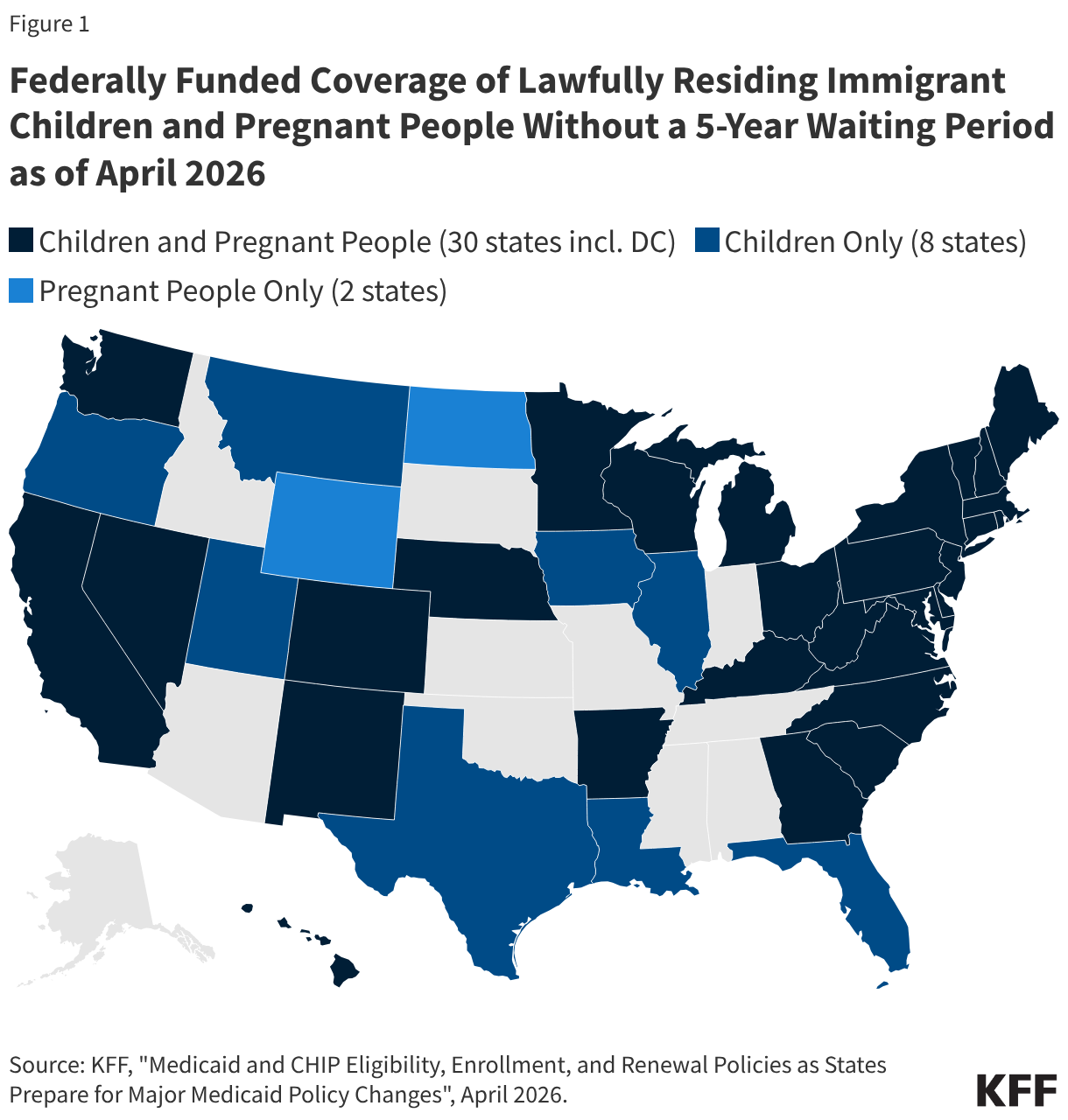
Federally Funded Coverage of Lawfully Residing Immigrant Children and Pregnant People Without a 5-Year Waiting Period as of April 2026 (Choropleth map)

A total of 25 states, including DC, have extended coverage through the CHIP FCEP option (Figure 2). While other pregnancy-related coverage in Medicaid and CHIP requires 60 days of postpartum coverage, the CHIP FCEP option does not include this coverage. However, some states that took up this option provide postpartum coverage through a CHIP health services initiative or using state-only funding. Eleven states that have implemented the FCEP option (California, Colorado, Connecticut, Illinois, Maine, Massachusetts, Minnesota, New York, Oregon, Rhode Island, and Washington) have used state funding or CHIP health services initiatives to extend postpartum coverage to 12 months to align with the Medicaid extension established by the American Rescue Plan Act. Maryland extends coverage for four months postpartum, and Alabama, Texas, Virginia, and DC extend coverage for 60 days postpartum using CHIP health services initiatives.
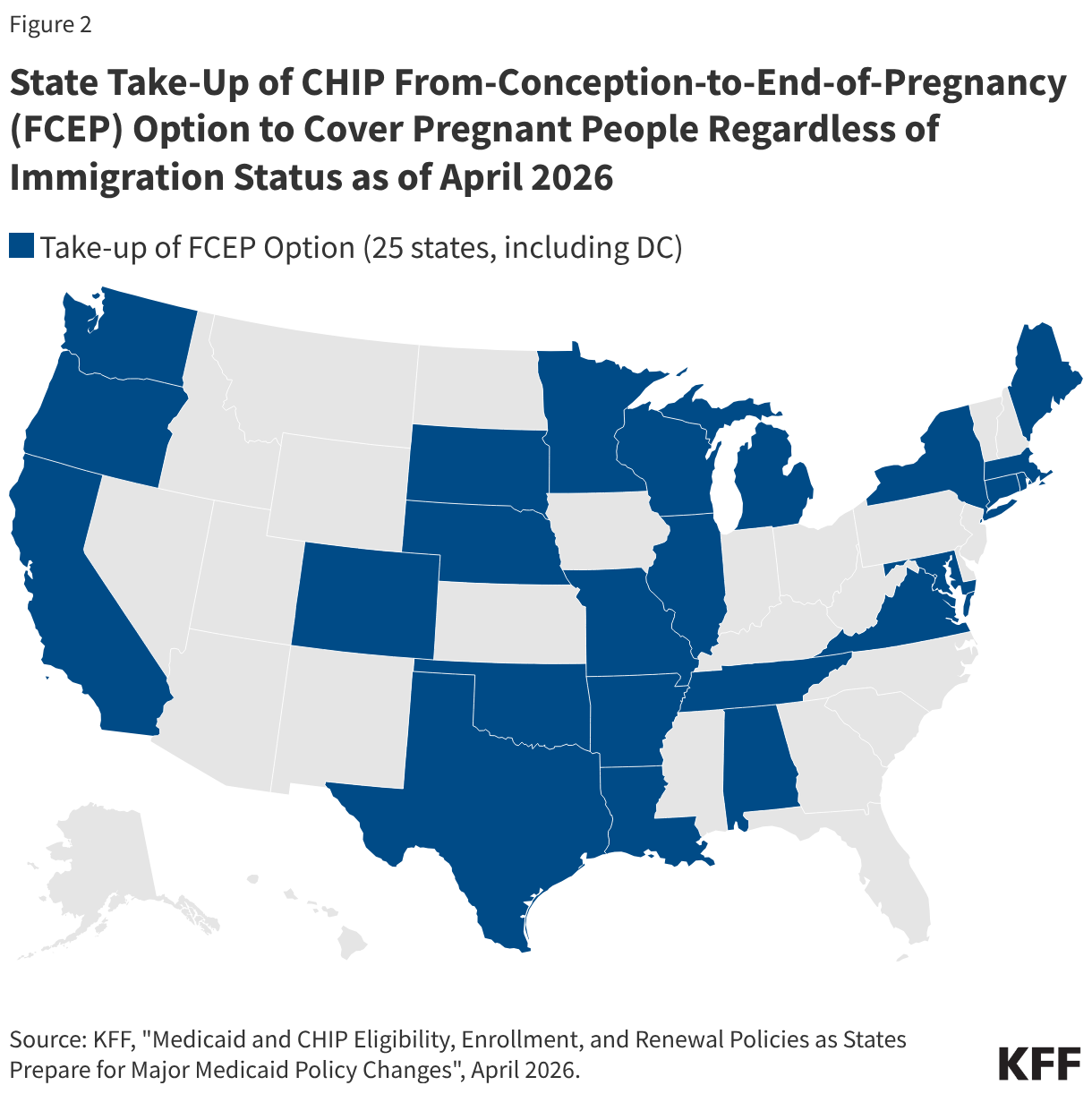
State Take-Up of CHIP From-Conception-to-End-of-Pregnancy (FCEP) Option to Cover Pregnant People Regardless of Immigration Status as of April 2026 (Choropleth map)

Fully State-Funded Coverage

Beyond state take-up of options in Medicaid and CHIP for lawfully present immigrants, some states provide fully state-funded coverage to fill gaps in coverage for immigrants. States vary in the eligibility and scope of benefits offered through these coverage programs. These programs may extend coverage to lawfully present immigrants who are not eligible for Medicaid or CHIP or other federally funded coverage as well as undocumented immigrants.

As of November 2026, 15 states, including DC, provide comprehensive state-funded coverage for children regardless of immigration status, with one state (Colorado) scaling back coverage due to budget pressures (Figure 3). These states include California, Colorado, Connecticut, Illinois, Maine, Massachusetts, Minnesota, New Jersey, New York, Oregon, Rhode Island, Utah, Vermont, Washington, and DC. Three of these states (Colorado, New Jersey, and Vermont) also provide state-funded coverage to income-eligible pregnant people regardless of immigration status, with Vermont extending this coverage for 12 months postpartum. Colorado implemented rollbacks to its state-funded coverage for children ages 18 and younger starting July 2026 due to funding constraints, including capping enrollment to 25,000 children, or when funding limits are reached, and limiting dental benefits. Colorado also plans to eliminate long-term services and supports for new enrollees ages 18 and younger starting January 2027. The Colorado Governor’s proposed budget for fiscal year 2028 includes eliminating state-funded coverage for children regardless of immigration status starting January 2028. Utah’s state-funded coverage for children has an enrollment cap of about 2,000 children and is closed to new enrollment as of February 2026.
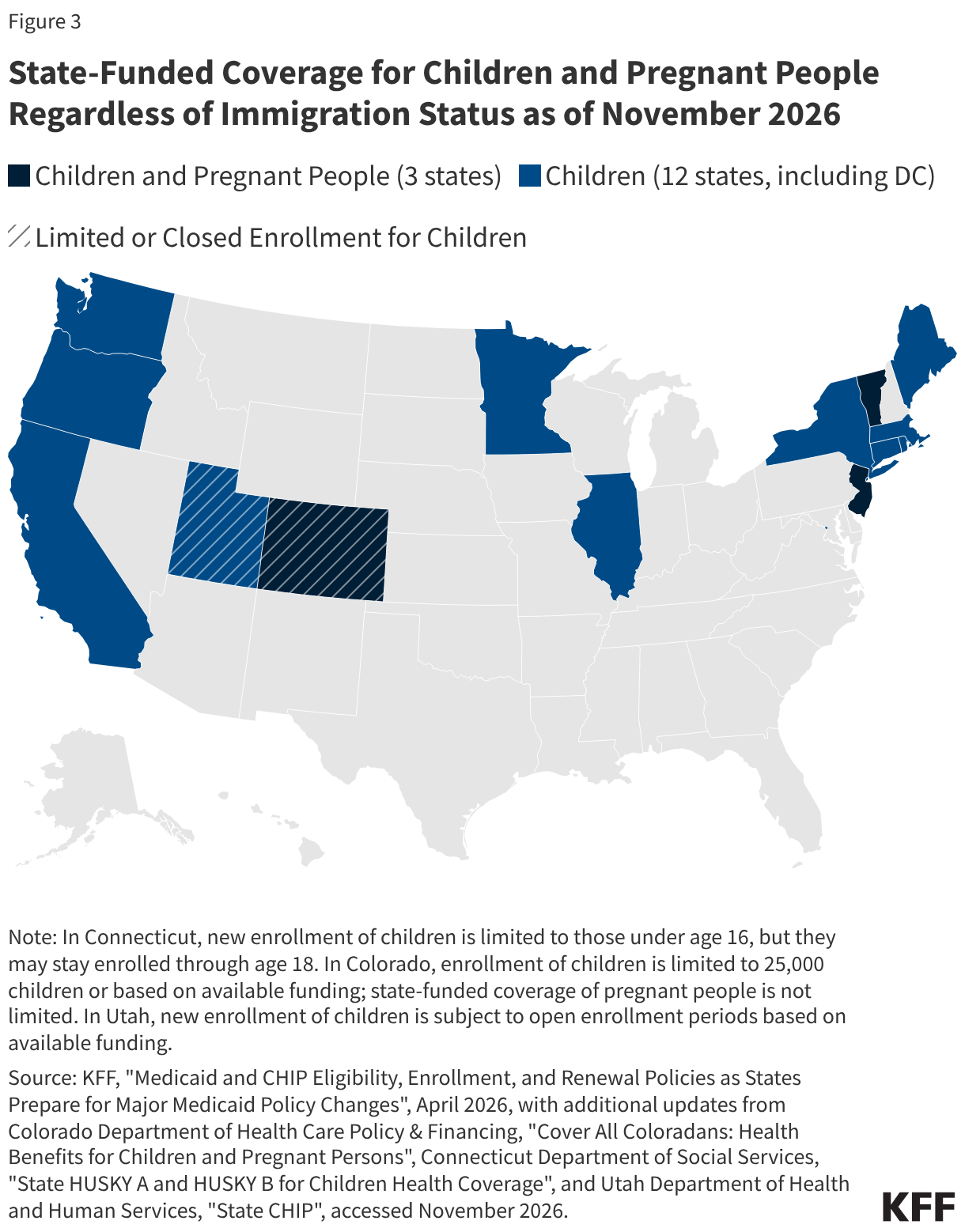
State-Funded Coverage for Children and Pregnant People Regardless of Immigration Status as of November 2026 (Choropleth map)

As of November 2026, seven states, including DC, have also expanded fully state-funded coverage to at least some income-eligible adults regardless of immigration status (Figure 4). These states include California, Colorado, DC, Illinois, New York, Oregon, and Washington. In some cases, coverage is limited to certain age groups, and several states have closed new enrollment. Some additional states cover some income-eligible adults who are not otherwise eligible due to immigration status using state-only funds but limit coverage to specific groups, such as lawfully present immigrants who are in the five-year waiting period for Medicaid coverage, or provide more limited benefits.

Six states, including DC, have recently eliminated or reduced or plan to scale back state-funded coverage for adults due to budget pressures.

  • California previously extended state-funded coverage to all income-eligible adults regardless of immigration status but implemented coverage reductions for adults 19 and older who are not pregnant or former foster youth under age 26 due to funding constraints. These reductions included closing new enrollment as of January 2026; ending non-emergency dental benefits starting July 2027; and charging monthly premiums starting July 2027. The state will also apply Medicaid policy changes included in the 2025 reconciliation law to certain adults enrolled in the state-funded coverage program, including work requirements starting January 2027 and more frequent six-month renewals starting March 2027. Additionally, to comply with new federal policies related to Medicaid managed care contracting, California will transition all state-funded coverage enrollees from managed care to a fee-for-service program starting January 2027, which will eliminate coverage for certain supportive services.
  • Colorado allows adults regardless of immigration status to obtain Marketplace coverage through OmniSalud using a section 1332 waiver. Colorado used state funds to provide plans with $0 premiums through SilverEnhanced Savings, but the state reduced the enrollment cap for the program from 12,000 to 6,700 people starting in the 2026 plan year and plans to implement a $15 monthly premium for the 2027 plan year.
  • DC provides health coverage to low-income adults 21 and older regardless of immigration status through its longstanding locally funded Healthcare Alliance program. However, DC closed enrollment to adults ages 26 and older and reduced income limits for adults 21 and older starting October 2025. DC plans to end coverage for all adults ages 21 and older by October 2027.
  • Illinois extended state-funded coverage to low-income individuals ages 65 and older regardless of immigration status through its Health Benefits for Immigrant Seniors (HBIS) program in December 2020 but new enrollment has been paused since 2023. Illinois previously extended coverage to low-income immigrants ages 42 to 64 regardless of immigration status through the Health Benefits for Immigrant Adults (HBIA) program in 2022, but ended HBIA coverage as of July 2025 due to funding constraints.
  • Minnesota extended state-funded health coverage to income-eligible adults 18 and older regardless of immigration status in January 2025 but ended this coverage as of January 2026 due to funding constraints. 
  • Washington uses state funds to provide Marketplace coverage with premium subsidies to individuals with incomes up to 250% FPL regardless of immigration status through Cascade Care using a section 1332 waiver, but funding is limited. In July 2024, Washington extended state-funded health coverage to individuals with incomes up to 138% FPL who are not eligible for either federal Medicaid or federal advance premium tax credits, but the state closed enrollment due to funding constraints and will move current and future enrollees from managed care to a fee-for-service program to comply with new federal policies related to Medicaid managed care contracting starting January 2027.

In addition to these states, Maryland also delayed plans to allow income-eligible individuals to purchase Marketplace coverage without subsidies regardless of immigration status to 2028 due to changes in the 2025 reconciliation law that will require additional administrative resources to implement.
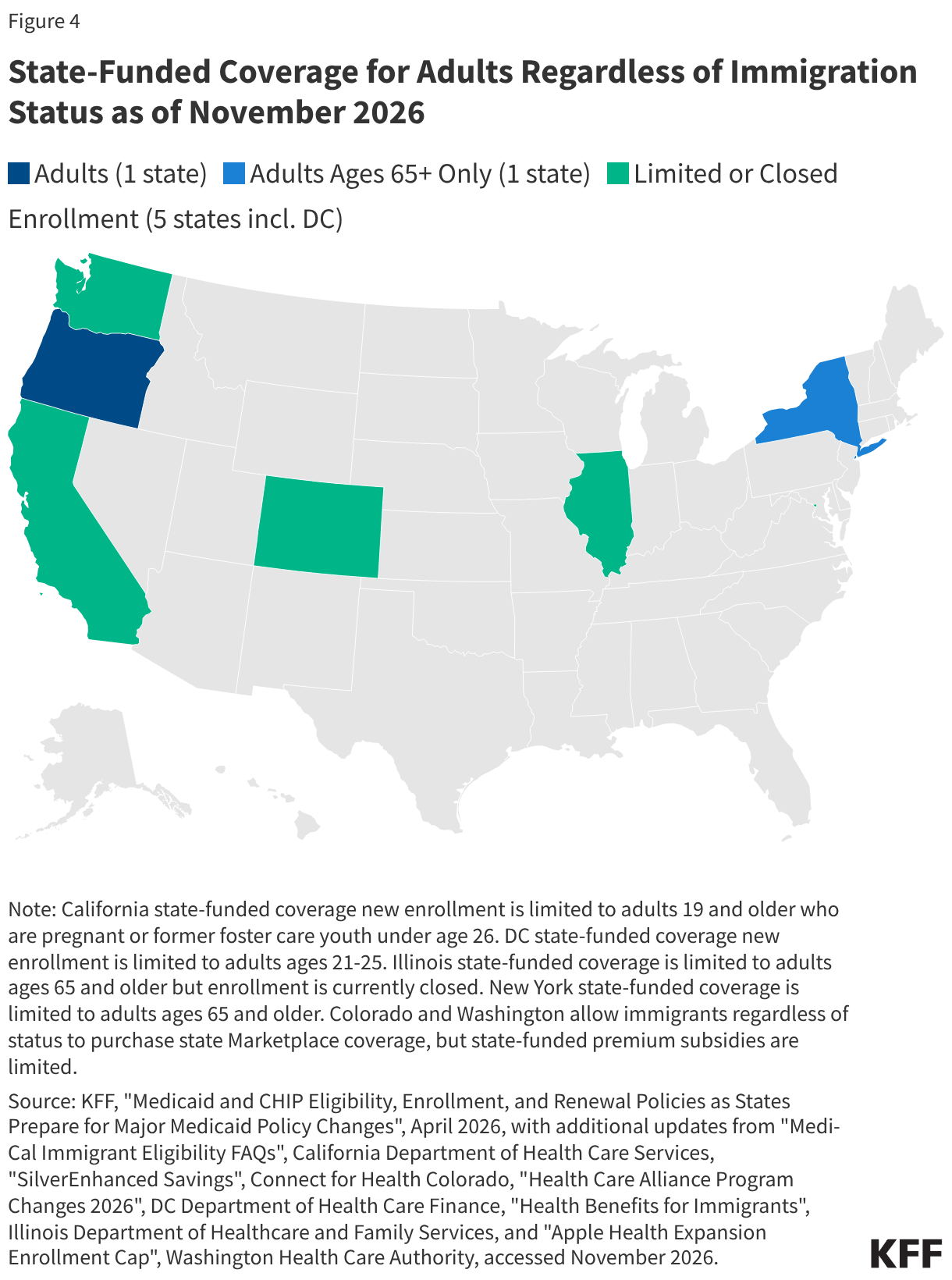
State-Funded Coverage for Adults Regardless of Immigration Status as of November 2026 (Choropleth map)

Five states (California, Minnesota, New Mexico, New York, and Oregon) provide fully state-funded coverage to lawfully present immigrants who lost Medicaid or subsidized ACA Marketplace coverage due to eligibility restrictions in the 2025 reconciliation law. California and Oregon are using state funds to cover lawfully present immigrants losing Medicaid coverage, with California providing coverage through June 2027. Minnesota will use state funds to cover certain lawfully present immigrants losing Medicaid coverage and federally funded coverage through the state’s Basic Health Program (BHP), MinnesotaCare. New Mexico is using state funds to provide premium subsidies for coverage through the state-based exchange to lawfully present immigrants losing Medicaid and subsidized ACA Marketplace coverage in addition to DACA recipients. New York will continue to provide coverage to certain lawfully present immigrants losing Medicaid coverage and those losing federally funded BHP coverage; coverage for both groups will be provided through the Essential Plan, the state’s BHP, and will be paid for using BHP trust fund reserves until those funds run out, likely in December 2028. Under a longstanding court ruling, New York is required to provide state-funded coverage to lawfully present immigrants who would be eligible for Medicaid if not for their immigration status.

Impact of State Coverage Expansions on Health Care Access and Use

While coverage expansions for immigrants increase spending, research suggests that they reduce uninsured rates, increase health care use, and improve health outcomes. Data from the KFF/New York Times 2025 Survey of Immigrants show that immigrant adults who live in states that provide more expansive coverage, including the ACA Medicaid expansion for low-income adults overall and immigrant coverage expansions, are about half as likely to be uninsured compared with those living in states with less expansive policies (11% vs. 23%). Other research shows that coverage expansions for immigrant children increase access to health care and are associated with improved health outcomes. A study found that eliminating the five-year wait for Medicaid or CHIP was associated with a decline in uninsured rates among lawfully present foreign-born children in states without state-funded health care programs. California’s 2016 expansion to low-income children regardless of immigration status was associated with a 34% decline in uninsurance rates, and the state’s expansion to all adults was associated with an increase in health coverage among immigrant adults ages 50 and older. Similarly, a study found that children who reside in states that have expanded coverage to all children regardless of immigration status were less likely to be uninsured, to forgo medical or dental care, and to go without a preventive health visit than children residing in states that have not expanded coverage. Another study found that immigrant children residing in states with more expansive health coverage policies were more likely to have uninterrupted health coverage and a usual source of primary care than those residing in states with less expansive health coverage policies. Research has also found that expanding Medicaid coverage to pregnant people regardless of immigration status is associated with higher rates of prenatal care and improved birth outcomes, while more restrictive state coverage policies were associated with reduced postpartum care utilization.
Global COVID-19 Tracker

Published: Nov 24, 2026

Editorial Note: The Policy Actions tracker will no longer be updated as the data source has ceased tracking government responses to COVID-19. For more information, please visit the Oxford Covid-19 Government Response Tracker.

This tracker provides the cumulative number of confirmed COVID-19 cases and deaths, as well as the rate of daily COVID-19 cases and deaths by country, income, region, and globally. It will be updated weekly, as new data are released. As of March 7, 2023, all data on COVID-19 cases and deaths are drawn from the World Health Organization’s (WHO) Coronavirus (COVID-19) Dashboard. Prior to March 7, 2023, this tracker relied on data provided by the Johns Hopkins University (JHU) Coronavirus Resource Center’s COVID-19 Map, which ended on March 10, 2023. Please see the Methods tab for more detailed information on data sources and notes. To prevent slow load times, the tracker only contains data from the last 200 days. However, the full data set can be downloaded from our GitHub page. While the tracker provides the most recent data available, there is a two-week lag in the data reporting.

Note: The data in this tool were corrected on March 18, 2024, to clarify that they represent new cases and deaths over a full week rather than the average per day over a seven-day period.

This tracker contains information on policy measures currently in place to address the COVID-19 pandemic. Policy categories currently being tracked include social distancing & closure measures, economic measures, and health systems measures. Policies are tracked at the country-, income-, and region-level. Please see the Methods tab for more detailed information on data sources and notes.

Social Distancing and Closure Measures

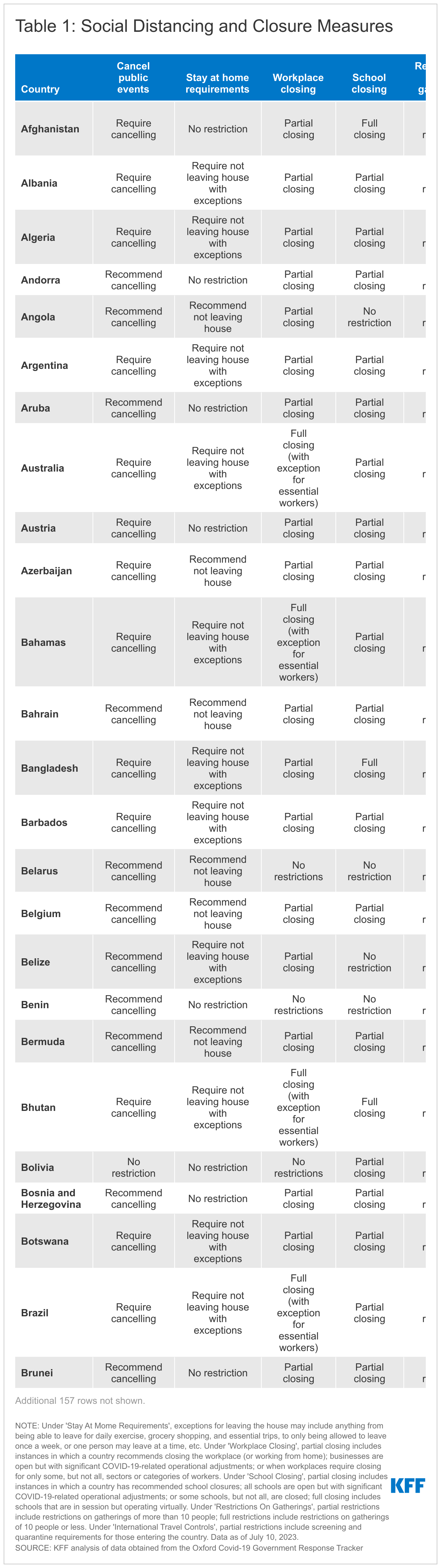
As countries continue to implement policies to prevent the transmission of SARS-CoV-2, the virus that causes COVID-19, these tables and charts show which social distancing and closure measures are currently in place by country.

Global COVID-19 Policy Actions

Economic Measures

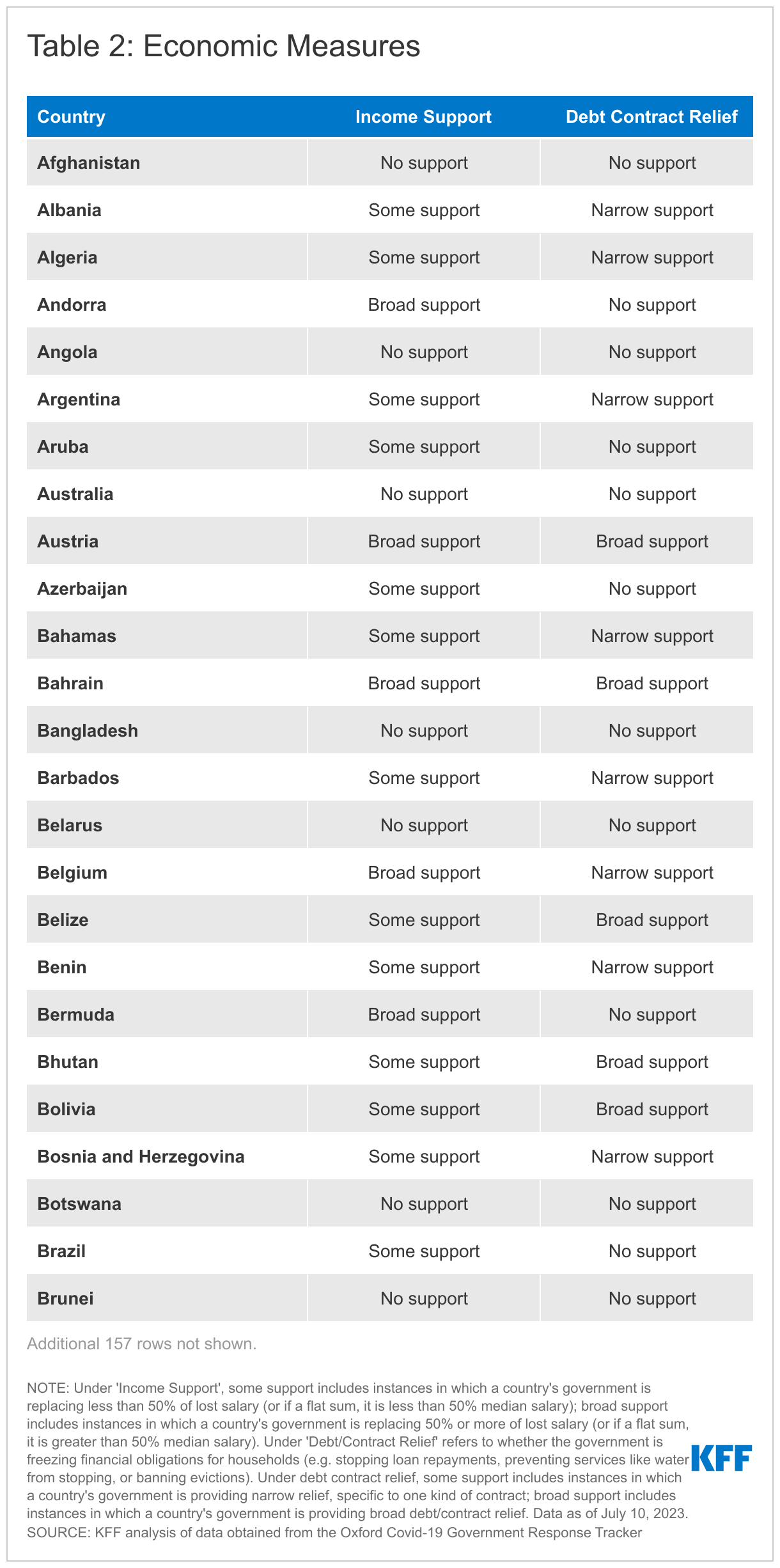
The COVID-19 pandemic has placed an unprecedented strain on country economies. These tables and charts show which economic-related measures, namely income support and debt relief, are currently in place by country.

Global COVID-19 Policy Actions

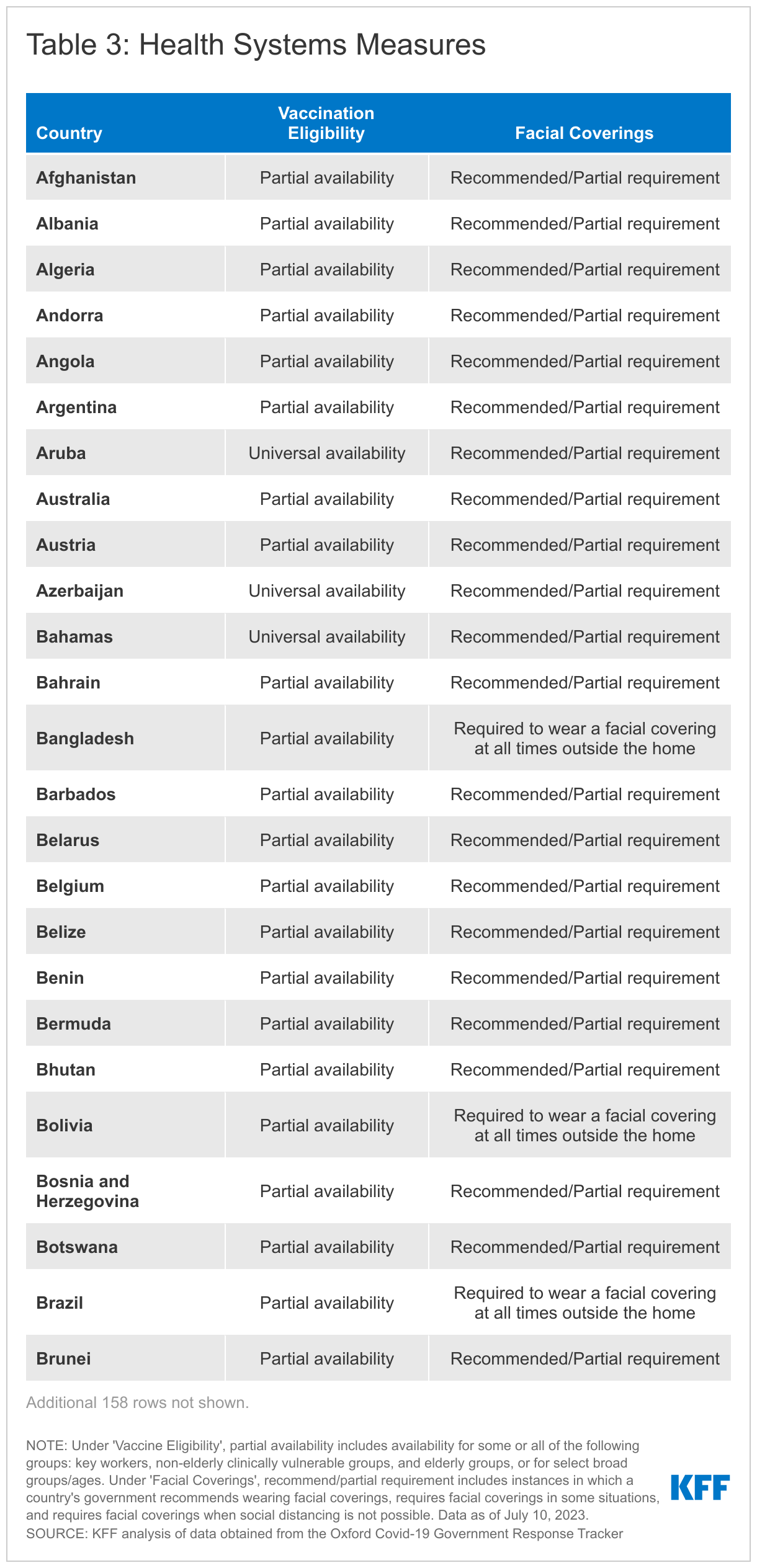
Health Systems Measures

The COVID-19 pandemic continues to strain and disrupt global health systems. These tables and charts show which health systems measures are currently in place by country.

Global COVID-19 Policy Actions

Cases and Deaths

SOURCES

As of March 7, 2023, all data on COVID-19 cases and deaths are drawn from the World Health Organization’s (WHO) Coronavirus (COVID-19) Dashboard. Prior to March 7, 2023, this tracker relied on data provided by the Johns Hopkins University (JHU) Coronavirus Resource Center’s COVID-19 Map, which ends on March 10, 2023. Population data are obtained from the United Nations World Population Prospects using 2021 total population estimates. Income-level classifications are obtained from the latest World Bank Country and Lending Groups. Regional classifications are obtained from the World Health Organization.

Policy Actions

NOTES

Policy actions data include the measure that was in place for each indicator at the country-level as of the end of 2022. Policy actions data will no longer be updated as the data source has ceased tracking government responses to COVID-19. For more information, please visit the Oxford Covid-19 Government Response Tracker.

Social Distancing and Closure Measures

Under 'Stay At Home Requirements', exceptions for leaving the house may include anything from being able to leave for daily exercise, grocery shopping, and essential trips, to only being allowed to leave once a week, or one person may leave at a time, etc. Under 'Workplace Closing', partial closing includes instances in which a country recommends closing the workplace (or working from home); businesses are open but with significant COVID-19-related operational adjustments; or when workplaces require closing for only some, but not all, sectors or categories of workers. Under 'School Closing', partial closing includes instances in which a country has recommended school closures; all schools are open but with significant COVID-19-related operational adjustments; or some schools, but not all, are closed; full closing includes schools that are in session but operating virtually. Under 'Restrictions On Gatherings', partial restrictions include restrictions on gatherings of more than 10 people; full restrictions include restrictions on gatherings of 10 people or less. Under 'International Travel Controls', partial restrictions include screening and quarantine requirements for those entering the country. Values for ‘Cancel Public Events’ were not recodified.

Economic Measures

Under 'Income Support', narrow support includes instances in which a country's government is replacing less than 50% of lost salary (or if a flat sum, it is less than 50% median salary); broad support includes instances in which a country's government is replacing 50% or more of lost salary (or if a flat sum, it is greater than 50% median salary). Under 'Debt/Contract Relief', narrow support includes instances in which a country's government is providing narrow relief, such as relief specific to one kind of contract.

Health Systems Measures

Under 'Vaccine Eligibility', partial availability includes availability for some or all of the following groups: key workers, non-elderly clinically vulnerable groups, and elderly groups, or for select broad groups/ages. Under 'Facial Coverings', recommend/partial requirement includes instances in which a country's government recommends wearing facial coverings, requires facial coverings in some situations, and requires facial coverings when social distancing is not possible. 

SOURCES

Data on and descriptions of government measures related to COVID-19 provided by the Oxford Covid-19 Government Response Tracker (OxCGRT). For more detailed information on their data collection and methodology, please see their codebook and interpretation guide.

Tracking Implementation of the 2025 Reconciliation Law: Medicaid Work Requirements

Updated on:

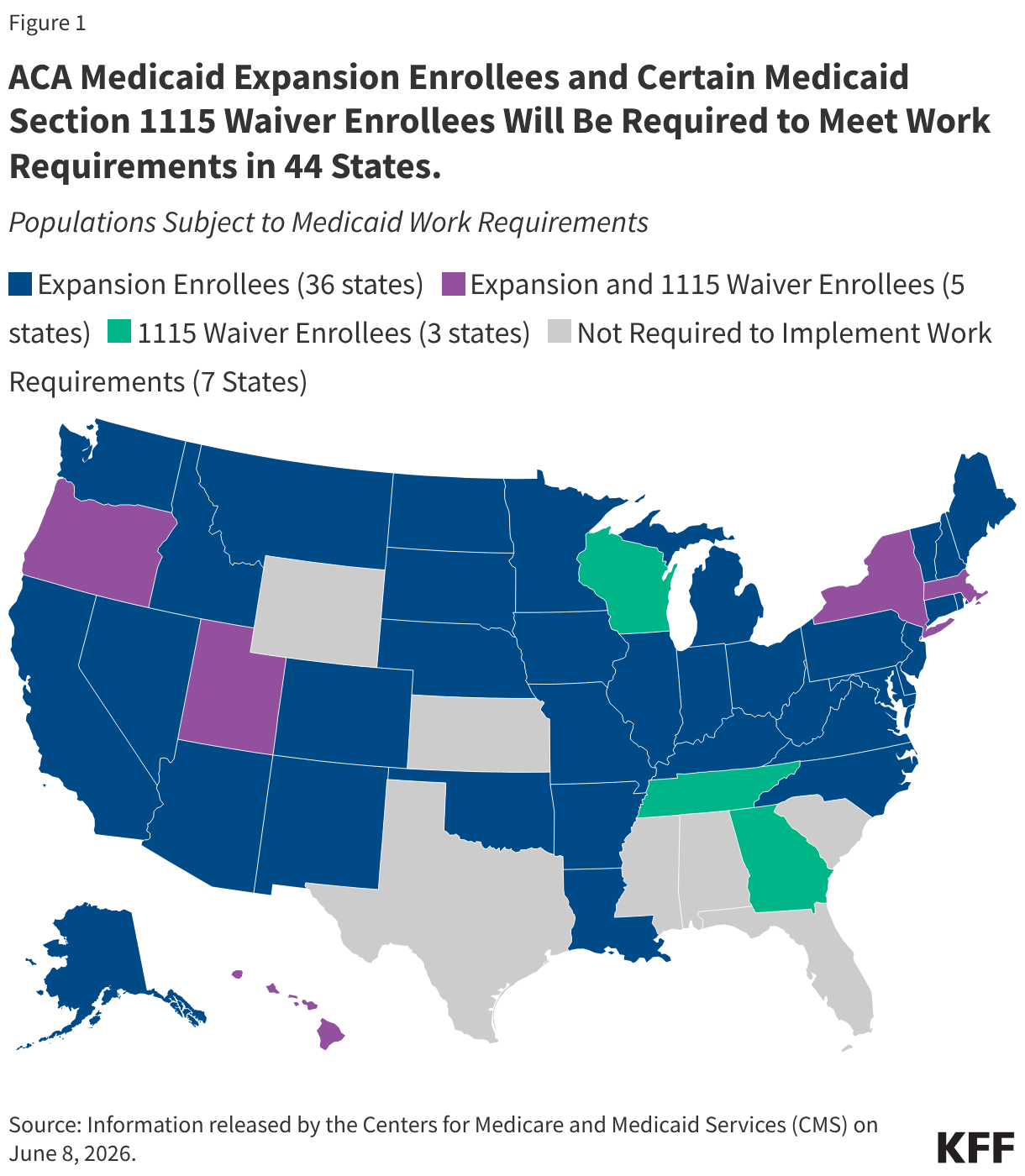
The 2025 reconciliation law, once called the “One Big Beautiful Bill,” signed by President Trump on July 4, 2025, requires 44 states (including DC) to condition Medicaid eligibility for adults in the Affordable Care Act (ACA) Medicaid expansion group and certain enrollees in 1115 waiver programs on meeting work requirements starting January 1, 2027. States have the option to adopt a “hold harmless” period for up to six months through June 30, 2027, meaning they would not deny applications or disenroll individuals renewing their coverage due to non-compliance with the work requirements during this time.

Currently, 41 states (including DC) have expanded their Medicaid programs under the ACA to nearly all adults with income up to 138% FPL ($21,597 for an individual in 2025). In June 2026, CMS released a list of states with 1115 waiver programs that include individuals who will be subject to work requirements. The list identifies waiver programs in three non-expansion states Georgia, Tennessee, and Wisconsin, as well as in five expansion states, Hawaii, Massachusetts, New York, Oregon, and Utah (Figure 1).  

ACA Medicaid Expansion Enrollees and Certain Medicaid Section 1115 Waiver Enrollees Will Be Required to Meet Work Requirements in 44 States. (Choropleth map)

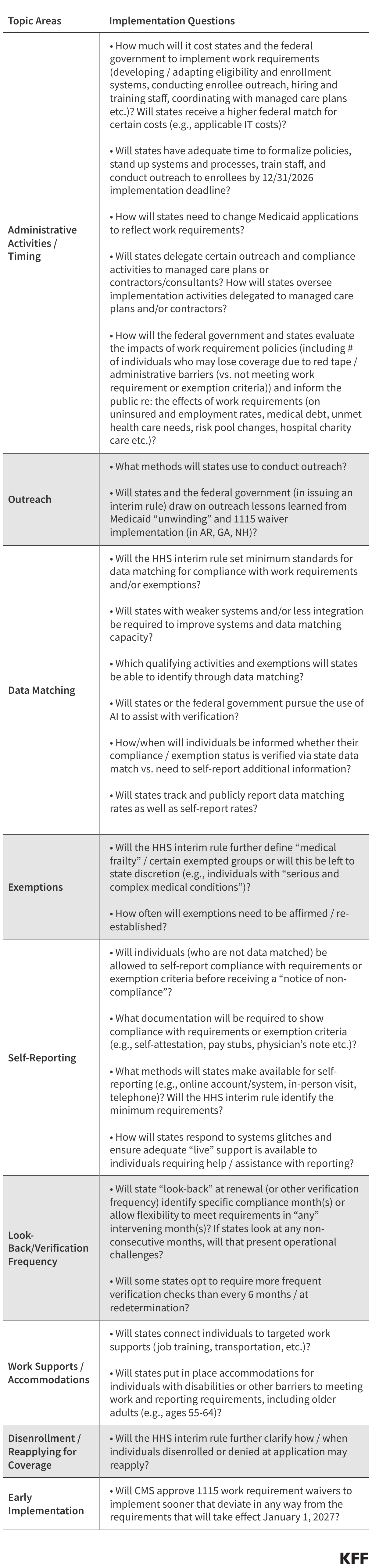
To implement Medicaid work requirements, states will need to make important policy and operational decisions, implement needed system upgrades or changes, develop new outreach and education strategies, and hire and train staff, all within a relatively short timeframe. The information tracked here can serve as a resource to understand Medicaid work requirements and state options, gauge readiness, and track implementation of the requirements, including:

This resource will be updated to include guidance from the Centers for Medicare and Medicaid Services (CMS), information on state policy decisions as they are made, and new data when available.

Continue scrolling to learn more about the Medicaid work requirements in the 2025 reconciliation law.

Tracking Implementation of the 2025 Reconciliation Law Medicaid Work Requirements

Updated on:

KFF Resources on Medicaid Work Requirements

Work requirements overview:

Medical frailty exemption:

Implementation of work requirements:

50-state survey of Medicaid eligibility and enrollment policies:

Research and analysis on Medicaid and work:

1115 work requirement waivers:

Work requirements implications and state experience:

Arkansas work requirement experience:

KFF Polling on Work Requirements:

Beyond the Data by KFF CEO Drew Altman:

Medical Frailty and Medicaid Work Requirements: Challenges for People with HIV

Published: Nov 24, 2026

Editorial Note: On October 29, 2026, after this brief was published, on July 1, 2026, a Massachusetts district court decision changed aspects of what is outlined in this analysis, vacating provisions included in CMS’s implementing guidance. The court struck down the regulatory requirement that to qualify for a “medical frailty” exclusion from the work requirement an individual would have to both have a qualifying condition and prove that the condition impaired their ability to meet work requirements. As a result of the decision, the impairment assessment is no longer required and having a qualifying condition (as identified by the state) is enough to qualify for the exclusion. HHS has stated it will appeal the decision but to date no appeal has been filed. While this ruling could mean that more Medicaid enrollees with HIV are able to qualify as medically frail, there will still likely be administrative challenges (discussed below), and depending on how states implement, it is possible not all people with HIV will qualify.

Additionally, in November, recognizing the tight timeline and implementation challenges states were facing, CMS announced it would offer states an optional ‘hold harmless’ period through June 30, 2027, during which states will need to verify whether individuals meet the work requirements or qualify for an exclusion as required by the law but “may suspend denials of eligibility and disenrollments when applicable individuals do not demonstrate compliance with community engagement.” States must request this option by December 11, 2026, and they are already making different decisions about whether they will take it up. 

On June 1, 2026, the Centers for Medicare and Medicaid Services (CMS) issued an interim final rule providing states with guidance for implementing Medicaid “community engagement” or Medicaid work requirements as part of the 2025 federal budget reconciliation law. The law requires states to condition Medicaid eligibility for enrollees with coverage through the Affordable Care Act (ACA) expansion or under certain waivers on meeting these requirements or qualifying for an exclusion, including one related to being “medically frail or otherwise” having “a special medical need.” In defining medical frailty, the rule introduces a two-part test, requiring an enrollee to both have a qualifying condition and demonstrate that the condition impairs their ability to fulfill the community engagement requirement, differing from stakeholders’ expectations. Early on, and as with Nebraska’s early implementation, states believed they would be able to exclude people based on presence of a condition alone and several states planned to exclude all people with HIV.

On June 29, 2026, twenty-four (24) states and two (2) state governors sued CMS in Massachusetts District Court challenging aspects of the regulation, including its requirement that to qualify for the medical frailty exclusion an enrollee’s condition must significantly impair their ability to comply with community engagement requirements. Among other arguments, the plaintiff states claim this additional requirement is contrary to the reconciliation law (H.R.1) and that “H.R. 1’s broad statutory exclusions exist for good reason. People with disabilities, patients in the middle of cancer treatment, or those struggling with another serious or complex health condition, shouldn’t be at risk of losing the care that helps maintain their health.” Whether the court grants their request to enjoin and vacate the challenged provisions, including the medical frailty two-part test, is yet to be seen.

In the meantime, because Medicaid is the primary source of insurance coverage for people with HIV, this new requirement and state implementation decisions, will have a significant impact on this population’s access to Medicaid going forward and could affect the nation’s efforts to address HIV.

This analysis reviews the implications of the rule’s definition of medical frailty for people with HIV. (For a broad overview of medical frailty, definition of terms, and the impact of the regulation beyond HIV, see this KFF analysis.)

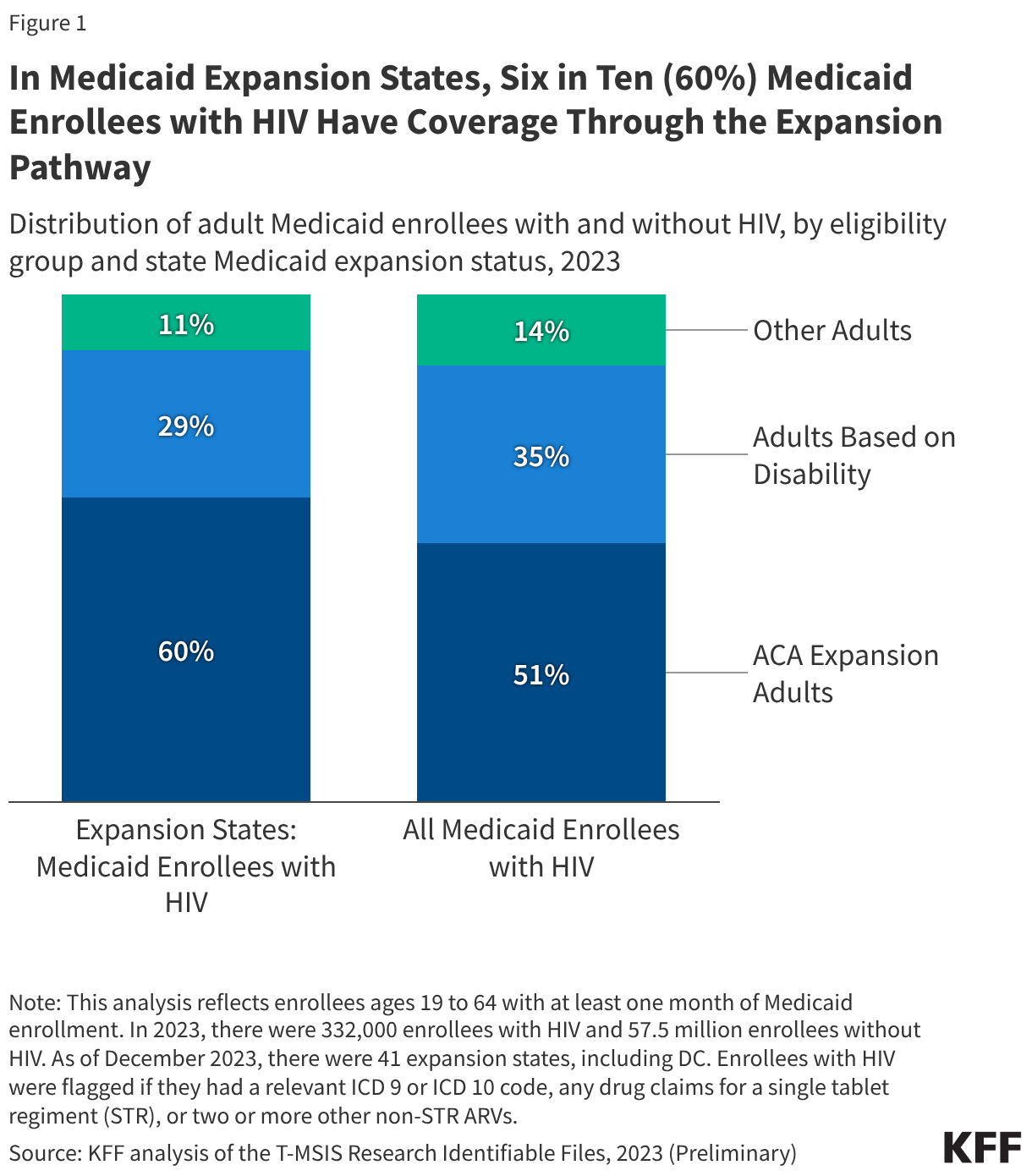
Medicaid expansion is the most common pathway for Medicaid coverage for people with HIV, so many with HIV will be subject to new work / community engagement requirements. Medicaid is the largest source of insurance coverage for people with HIV and plays a larger role in covering adults with HIV than adults without HIV. Nationwide, nearly half (46%) of people with HIV had coverage through the Medicaid program in 2023. In states that have expanded their Medicaid programs, Medicaid expansion is the primary pathway to coverage for people with HIV. In 2023, 60% of adults under age 65 with HIV in expansion states had coverage through the expansion pathway and would be subject to work requirements (see Figure 1). Before states expanded Medicaid programs under the ACA, many people with HIV did not have access to affordable coverage until they had an advanced condition to qualify through a permanent disability pathway and many were uninsured, despite coverage and access to care having the potential to stave disability off in the first place.

In Medicaid Expansion States, Six in Ten (60%) Medicaid Enrollees with HIV Have Coverage Through the Expansion Pathway (Stacked column chart)

The approach to determining medical frailty specified in the rule will make it more difficult for individuals with HIV to obtain a medical frailty exclusion from work requirements. The rule imposes a two-part test that defines as medically frail an individual who is blind or disabled; has a substance use disorder; has a “disabling” mental disorder; has a physical, intellectual, or developmental disability that limits the ability to perform one or more activities of daily living (ADL); or has a “serious or complex” medical condition and whose condition impairs their ability to fulfill the community engagement requirements (including but not limited to work). While the rule includes HIV/AIDS as one of 19 example conditions that would be reasonable for states to consider as a serious or complex medical condition, it further specifies, using HIV as an example, that, “Individuals with HIV/AIDS are medically frail if they are determined to have a serious or complex medical condition that significantly impairs the individual's ability to comply with the community engagement requirement, which is less likely to be the case if the acuity of their condition is not severe.” Access to antiretroviral medication, including through Medicaid, is necessary to manage HIV and prevent immune system dysfunction, illness, and ultimately death. To the extent people with HIV lose access to Medicaid due to work requirements, including failure to navigate reporting rules, they may develop more severe conditions. 

People with HIV whose condition is well managed may qualify as medically frail if they have another medical condition that limits their ability to work. Nearly three-quarters (73%) of people with HIV enrolled in Medicaid have chronic conditions (other than HIV), compared with four in ten (42%) of those without HIV. Alternatively, people with HIV may qualify as medically frail under one of the other categories. Notably, people with HIV are more likely than other Medicaid enrollees to have an SUD or mental health condition. Nearly, one-quarter (23%) of people with HIV had an SUD diagnosis compared to 8% of Medicaid enrollees without HIV and over one-third (36%) of Medicaid enrollees with HIV had a mental health condition diagnosis, some of which may be considered “disabling,” compared to 16% of Medicaid enrollees without HIV. People with HIV also experience high rates of disability--half (50%) of likely Medicaid expansion enrollees with HIV have a disability, including a functional disability (e.g. difficulty climbing stairs, dressing oneself, etc.) or an AIDS (stage III HIV) diagnosis.

The rule requires states to use claims and encounter data to identify individuals who may be medically frail, but does not provide guidance on how to assess whether a condition limits an individual’s ability to meet the community engagement requirements. States will be required to maintain an auditable list of medically frail conditions (in the form of diagnosis codes) that could include HIV. States will have discretion over the creation of this list and may include only some codes for each condition. For example, Nebraska’s list of ICD-10 codes released before the state implemented work requirements on May 1, 2026 only included one of several codes for HIV which would not capture all enrollees with HIV. The rule also makes clear that diagnoses alone cannot be used to determine medical frailty because of the need to assess whether the condition impairs the ability to work or engage in community service. This additional requirement will limit the ability to verify medical frailty on an automated, or ex parte, basis and will require states to use other verification methods.

The regulation offers examples of the types of providers that states could use to verify medical frailty including a range of clinicians. CMS’s inclusion of “clinical social workers” on this list could be especially meaningful for people with HIV given that many get care through clinics with integrated social and support services whose staff help with insurance navigation. However, the administrative burden on treating providers is likely to be significant

For people with HIV, the reliance on data sharing, confirmation from treating providers, and health screeners and self-attestation to verify medical frailty exclusion status may raise unique privacy issues and barriers due to stigma: 

  • Data sharing: Some states are exploring using a data-sharing process between the state Medicaid and state public health/HIV office which could help them identify enrollees without HIV related claims histories, including those new to Medicaid. Some states already have a data sharing agreement in place. However, this public health data is highly sensitive, and some have raised concerns about data privacy and security related to HIV status. 
  • Provider documentation. As noted, the rule permits states to accept documentation of qualifying conditions and medical frailty from providers. However, the requirement to assess and report the severity of patients’ conditions and the impact on their ability to meet the work requirements may raise ethical concerns for these providers, particularly given the emphasis in HIV care on care engagement for both the patient’s and public health.
  • Health screeners and self-attestation. The rule encourages states to use health screeners at application and renewal to identify individuals who may be medically frail, which could include people with HIV. Separately, though its use will be more limited starting in January 2028, most states will also likely allow self-attestation when existing data sources are insufficient to document a qualifying condition and the inability to work. However, the stigma associated with HIV may discourage individuals from disclosing their condition and how it impacts their life.

Coverage loss for people with HIV could negatively impact individual health, public health, and place an increased burden on already stretched HIV programs. Given the new requirements in the regulation, a blanket exclusion for people with HIV will not be possible which will mean a greater staff burden (at the state Medicaid agency and in clinics), higher costs, and potentially wide scale churn, disenrollment, or coverage rejections for those with HIV. While earlier KFF research found that one-third (33%) of likely expansion enrollees with HIV were working at least 20 hours per week and another 4% had dependents at home, the need to document work compliance or medical frailty status, could challenge coverage retention for people with HIV which could lead to disruptions in care and treatment and subsequently increased risk of morbidity, mortality, and HIV transmission. Such a scenario also runs counter to federal goals in the Administration’s Ending the HIV Epidemic Initiative and the Ryan White Program Moving Forward (formerly Ryan White Program 2030) vision. Indeed, four in ten new HIV transmissions are associated with someone who is aware of their HIV status but not in care. Treatment interruptions can also lead to antiretroviral resistance, making future treatment and care more complex. Additionally, if people with HIV lose Medicaid coverage some may turn to the federal Ryan White Program. This comes at a time when state Ryan White Programs across the country are facing budget crises due to a range of factors and coverage losses due to work requirements represent an additional challenge for programs to weather.

Tracking Implementation of the 2025 Reconciliation Law Medicaid Work Requirements

Updated on:

CMS Guidance and Information

Litigation

Commonwealth of Massachusetts v. Oz et al

Taylor et al. v. Kennedy et al.

Operational and Implementation Questions

Table

Tracking Implementation of the 2025 Reconciliation Law Medicaid Work Requirements

Updated on:


Loading…

VOLUME 59

New York Law Limits Human-Like AI Chatbot Features for Minors


Highlights

A New York law bars AI chatbots interacting with minors from presenting themselves as human, flattering users, or encouraging self-harm, adding to a growing number of states passing restrictions on AI companion chatbots.

And the 2026 KFF Women’s Health Survey finds that 53% of women in states with bans on the provision of abortion would not know where to get an abortion, as many remain unsure about what options are available to them.


AI & Emerging Technology

New York Enacts Law Restricting How AI Chatbots Interact With Minors

New York Gov. Kathy Hochul signed legislation on October 28 that bars AI chatbots from using 12 design features with users unless the company has confirmed the user is an adult. The law, which now takes effect June 1, 2027, is the latest of at least a dozen state laws addressing AI companion chatbots, which hold ongoing, personalized conversations and are often marketed as friends or sources of emotional support.

Most state companion chatbot laws, including a 2025 New York law, require chatbots to disclose that they are AI and to refer users who express suicidal thoughts to crisis services, but the new law goes further by limiting how chatbots interacting with minors present themselves and what they say.

  • The law restricts AI chatbot features that simulate human relationships or emotional attachment. This includes claiming to be human or to have emotions, claiming a personal, professional, or authority role, flattery or “sycophancy,” and drawing on health or personal information the user shared in an earlier session.
  • The law bars chatbots from encouraging self-harm, substance use, or secrecy. This includes promoting suicide, self-harm, disordered eating, or unlawful drug or alcohol use; encouraging secrecy, isolation, or avoidance of professional help; and sexually explicit content.
  • The law also reaches beyond AI companion apps. It covers nearly any generative AI chatbot that holds an ongoing conversation and adapts to the user, including general-purpose assistants, with few exemptions. It also requires an age-verification method beyond a user’s own claim to be an adult.  

How the attorney general interprets terms such as “flattery” and “sycophancy,” and the age-verification rules will determine how the law works in practice.

The law’s text does not cite research, though its Senate sponsor said it “reflects the most current research on AI companions and their impacts on young users.”

  • Chatbots have produced harmful content in testing. In a 2025 test by the Center for Countering Digital Hate, an advocacy group, researchers posing as 13-year-olds classified 53% of 1,200 ChatGPT responses on mental health, eating disorders, and substance use as harmful. The harms found in testing may not reflect how these products work today, though several recent lawsuits have also alleged chatbots encouraged teen suicides.
  • Most U.S. teens have used AI chatbots. A nationally representative survey of 1,211 youth ages 9 to 17, conducted by SSRS for Common Sense Media from April 29 to May 11, 2026, found about three quarters (77%) of teens and about half (49%) of tweens (age 9 to 12) had used AI chatbots or companions in their free time.
  • Teens report limited trust, but some rely on chatbots for serious conversations. An American Psychological Association health advisory warned that adolescents may be less likely than adults to question the accuracy and intent of information from a bot. In a 2025 survey conducted by NORC for Common Sense Media from April 30 to May 14, 2025, half of teens said they distrust advice from AI companions, while about one in three teen users said they had discussed serious matters with an AI companion instead of a person.

Why this matters:

New York’s AI chatbot safety law is among the first to regulate features that may influence how young users develop trust and emotional connections with the technology, though further research is needed to understand whether such restrictions will change outcomes.


What We’re Watching

53% of Women in States with Bans on the Provision of Abortion Would Not Know Where to Get an Abortion, KFF Survey Finds

More than half (53%) of women of reproductive age (ages 18 to 49) living in states with abortion provision bans say that they would not know where to go or where to find information if they needed or wanted an abortion, up from 43% in 2024, according to the 2026 KFF Women’s Health Survey released October 26. Nationally, 32% of women in that age group said the same, up slightly from 26% in 2024.

The survey finds that most of this gap reflects uncertainty, not necessarily incorrect beliefs:

  • Few women of reproductive age know abortion pills can be obtained online. About two-thirds of women of reproductive age (68%) have heard of medication abortion, while only about one in five (18%) know that people in their state can get the pills online, falling to 8% among women in states with abortion bans.Most women of reproductive age (71%) are unsure about the availability of medication abortion in their state or have never heard of medication abortion, while about one in ten (11%) incorrectly say people in their state cannot get the pills online.
  • Many women are concerned about pregnancy safety. About six in ten women of reproductive age (59%) are concerned that abortion bans may affect the safety of a potential future pregnancy for themselves or someone close to them, and 12% know someone, including themselves, who has difficulty getting an abortion because of state restrictions, up from 8% in 2024.

In the states with abortion provision bans, people can still obtain medication abortion through telehealth from clinicians in states with shield laws, which protect providers who practice in states where telehealth abortion is permitted and prescribe across state lines. In 2025, over half (54%) of telehealth abortions were provided under the protection of shield laws.

Why this matters:

The survey found most women in the survey were uncertain about what care is available rather than holding incorrect beliefs, a lack of information that is different than misinformation.

Marketing Claims About Experimental Peptides Outpace the Evidence as Access Expands

Experimental peptides are widely promoted by wellness clinics, influencers, and podcast hosts for uses such as injury recovery, sleep, inflammation, and metabolism, but many of these claims go beyond what research has shown. A recent Department of Health and Human Services (HHS) policy could expand access to these peptides, even as consumers face marketing claims that outpace the available evidence. The draft policy, released on October 28, states that the department does not intend to take enforcement action against licensed pharmacies and physicians that compound six experimental peptides that are not FDA-approved, including BPC-157 and TB-500, if they meet specified conditions.

KFF Health News reviewed four common claims about peptides and the evidence behind them:

  • Peptides used to treat or prevent disease meet the definition of a drug. Some wellness podcasts have claimed that peptides aren’t drugs. “Peptide” is a general term for substances smaller than proteins but made of the same building blocks. When they are used to treat, prevent, or cure conditions or to affect how the body functions, they meet the definition of a drug. Dozens of peptide drugs, including insulin and GLP-1 weight loss medications, are FDA-approved.
  • Being found in nature does not establish safety. Influencers and peptide sellers, including compounding pharmacy owners, often describe peptides as safe because they are natural. Researchers have not found BPC-157 in the human genome, meaning it is not made by the human body, and some researchers suggest it is produced by stomach microbes. Naturally occurring substances such as insulin can also be harmful in high doses.
  • BPC-157’s claimed benefits for injury recovery lack strong clinical evidence. Clinic owners who sell BPC-157 have claimed it treats conditions such as acid reflux and neurologic disorders. A 2005 summary of a small trial of BPC-157 for inflammatory bowel disease lacked key details, and FDA scientists who reviewed it called it inadequate. Another small study reporting knee pain relief had no control group, and a 2025 review of BPC-157 for musculoskeletal injuries said it should be approached with caution because of limited evidence. Promoters often cite animal and laboratory studies, but a 2024 analysis found that only 5% of 281 therapies whose initial animal experiments took place more than 10 years earlier had received regulatory approval for human use.
  • Peptides can be patented. Researchers analyzing Reddit posts found a common claim that drug companies ignore peptides because they can’t be patented. Hundreds of peptide patents are listed in the U.S. Patent and Trademark Office database, and a patent on an early formulation of BPC-157 is for sale. Researchers told KFF Health News that companies weigh factors such as early results and competition with existing drugs before funding costly clinical trials.

What is known about the safety and side effects of experimental peptides?

  • FDA scientists said the evidence was insufficient, though an advisory committee recommended allowing compounding. At a July FDA advisory committee meeting, agency scientists said there was not enough evidence that the six peptides improve any condition and flagged potential risks including unwanted immune responses. For BPC-157, FDA reviewers re-examined data from a 2020 animal study whose authors concluded the peptide was well tolerated. FDA scientists, though, said the data showed possible safety signals after repeated dosing that the authors had generally considered unrelated to the peptide. Reviewers concluded the available studies were too limited to show whether BPC-157 is safe for people. Some committee members, however, argued that allowing licensed pharmacies to compound the peptides could provide a more regulated alternative to products people are already obtaining. The committee voted in favor of making each peptide eligible for compounding, with split votes on several, including 8 to 6 for BPC-157, but the votes are advisory and non-binding.
  • Adverse event reports exist but cannot establish that the products caused harm. Some users have described effects such as migraines, fatigue, and anxiety in interviews with KFF Health News and in online forums. Reports in the FDA’s adverse event database include hospitalizations after BPC-157 use, though these reports are voluntary and unverified.

The draft policy does not make the peptides FDA-approved drugs or establish that they are safe or effective, and the FDA does not review compounded drugs for safety, effectiveness, or quality before they are sold. Instead, it allows licensed pharmacies to make the peptides with a prescription, using ingredients from FDA-registered suppliers, and requires them to report serious side effects. The policy is temporary, applying until the FDA decides through a formal rulemaking process whether the peptides can be compounded.

Why this matters:

Many peptide products are marketed with anecdotes and laboratory findings in place of clinical trial data. An HHS spokesperson said the policy addresses the risks of black-market peptides, many of which are sold online as “research use only” products not intended for human consumption. But as access expands, the public may need to continue navigating claims that misrepresent evidence and research around peptides.

About The Health Information and Trust Initiative: the Health Information and Trust Initiative is a KFF program aimed at tracking health misinformation in the U.S., analyzing its impact on the American people, and mobilizing media to address the problem. Our goal is to be of service to everyone working on health misinformation, strengthen efforts to counter misinformation, and build trust. 


View all KFF Monitors

The Monitor is a report from KFF’s Health Information and Trust initiative that focuses on recent developments in health information. It’s free and published twice a month.

Sign up to receive KFF Monitor
email updates


Support for the Health Information and Trust initiative is provided by the Robert Wood Johnson Foundation (RWJF). The views expressed do not necessarily reflect the views of RWJF and KFF maintains full editorial control over all of its policy analysis, polling, and journalism activities. The data shared in the Monitor is sourced through media monitoring research conducted by KFF.

State and Federal Reproductive Rights and Abortion Litigation Tracker

Last updated on

The Supreme Court’s Dobbs ruling, overturning Roe v. Wade, returned the decision to restrict or protect abortion to states. In many states, abortion providers and advocates are challenging state abortion bans contending that the bans violate the state constitution or another state law. Additionally, new questions have arisen regarding the intersection of federal and state authority when it impacts access to abortion and contraception.

This litigation tracker presents up-to-date information on the ongoing litigation in state and federal courts involving access to contraception and abortion. Use the buttons below to navigate between cases related to: Pregnancy and Work, Emergency Care, Family Planning, Privacy, Medication Abortion, Minors Access, and State Abortion Bans. 

Litigation Involving Reproductive Health and Rights in the Courts, as of November 20, 2026 (Table)

Payment Rates for Medicaid Home Care in 2026

Authors: Priya Chidambaram, Alice Burns, and Molly O'Malley Watts
Published: Nov 20, 2026

Long-standing workforce challenges in Medicaid home care, also known as home- and community-based services (HCBS), affect care for the more than 5 million people who use these services. Shortages and high turnover rates among the direct care workforce reflect demanding work and low wages, particularly among home care workers (who are direct care workers that provide HCBS). This issue brief describes states’ ongoing efforts to respond to shortages of home care workers and how they pay these workers, finding that increased payment rates are a key component of states’ efforts to address workforce shortages.

Workforce shortages may worsen in future years because of a decreasing pool of available workers on account of changes in immigration policy, changes in federal policy from the 2025 reconciliation law, and new pressure on states to cut Medicaid spending. Nearly one in three home care workers are immigrants, and the Trump Administration’s intensified immigration enforcement and restrictive policies are deepening anxiety and fear among immigrants of all statuses, with survey data finding that some immigrants are avoiding work on account of those changes. States may also face pressure to reduce Medicaid spending as state fiscal conditions tighten because of slower revenue growth, increased spending pressures, and substantial reductions in federal Medicaid spending from the 2025 reconciliation law.

However, states’ goals to reduce Medicaid spending may be at odds with new administrative requirements that potentially limit states’ abilities to reduce payment rates for home care workers. During a public webinar that the Centers for Medicare and Medicaid Services (CMS) hosted to share more information on payment transparency requirements in the 2024 Access Rule (see Appendix Box 1 for more details), CMS noted that proposed rate reductions for home care workers might not be approved if they would cause more than a four percent decrease in Medicaid expenditures for any service category. CMS did not specify the rationale for this condition, though it could be to maintain access to services. Changes in federal policy surrounding program integrity, including issues related to provider revalidation, could also further strain the home care workforce.  

Amidst this evolving landscape, this issue brief describes Medicaid payment rates for home care and other workforce supports that are in place in 2026, and how KFF’s data on payment rates compare to the data states are now required to report under payment reporting requirements in the Medicaid Access rule. The data come from the 24th KFF survey of officials administering Medicaid home care programs in all 50 states and the District of Columbia (hereafter referred to as a state), which states completed between April and August 2026. The survey was sent to each state official responsible for overseeing home care benefits (including home health, personal care, and waiver services for specific populations, such as people with physical disabilities). All states except Florida and South Carolina responded to the 2026 survey, but response rates for certain questions were lower. South Carolina’s payment rate data from the 2025 survey was also included with their permission to provide a more comprehensive national picture of payment rates to Medicaid home care providers.

Key takeaways include:

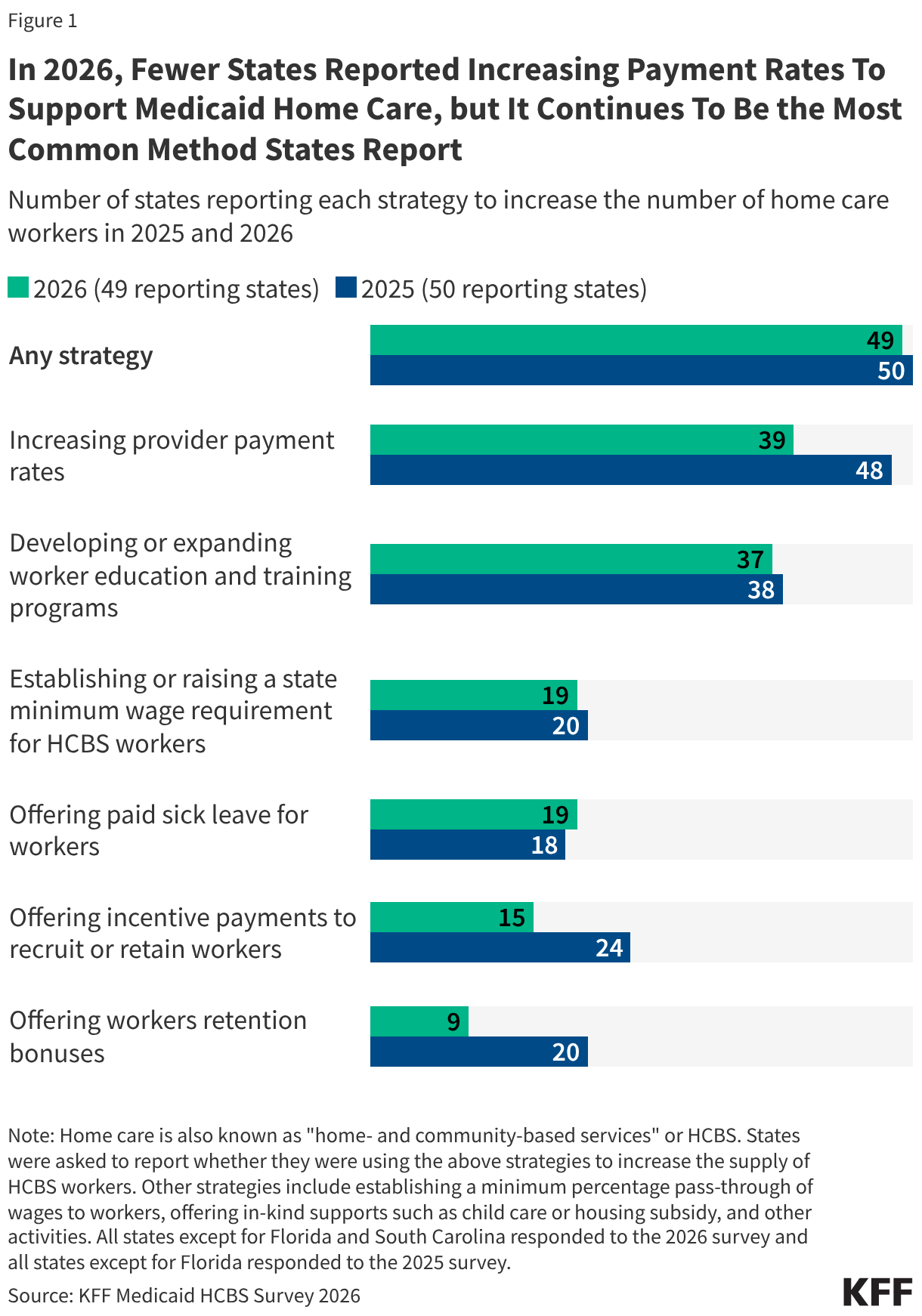
  • All responding states reported taking actions to address workforce shortages, though fewer states reported increasing provider compensation when compared with 2025 (Figure 1).
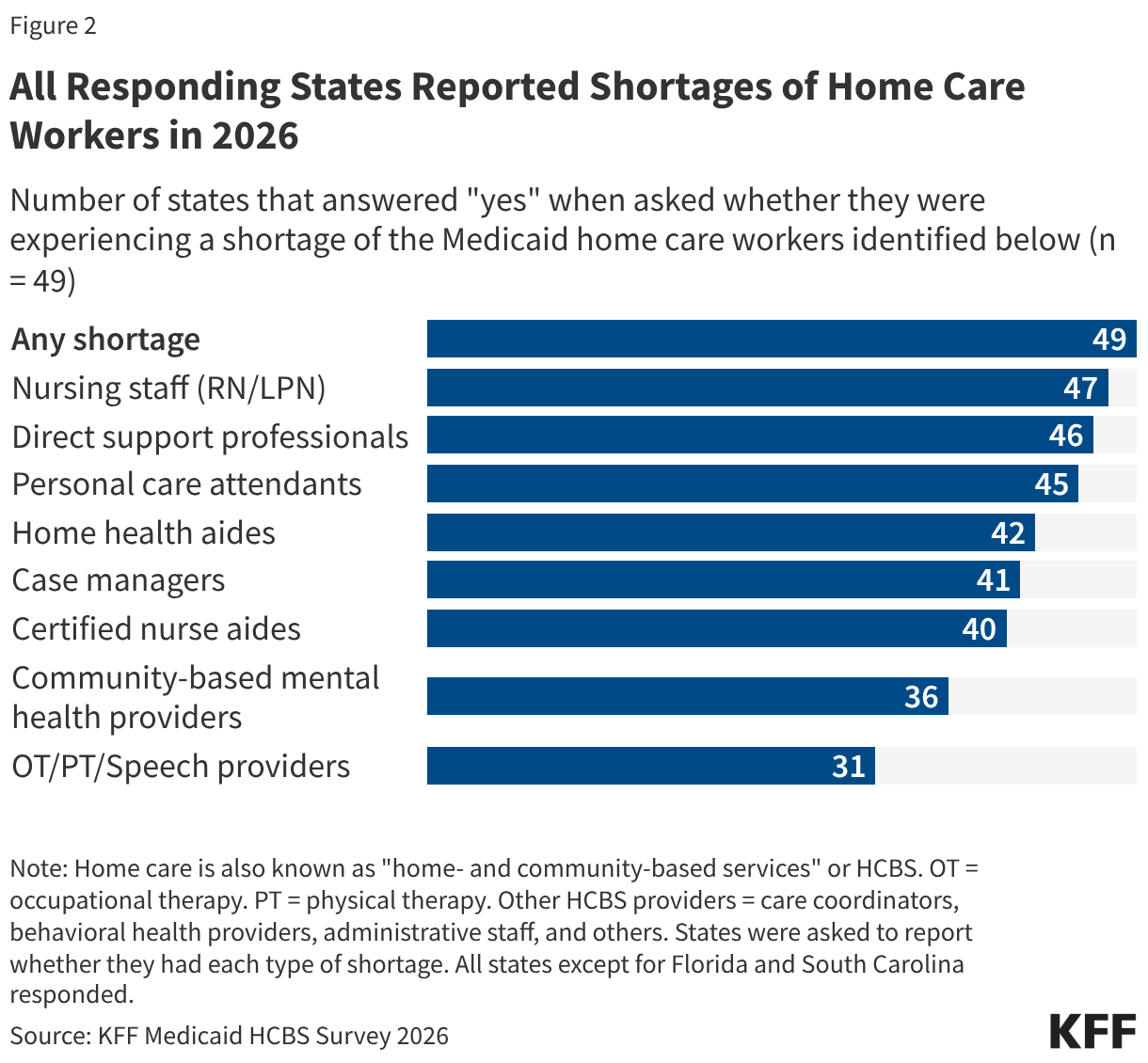
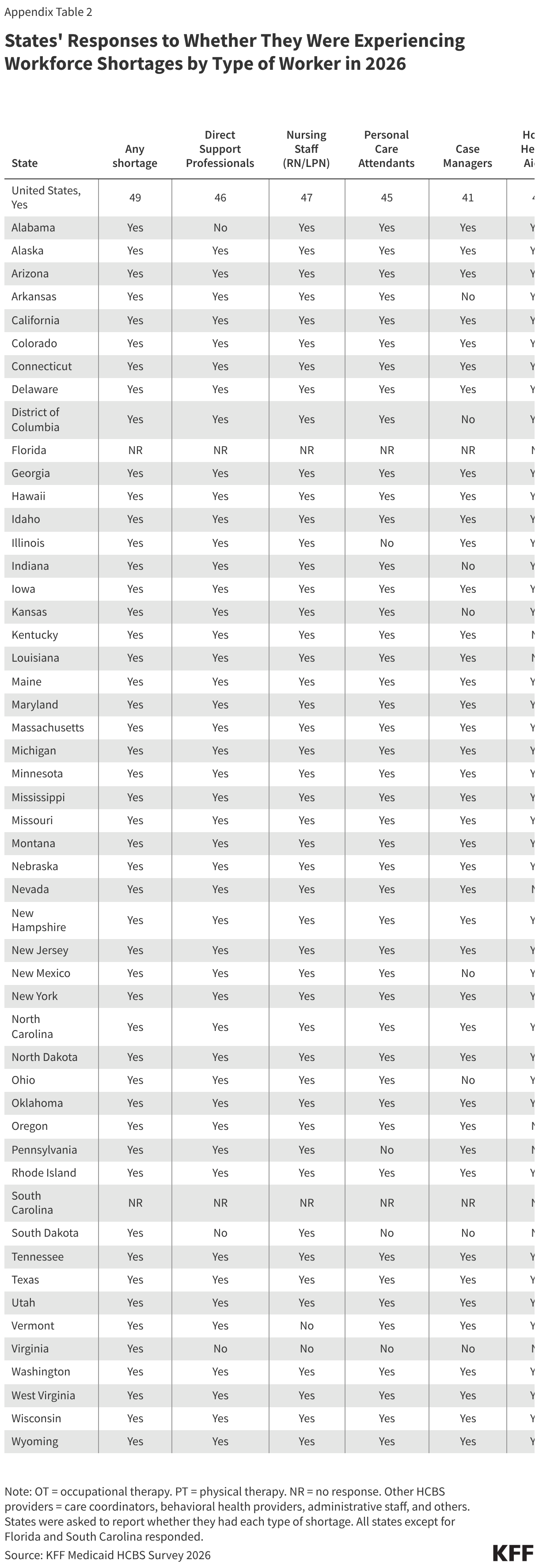
  • All responding states reported shortages of home care workers, most frequently among nursing staff, direct support professionals, personal care attendants, home health aides, and case managers (Figure 2).
  • States reported that high turnover, low wages, and increased demand for home care were the most common factors contributing to increasing workforce shortages.
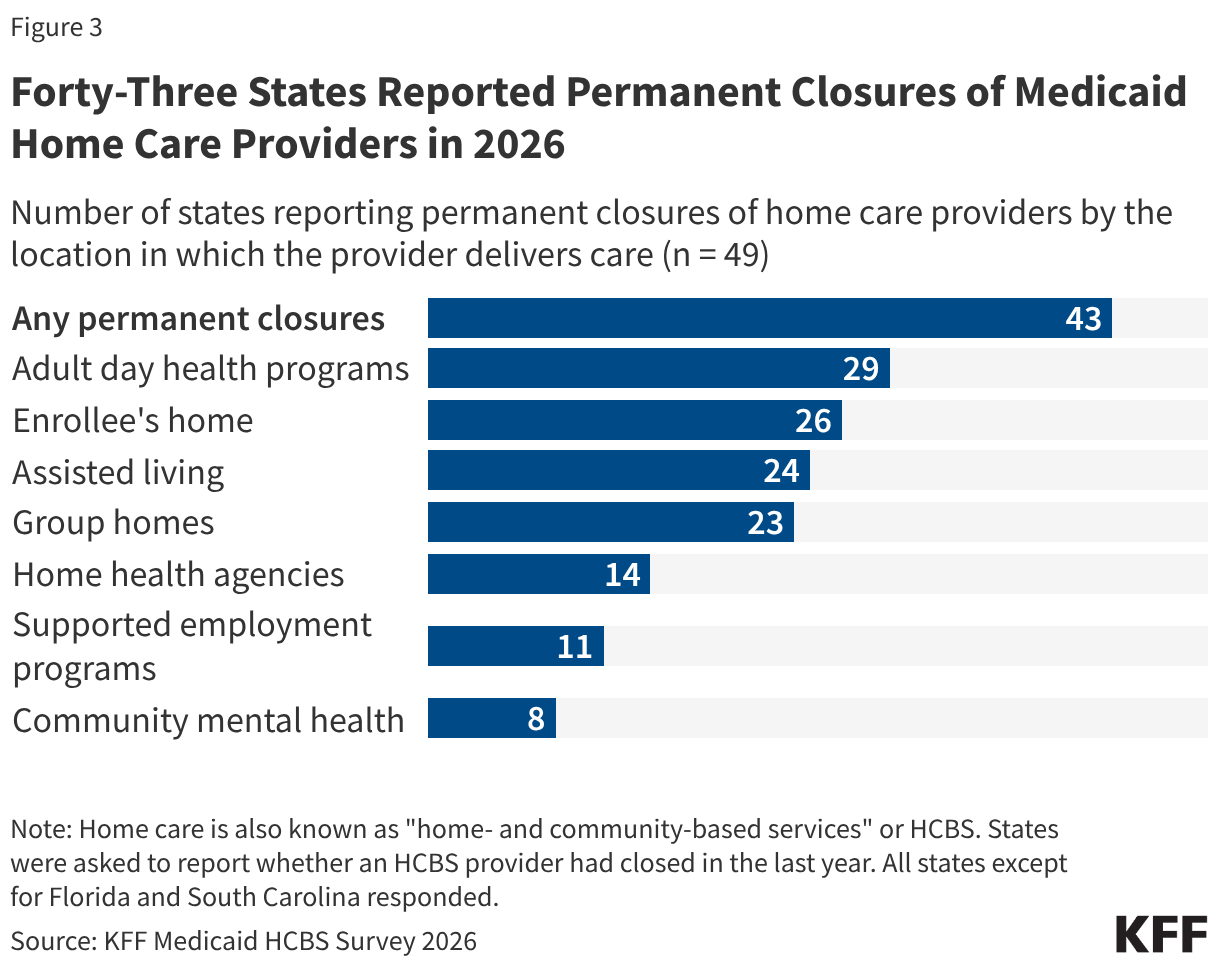
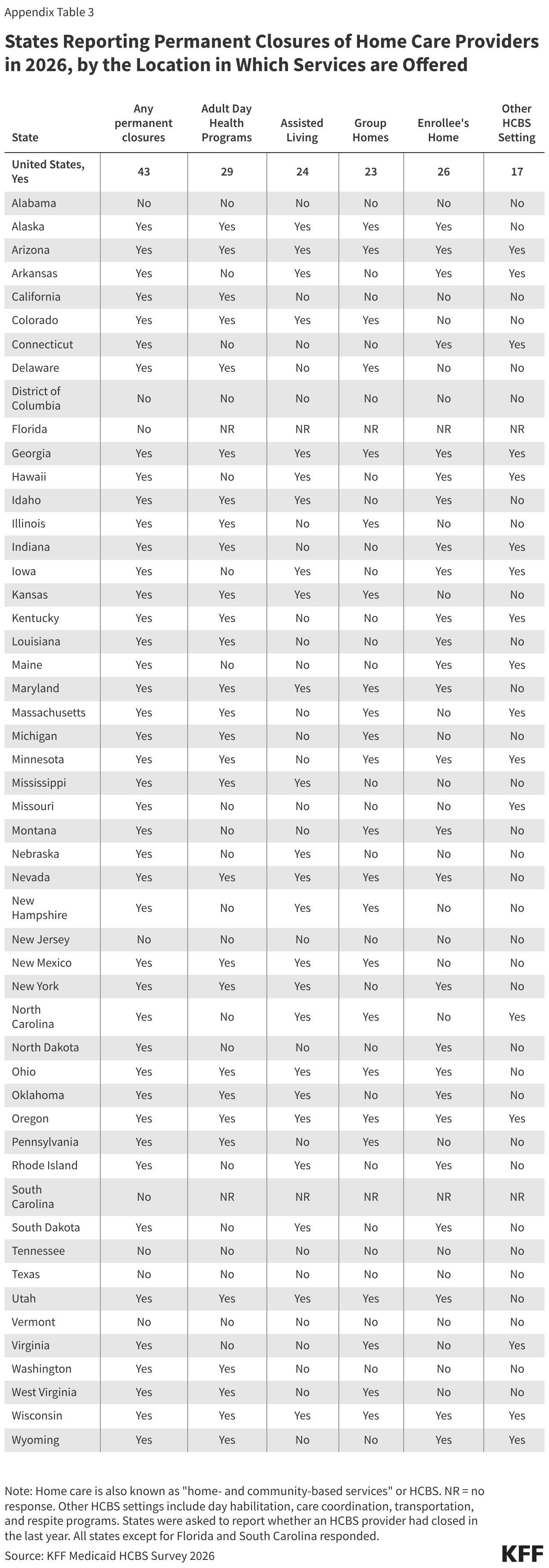
  • Most (43) states reported permanent closures of home care providers within the last year (Figure 3).
  • States are now reporting detailed payment rates for home care online, but the data are difficult to compare across states. In contrast, KFF data represent statewide average payment rates, which are less detailed but facilitate comparisons across states.
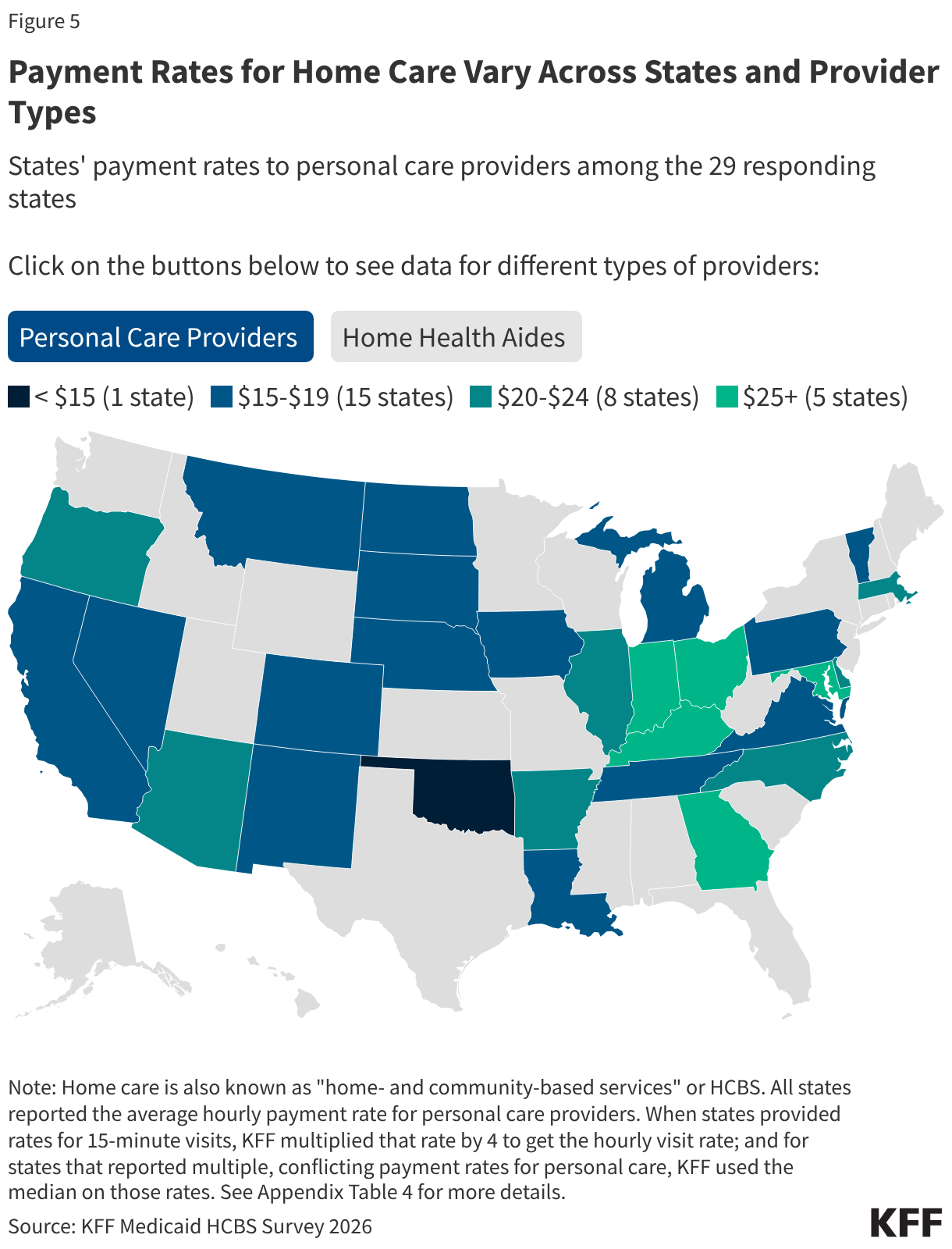
  • Among the 29 states that reported time-based payment rates for personal care providers, more than half pay less than $20 per hour (Figure 5).
The bar chart compares the number of states reporting each strategy to increase the number of workers in home and community-based services programs. Increasing provider payment rates is states' most common strategy to increase the supply of these workers, followed by offering education and training.

How Are States Addressing the Workforce Challenges in Home Care?

All responding states reported workforce shortages in 2026, with the most common shortages being among nursing staff (47 states), direct support professionals (46 states), and personal care attendants (45 states) (Figure 2, Appendix Table 2). States were asked if they had shortages of each type of provider but were not provided with a definition of “shortage.” Most states also reported shortages of home health aides (42 states), case managers (41 states), certified nurse aides (40 states), community-based mental health providers (36 states), and occupational, physical, and speech therapy providers (31 states). In some cases, states may not have reported a shortage of a particular type of provider because that type of service is not offered through their home care program. Nearly all responding states (48) reported shortages for more than one type of provider, and 45 states reported shortages among five or more provider types.

All Responding States Reported Shortages of Home Care Workers in 2026 (Bar Chart)

Most states (43) reported increasing shortages of home care workers in 2026 relative to 2025, with high turnover (38 states), low wages (36 states), and increased demand for home care services (30 states) ranked as the most common factors contributing to increased shortages. States were asked whether they experienced increasing shortages of home care workers in the last year and, if yes, what factors may be contributing to the worsening shortages. Four states acknowledged the same level of shortages as the previous year (Ohio, Tennessee, Texas, and Utah), while two states (New Hampshire and Virginia) noted that the trend was unknown. When ranked by priority, low wages relative to other sectors was the top factor contributing to the shortages. States reported other challenges to building the home care workforce, including changes in immigration enforcement, lack of benefits, increasing job responsibilities, an aging workforce exiting the labor pool, and provider shortages in rural areas. Some state officials provided comments that underscored workforce challenges:

“With inflation rising and low reimbursement rates for providers, it is difficult for [agencies] to offer competitive salaries for workers to retain qualified professional staff.”

“[There is] high HCBS employee workforce turnover rate, ranging from 29%–48% for direct support workers alone. [There is also a] lack of benefits, with roughly only a quarter of providers offering benefits to their employees, and salaries not keeping pace with inflation.”

“There are not enough workers interested in providing self-directed services to meet the growing needs of families.”

Within the last year, 43 states reported permanent closures of home care providers, which were most common among adult day health programs (29 states), enrollees’ homes (26 states), assisted living facilities (24 states), and group homes (23 states) (Figure 3, Appendix Table 3). States were asked if there were any permanent closures of providers that offer services for Medicaid enrollees based on the location in which the providers deliver care. For a setting such as an assisted living facility or group home, a closure could reflect either the closure of an assisted living facility or the closure of a home care agency that sent workers into facilities and group homes. States were not asked to provide a reason for the closures. Some states reported closures of home health agencies (14 states), supported employment providers (11 states), and community mental health providers (8 states). Most states (38) reported closures among more than one type of provider, and 30 states reported closures among three or more provider types.

Forty-Three States Reported Permanent Closures of Medicaid Home Care Providers in 2026 (Bar Chart)

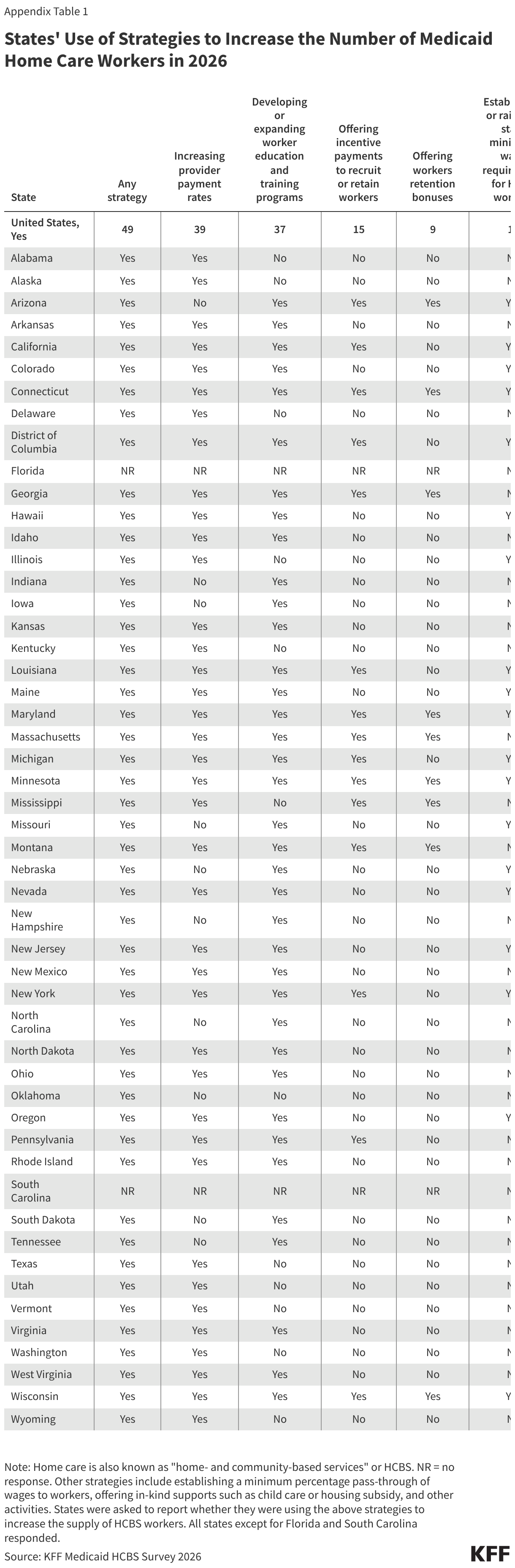
All responding states reported taking actions to address provider shortages, with 39 states increasing provider payment rates and 37 states developing or expanding worker education and training programs (Figure 1). Smaller numbers of states reported establishing or raising a state minimum wage requirement for HCBS workers (19 states), offering paid sick leave (19 states), offering incentive payments to recruit or retain workers (15 states), and offering workers retention bonuses (9 states).

Compared with 2025, fewer states reported increasing provider compensation in 2026 (Figure 1). The number of states that reported increasing provider payment rates dropped from 48 in 2025 to 39 in 2026, while the number of states that reported offering incentive payments to recruit or retain workers dropped from 24 to 15, and the number of states that reported offering retention bonuses dropped from 20 to 9. There were minimal changes in the number of states that reported other initiatives between 2025 and 2026, suggesting that the reduced number of states offering higher compensation (which is a direct cost increase for the states) may reflect states’ more tenuous fiscal climate.

All but 11 states use managed care to provide at least some home care, and in 15 of the states with managed care, fee-for-service payment rates impact the payment rates that managed care plans pay home care providers. Out of the 40 states that use managed care to provide at least some home care, 14 states reported that the fee-for-service payment rates represent the minimum amount that plans must pay providers, 1 state (Wisconsin) reported that the rate represents the maximum payment rate for managed care plans, 9 states reported that the fee-for-service rates do not affect payments by private plans, and 2 states responded that the answer was unknown or did not respond to the question.

How Much Do States Pay for Medicaid Home Care?

The paragraphs in this section provide information on the payment rates collected from KFF’s survey of Medicaid home care programs. States are now required to report some Medicaid home care payment rates on state websites, per the provisions in the 2024 Medicaid Access Rule. While the publicly reported data are much more detailed than KFF’s survey data (often including payment rates by procedure code, sub-state geography, or population type), the data are difficult to compare payment rates across services, worker types, and states. See Appendix Box 1 for more information on these requirements and how the publicly reported data differ from data reported to KFF.  

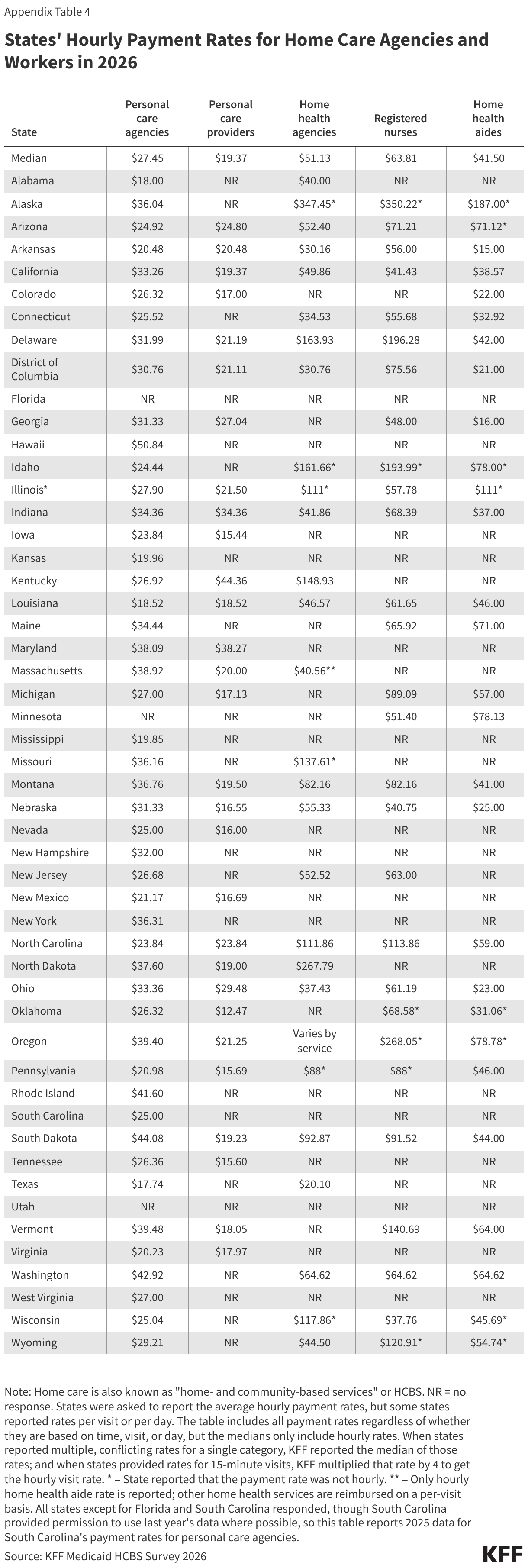
KFF asked states to report their average hourly rate paid to two types of home care provider agencies (personal care agencies and home health agencies) and three types of specific home care providers (personal care providers, home health aides, and registered nurses), but many states were unable to report all rates (Appendix Table 4). The number of states that responded to the KFF survey but did not provide hourly payment rates or reported that payment rates were unknown was 2 for personal care agencies and 29 for home health agencies. Many states also did not provide payment rates for specific provider types: For registered nurses and home health aides, more than half of states did not provide hourly payment rate information or reported that payment rates were unknown. Among the states that were able to report payment rates in the KFF survey, only 15 could report payment rates for personal care agencies, home health agencies, personal care providers, and home health aides. Those 15 states include states that reported a mix of hourly and non-hourly rates for these services. 

States reported many reasons why it was difficult to report payment rates, including the following:

  • Some states reported that services were bundled together in various ways, and therefore the payment rates were not distinguishable.
  • Among states with managed care, some states responded that they did not know the payment rates for agencies because the services were paid for by managed care plans and they did not have access to those payment rates.
  • Other states responded that they knew the payment rates for agencies but not what the agencies paid their home care workers.

In addition to having difficulty reporting payment rates, many states reported different payment rates for personal care across different waivers, and the waiver payment rates often differ from the payment rates for personal care provided through the state plan. When states reported multiple payment rates for personal care, KFF used the median of those payment rates in the analysis.

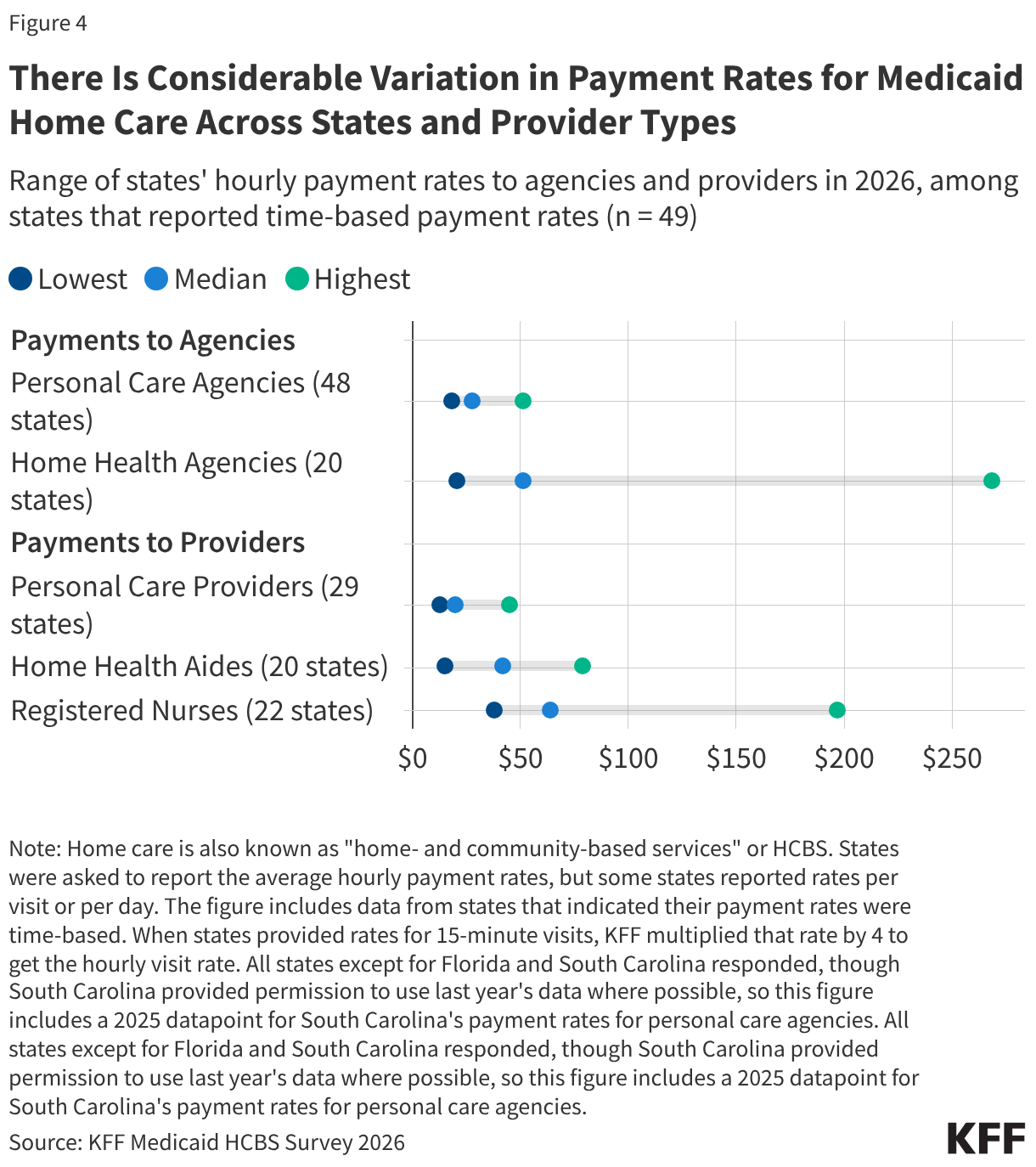
The payment rates to home care providers show considerable variation and are somewhat higher than those reported by other organizations, which may reflect differences in reporting and provider categorization (Figure 4). KFF’s survey estimates that median payment rates to providers are $19 per hour for personal care providers, $42 for home health aides, and $64 for registered nurses. It is difficult to compare those numbers to other sources of data for the following reasons:

  • Other organizations group classes of providers together differently. The Bureau of Labor Statistics reports $17 per hour for home health and personal care aides in 2025.
  • Other organizations include payment rates for workers regardless of the source of payment, whereas KFF rates only reflect the Medicaid rates. Medicaid often covers more intensive personal care services than other payers, which may contribute to the higher rates.

Payment rates to home health agencies are generally higher than those to personal care agencies, but there is considerable variation in both (Figure 4). Among states reporting hourly rates, the rates for home health agencies range from $20 to $268, whereas those for personal care agencies range from $18 to $51. Those states reported that the median hourly payment to home health agencies was $51 and $27 for personal care agencies. Between 2025 and 2026, the median payment rates for personal care agencies and home health aides increased marginally ($26 to $27 and $41 to $42), while median payment rates for personal care providers and home health agencies stayed the same ($19 and $51, respectively) and median payment rates for registered nurses decreased ($70 to $64).

There Is Considerable Variation in Payment Rates for Medicaid Home Care Across States and Provider Types (Dot Plot)

Among states able to report any payment rate data, payments for personal care workers range from below $15 to over $25 per hour (Figure 5, Appendix Table 4). Rates for home health aides are somewhat higher than those of personal care workers, reflecting the additional training requirements for such workers. Among the states with payment rates for home health aides in the highest category, some states reported that the rates were per visit or per day (which is noted in Appendix Table 4). There were other states with particularly high payment rates that did not report providing rates per visit or per day, but the rates may still reflect a non-hourly payment basis.

Payment Rates for Home Care Vary Across States and Provider Types (Choropleth map)

Appendix Box 1: What Does the Medicaid Access Rule Require and How Do the Publicly Reported Data Compare to the KFF Survey Data?

What does the Access Rule require?

To improve transparency around home care payment rates, the 2024 Access Rule required states to publish payment rates on their websites starting July 2026. The home care requirements are a subset of requirements in the rule related to Medicaid fee-for-service rates. The provisions from the rule that went into effect on July 2026 require states to report hourly payment rates for personal care, home health aide, homemaker, and habilitation services on state websites; and to identify the number of Medicaid-paid claims and number of Medicaid enrollees who received services within a calendar year. During a public webinar, CMS specified that states must also report proposed rate reductions for 1915(c) waivers (states’ most common approaches for providing home care) to CMS.

Starting in July 2028, another provision of the Access Rule requires states to report the percent of total Medicaid payments for personal care, home health aide, homemaker, and habilitation services that is spent on compensation for direct care workers. Recent guidance released by the federal government provides more information on how states may define the specified services, direct care workers, and compensation. Fee-for-service reporting requirements begin July 9, 2028 and managed care requirements apply to rating periods beginning on or after July 9, 2028. States must report on their readiness to comply with this requirement by July 2027. This requirement was intended to help address workforce shortages, and the rule specifies that states are to ensure that at least 80% of total Medicaid payments are going to direct care worker compensation by July 2030, a requirement informally known as the 80/20 rule. The recent guidance did not mention any requirements for states to begin planning for the 80/20 rule.

How do the publicly reported data on payment rates compare to the KFF survey data?

KFF reviewed the publicly reported data from just under half of states and found that the publicly reported data from states under the access rule differ from KFF survey data in several respects. Generally speaking, the publicly reported data provide more detail than the KFF survey data, which may be useful for understanding within-state variation in payments, but also makes it difficult to compare payment rates across states. Specifically:

  • KFF data on payment rates are standardized across states to the greatest extent possible and can be downloaded in 50-state tables, whereas state-reported data on payment rates are not standardized in either format or content, which makes it difficult to compare across states. In both the KFF data and the state-reported data, however, some states reported some payment rates per day or per visit rather than per hour, while other states reported hourly rates.
  • KFF asks states to provide average payment rates across the state, but the state-reported data may differ by geographic region. For example, Colorado reports different rates for Denver and non-Denver areas, while North Carolina reports state-level rates.
  • KFF asks states to provide the average payment rate across all services provided within a waiver or state plan benefit, but state-reported data often show payment rates by specific procedure code or service type (e.g. Illinois).
  • KFF did not ask states to provide the number of people using each service or the number of services delivered, but states are also required to report this information at the procedure code level. KFF relies on claims data for counts of home care users, but does not use procedure codes, so comparison to public data is challenging.
States' Use of Strategies to Increase the Number of Medicaid Home Care Workers in 2026 (Table)
States' Responses to Whether They Were Experiencing Workforce Shortages by Type of Worker in 2026 (Table)
States Reporting Permanent Closures of Home Care Providers in 2026, by the Location in Which Services are Offered (Table)
States' Hourly Payment Rates for Home Care Agencies and Workers in 2026 (Table)