Women’s Experiences with Abortion, Access, and Concerns About Future Pregnancy
Findings from the 2026 KFF Women's Health Survey
Findings
In the four years since the Dobbs decision, which overturned Roe and the federal protections for abortion in the United States, how women access abortion has dramatically changed. While 13 states have abortion provision bans and many others have early gestational age limitations, the greater availability of medication abortion via telehealth, even to women living in states with abortion provision bans, has transformed how many women obtain abortion services today.
This brief provides national estimates from the 2026 KFF Women’s Health Survey on reproductive age women’s experiences with abortion, the impact of Dobbs on abortion access and women’s concerns about future pregnancies, as well as women’s knowledge on the availability of medication abortion. The 2026 KFF Women’s Health Survey was fielded from March 11 to April 14, 2026, and was developed and analyzed by KFF staff. The findings in this brief are based on a nationally representative sample of 3,538 women ages 18 to 49.
Key Findings
- One in eight (13%) reproductive age women report they have had an abortion at some point in their life. Somewhat larger shares of Black, Hispanic, and women with lower incomes report ever having an abortion.
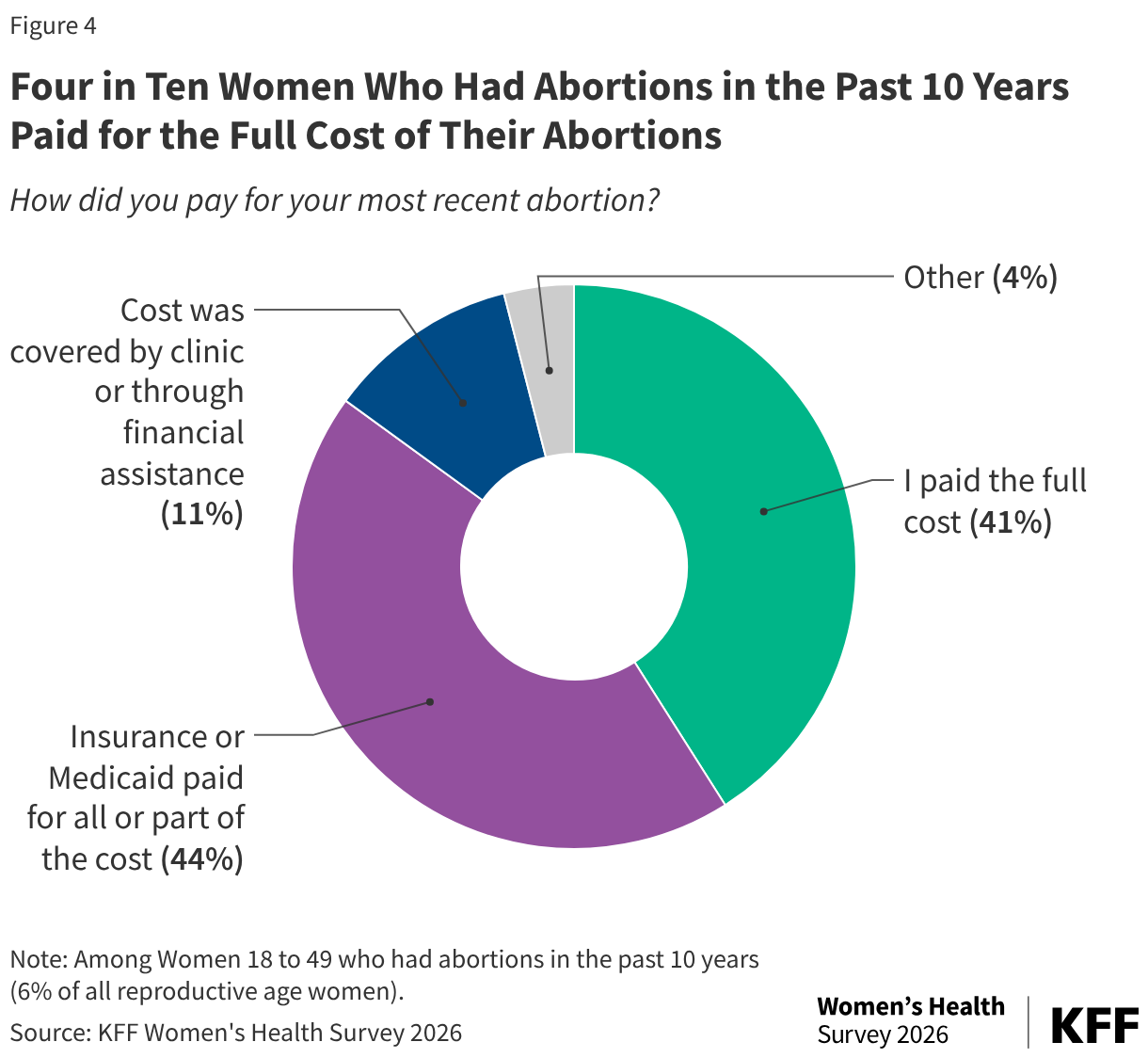
- Among reproductive age women who have had abortions in the past 10 years, four in 10 (41%) say they paid the full cost of their most recent abortion. Another 44% say their insurance or Medicaid paid the full or part of the cost of their abortion, while 11% say the cost of the abortion was covered by the clinic or through financial assistance.
- Nationally, one in eight (12%) reproductive age women say they personally know someone, including themselves, who has had difficulty getting an abortion since Roe was overturned in June 2022 due to restrictions in their state, a slight increase from 2024. The leading difficulties that women report are having to travel out of state, not knowing where to go, and not having money to cover the cost.
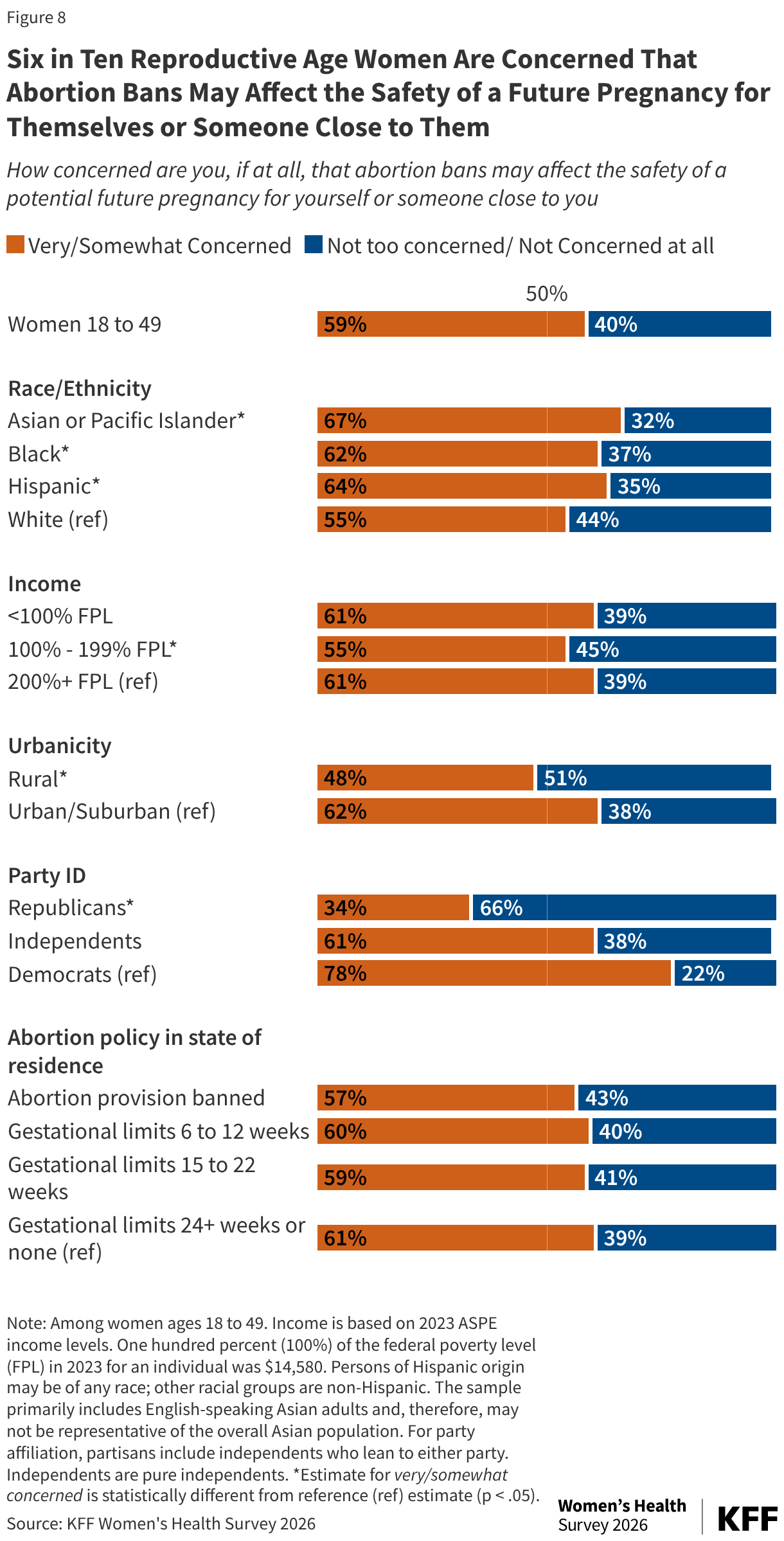
- The majority (59%) of reproductive age women say they are very or somewhat concerned that abortion bans may affect the safety of a potential future pregnancy for them or for someone close to them. Across most subgroups, except among Republican women and rural women, majorities say they are somewhat or very concerned. Higher shares of Asian or Pacific Islander (67%), Black (62%), and Hispanic (64%) women say they are concerned about pregnancy compared to White women (55%).
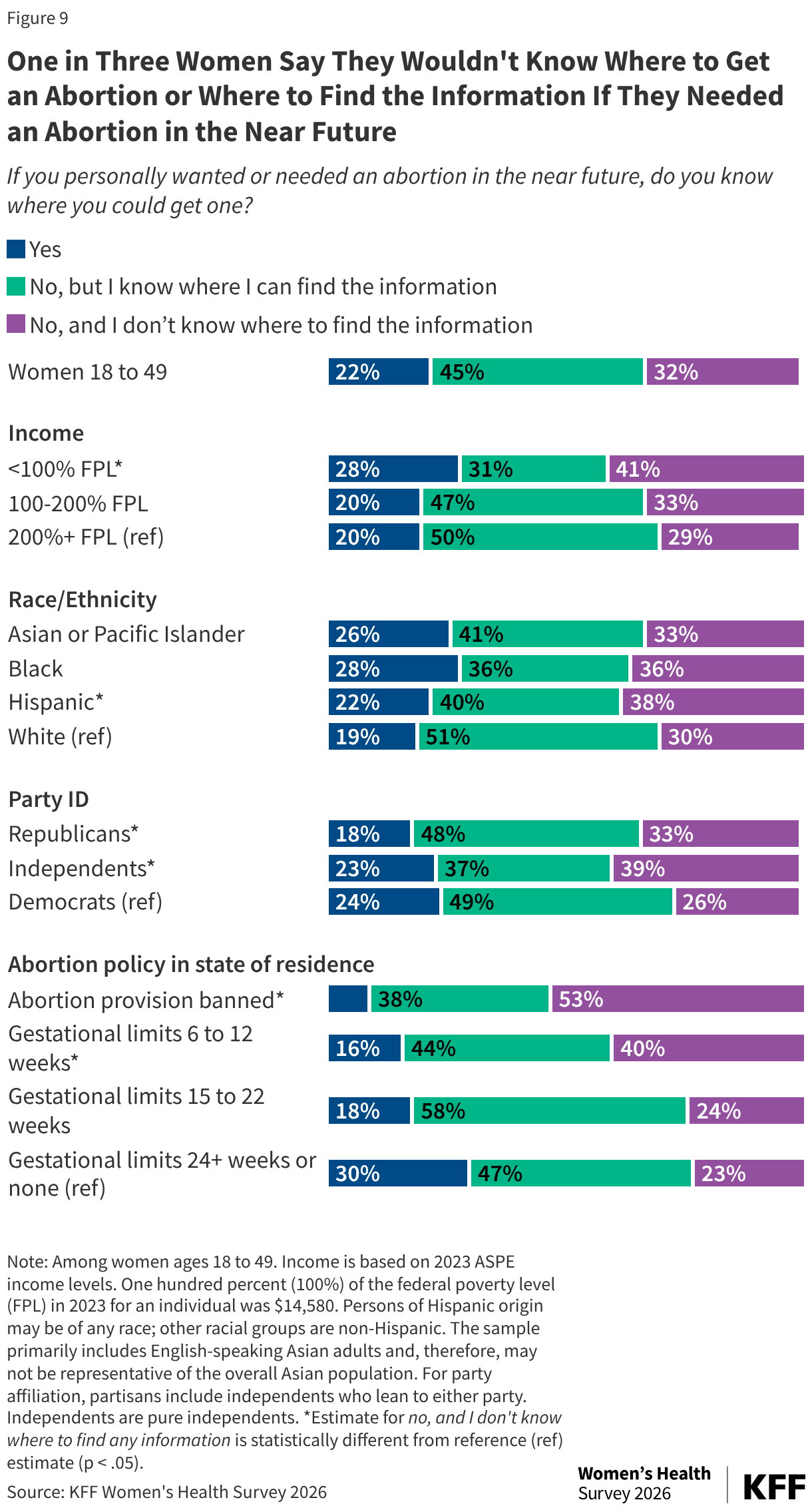
- One in three (32%) reproductive age women, compared to one in four (26%) in 2024, say that if they needed an abortion, they would not know where to go or where to find the information. Among reproductive age women living in states with abortion provision bans, over half (53%) say they would not know where to find information, and four in ten (40%) of those living in states with gestational limits between 6 and 12 weeks report the same.
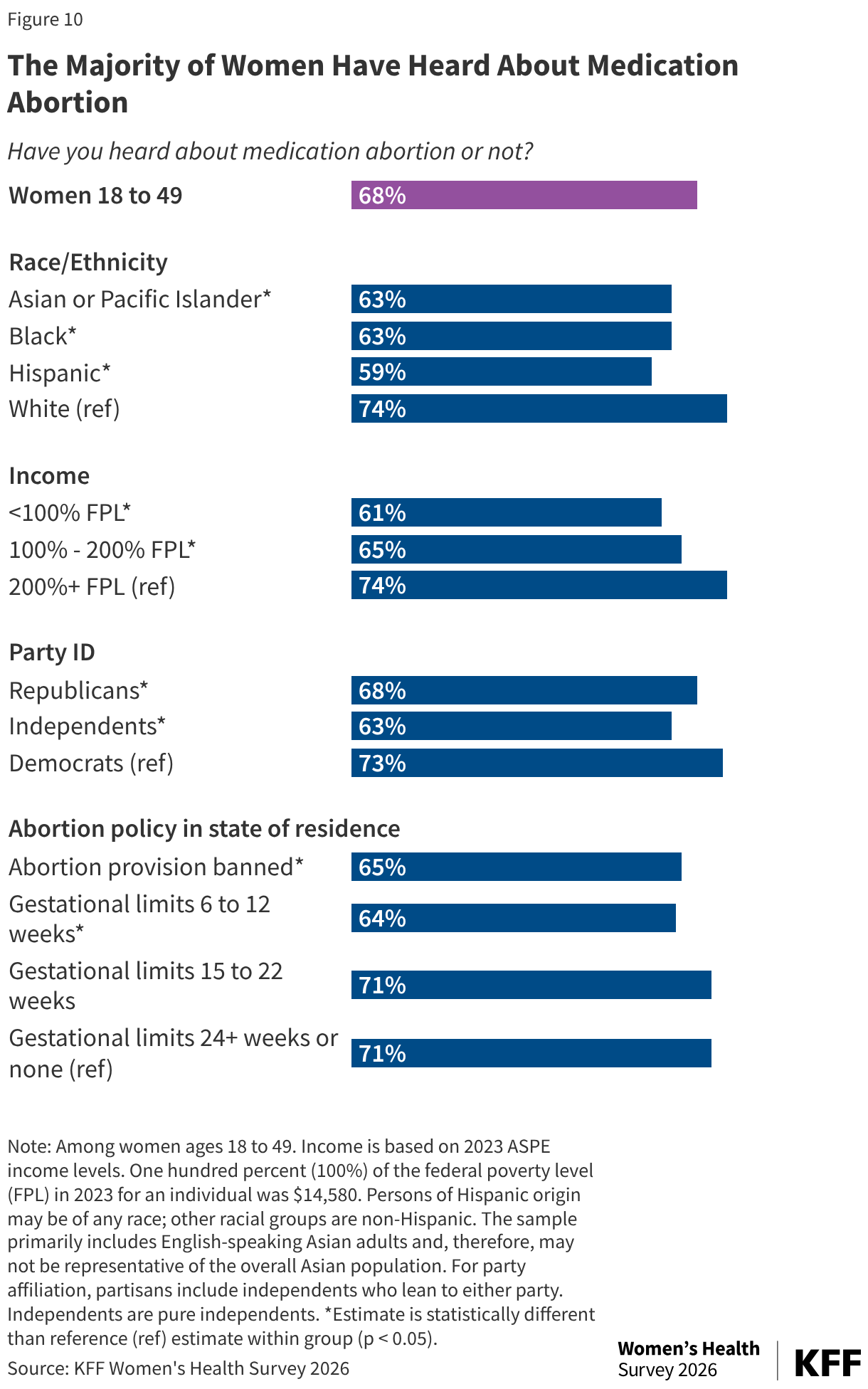
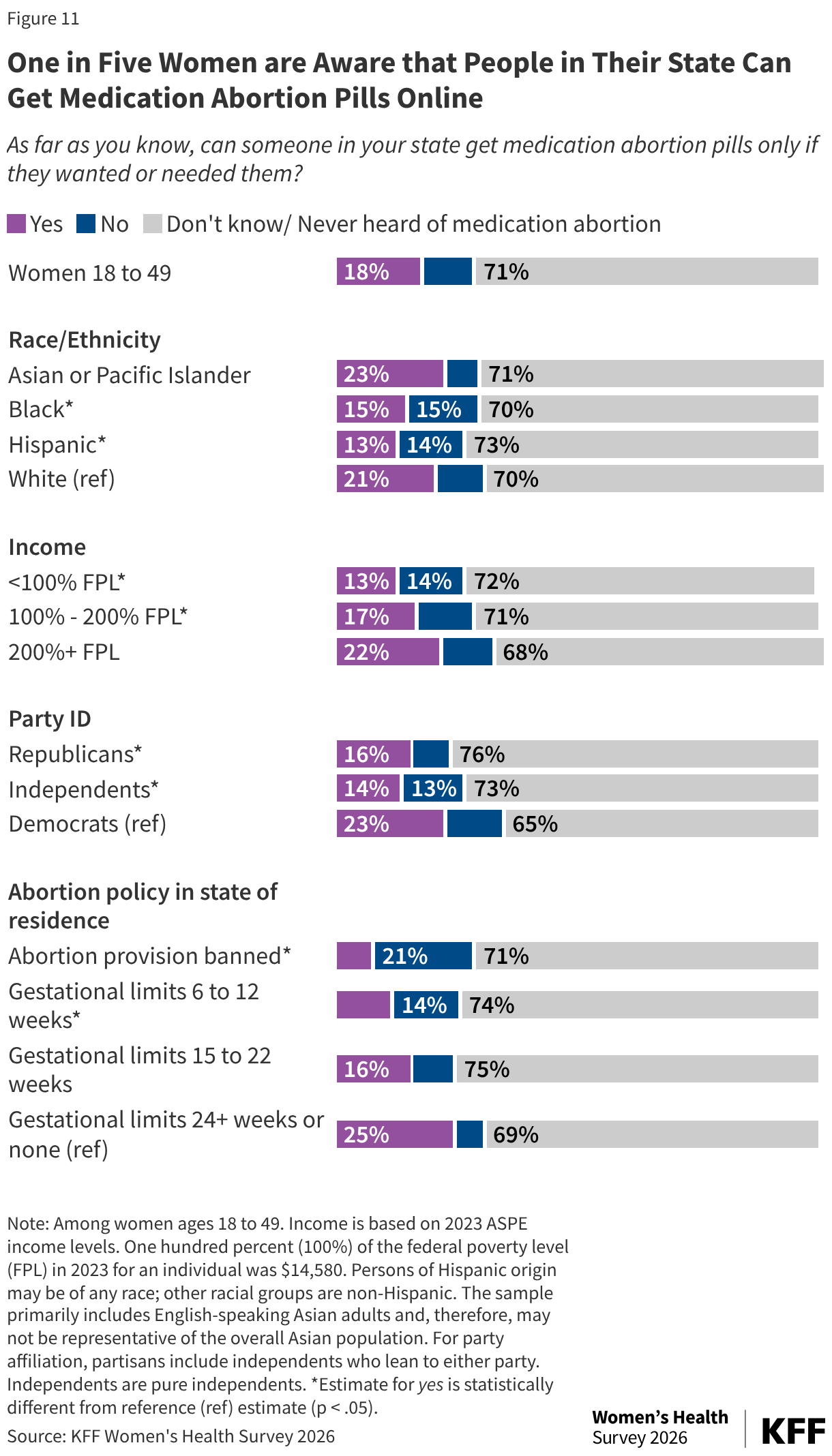
- While two-thirds (68%) of reproductive age women have heard about medication abortion pills, only 18% are aware people in their state can get medication abortion pills online. This falls to 8% among women living in states with abortion provision bans. One in ten (11%) women say that someone in their state cannot get medication abortion pills online, and 71% say they don’t know or have never heard of medication abortion.
Women’s Experiences with Pregnancy, Miscarriage, and Abortion
Most women of reproductive age have been pregnant at some point in their lives. Sixty-four percent of women ages 18 to 49 say they are either currently pregnant (3%) or have been pregnant at some point in their lives (61%), while 36% have never been pregnant. Among women who are either currently pregnant or have ever been pregnant, 36% (24% of all reproductive age women) say they have at some point in their lives experienced a miscarriage (data not shown). While not all people who have miscarriages require medical care, some do, and almost all clinical interventions used to manage miscarriages are identical to those used in abortion care. Abortion provision bans and gestational restrictions also restrict care for people experiencing pregnancy loss and in some cases denials of care stemming from abortion restrictions have led to women experiencing health threatening situations, long term health consequences, and even death.
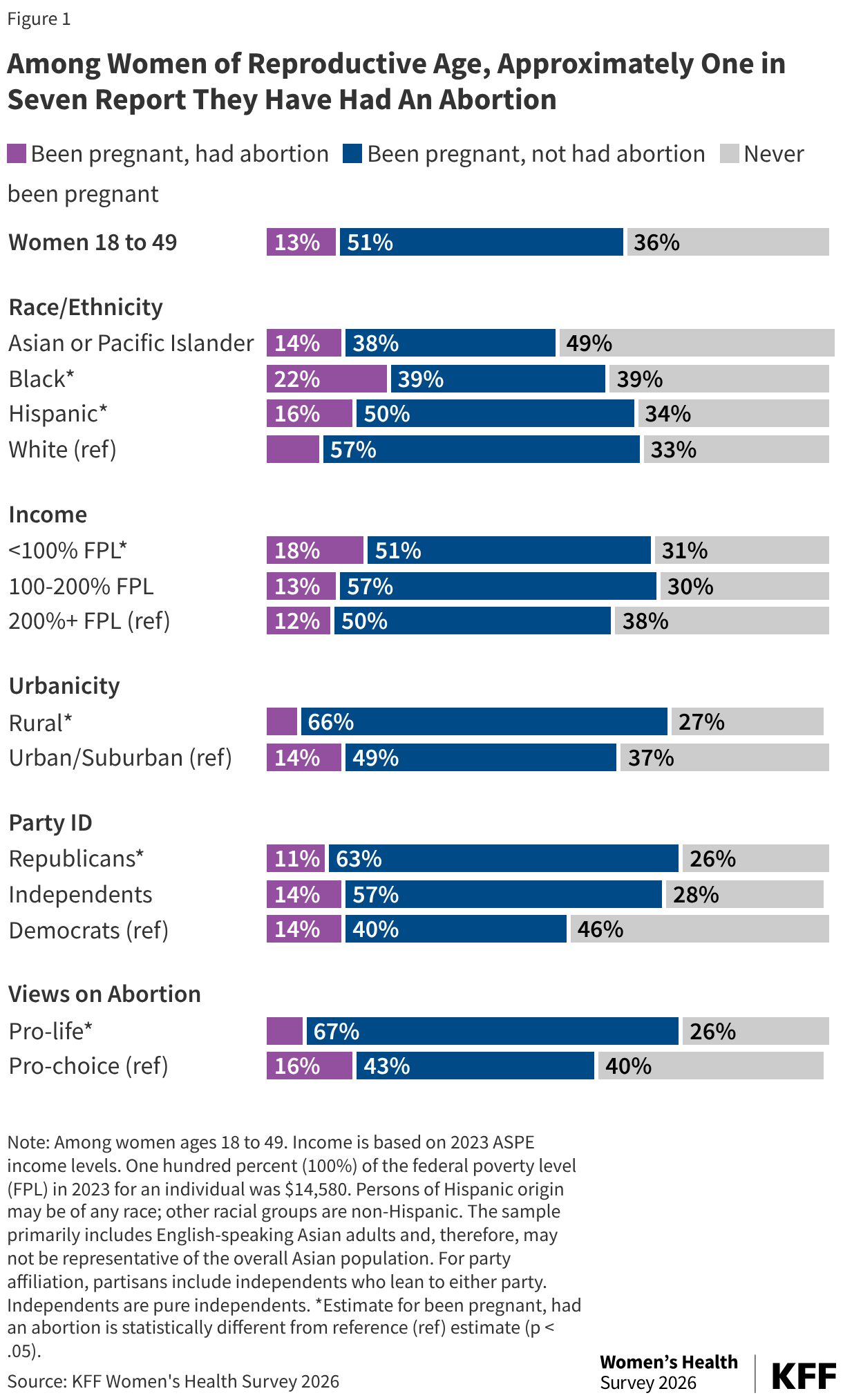
Among women of reproductive age (18 to 49), one in eight (13%) report having had an abortion at some point in their life. Larger shares of Black (22%) and Hispanic (16%) women report ever having an abortion compared to White women (10%). Among women with incomes below the federal poverty level (FPL), nearly one in five (18%) report having had an abortion, compared to one in eight (12%) women with incomes above 200% FPL (Figure 1).
Among reproductive age women living in rural areas, 6% report ever having an abortion, compared to over double (14%) the share of women living in urban/suburban areas. One in ten (11%) women who identify as Republican or Republican-leaning independents as well as one in seven (14%) Democratic and Democratic-leaning women report they have ever had an abortion. Fewer than one in 10 women (7%) who currently identify as pro-life say they have had an abortion compared to almost one in five (16%) who currently identify as pro-choice.
Three percent of reproductive aged women report that at some point in their lives, they have wanted or needed an abortion they did not get. Higher shares of Black (9%) and Hispanic (5%) women report that they have wanted or needed an abortion they did not get compared to their White counterparts (2%) (data not shown). When asked why they did not get an abortion they wanted or needed, reproductive age women report affordability challenges and access barriers. Some women say they changed their mind or couldn’t go through with the abortion and others identified religious, moral or societal pressures as the reason why they did not get the abortion.
In their own words among women who did not get an abortion that they wanted or needed: There are many reasons why someone may not get an abortion. What was the reason you did not get the abortion(s)?
“The cost. I did not have health insurance at the time and was told it would be $500+ to get an abortion. Couldn’t afford it. So I had the baby.”
“Cost, accessibility due to protesters and myself already being in a diminished mental state deterred and ultimately prevented myself from getting help.”
“I was financially not able to provide for the service to be done and I was nearing a point where I would have been too far along to have further services provided.”
“I was only 16 and couldn’t go through with it.”
“I couldn’t find a clinic to get to. I ended up doing the adoption route.”
“I wasn’t sure. My family was telling me not to get an abortion.”
“My partner was controlling and kept me from having enough money to get one.”
“Needed parental signature due to health problem and underage.”
“Not able to receive due to state regulations.”
“Not able to find resources in a timely manner”
“They are illegal in the state I live.”
“Didn’t have the money and didn’t have anywhere to go.”
“Access, guilt and judgement from OB who confirmed pregnancy.”
Women’s Abortion Experiences in the Past 10 years
The past 10 years have seen major shifts in abortion policy and access in the United States. When President Trump was first elected in 2016, he promised to appoint justices to the Supreme Court who would overturn Roe v. Wade and that came to fruition on June 24, 2022, when the Supreme Court overturned Roe.
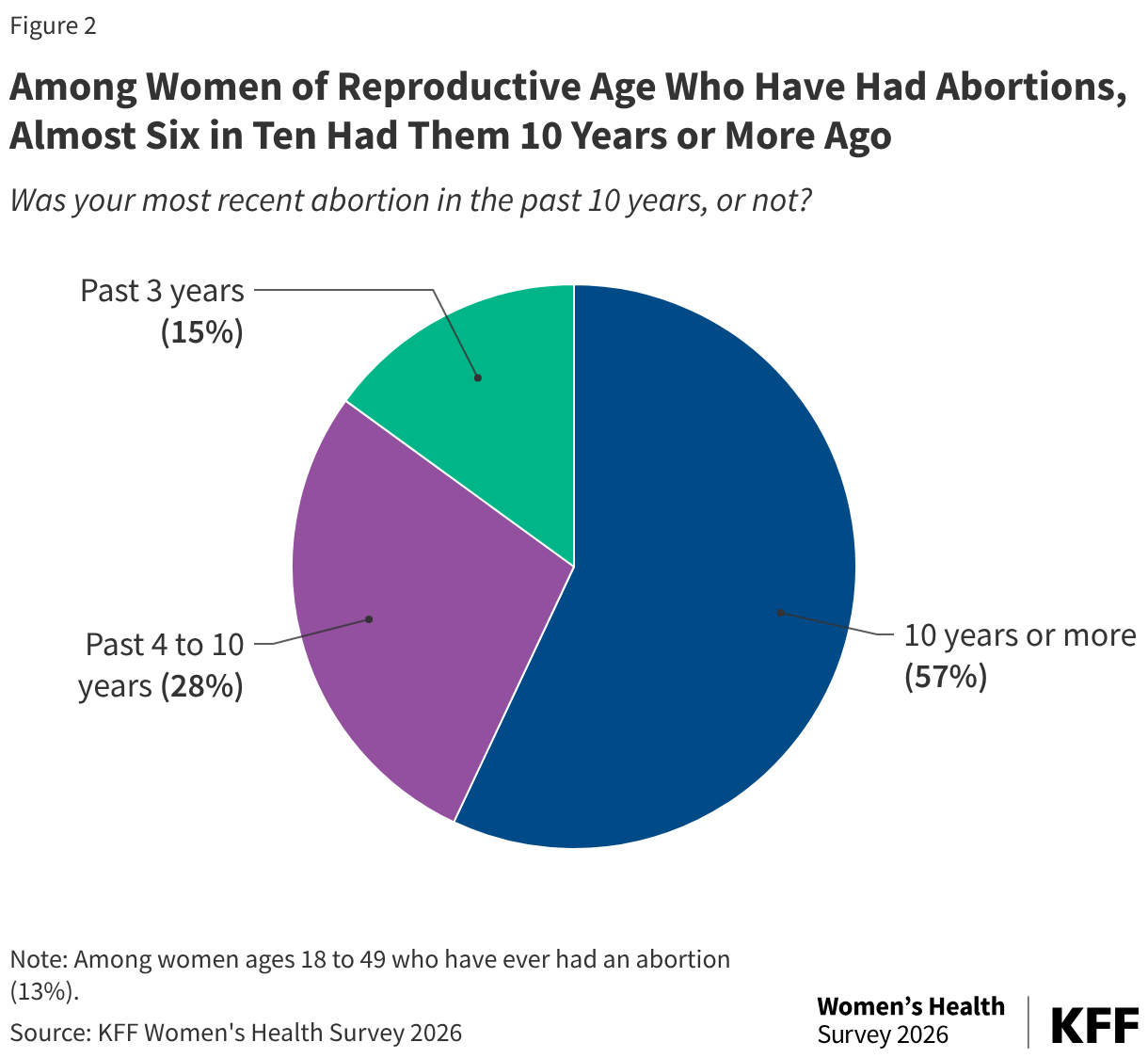
Among women ages 18 to 49 who have ever had an abortion, 15% (2% of all reproductive age women) report they had their most recent abortion in the past 3 years. Another three in ten (28%, 4% of all reproductive age women) had their abortions four to 10 years ago, while almost six in ten (57%, 7% of all reproductive age women) report their most recent abortion was more than 10 years ago (Figure 2).
State abortion laws restricting access can result in women traveling out of state to access abortions services. Many of the states where abortion provision is now banned or restricted had laws in place before Dobbs that heavily restricted abortion access and in many cases had few abortion clinics within the state, therefore many women were forced to travel to obtain abortion services. Among women 18 to 49 who have had an abortion inthe past 10 years, 13% report that they traveled out of state to obtain their most recent abortion (data not shown).
Most women who had abortions in the past 10 years had a medication abortion. Six in ten (59%) women who have had an abortion in the past 10 years report their most recent abortion was a medication abortion, while 41% had a procedural abortion (data not shown). Since mifepristone, one of the two drugs that make up the medication abortion regimen, was first approved in the year 2000, its use in the U.S. has grown steadily. In recent years, telehealth for medication abortion has broadened the availability and use of medication abortion pills across the country, including in states with abortion provision bans.
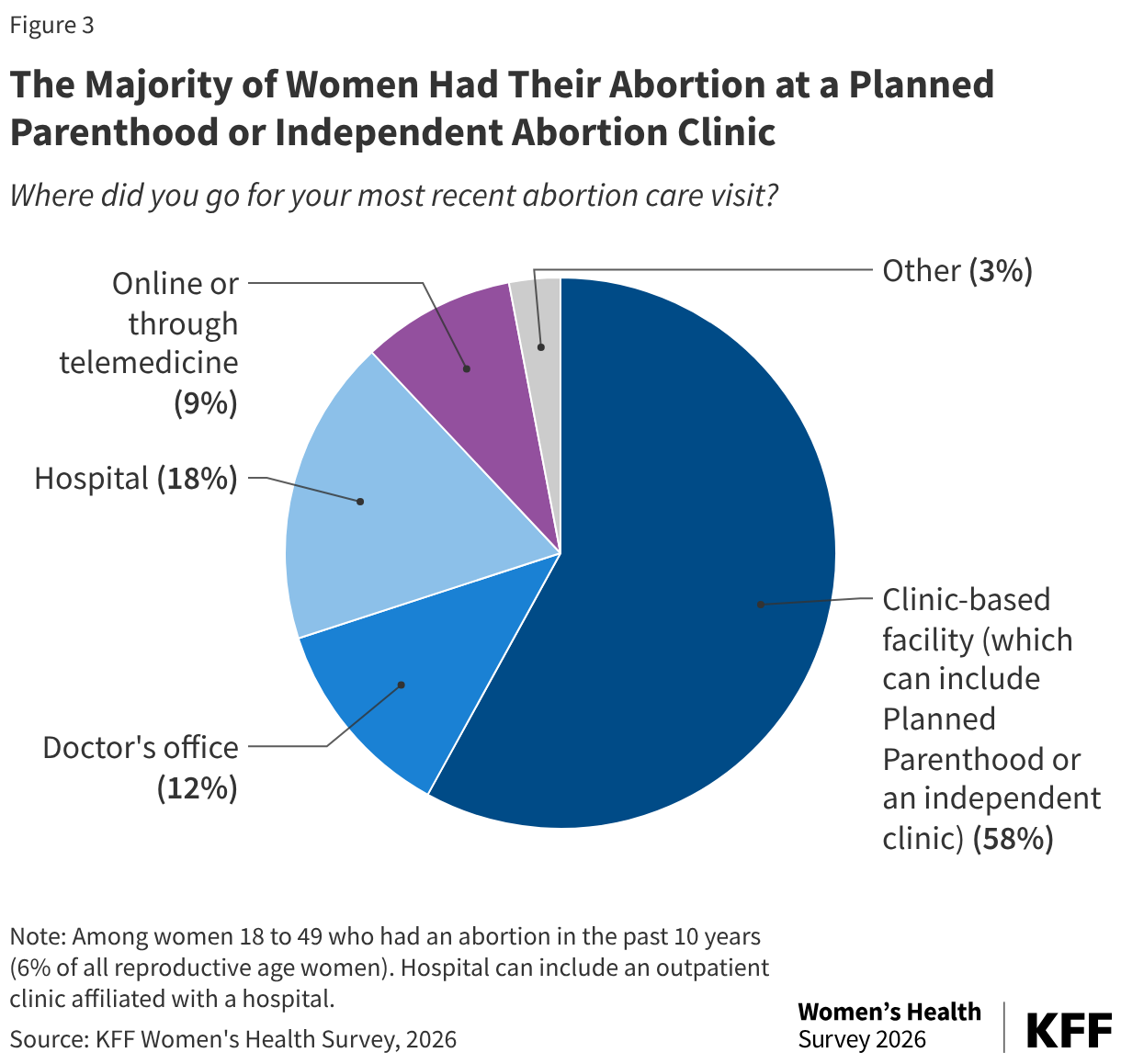
The majority of women who have had abortions in the past 10 years received in-person care at a clinic-based facility. Six in 10 (58%) reproductive age women who have had an abortion in the past 10 years – either a procedural or medication abortion — had their most recent abortion at a clinic-based facility (which can include Planned Parenthood clinics or independent abortion clinics), one in five (18%) in a hospital (which can include an outpatient clinic affiliated with a hospital), one in 10 (12%) in a doctor’s office, while another one in 10 (9%) report they got their abortion online or through telemedicine (Figure 3). Telehealth abortion has become increasingly available after the pandemic in response to changes in FDA policy that eliminated a prior in-person dispensing requirement for mifepristone that increased the number of providers who offer this remote service.
Four in ten women (41%) who’ve had abortions in the past 10 years say they paid the full cost for their most recent abortion. Obtaining an abortion can be expensive and the costs vary widely depending on the method, facility, and gestational stage. The state bans and restrictions enacted since Dobbs can also result in additional nonmedical expenses for transportation, childcare, lodging, and lost wages (Figure 4).
Another 44% of women who have had an abortion in the past 10 years say that their insurance or Medicaid paid the full or part of the cost of their abortion, while 11% report that the cost of the abortion was covered by the clinic or through financial assistance. Medicaid coverage of abortion is heavily restricted by the Hyde amendment, which bans the use of federal funds for abortions unless the pregnancy is a result of rape, incest, or if it endangers the life of the pregnant person. States have the option to use their own state funds to pay for abortions for Medicaid enrollees for circumstances beyond Hyde, which 21 states currently do.
Impact of the Dobbs Decision
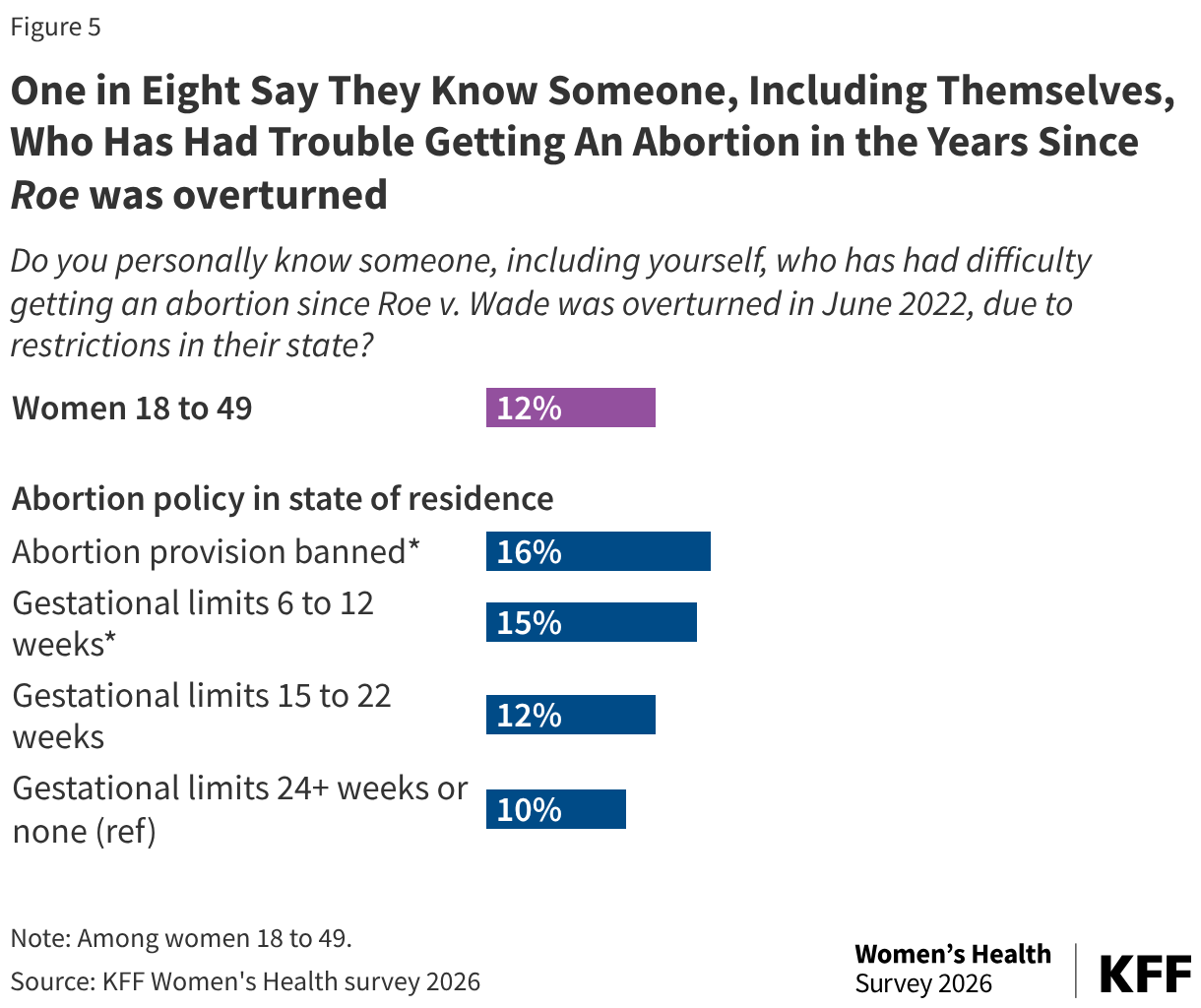
Four years after the Dobbs decision, 13 states have banned the provision of abortion, and 10 states have implemented gestational restrictions between 6 and 22 weeks LMP (last menstrual period). Nationally 12% of reproductive age women say they personally know someone, including themselves, who has had difficulty getting an abortion since Roe was overturned in June 2022 due to restrictions in their state (Figure 5). This is a slight but notable increase from 2024, when 8% of reproductive age women said they personally knew someone who had difficulties getting an abortion.
Women living in states with abortion provision bans and early gestational limits are more likely to report knowing someone who has had difficulties getting an abortion due to restrictions in their state. Sixteen percent (16%) of women living in states with abortion provision bans and 15% of women living in states with gestational limits between 6 and 12 weeks report knowing someone who has experienced difficulties compared to fewer women living in states with gestational limits at or after 24 weeks or without gestational limits (10%).
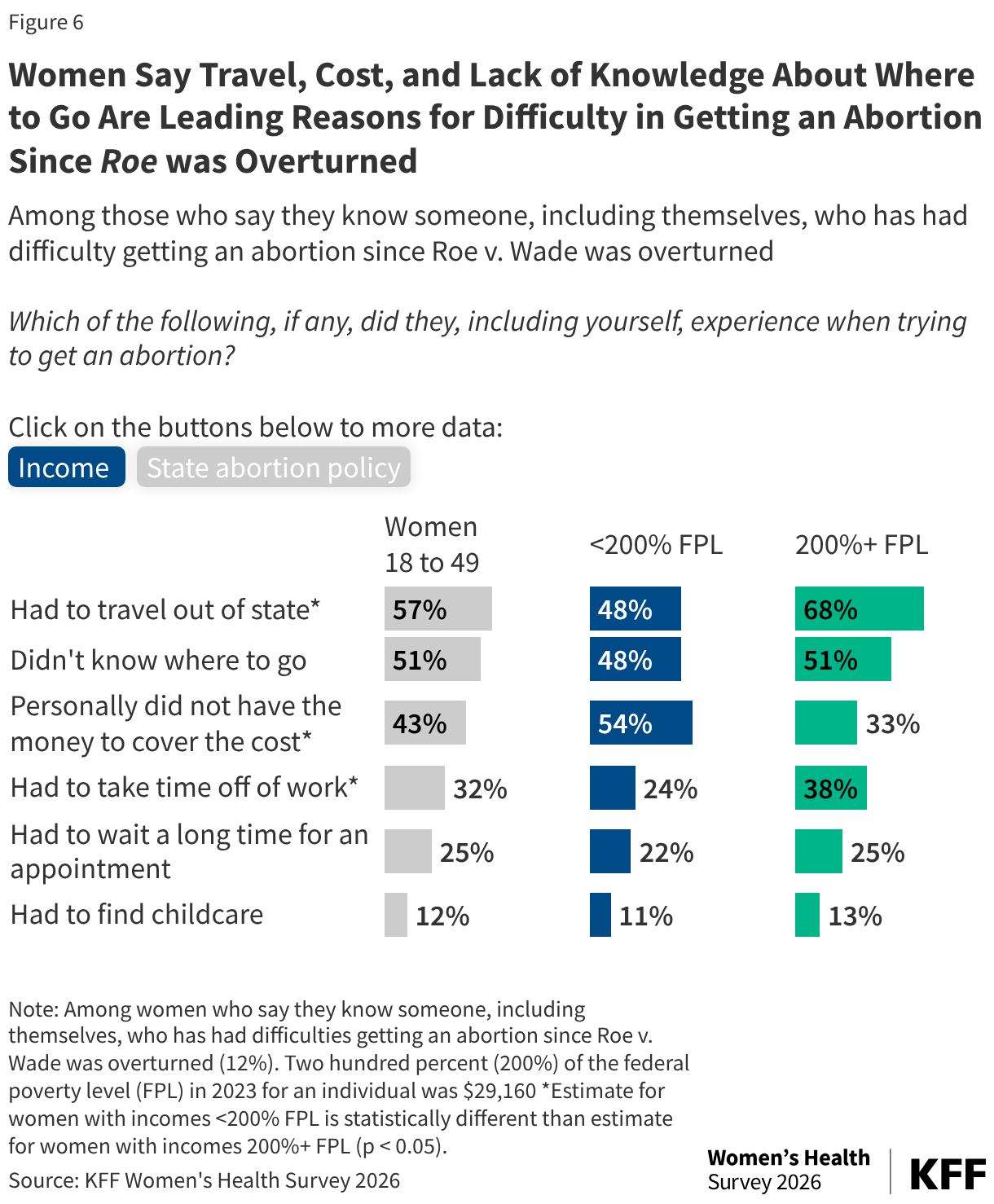
Among the 12% of women who say they know someone, including themselves, who had difficulties getting abortion care since Roe was overturned, 57% (7% of all reproductive age women) report they (or the person they know) had to travel out of state (Figure 6). Post-Dobbs research has found that interstate travel for abortion care has declined, in part because of the availability of medication abortion via telehealth. About half (51%, 6% of all reproductive age women) said the person did not know where to go when trying to get an abortion, four in ten who said they could not afford the cost (43%, 5% of all reproductive age women), and three in ten say they had to take time off work (32%, 4% of all reproductive age women).
Cost is the most common barrier reported among women with low incomes. Among women with incomes above 200% FPL, traveling out of state or having to take time off work are more commonly reported barriers (Figure 6). Women living in states with abortion provision bans (66%, 11% of women living in these states) and gestational limits between 6 and 22 weeks (65%, 9% of women living in these states) report out of state travel as an obstacle at higher rates than women living in states with gestational limits at or after 24 weeks or without gestational limits (45%, 4% of women living in these states).
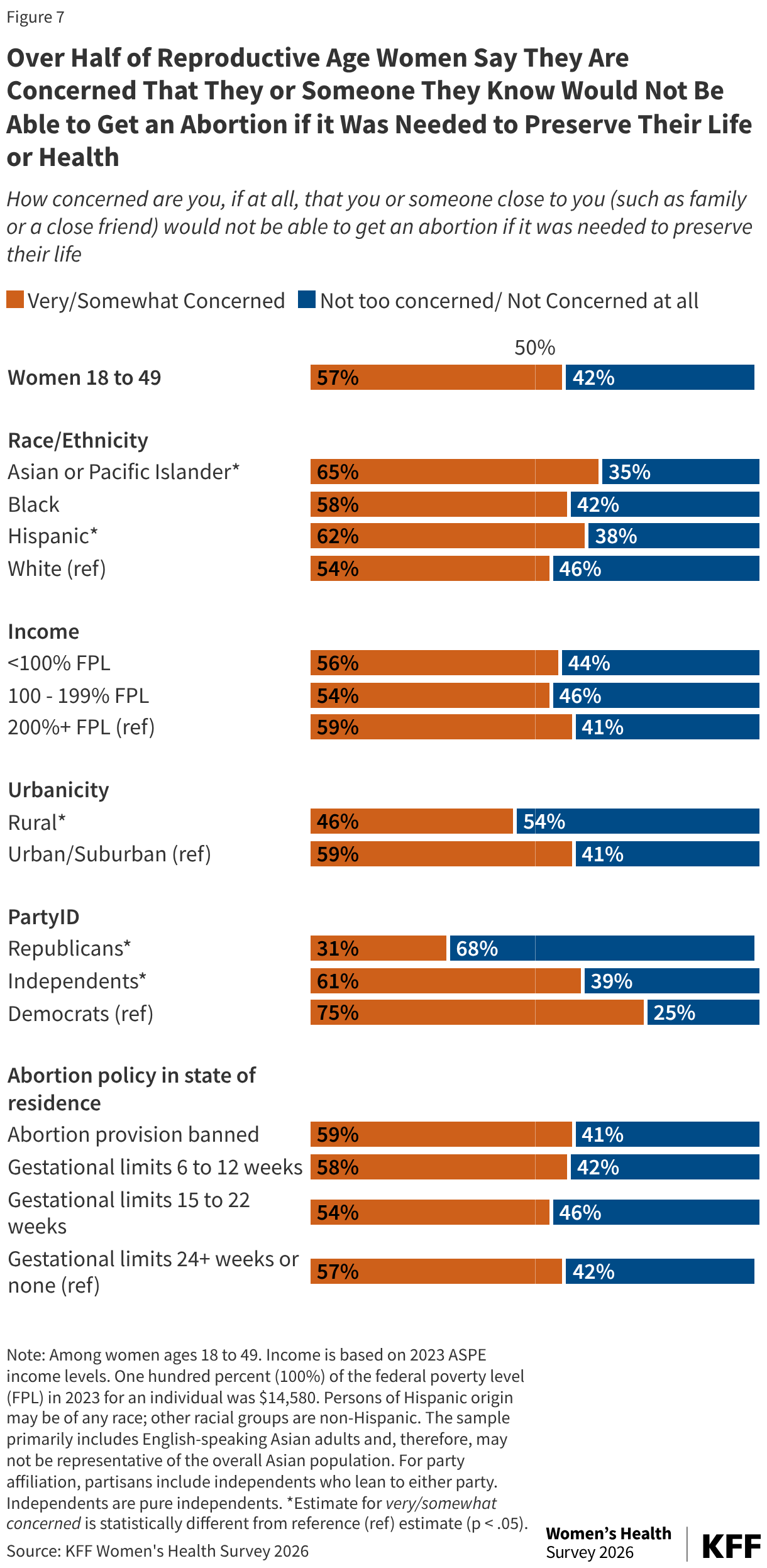
Almost six in ten (57%) reproductive age women in U.S. are concerned that they or someone close to them would not be able to get an abortion if they needed it to preserve their life or health. In the four years since the Dobbs decision, there have been many reports of women being unable to get a needed abortion to preserve their health and even some cases where women have died. A majority of reproductive age women across subgroups report that they are very or somewhat concerned about access to abortion if it was needed to preserve their life or health with notable exceptions of Republican and rural women (Figure 7). Larger shares of Asian or Pacific Islander (65%) and Hispanic (62%) women compared to White women (54%) report they are concerned. Three-quarters (75%) of Democratic women say they are concerned that they or someone close to them would not be able to get an abortion if they needed it, compared to 31% of Republican women report the same.
Six in ten women ages 18 to 49 (59%) say they are very or somewhat concerned that abortion provision bans may affect the safety of a potential future pregnancy for them or for someone close to them. Similarly, majorities of women except for Republican women or those living in rural areas say they are somewhat or very concerned that abortion provison bans may affect the safety of a future pregnancy (Figure 8). Asian or Pacific Islander (67%), Black (62%), and Hispanic (64%) women are more likely to report they are concerned compared to White women (55%). One in three (34%) Republican women say they are concerned about the impact of abortion bans on the safety of potential pregnancies for themselves or someone close to them, compared to almost eight in 10 Democratic women (78%) and six in 10 (61%) Independent women.
Awareness of Abortion Availability
One in three (32%) women of reproductive age in the U.S. report that if they needed or wanted an abortion in the near future they would not know where to go or where to find the information, an increase from 26% in 2024. In addition, nearly half (45%) say they would not know where to go but would know where to find that information. About one-fifth (22%) of women say they would know where to go for an abortion (Figure 9). Since the Dobbs decision, websites like abortionfinder.org, ineedana.com and plancpills.org provide individuals seeking abortion services with directories of abortion clinics and services that provide medication abortion via telehealth.
Over half of women (53%) living in states where abortion provision is banned and four in ten (40%) women living in states with gestational limits between 6 and 12 weeks say they wouldn’t know where to find information compared to 23% of women in states with gestational limits at or after 24 weeks or without gestational limits. Compared to 2024, a larger share of women living in states where abortion provision is banned now report that if they needed an abortion, they wouldn’t know where to go or where to find information (53% vs 43%). Women living in states with abortion bans do have options to obtain abortion services. They must travel out of state or obtain medication abortion drugs from companies that will ship pills to all states without requiring an in-person clinician visit or from clinicians practicing in states with shield-laws, which offer clinicians a measure of legal protection for sending abortion medications to patients in abortion ban states.
The majority (68%) of women of reproductive age say they have heard about medication abortion, the most common abortion method in the United States. While still majorities, relatively smaller shares of Asian or Pacific Islander (63%), Black (63%), and Hispanic (59%) women report having heard about medication abortion compared to White women (74%) (Figure 10). Similarly, smaller shares of women with incomes below poverty (61%) and women with incomes between 100% and 200% FPL (65%) have heard about medication abortion compared to women with higher incomes (74%).
Overall, one in five (18%) women of reproductive age are aware that medication abortion pills are available online. Medication abortion and its availability online has been widely covered in the news in recent years and has been the focus of multiple lawsuits, and a growing number of companies exist that will mail abortion medications to individuals in all states. Despite this, the share of women who are aware that medication abortion pills are available online has not changed from when this question was asked in 2024. Among women of reproductive age, 11% say that as far as they know, individuals in their state cannot get medication abortion pills online and about seven in ten (71%) were unsure or had never heard of medication abortion (Figure 11). Black (15%) and Hispanic (13%) women are less likely than White women (21%) to know that medication abortion pills are available online. Smaller shares of women living in states where abortion provision is banned (8%) or states with 6 to 12 week gestational limits (12%) know that people in their states can get medication abortion pills online compared to women living in states without any gestational limits or limits after 24 weeks (25%).
Methodology
The 2026 KFF Women’s Health Survey was designed and analyzed by women’s health researchers at KFF. The survey was conducted from March 11 – April 14, 2026, online and by telephone among a nationally representative sample of 5,854 adults ages 18 to 64, including 3,538 women ages 18 to 49. Women include anyone who selected woman as their gender. Sampling, data collection, weighting, tabulation, and IRB approval by the University of Southern Maine’s Collaborative Institutional Review Board were managed by SSRS of Glenn Mills, Pennsylvania in collaboration with women’s health researchers at KFF.
Throughout the reports of findings, we refer to “women.” This includes respondents who said their gender is “woman,” and includes those who selected “woman” in addition to another gender, such as “transgender,” or “non-binary,” or another gender. We followed this approach to try to include as many people as possible but recognize that some people who need and seek abortion and other reproductive health care services may not be represented in the findings or identify as women. Some questions about sexual and reproductive health were only asked among those with a specific sex assigned at birth (i.e. male or female).
The national sample was drawn from two nationally representative probability-based panels: the SSRS Opinion Panel and the Ipsos Knowledge-Panel. The SSRS Opinion Panel is a nationally representative probability-based panel where panel members are recruited randomly in one of two ways: (a) Through invitations mailed to respondents randomly sampled from an Address-Based Sample (ABS) provided by Marketing Systems Groups (MSG) through the U.S. Postal Service’s Computerized Delivery Sequence (CDS); (b) from a dual-frame random digit dial (RDD) sample provided by MSG. For the online panel component, invitations were sent to panel members by email followed by up to five reminder emails. 5,660 panel members completed the survey online and panel members who do not use the internet were reached by phone (n=194). Another 514 respondents were reached online through the Ipsos Knowledge Panel to help reach adequate sample sizes among subgroups of interest, specifically women ages 18 to 49. This panel is recruited using ABS, based on a stratified sample from the CDS. The questionnaire was translated into Spanish, so respondents were able to complete the survey in English or Spanish.
The national sample was weighted by splitting the sample into three groups: [1] Women 18-49, [2] Women 50-64, and [3] Men 18-64 and each group was separately weighted to match known population parameters (see table below for weighting variables and sources). Weights within the three groups were then trimmed at the 4th and 96th percentiles, to ensure that individual respondents do not have too much influence on survey-derived estimates. After the weights were trimmed, the samples were combined, and the weights adjusted, so that the groups were represented in their proper proportions for a final combined, gender by age-adjusted weight.
| Dimensions | Source |
| Age | Current Population Survey 2025 |
| Education | |
| Age by Education | |
| Age by Gender | |
| Census Region | |
| Race/Ethnicity by Nativity | |
| Home Tenure | |
| Civic Engagement | 2023 CPS Volunteering and Civic Life Supplement |
| Internet Frequency | Pew Research Center’s National Public Opinion Reference Survey (NPORS 2025) |
| Population Density | Claritas Pop-Facts Premier 2026 |
| Voter Registration | CPS 2024 Voting and Registration Supplement |
The margins of sampling error for the national sample of women ages 18 to 64 and reproductive age women ages 18 to 49 are plus or minus 2 percentage points. Numbers of respondents and margins of sampling error for key subgroups are shown in the table below. For results based on other subgroups, the margin of sampling error may be higher. Sampling error is only one of many potential sources of error and there may be other unmeasured error in this survey.
| Group | N (unweighted) | M.O.S.E. |
| National Women Ages 18-49 | 3,538 | ± 2 percentage points |
| Women 18 to 49 who have had an abortion in the past 10 years | 219 | ± 8 percentage points |
| White, non-Hispanic | 1,547 | ± 3 percentage points |
| Black, non-Hispanic | 624 | ± 5 percentage points |
| Hispanic | 946 | ± 4 percentage points |
| Asian or Pacific Islander | 307 | ± 7 percentage points |
| <100% FPL | 566 | ± 5 percentage points |
| 100-200% FPL | 742 | ± 4 percentage points |
| 200%+ FPL | 1,958 | ± 3 percentage points |
| Rural | 415 | ± 6 percentage points |
| Urban/Suburban | 3,117 | ± 2 percentage points |
| Democrat/Democrat leaning | 1,765 | ± 3 percentage points |
| Independent | 497 | ± 5 percentage points |
| Republican/Republican leaning | 900 | ± 4 percentage points |
| Pro-life | 1,024 | ± 4 percentage points |
| Pro-choice | 2,487 | ± 2 percentage points |
| Abortion provision banned | 817 | ± 4 percentage points |
| Gestational limits 6 to 12 weeks | 605 | ± 5 percentage points |
| Gestational limits 15 to 22 weeks | 254 | ± 7 percentage points |
| Gestational limits 24+ weeks or none | 1,862 | ± 3 percentage points |
General Notes:
The sample primarily includes English-speaking Asian adults and, therefore, may not be representative of the overall Asian adult population. Despite this limitation, it is important to report the views of Asian adults on the topics in this study. As always, Asian adults’ responses are incorporated into the general population figures throughout this report.
Income is based on 2023 ASPE income levels. Two hundred percent (200%) of the federal poverty level (FPL) in 2023 for an individual was $29,160.