
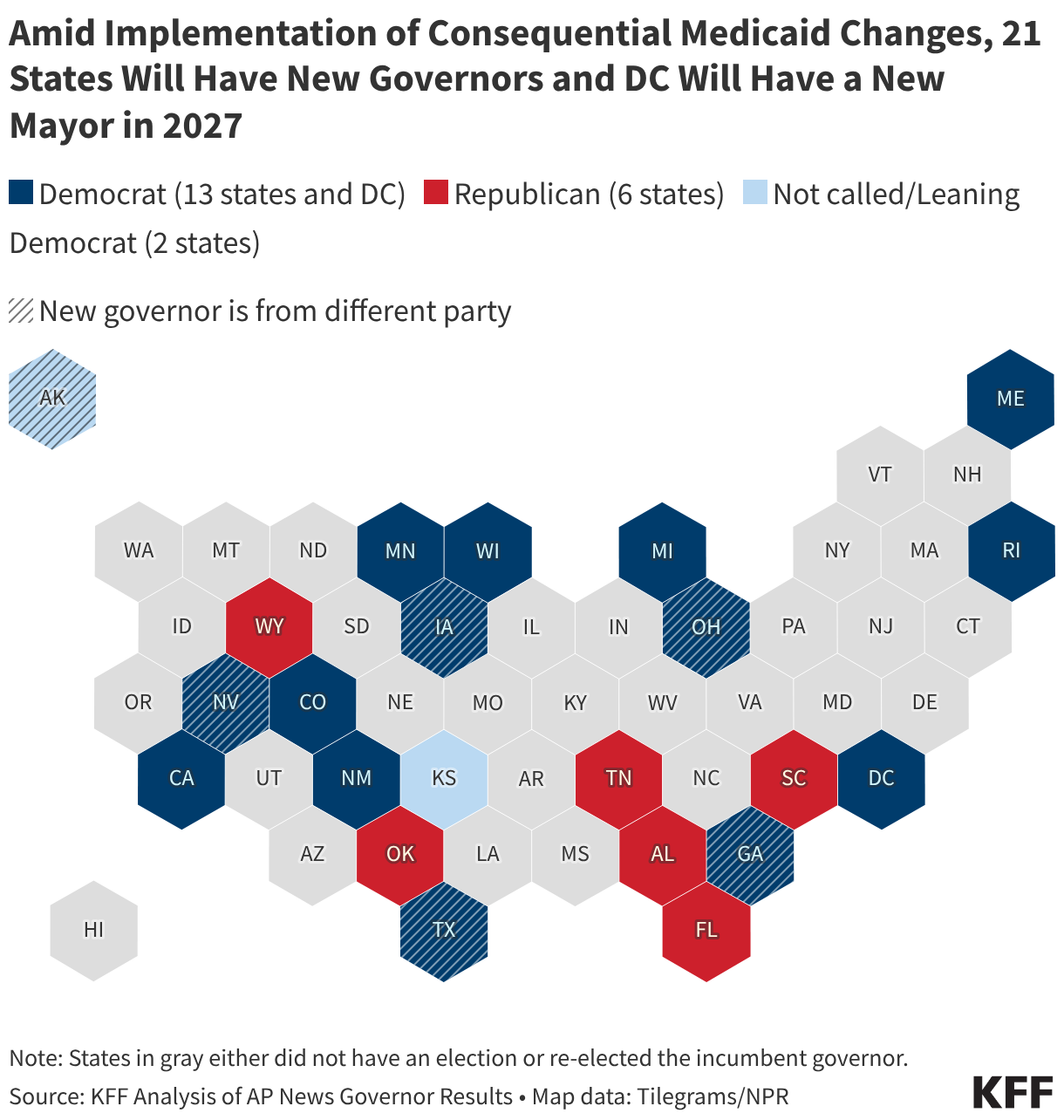
Amid Implementation of Consequential Medicaid Changes, 21 States Will Have New Governors and DC Will Have a New Mayor in 2027
All states are implementing far-reaching and complex Medicaid changes required by the 2025 reconciliation law amid a shifting landscape. For some of these Medicaid changes, especially new work requirements, states are facing very tight implementation timelines even as rules continue to evolve. In the midst of these changes, 36 states held gubernatorial elections in November 2026. Twenty-one states elected a new governor, and DC elected a new mayor. Leadership transitions often increase operational challenges that can slow implementation progress as new political appointees, including Medicaid directors, take office. In at least five states (the race in Alaska has not been called, though the Democrat is leading), the new governor will be from a different political party than the current governor, which can amplify transition challenges as new governors may seek to shift policy priorities and key staff. In January, 29 states will have Democratic governors and 20 will have Republican governors. Currently, two state races have not been called, but the Democrat is leading in both.
There were also shifts in the composition of state legislatures that could affect state Medicaid policy priorities. In four of the states with new governors—Michigan, Minnesota, Nevada, and Wisconsin—Democrats will newly control both the governorship and state legislature. In Georgia and Texas, the legislature is newly divided between Democratic and Republican control. In the remaining states with new governors, party control of the state legislature did not change.