
KFF Tracker: U.S. Global Health Programs by Country and Region
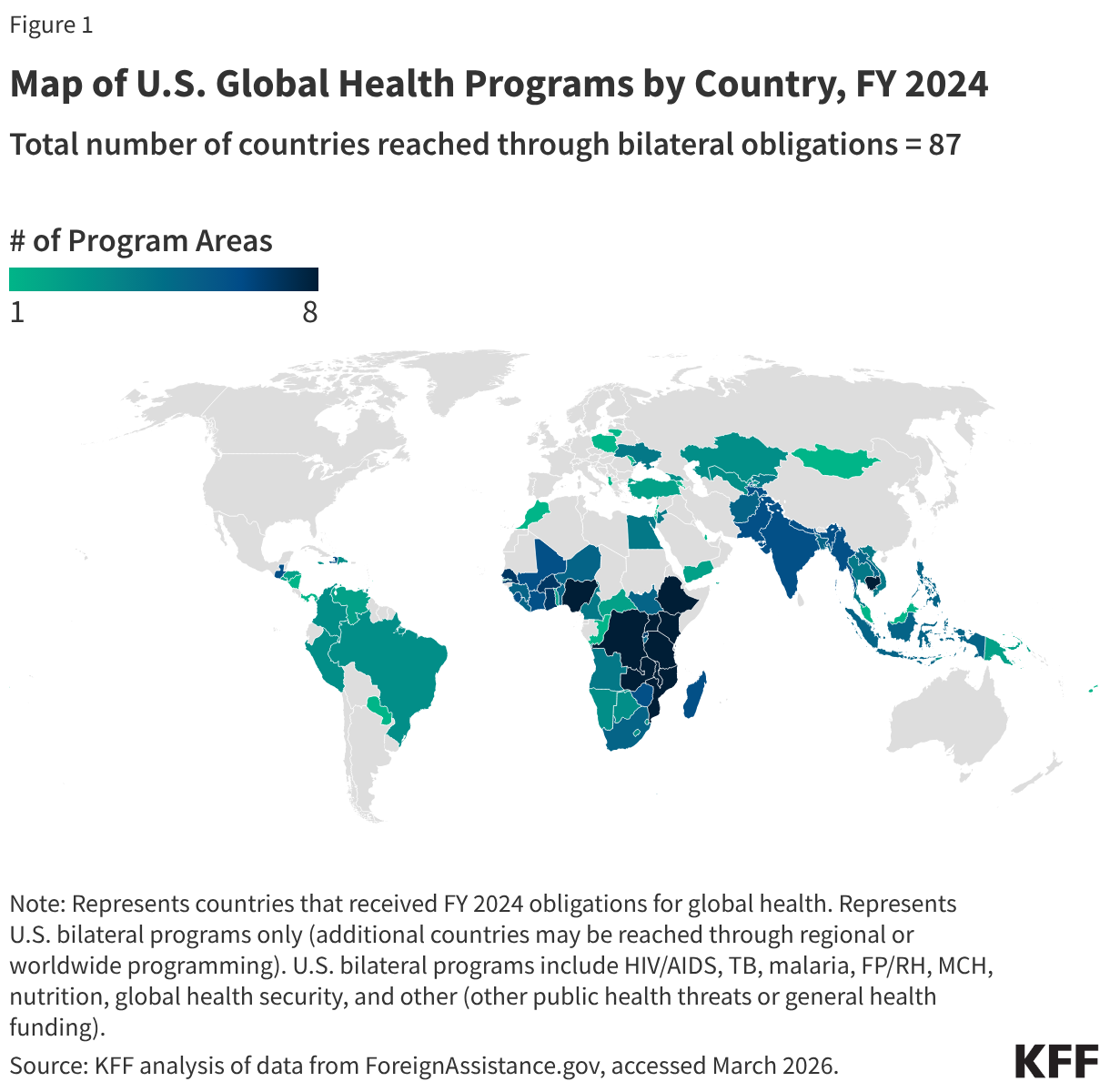
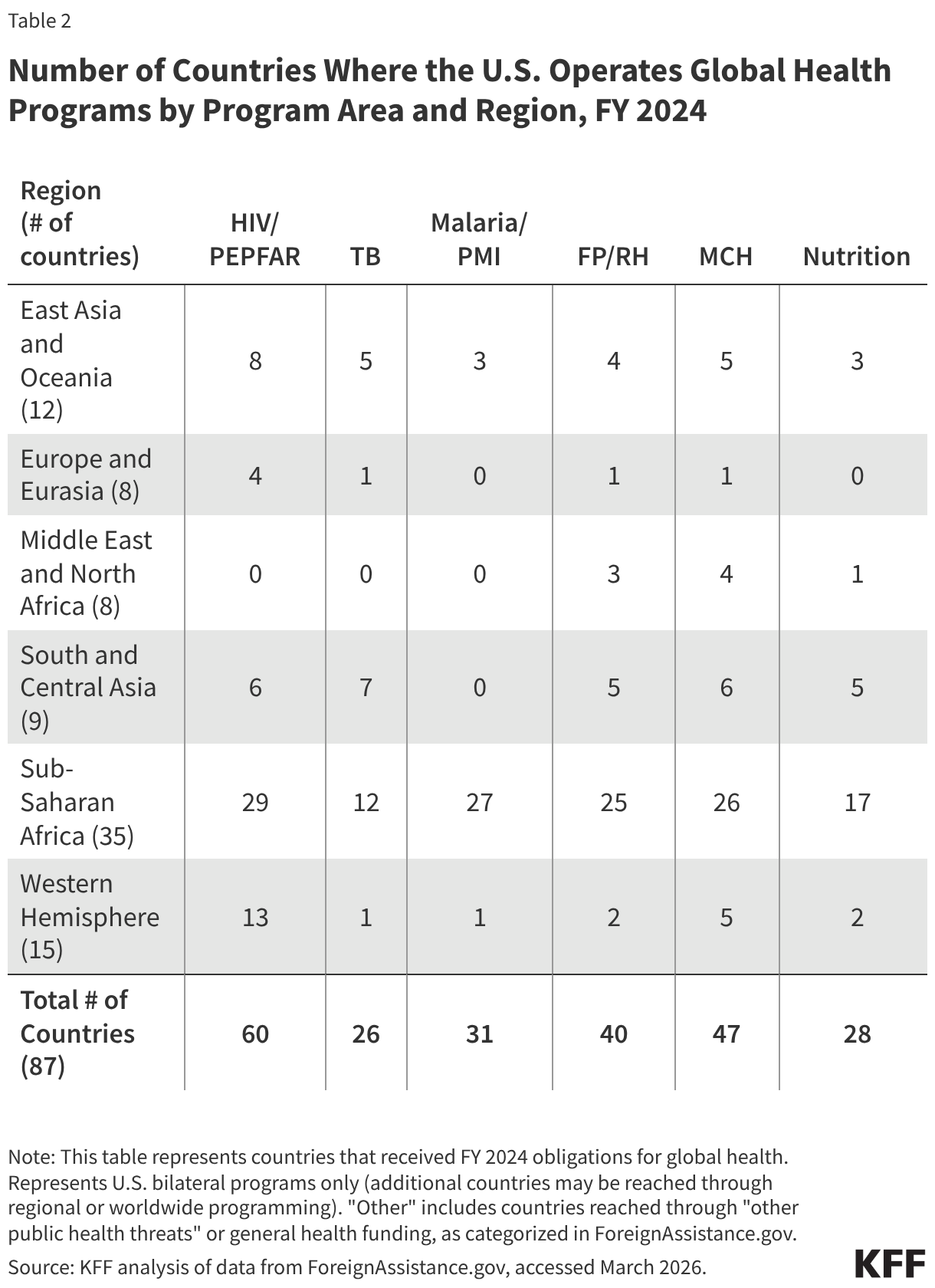
The U.S. supports global health programs in over 80 countries, with additional countries reached through its regional efforts and contributions to multilateral organizations.1 In each partner country, U.S. programs often operate in multiple program or health areas, which may include: the President’s Emergency Plan for AIDS Relief (PEPFAR), Tuberculosis (TB), the President’s Malaria Initiative (PMI), Family Planning and Reproductive Health (FP/RH), Maternal and Child Health (MCH), Nutrition, and Global Health Security.2 This tracker provides an overview of U.S. bilateral global health programs by country and region through:
- a map of U.S. bilateral global health programs by country (Figure 1);
- a list of countries where the U.S. operates bilateral global health programs by program area (Table 1); and
- a summary of the number of countries reached by region and program area (Table 2).
The tracker currently reflects FY 2024 data3 and will be updated periodically. See also the KFF tracker for U.S. global health country-level funding.

- Number of countries represents countries that received obligated funding directly from the U.S. government as reported on ForeignAssistance.gov; additional countries may be reached through “regional” and “worldwide” programming. ↩︎
- The U.S. also operates programs targeting Neglected Tropical Diseases (NTDs) and other general global health programs, but these data are not disaggregated at the country level; as such, these programs are included in the tracker as “Other.” ↩︎
- Reflects U.S. global health programs by country and region as identified in FY 2024 obligations funding data, the most recent year available of complete data, from ForeignAssistance.gov for all global health programs. See also KFF’s U.S. Global Health Country-Level Funding Tracker for more details on historical appropriated/planned, obligated, and disbursed funding by country, region, and income. ↩︎