KFF designs, conducts and analyzes original public opinion and survey research on Americans’ attitudes, knowledge, and experiences with the health care system to help amplify the public’s voice in major national debates.
Enhanced subsidies for Affordable Care Act (ACA) Marketplace plans are set to expire at the end of 2025, unless they are renewed by Congress. Since 2021, these enhanced subsidies have lowered monthly premium payments for the vast majority of Marketplace enrollees, across incomes. For example, instead of a lower-income person paying 2% of their income on their premium, they pay nothing. Higher income people currently pay no more than 8.5% of their income on their premium, whereas they were originally ineligible for financial assistance.
While virtually all subsidized ACA enrollees can expect to see their premium payments rise substantially without extension of these subsidies, most will still be eligible for some financial assistance (with the original ACA subsidies). However, those who earn more than four times the federal poverty level ($62,600 for an individual or $128,600 for a family of four with 2026 coverage) would lose eligibility for subsidies altogether and would therefore have to pay full price for their health plans. Based on 2025 premiums, for example, a 60-year-old couple earning $85,000 annually (416% of the federal poverty level in the contiguous 48 states), would see their monthly premium payment increase by $1,507 per month (an increase in payments of over $18,000 for the year), on average.
Relative to other Americans, subsidy-eligible individual market enrollees with incomes over four times poverty (who would lose subsidy eligibility if enhanced tax credits expire) are disproportionately:
Early and pre-retirees: About half (51%) of enrollees with incomes over four times poverty who would lose subsidy eligibility are between the ages of 50 and 64, compared to 23% of the non-elderly U.S. population.
Self-employed: Among non-elderly adults (ages 19 to 64) with incomes over four times poverty who would lose ACA subsidy eligibility, 38% are self-employed, compared to 7% of non-elderly adults (19-64) nationally. Small business owners often rely on the ACA Marketplaces because they do not have employer-sponsored insurance.
Living in rural areas: 15% of people with individual market insurance who would lose subsidy eligibility live outside metropolitan areas, compared to 9% of Americans with incomes over four times poverty. (12% of all Americans live in rural area; this is not statistically different from the share of people who would lose subsidy eligibility living in rural areas.)
Subsidy-Eligible Individual Market Enrollees Making Above Four Times Poverty Are Disproportionately Early and Pre-Retirees, Self-Employed, and Live in Rural Areas
Demographics of Subsidy-eligible Individual Market Enrollees With Incomes Over Four Times Poverty, 2023
Individual market enrollees with incomes over 4 times the poverty level are statistically different from all comparison groups, except when comparing rural individual market enrollees over 4 times the poverty level to the national population across all income levels.<br/>Self-employed includes share of adults between 19 and 64. Other demographics include all between 0 and 64. Rural includes all counties outside of US Census Metropolitan Statistical Areas.
Relatively few Marketplace enrollees have incomes above four times poverty. According to administrative data, in 2024, 7% of Marketplace enrollees reported an income over four times poverty, with 3% having an income between four and five times poverty and another 4% with incomes over five times poverty (another 4% did not have a known income and may have also exceeded four times the poverty level, but most likely are not receiving an advanced premium tax credit). However, before the enhanced subsidies were introduced – and particularly in 2017 when there were large premium increases and debates about repealing the ACA – this group of people with incomes over four times poverty were the focus of a great deal of media attention because they were fully exposed to the underlying premiums. For those who were priced out of coverage before the enhanced subsidies, they often faced a choice of being uninsured, or – if they were healthy enough to qualify – buying a short-term (non-ACA-compliant) plan off of the Marketplace.
Note: The data above is based on KFF analysis of the 2024 Current Population Survey Annual Social and Economic Supplement. The analysis includes people under age 65 who buy individual market insurance, are subsidy eligible, and would receive a subsidy based on household income. Household offer units were imputed as described previously; enrollees were considered not subsidy eligible if a member of the unit reported being offered employer-sponsored insurance.
The U.S. health insurance system has become a “complex labyrinth” for consumers to understand and navigate. Whether public or private coverage, the information needed and the hoops the average health care consumer must go through to use their health coverage effectively is itself a public policy concern, exacerbating continued access and affordability challenges. The KFF 2023 Survey of Consumer Experiences with Health Insurance found that half of insured adults have some difficulty understanding at least some aspects of their insurance. This is the first of two Issue Briefs exploring specific survey findings about gaps in understanding health coverage, highlighting problems and federal consumer protections in place today designed to bridge the gap.
This brief discusses how consumers understand what their insurance covers, what to do when coverage for care is denied, and what protections exist to ensure that information is available and coverage determinations are fair, accurate, and timely. The second brief will discuss survey findings of consumer understanding of the cost of their coverage, existing consumer protections designed to assist with understanding how much they will have to pay for a covered service, and balanced billing and other federal consumer health insurance protections.
The Labyrinth
What does a consumer need to know in order to use their health coverage effectively? The U.S. insurance system of managed care networks, utilization review, and changing coverage options can result in a complicated maze for a patient to navigate on their own. Federal and state policymakers have developed a series of incremental reforms to address understanding and transparency for consumers, but these can differ considerably based on the type of coverage, the plan the consumer chooses (if they have a choice), and sometimes, the state where they live. For private coverage in particular, the current regulatory framework is a complicated system of overlapping state and federal standards, sometimes leaving consumers to sort through a barrage of questions in order to get the care they thought was covered by their insurance.
KFF Consumer Survey Findings
The KFF 2023 Survey of Consumer Experiences with Health Insurance (“Consumer Survey”) included a nationally representative sample of 3,605 U.S. adults ages 18 and older with health insurance. The survey asked consumers about their experiences with their health insurance, including questions regarding how well enrollees understood what was covered, insurance problems that arose when enrollees tried to use their insurance, and where they sought help when they experienced insurance problems.
Understanding What is Covered
According to the 2023 KFF Consumer Survey, more than one-third (36%) of all insured adults said it was somewhat or very difficult for them to understand what their insurance will and will not cover. These shares vary by insurance type, with larger shares of those with Affordable Care Act (ACA) Marketplace plans (46%) and employer-sponsored plans (40%) reporting greater difficulty than those with Medicaid (28%) or Medicare (24%) (Figure 1). There were also differences in understanding certain aspects of insurance by demographic characteristics. Hispanic (36%) and White (36%) insured adults were more likely than insured Black adults (26%) to say it is somewhat or very difficult to understand what their insurance will and will not cover. Among insured adults, Hispanic adults (37%) were more likely than their Black (24%) and White (29%) counterparts to say it is at least somewhat difficult to understand their Explanation of Benefits (EOB). (An EOB is a written statement from a health insurance plan explaining what costs it will cover for medical care an enrollee has received and what the enrollee must pay, though it is not a bill). While the precise explanation for these demographic differences is not clear from the survey data, these trends are similar to those found in otherresearch that noted health insurance literacy challenges across consumers generally, but found racial and ethnic disparities. Additionally, about three in ten insured adults ages 18-29 (30%) and 30-49 (28%) found it somewhat or very difficult to understand how to find information about which doctors, hospitals, and other providers are covered in their plan’s network, compared to 13% of insured adults ages 65 and older. (For the full list of consumer items asked about in this question, see the survey toplines.)
Many Marketplace and ESI Enrollees Have Trouble Understanding at Least Some Aspect of Their Health Insurance
Percent of insured adults who say the following is either "somewhat difficult" or "very difficult" to understand when it comes to their current health insurance, by insurance type
Click the buttons below to see responses by insurance type, race/ethnicity, and age
Insurance Type
Race/Ethnicity
Age
This figure presents a subset of health insurance aspects that consumers reported having difficulty understanding. See survey topline for full question wording and response options. ESI = employer-sponsored insurance.
Insured Hispanic and White Adults Are More Likely Than Insured Black Adults To Say It Is Very or Somewhat Difficult To Understand What Their Insurance Will and Will Not Cover
Percent of insured adults who say the following is either "somewhat difficult" or "very difficult" to understand when it comes to their current health insurance, by race/ethnicity
Click the buttons below to see responses by insurance type, race/ethnicity, and age
Insurance Type
Race/Ethnicity
Age
This figure presents a subset of health insurance aspects that consumers reported having difficulty understanding. See survey topline for full question wording and response options.
Insured Younger Adults Are More Likely Than Insured Older Adults To Say It Is Very or Somewhat Difficult To Understand What Their Insurance Will and Will Not Cover
Percent of insured adults who say the following is either "somewhat difficult" or "very difficult" to understand when it comes to their current health insurance, by age group
Click the buttons below to see responses by insurance type, race/ethnicity, and age
Insurance Type
Race/Ethnicity
Age
This figure presents a subset of health insurance aspects that consumers reported having difficulty understanding. See survey topline for full question wording and response options.
Educational attainment does not necessarily explain lack of understanding. The KFF Consumer Survey found that a slightly higher share of college graduates (58%) had difficulty understanding some aspect of their health insurance coverage than those without a college degree (46%). College graduates (43%) were more likely to report that it was somewhat or very difficult to understand what their health insurance will or will not cover compared to those without a college degree (31%). It is not entirely clear why education does not seem to increase understanding of insurance, though one possible explanation is that those with higher educational attainment are more likely to have private insurance (employer-sponsored insurance or Marketplace), with variable and changing insurance designs that may be more difficult to understand generally.
Areas where consumers note trouble with understanding insurance are often consistent with the top problems that consumers face with insurance. About six in ten (58%) insured adults reported experiencing a problem with their health insurance in the past year. This share is even higher (78%) among high utilizers of health care – those who had more than ten visits with a health care provider in the past year. While having a problem with health insurance does not necessarily indicate that a consumer had trouble understanding their insurance, determining what services are covered and what providers are in-network are items that cut across both topics. Several survey respondents reported problems related to using insurance that involved services or providers not covered by their plan. For example, 18% of insured adults indicated that their health insurance did not pay for a service that they thought was covered. Those with employer-sponsored (21%) and Marketplace (20%) coverage were more likely to report having this problem than those with Medicaid (12%) or Medicare (10%) (Figure 2). A somewhat larger share of insured Black (17%) and Hispanic (16%) adults reported that a doctor or hospital they needed was not covered by their insurance in the past 12 months compared to White adults (12%). Marketplace (20%) and Medicaid (19%) enrollees were more likely to encounter this problem than those with Medicare (9%) or employer-sponsored insurance (ESI) (13%). One in five (20%) insured adults ages 30-64 reported their health insurance denied or delayed a prior approval request in the past 12 months, relative to 11% of those ages 18-29 (11%) and 9% of those age 65 and older. (For the full list of consumer problems asked about in this question, see the survey toplines.)
1 in 5 Adults With Private Coverage Reported That Their Insurance Did Not Pay for a Service That They Thought Was Covered in the Past Year
Percent who say they experienced the following problems with their health insurance in the past 12 months, by insurance type
Click the buttons below to see responses by insurance type, race/ethnicity, and age
Insurance Type
Race/Ethnicity
Age
This figure presents a subset of problems consumers reported experiencing using their health insurance. See survey topline for full question wording and response options. ESI = employer-sponsored insurance.
More Black and Hispanic Insured Adults Say a Doctor or Hospital Was Not Covered by Their Insurance in the Past Year Than White Insured Adults
Percent who say they experienced the following problems with their health insurance in the past 12 months, by race/ethnicity
Click the buttons below to see responses by insurance type, race/ethnicity, and age
Insurance Type
Race/Ethnicity
Age
This figure presents a subset of problems consumers reported experiencing using their health insurance. See survey topline for full question wording and response options.
Younger Adults Are More Likely To Have Had Their Health Insurance Not Cover a Particular Mental Health Therapist or Treatment in the Past Year Than Older Adults
Percent who say they experienced the following problems with their health insurance in the past 12 months, by age
Click the buttons below to see responses by insurance type, race/ethnicity, and age
Insurance Type
Race/Ethnicity
Age
This figure presents a subset of problems consumers reported experiencing using their health insurance. See survey topline for full question wording and response options.
What actions, if any, consumers take when they encounter a problem with their health insurance might be instructive in addressing barriers to understanding coverage or best practices to assist consumers in navigating coverage questions.
Among the nearly six in ten insured adults who reported experiencing problems with their health insurance in the past 12 months, more than half (53%) said they contacted their health insurance company to resolve the problem(s) (Figure 3). A similar share (49%) said that they referred to their health insurance website or documents. Fewer said they asked a Navigator or broker for help (11%) or contacted their state Consumer Assistance Program or Ombudsman (3%).
Contacting Their Insurance Company Is the Most Common Action That People Take To Resolve Health Insurance Problems; Few Contact a State Consumer Assistance Program
Among insured adults who had a problem with health insurance in the past 12 months, share who did the following to resolve those problems
<sup>ŧ</sup>Among those with employer-sponsored insurance. <sup>^</sup>Among those with Marketplace insurance. Not all items are presented in this figure. See the survey toplines for more.
Nearly three in five (57%) of all insured adults reported contacting their insurance at least once in the past 12 months, either by phone, online, in-person, or in writing(Figure 4). Forty-two percent of insured adults did not contact their insurance company at all. Among those who did reach out to their insurance at least once, half (50%) inquired whether a health care expense (such as a prescription, procedure, treatment, or visit with a health care provider) was covered by their health insurance, making it the most common reason for contacting their insurance. Receiving a medical bill (42%) was another reason insured adults contacted their insurance, followed closely by finding out what steps needed to be taken for their insurance to cover a prescription, procedure, or medical visit (39%). Fewer (31%) contacted their insurance at least once in the past year to find out how much a medical procedure would cost out-of-pocket.
Most insured adults are unaware that they have the legal right to appeal to a government agency or independent medical expert if their health insurance refuses to cover needed medical services(Figure 5). Those with public insurance are more likely than those with private insurance to be aware of this right. Just one-third (34%) of those with ESI or Marketplace coverage know they have this right, compared to 58% of Medicare beneficiaries and 45% of those with Medicaid. Further, just one in ten (10%) insured adults who experienced a problem with their health insurance in the past year filed a complaint with their health insurance company (data not shown). This share is similar across all four coverage types.
Many Insured Adults Do Not Know That They Can Appeal to a Government Agency or Independent Medical Expert
As far as you know, if your health insurance refuses to cover medical services you think you need, do you have the legal right to appeal to a government agency or an independent medical expert?
Three-quarters (76%) of adults with insurance reported not knowing what government agency they would call for help if they wanted to. Adults with ESI (83%) or Marketplace (81%) coverage were more likely to report that they did not know which government agency to contact compared to Medicare (61%) and Medicaid (70%) enrollees. Among insured adults with ESI or Marketplace coverage who reported that they did know which government agency they would contact, 15% of those with ESI and 6% of those with Marketplace coverage reported that they would reach out to their state insurance department/commission(er), the lead agency that is responsible for regulating non-group health coverage and insured group coverage. No one reported that they would contact the Department of Labor (DOL), the government agency that regulates health plans sponsored by private employers, including self-insured employer health plans.
Federal Consumer Protections Seek to Address Barriers to Understanding Coverage
Many federal reforms have focused on providing consumers with better information about their plan, standardizing and simplifying information, and making sure notice is provided of key design features and reforms. While public programs such as Medicare and Medicaid also provide consumer protections, this section focuses primarily on federal protections for those with private health insurance coverage (individual and employer-sponsored).
Understanding What is Covered
The ability to access accurate and easy-to-understand written information has long been a core consumer protection. Below is the landscape of written materials a consumer can access to get information to understand their coverage. Figure 6 is a snapshot of some key consumer protections for those with private insurance.
Key Federal Consumer Protections for Understanding Private Insurance: Written Information
Coverage documents and summaries: All forms of coverage, whether Medicare, Medicaid, or private insurance available through an employer or a health insurance Marketplace, are required as a form of consumer protection to provide information about benefits and coverage, with varying content requirements, formats, and frequency of updates. Although there are fewer required standardized information formats across private coverage than in public programs such as Medicare, the ACA ushered in a standardized template across most private insurance through the Summary of Benefits and Coverage (SBC), with information on key coverage items and exclusions, cost-sharing, and rules for accessing care. All ACA-compliant plans in the individual and group insurance market and all employer-sponsored plans must provide consumers with an SBC.
More detailed coverage documents can extend to one hundred written pages or more; however, electronic formats and machine-readable files may make it easier to access information for those with the technology and ability to research this information. Examples in the private insurance market include state-regulated insurance documents (including Marketplace plans) sometimes called Certificates of Coverage, or plan documents and Summary Plan Descriptions that set out benefits for those in employer group health plans covered by ERISA.
Provider directories and formularies: Provider directories and formularies allow consumers to see what providers and medications are covered by their insurance. While these items might be easy to access online, severalresearchstudies have found that provider directories are often inaccurate. Federal consumer protections across public and private coverage include various features designed to ensure that plans maintain more accurate and up-to-date information. In some cases, these protections also require plans to meet minimum network adequacy standards and test that accuracy through “secret shopper” compliance programs.
Private coverage protections include the No Surprises Act (NSA) requirements, which apply to all private insurance (including employer coverage) and set standards for both plans and in-network providers to ensure accurate provider directory information. Consumers must be reimbursed for cost sharing in excess of in-network amounts when they rely on inaccurate directory information indicating that a provider was in-network. Plans must also continue to cover care from certain providers for a limited period of time after they leave an insurance network.
There is little research on prescription drug formulary accuracy and how consumers determine what medications are covered, but some public programs have model formulary templates to make it easier for consumers to review. There are no federal standards for private employer plans for formulary format, accuracy, and usability.
Consumer notice of rights, disclaimers, and marketing restrictions: Nearly every new consumer protection includes a requirement on an employer or insurance plan and/or provider to notify patients that the protection exists. For example, the NSA requires providers and facilities, as well as plans, to provide patients with information about the NSA’s balanced billing protections. Other federal reforms are meant to alert consumers about aspects of their coverage that might easily be misunderstood with a clear warning or disclaimer. For instance, federal rules for short-term limited duration coverage require a prominent statement that this coverage is “NOT COMPREHENSIVE COVERAGE.” This federally required warning on plan materials, as well as one for fixed indemnity plans, has been the subject of recent litigation questioning the need for and validity of these disclaimers. Another federal agency, the Federal Trade Commission, enforces protections against unfair or deceptive marketing or advertising to consumers that, for example, misrepresents certain limited coverage arrangements as comprehensive health insurance. Several recent investigations have been in collaboration with the federal health insurance agency Centers for Medicare and Medicaid Services (CMS).
Information about coverage determinations and appeals: Even if a consumer has located written information that an item, service, or provider visit is covered by their insurance, they could still face a denial of coverage (e.g., because the plan does not deem the care “medically necessary”), which can create frustrating hurdles for consumers. Medicare and Medicaid have longstanding processes for claims review and appeals. Private coverage also includes certain protections including:
Processes for reviewing claims: All private insurers and employer plans must ensure a “full and fair” review of enrollee claims. In addition, the ACA includes a “transparency in coverage” provision that requires all non-grandfathered private health plans to provide information and statistics about plan practices to the public and to federal and state agencies, including data on claims payment policies and procedures and the number of claims denied.
Prior authorization: The longstanding practice of health plans requiring patients to obtain approval for a health care service or medication before the care is provided has received renewed scrutiny in recent years. New federal protections issued in 2024 and effective in 2027 streamline the process and require aggregate reporting of the number of claims denials for federal Marketplace plans as well as Medicare Advantage and Medicaid managed care organizations.
Information about why a claim was denied: Health insurers and employer plans must clearly disclose to consumers the reason(s) their claim was denied, provide information on their right to appeal the decision, and include the name of any Consumer Assistance Program (CAP) in their state. Consumers can also request more specific information from their plan about the decision (e.g., policy provisions related to the denied claim, names of experts consulted for decision).
Internal appeal to the plan: If a consumer disagrees with a denied claim from their health plan, they can file an internal appeal with their plan. Plans are required to inform consumers of their appeal decision within 30 days for a service not yet received, within 60 days for a service that was already administered, and within 72 hours in urgent medical cases (sometimes less depending on the situation).
External independent review: Consumers whose claims denial is upheld at internal appeal may have the right to an external review by an entity independent of the plan for certain types of claims.
Language assistance and information in alternative formats: Requirements to provide some form of language assistance and auxiliary aids to help with understanding coverage exist across most forms of coverage. Private employer plans have long been required to offer assistance in a non-English language where the plan covers a specific percentage of participants in the plan who are “only literate” in the same non-English language. The ACA requires that the SBC and certain claims and appeal notices be provided in a “culturally and linguistically appropriate manner” by individual and group insurers and self-insured employer plans. This could include items such as oral language services and a notice in a certain non-English language provided to enrollees upon request if they live in a county where 10% or more of the population is literate only in the same non-English language.
Separate language access standards apply to recipients of federal financial assistance, programs that HHS administers, and entities established under the ACA, such as health insurance Marketplaces. As a result, most private insurers participating in public and private insurance programs (including some who also provide insurance or administrative services to employer-sponsored coverage) must comply.
Effective communication for individuals with disabilities is also required under the ACA. Current regulations likely extend to information about health insurance coverage through the use of “auxiliary aids” for individuals with disabilities, such as sign language interpreters onsite or by video. Electronic information technology used to provide information about health coverage to enrollees must also be accessible for individuals with disabilities unless doing so creates an undue burden or fundamentally alters the program. Similar access standards for persons with disabilities might also apply to those who sponsor coverage and are also subject to the Americans with Disabilities Act or the Rehabilitation Act.
Direct Assistance
Some consumers may seek one-on-one communication to understand technical details in an insurance coverage document, to get more information about plan or provider policies and procedures, or to navigate the claims appeal process. The 2023 KFF Consumer Survey indicates that more insured adults reach out to their insurance company when encountering a problem than look to written plan material for resolution. Ensuring that consumers have access to effective and impartial one-on-one help has been the subject of federal consumer protection requirements. Figure 7 is a snapshot of key channels for direct consumer assistance.
Key Federal Consumer Protections for Understanding Private Insurance: Direct Assistance
Customer service options: Private insurers generally make certain customer services available to enrollees. Customer service provided by health plans is commonly offered via call centers, electronic messaging platforms, and increasingly, virtual chatbots. States may have specific customer service requirements for insurers selling state-regulated plans, such as call center wait time standards or staffing a minimum number of customer service representatives.
Health insurance marketplaces are required to provide consumer tools. Healthcare.gov operates a toll-free call center 24 hours a day, 7 days a week, for consumers with questions related to the federal health insurance Marketplace. The ACA also requires all state-based marketplaces to provide a live call center during their hours of operation. Call center representatives must assist consumers with inquiries related to qualified health plans, enrollment, cost-sharing reductions, and advanced premium tax credits (APTCs). Beyond relying just on insurers to provide this information, Congress also created the Navigator grant program to give enrollees access to an additional source of information from organizations other than health insurers to help navigate Marketplace coverage.
For those with private employer-sponsored coverage, there is no specific requirement under federal law to provide direct assistance to help covered employees and their families. Human resources staff sometimes perform this role if a consumer is unable to get answers from customer service personnel available from their insurer or third-party administrator. Some firms contract with third-party vendors to provide patient navigation or “concierge” services that help enrollees navigate plan services and advocate for enrollees as patients, among other services. According to the KFF Employer Health Benefits Survey, in 2024, 29% of firms with 200 or more employees that offered health benefits contracted with a vendor to provide “concierge” services to their enrollees. Separately, the DOL’s Employee Benefits Security Administration (EBSA) operates a toll-free phone number and an online message platform for consumers with questions or concerns related to federal legal requirements, obtaining health plan documents, and assistance getting claims paid.
Funding to state and other entities providing direct assistance: Before the ACA, some states had already established their own Consumer Assistance Programs (CAPs) or health insurance ombudsman programs to help all consumers explore coverage options or assist in resolving problems with their health insurance. Federal CAP grants as part of the ACA allowed for the improvement of existing programs and the creation of new CAPs in other states. In addition to assisting with consumer education and enrollment, the ACA listed one of the duties of CAPs as “assisting with the filing of complaints and appeals… of group health plans…and providing information about the external appeal process.” However, CAPs still operating today have not been supported by federal grant funding since 2012, effectively eliminating the only federally-funded assistance program available to consumers with employer coverage. Several have ceased operations due to lack of funding.
As referenced above, in addition to CAPs, Navigators were established under the ACA as a program to provide direct assistance to consumers in both HealthCare.gov states and in states that operate their own marketplace. Navigators offer support by conducting public education and outreach, helping consumers apply for financial assistance, assisting with enrollment and post-enrollment issues, and providing fair and impartial information about health plan options. Navigators cannot be insurers, nor can they receive any direct or indirect payment from an insurer. These programs in HealthCare.gov states are funded by federal grants, the amounts of which have fluctuated over the years depending on which political party is in power. In February 2025, the Trump administration announced it would cut funding for the Navigator program from its current $100 million to $10 million for 2026.
Standards for health insurance agents and brokers: Agents and (web)brokers play a large role in selling coverage in the individual and group insurance markets and can assist consumers in understanding their health insurance options and costs. While most agents and brokers are certified and regulated at the state level, federal requirements for those agents and brokers involved with Marketplace plans are meant to protect consumers from fraudulent activity and misleading information from agents and brokers, and to make sure consumers are aware of how they are paid and the possibility of conflicts of interest in steering consumers to certain products that financially benefit the agent/broker/web broker. Federal law also requires agents, brokers, and other service providers that work with private employer plans to disclose to employers how they are paid.
Looking forward
KFF 2023 Consumer Survey findings about how consumers understand and navigate the health insurance system reveal frustrating hurdles to determine what items and services and what providers are covered by their insurance. It presents the question of whether we have a system that is impossible for a consumer to navigate alone, leaving consumers vulnerable to exploitation and confusion as they are caught in the middle of health plan and provider interests and arbitrary boundaries of authority between state and federal agencies. Coming out of an election widely viewed to have turned on concerns about the economy, including health care costs, and following public outrage against insurers following the killing of the United Healthcare CEO at the end of 2024, expect that health care consumer issues will not go away, but perhaps will shift focus to include:
Use of digital technology such as artificial intelligence (AI) to assist consumers: Though imperfect and with some pitfalls, digital technology, including AI, can help consumers navigate the complexities of health insurance. These tools are increasingly being promoted to both companies and individuals and in 2024, nearly two-thirds (64%) of adults say they have used or interacted with AI. AI tools can be appealing to consumers looking for answers to health insurance-related questions without the need to make a phone call, wait on hold, or read through plan documents, and are often available 24/7. From guiding consumers through the insurance claims process, including filing appeals, to helping determine whether a plan that applies coinsurance or copayments for their prescription drugs will meet their needs, and identifying in-network doctors near a patient’s home, these tools have the potential to transform the ways in which people seek health information.
However, AI has also been in the spotlight following investigations and litigation in recent years related to health plans’ use of these tools in making coverage determinations, such as for prior authorization requests and in the claims review process. Much of the existing research and criticisms related to the use of AI in health care more broadly, such as clinical decision-making and claims processing, feature overarching concerns related to their accuracy, reliability, confidentiality, and accessibility that could also apply to consumers using AI and other digital technology to navigate their health insurance.
Patient input in coverage practices: Broader and different mechanisms to gather information about consumer experiences in real time could assist in determining the most pressing concerns for patients and engage more consumers in policy discussions about what structural changes and protections are most needed and impactful for them. One of the largest health insurers recently announced changes aimed at improving the patient experience in using their coverage, expanding consumer support, and improving transparency. Employers are making changes to better oversee and understand their benefit programs and provide consumer input and navigation services as plan sponsors face real scrutiny for the first time under longstanding federal fiduciary requirements.
For the federal government, while deregulation across health care, as well as federal agency upheaval, is likely to be the focus in the coming years, the Trump administration will be tasked with implementing key provisions of the No Surprises Act, which he signed into law, that requires upfront information about what services cost and more accurate provider directories. The Trump administration has already issued an Executive Order for agencies to “rapidly implement” price transparency regulations.
Promoting other forms of coverage: A reaction to the health insurance labyrinth has some promoting mechanisms to move away from traditional insurance to direct payment alternatives such as direct primary care arrangements and account-based arrangements where consumers use dollars available in a health savings account or other type of account to purchase care. The pros and cons of these arrangements will be up for debate, as well as whether consumers—especially those with lower incomes and/or chronic illnesses—are well served by the financial and coverage limitations that may be part of these arrangements, including existing problems with the price transparency data available to them and the rising cost of care due to provider consolidation. Patients might be faced with a different set of understanding challenges under these arrangements.
Understanding how health coverage works, what services are covered and by whom, and what rights consumers have is one piece of the health insurance labyrinth. The second brief in this series on consumer understanding will focus on the cost-related aspects and challenges of health insurance and health care.
This work was supported in part by a grant from the Robert Wood Johnson Foundation. The views and analysis contained here do not necessarily reflect the views of the Foundation. KFF maintains full editorial control over all of its policy analysis, polling, and journalism.
This is Irving Washington and Hagere Yilma. We direct KFF’s Health Information and Trust Initiative and on behalf of all our colleagues at KFF, we’re pleased to bring you this edition of our bi-weekly Monitor.
This volume discusses the spread of race-based vaccine myths amid measles outbreaks, along with shifts in health communication from fact-checking to fostering open dialogue. It also explains common misconceptions about heart attack treatment and prevention, a new scientific journal that questions established science, and gaps in research standards for AI chatbots used in healthcare.
As a measles outbreak in Texas worsens and other cases are reported in the country, misinformation about vaccines continues to spread, influencing public perception and fueling hesitancy. One recurring narrative falsely claims that Black children should follow a different vaccine schedule than children of other races because of alleged differences in immune systems. Some research has shown that people of African descent may demonstrate, on average, a stronger immune response to the rubella vaccine. However, the study’s authors state that the data does not support that there is a need for different vaccine schedules based on race. The claim spread in news and social media after it was brought up during Robert F. Kennedy Jr.’s Senate confirmation hearings, with social media posts both debunking and supporting this narrative.
One of the most popular social media posts on the topic came from Senator Angela Alsobrooks, who shared a video clip on X of her asking Kennedy about these claims during the confirmation hearing and expressing her concern about the dangers of this narrative. The post received approximately 164,000 likes and 30,000 reposts, and 15,000 comments as of February 19. While many commenters shared Alsobrooks’ concern, some perpetuated the misconception that biological differences in vaccine safety are supported by evidence. In some instances, commenters cited cases in which race-based medicine is used in other domains as justification for biological differences in medication effectiveness. But scientists have emphasized that race is a social construct, not a biological category, and using it as a proxy for genetics has led to harmful medical practices.
Despite decades of credible research showing that vaccines are not associated with autism, narratives linking vaccines to autism in Black children have also gained traction, sometimes citing a retracted study of 2004 CDC data. The study, which claimed that Black boys who received the MMR vaccine on schedule were diagnosed with autism at higher rates than other children who did not receive the vaccine on time, was retracted due to flawed methods and the lead author’s undisclosed ties to the anti-vaccine group, Children’s Health Defense. Other claims that vaccines cause autism cite a debunked study, commonly referred to as the “Mawson Study”, which is not about race-related risk but reports an alleged connection between vaccines and autism. However, the study was not published in a peer-reviewed journal, was funded by an anti-vaccine group, and authored by researchers with a history of publishing vaccine-related research that was later retracted. This belief, alongside other unfounded concerns about vaccine safety, may be fueling the decline in childhood vaccination rates, which has led to outbreaks of vaccine-preventable diseases like measles.
Polling Insights:
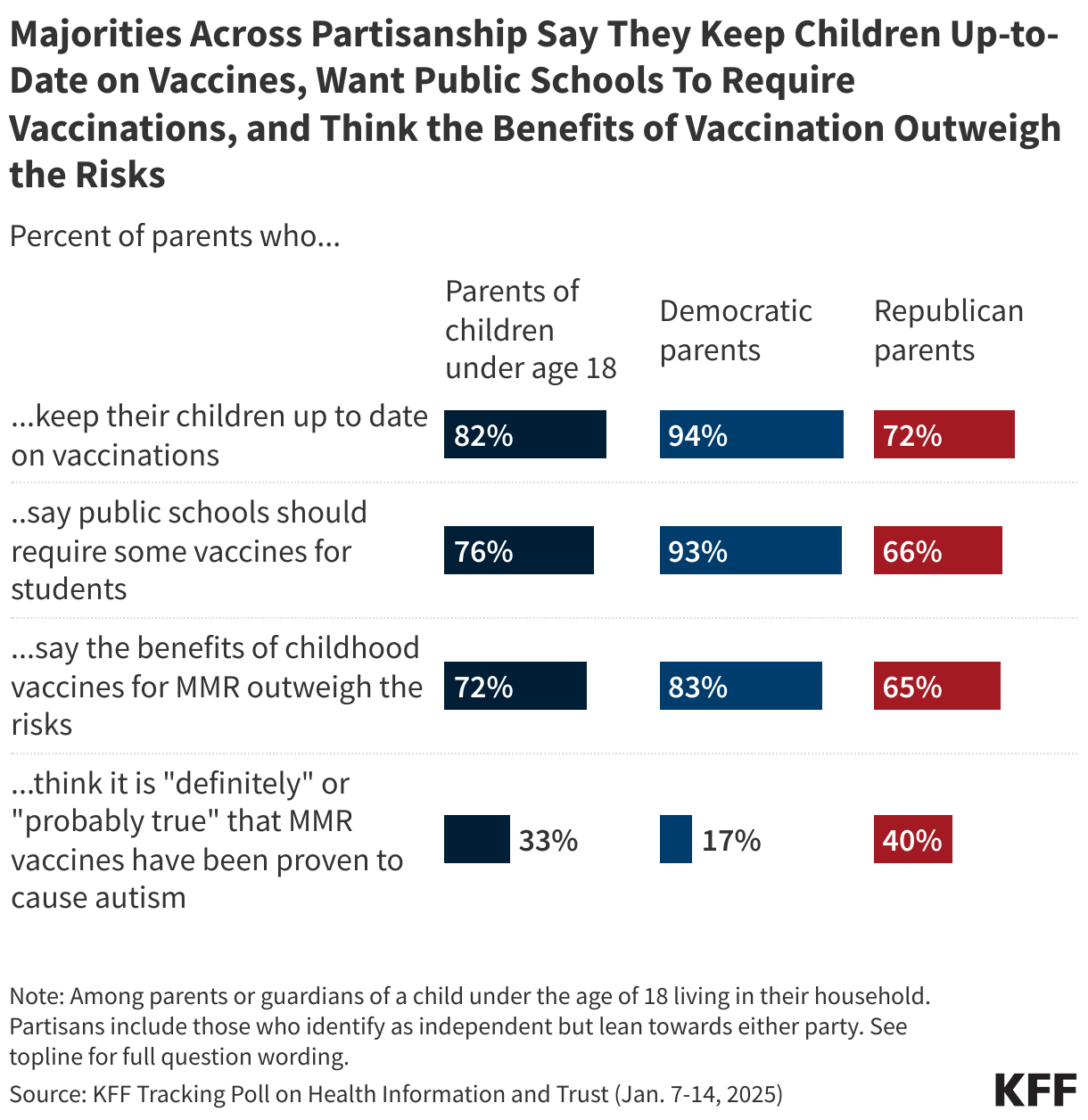
KFF’s January 2025 Tracking Poll on Health Information and Trust found that majorities of parents say they keep their children up to date on vaccinations (82%), support public schools requiring vaccines for students (76%), and believe the benefits of childhood MMR vaccines outweigh the risks (72%). While majorities of parents across partisanship express each of these views, the shares answering in the pro-vaccine direction are notably larger among parents who identify as Democrats or lean that way, compared to their Republican and Republican-leaning counterparts.
Majorities Across Partisanship Say They Keep Children Up-to-Date on Vaccines, Want Public Schools To Require Vaccinations, and Think the Benefits of Vaccination Outweigh the Risks
Bar chart showing the percent who think public schools should require some vaccines for students, allowing for health and religious exceptions or not require any vaccines for students by total, party ID, parent status, and parents by party.
Among parents or guardians of a child under the age of 18 living in their household. Partisans include those who identify as independent but lean towards either party. See topline for full question wording.
KFF Tracking Poll on Health Information and Trust (Jan. 7-14, 2025)
The Field of Health Communication Explores Moving Beyond Fact-Checking to Foster Dialogue
Blue Images / Getty Images
Some health communication professionals are shifting their approach to promoting accurate health beliefs, moving beyond reactive fact-checking to open conversations that help people weigh benefits and risks more accurately. One emerging strategy, known as bypassing, focuses on presenting relevant facts rather than directly debunking misinformation. For example, instead of stating that “aluminum in vaccines causes bone problems” is false, bypassing highlights that “the aluminum in vaccines enhances their effectiveness in preventing disease.” Research suggests this approach may be more effective at changing personal attitudes, though its impact on policy views is less clear. Fostering open conversations may also allow health professionals to share nuances of scientific information in an accessible manner. For topics like vaccines, simply emphasizing their safety and effectiveness may not be enough as it fails to address public concerns and skepticism. Members of the Council for Quality Health Communication argue that the phrase "safe and effective" should be replaced with a more nuanced, empathetic approach that explains vaccine benefits in relatable terms, acknowledges uncertainties, and engages with people in ways that resonate with their real-world experiences and values.
New Public Health Journal Co-Founded by Nominee for NIH Director Questions Widely Accepted Science
Mordolff / Getty Images
A new scientific journal, the Journal of the Academy of Public Health, has drawn attention for its potential bias and questioning of scientific consensus. The journal has ties to the news site RealClearPolitics and was co-founded by Dr. Jay Bhattacharya, President Trump's nominee for NIH director. Another Trump nominee, Dr. Marty Makary, nominee for FDA commissioner serves on the editorial board, although both Makary and Bhattacharya are currently listed as “on leave” from the journal. Its first edition included articles that questioned COVID-19 vaccine trials, suggested a link between DTaP vaccines and childhood asthma, and argued school mask mandates were ineffective. Co-founder Dr. Martin Kulldorff, known for opposing COVID-19 lockdowns and child vaccination, also published a paper claiming that established journals suppress dissenting viewpoints and fail to address public health biases. While the journal’s critiques may appeal to those questioning the prevailing public health consensus, some question its objectivity. The journal is open-access and peer reviewed, but it operates on a membership model where only invited members of the Academy of Public Health can submit articles, which may raise additional questions about how this exclusivity may impact credibility. However, the journal’s divergence from scientific consensus may increase its credibility among Republicans who are less likely than Democrats to list scientific research studies among their top trusted sources for public health information, according to the Rollins-Gallup Public Health Priorities Survey.
False Beliefs About Heart Attack Treatment and Prevention Persist as Heart Disease Remains Leading Cause of Death
Peter Dazeley / Getty Images
Heart disease is the leading cause of death in the U.S. and ongoing research continues to examine new factors like COVID-19 that influence cardiovascular risk. However, misinformation about heart attack treatment and prevention persists. One misconception that has re-emerged is that coughing during a heart attack, sometimes called ‘cough CPR,’ can help maintain blood flow to the heart. Health experts have debunked this, explaining that CPR is used for cardiac arrest, not heart attacks, and that by the time CPR is necessary, a person is typically unable to cough. Additionally, coughing cannot restart a heart that has stopped beating. The confusion likely stems from the use of coughing as a temporary measure during certain arrhythmias in monitored medical settings, leading to the misconception that it can improve heart function during a heart attack and potentially delaying care.
Outdated guidelines may also contribute to misconceptions about heart attack prevention. Daily aspirin use was once widely recommended for healthy adults to reduce heart attack and stroke risk, however, guidelines from the American College of Cardiology and the American Heart Association (AHA) issued in 2019 only recommend aspirin as an option among adults ages 40-70 who have elevated risk of cardiovascular disease. The guidelines also advise against routine aspirin use for healthy adults over 70 due to the risk of gastrointestinal bleeding. Despite this, a survey by the Annenberg Public Policy Center found that this misconception persists, particularly among older adults. The survey found that 18% of people without a personal or family history of heart attack or stroke reported regularly taking low-dose aspirin, and nearly 43% believed its benefits outweigh the risks. Those ages 60 and over were especially likely to take aspirin daily for prevention and to believe in its benefits, despite updated guidance.
AI & Emerging Technology
Gaps in Research Standards for AI Chatbots in Healthcare
Laurence Dutton / Getty Images
As artificial intelligence (AI) continues to shape healthcare, large language models (LLMs) are increasingly consulted for medical advice. However, concerns persist regarding their accuracy, transparency, and safety. A systematic review of 137 studies evaluated the reporting quality of research assessing LLMs' ability to offer health guidance. Findings revealed that nearly all studies examined closed-source models without disclosing sufficient details about the LLM version or parameters. Most studies relied on subjective measures to assess chatbot performance, and fewer than a third considered ethical, regulatory, or patient safety implications. The variability in study design and reporting highlights a gap in standardized assessment frameworks which may be useful for conducting reliable evaluations of LLMs used in healthcare.
About The Health Information and Trust Initiative: the Health Information and Trust Initiative is a KFF program aimed at tracking health misinformation in the U.S., analyzing its impact on the American people, and mobilizing media to address the problem. Our goal is to be of service to everyone working on health misinformation, strengthen efforts to counter misinformation, and build trust.
The Monitor is a report from KFF’s Health Information and Trust initiative that focuses on recent developments in health information. It’s free and published twice a month.
Support for the Health Information and Trust initiative is provided by the Robert Wood Johnson Foundation (RWJF). The views expressed do not necessarily reflect the views of RWJF and KFF maintains full editorial control over all of its policy analysis, polling, and journalism activities. The Public Good Projects (PGP) provides media monitoring data KFF uses in producing the Monitor.
News Release
Capping Per Enrollee Spending Could Reduce Federal Medicaid Expenditures by $532 billion to Nearly $1 Trillion Over 10 Years Depending on How States Respond and Result in as Many as 15 Million People Losing Medicaid Coverage by 2034
Eliminating the Medicaid Expansion Match Rate at the Same Time Could Push Federal Medicaid Spending Declines to as Much as $2.1 Trillion and Cause 30 Million to Lose Medicaid Coverage
As Congress considers ways to cut Medicaid spending to help finance the extension of federal tax cuts, a new KFF analysis finds that imposing a cap on federal spending per Medicaid enrollee—known as a “per capita cap”—could trigger a decrease in federal Medicaid spending over a 10-year period of $532 billion to almost $1 trillion, depending on how states respond to the cuts. An estimated 15 million people could lose Medicaid coverage by 2034, if states were to respond to the change by reducing their own Medicaid spending and curtailing eligibility.
The size of the cuts and which states would be hit hardest would depend on how states respond, and also whether the policy is combined with other changes, such as ending the 90% federal match for the Affordable Care Act’s Medicaid expansion.
The analysis shows that if states choose to increase their own Medicaid spending to offset federal reductions and maintain coverage and benefits, federal Medicaid spending would fall by $532 billion and state costs would increase by the same amount. State responses to federal cuts may vary.
However, if Congress at the same time eliminates the enhanced federal matching rate for the Medicaid expansion (another significant policy being discussed, and which was examined by a previous KFF analysis), the impact would be bigger. Federal Medicaid spending cuts could range from $1 trillion–if states offset costs–to $2.1 trillion–if states respond by cutting state spending and eligibility over 10 years, with 30 million people losing Medicaid coverage by the end of the period.
In a party-line vote, the Republican-controlled House last night passed a budget resolution that would target cuts to Medicaid of up to $880 billion or more over a decade to help pay for tax cuts.
“The current proposals being discussed by Congress would lead to the largest Medicaid spending cuts and enrollment declines in the program’s history with an unprecedented cut in federal Medicaid funding to states,” said KFF President and CEO Drew Altman. “As our polling and focus groups with voters show, Americans, including many Trump voters, are not expecting, nor would they want, cuts to Medicaid, which would be felt across the country.”
The analysis examines the potential impacts of two of the Medicaid proposals being discussed that would generate significant federal savings. It looks at the combination of them because lawmakers may pursue multiple, simultaneous changes to the program that would have interacting effects. Other proposals being discussed reportedly include imposing Medicaid work requirements, reducing the minimum federal matching rate, restricting states’ use of provider taxes to finance their share of Medicaid spending, and repealing certain Medicaid regulations. Future KFF analyses will examine these proposals as well.
Under the current system, the federal government reimburses states for a share of Medicaid enrollees’ costs, with no upper limit on expenditures, and states pick up the rest. Capping the federal contribution would force states to choose how to offset the funding reductions and could lead to increases in the uninsured rate and reduced revenue for health plans, hospitals and nursing homes.
Other key takeaways of the analysis include:
Maintaining current Medicaid benefit levels and enrollment would require states to pay $1,500 more per enrollee under a per capita cap, or up to $2,300 more per enrollee under a per capita cap that is combined with the elimination of the enhanced Medicaid expansion match rate, by FY 2034.
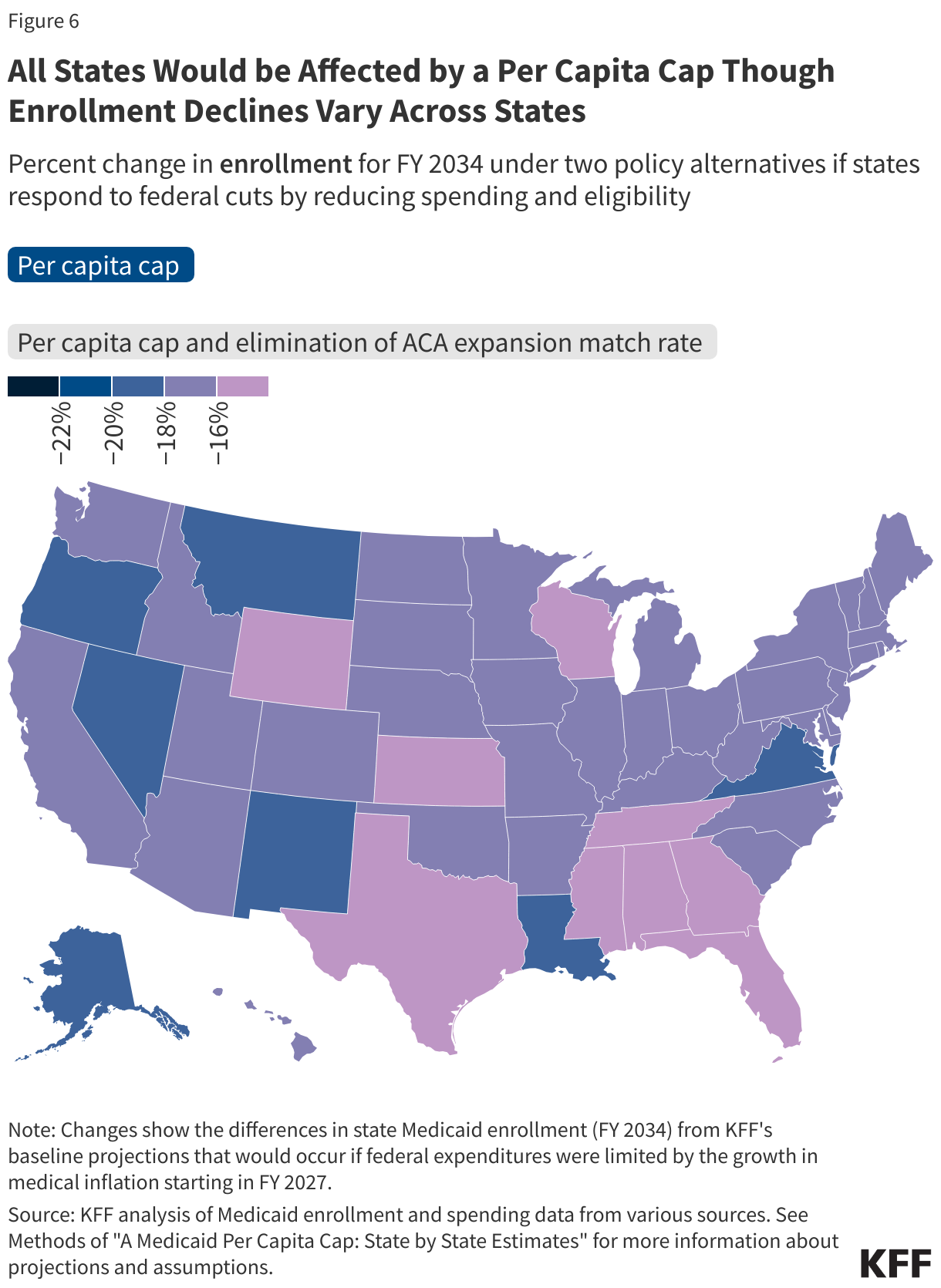
Decreases in Medicaid enrollment would vary by state and could be as high as 57% in some states if Congress implements both per capita cap financing and the elimination of the Medicaid expansion match.
Spending reductions under a per capita cap would compound in future years as the per enrollee cap levels diverge further from spending levels expected without the cap, limiting states’ ability to meet changing program needs.
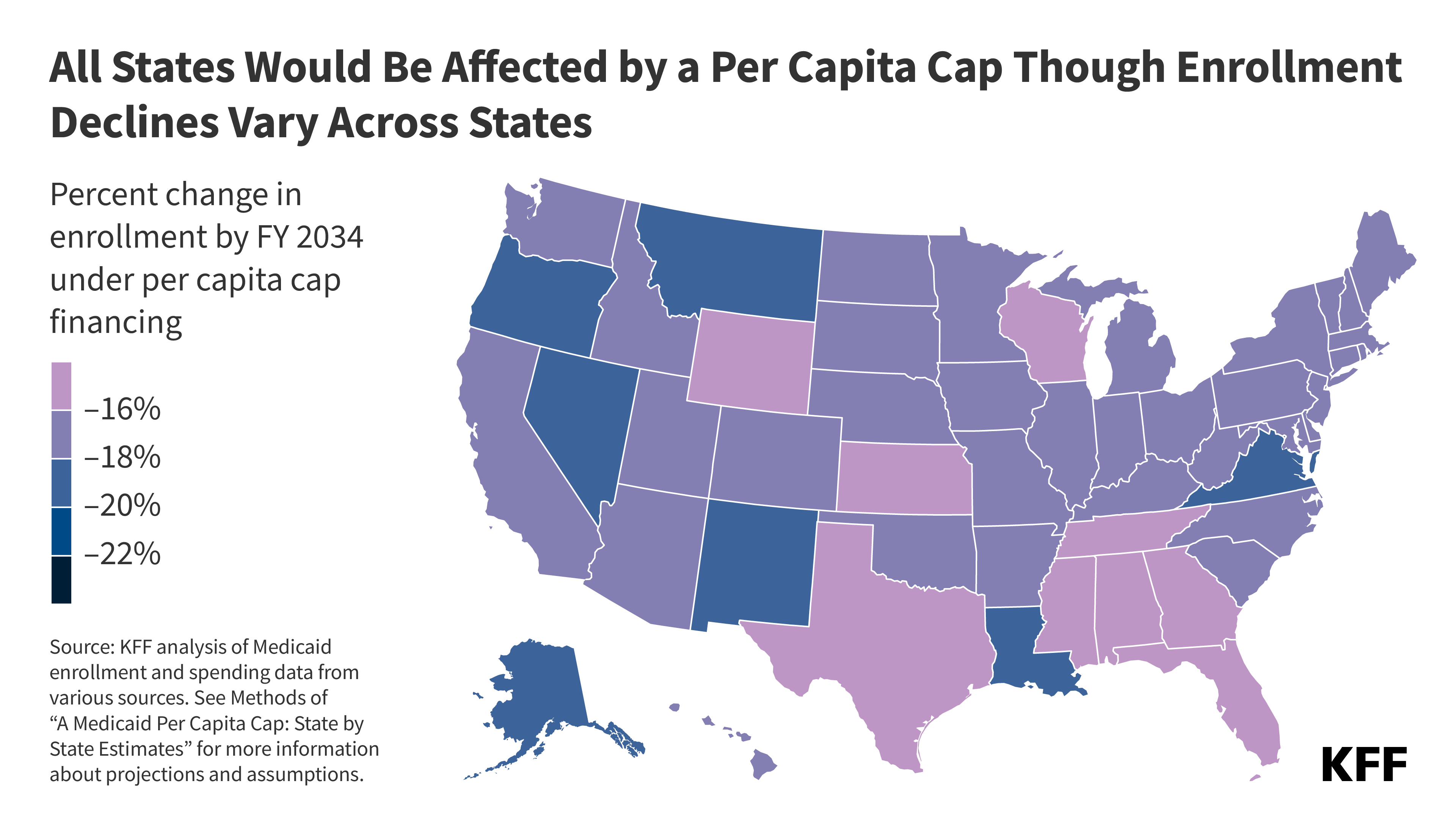
All states would be affected by a per capita cap, but the magnitude would vary due to differences in the mix of the types of Medicaid enrollees in each state. The effects would vary across eligibility groups because spending for different groups is expected to grow at different rates over time. Also, the elimination of the enhanced Medicaid expansion match rate would only affect the 40 states and the District of Columbia that have adopted the expansion.
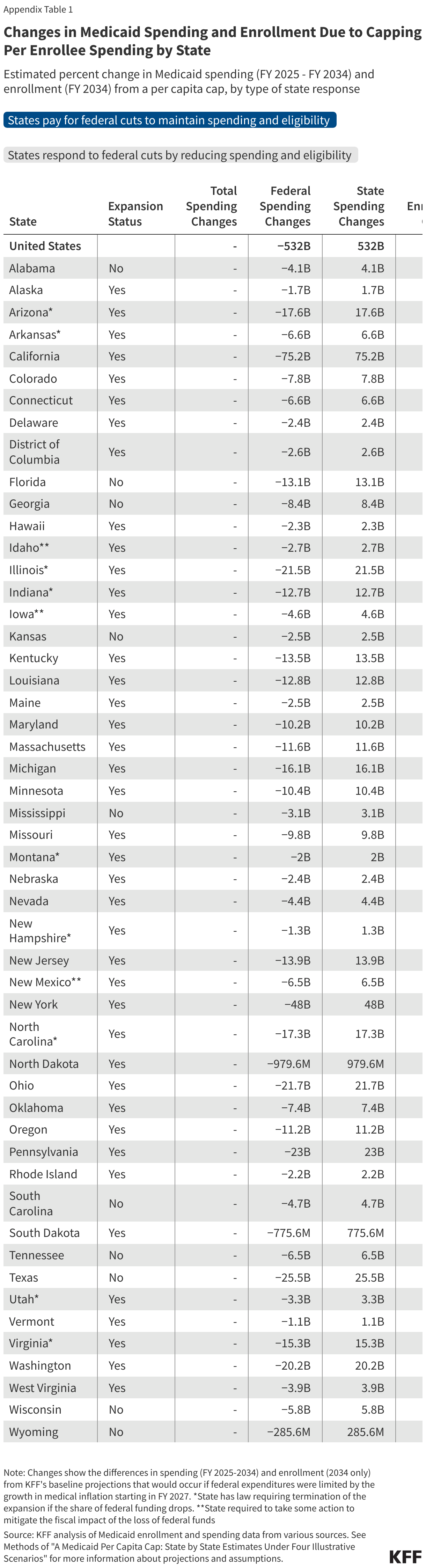
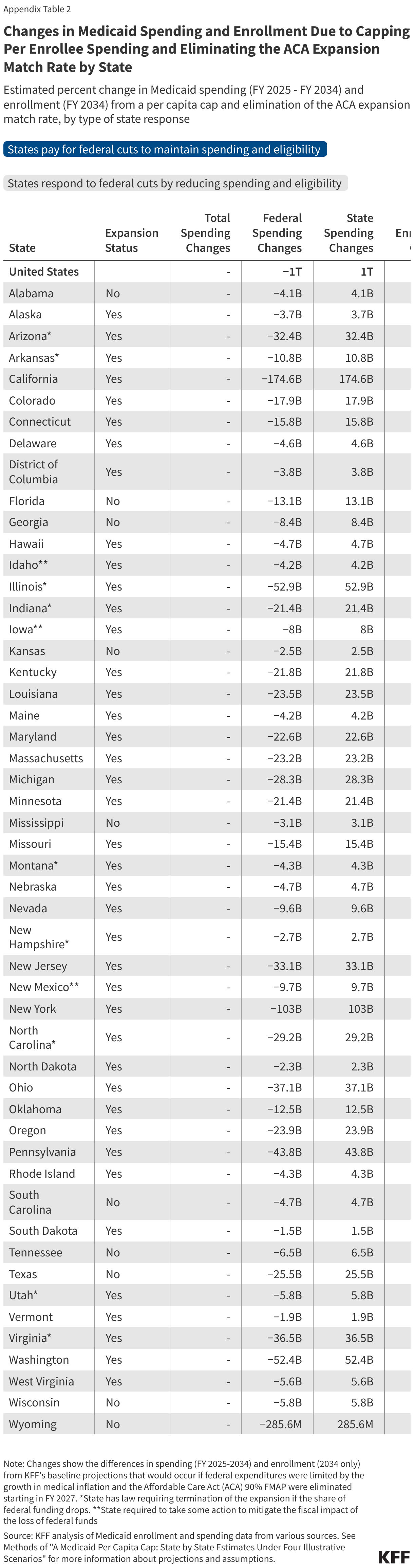
For detailed state-by-state impacts of the proposed Medicaid financing changes on spending and enrollment, see Appendix Tables 1 and 2.
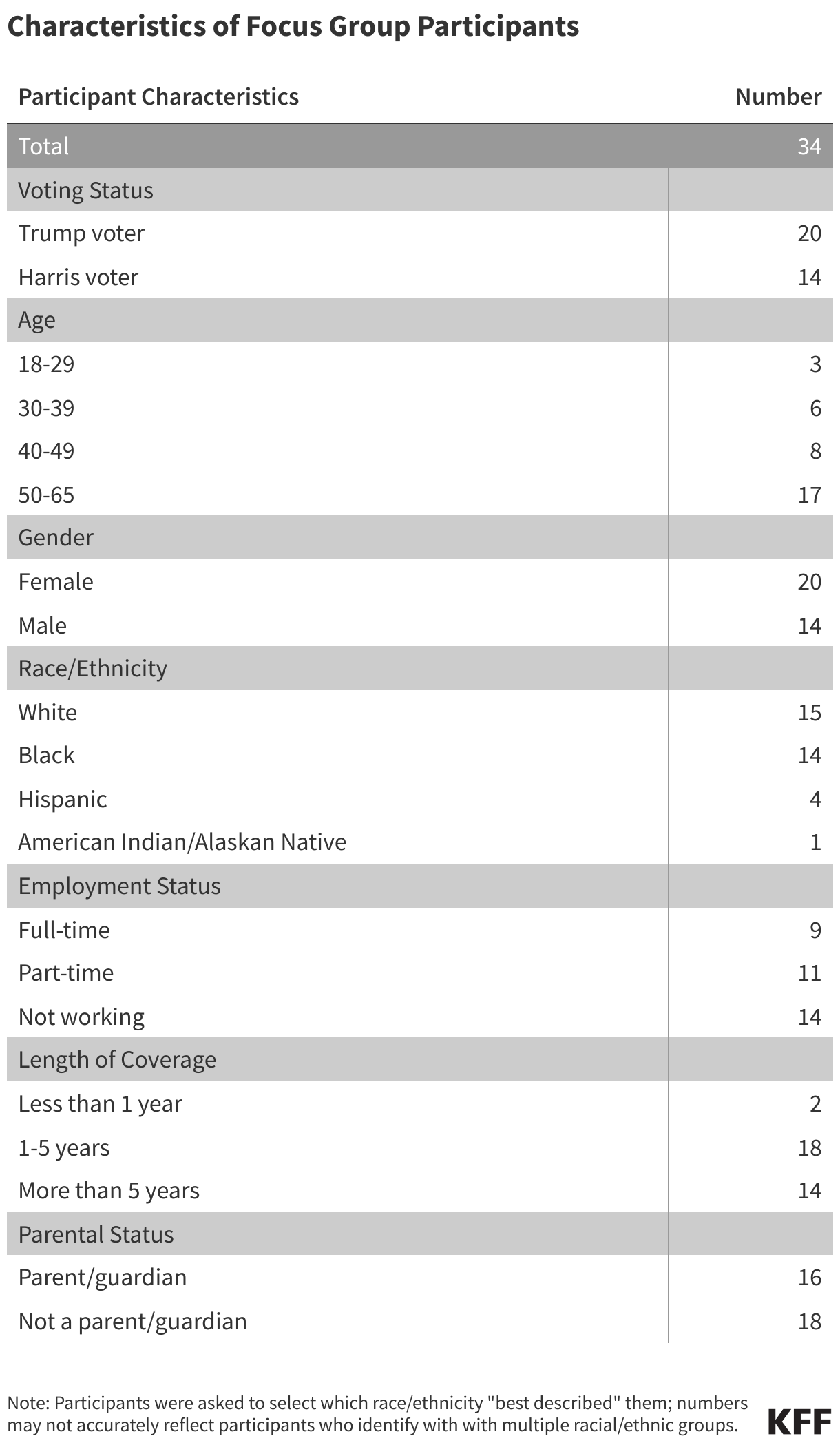
A related report released this week highlights the experiences and opinions of Medicaid enrollees who participated in five virtual focus groups that KFF conducted in January with enrollees who voted for President Trump or for Vice President Harris. Despite differences in political leanings, participants reported having favorable experiences with Medicaid and concerns about potential cuts to the program. While some Trump voters enrolled in Medicaid believed there is fraud in the program and were open to work requirements, they also didn’t think that President Trump would follow through on cuts to Medicaid because they believed he understood their financial struggles.
Medicaid covers one in five people in the U.S., and accounts for nearly $1 out of every $5 spent on health care. It covers 41% of all births, nearly half of children with special health care needs, and five in eight nursing home residents.
There are several options under consideration in Congress to significantly reduce Medicaid spending to help pay for tax cuts, with the recently passed House budget resolution targeting cuts to Medicaid of up to $880 billion or more over a decade. Medicaid is the primary program providing comprehensive health and long-term care to one in five people living in the U.S and accounts for nearly $1 out of every $5 spent on health care. Medicaid is administered by states within broad federal rules and jointly funded by states and the federal government, meaning restrictions in federal Medicaid spending could leave states with tough choices about how to offset reductions through cuts to Medicaid, cuts to other programs, or tax increases.
This analysis examines the potential impacts on states, Medicaid enrollees, and providers of implementing a per capita cap on federal Medicaid spending, which is one proposal that has been discussed in Congress. The analysis assumes, based on proposals floated in Congress, that the plan would cap federal Medicaid spending growth per enrollee for each of the five major eligibility groups at medical inflation. Given the likelihood of multiple, simultaneous changes to Medicaid and the interactive nature of those changes, the analysis also illustrates the effects of a per capita cap on Medicaid if implemented jointly with the elimination of the 90% federal match rate for the Affordable Care Act (ACA) expansion, another significant policy change that has been discussed in Congress and which was examined by a previous KFF analysis. Other proposals to reduce federal Medicaid spending have also been reportedly raised, including work requirements, a reduced federal matching rate, limits on provider taxes to finance the state share of Medicaid spending, and repeal of certain Medicaid regulations issued by the Biden administration. Future KFF analyses will examine these proposals as well.
Key takeaways
The estimated effects of a per capita cap depend highly on what assumptions are made about policy specifications, future growth in Medicaid spending, and states’ responses to federal cuts.
Capping per enrollee spending could reduce federal spending by $532 billion to nearly $1 trillion dollars between FY 2025 and FY 2034. Depending on how states respond, the policy could shift costs to states by $532 billion and leave total Medicaid spending unchanged or total Medicaid spending could decline by 14% (or $1.4 trillion).
If per capita caps were implemented jointly with the elimination of the enhanced ACA expansion match rate, federal Medicaid spending could decline by $1 trillion to $2.1 trillion dollars between FY 2025 and FY 2034. Depending on how states respond, this combination of policies could shift costs to states by $1 trillion and leave total Medicaid spending unchanged or total Medicaid spending could decline by a quarter (or $2.6 trillion).
If states reduced Medicaid eligibility proportionally to the cuts in federal spending, 15 million enrollees could lose Medicaid coverage under a per capita cap by the final year of the analysis, with that figure doubling to 30 million when combined with elimination of the ACA expansion match rate.
States would face tough choices about Medicaid’s future under a per capita cap: maintaining current Medicaid benefit levels and enrollment would require states to pay $1,500 to $2,300 more per enrollee in the final year of the analysis.
The effects of a per capita cap differ across eligibility groups because spending for different eligibility groups is expected to grow at different rates, with larger estimated effects among children and adults who are not eligible because they have a disability or are ages 65 and older.
All states would be affected by a per capita cap, but the size of the effects vary due to differences in the mix of enrollees. Depending on state responses, state spending could increase up to 57% in some states if they chose to pay for the cuts. Enrollment could decrease by similar levels if states chose to restrict eligibility in response to the federal funding cuts.
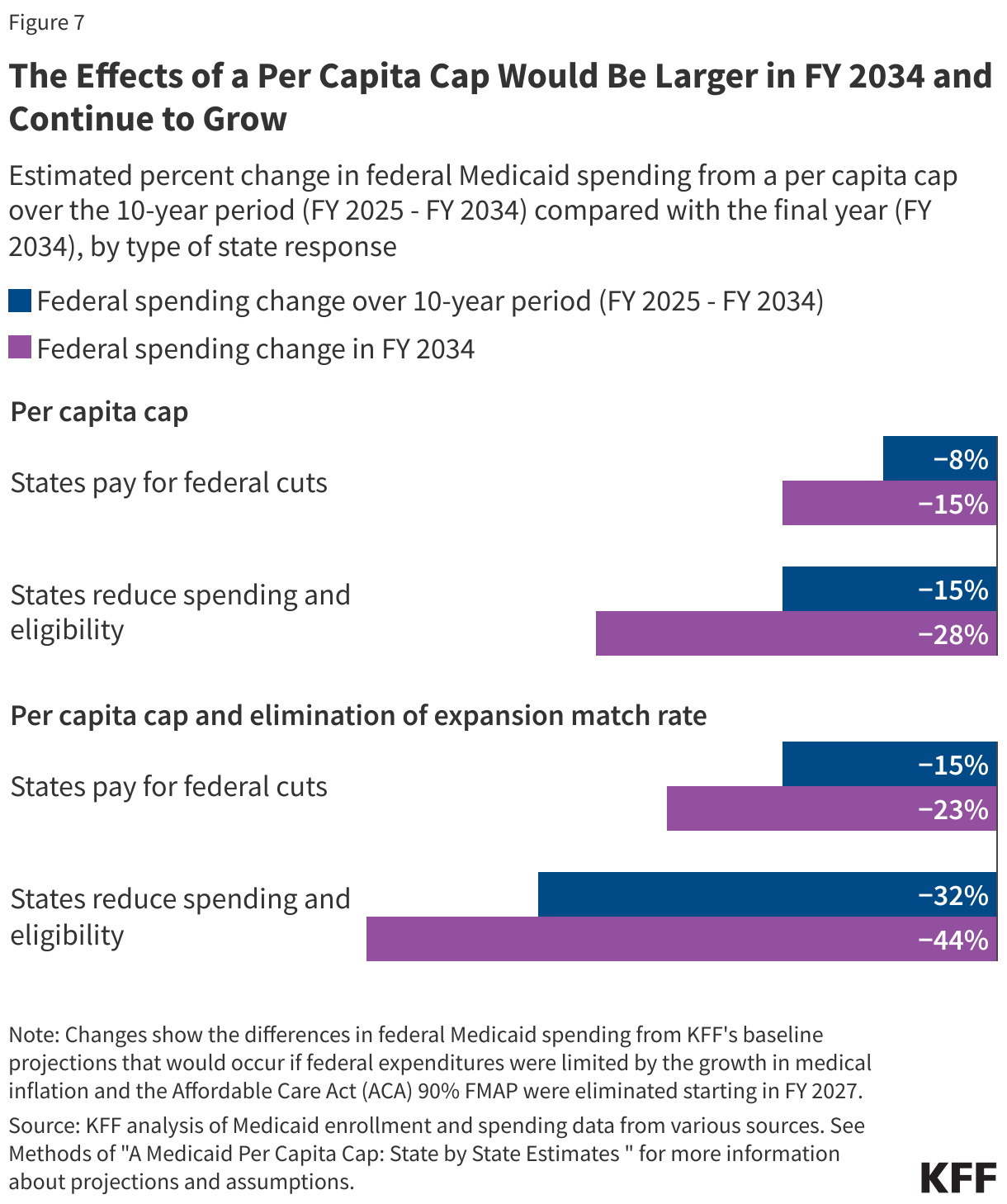
Spending reductions under a per capita cap would compound over time as expected increases in Medicaid spending diverge from the caps. The effects would be smaller immediately following implementation, larger in FY 2034, the final year of this analysis, and continue to grow in the years after 2034. A per capita cap can provide lower and more predictable federal costs over time, but it would also fundamentally change the Medicaid federal-state partnership by eliminating the federal guaranteed match and transferring new financial risk to states. States would face significant challenges in efforts to pay for federal cuts and there would be pressure to reduce benefits and eligibility, with even larger effects if a per capita cap were paired with other Medicaid cuts. Beyond reduced Medicaid spending and enrollment, there could be increases in the number of people who are uninsured, fewer covered benefits for future Medicaid enrollees, and reduced revenues available for health plans and providers such as hospitals and nursing facilities.
What is the proposed policy change?
Medicaid spending is currently shared by states and the federal government with a guarantee to states for federal matching payments without a cap on federal expenditures. The percentage of costs paid by the federal government (known as the federal medical assistance percentage or “FMAP”) for most Medicaid enrollees is determined by a formula set in law designed to provide a higher federal match rate for states with lower per capita incomes. There are also higher match rates for certain services and populations like the ACA expansion group (90%). This leads to variation in the federal share of Medicaid spending across states. There is also considerable variation in per enrollee spending across states, due to state flexibility to determine eligibility levels, benefits, and provider payment, and across eligibility groups,reflecting differences in health care needs and utilization.
This analysis estimates the impact of implementing a per capita cap on the federal share of Medicaid spending. One proposal under consideration would “establish a per capita cap [on federal Medicaid expenditures] for each of the different enrollment populations set to grow at medical inflation.” While specifics on the implementation of this policy would be included in a legislative proposal, further details have yet to be released, and assumptions made here may differ from details included in proposed legislation. To estimate a per capita (i.e., per enrollee) cap policy, this analysis first establishes FY 2025 per enrollee spending as the base year estimate; then, starting in FY 2027, the analysis limits federal spending growth for the five major eligibility groups (children, adults, expansion adults, people with disabilities and aged 65+) to the consumer price index (CPI-U) plus 0.4 percentage points, which is KFF’s estimate of the difference between CPI-U and medical inflation (CPI-M) over the past 20 years (see Methods).
The analysis also estimates the combined impact of implementing a per capita cap and eliminating the ACA expansion federal match rate. The combined policy would include the same per capita caps on federal spending and also assumes that, starting in FY 2027, expenditures for people eligible through Medicaid expansion would be matched at each state’s traditional FY 2026 FMAP rate. This part of the analysis accounts for the interactive effects of these two policy changes; therefore, savings are lower than if each policy was modeled separately and the totals were added together (see Methods). There are a number of other Medicaid policy changes that have been suggested, and policy estimates would likely differ depending on the combination of policies and their interactive effects.
What is the potential impact on Medicaid spending?
This analysis does not make assumptions about specific state behavioral responses and instead examines how the impacts of the two policy alternatives vary based on two types of state responses to the cuts. The state responses are designed to illustrate the spectrum of potential policy change effects. However, in practice, each state is likely to respond to the policy change differently and spending impacts overall would likely fall within the range. While some states may choose to increase state spending to maintain current programs with substantially reduced federal funding, many would likely need to make programmatic cuts, making both the lower end and higher end estimates unlikely. The analysis does not explore people’s insurance coverage after losing Medicaid; some may enroll in another source of coverage, but many others would likely become uninsured. The estimates presented here are not directly comparable to the estimates of federal savings from the Congressional Budget Office (CBO) because CBO’s estimates account for people enrolling in other coverage and make assumptions about how states would respond in the aggregate. While the estimates assume that spending per enrollee by eligibility group would grow uniformly across states based on CBO’s national projections, it is likely that growth rates would vary by state, and that a cap would therefore have varying effects
Per Capita Cap
In analyzing the effects of a per capita cap on Medicaid spending, KFF considered the following two types of state responses.
Pay for Federal Cuts: States maintain per enrollee spending and eligibility at current levels, picking up new costs due to the federal cap on per enrollee spending. Enrollment and total spending would remain constant while costs would shift from the federal government to the states. States would have to make offsetting cuts in programs other than Medicaid or raise revenues.
Reduce Spending and Eligibility: States cap their share of per enrollee spending at medical inflation – e.g., by reducing payment rates to health care providers — and also reduce eligibility by the same percentage that federal spending is cut for each eligibility group to reflect the fact that the federal government is contributing less towards the cost. As a result, there would be decreases in enrollment and total, federal, and state spending.
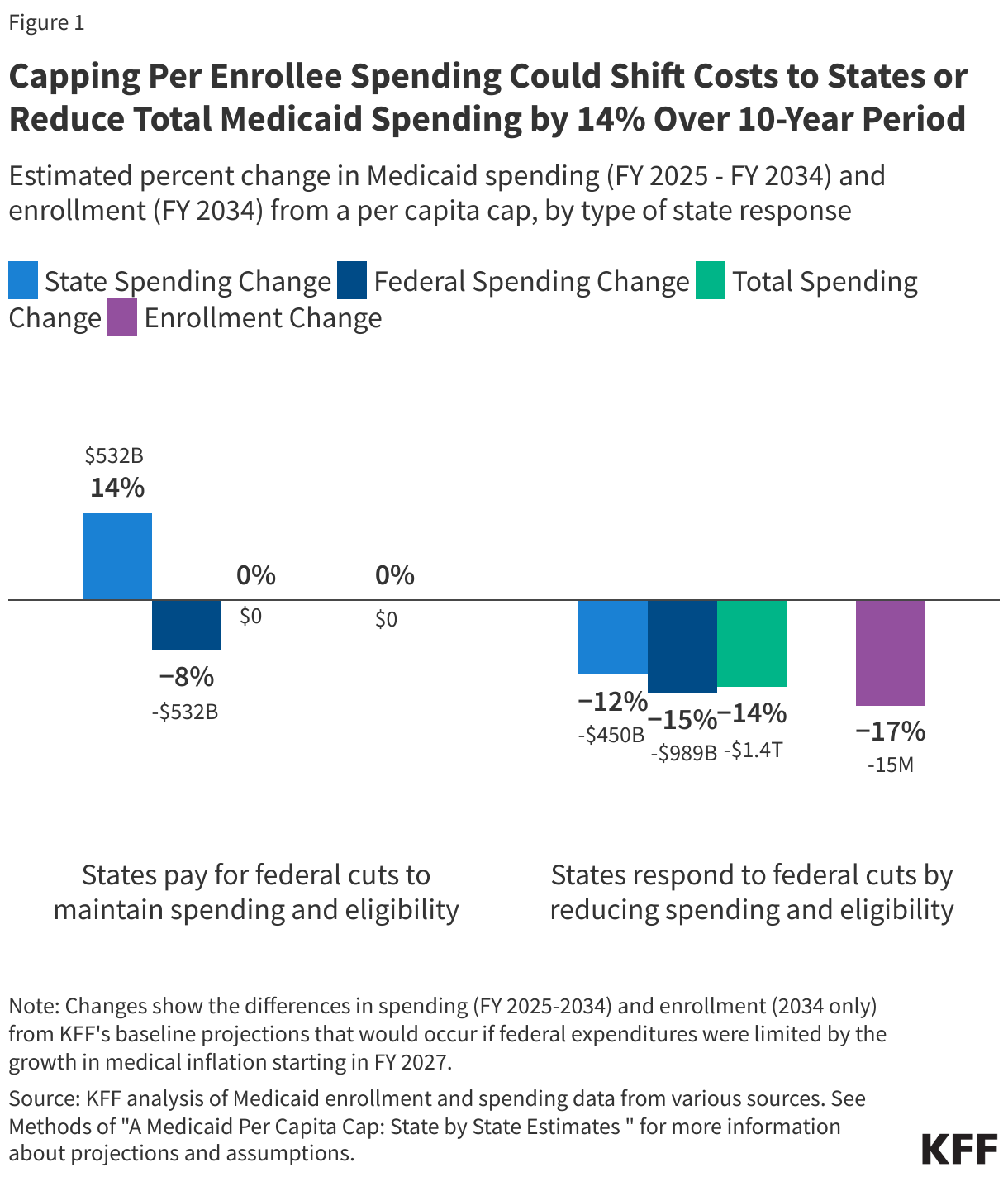
Capping per enrollee spending could shift costs to states or reduce total Medicaid spending by 14% ($1.4 trillion) over a 10-year period (Figure 1). If states offset the federal cuts, federal Medicaid spending could decrease by 8% or $532 billion over the 10-year period, and states would pay those costs, increasing the state share by 14% across all states. If instead, states cap their share of per enrollee spending and reduce Medicaid eligibility, federal Medicaid spending could decline by 15% or $989 billion, reflecting the fact that per enrollee spending is capped and enrollment goes down. State spending could decline by 12% or $450 billion. Combined, Medicaid spending could decrease by 14% or $1.4 trillion over the 10-year period. The analysis assumes states would reduce Medicaid eligibility proportionally to the cuts in federal spending, and the effects compound over time, meaning spending and enrollment effects are smaller in years just following implementation but grow over time. By the end of the 10-year period, enrollment could be 17% lower than current policy, meaning 15 million people could lose Medicaid coverage. Some who lose Medicaid may enroll in another source of coverage, but many others would become uninsured.
Capping Per Enrollee Spending Could Shift Costs to States or Reduce Total Medicaid Spending by 14% Over 10-Year Period
Estimated percent change in Medicaid spending (FY 2025 - FY 2034) and enrollment (FY 2034) from a per capita cap, by type of state response
State Spending Change
Federal Spending Change
Total Spending Change
Enrollment Change
Changes show the differences in spending (FY 2025-2034) and enrollment (2034 only) from KFF's baseline projections that would occur if federal expenditures were limited by the growth in medical inflation starting in FY 2027.
KFF analysis of Medicaid enrollment and spending data from various sources. See Methods of "A Medicaid Per Capita Cap: State by State Estimates " for more information about projections and assumptions.
Per Capita Cap and Elimination of the ACA Expansion Match Rate
In analyzing the effects of a per capita cap on Medicaid spending if it were combined with the elimination of the ACA expansion match rate, KFF considered the following two types of state responses.
Pay for Federal Cuts: States maintain per enrollee spending and eligibility at current levels, picking up new costs due to the federal cap on per enrollee spending and the loss of the higher match rate for expansion enrollees. Enrollment and total spending would remain constant while costs would shift from the federal government to the states.
Reduce Spending and Eligibility: States cap their share of per enrollee spending at medical inflation, drop the ACA Medicaid expansion, and reduce eligibility by the same percentage that federal spending per enrollee is cut for each eligibility group, resulting in changes to enrollment and to total, federal, and state spending as well as per enrollee spending.
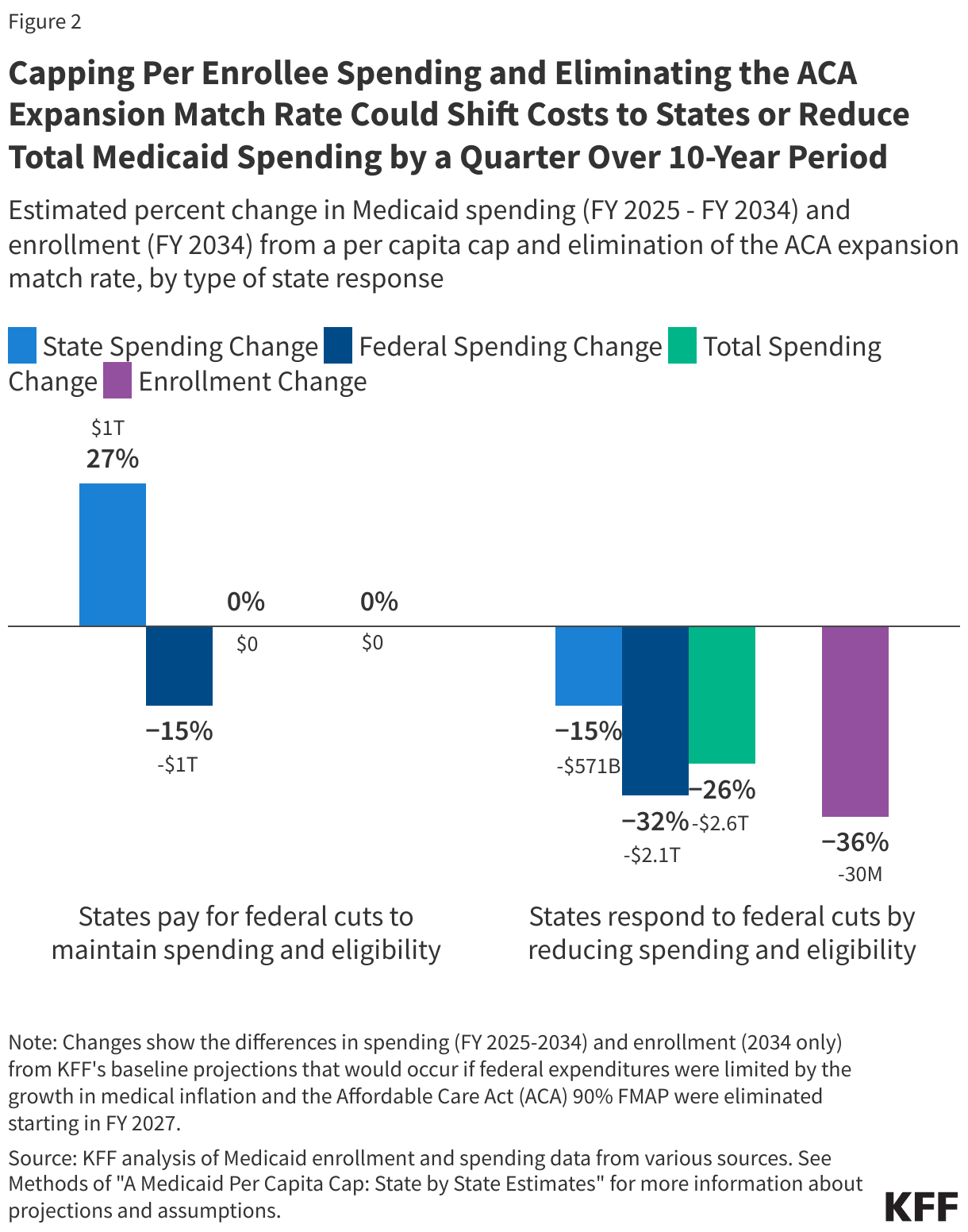
Capping per enrollee spending and eliminating the ACA expansion match rate could shift costs to states or reduce total Medicaid spending by a quarter ($2.6 trillion) over a 10-year period (Figure 2). If states pay for the cuts, federal Medicaid spending could decrease by 15% or $1 trillion over the 10-year period, and states would pay those costs, increasing the state share by 27% across all states. If instead, states cap their share of per enrollee spending and reduce Medicaid eligibility, federal Medicaid spending could decrease by 32% or $2.1 trillion, and state spending could decrease by 15% or $571 billion. Combined, Medicaid spending could decrease by 26% or $2.6 trillion over the 10-year period. Enrollment losses could increase each year proportionally with the increase in federal spending cuts, resulting in 30 million (or 36%) fewer people with Medicaid coverage by the end of the 10-year period.
Capping Per Enrollee Spending and Eliminating the ACA Expansion Match Rate Could Shift Costs to States or Reduce Total Medicaid Spending by a Quarter Over 10-Year Period
Estimated percent change in Medicaid spending (FY 2025 - FY 2034) and enrollment (FY 2034) from a per capita cap and elimination of the ACA expansion match rate, by type of state response
State Spending Change
Federal Spending Change
Total Spending Change
Enrollment Change
Changes show the differences in spending (FY 2025-2034) and enrollment (2034 only) from KFF's baseline projections that would occur if federal expenditures were limited by the growth in medical inflation and the Affordable Care Act (ACA) 90% FMAP were eliminated starting in FY 2027.
KFF analysis of Medicaid enrollment and spending data from various sources. See Methods of "A Medicaid Per Capita Cap: State by State Estimates" for more information about projections and assumptions.
Impacts on State Spending if States Pay for Federal Cuts to Medicaid
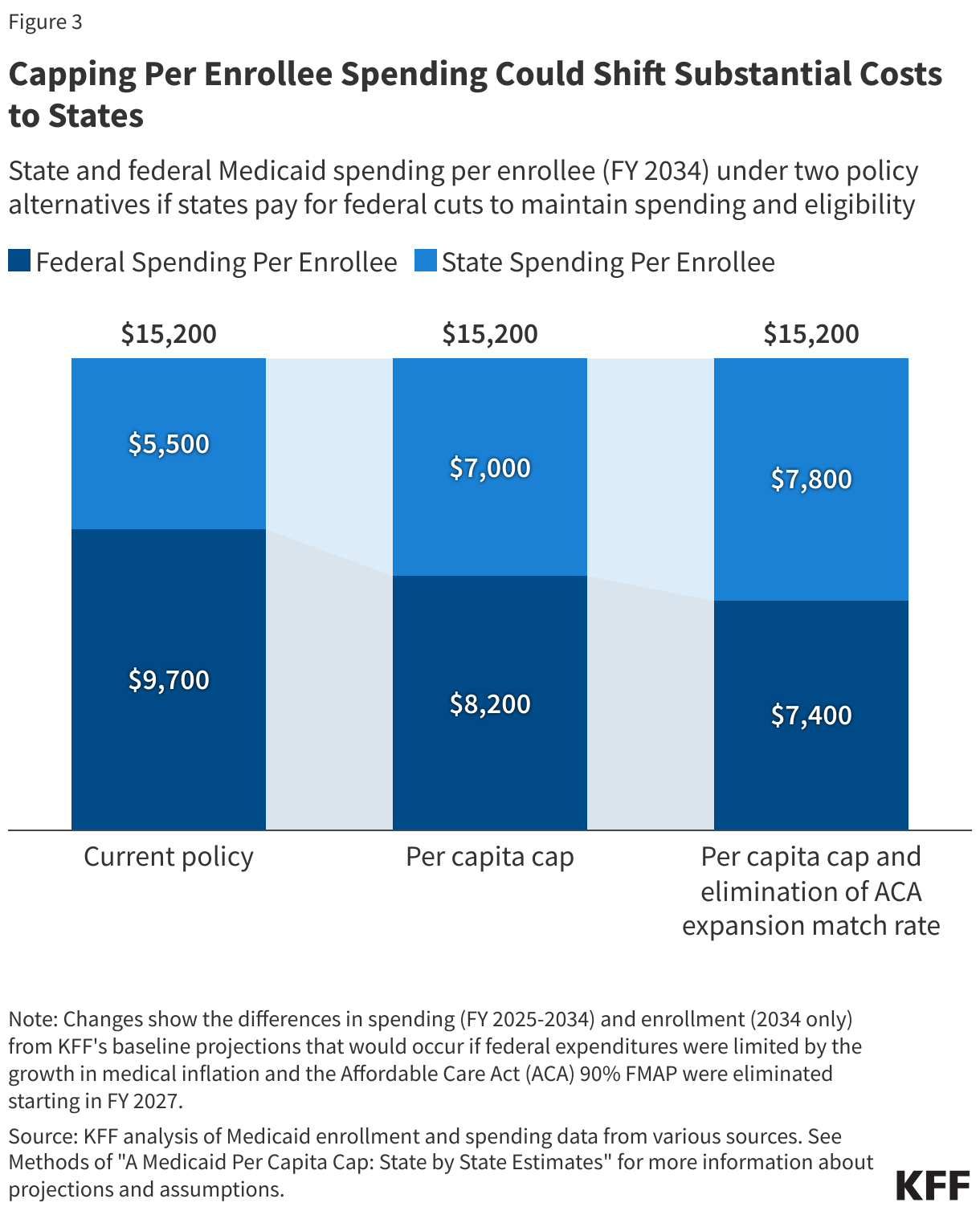
Under both policy alternatives, costs would shift significantly from the federal government to the states if states chose to maintain current benefits and eligibility, causing state Medicaid spending per enrollee to increase by $1,500 to $2,300 in FY 2034 (Figure 3). With federal Medicaid spending per enrollee capped, state spending per enrollee could increase from $5,500 under current policy to $7,000 with a per capita cap and $7,800 if the per capita cap were paired with the elimination of the ACA expansion match rate. By FY 2034, the federal share of Medicaid spending on average across states could fall from 64% to 54% with a per capita cap and 49% if the per capita cap were paired with elimination of the ACA expansion match rate.
Capping Per Enrollee Spending Could Shift Substantial Costs to States
State and federal Medicaid spending per enrollee (FY 2034) under two policy alternatives if states pay for federal cuts to maintain spending and eligibility
Changes show the differences in spending (FY 2025-2034) and enrollment (2034 only) from KFF's baseline projections that would occur if federal expenditures were limited by the growth in medical inflation and the Affordable Care Act (ACA) 90% FMAP were eliminated starting in FY 2027.
KFF analysis of Medicaid enrollment and spending data from various sources. See Methods of "A Medicaid Per Capita Cap: State by State Estimates" for more information about projections and assumptions.
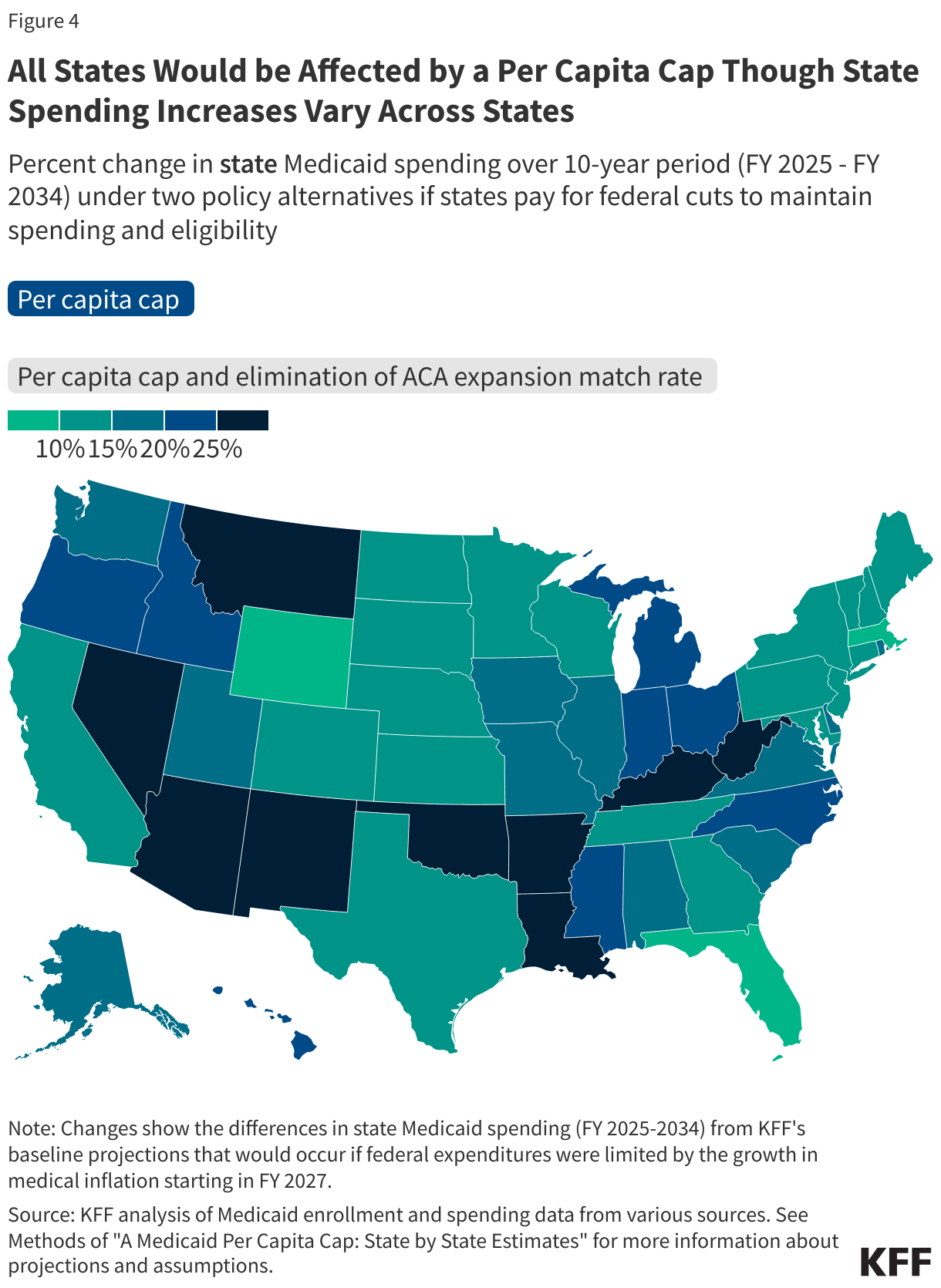
All states would be affected by a per capita cap, but the specific effects vary depending on the mix of enrollees in a state, with state spending increasing by as much as 57% in some states if paired with the elimination of the ACA expansion match rate (Figure 4). If states opted to pay for the federal Medicaid cuts, state spending on Medicaid could increase anywhere from 6% to 57% over 10 years. Expansion states could experience much larger state cost increases, ranging from 18% to 57% if the per capita cap were paired with the elimination of the ACA expansion match rate, whereas state cost increases for all non-expansion states could remain at or below 21%. While this analysis assumes that growth rates for each eligibility group are uniform across states under current policy, it’s likely that growth rates would vary by state in any given period based on policy choices and underlying factors related to their economies and health systems.
All States Would be Affected by a Per Capita Cap Though State Spending Increases Vary Across States
Percent change in state Medicaid spending over 10-year period (FY 2025 - FY 2034) under two policy alternatives if states pay for federal cuts to maintain spending and eligibility
Per capita cap
Per capita cap and elimination of ACA expansion match rate
Changes show the differences in state Medicaid spending (FY 2025-2034) from KFF's baseline projections that would occur if federal expenditures were limited by the growth in medical inflation starting in FY 2027.
KFF analysis of Medicaid enrollment and spending data from various sources. See Methods of "A Medicaid Per Capita Cap: State by State Estimates" for more information about projections and assumptions.
All States Would be Affected by a Per Capita Cap Though State Spending Increases Vary Across States
Percent change in state Medicaid spending over 10-year period (FY 2025 - FY 2034) under two policy alternatives if states pay for federal cuts to maintain spending and eligibility
Per capita cap
Per capita cap and elimination of ACA expansion match rate
Changes show the differences in state Medicaid spending (FY 2025-2034) from KFF's baseline projections that would occur if federal expenditures were limited by the growth in medical inflation and the Affordable Care Act (ACA) 90% FMAP were eliminated starting in FY 2027.
KFF analysis of Medicaid enrollment and spending data from various sources. See Methods of "A Medicaid Per Capita Cap: State by State Estimates" for more information about projections and assumptions.
Impacts on Medicaid Spending and Enrollment if States Respond to Federal by Cutting Spending and Eligibility
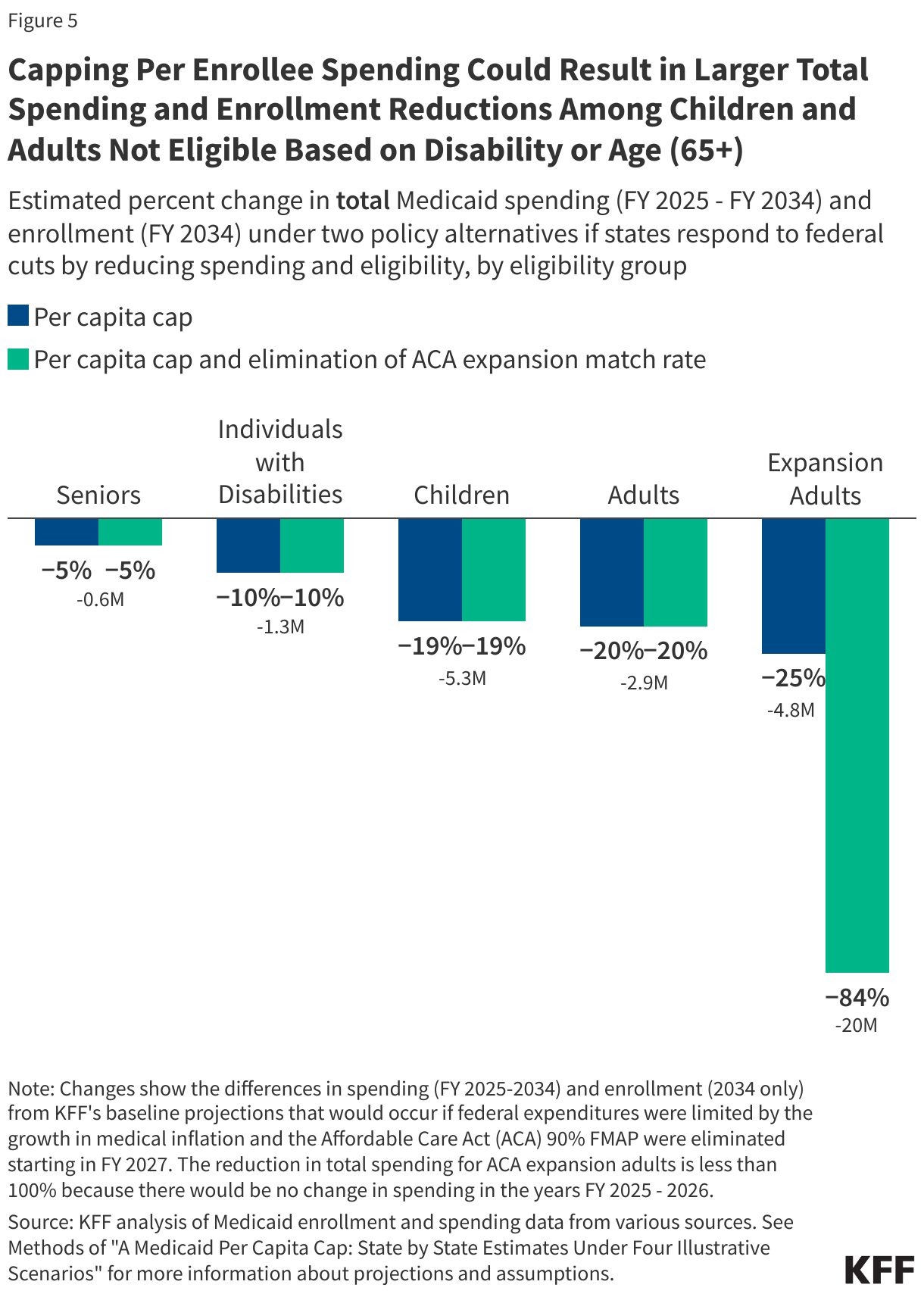
The effects of per capita caps differ across eligibility groups because spending for different eligibility groups grows at different rates, with larger effects among children and adults who are not eligible because they have a disability or are ages 65 and older. The effects vary by eligibility group because spending estimates under current policy assume that per enrollee spending for each group grows at different rates (aligning with CBO per enrollee spending growth assumptions), but the per capita cap policy would limit the growth for all groups using the same inflation rate. Spending grows at different rates largely based on the percentage of spending that comes from use of long-term care for each eligibility group. Although Medicaid enrollees who use long-term care have much higher per enrollee costs, CBO expects those costs to grow more slowly in future years. By FY 2034, the decline in per enrollee spending under a per capita cap could be: 24% for expansion adults, 20% for other adults, 19% for children, 11% for people eligible because of a disability, and 6% for adults ages 65 and older.
This analysis assumes that states would reduce eligibility in proportion with the cuts to federal spending, resulting in larger total spending and eligibility cuts among children and adults who are not eligible because they have a disability or are ages 65 and older (Figure 5). Under a per capita cap, total spending would drop to reflect the lower per person costs and the reductions in eligibility, which would be proportional to the cuts in federal spending. In FY 2034, an estimated 15 million fewer people could be covered by Medicaid including:
5.3 million children,
4.8 million adults eligible through the ACA expansion,
2.9 million parents and other adults under age 65,
1.3 million people with disabilities, and
0.6 million people ages 65 and older.
An additional 15 million expansion enrollees could lose Medicaid coverage (totaling about 20 million expansion enrollees by FY 2034) if the ACA expansion match rate is also eliminated. Some people losing Medicaid would be eligible for ACA marketplace coverage (those with incomes 100-138% of the poverty level) and others would be able to obtain employer-sponsored health insurance. But, others would become uninsured. Most people over age 65 and some who qualify for Medicaid based on a disability would generally be able to maintain Medicare coverage but could lose access to wrap-around services not covered by Medicare.
Capping Per Enrollee Spending Could Result in Larger Total Spending and Enrollment Reductions Among Children and Adults Not Eligible Based on Disability or Age (65+)
Estimated percent change in total Medicaid spending (FY 2025 - FY 2034) and enrollment (FY 2034) under two policy alternatives if states respond to federal cuts by reducing spending and eligibility, by eligibility group
Changes show the differences in spending (FY 2025-2034) and enrollment (2034 only) from KFF's baseline projections that would occur if federal expenditures were limited by the growth in medical inflation and the Affordable Care Act (ACA) 90% FMAP were eliminated starting in FY 2027. The reduction in total spending for ACA expansion adults is less than 100% because there would be no change in spending in the years FY 2025 - 2026.
KFF analysis of Medicaid enrollment and spending data from various sources. See Methods of "A Medicaid Per Capita Cap: State by State Estimates Under Four Illustrative Scenarios" for more information about projections and assumptions.
All states would be affected by a per capita cap, but the specific effects vary, with enrollment decreasing by as much as 57% in some states if paired with the elimination of the ACA expansion match rate in 2034 (Figure 6). If states respond to federal cuts by reducing eligibility, Medicaid enrollment could decrease anywhere from 12% to 57% in 2034. Expansion states could experience much larger enrollment declines if paired with the elimination of the ACA expansion match rate, ranging from 31% to 57%, whereas enrollment declines for all non-expansion states could remain at or below 17%.
All States Would be Affected by a Per Capita Cap Though Enrollment Declines Vary Across States
Percent change in enrollment for FY 2034 under two policy alternatives if states respond to federal cuts by reducing spending and eligibility
Per capita cap
Per capita cap and elimination of ACA expansion match rate
Changes show the differences in state Medicaid enrollment (FY 2034) from KFF's baseline projections that would occur if federal expenditures were limited by the growth in medical inflation starting in FY 2027.
KFF analysis of Medicaid enrollment and spending data from various sources. See Methods of "A Medicaid Per Capita Cap: State by State Estimates" for more information about projections and assumptions.
All States Would be Affected by a Per Capita Cap Though Enrollment Declines Vary Across States
Percent change in enrollment for FY 2034 under two policy alternatives if states respond to federal cuts by reducing spending and eligibility
Per capita cap
Per capita cap and elimination of ACA expansion match rate
Changes show the differences in state Medicaid enrollment (FY 2034) from KFF's baseline projections that would occur if federal expenditures were limited by the growth in medical inflation and the Affordable Care Act (ACA) 90% FMAP were eliminated starting in FY 2027.
KFF analysis of Medicaid enrollment and spending data from various sources. See Methods of "A Medicaid Per Capita Cap: State by State Estimates" for more information about projections and assumptions.
What are other implications to consider?
Medicaid per capita caps lock in historical spending patterns, and the effects would compound overtime so the full implications would not be visible until after FY 2034. Per capita caps are initially set to reflect historical spending patterns that vary by state and eligibility group. Spending per enrollee will grow at the same rate for all states and eligibility groups, meaning that the low-spending states today will continue to be low-spending states indefinitely, and the same is true for spending across the eligibility groups. Moreover, the caps are typically designed to constrain federal Medicaid spending growth to a rate slower than is expected under current law, which is how they achieve federal savings. As time passes, the effects compound, limiting states’ ability to meet changing needs and demands. Federal spending reductions in FY 2034, the final year of the analysis, are larger than reductions over the full 10-year period (Figure 7), and the effects on enrollment and spending in future years would continue to grow.
The Effects of a Per Capita Cap Would Be Larger in FY 2034 and Continue to Grow
Estimated percent change in federal Medicaid spending from a per capita cap over the 10-year period (FY 2025 - FY 2034) compared with the final year (FY 2034), by type of state response
Changes show the differences in federal Medicaid spending from KFF's baseline projections that would occur if federal expenditures were limited by the growth in medical inflation and the Affordable Care Act (ACA) 90% FMAP were eliminated starting in FY 2027.
KFF analysis of Medicaid enrollment and spending data from various sources. See Methods of "A Medicaid Per Capita Cap: State by State Estimates " for more information about projections and assumptions.
The effects of a per capita cap on Medicaid spending and enrollment are also highly sensitive to policy design, inflation rates, and how states respond to the cuts; and estimates are highly sensitive to assumptions about those factors. Decisions about how to calculate the per enrollee allotments for the base year and how to grow the allotments over time would determine the magnitude of costs shifted to states. The effects also depend on how much Medicaid costs grow over time and how they compare with changes in the inflator used to calculate the caps. States’ responses to the cuts would determine how much total spending and enrollment changed. If per capita caps are paired with other cuts to Medicaid, effects would be larger, and there would be more pressure on states to respond with programmatic cuts. Estimates of the effects of different per capita cap proposals may find a wide range of outcomes depending on what assumptions are made to complete the analysis.
A per capita cap would fundamentally change the Medicaid federal-state partnership by eliminating the federal guaranteed match and transferring new financial risk to states. Per capita caps allow federal spending to rise with enrollment; however, spending would not rise to account for: increasing costs due to the emergence of new technology such as cell and gene therapies, changes in population health status that increase per enrollee spending, or increased provider payment rates enacted to address workforce shortages. Medicaid is currently a partnership between the federal and state governments with both entities sharing the financial risk. Under a per capita cap scenario, federal spending would be lower and more predictable. The federal government would only bear risk associated with enrollment changes and the states would assume 100% of the risks associated with other factors that affect health care spending.
Under any per capita cap policy, states would face challenges and there would be pressure to reduce benefits and eligibility, but the effects would be larger if a per capita cap were paired with other Medicaid cuts. To maintain current policy, states would have to increase state tax revenues or decrease spending on non-Medicaid services such as education, which is the largest source of expenditures from state funds. Given the size of the federal funding cuts, states would face significant challenges in efforts to replace the loss of federal funds, which would be exacerbated if paired with other reductions in federal funding for areas beyond Medicaid. The loss of federal revenues would create significant pressure to eliminate the Medicaid expansion and restrain the growth in per enrollee spending for other enrollees. Medicaid spending per enrollee already grows at a slower rate compared with private insurance and Medicare, leaving fewer options for cutting per enrollee costs. States would all respond differently but could reduce spending by cutting optional benefits (which includes prescription drugs and nearly all home care, also known as home and community-based services or HCBS), reducing provider payment rates, or cutting eligibility for the specific eligibility groups with higher per person spending, such as those linked to the use of long-term care.
If states are unable to maintain Medicaid eligibility, benefits, and payment rates, there could be increases in the number of people who are uninsured, reduced access to care, and significant reductions in payment rates to providers. Reduced Medicaid eligibility would mean an increase in the number of uninsured people, with the most notable increases likely among people eligible for coverage through the ACA expansion, though people with disabilities may be particularly vulnerable on account of their more extensive health needs. Enrollees with incomes between 100% and 138% of poverty could be eligible for coverage through the ACA marketplaces, but ACA coverage could soon become more costly for enrollees if the enhanced subsidies expire at the end of 2025, and few low-income people have access to insurance through their employer. An increase in the number of uninsured people could reverse gains in financial security, access to care, and health outcomes as well as lead to loss of revenues and increased uncompensated care costs for providers. Providers could also face revenue losses from lower Medicaid payment rates or coverage of fewer services, which could exacerbate issues with access to care for Medicaid enrollees and within the health care system more broadly.
Appendix
Changes in Medicaid Spending and Enrollment Due to Capping Per Enrollee Spending by State
Estimated change in Medicaid spending (FY 2025 - FY 2034) and enrollment (FY 2034) from a per capita cap, by type of state response
States pay for federal cuts to maintain spending and eligibility
States respond to federal cuts by reducing spending and eligibility
Changes show the differences in spending (FY 2025-2034) and enrollment (2034 only) from KFF's baseline projections that would occur if federal expenditures were limited by the growth in medical inflation starting in FY 2027. *State has law requiring termination of the expansion if the share of federal funding drops. **State required to take some action to mitigate the fiscal impact of the loss of federal funds
KFF analysis of Medicaid enrollment and spending data from various sources. See Methods of "A Medicaid Per Capita Cap: State by State Estimates Under Four Illustrative Scenarios" for more information about projections and assumptions.
Changes in Medicaid Spending and Enrollment Due to Capping Per Enrollee Spending by State
Estimated change in Medicaid spending (FY 2025 - FY 2034) and enrollment (FY 2034) from a per capita cap, by type of state response
States pay for federal cuts to maintain spending and eligibility
States respond to federal cuts by reducing spending and eligibility
Changes show the differences in spending (FY 2025-2034) and enrollment (2034 only) from KFF's baseline projections that would occur if federal expenditures were limited by the growth in medical inflation starting in FY 2027. *State has law requiring termination of the expansion if the share of federal funding drops. **State required to take some action to mitigate the fiscal impact of the loss of federal funds
KFF analysis of Medicaid enrollment and spending data from various sources. See Methods of "A Medicaid Per Capita Cap: State by State Estimates Under Four Illustrative Scenarios" for more information about projections and assumptions.
Changes in Medicaid Spending and Enrollment Due to Capping Per Enrollee Spending and Eliminating the ACA Expansion Match Rate by State
Estimated change in Medicaid spending (FY 2025 - FY 2034) and enrollment (FY 2034) from a per capita cap and elimination of the ACA expansion match rate, by type of state response
States pay for federal cuts to maintain spending and eligibility
States respond to federal cuts by reducing spending and eligibility
Changes show the differences in spending (FY 2025-2034) and enrollment (2034 only) from KFF's baseline projections that would occur if federal expenditures were limited by the growth in medical inflation and the Affordable Care Act (ACA) 90% FMAP were eliminated starting in FY 2027. *State has law requiring termination of the expansion if the share of federal funding drops. **State required to take some action to mitigate the fiscal impact of the loss of federal funds
KFF analysis of Medicaid enrollment and spending data from various sources. See Methods of "A Medicaid Per Capita Cap: State by State Estimates Under Four Illustrative Scenarios" for more information about projections and assumptions.
Changes in Medicaid Spending and Enrollment Due to Capping Per Enrollee Spending and Eliminating the ACA Expansion Match Rate by State
Estimated change in Medicaid spending (FY 2025 - FY 2034) and enrollment (FY 2034) from a per capita cap and elimination of the ACA expansion match rate, by type of state response
States pay for federal cuts to maintain spending and eligibility
States respond to federal cuts by reducing spending and eligibility
Changes show the differences in spending (FY 2025-2034) and enrollment (2034 only) from KFF's baseline projections that would occur if federal expenditures were limited by the growth in medical inflation and the Affordable Care Act (ACA) 90% FMAP were eliminated starting in FY 2027. *State has law requiring termination of the expansion if the share of federal funding drops. **State required to take some action to mitigate the fiscal impact of the loss of federal funds
KFF analysis of Medicaid enrollment and spending data from various sources. See Methods of "A Medicaid Per Capita Cap: State by State Estimates Under Four Illustrative Scenarios" for more information about projections and assumptions.
Methods
Data: To project Medicaid enrollment, spending, and spending per enrollee by state and eligibility group, this analysis uses the Medicaid CMS-64 new adult group expenditure data collected through MBES for FY 2023 (downloaded in December 2024), Medicaid new adult group enrollment data collected through MBES for June 2024 (downloaded in December 2024), the 2019-2021 T-MSIS Research Identifiable Demographic-Eligibility and Claims Files, and the June 2024 Congressional Budget Office (CBO) baseline.
Overview of Approach:
Develop baseline projections of Medicaid enrollment, spending, and spending per enrollee by state and eligibility group from FY 2025 through FY 2034 (a 10-year period). This model estimates Medicaid enrollment and spending under the status quo with no policy changes.
Estimate Medicaid enrollment, spending, and spending per enrollee by state and eligibility group over the same 10-year period after accounting for the effects of proposed policy changes.
Calculate differences in Medicaid enrollment, spending (including federal, state, and total spending), and spending per enrollee in the policy change scenario relative to the baseline projections.
The estimates do not predict states’ responses to federal policy changes, but we examine differences in Medicaid enrollment, spending, and spending per enrollee under different scenarios to reflect the range of outcomes depending on state responses.
Definitions and Limitations:
At the time of publishing, CBO had released their January 2025 baseline. However, this analysis uses CBO’s June 2024 baseline because it was the most recent baseline with spending projections by Medicaid eligibility group.
The estimates assume that all states experience the same growth rates for Medicaid enrollment and spending; and that total spending grows at the same rate as federal spending.
FMAP calculations do not account for the other services that are matched at a higher rate, which include family planning, services received through an Indian Health Services facility, expenditures for Medicare beneficiaries enrolled in the “Qualifying Individuals” program, and health home services that are matched at a 90% rate. For this reason, the model may underestimate the federal share of spending in some states.
Estimates of total spending include all spending that is matched as medical assistance but exclude states’ administrative costs which are matched at a separate rate. Federal payments for administrative costs are less than 4% of total federal spending, according to the CBO June 2024 baseline.
The analysis does not account for secondary effects or people’s behavioral responses.
The analysis does not include policy effects for states that had not expanded Medicaid under the ACA as of February 2025 but would have done so in the absence of the policy change.
We implement the elimination of the expansion FMAP in FY 2026 and the per capita cap in FY 2027; we assume they take effect immediately.
To implement a per capita cap, this analysis uses CPI-U + 0.4% instead of CPI-M because projections of CPI-M are not available. Studies and data show that in any given year, either measure may be higher so it’s unclear whether savings would be larger or smaller using a different measure. We chose to add 0.4% to CPI-U because over the past 20 years, CPI-M was 0.4% higher than CPI-U.
We provide more details about the baseline model below.
1. Estimate initial Medicaid spending and enrollment by eligibility group using the most recent years’ data available (FY 2023 for spending data and FY 2024 for enrollment data).
First, we pull the quarterly Medicaid CMS-64 new adult group expenditure data collected through MBES for FY 2023 and aggregate total spending by state for enrollees in the ACA expansion group and for all other Medicaid enrollees. Spending reflects an accrual basis of accounting.
We exclude spending on DSH by calculating the share of spending on DSH from the FY 2023 CMS-64 Financial Management Report and reducing medical assistance among non-expansion enrollees by that share.
Separately, we pull the Medicaid new adult group enrollment data collected through MBES for June 2024. This data includes enrollment by state and is broken into ACA expansion group enrollees and all other Medicaid enrollees. MBES enrollment includes individuals enrolled in limited benefit plans and only includes individuals whose coverage is funded through Medicaid (not CHIP).
To obtain spending and enrollment estimates across the remaining eligibility groups (seniors, individuals with disabilities, children, and other adults), we apply the distribution of spending and enrollment across the groups and by state from T-MSIS to the FY 2023 spending data and June 2024 enrollment data. We use the average distribution from 2019 to 2021 to mitigate the impact of the continuous enrollment provision (data in states denoted as “unusable” for a given year by the DQ atlas were excluded from the averages).
2. Calculate initial spending per enrollee in FY 2024.
We grow Medicaid spending in FY 2023 by CBO’s growth rates for federal benefit payments by eligibility group to get Medicaid spending in FY 2024. The June 2024 enrollment data is used as our FY 2024 enrollment.
We divide Medicaid spending in FY 2024 by Medicaid enrollment in FY 2024 (for each state and eligibility group) to get Medicaid spending per enrollee in FY 2024.
3. Project total spending and spending per enrollee for fiscal years 2025 through 2034 using CBO growth rates and use those estimates to calculate future years’ enrollment.
Starting with spending data for FY 2024, we apply the CBO growth rates to estimate Medicaid spending in FY 2025 through FY 2034.
Starting with per enrollee spending in FY 2024, we apply the CBO growth rates for average federal spending on benefit payments per enrollee to estimate Medicaid spending in FY 2025 through FY 2034.
We calculate enrollment growth in FY 2025 through FY 2034 by dividing estimated Medicaid spending by estimated spending per enrollee.
4. Split total Medicaid spending over the 10-year period into federal and state spending.
We calculate federal and state spending by using a 90% match rate for the ACA expansion group and the traditional state FMAPs for the remaining eligibility groups. We use the FY 2025 FMAPs for FY 2025 and FY 2026 FMAPs for FY 2026 and beyond.
We provide more details about the policy change scenarios below.
1. Calculate spending and spending per enrollee under a per capita cap if states pay for federal cuts to maintain spending and eligibility by state.
Assume expansion enrollment and total spending remain the same as the baseline model over the 10-year period.
Establish the base year of per capita spending as the lessor of FY 2025 or FY 2027. We chose FY 2025 because most per capita cap proposals use spending from the period prior to enactment of the law to prevent states from inflating their base estimates of per capita spending in response to the law. We assume the per capita cap takes effect in FY 2027, so FY 2025 and FY 2026 per enrollee spending are the same as baseline and FY 2027 per enrollee spending is the same as the base year. We also assume that if states’ per enrollee spending for an eligibility group dropped between FY 2025 and FY 2027, the per capita cap would start at the lower baseline level to avoid giving states a higher match rate than they would have received under current policy.
After FY 2027, growth in per enrollee spending is capped at estimated medical inflation levels. To estimate medical inflation, we use CPI-U (Consumer Price Index for All Urban Consumers) + 0.4%, which is the difference in CPI-U and CPI-M (CPI Medical Care) over the past two decades.
Calculate new federal spending levels based on the capped per enrollee amounts by first multiplying enrollment and new per enrollee levels and then calculating the federal share using the FMAP.
For the combined per capita cap and elimination of the ACA expansion match rate, we assume the elimination of the expansion FMAP takes effect in FY 2027, so FY 2025 and FY 2026 federal and state spending are the same as baseline. Starting in FY 2027, we apply the 2026 traditional state FMAPs to the expansion group spending instead of the 90% rate to split total spending into the federal share.
State spending is calculated as the difference between baseline total spending (held constant) and new reduced federal spending levels.
2. Calculate spending and enrollment if states respond to federal cuts by reducing spending and eligibility by state.
Per enrollee spending is capped and grown at CPI-U + 0.4% starting in FY 2027 (same as above).
Enrollment for each eligibility group is reduced by the same percentage that federal spending has been cut each year. This increases each year, but reaches 24% for expansion adults, 20% for other adults, 19% for children, 11% for people eligible because of a disability, and 6% for adults ages 65 and older by FY 2034. The total federal spending reduction and resulting total enrollment reduction are not equivalent due to differences in the distribution of spending and enrollment across groups.
For the combined per capita cap and elimination of the ACA expansion match rate, starting in FY 2027, expansion enrollment is reduced to zero, leading to zero total spending for expansion enrollees for FY 2027 – FY 2034.
Calculate total spending for other eligibility groups by multiplying new enrollment by capped per enrollee levels.
Split total Medicaid spending for other eligibility groups into federal and state spending using traditional state FMAPs.
3. Calculate differences in Medicaid enrollment, spending (including federal, state, and total spending), and spending per enrollee relative to the baseline projections.
The Republican-led Congress is considering plans to cut Medicaid to help pay for tax cuts, with the House budget resolution targeting $880 billion or more in potential reductions to federal Medicaid spending. Medicaid is the primary program providing comprehensive health and long-term care to one in five people living in the U.S and accounts for nearly $1 out of every $5 spent on health care. Reductions in Medicaid could have implications for enrollees as well as plans, providers, and state budgets. While there are several policy options under consideration in Congress to achieve savings, it is not clear how much support there is from Republicans (including President Trump) about these specific policies. The discussions in Congress come at a time when support for the Medicaid program continues to be strong. According to KFF polling, Medicaid is viewed favorably by a large majority (77%) of the public and an even larger share of those on the program (84%). As Congress considers reducing Medicaid spending, nearly half (46%) of all people and nearly two-thirds (62%) of Medicaid enrollees believe the federal government is currently not spending enough on the program.
To better understand the experiences of Medicaid enrollees and their perceptions of potential changes to the program, KFF conducted five virtual focus groups in January, including three groups with participants who had voted for President Trump in the 2024 election and two groups with participants who had voted for Vice President Harris. Focus group participants were asked about their experiences with their Medicaid coverage, views on government’s role in health care, and perceptions of the recent election. Participants were also asked for their reaction to current proposals to reduce federal spending on Medicaid and impose work requirements. Despite differences in who they voted for in November 2024, participants had consistently favorable experiences with Medicaid and concerns with potential cuts to the program. Key findings from our groups include the following:
Many Trump and Harris voters said that their top voting issue in the 2024 election was the economy, though some Trump voters cited immigration, and some Harris voters cited women’s rights as their top issues, and most participants said they did not recall hearing about changes to health care programs (including Medicaid) during the campaign. Most participants said the government has a role to play in making health care more affordable and accessible, but some Trump voters argued the private sector does a better job of controlling costs. When asked about fraud in the Medicaid program, many participants said they thought fraud exists, but views differed on whether it is a major issue and what was the primary cause. Several Trump voters believed the problem was due to people enrolled who were not eligible; however, other participants, including both Trump and Harris voters countered that state verification procedures prevent individuals from defrauding the program on a large scale and that providers and insurance companies were more likely the main source of program fraud.
At the time of the focus groups, most participants had not heard about proposals to reduce federal spending on Medicaid, and while most did not know why the reductions were proposed, some Trump voters suggested they were part of the crackdown on illegal immigration and aimed at removing undocumented immigrants from the program (undocumented immigrants are not eligible for federally-funded Medicaid). Participants opposed cutting Medicaid funding to pay for tax cuts that they did not believe would benefit them. Both Trump and Harris voters expressed fears that these changes would jeopardize the program, take away access to health care, result in worse health outcomes, and increase out-of-pocket costs. A few Trump voters did not believe Trump would follow through on the cuts to Medicaid because they believed he understood their financial struggles.
Both Trump and Harris voters valued their Medicaid coverage and the access to health care services, mental health services, and medications for themselves and their children it provides. Participants also valued Medicaid because it helps to protect them from financial disaster, alleviates stress, improves health outcomes and often supports their ability to work. Participants said losing Medicaid would “be devastating” and lead to serious consequences for their physical and mental health and exacerbate pre-existing financial challenges.
If work requirements were introduced to Medicaid, participants who were working generally felt confident in their ability to meet the requirements; however, they worried about the burden of monthly reporting requirements when those were described to them. Many participants across parties noted that access to treatment for chronic conditions, including prescription medications and mental health treatment, were key in helping to support their ability to work. More Trump voters supported a work requirement but some who were not working were convinced they would qualify for an exemption. Other participants, including both Trump and Harris voters, who were not currently working felt they would face challenges in meeting the requirements. Those who were not working said they wanted to work (and many had been previously working for many years) but were generally unable to because of disability or because they were caring for young children or a sick parent.
Both Trump and Harris voters wanted policymakers to focus on improving Medicaid instead of cutting it. For example, some participants said they would like to see enhanced dental benefits, increased doctor availability, and fewer prior authorization requests. Focus group participants wanted policymakers to consider the implications of federal cuts to Medicaid for people, their health, financial stability, and ability to be productive members of society.
General Situation
Most focus group participants were experiencing financial challenges and were managing an array of physical and/or mental health conditions. Medicaid eligibility requirements mean those on the program, by definition, have low incomes. Most participants described struggling with high food prices and noted the past few years have been financially difficult. Some focus group participants reported difficulties with the current job market or described injuries or disabilities that made it difficult to find employment. Focus group participants were managing an array of health conditions including high blood pressure, diabetes, physical disabilities, chronic pain, asthma, and anxiety and depression. Some were managing more complex and potentially disabling conditions, such as cystic fibrosis and hidradenitis suppurativa (HS). Along with managing their own conditions, some participants were also caring for parents or other family members in nursing care.
“Times are tough right now. You know, everything’s overpriced and no one’s working and can’t afford anything and my health is terrible, so it’s kind of tough times.”
50-year-old, White female(Trump voter, Nevada)
Experiences with Medicaid
Participants valued their Medicaid coverage and the access to health care services, mental health services, and medications for themselves and their children it provides. Along with regular physical exams for themselves and their children, focus group participants reported using Medicaid to see specialists, access mental health and substance use disorder treatment, receive necessary surgeries, and get prescription medications. Some participants with health conditions requiring frequent visits with specialists or multiple daily medications said they could not imagine day-to-day life without Medicaid.
“Doctor’s visits, I take 30 pills a day, so it covers all that, which is nice. I see the ENT like every other week.”
35-year-old, White female (Trump voter, North Carolina)
“I’m really grateful for it. When I first got on it, it covered for 90 days for me to go to a rehab and then it has covered my prescriptions with no questions asked.”
33-year-old, White female(Trump voter, Arizona)
Participants described Medicaid coverage as affordable, noting that it protects them from financial disaster and alleviates stress. Participants expressed gratitude that they could access necessary medications with little to no cost sharing, and in general were appreciative that they had no premiums and low out-of-pocket costs. Participants said that having Medicaid reduces stress related to unexpected medical costs. Prior to enrolling in Medicaid, many participants had been uninsured and had gone long periods of time without seeing a doctor. These participants were grateful that they were now able to access regular care. Those who had previously looked into or been enrolled in private insurance described Medicaid as a more affordable source of coverage.
“I never took insurance from where I was employed at because it was always so expensive. By the time they would take out the money, there wasn’t much of a check. So I was basically gonna be paying for insurance, which I know a lot of people have to do. Went a while without anything so Medicaid’s been really great as far as helping me out with doctor appointments, used to help me out with dental. I used it a little bit for mental therapy when I lost my daughter unexpectedly. So it’s been good.”
61-year-old, White female(Trump voter, Kentucky)
While participants said Medicaid was generally working well for them, some would like to see improvements, including enhanced dental benefits, increased doctor availability, and fewer prior authorization requests. Participants noted that it can be difficult to find doctors accepting Medicaid and frustrating to navigate prior authorizations for needed care. Other complaints included high turnover rates among providers at clinics that accept Medicaid and certain prescriptions not being covered by the program. Many focus group participants also wished that their state either covered dental benefits or had more generous dental benefits.
“There’s not like every doctor available, thankfully the doc I had before, I still am on the same doctor ’cause he is under my Medicaid, which is good. But there’s not coverage everywhere and certain things, so that’s kind of, you know, slight disadvantage there.”
59-year-old, White male (Harris voter, Pennsylvania)
Views on Government’s Role in Health Care
Participants felt that being able to easily access affordable health care services is essential to ensuring they can work and lead productive lives. Across voting parties, most participants felt that everyone deserved access to affordable health coverage, with many saying that people should not have to pay for what they described as “life or death” care. Some participants noted that being able to access health care services helps them to work, be more productive, and contribute to society. However, a few Trump voters talked about the need for people to take responsibility for their health suggesting that they did not believe health care was a right for everyone.
“Healthcare is a right because you want the American people to work. So in order for the American people to work, they need to be healthy to work.”
52-year-old, Black female (Trump voter, Pennsylvania)
“If we’re healthier, it makes our country healthier and we produce. If you got a bunch of sick people that have no insurance, all you’re gonna do is cause debt, death, and god knows what else.”
56-year-old, White male(Harris voter, Ohio)
Most participants said the government has a role to play in making health care more affordable and accessible; however, some Trump voters opposed government playing too large a role in running the health care system. Both Trump and Harris voters said the government has a role in making coverage more affordable, but some Trump voters noted that they felt private businesses may be more effective at keeping health care costs affordable than the federal government. More Harris voters (and some Trump voters) felt that the government should play a role in helping everyone access health care and in making the system work better. Both Trump and Harris voters compared the U.S. to other countries with nationalized health care systems, though takeaways from these comparisons differed. Some Trump voters referenced long wait times for care in other countries as evidence for why they did not think the U.S. should move to a socialized medicine model. Others (including both Trump and Harris voters) noted that the government should offer free care for all citizens, similar to other countries.
“It should be available for everybody. And it should be affordable. Because not everybody can afford the same thing… it’s usually the private sector does a better job with lowering costs and making things affordable and having options for people, not the government. I pay enough already in taxes that I don’t need to control anymore what I have to pay taxes for.”
45-year-old, Black male (Trump voter, Kentucky)
“It shouldn’t be an issue in a country this rich that people are going without it. I mean, it shouldn’t even be a question. It should be cut and dry. And we look at other countries, you know, it’s something they already have that the citizens have. And for a country that’s rich as America, it shouldn’t be your money or your life. You shouldn’t have to choose between medicine or buying food, or medicine and paying your life bill. It’s a right of an American citizen.”
61-year-old, Black female (Harris voter, Kentucky)
Election Experiences
Many Trump and Harris voters said that their top voting issue in the 2024 election was the economy. Most Trump and Harris voters cast their ballot based on economic concerns and which candidate they thought would address their pocketbook issues, including housing costs and grocery prices. Some Trump voters noted that their standard of living was better under the first Trump administration while some Harris voters were worried that Trump would cut benefits. Immigration was a top voting issue for some Trump voters, especially for those living in border states. A few Harris voters cited women’s issues and preserving democracy as the motivations for their votes.
“When Trump was in office from ‘16 to ‘20, you know, my standard of living was better than it is now.”
43-year-old, White male (Trump voter, Pennsylvania)
“Someone who’s not about to cut food stamps, cut housing, cut WIC, cut many stuff that we everyday people need.”
45-year-old, Black female (Harris voter, Ohio)
Most participants said they did not recall hearing either candidate mention changes to health care programs (including Medicaid) during the campaign. Because other issues, including immigration and the economy, dominated the campaign, most participants were unaware of either candidate’s health care priorities and any policy changes they planned to make. Some Harris voters recalled Harris discussing women’s health care and abortion access, and a couple of participants said they heard that Trump would either try to get rid of Obamacare (the Affordable Care Act) or would fix it. However, for the most part, health care issues were not a dominant factor in the election for these voters.
“I didn’t hear a peep about healthcare. Nope. It’s immigration for me.”
56-year-old, White male(Trump voter, Arizona)
“I think Kamala talked about healthcare like for women’s rights a lot. I feel like that was kind of one of her main points… I had never really heard Donald Trump talk about it. I heard about it in like Project 2025.”
25-year-old Black female (Harris voter, Pennsylvania)
Proposals to Reduce Federal Medicaid Spending
At the time of the focus groups, most participants had not heard about proposals to reduce federal spending on Medicaid, but Trump and Harris voters had different opinions on why the cuts were being proposed. No Trump voters and only a very few Harris voters said they were aware of proposals in Congress to reduce federal spending on Medicaid, and many were surprised to hear of the proposed cuts. Although most participants were not sure why the spending reductions had been proposed, some Trump voters theorized that it was part of the administration’s crackdown on illegal immigration and an effort to remove undocumented immigrants from the program (undocumented immigrants are not eligible for federally-funded Medicaid). A few Trump voters did not think Trump would follow through on the cuts because they believed he understood their financial struggles. Some Harris voters felt the proposals reflected a pattern by Republican lawmakers to reduce benefits for poor Americans.
“I’m a border state, so we’ve had so many illegals coming through and the previous administration they got all free social services. So I imagine that’s part of the thing that we were giving Medicaid to people who have been here hours and stuff. And so it’s one way to prevent or to get some cost cutting.”
“Their goal is to make sure that we don’t have anything. So why they’re taking everything outta everything because the rich wanna get richer.”
58-year-old, Black female (Harris voter, Ohio)
“I think Trump knows that people are struggling right now, and I don’t think he’s gonna do, at least not right now, cut anything Medicaid because he just knows people’s financial problems right now.”
45-year-old, Hispanic male (Trump voter, Arizona)
When asked specifically about fraud and abuse in Medicaid, some participants across both groups believed there is fraud and abuse in the Medicaid program, but opinions were mixed on whether the source of the fraud is people enrolled who should not be or providers and insurance companies taking advantage of the system. The Trump administration has tied current actions to reduce federal spending to eradicating fraud, waste, and abuse within government programs. Many focus group participants agreed there was fraud in the Medicaid program; however, some described fraud as a major problem in the program and others reasoned there is fraud in Medicaid because there is fraud everywhere. When identifying the source of fraud in Medicaid, several Trump voters believed fraud was primarily due to people enrolled who were not eligible. Other participants, including both Trump and Harris voters countered that it would be too difficult for individuals to defraud the program on a large scale, describing how their states verify their income and other information at application and renewal. Some participants believed that providers and insurance companies overcharging the program or billing for services they did not provide were to blame rather than individuals. These participants offered examples of providers in their states who were convicted of fraud.
“Fraud is probably pretty prevalent, just like it was in everything else… People can abuse anything, so. If they have access to that, I’m sure there’s been some fraud over the years with Medicaid.”
56-year-old, White male(Trump voter, Arizona)
“I think it’s organizations more than people. I think it’s kind of hard to defraud with Medicaid. I mean, what are you doing going and asking for prescriptions and then selling them on the side? I mean, I don’t know how you would or having a high paying job and pretending you don’t work. I mean everything is available now on the internet. Everything’s tied in. Like me, our local Medicaid in Arizona was able to access my paychecks even before I saw what I was going to get one time they had it already on their screen.”
“Most of the fraud that I’ve heard about comes from the actual provider billing for things they didn’t do.”
45-year-old, Black female(Harris voter, North Carolina)
Both Trump and Harris voters opposed cuts to the program fearing that Medicaid spending reductions would jeopardize the program and take away access to health care for poor people. Likely because of their reliance on the Medicaid program, participants opposed reducing spending on Medicaid, and many used strong language to describe the dire consequences of making major cuts to the program. Some participants predicted people would lose coverage if cuts were made to the program, and one participant suggested the economy would suffer because many of the people currently on the program would no longer be able to get the care they need. Others anticipated that states would cut benefits, particularly for prescription medications and mental health care, and that providers would stop participating in the program.
“We shouldn’t have to suffer because of somebody wanting to propose cuts to it, you know, because we, we didn’t do anything. So, you know, let it, it can come from somewhere else. I just, I would oppose it.”
60-year-old, Black male (Trump voter, Missouri)
“People would be unable to take care of themselves and be healthy and get mental health issues taken care of, to get vision and dental; people would suffer. They wouldn’t be able to work. And the economy would suffer.”
55-year-old, White female (Trump voter, Oklahoma)
“I would oppose [cutting Medicaid] just because there’s a lot of people who need it, who would be affected by it negatively.”
29-year-old, White male(Trump voter, Pennsylvania)
Participants opposed cutting Medicaid funding to pay for tax cuts that they did not believe would benefit them. Participants explained that because they had low incomes and were already in a low tax bracket, they did not expect their taxes would change much under any tax cut proposal. Both Trump and Harris voters said they would prefer Medicaid coverage to continue unchanged, arguing that the negative consequences of any changes to Medicaid would outweigh any small benefits they would experience from tax cuts. They said other government spending should be targeted to finance tax cuts.
“I don’t make much money to get my taxes affected by that. It would hurt my Medicaid, my medical more.”
50-year-old, White female (Trump voter, Nevada)
“They need to start taxing the right people properly first and then we can discuss that matter. Because we’re the only ones that are paying the taxes… They could put more into the programs if they tax the proper people properly.”
56-year-old, White male(Harris voter, Ohio)
Participants expected significant changes to the Medicaid program if federal funding were reduced and they worried they would lose coverage or face higher costs. Possible Medicaid spending cuts felt very personal to participants who expected they would be negatively affected by the proposed changes. Participants expressed anxiety over how reduced federal spending may affect out-of-pocket expenses, doctor availability, and covered benefits. Some described life and death consequences of not being able to access mental health care and prescription medications to manage their chronic conditions. Others focused on the financial implications of losing coverage and the impact that would have on their ability to work as well as on out-of-pocket costs for needed care. For participants with family members in nursing homes, the challenge of caring for them at home seemed daunting.
“I would be very worried. It would [mean] not being able to get my antidepressants [and] see a psychiatrist. Yeah, it would, it might crush me.”
45-year-old, Hispanic male (Trump voter, Arizona)
“States are gonna have to start dropping people off the rolls. People like us who are probably single and childless.”
45-year-old, Hispanic male(Harris voter, Arizona)
“It’s gonna be higher out of pocket costs for sure. You know, and that’s something I can’t afford. It’s not just me, it’s me and five other people, you know. So I can’t afford that for me, nonetheless them.”
45-year-old, Black female(Harris voter, Ohio)
Work Requirements
While some participants were working full-time, many who were working part-time or not working said they wanted to work or work more hours but were unable to because of disability or because they were caring for young children or a sick parent. Participants were working a variety of jobs, including home health aide, dental assistant, tax preparer and gig and contract work, but they needed Medicaid because they were not offered insurance through their work. Several said they were working part-time or not working because of illness or disability or because they were caring for young children or aging parents. Others said that they wanted to be working but have been unable to find employment. For those who were not working for a reason other than disability or illness, several said that to be able to work, they would need supports like affordable childcare, transportation, internet access, or better opportunities in their communities.
“I do self work with Instacart because …I get to pick and choose the days I’m able to work and dealing with my dad, getting in that nursing home and also dealing with my mom now because she’s getting into that phase where she’s needing more doctor appointments.”
52-year-old, Black male(Trump voter, Missouri)
“I can’t work right now because of my back. And I mean, I believe that my back got as bad as it did because I couldn’t go to the doctor when I didn’t have insurance.”
41-year-old, White female(Trump voter, North Carolina)
“Ever since I haven’t been working, I haven’t been able to find a job that’s legal or decent enough for working from home…They all want somebody in the office to stand up or sit down for long periods of time. I can’t even walk to my vehicle without being in pain. Or get into a vehicle and drive that vehicle because of the stress all behind that.”
51-year-old, Black female(Harris voter, Oklahoma)
Participants who were working said having Medicaid meant they could get the care they needed, especially medications, and provided financial peace of mind that enabled them to work. With high rates of chronic disease among focus group participants, the ability to manage their conditions was described as critical to their ability to work. This was especially true for participants who said their work sometimes exacerbated their health conditions, such as asthma or chronic pain. Keeping Medicaid was important to participants who were working, and several participants noted the challenge of managing work hours to maintain eligibility. One participant described how she lost coverage for one month because she worked too many hours. The income volatility that many workers on Medicaid experience can put them at risk of losing coverage and access to needed prescriptions and health care for a month or longer.
“I can say that even doing the part-time work, if I did not have Medicaid or wasn’t able to do pain management, I wouldn’t even be able to do those, those small amount of hours.”
45-year-old, Black female (Harris voter, North Carolina)
“It would be really hard for me to work a full-time, 9-5 job with all my doctor’s appointments as well as I’m immunocompromised. It’s definitely positive that I can do something I like, something I wanna do and not work as much and still be able to get insurance.”
35-year-old, White female(Trump voter, North Carolina)
“I found out with Medicaid that there’s a cap on how much I can earn. I wasn’t aware of that. And so actually in the fall I was kicked off for about a month because I apparently had earned too much.”
Some participants who were not currently working expressed concerns about imposing work requirements in Medicaid, saying they would face challenges meeting the requirements, while others who supported the policy were convinced they would qualify for an exemption. While most participants had not heard about proposals to introduce work requirements for Medicaid, many Trump and Harris voters who were not working said they did not think they would be able to meet the requirements because of chronic pain or other disabilities. Although not currently working, several of these participants described the high demands of jobs they previously held, noting they had to leave those positions because of injuries or other health conditions. More Trump voters than Harris voters supported a work requirement policy, but several Trump voters who were not working and supported the idea of work requirements strongly believed they would qualify for an exemption because they have a disability or caregiving responsibilities. However, most participants with a disability were not receiving disability income and, therefore, may not meet disability exemptions, which in past proposals have been based on receiving Supplemental Security Income (SSI).
“I can’t because I have chronic pain and I just can’t. I worked until I couldn’t work no more.”
57-year-old, White female(Trump voter, Missouri)
“There’s nothing out here from miles and miles. I live in between two towns and it’s still nothing, you know, so people don’t always have the resources or availability to do what they ask.”
39-year-old, Black female (Harris voter, North Carolina)
“I mean, if you’re able bodied then, then you should still be working and trying and proving to them that you’re able to, ’cause like I said earlier, I want to work, but because of daycare costs, financially I can’t.”
34-year-old, White female(Trump voter, Kentucky)
“I already know I am exempt because I’ve seen this proposal and I already know I was exempt from it. But no, I wouldn’t be able to meet it if I wasn’t exempt.”
57-year-old, White male(Harris voter, Pennsylvania)
Participants who were working generally felt confident in their ability to meet the requirements; however, some worried about the burden of monthly reporting requirements. Given the number of hours they were working, most participants who were working felt that they would be able to meet any new requirements. But on the issue of reporting on work status monthly, participant opinions diverged. Some said that they were already submitting this information regularly to programs such as SNAP, so they were not worried about this requirement also being required in Medicaid. Others, however, expressed concern about having to report to the state each month, noting that they are human and prone to forget and that reporting requirements can be onerous. They also worried about the consequences of losing coverage for a month if they forget to report their work information in a month. As an alternative to submitting additional paperwork, some suggested an automated system, similar to how income is verified at renewal, would be more efficient.
“Required? Oh yeah. Easy. Oh yeah, absolutely. Mind you, I can’t do certain jobs. I can’t drive, if you will, but yeah, I can, I could do it. I can make it work.”
45-year-old, Hispanic male(Harris voter, Arizona)
“It’s gonna be devastating and upsetting to, you know, if you lose your health insurance if I forget as we tend to, we are only humans, sometimes we forget things. So if I don’t do this [report work hours], it affects the rest of my household and I don’t like that.”
45-year-old, Black female(Harris voter, Ohio)
“I would be very worried about them making mistakes. There’s been many times I’ve sent in paperwork and they didn’t get it and coverage was stopped. You know, a lot of room for clerical error and things like that.”
50-year-old, White female(Trump voter, Nevada)
Consequences of Losing Medicaid Coverage
Both Trump and Harris voters said that losing Medicaid coverage would be “devastating” and would lead to serious consequences for their physical and mental health. Participants emphasized that the health care services and prescriptions they and their children receive through Medicaid helps them “survive.” Across groups, participants said that losing their Medicaid coverage would create financial challenges and expressed anxiety at the thought of being unable to afford prescriptions, doctor visits, or higher premiums on top of pre-existing financial challenges if there were major changes to Medicaid. Although focus group participants were not aware of the nuances of congressional proposals, all participants were residing in Medicaid expansion states and those who were eligible due to Medicaid expansion could be especially vulnerable to proposed changes in the program.
“I think obviously, not having access to healthcare, or having to have the financial ability to pay for your medical needs, your basic medical needs, is something that we shouldn’t have to worry about because we worry about how we’re going to eat. We worry about how we’re gonna pay our bills… Not having Medicaid would be, not distressful, it would be detrimental because I need to see a primary care doctor, I need to see my specialist.”
58-year-old, Black female(Harris voter, Ohio)
“For me it would, it would probably lead to death, and that’s kinda harshly speaking, but it’s the way that it would be. I’ve relied upon Medicaid for myself in order to survive. For my son, it would be survivable, but it would be difficult. He has real bad allergies, he wouldn’t be able to hear.”
55-year-old, White female (Trump voter, Oklahoma)
When asked to respond to proposals to reduce federal Medicaid spending, participants appealed to policymakers to consider how these changes would negatively impact people. Participants felt that reducing federal funding for Medicaid would have serious consequences and hurt many people on the program. Some participants pointed out that many people enrolled in Medicaid could not afford any other alternatives and would have no way to access care if they were to lose coverage. The message of several Trump voters to policymakers was to focus on improving Medicaid instead of cutting it. Across groups, participants asked policymakers to remember the human impact of potential changes to the program.
“If you take money from Medicaid, you’re just creating another problem elsewhere. It’s gonna be a group of people that are being hurt over here to help the people over there so it doesn’t add up. It doesn’t make sense.”
45-year-old, Hispanic male(Trump voter, Arizona)
“Leave it alone and make it better.”
57-year-old, White female (Trump voter, Missouri)
“I would just beg them please to do their best to keep medical coverage for people that need it. And I mean, I live every day, day to day taking my meds and I need it. I don’t know what I would do without it.”
39-year-old, Black male (Trump voter, Ohio)
“Well, I think they should step back and look at it and realize that we’re not just a number on a spreadsheet or something that. We’re actually people and what they decide to do has consequences.”
39-year-old, White male(Harris voter, Kentucky)
“Ask yourself, if you’re the person to make the decision to cut [Medicaid], if it was you and someone in your family [who would be affected], what would you do if it was you?”
59-year-old, White male(Harris voter, Pennsylvania)
For this project, five focus groups were conducted in January 2025 virtually among a total of 34 adults who self-identified as having Medicaid coverage. Participants all resided in Medicaid-expansion states that went to Trump in the 2024 election (including Arizona, Kentucky, Nevada, North Carolina, Missouri, Ohio, Oklahoma, and Pennsylvania). Groups were stratified by voting history, with three groups being conducted among those who had voted for President Trump in the 2024 election and two groups being conducted among those who had voted for Vice President Harris.
For each group, participants were chosen based on the following criteria: must be between 18 and 65 years of age, must self-identify as currently being enrolled in Medicaid, and must have voted in the most previous election for Trump or Harris. All participants had used their Medicaid coverage in some way in the past 12-months (e.g., doctor visit, filling a prescription). Participants included a mix of adults by gender, race/ethnicity, age, length of time enrolled on Medicaid, health status, disability status, and work and family status.
KFF worked with PerryUndem Research/Communication to conduct the focus groups. The screener questionnaire and discussion guides were developed by researchers at KFF in consultation with PerryUndem. Groups lasted between 90 minutes and two hours and were conducted in English with 6-8 participants each. Groups were audio and video recorded with participants’ permission. Each participant was given an incentive of $150 after participating. Individuals who were able to participate in our groups needed to have two hours of time, a quiet space, a computer, and internet. These characteristics alone may not fully represent many Medicaid enrollees, so findings may not be generalizable to the entire Medicaid population.
Characteristics of Focus Group Participants
Participants were asked to select which race/ethnicity "best described" them; numbers may not accurately reflect participants who identify with with multiple racial/ethnic groups.
Promoting price transparency in health care is a policy approach with bi-partisan support in Congress and the public at large, and the first Trump administration finalized regulations that require group health plans and insurers to make detailed data with all their in-network payment rates available with the objective that such transparency would increase price competition and ultimately drive down health care costs.
This report documents how the vast troves of data reported in pursuit of those goals include misleading and unlikely prices, inconsistencies, and other oddities that pose significant challenges for researchers, industry and others seeking to make sense of the data.
The transparency regulations set out in significant detail the methods that payers should follow in reporting their rates, generating huge amounts of publicly available data since reporting began in 2022. The analysis, which relies on the extensive collection of this data downloaded and maintained by Turquoise Health, includes examples about each of the challenges identified and how they complicate efforts to use the data for its intended purposes.
The analysis is available through the Peterson-KFF Health System Tracker, an information hub dedicated to monitoring and assessing the performance of the U.S. health system.
Congressional Republicans and President Trump are in search of trillions of dollars in cuts to mandatory federal spending that could help offset the cost of extending expiring tax cuts. With spending on health programs accounting for a substantial share of federal spending, those programs are an obvious target to achieve overall spending goals in current budget reconciliation discussions. Medicaid has been the primary focus for federal spending cuts, but cuts to Medicare and the Affordable Care Act have also been floated. Cuts to discretionary spending, which includes funding for several federal health agencies, veterans health care, and global health, are not part of the reconciliation process, but the Trump Administration has taken unilateral actions to reduce this spending. Proposed cuts to federal spending on health programs and services have trade-offs and could increase the number of people without insurance; reduce access to health care; increase consumer costs for health care; and reduce payments for hospitals, nursing homes, and other providers. The effects would be felt by people of all incomes but would likely be concentrated among people with low incomes.
To provide context for ongoing discussions about federal spending, this brief analyzes current support from the federal government for health programs and services, including both spending and tax subsidies (that is, forgone tax revenues from provisions that reduce tax liability for people and businesses with qualifying health-related spending). The data come from the Office of Management and Budget, U.S. Treasury Department, and the Congressional Budget Office (see Methods).
Key takeaways
The federal government spent $1.9 trillion on health care programs and services in fiscal year (FY) 2024, 27% of all federal outlays in that year, and collectively the largest category of federal spending.
Forgone tax revenues to the federal government resulting from tax subsidies for employer sponsored insurance coverage (ESI) and a portion of the Affordable Care Act (ACA) premium tax credits together totaled $398 billion in FY 2024.
Over 80% of all federal support for health programs and services, including spending and tax subsidies, goes to programs that provide or subsidize health insurance coverage, with 36% going to Medicare, 25% going to Medicaid and CHIP, 17% going to employment-based health coverage, and 5% going to subsidies for Affordable Care Act (ACA) coverage.
Discretionary spending is a relatively small component of overall federal support for health programs and services. Over half (52% or $128 billion) of discretionary health spending paid for hospital and medical care for veterans. Discretionary health spending also provides funding for agencies such as the National Institutes of Health (NIH) (19% of discretionary health spending) and the Centers for Disease Control and Prevention (CDC) (4%), as well as global health (4%).
How does the federal budget support health programs and services?
Over one out of every four dollars in federal spending was used to pay for health programs and services in FY 2024 (Figure 1). The next largest categories are Social Security (21%), national defense (13%), and interest payments on the federal debt (13%). Combined, these four categories account for nearly three quarters of all federal spending.
Federal Spending on Health Programs and Services Accounted for More Than One Fourth of Net Federal Outlays in FY 2024
Total federal outlays on health programs and services amounted to $1.9 trillion in FY 2024
FY is fiscal year. ACA is Affordable Care Act. Includes both mandatory and discretionary spending. Health includes all spending in budget function 570: Medicare; budget function 550: Health (551: Health care services; 552: Health research and training; and 554: Consumer and occupational health and safety); budget function 703: Hospital and medical care for veterans; and the 'Global health' category of spending within budget function 151: International development and humanitarian assistance.
Seventy percent of government support for health programs and services comes from mandatory spending, with tax subsidies accounting for 19% and discretionary spending accounting for 11%(Figure 2). There are three ways that the federal government provides support for health programs and services: mandatory spending (outlays), discretionary spending (outlays), and tax subsidies (forgone tax revenue, also called tax expenditures or tax preferences).
Mandatory spending, also known as “direct spending,” is governed by regular legislative action in Congress and not determined through the annual appropriations or “spending” bills. Mandatory health spending includes nearly all Medicare spending ($839 billion), federal spending on Medicaid and CHIP ($584 billion in federal funding), and the refundable portion of the health insurance premium tax credit for coverage through the ACA Marketplaces ($111 billion in federal funding) (Appendix Table 1). (This does not include ACA premium tax credits that offset income taxes individuals owe to the federal government.)
Tax subsidies allow businesses and individuals to reduce the amount of taxes they must pay based on the amount of money they spend on qualifying health programs and services. Most of the foregone revenue to the federal government from health-related tax subsidies (85%) comes from the exclusion of employer contributions for health insurance, which totaled $384 billion in 2024. Other notable tax subsidies that support health care include the non-refundable portion of the tax credit for coverage through the ACA Marketplaces ($14 billion), contributions to medical and health savings accounts ($14 billion), deductions for medical expenses ($13 billion), and deductions for charitable contributions to health institutions ($10 billion) (Appendix Table 3).
Most Federal Support for Health Programs Comes from Mandatory Spending
The $2.3 trillion in total federal support for health programs and services in FY 2024 includes mandatory spending (70%), tax subsidies (19%), and discretionary spending (11%)
Figure 2
Note: FY is fiscal year. ACA is Affordable Care Act. CDC is Centers for Disease Control and Prevention. NIH is National Institutes of Health. 'Global health' is a category of spending within budget function 151: International development and assistance, which accounts for the majority of global health funding. Additional global health funding at NIH and CDC is included under budget function 550: Health.
KFF analysis of data from Office of Management and Budget, FY 2025 President's Budget, Table 25-1, Budget Authority and Outlays by Function, Category, and Program; U.S. Department of the Treasury, Estimates of Total Income Tax Expenditures for Fiscal Years 2024-2034; Congressional Budget Office, Health Insurance and Its Federal Subsidies: CBO and JCT’s June 2024 Baseline Projections.
What is the budget reconciliation process?
Congress will likely use reconciliation to make reductions in mandatory spending to help offset some of the cost of extending the expiring tax cuts. Budget reconciliation is a special legislative process used to make changes to taxes and mandatory spending that allows the Senate to pass legislation with only 50 votes rather than the customary 60 votes. There are limits to what kinds of legislation can be passed through budget reconciliation, and it can only be used for policies that make non-incidental changes to mandatory spending or revenues. Congress initially enacted the 2017 Tax Cuts and Jobs Act through reconciliation, and it is expected that the reconciliation process will be used again for an extension. That law made a set of broad but temporary tax cuts, which expire at varying years starting in 2025. The cost of extending these tax cuts has been estimated at $4.0 trillion between FY 2025 and FY 2034.
Reconciliation was originally intended to reduce budget deficits, and there are several unique rules governing the reconciliation process. The budget reconciliation process begins with the adoption of a budget resolution that is passed in both houses of Congress but not signed by the President. The budget resolution provides each Congressional committee with the dollar amount of budgetary changes that must be achieved over a specified budget “window,” which is usually either a five-year or ten-year period. These budget changes can either increase the deficit or decrease it. Budget resolutions often suggest specific policies to achieve budgetary changes, but those suggestions are not binding or enforceable. Committees of jurisdiction must meet the dollar targets in the budget resolution but have discretion as to how to meet the targets. A bill with all the details developed by committees would have to pass both houses of Congress and be signed by the president to become law.
Increase the deficit in years after the budget period (though it can increase the deficit during the budget period),
Change Social Security spending or revenues,
Be “extraneous” to the budget, meaning the reconciliation bill cannot include policies that have “merely incidental” fiscal impacts, or
Make changes to discretionary spending.
How might a budget reconciliation package affect health insurance coverage?
There are four primary sources of health insurance coverage in the U.S.: Medicare, Medicaid, ACA Marketplaces, and employer sponsored coverage. Each of these sources of coverage could be subject to changes in a reconciliation bill. Of these four programs, Medicare accounts for the largest share (36%) of total federal support for health programs and services (including both spending and tax expenditures), followed by Medicaid and CHIP (25%), employer coverage (17%), and ACA Marketplaces (5%). Reconciliation could be used to reduce federal financial support for each of these programs because they are all funded through mandatory spending and/or financed with tax subsidies.
Existing discussions surrounding a reconciliation package have focused on reductions in mandatory federal health spending, the largest components of which are Medicare (52% of mandatory health spending) and Medicaid (36%) (Figure 3, Appendix Table 1). A 50-page menu of options for policies that could be included in a reconciliation package is largely focused on reducing federal spending to finance an extension of the 2017 tax cuts. Medicaid is the largest source of proposed cuts, but there are also options to reduce spending on Medicare and the ACA subsidies.
Spending on Medicare and Medicaid Accounts for the Majority of Mandatory Federal Spending on Health Programs and Services
Mandatory federal health spending in FY 2024
B is billion. ACA is Affordable Care Act. Medicare includes spending on Part A, Part B, and Part D spending, and excludes the value of offsetting receipts, which totaled $172.0 billion in FY 2024 ($5.4 billion for Part A, $141.8 billion for Part B, and $24.8 billion for Part D).
Medicaid: Medicaid covers 83 million low-income people, accounts for one fifth of health care spending in the U.S., and covers 61% of long-term care costs. Despite most adults having favorable views of Medicaid and only 13% thinking Medicaid cuts are a top priority, federal Medicaid funding ($584 billion in 2024, see Appendix Table 1) is at significant risk under Republican proposals to reduce federal spending by nearly one third over ten years. Changes to Medicaid under consideration include imposing a per capita cap on federal spending, reducing the federal government’s share of costs for the ACA expansion group, limiting provider taxes states use to help pay for their share of Medicaid costs, and imposing work requirements. Such policy changes would fundamentally alter how Medicaid financing works and large federal spending reductions would force states to make tough choices whether to raise new revenue, restrict the number of people covered, cover fewer benefits, or cut payment rates for physicians, hospitals, nursing homes, and other providers. Millions or even tens of millions of people could lose Medicaid coverage depending on how the policy was structured.
Medicare: Medicare provides health insurance coverage to nearly 68 million older adults and younger people with long-term disabilities and accounted for just over half (52% or $839 billion) of mandatory spending on federal health programs and services in FY 2024. Despite President Trump’s campaign promises not to cut Medicare, Republican lawmakers have put several Medicare savings proposals on the table in recent budget reconciliation talks, including implementing site-neutral payment policies, making changes to Medicare payment of uncompensated care, bad debt, and other hospital payments, and reforming Medicare payment for graduate medical education, among other changes. Altogether, these specific proposals could yield around $500 billion in 10-year savings, and would have the greatest impact on hospitals, with indirect effects on patients, depending on how hospitals responded to payment reductions.
ACA Marketplaces: Healthcare.gov and State-Based Marketplaces cover over 24 million people in 2025 (about 7% of the US population), most of whom are low-income. Federal support totaled $125 billion, including direct spending and tax subsidies in FY 2024, when about 19 million people received a subsidy.
ACA Marketplace subsidies are provided through the tax system, with most subsidized enrollees receiving an advanced payment of the premium tax credit, which they reconcile when they file their taxes the following year. Because incomes can be very volatile for ACA Marketplace enrollees (many of whom work shifts, are self-employed, or gig workers), predicting one’s income a year in advance can be difficult. The ACA currently limits how much an enrollee must pay back in the tax credit if their income is below four times the poverty level. However, a Ways and Means Committee document proposes to remove repayment limits for people who receive excess tax credits.
Since 2021, enhanced premium tax credits have lowered premium payments across all subsidized enrollees and made middle income people (over four times poverty) newly eligible for subsidies. These enhanced tax credits were originally passed as COVID relief and extended by the Inflation Reduction Act of 2022, but they are set to expire at the end of 2025. If the enhanced tax credits are not renewed by Congress, out-of-pocket premium payments for enrollees are expected to increase by over 75%, though this amount will vary by income and location. The cost to renew the subsidies would be $335 billion over ten years, according to CBO projections.
What health programs and services are discretionary, and subject to the annual appropriations process?
Only 11% of federal support for health care programs and services is discretionary spending, and over half of that amount (52%) pays for veterans’ health care (Figure 4, Appendix Table 2). In FY 2024, $128 billion in federal funding supported care for more than 7 million veterans. The next largest source of discretionary spending is the National Institutes of Health, which received $46 billion in 2024 (19% of discretionary spending). Smaller sources of federal discretionary spending include public health and social services emergency funding ($11 billion; 4%), global health ($10 billion; 4%), and the Centers for Disease Control and Prevention ($9 billion; 4%). (Global health totals presented here are outlays, which represent actual cash flows, and therefore do not match those presented in other KFF resources, such as the U.S. Global Health Budget Tracker, which highlight the budget authority totals as provided by Congress in annual appropriations and include some other funding components that are counted elsewhere in this analysis.)
Spending on Veterans' Hospital and Medical Care is the Largest Portion of Federal Discretionary Health Spending
Discretionary federal health spending in FY 2024
B is billion. CDC is Centers for Disease Control and Prevention. FDA is Food and Drug Administration. NIH is National Institutes of Health. 'Global health' is a category of spending within budget function 151: International development and assistance, which accounts for the majority of global health funding. Additional global health funding at NIH and CDC is included under budget function 550: Health.
Making changes to discretionary health spending through the appropriations process requires 60 votes in the Senate, meaning changes would require Democratic support, unless President Trump takes unilateral actions to reduce federal spending. Congress is supposed to pass appropriations bills by June 30 each year that provide funding for discretionary programs from October 1 through September 31 of the following year (the federal fiscal year). However, in most years, Congress does not pass the appropriations bills on time, and instead uses continuing resolutions to prevent lapses in federal funding for discretionary programs. The current continuing resolution funds the federal government through March 14, 2025. Extending funding for discretionary programs beyond that date will require a majority vote in the House and 60 votes in the Senate.
In the early weeks of President Trump’s second term in office, the administration has taken unilateral action to reduce federal funding, such as by laying off federal employees and issuing executive orders to freeze federal funding in various programs. Declining to spend appropriated funds is also known as “impoundment.” In 1974, Congress enacted the Impoundment Control Act in response to President Nixon’s attempts to refuse to spend Congressionally-appropriated funds. During the campaign, President Trump promised to “restore Impoundment Power,” and the administration characterizes the Impoundment Control Act as unconstitutional. The Trump administration also indicates that the current funding freezes are “programmatic delays” rather than deferrals. It is currently unclear the extent to which President Trump will be able to significantly reduce federal spending through these and other unilateral actions.
This work was supported in part by Arnold Ventures. KFF maintains full editorial control over all of its policy analysis, polling, and journalism activities.
Components of Federal Support for Health Programs and Services in FY 2024
Mandatory health programs and services
FY is fiscal year. ACA is Affordable Care Act. Budget functions: 571 is Medicare; 551 is Health care services; 552 is Health research and training; 554 is Consumer and occupational health and safety; 703 is Hospital and medical care for veterans;
KFF analysis of data from Office of Management and Budget, FY 2025 President's Budget, Table 25-1, Budget Authority and Outlays by Function, Category, and Program.
Components of Federal Support for Health Programs and Services in FY 2024
Discretionary health programs and services
FY is fiscal year. Budget functions: Budget functions: 151 is International development and humanitarian assistance; 571 is Medicare; 551 is Health care services; 552 is Health research and training; 554 is Consumer and occupational health and safety; 703 is Hospital and medical care for veterans;
571 is Medicare; 551 is Health care services; 552 is Health research and training; 554 is Consumer and occupational health and safety; 703 is Hospital and medical care for veterans. *'Global health' is a category of spending within budget function 151: International development and assistance, which accounts for the majority of global health funding. Additional global health funding at NIH and CDC is included under budget function 550: Health.
KFF analysis of data from Office of Management and Budget, FY 2025 President's Budget, Table 25-1, Budget Authority and Outlays by Function, Category, and Program.
Components of Federal Support for Health Programs and Services in FY 2024
Health-related tax subsidies
FY is fiscal year. ACA is Affordable Care Act. ESI is employer sponsored insurance.
KFF analysis of tax expenditure data from U.S. Department of the Treasury, Estimates of Total Income Tax Expenditures for Fiscal Years 2024-2034, and the tax exclusion of employment-based coverage from Congressional Budget Office, Health Insurance and Its Federal Subsidies: CBO and JCT’s June 2024 Baseline Projections.
The federal budget groups spending into roughly 20 categories called ‘budget functions,’ which are groups of activities or programs that fulfill specific purposes, such as defense, transportation, and health. This analysis focuses on non-defense health spending, which is defined to include spending in the following categories within four budget functions:
150: International Affairs:
151: International development and humanitarian assistance: Global health
550: Health:
551: Health care services
552: Health research and training
554: Consumer and occupational health and safety
570: Medicare
700: Veterans Benefits and Services
703: Hospital and medical care for veterans
Each category includes both mandatory and discretionary spending, where applicable.
Spending totals in this analysis are outlays, which represent actual cash flows, rather than budget authority, which represents the amounts authorized by Congress for new obligations by federal agencies. Global health outlay totals presented here do not match those presented in other KFF resources, such as the U.S. Global Health Budget Tracker, which highlight the budget authority totals as provided by Congress in annual appropriations and include some other funding components that are counted elsewhere in this analysis. As noted above, in this analysis 'global health' is a category of spending within budget function 151: International development and assistance, which accounts for the majority of global health funding. Additional global health funding at NIH and CDC is included under budget function 550: Health.
This analysis does not include spending by the Department of Health and Human Services that falls outside of the ‘Health’ or ‘Medicare’ budget functions, which consists mainly of spending on social services and income security for children and families through the Administration for Community Living (ACL) and Administration for Children and Families (ACF), which falls within budget functions 500 (Education, Training, Employment, and Social Services) and 600 (Income Security). A separate KFF brief, How Does the Department of Health and Human Services (HHS) Impact Health and Health Care?, has a more complete description of these operating divisions within HHS.
Options under consideration in Congress to significantly reduce Medicaid spending could have major implications for adults who live with mental illness. Nationwide, an estimated 52 million nonelderly adults live with mental illness, and Medicaid covers nearly one in three (29%) of them, or about 15 million adults. Changes to Medicaid under consideration include imposing a per capita cap on federal spending, reducing the federal government’s share of costs for the ACA expansion group, and imposing work requirements. Such policy changes would fundamentally alter how Medicaid financing works and large federal spending reductions would force states to make tough choices on whether to raise new revenue, restrict the number of people covered, cover fewer benefits, or cut payment rates for physicians, hospitals, and other providers. For people with mental illness, losing Medicaid coverage would reduce access to mental health treatment and other health care, which could have negative implications for their mental and physical health.
1. More than one in three adult Medicaid enrollees have a mental illness.
More than one in three nonelderly adults enrolled in Medicaid have a mental illness (35%), including 10% with a serious mental illness. These rates are higher than the rates among adults with private insurance or no coverage (Figure 1). Serious mental illness generally involves more severe symptoms and may include other neurological factors, both of which can complicate treatment and impact daily functioning. Data in Figure 1 come from the National Survey on Drug Use and Health (NSDUH), which categorizes respondents as having a probable mild, moderate, or serious mental illness through a combination of mental health scales and indicators of functional impairment. Generally, adults with severe symptoms and with greater impairments in daily functioning would meet the threshold for serious mental illness, while “any mental illness” includes adults who meet criteria for mild, moderate or serious mental illness (see methods). Among Medicaid adults, any mental illness is most prevalent among White adults, rural or small metro residents, those aged 26-34, and females (Appendix Table 1). Rates of any mental illness among adult Medicaid enrollees vary widely by state, from 22% in New Jersey to 51% in Iowa. Similarly, the percentage of adult Medicaid enrollees with a serious mental illness ranges from 4% in Mississippi to 22% in Wyoming and Missouri (Appendix Table 2).
One in Three Nonelderly Adult Medicaid Enrollees have a Mental Illness, Higher than Other Coverage Groups
Rates of mental illness among nonelderly adults, by severity and coverage type, 2023
Adults aged 18-64 are included in the analysis. The National Survey of Drug Use and Health (NSDUH) categorizes respondents as having a probable mild, moderate, or serious mental illness through a combination of mental health scales and indicators of functional impairment aligned with the (DSM-IV). See methods for additional details.
2. Mental health treatment rates for Medicaid-enrolled adults are higher or similar to those with private insurance.
Nonelderly adults in Medicaid receive mental health treatment at rates that are higher or similar to those with private insurance, and much more often than those who are uninsured. In 2023, 59% of adult Medicaid enrollees with any mental illness received treatment – somewhat above the rate for privately insured adults (55%) and far higher than for those who are uninsured (37%). Across all coverage types, treatment rates increased with the illness severity, with adults diagnosed with serious mental illness reporting the highest rates of treatment. Although adults with mild mental illness covered by Medicaid or private insurance report similar treatment rates, Medicaid-enrolled adults with moderate and serious mental illnesses report higher treatment rates than those with private coverage. In every category, adults with either Medicaid or private insurance receive treatment at much higher rates than those who lack health coverage. These data indicate only that care was accessed, not the adequacy or quality of that care. In an effort to increase access to care, many state Medicaid programs have expandedcovered services and adopted policies to address workforce shortages.
Mental Health Treatment Rates for Medicaid-Enrolled Adults are Higher Than or Similar to Those with Private Insurance
Any mental health treatment among nonelderly adults, by coverage type and mental illness severity, 2023
Adults aged 18-64 are included in the analysis. NSDUH categorizes respondents as having a probable mild, moderate, or serious mental illness through a combination of mental health scales and indicators of functional impairment aligned with the (DSM-IV). Mental health treatment includes any inpatient, outpatient, telehealth, or prescription mental health treatment. For "any," moderate, and serious mental illness groups, Medicaid treatment rates are significantly higher than private and uninsured groups (<.05). The difference in Medicaid and private treatment rates for mild mental illness is not significantly different.
KFF analysis on the National Survey of Drug Use and Health, 2023
3. Adults enrolled in Medicaid experience a range of mental health diagnoses.
Anxiety and depressive disorders are the most frequently diagnosed mental illnesses among nonelderly Medicaid-enrolled adults (over 5 million diagnoses for anxiety alone). Serious mental illnesses – such as bipolar disorder and schizophrenia or other psychotic disorders – were diagnosed in over 2.3 million adult Medicaid enrollees (Figure 3). Many people experience overlapping mental health conditions (e.g., a person with depression may also have anxiety).Estimates of the number of people with specific types of mental illnesses come from Medicaid administrative data (i.e. claims data) which only capture diagnoses for people with a mental illness diagnosis recorded in their medical claims. This is not a measure of overall prevalence of mental illness because not everyone is screened, and diagnoses are not always recorded. Prevalence rates estimated through surveys are generally higher than the prevalence rates observed in claims data.
Medicaid-Enrolled Adults Experience a Range of Mental Health Diagnoses
Number of Medicaid-enrolled nonelderly adults diagnosed with specific mental health diagnosis, 2021
This analysis includes full-benefit nonelderly adult Medicaid enrollees one or more months of enrollment in Medicaid or CHIP, but not enrolled in Medicare. 49 states and D.C. were included in this analysis; Mississippi was excluded due to missing or inconsistent data. Diagnosis categories are based on the Urban Institute's Behavioral Health Services Algorithm (BHSA). Only enrollees who were diagnosed with a mental illness and that diagnosis was recorded in billing data will appear in this analysis. Enrollees can have multiple diagnoses. See methods for additional details.
KFF analysis of the T-MSIS Research Identifiable Files, 2021
4. Medicaid enrollees with mental illness have higher rates of chronic conditions.
Medicaid enrollees diagnosed with mental illness have higher rates of chronic conditions and substance use disorder compared to those without a mental health diagnosis. Approximately two-thirds of adult enrollees with any mental illness have at least one other chronic condition – twice the rate of those without a diagnosed mental illness (Figure 4). Enrollees with serious mental illness have the highest rates of chronic conditions with 76% having at least one chronic condition. Chronic conditions are those that last at least a year and require ongoing medical care or limit daily activities, such as heart disease, diabetes, cancer, and mental illnesses. The most common chronic condition among Medicaid enrollees with mental illness is substance use disorder. These often overlap with mental illness, potentially due to shared risk factors. One in four enrollees diagnosed with any mental illness also have a diagnosed substance use disorder, and about 40% of those diagnosed with SMI do, compared to 5% of enrollees without a mental health diagnosis (Figure 4).
Medicaid Enrollees Diagnosed with Mental Illness Experience a Greater Chronic Disease Burden
% Medicaid-enrolled nonelderly adults with one or more chronic health conditions, by mental illness
Chronic Health Conditions
Substance Use Disorder
This analysis includes full-benefit nonelderly adult Medicaid enrollees with one or more months of enrollment in Medicaid or CHIP, but not enrolled in Medicare. 49 states and D.C. were included in this analysis; MS was excluded due to missing or inconsistent data. Behavioral health diagnosis categories are based on the Urban Institute's Behavioral Health Services Algorithm (BHSA). Chronic health conditions include those defined by the Chronic Conditions Data Warehouse's (CCW) 30 CCW Chronic Conditions algorithm, in addition to obesity, HIV, hepatitis C, substance use disorders and intellectual/developmental disabilities. See methods for additional details.
KFF analysis of T-MSIS Research Identifiable Files, 2021
Medicaid Enrollees Diagnosed with Mental Illness Experience a Greater Chronic Disease Burden
% Medicaid-enrolled nonelderly adults with a substance use disorder, by mental illness
Chronic Health Conditions
Substance Use Disorder
This analysis includes full-benefit nonelderly adult Medicaid enrollees with one or more months of enrollment in Medicaid or CHIP, but not enrolled in Medicare. 49 states and D.C. were included in this analysis; MS was excluded due to missing or inconsistent data. Behavioral health diagnosis categories are based on the Urban Institute's Behavioral Health Services Algorithm (BHSA). Chronic health conditions include those defined by the Chronic Conditions Data Warehouse's (CCW) 30 CCW Chronic Conditions algorithm, in addition to obesity, HIV, hepatitis C, substance use disorders and intellectual/developmental disabilities. See methods for additional details.
KFF analysis of T-MSIS Research Identifiable Files, 2021
5. Average annual spending for enrollees with a mental illness is twice that of those without.
Average annual Medicaid spending per nonelderly adult enrollee is twice as high for those with any mental health diagnosis—about $14,000 per year---compared to roughly $7,000 for those without a mental health diagnosis. Spending is highest among adults diagnosed with a serious mental illness, at approximately $21,000 per enrollee per year—three times higher than the annual spending for those without a mental illness (Figure 5). Medicaid spending for adults with any mental illness accounts for one-third of the total Medicaid spending for non-elderly adults enrolled only in Medicaid. Higher rates of other chronic diseases among adults with mental illness may contribute to higher spending (Figure 3).
Average Annual Spending for Medicaid Enrollees with Any Mental Illness is Twice That of Medicaid Enrollees Without a Mental Illness
Average annual spending for Medicaid-enrolled nonelderly adults, by mental illness group
This analysis includes full-benefit nonelderly adult Medicaid enrollees with one or more months of enrollment in Medicaid or CHIP, but not enrolled in Medicare. 49 states and D.C. were included in this analysis; MS was excluded due to missing or inconsistent data. Mental illnesses were identified using Urban Institute's Behavioral Health Services Algorithm (BHSA). Serious mental illness includes bipolar disorder and schizophrenia or other psychotic disorders. Spending data includes fee-for-service spending as well as per member per month payments to Medicaid managed care. See methods for additional details.
KFF analysis of the T-MSIS Research Identifiable Files, 2021
Appendix Tables
Mental Illness Among Nonelderly Medicaid-Enrolled Adults
Estimates from National Survey on Drug Use and Health Among Nonelderly Medicaid-Enrolled Adults, 2023
Adults aged 18-64 are included in the analysis. The National Survey on Drug Use and Health (NSDUH) categorizes respondents as having a probable mild, moderate, or serious mental illness through a combination of mental health scales and indicators of functional impairment aligned with the (DSM-IV). See methods for additional details.
Medicaid Claims Data: This analysis used the 2021 T-MSIS Research Identifiable Files including the inpatient (IP), long-term care (LT), other services (OT), and pharmacy (RX) claims files merged with the demographic-eligibility (DE) files from the Chronic Condition Warehouse (CCW).
Identifying Mental Health, Serious Mental Health and Substance Use Disorder Diagnoses in Medicaid Claims Data:Mental illness, serious mental illness (SMI) and substance use disorder (SUD) diagnoses were identified using an algorithm adapted from the Behavioral Health Service Algorithm (BHSA) reference codes provided by The Urban Institute. The BHSA identifies these conditions with ICD-10 diagnosis codes, procedure codes, service codes, and National Drug Codes (NDCs). “Any mental illness” is a comprehensive category that includes the diagnosis of anxiety, depression, post-traumatic stress (PTSD) or other trauma disorders, personality disorders, bipolar disorders, schizophrenia/psychotic disorders, and/or other mental illnesses not fitting within these categories. “Any SMI” is a subcategory of any mental illness that specifies mental disorders that result in severe functional impairment. This analysis follows other literature and includes bipolar disorders and schizophrenia/psychotic disorders in the definition of SMI. “Any SUD” is a comprehensive category that includes alcohol, opioids, marijuana, inhalants, sedatives, hallucinogens, psychostimulants, and/or substances labeled as “other” or “unspecified” in claims data.
See: Victoria Lynch, Lisa Clemans-Cope, Doug Wissoker, and Paul Johnson. Behavioral Health Services Algorithm. Version 4. Washington, DC: Urban Institute, 2024.
Defining Chronic Conditions in Medicaid Claims Data: This analysis used the CCW algorithm for identifying chronic conditions (updated in 2020). This analysis also included in its definition of chronic conditions substance use disorder, obesity, HIV, hepatitis C, and intellectual and developmental disabilities (ASPE definition). Mental illness was not included the in the count of chronic conditions in Figure 4 since the analysis is stratified by mental illness.
Enrollee Inclusion Criteria in Medicaid Claims Data:Enrollees were included if they were ages 18-64, had full Medicaid or CHIP coverage for at least one month, and were not dually eligible for Medicare.
State Inclusion Criteria in Medicaid Claims Data: To assess the usability of states’ data, the analysis examined quality assessments from the DQ Atlas for OT claims volume and OT managed care encounters and compared the share of adults diagnosed with any mental illness (AMI) in each states’ Medicaid data to estimates for adult Medicaid enrollees from the 2021-2022 restricted National Survey on Drug Use and Health (NSDUH). States were excluded if: (1) they received a “High Concern/ Unusable” rating on the relevant DQ Atlas assessment measure, and (2) their Medicaid estimate of AMI differed from the NSDUH estimate by more than 15.1 percentage points (the 75th percentile of all differences).
If at least 70% of a state’s Medicaid enrollees were covered by either managed care or by fee for service, only the corresponding DQ Atlas indicator was considered (i.e. managed care encounters volume or claims volume (FFS)). For states with more mixed delivery systems, both sets of indicators were considered; in these cases; a “High Concern/Unusable” rating on either measure, combined with a difference above 15.1 percentage points, led to exclusion. Based on these criteria, Mississippi was excluded, leaving 49 states and D.C. in the analysis.
National Survey on Drug Use and Health. The National Survey on Drug Use and Health (NSDUH) is a nationally representative survey that, among other topics, collects information about symptoms of mental illness and related functional impairments from adult respondents. It uses a combination of mental health scales, suicidality symptoms, functional impairments and other indicators to classify respondents as having a probable mild, moderate, or serious mental illness. Thresholds for each category were developed by NSUDH through methodological work comparing survey responses with psychiatric clinical interviews using the DSM-IV diagnostic criteria. Adults whose responses meet or exceed the highest severity threshold are categorized as having a probable serious mental illness, which reflects greater functional impairment due to more severe mental illness symptoms.
National data reported in this analysis uses the most recent NSDUH data (2023) to identify Medicaid enrollees ages 18-64 who meet DSM-IV criteria for any or serious mental illness. State-level data reported in Appendix Table 2 is drawn from the most recent state-level data publicly available (2021-2022 restricted NSDUH files).
NSDUH generally reports higher rates of mental illness than claims-based data, as it includes people who have not received a formal diagnosis. Still, NSDUH may underestimate prevalence because it excludes people without an address (such as those who are unhoused, institutionalized, or incarcerated)–groups likely to have higher rates of mental illness.
PEPFAR, the U.S. global HIV/AIDS program, is – for the first time in its two-decade history – facing significant challenges that could impede its ability to fulfill its mission. One of President Trump’s first actions was to issue an executive order to re-evaluate and realign foreign aid, requiring a 90-day pause in foreign aid funding while a review was undertaken, as well as dismissal of thousands of USAID staff and contractors, and other changes, effectively halting most programs, including for PEPFAR, around the world. Despite PEPFAR receiving a limited waiver to continue some services and the courts stepping in to provide temporary relief, services are still disrupted. In addition, PEPFAR’s current short-term authorization expires on March 25, 2025, about a month before the 90-day aid review is scheduled to be completed, and Congress is increasingly looking for program reforms and ultimately scale down.
The current situation, coupled with uncertainty about future changes, poses potential risks to health outcomes for a program that has been shown to have saved millions of lives and helped to build health infrastructure in sub-Saharan Africa; already, analyses have estimated that the foreign aid freeze and ensuing service disruptions have led to increases in HIV-related deaths and new HIV infections. This policy brief provides an overview of these recent events and ongoing challenges facing the program.
Background
Despite almost two decades of strong, bipartisan support and demonstrated success and impact, PEPFAR began facing growing headwinds in recent years. This was due to several external shifts, including pressures on the global economy; an increasingly crowded global health and development space; and shrinking resources to address the global HIV epidemic, with a concomitant and growing reliance on the United States, the largest donor to HIV.
Within the U.S., members of Congress were increasingly asking questions about PEPFAR’s “end game,” pressing the program for its plans for the future to scale down and transition services, programming and, ultimately, financing to countries. In addition, some members began raising concerns that PEPFAR was supporting abortion activities, which is prohibited under federal law and policy. Together, these issues rendered PEPFAR unable to secure a five-year reauthorization for the first time in its history. Instead, Congress reauthorized the program for just one year (from March 23, 2024, to March 25, 2025), pushing further decision until after the 2024 election. In the meantime, ongoing concerns about abortion prompted Senator Risch to put a $1 billion hold on the program in September 2024.
What to Watch
Against this backdrop, several recent developments have made PEPFAR’s future particularly precarious; many of these intersect with one another, adding uncertainty and complexity to an already shifting landscape. These include:
Increasing Abortion Concerns. In January, just before President Trump assumed office, PEPFAR notified Congress that some funds had, in violation of the Helms amendment, mistakenly been used to support a limited number of abortions in Mozambique, where abortion is legal in certain circumstances. According to one report, this was discovered by U.S. officials in late October 2024 when routine compliance measures found that some PEPFAR-funded nurses had not received required training on the prohibition on paying for the performance of abortion in U.S.-funded services, with four found to have performed abortions. In a statement issued on January 17, PEPFAR enumerated the steps it took to halt and remediate the violation and to prevent future violations, including immediately suspending funding and obtaining reimbursement from the Government of Mozambique for the amount (reported to be $4,100 spent on the nurse’s salaries) and putting in place new, additional measures, such as “requiring an annual signed attestation by PEPFAR-funded clinical service providers to ensure compliance with U.S. funding restrictions.” While this was the first time there had been evidence of any PEPFAR violation of the prohibition on abortion, it raised significant additional concerns among members of Congress who called for further investigation. This has led to increased scrutiny of the program and is likely to figure significantly in any discussion of reauthorization and PEPFAR’s future more broadly.
President Trump’s Foreign Aid Funding Freeze and PEPFAR’s Limited Waiver. Beginning on the first day of his second term, President Trump issued several executive actions that affected and continue to affect PEPFAR’s operations, most notably a January 20 Executive Order reevaluating foreign aid. The order called for a 90-day freeze on U.S. foreign aid, including PEPFAR funding, to allow for a review of foreign assistance programs for alignment with Trump administration policy. While the order focused on pausing funding for new obligations and disbursements, on January 24, Secretary of State Rubio issued a stop-work order on all existing operations (those already underway), with limited exception. This, coupled with actions affecting USAID, PEPFAR’s main U.S. government implementing agency (see below), effectively halted service delivery.Although PEPFAR was able to secure a limited waiver on February 1 to allow some services to continue, communication about the waiver has been slow or unclear and the payment system remained unavailable. In addition, the waiver was limited to care and treatment only, as well as PMTCT and PrEP for pregnant and breastfeeding women; no other prevention services, including PrEP for those at risk of HIV infection or already on PrEP, were allowed. Even where the waiver might have been communicated to implementers, the capacity to deliver services has already been negatively affected with thousands of aid workers having already lost their jobs.In a set of lawsuits brought by organizational recipients of U.S. foreign aid, the court issued a temporary restraining order on February 13, requiring the administration to end the foreign aid freeze. Still, the case continues to move through the legal process and the government has since indicated that, despite the requirement to resume funding, it acted within its authority to cancel most grants and contracts. It is also unknown how much of the damage already done to service capacity can be repaired, should funding resume. Finally, the administration’s foreign aid review is ongoing, and expected to conclude by April 19 with recommendations for programmatic changes and potential cuts. How PEPFAR fares in this process is unclear but could have significant implications for its future. It is also unknown how any recommendations about changes to PEPFAR under the foreign aid review will be met by Congress and/or figure into Congress’ own deliberations about reauthorization.
The Potential Dismantling of USAID. PEPFAR is overseen by the State Department but implemented primarily by other U.S. government agencies – particularly USAID and CDC. In FY 2023, 60% of PEPFAR’s bilateral HIV assistance was obligated and implemented by USAID. Shortly after the foreign aid pause was announced, however, President Trump and others in the administration announced their intention to dissolve USAID and implemented a series of actions that affected its operations and capacity including: taking down its website and payment and data systems, letting go of hundreds of staff and plans to put thousands more on leave (although a federal judge has temporarily enjoined the administration from doing so), closing the USAID building, and appointing the Secretary of State as the Acting Administrator of USAID. As mentioned above, this has already significantly affected PEPFAR’s operations even with a limited waiver issued, including widespread reports that there are no USAID personnel to communicate about the waiver, answer questions about waiver implementation, or facilitate payment. More long-term, it remains unclear what will happen with the agency including the recommendations that will be made by the State Department and whether Congress will accept proposed changes. Given the current reliance of PEPFAR on USAID as one of its main implementing agencies, any change stands to impact programming.
The Reinstatement of the Expanded Mexico City Policy. As was expected, President Trump reinstated the Mexico City Policy, marking the resumption of the expansion of the policy from his first term that, for the first time, included PEPFAR. The Trump administration’s 2017 expanded policy required foreign non-governmental organizations (NGOs) to certify that they would not “perform or actively promote abortion as a method of family planning” using funds from any source (including non-U.S. funds) as a condition of receiving U.S. government global family planning funding and most other bilateral U.S. global health assistance (prior to this time, only family planning assistance had been subject to the policy). An analysis of the impact of Trump’s expanded policy found significant decreases in services offered by PEPFAR implementing organizations, including reductions in HIV testing and counseling among other services. The newly reinstated policy calls for the Secretary of State, in coordination with the Secretary of Health and Human Services, to develop a plan to implement the policy, and it is possible that the plan will reach even further than during Trump’s first presidency, as some have called for.
PEPFAR’s Reauthorization Uncertainty. As mentioned earlier, PEPFAR’s current authorization expires March 25, which means that eight time-bound provisions would lapse if Congress does not act to extend them. However, the PEPFAR program overall would continue, so long as funding is appropriated. Still, how concerns raised by some members of Congress about abortion and increasing pressure on PEPFAR to demonstrate more concrete plans about its future, will figure into reauthorization have yet to be seen. It is possible that the new measures announced by PEPFAR to assure compliance with U.S. law, the reinstatement of the Mexico City Policy, and, presumably, a new PEPFAR coordinator appointed by President Trump, will alleviate abortion concerns. At the same time, the current upheaval in PEPFAR services and disruptions around the world may accelerate Congress’ interest in playing a more active role in charting its future, as will its interest in seeing more active sustainability reforms – for example, Congress could assess whether to include new provisions in PEPFAR authorizing language, such as country co-financing or graduation requirements.
Future Funding. Finally, while PEPFAR’s funding has been relatively flat for several years, it now enters a much more uncertain funding environment. Last year, during budget negotiations, both the House and Senate’s final FY 2025 appropriation bills for State, Foreign Operations, and Related Programs (which funds most of PEPFAR) included level funding for program. Still, Congress could not agree on an overall budget for FY 2025 and the entire government is operating under a continuing resolution through March 28, 2025, requiring Congress to either agree on a FY 2025 budget or adopt another continuing resolution (or the government shuts down), and reports already indicate that Republicans will be looking for deep cuts in the budget. This changes the overall funding calculus for PEPFAR potentially for FY 2025 but also beyond. Contributing to this is the likelihood that President Trump’s first budget request for FY 2026, which will be released soon, will call for funding cuts to global health, including PEPFAR, as it did during his first term – at that time, Congress balked at those cuts but it is much less certain how they will respond now, given current fiscal and political pressures.
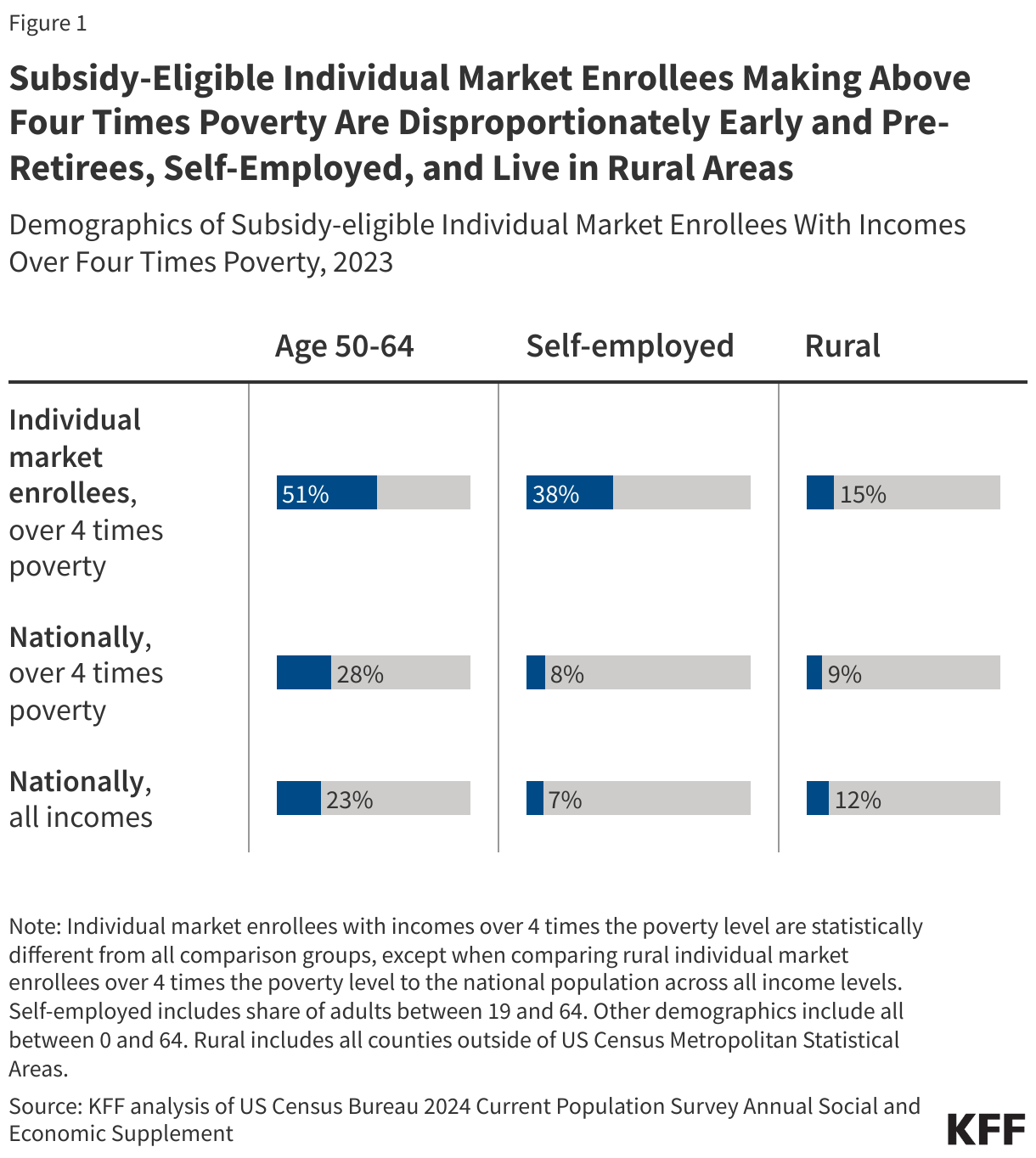
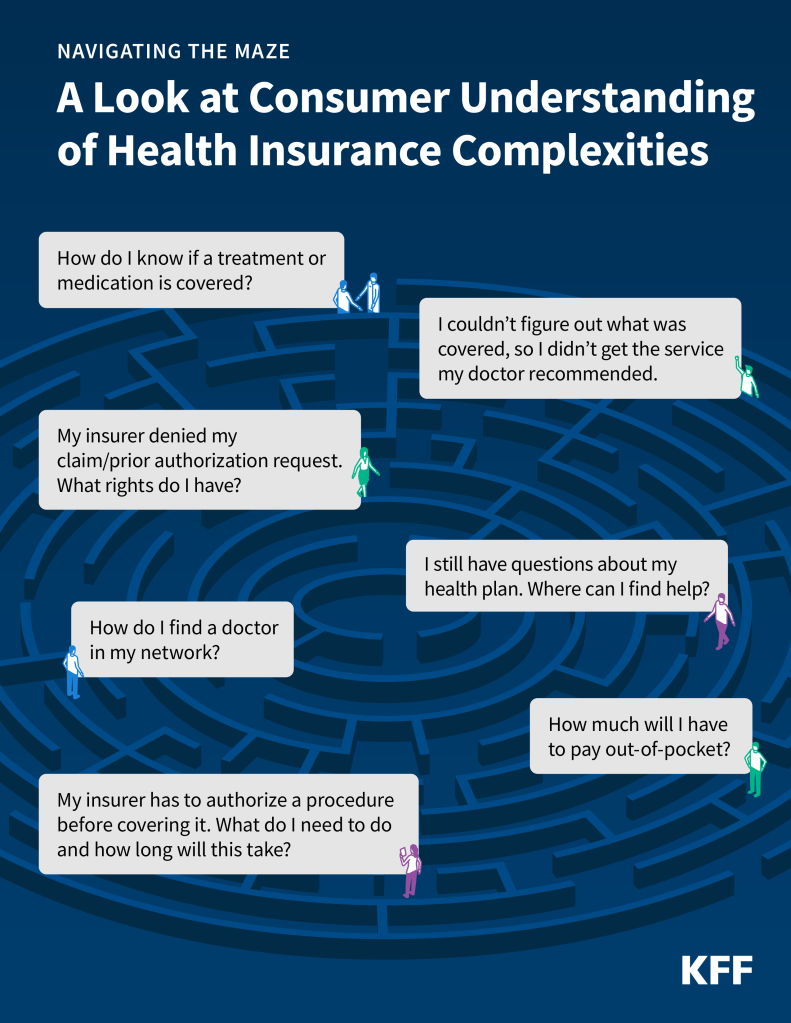
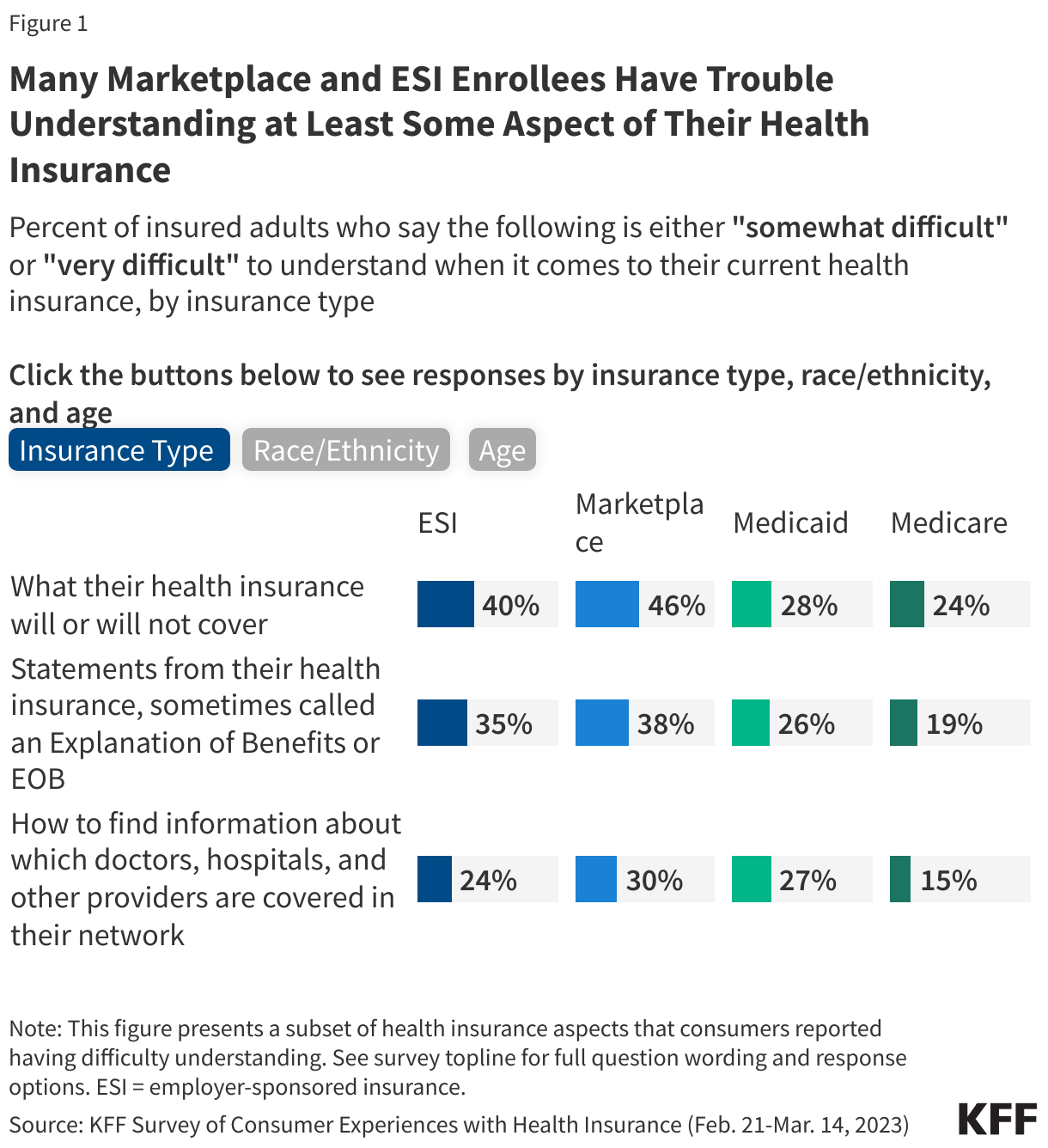
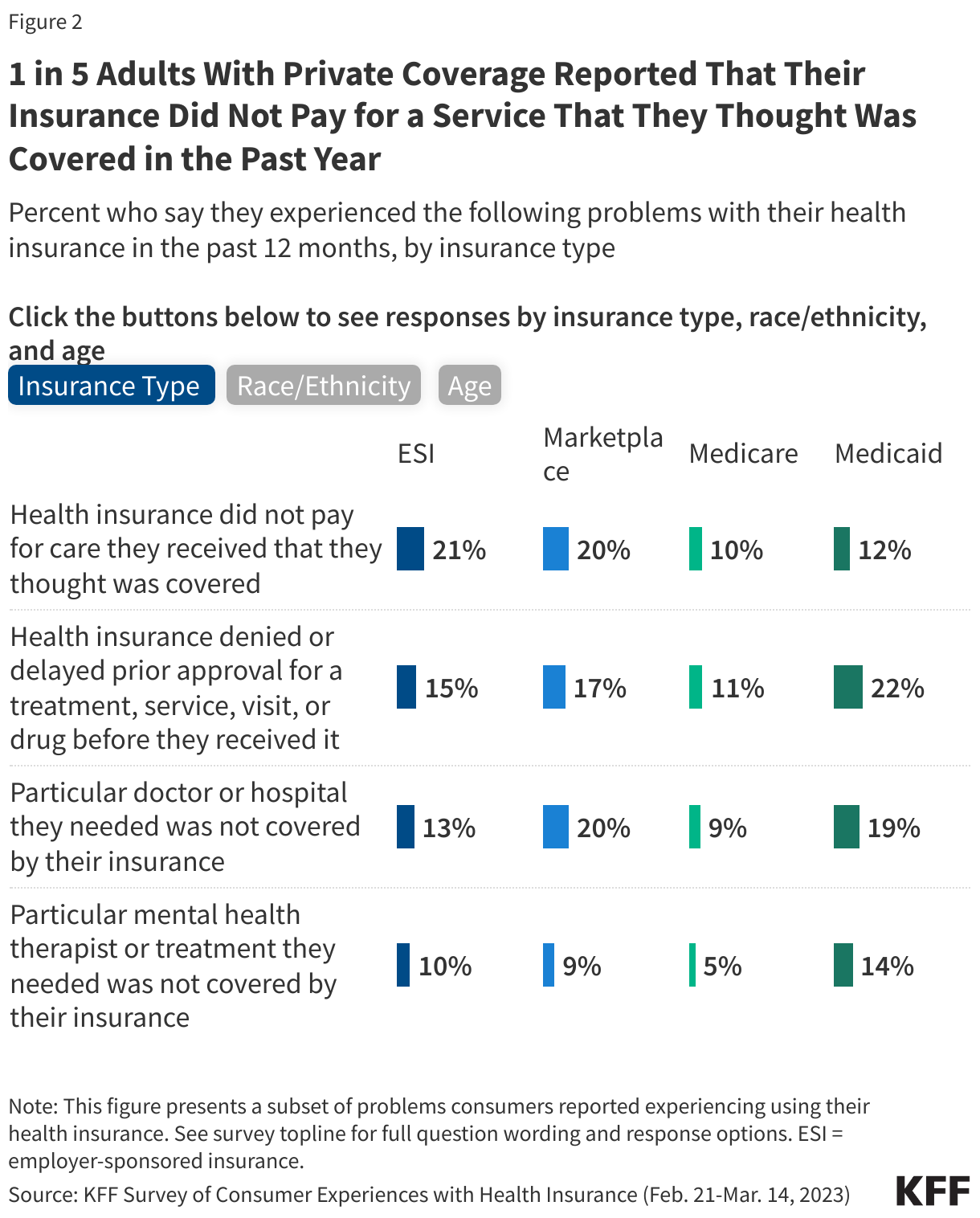
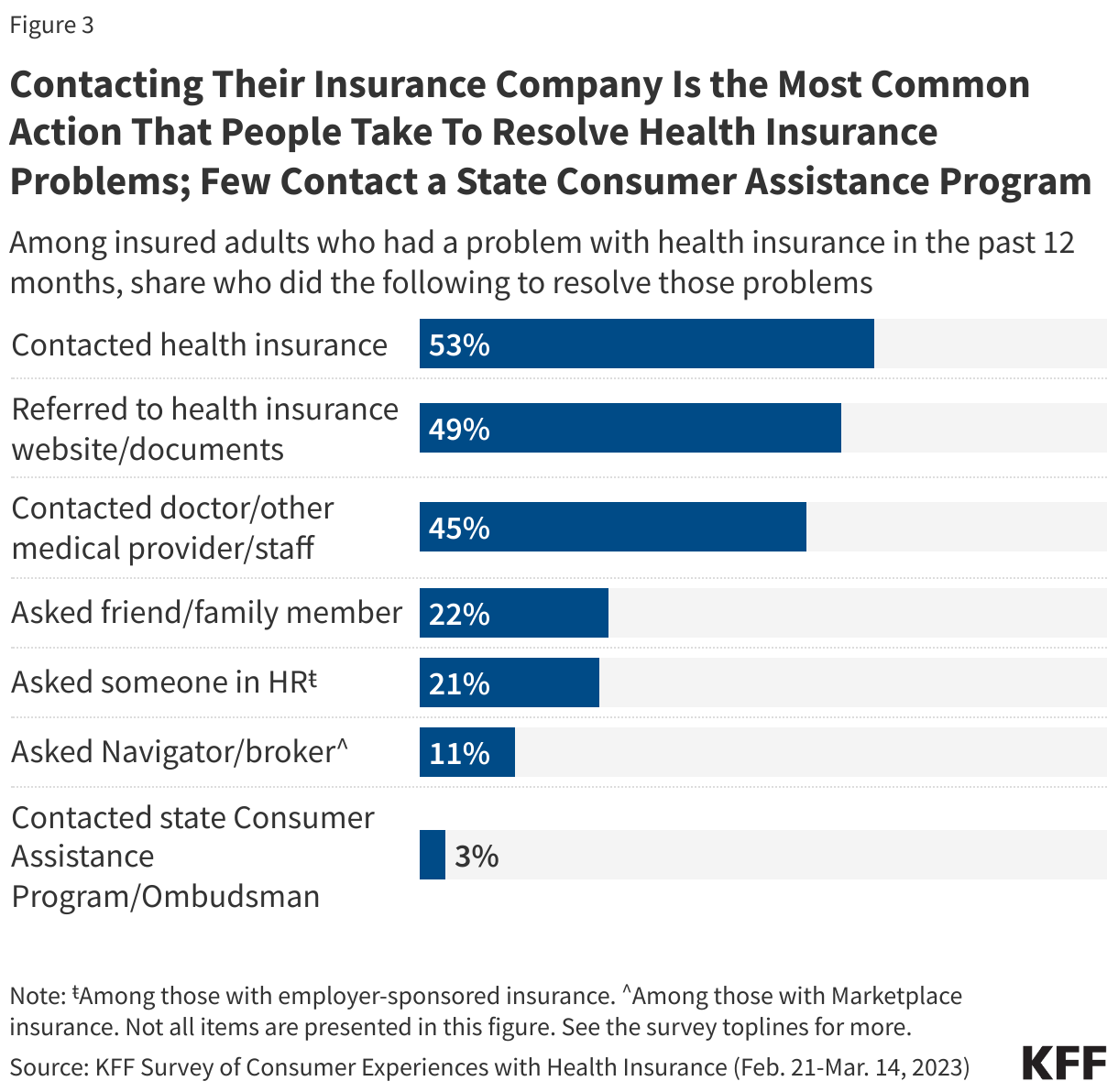
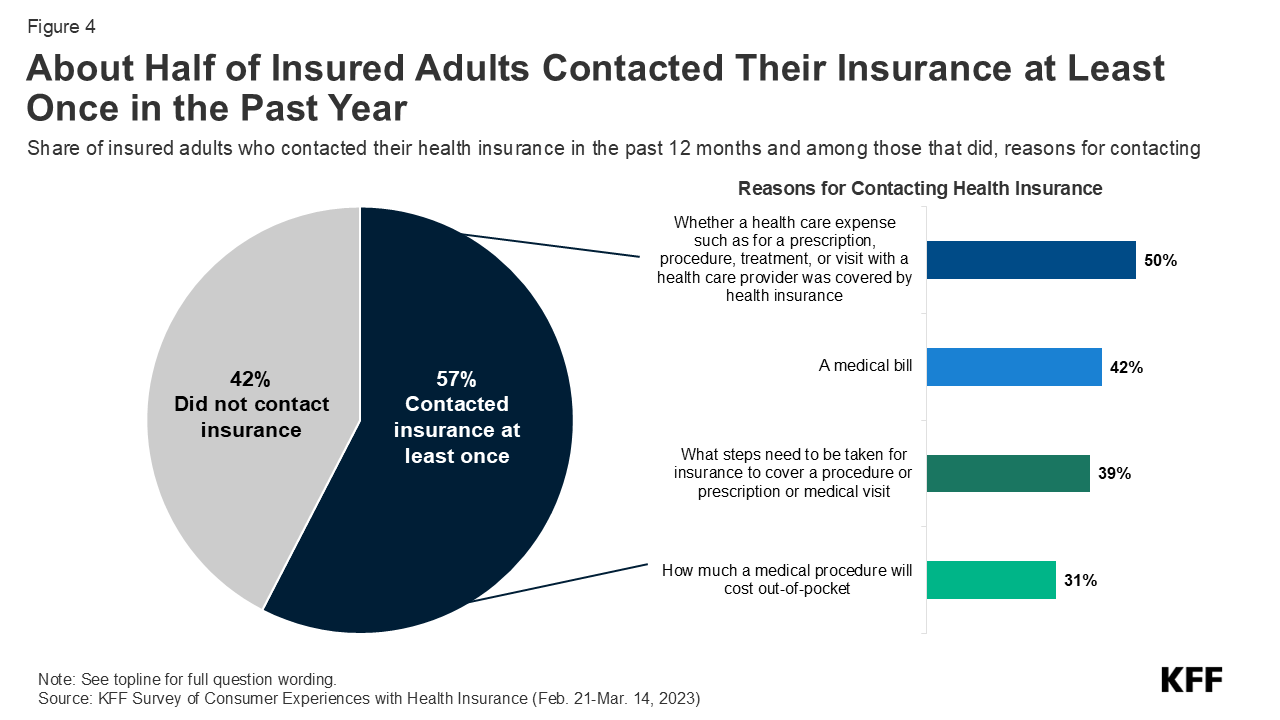
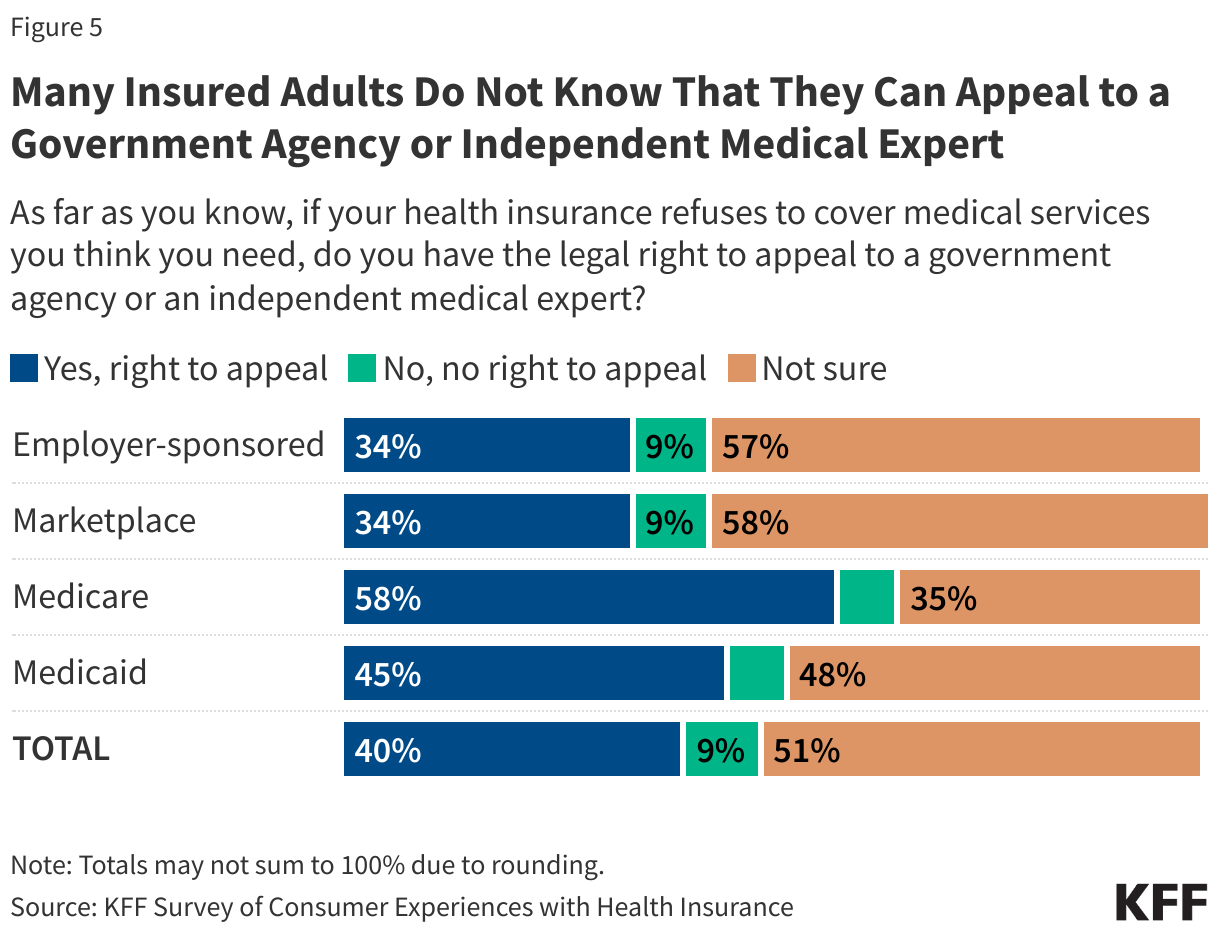
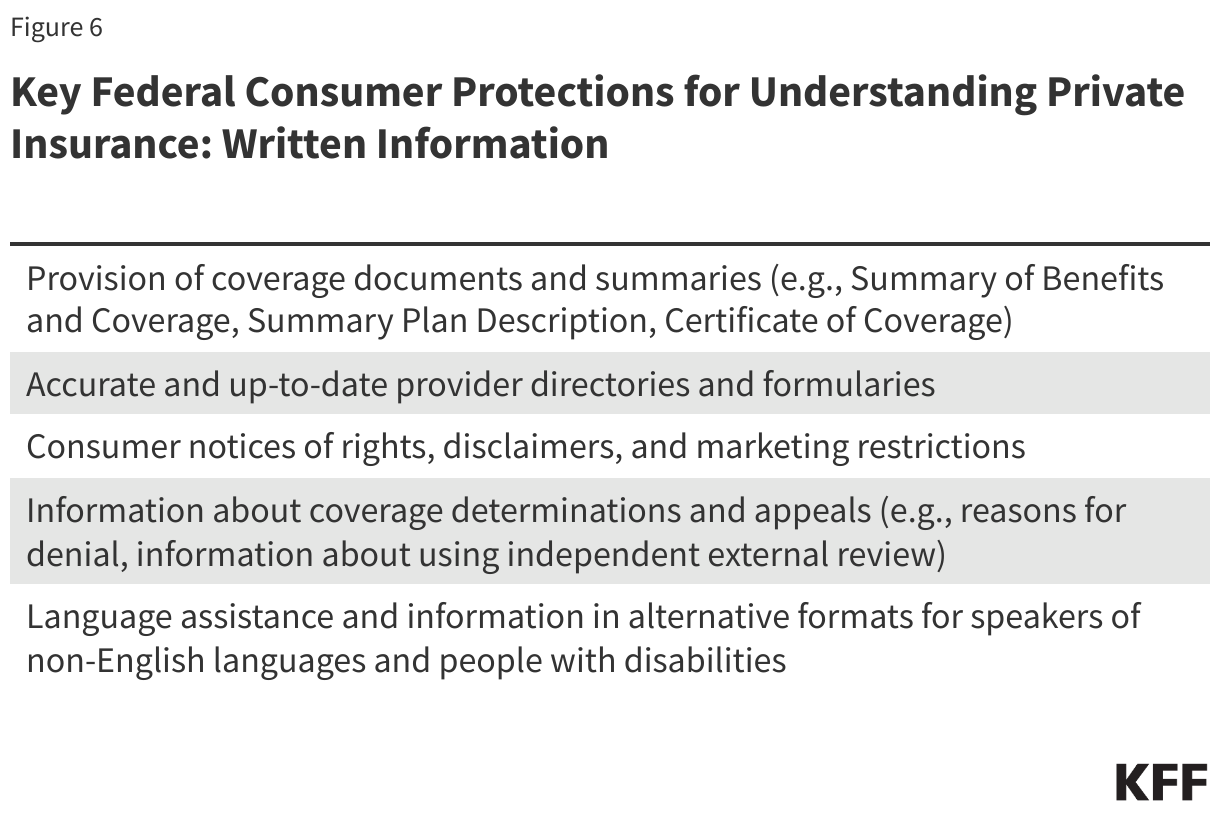
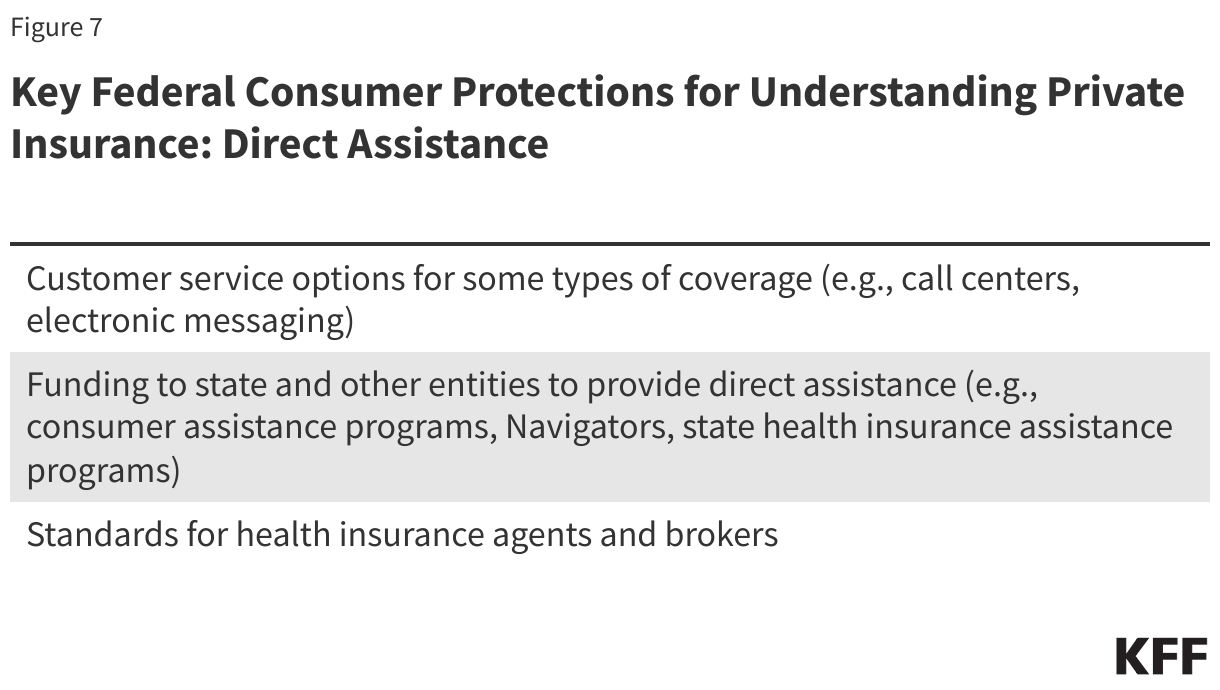


 Irving Washington
  Hagere Yilma