Medicare

New & Noteworthy
Examining the Potential Impact of Medicare’s New WISeR Model

A federal initiative to establish new prior authorization requirements in traditional Medicare, called the Wasteful and Inappropriate Service Reduction (WISeR) model, is likely to have only modest impact in its first year.

State Profiles for Dual-Eligible Individuals

This data collection draws on Medicare and Medicaid administrative data to present national and state-level information on people who are covered by both Medicare and Medicaid, referred to as dual-eligible individuals (also known as dually-enrolled beneficiaries).

Data Visualization

The Facts About Medicare Spending

This interactive provides the facts on Medicare spending. Medicare, which serves 67 million people and accounts for 12 percent of the federal budget and 21 percent of national health spending, is often the focus of discussions about health expenditures, health care affordability and the sustainability of federal health programs.

Explore data on enrollment growth, Medicare spending trends overall and per person, growth in Medicare spending relative to private insurance, spending on benefits and Medicare Advantage, Part A trust fund solvency challenges, and growth in out-of-pocket spending by beneficiaries.

Related: FAQs on Medicare Financing and Trust Fund Solvency

Read More

Subscribe to KFF Emails

Choose which emails are best for you.
Sign up here

Filter

1,201 - 1,210 of 1,590 Results

  • The Role of State Pharmaceutical Assistance Programs in Serving Low-Income Medicare Beneficiaries Following the Implementation of Medicare Part D

    Issue Brief

    The Role of State Pharmaceutical Assistance Programs in Serving Low-Income Medicare Beneficiaries Following the Implementation of Medicare Part D Prior to January 1, 2006, State Pharmaceutical Assistance Programs helped to fill a critical gap in coverage for Medicare beneficiaries without prescription drug coverage, targeting resources to beneficiaries with relatively low incomes.

  • Private Fee-For-Service Plans In Medicare: Rapid Growth and Future Implications

    Event

    Kaiser Family Foundation Vice President Patricia Neuman, Ph.D., testified May 2007 before the House Ways and Means Subcommittee on Health on the rapid growth of private fee-for-service plans in the Medicare program and its implications for seniors and people with disabilities. Dr. Neuman is director of the Foundation's Medicare Policy Project. Testimony (.

  • Medicare Advantage Chartpack

    Report

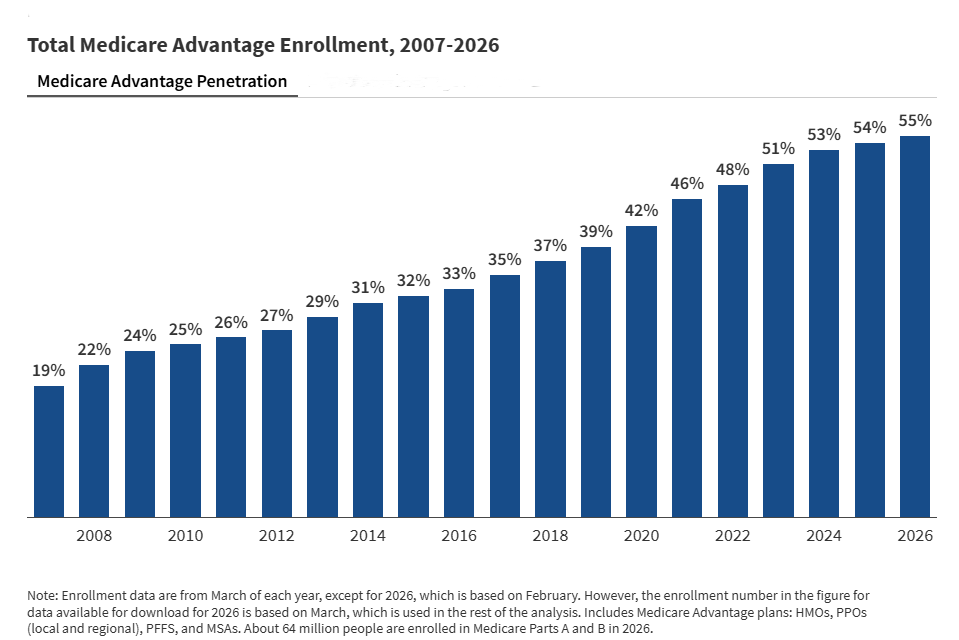
    These charts highlight key data about the Medicare Advantage program, which has grown rapidly in terms of enrollment and number of plans since the enactment of the Medicare Modernization Act in 2003.

  • Prescription Drug Sources Among Medicare Beneficiaries

    Report

    Note: Estimates are rounded to the nearest whole number, therefore do not sum to total. (1) Includes Veterans Administration, Indian Health Service, employer plans without retiree subsidies, employer plans for active workers, and state pharmaceutical assistance programs. (2) Includes employer/union, FEHB, and TRICARE coverage. (3) Approximately 0.

  • The Basics of Medicare and Medicaid

    Issue Brief

    Together, Medicare and Medicaid provide health coverage to about 90 million Americans. To help explain the two programs, the Kaiser Family Foundation issued a new primer on the Medicare program and an updated version of its primer on the Medicaid program.

  • An Examination of Medicare Private Fee-for-Service Plans

    Issue Brief

    This March 2007 issue brief, commissioned by the Kaiser Family Foundation, provides insight Medicare private fee-for-service plans, the most rapidly growing type of Medicare Advantage plan. As of February 2007, these plans enrolled 1.3 million beneficiaries, up from just 209,000 in December 2005.