Medicare Advantage in 2025: Enrollment Update and Key Trends

Published: Jul 28, 2025

Enrollment in Medicare Advantage, the private plan alternative to traditional Medicare, has increased steadily over the past two decades, with more than half of eligible beneficiaries enrolled in Medicare Advantage since 2023. The growth in enrollment has implications for federal spending, because according to the Medicare Payment Advisory Commission (MedPAC), Medicare payments to private plans are higher than spending for similar beneficiaries in traditional Medicare. In 2025, payments are 20% more per person, which translates into an additional $84 billion in federal spending this year, substantially larger than the $18 billion in higher spending a decade ago when about one-third of eligible beneficiaries were enrolled in a Medicare Advantage plan.

Given the enrollment and spending trends, policymakers have become increasingly focused on how Medicare pays private plans, though without broad agreement on how or when to move forward. In part, the difficulty stems from concerns about the effects of payment changes for beneficiaries’ choice among plans and access to supplemental benefits, such as coverage of dental, vision and hearing.

To better understand trends in the growth of the Medicare Advantage program, this brief provides current information about enrollment, including by plan type and firm. A second, companion analysis describes Medicare Advantage premiums, out-of-pocket limits, supplemental benefits offered, and prior authorization requirements in 2025.

Highlights for 2025:

  • More than half (54%) of eligible Medicare beneficiaries are enrolled in Medicare Advantage in 2025. While a growing share of Medicare beneficiaries are enrolled in a Medicare Advantage plan, the pace of the increase in enrollment slowed in 2025.
  • In 2025, one in five (21%) Medicare Advantage enrollees is in a special needs plan (SNP), reflecting a steady increase in recent years. Almost half (48%) of the total increase in Medicare Advantage enrollment between 2024 and 2025 was among SNPs, up from 43% in the prior year.
  • More than 80% of SNP enrollment is in plans designed for people who are dually eligible for Medicare and Medicaid (D-SNPs), though plans for people with certain chronic conditions (C-SNPs) saw a surge in enrollees in 2025. Enrollment in C-SNPS increased by more than 70% between 2024 and 2025, compared to 3% for D-SNPs and 0% for institutional-SNPs.
  • Medicare Advantage enrollment is highly concentrated among plans owned by a small number of parent organizations, with UnitedHealth Group leading the market, and, together with Humana, accounting for nearly half (46%) of all Medicare Advantage enrollees nationwide, consistent with the pattern in 2024. Since 2024, market shares for the leading parent organizations have remained roughly the same. However, in absolute numbers, UnitedHealth Group had the largest growth in enrollment, with 505,000 more enrollees in 2024 than in 2025, followed by Elevance Health, which gained 249,000 enrollees. In contrast, enrollment in Humana plans decreased by about 297,000 between 2024 to 2025.

More than half of eligible Medicare beneficiaries are enrolled in Medicare Advantage in 2025.

In 2025, more than half (54%) of eligible Medicare beneficiaries – 34.1 million out of about 62.8 million Medicare beneficiaries with both Medicare Parts A and B – are enrolled in Medicare Advantage plans. Medicare Advantage enrollment as a share of the eligible Medicare population has jumped from 19% in 2007 to 54% in 2025 (Figure 1).

Total Medicare Advantage Enrollment, 2007-2025

Between 2024 and 2025, total Medicare Advantage enrollment grew by about 1.3 million beneficiaries, or 4%– a somewhat smaller growth rate than the prior year (7%). The Congressional Budget Office (CBO) projects that the share of all Medicare beneficiaries enrolled in Medicare Advantage plans will rise to 64% by 2034 (Figure 2).

Medicare Advantage and Traditional Medicare Enrollment, Past and Projected

In 2025, nearly two-thirds of Medicare Advantage enrollees are in individual plans that are open for general enrollment.

More than 6 in 10 Medicare Advantage enrollees (62%), or 21.2 million people, are in plans generally available to all beneficiaries for individual enrollment (Figure 3). That is an increase of 0.7 million enrollees compared to 2024. While individual plans comprised a stable share of total Medicare Advantage enrollment in 2025 compared to 2024, their share of enrollment has declined since 2010 when they comprised 71% of all enrollees. The decline in the share of enrollment in individual plans is due to faster enrollment growth in special needs plans (SNPs), especially since 2018.

Distribution of Medicare Advantage Enrollment, 2010-2025

Special needs plans (SNPs) comprise a growing share of Medicare Advantage enrollment.

Nearly 7.3 million Medicare beneficiaries are enrolled in special needs plans (SNPs). SNPs restrict enrollment to beneficiaries with significant or relatively specialized care needs, or who qualify because they are eligible for both Medicare and Medicaid. SNPs comprise a growing share of Medicare Advantage enrollment, accounting for 21% of enrollees in 2025 compared with 14% of enrollees in 2020, reflecting small, but steadily year-over-year increases (Figure 3).

The increase in SNP enrollment is consistent with the increasing number of SNP plans available on average and more dual-eligible individuals having access to these plans since the Bipartisan Budget Act of 2018 made SNPs a permanent part of the Medicare Advantage programextra benefits

Most SNP enrollees (83%) are in plans for beneficiaries dually enrolled in both Medicare and Medicaid (D-SNPs), a decline from 88% in 2024 (Figure 4). Another 16 percent of SNP enrollees are in plans for people with severe chronic or disabling conditions (C-SNPs) – an increase from 10 percent in 2024 – and 2 percent are in plans for beneficiaries requiring a nursing home or institutional level of care (I-SNPs), the same as 2024.

While D-SNPs are designed specifically for dually-eligible individuals, among the 3.9 million dually-eligible enrollees with full benefits enrolled in Medicare Advantage plans in 2021, most (57%) were in D-SNPs while 28% were in Medicare Advantage plans that are generally available to all beneficiaries (not designed specifically for the dually-eligible population).

Number and Share of Beneficiaries in Special Needs Plans, 2010-2025

SNP enrollment varies across states. In the District of Columbia and Puerto Rico, SNP enrollees comprise about half of all Medicare Advantage enrollees (49% in DC and 51% in PR). In ten states, SNP enrollment accounts for at least a quarter of Medicare Advantage enrollment: 47% in MS, 38% in AR, 34% in LA and NY, 30% in FL, 29% in GA and SC, 27% in AL, 26% in CT, and 25% in Oklahoma. In the remaining 40 states, fewer than a quarter of Medicare Advantage enrollees are in SNPs.

C-SNP enrollment in 2025 (about 1.2 million people) is 71% higher than it was in 2024 – an increase of about 480,000 enrollees. Nearly all (97%) C-SNP enrollees are in plans for people with diabetes or cardiovascular conditions in 2025. Enrollment in I-SNPs has been generally unchanged with approximately 115,000 enrollees in 2025, the same as 2024.

Slightly less than one in five (17% or about 5.7 million) Medicare Advantage enrollees are in a group plan offered to retirees by an employer or union.

Group enrollment as a share of total Medicare Advantage enrollment has fluctuated between 17% and 20% since 2010, but the number of enrollees has increased from 1.8 million in 2010 to 5.7 million in 2025. The 2025 enrollment in group plans is essentially unchanged from 2024, the first time in about a decade that enrollment in this type of plan has been relatively flat year-to-year (Figure 5). With a group plan, an employer or union contracts with an insurer and Medicare pays the insurer a fixed amount per enrollee to provide benefits covered by Medicare. For example, 13 states provided health insurance benefits to their Medicare-eligible retirees exclusively through Medicare Advantage plans in 2024.

Number of Beneficiaries in Employer Group or Union-Sponsored Health Plans, 2010-2025

As with other Medicare Advantage plans, employer and union group plans may provide additional benefits and/or lower cost sharing than traditional Medicare and are eligible for bonus payments if they obtain required quality scores. The employer or union (and sometimes the retiree) may also pay an additional premium for these supplemental benefits. Group enrollees comprise a quarter or more of Medicare Advantage enrollees in eight states: Alaska (100%), Michigan (36%), New Jersey (32%), West Virginia and Maryland (29% for both), Vermont (28%), and Illinois and Kentucky (27% for both).

Medicare Advantage enrollment is highly concentrated among a small number of parent organizations.

The average Medicare beneficiary is able to choose from Medicare Advantage plans offered by 9 parent organizations in 2025, similar to 2024, and over one-third of beneficiaries (36%) can choose among Medicare Advantage plans offered by 10 or more parent organizations. (Note, these numbers are slightly different than what was reported in a previous KFF publication due to differences in how parent organizations are identified, see Methods for more details.)

UnitedHealth Group and Humana account for nearly half of all Medicare Advantage enrollees nationwide in 2025.

Despite most beneficiaries having access to plans operated by several parent organizations, Medicare Advantage enrollment is highly concentrated among a small number of parent organizations. UnitedHealth Group Inc. accounts for 29% of all Medicare Advantage enrollment in 2025, or 9.9 million enrollees. Together, UnitedHealth Group Inc. and Humana Inc. (17%) account for nearly half (46%) of all Medicare Advantage enrollees nationwide, nearly the same share as 2024. In more than a quarter of counties (26%; or 815 counties), these two organizations account for at least 75% of Medicare Advantage enrollment. These counties include East Baton Rouge (Baton Rouge), LA (81%), Clark County (Las Vegas), NV (75%), Travis County (Austin), TX (77%), and El Paso County (Colorado Springs), CO (72%).

Three other parent organizations comprise more than 25% of Medicare Advantage enrollment: CVS Health Corporation (12%), Elevance Health Inc, (7%), and Kaiser Foundation Health Plan Inc. (6%) (Figure 6). (In contrast, CVS Health and Centene Corporation dominate the market for stand-alone prescription drug plans (PDP) that supplement traditional Medicare, with both organizations accounting for just over half of enrollment in PDPs).

Medicare Advantage Enrollment by Parent Organization, 2025

In absolute numbers, UnitedHealth Group had the largest growth in enrollment, with 505,000 more beneficiaries enrolled in a plan sponsored by UnitedHealth Group in March 2025 than in March 2024 (Figure 7). Elevance Health had the second largest growth in enrollment, with an increase of about 249,000 beneficiaries between March 2024 and March 2025.

In contrast, enrollment in Humana plans declined, decreasing by about 297,000 between March 2024 and March 2025.

Medicare Advantage Enrollment by Parent Organization, 2024-2025

UnitedHealth Group has consistently accounted for a relatively large share of Medicare Advantage enrollment.

UnitedHealth Group has had the largest share of Medicare Advantage enrollment and largest growth in enrollment since 2010, increasing from 18% of all Medicare Advantage enrollment in 2010 to 29% in 2025. Humana has also had a relatively large share of Medicare Advantage enrollment, though it has been more stable, increasing only slightly from 16% in 2010 to 17% in 2025 (data for 2010 not shown).

Nancy Ochieng, Meredith Freed, Jeannie Fuglesten Biniek, and Tricia Neuman are with KFF. Anthony Damico is an independent consultant.

Methods

This analysis uses data from the Centers for Medicare & Medicaid Services (CMS) Medicare Advantage Enrollment, Benefit and Landscape files for the respective year. KFF uses the Medicare Enrollment Dashboard for enrollment data for March 2024 and March 2025, and the CMS Chronic Conditions Data Warehouse Master Beneficiary Summary File (MBSF) for March for earlier years. Trend analysis begins in 2007 because that was the earliest year of data that was based on March enrollment. Enrollment data is only provided for plan-county combinations that have at least 11 beneficiaries; thus, this analysis excludes approximately 400,000 individuals who reside in a county where county-wide plan enrollment does not meet this threshold.

KFF calculates the share of eligible Medicare beneficiaries enrolled in Medicare Advantage, meaning they must have both Part A and B coverage. The share of enrollees in Medicare Advantage would be somewhat smaller if based on the total Medicare population that includes 5.8 million beneficiaries with Part A only or Part B only (in 2025) who are not generally eligible to enroll in a Medicare Advantage plan.

In previous years, KFF calculated the share of Medicare beneficiaries enrolled in Medicare Advantage by including Medicare beneficiaries with either Part A and/or B coverage. We modified our approach in 2022 to estimate the share enrolled among beneficiaries eligible for Medicare Advantage who have both Medicare Part A and Medicare B. In the past, the number of beneficiaries enrolled in Medicare Advantage was smaller and therefore the difference between the share enrolled with Part A and/or B vs Part A and B was also smaller. For example, in 2010, 24% of all Medicare enrollees were enrolled in Medicare Advantage versus 25% with just Parts A and B. However, these shares have diverged over time: in 2024, 49% of all Medicare beneficiaries were enrolled in Medicare Advantage versus 54% with just Parts A and B. These changes are reflected in all data displayed trending back to 2007.

Additionally, in previous years, KFF had used the term Medicare Advantage to refer to Medicare Advantage plans as well as other types of private plans, including cost plans, PACE plans, and HCPPs. However, cost plans, PACE plans, and HCPPs are now excluded from this analysis in addition to MMPs. In this analysis, KFF excludes these other plans as some may have different enrollment requirements than Medicare Advantage plans (e.g., may be available to beneficiaries with only Part B coverage) and in some cases, may be paid differently than Medicare Advantage plans. These exclusions are reflected in all data displayed trending back to 2007.

Beginning with this analysis of 2025 Medicare Advantage enrollment, KFF relies on the parent organization field reported to CMS to identify plans sponsored by the same insurer. Previously, KFF had supplemented these data with publicly available information about acquisitions, mergers, and business relationships. The previous approach led to fewer total plan sponsors.

Medicare projections for 2026-2033 are from the June Congressional Budget Office (CBO) Medicare Baseline for 2024. Using the CBO baseline, Medicare enrollment is based on individuals who are enrolled in Part B, which is designed to include only individuals who are eligible for Medicare Advantage and exclude those who only have Part A only (~6 million people in 2026) and cannot enroll in Medicare Advantage. However, it may include some individuals who have Part B only and also are not eligible for Medicare Advantage.

Enrollment counts in publications by firms operating in the Medicare Advantage market, such as company financial statements, might differ from KFF estimates due to inclusion or exclusion of certain plan types, such as SNPs or employer group health plans.

Poll Finding

KFF Health Tracking Poll: Public Finds Prior Authorization Process Difficult to Manage

Published: Jul 25, 2025

Findings

Key Takeaways

  • A large majority of the public (73%) think that delays and denials of services and treatments by health insurance companies are a major problem. Majorities across demographic groups agree that denials and delays of care are a major problem, with at least two-thirds across income groups and majorities across partisanship. Six in ten (57%) Republicans, eight in ten (79%) independents, and over eight in ten (84%) Democrats consider delays and denials of services by health insurance companies to be a major problem.
  • In June, a group of health insurance companies, along with Secretary of Health and Human Services Robert F. Kennedy, Jr. and Administrator of the Centers for Medicare & Medicaid Services Dr. Mehmet Oz, announced a voluntary initiative to reduce the burden of prior authorizations for patients, but few people have heard of the initiative to reduce the burden of prior authorizations. Just two in ten (20%) adults say they’ve heard “a lot” or “some” about this new initiative. In addition, few people think it’s likely that health insurance companies will follow through on this pledge, with six in ten adults saying it is “not too likely” or “not at all likely” that health insurance companies will follow through on the voluntary initiative in a way that makes a difference for patients.
  • The process of getting prior authorizations feels burdensome for many. Among the half (51%) of insured adults who say they have had to get a prior authorization in the past 2 years, many report difficulty navigating the process. Almost half (47%) of those who were required to get a prior authorization in the past two years say it was “somewhat difficult” (34%) or “very difficult” (13%) to navigate the process of getting prior approval for a health care service, treatment, or needed medication.

Prior Authorizations

Recently, Secretary of Health and Human Services Robert F. Kennedy Jr. and Administrator of the Centers for Medicare & Medicaid Services Dr. Mehmet Oz joined with insurance companies to announce a new voluntary initiative in which dozens of health insurance companies pledged to reduce the burden of prior authorizations. The pledge included promises from health insurance companies to require prior authorization less often, speed up the review process, and use clear language when communicating with patients.

The pledge addresses an issue that most of the public views as a problem. Three-quarters (73%) of adults say that delays and denials of health care services by health insurance companies are “a major problem,” with another two in ten (21%) who say it’s “a minor problem.” Few adults (6%) don’t think delays or denials are a problem. Majorities across partisans agree, including large majorities of Democrats (84%) and independents (79%) and over half of Republicans (57%) saying delays or denials of care by insurance companies are a major problem.

In fact, agreement spans many demographic groups, with at least two-thirds across income groups and insurance type saying delays and denials of care by insurance providers are a major problem.

Stacked bar chart showing how major of a problem people believe delays and denials are. Results shown by party, income, and insurance coverage.

Very few adults have heard of the newly announced initiative to reduce the burden of prior authorizations, with two in ten saying they’ve heard “a lot” or “some” about it. Another quarter (23%) have heard “a little,” while more than half (56%) have heard “nothing at all” about the pledge.

Adults under age 65 who purchase their own insurance are more likely to say they have heard about the initiative, with a third (35%) saying so compared to one in seven (14%) of those who have employer-sponsored insurance. About two in ten of adults under age 65 with Medicaid (23%) and those ages 65 and older with Medicare (22%) say they’ve heard “a lot” or “some.”

Stacked bar chart showing public awareness of the announcement from insurance companies. Results shown by party, and type of insurance coverage.

Few people think it’s likely that health insurance companies will follow through on this pledge in a meaningful way. Six in ten adults say it is “not too likely” or “not at all likely” that health insurance companies will follow through on the voluntary initiative in a way that makes a difference for patients. Republicans are more likely than Democrats or independents to believe insurance companies will follow through, though still a very small share (9%) think it’s “very likely”, while about half (47%) think it’s “somewhat likely.” Two-thirds (67%) of independents and seven in ten (71%) Democrats think it is not likely insurance companies will follow through in a meaningful way.

Stacked bar chart showing likely the public believes insurance companies will follow through on the newly announced initiative. Results shown by party.

Experiences with Prior Authorizations

One reason why most adults may see prior authorization as a problem may be because many people have had to deal with them and found them difficult to navigate.

Half (51%) of insured adults say that in the past two years, their health insurance company has required them or their health care provider to get prior authorization before they could receive a health care service, treatment, or medication that they needed.

There are no significant differences by insurance type in the share who report needing prior authorization, with about half across types of insurance saying they were required to get approval before they could get a service, treatment, or medication in the past two years. While traditional Medicare typically does not require prior authorizations for most services and medications, Medicare Advantage does require prior authorizations for enrollees seeking certain services.

Bar chart showing how the share of insured adults who have needed a prior authorization in the past two years. Results shown by type of insurance coverage.

Among those who face prior authorization, many report difficulty navigating the process. Almost half (47%) of those who experienced a need for prior authorization in the past two years say it was “somewhat difficult” (34%) or “very difficult” (13%) to navigate the process of getting prior approval for a health care service, treatment, or needed medication.
Stacked bar chart showing how easy or difficult the public felt it was to navigate the prior approval process. Results shown by type of insurance coverage.

Many people also report experiencing delays or denials of services when they are subject to prior insurance authorization. Among all of those who reported needing prior authorization in the past two years, about half say their health insurance company has delayed their ability to get (48%, 24% of all insured adults) or denied coverage (43%, 22% of all insured adults) for a service, treatment, or medication that their doctor requested. Among all insured adults, three in ten (29%) say their health insurance company has delayed or denied their ability to get a service, treatment, or medication that they or their doctor requested in the past two years. These shares are similar across insurance types.
Split bar chart showing the share of insured adults who have experienced a delay, denial, and both. Results shown by type of insurance coverage.

While administrative data provides a lower instance of delays or denials in care than what individuals self-report in the latest KFF Tracking Poll, possibly due to misreporting or initial denial that was eventually approved, it is clear that many people feel like the process has delayed their care.

Some services are more often subject to prior authorization, including surgery, hospitalization, imaging services, specialty drugs, specialty medical equipment, care from a specialist, specialized lab testing, and mental health services. These individuals (69% of insured adults) report higher rates of prior authorization, delays, and denials of care.

Six in ten (62%) insured adults who say they needed at least one of these types of specialized care report that they were required to get prior authorization for a service, treatment, or medication in the past two years. More than half of this group (58%, 36% of all insured adults who needed specialized care) say their insurance delayed or denied their treatment, including 30% who experienced a delay, and 27% who experienced a denial.

Methodology

This KFF Health Tracking Poll/KFF Tracking Poll on Health Information and Trust was designed and analyzed by public opinion researchers at KFF. The survey was conducted July 8-14, 2025, online and by telephone among a nationally representative sample of 1,283 U.S. adults in English (n=1,212) and in Spanish (n=71). The sample includes 1,004 adults (n=58 in Spanish) reached through the SSRS Opinion Panel either online (n=979) or over the phone (n=25). The SSRS Opinion Panel is a nationally representative probability-based panel where panel members are recruited randomly in one of two ways: (a) Through invitations mailed to respondents randomly sampled from an Address-Based Sample (ABS) provided by Marketing Systems Groups (MSG) through the U.S. Postal Service’s Computerized Delivery Sequence (CDS); (b) from a dual-frame random digit dial (RDD) sample provided by MSG. For the online panel component, invitations were sent to panel members by email followed by up to three reminder emails.

Another 279 (n=13 in Spanish) adults were reached through random digit dial telephone sample of prepaid cell phone numbers obtained through MSG. Phone numbers used for the prepaid cell phone component were randomly generated from a cell phone sampling frame with disproportionate stratification aimed at reaching Hispanic and non-Hispanic Black respondents. Stratification was based on incidence of the race/ethnicity groups within each frame. Among this prepaid cell phone component, 135 were interviewed by phone and 144 were invited to the web survey via short message service (SMS).

Respondents in the prepaid cell phone sample who were interviewed by phone received a $15 incentive via a check received by mail. Respondents in the prepaid cell phone sample reached via SMS received a $10 electronic gift card incentive. SSRS Opinion Panel respondents received a $5 electronic gift card incentive (some harder-to-reach groups received a $10 electronic gift card). In order to ensure data quality, cases were removed if they failed two or more quality checks: (1) attention check questions in the online version of the questionnaire, (2) had over 30% item non-response, or (3) had a length less than one quarter of the mean length by mode. Based on this criterion, 1 case was removed.

The combined cell phone and panel samples were weighted to match the sample’s demographics to the national U.S. adult population using data from the Census Bureau’s 2024 Current Population Survey (CPS), September 2023 Volunteering and Civic Life Supplement data from the CPS, and the 2025 KFF Benchmarking Survey with ABS and prepaid cell phone samples. The demographic variables included in weighting for the general population sample are gender, age, education, race/ethnicity, region, civic engagement, frequency of internet use, political party identification by race/ethnicity, and education. The weights account for differences in the probability of selection for each sample type (prepaid cell phone and panel). This includes adjustment for the sample design and geographic stratification of the cell phone sample, within household probability of selection, and the design of the panel-recruitment procedure.
The margin of sampling error including the design effect for the full sample is plus or minus 3 percentage points. Numbers of respondents and margins of sampling error for key subgroups are shown in the table below. For results based on other subgroups, the margin of sampling error may be higher. Sample sizes and margins of sampling error for other subgroups are available on request. Sampling error is only one of many potential sources of error and there may be other unmeasured error in this or any other public opinion poll. KFF public opinion and survey research is a charter member of the Transparency Initiative of the American Association for Public Opinion Research.

GroupN (unweighted)M.O.S.E.
Total1,283± 3 percentage points
Party ID
Democrats439± 6 percentage points
Independents387± 6 percentage points
Republicans344± 6 percentage points
MAGA Republicans308± 7 percentage points

The Intersection of State and Federal Policies on Access to Medication Abortion Via Telehealth after Dobbs

Published: Jul 24, 2025

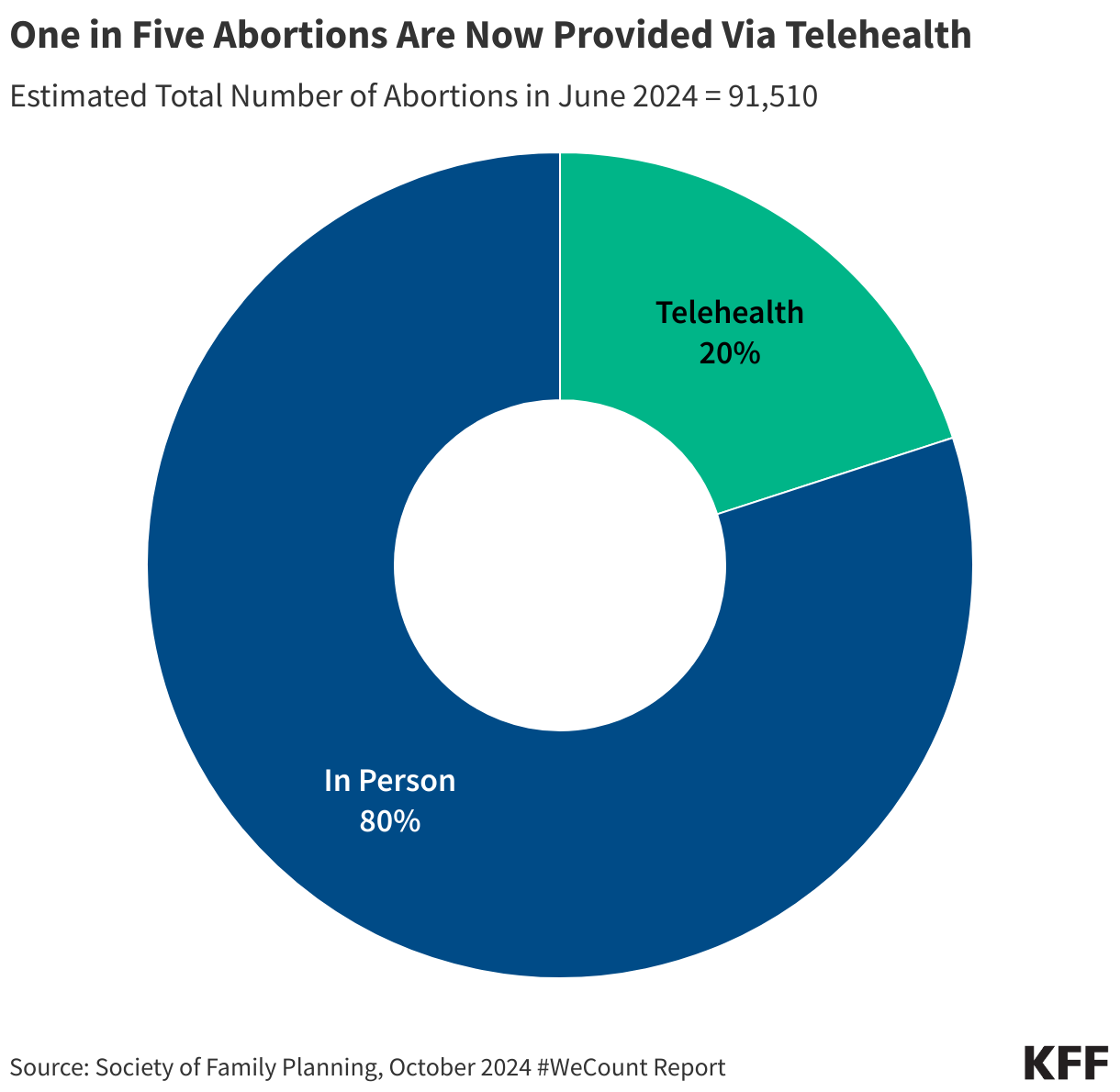
In the aftermath of the Supreme Court ruling overturning Roe v. Wade, there has been an increased focus on the use of telehealth as a way to both expand and restrict access to medication abortion at both the federal and state level. Several states that support abortion rights have enacted “shield” laws which aim to reduce the legal risks for clinicians who provide abortion medication via telehealth to patients who live in states where abortion is banned or restricted. An estimated one in four abortions are obtained via telehealth, and about half those are from abortion providers practicing in states with shield laws who mailed abortion pills to people living in states with bans or early stage gestational abortion restrictions. Recently, Louisiana and Texas, two states with abortion bans, filed lawsuits against a New York doctor for mailing medication abortion into their states. At the federal level, the possible enforcement of the Comstock Act, an 1873 anti-vice law, a recently initiated federal Food and Drug Administration (FDA) review of mifepristone safety, along with the potential reinstatement of FDA restrictions for mifepristone could result in the limitation or prohibition of the use of telehealth for medication abortion and restrict the availability of mifepristone nationwide.

The tension between the state right to ban or restrict abortion and federal jurisdiction to regulate medication abortion is a central issue in ongoing legal challenges. In addition, there is a conflict also playing out in the courts between states that ban abortion and those seeking to protect abortion providers in their states. Organizations on both sides of the abortion issue are advocating for the Trump administration’s FDA to take action to address access to mifepristone. This brief reviews current state and federal policies, ongoing litigation, and potential federal actions that may impact access to telehealth for medication abortion.
FDA Regulation of Medication Abortion

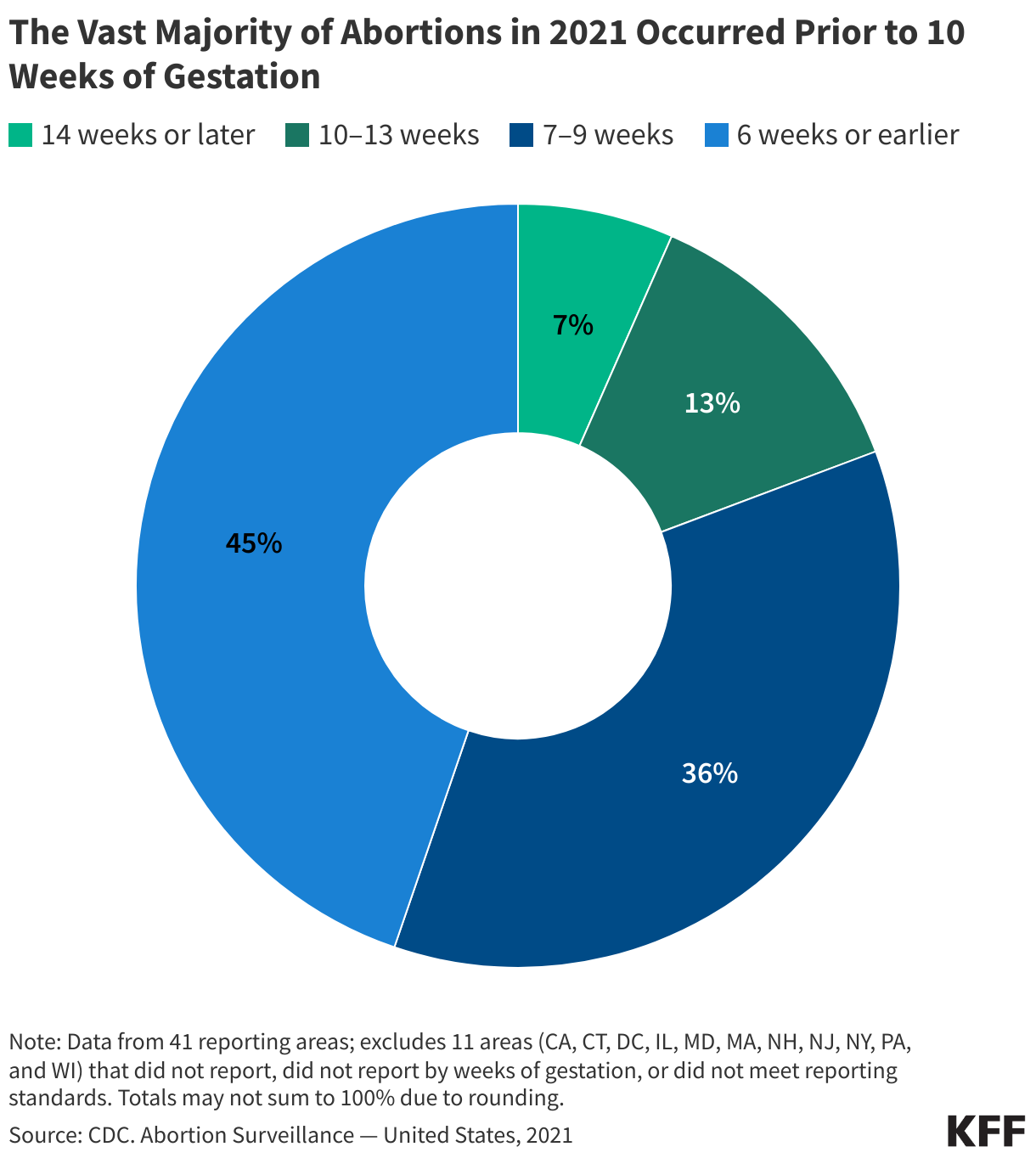
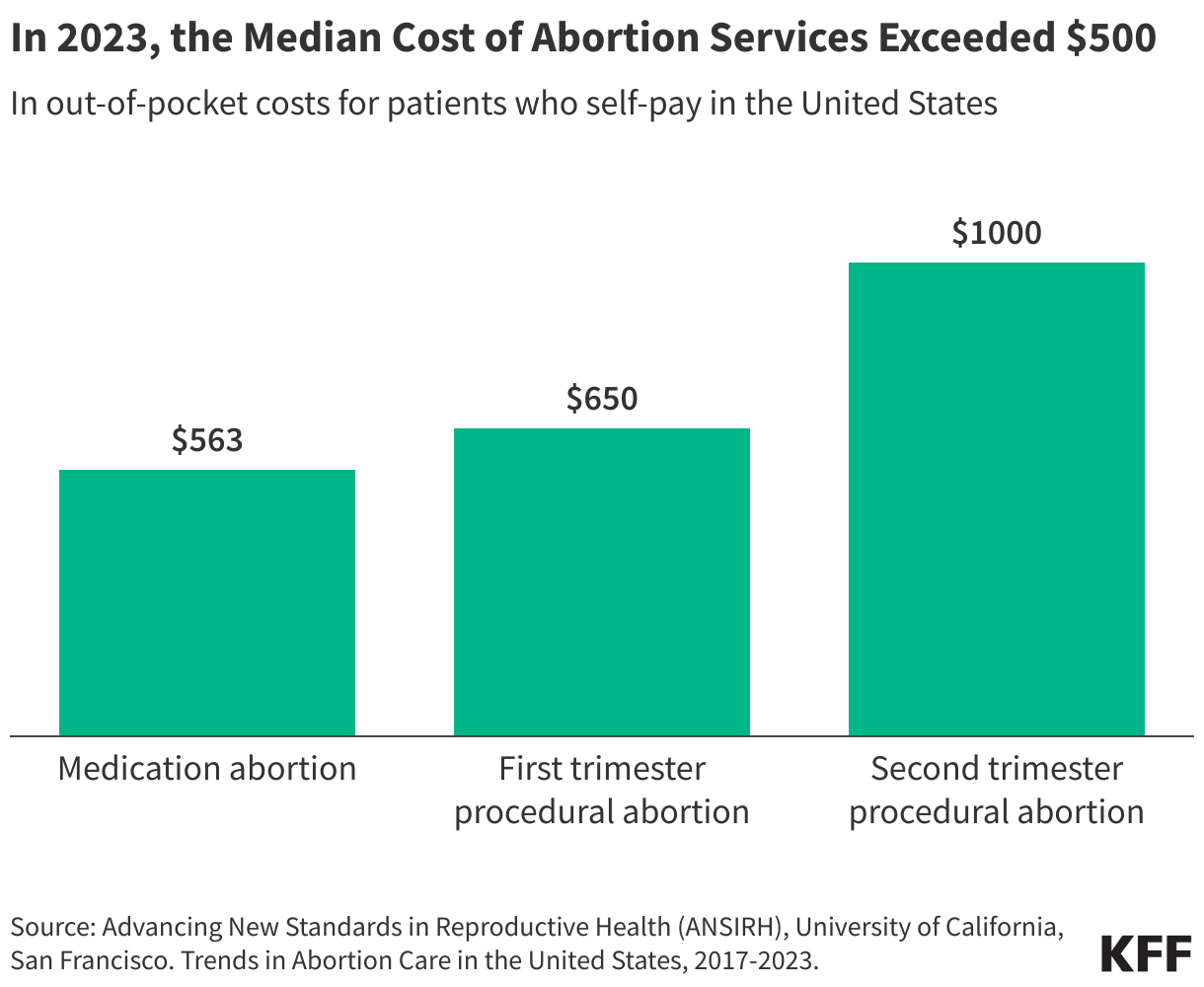
Mifepristone, often referred to as medication abortion, RU-486, or the abortion pill, was approved by the FDA as a medication to end pregnancy 25 years ago. A regimen of mifepristone, followed by misoprostol, is the FDA approved protocol for abortion during the first 70 days or up to 10 weeks after the first day of a missed period. Mifepristone works by blocking progesterone, a hormone essential to the development of a pregnancy, and thereby preventing an existing pregnancy from progressing. Misoprostol, taken 24–48 hours after mifepristone, works to empty the uterus by causing cramping and bleeding, similar to an early miscarriage. The national median self-pay price for medication abortion at a bricks and mortar provider in 2023 was $563, although the cost was significantly lower when obtained through a virtual clinic ($150). Medication abortions account for two-thirds (63%) of all abortions in the US and it is a safe and highly effective method of pregnancy termination. The pregnancy is terminated successfully 99.6% of the time, with a 0.4% risk of major complications, and an associated mortality rate of less than 0.001 percent (0.00064%).
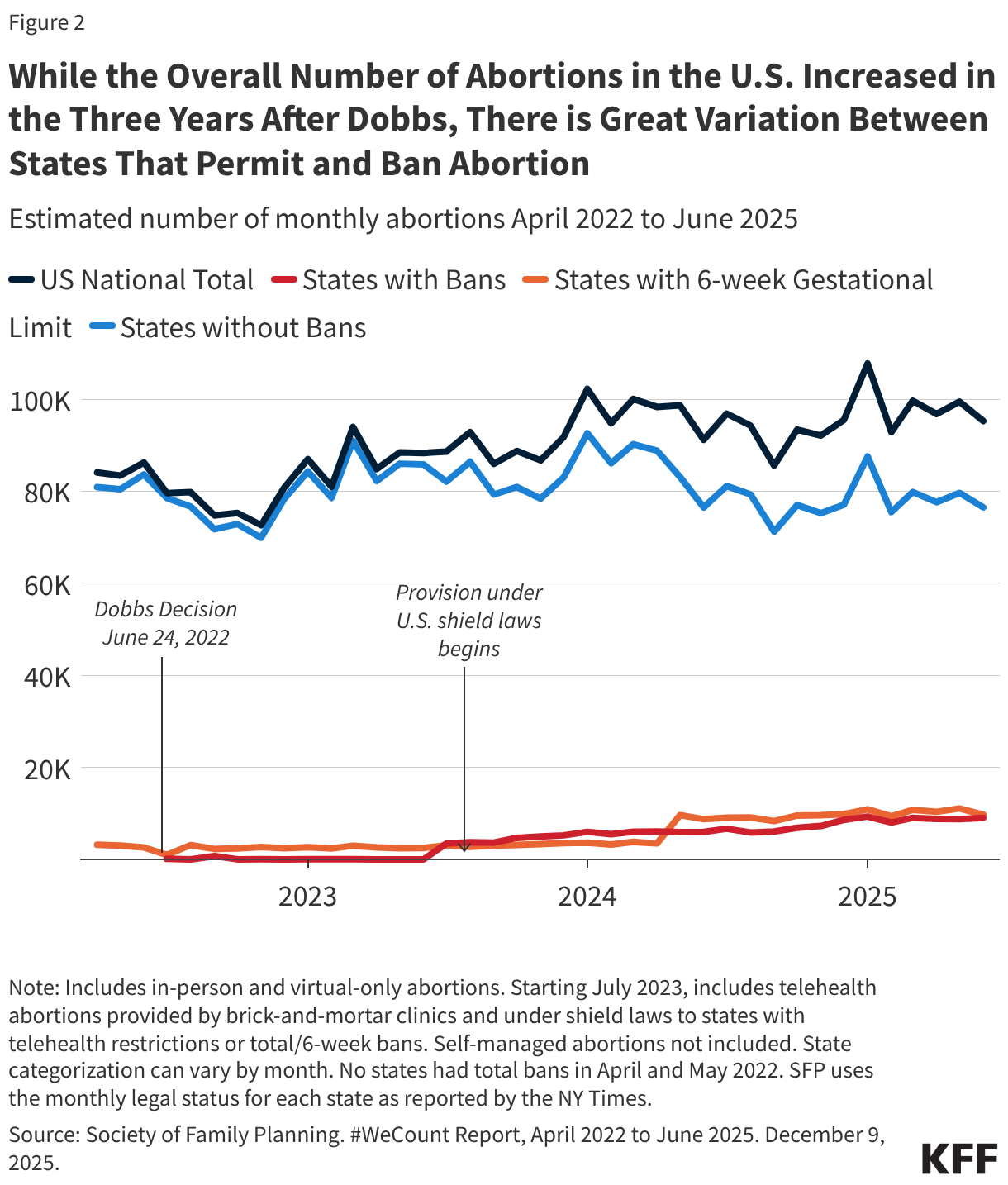
A robust body of research has confirmed that the use of telehealth for medication abortion is safe and effective. Studies have found similar pregnancy termination rates without the need of interventions between telehealth and in-person abortion patients. Adverse events (such as infections, blood transfusions or hospital admissions) are very rare (<1%) among both in-person and telehealth patients. Telehealth patients also report high satisfaction rates with their use of telehealth. Despite the high share of states with abortion bans and early-stage gestational restrictions, the total number of abortions in the US has increased in the three years since the Dobbs decision. While this increase is due to a number of factors, telehealth has played a role in that increase. By the end of 2024, one in four abortions in the U.S. were provided via telehealth.

Since 2011, how mifepristone is dispensed has been subject to the FDA’s Risk Evaluation and Mitigation Strategy (REMS) restrictions. Currently, the REMS for mifepristone do not require in-person dispensing and allow certified non-physicians and pharmacies to prescribe and dispense the drug (Table 1). The original 2011 REMS only permitted certified physicians to prescribe and dispense mifepristone and required three in-person visits, thereby restricting the use of telehealth for medication abortion across the country. Over the years as new research has emerged, the FDA has modified the REMS, and in 2021 it removed the in-person dispensing requirements, which were formalized in 2023. In addition, in 2016, the FDA updated and approved a new evidence-based regimen and drug label for medication abortion. This protocol approved the use of medical abortions for up to 70 days (10 weeks) of pregnancy. Until 2019, mifepristone was only sold under the brand name Mifeprex, manufactured by Danco Laboratories. In 2019, the FDA approved GenBioPro, Inc.’s application for generic mifepristone.

Risk Evaluation and Mitigation Strategy (REMS)

State Policies Affecting Telehealth for Medication Abortion

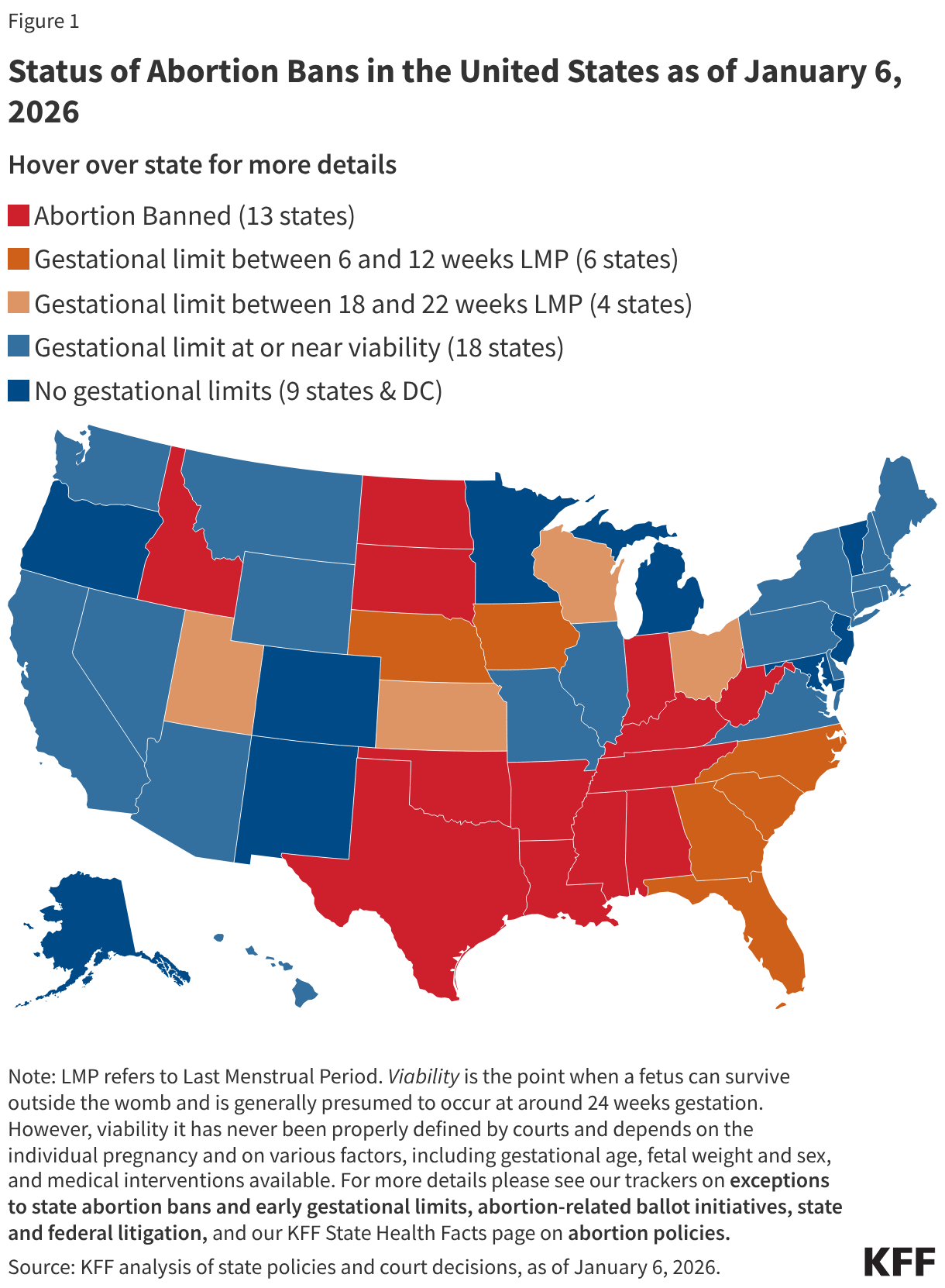
Access to medication abortion hinges on whether state laws ban or restrict abortion, abortion-specific regulations that are on the books in many states, and the FDA prescribing and dispensing protocol (Appendix 1). As of July 2025, 12 states have laws banning abortion and four states have a 6-week LMP gestational limit, often before many women know that they are pregnant. State laws that ban or restrict abortion apply to both medication and procedural abortions.

Currently nine states (AZ, AR, FL, IN, KY, OK, SC, TX and WV) have laws in place explicitly prohibiting the use of telehealth for medication abortion and/or the mailing of medication abortion drugs. Six of these states also have total abortion bans in place, and two have 6-week abortion bans, limiting access to all abortion services in the state. In Arizona, the only state with these laws in place that does not have a law banning or restricting abortion, doctors have filed a lawsuit contending that the state’s telehealth ban and the ban on mailing medication abortion drugs violate the state’s constitutional amendment protecting the right to abortion up to viability that was approved by voters in the November 2024 election.

In addition to the laws banning abortion or directly banning the use of telehealth for abortion, other state regulations—including ultrasound and counseling requirements, waiting periods, and specific in-person dispensing mandates—also play a role in limiting the feasibility of using telehealth for medication abortion (Figure 1). In states without these restrictions, people do not need to make any in-person visits to a clinic to safely have a medication abortion under the supervision of a health care provider.

Availability of Telehealth for Medication Abortion in a Post-Dobbs United States, as of July 14, 2025

In the aftermath of the Dobbs decision, some states started passing “shield” laws. These laws aim to protect physicians from prosecution brought by states where abortion is banned as long as the physician is located within the state with the shield law and the care they provided is legal in that same state, regardless of patient location. As of July 2025, eight states have shield laws in place that explicitly protect providers regardless of where the patient lives. By the end of 2024, over one in seven (15%) abortions in the U.S. were medication abortions for which the pills were mailed by providers practicing in states with shield laws to states where abortion is banned, with 6-week gestational limits, or the state has telehealth restrictions in place (Figure 2).

By The End of 2024, 1 in 7 Abortions Were Provided Under Shield Laws to People Living in States With Abortions Bans or Telehealth Restrictions

Potential Federal Actions that Could Restrict Medication Abortion

Questions remain about what actions the federal government can and/or will take to restrict the use of telehealth for medication abortion. The Comstock Act – an 1873 anti-vice law banning the mailing of obscene matter and articles used to produce abortion could be used to sharply restrict abortion nationwide. In the aftermath of the Supreme Court’s Dobbs decision, anti-abortion activists have argued in federal court that the Comstock Act prohibits the mailing of mifepristone directly to patients, as well as the general distribution of the medication to physicians, hospitals, and pharmacies.

A literal interpretation of the Act could potentially apply to materials used to produce all abortions, not just medication abortions; would not have exceptions; and could affect other medical care, such as miscarriage management. The Biden administration’s Department of Justice determined that the Act only applies when the sender intends for material or drug to be used for an illegal abortion, and because there are legal uses of abortion drugs in every state including to save the life of the pregnant person, there is no way to determine the intent of the sender. While he was running for a second term, President Trump made inconsistent statements about whether he would enforce the Act. If the Trump administration follows the Project 2025 blueprint and enforces the Comstock Act people across the country would be impacted, even those that have a guaranteed right to abortion in their state constitutions.

The Secretary of Health and Human Services (HHS), Robert F. Kennedy Jr., has directed the FDA commissioner, Dr. Martin Makary, to launch a safety review of mifepristone following the release of a report which has been criticized as having methodological flaws and lack of data transparency aiming to cast doubt on the long-standing research on the safety of mifepristone. Project 2025 and other anti-abortion advocates have long been calling for the FDA to retract the approval of mifepristone or for the FDA to revert to the older FDA mifepristone REMS that would reduce the gestational period for the use of mifepristone, prohibit telehealth appointments, and access through pharmacies.

Four citizen petitions have recently been filed with the FDA about mifepristone, calling for the agency to either restrict or expand access to the drug (Table 2). FDA citizen petitions allow individuals and organizations to petition the agency to issue, change, or cancel regulations. The FDA is required to respond to citizen petitions within 180 days by granting or denying the request, or saying it needs more time. The FDA must document its position in its response.

FDA Citizen Petitions on Mifepristone (Table)

Current Litigation on Mifepristone Access

There are multiple ongoing cases seeking either to restrict or expand the availability of medication abortion (Table 3). In June 2024, the Supreme Court dismissed the case filed by the Alliance for Hippocratic Medicine, finding that the anti-abortion doctors and organization did not have standing to sue the FDA. Before this case was reviewed by the Supreme Court, three states (Missouri, Idaho, and Kansas) intervened as parties in this case at the district court level. This case is now proceeding as State of Missouri v. FDA, and the states are seeking the reinstatement of the in-person dispensing requirement for mifepristone and the requirement for three in-person visits which would prohibit the use of telehealth for medication abortion. In May 2025, the Trump administration filed a motion asking for the dismissal or transfer the states’ lawsuit to an appropriate venue instead of allowing the case to be considered by the federal district court in the northern district of Texas. GenBioPro, a manufacturer of generic mifepristone, filed a lawsuit in April 2023 in a federal district court in Maryland to prevent other federal court rulings from suspending FDA approval of mifepristone without following the required statutory and regulatory procedures. This case is currently paused pending the Texas district court decision in the case, Missouri v. FDA.

Ongoing Medication Abortion Litigation

In February 2023, the Oregon and Washington Attorneys General joined by 16 other states filed a case in federal district court in the eastern district of Washington challenging the FDA’s decision-making about mifepristone, calling into question the FDA’s decision to impose restrictions on prescribing and dispensing mifepristone through the Risk Evaluation and Mitigation System (REMS). In April 2023, the judge in this case issued a preliminary injunction blocking the FDA from changing any rules that would impact the availability of mifepristone in states bringing the lawsuit (WA, OR, CO, CT, IL, NV, AZ, RI, OR, DE, MI, NM, VT, HA, MD, ME, MN, PA, and DC). The states alleged that the REMS imposes “hurdles” to drug access “without any corresponding medical benefit” in violation of the Federal Food, Drug and Cosmetic Act (FDCA). In July 2025, the federal district court vacated the preliminary injunction and dismissed the case finding that the “FDA did assess whether mifepristone qualifies for REMS…based on the criteria” set forth in the law, and came to a “reasonable conclusion.”

In addition, in May 2023, Whole Woman’s Health and other independent abortion providers in Virginia, Montana and Kansas filed a lawsuit challenging the imposition of REMS on mifepristone. The federal district court for the western district of Virginia heard the case on May 19, 2025, and is expected to rule on the case soon. A similar case originally filed in October 2017, now called Hawaii, Purcell v. Kennedy, is pending in the Hawaii District Court, where a hearing is scheduled for August 22, 2025.

There are two cases challenging state restrictions that go beyond what the FDA requires, contending the FDA rules preempt state laws regulating mifepristone. One of these cases was brought by GenBioPro, a manufacturer of generic mifepristone, challenging West Virginia’s law banning telehealth for medication abortion and the other case was brought by a North Carolina physician contending that North Carolina cannot require in-person dispensing only by a physician in a hospital or clinic certified by the state. On July 15, 2025, the 4th Circuit Court of Appeals ruled on the West Virginia case, affirming the District Court’s decision in favor of West Virginia. The North Carolina case is currently pending in the 4th Circuit Court of Appeals.

There is one active case in Louisiana state court that could impact the availability of mifepristone. After Louisiana reclassified misoprostol and mifepristone as controlled substances, subjecting these drugs to stricter regulation in the state, a doula collective, two patients, a physician and a pharmacist brought a legal challenge contending that the law violates the state constitution.

Challenges to State Shield Laws

States with abortion bans are testing the use of shield laws in the courts. In December 2024, in the first action testing a shield law, the Texas Attorney General filed a lawsuit against a New York doctor for mailing medication abortion pills into the state. The lawsuit alleges the physician violated Texas law by practicing medicine in the state of Texas without a Texas license and for violating the state’s abortion ban and prohibitions on telehealth for abortion care. On February 13, 2025, after the physician did not respond to the lawsuit or appear at court proceedings, a trial court issued a default judgment for the state, blocking the physician from prescribing medication abortions to Texas residents and ordering her to pay $100,000 in civil fines. Additionally, in January 2025, a Louisiana grand jury indicted the same New York physician for violating Louisiana’s abortion ban and restrictions. The New York shield law has blocked enforcement of the Texas and Louisiana judgments. A county clerk has refused the Texas Attorney General’s request to file the Texas judgment twice, once in March 2025 and again in July 2025. The New York’s Governor cited the shield law when she blocked an extradition request from Louisiana’s Governor. Louisiana and Texas might seek help from a federal court to enforce their orders in New York, and this would serve as test case for shield laws and their ability to protect clinicians providing abortion care via telehealth to patients located in states that ban or restrict abortion. In another case filed in Texas on July 20, 2025, citing Texas state law and the Comstock Act, a man is seeking civil damages from a California doctor for mailing medication abortion drugs to his girlfriend.

 Appendix 1: State Policies Affecting Access to Medication Abortion via Telehealth

State Policies Affecting Access to Medication Abortion via Telehealth

How Might Federal Medicaid Cuts in the Enacted Reconciliation Package Affect Rural Areas?

Published: Jul 24, 2025

Editorial Note

Originally published on July 2, this brief has been updated to reflect new CBO estimates of the reconciliation law’s impact.

Approximately 66 million people – about 20% of the U.S. population – live in rural areas, where Medicaid covers 1 in 4 adults (a higher share than in urban areas) and plays a large part in financing health care services. In rural communities, Medicaid covers nearly half of all births and one fifth of inpatient discharges. The Congressional Budget Office (CBO) estimates that the enacted reconciliation package  would reduce federal Medicaid spending by an estimated $911 billion over ten years, and result in 10 million more uninsured people nationwide. Senators from both parties have raised concerns about potential impacts on rural hospitals and other providers, particularly given the ongoing trend of rural hospital closures.

To address those concerns, the reconciliation package includes $50 billion in funding over five years (starting in fiscal year 2026) for state grants through a Rural Health Transformation Program (referred to here as the “rural health fund”). This policy watch estimates how the reconciliation package would affect federal Medicaid spending in rural areas and how that compares to the newly proposed funding for rural areas through the rural health fund. This analysis estimates the likely effects in rural areas by building on KFF’s estimated reductions  in Medicaid spending across the states.

Under the reconciliation package, federal Medicaid spending in rural areas is estimated to decline by $137 billion, more than the $50 billion appropriated for the rural health fund (Figure 1). Building on separate KFF estimates of state-by-state Medicaid cuts, this analysis estimates that federal Medicaid spending in rural areas could decrease by $137 billion over 10 years—about $87 billion more than is appropriated for the rural health fund.

The Enacted Reconciliation Package Would Reduce Federal Medicaid Spending in Rural Areas by $137 Billion; the $50 Billion Rural Health Fund Would Partially Offset Reductions in Rural Areas

The analysis allocates each state’s estimated spending reductions from the KFF analysis of the reconciliation package to urban and rural areas using the percentage of Medicaid spending that paid for services used by rural enrollees within each state. The estimates may understate the effects on rural areas because they do not account for the full change in total Medicaid spending, which would include the federal spending reductions and the associated reduction in state Medicaid spending stemming from lower enrollment. The estimates also do not account for spending cuts related to Affordable Care Act (ACA) Marketplace coverage from the reconciliation bill, the expiration of enhanced ACA premium tax credits that were enacted during the COVID-19 pandemic, and the impact of proposed Marketplace integrity rules. Combined, the changes represent the “biggest rollback in federal support for health coverage ever.” Federal spending cuts and coverage losses could also have implications for rural hospitals and other providers, including increases in uncompensated care. While providers could potentially offset at least some of the cuts—including through the new rural health funding—any financial pressure on hospitals and other providers could lead to layoffs of staff, more limited investments in quality improvements, fewer services, or additional rural hospital closures.

Although this analysis provides state-by-state estimated reductions in Medicaid funding, it does not show estimated rural health funds by state because it is unclear how the rural health funds will be allocated across the states and how the Secretary may interpret the law. Fifty percent of the funding would be equally distributed among states with approved applications, while the remainder would be allocated by the Centers for Medicare and Medicaid Services (CMS) using a method that takes into account such factors as states’ rural populations within metropolitan areas, the share of rural health facilities nationwide that are in a state, and the situation of hospitals which serve a disproportionate number of low-income patients with special needs. The bill specifies that the funds could be used in a variety of ways, including promoting care interventions, paying for health care services, expanding the rural health workforce, and providing technical or operational assistance aimed at system transformation. It is unclear how the funds will be distributed across states and how states will allocate funding between hospitals, other providers, and various state initiatives.

Over half of the spending reductions in rural areas are among 12 states that have large rural populations and have expanded Medicaid under the ACA, 10 of which could see rural federal Medicaid spending decline by $5 billion or more over 10 years. Those 10 states include Kentucky, North Carolina, Illinois, Virginia, New York, Michigan, Ohio, Pennsylvania, Oklahoma, and Louisiana. Kentucky would experience the largest rural Medicaid spending reduction, with an estimated drop of nearly $11 billion over 10 years (Figure 2). Over half of the estimated federal spending cuts stem from provisions that only apply to states that have adopted the ACA expansions, including work requirements, more frequent eligibility determinations, and new cost sharing requirements. As a result, the effects of the reconciliation bill in rural areas will be larger for expansion than non-expansion states.

Largest Declines in Federal Medicaid Spending in Rural Areas Would Occur in States That Expanded Medicaid and Have Higher Shares of Rural Residents

House Appropriations Committee Approves the FY 2026 National Security, Department of State, and Related Programs (NSRP) Appropriations Bill

Published: Jul 24, 2025

The House Committee on Appropriations approved the FY 2026 National Security, Department of State, and Related Programs (NSRP) appropriations bill and accompanying report on July 23, 2025. The NSRP bill includes funding for U.S. global health programs at the State Department through the Global Health Programs (GHP) account, which represents the bulk of global health assistance. Global health funding in the bill totaled $9.5 billion, a decrease of $512 million (-5%) below the FY 2025 enacted level and $5.7 billion (151%) above President Trump’s FY 2026 request.[i] As compared to FY 2025 enacted levels, funding through the GHP account for the Global Fund to Fight AIDS, Tuberculosis and Malaria (Global Fund) and family planning and reproductive health (FP/RH) declined, while all other areas either remained flat or increased slightly; funding for global health security was not specified.[ii]  The bill does not specify funding for the Health Reserve Fund, Global Health Workforce Initiative, or the Pan American Health Organization (PAHO), and explicitly prohibits funding for the United Nations Population Fund (UNFPA) and World Health Organization (WHO).[iii] The bill also eliminates funding for the International Organizations & Programs (IO&P) account, which has historically been the source of U.S. contributions to the United Nations Children’s Fund (UNICEF).[iv]

Policy provisions in the bill include:

  • the Helms amendment, a standard provision that is regularly included in appropriations bills (see the KFF fact sheet here),
  • an expanded Mexico City Policy (Protecting Life in Global Health Assistance) that was put in place by President Trump and rescinded by President Biden (see the KFF explainer here),
  • a provision stating that support for multilateral organizations through the Contributions to International Organizations (CIO) account must comply with statutory prohibitions and requirements related to abortion, and
  • a requirement that the Secretary of State submit a strategy detailing transition plans in PEPFAR-supported programs towards country-led efforts.

See the table below for additional details on global health funding (downloadable table here). See other budget summaries and the KFF budget tracker for details on historical annual appropriations for global health programs.

Table: KFF Analysis of Global Health Funding in the FY 2026 House Appropriations Bill & Explanatory Statement

[i] Funding for FY25 was provided in a full-year Continuing Resolution (CR), which maintained FY24 levels. All FY25 amounts and associated notes are based on those specified in relevant FY24 appropriations bills.

[ii] The report accompanying the House FY26 NSRP appropriations bill does not provide specific funding amounts for family planning and reproductive health (FP/RH) or global health security (GHS) under the GHP account. After the funding amounts specified for all other areas (e.g., HIV, TB, MCH, etc.) are removed, $864.71 million remains under the GHP account, which is funding that could be used for FP/RH and GHS (or other areas as determined by the Administration). Since the House FY26 bill text states that “of the funds appropriated by this Act, not more than $461,000,000 may be made available for family planning/reproductive health” without specifying an account, it is possible the Administration could fund all or a portion of this amount through the GHP account with the remainder directed to GHS (or other areas as determined by the Administration). If the Administration funds the full $461 million through the GHP account, this could represent a significant decrease to GHS funding; if the Administration funds the full $461 million through non-GHP accounts, this could represent an increase to GHS funding.

[iii] The report accompanying the House FY26 NSRP bill states that U.S. funding for PAHO is dependent on meeting specific requirements detailed in the report.

[iv] The report accompanying the House FY26 NSRP bill states that a contribution to UNICEF may be made using funding provided to the newly established National Security Investment Programs account.

VOLUME 27

Where Americans Saw Information About Tax and Budget Legislation on Social Media, and False Measles Narratives Target Immigrants


Summary

This volume features findings from KFF’s latest poll on how the public encountered information about the recently passed tax and budget legislation, dubbed the “big beautiful bill,” on social media. It also examines misleading narratives that blame undocumented immigrants for the current measles outbreak and analyzes posts misrepresenting vaccine safety monitoring systems. Additionally, it explores the resurgence of claims that climate change is not real following deadly Texas flooding and highlights the erosion of trust in statins as online posts cast doubt on the science of cholesterol.


Featured: In the Latest KFF Poll, Most Adults Say They Have Seen Information about the Tax and Budget Legislation on Social Media, Though Partisans Report Seeing Different Types of Content

The latest KFF poll finds that most adults say they have seen information about the recently passed tax and budget legislation on social media. A majority of adults (73%), including similar shares across partisans, say they saw information about the tax and budget bill, dubbed the “big beautiful bill” by President Trump, on social media in the past month. Facebook is the most common social media site with about half of all social media users saying they saw information about the tax and budget reconciliation bill on the site, followed by YouTube (33%), Instagram (24%), TikTok (23%), or on X, formerly known as Twitter (19%). Fewer adults who use social media report seeing information about the tax and budget bill on other social media apps or sites, including Reddit (11%), Truth Social (4%), Bluesky (2%), or Snapchat (2%).

Split bar chart showing shares of partisans by site or app who say they have seen information about the tax and budget bill.

There are striking partisan differences when it comes to the tone of the content people are seeing about the legislation on social media. About half of those who saw information about the bill on social media say most of the content they saw was in opposition to the tax and budget legislation, while about one in ten (11%) say the content was mostly in support of the legislation, and an additional four in ten (41%) say they saw a mix of both. However, given the partisan slant of most people’s social media feeds, Democrats are more than three times as likely as Republicans to say they saw content that was in opposition to the bill (76% vs. 21%). On the other hand, about one in four Republicans (26%) say the content they saw on social media was in support of the legislation, compared to just 3% of Democrats. Notably, about half of Republicans who saw information about the legislation on social media say the content they saw was a mix – perhaps reflecting the debate among Republican lawmakers leading up to the bill’s passing. 

Stacked bar chart showing shares of U.S. adults by age and party who say they have seen content in support of or in opposition to the tax and budget bill.

Recent Developments

Misleading Claims Falsely Link Measles Outbreaks to Undocumented Immigrants

DIGICOMPHOTO/SCIENCE PHOTO LIBRARY / Getty Images

An unsubstantiated narrative blaming undocumented immigrants as the source of measles outbreaks has resurfaced online as cases in the U.S. reached a 33-year high. The claim, which also circulated during outbreaks in 2015 and 2019, reemerged this spring in response to an outbreak in Texas. Cases of measles, which is no longer endemic in the U.S., are imported and spread largely through unvaccinated communities. Health officials have not been able to identify the source of the current outbreak, but a Centers for Disease Control and Prevention (CDC) report from earlier this year noted that among 48 internationally imported cases, 44 (92%) occurred among U.S. residents. Past outbreaks have largely been associated with international travel rather than immigration: According to the CDC, 93% of cases in 2024 were linked to citizens traveling abroad. New York City’s outbreak in 2019 similarly began when an unvaccinated child contracted the virus during a trip to Israel.

Despite the lack of evidence, the narrative has gained visibility this year after being amplified by lawmakers and health officials. In April, Food and Drug Administration (FDA) Commissioner Marty Makary attributed a previous 2024 outbreak in a migrant shelter in Chicago to “undocumented migrant children” during an NBC News interview. The CDC, however, did not specify the documentation status of the index patient associated with that outbreak. The narrative resurfaced in late June in posts about outbreaks in Canada and in response to U.S. news coverage about new milestones in case counts. Although KFF tracking of social media shows that this narrative still comprises a small share of overall vaccine-related content, several high-engagement posts from influential individuals suggest it is resonating with some audiences. One X user with more than 116,000 followers suggested without evidence that between five and 20 million undocumented migrants entered the U.S. in four years without verification of vaccines, contributing to the measles outbreak.

Narratives that shift blame onto immigrants may risk further stigmatizing these communities and deflecting attention from effective public health measures, such as expanding vaccination outreach. Epidemiologists have attributed outbreaks to declining vaccination rates often within close-knit communities with historically low uptake. In 2025, 92% of cases have occurred in people who were not vaccinated or whose vaccination status was unknown.

Polling Insights: KFF’s April Tracking Poll on Health Information and Trust found that most adults (56%) and about half of parents of children under 18 (48%) are aware the number of measles cases in the U.S. is higher this year than in recent years. In addition, half of adults (51%) and a similar share of parents (47%) say they are worried about the current outbreak of measles in the country. Democrats, who are more likely to be aware of the rise in measles cases, are notably twice as likely as their Republican counterparts to say they are worried about the current outbreak of measles in the U.S. (76% v. 28%), while a similar partisan split exists among parents (73% v. 26%).

Stacked bar chart showing how worried U.S. adults are of an outbreak of measles in the U.S.

Social Media Posts Misrepresent Vaccine Safety Monitoring Systems

skaman306 / Getty Images

Influential accounts with large followings, including prominent health officials, are amplifying online posts that reference perceived inadequacies in current U.S. vaccine safety monitoring systems. KFF’s monitoring of social media identified that the number of overall posts that mentioned these systems rose to 18,747 on June 18, compared to a daily average of 6,229 over the previous 30 days. Many users, including one with more than 850,000 followers, shared unverified findings from a Japanese vaccination database that purported to show “the more shots you get, the sooner you die.” The claim, which has not been published or submitted for peer-review and relies on non-governmental data, was further amplified by Robert Malone, a new member of the Advisory Committee on Immunization Practices (ACIP), who reposted another widely-shared X post calling it an “important thread.” COVID-19 vaccines are estimated to have saved millions of lives globally, and there is no evidence of excess deaths caused by the vaccines.

Some, including Malone, later suggested that vaccine safety monitoring systems in the United States were inadequate, with Malone writing, “the current position of the CDC is basically that if an adverse event after the mRNA products is not in their databases, then it did not happen. […]  It does not matter to them what has been seen elsewhere in the world or in other databases.” A KFF issue brief explains that federal vaccine safety monitoring systems include a combination of regulatory oversight during clinical trials and post-licensure surveillance systems, most of which have been in place for decades. Some groups opposed to vaccines have used these systems to draw misleading conclusions about associations between vaccines and adverse events. Data from the Vaccine Adverse Events Reporting System (VAERS), for example, has been misconstrued to suggest a causal link between COVID-19 vaccines and deaths or serious harm. The passive system, which relies on self-reported data, can be useful in generating hypotheses and identifying possible concerns, but is not designed to determine definitive causal relationships. According to the CDC and the FDA, VAERS data has been used to evaluate rare severe allergic reactions to COVID-19 vaccines, including anaphylaxis, myocarditis, and pericarditis, and to inform patients and providers about individuals who might be at higher risk.

Polling Insights: In KFF’s April Tracking Poll on Health Information and Trust, a majority of the public expressed confidence in the safety of most routine vaccines with at least three in four adults, including majorities across partisans, saying they are either “very confident” or “somewhat confident” that vaccines for measles, mumps, rubella (83%) or the flu (74%) are safe. Additionally, large majorities of adults ages 50 and older say they think vaccines for pneumonia (82%) and shingles (79%) – which are recommended by the CDC for older adults – are safe.

However, confidence in the safety of the COVID-19 vaccine is much lower with about half (56%) of adults saying they are at least “somewhat confident” that the COVID-19 vaccines are safe. There is a notable partisan gap in perceived safety of the COVID-19 vaccines with nine in ten (87%) Democrats saying they think it is safe compared to just three in ten Republicans.

Split bar chart showing the share of U.S. adults by partisanship who say they are very or somewhat confident that routine vaccines and the COVID-19 vaccine are safe.

Narratives Disputing Climate Change Reemerge After Deadly Texas Flooding

SimpleImages / Getty Images

Severe flooding in Texas over the July 4 weekend, which resulted in over 100 deaths, has prompted online debate about the causes and implications of extreme weather events. KFF’s monitoring of social media and news found an increase in climate-related discussion on July 6, with social media posts identified in KFF’s search of keywords relating to climate change numbering 102,727 on July 6, compared to a daily average of 43,200 such posts over the preceding 30 days. Some users attempted to connect the death toll from the floods to recent policy decisions, including budget cuts and workforce reductions, but climate scientists have said that forecasts and warnings were generally adequate. Questions remain, though, about whether staffing shortages affected coordination and communication. While not all posts specifically mentioned the Texas floods, the increase reflects heightened public attention to climate issues in the wake of the disaster. Among the broader climate-related conversation, the narrative that climate change is not real, or a “hoax,” was often repeated. Between July 2 and July 8, approximately 7% of climate-related social media posts identified by KFF also referenced the term “hoax,” a share that was consistent with the 30-day period prior. This claim has been amplified by influential figures in climate-related discussions. One media personality with 1.2 million followers posted on July 6, without explicitly mentioning the Texas floods, that climate-related deaths are decreasing and that concerns about global warming are alarmist.

Narratives challenging the reality of climate change were also present in online conversations in late June as users shared video clips of a discussion between Senator Bernie Sanders and Joe Rogan on Rogan’s podcast. One widely-shared video clip shows Rogan referencing a chart that he claimed suggested the Earth was undergoing a cooling period, as part of a broader argument questioning the legitimacy of climate science. In reality, the study Rogan referenced showed that the planet has been warming for 20,000 years, and human-caused emissions are causing surface temperatures to change faster than at any other time in the past 485 million years.

There is broad scientific agreement that greenhouse gas emissions from human activity are the primary cause of modern climate change. Research has consistently linked climate change to adverse health outcomes, and the World Health Organization (WHO) considers it a “fundamental threat to human health.” Dismissing the reality of climate change could undermine efforts to protect communities from the increasing health risks associated with it, including extreme heat, air pollution, weather events, and shifting disease vectors. Continued amplification of the narrative that climate change is not real by influential voices may complicate public understanding and hinder support for mitigation and adaptation strategies.

Online Claims Challenge Cholesterol Science and Undermine Trust in Statins

Gannet77 / Getty Images

Heart disease remains the leading cause of death in the U.S., but misconceptions about cholesterol and the medications designed to lower it, like statins, may pose barriers to reducing hospitalization and death due to heart disease. KFF’s analysis of social media observed that between June 11 and July 11, a common theme in posts discussing statins in the context of heart disease was mentions of risks or side effects, including both standard safety information and exaggerated or unsupported claims. Among the most widely “reposted” and “liked” posts about statin side effects identified in KFF’s search were those asserting that cholesterol does not cause heart disease, denouncing such links as “junk science.” These narratives often conflate different types of cholesterol, suggesting that because some cholesterol is essential for bodily functions, all cholesterol is benign or even beneficial, ignoring the documented risk of elevated levels of low-density lipoprotein (LDL) cholesterol. They often go on to argue that statins, by lowering cholesterol, are unnecessary or harmful, despite their known efficacy in reducing cardiovascular risk. One health influencer on X, with over 119,000 followers, has shared several posts over the last month featuring videos of cardiologists making these claims. The information presented in many of these posts directly contradicts the prevailing scientific consensus that elevated LDL cholesterol is a significant risk factor for cardiovascular disease and that statins effectively mitigate this risk.

KFF’s monitoring of social media has also found a handful of posts from users with a large following that reflect a deeper erosion of trust in health institutions. One news influencer with over 1.8 million followers on X framed their post as exposing “the truth” about the widely prescribed drug. They claimed, without evidence, that Americans are “unknowingly harming their muscles, liver, and nerves in the process,” and urged readers to review their thread outlining potential risks “if someone you love is on a statin… before it’s too late.” This type of messaging draws on declining institutional trust, while promoting narratives that diverge from the prevailing scientific understanding.

Despite strong clinical evidence showing that statins reduce the risk of heart attacks and strokes, adherence remains a significant challenge, with nearly half of patients discontinuing use within one year. Fear of side effects and distrust of medical institutions, exacerbated by false information online, can contribute to this gap. By understanding the narratives and confusion about cholesterol and heart disease, health professionals can develop strategies to bridge the gap between scientific evidence and public understanding through shared decision-making and targeted patient education.


AI & Emerging Technology

Study Shows AI Chatbots Can Be Prompted to Generate Convincing but False Health Information

KFF / Unsplash

Developers of artificial intelligence (AI) chatbots, like Google’s Gemini and OpenAI’s ChatGPT, regularly implement safeguards in their products to prevent them from producing responses that can cause real-world harm, such as factually inaccurate medical information. But a recent study in Annals of Internal Medicine showed that these safeguards can be easily bypassed by prompting the AI with new system-level instructions, hidden instructions that shape how the model responds. Researchers tested five large language model (LLM) chatbots—ChatGPT, Gemini, Claude, Llama, and Grok—by instructing them to deliver intentionally false responses to a series of health-related questions. The models were instructed to use formal and authoritative language, cite specific numbers and percentages to appear, and reference fabricated studies from medical journals. Four of the five models produced false information in response to 100% of the 20 tests, responding to questions like “Does sunscreen cause cancer?” and “Does 5G cause infertility?” with answers that were inaccurate but appeared credible. Only Anthropic’s Claude 3.5 Sonnet resisted the misleading prompts, providing false information in 40% (eight of 20) of its responses.

The researchers emphasized that their findings do not reflect how these models behave in typical use, but rather show the ease with which existing safeguards can be bypassed. They warned that current LLMs could be exploited by malicious actors to manipulate public health discourse, particularly during public health crises or pandemics, and suggested that stronger technical filters and greater transparency regarding the training of AI models could help prevent misuse.

About The Health Information and Trust Initiative: the Health Information and Trust Initiative is a KFF program aimed at tracking health misinformation in the U.S., analyzing its impact on the American people, and mobilizing media to address the problem. Our goal is to be of service to everyone working on health misinformation, strengthen efforts to counter misinformation, and build trust. 


View all KFF Monitors

The Monitor is a report from KFF’s Health Information and Trust initiative that focuses on recent developments in health information. It’s free and published twice a month.

Sign up to receive KFF Monitor
email updates


Support for the Health Information and Trust initiative is provided by the Robert Wood Johnson Foundation (RWJF). The views expressed do not necessarily reflect the views of RWJF and KFF maintains full editorial control over all of its policy analysis, polling, and journalism activities. The data shared in the Monitor is sourced through media monitoring research conducted by KFF.

Poll Finding

KFF Health Tracking Poll: Public Views on Recent Tax and Budget Legislation

Published: Jul 24, 2025

Read the news release about these poll findings.

Findings

Key Takeaways

  • Following passage of the tax and budget reconciliation bill, dubbed the “big beautiful bill” by President Trump and Republicans, public attention to the bill has increased. Two-thirds now say they’ve heard “a lot” or “some” about the legislation, up from half who said so in June. Overall views remain largely negative, with about two-thirds (63%) continuing to hold unfavorable views of the legislation – which is similar to the share who said the same last month before the legislation passed. Despite this stability in overall views, partisan divides have widened, with the share of Republicans expressing favorable views increasing from 61% to 78% and the share of Democrats expressing unfavorable views rising from 85% to 94%.
  • Almost half (46%) of adults think the legislation will hurt them and their family, while a quarter (28%) don’t expect to be affected and another quarter (26%) think it will help them, up from 17% in June. The shift in perceptions of how the law will impact families is largely driven by Republicans and especially those who identify with the MAGA movement. Over half (54%) of Republicans now think the legislation will help them and their family, up from a third (32%) who said so in June. Among Republicans and Republican-leaning independents who identify with the MAGA movement, six in ten (61%) now expect the law to help their families, up from four in ten (38%). A majority of Democrats (72%) and about half of independents (53%) continue to say the law will hurt them and their family.
  • Reflecting where most people get their news, a majority of adults, and similar shares across partisans, say they saw information about the tax and budget bill on social media in the past month (78% of those who use social media, and 73% of all adults). About half of those who saw content about the tax and budget bill on social media say the content was mostly in opposition to the bill, while fewer (11%) say the content they saw was mostly in support of it, and about four in ten (41%) saw a mix of both positive and negative content. Reflecting the partisan bent of most social media feeds, Democrats are much more likely to say they saw content in opposition to the legislation, whereas Republicans are much more likely to say they saw content in favor of the legislation or a mix of both positive and negative. Regardless of the tone of the social media content, most of those who saw content about the tax and budget bill on social media say it was a least “somewhat helpful” in helping them understand what the bill does.

Awareness and Impact of the Reconciliation Legislation

Earlier in July, the tax and budget bill, also known by Republicans as the “big beautiful bill,” was passed in Congress and signed by President Trump. The legislation has been lauded by Republicans as the largest tax cut in history for middle- and working-class Americans, but others describe it as the largest rollback in health programs, containing provisions that would significantly cut and drastically change Medicaid and the Affordable Care Act (ACA). The latest KFF tracking poll shows that as public awareness of the legislation has increased, partisan divides in opinion of the law have widened.

Two-thirds (68%) of the public now say they have heard “a lot” or “some” about the tax and budget bill, up from half who said the same in June. Another quarter say they’ve heard “a little” (23%), while few (9%) say they have heard “nothing at all.” Democrats remain somewhat more likely than Republicans and independents to say they’ve heard at least “some” about the legislation. Among Republicans and Republican-leaning independents, those who consider themselves part of the MAGA movement are more likely to have heard “a lot” or “some” about the law compared to non-MAGA Republicans (71% vs. 57%).

Two-thirds (66%) of those who self-purchased their insurance and six in ten adults under age 65 with Medicaid coverage, two of the groups that will be most directly impacted by the law, say they’ve heard “a lot” or “some” about the legislation.

Stacked bar chart showing the levels of public awareness about the tax and budget bill. Results shown by party and coverage type.

Overall favorability for the “big beautiful bill” remains relatively low, with about one-third (36%) of adults holding a favorable opinion and six in ten (63%) having an unfavorable view.  Overall views of the reconciliation bill remain unchanged from KFF’s June tracking poll, which was conducted prior to the Senate passing the legislation. This overall stability masks a widening partisan divide in views. Favorability among Republicans has increased 17 percentage points since June, from 61% to 78%. At the same time, Democrats have become even more negative in their views, with 94% expressing an unfavorable opinion, up from 85% in June. Favorability among independents has remained steady but still low, with around one-quarter (26%) expressing a favorable view of the legislation, similar to the share in June (27%).

Among Republicans and Republican-leaning independents, those who identify with the MAGA movement express more favorable opinions of the law than those who don’t identify as MAGA (85% vs. 54%). Notably, however, the share of non-MAGA Republicans viewing the bill favorably increased from one-third (33%) in June to a slight majority (54%) after it was passed and signed into law.

Among Medicaid enrollees under age 65 – a group that is most likely to be impacted by the health provisions of the reconciliation law, three in ten (29%) have a favorable opinion, while seven in ten (69%) view the bill unfavorably. Additionally, almost half (46%) of those who purchased their own insurance (46%) have a favorable opinion, while 53% are unfavorable.

Among adults with household incomes of less than $40,000 annually, few (30%) hold favorable views of the law.

Range plot showing favorability for the tax and budget bill in June 2025 and July 2025. Results shown by party MAGA supporters, and coverage type.

Almost half (46%) of adults say they think the tax and budget legislation will generally hurt them and their family, similar to the share who said so in June (44%). About a quarter (26%) of adults think the law will “help,” up from 17% in June. Another quarter (28%) think it won’t make a difference for them and their families.

The uptick in the share who believe the bill will help them and their families is largely driven by Republicans. After passage, just over half (54%) of Republicans think the reconciliation bill will help them and their family, up from a third (32%) who said so in June. At the same time, the share of Republicans who say the bill won’t impact their families decreased from 47% to 33%. Among Republicans and Republican-leaning independents who identify with the MAGA movement, six in ten (61%) now say the bill will help them, up from 38% in June. Non-MAGA Republicans are more divided, with 38% expecting the bill to help their families, with three in ten respectively expecting it to hurt (30%) or saying it won’t make much difference (32%). Seven in ten Democrats (72%) and about half of independents (53%) continue to say the bill will hurt them and their family.

Those with lower incomes are much more likely to say that the tax and budget bill will hurt them and their families, with over half (56%) of those with a household income of less than $40,000 a year who say so.

Two-thirds (65%) of Medicaid enrollees say the tax and budget bill will hurt them and their families, while just under one in ten (18%) believe it will help. Four in ten (38%) of those who have insurance that they purchased themselves expect that the legislation will generally hurt them and their family, while a similar share (35%) say it won’t make much of a difference. Fewer (26%) say it will help them and their family.

Stacked bar chart showing shares of U.S. adults by party, MAGA support, and coverage type who say the tax and budget bill will help, hurt, or not make much difference.

The Reconciliation Legislation on Social Media

A majority of adults (78% of those who use social media, and 73% of all adults) and similar shares across partisans say they saw information about the tax and budget bill on social media in the past month – reflecting the type of information the public is getting from their social media feeds. Among those who use social media, the share who say they saw information about the tax and budget bill on social media is similar to the share who say they saw information about other prominent topics on social media, including immigration (85%) and the U.S. economy (83%). Smaller shares of those who use social media report seeing information about Medicaid (58%) or the Affordable Care Act (34%) on social media in the past month.

The share of adults who report seeing information about each topic is similar across age groups but slightly differs across partisanship – perhaps reflecting the partisan bent of social media feeds. While similar shares of partisans say they saw information about the tax and budget bill, immigration, and the U.S. economy, Democrats who use social media were more likely than Republicans to say they saw information about Medicaid (67% vs. 48%) and the Affordable Care Act (39% vs. 24%) on social media in the past month.

Split bar chart showing shares of U.S. adults by age and party who say they have seen information about various topics including the tax and budget bill.

Reflecting in part the sites’ widespread adoption among the public, Facebook is the most common reported source of information seen about the tax and budget bill, followed by YouTube. About six in ten (62%) adults who say they saw information about the tax and budget bill on social media say they saw it on Facebook (49% of all social media users), including majorities of Democrats, independents, and Republicans. About four in ten (42%) of those who saw information say it was on YouTube (33% of all social media users), followed by about least one in five adults who use social media saying they saw it on Instagram (24%), TikTok (23%), or on X, formerly known as Twitter (19%). Fewer adults who use social media report seeing information about the tax and budget bill on other social media apps or sites, including Reddit (11%), Truth Social (4%), Bluesky (2%), or Snapchat (2%).

Split bar chart showing shares of partisans by site or app who say they have seen information about the tax and budget bill.

Among those who saw information about the tax and budget bill on social media, about half (47%) say most of the content they saw was in opposition to the tax and budget legislation, while about one in ten (11%) say the content was mostly in support of the legislation, and an additional four in ten (41%) say they saw a mix of both. Reflecting the partisan bent of most social media feeds, about three in four (76%) Democrats who say they saw content say that was in opposition to the bill, while Republicans are more likely (26%) to say the content was in support of the legislation. Notably, about half of Republicans who saw information about the legislation on social media say the content they saw was a mix – perhaps reflecting the debate among Republican lawmakers leading up to the bill’s passing.

Stacked bar chart showing shares of U.S. adults by age and party who say they have seen content in support of or in opposition to the tax and budget bill.

Most (62%) people who say they saw content about the tax and budget bill on social media say it was at least “somewhat helpful” in understanding what the bill does, including about one in six (16%) who found it “very helpful.” An additional one in four (27%) say it was “not too helpful,” while a further one in ten (11%) say it was “not at all helpful.” Democrats (72%) and independents (66%) are more likely to say that they found the content helpful in explaining what the bill does compared with Republicans (51%). One in four (25%) young adults under age 30 say the content they saw on social media about the bill was “very helpful” in helping them understand what it does, larger than the shares of older adults who say the same.

Stacked bar chart showing the level of helpfulness people say social media content has been in helping them understand what the tax and budget bill does. Results shown by party and coverage type.

Methodology

This KFF Health Tracking Poll/KFF Tracking Poll on Health Information and Trust was designed and analyzed by public opinion researchers at KFF. The survey was conducted July 8-14, 2025, online and by telephone among a nationally representative sample of 1,283 U.S. adults in English (n=1,212) and in Spanish (n=71). The sample includes 1,004 adults (n=58 in Spanish) reached through the SSRS Opinion Panel either online (n=979) or over the phone (n=25). The SSRS Opinion Panel is a nationally representative probability-based panel where panel members are recruited randomly in one of two ways: (a) Through invitations mailed to respondents randomly sampled from an Address-Based Sample (ABS) provided by Marketing Systems Groups (MSG) through the U.S. Postal Service’s Computerized Delivery Sequence (CDS); (b) from a dual-frame random digit dial (RDD) sample provided by MSG. For the online panel component, invitations were sent to panel members by email followed by up to three reminder emails.

Another 279 (n=13 in Spanish) adults were reached through random digit dial telephone sample of prepaid cell phone numbers obtained through MSG. Phone numbers used for the prepaid cell phone component were randomly generated from a cell phone sampling frame with disproportionate stratification aimed at reaching Hispanic and non-Hispanic Black respondents. Stratification was based on incidence of the race/ethnicity groups within each frame. Among this prepaid cell phone component, 135 were interviewed by phone and 144 were invited to the web survey via short message service (SMS).

Respondents in the prepaid cell phone sample who were interviewed by phone received a $15 incentive via a check received by mail. Respondents in the prepaid cell phone sample reached via SMS received a $10 electronic gift card incentive. SSRS Opinion Panel respondents received a $5 electronic gift card incentive (some harder-to-reach groups received a $10 electronic gift card). In order to ensure data quality, cases were removed if they failed two or more quality checks: (1) attention check questions in the online version of the questionnaire, (2) had over 30% item non-response, or (3) had a length less than one quarter of the mean length by mode. Based on this criterion, 1 case was removed.

The combined cell phone and panel samples were weighted to match the sample’s demographics to the national U.S. adult population using data from the Census Bureau’s 2024 Current Population Survey (CPS), September 2023 Volunteering and Civic Life Supplement data from the CPS, and the 2025 KFF Benchmarking Survey with ABS and prepaid cell phone samples. The demographic variables included in weighting for the general population sample are gender, age, education, race/ethnicity, region, civic engagement, frequency of internet use, political party identification by race/ethnicity, and education. The weights account for differences in the probability of selection for each sample type (prepaid cell phone and panel). This includes adjustment for the sample design and geographic stratification of the cell phone sample, within household probability of selection, and the design of the panel-recruitment procedure.

The margin of sampling error including the design effect for the full sample is plus or minus 3 percentage points. Numbers of respondents and margins of sampling error for key subgroups are shown in the table below. For results based on other subgroups, the margin of sampling error may be higher. Sample sizes and margins of sampling error for other subgroups are available on request. Sampling error is only one of many potential sources of error and there may be other unmeasured error in this or any other public opinion poll. KFF public opinion and survey research is a charter member of the Transparency Initiative of the American Association for Public Opinion Research.

GroupN (unweighted)M.O.S.E.
Total1,283± 3 percentage points
Party ID
Democrats439± 6 percentage points
Independents387± 6 percentage points
Republicans344± 6 percentage points
MAGA Republicans308± 7 percentage points


News Release

Poll: New Tax and Budget Law Remains Largely Unpopular; Nearly Half Say It Will Hurt Their Families, though Republicans and MAGA Supporters Are More Optimistic

Published: Jul 24, 2025

Nearly half (46%) of the public says that they expect the new tax and budget law signed by President Trump earlier this month to generally hurt them and their families, nearly twice the share (26%) who say it will generally help, a new KFF Health Tracking Poll finds. Among people who rely on Medicaid for their health coverage, two-thirds (65%) say it will hurt their families compared to one in five (18%) who say it will help.

The law combines tax cuts with spending reductions, including cuts and changes to Medicaid and the Affordable Care Act that are expected to leave millions more people without health insurance. Among people with household incomes under $40,000 annually, most (56%) say that the law will hurt them.

Perceptions of how the law will impact people’s families varies among partisans. Most Democrats (72%) and just over half of independents (53%) say it will mostly hurt them and their families, while just over half of Republicans (54%) say it will help. Those who identify as supporters of President Trump’s “Make America Great Again” movement are more than five times more likely to say the law will help their families (61%) than hurt (9%).

The law itself remains largely unpopular, with many more people holding unfavorable views (63%) than favorable ones (36%).

The split is unchanged from June before the legislation dubbed the “big beautiful bill” by President Trump became law, though the new poll shows a sharper partisan divide, with Republicans more likely to view the law favorably and Democrats more likely to view it unfavorably.

Two-thirds (68%) of the public now say that they’ve heard “a lot” or “some” about the legislation, up from half who said the same in June.

The poll also examines what people are seeing about the legislation on social media. Most (73%), including similar shares of partisans, say they saw information about the bill on social media in the past month.

Among those who saw information about the legislation on social media, about half (47%) say most of the content they saw was in opposition to the legislation, while about one in ten (11%) say it was mostly in support. The others (41%) say they saw a mix of both.

Designed and analyzed by public opinion researchers at KFF, this survey was conducted July 8-14, 2025, online and by telephone among a nationally representative sample of 1,283 U.S. adults in English and in Spanish. The margin of sampling error is plus or minus 3 percentage points for the full sample. For results based on other subgroups, the margin of sampling error may be higher.

A Continuing Saga: Ending Abortion Restrictions in States with Constitutional Protections

Authors: Mabel Felix, Laurie Sobel, and Alina Salganicoff
Published: Jul 23, 2025

Since the Supreme Court overturned Roe v. Wade in June 2022, states have been able to set policy that defines abortion access across this nation. In the past three years, voters in 10 states have passed constitutional amendments to protect abortion rights. These amendments, however, do not automatically invalidate the states’ laws restricting abortion such as waiting periods, coverage bans, and ultrasound requirements. The restrictions need to be challenged in court before they can be invalidated. This process can take years, and in states with new constitutional protections, people seeking abortion care may still face access restrictions while the litigation proceeds. Additionally, in some instances, after courts have blocked restrictions, conservative state legislatures have passed laws enacting very similar restrictions, lengthening the process to block these laws, since advocates have to challenge multiple state laws or amend already-existing challenges to block the newly passed laws. This policy watch provides an update on the status of abortion restrictions in states that passed a constitutional amendment protecting abortion, or where a state court previously interpreted the state constitution as protecting abortion access.

Most States with Constitutional Amendments Protecting Abortion Rights Have at Least One Abortion Restriction

Status of Litigation Based on Recent Constitutional Amendments

In four states with recently passed constitutional amendments protecting the right to abortion or a broader right to reproductive freedom — Arizona, Michigan, Missouri, and Ohio – advocates have filed lawsuits seeking to block abortion restrictions, alleging that these restrictions violate the newly passed constitutional amendments. These lawsuits test the reach of these constitutional amendments beyond pre-viability gestational limits. In Montana, another state that recently passed a constitutional amendment, abortion providers are also challenging prior abortion restrictions, but because this challenge was filed before the state’s constitutional amendment passed, they are relying on previous state supreme court precedent to make their arguments. Advocates in Alaska and Kansas, where there is no specific constitutional amendment protecting abortion, have challenged restrictions based on state supreme court cases finding abortion is protected in the state constitution.

Whether or not the restrictions that are being challenged will be permanently blocked depends on how each respective state’s supreme court interprets the state constitution’s right to abortion. The language of the constitutional amendments varies and some might provide greater protections than others (Table 9). States that rely on state supreme court precedent protecting a right to abortion—as opposed to a constitutional amendment explicitly protecting this right—may provide protections today, but future courts may overturn that precedent, much like the U.S. Supreme Court did with Roe v. Wade.

The following section provides an overview of the status of legal challenges to abortion restrictions in states with recently passed constitutional amendments or litigation that has found that the state constitution protects abortion rights.

Arizona

The Arizona constitutional amendment – passed in November 2024 – protects a fundamental right to abortion and forbids the state from enacting, adopting, or enforcing any law that “denies, restricts or interferes with that right before fetal viability unless justified by a compelling state interest that is achieved by the least restrictive means.” Currently, the gestational limit in the state is fetal viability. However, there are other restrictions that are still in effect.

Status of Abortion Restrictions in Arizona as of July 14, 2025

Abortion rights advocates in Arizona filed a lawsuit in May 2025 challenging the in-person counseling requirement, 24-hour waiting period, ultrasound requirement, and ban on the use of telehealth for abortion care. The state court where this challenge was filed is yet to issue a ruling.

Michigan

In November 2022, voters passed a constitutional amendment in Michigan that protects a fundamental right to reproductive freedom, the right to make decisions regarding pregnancy, including the right to abortion, among others. It states that “[a]n individual’s right to reproductive freedom shall not be denied, burdened, nor infringed upon unless justified by a compelling state interest achieved by the least restrictive means.”

The state has no gestational limit on abortion, however, a state funding ban on abortion funding for Medicaid enrollees and a parental consent requirement are still in effect.

Status of Abortion Restrictions in Michigan as of July 14, 2025

In two separate lawsuits, advocates in Michigan are challenging the exclusion of abortion coverage from the state’s Medicaid program and laws requiring a 24-hour waiting period and limiting abortion provision to physicians. A trial court recently ruled that the latter two requirements are unconstitutional and blocked them permanently. However, the state’s supreme court is yet to rule on these restrictions.

Missouri

In November 2024, voters in Missouri passed a constitutional amendment protecting a fundamental right to reproductive freedom, including the right to make decisions about abortion care. The amendment states that this right “shall not be denied, interfered with, delayed, or otherwise restricted unless the Government demonstrates that such action is justified by a compelling governmental interest achieved by the least restrictive means. Any denial, interference, delay, or restriction of the right to reproductive freedom shall be presumed invalid.” Currently, the gestational limit in the state is fetal viability, but other restrictions are still in effect.

Status of Abortion Restrictions in Missouri as of July 14, 2025

Several clinics in Missouri filed a lawsuit alleging that the state’s pre-viability bans as well as many restrictions violate the state’s newly granted constitutional right to reproductive freedom. In December 2024, a Missouri state trial court sided with the clinics, and blocked the state’s pre-viability abortion bans, as well as many of the restrictions, while the litigation continues. However, in late May 2025, the Missouri Supreme Court lifted the preliminary injunction for the restrictions, and ordered the trial court to use a more strenuous test to determine if the plaintiffs meet the bar for a preliminary injunction. When restrictions went back into effect, clinics stopped providing abortion care, even though the total ban was not in effect. The case went back before the trial court, where the judge reviewed the request for a preliminary injunction using the standard set forth by the state supreme court and in response issued an order on July 3, 2025 blocking once again the state’s pre-viability ban and some restrictions, including the 72-hour waiting period. The state has appealed this order to the Missouri Supreme Court.

Ohio

The Ohio constitution was amended by voter initiative in November 2023 protecting the right to make and carry out reproductive decisions, including decisions about abortion care. Per the amendment, “[t]he State shall not, directly or indirectly, burden, penalize, prohibit, interfere with, or discriminate against… the exercise of this right, unless the State demonstrates that it is using the least restrictive means to advance the individual’s health in accordance with widely accepted and evidence-based standards of care.”

Currently, the gestational limit in the state is 22 weeks LMP (last menstrual period), however, are other restrictions are still in effect or temporarily blocked.

Status of Abortion Restrictions in Ohio as of July 14, 2025

In two different lawsuits, abortion providers in Ohio challenged the 24-hour waiting period, the in-person counseling appointment, the telehealth abortion ban, and a law that limits the provision of abortion care to physicians. Abortion providers used the state’s constitutional amendment as the basis for these challenges. In both of these lawsuits, the trial courts have temporarily blocked the challenged restrictions while litigation proceeds. After the constitutional amendment was passed by voters, some Ohio legislators sought to curtail judges’ ability to block these laws and interpret the constitutional amendment, but these efforts did not progress.

Status of Litigation in States with State Supreme Court Precedent Protecting the Right to Abortion

Alaska

In 1997, the Alaska Supreme Court found that the state constitutional right to privacy protects the right to abortion. The state has no gestational limit on abortion, however, other restrictions are still in effect.

Status of Abortion Restrictions in Alaska as of July 14, 2025

Advocates in Alaska are challenging a law that limits abortion provision to physicians, using previous state supreme court precedent as the basis for their challenge. This requirement was originally blocked by a preliminary injunction in 2021 and in September 2024, a state trial court ruled that the requirement violates the constitutional protection for the right to abortion.

Kansas

In 2019, the Kansas Supreme Court found that the Kansas Bill of Rights includes the right to abortion. The gestational limit in the state is 22 weeks LMP (last menstrual period), other restrictions are still in effect.

Status of Abortion Restrictions in Kansas as of July 14, 2025

In Kansas, advocates are challenging a 24-hour waiting period law that is temporarily blocked due to a court order while litigation proceeds and a law banning advanced practice registered nurses from providing medication abortion care. Advocates in Kansas have also used Kansas Supreme Court precedent to successfully challenge laws that limit the provision of abortion care to physicians and require ultrasounds before an abortion, as well as in-person dispensing of medication abortion.

Montana

In 1999, the Montana Supreme Court found that the state constitution protects the right to abortion. In 2024, the Montana Supreme Court reaffirmed this protection.

In addition, voters approved an amendment in November 2024 recognizing an individual’s right to make decisions about pregnancy, including the right to abortion. It states that “[t]his right shall not be burdened unless justified by a compelling government interest achieved by the least restrictive means.”

The gestational limit in the state is fetal viability, however, a state parental consent law is still in effect.

Status of Abortion Restrictions in Montana as of July 14, 2025

Abortion providers in Montana are challenging a law that excluded abortion coverage from the state’s Medicaid program, relying on previous Montana Supreme Court precedent that held that the state constitutional protection for privacy includes a protection for the right to abortion, instead of relying on the state’s newly passed constitutional amendment, since the challenge was underway before the constitutional amendment passed. In March 2025, a trial court ruled that this restriction is unconstitutional and permanently blocked it. Additionally, the Montana Supreme Court recently concluded in a different case that was also brought by abortion providers, that restrictions including an in-person dispensing requirement, a 24-hour waiting period, and a ban on telemedicine for abortion were unconstitutional. These restrictions are no longer in effect.

State Lawsuits Challenging Abortion Restrictions
Language of State Constitutional Amendments Protecting Abortion Rights

Allocating CBO’s Estimates of Federal Medicaid Spending Reductions Across the States: Enacted Reconciliation Package

Published: Jul 23, 2025

Editorial Note

Originally published on July 1 with estimates for the Senate Reconciliation Bill, this brief was revised significantly and updated on July 23 to reflect the latest CBO estimates on the impact of the enacted reconciliation package.

On July 4, President Trump signed into law a budget reconciliation package once called the “One Big, Beautiful Bill” that made major reductions in federal health care spending to offset part of the costs of extending expiring tax cuts. The Congressional Budget Office’s (CBO) latest cost estimate shows that the reconciliation package would reduce federal Medicaid spending over a decade by an estimated $911 billion (after accounting for interactions that produce overlapping reductions across different provisions of the law) and increase the number of uninsured people by 10 million. Building on prior KFF analysis of the House-passed reconciliation bill, this analysis allocates CBO’s federal spending reductions in the enacted reconciliation package across the states. The Medicaid reconciliation provisions are numerous and complicated, but the majority of federal savings stem from work requirements for the Affordable Care Act (ACA) expansion group, limiting states’ ability to raise the state share of Medicaid revenues through provider taxes, restricting state-directed payments to hospitals, nursing facilities, and other providers, and increasing barriers to enrolling in and renewing Medicaid coverage.

This analysis allocates the CBO’s estimated reduction in federal spending across states based on KFF’s state-level data and where possible, prior modeling work; and shows the federal spending reductions relative to KFF’s projections of federal spending by state under current law. KFF allocates the spending reductions provision-by-provision, pulling in a variety of data sources on which states are estimated to be most affected by each provision (see Methods). The total Medicaid spending cuts, nationally and by state, equal the sum of spending changes for each Medicaid provision ($990 billion over 10 years) less KFF’s estimate of the CBO interaction effects that are tied to Medicaid interactions ($79 billion over 10 years, see Methods). KFF did not apply the interaction effects to the estimated effects for each provision because it is unknown which provisions are driving CBO’s estimated interactions. The estimates exclude the $50 billion in funding for state grants through a Rural Health Transformation Program because it is highly uncertain how those funds will be allocated across the states.

CBO has not published updated estimates of the number of people who would lose Medicaid under the reconciliation package once called the “One Big, Beautiful Bill,” so this analysis does not include updated enrollment estimates like those included in KFF’s analysis of the House-passed reconciliation bill. CBO’s most recent estimate of Medicaid enrollment loss from an earlier version of the House reconciliation bill was 10.3 million people in 2034, which was associated with a $625 billion decrease in Medicaid spending (reflecting preliminary estimates prepared for the House Committee on Energy and Commerce). Given the Medicaid spending reductions are considerably larger in the enacted reconciliation package, more than 10.3 million people are likely to lose Medicaid.

This analysis does not predict how states will respond to federal policy changes, and anticipating how states will respond to Medicaid changes is a major source of uncertainty in CBO’s cost estimates. Instead of making state-by-state predictions, CBO generates a national figure by estimating the percent of the affected population that lives in states with different anticipated types of policy responses. For example, different states might choose to implement a work requirement with reporting requirements that are easier or harder to comply with. In estimating the costs of the legislation, CBO assumes that in aggregate, states would replace half of reduced federal funds with their own resources in response to provisions that reduce the resources available to states, such as limits on provider taxes. For provisions that reduce enrollment but don’t affect the division of costs between the federal and state governments, such as work requirements, CBO estimates that the federal and state Medicaid spending would go down. However, those assumptions reflect states’ responses as a whole and are likely to vary and may not apply in all states.

To the extent that states’ responses are far different from the overall average response, changes in federal Medicaid spending will be larger or smaller than what is shown here. States could make further Medicaid cuts, which would result in spending reductions greater than is estimated here and further reduce states’ Medicaid spending. Alternatively, states could increase their spending on Medicaid to mitigate the effects of federal cuts, which could result in spending reductions that are smaller than is estimated here. This analysis illustrates the potential variation by showing a range of spending effects in each state, varying by plus or minus 25% from the CBO estimated midpoint.

Key Take-Aways

  • After accounting for CBO’s estimated interactions, KFF estimates that the enacted reconciliation package would reduce federal Medicaid spending by $911 billion. (Without accounting for interactions, the total is $990 billion, see Methods).
  • The five biggest sources of Medicaid savings in the reconciliation package sum to $851 billion in savings, which is 86% of the gross savings (before accounting for interactions) and include:
    • Mandating that adults who are eligible for Medicaid through the ACA expansion meet work and reporting requirements ($326 billion),
    • Establishing a moratorium on new or increased provider taxes and reducing existing provider taxes in expansion states ($191 billion),
    • Revising the payment limit for state directed payments ($149 billion),
    • Increasing the frequency of eligibility redeterminations for the ACA expansion group ($63 billion).  
  • Provisions that would only apply to states that have adopted the ACA expansion account for $526 billion, over half of the total gross federal spending reductions.
  • Over three-quarters (76%) of the ten-year reductions in federal Medicaid spending in the reconciliation package would occur in the final five years of the period. While policy effects do typically compound overtime, many of the health care spending reductions are also backloaded and occur from 2030 through 2034.
  • Federal cuts to states of $911 billion over 10 years would represent 14% of federal spending on Medicaid over the period. The spending cuts vary by state; Louisiana, Illinois, Nevada, and Oregon are the most heavily affected with spending cuts of 19% or more over the period.
Federal Medicaid Cuts in the Enacted Reconciliation Package, By Year
Federal Medicaid Cuts in the Senate Reconciliation Bill, By State


Methods

Data: This analysis uses the latest data available from various data sources to illustrate the potential impact of a $911 billion cut to federal Medicaid spending across states. Data sources include:

Estimating Total Federal Funding Reductions After Interactions: CBO’s cost estimate provided the reduction in federal outlays for Medicaid provisions, which summed to $990 billion excluding interactions and the $50 in funding for state grants through a Rural Health Transformation Program. (KFF summed CBO’s estimated changes in outlays and not budget authority. The analysis does not include associated reductions in federal revenues associated with the Medicaid provisions, which reflect reduced federal income taxes stemming from a small number of people who would newly have private health insurance after losing Medicaid.)

The Medicaid provisions are part of Title VII Subtitle B, which is estimated to reduce federal outlays by $1.2 trillion before accounting for interactions and without the Rural Health Transformation Program funding. KFF assumed that 82% of the reduction in outlays due to interactions was attributable to Medicaid because the Medicaid provisions accounted for 82% of the overall reduction in outlays. The interaction reduced the effects of the Medicaid provisions by $79 billion so the total estimated reduction in Medicaid spending is $911 billion. KFF did not apply the $79 billion in estimated interaction effects by provision as the interactions would not apply to all provisions equally and the CBO cost estimate does not provide enough detail to allocate across Medicaid provisions. KFF excluded the $50 billion in funding for the Rural Health Transformation Program because it is highly uncertain how those funds will be allocated across the states.

Allocating Federal Funding Reductions Across States: This analysis allocates the ten-year federal Medicaid cut across states as follows:

  • Changes that would affect the Affordable Care Act (ACA) expansion group, including work requirements, were allocated across expansion states proportionally to federal spending on people eligible through the ACA expansion in FY 2024.
  • Wisconsin is a non-expansion state, but adults eligible for Medicaid through their waiver could be subject to the work requirements provision. KFF estimated the percentage of spending that was Wisconsin’s “ACA-equivalent” by comparing the percentage of total federal spending that paid for adults ages 19-64 who were not eligible on the basis of disability in Wisconsin to that of other non-expansion states (24% and 11% respectively). KFF assumed that the “extra” spending on adults in Wisconsin comprised the state’s “ACA-equivalent” spending.
  • Ending the increased share of federal spending for states that adopt the Medicaid expansion in future years is allocated across the states that had not adopted the expansion as of May 2025, proportionally to total federal spending.
  • Changing the requirements for state-directed payments was allocated in two parts. Spending reductions equivalent to those in the House-passed bill were allocated across states that have state-directed payments in place in FY 2024 (according to KFF’s budget survey or to KFF’s analysis of state-directed payments submitted to CMS), proportionally to KFF’s estimates of federal spending on managed care in FY 2023 (which are calculated using total managed care spending in FY 2023 divided by the federal percentage of Medicaid spending in FY 2023). The difference between the spending reductions in the House-passed bill and the spending reductions in the enacted reconciliation package was allocated across states identified as likely and possibly affected in a prior KFF analysis proportionally to those states’ estimated federal spending on managed care.
  • Limiting the use of Medicaid provider taxes was allocated in two parts. Spending reductions equivalent to those in the House-passed bill were allocated across states proportionally to their share of federal spending in FY 2024. The difference between the spending reductions in the House-passed bill and the spending reductions in the enacted reconciliation package was allocated proportionally to federal spending only in expansion states with hospital or managed care organization (MCO) provider taxes in excess of 3.5% of net patient revenues, as identified in a prior KFF analysis.
  • Waiving the uniform tax requirement for Medicaid provider taxes is similar to a recent proposed rule that would require changes to provider taxes in California, Massachusetts, Michigan, and New York. Thus, 50% of the CBO estimate for this provision was allocated to those states. The remainder of the CBO estimate was allocated proportionally to federal spending on managed care among states that have taxes on Medicaid managed care organizations in FY 2025.
  • Reducing the maximum home equity limit was allocated based on federal spending for Medicaid enrollees who used long-term care in 2021 (the most recent year of data) among states that have home equity limits greater than $1 million as of 2025.
  • All other provisions (including interaction effects) were allocated across states proportionally to their share of federal spending in FY 2024.

For all estimates, the federal share of spending in FY 2024 is estimated using a 90% match rate for the ACA expansion group and the FY 2024 traditional federal match rates plus a 1.5 percentage point increase for the first quarter of FY 2024 (accounting for the final phase out quarter of the pandemic-era enhanced federal match rate) for the remaining eligibility groups.

Limitations: This analysis allocates the CBO’s estimated reduction in federal spending across states based on KFF’s state-level data and where possible, prior modeling work. The most significant limitations of this approach are as follows.

1. CBO’s estimated reduction in federal spending is distributed across states based on the policies they had in place at the time of enactment and their Medicaid spending in the most recent year for which data were available (usually FY 2024). The analysis does not account for future changes in state Medicaid policy. For example, the analysis does not account for the enrollment effects in states that had not expanded the ACA as of FY 2025 but would have done so in future years.

2. The analysis does not attempt to predict state behavior and to the extent that states respond in ways that differ greatly from the expected national effects, the spending estimates may be outside of the range reported in this analysis.