Poll Finding

Public Opinion on Prescription Drugs and Their Prices

Published: Mar 31, 2026

Editorial Note: This data note was updated on March 31, 2026, to reflect updated poll findings.

Key Takeaways

This data note summarizes KFF polling on the U.S. public’s experiences with prescription drug costs, use of GLP-1 medications, and support for policy solutions. Key takeaways include:

  • Most U.S. adults take at least one prescription drug, and many struggle or worry about affording their prescription medications. Six in ten adults say they are worried about being able to afford their prescription drug costs, a new high since KFF began asking in 2018. Four in ten say they have had to take cost-saving measures, such as skipping doses, not filling prescriptions, or taking other measures due to costs.
  • Increasing use of GLP-1 medications raises particular cost concerns. About one in five adults have ever taken a GLP-1 medication, and most users – including those with health insurance – say these drugs are difficult to afford. KFF will continue to monitor the public’s experiences with GLP-1 medications as use, regulation, and new formulations – including oral versions – continue to evolve.
  • Large majorities across party lines want the government to do more to regulate drug prices, and many support a range of policies. At least two-thirds of Democrats, independents, and Republicans say there is not enough regulation of prescription drug prices. Most support a range of policies to address costs, such as two provisions of the 2022 Inflation Reduction Act (IRA): allowing Medicare to negotiate prices and limiting how much drug companies can increase the price of drugs based on annual inflation rates.
  • The Trump administration has taken several steps to try to lower prescription drug costs in its second term, but these initiatives have limited public visibility so far. Few adults have heard much about the administration’s drug pricing deals with manufacturers or TrumpRx, the federal website that provides discount coupons for certain drugs, launched in early 2026. KFF polling from 2019 found broad support for a related approach – lowering what Medicare pays for some drugs based on amounts in other countries – suggesting the idea has public appeal even if awareness of the current initiatives and the debates around them remain low.

The Public’s Experiences with and Views of Prescription Drugs

Prescription drugs touch the lives of most people in the U.S. in some way, and the public broadly recognizes their benefits. About two-thirds (66%) of adults say they are currently taking at least one prescription drug, and three in ten (31%) say they currently take four or more prescription medications. While many adults across age groups take prescription medications, older adults are much more likely to report taking 4 or more medications.

Six in ten adults ages 65 and older report taking four or more prescription medications, compared to fewer than half of younger adults.

Bar chart showing the percent who take any number of prescription medicine, 1 prescription medicine, 2 prescription medicines, 3 prescription medicines, or 4 or more prescription medicines.

The public generally sees the benefits of these medicines. About six in ten (63%) adults believe prescription drugs developed over the past 20 years have generally made the lives of people in the U.S. better, while much smaller shares (21%) say they’ve made them worse or have not made a difference (15%).

Six in Ten Say That Prescription Drugs Developed Over the Past 20 Years Have Made the Lives of People in the U.S. Better (Stacked Bars)

Despite seeing their general benefits to society, about eight in ten adults (82%) say the cost of prescription drugs is unreasonable, and the public sees profits made by pharmaceutical companies as the largest factor contributing to these prices. More than three-quarters of adults across partisanship say profits made by pharmaceutical companies are a “major factor” in the price of prescription drugs. This is followed by more than half who say the cost of research and development is a “major factor” contributing to the price, and 45% saying the same about the cost of marketing and advertising.

Split bar chart by total and party identification, showing the percent who say each of the following is a major factor contributing to the price of prescription drugs: profits made by pharmaceutical companies, the cost of research and development, and the cost of marketing and advertising.

Struggles Affording Prescription Drugs

Many Americans face significant challenges affording their medications, including adults who take more medications or have lower incomes. KFF polling shows these challenges have grown more acute over the years. While about two-thirds (65%) of adults overall say it is “very” or “somewhat” easy to afford their prescription drug costs, affordability is a bigger issue for those who are currently taking four or more prescription medicines. Nearly four in ten (37%) of those taking four or more prescription drugs say they have difficulty affording their prescriptions, compared with one in five (18%) adults who currently take three or fewer prescription medications. Adults with an annual household income of less than $40,000 are also more likely than adults with higher incomes to report difficulty affording their prescription medications.

Bar chart showing percent who say it is difficult to afford the cost of their prescription medicine, by total, number of medications taken, age, and household income.

Overall, about six in ten adults say they are worried about being able to afford prescription drug costs for themselves or their families (59%), including about one in five (22%) who are “very worried.” Worry varies by insurance status, household income, race, and ethnicity. Substantial shares of uninsured adults under age 65 (32%), Hispanic adults (30%), Black adults (26%), and adults in households with annual incomes less than $40,000 (27%) say they are “very worried” about affording their prescription drug costs.

Among adults who take four or more prescription medications, about two-thirds (64%) report worrying about affording their medications, including about three in ten (29%) who are “very worried.” However, worry is not limited to those who take at least four medications. Most adults who take fewer prescriptions (1 to 3) worry about being able to afford their medications (56%). Even among adults who do not currently take any prescriptions themselves, a majority (57%) are “very” or “somewhat worried” about affording prescription medications, perhaps reflecting concerns about future needs or the prescription drug costs of family members.

Notably, about one in five (19%) Medicare enrollees say they are “very worried” about affording their prescription drug costs. Although older adults are more likely to take more prescription medications than younger adults, the vast majority of Medicare beneficiaries are enrolled in Medicare Part D plans, giving them prescription drug coverage that has improved with recent policies in the Inflation Reduction Act of 2022.

About one in four (24%) Medicaid enrollees under age 65 say they are “very worried” about affording their prescription drug costs. Medicaid provides comprehensive access to prescription drugs for eligible adults, with out-of-pocket costs limited to nominal amounts, which helps adults avoid cost-related prescription medication rationing or delays. However, while prescription out-of-pocket costs in Medicaid are limited, even low amounts may still be prohibitive for low-income families with Medicaid.

Majorities Are Worried About Affording Prescription Drugs for Themselves or Their Family (Stacked Bars)

Since KFF first asked about worries affording prescription drug costs in 2018, the share of adults reporting worries has increased steadily, to a new high of six in ten (59%) in 2026.

Bar chart showing the share of adults who are very or somewhat worried about being able to afford prescription drugs from August 2018 to March 2026.

About four in ten (43%) adults report that they have not taken their medication as prescribed at some point in the past year because of the cost. This includes three in ten who have taken an over-the-counter drug instead (31%), a quarter who have not filled a prescription (27%), and about one in five (19%) who have cut pills in half or skipped doses of medicine because of the cost.

The share who reports not filling a prescription, taking an over-the-counter drug instead, or cutting pills in half or skipping doses increases to about half among adults with annual household incomes less than $40,000 (52%).

About Four in Ten Adults Say, in the Past Year, They Did Not Take Their Medicine as Prescribed Due to Costs (Split Bars)

GLP-1 Use and Affordability

In recent years, KFF has been tracking the public’s use and experiences with GLP-1 medications. These medications, such as semaglutide or tirzepatide, are used for weight loss or managing chronic health conditions. As GLP-1 medications have expanded beyond their original use for treating Type 2 diabetes, their popularity, combined with their high cost and need for long-term use, poses a potential cost burden on consumers, employers, and insurers. In response, some employers have restricted or dropped coverage for weight loss in 2026. Medicare Part D currently covers GLP-1 drugs only when prescribed to treat chronic illnesses such as diabetes and sleep apnea but prohibits the coverage for weight loss alone under federal law. Under the Medicaid Drug Rebate Program (MDRP), state Medicaid programs must cover GLP-1s for conditions like diabetes, but coverage for obesity is optional under federal law.

As of March 2026, KFF Health Tracking Polls show about one in five adults have ever taken a GLP-1 medication (18%), including 12% who currently take this class of medication (an increase of 6 percentage points from May 2024).

While most GLP-1 users get their medications from a primary care doctor and have them at least partially covered by insurance, a majority, including 55% of those who have health insurance, say it is difficult to afford these drugs. KFF will continue to monitor the public’s experiences with GLP-1 medications as use, regulation, and new formulations – including oral versions – continue to evolve.

Stacked bar chart showing how easy or difficult paying for GLP-1 drugs is for adults who have ever used GLP-1 drugs.

Public Support for Drug Pricing Policies

There is broad, bipartisan agreement that there should be more government regulation when it comes to prescription drug costs. The March 2026 KFF Health Tracking Poll finds about seven in ten adults (72%) say there is “not as much regulation as there should be” when it comes to limiting the price of prescription drugs, including at least two-thirds of Democrats (77%), Republicans (68%), and independents (72%).

Notably, larger shares of adults now say there is not enough regulation than five years ago, though KFF has found bipartisan agreement on this attitude since 2015.

Split bar chart by total and party identification showing percent of adults who say that there is not as much regulation as there should be when it comes to making sure prescription drugs are safe for people to use and limiting the price of prescription drugs.

For decades, lawmakers have debated and passed drug pricing legislation. For example, in 2022 the Inflation Reduction Act, or IRA, included several provisions aimed at lowering prescription drug costs. The public largely supports many of these provisions, including limiting how much drug companies can increase the price of drugs based on annual inflation rates (88%) and allowing the federal government to negotiate with drug companies to get a lower price on medications for people with Medicare (85%).

KFF polling shows the public – across partisans – is also supportive of other policy proposals that have been debated but not been put into law, such as increasing taxes on drug companies that refuse to negotiate the price of their drugs with the government, allowing Americans to buy drugs imported from Canada, making it easier for generic drugs to come to market, and expanding the IRA’s annual out-of-pocket maximum and monthly cap on insulin prices beyond people with Medicare.

Bar chart showing percent who favor specific actions to keep prescription drug costs down.

It is also notable that bipartisan support for the IRA provisions has held since its passage, and majorities across partisan lines support expanding what the law currently does. KFF polling from 2024, during the Biden administration, showed that at least eight in ten (85%) U.S. adults supported authorizing the federal government to negotiate drug prices for people with Medicare as the IRA does. This provision was supported by 90% of Democrats, 87% of independents, and 79% of Republicans.

In 2024, majorities across partisanship also supported expanding two IRA provisions beyond those covered by Medicare. Three in four adults supported a proposal to expand the $35 cap on out-of-pocket costs for insulin beyond those with Medicare, including majorities of Democrats (82%), independents (78%), and Republicans (67%). About two-thirds supported a proposal to expand the $2,000 annual limit on out-of-pocket prescription drug costs beyond those with Medicare, including 78% of Democrats, 69% of independents, and 57% of Republicans.

Bar chart showing shares of total voters, democratic voters, Independent voters, and Republican voters who say they support proposals to expand IRA provisions beyond those with Medicare.

Trump Administration Policy Actions on Prescription Drug Prices, TrumpRx and Direct Purchasing Options

President Trump first pushed to lower prescription drug costs in the U.S. to match prices in other developed nations, during his first term in 2018, an approach that later became formally known as “most-favored-nation” (MFN) pricing. While this was not put into effect during Trump’s first term, KFF polling from 2019 found broad public support for the approach, with about two-thirds (65%) of adults supporting lowering what Medicare pays for some drugs based on amounts in other countries where governments more closely control prices. This includes most Democrats (74%), independents (62%), and Republicans (54%).

Bar chart showing shares of total voters, democratic voters, Independent voters, and Republican voters who say they support proposals to expand IRA provisions beyond those with Medicare.

In the Trump administration’s second term, there have been more efforts to reduce the cost of prescription drugs. Though the details of the deals are confidential and not available to the public, the administration announced several prescription drug pricing deals with drugmakers related to what they charge state Medicaid programs for some of their drugs, and a subsequent deal with a maker of in vitro fertilization (IVF) drugs aimed at lowering the cost of these treatments. As of November 2025, awareness of these deals was limited, with three in ten adults saying they had heard a lot (6%) or some (25%) about them. Later in 2025, the president announced further developments in the MFN pricing, including deals to sell certain products directly to consumers at discounted rates.

In February 2026, amid the Trump administration’s focus on lowering prescription drug costs, the administration officially launched TrumpRx, the federal government-run website where people can get discounts to buy prescription drugs directly from some manufacturers or pharmacies, without using their health insurance. As of early March 2026, few U.S. adults overall, including those who take prescription drugs, have heard much about or visited the website.

While few prescription drug users (7%) say they have visited the TrumpRx site to shop for or compare prescription prices in the month following the TrumpRx launch, this rises to about one in six (16%) among those who currently take or have ever taken a GLP-1 medication for weight loss or certain chronic conditions. The TrumpRx website features at least four major GLP-1 medications among its initial 43 listed drugs.

Split bar chart showing shares of adults who say they have heard about TrumpRx and share who say they have visited the TrumpRx website. Results shown by adults who take prescription drugs and GLP-1 use.

Prior to the launch of TrumpRx, drug discounts have been available through third-party platforms and directly from drug manufacturers. About four in ten adults who take prescription drugs say that in the past year, they have used a discount card or coupon to reduce their prescription drug costs (42%) or compared prescription drug prices online to find the lowest cost option (39%). Fewer say they have purchased a lower-cost drug from an online pharmacy without their insurance (15%) or directly from a drug manufacturer’s website (8%). 

Bar chart showing shares of adults who currently take prescription drugs and who say they have not taken their medication as prescribed because of the costs.

Medicaid Enrollment and Unwinding Tracker

Published: Mar 27, 2026

Enrollment Data

Note: The data presented below are updated monthly as new Medicaid/CHIP enrollment data become available.

The Medicaid Enrollment and Unwinding Tracker presents the most recent data on monthly Medicaid/CHIP enrollment reported by the Centers for Medicare & Medicaid Services (CMS) as part of the Performance Indicator Project as well as archived data on renewal outcomes reported by states during the unwinding of the Medicaid continuous enrollment provision. The unwinding data were pulled from state websites, where available, and from CMS.

Medicaid/CHIP enrollment trends generally use February 2020 as the baseline month because it was the month prior to the start of the COVID-19 pandemic and implementation of the continuous enrollment provision. During continuous enrollment, which was in place during the three years of the pandemic, states paused Medicaid disenrollments. As a result, when the continuous enrollment provision ended in March 2023, national Medicaid/CHIP enrollment had increased to a record high of 94 million enrollees. Beginning April 1, 2023, states could resume disenrolling people after conducting renewals to verify eligibility for the program, though some states delayed the start of their unwinding periods until May, June, or July 2023. Most states took 12 months to complete unwinding renewals and nearly all states completed renewals by August 2024.

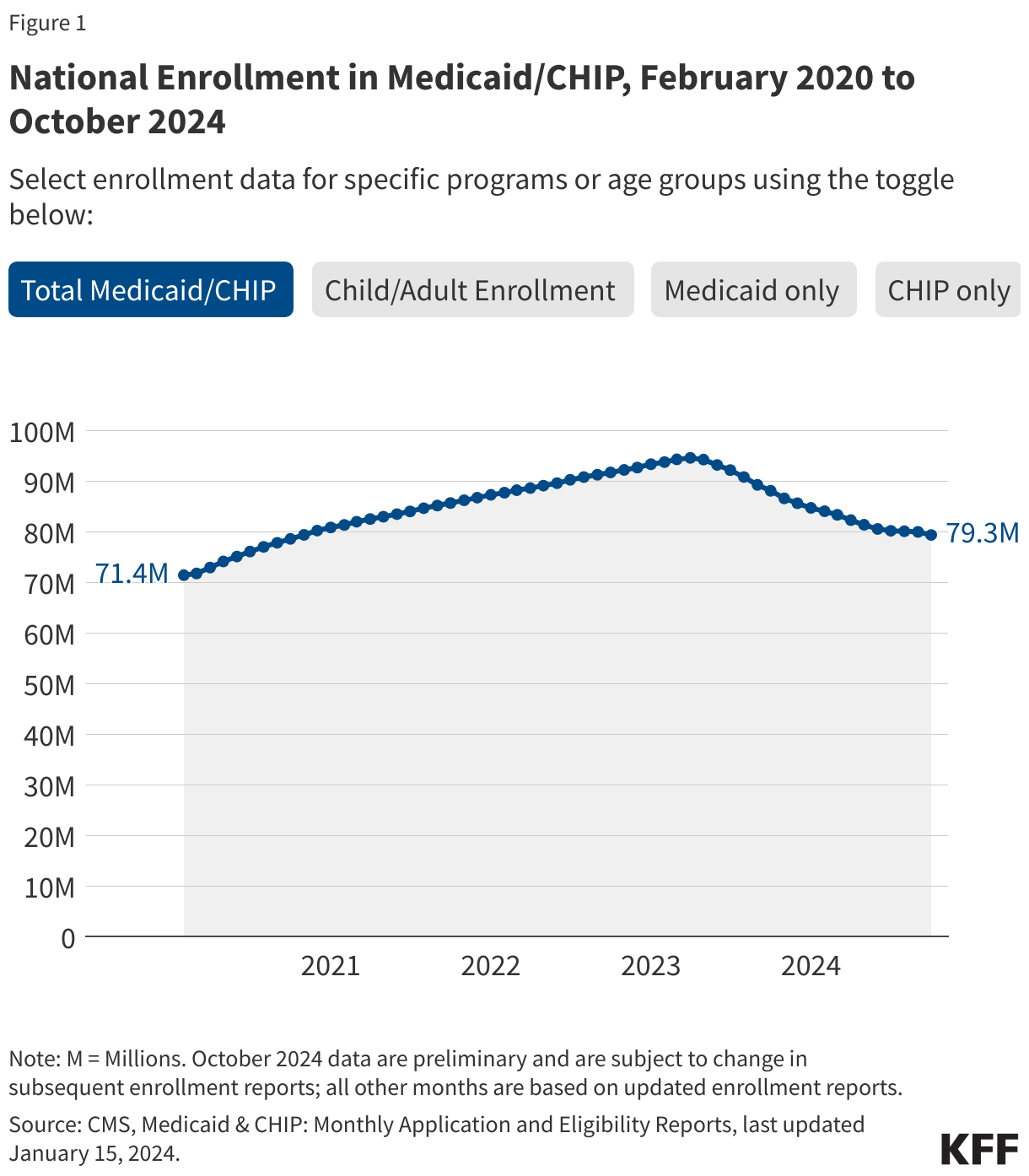
The figures below show Medicaid and CHIP enrollment from February 2020 through the most current month of available data. Some figures also include enrollment for adults and children in Medicaid/CHIP. Key enrollment trends as of December 2025 include:

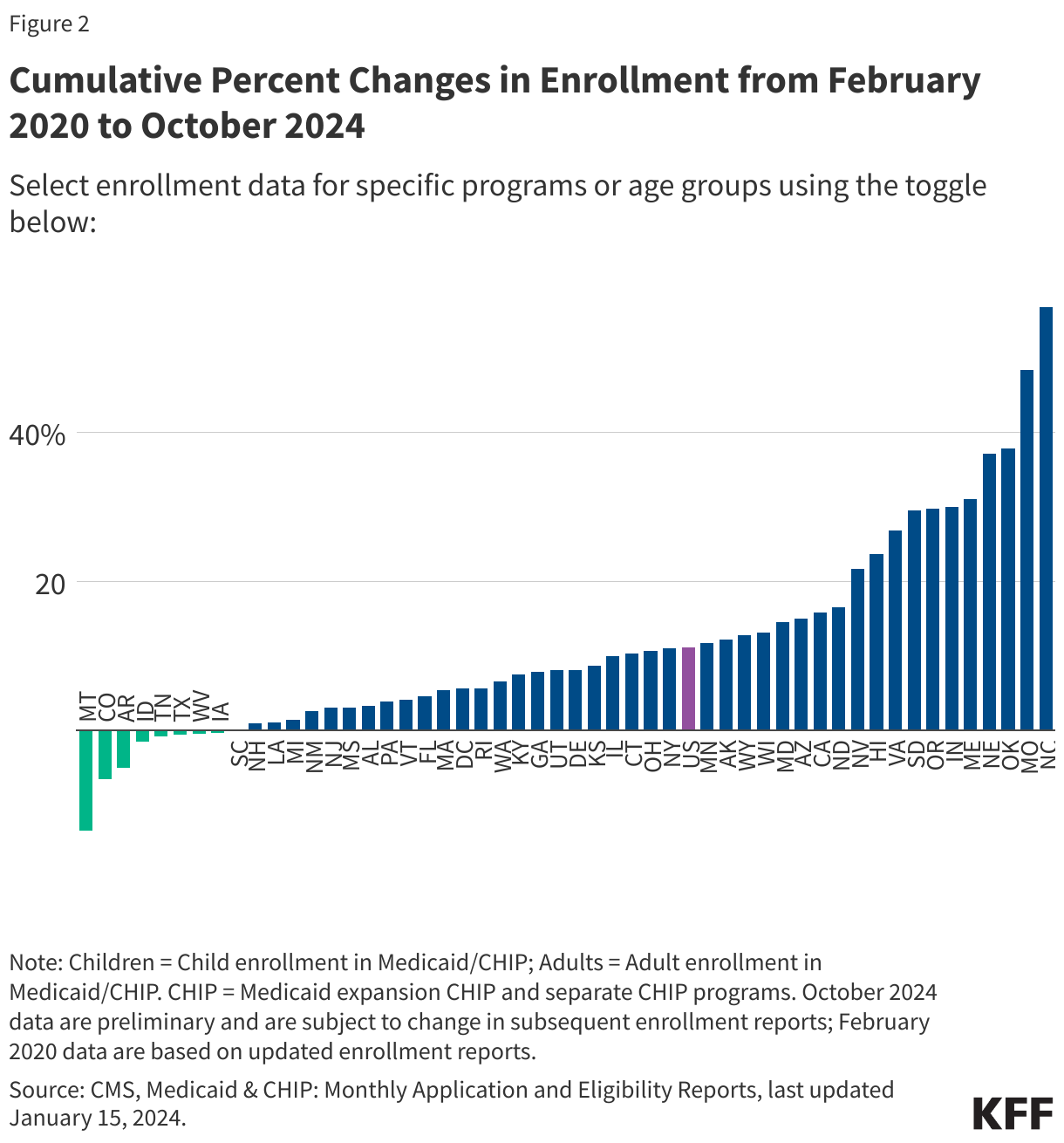
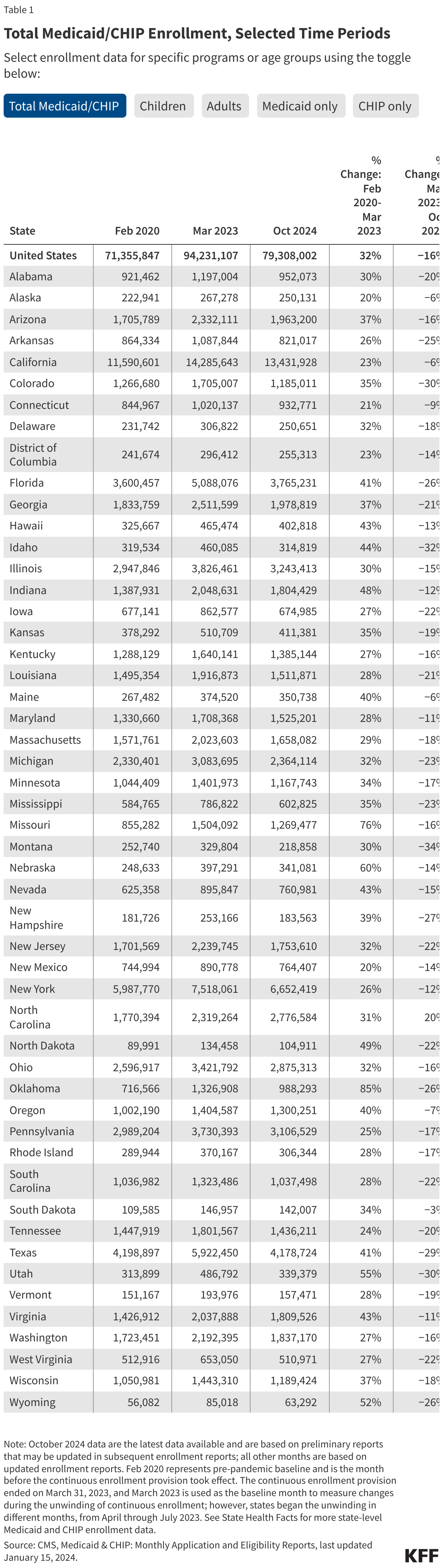
  • There are 75.7 million people enrolled in Medicaid/CHIP nationally (Figure 1). This represents an 20% decline from total Medicaid/CHIP enrollment in March 2023, but is still 6% higher than Medicaid/CHIP enrollment in February 2020, prior to the pandemic (Figure 2 and Table 1).
  • Several factors likely explain why national Medicaid/CHIP enrollment is higher than pre-pandemic enrollment. The pandemic may have encouraged some people who were previously eligible for Medicaid but not enrolled to newly enroll in the program. During the unwinding, many states took steps to improve their renewal processes, which reduced the number of people who were disenrolled despite remaining eligible. In addition, some states expanded eligibility for certain groups since the start of the pandemic, such as the Affordable Care Act’s (ACA) Medicaid expansion.
  • Medicaid/CHIP enrollment is higher than pre-pandemic levels in all but seventeen states (AK, AR, AZ, CO, FL, ID, IA, LA, MI, MT, NH, NM, SC, TN, TX, VT and WV). Enrollment changes from pre-pandemic baseline vary from a 17% decrease in Montana to a 54% increase in North Carolina (Figure 2). Many of the states with the largest increases in enrollment expanded eligibility since the start of the pandemic. For example, five states (NE, OK, MO, SD, and NC) implemented the Medicaid expansion between October 2020 and December 2023 and Maine increased the income limit for children to qualify for Medicaid.
  • In the 49 states and DC with complete enrollment data by age, there are 35.3 million children (48%) and 38.7 million adults (52%) enrolled, a change from pre-pandemic (February 2020) enrollment patterns when children made up a slight majority (51%) of Medicaid/CHIP enrollees (Figure 1).
  • Child enrollment in Medicaid/CHIP is below pre-pandemic enrollment in 23 states, while adult enrollment is below pre-pandemic levels in 15 states (Figure 2).
  • There are 68.5 million people enrolled in Medicaid and 7.2 million people enrolled in CHIP (Figure 1). More states report CHIP enrollment above their pre-pandemic baselines compared to the number reporting Medicaid enrollment above the baseline (Figure 2).
National Enrollment in Medicaid/CHIP, February 2020 to December 2025 (Line chart)
Cumulative Percent Changes in Enrollment from February 2020 December 2025 (Column Chart)
Total Medicaid/CHIP Enrollment, Selected Time Periods (Table)

Unwinding Data – Archived

Note: The data on unwinding renewal outcomes presented below were last updated on September 12, 2024; since most states have now completed the Medicaid unwinding, the information will not be updated again.

As of September 12, 2024 and with nearly complete unwinding data for most states: 

  • Over 25 million people were disenrolled (31% of completed renewals) and over 56 million people had their coverage renewed (69% of completed renewals).  
  • Disenrollment rates varied across states from 57% in Montana to 12% in North Carolina, driven by a variety of factors including differences in renewal policies and procedures as well as eligibility expansions in some states.  
  • Among those who were disenrolled, nearly seven in ten (69%) were disenrolled for paperwork or procedural reasons while three in ten (31%) were determined ineligible.  
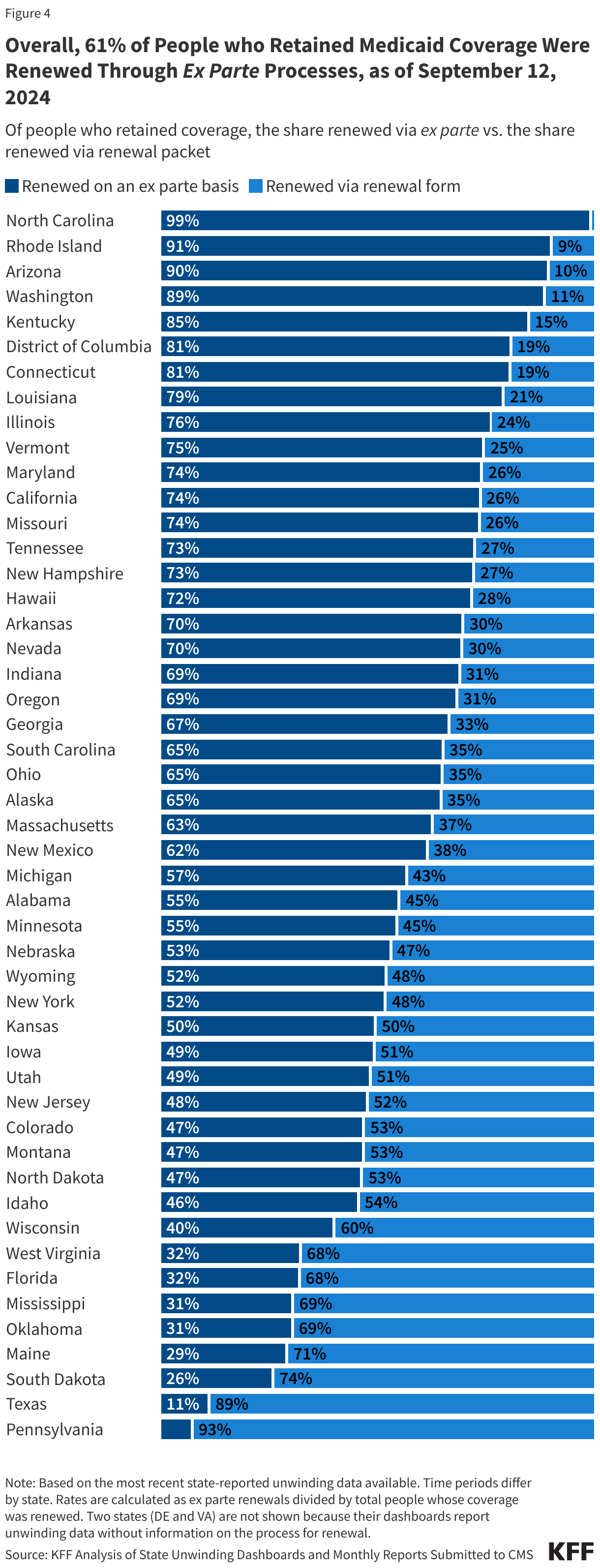
  • Among those whose coverage was renewed during the unwinding, 61% were renewed on an ex parte, or automated, basis, meaning the individual did not have to take any action to maintain coverage. 

State Data on Renewal Outcomes

The data on unwinding-related renewal outcomes presented in this section rely primarily on monthly reports that states were required to submit to the Centers for Medicare & Medicaid Services (CMS) during the unwinding period. The data also reflect updates to the monthly reports that states submit three months after the original report submission to account for the resolution of pending cases and any other changes in renewal metrics. For 13 states, data were pulled from dashboards or reports published on state websites that provide more complete information, and for a few additional states, updated monthly reports were pulled from state websites because they were more timely than what is reported on the CMS website. 

To view archived data for specific states, click on the State Data – Archived tab.


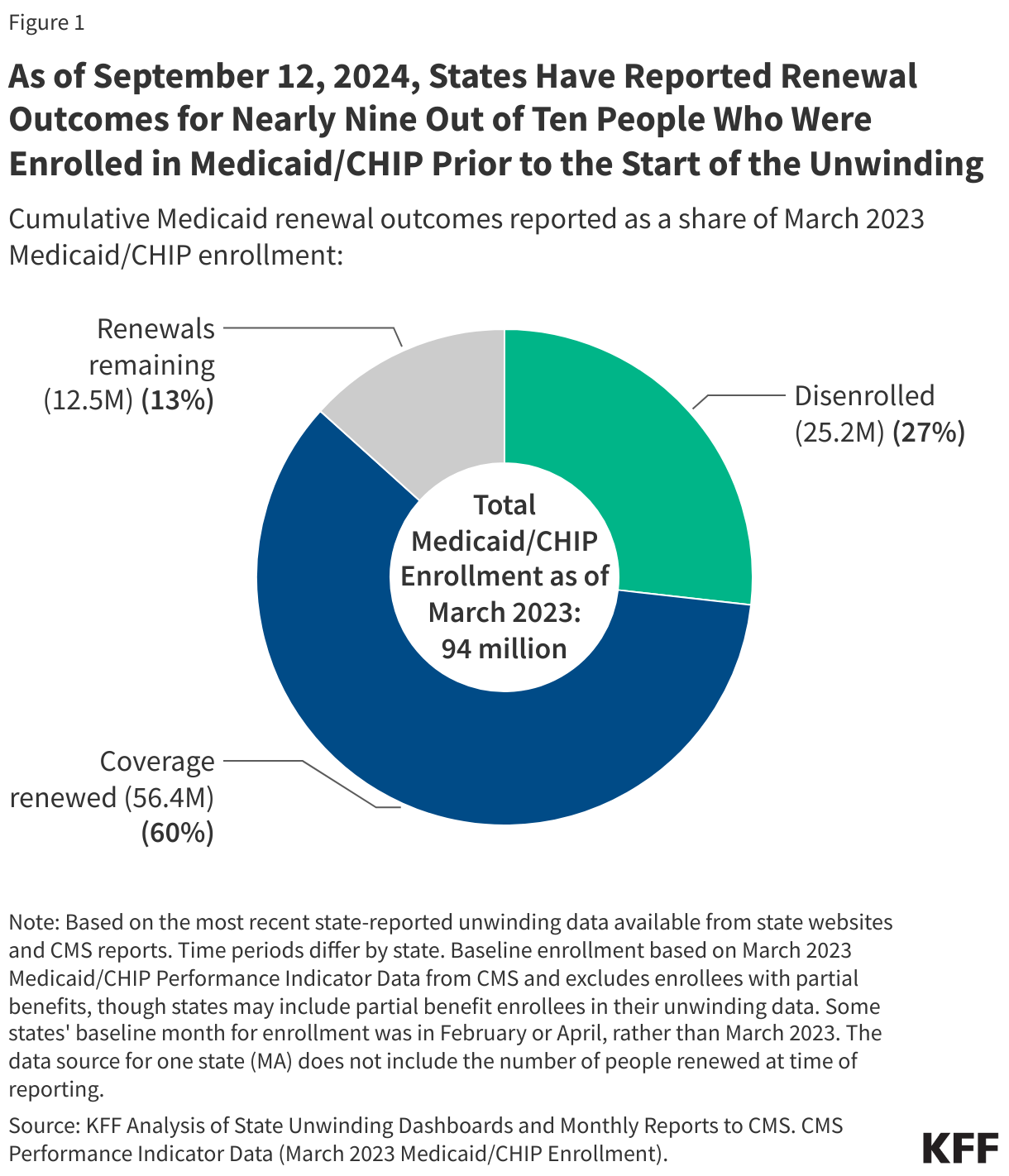
As of September 12, 2024, States Have Reported Renewal Outcomes for Nearly Nine Out of Ten People Who Were Enrolled in Medicaid/CHIP Prior to the Start of the Unwinding (Donut Chart)


Medicaid Disenrollments

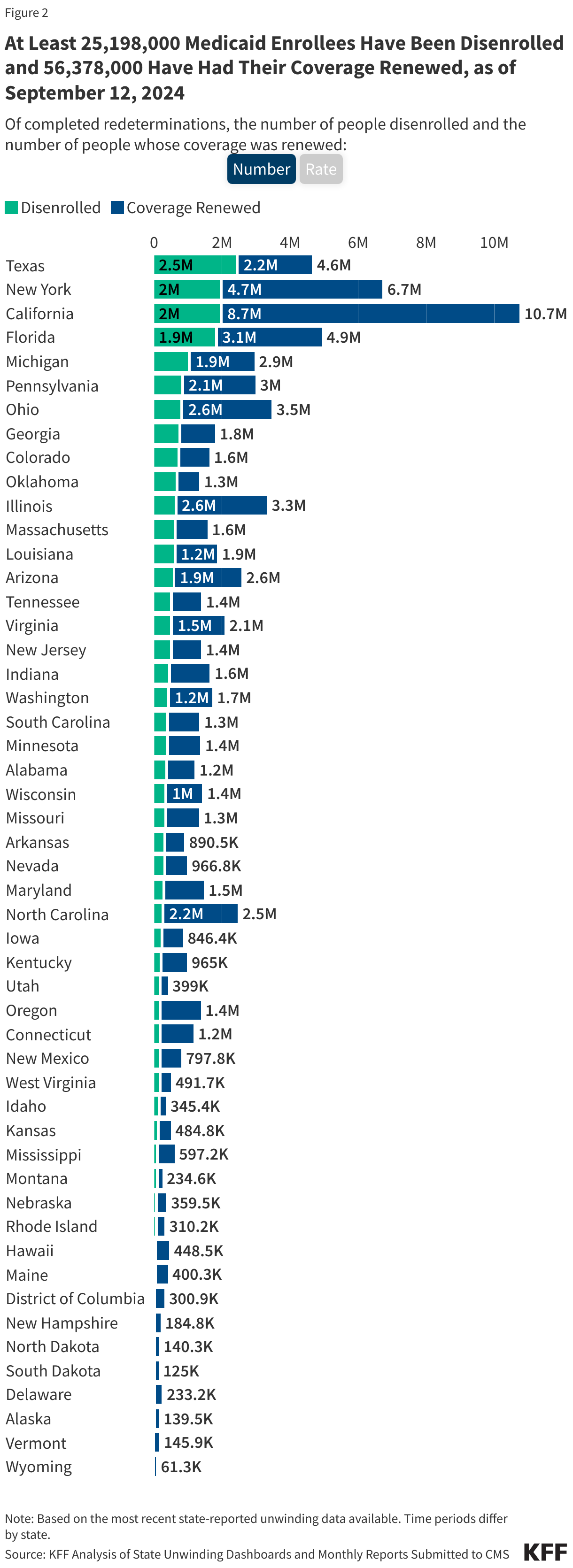
  • As of September 12, 2024, at least 25,198,000 Medicaid enrollees had been disenrolled during the unwinding of the continuous enrollment provision. Overall, 31% of people with a completed renewal were disenrolled in reporting states while 69%, or 56.4 million enrollees, had their coverage renewed.
  • There is wide variation in disenrollment rates across reporting states, ranging from 57% in Montana to 12% in North Carolina. A variety of factors contribute to these differences, including differences in renewal policies and system capacity. Some states adopted policies that promote continued coverage among those who remain eligible and/or have automated eligibility systems that can more easily and accurately process renewals while other states have adopted fewer of these policies and have more manually-driven systems. In addition, North Carolina and South Dakota adopted Medicaid expansion and other states increased eligibility levels for certain populations (e.g., children, parents, etc.) during the unwinding, which may have lowered disenrollment rates in these states.

At Least 25,198,000 Medicaid Enrollees Have Been Disenrolled and 56,378,000 Have Had Their Coverage Renewed, as of September 12, 2024 (Stacked Bars)


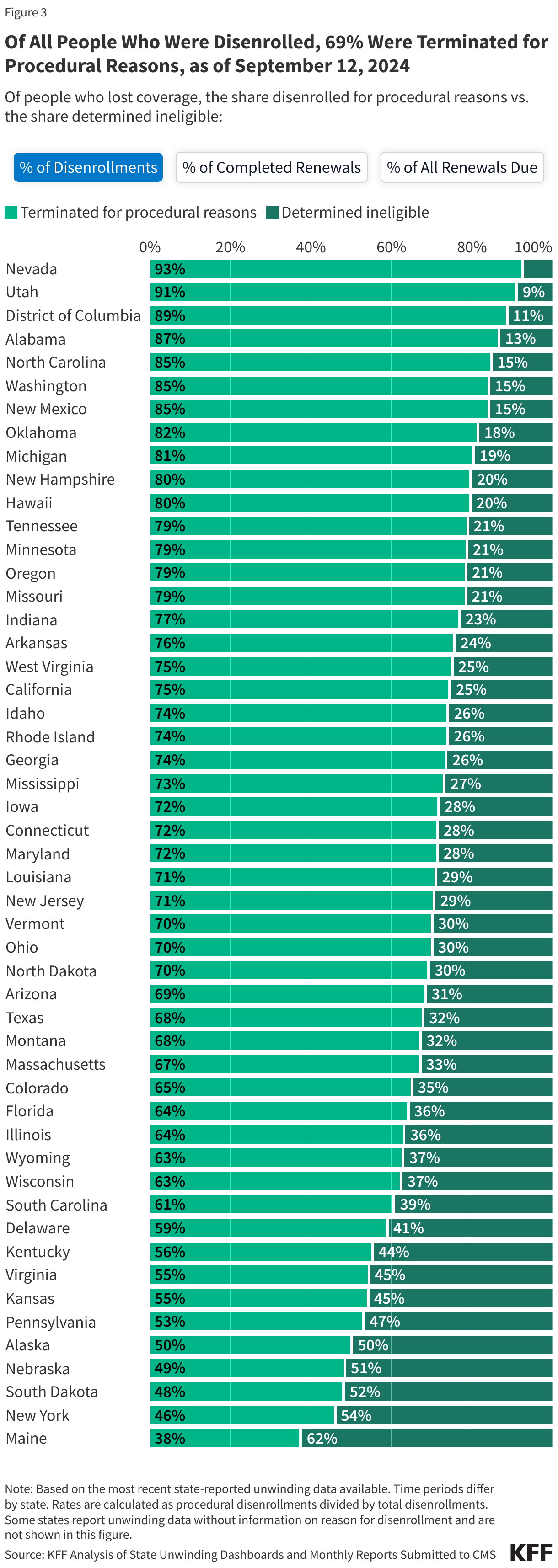
  • Across all states with available data, 69% of all people disenrolled had their coverage terminated for procedural reasons. However, these rates vary based on how they are calculated (see note below). Procedural disenrollments are cases where people are disenrolled because they did not complete the renewal process and can occur when the state has outdated contact information or because the enrollee does not understand or otherwise does not complete renewal packets within a specific timeframe. High procedural disenrollment rates are concerning because many people who are disenrolled for these paperwork reasons may still be eligible for Medicaid coverage. 

(Note: The first tab in the figure below calculates procedural disenrollment rates using total disenrollments as the denominator. The second tab shows these rates using total completed renewals, which include people whose coverage was terminated as well as those whose coverage was renewed, as the denominator. And finally, the third tab calculates the rates as a share of all renewals due, which include completed renewals and pending cases.)

Of All People Who Were Disenrolled, 69% Were Terminated for Procedural Reasons, as of September 12, 2024 (Stacked Bars)

Medicaid Renewals

  • Of the people whose coverage has been renewed as of September 12, 2024, 61% were renewed on an ex parte basis while 39% were renewed through a renewal form, though rates vary across states. Under federal rules, states are required to first try to complete administrative (or “ex parte”) renewals by verifying ongoing eligibility through available data sources, such as state wage databases, before sending a renewal form or requesting documentation from an enrollee. Ex parte renewal rates varied across states from 90% or more in Arizona, North Carolina, and Rhode Island to less than 20% in Pennsylvania and Texas. 

Overall, 61% of People who Retained Medicaid Coverage Were Renewed Through Ex Parte Processes, as of September 12, 2024 (Stacked Bars)

Federal Data on Renewal Outcomes

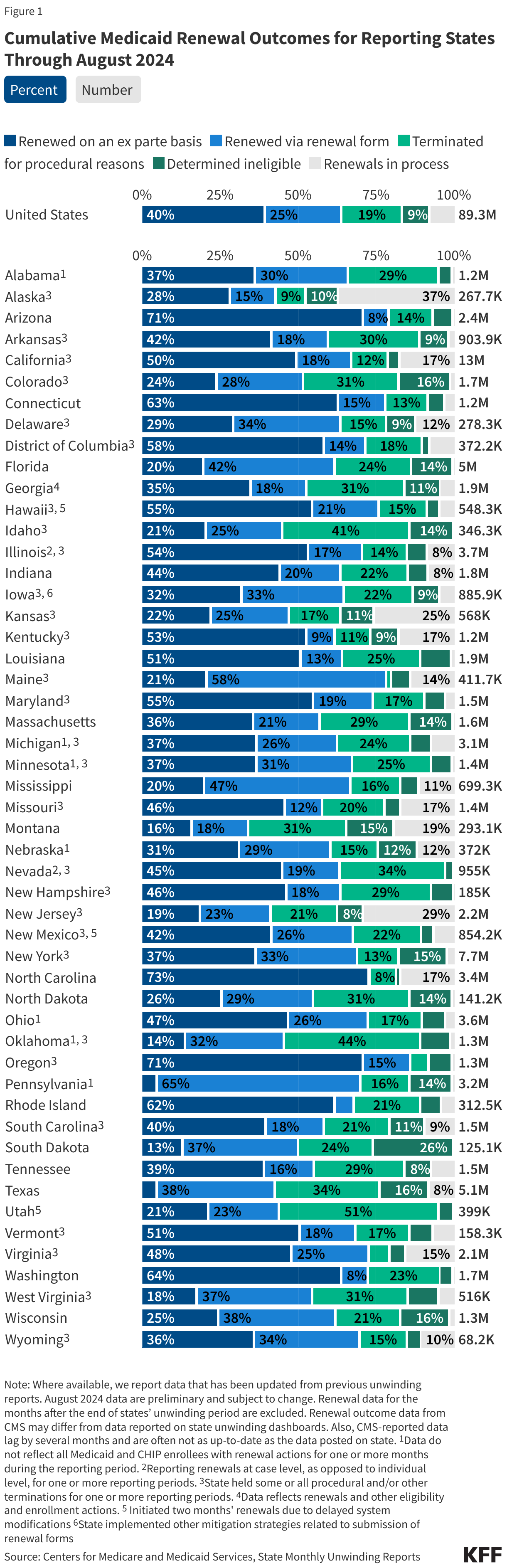
The data presented here are cumulative unwinding metrics published by CMS. These counts and percentages may differ from the above data, which present renewal metrics reported on state websites when state-reported data are more complete.  

Figure 1 below shows cumulative renewal data reported by CMS during states’ unwinding periods. Renewal data for the months after the end of states’ unwinding period are excluded. The data reflect updated unwinding data reported by states three months after the original monthly reports as they become available.   

Cumulative Medicaid Renewal Outcomes for Reporting States Through August 2024 (Stacked Bars)

For questions about this tracker, please contact KFFTracker@kff.org

State Data – Archived

Note: The state data presented below were last updated on September 12, 2024; since most states have now completed the Medicaid unwinding, the information will not be updated again. 

The data presented here provide state-level data on enrollment trends and renewal outcomes during the unwinding period. Figure 1 shows total Medicaid enrollment by month starting in January 2023 and, once disenrollments resumed in a state, the cumulative percent change in Medicaid enrollment relative to the month before Medicaid disenrollments started (this baseline month will differ across states). Figure 2 shows renewal metrics for each month of a state’s unwinding period (or cumulative data for the unwinding period for some states). 

For total national Medicaid enrollment, click on the Enrollment Data tab.

Related Resources

Resources on unwinding data

Resources on state policies and preparations for the unwinding

Resources on pre-pandemic enrollment patterns and coverage transitions

KFF’s unwinding explainer

U.S. Global Health Country-Level Funding Tracker

Published: Mar 27, 2026

This tracker provides U.S. global health funding data by program area and country. It includes Congressionally appropriated (planned) funding amounts from FY 2006 – FY 2023, as well as obligations and disbursements from FY 2006 – FY 2025 (FY 2025 data are partially reported). Data were obtained from ForeignAssistance.gov (see About This Tracker below for more details). For examples of analyses that can be done using this tracker, please expand the section below.

Tracker

About This Tracker

The U.S. is the largest donor to global health in the world, providing bilateral (direct country-to-country) support for U.S. global health programs in over 75 countries in FY 2023 (through appropriated/planned funding), with additional countries reached through U.S. regional efforts and U.S. contributions to multilateral organizations. This tracker provides historical data on bilateral U.S. government funding for global health by country, region, and income-level. It presents data on country-specific global health funding channeled through the Department of State (State) and U.S. Agency for International Development (USAID); these agencies account for approximately 85% of all U.S. funding for global health. Funding channeled through other agencies – the National Institutes of Health (NIH), Centers for Disease Control and Prevention (CDC), and Department of Defense (DoD) – is not included, as these data are not available at the country-level. Funding directed to “regional” or “worldwide” programs, which may reach additional countries, is also not included. See our companion resource, KFF U.S. Global Health Budget Tracker, to view data on U.S. funding for global health overall, including funding channeled through these other agencies. Data in this tracker present three transaction types:

  1. Appropriated: funding amounts based on Congressional appropriations for a given fiscal year which may be obligated and disbursed over a multi-year period;
  2. Obligations: binding agreements that will result in disbursements (or outlays), immediately or in the future, and
  3. Disbursements: actual paid amounts (an outlay of funds) to a recipient in a given year.

These amounts will be updated as new data become available. Queried data can be downloaded using the button within the interactive, and the full data can be downloaded here. For questions related to this resource, or for inquiries on further analyses on U.S. global health funding, please contact globalhealthbudget@kff.org.

Sources

KFF analysis of data from the U.S. Foreign Assistance Dashboard, U.S. State Department regional classifications, and World Bank income classifications.

One or Two Health Systems Controlled the Entire Market for Inpatient Hospital Care in Nearly Half of Metropolitan Areas in 2024

Published: Mar 27, 2026

Editorial Note: This brief updates a previous analysis with more recent data, an evaluation of increases in concentration over time, and minor adjustments to the Methods.

National health spending totaled $5.3 trillion in 2024—18% of gross domestic product (GDP)—and is projected to grow faster than GDP through 2033, contributing to higher costs for families, employers, states, and the federal government. As policymakers consider a variety of strategies to make health care more affordable, they have been increasingly attentive to the effects of consolidation in health care markets and the potential implications for cost and quality of care. Hospital consolidation has been a subject of particular focus in part because spending on hospital care is the largest source of spending on health. Hospital care has also contributed more than other categories to the growth in national health spending over time, including from 2022 to 2024, when it accounted for 40% of spending growth. Consolidation may allow providers to operate more efficiently and help struggling providers keep their doors open in underserved areas, but it often reduces competition. A substantial body of evidence has found that consolidation can contribute to higher prices, with unclear effects on quality.

This analysis examines the competitiveness of markets for hospital care, based on RAND Hospital Data—a cleaned and processed version of cost reports from Medicare-certified hospitals—and American Hospital Association (AHA) survey data. The analysis examines competition among independent hospitals and health systems, referring to both as “health systems” throughout for brevity. Competition is measured in three ways: the share of metropolitan statistical areas (MSAs) controlled by a small number of health systems, the level of market concentration in MSAs based on the Herfindahl-Hirschman Index (HHI), and the share of hospitals affiliated with health systems over time. Using hospital data from 2024 (the most recent year available), this analysis focuses on general short-term or general medical and surgical hospitals depending on the dataset and excludes federal hospitals (see Methods for more details).

Key Takeaways

  • One or two health systems controlled the entire market for inpatient hospital care in nearly half (47%) of metropolitan areas in 2024.
  • In more than four of five metropolitan areas (83%), one or two health systems controlled more than 75 percent of the market.
  • Nearly all (97% of) metropolitan areas had highly concentrated markets for inpatient hospital care when applying HHI thresholds from antitrust guidelines to MSAs.
  • Most hospital markets in metropolitan areas (80%) became less competitive from 2015 to 2024 or were controlled by one health system over that entire period.

One or Two Health Systems Controlled the Entire Market for Inpatient Hospital Care in Nearly Half (47%) of Metropolitan Areas in 2024

Nearly one in five (19%) metropolitan statistical areas (MSAs) were controlled by a single health system, and more than one in four (27%) markets were controlled by two systems in 2024 (see Figure 1). In more than four of five metropolitan areas (83%), one or two health systems controlled more than 75 percent of the market. These markets all met the definition of highly concentrated markets based on thresholds in current antitrust guidelines (see below). One health system controlled at least half of the market in about three out of four MSAs (76%) and at least a quarter of the market in nearly every MSA (98%).

One or Two Health Systems Controlled the Entire Market for Inpatient Hospital Care in Nearly Half of Metropolitan Areas in 2024 (Small multiple donut chart)

The number of health systems in a given MSA tends to increase with the population of the region. For example, in 79% of MSAs with a population of less than 200,000, one or two health systems controlled the entire market for inpatient hospital care in 2024, as in the Muncie, IN; Napa, CA; and Amherst Town-Northampton, MA MSAs (Figure 2). MSAs with one or two health systems account for nearly half (47%) of all MSAs but 12% of the U.S. population living in metropolitan areas.

Conversely, virtually all (54 of 55) MSAs with a population of at least one million people had at least four health systems, as in the MSAs encompassing Detroit, Miami, and Phoenix. MSAs with four or more health systems accounted for 35% of all MSAs but 79% of the U.S. population living in metropolitan areas.

However, in fourteen of these relatively large MSAs with four or more health systems, the two largest health systems controlled at least 75% of the market, and in 44 of these areas, they controlled at least 50% of the market. For example, in the MSA encompassing Austin, TX, with 2.6 million residents, two systems (HCA Healthcare and Ascension Healthcare) controlled 89% of the inpatient hospital care market, though Austin is home to more than four health systems. The metropolitan area encompassing Portland, OR, with 2.5 million residents and more than four health systems, is a less concentrated market than Austin’s, but the two largest systems (Legacy Health and Providence) still control a combined 62% of the market. (See Methods for discussion about MSAs as geographic hospital markets).

Hospital Market Competitiveness Varied Across US Metropolitan Areas in 2024 (Symbol map)

Nearly All (97% of) Metropolitan Areas Had Highly Concentrated Markets for Inpatient Hospital Care in 2024 Based on Thresholds Used in Current Antitrust Guidelines

Another way to assess market competitiveness is to evaluate a measure of concentration known as the Herfindahl-Hirschman Index (HHI), which is based on the number of participants in a market and their respective shares. The measure runs from 0 (perfectly competitive) to 10,000 (monopoly market). Based on current merger guidelines from the Federal Trade Commission (FTC) and Department of Justice (DOJ), markets can be grouped into three categories: not concentrated (HHI < 1,000), moderately concentrated (1,000 – 1,800), and highly concentrated (HHI > 1,800). This analysis calculates HHIs for MSAs and groups these regions accordingly, though there are other ways of defining the boundaries of hospital markets (see Methods).

Nearly all (97% of) MSAs had highly concentrated markets for inpatient hospital care in 2024 based on thresholds used in current merger guidelines (Figure 3). These guidelines reflect updates in 2023 that lowered the HHI thresholds for moderately concentrated and highly concentrated markets. Based on the thresholds used in prior guidelines, a large majority but somewhat smaller share (93%) of MSAs were highly concentrated markets for inpatient hospital care in 2024, closer to an estimate from an earlier study (90%) that used data from 2016.

As was the case when looking at counts of health systems in MSAs, larger metropolitan areas tended to be less concentrated and more competitive than less populated metropolitan areas, although this was not always the case. All 10 MSAs that were identified as either not concentrated or moderately concentrated had more than one million residents, such as the MSAs encompassing Cincinnati, Los Angeles, and Miami. However, 45 MSAs with more than one million residents—including the MSAs encompassing Houston, Denver, and Atlanta—had highly concentrated hospital markets. Overall, 72% of people living in metropolitan areas lived in highly concentrated hospital markets.

Nearly All (97% of) Metropolitan Areas Had Highly Concentrated Markets for Inpatient Hospital Care in 2024 Based on Thresholds Used in Current Antitrust Guidelines (Donut Chart)

The Share of Hospitals Affiliated With Health Systems Increased From 56% in 2010 to 69% in 2024, With the Share Growing in Both Rural and Urban Areas

More than two thirds of hospitals (69%) are now part of a larger system, an increase from 56% in 2010 (Figure 4). A smaller share of rural than urban hospitals were part of a health system in 2024 (53% versus 80%), though shares have increased over time for both rural and urban regions: from 43% in 2010 to 53% in 2024 among rural hospitals and from 66% in 2010 to 80% in 2024 among urban hospitals.

Most system-affiliated hospitals in 2024 (52%) were part of a system with at least 15 hospitals, and 19% were in a system with at least 50 hospitals. Systems with at least 100 hospitals accounted for 10% of system-affiliated hospitals.

Hospitals joining larger systems may not always reduce local market competition, for example, if an independent hospital is acquired by a larger system that does not own facilities in the same market. However, mergers between hospitals that operate in different geographic markets for patient care—also known as “cross-market” mergers—may nonetheless lead to higher prices in some cases.

The Share of Hospitals Affiliated With Health Systems Increased From 56% in 2010 to 69% in 2024, With the Share Growing in Both Rural and Urban Areas (Line chart)

Most Hospital Markets in Metropolitan Areas (80%) Became More Concentrated From 2015 to 2024 or Were Controlled by One Health System Over That Entire Period

Four out of five metropolitan areas (80%) experienced an increase in hospital market concentration between 2015 and 2024 (Figure 5) or were controlled by a single hospital or health system for the duration. About two thirds of MSAs (65%) saw an increase in market concentration over this period, as measured by HHI, and the share of MSAs that were highly concentrated increased by two percentage points, from 95% to 97%. Fifteen percent of metropolitan areas were controlled by a single health system in both 2015 and 2024, meaning that concentration could not increase further in these markets. Concentration declined in only 20% of markets. In some cases, increases or decreases in concentration were very small.

Most Hospital Markets in Metropolitan Areas (80%) Became More Concentrated From 2015 to 2024 or Were Controlled by One Health System Over That Entire Period (Donut Chart)

The trend toward greater concentration was widespread across metropolitan areas of different sizes and regions. Among the 65% of MSAs that experienced increased concentration, the average HHI increased from 4,545 to 5,273, a 728 point increase. In markets that are not already controlled by one hospital or health system, market concentration may rise as a result of continued consolidation through mergers and acquisitions (Figure 4), shifts in hospital stays towards larger hospitals and health systems and away from smaller competitors, or hospital closures that reduce the number of competitors in a given market.

This work was supported in part by Arnold Ventures. KFF maintains full editorial control over all of its policy analysis, polling, and journalism activities.

Methods

Analyses of market shares and HHI (e.g., every figure except for Figure 4) were based in part on RAND Hospital Data. RAND Hospital Data are a cleaned and processed version of annual cost reports that Medicare-certified hospitals are required to submit to the federal government. Although limited to Medicare-certified hospitals, in 2024, the analysis of RAND data included the vast majority (98%) of non-federal general medical and surgical hospitals in US metropolitan areas included in the analysis of system affiliation based on the AHA Annual Survey Database (see below). Cost reports were assigned to years based on the end of the reporting period and were scaled up or down to reflect a 365-day period, as necessary. In cases where a hospital had multiple cost reports assigned to the same analysis year, the cost report covering the longer reporting period was retained. When cost reports were longer than 365 days and fully spanned a calendar year (such as one beginning 1/1/2022 and ending 7/31/2023), the cost report was assigned to both the year spanned in full (2022) and the year in which it ended (2023).

Analyses of market shares and HHI were restricted to non-federal, general short-term hospitals as identified in the RAND Hospital Data. Some general short-term hospitals in the analysis were identified as other hospital types, such as surgical hospitals, in the AHA data (6% of those that could be matched), though these represented a small share of discharges (1%). Market shares were calculated as the share of inpatient discharges in an MSA that occurred within a given health system or independent hospital. One percent of hospitals that met the other sample restrictions had missing values for inpatient discharges and were excluded. Hospitals were grouped into health systems, as applicable, based primarily on the hospital’s system affiliation in the AHA Annual Survey Database. A previous version of this analysis relied on the AHRQ Compendium of US Health Systems, but that file has not been updated to include 2024 information.

For 2024 analyses, in the small number of cases where a cost report could not be matched to the AHA Annual Survey database (2% of observations), the 2023 AHRQ Compendium was used to identify the hospital’s corresponding AHA system identifier, where available. Twelve hospitals could not be matched to AHA or AHRQ records, of which 7 were manually assigned system affiliations based on internet searches. System affiliations for 40 hospitals (2% of the sample) were updated using the 2023 AHRQ Compendium when confirmed by internet searches in cases where: (1) the Compendium identified at least two hospitals in an MSA as being part of a Compendium health system that did not correspond to an AHA system and (2) at least one of those hospitals was identified as independent in the AHA data. In 3 instances (covering 11 hospitals), two AHA systems were combined into one when indicated by the AHRQ Compendium and confirmed through internet searches.

Analyses of changes in system affiliation and market structure over time (Figures 4 and 5) relied only on AHA system identifiers. When cost reports did not match to AHA data in the Figure 5 analysis, those hospitals were treated as independent.

MSAs reflect 2023 geographic definitions from the Census Bureau delineated based on data from the 2020 decennial census. HHIs were calculated as the sum of squared market shares for all health systems in a given MSA (e.g., an MSA divided evenly between two systems would have an HHI of 502 + 502 = 5,000). MSA population estimates for 2024 were obtained from the Census Bureau.

MSAs were used as a proxy for hospital markets, which is one approach used by other studies summarizing hospital market competition across the country. There are other ways of defining markets that would yield different results when calculating the level of competition. For example, one report also evaluated MSAs but focused on where residents received their care, including at hospitals outside of a given MSA. As another example, some have defined markets based on a radius around the hospital defined by distance or estimated travel time. More precise market definitions, such as those used to define competition in antitrust cases, were not feasible. This study did not exclude MSAs with populations of at least three million as some others have done, because the analysis sought to describe competition across all metropolitan areas.

The analysis of the share of hospitals affiliated with systems was based on the AHA Annual Survey Database alone. This analysis was restricted to nonfederal, general medical and surgical hospitals. Urban hospitals were defined as those operating in a metropolitan area, while rural hospitals were defined as those operating in nonmetropolitan areas. Metropolitan and nonmetropolitan designations were identified using Urban Influence Codes (UIC) data.

State and Federal Reproductive Rights and Abortion Litigation Tracker

Last updated on

The Supreme Court’s Dobbs ruling, overturning Roe v. Wade, returned the decision to restrict or protect abortion to states. In many states, abortion providers and advocates are challenging state abortion bans contending that the bans violate the state constitution or another state law. The state litigation tracker presents up-to-date information on the ongoing litigation challenging state abortion policy.

In addition, since the Dobbs decision, new questions have arisen regarding the intersection of federal and state authority when it impacts access to abortion and contraception. Litigation has been brought in federal court to resolve some of these questions. The federal litigation tracker presents up-to-date information on the litigation in federal courts that involves access to contraception and abortion.

Litigation Involving Reproductive Health and Rights in the Courts, as of March 26, 2026 (Table)

LGBT People Experience Widespread Concerns and Challenges When it Comes to Health Care Affordability

Published: Mar 26, 2026

Introduction

Costs associated with health care and other household expenses weigh heavily on LGBT adults and health care affordability is poised to be a significant issue for all voters as we approach the 2026 midterm elections. This data note highlights the health care affordability challenges facing LGBT adults, a growing population that faces health related disparities, including related to both mental and physical health. At the same time, LGBT adults are a lower income group compared to non-LGBT adults. Findings from KFF Health Tracking Polls show that LGBT adults face more widespread concerns with affording basic necessities, including health care, compared to non-LGBT adults.

Findings

LGBT people, like the public overall, worry about the economy, with eight in ten (83%) LGBT adults saying their cost of living has increased in the past year, including more than half (58%) who say it has increased “a lot.” These are similar to the concerns among non-LGBT adults, 82% of whom say their cost of living has increased, including half who say it has increased “a lot”. Very small shares of both groups say their cost of living has “decreased” (4% of LGBT and 5% of non-LGBT adults). About one in ten LGBT and non-LGBT adults say their living expenses have remained stable over the past year (13% and 12%, respectively).

About Eight in Ten LGBT Adults Say Their Cost of Living Has Increased in the Past Year, Similar to Non-LGBT Adults (Stacked Bars)

Large majorities of both LGBT adults and non-LGBT adults worry about being able to afford health care for themselves and their family, with health care topping the list of economic worries for non-LGBT adults. However, LGBT adults have broader and more pronounced concerns related to affording basic necessities across multiple categories. Three-quarters of LGBT adults (76%) say they worry about paying for health care, including the cost of health insurance and out-of-pocket costs for things like office visits and prescription drugs. This ranks similarly to their financial worries related to other household expenses like food and groceries (also 76%), rent or mortgage (74%), and monthly utilities (71%). In each case, these concerns are more widespread than those of non-LGBT adults, likely reflecting LGBT adults’ lower incomes. Cost-concerns related to gas and transportation were somewhat lower for LGBT adults (67%) compared to other household expenses but still outpaced worries among non-LGBT adults (51%). However, the survey was conducted prior to the recent rise in gas prices in the wake of the Iran war.

Large Shares of LGBT Adults Worry About Affording Basic Necessities, Including Health Care, With Concerns More Common Than Among Non-LGBT Adults (Bar Chart)

When asked specifically about prescription medication costs, nearly two-thirds of LGBT adults (64%) say that they are worried about being able to afford prescription drug costs for themselves and their family, similar to the share of non-LGBT adults (58%). However, LGBT adults are more likely to say they are “very worried” about these costs than non-LGBT adults (36% v. 20%).

Nearly Two-thirds of LGBT Adults Worry About Affording Prescription Medications (Stacked Bars)

In addition to reporting worries related to health care affordability, LGBT adults commonly report facing difficulty with these expenses in their day-to-day lives. Four in ten LGBT adults (43%) report problems paying for health care, and a similar share (39%) say they had problems affording prescription drugs in the past year. In both cases LGBT adults report experiencing these difficulties at higher rates than non-LGBT adults.

LGBT Adults Commonly Face Difficulty Paying for Health Care and Prescription Drugs (Bar Chart)

VOLUME 43

New KFF Tracking Poll on Health Information and Trust Finds One in Three Adults Have Used AI Chatbots for Health Advice


Highlights

KFF’s latest Tracking Poll on Health Information and Trust finds that one-third of the public report using AI chatbots for health information and advice in the past year, similar to the share who have relied on social media for health. One in five adults who use AI for health cite difficulties accessing or affording health care as reasons they turned to these chatbots, including larger shares of younger and lower income users. These findings, as well as data from dozens of past KFF polls, are also available on KFF’s Health Information and Trust Polling dashboard.

And a federal judge suspended, for now, the appointments of thirteen members of the Advisory Committee on Immunization Practices (ACIP), the federal committee responsible for recommending vaccines to Americans, halting a scheduled meeting and staying recent changes to the childhood vaccine schedule. The ruling comes as KFF polling finds that fewer than half of U.S. adults express confidence in federal agencies to make recommendations about the childhood vaccine schedule, with more adults saying recent changes will have a negative rather than positive impact on children’s health.


KFF Poll Finds One in Three Adults Have Used AI for Health Information and Advice in the Past Year, With Younger Users More Likely to Cite Difficulty Accessing or Affording Health Care as a Reason They Turned to AI

Amid the AI technology boom, KFF’s latest Tracking Poll on Health Information and Trust finds that one-third (32%) of the public says they used AI for health information and advice in the past year – rivaling the share who have sought health information from social media in the past year (29%), but less common than seeking health advice from doctors (80%) or internet search engines (68%), which may themselves include AI-generated summaries.

The share of adults who report using AI for health information in the past year includes three in ten (29%) who say they sought information or advice about their physical health and about one in six (16%) who sought information or advice about their mental health. Compared to older adults, larger shares of adults under age 30 (who are more likely to use AI in the first place) say they turned to AI for information or advice related to their physical health (36%) or mental health (28%). When it comes to use of AI for mental health advice, Black adults and Hispanic adults, as well as those who are uninsured, are more likely to say they have used the technology.

Split bar chart showing percent who say they have sought information or advice about physical or mental health from artificial intelligence tools in the past year. Results shown by total adults, age, race and ethnicity, and insurance coverage.

Public trust in AI for health information is relatively low, particularly for those who have not used these tools or chatbots for health advice. About eight in ten adults who have not used AI for health or mental health information say they trust these tools “not too much” or “not at all” to provide reliable information about health or mental health. Conversely, majorities of adults who have used AI for health or mental health information say they trust these chatbots “a great deal” or “a fair amount” to provide reliable information on health (69%) or mental health (62%), respectively. At the same time, there is some skepticism among users, with three in ten (31%) who use AI for physical health saying they don’t trust AI for reliable information on health, and nearly four in ten (38%) who use AI for mental health saying they don’t trust these tools to provide reliable mental health information.

Split bar chart showing trust in AI tools to provide reliable information about health and mental health respectively. Results shown by total adults and by use of AI for different types of health information.

What We’re Watching

Court Ruling on Vaccine Schedule May Add to Confusion as Trust in Federal Recommendations Declines

A federal judge has blocked recent changes to the federal childhood vaccine schedule and suspended, for now, the appointments of some members of the advisory committee responsible for making vaccine recommendations. The lawsuit, brought by the American Academy of Pediatrics (AAP) and other medical organizations, argued that changes to the Advisory Committee on Immunization Practices’ (ACIP’s) membership and decision-making process undermined the committee’s credibility and departed from established standards. The AAP also alleged that the committee relied on what it called “spurious evidence” to make its recommendations and suggested that committee members and speakers made inaccurate or misleading claims prior to votes. The ruling does not assess the merits of the changes to vaccine recommendations, instead focusing on whether federal procedures for appointing committee members and developing recommendations were followed. The administration has indicated it is weighing its legal options, including a potential appeal, meaning the dispute could continue, but AAP’s president has framed the decision as a win for science that would bring clarity to vaccine recommendations. A KFF Quick Take provides additional detail on the ruling and what may come next.

For parents, patients, and providers, the ruling and ongoing dispute may deepen existing confusion about which vaccine guidance to trust. KFF’s January Tracking Poll on Health Information and Trust found that among adults who had heard about the recent changes to the childhood vaccine schedule (51% of all adults), twice as many said the changes would have a negative impact on children’s health (54%) as said they would have a positive impact (26%). As of early March, 29 states and Washington, D.C. had announced they would no longer fully follow the new CDC childhood vaccine schedule, creating a patchwork of vaccine guidance that varies by state.

What To Watch Out For: How will the ruling, future actions by the administration, and the growing divide between guidance from federal agencies and professional medical organizations affect vaccine-related narratives and public trust?

Polling Insights: KFF’s January Tracking Poll on Health Information and Trust, conducted shortly after changes to the federal vaccine schedule recommendations were announced, found that fewer than half of adults are confident in federal health agencies to make recommendations about childhood vaccines. Overall, just under half (44%) of adults said they have at least “some confidence” in federal health agencies to make recommendations about childhood vaccine schedules, including about half (51%) of Democrats and fewer than half of independents (45%) and Republicans (40%).

Stacked bar chart showing percent who say they have a lot, some, a little, or no confidence at all in the federal government health agencies to make recommendations about childhood vaccine schedules. Results shown by total adults, party ID, and support for the Make America Healthy Again movement.

Beyond making recommendations for childhood vaccines, fewer than half of the public expressed confidence in these agencies to ensure vaccine safety and effectiveness (46%), make decisions based on science (38%), or act independently (34%). Across partisanship, fewer than half of Democrats, independents, and Republicans are confident in these agencies to act independently or make decisions based on science.

Public Trust Higher in CDC, NIH, FDA Scientists Than Federal Health Agency Leadership

Two-thirds of Americans (67%) are confident that career scientists at federal health agencies, including the Centers for Disease Control and Prevention (CDC), National Institutes of Health (NIH), and Food and Drug Administration (FDA), are providing the public with trustworthy health information, compared to 43% who said the same of the leaders of those agencies, according to a new poll from the Annenberg Public Policy Center. This new poll gives additional context to KFF polling that has found declining public trust in agencies like the CDC and FDA since the beginning of the COVID-19 pandemic.

What To Watch Out For: The gap between trust in career scientists and trust in agency leadership may take on added significance as changes are made to the federal health workforce. The NIH, for example, has lost more than 20% of its workforce since the start of the Trump administration, according to federal data reported by KFF Health News. As thousands of career scientists leave, federal agencies may face additional challenges in maintaining capacity and public confidence.


More From KFF

About The Health Information and Trust Initiative: the Health Information and Trust Initiative is a KFF program aimed at tracking health misinformation in the U.S., analyzing its impact on the American people, and mobilizing media to address the problem. Our goal is to be of service to everyone working on health misinformation, strengthen efforts to counter misinformation, and build trust. 


View all KFF Monitors

The Monitor is a report from KFF’s Health Information and Trust initiative that focuses on recent developments in health information. It’s free and published twice a month.

Sign up to receive KFF Monitor
email updates


Support for the Health Information and Trust initiative is provided by the Robert Wood Johnson Foundation (RWJF). The views expressed do not necessarily reflect the views of RWJF and KFF maintains full editorial control over all of its policy analysis, polling, and journalism activities. The data shared in the Monitor is sourced through media monitoring research conducted by KFF.

Deaths and Health Care Issues in ICE Detention Centers Under the Second Trump Administration

Published: Mar 25, 2026

Introduction

As of March 18, 2026, Immigration and Customs Enforcement (ICE) reported that 46 people died while in their custody or detention facilities since the start of the second Trump administration in January 2025. The number of deaths of people in detention during 2025 exceeded the highest seen in over two decades, and deaths in 2026 are on track to meet or exceed that number. President Trump implemented immigration policy changes focused on increasing interior enforcement efforts to support mass deportation, which increased the number of immigrants detained by ICE to over 68,000 as of February 7, 2026, an increase of over 70% from the 39,000 immigrants held in detention at the end of the Biden administration in December 2024.

ICE is required to maintain certain basic health and safety standards in all detention facilities, which include an initial medical and mental health screening as well as comprehensive health services that include diagnoses and treatments, transfers to off-site medical care when necessary, and access to 24-hour emergency care. However, detention facilities have a history of inadequate compliance with health and safety standards, insufficient health care, shortages in health care staffing, and limited oversight, which may create health risks for those detained. The increased number of people in detention facilities and overcrowding of facilities may further increase health risks, particularly for communicable diseases like measles and people with complex medical conditions. This brief provides an overview of deaths in ICE custody and detention centers under the Trump administration based on KFF analysis of ICE detainee death reporting and news releases and reviews recent reports of health care issues in detention centers.

Deaths in ICE Custody and Detention

The number of deaths occurring among people in ICE custody or detention increased from 11 in 2024 and less than ten in earlier years to 33 in 2025 after the Trump administration took office (Figure 1). ICE is required to publish a news release with relevant details regarding custody deaths within two days, while full reports regarding custody deaths are published within 90 days of occurrence that may contain more details from investigations into the deaths. Six of the deaths that occurred between January 1, 2025 and March 18, 2026 were among people with no reported criminality or pending criminal charges. A total of 36 deaths occurred among people who spent three or fewer months in ICE detention, including those ICE transferred to a hospital for additional medical care. Thirty-eight (38) deaths occurred among people younger than age 65, and 21 were among those under age 45 (Figure 2). Twenty-two (22) deaths were among people from Mexico and Central America, while ten were among people from Asia.

Total Annual Deaths Under ICE Custody or Detention, January 2021-March 2026 (Column Chart)
Deaths in ICE Custody or Detention by Age, January 1, 2025-March 18, 2026 (Pie Chart)

A total of 32 deaths among people in ICE custody or detention between January 2025 and March 2026 were among people with existing medical conditions who appeared to experience worsening health complications contributing to their death, while the remaining share were reported as due to suicide or other causes (Figure 3). While ICE does not always report an official cause of death as determined by a medical examiner, they report the details of initial health screenings and medical history. The causes of death due to health complications and the initial severity of health conditions varied. For example, ICE detained a 68-year-old adult with reported mild blood pressure issues who experienced steadily worsening symptoms over the course of two months that led to his hospitalization and death. In contrast, a 55-year-old adult with severe physical and mental health issues was transferred one day after his arrest to a hospital, where he stayed until his death. ICE reported the remaining deaths as suicide (9) and other causes (5), such as a fatal traffic collision during arrest. ICE reporting may differ from independent assessments of deaths. For example, the El Paso County Medical Examiner’s Office in Texas ruled a death in January 2026 to be a homicide due to the actions of enforcement officers, while ICE reported it as a suicide.

ICE Reported Causes of Death for Deaths Occurring Under ICE Custody or Detention, January 1, 2025-March 18, 2026 (Pie Chart)

Reported Health Care Issues

The Trump administration’s mass deportation efforts led to a significant increase in immigrants held in detention centers, which can lead to overcrowding if deportations do not keep up with the pace of arrests as well as challenges to accessing health care due to limited capacity and resources. Moreover, ICE payments to contractors providing medical care in detention facilities lapsed after the Department of Veterans Affairs terminated a longstanding agreement to process medical reimbursement claims in October 2025, which may impact certain health care services as the new claims system may not be active until April 2026. Overcrowding as well as limited capacity and resources may also increase the risk of the spread of communicable diseases, such as measles. For example, media reports indicate that recent measles outbreaks in Arizona and Texas detention facilities may have been the result of overcrowding and delays in providing vaccinations. ICE also terminated the contract with a private company that operated the Texas detention facility in March 2026 according to a media report indicating that, despite having no prior experience, the company was selected to build and operate the largest ICE facility and that there were reports of inadequate health care.

Reports since January 2025 suggest ICE may not be maintaining health and safety standards for immigrants held in detention centers. ICE is responsible for oversight and management of health care in detention facilities, but it has a history of inadequate compliance with detention standards and provides little to no publicly available data on health care use, quality, and outcomes. A 2025 report based on an investigation launched by Democratic Senator Jon Ossoff of Georgia documented instances of lack of access to prescribed medications, mistreatment of pregnant women, malnutrition and dehydration, unsanitary conditions, sleep deprivation, and abuse in detention facilities. A report based on interviews with people held at an Arizona detention facility between July 2024 to November 2025 conducted by a nonprofit organization serving detainees found instances of medical and mental health care lapses, such as several month delays in necessary specialty treatment and people with serious mental illnesses never seeing a mental health provider. Other media reports indicate instances of lost medical treatments and prescriptions during transfers between detention facilities.

There have also been recent reports of health care issues for children and pregnant people held in detention under the Trump administration. A media report on a Texas facility, where over half of detainees during the first nine months of the Trump administration were children, identified problematic health care issues, including inadequate staffing of pediatricians and child psychologists. Additionally, although ICE policy limits the detention of pregnant, postpartum, and nursing individuals to “very limited circumstances,” ICE data shared in response to an inquiry from Democratic Senator Patty Murray of Washington showing that 121 were detained as of February 16, 2026. This stands in contrast to when most of these groups were released on parole according to the most recent publicly available ICE report on these groups from the first half of fiscal year 2024. A media report and interviews conducted by legal organizations in 2025 with pregnant, postpartum, and nursing individuals in ICE detention identified gaps in prenatal and postnatal care. Another media report based on interviews with pregnant individuals held in ICE detention between 2025 and 2026 identified reports of excessive bodily restraints, inadequate nutrition and prenatal care, delayed emergency care, and an instance where ICE attempted to deport an individual in a late-term and high-risk pregnancy.

Several legal challenges related to poor health care conditions and limited oversight have been brought against ICE, some of which resulted in court rulings requiring ICE to implement changes. In February 2026, a judge ruled that ICE was required to improve conditions in California detention facilities due to poor conditions, including by ensuring adequate health care staffing, access to medical specialists, and providing timely care and medications. ICE faces pending lawsuits alleging that they delayed providing cancer care medication for an extended period of time during transit between facilities between August and October 2025 and that they provided inadequate medical care in Illinois in October 2025. In March 2026, local officials in California filed lawsuit to gain access to ICE facilities and conduct public health inspections after being denied access, and Maryland filed a lawsuit to obtain records detailing conditions at an immigration detention facility in Baltimore after investigations revealed multiple issues, including denial of medical care. These lawsuits to increase oversight followed a previous court order for ICE to restore unannounced congressional oversight visits to DHS facilities. A court order also required the Trump administration to restore DHS oversight offices that investigated issues of neglect and mistreatment in the ICE facilities. Despite reversing their decision to close the offices, the administration faces additional legal challenges due to low staffing in the offices that may reduce their ability to investigate ICE facility health care issues. The outcomes of court orders may change due to appeals by the Trump administration.

KFF Polling on Health Information and Trust

Key insights and trends from KFF’s polling on Health Information and Trust

Last Updated:

March 25, 2026

Trusted Sources of Health Information

Who the Public Trusts For Health Information

Copy link to Who the Public Trusts For Health Information

Doctors and other health care providers are the public’s most trusted source of health information, while trust in government health agencies and officials is much more divided. A large majority of adults express at least “a fair amount” of trust in their doctor for reliable information about health issues, while half say they trust the CDC or FDA and fewer than half express trust in their state government officials, HHS Secretary Robert F. Kennedy, Jr., or President Trump.

U.S. Adults Are Most Trusting of Their Own Doctors for Health Information; Fewer Trust Government Health Authorities (Stacked Bars)

Partisanship shapes who the public trusts for health information, especially when it comes to Secretary Kennedy and President Trump. Two-thirds of Republicans, rising to three-quarters among MAGA-supporting Republicans, say they trust Secretary Kennedy and President Trump for reliable health information compared to one-third or fewer independents and Democrats who say the same. On the other hand, Democrats are somewhat more likely than Republicans to trust their state officials for health information, while similar shares of Democrats and Republicans say they trust the CDC or FDA. Individual health care providers are the most-trusted source for health information across partisanship.

Across demographic groups – including age, gender, race and ethnicity, and education – health care providers remain the most trusted source of health information. For other health information sources, trust does not differ consistently across most of these groups, but White adults and those without a college degree are more likely than their peers to express trust in Secretary Kennedy and President Trump for health information.

Confidence in Federal Health Agencies

Copy link to Confidence in Federal Health Agencies

Most of the public lacks confidence in agencies like the CDC or FDA to carry out many of their core responsibilities. While Democrats are somewhat more likely than Republicans to have at least “some confidence” in government health agencies to ensure vaccine safety and effectiveness and make recommendations about the childhood vaccine schedule, fewer than half across partisans have confidence in these agencies to make decisions based on science or to act independently. For more information, see KFF’s January 2026 Tracking Poll on Health Information and Trust.

Fewer Than Half the Public and Partisans Are Confident in Government Health Agencies to Act Independently or To Make Decisions Based on Science (Bar Chart)

Trends in Trust of Government Health Agencies and Officials

Copy link to Trends in Trust of Government Health Agencies and Officials

At the onset of the COVID-19 pandemic, there were high levels of bipartisan trust in information about the new virus from the U.S. Centers for Disease Control and Prevention (CDC). Trust in the agency for information about COVID-19 vaccines, and vaccines more generally, subsequently declined amid widening partisan divisions and large drops in Republican trust. Democratic trust in the agency has since declined significantly following President Trump’s reelection and the confirmation of Robert F. Kennedy Jr. as HHS Secretary. Amid these partisan shifts, half of the public now express trust in the CDC for reliable vaccine information. Keep scrolling to see trends among the public and partisans.  

KFF polling has found trust in vaccine information from other health agencies and officials has also declined amid partisan divisions since 2020, including for the U.S. Food and Drug Administration (FDA), state government officials, and local public health departments. 

Who Parents Trust for Childhood Vaccine Information

Copy link to Who Parents Trust for Childhood Vaccine Information

Among parents of children under age 18, pediatricians are the most trusted source of reliable vaccine information. Smaller shares, but still majorities, also trust their local public health department, the CDC, and the FDA. Over half of parents trust their friends and family for vaccine information, while far fewer express trust in Robert F. Kennedy Jr., pharmaceutical companies, or health and wellness influencers. As with the public overall, partisanship plays a role in who parents trust for vaccine information. For more information, see the KFF/Washington Post Survey of Parents.

Among parents, Secretary Kennedy garners trust on vaccines from a majority of Republican supporters of the Make America Great Again, or MAGA, movement (18% of all parents) and supporters of the Make America Healthy Again, or MAHA, movement (38% of all parents). While slim majorities of these MAGA and MAHA parents trust Kennedy for vaccine information, larger shares express trust in their child’s pediatrician.

News, Social Media, and AI

Use and Trust of News Sources for Health Information

Copy link to Use and Trust of News Sources for Health Information

KFF’s Health Misinformation Tracking Poll Pilot measured the public’s consumption of a variety of television, print, radio, and digital news media sources as well as their trust in these sources for information about health issues. Overall, few adults both regularly consume most news sources and trust them a lot for information on health issues, with local and network television news topping the list. Nearly a quarter (23%) of adults say they regularly watch their local TV station and would trust it “a lot” for health information, while a similar share (21%) say the same about national network news. Other news sources, including NPR, CNN, Fox News, local newspapers, The New York Times, digital news aggregators, and MSNBC have trusting audiences that make up between one in ten and one in six of the overall public.    

Stacked bar chart showing percent who say they would trust information about health issues "a lot" and "a little" if they were reported by specific news sources.

Social Media Use for Health Information

Copy link to Social Media Use for Health Information

Just over half of adults say they use social media to find health information and advice “at least occasionally,” including larger shares of younger adults, and Black and Hispanic adults. For more information on social media use and trust see KFF’s July 2025 Tracking Poll on Health Information and Trust.

Stacked bar chart showing how often U.S. adults report using social media. Results shown by age gender, race/ethnicity, and party ID.

While just over half of the public report actively using social media to find health information and advice, larger shares report being exposed to such information, with majorities saying they have recently seen content related to weight loss, diet, or nutrition and mental health.

While four in ten social media users say they regularly get information about news and politics from social media influencers, far fewer (15%) say they turn to influencers for health information and advice. Younger adults, Black adults, and more frequent social media users are more likely than their peers to say they rely on influencers for health information. For more information on the relative impact of influencers on the public and health policy debates, see KFF CEO Drew Altman’s column.

Split bar chart showing the share of U.S. adults who report regularly getting health information and advice and news about politics from influencers on social media. Results by age gender, party ID, and social media use.

Trust in Social Media for Health Information

Copy link to Trust in Social Media for Health Information

Across different social media platforms, fewer than half of users say they find at least “some” of the health information they see on these platforms to be trustworthy. Younger users tend to be more trusting than older users of health content on certain platforms including TikTok, YouTube, Instagram, and Reddit.

While few say they trust social media when it comes to health, KFF’s 2023 Health Misinformation Tracking Poll Pilot found that that those who turn to social media more frequently for health information may be more susceptible to health misinformation. Adults who reported using social media at least weekly were more likely than less frequent users to believe at least one false claim related to either COVID-19, reproductive health, or firearms.

Split bar chart showing percent who have heard at least one item of COVID-19 or vaccine misinformation, reproductive health misinformation, and firearm misinformation, by total and frequency of use of social media for health information and advice.

AI and Health Information

Copy link to AI and Health Information

About a third (32%) of the public reports turning to AI chatbots for health information and advice in the past year – rivaling social media as a health information source, but less common than reliance on health care providers or internet search engines (where they may be encountering AI generated results, even if they are not looking for them). The share of adults using AI for health information includes three in ten who say they’ve used these chatbots in the past year for information or advice about their physical health, and one in six who’ve used them for mental health information or advice. For more information, see KFF’s March 2026 Tracking Poll on Health Information and Trust.

Split bar chart showing percent who have sought information or advice about their physical or mental health from specific sources in the past year.

Larger shares of younger adults report turning to AI for either physical health or mental health information in the past year. When it comes to mental health advice, uninsured adults and Black and Hispanic adults are more likely than insured adults and White adults to have turned to AI.

People report using AI for either physical health or mental health information in a variety of ways, most commonly to look up symptoms or general information about health conditions. Fewer say they used AI to help make decisions about whether to seek medical care for either physical or mental health concerns.

Bar chart showing percent who say they have used artificial intelligence tools for information and advice about their physical health in the past year, and whether they have used it for specific reasons.

The most common reason people cite for turning to AI for health advice is wanting quick or immediate support. Many also cite wanting to look up information before seeing a provider or feeling more comfortable looking up health questions privately. One in five cite health care access or affordability issues as major reasons for turning to AI for health questions, including larger shares of younger adults and those with lower household incomes

Among the public overall, few adults say they trust AI tools to provide reliable information about health, but most adults who have used AI for health information and advice say they trust these chatbots to provide reliable health information.

Split bar chart showing trust in AI tools to provide reliable information about health and mental health respectively. Results shown by total adults and by use of AI for different types of health information.

False or Unproven Health Claims

Awareness and Belief in False or Unproven Health Claims

Copy link to Awareness and Belief in False or Unproven Health Claims

Exposure to health misinformation is often widespread, but relatively small shares of the public express certainty that many false or unproven claims are true. In fact, most of the public fall in a “malleable middle,” saying these claims are either “probably true” or “probably false.” The public’s uncertainty around false or unproven health claims related to COVID-19 , vaccines , measles  and the purported causal link between Tylenol and autism presents an opportunity for interventions to clear up confusion and deliver accurate information.

Measuring Exposure

Copy link to Measuring Exposure

KFF polls have measured exposure to a wide array of false, misleading, and unproven health claims since 2023. Exposure varies widely depending on the topic and prominence of news coverage of the claim. The most widely heard of those tested in KFF polls is that taking Tylenol during pregnancy increases the risk of a child developing autism, a claim cited by President Trump in a widely covered September 2025 press conference.

The Malleable Middle

Copy link to The Malleable Middle

Across an array of false or unproven health claims measured in KFF surveys, few adults are certain these claims are “definitely true” while much larger shares consistently say they are “definitely false.” For most claims, at least half express uncertainty, falling into the malleable middle and saying the claims are either “probably true” or “probably false.” The six most recent claims measured in KFF surveys in 2025 are shown below.

While Few Adults Think False or Unproven Health Claims Are Definitely True, Many Express Uncertainty (Stacked Bars)

KFF polling has measured exposure to and belief in false or unproven claims across a wide array of topics. For information on belief in additional claims about COVID-19, reproductive health, and gun violence, see KFF’s Health Misinformation Tracking Poll Pilot.  For information on additional false claims related to COVID-19, see KFF’s May 2022, and October 2021 COVID-19 Vaccine Monitors.

Belief in False or Unproven Health Claims

Copy link to Belief in False or Unproven Health Claims

KFF polling has found partisanship and education play a substantial role in belief of false or unproven health claims about vaccines, COVID-19 and measles. Republicans and adults without a college degree are consistently more likely than Democrats and college educated adults, respectively, to believe or lean towards believing false claims related to COVID-19, measles, and vaccines.

Beyond partisanship and education, younger adults and Hispanic adults are more likely than their peers to believe or lean toward believing some of these false or unproven health claims but not others. These differences show that susceptibility to health misinformation among some groups can vary depending on the topic, which may reflect different information channels relied upon by these groups (see social media and news sources sections for more info).

Appendix For False or Unproven Health Claims

Copy link to Appendix For False or Unproven Health Claims

KFF polling has sought to examine the public’s exposure to and belief in a wide array of false or unproven health claims. Many of the false or unproven claims measured in KFF surveys have been amplified by or directly made by government officials, while others have been more nebulously shared and spread in public media over the years. Below is a list of sources to document these claims’ inaccuracy.

Table

Vaccine Attitudes

Views on Vaccine Safety Among the Public

Copy link to Views on Vaccine Safety Among the Public

Most U.S. adults, including majorities across partisans, express confidence in the safety of many routine vaccines for children, including MMR, polio, and hepatitis B. Similarly, large majorities of adults ages 50 and over are confident that vaccines for pneumonia and shingles are safe. Views on the safety of COVID-19 and flu vaccines for both adults and children are more divided, with large shares of Democrats expressing confidence compared with smaller shares of Republicans. For more information, see KFF’s January 2026 and April 2025 Tracking Polls on Health Information and Trust.

Parents’ Vaccine Attitudes and Behavior

Copy link to Parents’ Vaccine Attitudes and Behavior

In summer 2025, large majorities of parents expressed confidence in the safety of childhood vaccines for polio and measles, mumps, and rubella (MMR), but parents’ views on the safety of flu and COVID-19 vaccines were more polarized. About two-thirds of parents say the flu vaccines are safe for children, while fewer than half say the same about COVID-19 vaccines, with divisions along partisan lines. Beyond partisanship, parents who support the Make America Healthy Again (MAHA) movement (38% of parents), Black parents and parents under age 35 are less likely than their peers to be confident that many routine vaccines are safe for children. For more information, see the KFF/Washington Post Survey of Parents.

Majorities of Parents Are Confident in the Safety of Childhood Polio and MMR Vaccines, but Vaccines for COVID-19 and the Flu Are Divisive (Split Bars)

Most parents report keeping their children up to date on childhood vaccines, but about one in six say they have ever skipped or delayed at least one childhood vaccine for any of their children (excluding seasonal vaccines like flu and COVID-19). Despite strong uptake, many parents express skepticism towards vaccine safety testing and the number of vaccines recommended by the CDC (this survey was fielded prior to recent changes to the childhood vaccine schedule announced by HHS in January 2026). Younger parents and those who identify as Republicans are more likely than their counterparts to endorse vaccine-skeptical attitudes and to report skipping vaccines for their own children. For more information, see the KFF/Washington Post Survey of Parents.

Split bar chart showing percent who say specific false claims about vaccines and diseases are true. Results shown by total parents, parents by vaccine choice, party identification, and support for MAGA.

The KFF/Washington Post Survey of Parents tested belief in several false, misleading, or unproven claims amplified by HHS Secretary Robert F. Kennedy Jr related to vaccines, measles, and autism. While few parents think these claims are true, parents who have skipped or delayed at least one recommended vaccine for their children are at least three times as likely as those who have kept their children up to date to say these false or unproven claims about vaccines or measles are true.

Split bar chart showing percent who say specific false claims about vaccines and diseases are true. Results shown by total parents, parents by vaccine choice, party identification, and support for MAGA.

mRNA Vaccine Safety

Copy link to mRNA Vaccine Safety

COVID-19 vaccines and some other vaccines currently under development rely on a vaccine technology known as messenger-RNA (mRNA), which has long been the subject of misinformation. While few adults view mRNA technology as unsafe, the technology remains obscure to much of the public, with about half saying they don’t know enough to say. For more information, see KFF’s April 2025 Tracking Poll on Health Information and Trust.

Stacked bar chart showing how safe U.S. adults, by partisanship, think mRNA technology in vaccines is.