KFF COVID-19 Vaccine Monitor

An ongoing research project tracking the public’s attitudes and experiences with COVID-19 vaccinations.

Vaccine Trend
uptake and intentions
  • In Their Own Words: Vast Majorities Of Those Who Wanted To Get Vaccinated ASAP Have Received Vaccine, As Have Slightly More Than Half Of Those Who Wanted To "Wait And See"

    Six months after being initially interviewed, the latest Monitor report recontacted individuals and found the vast majority (92%) of those who planned to get vaccinated “as soon as possible” in early 2021 have received at least one dose of a COVID-19 vaccine, as have slightly more than half (54%) of individuals who had previously said they wanted to “wait and see” before getting vaccinated. On the other hand, a majority (76%) of people who had previously said they would “only get vaccinated if required” or said they would “definitely not” get a COVID-19 vaccine remain unvaccinated.

  • In Their Own Words: Most Vaccine Behaviors Match What People Planned To Do Six Months Ago; One In Five Were Either Vaccine Hesitant Or Resistant And Have Gotten Vaccinated

    Half of those who are currently vaccinated had reported back in January 2021 that they either had already received a dose or were planning on getting vaccinated as soon as possible. An additional one in five adults (21%) are now vaccinated after saying in January they planned on waiting to get vaccinated, would only get it if required, or would definitely not get vaccinated. One-third of adults remain unvaccinated after either planning to get it as soon as possible or were going to wait and see back in January (17%) or had said they were only going to get vaccinated if required or were definitely not getting a COVID-19 vaccine (16%).

Boosters
Parents and kids
  • One In Five Parents Of Children Under Five Say They'll Vaccinate Their Child Right Away Once Available, But Most Remain More Cautious

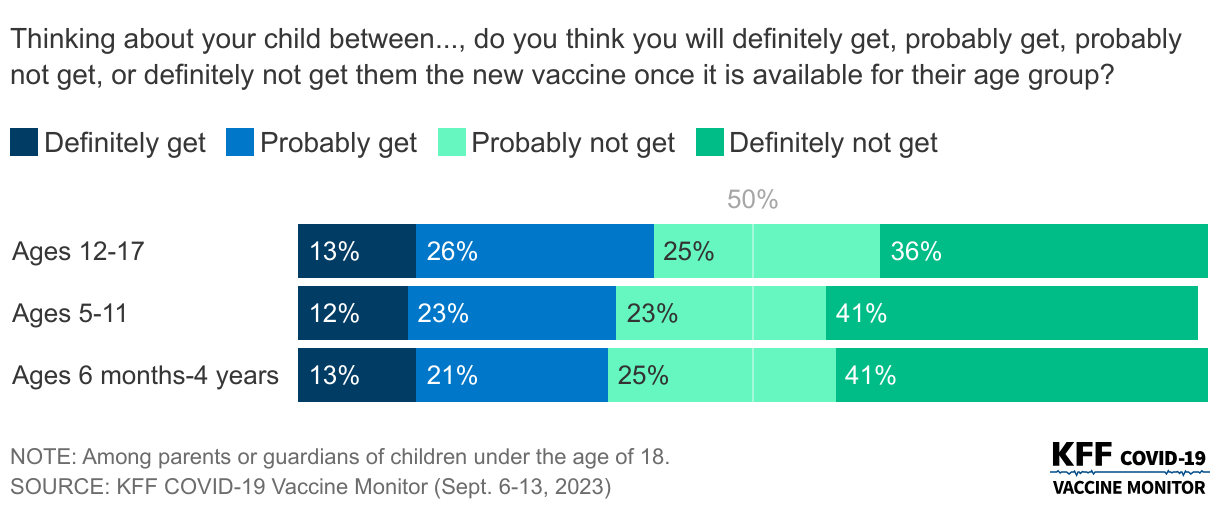
    Amid Pfizer’s decision to postpone their FDA request to authorize a COVID-19 vaccine for children ages 6 months to 4 years, one in five parents of children under 5 (21%) now say they’ll get their child vaccinated right away once a COVID-19 vaccine is authorized for their age group. A quarter of parents (26%) report they’ll wait and see before getting their young child vaccinated, 15% will only get them vaccinated if required, and 35% definitely won’t get them vaccinated.

  • About A Third Of Parents Of Kids Ages 5-11 Say Their Child Has Gotten Vaccinated, But A Similar Share Say They Will "Definitely Not"

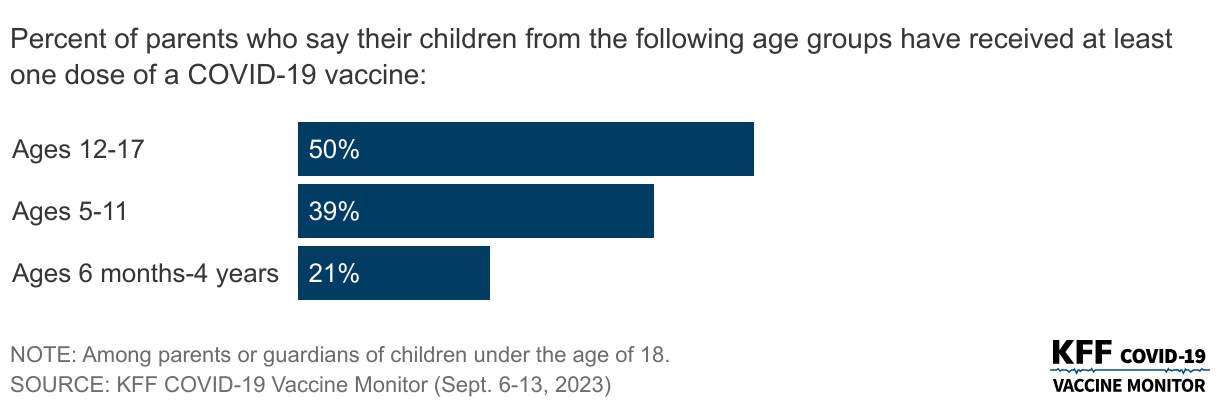
    About a third (35%) of parents of kids ages 5-11 now report their child has gotten at least one dose of a COVID-19 vaccine. A small share now say they will get their child vaccinated right away (4%), while one in ten parents of 5-11 year-olds still want to wait and see. The latest survey suggests there is some trepidation among parents of younger kids with nearly half of them saying they either will only get them vaccinated if required (11%) or saying they definitely won’t get their 5-11 year-old vaccinated (36%).

  • About Six In Ten Parents Of Teenagers Say Their Child Has Gotten At Least One COVID-19 Vaccine Dose, Three In Ten Will Definitely Not Get It

    About six in ten parents of teenagers, ages 12-17, say their child has been vaccinated (57%), a share that held relatively steady between January and February. An additional one in ten say they will either get their teen vaccinated right away (1%) or want to “wait and see” (8%) before deciding. The remaining share (about a third of parents of 12-17 year-olds) say they will definitely not get their child vaccinated (30%) or will only get them vaccinated if it is required (3%).

  • Three In Ten Parents Of Vaccinated Teens Say Their Teen Has Gotten A Booster Shot For COVID-19

    With COVID-19 booster shots recently approved for children between the ages of 12-17, 31% of parents of vaccinated teenagers report that their teen has received a COVID-19 booster dose. Most parents of vaccinated teenagers say their teen has already gotten a booster dose or that they will definitely (41%) or probably (13%) get one, while about one in seven (14%) say their teenager will “probably not get” or “definitely not get” a booster shot.

  • Larger Shares Of Parents Of Teens Say Schools Are Providing Them With Information About COVID-19 Vaccines, Encouraging Vaccinations, And Asking About Vaccine Status Than In July

    Among parents of children ages 12-17 who were eligible for vaccination over the summer, the shares who say their child’s school provided information on COVID-19 vaccines, encouraged vaccination, or asked about their child’s vaccination status have all increased since July (from 42% to 52%, 40% to 51%, and 11% to 25%, respectively).

  • Larger Shares Of Parents Who Say Their Child's School Has Encouraged Vaccinating Children Against COVID-19 Have Gotten Their Children Vaccinated

    Parents who say their school has encouraged parents to get their children vaccinated are more likely to say their child has indeed gotten vaccinated when compared to parents whose child’s school has not encouraged vaccination. Among parents of 12-17 year-olds whose school encouraged vaccination, 60% say their teen has already gotten the COVID-19 vaccine, compared to four in ten (42%) of parent who say their teen’s school did not encourage vaccination. Similarly, parents of 5-11 year-olds who say their school encouraged them to get their child vaccinated are four times as likely to say their younger child has already gotten the COVID-19 vaccine than those who say their school did not encourage vaccination.

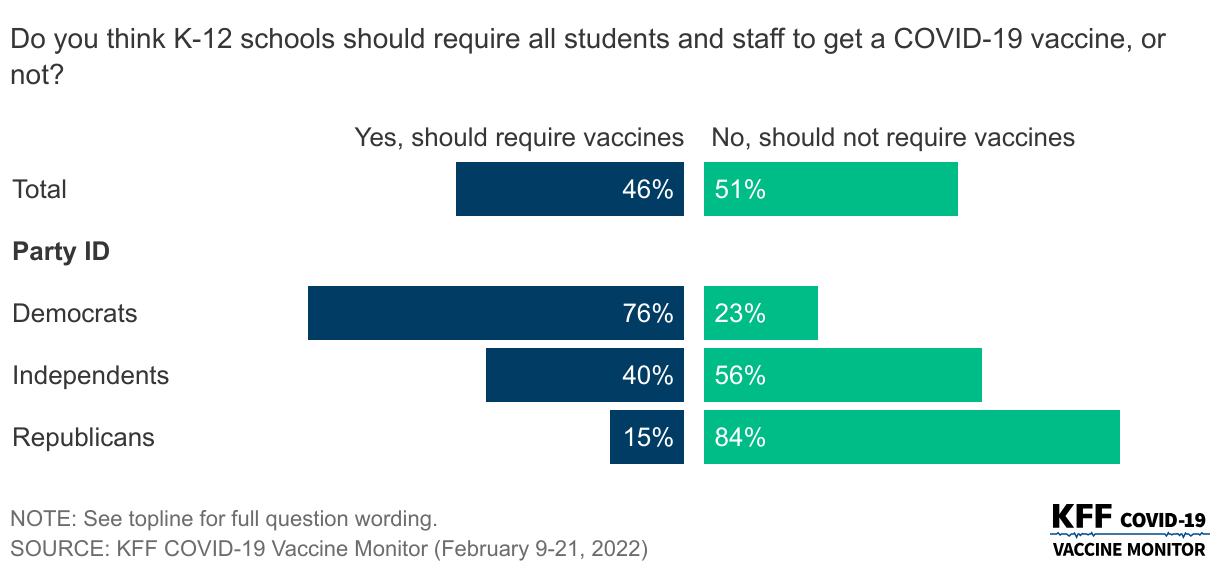
  • Adults Split On Whether K-12 Schools Should Require COVID-19 Vaccines, With Significant Partisan Divides

    The public is divided on whether K-12 schools should require their staff and eligible students to get a COVID-19 vaccine, with similar shares saying schools should (46%) and should not (51%) require vaccines. Three-fourths of Democrats (76%) say schools should require COVID-19 vaccinations while more than eight in ten Republicans (84%) say schools should not. Independents are more likely to say school should not require COVID-19 vaccines (56%) than to say they should be required (40%). Six in ten parents say schools should not require vaccines including majorities of parents of teens ages 12-17 (58%), children 5 to 11 years old (66%), and children under age 5 (59%).

  • Four In Ten Say All Students And Staff Should be Required To Wear Masks In Schools, Eight In Ten Republicans Oppose Any Mask Requirement

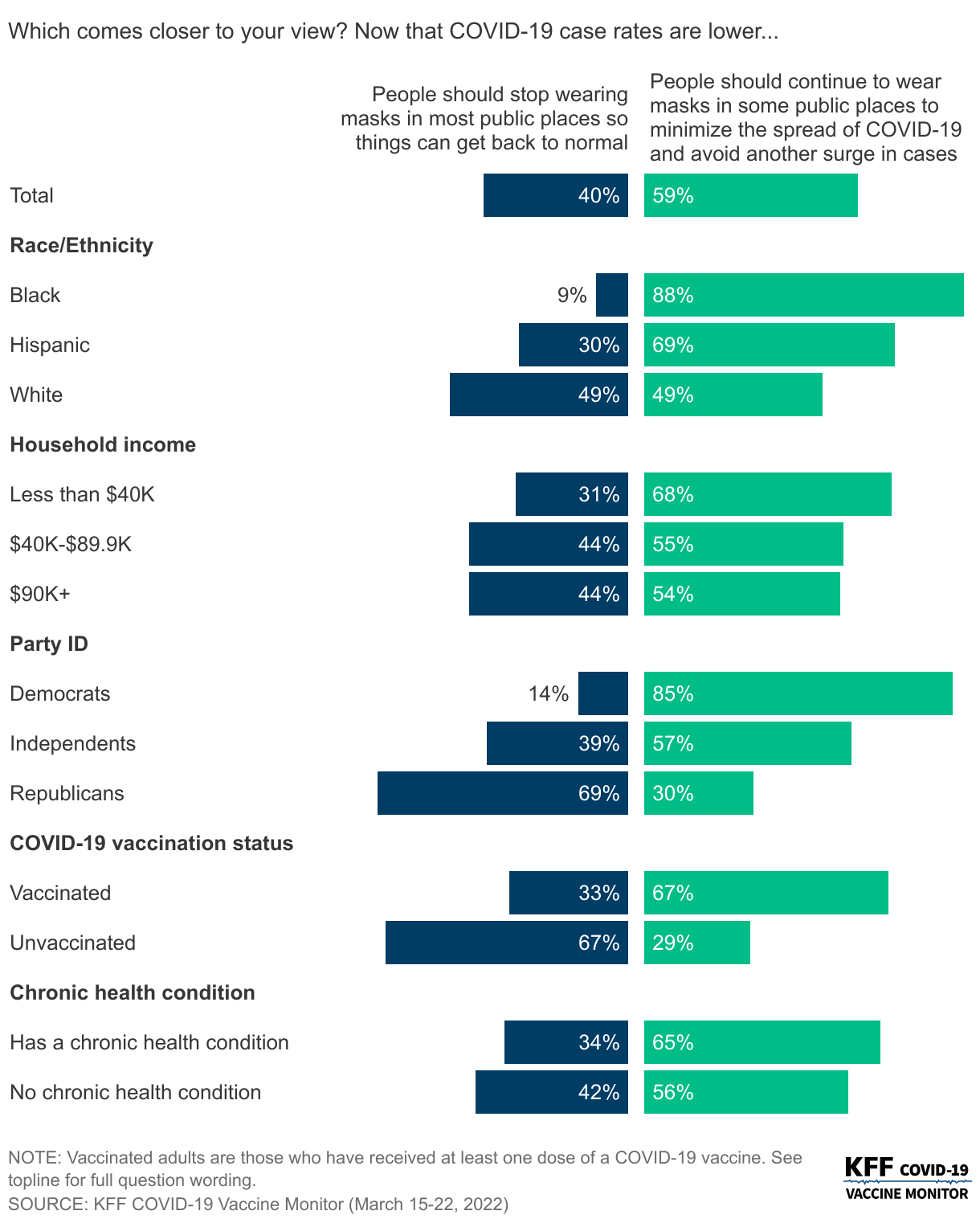
    The scientific debate about mask requirements in schools has received notable attention recently as many school districts ease their masking requirements. Along with concerns over children’s mental health, overall support for masking in K-12 schools has decreased among the public since this past fall. Almost six in ten support any mask requirements in schools including four in ten (43%) who say all students and staff should be required to wear masks and 14% who say this requirement should only be for unvaccinated students and staff.

  • Most Parents Of Children Under Age Five Don't Have Enough Information About The Safety And Effectiveness Of The COVID-19 Vaccines For Kids In Their Age Group

    A majority of parents of children under five say they don’t have enough information about the safety and effectiveness of COVID-19 vaccines for children under five (57%). On the other hand, majorities of parents of children ages 12-17 and 5-11, groups that have already received FDA authorization for COVID-19 vaccines, say they have enough information about the safety of vaccines for their age groups – with 66% parents of kids ages 12-17 saying they have enough information and 61% parents of kids ages 5-11.

  • Majority Of Parents Are Not Confident The COVID-19 Vaccines Are Safe For Children Under Age 5

    Reflecting vaccine intentions among parents of children from different age groups, parents of teenagers express the most confidence in the safety of the vaccines for their kids. Over half of parents say they are confident in the safety of the COVID-19 vaccines for children ages 12-17 (57%), many of whom have already been vaccinated. Fewer parents (45%) are confident in the safety of the vaccines for children ages 5-11, while 32% say they are confident the COVID-19 vaccines are safe for children under the age of 5. Majorities of parents say they are not confident in the safety of the vaccines for children under five (64%) and ages 5-11 (54%).

(mis)Information
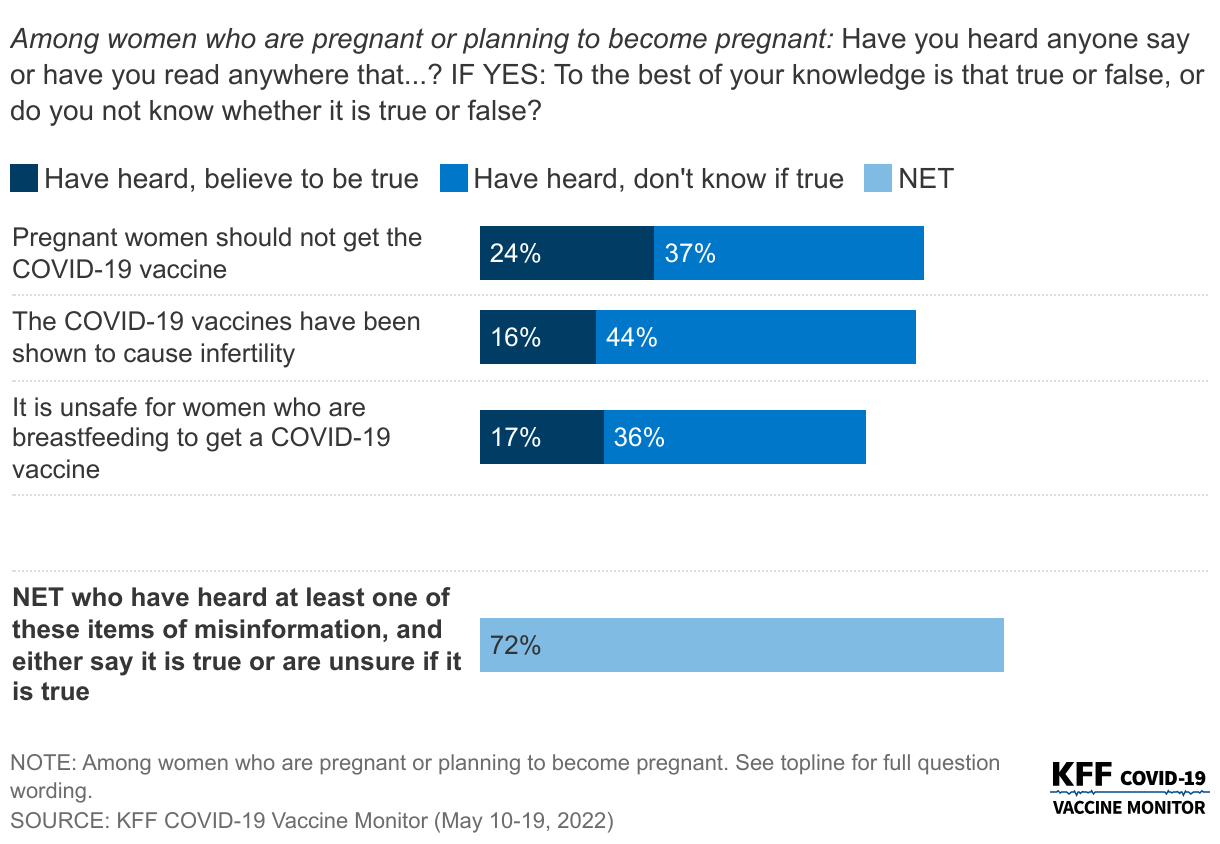
  • Nearly Eight In Ten Believe Or Are Unsure About At Least One Common Falsehood About COVID-19 Or The Vaccine

    Belief or uncertainty about COVID-19 misinformation is widespread, with nearly eight in ten adults saying they have heard at least one of eight different pieces of misinformation and either believe them to be true or are not sure whether they are true or false.

  • One-Third Believe Or Are Unsure About Four Or More False Statements About COVID-19

    One-third of adults (32%) say they have heard at least four false statements about COVID-19 and believe them to be true or are uncertain if they’re true or false. The shares who believe a large number of false statements are highest among unvaccinated adults, Republicans, and those living in rural areas.

Equity
Politics and Policy


KFF COVID-19 Vaccine Monitor is an ongoing research project tracking the public’s attitudes and experiences with COVID-19 vaccinations. Using a combination of surveys and qualitative research, the Monitor tracks the dynamic nature of public opinion as vaccine development and distribution unfold, including vaccine confidence and acceptance, information needs, trusted messengers and messages, as well as the public’s experiences with vaccination. A list of all Vaccine Monitor reports is available here.

The Henry J. Kaiser Family Foundation Headquarters: 185 Berry St., Suite 2000, San Francisco, CA 94107 | Phone 650-854-9400
Washington Offices and Barbara Jordan Conference Center: 1330 G Street, NW, Washington, DC 20005 | Phone 202-347-5270

www.kff.org | Email Alerts: kff.org/email | facebook.com/KaiserFamilyFoundation | twitter.com/kff

Filling the need for trusted information on national health issues, the Kaiser Family Foundation is a nonprofit organization based in San Francisco, California.