

Medicare
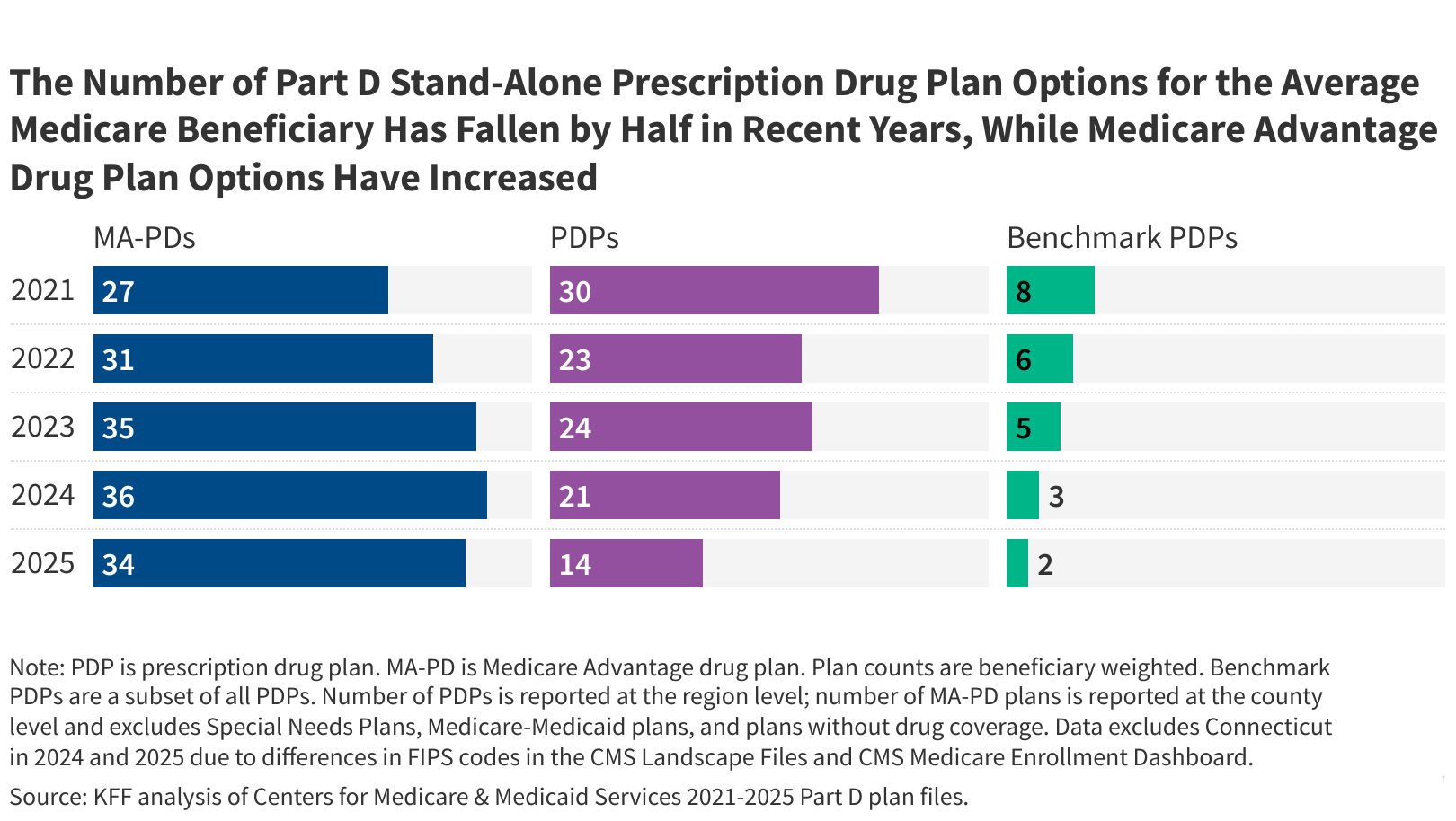
The Uncertain Future of Medicare’s Stand-Alone PDP Market and Why It Matters
Federal Agencies That Make Medicare Work
A look at the key federal agencies that help make Medicare work — and at the DOGE-driven staffing and organizational changes that could affect the program, which serves over 68 million adults ages 65+ and younger people with disabilities.
Reconciliation Bill Increases Costs for Low-Income Beneficiaries
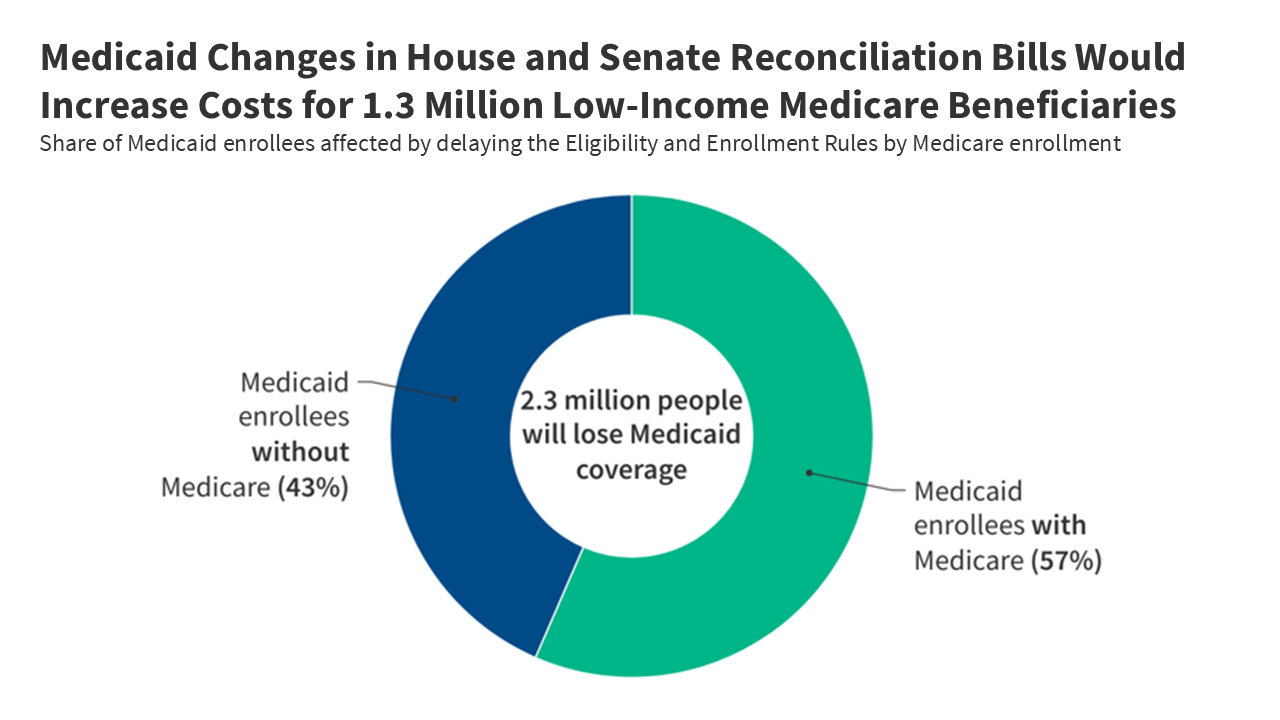 The CBO says 1.3 million Medicare beneficiaries would lose Medicaid coverage that lowers their health costs if the reconciliation bill becomes law.
7.4 Million People Spend Over 10% of Income on Part B Premiums
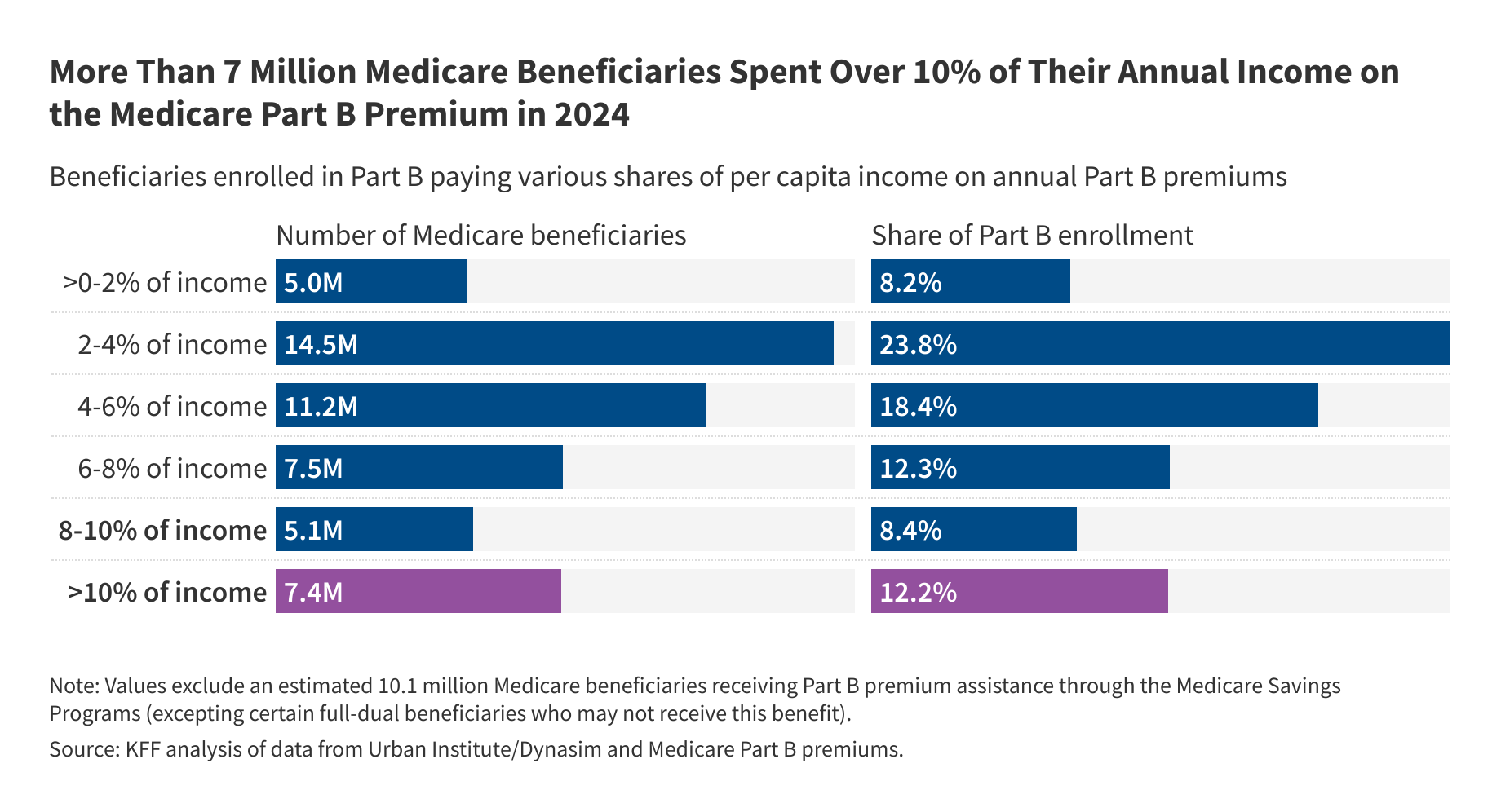 7.4 million Medicare beneficiaries spent over 10% of their annual per capita income on Part B premiums. People with low incomes can qualify for gov’t help paying premiums but the reconciliation bill would result in 1.3M losing access to this assistance.
State Profiles for Dual-Eligible Individuals
 The KFF State Profiles for Dual-Eligible Individuals database offers the latest national and state data and statistics on dual-eligible individuals who receive their primary health insurance coverage through Medicare and some assistance from their state Medicaid program.
Most Medicare Advantage Markets are Dominated by One or Two Insurers
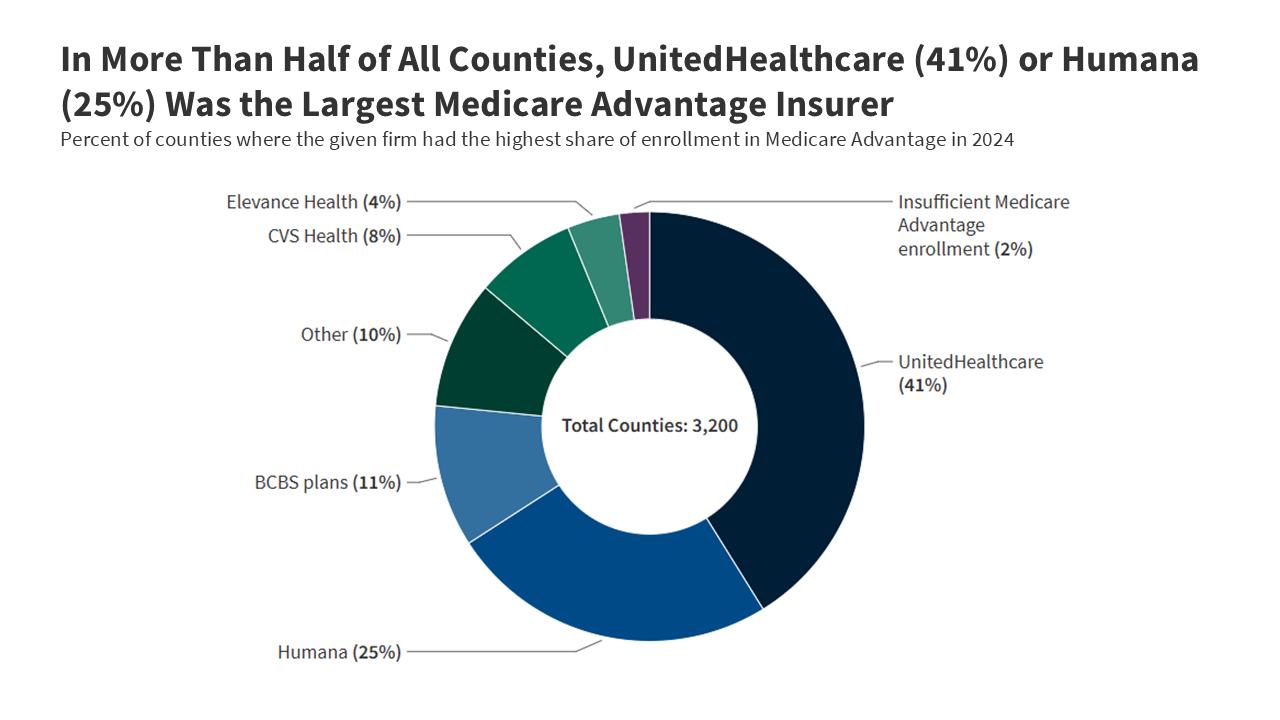
Either UnitedHealthcare or Humana was the largest Medicare Advantage insurer in over half of counties in 2024. They have consistently been the two largest insurers in the market, accounting for nearly half (47%) of Medicare Advantage enrollment in the U.S. in 2024.
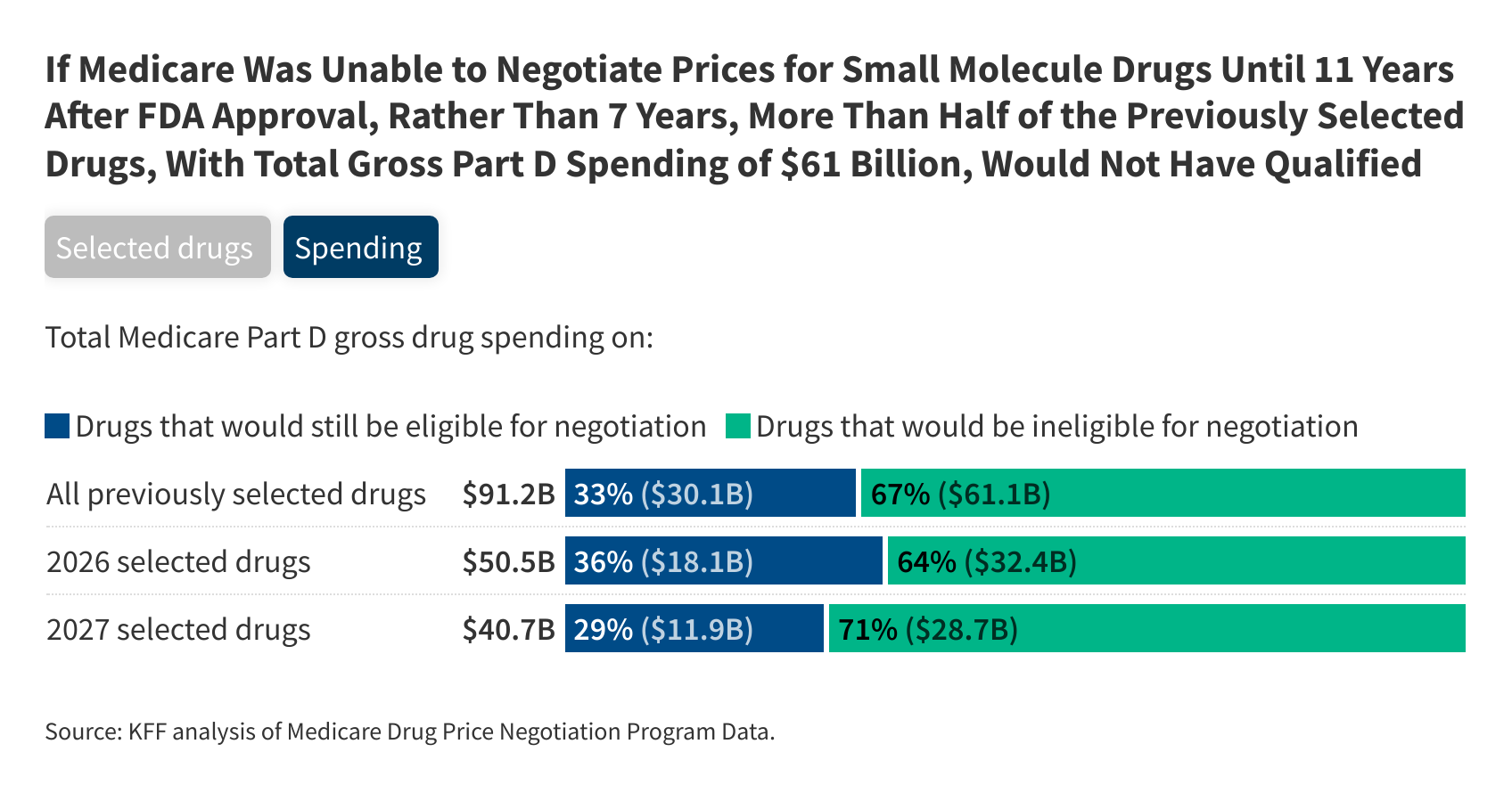
The Effect of Delaying the Selection of Small Molecule Drugs for Medicare Drug Price Negotiation
If that timeframe had already been in place, more than half of the Part D drugs that were selected for price negotiation in the first or second rounds – 13 out of 25 – would not have been eligible at the time drugs were selected.
Data Visualization
The Facts About Medicare Spending
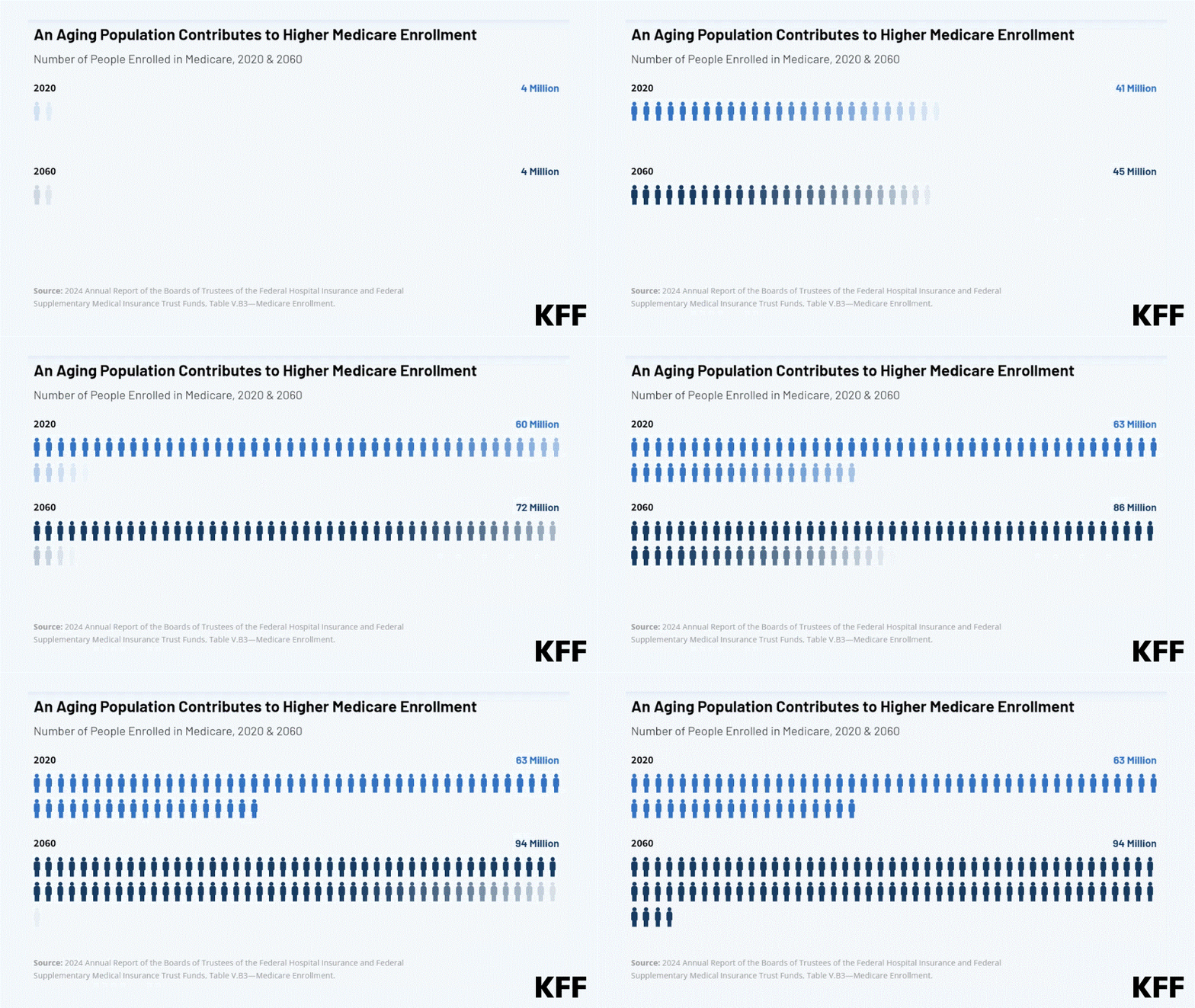
This interactive provides the facts on Medicare spending. Medicare, which serves 67 million people and accounts for 12 percent of the federal budget and 21 percent of national health spending, is often the focus of discussions about health expenditures, health care affordability and the sustainability of federal health programs.
Explore data on enrollment growth, Medicare spending trends overall and per person, growth in Medicare spending relative to private insurance, spending on benefits and Medicare Advantage, Part A trust fund solvency challenges, and growth in out-of-pocket spending by beneficiaries.
Related: FAQs on Medicare Financing and Trust Fund Solvency
Read More
Latest News
-

Medical Rehab Hospital Inspections Go Unpublicized by Federal Officials
-

How To Find the Right Medical Rehab Services
-

Even Grave Errors at Rehab Hospitals Go Unpenalized and Undisclosed
-
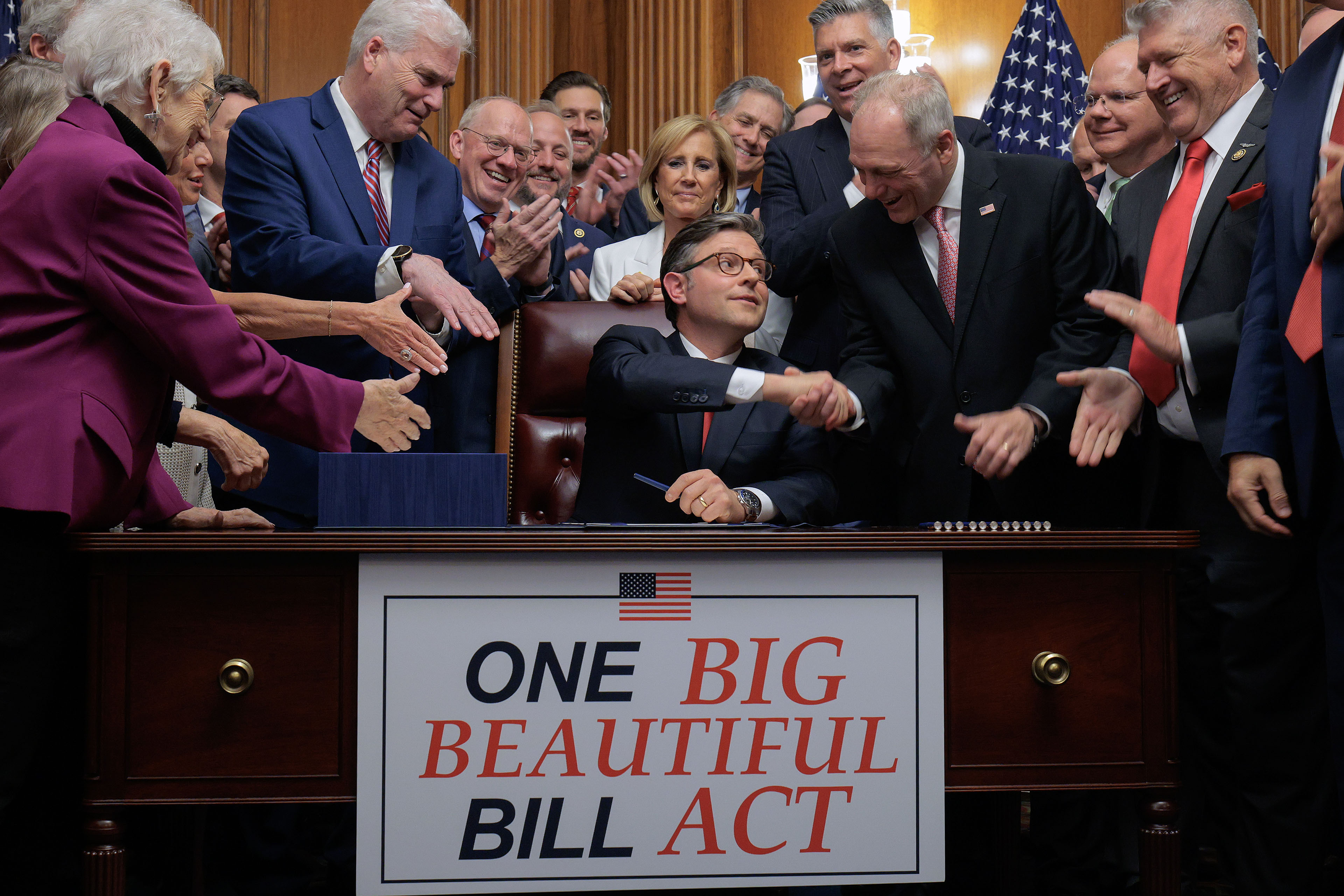
In Rush To Satisfy Trump, GOP Delivers Blow to Health Industry
-
KFF Health News' 'What the Health?': Digesting Trump’s Big Budget Law
-

An Arm and a Leg: The Prescription Drug Playbook, Part II