Hospital Spending Accounted for 40% of the Growth in National Health Spending Between 2022 and 2024

Published: Feb 11, 2026

Introduction

National spending on health has increased rapidly over time—rising to $5.3 trillion and 18% of GDP in 2024—and is projected to continue to do so into the future. Growth in health spending contributes to higher costs for families, employers, Medicare, Medicaid, and other payers. In 2025, average annual premiums for employer-sponsored family coverage reached $26,993, with workers paying $6,850 for their coverage, according to KFF’s annual survey of employers.  Hospital care accounted for nearly one-third of national health expenditures in 2024, and more than doubled in nominal terms over the preceding two decades, making hospitals a major driver of health spending growth over time.

This data note analyzes the extent to which hospital spending has contributed to the growth in national health expenditures in recent years (2022-2024) and over the long term (2005-2024) using data from the Centers for Medicare & Medicaid Services (CMS) National Health Expenditures Accounts (NHEA). (See Key Facts About Hospitals for more information about hospital spending and the Peterson-KFF Health System Tracker for more on national health expenditures).

Hospital Spending Accounted for 40% of the Growth in National Health Spending Between 2022 and 2024, A Far Larger Share Than Any Other Health Spending Category  

National health expenditures increased by $692 billion between 2022 and 2024, from $4.6 trillion to $5.3 trillion. During this period, spending on hospital care alone accounted for $277 billion of spending growth, or 40% of the total increase in national health spending (Figure 1). The large contribution of hospital care to overall health spending growth reflects the fact that hospital spending accounted for nearly a third of national health expenditures in 2022 (30%) and grew more quickly than national health expenditures overall in both 2023 (10.6% versus 7.4%) and 2024 (8.9% versus 7.2%).

Hospital Spending Accounted for 40% of the Growth in National Health Spending Between 2022 and 2024, A Far Larger Share Than Any Other Health Spending Category (Bar Chart)

The growth in hospital spending in 2023 and 2024 was primarily due to a “rebound in nonprice factors, such as the use and intensity of services, that were somewhat depressed during the [COVID-19] public health emergency,” according to CMS. Nonetheless, hospital prices, which grew by 2.7% in 2023 and 3.4% in 2024, also played a role. In fact, according to CMS, 2024 saw the fastest hospital price growth since 2007. Hospital price growth includes Medicare and Medicaid as well as commercial prices; hospital prices in these public programs have grown more slowly than commercial prices over time.

The contribution of hospital care to overall spending growth was larger than that of other major spending categories. Physician and clinical services accounted for the second-largest share at 22% of the growth. Retail prescription drug spending, which grew at about the same rate as hospital spending during the period between 2022 and 2024, accounted for 11% of the growth during this period (Appendix Table 1). Spending on non-medical insurance expenditures, other professional services, home health care, nursing care and continuing care retirement communities, dental services, and government administration accounted for smaller shares. Spending on government public health activities declined by 7% during this period, likely due to the winding down of activities related to the COVID-19 pandemic. Spending on all other goods and services, which includes some long-term services and supports, accounted for 13% of the growth in total spending.

Hospital spending grew at a faster rate (20%) than total health spending (15%) from 2022 to 2024.  Retail prescription drugs (20%), other professional services (25%), home health care (23%) and government administration (24%) also grew more quickly than total health spending, although these categories contributed less to overall growth than hospitals because they had lower baseline spending in 2022. 

Over a longer period, 2005-2024, hospital spending accounted for 32% of the overall increase in national health spending growth, while spending on physician and clinical services accounted for 22% and spending on retail prescription drugs accounted for 8% (Appendix Table 2). CMS projects that hospitals will return to a similar share of spending growth through 2033 (32%), down from the 40% share that hospitals have accounted for in recent years.

Hospital Spending Per Year Increased by $1 Trillion Over the Past Two Decades and by $277 Billion Between 2022 and 2024

Hospital spending grew from $609 billion in 2005 to $1.6 trillion in 2024, a $1.0 trillion increase (Figure 2). During this period, total health spending grew $3.3 trillion, from $2.0 trillion to $5.3 trillion. In more recent years, hospital spending increased from $1.4 trillion in 2022 to $1.6 trillion in 2024, a $277 billion increase.

Hospital Spending Per Year Increased by  Trillion Over the Past Two Decades (Stacked Bars)

Hospital spending growth over the past two decades was greater than the spending growth for physician and clinical services (the second-largest increase), and substantially greater than the growth in retail prescription drugs (the third-largest increase).

Spending on hospital care specifically and national health expenditures generally have both exceeded overall economic growth over time. Hospital spending increased from 4.7% to 5.6% of GDP from 2005 to 2024, while total health care spending increased from 15.5% to 18.0% of GDP over the same period. By 2033, CMS projects that hospital spending will rise to 6.4% of GDP, with national health expenditures increasing to 20.3% of GDP.

Hospital spending growth over the past two decades is primarily due to increases in both prices and quantity of services provided, particularly when outpatient care is taken into account. From 2005 to 2024, hospital prices increased by 61% based on KFF analysis of the Producer Price Index (PPI). In terms of volume, although total hospital inpatient days decreased 5% (17% per 1,000 population), outpatient visits increased by 44% (25% per 1,000 population), based on KFF analysis of the AHA Trendwatch Chartbook and the AHA Annual Survey Database. The continued growth in hospital spending will contribute to higher costs for public programs like Medicare and Medicaid, employers and families, and exacerbate ongoing concerns about health care affordability.

This work was supported in part by Arnold Ventures. KFF maintains full editorial control over all of its policy analysis, polling, and journalism activities.

Appendix

US National Health Spending Growth by Type of Spending, 2022-2024 (Table)
US National Health Spending Growth by Type of Spending, 2005-2024 (Table)

The IRA Has Improved Coverage of Drugs Selected for Medicare Price Negotiation

Published: Feb 11, 2026

The Medicare Drug Price Negotiation Program, enacted as part of the Inflation Reduction Act of 2022 (IRA), was designed to help lower Medicare spending on prescription drugs by requiring the federal government to negotiate the price of some high-cost drugs covered by Medicare. Along with lowering prices, the negotiation program could also improve coverage of drugs selected for negotiation for Medicare beneficiaries because the law requires all Medicare Part D plans to cover each of the selected drugs, including all dosages and forms, when negotiated prices take effect.

To measure the effect of the IRA’s coverage requirement for selected drugs, this analysis examines 2026 Medicare Part D formulary coverage of drugs selected for negotiation, including the first 10 drugs selected for price negotiation that now have Medicare-negotiated prices available as of January 1, 2026, and the second set of 15 drugs selected for price negotiation, whose negotiated prices will take effect in 2027. The analysis shows that for several dosages and forms of nine out of the first 10 selected drugs, coverage rates have improved since 2025, before the IRA’s coverage requirement took effect.

The IRA’s coverage requirement for selected drugs led to improved coverage of the Part D drugs with negotiated prices available in 2026

Consistent with the IRA’s coverage requirement, in 2026, all Part D enrollees have coverage of all 10 selected drugs with negotiated prices available this year, including all dosage forms and strengths. Moreover, access to several doses and forms of 9 of the first 10 drugs selected for negotiation has improved since 2025 (Figure 1). In particular, coverage rates of the insulin products Fiasp and NovoLog and two dosages of the cancer drug Imbruvica have expanded the most. Fiasp was covered for 24% of Part D enrollees in 2025, while NovoLog was covered for 32%, and two dosages of Imbruvica were covered for roughly half Part D enrollees in 2025.

The IRA’s Coverage Requirement for Selected Drugs Led to Improved Coverage of the Medicare Part D Drugs with Negotiated Prices Available in 2026 (Split Bars)

The IRA’s coverage requirement will improve coverage of several of the 15 selected drugs with negotiated prices available in 2027, including the GLP-1 drug Wegovy

The GLP-1 drug, Wegovy, one of the 15 selected drugs with negotiated prices available in 2027, is currently covered by a small number of Part D plans enrolling less than 1% of Part D enrollees in 2026 (Figure 2). Wegovy is approved for both obesity and cardiovascular disease risk reduction but Medicare Part D plans are currently allowed to cover Wegovy only for cardiovascular disease because Medicare is prohibited from covering drugs used for weight loss. The Trump administration is planning to launch a temporary, voluntary model to expand Medicare coverage of GLP-1s to treat obesity beginning in 2027, which would allow beneficiaries in participating Part D plans to use Wegovy for this purpose.

The IRA’s Part D coverage requirement for selected drugs will increase the share of Part D enrollees who have coverage of Wegovy for Medicare-covered uses beginning in 2027, along with 6 other selected drugs for 2027 that are not currently covered for all Part D enrollees, including Austedo and Austedo XR, a treatment for involuntary movement disorders (covered for 72% and 51% of enrollees, respectively); Otezla, a treatment for psoriasis and psoriatic arthritis (covered for 68% of enrollees); and Breo Ellipta, a treatment for asthma and COPD (covered for 74% of enrollees). At the same time, several of these drugs are already covered for all or nearly all Part D enrollees, including six drugs that belong to one of the six protected classes of drugs that are required to be covered by all plans: Xtandi, Pomalyst, Ofev, Ibrance, and Calquence are antineoplastics (drugs used to treat cancer) and Vraylar is an antipsychotic.

The IRA's Coverage Requirement for Selected Drugs Will Improve Access to the GLP-1 Drug Wegovy and Six Other Part D Drugs Selected for Negotiation in Round 2, Starting in 2027 (Bar Chart)

This work was supported in part by Arnold Ventures. KFF maintains full editorial control over all of its policy analysis, polling, and journalism activities.

Examining the Potential Impact of Medicare’s New WISeR Model

WISeR Expands the Use of Prior Authorization in Traditional Medicare at a Time of Increasing Scrutiny

Published: Feb 10, 2026

On January 1, 2026, the Center for Medicare & Medicaid Innovation (CMMI) launched the Wasteful and Inappropriate Service Reduction (WISeR) Model that establishes new prior authorization requirements in traditional Medicare. The model tests the use of technologies such as artificial intelligence to review the appropriateness of select services in six states over a six-year trial period. Prior authorization requirements are used routinely by Medicare Advantage plans and other private insurers, but rarely in traditional Medicare. Prior authorization aims to reduce unnecessary or inappropriate utilization of health care services, but it can also lead to delays and denials of needed medical care, uncertainty for patients, and administrative costs and hassles for health care providers. Nonetheless, it remains a common feature of health insurance in the US, in part because it is one of the few tools available for insurers to manage utilization and spending on covered services.

The rollout of the WISeR model comes at a time when roughly seven in ten US adults with health insurance (69%) say that prior authorization is a burden, and more than a third (34%) say that it is their single biggest burden, beyond costs, when it comes to getting health care. In July 2025, the Trump administration announced a voluntary effort in which dozens of private health insurers pledged to impose fewer prior authorization requirements and streamline the review process, and later that same week the administration announced the WISeR model to expand these types of requirements in traditional Medicare. Reflecting concern among some policymakers about the new model, an amendment to prohibit spending for the implementation of WISeR was approved by the House Appropriations Committee in September 2025 but was not included in the Consolidated Appropriations Act of 2026 that was signed into law in February 2026.

This analysis explores the potential impact of the WISeR model by examining recent spending and utilization trends in traditional Medicare for services selected for prior authorization requirements in the six model states (Arizona, New Jersey, Ohio, Oklahoma, Texas, and Washington), using 100% traditional Medicare claims data from the Chronic Conditions Warehouse (CCW) for 2019-2025. Services included in this analysis reflect the CPT code list provided in the CMS WISeR Model Provider and Supplier Operational Guide, as of December 10, 2025 (referred to throughout as “WISeR services”). Since this analysis was conducted, CMS has delayed the inclusion of two services originally scheduled for inclusion in 2026. These two services represent less than 1% of traditional Medicare spending on all WISeR model services during the years assessed. All results are rounded to the nearest hundred dollars or nearest hundred beneficiaries, unless otherwise noted.

The analysis suggests that the impact of the WISeR model is likely to be modest in its first year, both because WISeR services account for a small share of total Part B spending in traditional Medicare and a relatively small number of beneficiaries use these services, and because the vast majority of WISeR service spending and growth is accounted for by a single service category (skin substitutes), for which growth in spending is largely driven by increases in average service price. While prior authorization can be an effective tool for reducing wasteful or inappropriate service use, it has no direct impact on prices. CMS has simultaneously put in place nationwide changes to payment policy that standardize payment rates for skin substitutes, which went into effect on January 1, 2026. CMS estimates that these changes will reduce Medicare spending on skin substitutes by nearly 90% in 2026, which is likely to far exceed the impact on spending from changes in use that may result from prior authorization requirements under the WISeR model, which applies only to a subset of states. On the other hand, the potential for CMS to expand the WISeR model to include additional services and states means that more spending and more beneficiaries in traditional Medicare could be subject to prior authorization restrictions in future years, increasing the reach of the model with time.

Key Takeaways:

  • WISeR services accounted for 5.3% ($12.3B) of all Part B spending in traditional Medicare in 2024, up from 1.1% ($2.4B) in 2019.
  • Skin substitutes accounted for 83% ($10.3B) of WISeR service spending in traditional Medicare in 2024. Spending on skin substitutes was over 20 times higher in 2024 than in 2019 ($509.6M), while spending for all other WISeR model services was relatively flat over the five-year period.
  • The growth in spending on skin substitutes was driven by a steep increase in price per service, which increased by 820%, on average, from 2019 ($2,300) to 2024 ($21,200), the largest increase in price per service for any WISeR service category during the period.
  • Nearly 1.1 million traditional Medicare beneficiaries nationwide received at least one WISeR service in 2024, most of whom (86% or 908,000) received some type of orthopedic pain management service, while only 9.3% (98,000) received skin substitutes. Of the 1.1 million WISeR service users nationwide, 207,500 (19.7%) received a WISeR service in one of the six WISeR model states in 2024.
  • Per capita spending on WISeR services varied considerably among the six WISeR model states in 2024, ranging from $202 in Ohio to $748 in Oklahoma (relative to $371 nationwide). Much of this variation was accounted for by variation in per capita spending on skin substitutes, which ranged from $143 in Ohio to $674 in Oklahoma (relative to $310 nationwide) and was driven by variation in both per capita utilization and price per service for skin substitutes.

Although Initially Limited in Scope, the WISeR Model Expands the Use of Prior Authorization in Traditional Medicare

According to CMS, the goal of the WISeR model is to test the use of artificial intelligence and similar technologies to conduct prior authorization for services at risk of fraud or misuse. For each of the six states selected for the model, CMS has partnered with a private health technology company to administer prior authorization review using these technologies, and companies will be eligible to receive a share of the savings associated with services that are denied as a result.

Since the announcement of the WISeR model in July 2025, physician groups and members of Congress have expressed concern about its potential impact on provider workloads and beneficiary access to needed services, particularly as health technology partners are rewarded based, in part, on the volume of care that they deny. An amendment to prohibit spending for the implementation of the WISeR model, as well as any future model that tests prior authorization in traditional Medicare, was adopted by the House Appropriations Committee in September 2025, but was not included in the Consolidated Appropriations Act of 2026 that was signed into law in February 2026.

Prior authorization requirements are rare in traditional Medicare. However, use of prior authorization in Medicare Advantage—where virtually all enrollees are required to obtain prior authorization for some services—has come under scrutiny in recent years for delays and denials of medically necessary care and increased administrative burden for providers. In particular, several large insurers have been investigated by Congress and faced lawsuits due to inappropriate coverage denials based on artificial intelligence tools, such as proprietary algorithms that substantially increased denial rates for post-acute care services and often operated without human oversight. While the WISeR model will initially only apply to a limited set of health care items and services, CMS has stated that the model may be expanded to include a wider range of services in future years, potentially increasing its impact on the traditional Medicare program over time.

Services selected for prior authorization under the WISeR model in 2026 include skin substitutes (synthetic products used in the treatment of severe or chronic wounds); orthopedic pain management services, such as cervical fusion and epidural steroid injections; electrical nerve stimulator implants; incontinence control devices; and services related to the diagnosis and treatment of impotence (see Appendix for further detail). (Since this analysis was performed, CMS has delayed the inclusion of two services until a future performance year: deep brain stimulation and percutaneous image-guided lumbar decompression for spinal stenosis. Together these two services account for less than 1% of all traditional Medicare spending on services reflected in this analysis from 2019-2024.)

WISeR Services Represent a Small But Growing Share of Part B Spending in Traditional Medicare

WISeR services account for a small but growing share of Part B spending in traditional Medicare. From 2019 to 2024, spending on these services increased by roughly 400% (from $2.4 billion to $12.3 billion), compared to a 9.5% increase in overall Part B spending in traditional Medicare over these same years (Figure 1). As a result, these services represent a larger share of Part B spending in traditional Medicare in 2024 (5.3%) than in 2019 (1.1%), though still a small fraction of the total in both years. The vast majority of growth in spending on WISeR services during this period was driven by growth in spending on skin substitutes (as discussed below).

WISeR Services Accounted for About 5% of Traditional Medicare Spending on Part B Services in 2024 (Small multiple donut chart)

Skin Substitutes Accounted for the Vast Majority of WISeR Service Spending in 2024, and of Spending Growth on These Services Since 2019

Skin substitutes accounted for the largest share ($10.3 billion or 83.4%) of WISeR service spending in traditional Medicare in 2024 (Figure 2). This represents a nearly 2,000% increase since 2019 ($509.6 million) when skin substitutes accounted for just 21.0% of WISeR service spending in traditional Medicare. In contrast, spending on all other WISeR services combined was just 6.6% higher in 2024 ($2.0 billion) than in 2019 ($1.9 billion), slightly less than the 9.5% increase seen for all Part B spending in traditional Medicare during this period. Spending on skin substitutes continued to accelerate in 2025, and was nearly 3,000% higher in the first six months of 2025 ($7.7 billion) than in the first six months of 2019 ($247.3 million) (Appendix Table 2).

Spending on Skin Substitutes Has Increased Dramatically in Recent Years, While Spending on Other WISeR Services Has Been Relatively Flat (Stacked column chart)

Growth in traditional Medicare spending on skin substitutes has gained attention in recent years, including reports from the Office of the Inspector General (OIG) that raised concerns about unusual billing patterns, lack of adequate pricing information from manufacturers, and several instances of fraud. Prior to 2026, skin substitutes were classified as biologicals for the purpose of Medicare payment. Each product received a unique billing code, and payment rates were generally based on the manufacturer-reported average sales price (ASP) (or list price when ASP data was unavailable), allowing for considerable variation in payment rates across different manufacturers and products.

CMS has since made changes to the way Medicare classifies and pays for these products, reclassifying them as “incident to” supplies reimbursed at a fixed rate. In 2026, most applications of skin substitutes will be reimbursed at a rate of $127.28 per square centimeter, substantially less than the average rate paid for skin substitutes under traditional Medicare in 2024 ($1,470 per square centimeter), a change that CMS estimates will reduce Medicare spending on skin substitutes by nearly 90% in 2026. These changes, which went into effect on January 1, apply nationwide and represent a more direct strategy to control spending on skin substitutes than their inclusion in the WISeR model, which is temporary, has a limited geographic reach, and targets inappropriate use, rather than the price increases that have largely driven the recent increase in spending.

At the same time, new local coverage determinations (LCDs) that would have substantially limited the number of skin substitute products covered by Medicare, were also scheduled to go into effect on January 1, but were withdrawn by CMS in late December. In the absence of these new LCDs, Medicare will cover the same range of skin substitute products in 2026 as it has in past years.

Most of the 1.1 Million Traditional Medicare Beneficiaries Who Received a WISeR Service in 2024 Received Orthopedic Pain Management Services, While Far Fewer Received Skin Substitutes

Nearly 1.1 million traditional Medicare beneficiaries nationwide received at least one WISeR service in 2024, 3.2% of all beneficiaries in traditional Medicare that year (Figure 3). A similar share (just over 1.1 million or 3.0%) received at least one WISeR service in 2019 (the total number of beneficiaries in traditional Medicare declined somewhat between 2019 and 2024, from 37.8 million to 33.1 million, due to increasing enrollment in Medicare Advantage).

Of the 1.1 Million Beneficiaries Who Received At Least One WISeR Service in 2024, Over 900,000 Received Some Type of Orthopedic Pain Management Service (Split Bars)

Roughly 908,000 of the 1.1 million beneficiaries who received at least one WISeR service nationwide in 2024 (86.0% of the total) received some type of orthopedic pain management service, slightly fewer than the number of beneficiaries who received this type of service in 2019 (1.0 million or 90.6% of all WISeR service users that year). Orthopedic pain management services subject to prior authorization under the WISeR model include epidural steroid injections, cervical fusion, lavage and debridement of the knee, and other procedures used to treat pain in conditions such as osteoarthritis, osteoporosis, and spinal stenosis (see Appendix for further detail).

In comparison, just 98,000 of the 1.1 million beneficiaries who received at least one WISeR service in 2024 were treated with skin substitutes (9.3% of the total), up from roughly 60,900 in 2019 (5.5% of all WISeR service users that year). Applications of skin substitutes subject to prior authorization under the WISeR model include treatment of wounds on the extremities, including chronic non-healing wounds such as bedsores and diabetic foot ulcers.

The number of traditional Medicare beneficiaries likely to be impacted by the new prior authorization requirements is small. Of the 1.1 million traditional Medicare beneficiaries who received at least one WISeR service in 2024, roughly 207,500 (19.7%) were located in one of the six WISeR model states (Appendix Table 3). This is similar to the share of all traditional Medicare beneficiaries (6.4 million or 19.3%) who resided in one of these six states that same year. Based on the number of beneficiaries who used WISeR services in 2024, a majority of those who will be subject to the new prior authorization requirements will encounter them in the context of services other than skin substitutes, which could limit the savings that can be achieved in the model’s first year.

Growth in Skin Substitute Spending Was Driven By Steep Growth in Price Per Service

Skin substitutes were the most expensive category of WISeR services in 2024, with an average price per service of $21,200, followed by diagnosis and treatment of impotence ($17,750) and stimulator services ($17,200) (Table 1). This is largely due to steep growth in the average price per service for skin substitutes, which increased by 820% (up from $2,300) from 2019 to 2024. In comparison, growth in the average price per service for other WISeR services was relatively modest during this period, with the second highest growth seen for incontinence control devices (38%), followed by diagnosis and treatment of impotence (18%), stimulator services (7%), and orthopedic pain management (7%). (For the purposes of this analysis, price per service refers to the average sum of all Medicare payments associated with the encounter at which the WISeR service was provided. See Methods for further detail.)

The Average Price Per Service for Skin Substitutes Has Increased By More Than 800% in the Past Five Years (Table)

Utilization of skin substitutes increased to a lesser extent (84%) during this period, with 3.0 of every 1,000 beneficiaries in traditional Medicare in 2024 receiving skin substitutes, compared to 1.6 in 2019. Changes in utilization were modest or negligible for other categories of WISeR services as well, ranging from stimulator services (70%) to incontinence control devices (-2%). These results indicate that rising prices, more than increases in utilization, are primarily responsible for the increase in traditional Medicare spending on skin substitutes in recent years.

Per Capita Spending and Spending Growth on WISeR Services Varied Considerably Among WISeR States

According to CMS, the six states selected for participation in the WISeR model were chosen based on a range of criteria such as geographic diversity, service volume, ease of comparison between WISeR and non-WISeR states overseen by the same Medicare Administrative Contractor (MAC), and other factors.

Per capita spending on WISeR services in traditional Medicare varied considerably among the six WISeR model states in 2024 (Figure 4). This ranged from $202 per traditional Medicare beneficiary in Ohio to $748 per traditional Medicare beneficiary in Oklahoma (relative to $371 per traditional Medicare beneficiary nationwide). A similar pattern was true for spending growth from 2019 to 2024.

WISeR States Varied Considerably in Terms of Per Capita Spending and Spending Growth on WISeR Services (Range Plot)

The six WISeR model states also varied in terms of per capita utilization of WISeR services (Appendix Table 4). In 2024, per capita utilization of WISeR services in WISeR states ranged from 24 of every 1,000 traditional Medicare beneficiaries in Washington to 43 of every 1,000 traditional Medicare beneficiaries in Arizona (compared to 32 of every 1,000 traditional Medicare beneficiaries nationwide).

Among the six WISeR model states in 2024, much of the variation in per capita spending on WISeR services was accounted for by differences in per capita spending on skin substitutes, which ranged from $143 per traditional Medicare beneficiary in Ohio to $674 per traditional Medicare beneficiary in Oklahoma (Appendix Table 5). States with higher per capita spending on skin substitutes differed from lower spenders both in terms of per capita utilization of skin substitutes (which ranged from 2.1 to 4.4 of every 1,000 beneficiaries in the state), and in terms of average price per service for skin substitutes (which ranged from $14,600 to $34,900).

Looking to the Future: Key Questions

As the WISeR model moves into its first year of operation, several questions remain about its potential impact on traditional Medicare beneficiaries, health care providers, and spending. These include: how successful the model will be at reducing inappropriate or wasteful service use and spending; whether adequate safeguards are in place to protect beneficiaries from delays and denials of needed health services; how easy (or burdensome) it will be for providers to navigate the new requirements in model states; how effectively CMS will ensure that coverage decisions from health technology vendors are consistent with medical best practices and Medicare coverage criteria; and how CMS will evaluate the model’s success, particularly when determining whether to expand prior authorization requirements to additional services in future years.

CMS has stated that health technology vendors will be required to seek a second opinion from a human clinician before denying prior authorization requests based on artificial intelligence and other technologies, and will be audited to ensure that their determinations are consistent with Medicare coverage criteria. Venders may face penalties for inappropriate denials, such as negative payment adjustments or termination from the model. CMS has also indicated that health care providers who maintain high approval rates under the model may earn an exemption from prior authorization requirements going forward (a practice known as “gold carding”).

Nevertheless, policymakers and others have voiced concern about the financial incentives inherent in the WISeR model, which rewards vendors, in large part, based on the volume of care that they deny, creating financial incentives to maximize denials. Questions have also been raised about the appropriateness of expanding prior authorization in traditional Medicare at a time when its use in private commercial insurance and Medicare Advantage is being more closely scrutinized due to potentially unnecessary delays and denials of care, and hassles for health care providers. In the month since WISeR first launched, hospitals and health care providers have reported difficulties adjusting to the model, including gaps in communication about the new rules and burdensome administrative requirements.

This analysis suggests that the impact of the WISeR model is likely to be modest in its first year, both because the services it targets are used by a relatively small number of beneficiaries and account for a small share of all Part B spending in traditional Medicare, and because CMS has simultaneously put in place nationwide changes to payment policy, beginning January 1, 2026, that are expected to achieve a 90% reduction in spending for the one service, skin substitutes, that accounts for the majority of WISeR service spending and growth in recent years.

However, if the WISeR model expands to include a wider range of services in future years, the scale of its impact may increase with time. Further, despite its drawbacks, prior authorization remains one of the few tools available to insurers to manage health care utilization and spending. The WISeR model represents an opportunity for CMS to test whether this approach can help control Medicare spending by reducing use of unnecessary or inappropriate services, and whether the safeguards put in place by CMS will protect patients against inappropriate delays and denials of care.

Appendix

Services Subject to Prior Authorization Under the WISeR Model (Table)
Annual and Quarterly WISeR Service Spending in Traditional Medicare (Table)
State Variation in WISeR Service Spending and Utilization (Table)
State Variation in Per Capita WISeR Service Spending and Utilization (Table)
State Variation in Per Capita Spending and Utilization of Skin Substitutes (Table)

Methods

KFF contracted with L&M Policy Research for data on utilization and spending trends for services included in the CMMI WISeR model. The data included Medicare fee-for-service claims from 2019 to Q2 2025 through L&M’s data license with Centers for Medicare and Medicaid Services and its access to the Chronic Condition Warehouse Virtual Research Data Center (CCW VRDC). The sample consisted of 100% Medicare fee-for-service carrier and outpatient claims with non-zero Medicare payments for beneficiaries with Medicare as the primary payer, restricted to providers located in the 50 states or the District of Columbia. Estimates of Part B payment rates were derived from the Part B Use-Specific Per Capita Cost (USPCC) rates from the CMS 2026 Part B Rate Book, updated as of April 2025.

To capture the full set of costs associated with services included in the WISeR Model, utilization was defined at the service-day level, anchored by the presence of at least one claim containing a HCPCS/CPT code identified in the WISeR Model Provider and Supplier Operational Guide (Version 3.0). For each beneficiary, all outpatient claims containing a WISeR HCPCS/CPT code and all carrier claims occurring on the same calendar day as carrier or outpatient claims with a WISeR code were aggregated to represent a single service. Costs were calculated as the sum of Medicare payments associated with those claims.

When multiple place-of-service (POS) codes were present across claims for the same service day, a single POS category was assigned using a hierarchical approach (outpatient, ambulatory care setting, physician office, home, and other), and all associated payments were attributed to the assigned category. Carrier claims billed with an outpatient POS were retained only when they could be matched to an outpatient claim with a non-zero Medicare payment on the same date, in which case the corresponding payments were classified as outpatient spending. Since HCPCS/CPT codes for different WISeR services may occur on the same service day, an additional grouping exercise was conducted that assigns services to broader, mutually exclusive modalities to limit overlap in attributed costs.

This analysis did not assess whether services were appropriate based on medical best practices or other clinical criteria.

This work was supported in part by Arnold Ventures. KFF maintains full editorial control over all of its policy analysis, polling, and journalism activities.

Alex Cottrill, Jeannie Fuglesten Biniek, Juliette Cubanski, and Tricia Neuman are with KFF. Misha Segal is with L&M Policy Research. L&M Policy Research contributed to the data analysis and provided additional project support.

What to Know About Pharmacy Benefit Managers (PBMs) and Federal Efforts at Regulation

Published: Feb 9, 2026

This brief, originally published on December 18, 2025, was updated on February 9, 2026, to reflect the PBM-related provisions that were enacted in February 2026. 

The price of prescription drugs in the U.S. continues to be a concerning issue to the public, with KFF polling consistently showing the public supports various approaches to lowering prescription drug costs. Efforts to rein in drug costs have long been a priority for both federal and state policymakers. The Trump administration has recently taken steps to address drug costs through various administrative and regulatory actions, including multiple voluntary pricing agreements with drug manufacturers, the launch of the TrumpRx direct-to-consumer drug website, and CMS Innovation Center Models to bring ‘Most Favored Nation’ pricing to consumers in the U.S., though the impact and savings from these efforts are not yet known. During the Biden administration, Congress enacted the Inflation Reduction Act of 2022, which authorized the federal government to negotiate lower drug prices with manufacturers for some drugs covered by Medicare, among other provisions, resulting in an estimated reduction in the federal deficit of $237 billion over 10 years for the drug pricing provisions alone.

One player in the system of pharmaceutical pricing in the U.S. that has come under increasing scrutiny in recent years is the pharmacy benefit manager, or PBM. These so-called ‘middlemen’ are used by health insurance companies and self-insured employer plans to manage their pharmacy benefits. PBMs have been the focus of attention from policymakers for several reasons, including their business practices, market consolidation, and lack of transparency, all of which factor into concerns that PBMs themselves have played a role in increasing drug prices, even as they work to manage pharmacy benefits and costs for insurers.

In February of 2026, Congress enacted several PBM-related provisions in H.R.7148, the Consolidated Appropriations Act, 2026. This legislation includes provisions that will delink PBM compensation in Medicare Part D prescription drug plans from the price of a drug or rebate arrangements. It also requires PBMs to pass through 100 percent of rebates to employer health plans, and increases oversight of PBM services for Part D plans and employer health plans through transparency and data reporting requirements.

Separately, the Trump administration issued a proposed rule to require greater transparency from PBMs regarding their compensation in service contracts and arrangements with self-insured group health plans. This rule follows from an April 2025 Executive Order from the Trump administration directing the Assistant to the President for Domestic Policy to reevaluate the role of ‘middlemen’ to “promote a more competitive, efficient, transparent, and resilient pharmaceutical value chain”.

This brief provides an overview of the role of PBMs in managing pharmacy benefits, discusses federal efforts to reform certain PBM business practices, and explains the estimated federal budgetary impact of the recently enacted legislation, which would be a reduction in the federal deficit of $2.1 billion over 10 years, according to CBO. (This brief focuses on actions at the federal level and does not address state legislative efforts related to PBMs, which have occurred in all 50 states.)

The Role of PBMs

Pharmacy benefit managers (PBMs) act as intermediaries between drug manufacturers and insurance companies that offer drug benefits to employer health plans, Medicare Part D prescription drug plans, state Medicaid programs, and other payers. In this role, PBMs serve several functions: negotiating rebates and price discounts with drug manufacturers, processing and adjudicating claims, reimbursing pharmacies for drugs dispensed to patients, structuring pharmacy networks, and designing drug benefit offerings, which includes developing formularies (lists of covered drugs), determining utilization management rules, and establishing cost-sharing requirements.

Although there are many PBMs, a few companies dominate the overall U.S. market. According to the Federal Trade Commission (FTC), the top 3 PBMs – OptumRx (owned by UnitedHealth Group), Express Scripts (owned by Cigna), and CVS Caremark (owned by CVS Health, which also owns Aetna) – manage 79% of prescription drug claims on behalf of 270 million people in 2023 (Figure 1).

In 2023, the Top 3 PBMs - CVS Caremark, Express Scripts, and OptumRx - Managed 79% of Prescription Drug Claims in the U.S. (Donut Chart)

Certain PBM Business Practices Have Given Rise to Concerns About Their Impact on Drug Prices

Sources of revenue: PBMs generate revenue in different ways. PBMs are typically paid fees for the functions they serve managing pharmacy benefits. PBMs also negotiate rebates with drug manufacturers in exchange for preferred placement of rebated drugs on a health insurance plan formulary, and they may retain a portion of the drug rebates they negotiate, though this may be more common in the commercial employer market than in the Medicare Part D market. Many state Medicaid programs and Medicaid managed care plans also contract with PBMs to manage or administer pharmacy benefits, including negotiating supplemental prescription drug rebates with manufacturers.

Rebates can help lower the cost of drug benefits for health insurance plans, which enables them to offer lower premiums in turn and may translate to lower out-of-pocket costs for patients at the point of sale. In order for PBMs to maximize rebate revenue, however, they may favor higher-priced drugs with higher rebates over lower-priced drugs with low or no rebates in their negotiations with drug companies. This may have an inflationary effect on drug pricing by manufacturers, increase costs for payers across the system, and raise out-of-pocket costs for patients who pay based on the list price – a particular concern for those without insurance but also for those with high-deductible insurance plans or when cost sharing is calculated as a percentage of the drug’s price, which is typical for higher-cost specialty drugs.

Because of these impacts, some have suggested that rebates negotiated between PBMs and drug manufacturers should be passed along in full to individuals at the point of sale and make discounts available upfront at the pharmacy counter. This arrangement would produce savings for individuals who take drugs with high rebates, since they would face lower out-of-pocket costs on their medications when they fill their prescriptions. However, if rebates are no longer being used to reduce a plan’s overall drug benefit costs, point-of-sale drug discounts could result in higher premiums for all plan enrollees.

Spread pricing: Another potential source of revenue for PBMs comes from the contracting practice of spread pricing, which is when a PBM pays a lower rate for a drug to the dispensing pharmacy than the amount the PBM charges an insurer for that drug and retains the difference or “spread” as profit. The practice of spread pricing can result in higher costs for insurers, while lower reimbursement levels put financial pressure on pharmacies.

PBMs have come under bipartisan scrutiny in recent years for spread pricing arrangements in Medicaid managed care that have increased Medicaid costs for states and the federal government. As a result, a number of states have prohibited spread pricing or adopted other reforms to increase transparency and improve oversight. Concerns about Medicaid spread pricing also led the Centers for Medicare & Medicaid Services (CMS) to issue an informational bulletin in May 2019 about how managed care plans should report spread pricing, which may have reduced the practice.

Consolidation: Consolidation in the PBM market has enabled a few PBMs to gain significant market power. As mentioned above, three PBMs manage nearly 80% of all prescription claims in the U.S. Moreover, the top three PBMs are vertically integrated with major health insurers: OptumRx is owned by UnitedHealth, Express Scripts is owned by Cigna, and CVS Caremark is owned by CVS Health, which also owns Aetna. Each of these PBMs also own mail order pharmacies and specialty pharmacies.

The FTC and members of Congress on both sides of the aisle have raised concerns that this level of market concentration and vertical integration enables PBMs to steer consumers to their preferred pharmacies, mark up the cost of drugs dispensed at their affiliated pharmacies, reimburse PBM-affiliated pharmacies at a higher rate than unaffiliated pharmacies for certain drugs, and apply pressure over certain contractual terms, all of which may disadvantage unaffiliated and independent pharmacies, contributing to pharmacy closures.

Transparency: Financial contracts between PBMs and drug manufacturers, including drug pricing information and the rebate arrangements that PBMs negotiate with drug manufacturers, are generally not made public. This means that plan sponsors often do not have insight into how much PBMs are actually paying for drugs on their formularies, and PBMs often consider this information to be proprietary. In the pharmaceutical supply chain as whole, many players operating in this market do not have information about prices, which can make informed decision-making difficult and imperfect.

Federal Efforts to Regulate PBMs

In February 2026, Congress enacted legislation that will address some PBM business practices, including:

  • Delinking PBM compensation from the price of a drug, or any rebates or discounts that they negotiate for drug plans under Medicare Part D and instead basing compensation on a ‘bona fide service fee’, which will be a flat dollar amount that reflects the fair market value of services provided by PBMs, beginning January 1, 2028.
  • Establishing transparency and reporting requirements for PBMs that provide services to Part D plans. This will include data on utilization, pricing, and revenues for formulary covered drugs; PBM-affiliated pharmacies; contracts with drug manufacturers; and other PBM business practices. This provision requires PBMs to provide this data to Part D plan sponsors as well as the HHS Secretary on an annual basis, no later than July 1 of each year, beginning July 1, 2028.
  • Assuring pharmacy access for Medicare beneficiaries. This provision reinforces existing regulatory requirements that Part D plan sponsors contract with any willing pharmacy that meets their standard contract terms and conditions and have those conditions be ‘reasonable and relevant.’ These conditions will be defined and enforced beginning January 1, 2029, according to standards determined by the Secretary of Health and Human Services (HHS) no later than April 2028.
  • Allowing for increased oversight of PBMs that provide services to employer health plans through data transparency and reporting requirements. This provision requires PBMs to report detailed prescription drug utilization and spending data to most employer health plans, including gross and net spending, out-of-pocket spending, pharmacy reimbursement, and other details related to the plan’s pharmacy benefit, effective for plan years beginning 30 months after the date of enactment. PBMs must also provide summary documents with certain information to plan participants upon request. PBMs are subject to civil monetary penalties for failing to meet reporting requirements.
  • Requiring PBMs to fully pass through 100 percent of drug rebates and discounts to employer health plans regulated under the Employee Retirement Income Security Act of 1974 (ERISA)This includes private employer health coverage, both insured and self-insured. It would not apply to governmental plans such as state and local employee health plans or the Federal Employee Health Benefit Plan. This provision also expands the definition of ‘covered service provider’ under ERISA to include additional service providers, including PBMs and third-party administrators, requiring them to disclose information about direct or indirect compensation to plan fiduciaries.
  • Requiring studies and reports on pharmacy benefit managers and the prescription drug supply chain in Medicare Part D from independent agencies, including the Government Accountability Office (GAO) and the Medicare Payment Advisory Commission (MedPAC).

The recently enacted legislation does not include Medicaid-related PBM provisions that were included in other bills, reportedly due to concerns about cost impact. These Medicaid provisions included:

  • Prohibiting spread pricing in Medicaid and instead basing payments on a ‘pass-through model’ in which payments made by a PBM on behalf of the State Medicaid program to the pharmacy would be limited to the drug ingredient cost and a professional dispensing fee.

Separately, in January 2026, the Department of Labor (DOL) issued a proposed rule to require PBMs and other affiliated providers of brokerage or consulting services to disclose information about direct or indirect compensation they receive to plan fiduciaries of self-insured group health plans. This includes information about rebates or other payments from drug manufacturers, spread pricing arrangements, and payments received from pharmacies. The DOL estimates that for years 2026-2034, the rule provides benefits in the form of improved medication adherence and reduced healthcare utilization ranging from $74.5 million to $746.2 million annually; transfers in the form of reduced prescription drug prices of $108.8 million to $1.1 billion annually; and costs of $117.7 million annually incurred by self-insured group health plans and PBMs.

In February 2026, the FTC secured a settlement with Express Scripts over its business practices, alleging that Express Scripts inflated insulin costs by pushing drug manufacturers to compete for formulary placement based on the size of rebates off the list price rather than net price, with Express Scripts retaining a portion of the inflated rebate. As a result, the high list prices of these drugs negatively impacted patients whose out-of-pocket payments were tied to the list price of the drug. As part of the settlement, Express Scripts has agreed to modify its business practices, including ensuring member out-of-pocket costs are based on the net price rather than the list price; delinking compensation from the list price of a drug; increasing transparency for plan sponsors, including reporting on the cost of each drug; and subject to legislative and regulatory changes, ensuring members receive the benefit of prices available through the TrumpRx website as well as counting member payments made on TrumpRx toward deductibles and out-of-pocket maximums. At the time of the TrumpRx website launch, however, discounted prices advertised on the site are only available for cash-paying patients and cannot be used with insurance. The FTC also has lawsuits pending with the two other largest PBMs – Caremark and Optum – alleging they engaged in similar conduct regarding insulin prices.

Budgetary Effects of PBM Legislation

In general, cost estimates from the Congressional Budget Office (CBO) have scored PBM provisions with relatively low savings to the federal government. In the time since Congress began debating various PBM reforms, certain PBM business practices may have evolved in ways that could blunt the potential spending impact of these efforts, unless those new practices are also specifically targeted.

For the PBM reforms in the recently-enacted appropriations law, CBO estimated a total federal deficit reduction of $2.12 billion over 10 years (2026-2035):

  • A reduction of $444 million from delinking PBM compensation from the cost of medications for drugs under Part D and establishing PBM transparency and reporting requirements for Part D plans
  • An increase of $188 billion from assuring pharmacy access and choice for Medicare beneficiaries
  • A reduction of $1.865 billion from increasing oversight of PBMs that work with employer health plans, including $1.843 billion in additional revenues and savings of $22 million

For the provision to increase oversight of PBMs that work with employer health plans, a prior CBO estimate of this provision assumed that because insurers had more information about the operations of their PBMs, it would lead to a reduction in prescription costs, and therefore a modest reduction in premiums charged in the group health insurance market, though savings would likely diminish over time. Assuming there would be a reduction in premiums, this would increase wages and therefore increase federal revenues.

CBO did not provide an estimate for the provision that requires PBMs to pass through 100 percent of drug rebates and discounts (excluding service fees) to some employer health plans.

Tracking the Public’s Views on the ACA

Updated: January 26, 2026

Since the enactment of the Affordable Care Act (ACA) in 2010, the KFF Health Tracking Poll has provided routine measures of public opinion of the health care reform law. Public opinion on the ACA has shifted over the years, most notably following Republicans’ unsuccessful efforts to repeal it during the first Trump administration. While overall opinion of the ACA has been more favorable than unfavorable since 2017, there remain deep partisan divides. This page examines how specific groups feel about the law and how those opinions have changed or not changed over time. Access all KFF Health Tracking Poll resources here.

Comparing States’ Rural Health Fund Allotments to Medicaid Spending Cuts Can be Misleading

Published: Feb 6, 2026

The 2025 reconciliation law made historic cuts to federal support for health care, including an estimated $911 billion in cuts to federal Medicaid spending, as well as additional reductions in the Affordable Care Act (ACA) marketplaces. As the proposed law moved through Congress, lawmakers expressed concern about the potential effects of those cuts on rural areas. KFF estimated that the reductions to Medicaid alone could be $137 billion over ten years in rural areas. To address those concerns, Congress added $50 billion in funding over a five-year period for a Rural Health Transformation Program (referred to here as the “rural health fund”) to the 2025 reconciliation law. At the aggregate level, $137 billion is far larger than $50 billion, but trying to combine the effects of the cuts and the rural health funding, especially for specific states in specific years, could be misleading.

The rural health fund provides states with $10 billion per year over a five-year period between fiscal years 2026 and 2030. In contrast, the cuts to Medicaid are implemented on a gradual basis, with most changes not taking effect until 2027, and the effects growing over time, including after the rural health fund is exhausted. There are numerous factors that affect how the rural health fund dollars are allocated across states and there are also numerous factors that affect how cuts to federal Medicaid spending will impact states and rural areas within states. The combination of those factors, with the differing timing of the rural health funds and Medicaid policy changes, make it misleading to compare the rural health fund allocations that have been announced for the first year with the estimated Medicaid cuts, by state.

Multiplying the first year’s rural health fund allocations by five for the purposes of comparing them to ten-year estimated Medicaid cuts could be misleading. It is unclear how much variation there will be in future allocations of the fund across states; however, some experts predict that future rural health fund allotments could be “vastly different” from first-year allotments. Further, if states do not spend their entire allotment by the end of the next fiscal year, the Centers for Medicare & Medicaid Services may redistribute allotted but unspent funds to other states.

Creating annualized state-specific estimates of expected cuts to federal Medicaid spending by state or in rural areas would also be highly uncertain. Although the Congressional Budget Office provides annual estimates of the estimated reduction in federal Medicaid spending, there would be significant uncertainty involved in trying to allocate those annual reductions across states or to urban versus rural areas. (Allocating ten-year reductions, as KFF has done, still involves a lot of uncertainty, but over a ten-year period, small annual errors in either direction may average out.) It is also difficult to create meaningful comparisons on an annual basis. For example, none of the most significant cuts to federal Medicaid take effect in 2026, which is the year of the first rural health fund allocation.

Dividing the ten-year estimated federal Medicaid cuts by ten also provides misleading information because many of the cuts will not be in effect in initial years, and the effects of the cuts will continue to grow in the years beyond the ten-year budget window. As a result, some states that receive relatively high initial rural health fund allocations and have somewhat lower estimated reductions in federal Medicaid spending could appear to receive more from the rural health fund than they will lose in Medicaid cuts. However, each year, the effects of the Medicaid cuts will continue to grow, whereas the rural health funding is only appropriated through 2030. Even within the ten-year budget window, there is clearly a large gap on an aggregate basis between the $50 billion in rural health funds and the historic cuts to federal Medicaid in rural areas, estimated at $137 billion.

Comparing states’ first-year rural health fund allocations to their estimated cuts in federal Medicaid spending does not tell the whole story. The comparison also fails to account for other cuts to federal health care and coverage losses due to the expiration of the ACA marketplaces’ enhanced premium tax credits, which tend to be larger in states that have smaller Medicaid cuts. It is highly unlikely that any state will receive more money from the rural health fund than it will lose from the historic cuts to federal funding for health care in the 2025 reconciliation law and from other federal policy changes. Also, since only 15% of rural health funds can be used for direct patient care, that funding cannot compensate for reduced Medicaid payments to rural health providers or increases in the number of uninsured people.

News Release

Poll: Trust and Confidence in the CDC Remain at Low Point After Changes to Recommended Childhood Vaccines; More Say the Changes Will Hurt than Help Children’s Health

New KFF Data Interactive Tracks Polling on Health Information and Trust

Published: Feb 6, 2026

In the weeks after the Trump administration reduced the number of recommended childhood vaccines for routine use, the public’s trust in the Centers for Disease Control and Prevention (CDC) remains at its lowest point, a new KFF Poll on Health Information and Trust finds.

Fewer than half (47%) now say that they trust the agency at least “a fair amount” to provide reliable vaccine information, similar to the share who said the same in September, but down more than 10 percentage points since the beginning of the second Trump administration, and continuing a downward trend first measured during the COVID-19 pandemic.

The recent decline reflects falling confidence among Democrats. Slightly more than half (55%) of Democrats now say they trust the CDC on vaccines, down from 64% September. About 4 in 10 Republicans say they trust the CDC for vaccine information, similar to the share who said the same a few months ago and in 2023, but fewer than half as many as said they trusted the CDC on the coronavirus back in 2020.

“Six years ago, 85% of Americans, and 90% of Republicans, trusted the CDC. Now less than half trust the CDC on vaccines,” KFF President and CEO Drew Altman said. “The wars over COVID, science, and vaccines have left the country without a trusted national voice on vaccines, and that trust will take time to restore.”

Line chart showing that trust in the CDC as an information source has declined from 2000 to 2026 amid changing partisan views.

Findings from the latest KFF Tracking Poll on Health Information and Trust, and more than a dozen previous polls, are now available on a new interactive dashboard tracking the public’s trusted sources for health information, attitudes toward vaccines, and use of news, social media, and AI for health-related information.

The dashboard provides visual representations of the key trends in the public’s trust in health information and tracks exposure to and belief in false and unproven health claims. The downloadable data and charts allow researchers, policymakers, journalists, and others to explore partisan and demographic differences on key health information issues. The dashboard will be updated regularly.

Awareness of and Views toward Changes in Recommended Childhood Vaccines

The latest poll finds that among those who have heard about the recent changes to the recommended childhood vaccine schedule, more say they expect the changes to have a negative impact than a positive one on children’s health.

About half of the public (51%), and a similar share of parents (52%), say they’ve heard at least some about the federal government’s recent changes to the recommended childhood vaccine schedule. This group, by a 2-1 margin, say the changes will have a negative impact on children’s health (54%) rather than a positive one (26%). The same is true among parents who heard about the changes, with a larger share saying the changes will negatively impact children’s health (47%) than have a positive impact (29%).

Democrats and independents largely expect the changes to hurt children’s health, while Republicans and supporters of the “Make America Healthy Again” (MAHA) movement largely expect it to improve children’s health.

Amid recent changes, confidence remains high across the public and parents in the safety of the MMR and polio vaccines, two longstanding childhood vaccines that continue to be recommended for routine use. This includes at least 3 in 4 Democrats, independents, Republicans, parents, and MAHA supporters.

But fewer are confident in the safety of the vaccines that are no longer universally recommended, and there are larger partisan differences.

  • Majorities of the public are also confident in the safety of the hepatitis B (70%) and flu (65%) vaccines for children, and just under half (48%) are confident in the safety of the COVID-19 vaccine. The recent changes removed these three vaccines from the routine recommended childhood vaccine schedule.
  • Partisans are divided on their views of the three vaccines removed from the federal recommended vaccine schedule, with Democrats being more likely than Republicans to express confidence in their safety. The partisan gap is widest for the COVID-19 vaccine, with about eight in ten Democrats confident in their safety, nearly three times the share of Republicans who say the same (79% vs. 28%). Democrats are also more likely than Republicans to be confident in the safety of flu (82% vs. 52%) and hepatitis B vaccines (85% vs. 61%).

Designed and analyzed by public opinion researchers at KFF, this survey was conducted January 13-20, 2026, online and by telephone among a nationally representative sample of 1,426 U.S. adults in English and in Spanish. The margin of sampling error is plus or minus 3 percentage points for the full sample. For results based on other subgroups, the margin of sampling error may be higher.

Poll Finding

KFF Tracking Poll on Health Information and Trust: Trust in the CDC and Views of Federal Childhood Vaccine Schedule Changes

Published: Feb 6, 2026

Findings

Key Takeaways

  • In the weeks following the Trump administration’s announcement of changes to the recommended childhood vaccine schedule, the public’s trust in the CDC remains at its lowest point since the COVID-19 pandemic, including a 9-percentage point drop among Democrats in recent months saying they trust the CDC for reliable vaccine information. Just over half (55%) of Democrats and fewer Republicans (43%) and independents (46%) now say they trust the agency for vaccine information. In addition, fewer than half of adults (44%) express confidence in U.S. federal health agencies to make recommendations about the childhood vaccine schedule.
  • Among the half of U.S. adults who report hearing about the recent changes to the childhood vaccine schedule, more say the changes will have a negative impact (54%) on children’s health than a positive one (26%). Partisans are split, with most Democrats who are aware of the change saying it will have a negative impact on children (83%, or 63% of all Democrats), while Republicans are more likely to say it will have a positive impact (47% of Republicans who are aware of the change, or 34% of all Republicans). About one in five Republicans who are aware of the changes say they will negatively impact children’s health and an additional one in five say they are not sure.
  • At least eight in ten U.S. adults across partisans and parents are confident – including about half who of adults who are “very confident” – in the safety of measles, mumps, and rubella (MMR) and polio vaccines, two longstanding childhood vaccines that continue to be recommended as routine. Majorities of adults are also confident in the safety of two of the vaccines that are no longer universally recommended for children following recent changes, hepatitis B (70%) and flu (65%), though fewer are “very confident,” and views are somewhat divided along partisan lines. Fewer (48%) adults are confident in the safety of COVID-19 vaccines for children, including just one in four who are “very confident.” Partisan divisions are sharpest when it comes COVID-19 vaccines, with just three in ten Republicans compared to eight in ten Democrats expressing confidence that they are safe for children.

Confidence and Trust in Federal Health Agencies

In January, the U.S. Centers for Disease Control and Prevention (CDC) announced the Trump administration’s major changes to the federally recommended vaccination schedule for children. This change – along with changes that started in October 2025 – reduces the number of diseases targeted for routine vaccination from 17 to 11, positioning the U.S. as an outlier among peer nations.1 In the weeks following this change, the latest KFF Tracking Poll on Health Information and Trust finds that the public’s trust in the CDC remains at its lowest level since the beginning of the COVID-19 pandemic. Fewer than half (47%) of the public says they have a “great deal” or “fair amount” of trust in the CDC to provide reliable information about vaccines.

Trust among Democrats has declined by nine percentage points since September 2025 (from 64% to 55%) and is down sharply from 88% in September 2023. About four in ten Republicans (43%) and half of independents (46%) say they trust the CDC for reliable information about vaccines, similar to the shares who said the same in September of last year.

Line chart showing rates of U.S. adult trust in the CDC for information on vaccines spanning from September 2023 to January 2026.

One year into President Trump’s second term, fewer than half of adults are confident in federal health agencies like the CDC and the U.S. Food and Drug Administration (FDA) to carry out some of their responsibilities, including making recommendations for children’s vaccines. Most adults (56%) say they have “little” to “no confidence” in federal health agencies to make recommendations about childhood vaccine schedules, including three in ten (29%) who have no confidence “at all.” Just over four in ten have “a lot” (15%) or “some” (29%) confidence in the agencies’ ability to do this.

About half of Democrats (51%) say they have at least “some” confidence in government health agencies to make recommendations about childhood vaccine schedules, compared to fewer Republicans (40%). Forty-five percent of independents say they are confident in government health agencies to make these recommendations, while 55% say they have “a little” confidence or “none at all.”

Mirroring Republicans, fewer than half of supporters of the Make America Healthy Again (MAHA) movement say they trust U.S. federal health agencies to make recommendations about vaccine schedules (45%). Overall, 45% of U.S adults say they are supporters of the MAHA movement, and this group is largely made up of Republicans and Republican leaners (65%) and Make America Great Again (MAGA) supporters (53%).

Stacked bar chart showing percent who say they have a lot, some, a little, or no confidence at all in the federal government health agencies to make recommendations about childhood vaccine schedules. Results shown by total adults, party ID, and support for the Make America Healthy Again movement.

This limited confidence extends beyond childhood vaccine recommendations to other core responsibilities of federal health agencies. Fewer than half of the public have at least “some” confidence in the agencies to ensure safety and effectiveness of vaccines approved for use in the U.S. (46%), make decisions based on science rather than the personal views of agency officials (38%), or act independently, without interference from outside interests (34%).

Democrats have more confidence than Republicans in these agencies to ensure vaccine safety and effectiveness (55% of Democrats vs. 45% of Republicans) and act independently, without outside interference (41% of Democrats vs. 33% of Republicans). Similar minorities of Democrats (44%) and Republicans (40%) express confidence in federal health agencies to make decisions based on science rather than personal views of agency officials.

Split bar chart showing percent who say they have a lot or some confidence in federal government health agencies to ensure the safety and effectiveness of vaccines, make decisions based on science, and act independently. Results shown by total adults and party identification.

KFF’s latest Tracking Poll on Health Information and Trust finds that a majority of the public continue to disapprove of Robert F. Kennedy Jr.’s job performance as Health and Human Services (HHS) Secretary and his handling of U.S. vaccine policy. About four in ten (44%) say they approve of his handling of his job as HHS Secretary, compared to over half who say they disapprove (55%). Similarly, about four in ten (43%) approve of Kennedy’s handling of U.S. vaccine policy while nearly six in ten (57%) disapprove. This is a slight change from September when 37% approved of his handling of vaccine policy, but views remain sharply divided along partisan lines, with large shares of Democrats disapproving and large shares of Republicans approving. Among supporters of the MAHA movement, about seven in ten approve of Kennedy’s job performance overall (72%) and his handling of vaccine policy (69%).

Stacked bar chart showing percent who say they strongly approve, somewhat approve, somewhat disapprove, or strongly disapprove of the way Robert F Kennedy Jr is handling his job and U.S. vaccine policy. Results shown by tota adults, party identification, and support for the Make America Healthy Again movement.

About half of the public, and a similar share of parents, say they have heard “a lot” (14%) or “some” (38%) about the federal government’s recent changes to the recommended childhood vaccine schedule. The other half report limited awareness, including three in ten who have not heard much (28%) and one in five who have heard “nothing at all” (21%).

Among those who have heard at least “some” about the changes, reactions tilt negative but are more positive among Republicans and MAHA supporters. For example, among the half of the public who have heard about the recent changes to the childhood vaccine recommendations, twice as many say the change will have a negative impact on children’s health (54%) as say it will have a positive impact (26%). Views of how the change will impact children is divided among partisans, with about eight in ten Democrats who are aware of the change saying it will negatively impact children’s health (83%, or 63% of total Democrats). Nearly half of Republicans who are aware of the change say it will have a positive impact (47%, or 34% of total Republicans). About one in five Republicans who have heard about the change say it will either have a negative impact (23%) or aren’t sure of the impact it will have (20%).

Again, mirroring views of Republicans overall, about half of MAHA supporters who are aware of the changes say they will positively impact children’s health (51%, 33% of total MAHA supporters), compared to one in five who say it will have a negative impact on children’s health.

Stacked bar chart showing percent who say the federal government's updates to the childhood vaccine schedule will have a negative impact, a positive impact, or no impact on children's health in the U.S. Results shown by total adults, total parents, party identification, and support for the Make America Healthy Again movement.

In a statement made about the change, Health Secretary Kennedy predicted it would “rebuild trust in public health.” However, those who are aware of recent changes to the federal vaccine recommendations are also nearly four times as likely to say that the change makes them less trusting of federal health agencies such as the FDA and CDC (53%) rather than more trusting (14%), while one-third of this group (33%) say the change does not make a difference in their trust.

Supporters of the MAHA movement have mixed reactions. Similar shares of MAHA supporters who are aware of the change say it makes them trust federal agencies more (28%) or less (27%), while at least four in ten (45%) say this does not affect their level of trust. Partisans are divided, with most Democrats who are aware of the change saying it makes them less trusting of federal health agencies (80%) while about half of Republicans saying it does not impact their trust.

Stacked bar chart showing percent who say changes to the recent childhood vaccine schedule makes them trust federal health agencies more, less, or it does not make a difference. Results shown by total adults, total parents, party identification, and support for the Make America Healthy Again movement.

Confidence in Safety of Vaccines for Children

While large majorities of adults are confident in the safety of several vaccines for children, including both the polio vaccine and the measles, mumps, and rubella (MMR) vaccine, public confidence in vaccine safety is somewhat lower for vaccines the federal government has recently shifted from routine recommendations to shared clinical decision-making for children.

Large majorities of adults say they are confident that polio vaccines (82%) and MMR vaccines (81%) are safe for children, including about half who say they are “very confident” (50% and 48% respectively). Both the MMR and polio vaccines continue to be recommended for routine immunization for all children.

While most adults are at least “somewhat confident” in the safety of hepatitis B (70%) and flu vaccines (65%) for children, smaller shares report being “very confident” (37% and 33% respectively). Confidence is lowest for the COVID-19 vaccine, with fewer than half of adults (48%) saying they are confident the COVID-19 vaccine is safe for children, including just one in four who are very confident. Three in ten adults say they are “not at all confident” in the safety of the COVID-19 vaccine for children, more than twice the share for any of the other vaccine asked about in this poll. These three vaccines were moved off the routine recommendation list to shared clinical decision-making, meaning vaccination is now determined through provider-patient discussions rather than recommended for all children.

Stacked bar chart showing percent who say they are very confident, somewhat confident, not very confident, or not at all confident that specific vaccines are safe for children.

Confidence in long-standing childhood vaccines like MMR and polio is bipartisan, with at least eight in ten across parties saying they are confident these vaccines are safe for children. While at least half across partisans express confidence in the safety of hepatitis B and flu vaccines for children, views are more partisan for these two vaccines that have recently been the subject of changing recommendations from federal health authorities. More than eight in ten (85%) Democrats say they are confident that the hepatitis B vaccine is safe for children, compared with smaller shares of independents (69%) and Republicans (61%). The poll finds a similar pattern for flu vaccines, with about eight in ten Democrats expressing confidence, larger than the share of independents (67%) or Republicans (52%) who say the same.

The partisan divide is widest for the COVID-19 vaccine. About eight in ten Democrats say they are confident in the safety of COVID-19 vaccines for children, nearly three times the share of Republicans who say the same (79% vs. 28%). About four in ten (45%) independents say they are confident in the safety of this vaccine for children. Partisanship has played a significant role in views of the COVID-19 vaccine since it was first available to the U.S. public in 2021.

MAHA supporters are among the groups least confident in the safety of the COVID-19 vaccine for children (31%). However, a majority of MAHA supporters are confident in the safety of the polio vaccines (78%) and MMR vaccines (77%), and to a lesser extent heptatitis B (60%) and the flu vaccine (55%).

Like the public overall, larger shares of parents express confidence in the safety of polio (77%) vaccines, MMR (76%), and to a lesser extent hepatitis B (70%) vaccines for children, compared to the flu (57%) or COVID-19 (31%) vaccines. This is consistent with poll findings from a KFF/Washington Post Survey of Parents, conducted last summer, which showed that trust in the flu and COVID-19 vaccines’ safety for children was divided along partisan lines, while at least eight in ten parents across partisanship were confident in the safety of polio and MMR vaccines.

Split bar chart showing percent who say they are very or somewhat confident that specific vaccines are safe for children. Results shown by total adults, total parents, party identification, and support for the Make America Healthy Again movement.


  1. With the changes to the vaccine schedule, the measles, mumps, rubella (MMR) vaccine and the polio vaccine remain routinely recommended for all children, while the flu and COVID-19 vaccines have been moved to shared clinical decision-making (SCDM). The hepatitis B vaccine is also no longer being recommended as routine, and instead only for certain high-risk groups and SCDM for others. See the new federally recommended childhood immunization schedule here: https://www.hhs.gov/childhood-immunization-schedule/index.html and KFF analysis of the changes here: https://www.kff.org/other-health/the-new-federal-vaccine-schedule-what-changed/ ↩︎

Methodology

This KFF Tracking Poll on Health Information and Trust was designed and analyzed by public opinion researchers at KFF. The survey was conducted January 13-20, 2026, online and by telephone among a nationally representative sample of 1,426 U.S. adults in English (n=1,355) and in Spanish (n=71). The sample includes 1,028 adults (n=60 in Spanish) reached through the SSRS Opinion Panel either online (n= 1,003) or over the phone (n=25). The SSRS Opinion Panel is a nationally representative probability-based panel where panel members are recruited randomly in one of two ways: (a) Through invitations mailed to respondents randomly sampled from an Address-Based Sample (ABS) provided by Marketing Systems Groups (MSG) through the U.S. Postal Service’s Computerized Delivery Sequence (CDS); (b) from a dual-frame random digit dial (RDD) sample provided by MSG. For the online panel component, invitations were sent to panel members by email followed by up to three reminder emails. 

Another 398 (n=11 in Spanish) adults were reached through random digit dial telephone sample of prepaid cell phone numbers obtained through MSG. Phone numbers used for the prepaid cell phone component were randomly generated from a cell phone sampling frame with disproportionate stratification aimed at reaching Hispanic and non-Hispanic Black respondents. Stratification was based on incidence of the race/ethnicity groups within each frame. Among this prepaid cell phone component, 149 were interviewed by phone and 249 were invited to the web survey via short message service (SMS). 

Respondents in the prepaid cell phone sample who were interviewed by phone received a $15 incentive via a check received by mail or an electronic gift card incentive. Respondents in the prepaid cell phone sample reached via SMS received a $10 electronic gift card incentive. SSRS Opinion Panel respondents received a $5 electronic gift card incentive (some harder-to-reach groups received a $10 electronic gift card). In order to ensure data quality, cases were removed if they failed two or more quality checks: (1) attention check questions in the online version of the questionnaire, (2) had over 30% item non-response, or (3) had a length less than one quarter of the mean length by mode. Based on this criterion, 2 cases were removed. 

The combined cell phone and panel samples were weighted to match the sample’s demographics to the national U.S. adult population using data from the Census Bureau’s 2025 Current Population Survey (CPS), September 2023 Volunteering and Civic Life Supplement data from the CPS, and the 2025 KFF Benchmarking Survey with ABS and prepaid cell phone samples. The demographic variables included in weighting for the general population sample are gender, age, education, race/ethnicity, region, civic engagement, frequency of internet use and political party identification. The weights account for differences in the probability of selection for each sample type (prepaid cell phone and panel). This includes adjustment for the sample design and geographic stratification of the cell phone sample, within household probability of selection, and the design of the panel-recruitment procedure. 

The margin of sampling error including the design effect for the full sample is plus or minus 3 percentage points. Numbers of respondents and margins of sampling error for key subgroups are shown in the table below. For results based on other subgroups, the margin of sampling error may be higher. Sample sizes and margins of sampling error for other subgroups are available on request. Sampling error is only one of many potential sources of error and there may be other unmeasured error in this or any other public opinion poll. KFF public opinion and survey research is a charter member of the Transparency Initiative of the American Association for Public Opinion Research. 

GroupN (unweighted)M.O.S.E.
Total1,426± 3 percentage points
   
Party ID  
Democrats473± 6 percentage points
Independents483± 6 percentage points
Republicans367± 6 percentage points
MAGA Republicans/Republican-leaning independents352± 6 percentage points
   
MAHA supporters618± 5 percentage points
Parents or guardians of children under 18 living in their household436± 6 percentage points

Potential Impacts of Trump Administration H-1B Visa Policies on the Health Care and Social Assistance Industries

Published: Feb 5, 2026

Introduction

Immigrants, including those on H-1B visas, make significant contributions to the U.S. health care workforce and help to increase its capacity. H-1B workers are foreign workers with temporary approval to work in the U.S. in jobs that require specialized skills or knowledge. The Trump administration has implemented policies that will likely reduce the supply of H-1B workers, including a $100,000 entry fee for new H-1B visas as well as enhanced vetting and “online presence” reviews for all H-1B and H-4 (dependent) visa applications that have led to significant delays in visa processing.

This issue brief provides an overview of the H-1B visa program, analyzes trends in H-1B visa approvals for the health care and social assistance industries using data from the U.S. Citizenship and Immigration Services (USCIS) H-1B Employer Data Hub for fiscal years (FY) 2022-2025, and discusses potential implications of recent policies impacting the H-1B program on the U.S. health care workforce.

The analysis shows that H-1B workers have comprised an increasing role in the health care and social assistance industries in recent years with new and continuing H-1B visa approvals for the health care and social assistance industries rising by 8% between FY 2022 and 2025. As such, reductions in the H-1B workforce would likely lead to gaps in the industries and exacerbate existing health care worker shortages, including in the rural physician workforce.

Background

The H-1B visa program helps supply high-skilled workers to the U.S. workforce, including the U.S. physician workforce, particularly in lower income areas as well as within research universities and university-affiliated medical centers. The H-1B program allows U.S. employers to temporarily employ foreign workers for jobs that require specialized skills or knowledge. According to the American Hospital Association, physicians account for almost half of approved H-1B visas for medical and health occupations. Research further finds counties with the highest poverty levels had a higher percentage of H-1B-sponsored physicians and other health care workers compared to those with the lowest poverty levels (2.0% vs. 0.5%) and that rural counties similarly had a higher share of H-1B physicians and other health care workers than urban counties (1.6% vs. 1.0%). Research universities and university-affiliated medical centers are some of the largest employers of H-1B health care and social assistance workers. In FY 2025, the top three employers of workers with H-1B health care and social assistance visa approvals included Cleveland Clinic in Ohio, St. Jude Children’s Research Hospital in Tennessee, and Memorial Sloan Kettering Cancer Center in New York.

The number of new H-1B visas is capped at 65,000 each year with an additional 20,000 visas for those with a U.S. master’s degree or higher, although the cap is typically exceeded via exemptions. The H-1B visa cap of 65,000 was first established in 1990 under the Immigration Act of 1990, although it was temporarily increased from FY 1990-2000 as well as FY 2001-2003 by Congress. In FY 2004, the cap reverted to 65,000, with an additional 20,000 new visas reserved for those with a U.S. master’s degree or higher and has stayed the same since. However, the number of new H-1B visas granted each year generally exceeds the annual cap of 85,000 because of cap exemptions. For example, institutions of higher education, government research organizations, and certain nonprofits are exempt from the annual cap.

The Trump administration has implemented changes that are expected to reduce the number of H-1B workers in the U.S. These changes include a Proclamation issued on September 19, 2025, under which new H-1B visa petitions by employers must be accompanied by a $100,000 entry fee, a move that is being legally challenged by 20 states on the basis that it violates the Administrative Procedure Act. The Department of Labor launched Project Firewall in September 2025, which has led to an increase in random site visits and stricter scrutiny of third-party worksites in an effort to root out H-1B “fraud and abuse.” Additionally, the U.S. Department of State began enhanced vetting and “online presence” reviews of all H-1B and H-4 (dependent) visa applications starting December 15, 2025, which has led to significant delays and cancellations of visa interviews, leading to many H-1B workers getting stuck abroad.

Based on KFF analysis of data from USCIS, new and continuing H-1B visas for the health care and social assistance industries increased by over 8% from just under 18,000 in FY 2022 to over 19,000 in FY 2025 (Figure 1). The Bureau of Labor Statistics defines the health care and social assistance industries as establishments that provide health and medical care, as well as those that provide social assistance. Examples of such establishments include but are not limited to hospitals, clinics, nursing homes, medical laboratories, home health agencies, and social service centers. In contrast, the total number of new and continuing H-1B visas across other industries fell by 9% from over 420,000 in FY 2022 to about 390,000 in FY 2025.

USCIS Has Approved an Increasing Number of H-1B Visas for the Health Care and Social Assistance Industries (Stacked column chart)

H-1B workers play a particularly significant role in the health care and social assistance industries in certain states. NY (14%), MA (9%), CA (8%), PA (6%), and OH, TN, and FL (5% each) accounted for over half (52%) of new and continuing H1-B visas for the health care and social assistance industries approved in FY 2025 (Figure 2). These states are home to large research universities and medical centers, which, as noted, are some of the biggest employers of H-1B workers in the health care and social assistance industries.

Seven States Accounted for Over Half of All Approved H-1B Visas in the Health Care and Social Assistance Industries in FY 2025 (Pie Chart)

Implications

These data suggest that H-1B workers have played an increasingly large role in the health care and social assistance industries in recent years, suggesting that reductions in the supply of H-1B workers could leave gaps that exacerbate health care worker shortages. Recent actions by the Trump administration are anticipated to reduce the number of H-1B workers in the U.S., including the new $100,000 entry fee as well as “online presence” reviews for H-1B visa applications. A decline in the supply of H-1B workers in the health care and social assistance industries could disproportionately impact states that employ the largest numbers of H-1B workers, lower income and rural areas where H-1B health care workers often are employed, and smaller employers who would face greater challenges paying the new $100,000 fee. Research universities and university-affiliated medical centers, which are some of the largest employers of H-1B health care workers, also are likely to be disproportionately impacted at a time when they are already facing broader funding cuts. The resulting shortages in the health care workforce are likely to increase barriers to accessing health care, potentially affecting the health and well-being of the population over the long term.

These actions to reduce the number of H-1B workers come against a backdrop of increased immigration enforcement as well as other restrictions on lawful immigration into the U.S. These efforts have reduced the flow of immigrants into the country and have increased fears among immigrants already here. Researchers project that restrictive policies undertaken by the Trump administration could reduce legal immigration into the U.S. by 33% to 50% over four years as compared to FY 2023 levels. Broad reductions in immigrants could particularly affect the health care workforce given the significant role they play as hospital physicians, nurses, as well as direct long-term care workers. These reductions may be compounded by a projected decline in the U.S.-born labor force over the next few decades due to an increase in the share of the U.S.-born population that is over 65 years of age and therefore less likely to participate in the workforce.
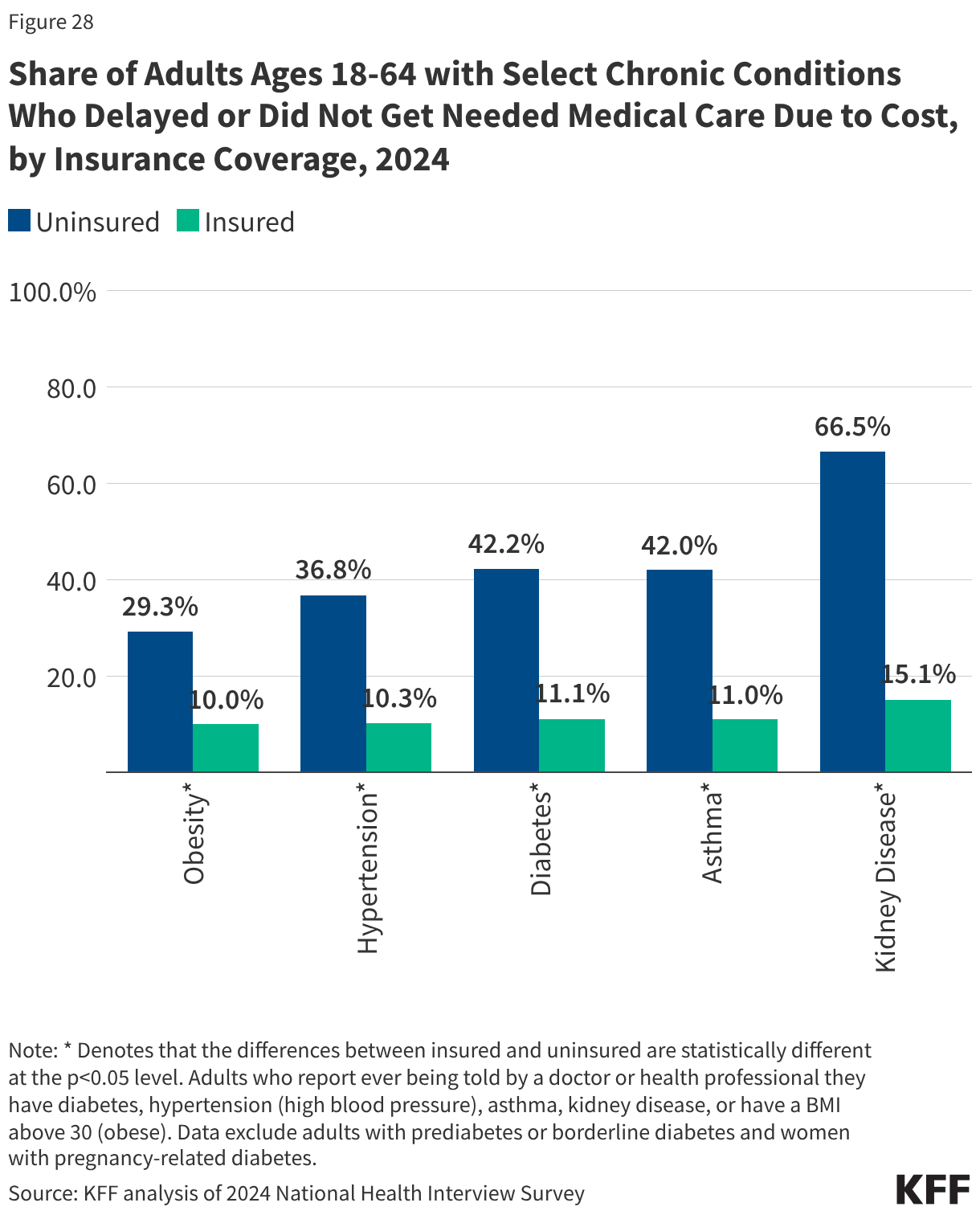
ACA Marketplace Enrollment is Down in 2026—But All of the Data Isn’t in Yet

Published: Feb 5, 2026

2026 marks the first year since 2020 that enrollees in the Affordable Care Act Marketplaces do not have access to enhanced premium tax credits. The effect of the expiration on how many people will use ACA Marketplace coverage remains unclear.

New data released by CMS on plan selections show that ACA sign-ups for 2026 are down by over 1 million people compared to the same time last year, marking the first year since 2020 that sign-ups appear to have declined. A more detailed Health Insurance Exchanges Open Enrollment Report is expected in March or April that will detail demographics, income, and metal levels for people who select or are automatically renewed into a plan. Plan selection data is unable to fully capture the effects of the enhanced tax credits expiring on the number of people with coverage. As some people end up not making their premium payments, actual enrollment—known as “effectuated” enrollment—will inevitably decline. With the expiration of enhanced premium tax credits, premium payments are estimated to have increased 114%, on average, for subsidized enrollees who stay in the same plan. With such steep increases, it is not yet clear how many people who have selected a plan during Open Enrollment will make a payment. 

This brief explains the limitations of early data in understanding the impact of the expiration of enhanced premiums tax credit on ACA enrollment. It also provides a timeline of when more complete data will become available. The bottom line is that it will be quite a while before we get a complete picture of how much enrollment has dropped following expiration of the enhanced premium tax credits.

What are the limitations of plan selection data?

Plan selection (or “sign-up”) data does not accurately reflect the number of people who ultimately have ACA Marketplace coverage because it does not account for premium payments. In other words, it shows how many people have selected a plan or been automatically renewed into ACA coverage, but it does not show how many people actually gain or maintain coverage.

New enrollees are generally required to submit their first premium payment (“binder” payment) within 30 days of the coverage effective date, thus “effectuating,” or beginning, their coverage. Returning subsidized customers, however, are generally given a 3-month grace period for nonpayment of premiums. This means that these returning consumers would then have until March 31, 2026, to catch up on premium payments before their coverage is retroactively terminated. The impact of enhanced subsidies expiring will therefore not be evident (even to insurers) until all applicable grace periods have been exhausted.

For 2026, nearly 20 million of the plan selections are returning customers. Plan selection data from 2025 shows that more than four in ten people in the ACA Marketplaces were automatically renewed into their coverage that year, meaning they did not actively sign up for their plan. As consumers automatically renewed for 2026 received their first premium bills for January, some may have disenrolled or stopped making a payment. Depending on what action they take and the timing, many people could be counted in preliminary plan selection data (in the “Final Snapshot” just released and the “Open Enrollment Report” in the spring) even though they may not truly have coverage.

When will we know more about ACA enrollment?

Below is a timeline of key ACA Marketplace deadlines and data releases. The data timing listed below is based on recent years’ release dates and there could be different dates in 2026. The section following the timeline explains each of these data sources in detail.

TimingDeadline or Data Release
January 15, 2026End of Open Enrollment in most states
January 28, 2026Final Marketplace Open Enrollment Period Report: National Snapshot (plan selections) in most states; preliminary data are included for states with later open enrollment periods
January 30, 2026Last possible payment due date for January 1 enrollments in new plans
January 31, 2026End of Open Enrollment in all states
March 2, 2026Last possible payment due date for February 1 enrollments
March 31, 2026Payment grace period ends for automatic renewals processed December 15
March/April 2026*CMS Health Insurance Exchange Open Enrollment Report and Public Use Files (plan selections)
April/May 2026Public insurer first quarter earnings reports
May/June 2026Earliest 2027 insurer rate filings to state regulators become public
July 2026*Effectuated Enrollment: Early 2026 Snapshot
January 2027*Biannual National Health Interview Survey (NHIS) Early Release Data
July 2027*Effectuated Enrollment: Full Year 2026—accounts for grace period retroactive terminations
July 2027*Finalized HHS Risk Adjustment Program State-Specific Data; additional rate filings
July 2027*Issuer Level Enrollment Public Use File
2028*Enrollee-Level External Data Gathering Environment (EDGE) data

*Note: Timing is based on recent years and may change for plan year 2026.

Effectuated Enrollment

The effectuation rate is the share of people who have a plan selection during Open Enrollment who effectuate (or start) their coverage. While it is possible that some states or insurers may provide information about effectuation rates earlier, the first national data on ACA enrollments will likely come out in July 2026 with the Effectuated Enrollment Report, if the timing of past years is followed.

As shown in the chart below, the effectuation (or premium payment) rate has been quite high since 2022, meaning the vast majority of consumers who selected a plan ended up with coverage. For that reason, in recent years, plan selections and effectuated enrollment have often been discussed synonymously. However, the expiration of enhanced premium tax credits in 2026 will mark the first time that most ACA Marketplace enrollees experience a significant increase in their premium payments, making past years’ effectuation rates unreliable indicators of this year’s rate.

CMS typically releases an Effectuated Enrollment: Early Snapshot each summer. This data will provide a better picture of the impact of the expiration of enhanced tax credits on enrollment than plan selection data alone.

Based on past years, the Effectuated Enrollment: Early Snapshot report will likely be released in July 2026, and will report February 2026 effectuated enrollment, as measured on March 15, 2026. In other words, the July data release will likely show how many people had effectuated enrollment in February, based on what insurers know about premium payments by mid-March. However, as mentioned above, returning customers have until the end of March to make premium payments under the grace period. So even the data released in July of 2026 may still overstate the number of enrollees.

The effectuated enrollment data released in July of 2026 will likely not count new consumers who missed their binder payment for January or February, nor would it count consumers who were automatically renewed in December but then actively disenrolled in January. However, it wouldstill count people who were automatically renewed for January coverage and did not make a payment during the grace period—even if they eventually had their coverage retroactively terminated as of January 31.

The Effectuated Enrollment: Full Year 2026 data, likely to be released in the summer of 2027, would show the number of effectuated enrollees after all grace periods have elapsed. As a share of plan selections made during Open Enrollment, the chart below shows the final February effectuation rate from the Full Year (green) data has historically been a few percentage points lower than the Early Snapshot (blue).

Fewer Consumers Maintain Coverage than Sign Up during Open Enrollment (Line chart)

Another reason the Effectuated Enrollment: Early Snapshot (expected to be released in July 2026) may not give a complete picture of the effect of expiring enhanced tax credits is that there could still be additional coverage loss later in the year. If an enrollee makes an initial premium payment but then decides their premium is unaffordable and drops their coverage mid-year, they may still be counted in the Effectuated Enrollment: Early Snapshot data even though they will not have coverage after their termination.

CMS may release additional effectuated enrollment counts before the Effectuated Enrollment: Full Year report; since this additional reporting may be after the run-out of grace periods, they would reflect finalized enrollment. In 2025, effectuated enrollment counts for the first five and seven months were released. Additionally, these releases may include information on the contribution of premium tax credits to the gross premium.

While effectuated enrollment data will tell us the number of people who are covered by ACA plans, it will not provide information about who paid their premium. The Open Enrollment Report and concurrent public use files, based on plan selections, will be the earliest source of information about income and other demographics of ACA enrollees. It is likely that the demographics and income distribution of ACA enrollees could shift from between the measurement of plan selections and effectuated enrollment. Additionally, the effectuated enrollment data from the Full Year report does not typically include metal level selection. There could be differences in payment rates for people who stay in their previous plan and face large premium increases and those who switch to lower-cost plans.

Quarterly Earnings Reports: April and May 2026

Prior to the publication of the effectuated enrollment data, some data on enrollment trends may be available from the insurers that enroll large shares of the individual market, during investor earnings calls. Insurers will host their fourth-quarter and year-end 2025 earnings calls in late January or February of 2026: Centene and Oscar will host their Q4 earnings calls on February 6 and February 10, respectively.
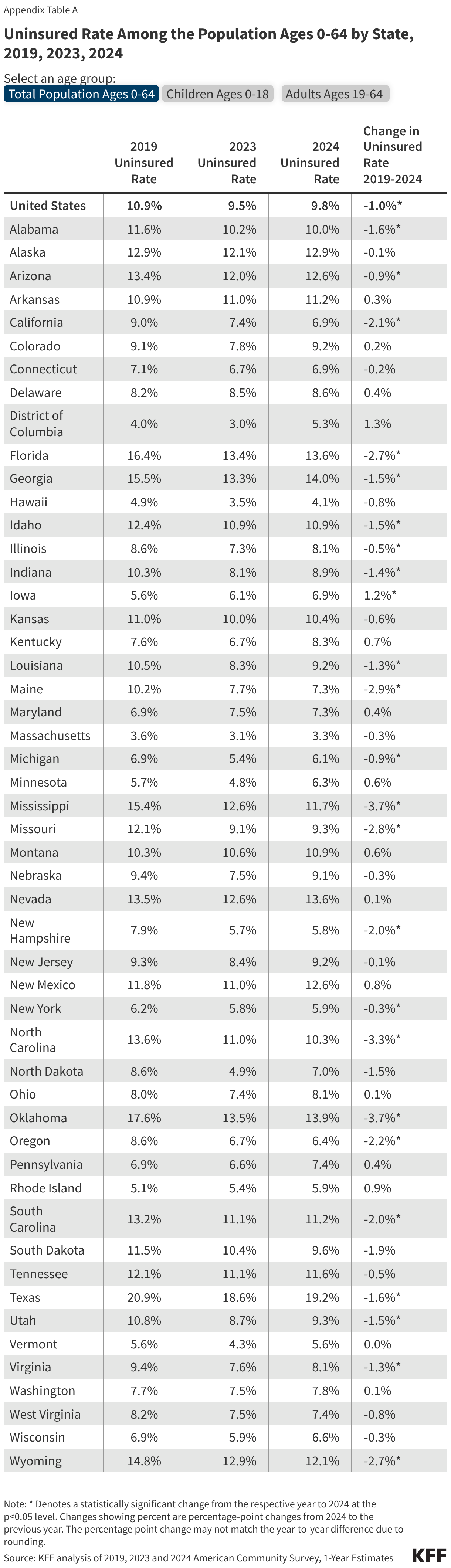
Insurers may start releasing membership counts for 2026 during their first-quarter 2026 earnings calls, expected to happen in April or May. Centene has announced their first-quarter earnings call for April 28. Elevance and UnitedHealthcare typically have first-quarter calls in April, while Oscar and Cigna typically report earnings in May. First-quarter calls that include enrollment information may not be fully adjusted for retroactive terminations due to nonpayment grace periods.
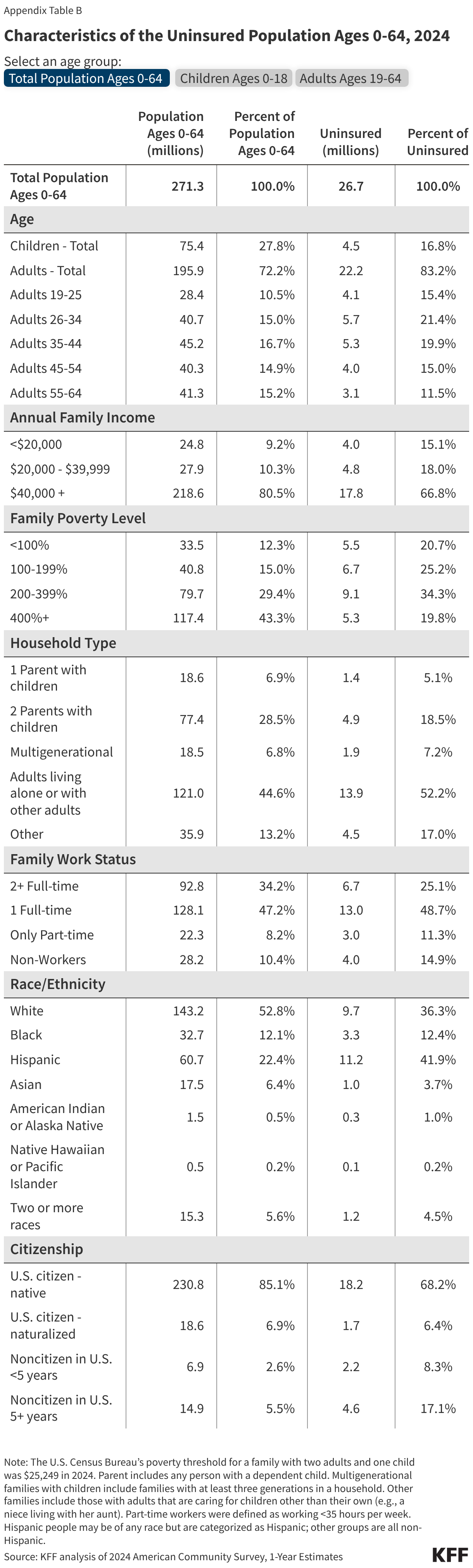
Insurer Rate Filings: Summer 2026

Every spring and summer, individual market insurers, including those offering ACA Marketplace plans, publicly file proposed premium rate changes to state regulators. These filings offer insight into what insurers believe is driving health cost growth and changes in enrollment. These rate filings will show insight into what insurers are planning in 2027 and may provide early counts of 2026 enrollment.
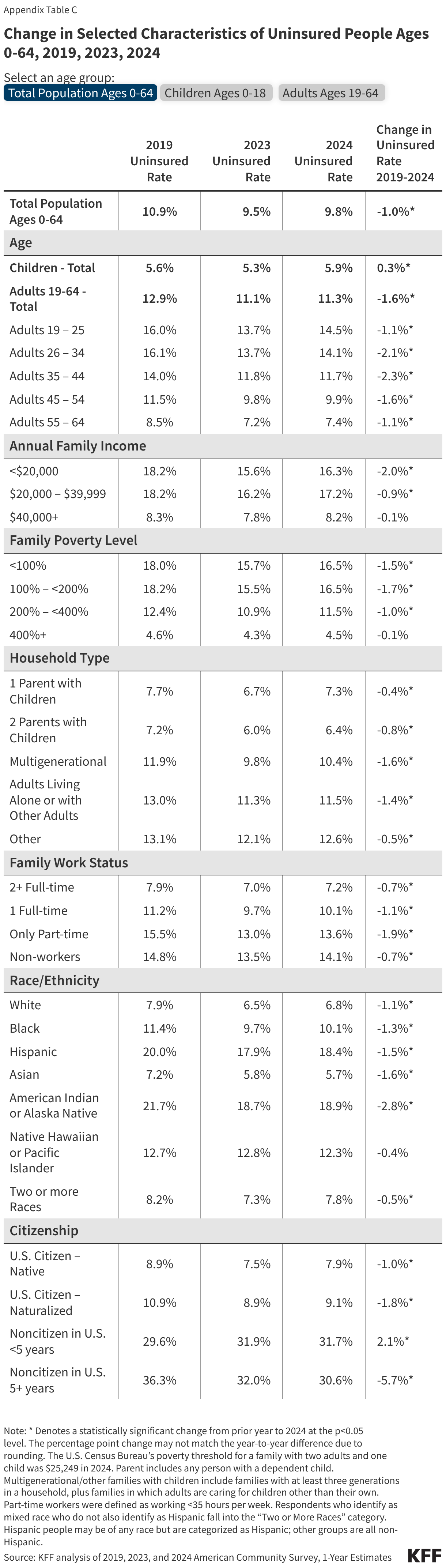
National Health Interview Survey Quarterly Releases: Likely January 2027

The National Health Interview Survey (NHIS) early release data will provide early indications of changes in the uninsured rate without the enhanced tax credits. From 2021-2024, first-quarter data came out in the summer of the same year, and data for the second quarter of the year came out closer to the end of the year. The Centers for Disease Control and Prevention has transitioned to biannual releases of data and released data for the first half of 2025 at the end of January 2026. If this release schedule remains consistent, data for the first half of 2026 may become available in early 2027.

Risk Adjustment Data: July 2027

Based on past years, the CMS Risk Adjustment Program State-Specific Data for 2026 is expected to come out in July 2027. The risk adjustment data will provide a state-by-state look at how many billable member months were reported for the ACA-compliant individual market. Because it will include on- and off-Marketplace enrollment, it will capture all people in ACA compliant coverage, even if they chose to purchase it off-exchange.

Issuer Level Enrollment Data: July 2027

The issuer-level enrollment data is split between HealthCare.gov and state-based exchanges. Data for HealthCare.gov states includes more information, including average monthly effectuated enrollment and average months of enrollment for those who have disenrolled. Additionally, issuer-level enrollment across all states will be made available through the Medical Loss Ratio Data and System Resources Public Use File, released late in the following year.

Enrollee-Level External Data Gathering Environment (EDGE): 2028

Enrollment by metal tier can be determined using the Enrollee-Level External Data Gathering Environment (EDGE) dataset, but this is subject to its own limitations: sparse enrollee demographic information, incomplete longitudinal data, and no information on terminated/non-effectuated coverage prevent fine-grained analysis on how the expiration of enhanced premium tax credits affected enrollee decisions. EDGE data for 2026 will likely not be available until 2028.