KFF designs, conducts and analyzes original public opinion and survey research on Americans’ attitudes, knowledge, and experiences with the health care system to help amplify the public’s voice in major national debates.
Half of African Americans say they will not take a coronavirus vaccine
KFF/The Undefeated poll shows disparate views on health care between Black and white America
Poll results published on The Undefeated beginning today
The Kaiser Family Foundation (KFF) and The Undefeated have conducted a joint nationwide survey that explores the views and experiences of African Americans during the coronavirus pandemic. Despite the disproportionate impact of the virus on Black communities, 49 percent of African Americans say they will shun taking a vaccine even if scientists deem it safe and it is available for free to anyone who wants it.
From August 20 through September 14, the study polled 1,769 adults, including 777 African Americans. While half of African Americans said they would probably or definitely decline a coronavirus vaccine, two-thirds of white people said they would definitely or probably get vaccinated, as did 60 percent of Hispanic adults, by comparison.
In addition to exploring the effects of the coronavirus, The Undefeated/KFF poll is one of the most expansive studies in recent years on Black people’s attitudes and experiences with health care, and the findings reveal how the experiences of Black and white communities differ. A complete analytical report based on the full survey will be available Wednesday here. Key findings:
Distrust of the health care system:
Nearly six in 10 African Americans said they trust the nation’s health care system only some or almost none of the time to do what is right for their communities.
Impact on Black households:
Thirty-nine percent of Black adults said they know someone who has died from the coronavirus, nearly double the rate for white adults;
The pandemic has left one-third of Black adults and nearly half of Black parents struggling to pay their bills;
Two of three Black parents have either lost jobs or had their incomes interrupted since the pandemic struck in February.
The Undefeated, ESPN’s content platform exploring the intersections of sports, race and culture, began reporting the survey results today at www.TheUndefeated.com, and will continue with daily pieces through Thursday, Oct. 15. Highlights:
Disparate Views of Health Care in America: ESPN senior writer Michael Fletcher takes an in-depth look at The Undefeated/KFF poll results, focusing on the disparate views that Black and white people hold of the health care system. Fletcher contrasts experiences, resources and access to care, and views on the impact of structural racism, as well as histories and health profiles.
Distrust (Wed., Oct. 14): The Undefeated senior writer Jesse Washington focuses on the significant distrust that African Americans have for the health care system, from their experiences finding and working with doctors to the relative shortage of Black doctors.
The Coronavirus Vaccine Dilemma (Wed., Oct. 14): The Undefeated senior writer Lonnae O’Neal explores whether African Americans will take a vaccine, and more.
The COVID-19 Double Consciousness (Thur., Oct. 15): O’Neal pens an essay on the civil rights movement of our time.
The Black Family (Thur., Oct. 15): Fletcher writes how the pandemic has hammered the Black family – with 46 percent of Black parents saying the pandemic has had a major impact on their ability to afford basic necessities, while a third of Black parents say the pandemic has had a major negative impact on their ability to care for their children.
Bias (Thur., Oct. 15): Washington explores unconscious bias as seven of 10 Black adults say unconscious bias has been an obstacle in their lives.
Executive statements:
Kevin Merida, Senior Vice President and Editor-in-Chief, The Undefeated: “We are proud to partner with the Kaiser Family Foundation on this groundbreaking project that explores the views Black Americans have about the health care system and the impact of COVID-19 on their lives. This extraordinary survey and the accompanying reporting and essays are emblematic of The Undefeated’s commitment to delving into the most important issues facing Black communities.”
Drew Altman, President and Chief Executive Officer, KFF: “This joint survey and reporting project gives voice to widespread systemic health disparities affecting the Black community, and the findings about a coronavirus vaccine are a loud alarm bell about the need for a substantial and credible outreach effort when a vaccine is distributed if the disproportionate impact of COVID-19 on Black Americans is to be slowed.”
The Undefeated is ESPN’s multiplatform content initiative exploring the intersections of sports, race and culture. The digital hub, TheUndefeated.com, which launched in May 2016, combines innovative long-form and short-form storytelling, investigation, original reporting and provocative commentary to enlighten and entertain African Americans, as well as sports fans seeking a deeper understanding of black athletes, culture and related issues.
In addition to its cutting-edge content, The Undefeated seeks to be a thought-leader on race, sports and culture in the country – convening insightful forums to discuss and debate topical issues affecting sports and race in America.
KFF: Filling the need for trusted information on national health issues, KFF (Kaiser Family Foundation) is a nonprofit organization based in San Francisco, California. KFF is not affiliated with Kaiser Permanente.
The Survey on Race and Health, a joint project between KFF and ESPN’s The Undefeated, explores the public’s views and experiences on the topics of health care, racial discrimination, and the coronavirus pandemic, with a special focus on Black adults, a group that has borne a disproportionate burden of COVID-19 cases and deaths. This survey of 1,769 U.S. adults includes an oversample of 777 Black Americans to allow for in-depth reporting among this group, as well as comparison groups of White and Hispanic adults. This project focuses on African Americans’ views and experiences of being Black in America, including views of unconscious bias and structural racism; experiences of discrimination within and outside of health care settings; trust in the health care system; the social and economic impacts of the pandemic; and views of a potential coronavirus vaccine.
Racial disparities in health and health care have been longstanding and persistent in the United States. Even before the coronavirus pandemic, African Americans were experiencing lower rates of health insurance coverage, increased barriers to accessing health care, and worse health outcomes compared to their White counterparts. Black adults in the U.S. also face social and economic inequities, including higher rates of unemployment, that play a major role in shaping health. Beyond these factors, research shows that historic abuse and mistreatment of communities of color by the medical system and ongoing racism and discrimination drive disparities in health, contributing to lower quality of care, distrust of the health care system, and stress and trauma. Reflecting these experiences, KFF surveys dating back to 1999 have documented a gap in trust of health care providers between Black and White Americans.
The COVID-19 pandemic has drawn new attention to and compounded these existing disparities in health and health care. Since the pandemic hit the U.S. in early 2020, a growing body of research has consistently shown that people of color have borne a disproportionate burden of COVID-19, including being at increased risk for exposure and experiencing higher rates of infection, hospitalization, and death. Data also show that people of color are taking a harder hit financially from the economic downturn associated with the pandemic, experiencing higher rates of increases in unemployment and difficulty paying for basic needs. In addition, the deaths of Black men and women including George Floyd and Breonna Taylor at the hands of police, and ensuing protests around the country and the world, have shined a spotlight on inequities in the criminal justice system, and the threat of violence that feels like an all-too-common occurrence for many Black Americans.
In light of these facts, KFF partnered with ESPN’s The Undefeated to conduct a survey exploring African Americans’ views and experiences of being Black in America, focusing on experiences with racism and discrimination, including within the health care system; the impacts of the pandemic; and views of a potential coronavirus vaccine. The survey of over 1,700 U.S. adults includes an oversample of nearly 800 Black Americans to allow for in-depth reporting among this group by age, gender, education, and income, as well as comparison groups of White and Hispanic adults. Other groups, including Asian, American Indian and Alaska Native, and Native Hawaiian and Pacific Islander people are included in the total in proportion to their population, but the sample size is not sufficient to break their responses out separately.
This work builds on KFF’s long history of documenting racial and ethnic disparities in health and health care, as well as our history of using surveys to document the views and experiences of African Americans on broader issues of race, culture, and discrimination in partnership with media organizations like CNN and The WashingtonPost.
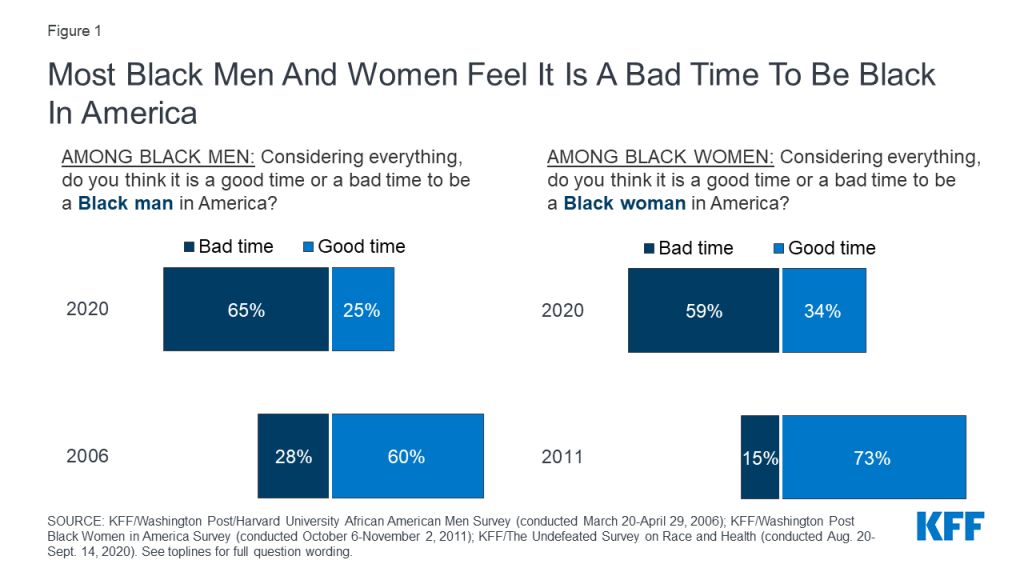
The share of Black adults who believe it is a good time to be Black in America has plummeted in recent years, but most believe the current protest movement will lead to meaningful change that will improve Black people’s lives. Just a quarter of Black men now say it is a good time to be a Black man in America, down from 60% in 2006, and just a third of Black women (34%) now say it’s a good time to be a Black woman, down from 73% in 2011. Yet almost six in ten Black adults (57%) believe the current protest movement and fight for racial equality will lead to meaningful change that will improve the lives of Black people in the United States.
Black Americans – and Black parents in particular – have been especially hard-hit by the coronavirus pandemic, both financially and emotionally. Half of Black adults (compared to 42% of White adults) say someone in their household has lost a job or had their income reduced as a result of the pandemic, and one-third (compared to 17% of White adults) say it has had a major negative impact on their ability to afford basic needs like housing, utilities, and food. Among Black parents, the share reporting income loss rises to two-thirds, and almost half (46%) of Black parents report a major problem affording necessities. Black parents are also more likely than White parents to say the pandemic has had a major impact on their relationships with family members and their ability to care for their children. Overall, Black adults are more likely than their White counterparts to say they that know someone who has died from COVID-19, that they are worried about contracting the virus at work, and that the pandemic has caused a major decline in their mental health. Two-thirds of Black adults think that the federal government would be taking stronger action to fight the pandemic if White people were getting sick and dying at higher rates than people of color.
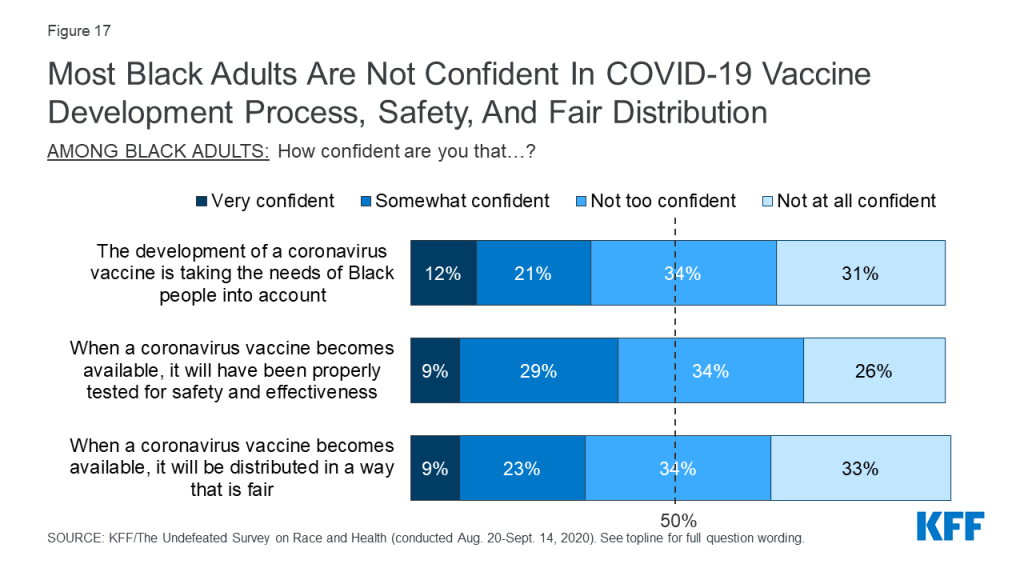
About half of Black adults say they would not want to get a coronavirus vaccine if it was deemed safe by scientists and freely available, with safety concerns and distrust cited as the top reasons. By contrast, most White adults say they would get vaccinated, and those who wouldn’t get a vaccine are more likely to say they don’t think they need it. Majorities of Black adults also lack confidence that the vaccine development process is taking the needs of Black people into account, and that when a vaccine becomes available it will have been properly tested and will be distributed fairly.
Seven in ten Black adults believe race-based discrimination in health care happens at least somewhat often, and one in five say they have personally experienced it in the past year. Black adults are also more likely than those who are White to report some specific negative experiences with health care providers, including providers not believing they were telling the truth or refusing to provide pain medication or other treatments they thought they needed. Two-thirds of Black adults – across income and education levels – say it is difficult to find a health care provider who shares their background and experiences, and one-quarter say they have never received care from a Black doctor. Reflecting these experiences, Black adults are less likely than their White counterparts to say they trust doctors, local hospitals, and the health care system to do what is right for their communities.
Black women – particularly mothers – report experiencing even higher rates of discrimination in health care settings. Among Black women who have a child under the age of 18, 37% say they have been treated unfairly based on their race while getting health care for themselves or a family member in the past year, and 41% say there was a time in the past three years when a health care provider talked down to them or didn’t treat them with respect. (Among Black men these shares are 15% and 17%, respectively). Black women overall are also more likely than Black men to report feeling that a health care provider didn’t believe they were telling the truth, assumed something without asking, or suggested they were personally to blame for their health problems.
Majorities of Black men and women, regardless of age, income, and education, say it is a bad time to be Black in America. The survey finds that Black men and women largely agree that it is a difficult time to be Black in America, a finding that is perhaps not surprising given the disproportionate impact of the coronavirus pandemic on Black families and the national attention drawn to police violence against Black Americans, along with broader issues of systemic racism, over the summer of 2020. Among Black men, just one quarter say now is a good time to be a Black man in America, down 35 percentage points from 60% in a 2006 survey conducted by KFF and The Washington Post. Similarly, the share of Black women who say it’s a good time to be a Black woman in America dropped by more than half, from 73% in a 2011 KFF/Washington Post survey to 34% in 2020. Now, majorities of both groups say it is a bad time to be a Black man (65%) or a Black woman (59%), a finding that holds true across Black men and women regardless of age, income, and education.
Figure 1: Most Black Men And Women Feel It Is A Bad Time To Be Black In America
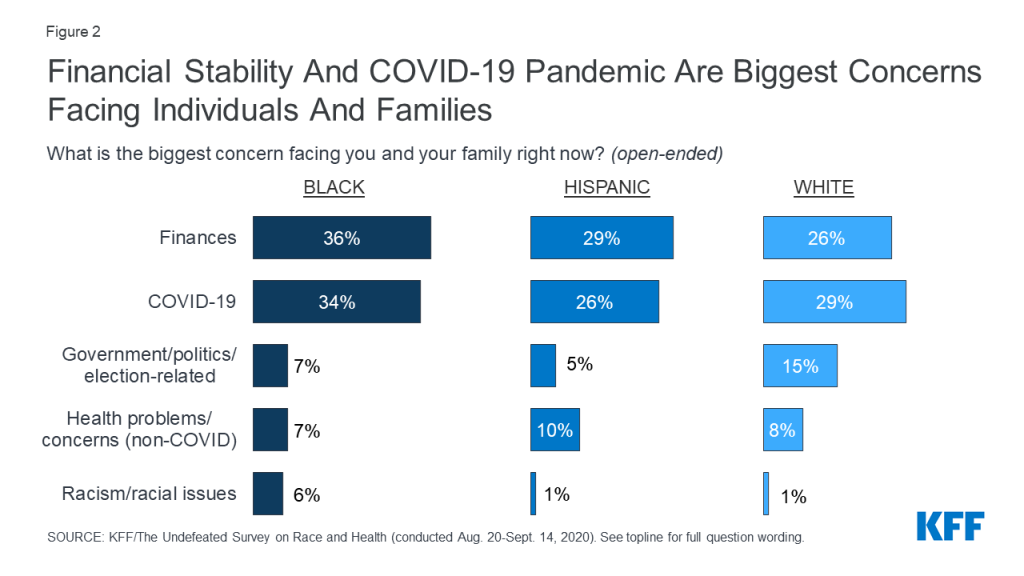
When asked to say in their own words the biggest concerns facing them and their families right now, 36% of Black adults cite financial issues and a similar share (34%) cite concerns related to the COVID-19 pandemic. These are also the top two concerns mentioned by White and Hispanic adults, though Black adults are 10 percentage points more likely than White adults to name financial challenges among their top concerns (36% vs. 26%). Conversely, White adults are more likely than Black or Hispanic adults to cite concerns about government and politics, such as the upcoming presidential election (15% of White vs. 7% of Black and 5% of Hispanic). Notably, six percent of Black adults cite issues related to racism as being among their top concerns, and three percent cite worries about police violence.
Figure 2: Financial Stability And COVID-19 Pandemic Are Biggest Concerns Facing Individuals And Families
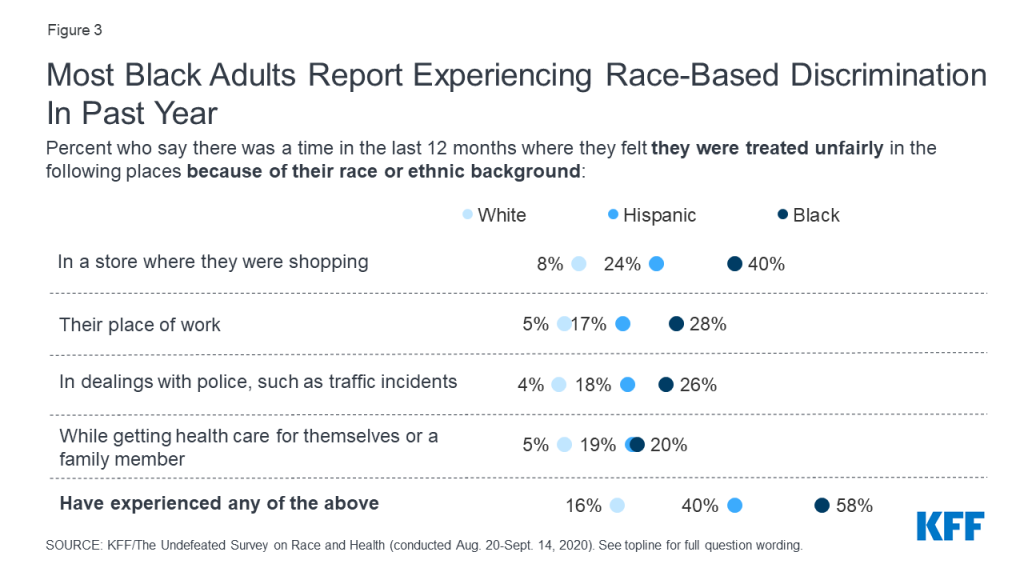
Most Black adults report experiencing race-based discrimination in the past year. The survey finds that nearly six in ten (58%) Black adults say they were treated unfairly while shopping, working, getting health care, or interacting with police in the past 12 months because of their race or ethnic background. Four in ten Hispanic adults also report experiencing such unfair treatment, compared with just 16% of White adults.
Figure 3: Most Black Adults Report Experiencing Race-Based Discrimination In Past Year
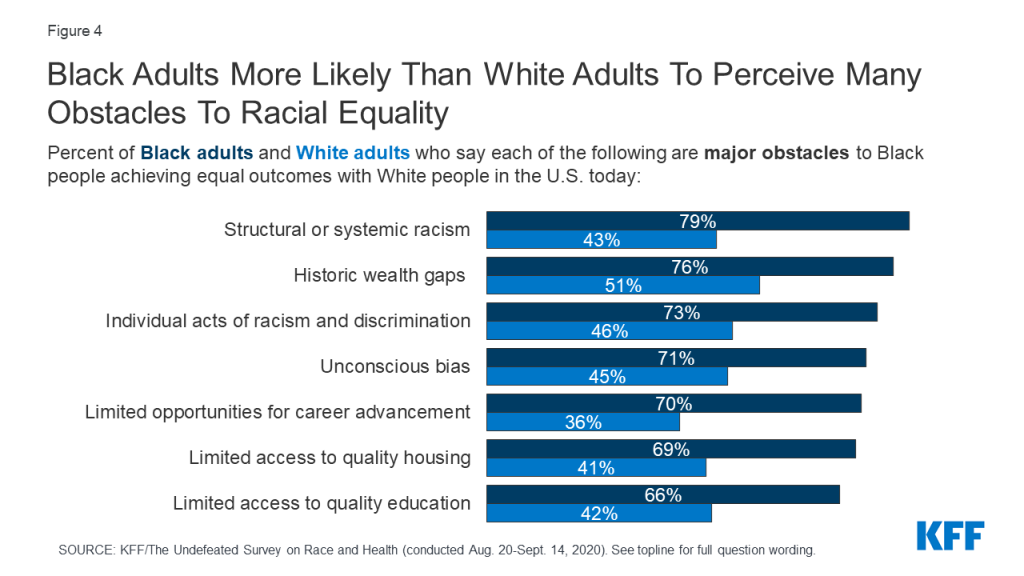
Black adults identify multiple structural and systemic barriers as major obstacles to achieving equal outcomes with White people, as well as individual acts of racism and unconscious bias. When asked about obstacles to Black people achieving equal outcomes with White people in the U.S., larger shares of Black adults compared to White adults view various things as “major obstacles.” At least three-quarters of Black adults see structural or systemic racism (79%) and historic wealth gaps (76%) as major barriers, and about seven in ten say the same about individual acts of racism and discrimination (73%), unconscious bias (71%), limited opportunities for career advancement (70%), and limited access to quality housing (69%). Two-thirds of Black adults see limited access to quality education as a “major obstacle.” The share of White adults viewing each of these things as a major obstacle to Black people achieving equal outcomes with White people is at least 20 percentage points lower than the share of Black adults giving the same answer.
Figure 4: Black Adults More Likely Than White Adults To Perceive Many Obstacles To Racial Equality
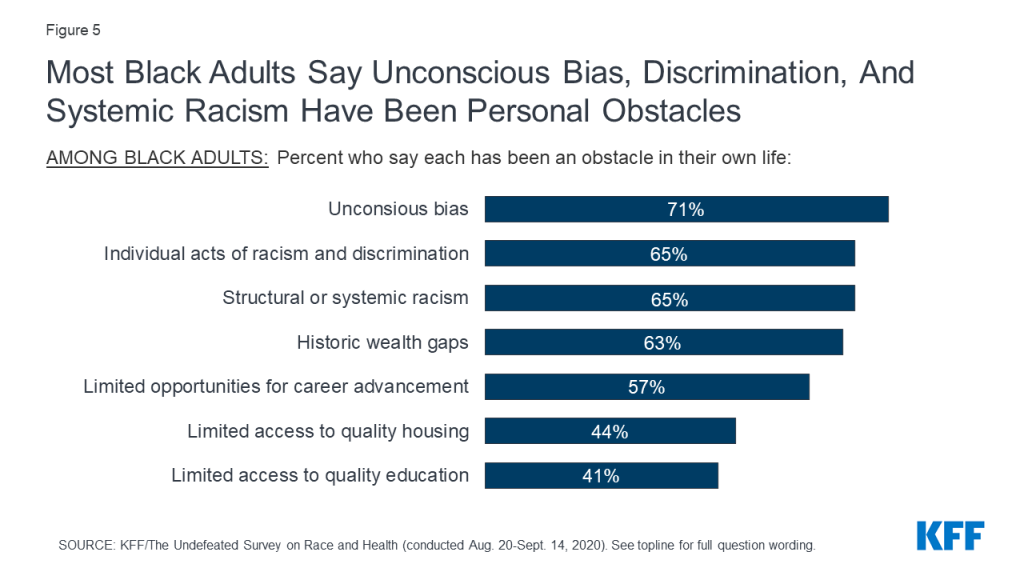
Most Black adults report that unconscious bias, racism and discrimination, and structural and system barriers have been personal obstacles in their lives. When Black adults were asked whether this same list of items had been an obstacle in their own life, the list was similar, but unconscious bias was at the top (71% say this has been an obstacle), followed by about two-thirds who named individual acts of racism and discrimination (65%), structural or systemic racism (65%), and historic wealth gaps (63%). Nearly as many (57%) say that limited opportunities for career advancement has been a personal barrier. Fewer Black adults – about four in ten – see limited access to quality housing (44%) or quality education (41%) as obstacles in their own lives.
Figure 5: Most Black Adults Say Unconscious Bias, Discrimination, And Systemic Racism Have Been Personal Obstacles
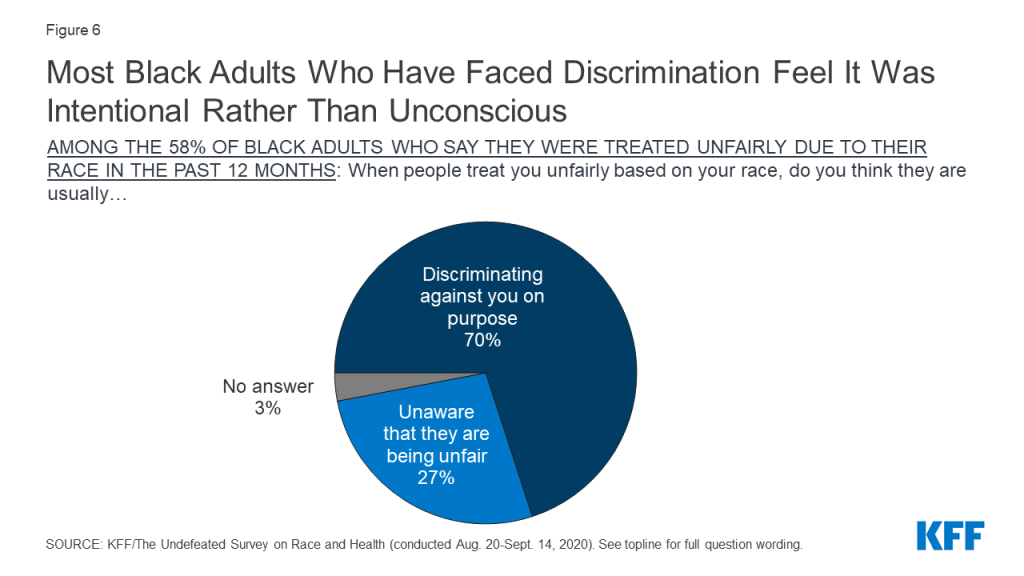
Although unconscious bias ranks at the top of the list of personal obstacles, most Black adults who report experiencing discrimination in the past 12 months (58% of all Black adults) say that when people treat them unfairly based on their race, they are usually discriminating on purpose (70%), rather than being unaware they are being unfair (27%).
Figure 6: Most Black Adults Who Have Faced Discrimination Feel It Was Intentional Rather Than Unconscious
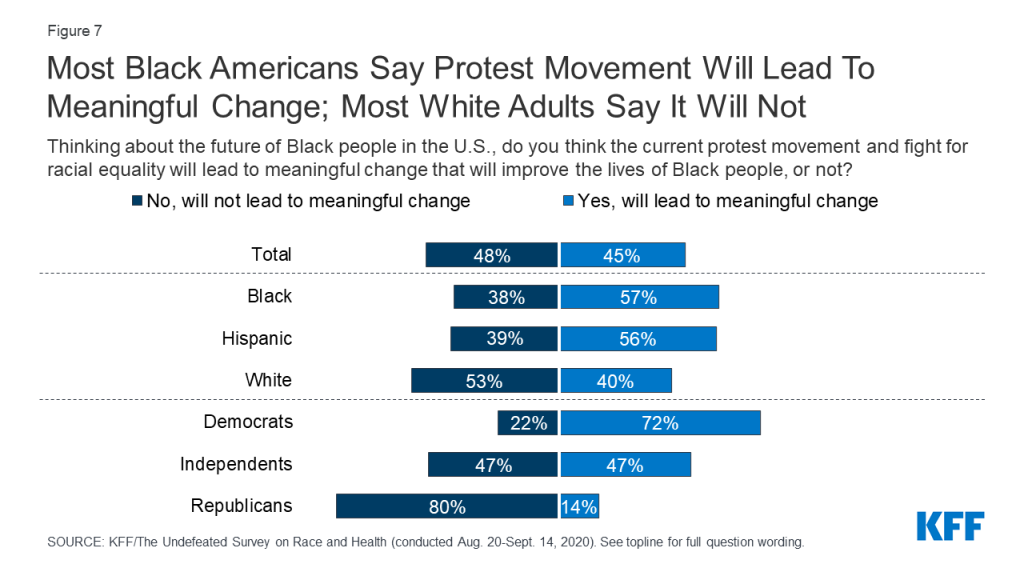
Despite these challenges, Black Americans are not without hope, with most believing the current protest movement will lead to meaningful change that will improve their lives. A majority (57%) of Black adults say they believe that “the current protest movement and fight for racial equality will lead to meaningful change that will improve the lives of Black people,” while a slight majority (53%) of White adults say they do not think the movement will lead to meaningful change. Hispanic adults respond similarly to Black adults, with 56% saying protests will lead to meaningful change. These racial differences at least partially reflect differing partisanship; 72% of Democrats (including 65% of Black Democrats and 75% of white Democrats) expect the protest movement to lead to meaningful change, while eight in ten Republicans (the large majority of whom are White) expect no meaningful change.
Figure 7: Most Black Americans Say Protest Movement Will Lead To Meaningful Change; Most White Adults Say It Will Not
The Disproportionate Impact of the COVID-19 Pandemic
Beyond its stark impacts on health and mortality, the coronavirus pandemic is also having significant economic impacts and taking a toll on individuals’ mental and emotional health. Similar to the disproportionate rates of infection, serious illness, and death people of color are experiencing from the virus, the survey findings show that they also are bearing a disproportionate burden of negative consequences on their financial and emotional well-being.
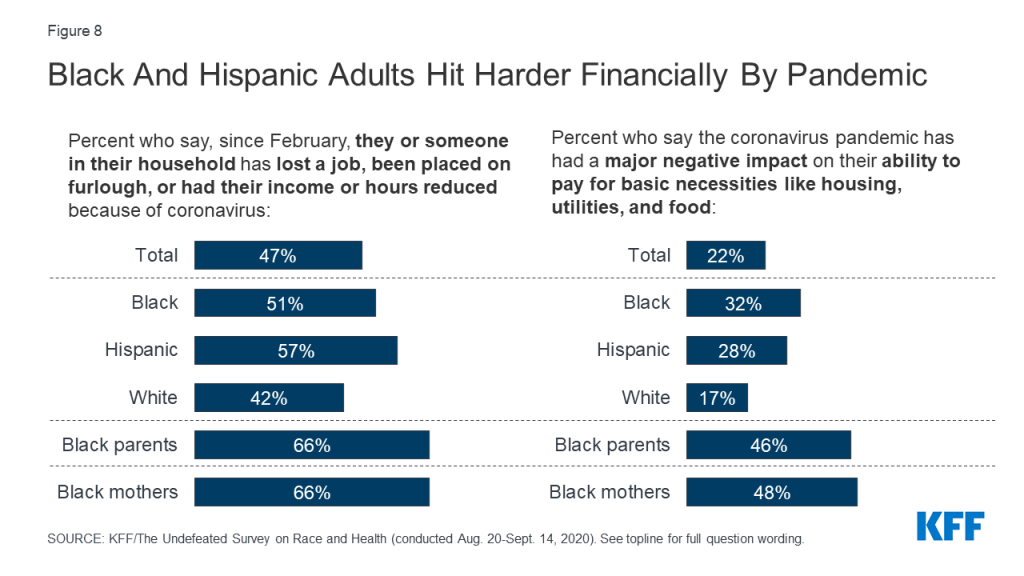
Black and Hispanic adults are more likely to report employment disruptions and financial hardships associated with the pandemic compared to their White counterparts. With unemployment rising to record levels, about half of all U.S. adults, including higher shares of those who are Black (51%) or Hispanic (57%) compared to 42% of White adults, say that they or someone in their household has lost a job, been placed on furlough, or had their hours or income reduced as a result of the pandemic. The shares are even higher among Black parents with children under age 18 living at home, two-thirds (66%) of whom report a pandemic-related disruption in employment or income.
For many, these employment disruptions are leading to significant financial struggles. About three in ten of those who are Black (32%) or Hispanic (28%) say the pandemic has had a “major negative impact” on their ability to pay for basic necessities like housing, utilities, and food, compared with 17% of White adults. Again, Black parents have been hit particularly hard, with nearly half (46% of Black parents overall, 48% of Black mothers) saying the pandemic has had a major negative impact on their ability to pay the bills.
Figure 8: Black And Hispanic Adults Hit Harder Financially By Pandemic
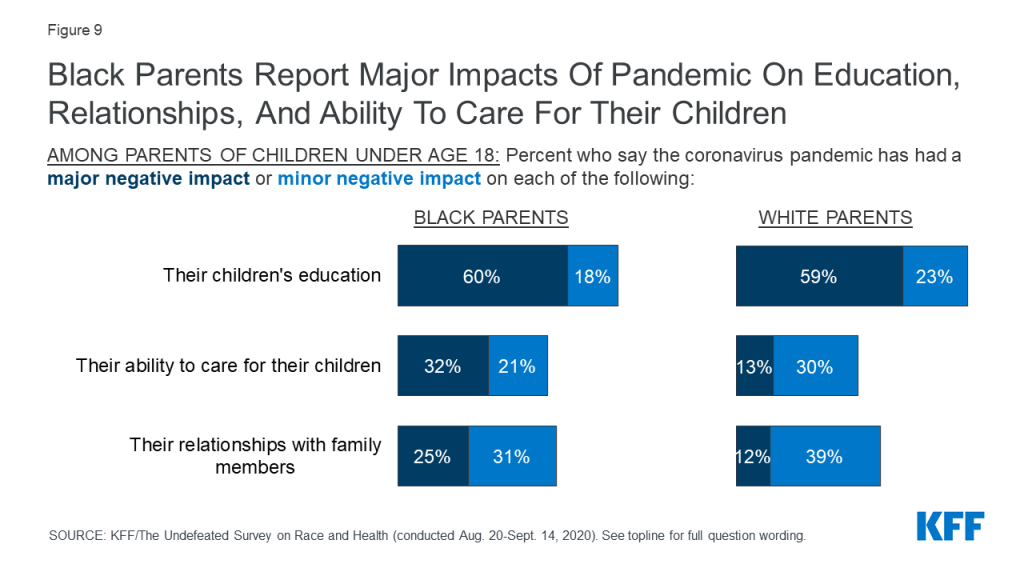
Black parents also report disproportionate impacts on their ability to care for their children and their family relationships. Larger shares of Black parents than White parents say the coronavirus pandemic has had a “major negative impact” on their ability to care for their children (32% vs. 13%) and on their relationships with family members (25% vs. 12%). Majorities of both Black parents (60%) and White parents (59%) say the pandemic has had a major negative impact on their children’s education.
Figure 9: Black Parents Report Major Impacts Of Pandemic On Education, Relationships, And Ability To Care For Their Children
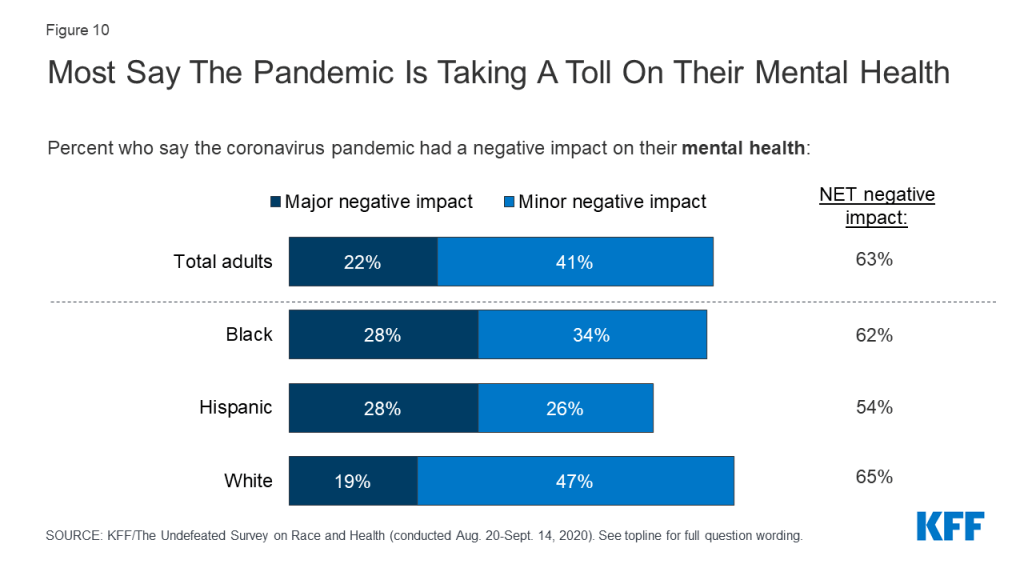
Black and Hispanic adults are more likely to report the pandemic has had a major negative impact on their mental health and to say they know someone who has died from coronavirus compared to those who are White. The coronavirus pandemic is taking an emotional toll on many Americans, including people of color. While more than half of adults across racial and ethnic groups say the pandemic has had a negative impact on their mental health, the share saying it has had a “major negative impact” is higher among Black and Hispanic adults (28% each) compared to White adults (19%). In addition, four in ten Black adults (39%) and a third of Hispanic adults say they know someone who has died from coronavirus, compared with 24% of those who are White.
Figure 10: Most Say The Pandemic Is Taking A Toll On Their Mental Health
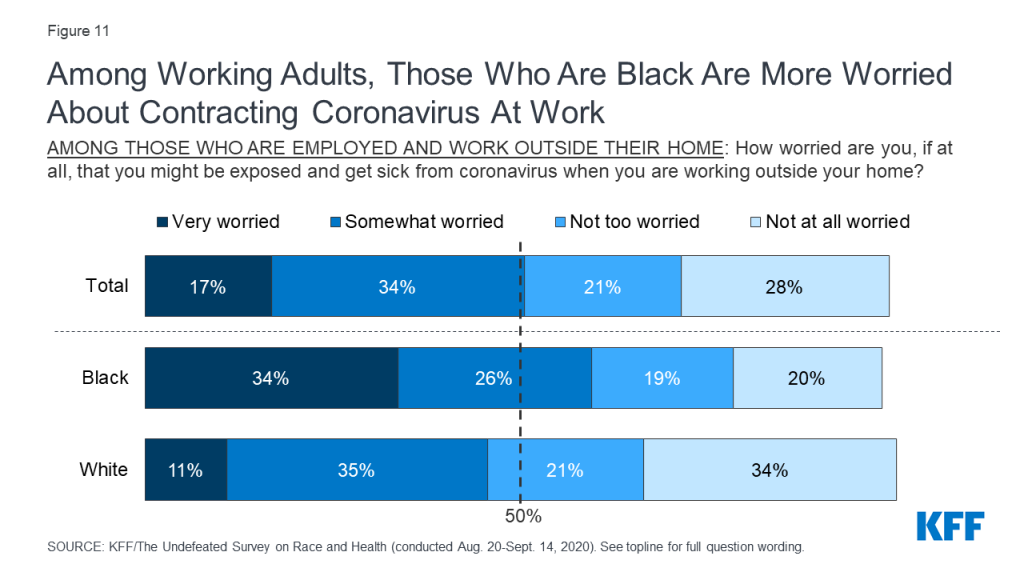
Black adults who work outside their homes are also disproportionately worried about contracting the virus while at work. Among those who work outside of their home, six in ten Black adults are worried about getting sick from coronavirus while at work (including 34% who are “very worried”), compared with just under half of White adults who are worried (11% “very worried”). Worry rises to seven in ten among Black women who work outside the home (69%) and among working Black adults who live in a household where someone has a serious health condition (71%).
Figure 11: Among Working Adults, Those Who Are Black Are More Worried About Contracting Coronavirus At Work
Two-thirds of Black adults think that the federal government would be taking stronger action to fight the pandemic if White people were getting sick and dying from coronavirus at higher rates than people of color. In contrast, 72% of White people believe the government’s response would not be different. Attitudes among Hispanic adults are more mixed: 42% say the government’s response would be stronger and 47% say it would not be different. These attitudes are also highly partisan, with six in ten Democrats believing the government response would be stronger if more White people were dying and the vast majority (90%) of Republicans saying the response would be no different.
Figure 12: Most Black Adults, Democrats Say Government Pandemic Response Would Be Stronger If More White People Were Affected
With planning beginning for an eventual COVID-19 vaccine, one important consideration is making sure that distribution processes and outreach and communication strategies reach people of color. Vaccination among people of color will be particularly important because they are bearing a heavy, disproportionate burden of the disease, and population immunity is not likely to be reached without high vaccination rates across all communities. However, achieving a high vaccination rate will require public health officials and providers to overcome a range of barriers to vaccination among people of color, many of which are rooted in a historic legacy of abuse and mistreatment by the medical system and ongoing racism and discrimination today. The survey findings provide greater insight into these barriers.
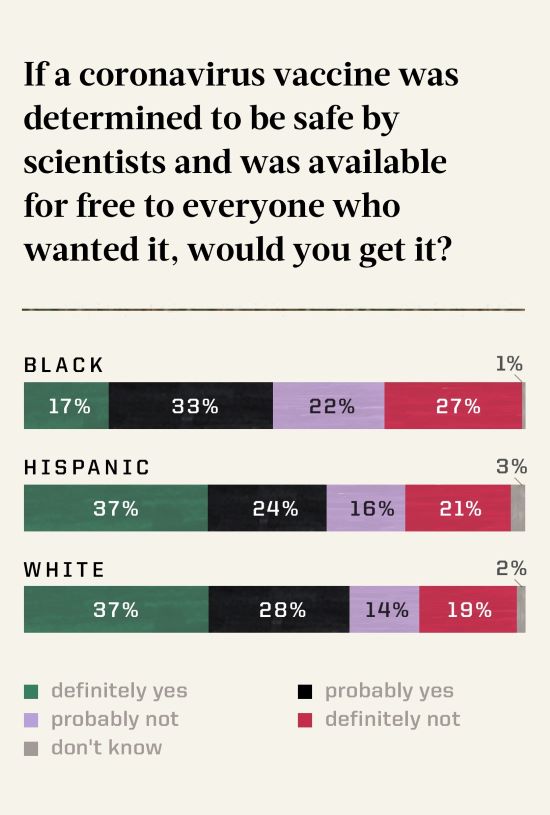
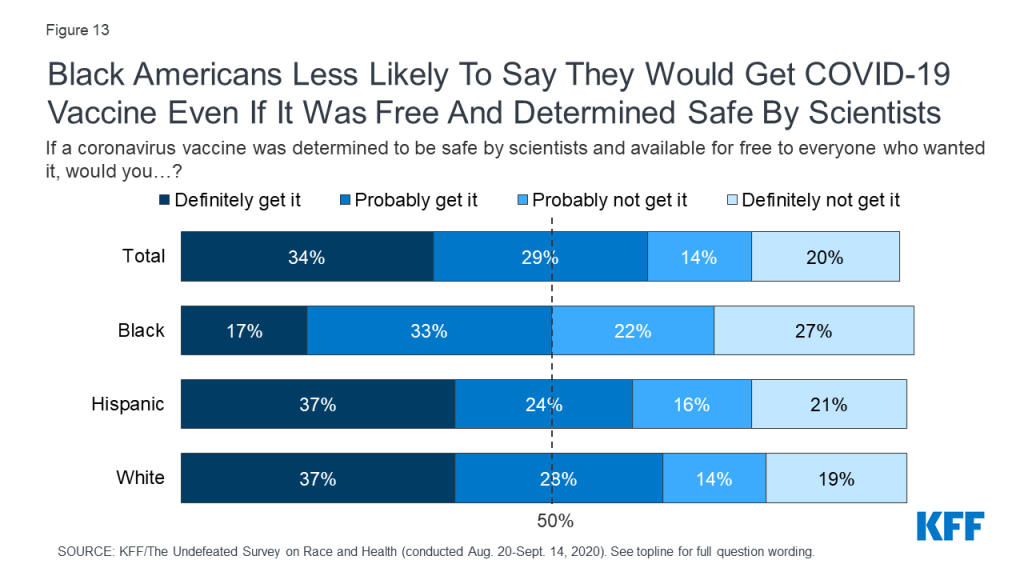
The survey finds that Black adults are less likely than other groups to say they would get a coronavirus vaccine if it was free and determined safe by scientists. Half of Black adults say if a coronavirus vaccine was determined to be safe by scientists and available for free to everyone who wanted it, they would “definitely” or “probably” get vaccinated, compared to six in 10 Hispanic adults and 65% of White adults. In fact, just 17% of Black adults say they would “definitely” get the vaccine, 20 percentage points lower than the share of both Hispanic and White adults (37% each).
Figure 13: Black Americans Less Likely To Say They Would Get COVID-19 Vaccine Even If It Was Free And Determined Safe By Scientists
The racial differences in willingness to obtain a vaccine widen when partisan differences are taken into account. About three-quarters of Democrats (77%) say they would “definitely” or “probably” get a coronavirus vaccine if it was free and safe, compared to about two-thirds of independents (67%) and just under half of Republicans (47%). Considering both race and partisanship together, the racial divide in vaccine hesitancy among Democrats and independents is stark. Two-thirds (65%) of White Democrats say they would “definitely” get vaccinated, compared with just 23% of Black Democrats. Similarly, among independents, those who are White are more than 3 times as likely to say they would definitely get a vaccine as those who are Black (41% vs. 12%).
Table 1: Coronavirus vaccine attitudes by race and political party identification
Democrats
Independents
Republicans*
Total
Black
White
Total
Black
White
Total
White
If a coronavirus vaccine was determined to be safe by scientists and available for free to everyone who wanted it, would you…?
Definitely/Probably get it (NET)
77%
55%
87%
67%
48%
70%
47%
50%
Definitely get it
51
23
65
35
12
41
20
20
Probably get it
26
33
22
31
36
29
27
30
Definitely/Probably not get it (NET)
21
44
10
31
51
29
51
49
Probably not get it
12
24
8
12
20
9
20
21
Definitely not get it
9
20
2
20
31
20
31
28
* Sample size of Black Republicans insufficient to report separately.
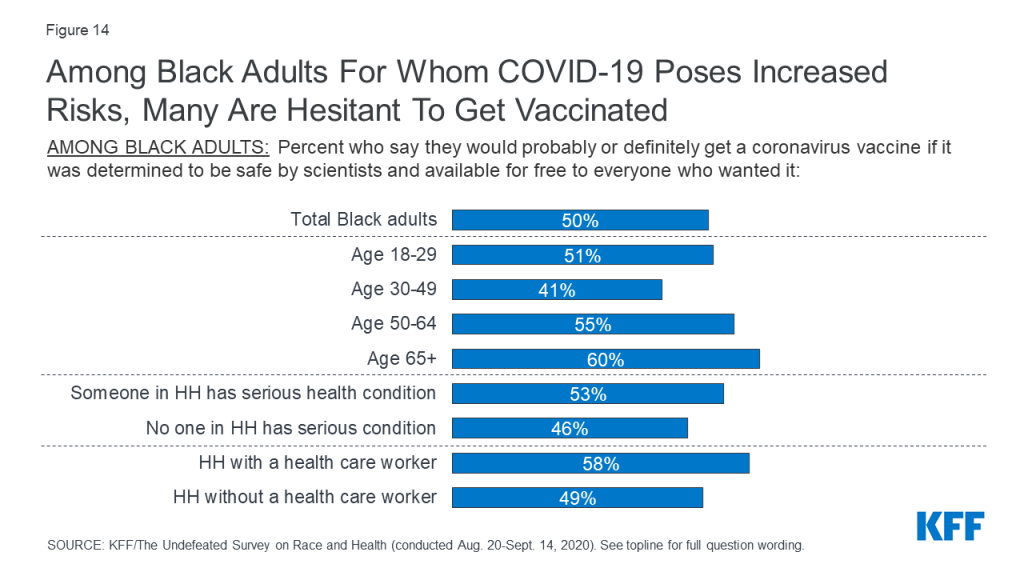
Risk factors appear to play a small role in Black adults’ willingness to obtain the vaccine. Six in ten Black adults ages 65 and over – who are at higher risk for serious illness if they contract coronavirus– say they would probably or definitely get vaccinated if a safe vaccine was available for free, slightly higher than among those under age 65. But, Black adults who live in a household where someone has a serious health condition or works in a health care setting – two other groups at disproportionate risk for serious illness or exposure – are not significantly more likely than their counterparts to say they would be willing to take a vaccine.
Figure 14: Among Black Adults For Whom COVID-19 Poses Increased Risks, Many Are Hesitant To Get Vaccinated
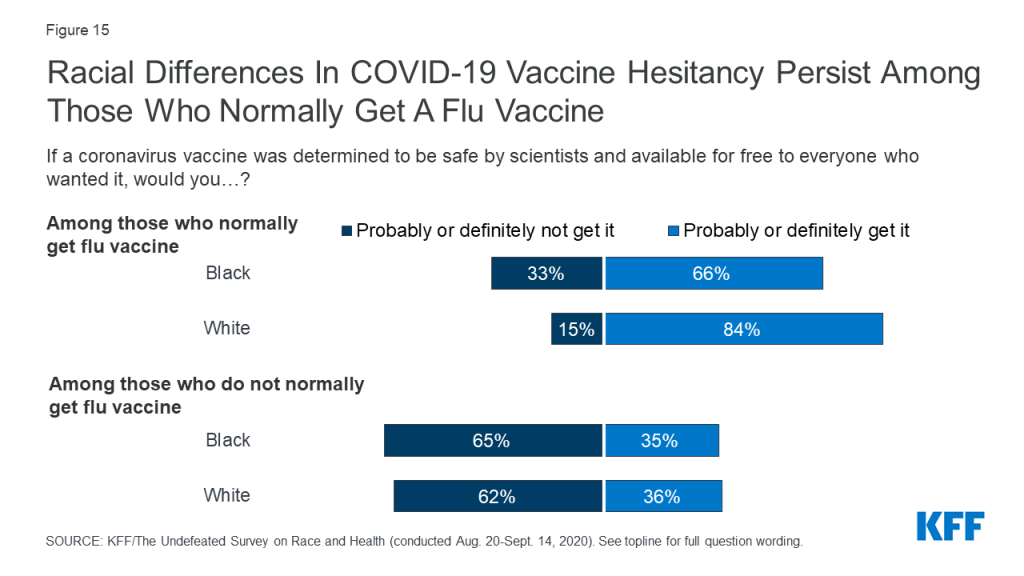
The racial difference in willingness to take a coronavirus vaccine may at least partially reflect a difference in attitudes towards vaccines in general. Black adults are less likely than their White counterparts to say they usually get a flu vaccine each year (49% vs. 60%). Still, this doesn’t explain the difference entirely, as Black adults who normally get a flu vaccine are 18 percentage points less likely than White adults who normally get a flu vaccine to say they would get a vaccine for coronavirus if it was determined to be safe and freely available (66% vs. 84%).
Figure 15: Racial Differences In COVID-19 Vaccine Hesitancy Persist Among Those Who Normally Get A Flu Vaccine
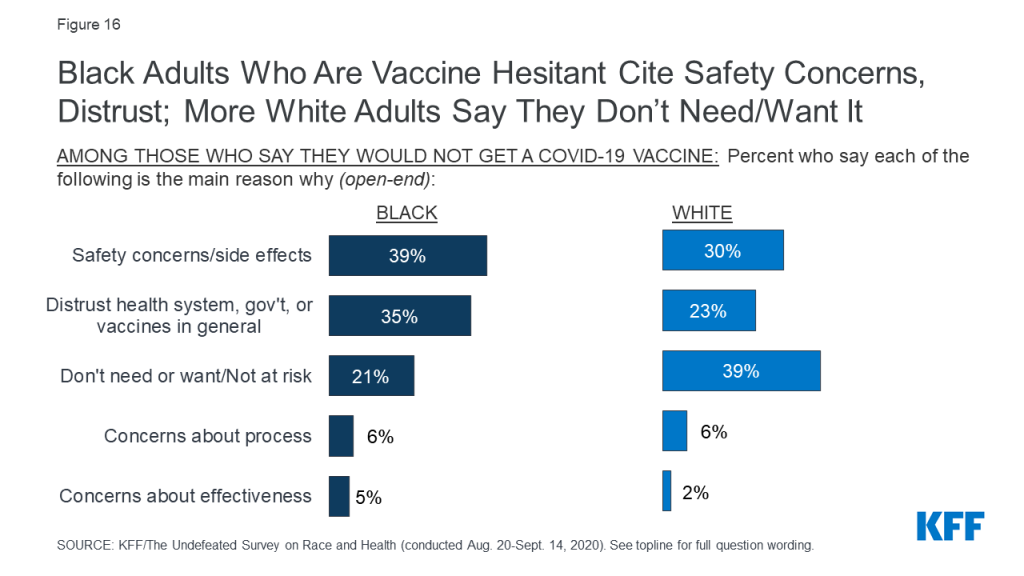
The primary reasons Black adults cite for saying they definitely or probably would not get a coronavirus vaccine are safety concerns and distrust of the health care system. When asked to say in their own words why they would not get a coronavirus vaccine, four in ten Black adults (39%) cite safety concerns, as do three in ten White adults. Thirty-five percent of Black adults who say they won’t get vaccinated cite distrust in either the health care system, the government, or vaccines in general as a reason, higher than the share of White adults who say the same (23%). By contrast, White adults who say they won’t get vaccinated are more likely than Black adults to say they don’t want or need a vaccine or don’t think they’re at risk of getting sick from coronavirus (39% vs. 21%). Six percent of both Black and White adults who say they would not get vaccinated cite concerns about the vaccine development process.
Figure 16: Black Adults Who Are Vaccine Hesitant Cite Safety Concerns, Distrust; More White Adults Say They Don’t Need/Want It
In Their Own Words
Survey respondents’ open-ended answers to the question “What is the main reason why you would not get a vaccine for coronavirus?” reveal the breadth of questions and concerns that people have about a potential vaccine. Some examples are shown below:
Safety concerns/side effects
“Not sure if it would work or could cause some kind of bad reaction or death. I will have to see if it actually works before I take it.” (Black woman, age 65+)
“Because I believe they would be putting the virus in me instead of protecting me from it. …. I would need more proof that it’s safe before I would allow myself or my child to take the vaccine.” (Black woman, age 18-29)
“It’s new. Even if tested, there will be negative impacts.” (White woman, age 30-49)
Distrust of health care system/vaccines/government
“Because I am a Black woman as you know and don’t trust the people who give the vaccine and want [it] to be tested on another race before it’s given to Black people.” (Black woman, age 50-64)
“Do not trust the safety of a vaccine given the current President’s adversarial relationship with the truth and transparency.” (Black man, age 30-49)
“Because it would take a long time for the research to come through, I don’t trust the medical community because of mistakes in the past.” (Black man, age 65+)
Don’t need or want/Not at risk
“I’m healthy. If I get the virus, [I] don’t think there is not much risk to my health.” (Black man, age 30-49)
“I’ve never gotten vaccines and I don’t ever get sick.” (White woman, age 18-29)
“[I] don’t think the coronavirus is as deadly as it is said to be.” (White man, age 50-64)
“I am a Republican, Republicans do not get coronavirus.” (White man, age 65+)
Concerns about development process
“Rush to market. Not taking vaccines through the typical test studies.” (Black woman, age 50-64)
“They’re pushing it too fast because of the president.” (White man, age 65+)
Overall, a majority of Black adults express concerns about whether an eventual vaccine will have been properly tested for safety and effectiveness and whether it will be distributed fairly. Nearly two-thirds (65%) of Black adults are “not at all confident” or “not too confident” that the development of the vaccine is taking the needs of Black people into account. Moreover, six in ten Black adults (61%) say they are “not too confident” or “not at all confident” that an eventual vaccine will have been properly tested for safety and effectiveness, and 66% are not confident that it will be distributed in a way that is fair. By contrast, about half of Hispanic adults and about six in ten White adults say they are at least somewhat confident that a vaccine will be properly tested and that it will be distributed fairly.
Figure 17: Most Black Adults Are Not Confident In COVID-19 Vaccine Development Process, Safety, And Fair Distribution
The longstanding and persistent racial disparities in health reflect a variety of factors both within and beyond the health care system, including differences in health insurance coverage, health care access, and social and economic factors that influence health. Moreover, research shows that racial disparities in health persist after controlling for these factors, suggesting that other factors, including historic and ongoing racism and discrimination, play a role in driving these differences. The survey findings provide greater insight into how racism and discrimination shape Black adults’ experiences with the health care system.
Trust of Providers and Hospitals
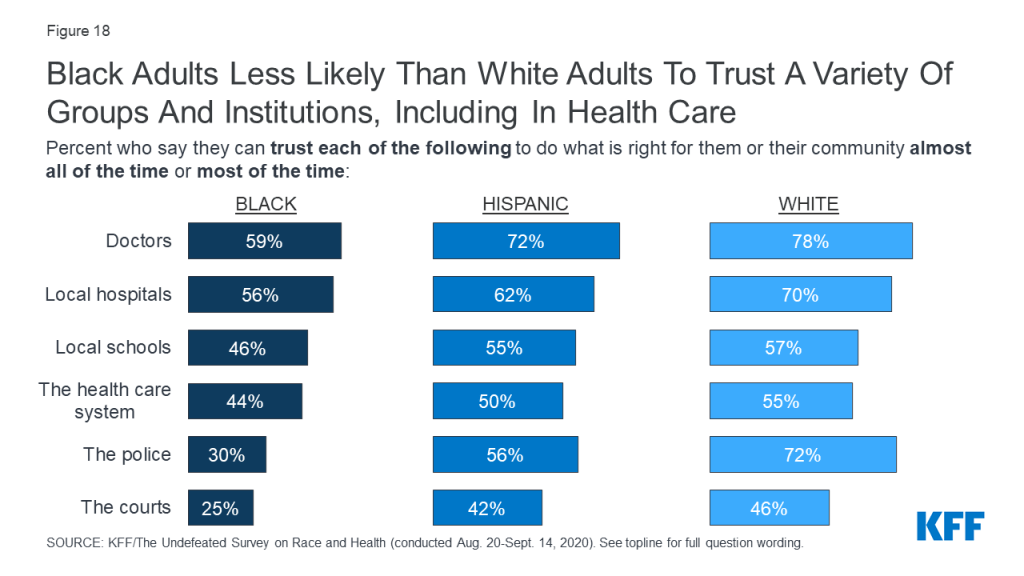
Reflecting their experiences with discrimination and systemic racism, Black people express lower levels of trust in a variety of organizations and institutions compared to those who are White. The gulf is widest when asked how often they can trust the police to do what is right for them and their community – just 30% of Black adults say they can trust the police “almost all of the time” or “most of the time,” compared with 72% of White adults. A little over half of Hispanic adults (56%) say they can trust the police.
While Black and Hispanic adults are generally more trusting of doctors and hospitals than they are of the police, courts, and schools, there is a racial gap in trust when it comes to health care as well. Compared to White adults, Black adults are 19 percentage points less likely to trust doctors (59% vs. 78%), 14 percentage points less likely to trust local hospitals (56% vs. 70%), and 11 percentage points less likely to trust “the health care system” (44% vs. 55%) to do what is right for them and their communities. On each of these items, the responses for Hispanic adults fall in between those of Black and White adults.
Figure 18: Black Adults Less Likely Than White Adults To Trust A Variety Of Groups And Institutions, Including In Health Care
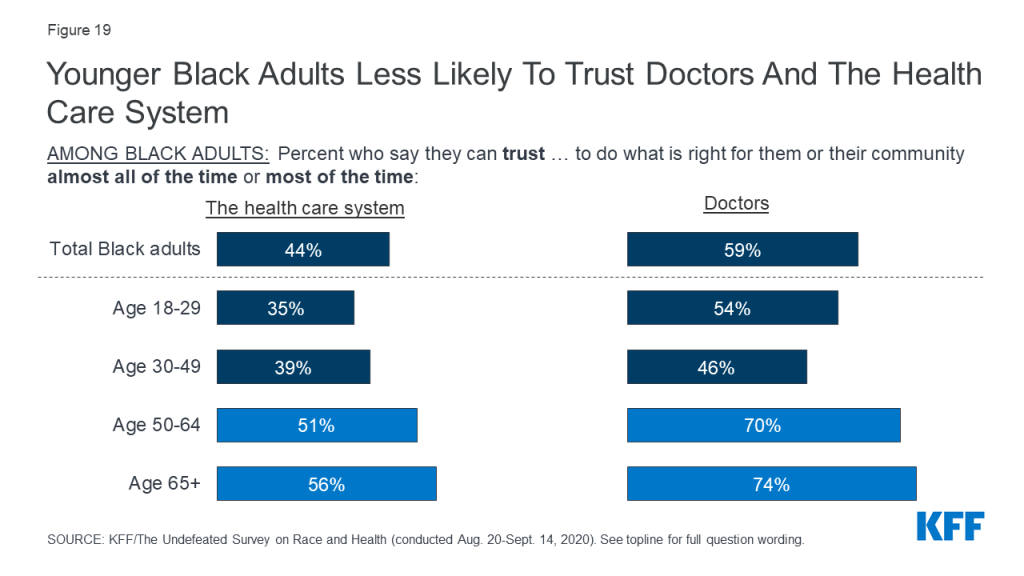
There is an age gap in trust as well, with younger Black adults less likely than their older counterparts to say they trust doctors and the health care system to do what is right for them and their communities. For example, roughly half of Black adults under age 50 say they can trust doctors almost all or most of the time, compared with about 7 in 10 Black adults ages 50 and over.
Figure 19: Younger Black Adults Less Likely To Trust Doctors And The Health Care System
Perceptions of Unfair Treatment in Health Care
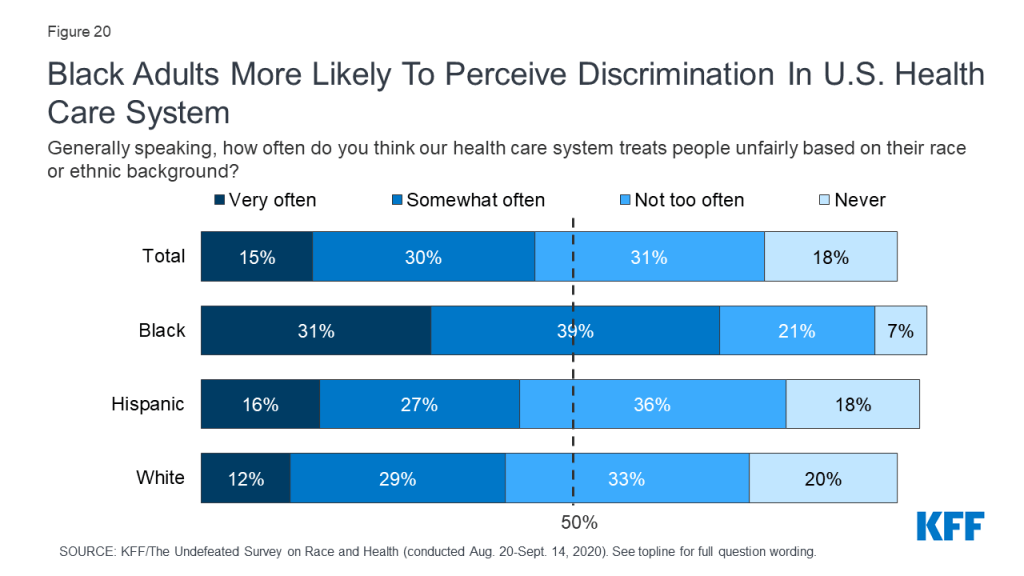
Most Black adults feel the health care system treats people unfairly based on their race or ethnic background, and this share has increased over time. Fully seven in ten Black adults say that “our health care system treats people unfairly based on their race or ethnic background” very often or somewhat often, compared to 41% of White adults and 43% of Hispanic adults.
Figure 20: Black Adults More Likely To Perceive Discrimination In U.S. Health Care System
The share of Black adults who believe race-based discrimination in health care happens very or somewhat often has increased over the past 20 years (from 56% in 1999 to 70% now), while the shares among Hispanic and White adults have remained statistically similar to what they were in 1999.
Figure 21: Share Of Black Adults Perceiving Racial Discrimination In Health Care Has Increased Since 1999
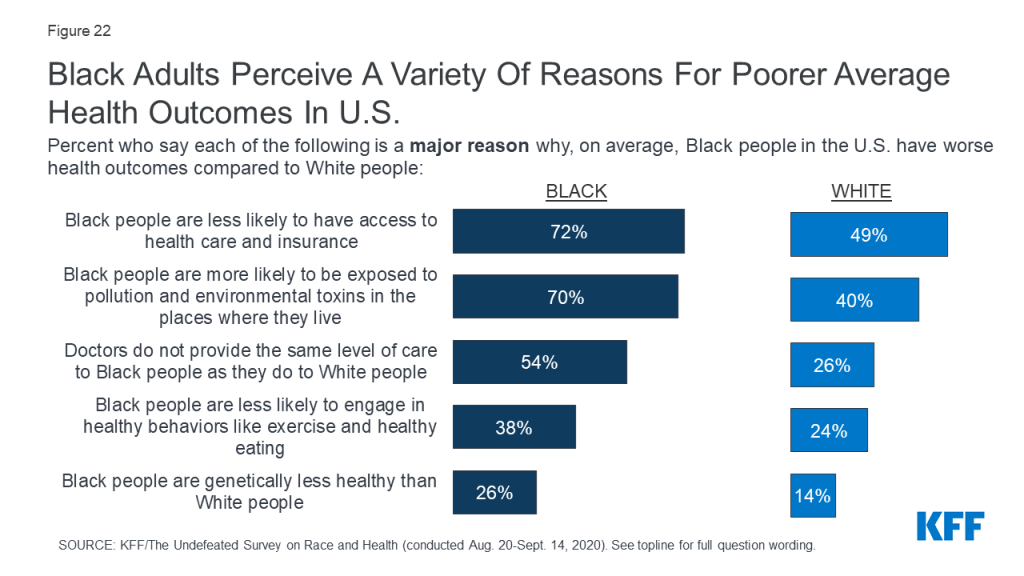
Black adults identify a range of reasons why Black people have worse average health outcomes compared to White people. When asked about potential reasons why Black people in the U.S. have worse outcomes on average compared to White people, Black adults are much more likely than White adults to view various factors as major reasons, including disparities in access to health care and insurance (72% vs. 49%), environmental exposures (70% vs. 40%), and disparities in the level of care provided to Black vs. white patients (54% vs. 26%). Black adults are also somewhat more likely than their White counterparts to blame lack of healthy behaviors (38% vs. 24%) and genetic differences (26% vs. 14%) for racial disparities in health outcomes. The perception of the role of genetic differences stands in contrast to research disproving biologic differences as a driver of racial disparities in health; moreover, there is growing recognition that individual health behaviors are influenced by policies, systems, and environments.
Figure 22: Black Adults Perceive A Variety Of Reasons For Poorer Average Health Outcomes In U.S.
Experiences With and Access to Health Care Providers
A significant and longstanding body of research suggests that provider and institutional bias and discrimination are drivers of racial disparities in health, contributing to racial differences in diagnosis, prognosis, and treatment decisions. Research further points to the role of communication and interactions between providers and patients and suggests that enhancing providers’ ability to provide culturally and linguistically appropriate care as well as increasing diversity of the health care workforce may help address disparities in health. Reflecting these factors, studies show, for example, that people of color receive lower quality of care, receive less adequate treatment for acute and chronic pain, and report higher rates of mistreatment during the course of their pregnancy. Pointing to the importance of culturally competent care, one recent study found that there were significant improvements in mortality for Black newborns who were cared for by Black physicians. Beyond these factors, people of color may face increased difficulty accessing care due to cost or lack of easily accessible providers, among other factors. The survey findings provide greater insight into individuals experiences with health care providers and their ability to access providers, including those with a shared background and experience.
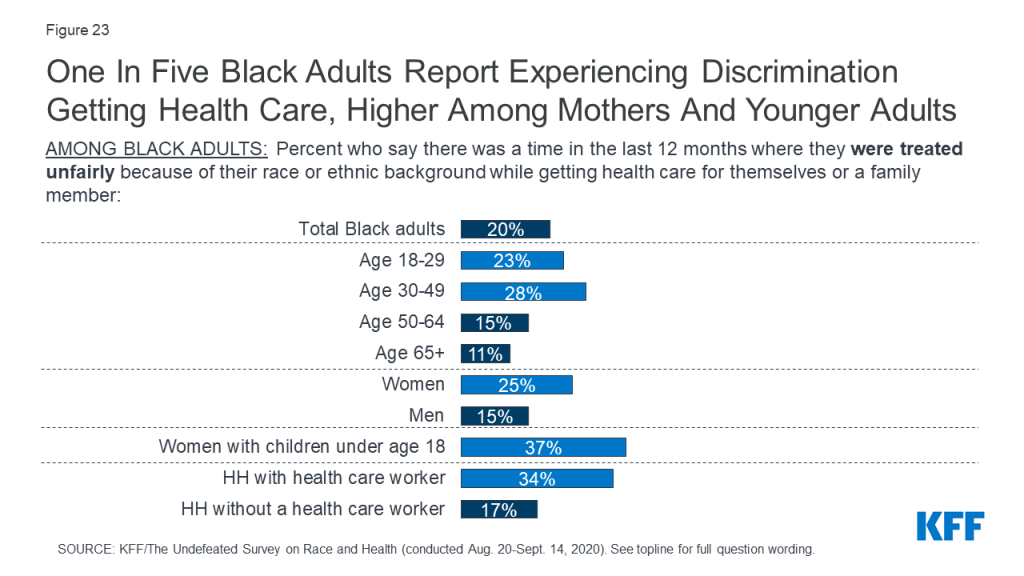
One in five Black and Hispanic adults report they were personally treated unfairly because of their race and ethnicity while getting health care in the past year, with higher shares among younger Black adults and women, particularly mothers. Twenty percent of Black adults and 19% of Hispanic adults say they were personally treated unfairly because of their race or ethnicity when getting health care for themselves or a family member in the past 12 months, while just 5% of White adults say this has happened to them. Younger Black adults (23% of those ages 18-29 and 28% of those ages 30-49) and Black women (25%) are more likely than older Black adults to report being treated unfairly when receiving care. Among Black mothers of children under age 18, nearly four in ten (37%) say they have been treated unfairly in the past 12 months while getting health care for themselves or a family member. Familiarity with the medical community also does not appear to shield Black adults from discrimination in health care settings; 34% of those who work in a health care delivery setting or live with someone who does say they’ve experienced race-based discrimination while getting health care in the past year.
Figure 23: One In Five Black Adults Report Experiencing Discrimination Getting Health Care, Higher Among Mothers And Younger Adults
In addition to reporting being treated unfairly, an even larger share of Black adults – 36% – say there was a time in the past few years when they think they would have gotten better medical care if they belonged to a different race or ethnic group. Mirroring age patterns of reported discrimination, Black adults under age 50 are more likely than those ages 50 and over to feel they would have gotten better care if they were a different race.
Figure 24: One-Third Of Black Adults Feel They Would Have Gotten Better Medical Care If They Were A Different Race, Higher Among Young
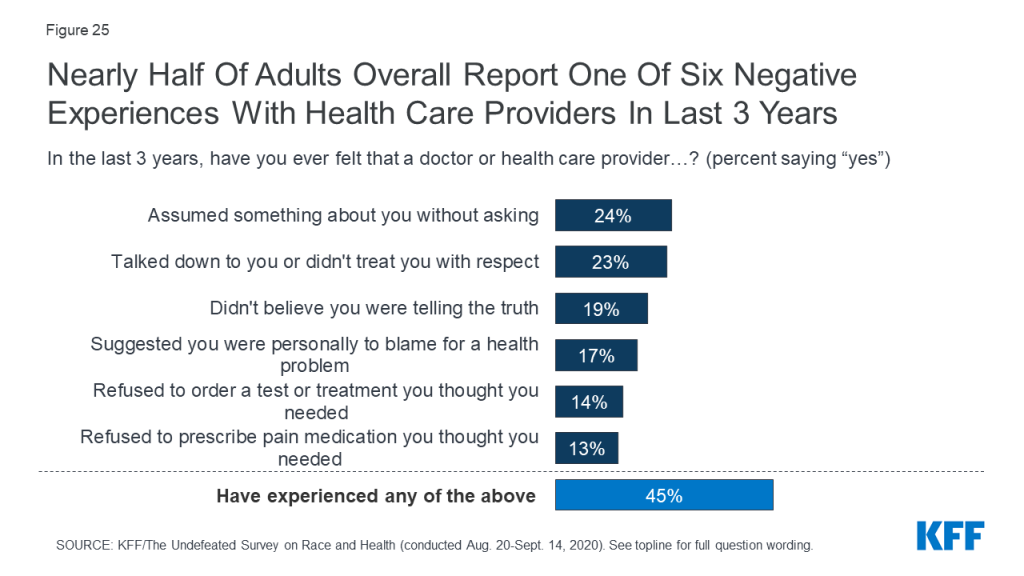
Across racial and ethnic groups, many adults report having some specific negative experiences with health care providers. Overall, about a quarter of adults say that in the past 3 years, a doctor or other health care provider has assumed something about them without asking (24%) or talked down to them or treated them without respect (23%). Just under one in five say there was a time in the past 3 years when a provider didn’t believe they were telling the truth (19%) or suggested they were personally to blame for a health problem (17%). About one in seven say a doctor refused to order a test or treatment (14%) or pain medication (13%) they thought they needed.
Figure 25: Nearly Half Of Adults Overall Report One Of Six Negative Experiences With Health Care Providers In Last 3 Years
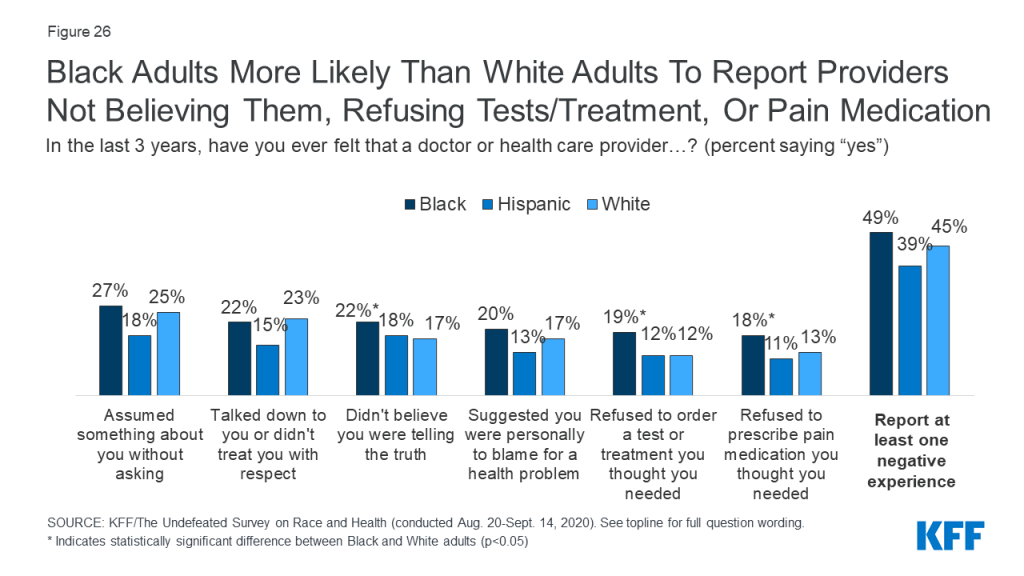
Black adults are more likely than White adults to report some negative experiences with health care providers. These differences include feeling that a provider didn’t believe they were telling the truth (22% of Black adults vs. 17% of White adults say this happened to them in the past 3 years), being refused a test or treatment they thought they needed (19% vs. 12%), and being refused pain medication (18% vs. 13%). Other negative experiences were reported at similar rates among Black and White adults, including health care providers suggesting they were personally to blame for a health problem, assuming things without asking, and treating them with a lack of respect. About half of Black adults (49%), a similar share of White adults (45%), and four in ten Hispanic adults (39%) report experiencing at least one of these things in the past 3 years. Together, these findings suggest that across groups, patients encounter negative experiences obtaining care, but Black people are more likely to report negative experiences in some specific instances.
Interestingly, most Black adults who experienced at least one form of mistreatment do not believe their race was a factor. About four in ten (38%) of those who had at least one negative experience (19% of all Black adults) think it happened specifically because of their race, while the majority (27% of all Black adults) say it was for some other reason.
Figure 26: Black Adults More Likely Than White Adults To Report Providers Not Believing Them, Refusing Tests/Treatment, Or Pain Medication
In addition to differences by race, there are also gender differences in the treatment people report receiving from health care providers. Black women are more likely than Black men to report feeling that a health care provider didn’t believe they were telling the truth (27% vs. 16%), assumed something without asking (32% vs. 22%), talked down or treated them without respect (27% vs. 17%), or suggested they were personally to blame for their health problems (24% vs. 15%). Among Black women with children, the share who say a health care provider talked down to them or treated them with disrespect rises to 41%.
In most cases, there are similar gender gaps between the experiences of White women and men as well, though when it comes to being personally blamed for their health problems, the opposite pattern is true, with White men more likely than White women to report this experience.
Table 2: Negative experiences with health care providers by race and gender
In the last 3 years, have you ever felt that a doctor or health care provider…? (percent saying “yes”)
Total
Black
White
Women
Men
Women
Men
Women
Men
Assumed something about you without asking
29%*
20%
32%*
22%
29%*
21%
Talked down to you or didn’t treat you with respect
27*
19
27*
17
27*
19
Didn’t believe you were telling the truth
23*
15
27*
16
20*
13
Suggested you were personally to blame for a health problem you were experiencing
16
19
24*
15
13
20*
Refused to order a test or treatment you thought you needed
17*
11
20
17
14
10
Refused to prescribe pain medication you thought you needed
14
13
20
16
12
13
Experienced at least one of the above
49*
42
52
45
47
43
* indicates statistically significant difference between men and women within group.
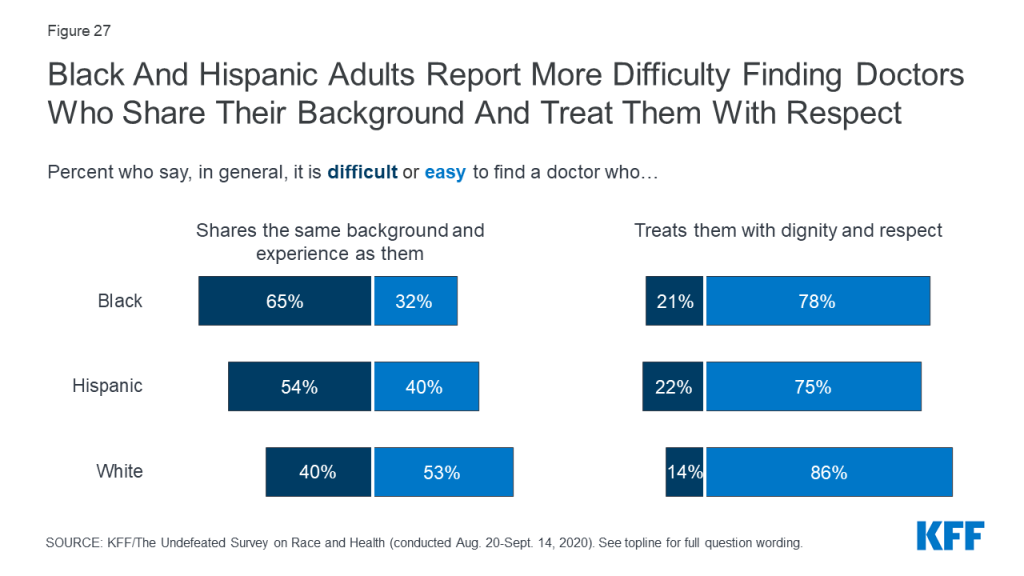
Black and Hispanic adults are more likely than their White counterparts to say it’s difficult to find a doctor who shares their background and experiences and one who treats them with dignity and respect. About two-thirds (65%) of Black adults and over half (54%) of Hispanic adults say it is very or somewhat difficult for them to find a doctor who shares their background and experiences, while most White adults (53%) say this is easy. Similarly, about one in five adults who are Black (21%) or Hispanic (22%) say it is difficult to find a doctor who treats them with dignity and respect, compared to a smaller share of those who are White (14%).
Figure 27: Black And Hispanic Adults Report More Difficulty Finding Doctors Who Share Their Background And Treat Them With Respect
Among White adults, those with college degrees are much more likely than those without a degree to say it’s easy to find a doctor who shares their background and experience. However, this education advantage does not exist among Black adults. Nearly two-thirds (64%) of Black adults with a college degree say it’s difficult to find a doctor who shares their background and experience, about two and a half times the rate among college-educated White adults (27%). The pattern is similar across income groups – higher-income White adults are more likely than those with lower incomes to say it is easy to find a provider who shares their background and experiences, while about two-thirds of Black adults across income groups say it is difficult.
Table 3: Difficulty finding doctor with shared background by race and education
How easy or difficult is it to find a doctor who shares the same background and experience as you?
Black
White
No 4-year degree
College graduate
No 4-year degree
College graduate
Very/somewhat easy
31%
35%
47%
64%
Very/somewhat difficult
66
64
48
27
Don’t know/Refused
3
1
5
10
Table 4: Difficulty finding doctor with shared background by race and household income
How easy or difficult is it to find a doctor who shares the same background and experience as you?
Black
White
<$40K
$40-$89.9K
$90K+
<$40K
$40-$89.9K
$90K+
Very/somewhat easy
33%
31%
33%
44%
53%
65%
Very/somewhat difficult
65
67
67
52
39
32
Don’t know/Refused
2
2
1
4
8
3
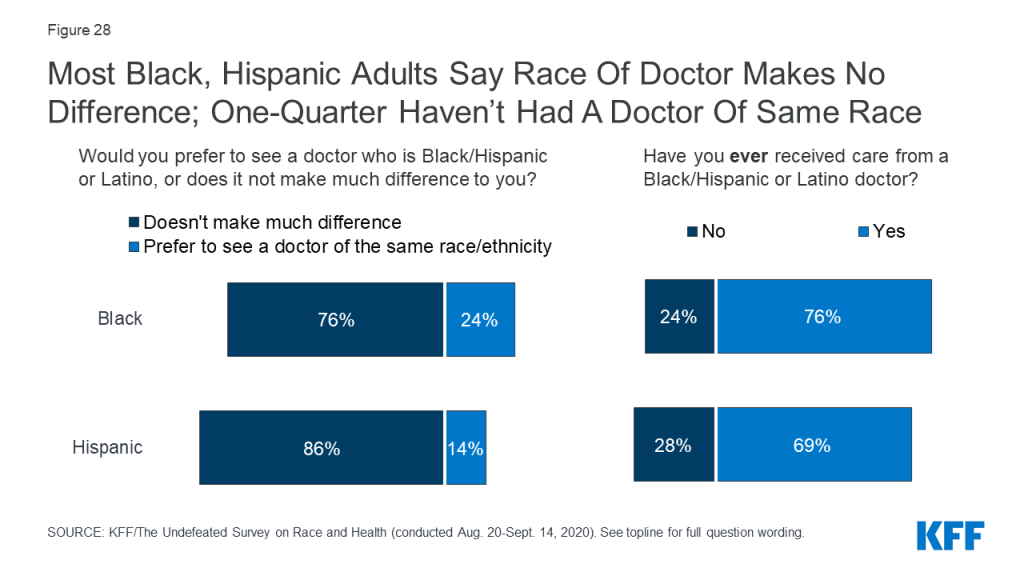
For Black and Hispanic Americans, finding a doctor who shares their background and experience may or may not mean seeing a doctor of the same race or ethnicity. In fact, about one quarter (24%) of Black adults say they would prefer to see a Black doctor, while most say it doesn’t make much difference. Still, 24% of Black adults say they’ve never received care from a Black doctor, including 35% of those ages 18-29 and 28% of those who say they would prefer to see a doctor who is Black. A similar 28% of Hispanic adults say they’ve never received care from a doctor who is Hispanic or Latino.
Figure 28: Most Black, Hispanic Adults Say Race Of Doctor Makes No Difference; One-Quarter Haven’t Had A Doctor Of Same Race
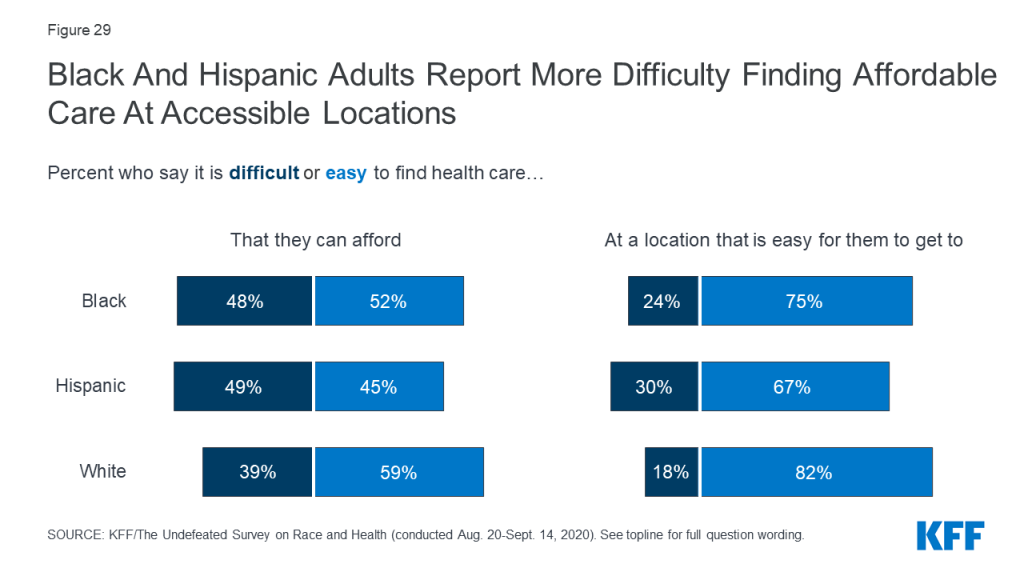
Black and Hispanic adults are more likely than White adults to report financial and accessibility barriers to obtaining health care. About half of Black (48%) and Hispanic (49%) adults say it is very or somewhat difficult to find health care they can afford, compared to a somewhat smaller share of White adults (39%). Similarly, about a quarter (24%) of Black adults and three in ten Hispanic adults say it is difficult to find health care at a location that is easy for them to get to, compared to 18% of White adults.
Figure 29: Black And Hispanic Adults Report More Difficulty Finding Affordable Care At Accessible Locations
The differences between Black and White adults on these questions are largely driven by income differences. That is, those with lower incomes generally report more difficulty finding accessible and affordable care than those with higher incomes, and Black and White adults at similar income levels report similar levels of difficulty on both these measures.
Table 5: Difficulty finding affordable and accessible health care by race and household income
How easy or difficult is it to find health care you can afford?
Black
White
<$40K
$40-$89.9K
$90K+
<$40K
$40-$89.9K
$90K+
Very/somewhat easy
46%
57%
64%
49%
60%
70%
Very/somewhat difficult
54
43
34
48
38
28
How easy or difficult is it to find health care at a location that is easy for you to get to?
Very/somewhat easy
73
77
86
73
87
87
Very/somewhat difficult
27
22
13
26
13
13
Note: There were not enough Hispanic respondents in the survey to provide similar income breaks.
These survey findings highlight some of the many challenges facing Black individuals and families in 2020. Black people in the U.S. are bearing a heavy burden of the health and economic consequences of the COVID-19 pandemic, and the survey shows the pandemic is taking an unequal toll on their financial stability, their ability to care for their children, and their emotional well-being. The findings further illustrate that, once a COVID-19 vaccine becomes available, accomplishing a high vaccination rate will require addressing multiple barriers to vaccination among the Black community, including building public trust and willingness to obtain the vaccine by addressing distrust and safety concerns.
In addition, despite longstanding research documenting racial health disparities, the survey shows that racism and discrimination still play a major role in shaping people’s perceptions and experiences with obtaining health care. Most Black adults believe that race-based discrimination in health care happens at least somewhat often, and they are more likely compared to White adults to report experiencing specific negative experiences with health care providers. Many of these experiences are even more common among Black women, particularly those with children. Black adults also face difficulties finding providers who share their background and experiences and treat them with dignity and respect, as well as challenges finding health care they can afford and easily access – challenges shared by Hispanic adults. These findings point to the importance of continuing to prioritize equity in health care, and, in particular, efforts to address individual and institutional bias and discrimination and social and economic inequities that increase barriers to health.
The KFF/The Undefeated Survey on Race and Health is based on interviews conducted in English and Spanish with a nationally representative sample of 1,769 U.S. adults ages 18 and older, including an oversample of Black adults. Specifically, the survey oversampled mothers, people younger than 30, and college-educated respondents who identify as Black or African American. The survey was conducted August 20-September 14, 2020, using a hybrid design that combined a stratified, dual-frame (landline and cell phone) random digit dial (RDD) telephone sample (N=1,303) with a probability-based web/phone panel (N=466). Sampling, data collection, weighting, and tabulation were managed by SSRS of Glen Mills, PA, in close collaboration with Kaiser Family Foundation researchers. Teams from KFF and The Undefeated worked together to develop the questionnaire and analyze the data, and both organizations contributed financing for the survey. Each organization is solely responsible for its content.
For the RDD sample, computer-assisted telephone interviews were conducted with respondents reached by cell phone and landline. To efficiently obtain a sample of Black respondents, the RDD sample was stratified to oversample areas with a high population share of Black adults. The telephone sample also included 226 respondents reached by calling back Black respondents (predominantly those who previously indicated they were college graduates or under age 30) who had previously completed an interview on the SSRS Omnibus poll, a weekly dual-frame RDD telephone survey. Both the RDD landline and cell phone samples were provided by Marketing Systems Group (MSG). For the landline sample, respondents were selected by asking for the youngest adult male or female currently at home based on a random rotation. If no one of that gender was available, interviewers asked to speak with the youngest adult of the opposite gender. For the cell phone sample, interviews were conducted with the adult who answered the phone.
Panel interviews were conducted using the SSRS Opinion Panel, a representative probability-based panel of adults ages 18 and over living in the United States, recruited using the SSRS Omnibus poll and through address-based sampling (ABS). Panel members who do not have internet access complete surveys via telephone, and internet users complete surveys via the web (for the current study, 38 panel respondents completed via phone and 428 completed via web). A total of 233 Black panelists were included, targeting those who previously indicated they were mothers of children under age 18, college graduates, or under the age of 30. In addition, 233 non-Black panel members were included so that any differences in the mode of data collection would not impact the Black sample alone. In total (including the RDD sample and phone interviews from the panel sample), 283 interviews were completed via landline and 1,058 via cell phone (including 749 who could not be reached via landline); 428 interviews were completed via web.
The combined landline, cell phone, and web sample was weighted to match the sample demographics to estimates for the national population. A multi-stage weighting process was used to adjust for the fact that not all survey respondents were selected with the same probabilities and to account for systematic non-response. In the first weighting stage, adjustments were made to 1) correct for the oversampling of different groups; 2) account for the fact that respondents with both a landline and cell phone have a higher probability of selection in the RDD sample; 3) adjust for likelihood of non-response for the re-contacted sample; 4) match estimates of the population (Black and non-Black) that do not use the internet based on estimates from the Pew Research Center; and 5) match current patterns of telephone use (Black and non-Black) according to the June-December 2019 National Health Interview Survey. In the second weighting stage, the sample was weighted (separately for Black and non-Black respondents) to match demographics of the adult U.S. population using data from the Census Bureau’s 2018 American Community Survey (ACS) on age by gender, education, race and Hispanic origin (for non-the non-Black sample), parent status (by gender), metropolitan status, and Census region. Weights were then trimmed separately for the Black and non-Black samples, and in the final stage, the samples were combined and adjusted to ensure the proportion of Black respondents in the total sample would equal their share of the adult population. All statistical tests of significance account for the effect of weighting.
The margin of sampling error including the design effect for the full sample is plus or minus 3 percentage points. Numbers of respondents and margins of sampling error for key subgroups are shown in the table below. For results based on other subgroups, the margin of sampling error may be higher. Sample sizes and margins of sampling error for other subgroups are available by request. Note that sampling error is only one of many potential sources of error in this or any other public opinion poll. KFF public opinion and survey research is a charter member of the Transparency Initiative of the American Association for Public Opinion Research.
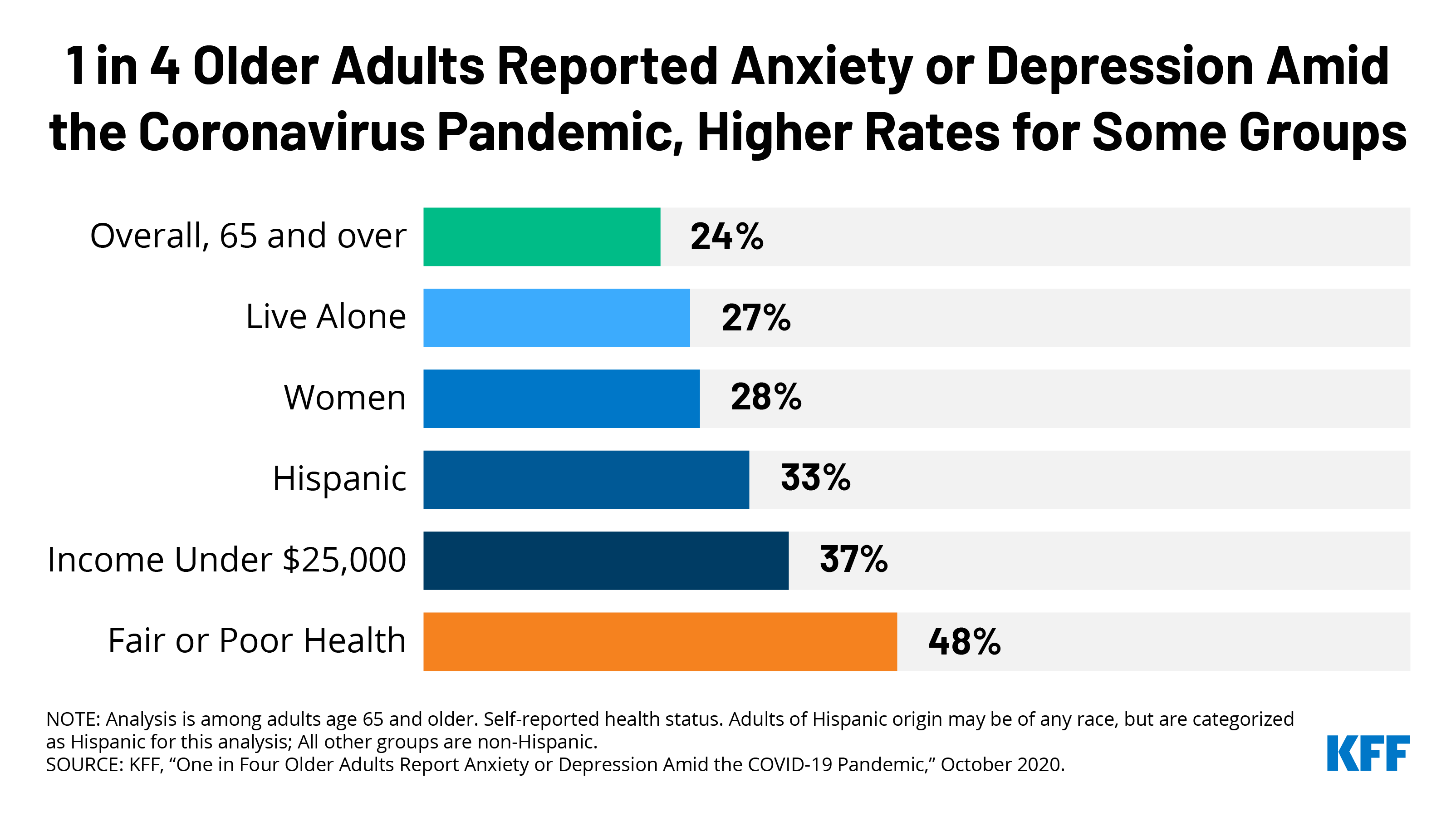
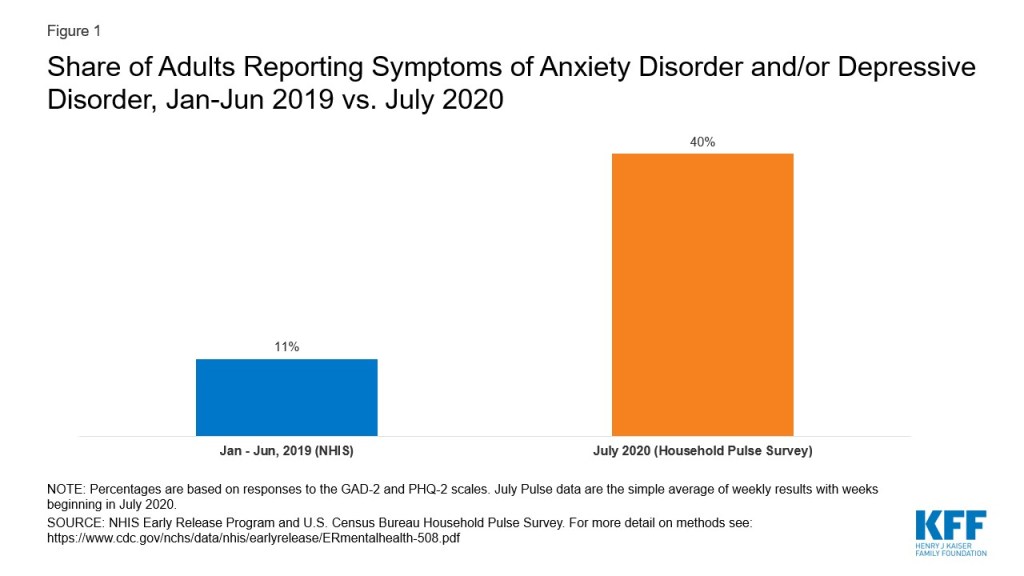
Older adults have been especially impacted by the coronavirus pandemic, as they are at higher risk of serious illness if infected and account for 80% of all COVID-related deaths. The impact of the pandemic on the mental health of older adults is important to consider, particularly because of the increased rates of social isolation, loneliness, and bereavement that older adults may face due to the pandemic. Recent KFF analysis has found that one in four older adults report anxiety or depression amid the pandemic; this rate is substantially higher than the one in 10 (11%) older adults with Medicare who reported depression or anxiety in 2018 (based on the 2018 Medicare Current Beneficiary Survey). Consistent with other KFF analysis, our analysis finds that older adults reported anxiety or depression in August 2020 at a lower rate than adults under the age of 65 (24% vs. 40%). Rates of anxiety or depression among older adults in August 2020 were higher among those who are female, Hispanic, low income, in relatively poor health, who live alone, or who have experienced recent loss of employment income in their household. More specifically:
A larger share of older women than older men reported anxiety or depression: 28% versus 20%.
Older Hispanic adults reported anxiety or depression at higher rates (33%) than older non-Hispanic White adults (23%), non-Hispanic Black adults (26%) and non-Hispanic Asian adults (17%).
More than one in three (37%) older adults with household incomes under $25,000 reported anxiety or depression, almost twice the rate (20%) among older adults with household incomes exceeding $100,000 annually.
Almost half (48%) of older adults in poor or fair self-reported health reported anxiety or depression, compared to 24% of those in good self-reported health and 14% of those in excellent or very good self-reported health.
As the pandemic progresses into the fall and winter, older adults – particularly those already suffering from health conditions – face the continuing challenge of mitigating risk while avoiding loneliness and isolation which can lead to poor mental health.
U.S. Supreme Court decisions shape health policy in important ways. The nomination of Judge Amy Coney Barrett, if confirmed, is expected to establish a solid 6:3 conservative majority that could affect case outcomes in several areas. This issue brief considers the potential implications of a reconfigured Court for health policy issues, including those already on the Court’s docket for the coming term and those that the Court may choose to consider in this term or in the future:
The future of the ACA: The Court will decide California v. Texas, a case that could determine whether the entire Affordable Care Act can continue, with significant implications for the U.S. health care system and virtually every American. Oral argument is scheduled for November 10, 2020.
Cases requesting Supreme Court review:
Abortion: The Court may decide to consider one or more cases that could overturn the precedent of Roe v. Wade, alter the standard to evaluate whether abortion regulations are constitutional, or decide that abortion providers cannot sue to challenge abortion regulations.
Title X: The Court is likely to want to resolve conflicting appeals court decisions about whether the Trump Administration Title X Federal Family Planning regulations that prohibit federal funding to clinics that offer or refer for abortion are permissible under federal law.
Medicaid enrollees’ free choice of provider: The Court will decide whether to hear a case about whether Medicaid enrollees can sue to challenge a state’s refusal to allow Planned Parenthood to offer Medicaid services if that provider also separately offers abortion services (which are not covered by Medicaid). Federal appeals courts are split on this issue. The case has implications for enrollees’ ability to bring lawsuits challenging state violations of federal Medicaid law as well as enrollees’ free access to providers.
Medicaid work requirements: The Court will decide whether to hear cases about whether the HHS Secretary can approve Section 1115 waivers that condition Medicaid eligibility on meeting work and reporting requirements, which have led to over 18,000 people losing coverage in Arkansas.
Cases that could reach the Supreme Court:
Payment of ACA cost-sharing reductions to insurers: The Court could be asked to hear cases brought by Marketplace insurers seeking unpaid cost-sharing reductions (CSRs) from the Trump Administration. Restoring CSR payments could lower Marketplace premiums and federal costs and improve affordability for individuals who do not qualify for Marketplace premium tax credits.
Nondiscrimination in health coverage and care: The Court could be asked to review cases challenging the Trump Administration’s rollback of regulations implementing ACA Section 1557, which bans discrimination in health programs and activities that receive federal funding. Issues include whether discrimination based on gender identity is prohibited and the extent to which individuals and entities are exempt from discrimination claims based on religious freedom.
Public charge rule: The Court could be asked to review cases challenging the Trump Administration’s regulations that prevent individuals from obtaining a green card or entering the U.S. if they are determined likely to use certain public programs, including Medicaid. The regulations are likely to lead to decreased participation in Medicaid by immigrant families and their primarily U.S. born children.
Hospital price transparency rule: The Court could be asked to hear a challenge to the Trump Administration’s regulations requiring hospitals to disclose their negotiated rates with insurers. The Administration argues that the regulations could lead to lower costs for consumers. However, if the Supreme Court accepts the argument, supported by the Trump Administration, that the entire ACA is invalid, Congress would need to pass new legislation before any price transparency regulations could be adopted.
Introduction
Along with legislation and administrative agency actions, U.S. Supreme Court decisions shape health policy issues in important ways. In the upcoming October 2020 term, the Court will hear a case involving the Affordable Care Act’s (ACA) survival. It also will decide whether to review cases involving abortion, Title X, Medicaid enrollees’ free choice of provider, and Medicaid work requirements. Other cases affecting health policy may reach the Court, such as payment of ACA cost-sharing reductions to Marketplace insurers, whether gender identity and sexual orientation are prohibited bases of discrimination in health care, issues affecting immigrants’ access to health coverage under the public charge rule, and regulations requiring hospital price transparency. With the exception of the abortion cases, all of these cases involve federal regulations and laws and could become moot if the administration and congressional majorities change. For example, if Congress raises the tax above zero dollars for failure to comply with the individual mandate, the question raised in the ACA case could become moot before the Supreme Court issues a decision.
Members of the Court, including Chief Justice John Roberts, reject the assertion that judicial decisions may be motived by particular political party’s ideology. Still, analysis of the justices’ voting patterns reveals a spectrum with those appointed by Democratic Presidents typically supporting positions characterized as liberal and those appointed by Republican Presidents typically supporting positions characterized as conservative. As with any generalization, there can be exceptions, as the issues before the Court and its composition evolve over time. Even so, the recent death of Justice Ruth Bader Ginsburg and the nomination of Judge Amy Coney Barrett, if confirmed, to fill the empty seat is expected to establish a solid 6:3 conservative majority that could affect case outcomes in a number of areas.1 This issue brief considers the potential implications of a reconfigured Court for key health policy issues, including the ACA case, scheduled to be heard November 10, 2020, and cases the Court may choose to consider this term or in the future.
The Supreme Court Will Decide the Future of the ACA
The Court will once again consider the survival of the Affordable Care Act (ACA) in California v. Texas, a case with far-reaching consequences, affecting nearly every American in some way.2Currently scheduled for oral argument on November 10, 2020, the case challenges the constitutionality of the ACA’s individual mandate and asks the Court to decide whether the entire law can continue. A group of Republican-led states and two individuals who have purchased Marketplace coverage argue that, because Congress reduced the payment for failure to comply with the individual mandate to zero dollars, the mandate is no longer a constitutional tax. They further argue that the rest of the law is not severable from the mandate, so the entire ACA must be invalidated as a result. Notably, the Trump Administration is not defending the ACA. Instead, the Administration is arguing that the entire ACA is invalid, though it is asking the Court to prohibit it from enforcing only the provisions that ultimately are found to harm the individual plaintiffs.
A decision by the Court invalidating all or even some of the ACA would have significant implications for the U.S. health care system and virtually every American. At stake are the ACA’s changes to the individual insurance market, including protections for people with pre-existing conditions, restrictions on premium surcharges based on health or gender, coverage of essential benefits, insurance marketplaces, and premium subsidies for people with low and modest incomes. Overturning the ACA could also roll back other changes throughout the health care system including expanding Medicaid eligibility for low-income adults; requiring private insurance, Medicare, and Medicaid expansion to cover preventive services with no patient cost sharing; phasing out the Medicare prescription drug doughnut hole coverage gap; reducing the growth of Medicare payments to health care providers and insurers; establishing new national initiatives to promote public health, care quality, and delivery system reforms; and authorizing a variety of tax increases to finance these changes.
Cases Requesting Supreme Court Review
There currently are cases in three key health policy cases requesting certiorari, for the Supreme Court to accept the case to review this term. Four justices must vote to accept a case.
Abortion
If the Court accepts a case involving abortion, the precedent of Roe v. Wade could be overturned or states could be granted more authority to restrict abortion access or doctors could lose the ability to sue to challenge abortion regulations. Among the most contentious issues in the country right now is abortion. There are two abortion cases the Supreme Court is currently considering whether to hear.
The first case is Thomas E. Dobbs, State Health Officer of the Mississippi Department of Health v. Jackson Women’s Health Organization. This case involves a Mississippi law, House Bill 1510, Gestational Age Act, banning all abortions over 15 weeks’ gestational age except in medical emergencies and in the case of severe fetal abnormality. The Court’s ruling could allow states to restrict abortions by directly overturning Roe v. Wade, establishing a new standard to evaluate state restrictions with more deference to state legislatures, or overturning the long held precedent that abortion doctors and clinics have the right to bring lawsuits to challenge abortion regulations on behalf of their patients (third-party standing). If the Court overturns Roe v. Wade, 15 states have laws in place that would immediately ban abortion. If the Court allows more deference to states on restricting abortions, patients may not be able to access abortion in many states. If the Court decides that doctors and clinics no longer have the right to challenge abortion regulations on behalf of their patients (third-party standing), abortion would remain a constitutional right, but many unconstitutional abortion regulations may go unchallenged. Women seeking abortions often must overcome numerous obstacles, including financial limitations, and concerns for privacy and personal safety, that would make it difficult for them to assert their constitutional rights and challenge an abortion restriction. This could have far-reaching implications for other cases where third-party standing has been recognized including physicians’ ability to challenge laws on behalf of their patients’ rights to privacy for contraception, and to obtain mental health services.
The second case at the Supreme Court is Food and Drug Administration v. American College of Obstetricians and Gynecologists. In this case, the FDA is requesting that the Court lift the national injunction issued by the United States District Court of Maryland preventing the FDA from enforcing the Risk Evaluation and Mitigation Strategies (REMS) requirements for mifepristone, the abortion medication, during the COVID-19 pandemic. The REMS only permit medical providers who have received special certification from the manufacturer to prescribe and dispense the drug which limits access to abortion during the emergency. On October 8, 2020, the Supreme Court directed the FDA to request that the district court to lift or modify the preliminary injunction before the Supreme Court rules on the issue. It is possible that this unusual order to not rule on the stay until the FDA requests the district court to reconsider the scope of the injunction may reflect a compromise when there are only eight justices. When the case comes back to the Supreme Court, there will likely be nine justices. While this case could be limited to the availability of mifepristone during the pandemic, the case could have broader implications because the Solicitor General is requesting that the Court accept this case in order to clarify the legal standard that should be applied to determine if abortion regulations are constitutional.
Title X Family Planning Regulations
To resolve a split between the 9th Circuit Court of Appeals and the 4th Circuit Court of Appeals, the Court will likely consider a case challenging the Trump Administration’s Title X regulations. These regulations effectively block the availability of Title X grants to family planning clinics that offer abortion services with other non-federal funds, curtail counseling, ban Title X projects from making referrals to abortion services, and require all pregnant patients served by Title X clinics to be referred for prenatal services, regardless of their pregnancy intention.
The Court’s decision could uphold the regulations, which have resulted in 29% of the Title X family planning sites to leave the Title X Program and six states to completely withdraw from the program. This would likely affect the availability of affordable family planning services to low-income people in many parts of the country. Eight lawsuits challenging the regulations were filed in federal court. There is a split in decisions between the 4th Circuit Court of Appeals, which held that the regulations are arbitrary and capricious and contrary to law, and the 9th Circuit Court of Appeals, which allowed the regulations to go into effect. The regulations are currently blocked in Maryland, but in effect in the rest of the county. The American Medical Association, Oregon Medical Association, Planned Parenthood Federation of America, National Family Planning and Reproductive Health Association, and Essential Access Health, Inc. have petitioned the Court to review the case from the 9th Circuit to resolve the circuit split. The Oregon Attorney General with 21 other Attorneys General separately petitioned the Court to review the case from the 9th Circuit. HHS has also petitioned the Court to review the case from the 4th Circuit. Many provisions in the Trump Administration’s regulation mirror those issued in 1988 by the Reagan Administration. In 1991, the Supreme Court upheld the Reagan regulations in the case, Rust v. Sullivan.
The petitioners asking for review from the 9th Circuit argue that the applicable law has changed, and that Rust v. Sullivan is not controlling. The Court’s ruling about the future of the ACA may ultimately impact the decision for the Title X case. One of the key arguments for those challenging the regulations is based on the violation of Section 1554 of the ACA, which states that HHS shall not promulgate any regulations that create any unreasonable barriers to the ability of individuals to obtain appropriate medical care or restricts communications between a doctor and a patient. They contend that these Title X regulations create barriers to and restrict patient-doctor communication. However, HHS contends that Rust v. Sullivan is controlling and that the agency has the statutory authority to promulgate these regulations.
Medicaid Enrollees’ Free Choice of Provider
The Court will decide whether to hear Baker v. Edwards, a case about whether Medicaid enrollees can sue to challenge a state’s refusal to allow a provider to participate in Medicaid if that provider also separately offers abortion services (not covered by Medicaid). Federal law requires states to allow Medicaid enrollees to obtain covered services from any qualified willing provider. South Carolina’s Medicaid agency terminated Planned Parenthood as a Medicaid provider after the governor issued an executive order declaring that providers are “unqualified” to participate in Medicaid if they also offer abortion. Planned Parenthood and one of its Medicaid patients sued to challenge this state action, and the lower court issued a preliminary injunction allowing Planned Parenthood to continue as a South Carolina Medicaid provider while the case is pending. The Fourth Circuit Court of Appeals found that a Medicaid enrollee has the right to sue in federal court to enforce Medicaid’s free choice of provider requirement. The Medicaid Act itself does not explicitly authorize third parties, like Medicaid enrollees, to sue to enforce its provisions. However, the Fourth Circuit Court of Appeals found that the enrollee can sue under federal civil rights law, Section 1983, which allows individuals to bring federal lawsuits to challenge state actions that deprive them of rights provided under federal law. The Fourth Circuit joins the Fifth, Sixth, Seventh, Ninth, and Tenth Circuit Courts of Appeals in upholding a Medicaid enrollee’s right to sue to enforce the free choice of provider provision, while the Eighth Circuit Court of Appeals has ruled that Medicaid enrollees cannot bring these lawsuits.
If the Court rules that the enrollees cannot sue to enforce the free choice of provider provision, state rules restricting provider participation in Medicaid may go unchallenged. Medicaid enrollees have often sued as third parties to enforce the free choice of provider provision. Removing the ability of enrollees to sue also eliminates the availability of an injunction to allow providers to continue to participate in Medicaid while the merits of a case are decided. In an earlier case, former CMS administrators explained that the agency does not have the resources to investigate all potential violations of federal Medicaid law and relies on third parties like Medicaid enrollees to bring lawsuits to challenge state actions. If unchallenged, state actions restricting enrollees’ free choice of provider can limit enrollees’ access to covered services. Planned Parenthood in South Carolina provides Medicaid enrollees services including physical exams, cancer screening, contraception, pregnancy testing, and screening for chronic conditions such as diabetes, depression, anemia, cholesterol, thyroid disorder, and high blood pressure.
Medicaid Work Requirements
The Court will decide whether to hear Azar v. Gresham and Azar v. Philbrick, cases about whether the Health and Human Services Secretary can approve Section 1115 demonstration waivers authorizing Medicaid work requirements and other restrictive provisions.3The Trump Administration is seeking review of a unanimous DC Circuit Court of Appeals decision which found that the Secretary’s waiver approval in Arkansas was unlawful because he failed to consider the impact on coverage as required by the statute.4 The Administration also is seeking review of a second appeals court decision in which the court concluded that the reasoning of its Arkansas decision required a similar outcome in a case challenging a New Hampshire waiver approval.
Court decisions about the bounds of the Secretary’s Section 1115 authority not only determine the legality of Medicaid work requirements in Arkansas and New Hampshire, but also could have implications for similar waivers in other states and the Secretary’s discretion in approving waivers more broadly. To date, Arkansas is the only state to have implemented a waiver that conditioned Medicaid eligibility on meeting a work and reporting requirement, with significant effects on enrollees. Before Arkansas’ waiver was set aside by a lower court, over 18,000 Medicaid enrollees lost coverage in that state. The Trump Administration has continued to expand the bounds of the Secretary’s Section 1115 authority, issuing guidance inviting states to apply for new waivers that would impose work requirements and other eligibility and benefit restrictions in exchange for a federal financing cap, and currently is considering a “modified block grant” proposal from Tennessee.
Cases That Could Reach the Court
Payment of ACA Cost-sharing Reductions to Insurers
The Court could be asked to hear appeals in the lawsuits brought by Marketplace insurers seeking unpaid cost-sharing reductions (CSRs), Community Health Choice v. U.S. The ACA requires CSR payments to compensate insurers for reducing out-of-pocket costs such as deductibles and copayments to Marketplace enrollees with income from 100-250% of the federal poverty level. In October 2017, the Trump Administration stopped making CSR payments, on the basis that Congress had not appropriated funds. The ACA still required insurers to offer plans with CSRs to enrollees, so insurers sued the federal government to recover their CSR costs. In August 2020, a three-judge panel of the Federal Circuit Court of Appeals ruled that the federal government must reimburse insurers for CSR costs. However, the appeals court limited the amount that insurers can recover, finding that payments must be reduced by the amount insurers received in higher premium tax credits due to “silver loading.” For example, many insurers increased premiums on silver level plans – which are the benchmarks for ACA premium subsidies — to account for unpaid CSRs. Consequently, the amount of CSR costs that any insurer may recover could vary based on the degree of premium loading each has adopted. Bothinsurers have asked the entire appeals court to rehear the case, and the federal government may join in this request.
The outcome of this case also has implications for the federal deficit and for individuals who do not qualify for premium tax credits and therefore pay full Marketplace plan premiums. Because the second-lowest cost silver level plan is used to determine the premium tax credit amount, higher silver level premiums result in higher premium tax credit costs for the federal government. In 2017, when the Trump Administration ended CSR payments to insurers, the Congressional Budget Office estimated that premium loading would increase the overall federal cost of Marketplace premium tax credits by about $10 billion per year. If CSR payments to insurers resume and premium loading stops, the overall cost of Marketplace premium tax credits could be reduced. Premium loading also can result in higher premiums for Marketplace enrollees with incomes above 400% of poverty who are ineligible for premium tax credits and must bear the entire premium cost. Resuming CSR payments to insurers could result in a downward adjustment of silver level Marketplace plan premiums, lowering costs for these enrollees.
Nondiscrimination in Health Coverage and Care
One or more of the pending lawsuits challenging the Trump Administration’s rollback of regulations implementing ACA Section 1557’s prohibition of discrimination in health programs and activities receiving federal financial assistance could reach the Court. The Trump Administration’s June 2020 final regulations eliminate the prior regulations’ nondiscrimination protections based on gender identity and specific health insurance coverage protections for transgender individuals issued by the Obama Administration; adopts blanket abortion and religious freedom exemptions for health care providers; reduces protections for those with limited English proficiency; and limits the activities and entities covered, among other provisions. It also eliminates prohibitions on discrimination based on gender identity and sexual orientation in ten other federal regulations outside Section 1557.
The Court could be asked to confirm that its recent decision finding that sex discrimination includes sexual orientation and gender identity in the employment context also applies to the health care context and to determine the parameters of religious freedom objections. Just after the Trump Administration published its final Section 1557 regulations, the Supreme Court decided Bostock v Clayton County, Georgia, finding that sex discrimination includes sexual orientation and gender identity in the employment context. In Bostock, the Court said that questions about the intersection of religious freedom and nondiscrimination protections “are questions for future cases.” Based on the Bostock decision, two federal courts issued nationwide preliminary injunctions blocking parts of the final Section 1557rule: NY and DC courts blocked provisions excluding sex stereotyping from the definition of sex discrimination, and the DC court also blocked the religious freedom exemption. The NY court is now considering whether to block other provisions of the rule, and other lawsuits are pending.
Public Charge Rule
The Court could be asked to review one or more of the pending lawsuits challenging the Trump Administration’s final rule changing public charge policy to prevent individuals from obtaining a green card or entry into the U.S. if they are determined likely to use certain public programs, including Medicaid. Longstanding policy allows the federal government to deny an individual entry into the U.S. or adjustment to legal permanent resident (LPR) status (i.e., a green card) if he or she is determined likely to become a public charge. Under the Trump Administration rule, officials will newly consider use of certain previously excluded programs, including non-emergency Medicaid for non-pregnant adults, the Supplemental Nutrition Assistance Program (SNAP), and several housing programs, in public charge determinations. As of September 11, 2020, a nationwide preliminary injunction blocking the rule was lifted, allowing the Administration to implement the rule while litigation continues.
The public charge changes will create new barriers to getting a green card or immigrating to the U.S. and likely lead to decreases in participation in Medicaid and other programs among immigrant families and their primarily U.S.-born children beyond those directly affected by the new policy. Nationwide, over 13.5 million Medicaid and Children’s Health Insurance Program (CHIP) enrollees, including 7.6 million children, live in a household with at least one noncitizen or are noncitizens themselves and may be at risk for decreased enrollment a result of fear and uncertainty surrounding the rule. Decreased participation in these programs would contribute to more uninsured individuals and negatively affect the health and financial stability of families and the growth and healthy development of their children. Growing fear and uncertainty among individuals in immigrant families may also lead to some individuals avoiding accessing services including health care and/or enrolling in public programs, including health coverage through Medicaid and CHIP, even if they are eligible for them.
Hospital Price Transparency
The Court could be asked to review a case challenging the Trump Administration’s regulations implementing the ACA’s hospital price transparency requirement, American Hospital Association v. Azar. The ACA requires each hospital to publicly disclose an annual “list of the hospital’s standard charges for items and services provided by the hospital.” Following President Trump’s Executive Order on improving price and quality transparency, in November 2019, HHS issued final regulations effective January 2021, requiring hospitals to disclose their negotiated rates with insurers and authorizing financial penalties for failure to comply. The new regulations would replace those issued by the Obama Administration, which interpreted the ACA as requiring disclosure only of hospitals’ list prices (or gross charges), absent any discounts. In December 2019, the American Hospital Association with other hospital and health system groups challenged the Trump Administration’s regulations, contending that the statute only allows the Administration to require disclosure of standard list prices, not “custom” negotiated prices. In June 2020, the DC federal district court ruled in favor of the Administration, finding that the new regulations are a reasonable interpretation of “standard charges,” and the ACA authorizes the imposition of penalties. The district court also found that the regulations do not violate the hospitals’ First Amendment right to free speech because the requirements are reasonably related to the government’s interests in “providing consumers with factual price information to facilitate more informed health care decisions” and “lowering healthcare [sic] costs.” The plaintiffs appealed the case the D.C. Circuit Court of Appeals, which will hear oral argument on October 15, 2020.
If the Supreme Court accepts the argument in California v. Texas, supported by the Trump Administration, that the entire ACA is invalid, then Congress would need to pass new legislation before any hospital price transparency regulations could be adopted. The Trump Administration argues that these regulations are necessary to implement the ACA provision that requires hospitals to publicly disclose their standard charges; without the ACA, the Administration would have no legal authority to issue any price transparency regulations. The Trump Administration and organizations supporting the regulations contend that disclosure of negotiated prices is necessary to tackle rising hospital costs by enabling consumers to meaningfully compare prices and improving competition. The hospitals and organizations opposing the regulations maintain that disclosure will not lead to lower costs because the regulations are burdensome to implement and could create “confusion” among consumers between insurers’ reimbursement rates and consumers’ out-of-pocket costs.
Looking Ahead
The outcome of the election could impact the underlying laws and regulations related to some of the health policy cases before the Supreme Court, while the Court will remain the final arbiter in others. If former Vice President Biden wins the Presidential election, and the Democrats gain control of the Senate and maintain control of the House, the tax penalty associated with the ACA individual mandate and CSR payments could potentially be reinstated, essentially making these cases moot. Similarly, the regulations changing Title X, Section 1557, public charge policy, and hospital price transparency could be revised or withdrawn. However, the Supreme Court will maintain the final say about the constitutionality of abortions, the rights of states to restrict abortion access, and whether Medicaid enrollees can sue to enforce the free choice of provider provision regardless of the outcome of the 2020 election.
While it is impossible to predict a justice’s decision in a particular case with absolute certainty, the confirmation of Judge Barrett is expected to replace Justice Ginsburg’s vote as the leader of the Court’s liberal wing with votes reflecting a conservative judicial ideology. Judge Barrett is a member of the conservative Federalist Society and has said that she follows the same judicial philosophy as Justice Scalia, who is well-known for his conservative legal views and for whom Judge Barrett clerked. While not determinative of the current ACA challenge before the Court, Judge Barrett has criticized the Court’s NFIB v. Sebelius decision, writing that Chief Justice Roberts’ opinion upholding the mandate as a constitutional exercise of Congress’ taxing power “pushed the Affordable Care Act beyond its plausible meaning to save the statute.” While a professor at the University of Notre Dame, Judge Barrett signed a statement in a 2006 advertisement opposing “abortion on demand” published in the South Bend Tribune. On the 7th Circuit, she dissented in two court decisions declining en banc hearings after the initial 3 judge panel struck down abortion regulations. She also dissented from a 7th Circuit Court of Appeals decision in a case challenging the public charge rule, writing that she found the Trump Administration’s interpretation to be reasonable. Though her prior opinions cannot definitively predict how she would rule in future individual cases before the Court, it is expected that her confirmation would shift the Court’s ideological balance to a solid 6:3 conservative majority, with potential implications for case outcomes affecting a number of health policy issues for years to come.
Endnotes
Judge Barrett is President Trump’s third Supreme Court nominee, preceded by Justice Neil Gorsuch (replacing Justice Scalia in 2017) and Justice Brett Kavanagh (replacing Justice Kennedy in 2018). (After Justice Scalia’s death in February 2016, President Obama nominated Judge Merrick Garland to fill the open seat, but Senate Republicans refused to consider the nomination, arguing at that time that the vacancy occurred too close to the November Presidential election.) ↩︎
In an earlier challenge to the ACA’s constitutionality, National Federation of Independent Business (NFIB) v. Sebelius, a divided Court upheld the individual mandate as valid exercise of Congress’s taxing power. In reaching this decision, Chief Justice Roberts was joined by Justice Ginsburg, along with Justices Breyer, Kagan, and Sotomayor. The dissent, joined by Justices Alito, Kennedy, Scalia, and Thomas, concluded that the mandate was unconstitutional and consequently the entire ACA could no longer stand. The Court’s NFIB decision also found that Congress could not require states to adopt the ACA’s Medicaid expansion, effectively making expansion a state option; only Justices Ginsburg and Sotomayor dissented from that part of the opinion. In a subsequent case, King v. Burwell, Chief Justice Roberts was joined by Justice Ginsburg, along with Justices Kennedy, Breyer, Sotomayor, and Kagan, in upholding an IRS rule making ACA premium subsidies available to individuals purchasing coverage in states that have not established their own Marketplace but instead participate in a federally-run Marketplace. ↩︎
Medicaid waivers are popular, with 55 waivers approved across 43 states as of September 1, 2020. Some of these waivers are comprehensive, making broad changes in Medicaid eligibility, benefits and cost-sharing, and provider payments across their programs, while other waivers focus more narrowly on specific services or populations. ↩︎
Section 1115 of the Social Security Act allows the Secretary to waive state compliance with certain federal Medicaid requirements if the Secretary determines that the initiative is an “experimental, pilot, or demonstration project” that “is likely to assist in promoting the objectives of the program.” ↩︎
Here’s our recap of the past week in the coronavirus pandemic from our tracking, policy analysis, polling, and journalism.
The coronavirus pandemic is impacting the well-being of Americans beyond the seven million-plus cases in the country. Four in ten adults have said they or a family member have skipped or postponed medical or dental care in the past six months and more than half of adults have reported that their mental health has been negatively affected. A new analysis finds that one in four older adults reported anxiety or depression in August — up from one in ten in 2018.
At the same moment, health coverage is in middle of a political debate, as the Supreme Court is set to hear arguments on a case that could invalidate the Affordable Care Act — including its protections for people with pre-existing conditions. A new Policy Watch post discusses the rise in people reporting symptoms consistent with a diagnosable anxiety or depressive disorder and how the pandemic could lead to mental illnesses being among the most common pre-existing conditions.
Here are the latest coronavirus stats from KFF’s tracking resources:
Global Cases and Deaths: Total cases worldwide surpassed 36 million this week – with an increase of approximately 2.2 million new confirmed cases in the past seven days. There were nearly 39,000 new confirmed deaths worldwide and the total confirmed deaths is over 1 million.
U.S. Cases and Deaths: Total confirmed cases in the U.S. surpassed 7.6 million this week. There was an approximate increase of 328,100 confirmed cases between October 2 and October 8. Approximately 5,000 confirmed deaths in the past week brought the total in the United States to approximately 212,800.
Lower Flu Vaccination Rates Among Black, Hispanic, and Low-Income Seniors Suggest Challenges for COVID-19 Vaccination Efforts (Issue Brief)
Updated: At-Home SARS-CoV-2 Testing: What Are the Options? (Interactive)
Updated: Medicaid Emergency Authority Tracker: Approved State Actions to Address COVID-19 (Issue Brief)
COVID-19 Coronavirus Tracker – Updated as of October 9 (Interactive)
State Data and Policy Actions to Address Coronavirus (Interactive)
U.N. SG Guterres Calls For More Investment In Universal Health Coverage, Urges Nations To Draw Lessons From COVID-19 Pandemic (KFF Daily Global Health Policy Report)
Mental Illness May Soon Be the Most Common Pre-Existing Conditions (Policy Watch Post)
One in Four Older Adults Report Anxiety or Depression Amid the COVID-19 Pandemic (Issue Brief)
Limitations of the Program for Uninsured COVID-19 Patients Raise Concerns (Policy Watch Post)
Medicare Accelerated and Advance Payments for COVID-19 Revenue Loss: More Time to Repay (Issue Brief)
Older adults have been especially impacted by the coronavirus pandemic, as they are at higher risk of serious illness if infected and account for 80 percent of all COVID-related deaths. Current public health guidelines recommend older adults limit in-person social interactions as much as possible. While this is effective in limiting exposure to disease, it contributes to social isolation and loneliness.
Not surprisingly, the coronavirus pandemic and resulting economic downturn have taken a toll on the mental health of adults of all ages in the U.S. In July, a majority of U.S. adults 18 and older (53%) said that worry and stress related to coronavirus has had a negative impact on their mental health, up from 39% in May, according to a recent KFF tracking poll. Similarly, among older adults (ages 65 and older), close to half (46%) in July said that worry and stress related to coronavirus has had a negative impact on their mental health, up from 31% in May.
Previous KFF research has found the share of adults reporting anxiety or depression has increased since the start of the coronavirus pandemic, with four in ten adults age 18 and older (40%) reporting symptoms of anxiety or depression in July. Younger adults were significantly more likely than older adults to report anxiety or depression. Even so, the effect of the coronavirus pandemic on the mental health of older adults is important to consider, particularly because of the increased rates of social isolation, loneliness, and bereavement that older adults may face due to the pandemic. Former U.S. Surgeon General Vivek Murthy has brought attention to the association between loneliness and the absence of social connections and worse physical and mental health, including anxiety and depression (Dr. Murthy serves on the KFF Board of Trustees). Among older adults specifically, extensive research has documented the connection between loneliness and increased risk of premature death, dementia, stroke, depression, anxiety, and suicide.
This analysis builds on prior research by estimating the share of older adults reporting anxiety or depression using the Census Bureau’s Household Pulse Survey. The survey was conducted in March 2020 through August 2020, and includes differences in reported rates of anxiety or depression by demographic groups. All differences reported in the text are statistically significant (see Methods for additional details).
Findings
Overall, one in four (24%) adults ages 65 and older reported anxiety or depression in August 2020, a rate which has been relatively constant since the pandemic started in March. This rate is substantially higher than the one in 10 (11%) older adults with Medicare who reported depression or anxiety in 2018 (based on the 2018 Medicare Current Beneficiary Survey) (Figure 1). However, consistent with other KFF analysis, our analysis finds that older adults reported anxiety or depression in August 2020 at a lower rate than younger adults under the age of 65 (24% vs. 40%).
Rates of anxiety or depression among older adults in August 2020 were higher among those who are female, Hispanic, low income, in relatively poor health, who live alone, or who have experienced recent loss of employment income in their household. More specifically (Table 1):
A larger share of older women than older men reported anxiety or depression – 28% versus 20%.
A larger share of adults ages 65-74 (26%) reported feelings of anxiety or depression compared to adults ages 80 and older (19%)
Older Hispanic adults reported anxiety or depression at higher rates (33%) than older non-Hispanic White adults (23%), non-Hispanic Black adults (26%) and non-Hispanic Asian adults (17%).
More than one in three (37%) older adults with household incomes under $25,000 reported anxiety or depression, almost twice the rate (20%) among older adults with household incomes exceeding $100,000 annually.
While almost half (48%) of older adults in poor or fair self-reported health reported anxiety or depression, the share drops to 24% of those in good self-reported health and 14% of those in excellent or very good self-reported health.
A slightly larger share of older adults who live alone reported anxiety or depression compared to older adults who did not live alone (27% vs. 24%).
A larger share of older adults who said that they or someone in their household lost employment income since March 2020 reported anxiety or depression compared to those who were not living in a household that lost employment income (34% vs. 21%, respectively).
Discussion
Amid the ongoing coronavirus pandemic, our analysis finds rates of depression and anxiety are high among adults ages 65 and older relative to rates in 2018, with one in four reporting anxiety or depression during most weeks since the onset of the pandemic – an increase from one in ten older adults who reported anxiety or depression in 2018. Compared to younger adults, however, a smaller share of older adults reported anxiety and depression in August 2020, a finding that is consistent with prior KFF analysis. This difference is likely the result of many factors: younger adults are more likely to be unemployed than older adults, and research shows that job loss is associated with increased depression, anxiety, distress, and low self-esteem. Moreover, adults under the age of 65 who are parents may feel additional stress related to childcare and remote learning.
Although cost sharing for mental health care is now equivalent to cost sharing for general medical outpatient services under the Medicare Part B benefit, mental health care may still be unaffordable for older adults. This may be particularly true for the 6 million Medicare beneficiaries in traditional Medicare who do not have supplemental coverage to help cover their cost sharing, and for rising number of beneficiaries in Medicare Advantage plans who would face cost-sharing requirements for mental health services, potentially subject to advance plan approval. Additionally, finding a provider can be difficult for older adults because providers may limit their number of patients with Medicare, due to lower reimbursement rates compared to private insurance. Psychiatrists, for example, are the most likely of any physician specialty to opt out of Medicare.
In response to the coronavirus pandemic, legislative and regulatory changes have been made to expand access to Medicare coverage of telehealth services for traditional Medicare beneficiaries during the coronavirus public health emergency, including for mental health services. It is currently unknown if expanded access to mental health services via telehealth will continue once the public health emergency has expired.
The coronavirus pandemic has continued to spread across the country, and there is growing concern about the increased risk of spread during the fall and winter months. Older adults face the challenge of mitigating risk while avoiding loneliness and isolation which can lead to poor mental health. Our analysis adds to a growing body of literature about the stark effects that the coronavirus pandemic has had on the mental health of people.
This work was supported in part by Well Being Trust. We value our funders. KFF maintains full editorial control over all of its policy analysis, polling, and journalism activities.
Methods
This analysis uses the 2018 Survey file from the Centers for Medicare & Medicaid Services Medicare Current Beneficiary Survey (MCBS) and the Census Bureau’s Household Pulse Survey March to August 2020 (with specific demographic comparisons using the most recent data, August 19-31, 2020) to estimate the share of adults age 65 and older who report symptoms of anxiety or depression.
The MCBS is a nationally-representative survey of Medicare beneficiaries. Our analysis uses the 2018 MCBS to provide a baseline estimate of mental health of adults age 65 and older prior to the coronavirus pandemic; we did not include adults under age 65 with Medicare coverage. The 2020 Household Pulse Survey is a nationally-representative survey conducted by the U.S. Census Bureau, and is designed to understand how the coronavirus pandemic has affected many facets of American life, including mental health and well-being. Using the Pulse survey data, we analyzed self-reported rates of anxiety and depression among adults ages 65 and older. We did not use Medicare coverage status in the Household Pulse Survey due to the unreliability of self-reported coverage indicators in survey data.
Both the MCBS and the Household Pulse Survey ask respondents to report the frequency of anxiety and depression symptoms using the two-item Patient Health Questionnaire depression module (PHQ-2) and the 2-item Generalized Anxiety Disorder Scale (GAD-2). However, the Household Pulse Survey instrument asks about symptoms of anxiety or depression experienced over the last seven days, whereas the MCBS asks about the last two weeks; the latter timeframe is used in a clinical setting when administering either of these screening tools. Both of these questionnaires have been clinically validated and are considered diagnostic of clinically significant symptoms of depression (PHQ-2) or anxiety (GAD-2) with high levels of sensitivity and specificity. For each of the two questions of each scale, respondent answers are assigned a numerical value: not at all = 0, several days = 1, more than half the days = 2, and nearly every day = 3. Answers to both scales were added together and respondents with a value of three or greater were considered to have anxiety or depression in this analysis, consistent with diagnostic cut points for probable depression or anxiety when using these scales in a clinical setting. This follows a similar analysis published by the National Center for Health Statistics. Our analysis of the MCBS and Household Pulse Survey excludes respondents who have missing values for either scale. Using the Household Pulse Survey, we analyzed the share of older adults who report anxiety or depression across all weeks of the survey, but we report demographic differences using the most current data (August 19-31, 2020).
Our analysis of both the MCBS and the Household Pulse Survey used respective survey weights to account for the complex sampling design of the surveys. All reported differences in the share of adults reporting anxiety and depression in the text are statistically significant. Results from all statistical tests were reported with p<0.05 considered statistically significant.
At the start of the COVID-19 pandemic, when it became clear that hospitals and other providers were losing revenue due to a sudden drop in admissions, procedures, and visits, the Centers for Medicare & Medicaid Services (CMS) and the Congress took action to mitigate the financial impact on health care providers across the country. In March 2020, CMS accelerated Medicare payments to hospitals and advanced payments to physicians and other providers to minimize the effects of revenue shortfalls, and Congress passed the CARES Act, which provided grants to providers to help offset losses due to the pandemic. This brief provides an overview and status update of payments made to providers in response to the pandemic through Medicare’s accelerated and advance payments programs, as well other sources of funding.
What are the Accelerated and Advance Payment Programs and how were these payments allocated in response to COVID-19?
The Medicare Accelerated and Advance Payment Programs, which existed before the pandemic, are designed to help hospitals and other providers facing cash flow disruptions during an emergency. These are loans that must be paid back, with timelines and terms for repayment. The CARES Act significantly expanded this program to include a broader set of hospitals, health professionals, and suppliers during the COVID-19 public health emergency. These loans are paid out of the Medicare Hospital Insurance (Part A) and the Supplementary Medical Insurance (Part B) trust funds.
As of May 2020, a total of $100 billion had been distributed to hospitals and other types of providers impacted by the COVID-19 pandemic through the accelerated and advance payment programs. The vast majority of these payments ($92 billion) went to providers that participate in Part A, which pays for inpatient hospital stays, skilled nursing facility (SNF) stays, some home health visits, and hospice care. Of this amount, $78 billion went to short stay hospitals and a combined $5 billion went to skilled nursing facilities and home health providers (Figure 1). Advance payments to Part A providers that offer both Part A and Part B services include loans for services that were funded through both the Part A trust fund (for Part A services) and the Part B trust fund (for Part B services).
Figure 1: The Vast Majority of Medicare Accelerated and Advance Payments (92%) Went to Part A Providers
The loans made under this program are an advance on reimbursement from traditional (fee-for-service) Medicare – an approach that may be less helpful to hospitals and other providers that serve a relatively large share of patients enrolled in Medicare Advantage plans. The share of Medicare beneficiaries in Medicare Advantage plans varies widely by state and county, ranging from less than 1% in some counties to more than 60% in others, including two-thirds of beneficiaries in Miami-Dade county in Florida.
What other financial assistance have providers received during the COVID-19 pandemic?
Money that providers received through the Accelerated and Advance Payment programs in the spring of 2020 likely served as a lifeline for many providers that were facing dramatic drops in revenue due to delays in non-emergency procedures. But these loans are not the only assistance providers have received since the start of the COVID-19 pandemic. Other financial assistance includes:
Provider relief grants: The CARES Act and the Paycheck Protection Program and Health Care Enhancement Act allocated $175 billion for grants to health care providers that do not have to be paid back. Of the $144 billion that already has been allocated, $50 billion went to Medicare providers proportionately based on their total net patient revenue. This formula favored hospitals that get most of their revenue from private insurance, which typically reimburses at prices that are twice as high as what Medicare pays, disproportionately helping for-profit hospitals and hospitals with higher operating margins. Additionally, $22 billion in grants went to hospitals that treated a high number of COVID-19 inpatients, $11 billion went to rural providers, and $13 billion went to safety net hospitals.
Treasury department and Small Business Administration loans: Health care providers are potentially eligible for some of the loan programs included in the CARES Act, including the Paycheck Protection Program (PPP). Under the PPP for small businesses, loans are forgiven if employers do not lay off workers and meet other criteria. According to a Treasury Department analysis, health care providers received nearly $68 billion of the $520 billion in PPP loans that have been distributed. The CARES Act also appropriated $454 billion for loans to qualifying larger businesses – including hospitals and other large health care entities – but the eligibility criteria for those loans have limited their reach.
Increase in Medicare COVID-19 inpatient reimbursement: During the public health emergency, Medicare is increasing all inpatient reimbursement for COVID-19 patients by 20%. This payment increase applies to all hospitals paid under the inpatient prospective payment system and so would not apply to critical access hospitals. The Congressional Budget Office estimated that this change will increase Medicare spending by about $3 billion.
What is the current status of the Accelerated and Advance Payment Programs?
Providers that received the advanced and accelerated payments were scheduled to begin repayment of those loans in August 2020, but CMS delayed the start of repayment at that time. In the Continuing Appropriations Act, 2021 and Other Extensions Act (H.R. 8337), signed into law on October 1, 2020, Congress gave hospitals and other providers that received Medicare accelerated and advance payments one year from when the first loan payment was made to begin making repayments – delaying the start of the repayment period to spring of 2021.
Once repayments begin, Medicare providers can continue to submit claims, but a portion of the new claims will be offset to repay the loans (25% during the first 11 months of repayment and 50% during the next six months). In other words, a portion of the Medicare reimbursements that providers would otherwise receive will instead go towards repaying the loans they received from Medicare. Providers are required to have paid back the loans in full 29 months after the first payment was made. If any money remains unpaid at that time, an interest rate of 4 percent will begin to be charged.
These modified repayment terms are more favorable than those that are typically attached to loans provided through the accelerated and advance payment programs. The original timeline for repaying the loans was shorter and the original terms required that loan repayment would fully offset Medicare reimbursements that providers would have otherwise received for claims submitted during the repayment period. Additionally, money that was unpaid after the final due date was originally subject to an interest rate of about 10 percent.
What is the implication for providers of repaying these amounts?
The Medicare advance and accelerated payment program provided quick access to funds at a time when many hospitals were facing an unexpected and unprecedented disruption in cash flow. While some hospitals are continuing to struggle due to expenses and lost revenue related to coronavirus, other hospitals have postedprofits and are reporting no liquidity concerns. As of July 2020, hospital admissions had rebounded to 92% of pre-pandemic baseline volumes.
Even before the coronavirus pandemic, hospitals’ financial situations varied widely, with some hospitals having much larger financial reserves than others. In 2018, the median hospital had enough cash on hand to pay its operating expenses for 53 days, but the 25th percentile hospital only hand enough cash on hand for 8 days. Smaller hospitals and rural hospitals are among those most likely to face financial challenges in the wake of COVID-19 revenue loss and may be those that most needed the recent changes to the loan repayment terms.
What are the implications for Medicare of modifications to the repayment requirements?
Before Congress authorized an extended timeline for repaying these loans and other modifications to the terms of repayment, some providers had been lobbying to have the loans forgiven altogether for all hospitals or a subset of those that have been most adversely affected by the pandemic. It is possible that the push for loan forgiveness will resume in the spring of 2021, closer to the new date for the start of loan repayments.
Modifications to the repayment requirements that would cancel amounts owed to Medicare for some (if not all) providers would have negative repercussions on the Medicare Hospital Insurance (Part A) trust fund, which is already facing a loss of payroll tax revenue due to due to the unemployment crisis brought about by the pandemic. Without taking into account the expected effects of the pandemic, government actuaries estimated that trust fund reserves would be $185 billion at the end of 2020, which is likely to be an overestimate because it does not take into account the loss of revenue due to the pandemic. Outlays from the trust fund have also been affected by the 20% increase in Medicare inpatient reimbursement for COVID-19 patients authorized by the CARES Act, although there have also been offsets in spending due to reductions in the use of health care by Medicare beneficiaries unrelated to the coronavirus.
In 2020, the Medicare trustees projected that the Part A trust fund would be insolvent by 2026, but that projection did not account for the impact of the COVID-19 pandemic on Medicare spending and revenues. A more recent estimate from the Congressional Budget Office projects that the Part A trust fund will be depleted in 2024. If a significant share of the advance payment loans was not repaid and no other changes were made to hold the Part A trust fund harmless, it could have a material impact on the solvency of the trust fund and its ability to fully meet obligations beyond the next few years.
In the 2021 continuing appropriations legislation, Congress authorized a transfer of money from the general fund of the Treasury to the Medicare Part B (Supplementary Medical Insurance, or SMI) trust fund to equal the amount paid to Part B providers through the Medicare Advance Payment program. This transfer will help to protect Medicare beneficiaries from a steep Part B premium increase that would have occurred otherwise in 2021 to account for higher Part B spending associated with the advance payments.
If policymakers consider additional adjustments to the terms for repayment of loans from hospitals and other health care providers, they may want to take into account the different sources of funds that have been distributed since the start of the pandemic, the fact that some providers have recovered more quickly than others, and the extent to which any change could exacerbate the fiscal strain on the Medicare Hospital Insurance Trust Fund.
This work was supported in part by Arnold Ventures. We value our funders. KFF maintains full editorial control over all of its policy analysis, polling, and journalism activities.
The Trump administration’s coronavirus treatment reimbursement program for uninsured COVID-19 patients was announced in early April and has now been in place for about five months. This program uses money from the Coronavirus Aid, Relief, and Economic Security (CARES) Act’s $175 billion Provider Relief Fund to reimburse providers for treating uninsured patients with COVID-19. So far, the Department of Health and Human Services (HHS) program has paid out limited reimbursement for uninsured patients and is not designed to provide the same comprehensive access and protection from high medical bills for COVID-19 treatment as traditional insurance.
One important factor limiting the reach of the HHS uninsured reimbursement program is guidance from the department that makes eligibility for reimbursement contingent upon a primary diagnosis of COVID-19. In some cases, patients with COVID-19 who are being treated for symptoms brought on by the virus may not have a primary diagnosis of COVID-19. Hospitalgroups have noted that this is particularly a problem for patients with sepsis caused by COVID-19. In those cases, coding protocols dictate that patients are coded with sepsis as their primary diagnosis and not COVID-19.
Additionally, providers are not required to participate in this program, and patients do not have easy visibility into which providers participate. Providers that have participated in the past are not required to continue to do so, and if providers choose to not participate, they may bill uninsured patients directly. When uninsured patients pay for their own care, their bills are often calculated using the undiscounted “list prices” for care, which are typically much higher than the Medicare rates providers are paid through this HHS program.
Another important limitation of the policy is that this program does not guarantee reimbursement for providers—instead reimbursement is contingent on available funding. HHS has now announced provider grant allocations that total $143.9 billion, including $20 billion in grants announced on October 1. This leaves $31.1 billion remaining in the fund (Figure 1). HHS has not indicated how much money—if any—is being set aside to cover the costs of treating uninsured COVID-19 patients and how it will weigh the needs of that program with the ongoing needs of providers.
Figure 1: Announced Provider Relief Allocations as of Oct. 7, 2020
KFF has estimated that hospital costs alone for these patients could ultimately be between $13.9 billion to $41.8 billion, depending on how many people become infected and are admitted to a hospital. HHS’s program will reimburse for both hospital costs along with many other services including office visits (including telehealth), non-emergency transportation, and for post-acute care. Providers accepting reimbursement are paid at Medicare rates and are prohibited from billing patients.
HHS has made data publicly available on the amount it has paid out to providers who have requested reimbursement for treating uninsured COVID-19 patients. The most recent data available includes reimbursements to providers as of September 30, 2020 and shows a modest total of $881 million in payments, though more provider reimbursements are likely waiting to be processed. That data lists about 8,000 providers who have received reimbursement for care for uninsured patients (providers with the same name in the same state were only counted once).
As discussed above, part of the reason for the relatively low total amount that has been reimbursed through this fund is likely due to the program being limited to patients with a primary diagnosis of COVID-19. Additionally, it is also unclear how many uninsured COVID-19 patients are being billed for their care because their providers are unaware of this program or have chosen to not participate. While large hospitals are likely participating in the program, smaller providers may not be aware of this source of funding or they may face administrative barriers to submitting claims and getting reimbursed.
The reimbursement program is, by design, different from policy approaches that would instead promote access to affordable health coverage, which would provide broader protections for people who are uninsured or at risk of becoming uninsured. Policy options that enable people to afford and enroll in comprehensive health insurance would help them access care for all their health care needs, including possible COVID-19 testing and treatment, although these policies would likely increase government spending. Such policies range from subsidizing COBRA so that people can afford to maintain employer sponsored coverage after a layoff, increasing Medicaid coverage, and creating a new open enrollment period for marketplace coverage and potentially increasing subsidies to make that coverage more affordable.
The number of new cases of COVID-19 is increasing again in many states, and nearly 30,000 people are hospitalized with the virus, many in states with larger numbers of uninsured residents, including Florida, Georgia, and Texas. Additionally, the U.S. economy has now lost about 11 million jobs since the start of the pandemic. While many workers originally had remained on furlough with continuing employer-sponsored health insurance, some employers are now starting to formally lay-off workers and likely discontinuing their health insurance. Given these trends, there may be increased spending in the Trump administration’s program to reimburse for treatment for uninsured COVID-19 patients, along with new pressure to explore options for increasing access to coverage for a growing number of uninsured people during this pandemic and economic crisis.
The coronavirus pandemic has claimed over 200,000 American lives, left millions unemployed, and led to widespread social isolation. The pandemic has also understandably taken a toll on the nation’s mental health. In a recent KFF poll, more than half of adults in the United States reported that their mental health had been negatively impacted due to worry and stress over the coronavirus.
Meanwhile, a case brought before the Supreme Court by Republican-led states and supported by President Trump threatens to overturn the Affordable Care Act (ACA). If the ACA is overturned, mental illness could become one of the most common pre-existing conditions.
Before the pandemic began, in the first half of 2019, just over one in ten adults (11%) reported symptoms consistent with a diagnosable anxiety or depressive disorder. By July 2020, however, that number had skyrocketed to 40% (Figure 1).
Figure 1: Share of Adults Reporting Symptoms of Anxiety Disorder and/or Depressive Disorder, Jan-Jun 2019 vs. July 2020
With the sharp rise in people reporting symptoms of an anxiety and/or depressive disorder, mental illness now rivals obesity in prevalence among adults.
Before the ACA, the definition of a pre-existing condition in the individual insurance market was largely up to insurers to decide. There were some conditions that would almost always be declinable, meaning insurers wouldn’t offer coverage unless they were required to. Examples of declinable conditions include heart failure, recent cancers, and diabetes, to name a few.
Other conditions, like depression, might have led to a denial in some cases or an offer with higher premiums and/or exclusions in other cases. For example, according to a pre-ACA Humana underwriting manual, a person suffering from major depression that involved a hospitalization would be denied coverage, whereas a person with depression receiving counseling and no medication would be charged a 10-20% higher premium. For other insurers, recent use of some medications that treat mental illness, like Abilify, Lithium, and Clozapine, was another reason to deny individuals coverage before the ACA. If a person, perhaps because of stigma, failed to report a mental illness or medication during their application process, an insurer discovering this could later rescind the individual’s coverage.
Some people suffering from symptoms of anxiety or depression during the pandemic may not meet the criteria for a diagnosis, or have yet to receive a diagnosis or treatment. Regardless of whether a diagnosis was pre-existing, though, many individual market plans did not cover mental health care and substance abuse disorder services or medications for any enrollees, prior to the ACA’s requirement to cover Essential Health Benefits like mental health care.
Providers are encouraged to offer routine screening for depression for adults and adolescents, which could help many receive needed treatment, but may also leave them with a diagnosis on their medical record. With the ACA prohibiting insurers from discriminating against those with pre-existing conditions, people experiencing new symptoms of mental illness and other conditions no longer have to fear what an underwriter may discover in their medical records. That is, assuming the ACA’s broad protections for people with pre-existing conditions remain law.
Despite his administration arguing in court for pre-existing condition protections to be overturned with the rest of the ACA, President Trump has promised to still provide protections, but he has not released a replacement plan to do so. The Republican “Repeal and Replace” plans supported by President Trump in 2017 would have required insurers to enroll people with pre-existing conditions into their plan, but in an attempt to lower premiums, states were permitted to relax the ACA’s Essential Health Benefits, like mental health care. That could mean insurers offering coverage to people with mental illness, but not paying for their mental health care.
President Trump has also supported the expansion of so-called short-term plans (which can now be extended for up to three years). These plans offer a glimpse into what coverage would look like post-ACA if insurers are no longer required to offer the ACA’s Essential Health Benefits. In an analysis of these plans, we found that more than half of short-term plans didn’t offer coverage for mental illness at all, meaning even if a person with a mental illness was offered coverage, their plan wouldn’t pay for mental health treatment. Over a third of these plans would not pay for substance use treatment. Because short-term plans can deny coverage to people with pre-existing conditions, even insurers that do cover mental health care may not offer coverage to people with severe mental illness in the first place. In a post-ACA scenario where a hypothetical replacement plan prohibits insurers from denying coverage, but also does not require them to offer Essential Health Benefits, covered benefits could be even skimpier.
Protections for people with pre-existing conditions in the ACA go much further than prohibiting insurers from denying coverage. Not only do insurers have to offer coverage to people with common pre-existing conditions, like depression or anxiety, plans also have to cover treatment.