
Variability in Reimbursement Rates for State-funded Abortion Services for Medicaid Enrollees: A 2026 Update
Key Takeaways
- Among states that use state-appropriated funds to pay for abortion for Medicaid enrollees, variability in abortion payment rates for the same procedures is considerable. Twenty-one states currently use their own funds to cover abortion services for Medicaid enrollees beyond the limits imposed by the federal Hyde Amendment, which bans federal funding of abortions in cases other than pregnancies that result from rape, incest, or are a life threat. In these states, Medicaid medication abortion rates range from $162 (RI) to $869 (WA) (median $597); dilation and curettage (D&C) procedure rates go from $126 (RI) to a high of $1,000 (NY) (median $378); and dilation and evacuation (D&E) procedure rates vary from $126 (RI) to $1,920 (IL) (median $636).
- Only a few states significantly increased their state-funded reimbursement rates for abortion services for Medicaid enrollees in the past two years. Most states that cover abortions for their enrollees have not changed or only modestly increased their reimbursement rates. Among the states that increased D&C rates, only 5 did so at or above the rate of health care inflation. Similarly, among states that increased D&E reimbursement rates, only 6 increased rates at or above the rate of health care inflation over the past two years. Over half (57%, 12 states) have not increased D&C procedure reimbursement rates, and 52% (11 states) have not increased D&E procedure reimbursement rates.
- Despite the increased complexity of abortion procedures later in pregnancy, Medicaid reimbursement rates are not substantially higher than rates for earlier-stage procedures in most states. Reimbursement rates for abortions later in pregnancy typically do not reflect the increased complexity and costs associated with later-stage care. The median reimbursement rate for states that fund abortions for Medicaid enrollees was $378 for D&C—typically used earlier in pregnancy—vs. $636 for D&E, which is generally used for abortion procedures performed later in pregnancy. These rates are considerably lower than previously published research on self-pay abortion charges for the same procedures.
Introduction
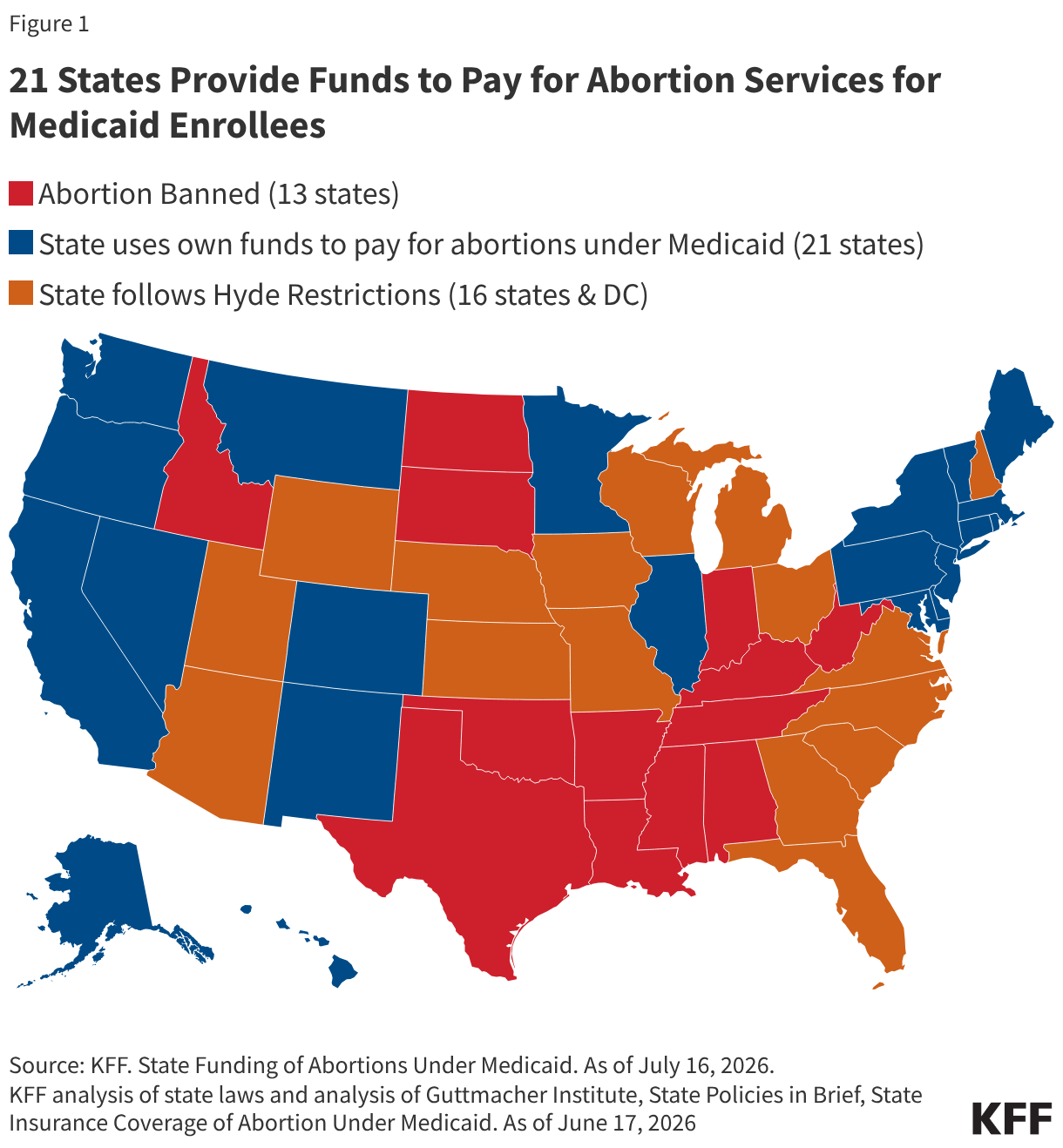
Since the Dobbs decision in 2022 overturning Roe v. Wade, 13 states have banned the provision of abortion with few exceptions. In the remaining states where abortion is legal, another barrier to abortion services has been the federal Hyde Amendment, which prohibits the use of federal Medicaid funds for abortion with limited exceptions for pregnancies that endanger the life of the pregnant person, or that result from rape or incest. States may use their own revenues to pay for abortion services for Medicaid enrollees beyond the federal financing restrictions, and 21 currently use their own state funds to pay for abortions for Medicaid enrollees, while 16 states & DC where abortion provision is not banned follow the Hyde Amendment restrictions (Figure 1). Medicaid reimbursement rates are established by the states under broad federal guidelines and have historically been lower than those paid by Medicare and are even lower relative to private insurance rates.
In the case of Medicaid, lower reimbursement rates can lead to abortion providers experiencing financial shortfalls, challenging their long-term sustainability and ability to serve Medicaid enrollees. Lower reimbursement rates have been linked to higher out-of-pocket costs for Medicaid beneficiaries, who are overwhelming low-income, further constraining their access to abortion care.
To understand the status of Medicaid payment for abortion services four years post-Dobbs, KFF researchers reviewed Medicaid physician fee schedules for medication and procedural abortions in states that do not ban abortion, updating an analysis first published in 2024. This analysis focuses on states where abortion provision is not banned, including those using state funds to pay for abortions for Medicaid enrollees as well those that only cover abortions under Hyde exceptions, and it excludes the 13 states where abortion provision is banned.
How Abortion Payment Rates Are Structured
Medicaid services are financed via two pathways: fee-for-service (FFS) and managed care arrangements. The reimbursement rates presented in this brief are for FFS claims, as contracted managed care rates are not typically publicly available. The FFS reimbursement rates reported in this brief are for non-facility (e.g., outpatient clinics or physician offices), provider-only rates (e.g., excluding any facility rates), since most abortions are performed outside of a hospital setting. States such as Connecticut, Massachusetts, Nevada, and Washington use different reimbursement fee schedules for family planning and abortion clinics. These reimbursement rates are often higher than physician fee schedules. This analysis uses the family planning and abortion clinic rates, when available.
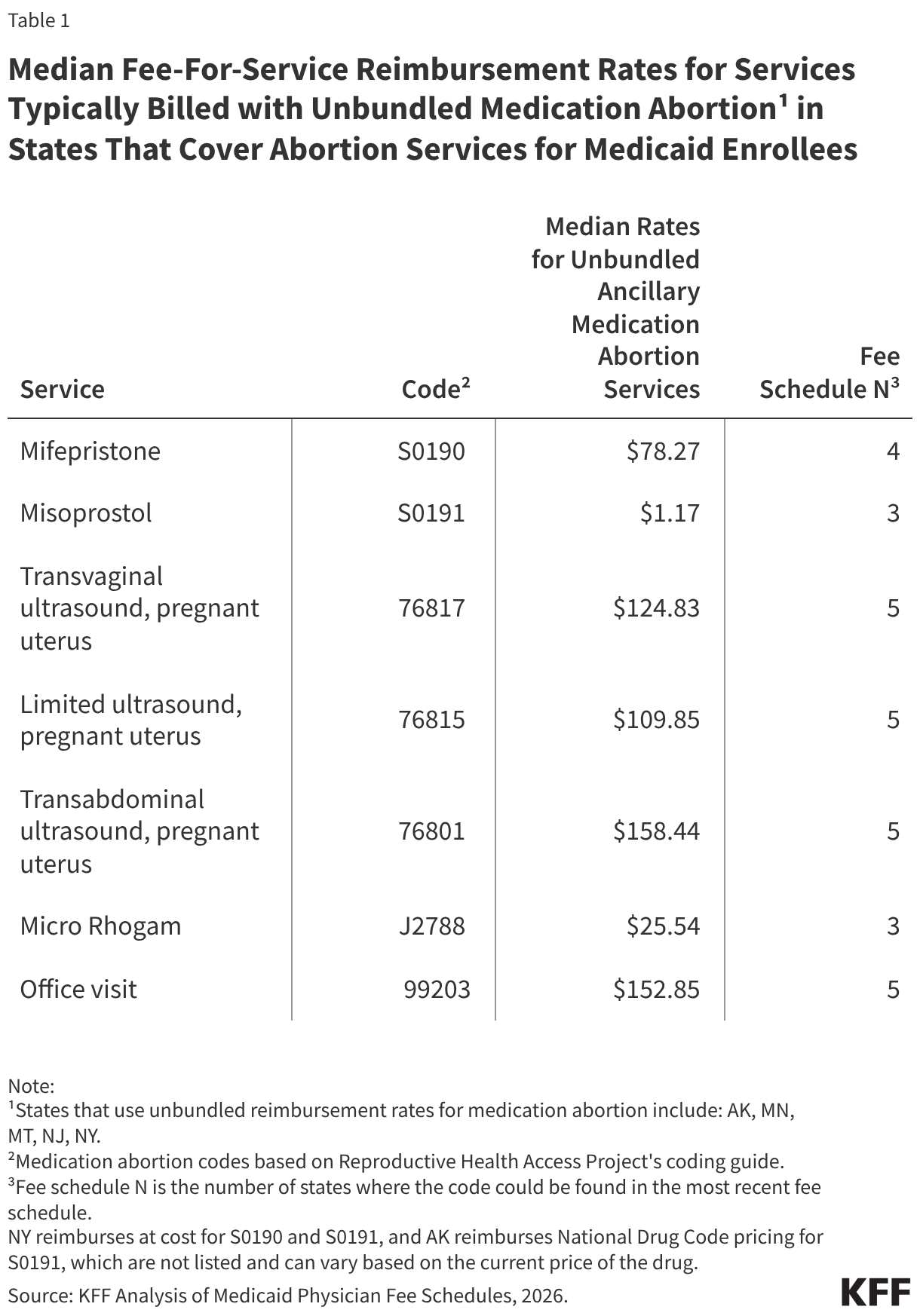
State Medicaid programs also differ in the payment structures they use for abortion services. Some states use a bundled reimbursement structure for abortion services, where ancillary services provided alongside the abortion are included in the bundled payment rate. Other states use unbundled billing, and providers can bill separately for all services provided with the abortion. Additional services often billed for on the day of the abortion in states that use unbundled codes may include an ultrasound, administered medication, a nerve block, and Rh testing, which are outlined in coding guides developed by the Reproductive Health Access Project for manual vacuum aspiration abortion and medication abortion. Median reimbursement rates for each of these services from state Medicaid physician fee schedules are reported in the tables throughout this brief.
Even when Medicaid reimburses for abortion services, providers have reported that Medicaid reimbursement rates are substantially lower than what they receive from self-pay patients. Because there are limited and outdated data on the actual cost of providing abortion care, self-pay prices can serve as a useful proxy for provider costs, although they may underestimate true costs if they reflect discounts provided to patients by abortion funds. Research conducted before the Dobbs decision illustrates the breadth of this reimbursement gap. A 2020 study reviewed 2017 Medicaid and Medicare physician fees schedules for D&C and D&E procedures across 45 states and D.C. and found that median Medicaid reimbursement rates for first- and second-trimester abortions covered only 37% and 41% of the amount charged to self-pay patients for the procedures, respectively. The study did not address reimbursement rates for abortions after the second trimester. Providers also reported instances in which they received no reimbursement for abortions that were eligible for Medicaid coverage under the Hyde Amendment. The study's authors concluded that this reimbursement gap, particularly when combined with inconsistent reimbursement practices, may further discourage providers from participating in Medicaid.
More recent data on self-pay prices support these findings. A 2024 report on self-pay charges for abortion services from 2017 to 2023 found median charges of $563 for medication abortion, $650 for a first-trimester procedural abortion (D&C), and $1,000 for a second-trimester abortion (D&E). These quoted self-pay prices are substantially higher than Medicaid reimbursement rates in many states, reinforcing that a gap exists between what providers typically charge and what Medicaid pays.
Medication Abortion
In 2023, medication abortion, a two-drug regimen using mifepristone and misoprostol that is FDA-approved to terminate pregnancies up to 10 weeks in the U.S., accounted for 65% of all abortions. This share has increased since the FDA removed the in-person dispensing requirements in 2021, making medication abortion via telehealth, mail, and pharmacies more accessible.
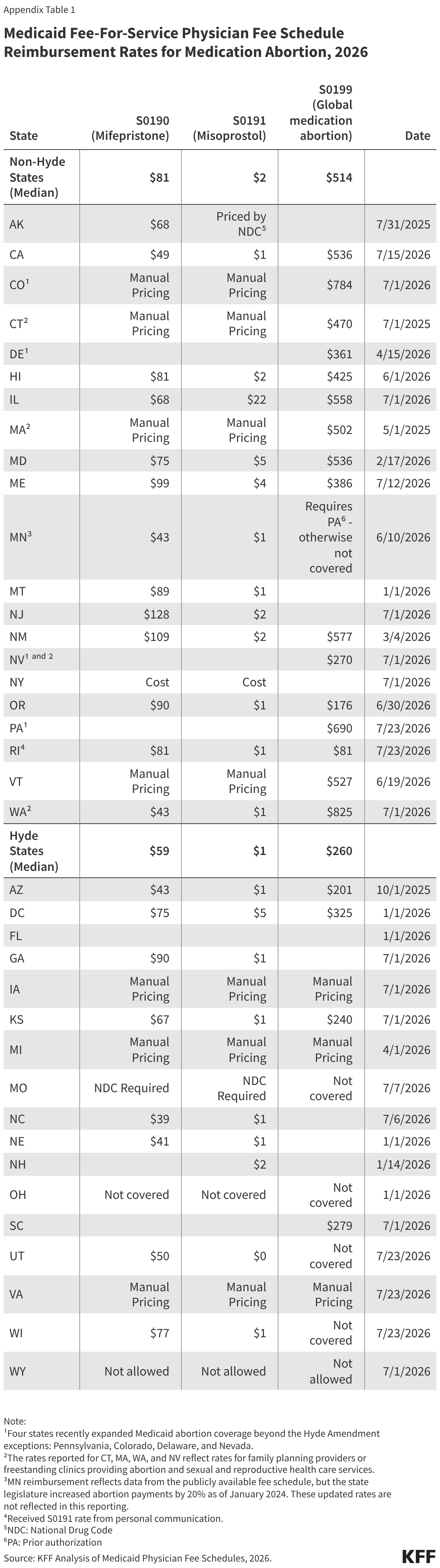
Medication abortion can be billed using three separate procedure codes, and often all three codes are billed at the same time. There are codes for two pharmaceuticals—mifepristone (HCPCS S0190) and misoprostol (HCPCS S0191)—as well as a global medication abortion code (HCPCS S0199) that includes all affiliated services and supplies (e.g., patient counseling, office visits, confirmation of pregnancy by HCG, ultrasound to confirm duration of pregnancy, ultrasound to confirm completion of abortion).
States typically take two approaches to reimburse for medication abortion services: (1) a bundled payment using the global medication abortion code plus the medications (billed either through medical services or pharmacy billing channels); or (2) payment for separate services, like office visits and ultrasounds, plus the medications.
Twenty out of 21 states that use state funds to pay for abortion services for Medicaid enrollees list reimbursement rates for at least one of the three medication abortion codes, with 16 listing rates for the global medication abortion code, 13 listing rates for mifepristone, and 12 listing rates for misoprostol. The one state not accounted for is New York; while they do not reimburse for the global medication code, on their publicly available fee schedule they reimburse at the “cost” of the drugs to abortion providers for both mifepristone and misoprostol. The median Medicaid reimbursement rate for the global medication abortion code is $514, ranging from a low of $81 in Rhode Island to a high of $825 in Washington (Figure 2). The median reimbursement rate for mifepristone is $81, ranging from a low of $43 in Washington to a high of $128 in New Jersey. The median reimbursement rate for misoprostol is $2, which ranges from less than $1 in Washington to $22 in Illinois. When the median amounts for all three medication abortion codes are summed together, the median reimbursement rate for medication abortion is $597. However, the range of summed codes across states is quite large, from $162 in Rhode Island to $869 in Washington.
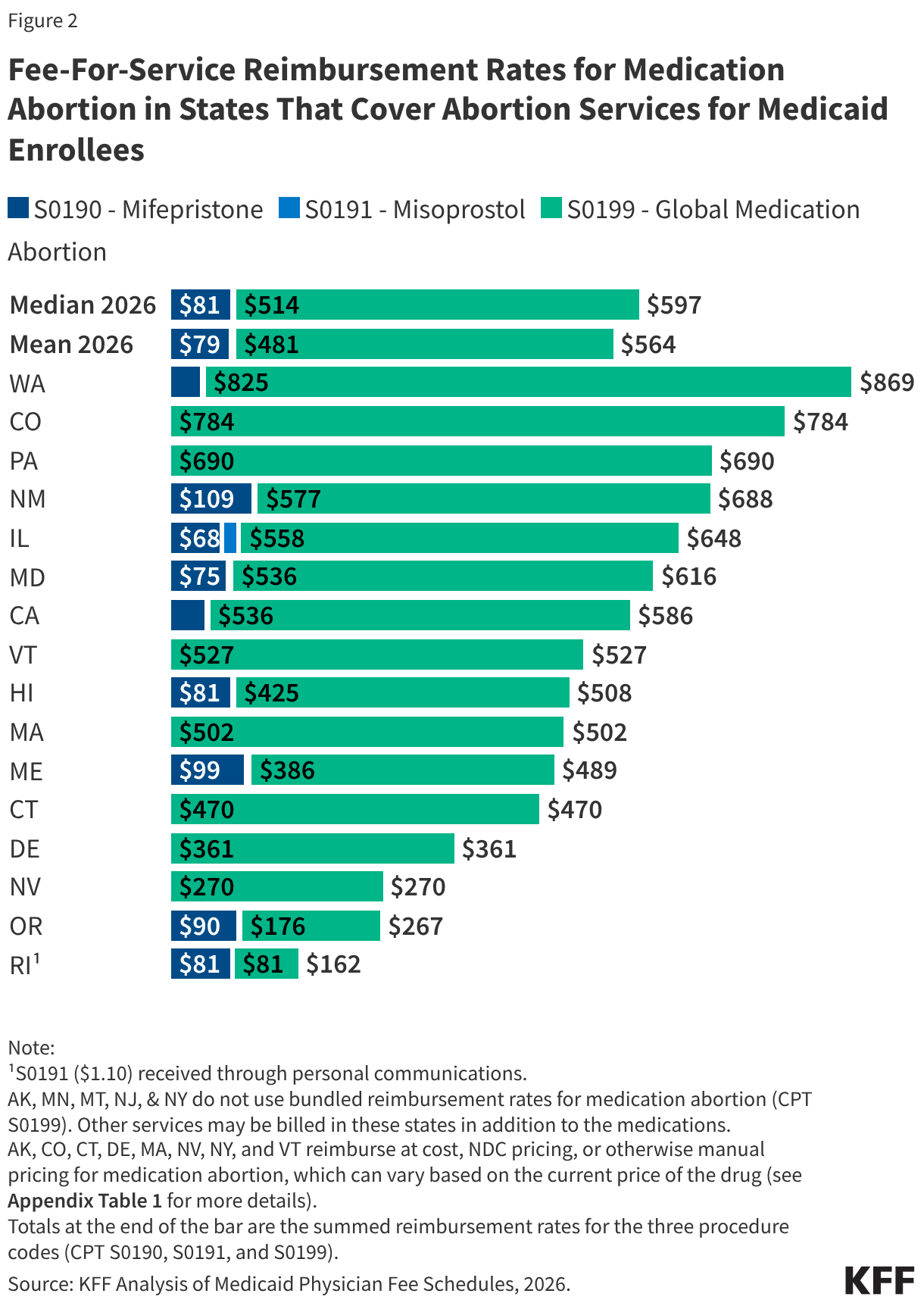
For the five states that do not use the bundled, global code for medication abortion, the sum of the rates for mifepristone and misoprostol alone range from $44 in Minnesota1 to $131 in New Jersey. In these states, providers may bill separately for ancillary services, which could potentially add additional reimbursement (Table 1).
The medication abortion reimbursement rates reported in this brief apply to services provided in outpatient clinics or physicians’ offices and do not specifically address reimbursement rates for telehealth medication abortion for either bricks-and-mortar or online-only providers. Telehealth has become an increasingly common mode of medication abortion provision; in 2025, approximately 28% of all abortions were medication abortions provided through telehealth, representing a 27% overall increase from 2024. Although research on Medicaid reimbursement rates for telehealth medication abortion is limited, a 2024 report from the National Health Law Program found that, across six states (Illinois, Minnesota, New Mexico, New York, Rhode Island, and Washington), there was overall payment parity for synchronous video telehealth service delivery under Medicaid compared to in-person medication abortion service delivery. However, many of these states adopted temporary telehealth payment parity policies in response to the COVID-19 public health emergency, and some of those policies have not yet been made permanent, limiting the generalizability of these findings.
While most states that use their own funds to pay for abortion services for Medicaid enrollees list reimbursement rates for medication abortion, only half of the states that follow Hyde restrictions list reimbursement rates for medication abortion, and median reimbursement in these states is substantially lower (see Appendix Table 1). Beyond the issue of failing to publish reimbursement rates for medication abortion, a 2025 U.S. Government Accountability Office (GAO) report found that 14 states participating in the Medicaid Drug Rebate Program (MDRP) were not complying with federal requirements to cover FDA-approved medication abortion drugs, even in circumstances permitted under the Hyde Amendment, such as rape, incest, or life-endangerment. The GAO reported these instances of noncompliance to the Centers for Medicare and Medicaid Services (CMS) in late 2025.
D&C Procedures
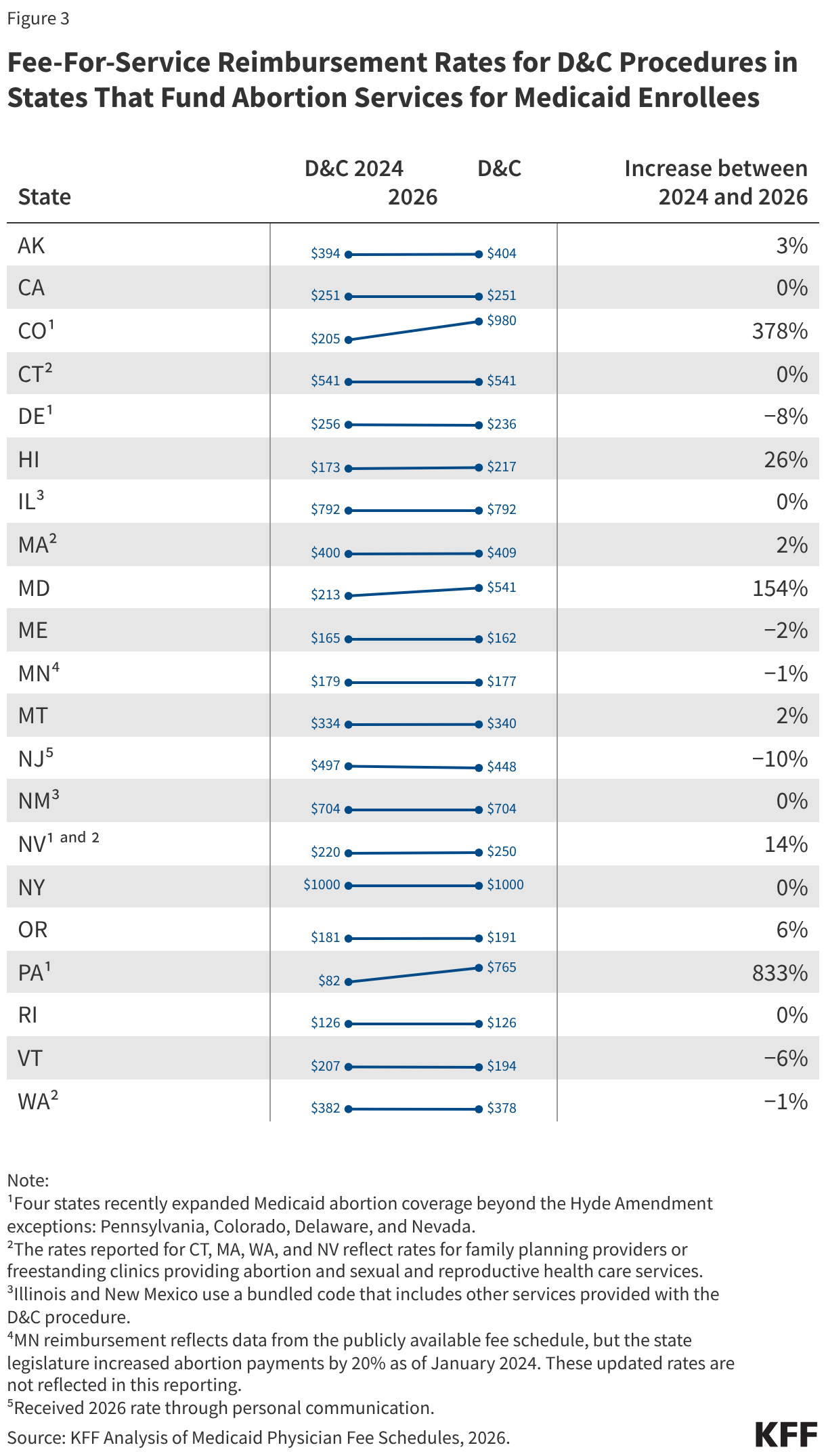
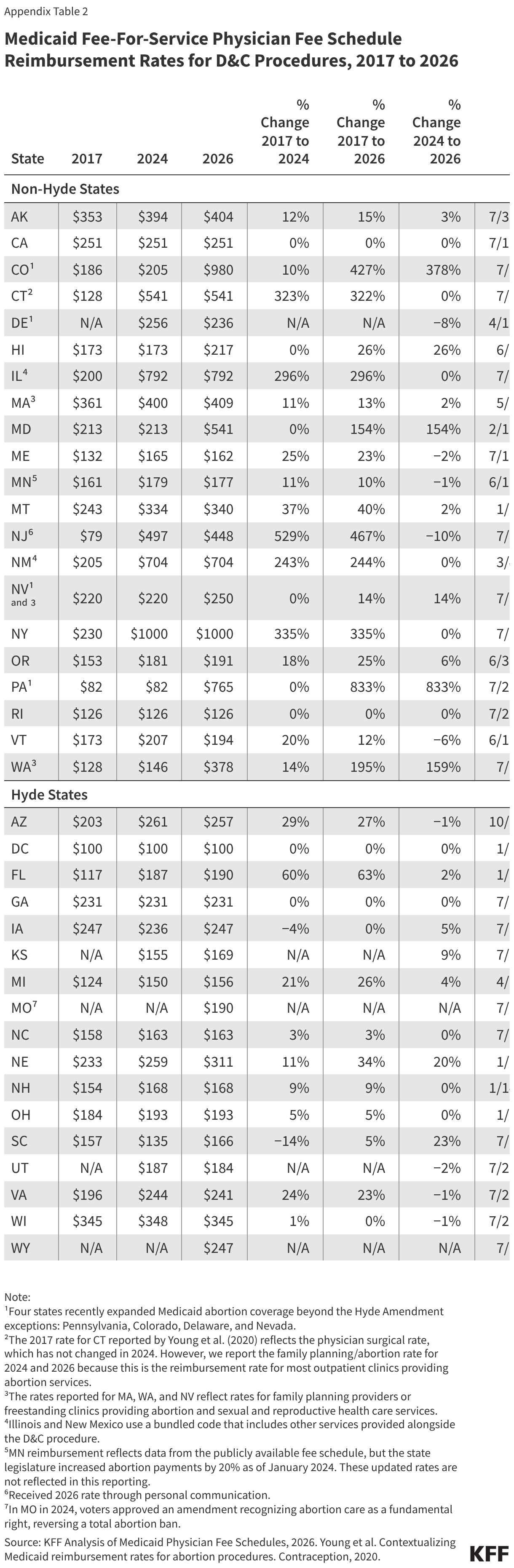
Dilation and curettage (D&C) is a common abortion procedure that can be used up to approximately 16 weeks of pregnancy. Medicaid physician fee schedules for fee-for-service reimbursement rates were published online for D&C procedures in all 21 states that use state funds to reimburse for abortion services for Medicaid enrollees beyond Hyde exceptions (Figure 3). The median reimbursement rate for a D&C procedure in these states was $378, ranging widely from $126 in Rhode Island to $1,000 in New York. Since 2024, Pennsylvania2 and Colorado have shifted from following Hyde restrictions to using state funds to pay for abortion for Medicaid enrollees. In the past two years, Pennsylvania increased their rate for D&C procedures by 833%, Colorado increased their reimbursement rate by 378%, and Maryland increased their rate by 154%. Beyond these outliers, most states have not increased their rates or increased them only slightly. Nine of 21 states that use state funds to cover abortion for Medicaid enrollees increased rates, but of those, only 5 states increased rates at or above the health care inflation rate over the past two years. Of the remaining 12 states that did not increase rates, 6 states have not changed their D&C reimbursement rates, and 6 states have decreased their rates between 2024 and 2026. In states that only reimburse for abortions in cases of pregnancies resulting from rape, incest, and life endangerment, payment rates were considerably lower (see Appendix Table 2).
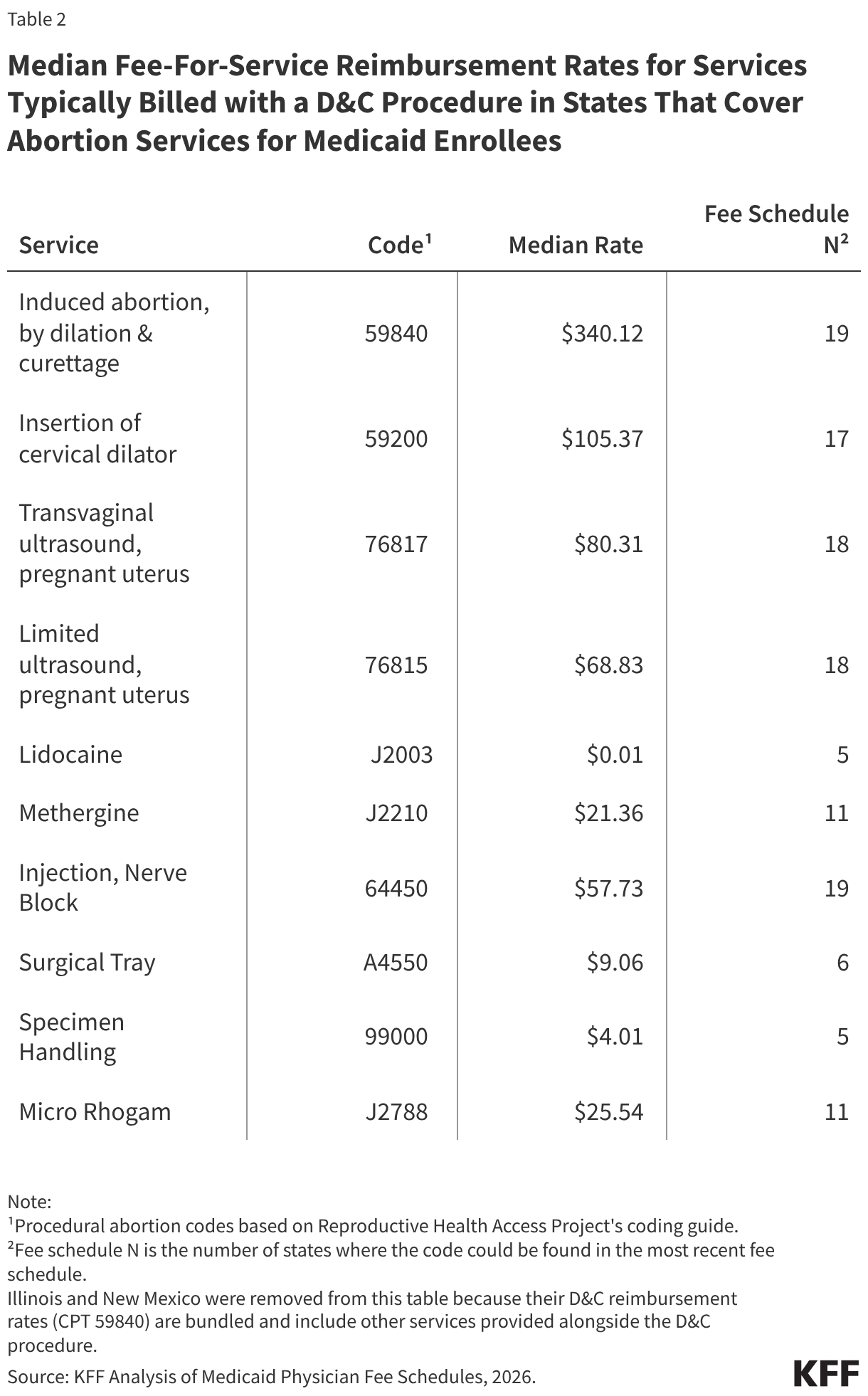
Other services may be billed and reimbursed on the day of a procedural abortion including ultrasound, anesthetic medication administration like lidocaine and methergine, or a nerve block for pain. In some states, the reimbursement rates for these additional services are not publicly posted (Table 2). Illinois and New Mexico reimburse procedural abortions (CPT codes 59840 and 59841) as bundled codes and will not pay for other related services when these codes are billed. Therefore, Illinois and New Mexico were removed from the calculations in the table below detailing median ancillary rates for services that may be provided at the time of the abortion.
D&E Procedures
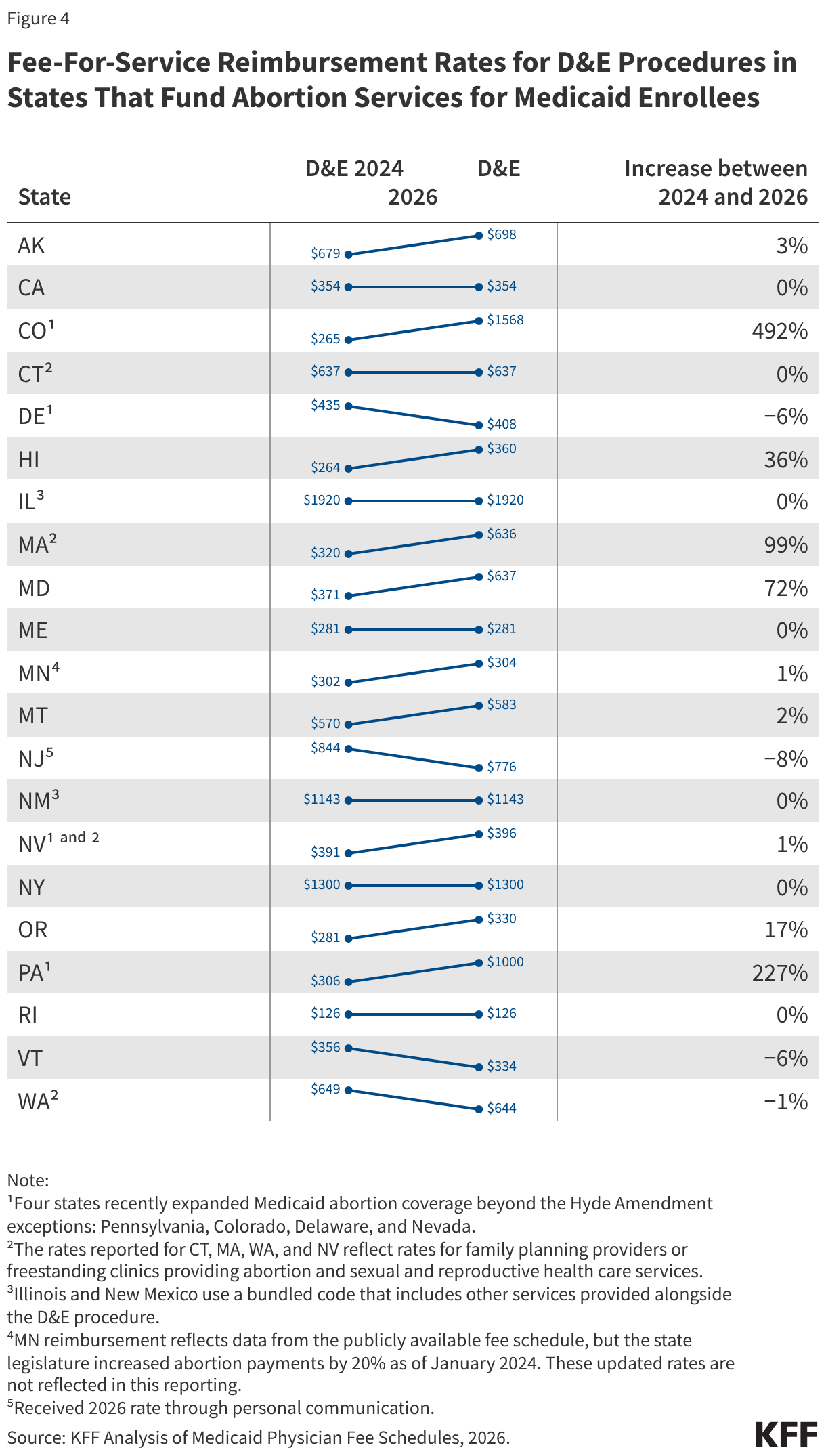
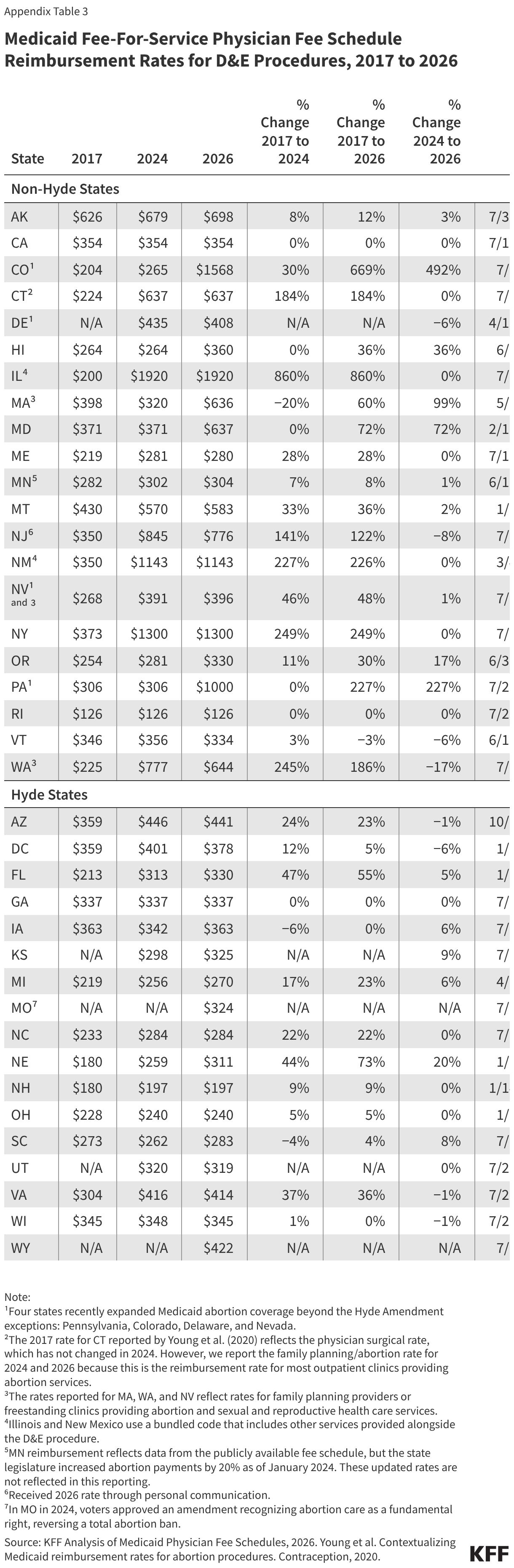
For a dilation and evacuation (D&E) procedure, which is often used in the second trimester, the reimbursement rates similarly varied widely by state (Figure 4). In states that fund abortion services for Medicaid enrollees, the median reimbursement rate for a D&E procedure was $636, ranging from a low of $126 in Rhode Island to a high of $1,920 in Illinois. Since 2024, Colorado increased their D&E reimbursement rate by 492%, Pennsylvania increased their rate by 227%, and Massachusetts by 99%. Beyond those substantial reimbursement rate increases, 10 of 21 states that use state funds to pay for abortion for Medicaid enrollees increased D&E reimbursement rates for Medicaid providers between 2024 and 2026, but only 6 increased their rates at or above the rate of health care inflation. Of the remaining 11 states that did not increase rates, 7 have not changed their D&E reimbursement rates, and 4 have decreased their rates over the past two years. As with D&C procedures, the median reimbursement rate for D&E procedures in states that pay for abortions for Medicaid enrollees is higher than in states that limit abortion coverage to those cases permissible under the Hyde Amendment (see Appendix Table 3).
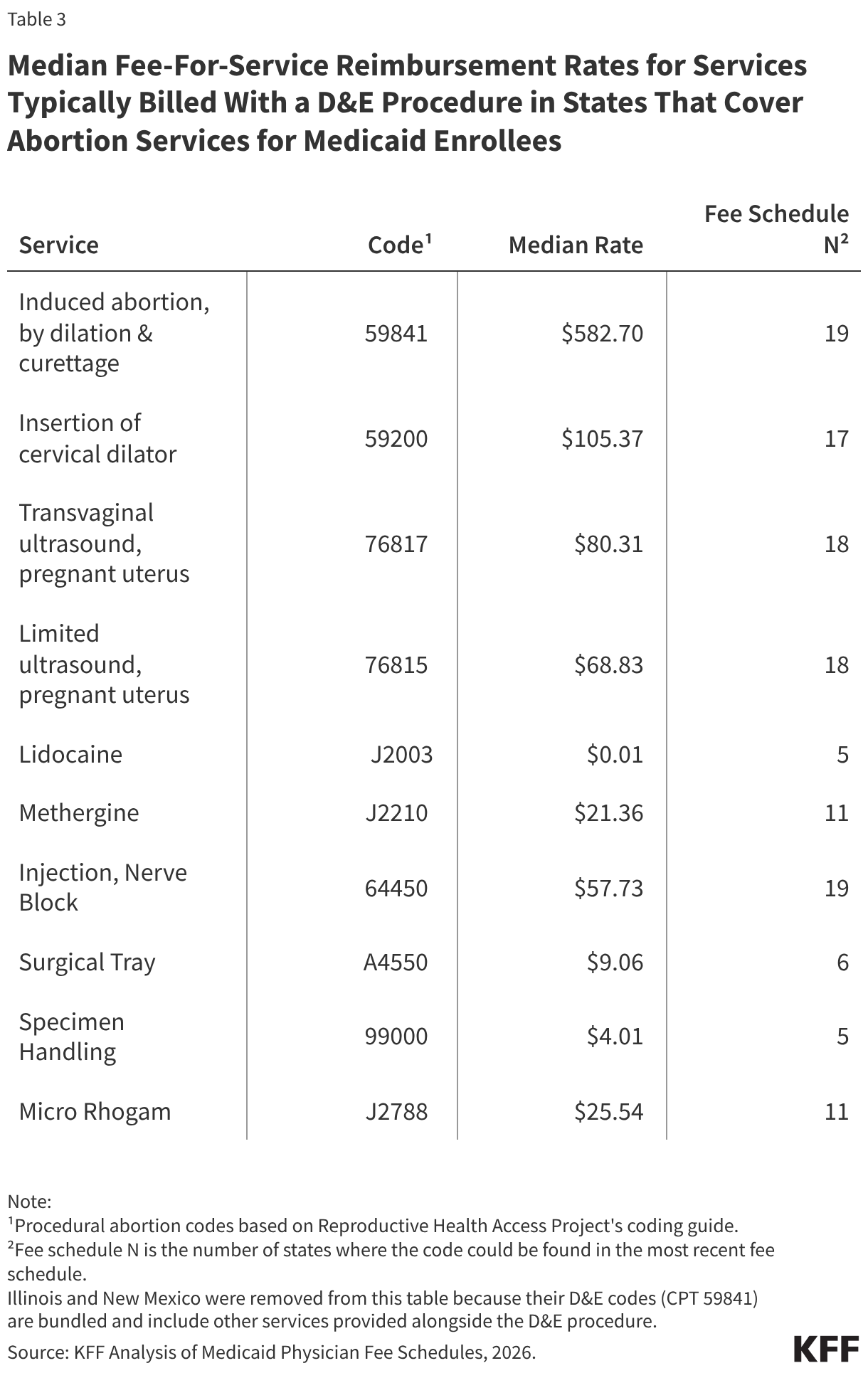
As with D&C procedures, providers will often bill for other services provided with the D&E procedure if the code is not a bundled code (Table 3). In line with D&C procedures, Illinois and New Mexico use bundled rates for D&E procedures that include ancillary services and, therefore, are not included in the calculations in the table below.
Abortion Financing, Cost, and Medicaid Policy Considerations
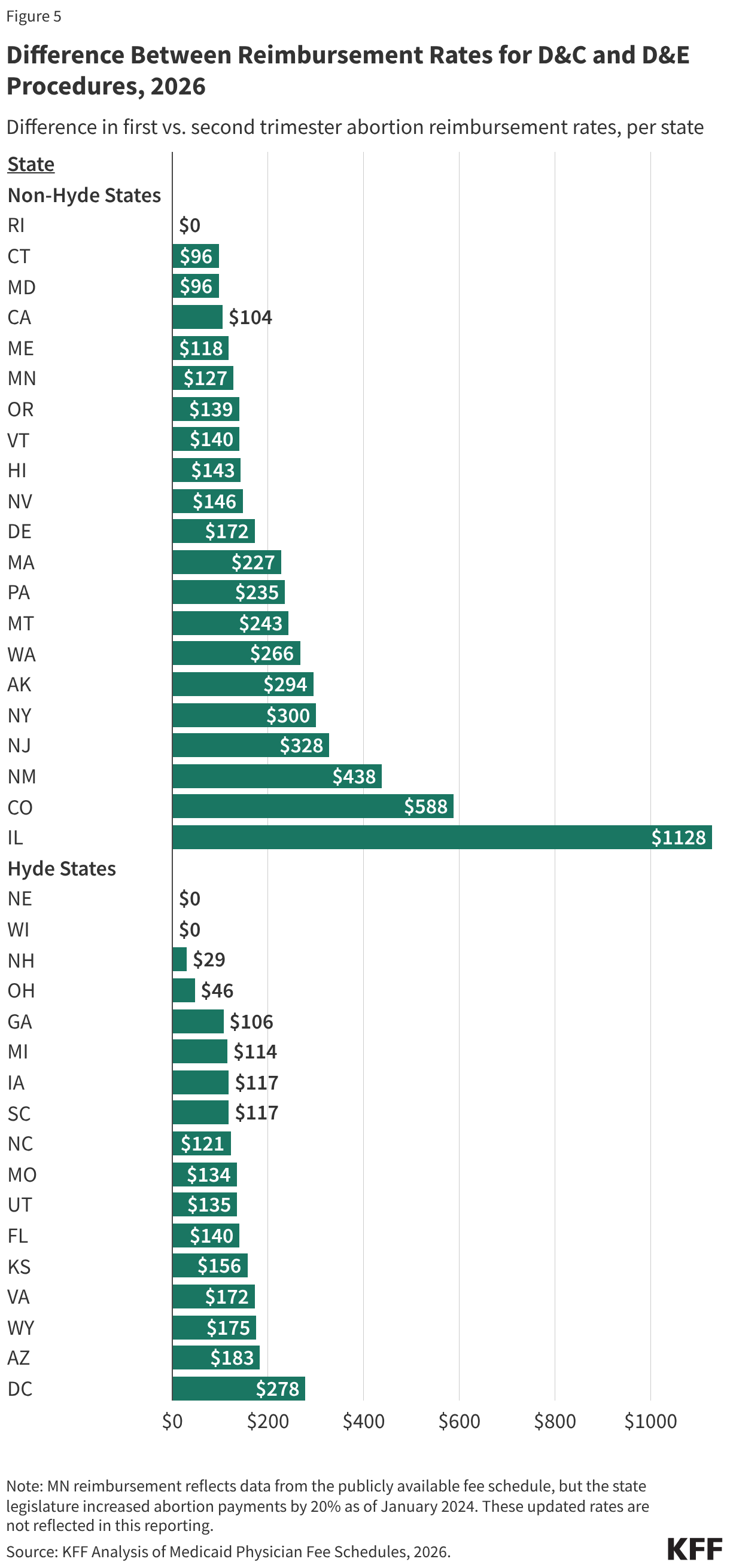
Given that D&E procedures are typically provided later in pregnancy and are more costly and complex procedures, it would follow that reimbursement would be substantially higher than for D&C procedures, which are typically done earlier in pregnancy. The majority of states (27 of 38) without bans—including Hyde and non-Hyde states—reported a Medicaid reimbursement rate difference that was less than $200 (Figure 5). Three states (Rhode Island, Nebraska, & Wisconsin) reimburse for first and second trimester abortions at the exact same rate, failing to account for the differences in cost and complexity of these different procedures, leaving providers to either be exposed to financial losses if they provide abortions later in pregnancy or decline to accept Medicaid patients.
In analyzing the role of Medicaid in abortion financing, the Guttmacher Institute’s 2021-2022 Abortion Patient Survey found 62% of abortion patients living in states that funded abortion beyond Hyde restrictions used Medicaid to pay for their abortion. Comparatively, for abortion patients living in Hyde restricted states, 82% paid out of pocket for their care, with two-thirds of those surveyed reporting they had to raise money to afford their abortion, often through accruing debt, relying on financial subsidies from abortion funds or clinic discounts, or asking friends and family. Abortion funds have long been relied on as a safety-net option for those in need of assistance in paying for their abortion, but a post-Dobbs trend of increased requests for support coupled with decreased donations leaves funds in precarious and depleted financial positions.
These disparities in how abortion care is financed highlight the fact that insurance coverage alone is insufficient to assure access, particularly when providers’ reimbursement policies inadequately support the costs of the full range of abortion services. While reimbursement for care after the second trimester is not directly addressed in this report, a recent study investigated self-pay prices paid by patients seeking later abortion care and found that prices increased with gestational stage, while, inversely, provider and clinic availability and Medicaid coverage declined. Low Medicaid reimbursement for these services may further exacerbate reproductive access inequities for Medicaid enrollees.
Beyond implications on patient affordability, reimbursement rates also affect providers’ ability to provide abortions to all patients regardless of payor. As with all health services, the cost of providing abortions has grown in all states as the costs of medical equipment and personnel increase annually. In addition, abortion providers face expenses that are not incurred by most other outpatient clinics such as security costs to keep their staff and patients safe from anti-abortion activities, such as extra security guards, cameras, staff background checks, and bulletproof windows. Increased safety concerns and costs have also made it difficult to retain the abortion clinic workforce.
Appendix
A prior version of this brief was originally posted March 2024. If interested in a copy of the prior brief, please to write to womenshealth@kff.org.
- MN reimbursement reflects data from the publicly available fee schedule, but the state legislature increased abortion payments by 20% as of January 2024. These updated rates are not reflected in this reporting. ↩︎
- Under the recent Commonwealth Court ruling, Pennsylvania Medicaid is legally required to cover abortion care as of July 15, 2026. However, the Pennsylvania Department of Human Services (DHS) is still in the process of establishing the necessary billing and reimbursement system to process coverage. ↩︎