News Release

How Did the Coronavirus Pandemic Affect Health Care Provided by OBGYNs?

Published: Dec 2, 2020

A new KFF survey of obstetrician-gynecologists (OBGYNs) offers insight into how the coronavirus pandemic has affected the provision of sexual and reproductive health care, including the growth of telehealth and the ongoing challenges and limitations of such medical visits.

Key findings from the survey, which was conducted from July to September 2020, include:

  • The majority of OBGYNs worry that patients who have experienced delays in sexual and reproductive health care will face negative health consequences as a result and most also say it has been more difficult to provide reproductive health care during the COVID-19 pandemic.
  • While few OBGYNs reported using telehealth visits prior to the pandemic, the vast majority had incorporated them by the summer. Almost all reported some type of challenge associated with telehealth visits.
  • Almost all OBGYNs reported continuing in-person contraceptive services, but half are prescribing hormonal contraceptive pills via telehealth.
  • The majority of OBGYNs reported that their practice had experienced at least one financial or staffing challenge; more than half reported a decline in patients seeking care.

As cases are once again surging in the country, the use of telehealth for sexual and reproductive health care is likely to continue to play a significant role in the provision of care.  For the full findings from the survey read the full brief, How OBGYNs Adapted Provision of Sexual and Reproductive Health Care During the COVID-19 Pandemic.

How OBGYNs Adapted Provision of Sexual and Reproductive Health Care During the COVID-19 Pandemic

Authors: Gabriela Weigel, Brittni Frederiksen, Usha Ranji, and Alina Salganicoff
Published: Dec 2, 2020

Issue Brief

Key Takeaways

  • OBGYNs have continued to provide sexual and reproductive health care during the COVID-19 pandemic, but they have been faced with great challenges and change within their practices. More than half of OBGYNs saw a decline in patient visits from March to June 2020. Most attributed the decline to fewer patients seeking care or practice specific limitations, rather than state restrictions on health care services.
  • Few OBGYNs reported using telehealth visits prior to the pandemic, but the vast majority said they had incorporated telehealth into their practice as of June 2020. Almost all reported some sort of challenge related to delivering care via telehealth, including limitations in conducting a physical exam, patients having difficulty using telehealth, and the inability to conduct diagnostic testing. If they were to continue to offer telehealth after the resolution of the COVID-19 emergency, most OBGYNs said they would need to be reimbursed at a comparable rate to that of in-person care.
  • Four in five OBGYNs said their practice experienced at least one financial or staffing challenge as a result of the COVID-19 pandemic. The most commonly cited experiences were reducing operating hours, reduction in pay for clinicians, and furloughing or laying off non-clinical staff.
  • Almost all OBGYNs reported they are continuing to provide many contraceptive services in-person during the COVID-19 pandemic. Half reported prescribing hormonal contraceptive pills via telehealth, but very few are utilizing telehealth for sexually transmitted infection (STI) testing, or for providing instruction on self-administered contraceptive injections or intrauterine device (IUD) removal.
  • The majority of OBGYNs said that it was more difficult to address reproductive preventive care and manage chronic gynecological conditions during the COVID-19 pandemic. About six in ten OBGYNs are very or somewhat worried that patients who face delays in sexual and reproductive health care, such as contraceptive care, STI treatment, or obtaining an abortion, will face negative health consequences.

Introduction

The COVID-19 pandemic has had a profound impact on health care access and delivery. While patients’ other health care needs have generally not declined, providers have been tasked with figuring out how to address these needs while mitigating risk to both patients and staff related to the COVID-19 pandemic. Many providers have altered their practice models dramatically, including the rapid adoption of telehealth and reconfiguring practice workflows. While obstetrician-gynecologists (OBGYNs) do not represent the entirety of sexual and reproductive health (SRH) care providers, their experiences offer us insight into the field at a time of great change and adaptation.

At the time the novel coronavirus had started to spread widely within the U.S., KFF was underway fielding a national survey of OBGYNs to understand SRH care provision across the U.S. Realizing that practice patterns had likely changed due to the pandemic, we took the opportunity after the initial survey release to add a subset of questions related to provision of care during the COVID-19 pandemic. A nationally representative sample of 855 office-based U.S. OBGYNs answered the COVID-19 supplemental questions from July 8, 2020 to September 1, 2020. In this brief, we report on how the COVID-19 pandemic has impacted the provision of SRH care by U.S. OBGYNs.

The margin of sampling error for these questions is +/-6 percentage points at the 95% confidence level. All comparisons noted in this brief are statistically significant (p <0.05). A summary of physician and practice characteristic definitions can be found in the methodology section.

Declines in Visit Volume

At the time of the survey, more than half (54%) of OBGYNs said they had seen a decrease in the number of patient visits since the COVID-19 pandemic started in March 2020. Approximately a third (35%) saw about the same number of patients, while a minority (10%) saw more patients since the beginning of the pandemic (Figure 1). Those who were in small practices, defined as ≤ 3 full-time equivalent (FTE) doctors or advanced practice clinicians, appear to have been hit the hardest, with 73% of OBGYNs at small practices reporting a decrease in patients compared to 46% and 48% of OBGYNs at medium (4-10 FTE) and large practices (>10 FTE). Also, more OBGYNs age 65+ reported seeing declines in patient visits, compared to all younger age groups (80% for age 65+, 59% for age 55-64, 58% for age 45-54, 38% for age <45); this is also the age group that had the largest share of OBGYNs who did not utilize any telehealth in June 2020 (Table 2).

When those who reported a decrease in patient volume were asked to identify the primary driver of the decline, most attributed the decline to fewer patients seeking care (45%) or practice specific limitations (37%). State restrictions on health care services was less commonly (7%) cited as the primary reason for declines in patient volume (Figure 1).

Figure 1: Most OBGYNs Saw Declines in Visits During the COVID-19 Pandemic, Attributed To Fewer Patients Seeking Care​

Telehealth Utilization

During the COVID-19 pandemic, the use of telehealth grew rapidly among OBGYNs. Prior to the start of the COVID-19 emergency in the U.S. (March 1, 2020), the vast majority (86%) of OBGYNs said they did not conduct any telehealth visits. By June 2020, however, almost all (84%) reported conducting telehealth visits (Figure 2).

Figure 2: Few OBGYNs Used Telehealth Prior To the COVID-19 Pandemic. Three Months Later the Vast Majority Were Doing So​

The average share of overall practice visits that OBGYNs reported conducting via telehealth grew from 1.5% before the COVID-19 emergency to 18% in June 2020. Physicians who had been using telehealth before the pandemic reported using telehealth for a significantly higher share of visits on average in June 2020 compared to those with no prior experience (35% vs. 16%). The average share of total visits conducted via telehealth also differed by physician characteristics, with higher shares of telehealth visits reported among female physicians and those under age 54. There were also differences by practice location, with those practicing in urban locations, the West and Northeast (areas initially hit hardest by the pandemic) and in Medicaid Expansion states reporting a higher share of telehealth visits (Table 1). No differences were identified by practice size.

Table 1: Average share of total visits conducted via telehealth in June 2020, by demographics
Thinking about telehealth visits (e.g. virtual visits conducted via video or phone), what percentage of your practice visits were via telehealth in June 2020?
Average
Overall18%
Used Telehealth Prior to the COVID-19 PandemicYes35*
No16
GenderFemale20*
Male 14
Age<4521
45-5423*
55-6411
65+14
RegionWest26*
Northeast21*
Midwest16
South13
UrbanicityUrban19*
Suburban18
Rural11
Practice in Medicaid Expansion StateYes21*
No12
* Indicates a statistically significant difference (p<0.05) from reference group in bold

When looking at how often OBGYNs utilized telehealth for patient visits, most did so for a minority of visits in June 2020; few (9%) were using telehealth for >50% of their total visits (Figure 3). Therefore, while the majority of OBGYNs have used some telehealth during the COVID-19 pandemic, most continued to deliver the bulk of their visits via in-person care.

Figure 3: Most OBGYNs Not Using Telehealth Prior To the Pandemic. In June 2020, Most Were Doing So for a Minority of Visits​

While there was a major spike in telehealth adoption by June 2020, a small but sizable share of OBGYNs (14%) did not conduct any telehealth visits. A higher share of male OBGYNs compared to female, and older doctors compared to younger doctors reported no telehealth use in June 2020. Additionally, while there has been much discussion about the potential for telehealth to expand access in rural regions where transportation barriers can be a limiting factor in obtaining care, OBGYNs in rural areas were more likely than those in urban and suburban areas to have not adopted telehealth during the pandemic. About 1 in 4 OBGYNs practicing in rural areas, small practices and in states without Medicaid expansion reported no telehealth use (Table 2).

Table 2: Who has not adopted telehealth into their practice during the COVID-19 pandemic?
Share of OBGYNs who reported no telehealth use in June 2020
Overall14%
Used Telehealth Prior to the COVID-19 PandemicYes1*
No16
GenderFemale9*
Male 23
Age<456*
45-549*
55-6420
65+28
Practice Size1Large9*
Medium10*
Small22
UrbanicityUrban12*
Suburban8*
Rural29
Practice in Medicaid Expansion StateYes9*
No24
Question wording: “Thinking about telehealth visits (e.g. virtual visits conducted via video or phone), what percentage of your practice visits were via telehealth in June 2020?” Those who indicated 0% telehealth visits classified as no telehealth use.*Indicates statistically significant difference (p<0.05) from reference group in bold1Practice size defined by number of full-time equivalent (FTE) doctors and advance practice clinicians: small ≤3 FTE, medium 4-10 FTE and large >10 FTE.

Telehealth Challenges

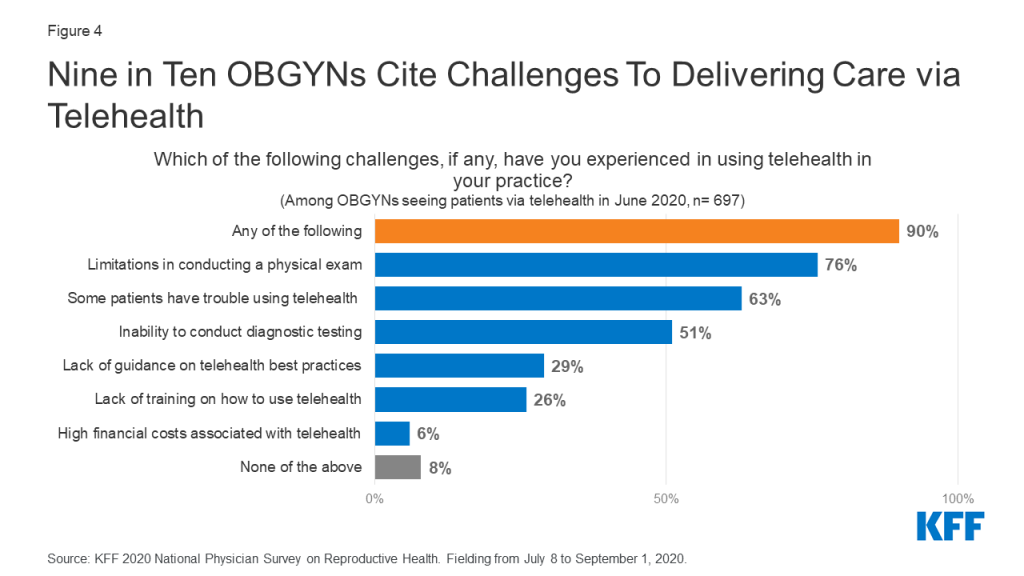
Among OBGYNs who provided telehealth care in June 2020, nine in ten (90%) experienced a telehealth-related challenge. The most cited challenge was the limitation in conducting physical exams (76%), followed by their patients having trouble using telehealth (63%), the inability to conduct diagnostic testing via telehealth (51%), lack of guidance on telehealth best practices (29%) and lack of training on how to use telehealth effectively (26%). A small minority cited high financial costs associated with establishing a telehealth program as a challenge (6%) (Figure 4).

Figure 4: Nine in Ten OBGYNs Cite Challenges To Delivering Care via Telehealth​

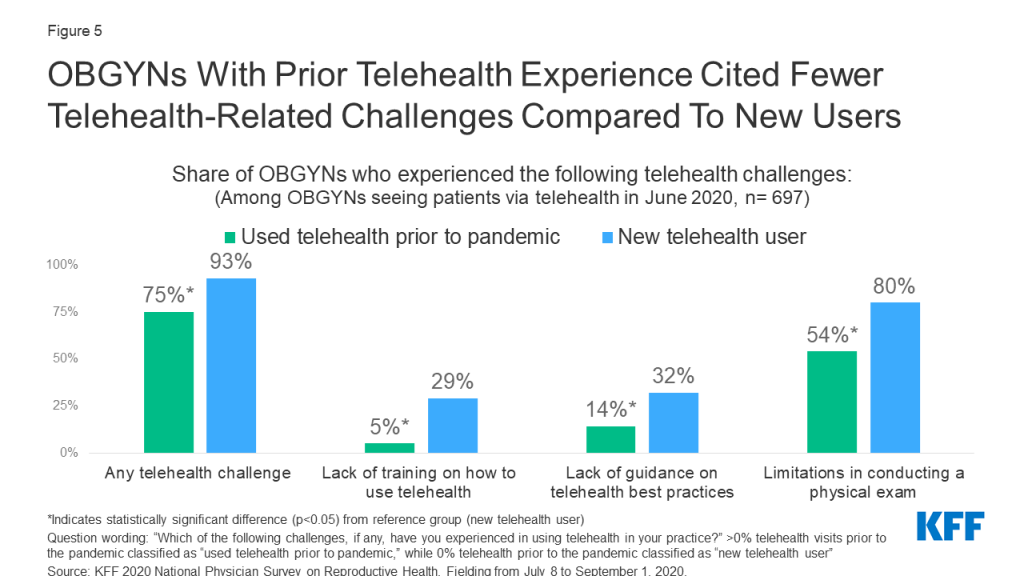
For OBGYNs who had not been using telehealth prior to the pandemic, a higher share reported telehealth challenges (93%) compared to those who had used telehealth prior (75%). Those without prior telehealth use more often cited lack of training (29% vs. 5%), lack of guidance on best practices (32% vs. 14%) and limitations in conducting a physical exam (80% vs. 54%) as challenges, compared to those with prior telehealth use (Figure 5).

Figure 5: OBGYNs With Prior Telehealth Experience Cited Fewer Telehealth-Related Challenges Compared To New Users ​

When thinking about the sustainability of telehealth beyond the COVID-19 emergency in the U.S., reimbursement was an issue cited by many. About half of OBGYNs (52%) reported they would need to be reimbursed at the same rate for telehealth compared to in-person care to continue conducting telehealth visits (Figure 6). About one in four (28%) said they would need to be reimbursed at 75-99% compared to in-person care to continue to offer telehealth. Few (11%) would accept <75% reimbursement for telehealth compared to in-person care, and 7% said they would not offer telehealth at all after the resolution of the COVID-19 emergency. Notably, a larger share of OBGYNs practicing in public clinics said they would not offer telehealth in the future, compared to those in private practice (16% vs. 5%).

Figure 6: Most OBGYNs Expect To Be Reimbursed for Telehealth at a Comparable Rate To In-Person Care​

Financial and Staffing Challenges

Four in five (81%) OBGYNs said their practice experienced at least one financial or staffing challenge as a result of the COVID-19 pandemic. The most commonly cited experiences were reducing operating hours (56%), reducing pay for clinicians (39%) and furloughing or laying off non-clinical staff (37%). Fewer reduced pay for non-clinical staff (17%), furloughed or laid off clinicians (16%) or closed the practice temporarily (13%) (Table 3). Half of OBGYNs reported that their practice experienced more than one of these challenges.

Table 3: Challenges Experienced by OBGYN Practices During the COVID-19 Pandemic
Which of the following, if any, has your practice experienced because of the impact of COVID-19?
Reduced operating hours56%
Reduced pay for clinicians39%
Reduced pay for non-clinical staff17%
Furloughed or laid off clinicians16%
Furloughed or laid off non-clinical staff37%
Closed the practice temporarily13%
Closed the practice permanently1%
Merged with another practice3%
At least one of the above81%
More than one of the above50%
None of the above19%

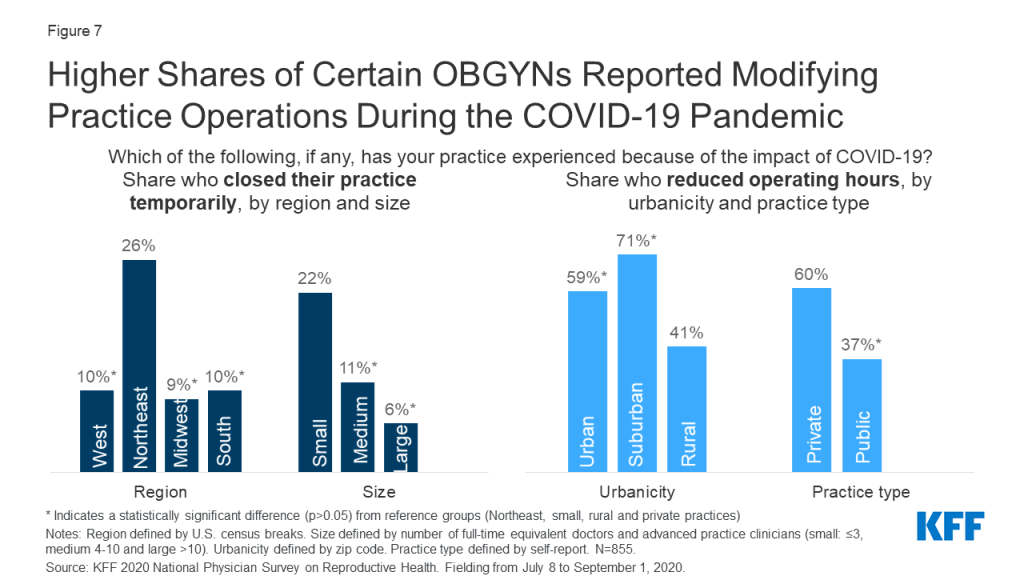
Financial and staffing challenges affected different shares of OBGYNs depending on practice type and setting (Figure 7). Temporarily closing their practices was reported by a higher share of OBGYNs in the Northeast (26%) compared to the West (10%), Midwest (9%) and South (10%); this was also the case for OBGYNs in small practices (22%) compared to those in medium (11%) and large practices (6%). Reducing operating hours was more common among OBGYNs in urban (59%) and suburban (71%) practices compared to those in rural practices (41%), as well as OBGYNs working in private practice (60%) compared to public clinics (37%). Additionally, a higher share of OBGYNs in private practice than public reported reduced pay for clinicians (42% vs. 22%).

Figure 7: Higher Shares of Certain OBGYNs Reported Modifying Practice Operations During the COVID-19 Pandemic​

Delivery of Reproductive Health Care

mode of Delivery

Despite the rapid growth in telemedicine visits, the vast majority of OBGYNs continued to provide basic contraceptive services and STI testing during the COVID-19 pandemic via in-person care. This includes LARC placement (92%), IUD removal (95%), contraceptive injections (93%), prescription of hormonal contraceptive pills (75%) and STI testing for symptomatic patients (94%) (Table 4).

Table 4: Most OBGYNs Continued to Provide SRH Services In Person During July-August 2020
Indicate if, and how, you are currently providing the following services during the COVID-19 emergency?
Providing in-personProviding via telehealthNot currently providing this service
LARC placement92%n/a5%
IUD removal95%2%a2%
Contraceptive injections93%3%b3%
Prescription of hormonal contraceptive pills75%51%<1%
STI testing for symptomatic patients94%9%1%
Notes: Respondents could select multiple response options.a Instructing patients on IUD self-removal; b Instructing patients on SQ self-injection

Some OBGYNs reported utilizing telehealth to deliver these services. Nearly half (51%) of OBGYNs report prescribing OCPs via telehealth since the COVID-19 pandemic began. Younger OBGYNs age <45 (64%) and 45-54 (63%) were about twice as likely to provide OCPs via telehealth than older OBGYNs age 55-64 (34%) and 65+ (28%). Prescribing OCPs via telehealth was also more common among female OBGYNs compared to male (61% vs. 33%), OBGYNs in urban locations compared to rural (55% vs. 35%), and those in large practices compared to small (64% vs. 44%). Providers in the West (67%) reported higher rates of providing OCPs via telehealth compared to those in the Midwest (45%) and South (44%), as well as those in states with Medicaid expansion compared to states without Medicaid expansion (57% vs. 39%) (Table 5).

Table 5: Provision of OCPs via Telehealth Varies by Physician and Practice Characteristics
Share who had prescribed OCPs via telehealth during the COVID-19 pandemic
Overall51%
GenderFemale61*
Male 33
Age<4564*
45-5463*
55-6434
65+28
Practice Size1Large64*
Medium51
Small44
UrbanicityUrban55*
Suburban49
Rural35
RegionWest67*
Northeast52
Midwest45
South44
Practice in Medicaid Expansion StateYes57*
No39
Question wording: “Please indicate if, and how, you are currently providing prescription of hormonal contraceptive pills during the COVID-19 emergency.” Table represents those who are providing this service via telehealth.*Indicates statistically significant difference (p<0.05) from reference group in bold1Practice size defined by number of full-time equivalent (FTE) doctors and advance practice clinicians: small ≤3 FTE, medium 4-10 FTE and large >10 FTE.

Despite innovations in telehealth for use in STI care and contraception, very few OBGYNs reported utilizing telehealth for STI testing (9%), or for providing instruction on self-administered contraceptive injections (3%) or IUD removal (2%) (Table 4). Providers who were using telehealth for >25% of their patient visits in June 2020 reported higher use of telehealth for STI testing (20% vs. 6%), contraceptive injections (8% vs. 1%) and OCP prescription (63% vs. 48%) than providers using telehealth for ≤25% of their visits.

Very few OBGYNs reported that they were not providing the aforementioned services at all at the time this survey was fielded (July 8 to September 1, 2020). In the Northeast (14%), the region hit particularly hard early on in the COVID-19 pandemic, a higher share of doctors reported they were not providing LARC placement at the time of the survey compared to those in the West (4%), Midwest (2%) and South (3%). Similarly, a somewhat higher share of OBGYNs in the Northeast were not providing contraceptive injections (8%) compared to the Midwest (1%) and South (1%) [no statistically significant difference was found from the West (3%)]. It is possible that practices have resumed provision of these services since the fielding of this survey.

Access and Delays in Care

The majority of OBGYNs said it was more difficult to address their patients’ needs during the COVID-19 pandemic; this was true for both reproductive preventive care needs (71%), like STI and cervical cancer screening, as well as chronic gynecological conditions (77%), like addressing fibroids, endometriosis and menopausal symptoms (Figure 8).

Figure 8: Majority of OBGYNs Say COVID-19 Has Made It More Difficult To Address Patients’ Needs ​

Most OBGYNs expressed concern that patients who experience delays in SRH care as a result of the COVID-19 emergency will face negative health consequences. At least six in ten OBGYNs reported being very or somewhat worried about delays in contraceptive care, prenatal care, follow-up care for abnormal pap smears, STI treatment, and obtaining an abortion (Figure 9).

Figure 9: Most OBGYNs Very or Somewhat Worried About Delays in Reproductive Health Care Due To COVID-19​

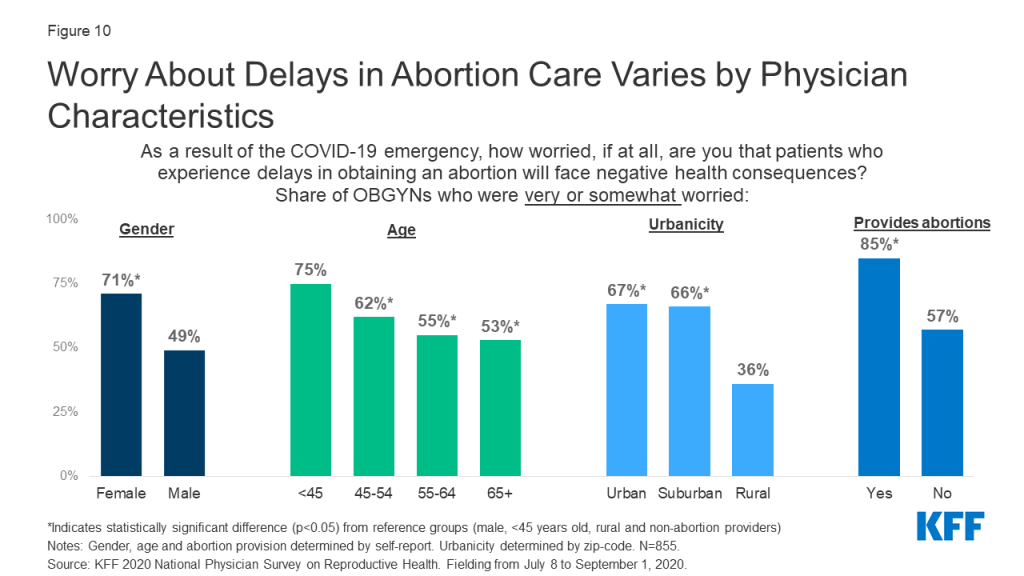
Negative health consequences due to delays in obtaining an abortion were of particular concern to certain groups of OBGYNs. A higher share of female compared to male, urban and suburban compared to rural, and younger compared to older OBGYNs said they were very or somewhat worried about delays in abortion care. Additionally, a higher share of OBGYNs who provide abortions said they were very or somewhat worried about delays in abortion care, compared to OBGYNs who do not provide abortions (Figure 10).

Figure 10: Worry About Delays in Abortion Care Varies by Physician Characteristics ​

Conclusions and Implications

Since the onset of the COVID-19 pandemic, OBGYNs across the country have been faced with the challenge of how to provide quality sexual and reproductive health (SRH) care to patients during a public health emergency. Our survey finds that most OBGYNs are continuing to provide SRH services, however not without great adaptation. Almost all have changed the way they deliver care, including quickly adopting telehealth, and most have changed, at least temporarily, the way their practice operates, including reducing operating hours and staffing. This rapid response has likely put stressors on both patients and providers. While we were not able to elicit the patient perspective in this survey, we saw that OBGYNs reported declines in patient volumes, largely attributed to fewer patients seeking care, and that OBGYNs worry about the negative health consequences that may result from delays in care. This suggests that patients are facing heightened barriers to accessing care, and that OBGYNs are facing new challenges to providing that care.

While our study provides a snapshot into how OBGYNs adapted their care provision during the Summer of 2020, we recognize that in a rapidly changing environment much has likely evolved since this survey was fielded, and will continue to evolve in the months to come. As the pandemic surges in much of the country, practices may need to reevaluate how they are providing care. OBGYNs, as well as other health care providers, will need to continue to make decisions about how best to meet the sexual and reproductive health care needs of their patients, at a time when patient need for these services has not diminished.

Methodology

Summary

The 2020 KFF National Physician Survey on Reproductive Health obtained responses from a nationally representative sample of OBGYNs practicing in the United States who provide sexual and reproductive health care to patients in office-based settings. The survey was designed and analyzed by researchers at KFF (the Kaiser Family Foundation). An independent research company, SSRS, carried out the fieldwork and collaborated on questionnaire design, pretesting, sample design, and weighting. KFF paid for all costs associated with the survey. Survey responses were collected via paper and online questionnaires from March 18 and September 1, 2020, from a random sample of 1,210 OBGYNs. All OBGYNs included in the sample were sent an invitation letter encouraging them to participate as well as an incentive, described below. The initial sample release in March 2020 corresponded with the emergence of the COVID-19 pandemic. As such, after the initial sample release, additional questions were added related to how the COVID-19 pandemic impacted providers. Among the 1,210 OBGYNs, 855 OBGYNs completed the additional questions related to COIVD-19. The samples were weighted to match known demographics. Taking into account the design effect, the margin of sampling error for the total sample is +/-4 percentage points at the 95% confidence level. The margin of error for the sample who completed the COVID-19 supplemental section +/-6 percentage points. All statistical significance testing was set at p <0.05.

Sample Design

The sample of OBGYNs was procured from IQVIA via their OneKey Database. The OneKey database integrates provider information from various sources (e.g., IMS Health, SK&A, and Healthcare Data Solutions) and is continually updated through telephone and desktop research. The IQVIA OBGYN population universe is about 46,815 and a sample of 6,288 records were selected for this study. Using the survey questionnaire, the sample was then further screened to include only those who are board certified, spend at least 60% of their time providing direct patient care, and provide sexual and reproductive health care to at least 10% of their patients in an office-based setting.

A two-wave sample release design was used for this study to enable adjustments to the sample release and improve representativeness as a result of non-response. In Wave 1, the sample included an oversample of OBGYNs who work in rural areas, work in a public setting and those that had 25% or more of their patients covered by Medicaid, in order to obtain a reliable sample of these key groups of interest. ZIP code of the office, profit status of the facility and median income of the practice location were used as proxies to target these groups respectively. After the initial sample release, SSRS reviewed the productivity of the sample to model the second release. The number of OBGYNs working in a public setting was lower than anticipated, therefore Wave 2 again included an oversample of OBGYNs in public practice.

Contact Design

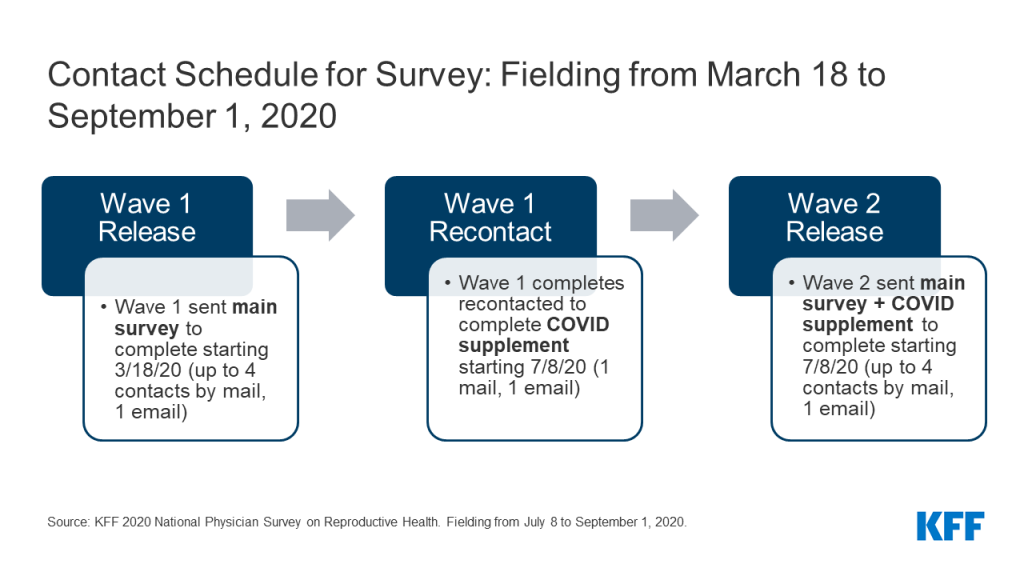
In an effort to maximize the survey completion rate, OBGYNs were contacted by multiple modes (mail, email) and offered the opportunity to complete the questionnaire either on paper or online. Those who completed the paper survey mailed back their responses using a prepaid reply envelope. OBGYNs were sent an up-front cash $2 bill incentive as well as an incentive check for $75 in the first two mailings to encourage respondents to complete the survey. Respondents received up to five communications for the main survey, four postal mailings and one email. The Wave 1 release corresponded with the emergence of the COVID-19 pandemic. As such, after the initial sample release, additional questions were added related to how the COVID-19 pandemic impacted providers. Wave 1 completes were recontacted and asked to complete these questions, with up to two additional communications, one postal and one email. The Wave 2 release was sent the main survey as well as the COVID-19 questions to complete.

Contact Schedule for Survey: Fielding from March 18 to September 1, 2020

Response Rate

The response rate for the OBGYNs was 22.1% and was calculated using AAPOR’s RR3 (53% completes by web, 47% by mail).

Weighting

The sample was weighted in stages. The first stage of the weighting was the application of a base weight to account for the disproportionately-stratified samples and response rates across sample strata. In the second stage of weighting, the OBGYN sample was post-stratified to match the IQVIA frame on key variables. In the final stage, self-reported sample demographics were matched to population parameters from the AMA database. Qualified respondents’ weights were then rebalanced to the total complete sample size. Because a selection of questions about COVID-19 were added to the survey after the first wave of sample had been released, a second weight was calculated based on respondents who received the supplement and was used for analyses of those questions.

Analysis

A series of data quality checks were run, including removing duplicate cases (n = 32). We compared survey responses by key physician and practice demographics. Gender, age and race were determined by physician self-report. Practice type was determined by physician self-report; those who indicated they work in private practice or a health maintenance organization were classified as “private,” while those who indicated they work in a community health center, a family planning clinic or a government operated health department were classified as “public.” Practice size was determined by the number of full-time equivalent (FTE) physicians or advance practice clinicians (small ≤ 3, medium 4-10, large >10). Urbanicity and region were determined by the ZIP code of the practice, using U.S. census definitions and breaks.

Demographics of Survey Respondents for the COVID-19 Supplement

Demographics of Survey Respondents for COVID-19 Supplement
Characteristic Weighted n (%)
Overall OBGYNs855 (100%)
GenderFemale552 (65%)
Male294 (34%)
Age<45312 (37%)
45-54214 (26%)
55-64174 (21%)
65+136 (16%)
RaceWhite587 (69%)
Black84 (10%)
Asian115 (13%)
Other67 (8%)
Practice typePublic133 (16%)
Private704 (82%)
Practice sizeLarge (>10 FTE)176 (21%)
Medium (4-10 FTE)423 (49%)
Small (≤ 3 FTE)241 (28%)
UrbanicityUrban488 (57%)
Suburban166 (19%)
Rural136 (16%)
RegionWest199 (23%)
Northeast168 (20%)
Midwest178 (21%)
South305 (36%)
A small percentage of respondents left demographic questions blank or their responses were unspecified, including n= 8 (1%) for gender, 18 (2%) for age, 3 (<1%) for race, 18 (2%) for practice type, 15 (2%) for practice size, 65 (8%) for urbanicity and 5 (1%) for region.

The Dangers of Vaccine Disillusionment

Published: Dec 2, 2020

In this Foreign Affairs article, Josh Michaud and Jen Kates lay out the challenges in vaccinating people in low-income countries around the world and review early plans to ensure safe and effective vaccines are made available and delivered to people across the globe.

Access to Employer-Sponsored Health Coverage for Same-Sex Spouses: 2020 Update

Published: Nov 30, 2020

Data Note

Background

The legal and policy landscape regarding protections based on sexual orientation and gender identity in health care and other areas has shifted markedly in the last decade. Most recently, on June 15, 2020 in Bostock vs. Clayton County, the Supreme Court of the United States ruled that, under Title VII of the Civil Rights Act of 1964, it is unlawful sex discrimination for an employer (with at least 15 employees) to fire an employee because of their sexual orientation or gender identity. It is likely that this ruling will have implications for employers’ decisions regarding health insurance coverage for employees with same-sex spouses, among other areas of employment.

Using the latest data from our annual Employer Health Benefits Survey (EHBS), we assessed access to employer sponsored health insurance (ESI) coverage for same-sex spouses during the first half of 2020 (prior to the Bostock decision), as well as trends over time; ESI remains the primary way people in the U.S. receive health coverage, either directly or as a spouse or other dependent.1 ,2  We find that, as of mid-2020, while employer offer of same-sex spousal coverage has increased over time, it remains less common than opposite sex spousal coverage.3  These increases follow two other Supreme Court rulings (United States v Windsor and Obergerfell v Hodges) which guaranteed the right to marriage nationwide and paved the way for wider access to health insurance through the workplace (see Appendix).4 

Findings

Firms Offering

In 2020, about three-quarters (74%) of firms offering health insurance coverage to opposite-sex spouses also provided coverage to same-sex spouses, a substantial increase from 43% in 2016 (see Figure 1).5  Of the remaining 26% of firms, 5% reported that they do not offer this benefit (similar to the share in 2018) and 21% reported they had not encountered this as a benefits issue, a finding driven by small employers (those with fewer than 200 workers), who represent the majority of employers overall (97%).6  It is becoming less common for employers to report not encountering this benefits issue.

The likelihood of employers offering both opposite-sex spousal coverage and same-sex spousal coverage increases with firm size (see Figure 2). Among firms offering opposite sex spousal coverage, large firms (those with 200 or more employees) were more likely to offer coverage to same-sex spouses compared to smaller firms (89% vs 73%). Almost nine in ten (89%) large firms with opposite-sex spousal coverage offered such coverage, 9% did not, and 2% reported they had not encountered this benefits issue. Among the largest firms (those with a 1,000 or more workers), 95% offered coverage to same-sex couples. By contrast, just 73% of small employers (3-49 workers) offered coverage to same-sex spouses. Four (4%) percent did not and 23% said they had not encountered it.


Covered Workers

While the majority of firms in the United States are small, the majority of covered workers are employed by large firms (200 or more workers) (see Figure 3).7  In 2020, among employees who worked at firms offering opposite-sex spousal health benefits, 91% also had access to same-sex spousal coverage, up somewhat from 88% in 2018 and 84% in 2016 and 2017 (see Figure 4). Five percent (5%) did not have access to this benefit, and 4% worked at firms who reported they had not encountered this benefits issue.

As with firms offering same-sex spousal coverage, the share of employees with access to this benefit increases with firm size (see Figure 5). Most covered workers (96%) at large firms (those with 200 or more employees) who have access to opposite-sex spousal coverage also have access to same-sex spousal coverage. Just 4% did not, and less than1% worked at firms that reported they had not encountered the issue. Among workers at the largest firms (1,000+ workers), nearly all (98%) had access to same-sex spousal coverage. Those least like to have access were employees at firms with 50-199 workers, 15% of whom did not have same-sex spousal coverage when opposite sex coverage was available.

Workers at small firms offering opposite-sex spousal coverage were less likely to have access to health insurance benefits for same-sex spouses, though a majority did (77%). Nine percent (10%) did not have access to this benefit and another 13% worked at firms that report they have not encountered this issue.

Conclusion

These findings indicate that access to employer coverage for same-sex spouses is increasing in the U.S., though it still is less than access to opposite sex spousal coverage. Coverage varies substantially by employer size, with employees at small firms having less access while those at the largest firms have almost uniform access to this benefit. In some cases, lack of access could be a policy decision, though that appears to be on the decline, with smaller shares of firms saying explicitly that they do not offer same-sex spousal coverage. Moreover, it is likely that the Bostock decision will have further implications for same-sex spousal coverage, with more firms being required to offer this benefit under the sex protections in Title VII. However, Title VII nondiscrimination protections do not apply to the 5% of employees at firms with less than 15 employee. Further, the Bostock court cautioned that employers could potentially secure religious liberty exemptions from extending sex protections to encompass sexual orientation and gender identity and it is yet to be seen how such exemptions interact with Title VII.

Methods

The annual survey was conducted between January and July of 2020 and included 1,765 randomly selected, non-federal public and private firms with three or more employees. In 2020, the response rate among firms which offer health benefits was 22%. The Bostock vs. Clayton County decision was released during the survey fielding period. Fifteen (15%) percent of the covered worker weight and 11% of the employer weight among offering firms was represented by respondents who completed the survey after June 15th. Some firms may have changed their coverage in the month following the Supreme Court decisions. Neither the percent of firms nor the percent of covered workers enrolled at firms who offer same-sex benefits is statistically different before and after June 15. For fuller methods see The Kaiser Family Foundation 2020 Annual Employer Health Benefits Survey available at: www.kff.org/ehbs.

This work was supported in part by the Elton John AIDS Foundation. We value our funders. KFF maintains full editorial control over all of its policy analysis, polling, and journalism activities.

Appendix

Supreme Court Marriage Cases – Background

Prior to the Windsor and Obergefell decisions, same-sex couples faced limited options for obtaining spousal coverage through an employer and when they did, this benefit was treated differently under federal law from benefits received by heterosexually married couples. While some employers offered domestic partner benefits for same-sex partners8  and a growing number of states began to recognize same-sex marriage9 , in 2012, less than half of all workers with health coverage had access to same-sex health benefits.10  In addition, because the federal government did not recognize same-sex marriages, where such benefits were offered, they were not considered tax exempt which meant that same-sex couples faced higher tax burdens compared to heterosexual counterparts.

In June 2013, in Windsor, the Supreme Court overturned a major portion of the Defense of Marriage Act (DOMA) which had, for federal purposes, defined marriage as between a man and a woman. The Windsor decision required federal recognition of same-sex marriages, even if a couple lived in a state that did not recognize same-sex marriage. As a result, employer-sponsored health benefits provided to legally married same-sex couples were now considered tax exempt.11  Windsor, however, did not require states to issue same-sex marriage licenses or recognize those performed elsewhere, leading to a patchwork of recognition across the U.S. and lack of access to legal same-sex marriage for many couples where they lived. In 2015, the Supreme Court’s ruling in Obergefell legalized same-sex marriage nationwide, requiring all states to recognize same-sex marriages and issue marriage licenses to same-sex couples. While neither decision required private employers to offer same-sex spousal coverage if they offered coverage to opposite-sex spouses12 , it was expected that wider access to marriage would lead to greater access to coverage. In fact, one study found that the legalization of same-sex marriage in New York was associated with an increase in employer-sponsored insurance among same-sex couples.13  In addition, an increasing number of states (22 states and DC as of 2019) have protections in place that prohibit employers from discriminating against individuals based on sexual orientation, and presumably would require employers offering opposite-sex spousal coverage to extend that benefit to same-sex spouses.14  Furthermore, employers who refuse to offer same-sex spousal coverage while providing coverage to opposite-sex spouses could face legal challenges. Still, employers are not required to provide same-sex spousal coverage parity to their employees.

Endnotes

  1. Virtually all employers offering health benefits offer spousal coverage, allowing over half those covered by an employer plan to be covered as a dependent. ↩︎
  2. Kaiser Family Foundation. Health Insurance Coverage of the Total Population, 2019. State Health Facts. https://modern.kff.org/other/state-indicator/total-population/ ↩︎
  3. Note: the survey was largely fielded prior to the Bostock decision, see Methods. ↩︎
  4. Additional detail about these Supreme Court cases is available in the Appendix. ↩︎
  5. This increase was driven by the smallest firms so this finding may have some year-to-year volatility based on the mix of small firms sampled. ↩︎
  6. Distribution of Employers, Workers, and Workers Covered by Health Benefits, by firm size, 2020 from The KFF 2020 Employer Health Benefits Survey (2020). Exhibit available here: https://modern.kff.org/report-section/ehbs-2020-survey-design-and-methods/#figurem6 ↩︎
  7. Distribution of Employers, Workers, and Workers Covered by Health Benefits, by firm size, 2020 from KFF 2020 Employer Health Benefits Survey (2020). Exhibit available here: https://modern.kff.org/report-section/ehbs-2020-survey-design-and-methods/#figurem6 ↩︎
  8. The first employer to do so was the Village Voice in 1982. (Appleby, J. May 14, 2012. “Many Businesses Offer Health Benefits To Same-Sex Couples Ahead Of Laws.” PBS Newshour. Retrieved from: http://www.pbs.org/newshour/rundown/many-businesses-offer-health-benefits-to-same-sex-couples-ahead-of-laws/.) ↩︎
  9. Massachusetts became the first state to recognize same-sex marriage in 2003. By June 2013, 12 states and the District of Columbia recognized gay marriage. (See Honan, E. June 26, 2013. “Factbox: List of states that legalized gay marriage.” Reuters. Retrieved from: http://www.reuters.com/article/us-usa-court-gaymarriage-states-idUSBRE95P07A20130626.) ↩︎
  10. Among Large Firms Offering Health Benefits, Percentage That Offer to Unmarried Opposite-Sex and Same-Sex Domestic Partners, 2008-2019, from The KFF 2019 Employer Health Benefits Survey (2019). Exhibit available here: https://modern.kff.org/report-section/ehbs-2019-section-2-health-benefits-offer-rates/#figure213 ↩︎
  11. IRS Revenue Ruling 2013-17,  August 29, 2013. https://www.irs.gov/pub/irs-drop/rr-13-17.pdf. ↩︎
  12. However, the Windsor decision ensures federal employees and contractor employees, have access to same-sex spousal coverage at parity with opposite-sex spousal coverage offerings and the Obergefell ruling means that spousal coverage benefits should be extended to state and municipal employees across the nation to the same degree as their heterosexual counterparts. ↩︎
  13. Gonzales G. “Association of the New York State Marriage Equality Act with Changes in Health Insurance Coverage.” JAMA. 314(7). 2015. ↩︎
  14. Human Rights Campaign. Map of State Laws and Policies- Statewide Employment Laws and Policies. Available at: http://www.hrc.org/state_maps. Accessed 10/15/20. ↩︎

This week marks a bleak milestone in the pandemic’s effect on residents and staff in long-term care facilities across the country. According to our latest analysis of state-reported data, COVID-19 has claimed the lives of more than 100,000 long-term care facility residents and staff as of the last week in November. This finding comes at a time when public health experts are predicting a surge in cases after holiday gatherings and increased time indoors due to winter weather, which will have ripple effects on hospitals and nursing homes, given the close relationship between community spread and cases in congregate care settings. As the nation braces for the fallout of the holiday, recent data on deaths in long-term care facilities highlight the ongoing disproportionate impact on this high-risk population. (more…)

This week marks a bleak milestone in the pandemic’s effect on residents and staff in long-term care facilities across the country. According to our latest analysis of state-reported data, COVID-19 has claimed the lives of more than 100,000 long-term care facility residents and staff as of the last week in November. This finding comes at a time when public health experts are predicting a surge in cases after holiday gatherings and increased time indoors due to winter weather, which will have ripple effects on hospitals and nursing homes, given the close relationship between community spread and cases in congregate care settings. As the nation braces for the fallout of the holiday, recent data on deaths in long-term care facilities highlight the ongoing disproportionate impact on this high-risk population. (more…)

This week marks a bleak milestone in the pandemic’s effect on residents and staff in long-term care facilities across the country. According to our latest analysis of state-reported data, COVID-19 has claimed the lives of more than 100,000 long-term care facility residents and staff as of the last week in November. This finding comes at a time when public health experts are predicting a surge in cases after holiday gatherings and increased time indoors due to winter weather, which will have ripple effects on hospitals and nursing homes, given the close relationship between community spread and cases in congregate care settings. As the nation braces for the fallout of the holiday, recent data on deaths in long-term care facilities highlight the ongoing disproportionate impact on this high-risk population. (more…)

Millions of Uninsured Americans are Eligible for Free ACA Health Insurance

Authors: Cynthia Cox and Daniel McDermott
Published: Nov 24, 2020

This year has brought millions of job losses due to the COVID-19 pandemic. As cases now spike again and some states reverse course to limit non-essential activities, the next couple of months could bring new, permanent employment losses. As difficult as the next few months will be, one bit of good news is that most uninsured people are eligible for financial assistance under the Affordable Care Act (ACA), and they can sign up now while ACA Open Enrollment for 2021 lasts through December 15, 2020.

.There is no reliable measure of the current uninsured rate, but we do know there were 29 million uninsured people in the United States as of 2019. That number has almost certainly grown in 2020 due to the COVID-19 pandemic and subsequent economic recession, but it will be months before we have reliable government surveys to measure the true impact.

As the chart below shows, most of the uninsured in a typical year are eligible for financial help to buy coverage, and of those, most are actually eligible for a free or nearly free plan. Before the pandemic, about one in four uninsured people were eligible for Medicaid and another third were eligible for financial assistance on the Marketplaces, meaning, in total, 57% of the uninsured could get financial help to access coverage. In fact, most of those eligible for help can get free (or nearly free) insurance coverage. The 24% of uninsured people who are eligible for Medicaid (6.7 million people) generally would pay no premium to sign up, and another 16% of the uninsured (4.5 million people) are eligible for a Bronze plan with a $0 premium.

In other words, 4 out of 10 uninsured people – about 11.2 million people in 2018 and likely at least that many now – in the U.S. can get virtually free insurance, largely under the ACA. (Another 17%, or 4.7 million, can get insurance for significantly reduced price, also under the ACA). As our earlier estimates have found that the vast majority of those losing job-based coverage in 2020 are eligible for ACA coverage, the number of uninsured eligible for free coverage is likely even larger now.

As shown above, about 4.5 million uninsured people are eligible for a zero-premium Bronze plan on the ACA Marketplace (ranging from 4.2 – 4.7 million in the last three years as premiums have held mostly flat). Deductibles in these plans are high, typically about $6,500 for a single person. However, many uninsured consumers who qualify for a zero-premium bronze plan are also eligible for cost sharing reductions, which bring down out-of-pocket costs for low-income enrollees who choose to enroll in a silver plan. Most people eligible for cost-sharing assistance would be best off signing up for a Silver plan with a monthly premium payment (which premium subsidies substantially reduce).

Nonetheless, if the options are to either remain uninsured or pay nothing to sign up for a Bronze plan, the choice would likely be clear to most people, if they were aware of it. Few people will ever reach a $6,500 deductible, so worst-case scenario, enrollees end up paying fully out-of-pocket for all of their health care, just as they would if they were uninsured (though they would at least benefit from lower negotiated rates from their insurer). Those who do have that high level of health spending are clearly sick enough that they would benefit greatly from the financial protection that comes with health insurance. Given that we are in the midst of a pandemic, most potential enrollees cannot predict whether they will be in that group that has high health spending. A typical hospital admission in the U.S. is $24,000 and an admission for COVID-19 treatment could be substantially more expensive. Incurring $6,500 of medical expenses before a plan’s full benefits kick in is a much better alternative to risking tens of thousands of dollars of medical debt, especially if there is no cost to sign up.

Like all ACA-compliant health plans, Bronze plans come with other valuable benefits. All plans must cover the full cost of a wide range of preventive care services for their enrollees, without applying a deductible or copayment. These services include many forms of health screenings and immunizations, as well as contraception. Additionally, some bronze plans voluntarily cover some primary care services before the deductible.

Unfortunately, a large share of the population is unaware that the ACA offers financial assistance to buy insurance. Many people who lost employer-based coverage during the pandemic may also be unfamiliar with these options, since they have never had a reason to interact with the Marketplaces or Medicaid. The Trump administration has also reduced funding for marketing and outreach activities by nearly 90% and cut funding for Navigator programs that help enroll people in coverage by 84%. President-elect Biden has vowed to reverse these actions, and may tie that outreach to an extended Open Enrollment or broader Special Enrollment opportunities. Under Trump Administration rules, the federal Open Enrollment period runs from November 1 through December 15, but it extends into January in most states that operate their own health insurance exchanges. There is no deadline to sign up for Medicaid.

Two weeks into the current Marketplace Open Enrollment period for 2021, signups in federal exchange states appear strong, but the vast majority of signups are from returning enrollees. We still are not seeing a surge of signups from new enrollees relative to past years, but many people who are uninsured may be surprised at what they find if they look at their options.

CMS’s 2020 Final Medicaid Managed Care Rule: A Summary of Major Changes

Authors: Elizabeth Hinton and MaryBeth Musumeci
Published: Nov 23, 2020

Executive Summary

Managed care is the predominant Medicaid delivery system in most states, with over two-thirds of beneficiaries enrolled in comprehensive risk-based managed care organizations as of July 2019, and millions of others covered by limited-benefit risk-based plans or primary care case management programs. On November 13, 2020, the Centers for Medicare and Medicaid Services (CMS) finalized revisions to the Medicaid managed care regulations which were proposed in November 2018. CMS previously finalized a major revision to these regulations in 2016, under the Obama Administration. A few months after taking office, the HHS Secretary and CMS Administrator under the Trump Administration released a letter to state governors noting their plan to conduct a “full review of [Medicaid] managed care regulations to prioritize beneficiary outcomes and state priorities.” CMS then released a June 2017 Informational Bulletin, indicating it would use “enforcement discretion” to work with states on achieving compliance with many provisions of the 2016 final rule while the rule was under review.

Most of the new provisions take effect on December 14, 2020, which means that the incoming Biden Administration would have to issue a new notice of proposed rule-making, with a reasonable justification for any changes, to modify the new rule. The changes, including modifications to network adequacy standards and relaxed requirements for accessibility of written health plan materials for people with disabilities and Limited English Proficiency, take effect in the midst of the COVID-19 public health emergency, when states are using various Medicaid emergency authorities to facilitate access to coverage and care during the pandemic.

The November 2020 final rule is not a wholesale revision of the 2016 regulations but adopts changes in areas including network adequacy, beneficiary protections, quality oversight, and rates and payment. Most changes were finalized as originally proposed with very few changes between the Trump Administration’s proposed to final rule. Key changes between the new Trump Administration rule and prior Obama Administration rule include the following:

Network adequacy. The 2020 final rule removes the requirement that states use time and distance standards to ensure provider network adequacy and instead lets states choose any quantitative standard.

Beneficiary protections. The 2020 final rule relaxes requirements for accessibility of written materials for people with disabilities and those with limited English proficiency; modifies some provider directory requirements; and changes the timeframe within which plans must tell enrollees that a provider is leaving the network. It also lets states shorten the timeframe for enrollees to request a state fair hearing and eliminates the requirement for enrollees to submit a written appeal after an oral appeal.

Quality oversight. The 2020 final rule revises the requirement that a state’s alternative managed care quality rating system (QRS) yield information substantially comparable to the CMS-developed QRS; clarifies that health plan encounter data must include allowed and paid amounts; allows but does not require states to broaden the definition of disability when addressing health disparities under states’ managed care quality strategies; and requires states to annually post online which health plans are exempt from external quality review.

Rates and payment. The 2020 final rule allows states to set capitation rate cell ranges instead of a single rate per cell. It also expressly prohibits states from varying capitation rates based on the amount of federal financial participation for covered populations in a manner that increases federal costs. Under the final rule, states also cannot retroactively add or modify risk-sharing mechanisms after the start of a rating period. The final rule recognizes two minimum fee schedules for directed payment arrangements from health plans to providers; codifies sub-regulatory guidance for multi-year approvals of value-based purchasing models; and allows states to make new supplemental provider pass-through payments for up to three years when transitioning populations or services from fee-for-service to managed care.

Table 1: Key Provisions in CMS’s November 2020 Medicaid Managed Care Rule
Topic2016 Final Rule2020 Final Rule (effective 12/14/20, unless otherwise noted)
Network adequacyRequired states to develop and enforce enrollee travel time and distance standards.Allows states to choose any quantitative standard.
Beneficiary informationRequired taglines in large print and locally prevalent non-English languages on all written materials.

Required paper plan directories to be updated monthly.

Established timeframe for plans to notify enrollees when provider leaves network.

Requires taglines only on written materials determined critical to obtaining services.

Requires paper directories to be updated quarterly if mobile-enabled electronic version is available.

Modifies timeframe within which plans must notify enrollees when provider leaves network.

AppealsRequired states to provide enrollees with 120 days to request a state fair hearing after the health plan appeal notice of resolution.

Required enrollees to submit a written signed appeal after an oral appeal.

Allows states to provide enrollees with 90 to 120 days to request a state fair hearing after the health plan appeal notice of resolution.

Eliminates requirement for written signed appeal after oral appeal.

Quality rating systemAllowed states to adopt an alternative quality rating system (QRS) that yields information substantially comparable to the CMS-developed QRS.Requires a state alternative QRS to yield information substantially comparable to the CMS-developed QRS only to the extent feasible.
Encounter dataConditioned federal matching funds on state reporting of encounter data.Clarifies that plan submission of encounter data must include allowed and paid amounts.
Quality strategyRequired state quality strategy to address health disparities for enrollees with disabilities, identified as those who are eligible for Medicaid based on a disability.Allows states to adopt a broader definition of disability when addressing health disparities In state quality strategy, effective for all quality strategies submitted after 7/1/21.
External quality reviewRequired states to have an external quality review (EQR) for health plans.Requires states to annually post online which health plans are exempt from EQR.
Capitation rate developmentRequired states to set a single rate per cell.Allows states to set a rate range per cell, effective for contract rating periods beginning on or after 7/1/21.

Expressly prohibits states from varying rates based on the amount of federal financial participation for a covered population in a way that increases federal costs.

Clarifies that states can adjust certified rates within a rating period by +/-1.5% without submitting a revised certification to CMS.

Prohibits states from retroactively adding or modifying risk-sharing mechanisms after the start of the rating period.

PaymentAllowed states to adopt minimum or maximum fee schedules for plan payments to providers.

Phases out pass-throughs of state supplemental provider payments in capitation rates.

Recognizes 2 minimum fee schedules for states’ directed payment arrangements from health plans to providers.

Allows new pass-throughs of supplemental provider payments up to 3 years when states are transitioning populations or services from fee-for-service to managed care, effective for rating periods beginning on or after 7/1/21.

Codifies guidance on multi-year approvals of value-based purchasing models.

Issue Brief

Introduction

On November 13, 2020, the Centers for Medicare and Medicaid Services (CMS) finalized changes to the Medicaid managed care regulations.1  CMS last revised these regulations in 2016 (“the 2016 final rule”) under the Obama Administration.2  The 2016 final rule represented a major revision and modernization of federal regulations in this area, which had not been updated since 2002.3  CMS’s major goals in issuing the 2016 final rule were to align Medicaid managed care requirements with other major health coverage programs where appropriate; enhance the beneficiary experience of care and strengthen beneficiary protections; strengthen actuarial soundness payment provisions and program integrity; and promote quality of care.4 

In March 2017, the HHS Secretary and CMS Administrator under the Trump Administration released a letter to state governors noting the new Administration’s plan to conduct a “full review of [Medicaid] managed care regulations to prioritize beneficiary outcomes and state priorities.”5  CMS then released an Informational Bulletin in June 2017, indicating it would use “enforcement discretion” to work with states on achieving compliance with the 2016 final rule, except for specific areas that “have significant federal fiscal implications.”6  CMS’s stated goals in releasing the November 2018 Notice of Proposed Rulemaking (NPRM) to revise the 2016 final rule were to streamline the managed care regulatory framework; reduce state and federal administrative burden; support state flexibility; and promote transparency, flexibility, and innovation in care delivery. The new regulations are not a wholesale revision of the 2016 final rule, but they include changes in the following key areas, which are summarized in this issue brief and Table 1: network adequacy, beneficiary protections, quality oversight, and rate setting and payment.7  Most of the new provisions take effect on December 14, 2020. Exceptions are noted in the discussion below and Table 1. Most changes were finalized as originally proposed.

Background

According to the most current national data, as of July 1, 2019, 54.0 million Medicaid beneficiaries, or 69%, were enrolled in comprehensive risk-based managed care organizations (MCOs).8  As of July 1, 2019, 39 states and DC contract with MCOs; in many of these states, at least 75% of all beneficiaries are enrolled in these health plans.9  While MCOs are the predominant form of Medicaid managed care, millions of other beneficiaries receive at least some Medicaid services, such as behavioral health or dental care, through limited-benefit risk-based plans, known as prepaid inpatient health plans (PIHPs) and prepaid ambulatory health plans (PAHPs). Several million beneficiaries are also enrolled in primary care case management (PCCM) programs that range from basic managed fee-for-service (FFS) models to more enhanced models.10 

Key Changes in the 2020 Final Rule

Network adequacy

The 2020 final rule removes the requirement that states use time and distance standards to ensure health plans’ provider network adequacy and instead allows states to choose another quantitative standard. Health plan efforts to recruit and maintain their provider networks can play a crucial role in determining enrollees’ ability to access covered services. The 2016 final rule required states to develop and enforce enrollee travel time and distance standards for certain specified provider types as well as additional providers to be determined by CMS, for health plan contracts beginning on or after July 2018. The new rule instead allows states to use an alternative standard such as minimum provider-to-enrollee ratios, maximum travel time or distance to providers, minimum percentage of contracting providers accepting new patients, maximum wait times for an appointment, or hours of operation requirements. The new rule also allows states to use any quantitative network adequacy standard for long-term services and supports providers to whom enrollees must travel to receive services, eliminating the requirement in the 2016 final rule for states to develop time and distance standards for these providers. Additionally, the new rule allows states to define the specialists to which network adequacy standards apply. Finally, the new rule eliminates the “other provider type” language, curtailing CMS’s ability to add to the list of providers subject to network adequacy standards without further rule-making.

Beneficiary protections

BENEFICIARY INFORMATION

The 2020 final rule relaxes the requirements for accessibility of written materials for people with disabilities and those with limited English proficiency. The 2016 final rule required taglines in large print and in locally prevalent non-English languages on all written materials (e.g., enrollee handbooks, provider directories, enrollee notices) to explain the availability of interpretation and translation services and to provide the toll-free choice counseling number and the plan’s toll-free customer service number, for plan contracts beginning on or after July 2017. The new rule only requires taglines on written materials for potential enrollees that “are critical to obtaining services.” The final rule also changes the definition of “large print” from at least 18-point font to font that is “conspicuously visible.”The 2020 final rule eliminates the requirement to identify in health plan provider directories whether a provider has completed cultural competence training and decreases the frequency of updating paper provider directories. The 2016 final rule required plan directories to indicate whether a provider has completed cultural competence training and specified that paper directories must be updated at least monthly, for plan contracts beginning on or after July 2017. The new rule only requires monthly updates to paper directories if a mobile-enabled, electronic directory is not available; otherwise, updates are required quarterly.

The 2020 final rule changes the timeframe within which plans must tell enrollees that their provider is leaving the plan network. The 2016 final rule required plans to make a good faith effort to give written notice of termination of a contracted provider to enrollees within 15 calendar days after receipt or issuance of the termination notice, for plan contracts beginning on or after July 2017. The new rule changes this requirement to the later of 30 calendar days prior to the effective termination date, or 15 calendar days after receipt or issuance of the termination notice.

APPEALS

The 2020 final rule allows states to shorten the timeframe within which an enrollee can request a state fair hearing to appeal a health plan decision to deny or terminate covered services. The 2016 final rule provided enrollees with 120 days from the plan’s notice of resolution of the internal plan appeal to request a state fair hearing, for contracts beginning on or after July 2017. The new rule lets states set the timeframe for enrollees to request a fair hearing between 90 to 120 days, to allow states to align this period with the timeframe for enrollees to appeal decisions covered under Medicaid fee-for-service.

The 2020 final rule also eliminates the requirement for beneficiaries to submit a written, signed appeal after an oral appeal is submitted. The 2016 final rule required enrollees to submit a written, signed appeal following an oral appeal, for contracts beginning on or after July 2017.

Quality oversight

QUALITY RATING SYSTEM

The 2020 final rule revises the requirement that states’ alternative managed care quality rating systems (QRS) yield information substantially comparable to the CMS-developed QRS, instead requiring this only “to the extent feasible.” CMS is to develop performance measures and a methodology for a managed care QRS framework to rate health plans and enable comparisons across states.11  States also can implement an alternative QRS with CMS approval. Under the new rule, a state’s alternative QRS must include the mandatory performance measures to be established by CMS, although the alternative QRS has to yield information substantially comparable to the CMS-developed QRS only to the extent feasible. CMS will issue sub-regulatory guidance specifying the criteria and process for determining “substantial comparability.” CMS did not finalized its proposal that would have eliminated the requirement that states obtain prior approval from CMS before implementing an alternative QRS.

ENCOUNTER DATA

The 2020 final rule clarifies that health plan submission of encounter data must include allowed and paid amounts. CMS underscored the importance of these data for monitoring and administration of the Medicaid program, particularly for capitation rate setting and review, financial management, program integrity, and utilization analysis. The 2016 final rule conditioned federal matching funds for Medicaid managed care payments to states on state reporting of validated, complete, and timely enrollee encounter data, for contracts beginning on or after July 2018.

QUALITY STRATEGY

The 2020 final rule allows states to expand the definition of “disability status” when addressing health disparities in the state’s managed care quality strategy.  Under the 2016 final rule, states must have a written quality strategy for assessing and improving the quality of care and services furnished by health plans and PCCM entities, for health plan contracts effective on or after July 2018. Among other elements, state quality strategies must describe their plans to reduce health disparities based on certain demographic factors including disability. The 2016 regulations identified enrollees with a disability based on whether they qualify for Medicaid in a disability-related eligibility pathway, and the new rule requires states to adopt this standard at minimum in their definition of disability status. Under the 2020 final rule, states must include in their quality strategy the state’s definition of disability status and how the state will determine whether an enrollee meets that standard, including the data sources used. This change is effective for all quality strategies submitted after July 1, 2021. CMS proposed but did not finalize a broader definition of “disability,” which would not have been limited to individuals who qualify for Medicaid based on a disability and would have recognized that enrollees with disabilities may qualify for Medicaid on another basis (such as low income).

EXTERNAL QUALITY REVIEW

The 2020 final rule requires that states annually post online which health plans are exempt from external quality review (EQR) and specify when the exemption began. Under the 2016 final rule, states must ensure that a qualified organization performs an annual EQR for each health plan or PCCM entity to assess quality, timeliness, and access to health care services, for contracts beginning on or after July 2018. CMS also adopted a requirement for states to identify exempted plans in their annual EQR technical report, effective for all reports submitted on or after July 1, 2021.

Rate setting and payment

CAPITATION RATE DEVELOPMENT

The 2020 final rule allows states to set capitation rate cell ranges12  instead of a single rate per cell, effective for rating periods beginning on or after July 1, 2021. The allowable range is 5 percent, or +/- 2.5 percent from the midpoint. The 2016 final rule required a single rate per cell for contracts beginning on or after July 2016. In support of the change, CMS noted that the single rate requirement could diminish a state’s ability to obtain the best rates. To address concerns about transparency, state websites must post certain information about the development of rate ranges.13  States also must document the rates payable to health plans at points within the range prior to the start of the rating period. CMS will provide additional guidance on how to implement this requirement. The final rule also allows states to change capitation rates within the range up to 1 percent during the rating year without submitting a new rate certification, if the change is consistent with a modification of the health plan contract and other rate development criteria are met.

The 2020 final rule expressly prohibits states from varying capitation rates based on the amount of federal financial participation for a covered population in a manner that increases federal costs. CMS did not finalize its proposed list of certain rate development practices that increase federal costs and therefore are prohibited. While CMS continues to believe that those practices generally increase federal costs, it acknowledged that it cannot predict every future scenario where such practices nevertheless could be actuarially appropriate.14  The final rule clarifies that rate development standards must be based on actual cost differences in providing covered services to covered populations and that compliance with this requirement is evaluated program-wide, across all managed care contracts and covered populations. During rate review, CMS may require states to provide written documentation and justification that any differences in the assumptions, methodologies, and factors used to develop capitation rates represent actual cost differences based on the characteristics or mix of covered services or populations.

The 2020 final rule clarifies that states may adjust certified capitation rates within a rating period by +/-1.5%, without submitting a revised rate certification or justification to CMS. CMS has determined that rates will remain actuarially sound if adjusted within this range. Under the final rule, CMS can specifically request supporting documentation from states. Notably, states that choose to use rate ranges as described above, instead of a single rate per cell, cannot also apply the +/-1.5% rate adjustment provision. In addition, the 2020 final rule provides that CMS will issue guidance at least annually that describes the federal standards for capitation rate development and related documentation requirements.

The 2020 final rule prohibits states from retroactively adding or modifying risk-sharing mechanisms after the start of the rating period.15  CMS also requires states to document risk-sharing mechanisms in health plan contracts and rate certification documents prior to the start of the rating period. In the preamble to the final rule, CMS noted that states can adopt retroactive rate adjustments (as opposed to changes to risk-sharing mechanisms) when necessary to address disease outbreaks, launches of high-cost prescription drugs, or other unforeseen circumstances that increase benefit costs mid-year.16 

PAYMENT

The 2020 final rule recognizes two distinct minimum fee schedules for states’ directed payment arrangements from health plans to providers. The 2016 final rule allowed states to adopt a minimum or maximum fee schedule for health plan payments to network providers that provide a particular service, for contracts beginning on or after July 2017. The first minimum fee schedule adopted by the new final rule applies to directed payment arrangements that use state plan approved rates. These rates are defined as amounts calculated for specific services provided to an individual under the approved state plan methodology and excluding supplemental payments. The other minimum fee schedule adopted by the new final rule applies to directed payment arrangements that use rates other than state plan approved rates for network providers that provide a particular service. CMS did not finalize its proposal that would have allowed states to direct plans to adopt a cost-based rate, a Medicare equivalent rate, a commercial rate, or another market-based rate. The 2020 final rule also eliminates the requirement for CMS prior approval of states’ directed payment arrangements based on state plan approved rates, as CMS believes this is duplicative of the state plan amendment process. Minimum fee schedules are approved for one rating period at a time.

CMS proposed but did not finalize changes that would have allowed states to direct the amount or frequency of plan expenditures to providers as part of delivery system or payment reform initiatives; these activities remain prohibited as established under the 2016 rule.  While CMS initially believed that prohibiting states from directing the amount or frequency of health plan expenditures may have created unintended barriers to the implementation of innovative payment models, like global payment initiatives, it ultimately decided that health plans should retain discretion in managing risk and their provider contracts, even when states require plans to adopt specific parameters for provider payment through delivery system or payment reform initiatives.

The 2020 final rule codifies sub-regulatory policy guidance governing multi-year approvals of value-based purchasing models or those tied to larger delivery system reform efforts. Specifically, the final regulation adopts the criteria in the November 2017 CMCS Informational Bulletin. Approvals are for one rating period unless the state explicitly describes the arrangement as multi-year, describes its implementation and evaluation plan, and affirms that it will not make changes to payment methodology or magnitude without prior CMS approval. The 2016 final rule described states’ authority to require managed care plans to implement value-based purchasing models for provider payment (such as pay-for-performance arrangements, bundled payments, or other models intended to reward value over volume) or participate in multi-payer or Medicaid-specific delivery system reform or performance improvement initiatives. In the preamble to the 2020 final rule, CMS said that it is reviewing state-directed payments because it has seen state proposals for significant changes to provider reimbursement that could affect program spending and may issue further guidance or regulations based on its review.

The 2020 final rule allows states to make new supplemental provider pass-through payments up to three years when states are transitioning populations or services from fee-for-service to managed care.17  This change takes effect for pass-through payments to hospitals, physicians, and nursing facilities in managed care rating periods starting on or after July 1, 2021. The provisions of the 2016 final rule that phase out existing pass-throughs of state supplemental provider payments in the capitation rates paid to managed care plans continue to apply. CMS believes that because supplemental payments are not tied to the provision of services covered under plan contracts, they therefore conflict with the actuarial soundness requirement.18  Specifically, the 2016 rule phases out pass-through payments that existed in contracts and rate certifications for the rating period including July 1, 2016 to hospitals from 2017-2027, and to physicians and nursing facilities from 2017-2022.

The 2020 final rule allows states to specify how health plans covering enrollees dually eligible for Medicare and Medicaid receive crossover claims, instead of requiring plans to have a coordination of benefits agreement and participate in the automated Medicare process. Crossover claims arise for dual eligible beneficiaries because Medicaid may cover the portion of the service charge that is not covered by Medicare. The 2016 final rule required health plans that cover dually eligible enrollees to participate in the Medicare automated crossover claim process in an effort to simplify billing for providers. The new rule allows states to retain that process or adopt an alternative process, such as the state forwarding crossover claims to the appropriate health plan. CMS said that some states indicated that an alternative process enables them to ensure that health plans receive only the claims for which they are responsible in situations where an enrollee is in more than one plan and/or FFS for different benefits or where the enrollee has changed plans.

CMS did not change the “institution for mental disease” (IMD) “in lieu of” authority codified in the 2016 final rule.19  CMS requested but did not receive any public comment on additional currently available data sources that it could review in support of any changes. Under the 2016 final rule, states can receive federal matching funds for capitation payments made to health plans on behalf of enrollees ages 21-64 who receive psychiatric or substance use disorder (SUD) inpatient or crisis residential services in an IMD for up to 15 days in a month, as services covered “in lieu of” those under the Medicaid state plan benefit package.20  This is an exception to the general federal prohibition against Medicaid payments for services for non-elderly adults in IMDs. Instead of a regulatory change, CMS notes that states may continue to apply for Section 1115 demonstration waivers to receive federal Medicaid matching funds for longer IMD SUD stays.21  Additionally, the federal Substance Use Disorder Prevention that Promotes Opioid Recovery and Treatment for Patients and Communities (SUPPORT) Act created a new option from October 2019 through September 2023, for states to receive federal Medicaid payments for non-elderly adults with SUD in an IMD up to 30 days per year. In November 2018, CMS also issued new guidance inviting states to apply for Section 1115 waivers of the federal IMD payment exclusion for services for individuals with serious mental health conditions.22 

Looking Ahead

Most provisions of the new rule take effect on December 14, 2020, which means that the incoming Biden Administration would have to issue a new notice of proposed rule-making, with a reasonable justification for any changes, in order to modify the 2020 final rule. While the new final rule is not a wholescale revision of the comprehensive 2016 final rule, it does make changes in key areas, including network adequacy standards, beneficiary information and appeals, quality oversight, and capitation rate development and provider payment. Federal rules governing Medicaid managed care are important as managed care remains the predominant care delivery system in most states. The changes, including modifications to network adequacy standards and relaxed requirements for accessibility of written health plan materials for people with disabilities and those with Limited English Proficiency, take effect in the midst of the COVID-19 public health emergency, at a time when states are using Medicaid emergency authorities to facilitate access to coverage and care during the pandemic.
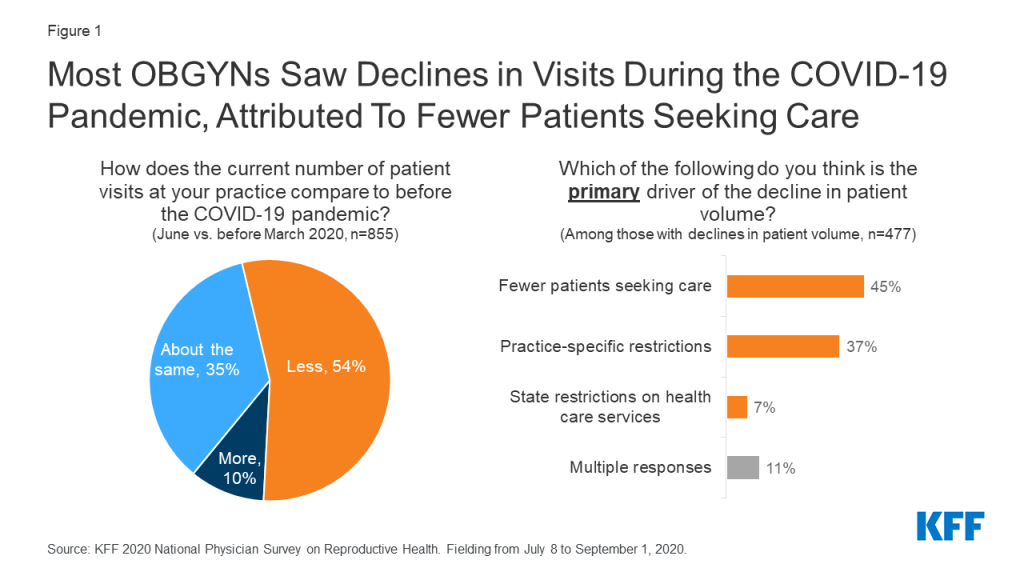
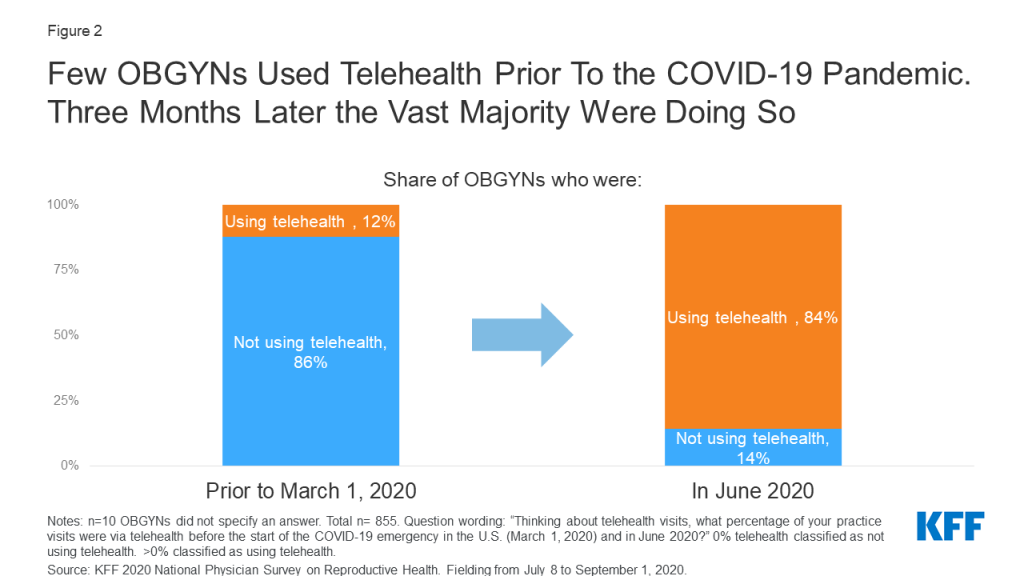
Endnotes

  1. 85 Fed. Reg. 72754-72844 (Nov. 13, 2020), https://www.govinfo.gov/content/pkg/FR-2020-11-13/pdf/2020-24758.pdf. The proposed changes were published at 83 Fed. Reg. 57264-57299 (Nov. 14, 2018), https://www.federalregister.gov/documents/2018/11/14/2018-24626/medicaid-program-medicaid-and-childrens-health-insurance-plan-chip-managed-care. ↩︎
  2. 81 Fed. Reg. 27498-27901 (May 6, 2016), https://www.federalregister.gov/articles/2016/05/06/2016-09581/medicaidand-childrens-health-insurance-program-chip-programs-medicaid-managed-care-chip-delivered. ↩︎
  3. For a summary of the 2016 final rule, see KFF, CMS’s Final Rule on Medicaid Managed Care: A Summary of Major Provisions (June 2016), https://modern.kff.org/report-section/cmss-final-rule-on-medicaid-managed-care-issue-brief/. ↩︎
  4. Most provisions were effective July 2016, although some provisions became effective later. See id.  ↩︎
  5. Letter from HHS Sec’y Thomas E. Price and CMS Administrator Seema Verma to governors (March 14, 2017), https://www.hhs.gov/about/news/2017/03/14/secretary-price-and-cms-administrator-verma-take-first-joint-action.html. ↩︎
  6. CMCS Informational Bulletin, Medicaid Managed Care Regulations with July 1, 2017 Compliance Dates (June 30, 2017), https://www.medicaid.gov/federal-policy-guidance/downloads/cib063017.pdf. ↩︎
  7. The November 2020 final rule also includes some proposals related to CHIP which are outside of the scope of this brief. ↩︎
  8. KFF analysis of the Centers for Medicare and Medicaid Services’ Medicaid Managed Care Enrollment Reports, 2020, https://modern.kff.org/other/state-indicator/total-medicaid-mco-enrollment/?currentTimeframe=0&sortModel=%7B%22colId%22:%22Location%22,%22sort%22:%22asc%22%7D. ↩︎
  9. KFF, State Health Facts, Share of Medicaid Population Covered under Different Delivery Systems (July 1, 2019), https://modern.kff.org/medicaid/state-indicator/share-of-medicaid-population-covered-under-different-delivery-systems/. ↩︎
  10. This brief generally refers to “health plans.” Provisions in the proposed rule generally apply to MCOs, and some provisions also apply to PIHPs, PAHPs, and PCCM entities. ↩︎
  11. CMS is continuing its stakeholder engagement process and plans a future quality rating system specific rulemaking. ↩︎
  12. Rate cell ranges are allowed provided the following conditions are met: 1) the rate certification identifies and justifies the assumptions, data, and methods specific to the upper and lower bounds of the rate range; 2) both the upper and lower bounds of the rate range are certified as actuarially sound; 3) the upper bound does not exceed the lower bound multiplied by 1.05; 4) the rate certification documents the state’s criteria for paying health plans at different points within the rate range; and 5) the state does not use as criteria for payment for different points within the rate range the willingness or agreement of plans or their network providers to enter into intergovernmental transfer (IGT) agreements or the amount of funding plans or their network providers provide through IGT agreements. ↩︎
  13. States must post the upper and lower bounds of each rate cell; a description of all assumptions that vary between the upper and lower bounds of each rate cell, including the specific assumptions used for the upper and lower bounds; and a description of the data and methodologies that vary between the upper and lower bounds of each rate cell, including the specific data and methodologies uses for the upper and lower bounds. ↩︎
  14. These practices include 1) using a profit, operating, or risk margin to develop capitation rates that is higher than the margin used to develop capitation rates for the covered population, or contract, with the lowest average rate of FFP; 2) factoring into the development of capitation rates the additional cost of contractually required provider fee schedules or minimum levels of provider reimbursement, above the cost of similar provider fee schedules, or minimum levels of provider reimbursement, used to develop capitation rates for the covered population, or contract, with the lowest average rate of FFP; and 3) lowering the remittance threshold for a medical loss ratio for any covered population, or contract, below the threshold used for the covered population, or contract, with the lowest average rate of FFP. ↩︎
  15. The 2020 final rule provides a non-exhaustive list of risk-sharing mechanisms, including reinsurance, risk corridors, and stop-loss limits. In the preamble to the 2020 final rule, CMS also confirmed that a minimum medical loss ratio with a remittance and additional restrictions on profits or contractual profit caps are considered risk-sharing mechanisms under the final rule. ↩︎
  16. Retroactive rate adjustments must be supported by a rationale; the data, assumptions, and methodologies used to determine the magnitude of the adjustment must be adequately described in enough detail for CMS or an actuary to determine that the adjustment is reasonable; certified by an actuary in a revised rate certification; and submitted as a contract amendment for CMS approval. ↩︎
  17. CMS clarified that disproportionate share hospital (DSH) and graduate medical education (GME) payments are not considered supplemental payments. ↩︎
  18. On January 17, 2018 CMS posted a final rule clarifying pass-through payment transition periods and maximum allowable pass-through payments. See 82 Fed. Reg. 5415-5429 (Jan. 18, 2017), https://www.federalregister.gov/documents/2017/01/18/2017-00916/medicaid-program-the-use-of-new-or-increased-pass-through-payments-in-medicaid-managed-care-delivery. ↩︎
  19. For background about the Medicaid IMD payment exclusion, see KFF, State Options for Medicaid Coverage of Inpatient Behavioral Health Services (Nov. 2019), https://modern.kff.org/medicaid/report/state-options-for-medicaid-coverage-of-inpatient-behavioral-health-services/. ↩︎
  20. To receive federal matching funds for “in lieu of” services, a state must identify the services in the plan’s contract and determine that they are medically appropriate and cost-effective. In lieu of services are offered at plan option, and an enrollee cannot be required to use them. KFF, CMS’s Final Rule on Medicaid Managed Care:  A Summary of Major Provisions (June 2016), https://modern.kff.org/report-section/cmss-final-rule-on-medicaid-managed-care-issue-brief/. ↩︎
  21. In July 2015, the CMS issued a state Medicaid director letter describing Section 1115 IMD SUD payment waivers. In November 2017, the CMS issued a state Medicaid director letter revising the 2015 guidance. For current IMD state waiver activity, see KFF, Medicaid Waiver Tracker:  Approved and Pending Section 1115 Waivers by State (Nov. 13, 2020), https://modern.kff.org/medicaid/issue-brief/medicaid-waiver-tracker-approved-and-pending-section-1115-waivers-by-state/. ↩︎
  22. CMS, SMD #18-011, Opportunities to Design Innovative Service Delivery Systems for Adults with a Serious Mental Illness or Children with a Serious Emotional Disturbance (Nov. 13, 2018), https://www.medicaid.gov/federal-policy-guidance/downloads/smd18011.pdf.   ↩︎
News Release

For 3rd Year in a Row, More Insurers are Entering the ACA Marketplaces, Creating More Options for Consumers

Published: Nov 23, 2020

For the third straight year, more insurers are entering the Affordable Care Act’s marketplaces and expanding their service areas, creating more options for consumers seeking to buy their own insurance for 2021, a new KFF analysis finds. 

The analysis finds 30 insurers joining the marketplace across 20 states, and another 61 insurers are expanding their services within states that they already served. More than a third of counties (1,207, or 38%) will have more insurers serving the marketplaces, while only a few counties (12, or 0.4%) will see a net decrease.

The boom among participating insurers in recent years has sharply increased consumers’ options and dramatically reduced one-insurer markets.  

More than three-quarters (78%) of marketplace enrollees now will be able to choose from at least three insurers, up from about half (48%) in 2018. At the other end, just 3% of enrollees only will have a single insurer serving their county, down from a quarter (26%) in 2018.

Insurer participation varies greatly within states, and rural areas tend to have fewer insurers than metropolitan areas. The analysis includes interactive maps tracking the trends in number of marketplace insurers by county since the ACA marketplaces launched. 

Marketplace open enrollment runs through Dec. 15 in states using federal healthcare.gov marketplace and later in most state-run marketplaces. More open enrollment information, including answers to frequently asked questions and a calculator that estimates potential enrollees’ tax credits and premiums, is available at kff.org.

Insurer Participation on the ACA Marketplaces, 2014-2021

Authors: Daniel McDermott and Cynthia Cox
Published: Nov 23, 2020

Since the Affordable Care Act marketplaces opened in 2014, the number of insurers participating on the exchanges has been in constant flux as companies have entered or exited the market, and expanded or reduced their footprint in states.

For the third straight year, several insurers are entering the market or expanding their service area in 2021. This year, we find that 30 insurers are entering the individual market across 20 states (Table 1) and an additional 61 insurers are expanding their service area within states they already operated. There will be an average of 5.0 insurers per state in 2021, up from a low of 3.5 in 2018 but still below the peak of 6.0 in 2015. The number of insurers per state ranges from one company operating in Delaware to thirteen operating in Wisconsin.

The map and chart below show how insurer participation has changed from 2014 through 2021 in every county in the U.S.

Figure 1

The number of consumers with multiple insurer options has steadily grown in recent years (Figure 2). In 2021, 78% of enrollees (living in 46% of counties) will have a choice of three or more insurers, up from 67% of enrollees in 2020 and 58% of enrollees in 2019.1 

More than 200 counties will have 5 or more insurers participating in 2021, including eight insurers offering plans in certain areas of Washington, Ohio and Florida. Only 10% of counties have only a single insurer offering in 2021, down from 52% of counties in 2018 (Figure 2).

.

Table 1: States with New Entrants for 2020
StateInsurers (Parent Companies) Entering Marketplaces
ArizonaUnitedHealth
FloridaAvMed, Guidewell
IowaOscar
IdahoCambia Health Solutions
IllinoisBright Health, Mercy Health, SSM Health
IndianaAnthem
KansasBCBS of Kansas City
MarylandUnitedHealth
MinnesotaQuartz, PreferredOne
MissouriBCBS of Kansas City
North CarolinaOscar, UnitedHealth
New MexicoFriday Health Plans
NevadaFriday Health Plans, Selecthealth
OklahomaCommunityCare, Oscar, UnitedHealth
TennesseeUnitedHealth
TexasFriday Health Plans, Scott and White
VirginiaUnitedHealth
WashingtonCommunity Health Plan of WA, UnitedHealth
WisconsinAnthem
WyomingMountain Health
SOURCE: KFF analysis of data from Healthcare.gov and a review of state rate filings.

Although there are an average of 5.0 insurance companies participating per state in 2021, insurers typically do not participate statewide. Insurer participation varies greatly within states, and rural areas tend to have fewer insurers. On average, metro-area counties have 3.1 insurers participating in 2021 (up from 2.6 in 2020), compared to 2.5 insurers in non-metro counties (up from 2.0 in 2020). In 2020, 87% of enrollees lived in metro counties.

Going into 2021, 1,207 counties (38%) are gaining at least one insurer, while only 12 counties nationwide will lose an insurer (net of any entrances). The map below shows net insurer entrances and exits for 2021 by county.

Figure 3

As noted above, there remain several counties with just one exchange insurer, though the number is decreasing. In 2021, 10% of counties (accounting for 3% of enrollees) will have access to just one insurer on the marketplace (a considerable decrease from 25% of counties and 10% of enrollees in 2020).

Figure 4

Often, when there is only one insurer participating on the exchange, that company is a Blue Cross Blue Shield or Anthem plan (Figure 4). Before the ACA, state individual markets were often dominated by a single Blue Cross Blue Shield plan.

Insurer Participation in Previous Years

Insurer participation levels have steadily climbed back to levels seen in the early years of ACA implementation. In 2014, there were an average of 5.0 insurers participating in each state’s ACA marketplace, ranging from one company in New Hampshire and West Virginia to 16 companies in New York (see Table 2 in the appendix). 2015 saw a net increase in insurer participation and marked the highest levels of insurer participation on the Marketplaces to date, with an average of 6.0 insurers per state. In 2016, insurer participation dipped slightly to 5.6 companies per state due to due to a combination of some new insurer exits and the failure of a number of CO-OP plans. In 2017, insurance company losses led to a number of high profile exits from the market and the average number of companies per state decreased to 4.3.

Although insurance company financial performance improved during 2017, a number of insurers exited the market or reduced their service area going in to 2018 and insurer participation bottomed-out at 3.5 per state, likely driven in part by legislative and regulatory uncertainty surrounding ACA repeal and replace and cost-sharing subsidy payments. In 2018, eight states (Alaska, Delaware, Iowa, Mississippi, Nebraska, Oklahoma, South Carolina, and Wyoming) had just one participating insurer but, despite concerns earlier in the year, all counties across the country had at least one insurer in 2018. In 2018, insurers in this market were quite profitable and arguably over-priced.

Despite the zeroing out of the individual mandate penalty, insurance company margins continued to be high in 2019, and a number of insurers entered the market or expanded their service area. The average number of marketplace insurance companies per state in 2019 was 4.0, ranging from one company in five states (Alaska, Delaware, Mississippi, Nebraska, and Wyoming) to more than 10 companies in three states (California, New York and Wisconsin). In 2020, marketplace insurer participation rose to an average of 4.5 insurers per state, ranging from one company each in Delaware and Wyoming to more than ten companies in California, New York, and Wisconsin. Even during the coronavirus pandemic, the individual market remained stable and participating insurers continued to perform well financially. The new entrants and expansions since 2019, along with steady premiums and profits, serve as evidence that the zeroing out of the individual mandate penalty and expansion of short-term insurance plans did not disrupt the individual market as much as expected.

Discussion

Despite uncertainties surrounding the ongoing pandemic and its impact on individual market enrollment and insurer viability, insurer participation on the ACA marketplaces is increasing for the third straight year in 2021 and will equal average participation levels at the outset of the marketplaces in 2014. The share of marketplace enrollees with only one insurer option (3%) has continued to decrease and will be the lowest rate since 2016 (when 2% of enrollees had only one insurer option). As has been the case in the previous two years, there are a number companies entering the market or expanding their footprints within states in 2021, exceeding the number of insurers exiting or cutting down on their service area. Nonetheless, the market overall continues to have lower insurer participation than its peak in 2016.

Thus far, insurer financial performance data in 2020 suggests that insurers remained profitable before and during the pandemic. Decreases in health care utilization and claims costs have contributed to relatively the high gross margins among individual market insurers this year. Even though insurers must cover the cost of testing and many have voluntarily waived cost-sharing for COVID-19 treatment, insurers are on track yet again to owe substantial rebates to consumers based on low medical loss ratios in 2021 (based on their 2018-2020 experience). Marketplace premiums are falling 1-4% on average in 2021 despite questions about what the pandemic will look like next year and the potential that the Supreme Court will invalidate the Affordable Care Act in their ruling in California v. Texas. Combined with these moderate premium decreases, the steady increase in insurer participation on the marketplaces for 2021 highlights the continued stability and attractiveness of the individual market for insurers across the country.

Table 2: Total Number of Insurers by State 2014 – 2021
State20142015201620172018201920202021
Alabama23312222
Alaska22211122
Arizona811822556
Arkansas33433333
California1110121111111111
Colorado1010877788
Connecticut34422222
Delaware22221111
DC33222222
Florida810754579
Georgia59854466
Hawaii22222222
Idaho45554445
Illinois58754558
Indiana48742223
Iowa44441223
Kansas33333356
Kentucky35732222
Louisiana45432233
Maine23332333
Maryland45532223
Massachusetts10101097888
Michigan9131197888
Minnesota54444446
Mississippi23321122
Missouri36643478
Montana34333333
Nebraska44421122
Nevada45332235
New Hampshire15543333
New Jersey35523333
New Mexico45444445
New York1616151412121212
North Carolina23322346
North Dakota33332333
Ohio121514108999
Oklahoma44211236
Oregon11101065555
Pennsylvania78755677
Rhode Island23322222
South Carolina34311244
South Dakota33222222
Tennessee45433556
Texas1114161088810
Utah66432355
Vermont22222222
Virginia56786788
Washington79865579
West Virginia11222222
Wisconsin1315161511121213
Wyoming22111112
US Average5.06.05.64.33.54.04.55.0
NOTE: Insurers are grouped by parent company or group affiliation.SOURCES: KFF analysis of data from Healthcare.gov and a review of state rate filings.

Methods

Data were gathered from healthcare.gov, state-based exchange enrollment websites, and insurer rate filings to state regulators. Companies and related subsidiaries were grouped by their parent or group affiliation using Mark Farrah Associates Health Coverage Portal TM. Enrollment in states using Healthcare.gov is from HHS (with some adjustments made for counties without reported enrollment). In states running their own exchanges, we gathered county-level data enrollment data where possible and if unavailable estimated county level enrollment based on the state’s enrollment total. 2021 enrollment is estimated using 2020 plan selections. For most states running their own exchange, insurer participation is measured at the rating area level.

  1. Note that the shares of enrollees in 2021 are based on 2020 plan selections. Because pandemic-related job losses may have likely shifted the number and distribution of potential Marketplace enrollees, it is impossible to know how many people in each county are likely to enroll in 2021 plans ↩︎

This Week in Coronavirus: November 13 to November 19

Published: Nov 20, 2020

Here’s our recap of the past week in the coronavirus pandemic from our tracking, policy analysis, polling, and journalism.

As we head into the week of Thanksgiving, the U.S. saw an increase of over 1.1 million cases and about 7,300 deaths.

Dr. Anthony Fauci, the nation’s top infectious disease expert, talked to KHN Editor-in-Chief Elisabeth Rosenthal about whether it was safe to travel over the holidays, how to survive the coming winter months, whether Americans can trust the vaccine approval process, and how hard it is when people insist that the coronavirus crisis is “fake news.” A column is available at KHN.org and in The New York Times. Listen to full audio of the interview here.

More states are enacting measures to curtail the spread of the coronavirus as cases surge across the country. A Policy Watch post finds thirty-one states have imposed new restrictions since the beginning of November.

Meanwhile as hopes of successful coronavirus vaccines rise, states have been submitting vaccine distribution plans to the Centers for Disease Control and Prevention. An analysis of these plans reveal that states are in various stages of preparedness. While some have been working on the issues for several months, others started much more recently. The challenges for states include persuading people that the vaccines are safe, effective and needed, determining who gets immunized first, and lining up providers to deliver the injections.

At the start of this week, KFF President and CEO Drew Altman analyzed election 2020 exit polls and wrote about a key coronavirus pandemic challenge facing President-elect Biden. “Exit polls show that when President Trump accused Democrats of exaggerating the gravity of the COVID-19 pandemic his supporters believed him…It leaves the Biden administration with a massive public re-education challenge in red America and among Trump supporters in every state,” he writes.

Here are the latest coronavirus stats from KFF’s tracking resources:

Global Cases and Deaths: Total cases worldwide reached 56.9 million this week – with an increase of over 4 million new confirmed cases in the past seven days. There were over 66,000 new confirmed deaths worldwide, bringing the total for confirmed deaths past 1.3 million.

U.S. Cases and Deaths: Total confirmed cases in the U.S. passed 11.7 million this week. There was an increase of over 1.1 million confirmed cases between November 12 and November 19. Approximately 9,300 confirmed deaths in the past week brought the total in the United States to 252,500.

State Social Distancing Actions (includes Washington D.C.) that went into effect this week:

Extensions: AK, CO, GA, HI, MO, WY

New Restrictions: AR, CA, IN, IA, KY, MI, MT, NH, NJ, NM, ND, OH, OK, OR, RI, WA

New Face Covering Requirement: MT, NH, OK

Enhanced Face Covering Requirement: HI, MS

The latest KFF COVID-19 resources:

  • States Are Getting Ready to Distribute COVID-19 Vaccines. What Do Their Plans Tell Us So Far? (News Release, Issue Brief)
  • Vaccine Coverage, Pricing, and Reimbursement in the U.S. (Issue Brief)
  • The Exit Polls Show The Need To Confront COVID-19 Denial in Red America (Perspective)
  • With COVID-19 Cases Surging Again, States Are Taking Action, Though Current Efforts May Not Be Enough to Stop the Spread (Policy Watch)
  • Dec. 3 Web Briefing: What Happens Once There is a COVID-19 Vaccine? Key Challenges to Vaccinating America (Event)
  • Updated: Cost-Sharing Waivers and Premium Relief by Private Plans in Response to COVID-19 (Issue Brief)
  • Updated: At-Home SARS-CoV-2 Testing: What Are the Options? (Interactive)
  • Updated: A Look at Online Platforms for Contraceptive and STI Services during the COVID-19 Pandemic (Issue Brief)
  • COVID-19 Coronavirus Tracker – Updated as of November 19 (Interactive)
  • State Data and Policy Actions to Address Coronavirus (Interactive)
  • New Results Show 95% Efficacy For Pfizer-BioNTech Coronavirus Vaccine, No Serious Side Effects; Developing Nations To Argue For Patent Suspensions Of Vaccines At WTO Meeting (KFF Daily Global Health Policy Report)

The latest KHN COVID-19 stories:

  • Government-Funded Scientists Laid the Groundwork for Billion-Dollar Vaccines (KFF, Scientific American)
  • Long-Term Care Workers, Grieving and Under Siege, Brace for COVID’s Next Round (KHN, CNN)
  • Anger After North Dakota Governor Asks COVID-Positive Health Staff to Stay on Job (KHN, The Guardian)
  • Public Health Programs See Surge in Students Amid Pandemic (KHN, AP)
  • Homeless Shelters Grapple With COVID Safety as Cold Creeps In (KHN)
  • Facebook Live: Helping COVID’s Secondary Victims: Grieving Families and Friends (KHN)
  • Lost on the Frontline: New This Week (KHN, The Guardian)
  • As Broad Shutdowns Return, Weary Californians Ask ‘Is This the Best We Can Do?’ (KHN)
  • Take It From an Expert: Fauci’s Hierarchy of Safety During COVID (KHN, New York Times)
  • KHN’s ‘What the Health?’: What Would Dr. Fauci Do? (KHN)
  • Trump’s Lame-Duck Status Leaves Governors to Wing It on COVID (KHN, Lee Enterprises)
  • Fear of Flying Is a COVID-Era Conundrum (KHN, US News)
  • People Proving to Be Weakest Link for Apps Tracking COVID Exposure (KHN)
  • These Front-Line Workers Could Have Retired. They Risked Their Lives Instead. (KHN, The Guardian)
  • States’ Face-Covering Mandates Leave Gaps in Protection (KHN, Los Angeles Times)
  • Surging LA (CHL)