Medicaid

new and noteworthy

Medicaid work requirements

States Are Adopting a Variety of Outreach Strategies to Inform Individuals About Medicaid Work Requirements

Medicaid Work Requirements: Federal Outreach Requirements and State Plans

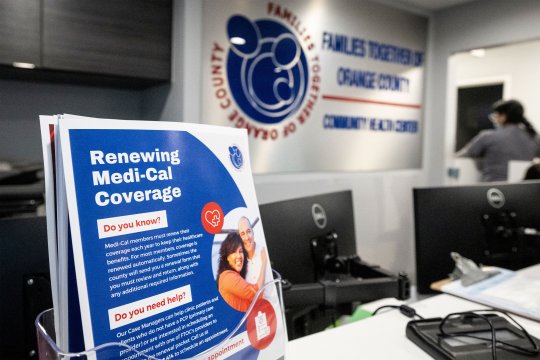
State Medicaid programs must inform people affected by new work requirements with federally required notices, and most states are planning other types of outreach, including phone calls, public ads, and social media posts. This brief describes the federal outreach requirements and state plans, as well as the complexities and tight implementation timelines states face.

Tracking Implementation of the 2025 Reconciliation Law: Medicaid Work Requirements

KFF’s interactive tracks key data and policies that will affect how states implement Medicaid work requirements, which are required under the 2025 budget reconciliation law starting in January 2027. The tracker includes state-level data on Medicaid enrollment and renewal outcomes as well as current state enrollment and renewal policies. The Congressional Budget Office estimates that the 2025 reconciliation law will increase the number of people who are uninsured in 2034 by 10 million. Coverage losses from Medicaid work requirements account for over half, or 5.3 million, of the increase in the number of uninsured.

understanding medicaid

Medicaid Financing

Medicaid represents $1 out of every $5 spent on health care in the U.S. and is the major source of financing for states to provide health coverage and long-term care. This brief examines key questions about Medicaid financing and how it works.

Medicaid Program Integrity

This brief explains what is known about improper payments and fraud and abuse in Medicaid and describes ongoing state and federal actions to address program integrity.

Medicaid and Provider Taxes

All states except Alaska cover some state Medicaid costs with taxes on health care providers. This brief describes states’ current provider taxes and explores how rules governing provider taxes are changing.

Medicaid and Hospitals

Absorbing reductions in Medicaid spending could be challenging for hospitals, particularly for those that are financially vulnerable. This brief provides data on the reach of Medicaid across hospitals, patients, and charity care.

Medicaid Home Care

This issue brief provides an overview of what Medicaid home care (also known as “home- and community-based services”) is, who is covered, and what services were available in 2025.

Dual Eligibles

Stay informed.

Stay informed.

Filter

41-50 of 2,738 results

  • Medicaid Work Requirements: Federal Outreach Requirements and State Plans

    Issue Brief

    State Medicaid programs must inform people affected by new work requirements with federally required notices, and most states are planning other types of outreach, including phone calls, public ads, and social media posts. This brief describes the federal outreach requirements and state plans, as well as the complexities and tight implementation timelines states face.

  • Untold KFF History Volume 4: Polling Partnerships with News Organizations

    From Drew Altman

    For the fourth in his “Untold KFF History” series, KFF’s Founding President and CEO Dr. Drew Altman discusses KFF’s polling partnerships with major news organizations—a practice that began with the Washington Post in 1995, with whom KFF has now conducted 37 major survey projects, and has since become central to KFF, helping to "magnify our polling by bringing together survey data, in-depth journalism and storytelling.

  • A Closer Look at Deficiencies in Nursing Homes

    Issue Brief

    Amid changes to federal oversight of nursing homes during the Trump administration -- including rescinding the nursing home staffing rule issued by the Biden administration, prioritizing inspections that are triggered by complaints over routine inspections, and suspending the deadline to report detailed ownership information -- this issue brief provides an overview of the nursing home inspection process and the types of deficiencies (e.g., failures to meet federal safety and quality requirements) identified during these inspections.

  • KFF Health Tracking Poll: Public Views on Fraud in Government Health Programs

    Poll Finding

    As the 2026 midterms approach, health care costs remain voters' top health priority, but fraud in government health programs, including Medicaid and Medicare, is resonating with Republican voters, 55% of whom say it's extremely important for candidates to address. Most voters say there is at least “some” fraud in government health programs, but larger shares say there is fraud in the tax system, defense, and foreign aid, while the smallest share sees fraud in the…

  • Poll: Costs Are the Top Health Care Issue for Voters in the Midterms, But Fraud Tops Republicans’ List As Trump Administration Pushes Crackdown

    News Release

    Health care costs top the list of voters’ health care priorities for the midterm elections, though more than half of Republican voters say it is extremely important for candidates to discuss the issue of fraud in government health programs, according to a new KFF Health Tracking Poll. Most voters say there is at least “some” fraud in government health programs, but larger shares of voters see fraud in the tax system, defense, and foreign aid…

  • Medicaid Postpartum Coverage Extension Tracker

    Tracker

    This page tracks recent state actions to extend Medicaid postpartum coverage, including approved and pending 1115 waivers, legislation that will require the state to seek federal approval through a SPA or 1115 waiver, submitted and approved SPAs, and coverage financed solely with state funds.

  • A Profile of Dual-Eligible Individuals

    Issue Brief

    Approximately 12 million people are enrolled in both Medicare and Medicaid, referred to as dual-eligible individuals. This brief examines the demographic, socioeconomic, and health characteristics of dual-eligible individuals compared with Medicare beneficiaries without Medicaid.