State Fiscal Conditions: Context on Medicaid Budgets for FY 2027
Medicaid is the primary program providing comprehensive health and long-term care to one in five people living in the U.S. and accounts for nearly $1 out of every $5 spent on health care. Medicaid is administered by states within broad federal rules and jointly funded by states and the federal government through a federal matching program with no cap. Overall, the federal government typically pays about two-thirds of total Medicaid costs and states pay one-third, though the matching rate varies by state. States also have flexibility to determine how to finance their share of Medicaid payments, within certain limits. Flexibility in administration and financing results in variation in Medicaid eligibility, benefits, and provider payments across the nation.
Medicaid funding is often central to overall state budgetary decisions as it is simultaneously a significant spending item as well as the largest source of federal revenues for states. According to data from the National Association of State Budget Officers (NASBO), in state fiscal year (FY) 2025, Medicaid accounted for 31% of total state spending for all items in the budget. Medicaid accounted for only 17% of expenditures from state funds (including general funds and other state funds) but accounted for 57% of all expenditures from federal funds.
State fiscal conditions are tightening due to slowing revenue growth and increased spending pressures. This, combined with other budgetary pressures, like the implementation of the 2025 reconciliation law that includes significant reductions in federal Medicaid spending, may increase the likelihood of states enacting Medicaid restrictions. This brief describes current fiscal conditions using the latest state revenue and spending data from NASBO and analyzes how these conditions may impact states’ Medicaid budget decisions going forward.
What are national trends in state revenue and spending?
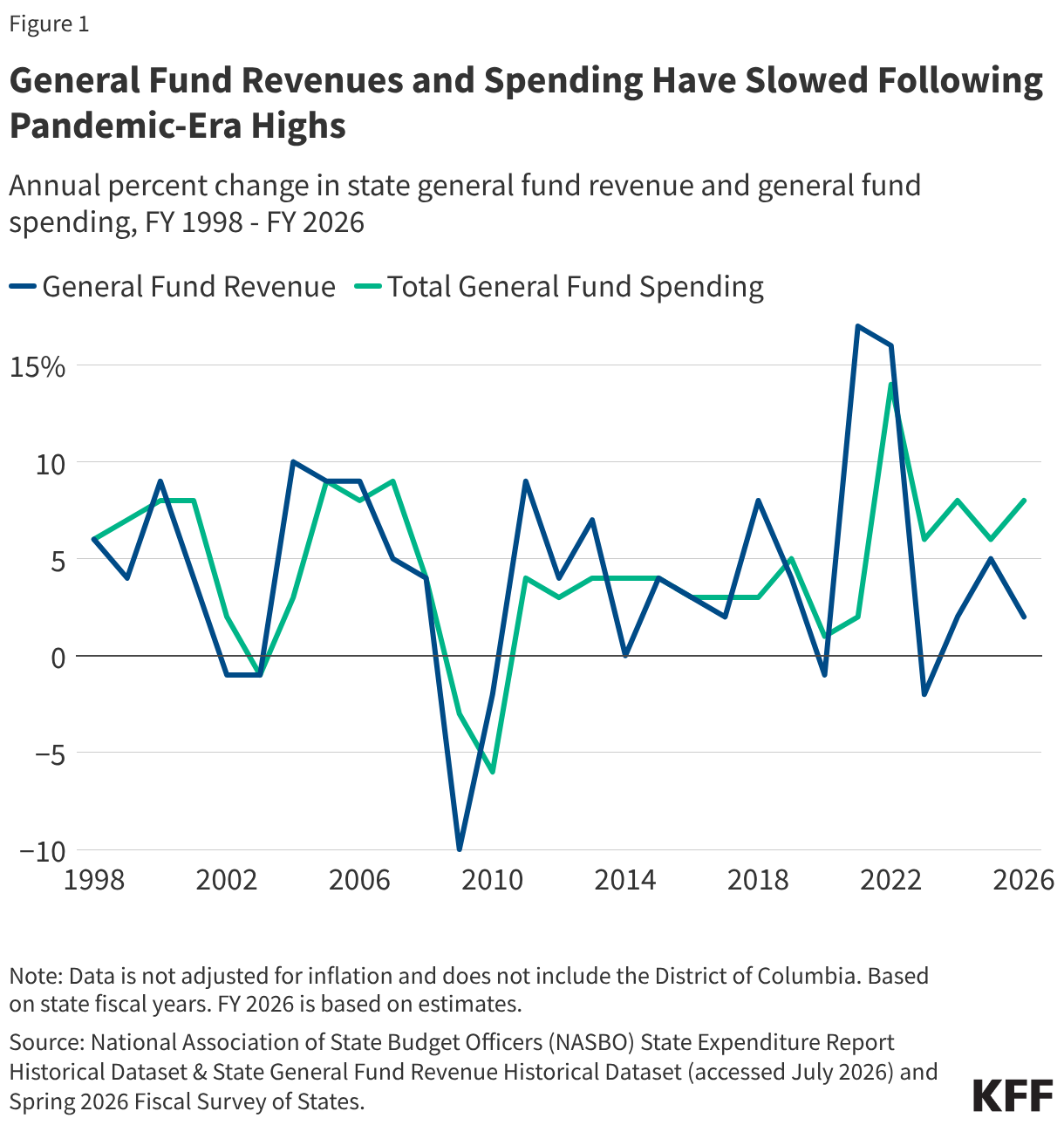
States continue to experience slow revenue growth following pandemic-era highs (Figure 1). State economic conditions worsened rapidly when the pandemic hit but recovered quickly, leading to a period of record-breaking revenue and spending growth for states. However, tax cuts combined with inflationary pressures, stock market volatility, and changes in consumer consumption patterns led to slowing state revenue growth in FY 2023 through FY 2026. While many states ended FY 2026 with revenues above projected amounts, estimated total revenue growth was 2% compared with 5% in FY 2025, and many states saw declines in revenue collections. States’ enacted budgets for FY 2027 are based on projections of another fiscal year of revenue growth between 2-3%. In addition, recent data along with federal policy changes that impact tax codes and reduce federal funding suggest long-term weakness that may present challenges in future years.
General fund spending growth has also moderated in recent years. Spending growth generally follows trends in revenue growth because states generally need to enact balanced budgets. Similar to revenue trends, spending growth peaked in FY 2022 at 14% and then moderated from FY 2023 through FY 2026 (Figure 1). Estimated total general fund spending growth was 8% in FY 2026, and enacted FY 2027 budgets on average included spending growth between 2-3%, indicating that spending growth continues to slow. Rather than expanding state services and committing to new spending items, recently enacted budgets focus on funding for core services and targeted spending adjustments to maintain balance between ongoing revenue and recurring spending items, highlighting the tightening fiscal environment and future uncertainty.
How do fiscal conditions vary across states?
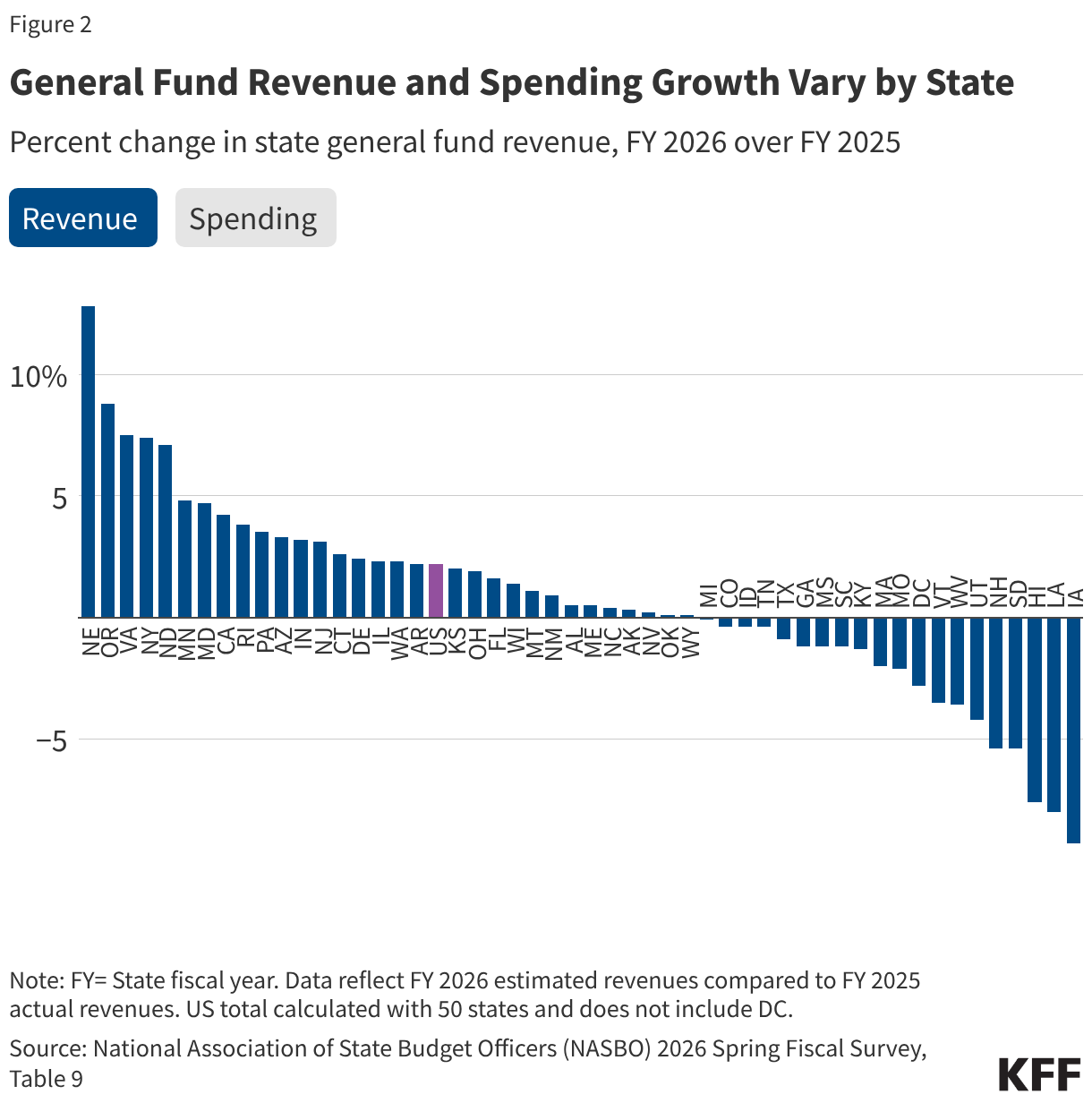
State revenue growth varies by state, with 20 states experiencing revenue declines in FY 2026 (Figure 2). At the same time, 30 states had revenue increases above 0% but below 10% and one state saw revenue increases over 10% in FY 2026. On average across states, general fund revenues increased by 2% from FY 2025 to FY 2026. State general fund revenues are mostly comprised of personal income, corporate income, and sales taxes, and revenue growth varies depending on state policy decisions and reliance on tax types. Strong revenue collections from personal income tax have driven the modest revenue growth seen in recent years, though several states have recently enacted cuts to income tax rates which could impact future revenue growth.
In addition, 11 states experienced reductions in general fund spending in FY 2026. This is notable because state spending must typically increase to keep pace with rising costs – particularly in a period of high general inflation – and signals some states have implemented targeted spending cuts or other budget maneuvers. In FY 2026, five states had to enact mid-year budget cuts to avoid shortfalls, which is a small share but the most that have done so since FY 2021. A majority of states (34) had modest general fund spending growth above 0% but below 10%, and six states saw spending growth over 10% from FY 2025 to FY 2026. On average across states, general fund spending increased by 8% in FY 2026. FY 2027 enacted budgets include more budget management strategies like spending cuts or other cost containment measures, with some states reducing spending levels from FY 2026.
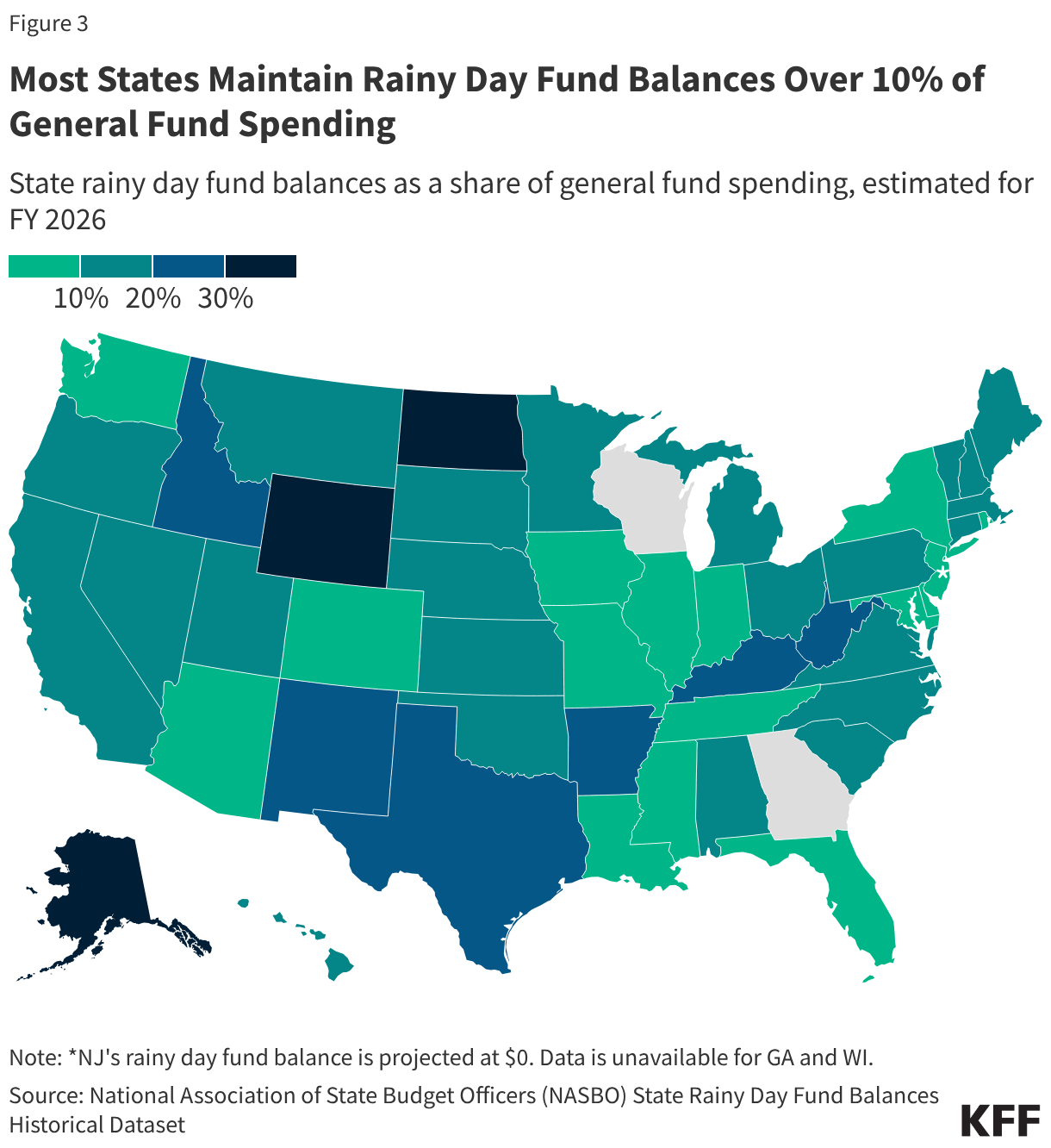
While most states have rainy day funds, balances varied significantly by state and had fallen slightly from pandemic-era highs in FY 2026 (Figure 3). Pandemic-era growth in tax revenues left states with large revenue surpluses over multiple fiscal years. Some of these funds were transferred to rainy day funds that reached record high balances. As revenues moderated, states spent surplus funds, largely on one-time expenditures, or used other one-time budget maneuvers to balance their budgets. By FY 2026, rainy day funds remained elevated but had fallen from their pandemic-era peak, ranging from less than 10% of general fund spending in 17 states to over 30% in three states. General fund ending balances as well as total balances, which include both general fund ending balances and rainy day funds, have also decreased, softening states’ ability to rely on savings. While most states plan to increase or maintain rainy day funds in FY 2027, general fund ending balances and total balances are expected to continue to decline as states spend down prior-year surplus funds.
What factors will affect state budgets in FY 2027 and beyond?
State budget priorities may shift after the 2026 elections. As constituents struggle with the cost of living, state legislatures may opt to provide relief through enhancing social support or by enacting tax relief, though both options may become more difficult as fiscal conditions tighten. States are also contending with increasing spending demands from Medicaid, employee health care, education, housing, and disaster response. Following 2026 elections, new governors may shift priorities reflected in state budgets. Of the 37 states with gubernatorial elections (including DC’s mayoral election), there are 19 states where the incumbent is not running and a new governor or mayor may be elected. New governors’ administrations often bring in new policy priorities, new agency staff, and different implementation approaches that may be reflected in future budgets.
Economic changes and recent federal actions, including the passage of the 2025 reconciliation law, create additional budget uncertainty. States’ fiscal outlooks may be affected by continued inflationary pressures and slowing consumer spending. States are also facing uncertainty about tariffs, increasing national debt, and a fluctuating job market. In addition, the 2025 reconciliation law includes significant policy changes and federal funding cuts, such as tax code changes as well as Medicaid and SNAP funding cuts. The implementation of the reconciliation law’s provisions also requires costly administrative and systems changes for many states.
In response to mounting budget pressures and the 2025 reconciliation law, states may reduce Medicaid spending. The combination of tighter state fiscal conditions, other economic factors, and the implementation of the 2025 reconciliation law may result in state reductions to Medicaid spending. The impact of the 2025 reconciliation law will vary across states based on expansion status and reliance on provider taxes and state-directed payments. States have limited options to respond to reductions in federal Medicaid spending (Figure 4). States may try to raise additional revenues or reduce spending in other areas of the budget, though this is likely challenging given tightening state fiscal conditions. Instead, states may seek to restrict Medicaid provider reimbursement rates, benefits, or eligibility to reduce state Medicaid spending. A few states had already implemented Medicaid spending cuts for FY 2026 (and proposed cuts for FY 2027), and Medicaid cuts may ramp up as more provisions of the 2025 reconciliation law are implemented.