Poll Finding

KFF COVID-19 Vaccine Monitor- Rural America

Published: Apr 9, 2021

Findings

The KFF COVID-19 Vaccine Monitor is an ongoing research project tracking the public’s attitudes and experiences with COVID-19 vaccinations. Using a combination of surveys and qualitative research, this project tracks the dynamic nature of public opinion as vaccine development and distribution unfold, including vaccine confidence and acceptance, information needs, trusted messengers and messages, as well as the public’s experiences with vaccination.

Key Findings

  • The KFF COVID-19 Vaccine Monitor took a deep dive into how the coronavirus pandemic has impacted rural communities in the U.S. including an analysis of the vaccine intentions of rural residents. Based on interviews of 1,001 adults living in rural America, the Monitor finds four in ten (39%) saying they have already gotten at least one dose of a COVID-19 vaccine, larger than the shares of adults living in urban or suburban areas who say the same (31% each). The Monitor results suggest there are many reasons why rural communities may so far be outpacing suburban and urban areas in vaccination rates, including the fact that rural residents are more likely than urban and suburban residents to say their community has enough vaccination locations and vaccine supply.
  • While rural residents have outpaced suburban and urban residents in early self-reported uptake of COVID-19 vaccines, fewer rural residents compared to urban and suburban residents say they are planning or considering getting vaccinated. Three in ten rural residents say they will get vaccinated as soon as possible (16%) or are waiting to see how it is working for other people (15%), compared to about half of urban and suburban residents who say the same. Three in ten rural residents say they will either “definitely not” get vaccinated or will only do so if required, and few unvaccinated rural residents (11%) say they have tried to get an appointment. These results suggest that vaccination uptake in rural America may start lagging behind urban and suburban areas. The groups within rural communities that are the least likely to report either already receiving a vaccine or planning to do so as soon as possible are Republicans, White Evangelicals, essential workers in fields other than health care, and young adults 18-49. About three in ten in each of these groups report they will “definitely not” receive a COVID-19 vaccine.
  • More than half of Black rural adults (64%) say they have either received a vaccine or will do so as soon as they can, but this population also disproportionately reports difficulty accessing COVID-19 vaccine resources. Less than half of Black adults say their rural communities have enough supply of COVID-19 vaccine (compared to 59% of White rural adults) and half (53%) say their community has enough vaccination locations (compared to 69% of White adults). Access to COVID-19 vaccines within the Black community is consistent with other forms of health care access in rural communities with Black residents also less likely than White residents to say their community has enough hospitals and doctors and health care providers.
  • While the concerns about the vaccine for those living in rural areas are similar to urban and suburban areas, there are a variety of other attitudes towards the pandemic overall that may help explain why a larger share of rural residents say they will “definitely not” get vaccinated. About six in ten rural residents (compared to less than half of urban and suburban residents) say getting vaccinated against COVID-19 is a personal choice. Rural residents are also less likely to say they are worried about themselves or their family members getting sick from coronavirus or that they wear a mask most of the time when they leave their house.

COVID-19 Vaccine Intentions In Rural America

About four in ten U.S. adults living in rural areas say they have already received at least one dose of a COVID-19 vaccine (27% say they have received a full course either receiving both doses of a two-dose vaccine or a one-dose vaccine). The share of rural residents who have been vaccinated is up sixteen percentage points from February 2021 as many states increase their vaccine rollout to larger shares of the population, with an additional 16% of rural residents saying they will get the vaccine as soon as they can. At the same, nearly half of rural residents say they are either taking a “wait and see” approach (15%), they will get the vaccine only if they are required to do so for work, school, or other activities (9%), or that they will “definitely not” get the vaccine (21%), similar to the shares who have given those responses since January.

While a larger share of rural residents say they have already received at least one dose of a COVID-19 vaccine than urban and suburban residents (31%, each), fewer rural residents compared to urban and suburban residents say they will get it as soon as possible (16% compared to 35% and 28%). This suggest that vaccine uptake in rural communities is currently outpacing urban and suburban areas but may begin lagging behind more populated areas as they experience increased access. Two-thirds of those living in urban areas say they have either already received a vaccine or will get it as soon as possible as do six in ten (59%) of those living in suburban areas.

Vaccine uptake does not differ within rural communities of varying size or regions of the U.S. Fifty-six percent of those living in less populated rural areas report receiving a vaccine or intending to get it as soon as they can, as do 52% of those living in more populated rural areas. In addition, similar shares of rural residents living in the Midwest, South, and West say they have already been vaccinated or will as soon as possible (50%, 57%, 56%).

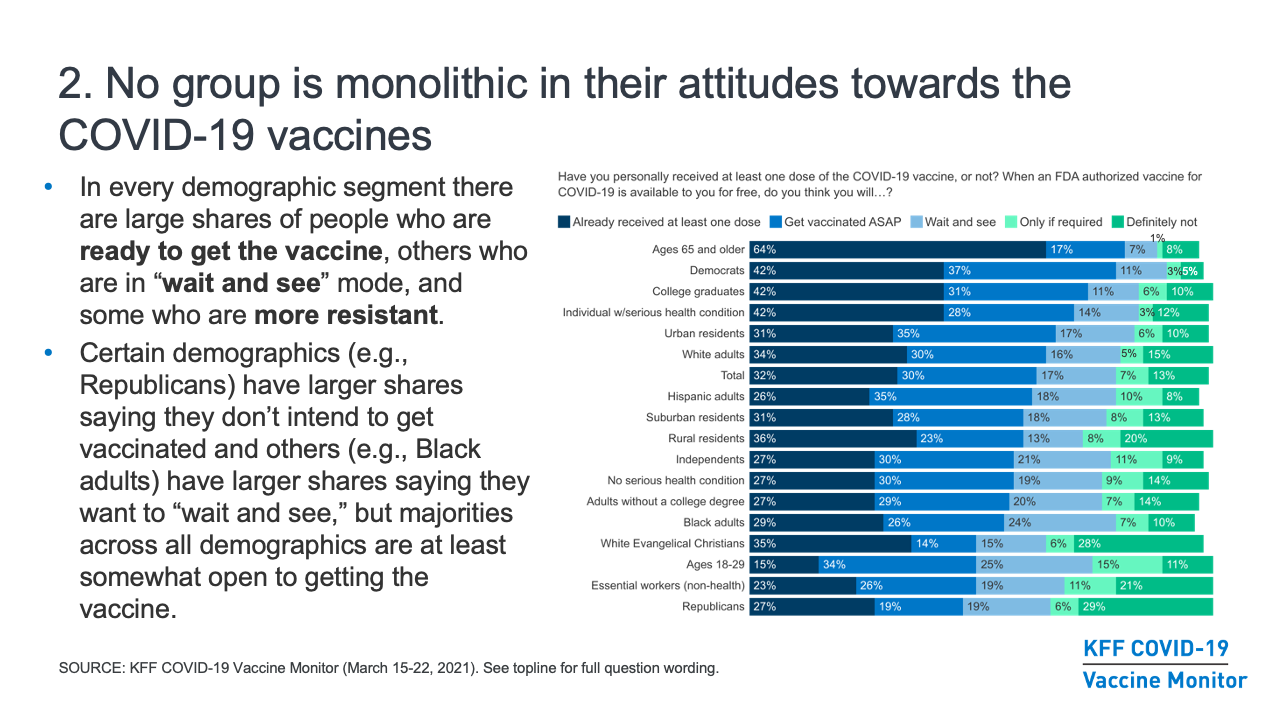
Looking across various demographics within rural communities, the groups most likely to say they’ve either already gotten the vaccine or will get it as soon as possible are Democrats and Democratic-leaning independents (82%), adults ages 65 and over (79%), and college graduates (67%). About three in ten Republicans (32%), essential workers in field other than health care (29%), and adults under the age of 50 (28%) say they will “definitely not” get the vaccine.

Understanding Who Is “Wait and See” And Who Is “Definitely Not” Getting the VACCINE In rural America

Twenty percent of U.S. adults live in rural America and this significant segment of the population reflect a very diverse community across race and ethnicity, educational levels, employment, partisanship and many other factors. In addition to understanding the vaccine intentions among certain demographic groups, it is also important to understand the demographics of the varying vaccine intention groups. Large shares of those who say they will “definitely not” receive a COVID-19 vaccine self-identify as White Evangelicals (41%) and Republicans or Republican leaning independents (73%). More than eight in ten in this group (85%) also say they do not normally get a flu vaccine.

Access To COVID-19 Vaccines In Rural Communities

Despite the fact that about half of rural residents who have not yet been vaccinated believe they are currently eligible to receive a vaccine, few (11%) say they have tried to get an appointment, which is half the share of those living in urban (21%) and suburban (22%) areas. A majority of rural residents who have tried to get an appointment say they were able to get one. Among those who say they were unable to get an appointment for a vaccine, the most common reason why was that they did not meet their area’s eligibility requirements, followed by a smaller portion who reported there weren’t any appointments available.

A majority of rural adults think their community has enough hospitals (73%), doctors and health care workers (70%) to serve local residents as well as enough COVID-19 vaccination locations (68%) and supply of the COVID-19 vaccine (58%) for local residents. Perception of availability of COVID-19 vaccines and vaccination locations does not vary within types of rural communities. Adults who live in more populated rural areas, on the whole, are no more or less likely to report enough access to the services listed than those who live in less populated rural areas.

Consistent with the higher reported vaccination rates among rural residents, the Monitor finds that rural residents are more likely to say their community has enough supply of the COVID-19 vaccine to serve local residents than urban or suburban community members (46% each). In addition, 68% of adults in rural areas report having enough vaccination locations, compared to smaller shares of urban (52%) and suburban (55%) adults.

Eight in ten suburban adults report having enough hospitals to serve their community than either urban or rural residents (compared to 76% urban and 73% rural), which is similar to the share who say the same about the number of doctors and health care providers. Less than half of urban, suburban, and rural residents say their community has enough mental health providers.

Among those living in rural areas, Black adults are less likely than White and Hispanic adults to feel their community has enough health care providers and vaccination access to serve the local population. Slightly less than half of Black rural adults say their community has enough supply of the COVID-19 vaccine, while 59% of White rural adults and 52% of Hispanic rural adults say the same. In addition, while about two-thirds of Hispanic and White rural adults say their community has enough vaccination locations, about half of Black rural adults think so. Black residents in rural communities are also less likely than White and Hispanic residents to say their community has enough hospitals, and doctors and health care providers.

In addition to perceived access to COVID-19 vaccines and vaccination locations within their communities, larger shares of rural residents (59%) say they think vaccines in the U.S. are being distributed fairly to people across urban, suburban, and rural areas compared to urban (43%) and suburban residents (50%).

This is despite the fact that majorities of rural residents, including 50% of Democrats and Democratic-leaning independents, and 66% of Republicans and Republican-leaning independents, say the federal government does more to help people living in and around large cities than to help people living in rural areas.

Rural Residents Report Minimal Travel Burdens To Get A COVID-19 Vaccine, Black Residents Report Longer Travel Times

Around half of adults in all rural areas (49%) who have received at least one dose of the COVID-19 vaccine report it took them less than 15 minutes to travel to the place where they got the vaccine, which is similar to the share of urban residents (47%) and suburban residents (42%) who say the same.

About one-fourth of rural residents traveling to get a COVID-19 vaccine say it took them 30 minutes or longer to travel to the place to get vaccinated, however 14% of those living in more populated rural areas say it took them an hour or longer.

Rural adults who haven’t received their vaccine yet estimate that it will take them a little longer to travel to the nearest COVID-19 vaccination site in their area than those in urban and rural environments. About seven in ten rural adults in less populated areas think it will take them under 30 minutes to travel to their closest vaccination site, while fewer rural adults in more populated areas (68%) think it will take them under 30 minutes. At least six in ten urban (69%), suburban (63%), and rural (71%) residents estimate it will take them under 30 minutes in transit time.

Factors In Rural Residents’ Decisions To Get Vaccinated

Rural residents express a variety of attitudes toward the COVID-19 pandemic overall that differ somewhat from their urban and suburban counterparts and may explain their different level of willingness to get vaccinated. For example, several findings suggest that rural residents are less likely to view the pandemic as a serious threat either to the country or their families. More than four in ten rural residents (44%) say they think the news has “generally exaggerated” the seriousness of coronavirus, while one-third say the news has gotten it “generally correct” and one-fifth say it has been “generally underestimated.” A larger share of rural residents say it has been exaggerated compared to urban (27%) and suburban (33%) residents. Rural residents (40%) are also less likely to say they are worried about themselves or their family members getting sick from coronavirus compared to urban (54%) and suburban residents (49%). In addition, while majorities of rural residents report wearing a face mask to protect themselves and others at least most of the time when they leave their house (74%), it is a smaller share compared to urban (90%) and suburban (87%) residents.

Views of the coronavirus pandemic and willingness to wear a protective mask are also strongly connected to rural resident’s decisions to receive a COVID-19 vaccine. More than half rural residents who think the seriousness of the pandemic has been either generally correct or underestimated say they have already received a COVID-19 vaccine, compared to one in five (20%) of those who think the seriousness has been generally exaggerated. In addition, nearly half of rural adults who only wear a mask “some of the time” or “never” say they will definitely not get vaccinated.

Concerns Among Those Who Have not Yet Been Vaccinated

When asked to say in their own words the main reason why they don’t want to get vaccinated, rural residents in the “definitely not” group cite a range of concerns. The most frequently mentioned reason is feeling that the vaccines are too new or that there is not enough information about the long-term effects (mentioned by 19%). About one in ten cite general distrust of the vaccine (12%), dislike of vaccines in general (9%), don’t believe the vaccine is effective against COVID-19 (8%), or report that they either generally don’t need it (3%) or don’t need it because they already had COVID-19 (5%).

IN THEIR OWN WORDS: What is the MAIN reason why you don’t want to get the COVID-19 vaccine? (among rural adults who say they will “definitely not” get it)

“Pretty good immune system don’t want to mess with it.” – 55 year-old man

“I have allergies to flu shots. They make me very ill. I’m nervous about it.” – 50 year-old woman

“l don’t just want to get it, don’t see the point in getting it. Lot of negative reaction I rather not.” – 37 year-old woman

“99.9 survival.” – 71 year-old man

“I have already had the coronavirus and I am currently of the belief that it has more side effects than the government wants to admit to.” – 54 year-old man

“Because who knows of the effects or what the vaccine truly is.” – 41 year-old woman

“I honestly don’t think it will work full force and there will just be more COVID and different shots and I honestly think this is government made.” – 36 year-old woman

“I’ve never gotten a COVID or flu vaccine before.” – 31 year-old man

“It is not a vaccine, it is just a flu shot that has not been tested.  It only makes the COVID flu, if you get it, easier for your body to resolve.  A vaccine means you will not ever contract the virus you are vaccinated against.” – 77 year-old man

“I am a healthy young person. I will save it for someone else.” – 29 year-old woman

“Uh, because I have other health issues that weakened my immune system.” – 48 year-old man

“I’m scared. I just feel like if it is meant for me to catch it I will catch it.” – 34 year-old woman

“COVID virus has a 99% recovery rate.” – 42 year-old woman

“It’s a trial. Don’t know long term effects.” – 28 year-old woman

Six in ten rural residents (compared to four in ten urban residents and 47% suburban residents) say getting vaccinated against COVID-19 is a personal choice. This is a much larger share than the share of rural residents who say getting vaccinated is part of everyone’s responsibility to protect the health of others (42% of rural residents compared to 52% of suburban, 59% of urban).

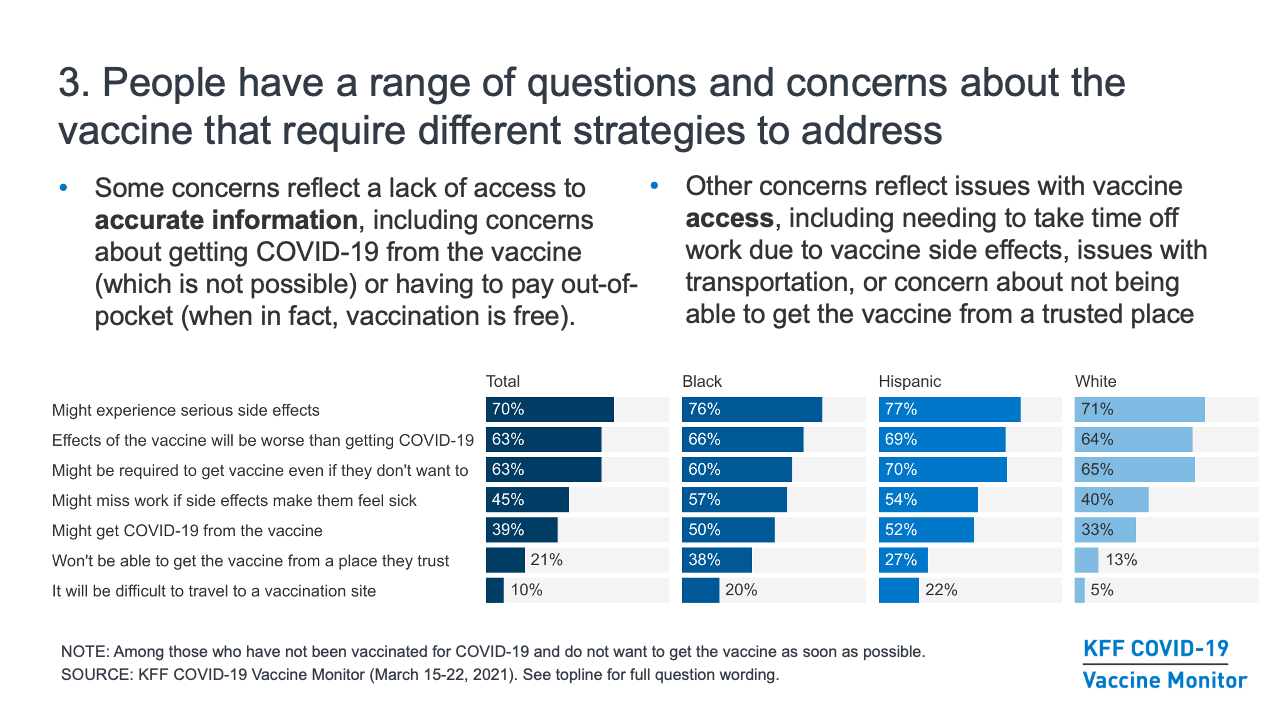
Because a majority of rural residents think getting vaccinated is a personal choice, one of the top concerns among the 45% of rural residents who are not yet convinced to get the vaccine right away (defined as those who say they will “wait and see” before getting vaccinated, will get the vaccine “only if required” or will “definitely not” get it) is that they might be required to get a COVID-19 vaccine even if they don’t want to (66%). This is a top concern among both those who want say they definitely won’t be getting a vaccine as well as among those who want to “wait and see”. Other top concerns include possible serious side effects from the vaccine (64%) or the effects of the vaccine will be worse than getting COVID-19 (53%). Notably few rural residents cite inability to get the vaccine from a place they trust or difficulty traveling to a vaccination site as concerns (15% and 9%, respectively).

Among those who are not convinced to get vaccinated right away, seven in ten Republicans in rural areas (71%) say they are concerned that they might be required to get the vaccine even if they don’t want to.

Majorities Now Say They Have enough Information About Where And When to receive a COVID-19 vaccine

A growing share of the overall population now say they have enough information about when and where they will be able to get the COVID-19 vaccine. Three-quarters of rural residents who are not yet vaccinated now say they have enough information about where they will be able to get a COVID-19 vaccine, up from 61% in February, and 66% have enough information about when they will be able to get vaccinated, up from 38% last month. Rural residents are more likely to say they have enough information about when they’ll be able to get vaccinated than both urban and suburban residents, with smaller differences on the question of where.

Messages, Information, And Incentives That Might Increase Vaccination Uptake

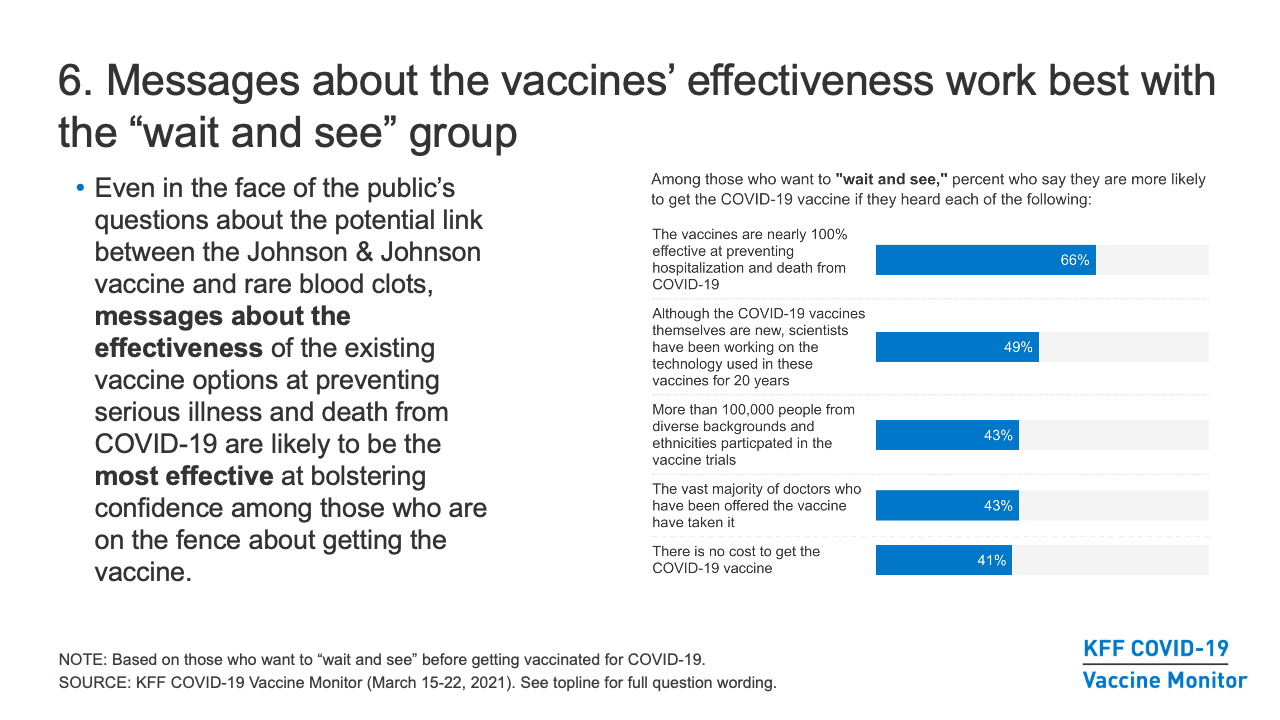
The latest COVID-19 Vaccine Monitor tested a variety of potential incentives, messages, and pieces of information that might be used to increase vaccination uptake. Similar to the general public, within the rural community there are various incentives and messages that may help convince people in the “wait and see” and “only if required” groups to get vaccinated, but very few of them move people in the “definitely not” group. For example, more than half of those in the “wait and see” group say hearing that the vaccines are nearly 100% effective at preventing hospitalization and death from COVID-19 (64%) or that hearing that scientists have been working on the technology used in the new COVID-19 vaccines or 20 years (52%) will make them more likely to get vaccinated. Across the board, no message or piece of information were effective at moving those who say they will definitely not get vaccinated, with the share of that group saying they’d be more convinced after hearing each message in the single digits.

Among rural residents who are not yet convinced to get the COVID-19 vaccine right away, few (14%) say they would be more likely to get vaccinated if President Trump came out with a message strongly urging people to do so. One in four rural residents in the “wait and see” group say this type of messaging could make them more likely to get a vaccine.

Methodology

The KFF COVID-19 Vaccine Monitor – Rural America was designed and analyzed by public opinion researchers at the Kaiser Family Foundation (KFF). The survey was conducted March 15-29, 2021 via telephone and online among a nationally representative sample of 1,001 adults residing in rural counties (including interviews from 159 Hispanic adults and 170 non-Hispanic Black adults). For the telephone components, respondents were reached through randomly generated telephone numbers from cell phone and landline sampling frames associated with rural counties, with an overlapping frame design, and disproportionate stratification. Stratification was based on incidence of the race/ethnicity subgroups within each frame. Specifically, the cell phone frame was stratified as: (1) High Hispanic: Cell phone numbers associated with rate centers from counties where at least 35% of the population is Hispanic; (2) High Black: Cell phone numbers associated with remaining rate centers from counties where at least 35% of the population is non-Hispanic Black; (3) Else: numbers from all remaining rate centers. The landline frame was stratified as: (1) High Black: landline exchanges associated with Census block groups where at least 35% of the population is Black; (2) Else: all remaining landline exchanges. Rate centers and exchanges were considered likely rural if they were in a county that was not part of a metropolitan statistical area. Respondents’ rural residency was established by self-reported zip code or county of residence.

A total of 206 rural respondents were interviewed as part of the March KFF Vaccine Monitor (March 15-March 22), and 795 were part of a mixed-mode rural supplement from March 23 to March 29. The supplement used the same stratification plan, including only numbers in areas identified as micropolitan or noncore based on the CDC’s Urban-Rural Classification Scheme for Counties.  To reach a total minimum of 1,000 rural respondents, of whom 150 were Hispanic and 150 non-Hispanic Black, SSRS employed multiple approaches:  First, the total number of completed interviews in the High Hispanic and High Black strata were oversampled; meaning, if the respondent reached through the oversamples was neither Hispanic nor Black, the interview was terminated, and the respondent screened out. In total 31 Hispanic and 66 Non-Hispanic Black respondents were reached through oversampling. The landline sample included a small oversample of records in the frame that were matched to directory-records with a distinctively Hispanic surname. An additional 32 interviews were completed with respondents who had previously completed interviews on the KFF Health Tracking Poll six months ago or more and were called back for this month’s study. Finally, 35 interviews were completed with respondents who had previously completed an interview on the SSRS Omnibus poll (and other RDD polls) and identified as Hispanic (including 4 in Spanish) and 49 interviews were completed with respondents who had previously completed an interview on the on the SSRS Omnibus poll (and other RDD polls) and identified as non-Hispanic Black. SSRS Omnibus is a weekly RDD poll, employing an overlapping dual-frame design. In total, 206 respondents from the VM survey said they live in a zip code that matched the definition of rural counties, meaning their county was not in a metropolitan statistical area; 29 of these respondents were Hispanic, and 36 non-Hispanic Black.

In the course of the field period, SSRS also invited members of its probability-based online panel (SSRS Opinion Panel) to participate in the study. Invitees all self-reported living in rural zip codes. As with other sample components, Hispanic and Black respondents were oversampled.  The SSRS Opinion Panel is a nationally representative probability-based web panel. SSRS Probability Panel members are recruited randomly in one of two ways: (a) Through invitations mailed to respondents randomly sampled from an Address-Based Sample (ABS). ABS respondents are randomly sampled by MSG through the U.S. Postal Service’s Computerized Delivery Sequence (CDS). (b) from a dual-frame random digit dial (RDD) sample, through the SSRS Omnibus survey platform. Sample for the SSRS Omnibus is obtained through Marketing System Groups (MSG). In total 272 interviews in the rural supplement sample were completed via landline and 438 via cell phone, including 328 who could not be reached via landline. 291 respondents completed the survey online.

The combined landline, cell phone, and online rural samples were weighted to balance the sample demographics to match estimates for the national population using data from the Census Bureau’s 2019 U.S. American Community Survey (ACS), on sex, age, education, race, Hispanic origin, and region, within race-groups, along with data from the 2010 Census on population density. The sample was also weighted to match current patterns of telephone use using data from the January- June 2020 National Health Interview Survey. The rural sample was also weighted to match aggregate county level demographics for the rural counties. Population parameters were derived using Census-based estimates provided by Nielsen Pop-Facts through Marketing Systems Group based on data from data Census Bureau’s 2019 American Community Survey (ACS). Weighting parameters included race and Hispanic origin, race by gender, educational attainment, age, Census region and micropolitan status. Data were also adjusted to match internet-use estimates for rural areas based on ACS data. The weight takes into account the fact that respondents with both a landline and cell phone have a higher probability of selection in the combined sample and also adjusts for the household size for the landline sample, and design modifications, namely, the oversampling of prepaid cell phones and likelihood of non-response for the re-contacted sample. All statistical tests of significance account for the effect of weighting.

The margin of sampling error including the design effect for the full sample is plus or minus 3 percentage points. Numbers of respondents and margins of sampling error for key subgroups are shown in the table below. For results based on other subgroups, the margin of sampling error may be higher. Sample sizes and margins of sampling error for other subgroups are available by request. Note that sampling error is only one of many potential sources of error in this or any other public opinion poll. Kaiser Family Foundation public opinion and survey research is a charter member of the Transparency Initiative of the American Association for Public Opinion Research.

This work was supported in part by grants from the Missouri Foundation for Health, the Chan Zuckerberg Initiative DAF (an advised fund of Silicon Valley Community Foundation), the Ford Foundation, and the Molina Family Foundation. We value our funders. KFF maintains full editorial control over all of its policy analysis, polling, and journalism activities.

GroupN (unweighted)M.O.S.E.
Community Type
NET: Non-rural1,656± 3 percentage points
Urban764± 5 percentage points
Suburban892± 4 percentage points
Rural1,001± 4 percentage points
 
Race/Ethnicity among Rural
White, non-Hispanic628± 5 percentage points
Black, non-Hispanic170± 10 percentage points
Hispanic159± 10 percentage points
Party Identification among Rural
Democrats357± 8 percentage points
Republicans285± 7 percentage points
Independents234± 9 percentage points
Rural density
More populated rural areas628± 5 percentage points
Less populated rural areas370± 7 percentage points

COVID-19 Pandemic-Related Excess Mortality and Potential Years of Life Lost in the U.S. and Peer Countries

Authors: Krutika Amin and Cynthia Cox
Published: Apr 8, 2021

A new issue brief reviews excess death rates in the U.S. and peer countries by age groups to examine how the pandemic has affected excess mortality rate among younger people. The analysis looks specifically at the excess deaths that arose in 2020 to examine how the age at death during the pandemic has differed between the U.S. and peer nations, and estimates the excess potential years of life lost (a measure of “premature excess death”) during the pandemic. The brief also explores racial disparities in the age of death in the U.S.The analysis is available on the Peterson-KFF Health System Tracker, an online information hub dedicated to monitoring and assessing the performance of the U.S. health system.

News Release

Compared to Peer Countries, the U.S. Had the Highest Rate of Mortality Among People Under Age 65 and Potential Years of Life Lost in 2020 Due to the Pandemic

Published: Apr 8, 2021

A new KFF issue brief examines 2020 data on excess mortality – the number of deaths above what is expected in a typical year – and finds that among similarly large and wealthy nations, the United States had the highest premature excess mortality rate in 2020, indicating that younger people in the U.S. were more likely to have died due to the pandemic than younger people in other countries.

The excess mortality rate among Americans ages 15-64 was 58 per 100,000 people in the age group in 2020 – more than double that of the next closest peer nation, the United Kingdom (25 per 100,000).  Nearly half (48%) of excess deaths in the U.S. were among people younger than 75, compared to 18% for Belgium, a country with a comparable overall excess mortality rate.

The brief also estimates excess potential years of life lost (“premature excess deaths”) in the U.S. and peer nations. Excess potential years of life lost (up to age 75) is a measure of excess mortality and is used to compare differences in disease burden and longevity across countries. The analysis finds that the U.S. had 1,171 excess potential years of life lost up to age 75 per 100,000 people ages 0-74, which is over twice the rate of premature excess mortality in the next closest country, the U.K. (488 per 100,000 people). This approach, which follows OECD methods, may understate premature excess mortality in 2020, as excess deaths over age of 75 in 2020 were also premature compared to a typical year.

In comparison to a typical year, the U.S. lost an additional 3.6 million potential years of life in 2020. The high premature excess death rate in the U.S. was driven in part by racial disparities. American Indian and Alaska Native, Black, Native Hawaiian and Other Pacific Islander, and Hispanic people had over 3 times the premature excess death rate in the U.S. in 2020 than the rate among other groups. Thirty percent of the total excess potential years of life lost in the U.S. were among Black people, and 31% were among Hispanic people, rates disproportionate to their shares of the total U.S. population.

Prior to 2020, the U.S. already had the highest rate of premature deaths among peer countries. This analysis shows the gap in premature mortality rates between the U.S. and peer countries has increased due to the pandemic.

The analysis is available on the Peterson-KFF Health System Tracker, an online information hub dedicated to monitoring and assessing the performance of the U.S. health system.

Racial Equity and Health Data Dashboard

Vaccines

ACA Coverage

COVID-19

Perspectives on being black in america today

Latest Polling
79%
Most Black adults say systemic racism is a major obstacle to Black people achieving equal outcomes with White people.
66%
Two out of three Black adults say the government’s response to the COVID-19 pandemic would be stronger if White people were getting sick and dying at higher rates than people of color.
71%
About 7 in 10 Black adults say unconscious bias has been an obstacle in their own life.
65%
Most Black adults are not confident that the development of the coronavirus vaccine is taking needs of Black people into account.

Health status

Economic and social factors

essential resources

  • Topic page

    Racial Equity and Health Policy Topic Page

    The Racial Equity and Health Policy Program provides timely and reliable data, information, and policy analysis on health and health care disparities affecting people of color and underserved groups and efforts to advance racial equity in health and health care.
  • Blog

    Health Disparities are a Symptom of Broader Social and Economic Inequities

    Despite being long documented, racial and ethnic disparities in health have persisted and in some cases widened over time, with Black individuals and other groups of color faring worse compared to White individuals across many health status measures.
  • report

    Key Facts on Health and Health Care by Race and Ethnicity

    Data on demographics; health coverage, access, and utilization; and health status by race and ethnicity to provide greater insight into the status of health disparities and changes in disparities since implementation of the ACA.
  • State-level data

    State Data on Disparities

    This category includes data on demographics, health coverage, health status, and certain health conditions by race/ethnicity and gender to provide insight into health disparities and changes in disparities over time.
  • state-level data

    State Data and Policy Actions to Address Coronavirus

    This data tool provides state-level information related to COVID-19 including cases and deaths by race/ethnicity.

Key Questions About COVID-19 Vaccine Mandates

Authors: MaryBeth Musumeci and Jennifer Kates
Published: Apr 7, 2021

Key Takeaways

The extent to which states and/or employers might adopt COVID-19 vaccine mandates remains an open question but could affect the distribution and uptake of vaccinations. This is likely to become a more prominent issue over time, as the need to vaccinate a large share of the U.S. population becomes more urgent in the face of variants and reluctance by some to get vaccinated, and if any of the vaccines which currently operate under emergency use authorization (EUA) are fully approved by the Food and Drug Administration (FDA). This issue brief explains the legal basis for vaccine mandates by the federal government, states, and private employers; highlights considerations for mandates while COVID-19 vaccines are subject to an EUA; and discusses mandate exemptions based on disability or religious objection. Key takeaways include the following:

    • The federal government’s authority to institute a general vaccine mandate is unclear, and has not yet been tested in the courts, though it is likely limited at best.
    • States’ authority to mandate vaccines to protect public health is well-established. Currently, all states require vaccines for school attendance, while state vaccine requirements for health care workers vary. More generally, though, states do not use mandates for adult vaccination and have thus far said they are not mandating COVID-19 vaccination
    • Some private employers require influenza vaccines for employees in health care settings, unless prohibited by state law, and some employers and universities have already instituted mandates for COVID-19 vaccination for employees and/or students; at the same time, several states have sought to limit their ability to do so.
    • More generally, however, it is unclear whether COVID-19 vaccines can be mandated while operating under an EUA, and courts have not yet ruled on this issue.
    • When in place, under federal law, vaccine mandates may be subject to exemptions based on disability or religious objection.

As COVID-19 vaccination efforts progress, it will be important to monitor any changes in government or employer policy as well as public opinion on vaccine mandates.

Introduction

The extent to which states and/or employers might adopt COVID-19 vaccine mandates remains an open question but could affect the distribution and uptake of vaccinations. A substantial share of the population must acquire immunity, either through vaccination or previous infection, in order to get the pandemic under control. With several vaccines available for emergency use in the U.S. and distribution efforts underway, policymakers and public health officials are increasingly focusing on ways to accelerate the pace and maximize the extent of vaccine uptake. These efforts include increasing vaccine supply and relaxing eligibility requirements, public education and outreach campaigns, ensuring the accessibility of vaccine administration sites, job-based incentives, and even mandates. Indeed, COVID-19 vaccine mandates are likely to become a more prominent issue as soon as any one of the current vaccines operating under an EUA is approved and licensed by the FDA.

Public opinion on such mandates is mixed, with our surveys showing about half of the public saying employers should be allowed to require vaccination for COVID-19 (51%) and 45% saying they should not be allowed to do so. While vaccine enthusiasm is rising in the U.S., with more than 6 in ten saying they have already or plan to get vaccinated as soon as possible, there is a small share who say they will only do so if required. This issue brief explains the legal basis for vaccine mandates by the federal government, states, and private employers; highlights considerations for mandates while the COVID-19 vaccine is under an EUA; and discusses mandate exemptions based on disability or religious objection.

Can the federal government mandate vaccines?

The federal government’s authority to institute a general vaccine mandate is unclear, and has not yet been tested in the courts, though it is likely limited at best. The Commerce Clause of the U.S. Constitution gives Congress the power to regulate commerce between states as well as with foreign countries. Drawing on this authority, the Public Health Service Act (PHSA) authorizes the HHS Secretary to adopt quarantine and isolation measures to prevent the spread of communicable disease among states but does not specifically mention federal vaccine mandates. Read broadly, the PHSA might allow the federal government to mandate vaccines to prevent the transmission of infectious disease between states or from foreign countries, though such measures have not been adopted – or reviewed by courts – to date. It is clear that the federal government does have authority to mandate vaccines for members of the military, and those targeted mandates have been upheld by courts. In addition, federal law mandates certain vaccinations for immigrants seeking to enter the U.S. General vaccine mandates, however, are generally within the purview of state and local governments, as explained below, with the federal government playing a supporting role. For example, the increase in the number of states requiring vaccination to attend school is attributed to “urg[ing]” from the CDC after measles outbreaks in the 1960s. Otherwise, the federal government’s public health efforts have been largely focused on quarantine and isolation, rather than vaccine mandates.

Can state governments mandate vaccines?

The U.S. Supreme Court upheld a state vaccine mandate over a century ago, in a case setting out the legal test still applied today. The vaccine mandate in that 1905 case, Jacobson v. Massachusetts, is based on states’ broad authority to regulate individual rights to protect the general health, safety, morals, and welfare of society as a whole, known as the police power. Jacobson involved a city board of health law requiring all adults over age 21 to be vaccinated against smallpox during an outbreak. The city vaccination mandate was adopted pursuant to a state law that authorized local boards of health to “require and enforce” vaccination if “necessary for the public health or safety.” An individual who was fined for refusing to be vaccinated challenged the law, citing general concerns about the vaccine’s safety and efficacy. The Court deferred to the legislature’s judgment that vaccination was a safe and effective means of preventing smallpox and upheld the law as a reasonable regulation of public health and safety. The Court noted that individual constitutional rights are not absolute in all circumstances but instead are subject to “manifold restraints to which every person is necessarily subject for the common good.” The Court concluded that “upon the principle of self-defense, of paramount necessity, a community has the right to protect itself against an epidemic of disease which threatens the safety of its members.”

Today, all states have school vaccination requirements for children, subject to exemptions discussed below. State and local government authority to condition school attendance on vaccination was upheld by the Supreme Court in a 1922 case, Zucht v. King. That case was brought on behalf of an unvaccinated child who was excluded from school, challenging a city ordinance that required proof of vaccination to attend. The Court ruled that the vaccine mandate was reasonable and referred to Jacobson as having “settled that it is within the police power of a state to provide for compulsory vaccination.” Such school mandates are seen as having played a “major role in controlling rates of vaccine-preventable diseases in the United States.”

Current state vaccination laws for adults are focused on health care workers and patients in health care facilities, rather than the general population. State vaccination mandates for health care workers vary but generally include the requirement to offer certain vaccines, and in some cases document employee vaccination status (subject to exemptions described below). For example, 18 states require flu vaccine to be offered to hospital staff and/or require hospitals to report the status of employee vaccination to the state, and 15 states have measles, mumps, and rubella vaccination laws for hospital health care workers.

Can private employers mandate vaccines?

Some private employers require vaccines, such as for influenza, for employees in health care settings. States may prohibit vaccine mandates as a condition of employment and instead require that employees have the ability to opt out. Employers also may be subject to collective bargaining agreements that require them to negotiate with employee unions before imposing a vaccine mandate as a condition of employment. Employer vaccine mandates are subject to exemptions based on disability or religious objection as explained below.

How does the FDA emergency use authorization affect COVID-19 vaccine mandates?

It is unclear whether COVID-19 vaccination could be legally mandated while the FDA’s EUA is in place. Current mandates apply to vaccines that have been fully approved by the FDA. By contrast, COVID-19 vaccines have been authorized under the FDA’s temporary emergency use authority. The EUA statute provides that individuals must be informed “of the option to accept or refuse administration of the product, of the consequences, if any, of refusing administration of the product, and of the alternatives to the product that are available and of their benefits and risks.” Some commentators have interpreted this provision to mean that individuals cannot be required to receive a vaccine that is subject to an EUA. Others have questioned whether the reference to “consequences” of refusing a vaccine subject to an EUA includes not only potential health consequences but also other adverse outcomes such as loss of employment. The legislative history does not contain any references to mandates for vaccines under EUA. The EUA law was created after the September 11th terrorist attacks, and to date, courts have not interpreted this provision.

In addition to the legal uncertainty, some commentators have raised ethical questions about mandating a vaccine that is subject to EUA. The EUA authority requires less evidence of safety and efficacy compared to full FDA approval (usually based on the duration of safety and efficacy data available). Specifically, an EUA is permitted during a public health emergency, if the FDA determines that it is reasonable to believe the vaccine “may treat or prevent” the disease, the known and potential benefits outweigh the known and potential risks, and no approved adequate available alternative exists (emphasis added). By contrast, full FDA approval involves a finding that the vaccine is safe, effective, and pure. For COVID-19 vaccines, the FDA has set a high standard for determining whether to grant an EUA, including requiring data from at least one Phase 3 clinical trial that demonstrates the vaccine’s safety and efficacy “in a clear and compelling manner” and setting minimum efficacy and safety requirements. At least one vaccine manufacturer has indicated that it now has enough safety and efficacy data to submit an application for full approval to the FDA.

What is the status of COVID-19 vaccine mandates to date?

Neither states nor the federal government have mandated vaccination for COVID-19 to date, though some employers have done so. If state websites refer to vaccine mandates, they tend to do so to clarify that no requirement to receive a COVID-19 vaccine is in place. In addition, some states are considering legislation that would prohibit employers from adopting COVID-19 vaccine mandates for employees generally or limit employer vaccine mandates to only employees working in health care settings. A few states are considering legislation that would prohibit other entities, such as schools or private businesses, from conditioning attendance or services on receipt of a COVID-19 vaccine. Absent state prohibitions on vaccine mandates, some employers have adopted COVID-19 mandates for their employees. So far, news and other reports suggest employer mandates for COVID-19 vaccines do not appear to be widespread and tend to be limited to health care settings, such as a health system in Texas, settings with congregate and/or medically vulnerable populations such as nursing homes, assisted living facilities, and at least one county detention center (discussed below), and some colleges and universities.

To date, at least one federal lawsuit has been filed challenging an employer’s COVID-19 vaccine mandate on the grounds that vaccines are still under emergency use authorization. The plaintiff in Legaretta v. Macias works for a New Mexico county detention center and is challenging a county directive requiring first responders to receive the COVID-19 vaccine “as a condition of ongoing employment.” He argues that the vaccination mandate is illegal because it conflicts with the federal law regarding EUAs. On March 4, 2021, the trial court judge refused to enter a temporary restraining order, finding that the plaintiff had failed to show “immediate or irreparable injury” because he had not been fired or disciplined for failing to take the vaccine.

So far, most colleges and universities have been encouraging but not mandating COVID-19 vaccines for students, though several, starting with Rutgers University and Cornell University, recently announced that they will require students to be vaccinated against COVID-19 for attendance in Fall 2021. Both universities allow for exemptions based on disability and religious objection (discussed below). Other colleges and universities are also beginning to announce similar policies, in some cases for staff and faculty as well.

When must exemptions from vaccine mandates be considered?

In December 2020 guidance, the Equal Employment Opportunity Commission (EEOC) stated that employers may require employees to provide proof of COVID-19 vaccination without implicating the Americans with Disabilities Act (ADA), though the guidance on this point does not address the vaccines’ current EUA status. According to the EEOC, such an inquiry is allowed because it is not likely to elicit information about a disability. However, if an employer asks questions that are likely to elicit disability-related information, such as why an employee did not receive a vaccine, the ADA would apply, and the employer would have to show that the questions are “job-related and consistent with business necessity.”

However, vaccine mandates are subject to reasonable accommodation requests under the Americans with Disabilities Act (ADA) and Section 504 of the Rehabilitation Act. Specifically, Title II of the ADA applies to state and local governments, Section 504 applies to the federal government in its role as an employer, and Title I of the ADA applies to private employers. According to the EEOC guidance, if an employer mandates vaccines, and an employee indicates they cannot receive a vaccine due to a disability, the employer generally must consider whether a reasonable accommodation is warranted. Reasonable accommodations could include measures such as temporary job restructuring, permission to work from home, or distancing from coworkers or customers and should be identified using a “flexible interactive process” involving the employer and employee. Employers do not have to offer reasonable accommodations that create an “undue hardship” such as “significant difficulty or expense.” The EEOC guidance notes that the “prevalence in the workplace of employees who already have received a COVID-19 vaccination and the amount of contact with others, whose vaccination status could be unknown, may impact the undue hardship consideration.” However, the EEOC guidance does not directly address whether an employer can mandate vaccination while the COVID-19 vaccine is subject to an EUA (discussed above).

An employer does not have to provide a reasonable accommodation to employees who pose a “direct threat.” A direct threat is a “significant risk of substantial harm” to their own or others’ health or safety, which cannot be reduced or eliminated by a reasonable accommodation. In determining whether there is a direct threat, employers must conduct an individualized assessment that considers (1) the duration of the risk, (2) the nature and severity of the potential harm, (3) the likelihood that the potential harm will occur, and (4) the imminence of the potential harm. The EEOC guidance confirms that a direct threat includes the “determination that an unvaccinated individual will expose others to the virus at the worksite.” However, the EEOC guidance also notes that an employer “cannot exclude the employee from the workplace – or take any other action – unless there is no way to provide a reasonable accommodation (absent undue hardship) that would eliminate or reduce this risk so the unvaccinated employee does not pose a direct threat.” If it is not possible to reduce the direct threat to an acceptable level, the EEOC guidance provides that an “employer can exclude the employee from physically entering the workplace.” However, the EEOC guidance also notes that an employer cannot automatically fire the employee and instead must first consider reasonable accommodations such as telework.

Employer vaccine mandates also are subject to religious accommodations under Title VII of the Civil Rights Act, though courts have held that state vaccine mandates (such as those for school attendance) are not constitutionally required to provide religious exemptions. Title VII requires employers to accommodate an employee’s sincerely held religious beliefs that conflict with job requirements unless the accommodation is an undue hardship on the conduct of the employer’s business. In general, the EEOC guidance notes that an employer should accept an employee’s statement about the sincerity of their religious belief. An undue hardship exists when there is more than a de minimus cost or burden on the employer. If the employer cannot reasonably accommodate an employee who is unvaccinated due to religious belief, the EEOC guidance provides that the employer may exclude the employee from the physical workplace but may not automatically fire the employee.

Looking Ahead

As COVD-19 vaccination efforts progress, it will be important to continue to monitor changes in government or employer policy as well as public opinion regarding vaccine mandates; there are likely to continue to be some who will not get vaccinated, including those who will only do so if required in some way. Court rulings also may affect the viability or scope of vaccine mandates adopted by employers or other entities, as well as the exemptions available to people with disabilities or religious objections, particularly given the uncertain legality of mandates while an EUA is in place. It is clear that widespread take-up of COVID-19 vaccines is necessary to get the pandemic under control. However, even if mandates ultimately are determined to be permissible, policymakers also will likely consider whether mandates are the most effective means of accomplishing this goal.

News Release

Understanding COVID-19 Vaccine Mandates

Published: Apr 7, 2021

As the vaccine rollout continues across the country, a key question is whether and how far governments and employers can go to require the public and workers to get vaccinated. A new issue brief explains the legal basis for vaccine mandates and what limitations might apply.

KFF’s COVID-19 Vaccine Monitor shows that while a growing share of adults have gotten vaccinated or intend to as soon as possible, a small but persistent group (7%) say they would only get vaccinated if required to do so.

It remains unclear if the federal government has the authority to issue a general vaccine mandate, though it is also considered unlikely such a broad mandate would be sought for COVID-19. The authority for general vaccine mandates at the state-level to protect public health has been well-established since the 1905 case, Jacobson vs. Massachusetts. No states have a COVID-19 vaccine mandate in place, as of April 5, 2021.

Some employers have instituted COVID-19 vaccine mandates in the context of health care settings, and universities and colleges are starting to do so for students, though these efforts do not yet seem to be widespread. At the same time, some states are considering legislation that would prohibit an employer’s ability to create a vaccine mandate. Our latest COVID-19 Vaccine Monitor report found that half of the public believes employers should be allowed to require the vaccine for employees. As seen with other vaccine mandates, such as the influenza vaccine, disability or religious objections may give employees the ability to opt out of a vaccine mandate.

All three COVID-19 vaccines were authorized under the U.S. Food and Drug Administration’s (FDA) Emergency Use Authorization (EUA). It remains unclear if COVID-19 vaccines could be legally mandated while under an EUA, and this is currently being tested in the courts. However, the legal basis for vaccine mandates is clearer for vaccines that receive full FDA approval.

News Release

Analysis Estimates 5.1 Million People Fall into the Affordable Care Act’s “Family Glitch”

Published: Apr 7, 2021

A new KFF analysis estimates 5.1 million people nationally fall into the Affordable Care Act’s “family glitch” that occurs when a worker receives an offer of affordable employer coverage for themselves but not for their dependents, making them ineligible for financial assistance for marketplace coverage.

The so-called glitch occurs because the ACA prohibits people with an offer of affordable employer coverage from purchasing subsidized coverage through the ACA marketplace. Under current rules, the affordability of employer coverage is based on what it would cost just to cover the worker and not their families.

Worker-only coverage with an out-of-pocket premium up to 9.83% of the worker’s household income is considered affordable, even if the additional cost of covering their dependents would push them above that threshold. President Biden hinted about a potential administrative fix to address the glitch in a recent executive order.

The analysis provides a demographic profile of those currently affected by the glitch:

• The vast majority (85%) are currently enrolled in employer-sponsored coverage and likely spending far more for their health insurance than people with similar incomes with subsidized coverage through the marketplace. Nearly a half million are uninsured.

• Most (54%) are children, and, among adults, most (59%) are women.

• Texas (671,000), California (593,000), Florida (269,000), and Georgia (206,000) have the largest number of people affected by the glitch.

The ACA Family Glitch and Affordability of Employer Coverage

Authors: Cynthia Cox, Krutika Amin, Gary Claxton, and Daniel McDermott
Published: Apr 7, 2021

Issue Brief

Financial assistance to buy health insurance on the Affordable Care Act (ACA) Marketplaces is primarily available for people who cannot get coverage through a public program or their employer. Some exceptions are made, however, including for people whose employer coverage offer is deemed unaffordable or of insufficient value. For example, people can qualify for ACA Marketplace subsidies if their employer requires them to spend more than 9.83% of his household income on the company’s health plan premium.

Currently, this affordability threshold of household income is based on the cost of the employee’s self-only coverage, not the premium required to cover any dependents. In other words, an employee whose contribution for self-only coverage is less than 9.83% of household income is deemed to have an affordable offer, which means that the employee and his or her family members are ineligible for financial assistance on the Marketplace, even if the cost of adding dependents to the employer-sponsored plan would far exceed 9.83% of the family’s income. This definition of “affordable” employer coverage has come to be known as the “family glitch.”

While the Obama administration interpreted the ACA as excluding these dependents from subsidy eligibility, some have suggested that the IRS interpretation was narrow and that the family glitch can be addressed through administrative action. President Biden’s health care executive order called for federal agencies to review whether administrative policies could improve the affordability of dependent coverage, hinting at a potential administrative fix to the family glitch.

In this brief, we estimate that 5.1 million people fall into the family glitch. A majority of them are children, and among adults, women are more likely to fall into the glitch than men. We explore demographic characteristics of people who fall into the family glitch, present state-level estimates, and discuss how many people may benefit from policies aimed at addressing the family glitch. While estimates of the cost of eliminating the family glitch are beyond the scope of this analysis, the Congressional Budget Office (CBO) has previously projected it would cost the federal government $45 billion over 10 years. Our estimate includes people with incomes above 400% of poverty, who are temporarily eligible for Marketplace financial assistance under the American Rescue Plan Act of 2021 (ARPA) passed in March 2021.

Who falls into the family glitch?

Using 2019 data from the Current Population Survey (CPS), we estimate how many people are affected by the family glitch across three groups: dependents with employer coverage, those with individual market coverage, and those without health insurance. In all three groups, we exclude people who are eligible for a public program (Medicare, Medicaid, the Children’s Health Insurance Program, or Basic Health Program). Dependents were considered as falling in the family glitch if a worker in the family had an employer offer of affordable self-only coverage but unaffordable family coverage. More details are available in the Methods section.

One limitation of this analysis is the use of 2019 survey data, which – although it is the most recent year of data available – may not accurately represent current household circumstances during the pandemic and resulting economic downturn. In an earlier analysis, we estimated that, on net, about 2-3 million people lost employer-sponsored coverage between March and September of 2020. Others may have lost their own employer coverage but transitioned onto a family member’s employer plan. It is therefore difficult to know whether or how pandemic-related coverage changes have affected the current number of people falling into the family glitch as more recent data are not yet available.

In total, we find more than 5.1 million people fall in the ACA family glitch. The vast majority of those who fall in the glitch, 4.4 million people (85%), are currently enrolled through employer-sponsored health insurance. These families are likely spending far more for health insurance coverage than individuals with similar incomes eligible for financial assistance on the ACA Marketplaces and could spend less on premiums if they could enroll in Marketplace plans and qualify for subsidies. One study estimated that those who fall into the family glitch are spending on average 15.8% of their incomes on employer-based coverage.

Of the remaining people who fall into the family glitch, 315,000 people (6% of those falling in the family glitch) are currently buying unsubsidized individual market coverage and 451,000 people (9%) do not have any health insurance.

More than half of those who fall in the ACA family glitch (about 2.8 million people) are children under the age of 18. These are children who do not qualify for the Children’s Health Insurance Program (CHIP). About 0.5 million people in the family glitch are ages 18-26. The ACA requires employers to offer coverage to dependents up to age 26, but that coverage does not need to meet affordability standards set elsewhere in the ACA.

People who fall in the family glitch are more likely to be female (54%) than male (46%). Among adults falling in the family glitch (those over the age of 18), 59% are women and 41% are men.

The states with the largest number of people falling into the family glitch are Texas (671,000), California (593,000), Florida (269,000), and Georgia (206,000).

How many might benefit from a fix to the family glitch?

The American Rescue Plan Act (ARPA) recently passed by Congress and signed into law by President Biden in March 2021 does not address the family glitch, but it does include provisions temporarily extending the ACA subsidy eligibility beyond 400% of poverty in 2021 and 2022. The bill also increases the affordability of Marketplace coverage by reducing premium contribution requirements for people already eligible for subsidies. ARPA limits Marketplace premium contributions for eligible people to 8.5% of income, which is well below the contributions people in the family glitch are expected to pay toward employer-based coverage (above 9.83% of income). These provisions only last through the 2022 plan year, but at least for that period, a policy fix to the family glitch would extend subsidy eligibility to virtually all the 5.1 million people who fall in the glitch.

However, even if the family glitch is addressed, unless Congress extends the ARPA subsidies beyond 2022, the roughly 1.1 million people who fall into the family glitch and have incomes above 400% of poverty would no longer be eligible for subsidies starting in 2023.

Additionally, the availability of Marketplace tax credits may not be enough to substantially improve affordability for some families, particularly if the worker is not made eligible to join the family members on a subsidized Marketplace plan. Even if the family glitch is addressed, many families may have to contribute toward two health plan premiums – an employer plan for the worker and a subsidized Marketplace plan for the dependents – and these two plans would also have separate deductibles and out-of-pocket maximums.

How might a fix to the family glitch affect insurance markets?

The vast majority (94%) of those who fall into the family glitch are in better health (self-reported as being in good, very good, or excellent health). A similar share of people currently purchasing health coverage directly in the individual market (94%) are in better health. Therefore, the individual market risk pool may remain unchanged or even benefit if these individuals who are currently in employer-sponsored coverage or uninsured were to shift to enrolling through the Marketplaces. The ACA requires that individual market premiums be based on the average cost of insuring consumers in the market and region. If a number of healthy people who currently fall into the family glitch instead were to get insurance through the Marketplaces, the average cost of insuring individual market consumers could decrease, having a downward effect on premiums, all else being equal.

Discussion

The ACA made insurance coverage more affordable and accessible for millions of people. However, 30 million Americans remain uninsured and millions more underinsured people struggle with the cost of premiums and out-of-pocket expenses. President Biden campaigned on building on the ACA and addressing affordability of coverage more broadly. Although not as ambitious as his campaign pledge to remove the firewall between employer coverage and the Marketplaces altogether, a fix to the family glitch could improve the affordability of health coverage for millions of people.

Our analysis finds 5.1 million people fall into the ACA’s family glitch. Most Americans who fall in the family glitch are currently enrolled in employer-based coverage, but some could pay lower premiums if they are allowed to buy subsidized Marketplace coverage. A smaller number of uninsured people may also gain coverage with a fix to the family glitch. The vast majority of those who fall in the family glitch and have individual market coverage would also pay lower premiums with a fix to the family glitch.

The exact number of people who would benefit from a fix to the family glitch will depend in part on how such a policy change is made and other potential changes to the ACA. Since Congress has temporarily expanded ACA subsidies for people with incomes above 400% of poverty and increased the amount of assistance available to nearly all Marketplace shoppers, virtually all of people currently in the family glitch could become eligible for Marketplace subsidies with a fix to the family glitch. However, even if the family glitch is addressed, when the ARPA’s temporary subsidies expire, people who fall into the family glitch and have incomes over 400% of poverty would no longer be eligible for financial assistance on the exchange due to their incomes.

For a variety of reasons, some families may prefer to stay on the same employer plan rather than move dependents onto the Marketplace, even if premium subsidies are made available to them. Families will need to consider their total costs of care, including their premium and out-of-pocket costs, and some may benefit from sharing a single employer-sponsored family plan with a shared out-of-pocket limit. This may be the case particularly for families with relatively high health costs and those with higher incomes that would not qualify them for substantial ACA premium subsidies or cost sharing reductions. Provider networks will be another consideration for some families, as they tend to be broader in employer plans relative to the ACA Marketplace plans.

The bulk of people in the family glitch, however, are healthy and relatively low-income. If these low-income family members are allowed to purchase subsidized Marketplace coverage, some would also qualify for financial assistance to bring down their out-of-pocket costs. In contrast to means-tested Marketplace plans, employer plans typically do not reduce premium contributions or cost sharing based on the employee’s income, so lower-income families with employer coverage end up paying much more of their income toward health costs than their higher-income counterparts, on average.

A fix to the family glitch would increase government spending, with the amount depending how many of those who fall in the glitch choose to enroll through the Marketplaces. A Congressional Budget Office (CBO) score of a bill that passed in the U.S. House of Representatives estimates a fix to the family glitch would increase federal spending by $45 billion over 10 years. This estimate does not include the temporarily expanded subsidies under ARPA.

Methods

We used data from the 2019 Current Population Survey (CPS) Annual Social and Economic Supplement (ASEC) to estimate the number of people who might fall in the ACA “family glitch.” Premium tax credit eligibility is based on the affordability of self-only coverage offer rather than affordability for the family. To estimate the number of people who would fall in the family glitch, income data were aggregated at the tax unit level.

First, we look at households with employer-sponsored health insurance and the contributions toward family coverage. If the family’s contribution toward health insurance as a share of the family’s income exceeds the affordability threshold, then family members are considered to fall in the family glitch. Second, we include dependents who have individual market insurance. In this group, we look at whether the dependent has a family member with self-only employer coverage or an offer of employer coverage. Family members with individual market insurance are included as falling in the family glitch if the potential contribution toward employer-based family coverage exceeds the affordability threshold. In the third group, we include uninsured people who have a family member with affordable self-only employer coverage or an offer of affordable self-only coverage through their employer.

In tax units with one employer-sponsored insurance (ESI) family policy and total ESI contributions as a share of total tax income exceeding the affordability threshold, dependents without independent coverage (including through eligibility in Medicare, Medicaid, or Basic Health Program (BHP)) or independent ESI offers were counted as falling into the family glitch.

In tax units without any ESI policies but at least one worker with an ESI offer or only one person with ESI self-only coverage and no other ESI policy holder, we imputed a family coverage contribution. Family contribution and ESI offer were imputed based on groups with family employer coverage by their poverty category (under 250, 250 to 400, 400 to 600, or 600+ percent FPL) and tax unit size. These tax units were limited to those with at least one other person who is uninsured or has individual market coverage but does not have other coverage or eligibility through Medicare, Medicaid, or a BHP. Then, if the imputed contribution as a share of tax income exceeded the affordability threshold, the persons with non-group coverage or who are uninsured but not eligible for Medicare, Medicaid, or a BHP were counted as falling into the family glitch. Households where a family member had self-only employer coverage or offer and that self-only coverage or offer was unaffordable were excluded since those people would not fall in the family glitch.

People with social security income and their premium contributions were excluded from the tax units. For tax units where a person without a tax id (unauthorized people) is the source of an employer offer, the whole tax unit was excluded because there is no eligible person in the tax unit identified as having an offer of ESI. Tax units with multiple ESI family policies were also excluded. Tax units with zero or less tax income and premium contribution of $500 or less were excluded.

To reflect 2021 values, we adjusted tax unit income for inflation and adjusted tax unit premium payments using the average growth in employer sponsored premiums. We used this adjusted premium value to calculate the share of the unit’s income that was going toward premiums and compared that percentage to the affordability threshold for 2021. The affordability threshold for 2021 (9.83%) was used for this analysis.

There are limitations to this analysis. The CPS data imputes employer-based premium contributions for the entire family. We also are unable to estimate how many families would pay less in total premiums with a fix to the family glitch after accounting for contributions toward employer-based coverage (for the worker) and Marketplace coverage (for dependent family members).

Declines in Uncompensated Care Costs for The Uninsured under the ACA and Implications of Recent Growth in the Uninsured Rate

Authors: Michael Karpman, Teresa A. Coughlin, and Rachel Garfield
Published: Apr 6, 2021

Issue Brief

Summary

The increase in the uninsured rate in recent years, as well as loss of coverage during the pandemic, has led to attention on the consequences of being uninsured. The need for medical care to test, treat, or prevent COVID-19 has also highlighted the potential consequences of uncompensated care for uninsured people. Uncompensated care costs occur because, although people who are uninsured use less care than people with coverage, most who are uninsured have limited income or resources and cannot afford the high cost of medical care, if and when they do need or use health care.
To understand the potential implications of coverage shifts for uncompensated care, this analysis uses the Medical Expenditure Panel Survey (MEPS) to examine how uncompensated care costs for the uninsured changed following implementation of the ACA’s coverage provisions in 2014. We define uncompensated care as costs not covered by the individual’s health insurance (if they had insurance at some point in the year) or out-of-pocket payments. We consider uncompensated care across a wide range of services and settings and compare average annual costs over two time periods, 2011-2013 and 2015-2017, to assess the effect of the ACA’s major coverage expansion. We also examine changes in sources of payment for uncompensated care costs between the two periods. Key findings include:

  • Reflecting a significant decline in the share and number of people who were uninsured at any point in the year, the average annual share of nonelderly individuals who had any uncompensated care costs fell by more than a third following ACA implementation, going from 7.3 percent in 2011-2013 down to 4.8 percent in 2015-2017. This change represents a decline in the number of people with uncompensated care costs from 20.2 million to 13.1 million.
  • Correspondingly, the aggregate annual cost of uncompensated care provided to uninsured individuals dropped by a third following implementation of the ACA’s coverage provisions, from an average of $62.8 billion per year in 2011-2013 to $42.4 billion in 2015-2017. The cost of implicitly subsidized uncompensated care—or care that had no payment source, including a non-health insurance source—dropped from $21.6 billion to $15.1 billion per year on average before and after the ACA, respectively.
  • Despite declines in total amounts, the distribution of total aggregate spending for the uninsured (including amounts paid out-of-pocket and expenses uncompensated) was similar across the two periods, with the majority (approximately 70%) uncompensated and about 20% paid out of pocket by uninsured people both before and after the ACA.
  • Uncompensated care costs declined across most provider and service types, and the distribution of costs of uncompensated care by service type was similar both before and after the ACA, with hospitals continuing to be the site of care for approximately 60% of uncompensated care

While this analysis finds significant declines in uncompensated care across providers and services following the ACA coverage expansions, the nation still faces sizable uncompensated care costs. As detailed elsewhere, while providers incur significant costs in caring for the uninsured, the bulk of their costs are compensated through a web of complex funding streams that are financed largely with public dollars. However, these approaches may be inefficient, may not target funds to providers with the most uncompensated care, or may still leave uninsured people with bad debt, credit issues, or even bankruptcy. Provider charity covers some of the remaining uncompensated care costs, and a very small share, estimated to account for less than one percent of private insurance payments, is potentially covered through cost-shifting to those with private insurance. Even before the pandemic, the uninsured rate in the United States had ticked up in recent years; potential losses of coverage due to pandemic-related job loss could exacerbate these losses and reverse to some extent the significant coverage gains seen since the full implementation of the ACA in 2014. At the same time, recent efforts – including reopening of ACA enrollment by the Biden Administration and enhanced premium subsidies and new incentives for states to expand Medicaid under the American Rescue Plan – could increase the number of people covered.

Introduction

The economic downturn caused by the COVID-19 pandemic could potentially lead to more people in the United States being uninsured. In addition to posing challenges to these individuals’ ability to access needed health care and be protected from medical debt, rising uninsured rates could exacerbate issues with uncompensated care costs associated with providing health care to the uninsured. Though uninsured people use less care than their insured counterparts, when they do use care and cannot pay for it themselves, the cost of that care is uncompensated.  Providers may absorb these costs as bad debt or tap into other funding sources to cover some of the costs. However, these approaches may be inefficient, may not target funds to providers with the most uncompensated care, or may still leave uninsured people with bad debt, credit issues, or even bankruptcy.

Over the years, the federal government, states, and localities have devoted considerable resources to pay providers for care they provide to uninsured patients through several program efforts (e.g., community health centers, Veterans Health Administration, and indigent care programs) and also through direct financial support (e.g., Medicaid Disproportionate Share Hospital (DSH) payments, and uncompensated care pools). However, the policy that has had the largest impact on reducing uncompensated care costs is arguably the enactment of the Affordable Care Act, which expanded health insurance coverage and helped shrink the nation’s uninsured rate to the lowest level in recorded history. Other research has documented declines in uncompensated care for specific types of providers, but to date there is no assessment of system-wide changes in uncompensated care for the uninsured after the ACA.

In this brief, we look at how uncompensated care costs for the uninsured changed following implementation of the ACA’s major coverage provisions in 2014. Specifically, building on previous analyses, we use Medical Expenditure Panel Survey (MEPS) data to examine health care costs associated with care provided to uninsured people ages 0-64 before and after the ACA coverage provisions took effect. We also examine sources of payment for uncompensated care costs and the allocation of these costs across types of providers and services. Additional details on the methods underlying the analysis are in the Methods Overview below and in the technical appendix at the end of the brief.

Methods

We use 2011-2017 data from the Medical Expenditure Panel Survey Household Component (MEPS-HC), a nationally representative survey of the civilian noninstitutionalized population conducted by the Agency for Healthcare Research and Quality that collects detailed information on monthly health insurance coverage and health care utilization and spending. We focus on uncompensated care costs among people ages 0-64 who were uninsured for part or all of a given year during the study period, since nearly all adults ages 65 and older are covered by Medicare.  We estimate average annual per capita and total uncompensated care costs for nonelderly people before and after ACA implementation, pooling years of data for pre- and post-ACA implementation time periods (e.g., 2011-2013 and 2015-2017) to increase the precision of our estimates.1 
We define uncompensated care as costs not covered by health insurance or out-of-pocket payments (see Figure 1). Our definition of uncompensated care includes two components. The first is alternative sources of payment, which include payments made on behalf of an uninsured person from sources other than comprehensive health insurance plans and out-of-pocket payments. These include payments from publicly run or regulated sources, such as VA and CHAMPVA, other federal sources (such as the Indian Health Service), other state and local sources (such as state and local health departments), and non-health insurance programs such as workers compensation. Alternative sources of payment also include payments from other private sources and unclassified sources (see appendix for details on these sources).

Figure 1: Definitions of Uncompensated Care for Uninsured People

The second component of our definition of uncompensated care is implicitly subsidized care, which represents care received by the uninsured not covered by a directly identifiable source of payment linked to an individual patient.  For example, when providers receive lower payments for treating an uninsured patient than they would have otherwise received if the patient was privately insured, we consider that implicitly subsidized care. Implicitly subsidized care may reflect charity care, private grant programs, medical debt, Medicaid DSH payments, state and local support for public hospitals, and other government spending.  Our estimates of implicitly subsidized care are based on a provider’s expected private payments for care if an uninsured patient had been privately insured minus any actual payments the providers received from the patient in out-of-pocket payments or payment from other private or unclassified sources.  More detail on the process for estimating these costs, including adjustments to reconcile differences between the MEPS-HC and the National Health Expenditure Accounts and to account for medical inflation and population growth, can be found in the technical appendix, along with specifics on the analysis and its limitations.
Changes in the Number and Share of People with Uncompensated Care Costs

Like prior research, we find that the uninsured rate among nonelderly individuals dropped significantly following implementation of the ACA’s coverage provisions. Based on analysis of MEPS, the average annual share of the nonelderly who were ever uninsured during the year in 2015-2017 was 19.6 percent, down from 25.5 percent in 2011-2013. This represents a decline in the number of people who were uninsured at some point during the year from 70.7 million to 53.3 million over the period. We also found a similar decrease in the share of individuals uninsured for the full year (Table 1).

Consistent with the decline in uninsured rates, we find that the average annual share of nonelderly individuals who had any uncompensated care costs significantly fell by more than a third following ACA implementation, going from 7.3 percent in 2011-2013 down to 4.8 percent in 2015-2017. This change represents a decline in the number of people with uncompensated care costs from 20.2 million to 13.1 million (Table 1).

Table 1: Uninsurance and Uncompensated Care Among Nonelderly People Ages 0 to 64, 2011-2013 and 2015-2017
2011-20132015-2017
%#%#
Uninsured in any month of the year125.50%70,700,00019.60%53,300,000 ***
Uninsured all months of the year214.70%40,600,0008.70%23,700,000 ***
Uninsured some months but not all months of the year210.90%30,100,00010.90%29,700,000
Any uncompensated care during the year7.30%20,200,0004.80%13,100,000 ***
NOTES:1 Estimates for numbers uninsured or with any uncompensated care costs are rounded to the nearest 100,000.  All estimates are annual averages for each three-year period.2 For MEPS participants who were not in scope for all 12 months of the year, measures of uninsurance during the year are based on the months when they were eligible for the survey.*/**/*** Estimate is significantly different from estimate for 2011-2013 at the 0.10/0.05/0.01 level, using two-tailed tests.SOURCE: Medical Expenditure Panel Survey-Household Component, 2011-2013 and 2015-2017.

Changes in Uncompensated Care Costs for Uninsured People

Reflecting the decline in the uninsured rate, we find aggregate uncompensated care costs for the uninsured decreased by a third following implementation of the ACA’s coverage provisions.  Uncompensated care costs include expenditures not covered directly by the individual’s health insurance (if they had any at some point in the year) or out-of-pocket spending. In 2015-2017, we estimate average annual aggregate uncompensated care costs for all uninsured (including full-year uninsured and for the periods when part-year uninsured lacked coverage) totaled $42.4 billion, down from $62.8 billion in 2011-2013 (Figure 2). In both 2011-2013 and 2015-2017, about one-third of uncompensated care costs were implicitly subsidized, or not linked to a specific funding source; the balance was paid by alternative (non-health insurance) sources, which included payments from federal programs (e.g., Indian Health Service), state and local governments, and other sources.

Figure 2: Uncompensated Care for the Nonelderly Uninsured by Payment Source, 2011-2013 versus 2015-2017

Despite declines in total amounts, the majority of aggregate expenses incurred by uninsured people were uncompensated in both 2011-2013 and 2015-2017.  The distribution of aggregate spending for the uninsured was similar across the two periods. Uncompensated care costs accounted for about 70 percent of total average annual medical expenditures for the uninsured estimated at $89.0 billion and $58.7 billion, respectively, before and after ACA implementation. These totals reflect aggregate spending for the full-year uninsured and part-year uninsured for the periods when they lacked coverage. Through out-of-pocket payments, the uninsured themselves paid 21.8 percent ($12.8 billion) of the population’s annual average aggregate expenditures in 2015-2017. Remaining direct expenditures ($3.5 billion, or 6.0 percent) in 2015-2017 was composed of other public spending.2 
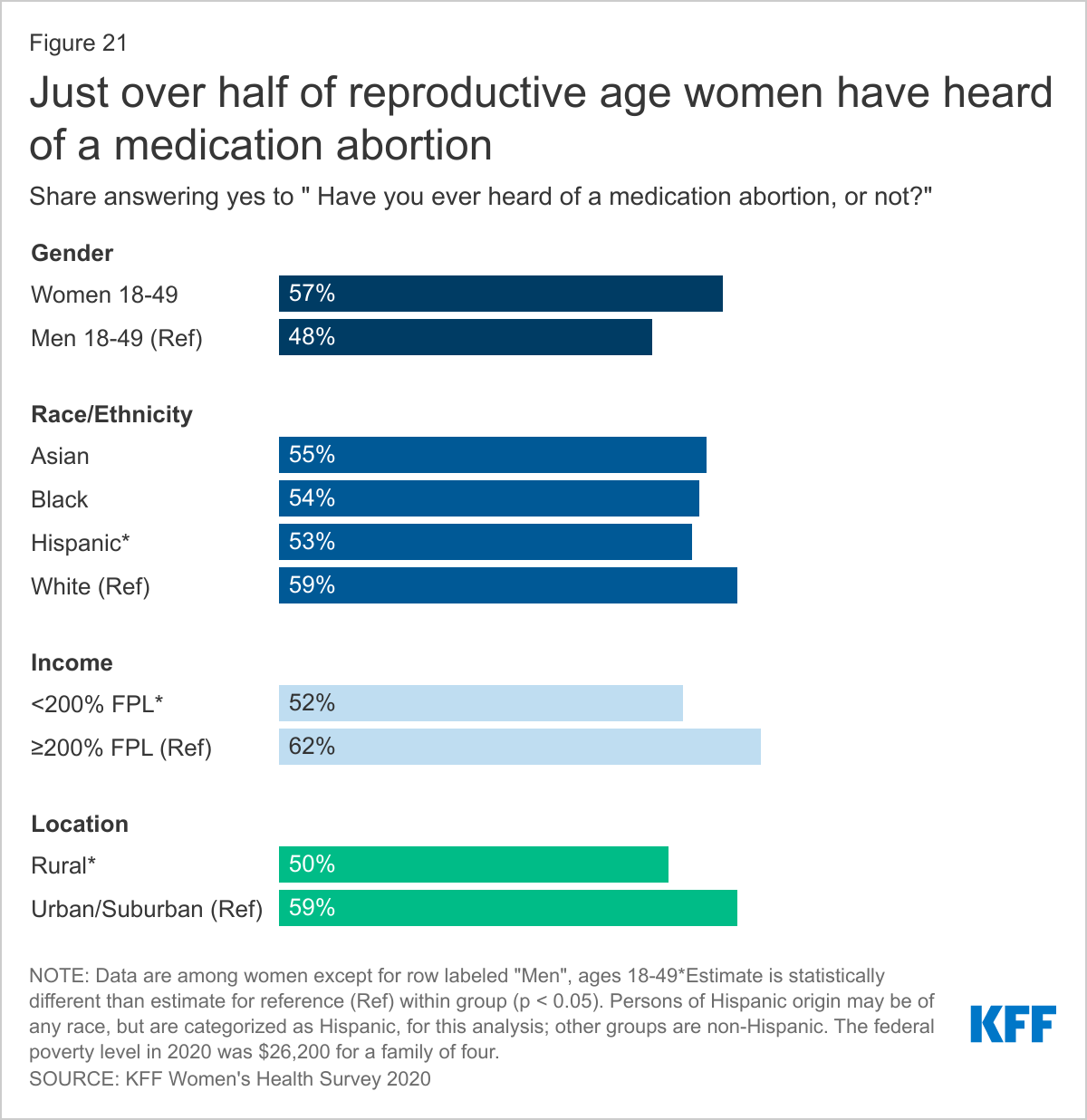
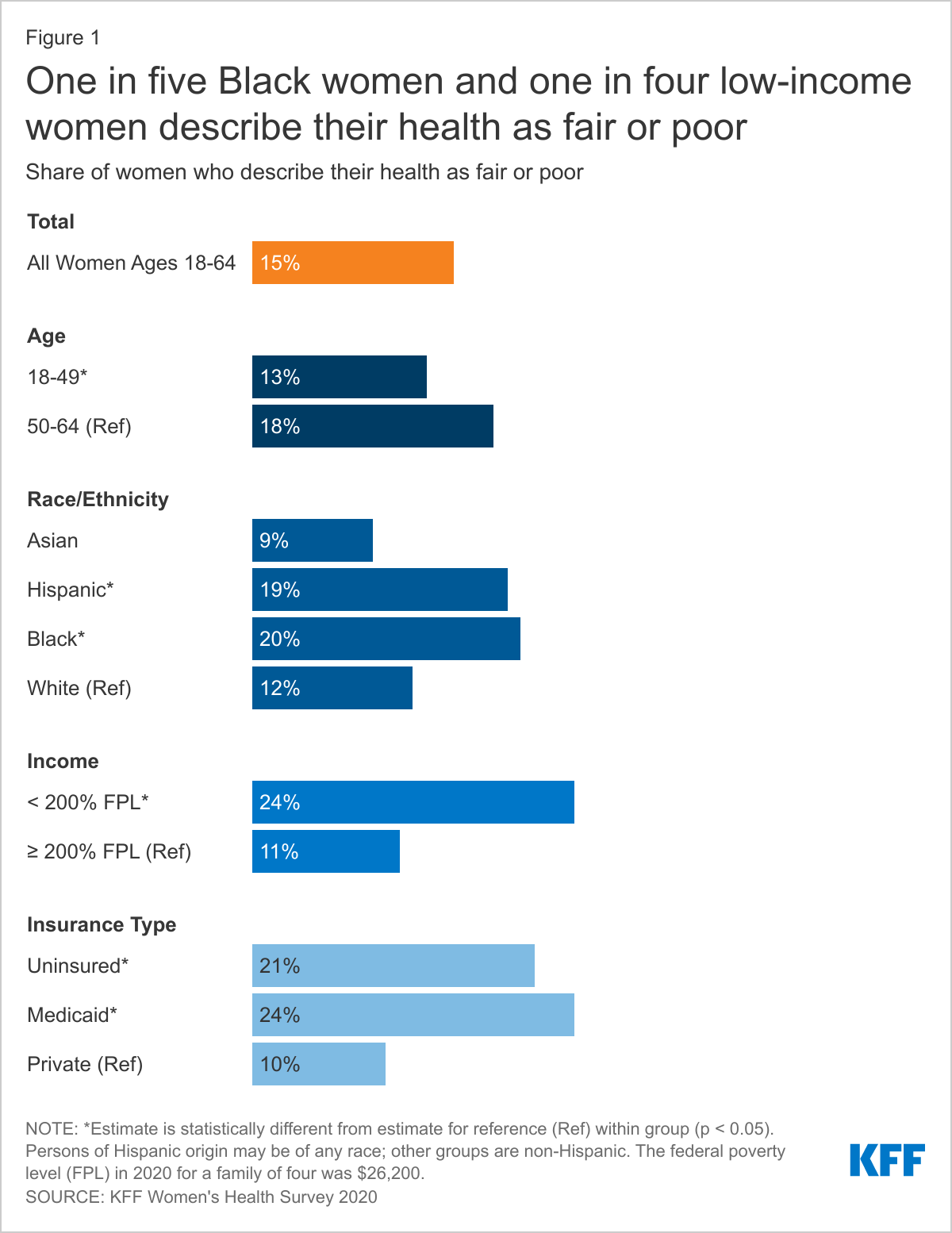
Changes in Uncompensated Care Costs by Setting

Uncompensated care costs fell by an equal percentage in hospital and community settings following the ACA, but hospitals continue to shoulder the majority of these costs (Table 2).  Between 2011-2013 and 2015-2017, annual average uncompensated care costs dropped by about a third in both hospital settings (from $36.9 billion to $25.1 billion, a 32% decline) and community settings (from $19.7 billion to $13.4 billion, also a 32% decline). Hospitals, however, continued to bear the bulk of uncompensated care costs, likely reflecting both the high cost of hospital care and laws requiring hospitals to treat and stabilize all patients, regardless of insurance status. In 2015-2017, hospital uncompensated care costs totaled $25.1 billion, about 60 percent of overall uncompensated care costs. The balance of costs was incurred for community-based providers ($13.4 billion) and prescription drugs ($3.9 billion). Among community-based providers, office-based visits to physicians, nurses, and physician assistants accounted for the largest share of uncompensated care costs, at about $7.1 billion.

Table 2: Uncompensated Care Costs for the Nonelderly (Age 0-64) Uninsured by Place and Type of Service, 2011-2013 and 2015-2017
2011-20132015-2017
$ Billions$ Billions
Total uncompensated care costs$62.8$42.4 ***
Hospital settings$36.9$25.1 ***
Community settings$19.7$13.4 ***
Office-based visits$17.0$10.8 ***
Physician, nurses, physician assistants$12.0$7.1 ***
Other providers$5.0$3.6 *
Home health$0.3$0.3
Dental$1.9$1.2 ***
Other medical1$0.4$1.2 **
Prescription Drugs$6.2$3.9 **
NOTES:1 Other medical includes glasses and contact lenses, ambulance services, disposable supplies, and durable medical equipment. */**/*** Estimate is significantly different from estimate for 2011-2013 at the 0.10/0.05/0.01 level, using two-tailed tests.SOURCE: Medical Expenditure Panel Survey-Household Component, 2011-2013 and 2015-2017.

Changes in Uncompensated Care Per Capita Among the Nonelderly Uninsured

Though aggregate uncompensated care has declined in the wake of the ACA, the share of health care spending that ends up uncompensated for those who remain uninsured did not decline following the ACA. On an average per capita basis, total spending among people who were uninsured at some point during the year (including spending while insured or uninsured) went from $2,720 in 2011-2013 to $3,084 in 2015-2017 (Figure 3), with uncompensated care costs accounting for a third ($887) of average per capita costs before the ACA and about a quarter ($796) after the ACA. The distribution of spending that was out-of-pocket, covered by insurance or alternative sources while insured, and uncompensated shifted slightly after the ACA, largely due to the part-year uninsured (who have some payment through insurance in the months when they are insured) accounting for a larger share of the uninsured. When looking at average per capita costs among the full-year uninsured, nearly three quarters of their average per capita spending was uncompensated care in both periods, with out-of-pocket spending constituting the majority of their remaining expenditures both before and after the ACA (Figure 3).

As in the past, people who are uninsured for the full year have much lower health care spending from all sources than those with coverage for some or all of the year. As shown in Table 1 (above), most people who are uninsured at some point during the year do not have any uncompensated care when they are uninsured. Many delay or avoid using care, even when needed, and others may use care but pay out of pocket for that care. In addition, on an average per capita basis, uninsured people had significantly lower per capita spending than the full-year insured, which was estimated to be an average of $5,591 in 2015-2017 (data not shown). Among the uninsured, per capita spending was twice as high for those who were uninsured for only part of the year compared to those who were uninsured all year both before and after the ACA (Figure 3). The higher spending of the part-year uninsured is due to their spending while insured, which accounted for the majority of their expenditures.

Figure 3: Per Capita Medical Spending Among Uninsured Nonelderly, by Insurance Status and Source of Payment, 2011-2013 versus 2015-2017

Looking Ahead

The ACA brought about a significant decline in provider uncompensated care costs in caring for the uninsured. This result was anticipated given the major coverage expansion afforded by the ACA. However, the ACA did not offer universal health insurance coverage and not all states adopted the Medicaid expansion. As a consequence, while uncompensated care costs declined by nearly a third following implementation of the ACA’s major coverage provisions in 2014, these costs continue to be considerable. We estimate uncompensated care costs totaled $42.4 billion in 2015-2017, with $15.1 billion of those costs implicitly subsidized, or not tied to any payment source such as non-health insurance sources of payment.

Importantly, multiple programs sponsored by federal, state, and local governments help health care providers offset a sizable share of these costs. However, these approaches may be inefficient, may not target funds to providers with the most uncompensated care, or may still leave uninsured people with bad debt, credit issues, or even bankruptcy.  Provider charity covers some of the remaining uncompensated care costs, and a very small share, estimated to account for less than one percent of private insurance payments, is potentially covered through cost-shifting to those with private insurance. Research examining trends in private hospital payments and changes in the uninsured, as well as research examining private insurance payment rates and market power among large hospitals with high uninsured patient mix, has not found a consistent, close link between the uninsured and increase private payment rates to offset uncompensated care costs.

Uncompensated care costs may be on the rise. Since 2017, the last year of our study period, the uninsured rate increased both in 2018 and 2019, growing by a million and a half people during that two-year period, which likely brought about an uptick in uncompensated care costs. Further, the widespread job losses resulting from the COVID-19 pandemic in 2020 threaten to put health insurance coverage at risk for millions of workers and their families.  As of February 2021, the unemployment rate stood at 6.2 percent, nearly double the pre-pandemic level, and many workers have left the labor force. While many who lose employer coverage could become eligible for Medicaid or ACA marketplace subsidies, some may not enroll, and others may continue to be ineligible for coverage. The need for medical care to test, treat, or prevent COVID-19 has also highlighted the potential consequences of uncompensated care for uninsured people.

A rise in uncompensated care costs is always a concern but particularly so now given that the expected increase in these costs occurs at a time when state and local governments face declining revenues because of the pandemic-induced recession. A drop in revenues could jeopardize funding for existing programs that help offset uncompensated care costs, just as some providers have incurred significant financial losses from COVID-19. While the federal government has made provider relief funds available to reimburse providers for treating patients with COVID-19, there is no guaranteed allotment of funds for uninsured patients, and limited funds have been paid out to offset costs for uninsured patients to date.

Given the heightened need for health care among many due to the pandemic, additional coverage loss at a time of shrinking resources to cover health care expenses could further challenge the ability of the health care system to meet needs. At the same time, recent efforts – including reopening of ACA enrollment by the Biden Administration and enhanced premium subsidies and new incentives for states to expand Medicaid under the American Rescue Plan – could increase the number of people covered and put reduced pressure on providers and government sources of financing for uncompensated care.

Michael Karpman and Teresa A. Coughlin are with the Urban Institute. Rachel Garfield is with KFF.

Appendix

Technical Appendix

In this appendix, we provide a more detailed description of our study data, methods, and limitations, including our approach for estimating uncompensated care costs.

Data

We use 2011-2017 data from the Medical Expenditure Panel Survey Household Component (MEPS-HC), a nationally representative survey of the civilian noninstitutionalized population conducted by the Agency for Healthcare Research and Quality.  The MEPS-HC collects detailed information on monthly health insurance coverage and health care utilization and spending. Expenditure data reported by MEPS-HC participants are validated using information collected through the MEPS Medical Provider Component (MPC), which follows up with a sample of respondents’ health care providers and pharmacies to collect information on charges and payments.  MPC data are used to edit and impute spending in the MEPS-HC.

Definition of Uncompensated Care Costs

We identify uninsured patients’ spending that reflects uncompensated care costs, which include payments made on behalf of an uninsured person from sources other than comprehensive health insurance plans and out-of-pocket payments.  Our definition of uncompensated care costs includes two components: 1) alternative sources of payment for care and 2) implicitly subsidized care.  Below we describe how we identify spending while uninsured; define uninsured spending from alternative sources; calculate implicitly subsidized care; and apply adjustments to the data to reconcile differences in estimated expenditures between the MEPS-HC with the National Health Expenditure Accounts (NHEA) and to account for inflation and population growth.

Identifying spending while uninsured

We consider spending for medical events (e.g., provider visits, prescription fills) to be uninsured if the person was not insured in the month when the event occurred and the spending was not covered by private insurance (including TRICARE), Medicare, or Medicaid/CHIP.  We merge monthly insurance status data from the MEPS-HC full-year consolidated file to each medical event file to determine whether individuals were uninsured when the event occurred.  We calculate spending while uninsured for the following medical events:3 

  • Prescription drugs
  • Hospital inpatient stays
  • Hospital emergency room visits
  • Hospital outpatient visits
  • Office-based physician visits, including visits to physician-supervised health care professionals such as nurse practitioners and physician assistants
  • Office-based non-physician provider visits
  • Home health visits
  • Dental visits
  • Other medical expenses, which includes spending on durable medical equipment, disposable medical supplies, ambulance services, and vision care

For most types of medical events, we use the event month to determine coverage status at the time of care.  For hospital inpatient stays, we use coverage status based on the month of the beginning of the stay.  For prescription medicines, we link the prescription fills to other medical events (if applicable) and base coverage status on the month of those events.  For prescribed medicines that cannot be linked to other events and for “other” medical expenses in which event month is unavailable, we randomly assign the drug fill or expense to a month within the survey round and year in which the fill or expense occurred.  This approach allows us to assess total uninsured and insured spending by service and payer for people who were uninsured for part or all of the year.

Defining uninsured spending from alternative sources

Alternative sources of payment include the following payments made for care while uninsured:

  • VA or CHAMPVA
  • Other federal sources, including Indian Health Service, military treatment facilities, and other care provided by federal government
  • Other state and local sources, including community clinics, state and local health departments, and state programs other than Medicaid
  • Workers compensation
  • Other private sources, including private insurance payments reported for people without comprehensive private health insurance coverage during the year
  • Other unclassified sources, including auto, homeowners, and liability insurance and other unknown sources

Private insurance coverage in the MEPS-HC is defined as having a major medical plan covering hospital and physician services.  Some payments classified as “other private” may be from single-service plans.

Our definition of alternative sources excludes “other public” spending reported in the MEPS, which represents Medicaid payments for people not reported to be enrolled in Medicaid during the year.  Some of these reported payments may result from confusion between Medicaid and other state and local programs or may be for people not enrolled in Medicaid but presumed eligible by a provider who ultimately received payments from Medicaid.

We assume that payment from alternative sources are negotiated between payers and providers such that any difference between charges and payments represent a contractual discount accepted by the provider.  Therefore, there is no implicit subsidy for care covered by these sources.

Calculating implicitly subsidized care

As noted in the brief, our estimates of implicitly subsidized care are based on the expected private payments for care if an uninsured person was privately insured minus their actual payments made out-of-pocket and from other private or unclassified sources.

We first sum the total charges and payments for each service, excluding prescription medicines, among full-year privately insured nonelderly people with no reported public coverage or public spending during the year.  We then take the ratio of average total payments to average total charges for each service.  This payment-to-charge ratio represents the average share of charges for each service that we would expect to be covered by private insurance.  We do not calculate a payment-to-charge ratio or implicitly subsidized care for prescription drugs because the MEPS-HC does not provide data on charges.

Next, we identify uninsured spending for each service that is eligible for implicitly subsidized care among people who were uninsured for part or all of the year.  Eligible charges and payments are based on whether the service was only paid for out-of-pocket and/or covered by other private or unidentified sources.  Charges and payments while uninsured are considered ineligible if fully or partially covered by Medicare, Medicaid, private insurance, other public sources, or other indirect sources.

For each service, we multiply the total eligible charges while uninsured by the privately insured payment-to-charge ratio to calculate the expected payment for the service if the uninsured person was privately insured.  We then subtract actual out-of-pocket or private payments from expected privately insured payments for each service; this difference represents implicitly subsidized care.

Applying NHEA, inflation, and population adjustments

The MEPS-HC captures less aggregate medical spending than the National Health Expenditure Accounts (NHEA) data, even after accounting for difference in populations and medical expenditure categories across sources. We adjust expenditures by payer and service type to more closely reflect NHEA aggregate expenditure totals based on adjustment factors developed by Bernard et al. for reconciling MEPS and NHEA expenditures in 2012. Adjustment factors are available for the following payers: private insurance, Medicare, Medicaid, defense, VA, and workers’ compensation; no adjustment is made for other public payers and other sources.  We also do not adjust out-of-pocket expenditures, which is not measured directly in the NHEA but is instead a residual category of expenditures.  We instead assume out-of-pocket expenditures reported in the MEPS-HC are more accurate.  Consistent with this approach, NHEA adjustments for implicitly subsidized care are calculated only for the share of eligible uninsured spending paid by other private insurance because there is no adjustment for out-of-pocket spending or spending from other unclassified sources.  For each payer, NHEA adjustments are made for the following service categories: hospital, physician, non-physician providers, dental care, home health care, prescription drugs, and other medical equipment.

We inflate all spending to constant 2017 dollars for each service type based on appropriate price indices.  We use the Personal Health Care Expenditure components of the NHEA for hospital care, physician/clinical services, other professional services, dental care, home health care, and durable medical equipment.  We adjust prescription drug spending for inflation using the Consumer Price Index for prescription drugs.  After these adjustments are made, we sum implicitly subsidized care and indirect uninsured spending across payment sources and service types to calculate uncompensated care costs overall, by payer, and by service type.  We apply the same NHEA and inflation adjustments to insured spending.  Finally, we adjust all estimates to account for population growth based on Census Bureau population projections .

Analysis and Limitations

We compare average annual per capita and total uncompensated care costs for nonelderly people ages 0 to 64 between 2011-2013 and 2015-2017, the periods just before and just after implementation of the ACA’s major coverage provisions in 2014.  We pool three years of data in each period to increase the precision of our estimates.  All analyses use survey weights and survey design variables to calculate standard errors that reflect the complex design of the MEPS.

Though approximately one-third of self-reported expenditures in the MEPS-HC are validated based on the MPC, there is still potential for measurement error in estimated expenditures and the MPC does not collect spending data from dental providers, non-physician providers, or medical equipment.  Studies have also found measurement error in self-reported health insurance coverage in the MEPS, which may affect our estimates of spending among the uninsured and, consequently, uncompensated care costs.

Endnotes

  1. We exclude 2014 from our analysis of uncompensated care costs in the pre- and post-ACA periods because it is a transition year when the ACA’s major coverage provisions were implemented. ↩︎
  2. MEPS identifies these expenditures as Medicaid payments that were made for individuals not reported to be enrolled in the program at any time during the year. Some of these reported payments may result from confusion between Medicaid and other state and local programs or may be for people not enrolled in Medicaid but presumed eligible by a provider who ultimately received payments from Medicaid.  Agency for Healthcare Research and Quality, MEPS HC-201: 2017 Full-Year Consolidated Data File (Rockville, MD: Agency for Healthcare Research and Quality, August 2019), https://meps.ahrq.gov/data_stats/download_data_files_detail.jsp?cboPufNumber=HC-201. ↩︎
  3. Because the MEPS is a survey of the civilian noninstitutionalized population, it does not collect expenditure data for some services, such as long-term care provided in institutional settings and residential treatment for mental health and substance use disorders. ↩︎

Sources of Payment for Uncompensated Care for the Uninsured

Authors: Teresa A. Coughlin, Haley Samuel-Jakubos, and Rachel Garfield
Published: Apr 6, 2021

Issue Brief

Summary

Uncompensated care costs for the nation’s uninsured averaged $42.4 billion per year in the 2015-2017 time period. While substantial, these costs significantly declined following implementation of the Affordable Care Act’s coverage expansion, down from $62.8 billion per year in 2011-2013. Although health care providers incur substantial cost in caring for the uninsured, the bulk of their costs are compensated through a web of complicated funding streams, financed largely with public funds from the federal government, states and localities. This brief estimates the level of public funding that was paid to help offset providers’ uncompensated care costs for the uninsured in 2017. To conduct the analysis, we rely on several secondary data sources including government budget appropriations and expenditure data for major public programs that provided funds to cover the cost of care for the uninsured, as well as analyses of secondary data sources completed by others.  Key findings include:

  • Nationally, at least $33.6 billion in public funds were paid to providers to help defray providers’ uncompensated care costs associated with caring for the uninsured in 2017.
  • The federal government accounted for an estimated $21.7 billion, or nearly two-thirds of the public funding sources examined, most of which was through the Veterans Health Administration or Medicaid; providing $11.9 billion, states and localities made up the balance, primarily through indigent care and public assistance programs.
  • Comparing the level of public funding to our estimate of total uncompensated care costs for the uninsured ($42.4 billion per year in 2015-2017), we calculate that in the aggregate nearly 80.0 percent of providers’ uncompensated care costs were offset by government payments designed to cover these costs.

Given the rise in the number of the uninsured since 2017, provider uncompensated care costs associated with caring for the uninsured have likely increased. Between 2017 and 2019, the number of uninsured grew by an estimated 1.5 million.  In addition, with the economic toll brought on by the pandemic, the nation’s uninsured rate may have continued to climb in 2020. With the increase in uninsurance since 2017, provider uncompensated care also likely increased.  As policymakers undertake efforts to expand coverage and assess the financial impact of the pandemic, understanding uncompensated care costs and the adequacy of public funding to help defray these costs can help direct policies targeted to the uninsured. With substantial public funding of uncompensated care, government costs associated with increases in coverage could be offset in part by savings in other parts of the public ledger.

Introduction

Uninsured people use less care than their insured counterparts, but when they do use care and cannot pay for it themselves, the cost of that care is uncompensated.  Providers may absorb these costs as bad debt or tap into funding sources designed to cover some of the costs. However, these funding sources  may be inefficient or may not target funds to providers with the most uncompensated care, which can  leave uninsured people with bad debt, credit issues, or even bankruptcy.

Over the years, the federal government, states, and localities have devoted considerable resources to pay providers for care they provide to uninsured patients through several public program efforts (e.g., Veterans Health Administration and state and local indigent care programs) and also through direct financial support (e.g., Medicaid disproportionate share hospital (DSH) payments).

The economic downturn caused by the COVID-19 pandemic has potentially led to millions more people in the United States being uninsured. In addition to posing challenges to these individuals’ ability to access needed health care and be protected from medical debt, rising uninsured rates could exacerbate issues with uncompensated care costs associated with providing health care to the uninsured.

In this brief, we examine government funding streams that were available to help providers defray the costs of providing medical services to the uninsured in 2017. Specifically, building on previous analyses, we use government program data and appropriations information and other data to estimate the level of public funds paid in 2017 to help offset providers’ uncompensated care costs associated with caring for the uninsured. This study complements our analysis that estimates the total cost of uncompensated care for uninsured people, using an alternative approach to estimate specific sources of funding for uncompensated care.1  We compare the total amount estimated in this analysis to our 2017 estimate of the total cost of care for uninsured people to assess the extent to which government funding defrays the uncompensated care costs for uninsured people.

Methods

We use publicly available program data and appropriations information and other secondary data to estimate the level of public funds paid in 2017 to help offset providers’ uncompensated care costs associated with caring for the uninsured. Specifically, we examine the following government funding sources: the Veterans Health Administration, the Medicaid program (namely, Medicaid DSH and uncompensated care pool payments), state and local indigent care programs, state and local public assistance programs, the Indian Health Service, and community health centers. For government funding tied to individual patients, the estimates reflect payments various programs made for direct medical care and services for uninsured people including inpatient care, outpatient care, behavioral health serves and prescription drugs. Non-medical related program activities (e.g., costs associated with facilities and administration) are not included. We also excluded uncompensated care costs associated with long-term care services. We then compare this level of estimated public funding to our estimate of the cost of uncompensated care provided to uninsured people in 2017, which was generated using data from the Medical and Expenditure Panel Survey.

Although we include major sources of public funding, we acknowledge that we do not account for all available government funding streams to help provide care for the uninsured.2  While this leads us to underestimate the level of available public funds for uncompensated care, previous analysis indicates that these sources account for a relatively small share of public funds for uncompensated care. To the extent possible, we tried to match services and payments we included with those contained in our recent analysis that estimated the level of uncompensated care costs for the uninsured. This was done so we could compare the extent to which government funding defrays the uncompensated care costs for uninsured people, but we acknowledge that the alignment is likely imperfect.

Another limitation to the analysis is that we do not account for private funding sources that are available to help pay for care received by the uninsured such as care provided to the uninsured by philanthropic organizations or by private physicians or private funds that flow through government-funded programs, such as prescription drug rebates.

These estimates rely on available information on program budgets as well as a series of supported assumptions about to what extent funds are directed to cover the cost of care for uninsured people. Details on the different data sources, the assumptions, and the process for estimating the level of government funding can be found in the technical appendix.

Findings

In the aggregate, we estimate that government payments to offset the cost of uncompensated care for the uninsured totaled $33.6 billion in 2017 (Figure 1 and Table 1).  The federal government contributed nearly two-thirds of these payments, an estimated $21.7 billion. States and local government payments accounted for the remaining amount, $11.9 billion.

Figure 1: Sources of Public Funding for Uncompensated Care Costs for Uninsured People, by Program Type and Source of Funds, 2017

The Veterans Health Administration was the single largest government payment source, spending an estimated $10.3 billion in caring for the uninsured in 2017, all of which was federal funds (Table 1). With estimated spending totaling $9.8 billion, funding provided through the Medicaid program followed closely. Medicaid payments to cover the cost of care for the uninsured were split between DSH payments ($4.4 billion) and uncompensated care pool payments ($5.4 billion).  The federal government accounted for more than four-fifths of this Medicaid funding, reflecting states’ use of alternate financing arrangements to finance their share of DSH and uncompensated care pool funds.3 

Through public assistance and indigent care programs, states and localities spent an estimated $9.9 billion on caring for the uninsured. The bulk of these payments, $7.7 billion, came from tax appropriations for indigent care programs. An estimated $2.2 billion was spent through state and local government public assistance programs.

Other federal programs examined were the Indian Health Service, which spent an estimated $2.3 billion on the uninsured (all federal funds), and community health centers which spent an estimated $1.3 billion, with $1 billion being federal payments and $0.3 billion state and local.

Table 1: Estimate of Public Funding for Uncompensated Care Costs for Uninsured by Program Type and Funding Sources Examined, 2017 ($Billions)
ProgramFunding by Program by Level of Government ($Billions)
FederalState/LocalTotal
Total Estimated Public Funding for UCC Costs for Uninsured by Payment Sources Examined$21.7$11.9$33.6
Veterans Health Administrationa$10.3NA$10.3
Medicaid Programb$8.1$1.7$9.8
UCC Pool Payments$4.6$0.8$5.4
DSH Payments$3.5$0.9$4.4
State and Local ProgramsNA$9.9$9.9
State/Local Tax Appropriations for Indigent ProgramscNA$7.7$7.7
State/Local Public AssistancedNA$2.2$2.2
Indian Health Servicee$2.3NA$2.3
Community Health Centersf$1.0$0.3$1.3
NOTES:a U.S. Department of Veteran Affairs. (2019). “Volume II Medical Programs and Information Technology Programs Congressional Submission FY 2019 Funding and FY 2020 Advance Appropriations.” http://www.va.gov/vetdata/Expenditures.asp; Huang, G., Muz, B., Kim, S., & Gasper, J. (2018). “2017 Survey of Veteran Enrollees’ Health and Use of Health Care.” Westat. https://www.va.gov/HEALTHPOLICYPLANNING/SOE2017/VA_Enrollees_Report_Data_Findings_Report2.pdf.b Medicaid and CHIP Payment and Access Commission (MACPAC). (2018, December) “MACStats: Medicaid and CHIP Data Book.” https://www.macpac.gov/wp-content/uploads/2018/12/December-2018-MACStats-Data-Book.pdf; U.S. Government Accountability Office (GAO). (2019, July). “Medicaid States’ Use and Distribution of Supplemental Payments to Hospitals.” Report to Congressional Requesters. GAO-19-603. https://www.gao.gov/assets/710/700378.pdf;  U.S. Government Accountability Office (GAO). (2014, July). “Medicaid Financing States’ Increased Reliance on Funds from Health Care Providers and Local Governments Warrants Improved CMS Data Collection.” Report to Congressional Requesters. GAO-14-627. https://www.gao.gov/assets/670/665077.pdf; U.S. Government Accountability Office (GAO). (2015, March 13). “Medicaid Financing: Questionnaire Data on States’ Methods for Financing Medicaid Payments from 2008 through 2012.” GAO-15-227SP. https://www.gao.gov/products/gao-15-227sp;MACPAC. (2019, March). “Medicaid Base and Supplemental Payments to Hospitals.” Note the link to this issue brief is no longer publicly available but formerly accessed at https://www.macpac.gov/wp-content/uploads/2018/06/Medicaid-Base-and-Supplemental-Payments-to-Hospitals.pdf.c Centers for Medicare and Medicaid Services. (2019, December). “National Health Expenditure Accounts (NHEA).” https://www.cms.gov/Research-Statistics-Data-and-Systems/Statistics-Trends-and-Reports/NationalHealthExpendData/NationalHealthAccountsHistorical.d Centers for Medicare and Medicaid Services. (2019, December). “National Health Expenditure Accounts (NHEA). ”https://www.cms.gov/Research-Statistics-Data-and-Systems/Statistics-Trends-and-Reports/NationalHealthExpendData/NationalHealthAccountsHistorical.e U.S. Department of Health and Human Services, Indian Health Service. (2018). “Indian Health Service Budget Submission Fiscal Year 2019 Congressional Justification.” https://www.ihs.gov/sites/budgetformulation/themes/responsive2017/display_objects/documents/FY2019CongressionalJustification.pdf.f U.S. Department of Health and Human Services, Health Resources & Services Administration (HRSA), Bureau of Primary Health Care. (2017). “2017 Health Center Data.”  https://bphc.hrsa.gov/uds2017/datacenter.aspx?q=tall&year=2017&state=.SOURCE: Authors’ estimates derived from secondary data.

Government payments substantially offset the cost of uncompensated care for the uninsured. In other recent work, we estimated uncompensated care costs for the nation’s uninsured averaged $42.4 billion per year in the 2015-2017 time period. Comparing this estimate to our estimate of government payments for uncompensated care in 2017 ($33.6 billion), public dollars cover nearly 80 percent of providers’ costs of caring for the uninsured.

The remaining share of uncompensated care (about 20 percent) may be covered by private sources, provider charity, or possibly transferred to other payers in the health care system. While, overall, government funding offsets nearly four-fifths of provider uncompensated care costs, it does not pay for all of these costs.  Based on our estimates, about $8.8 billion is not covered by public dollars included in this analysis.  Some of this remaining share may be accounted for by public sources not considered in this analysis, though in earlier analysis we estimate those amounts to be relatively small. Private funding sources (e.g., workers compensation, provider charity and philanthropic organizations), which we did not consider here, may also cover some of the residual share. Some of it may be also be paid for by the privately insured through increased health insurance premiums. The extent to which providers shift costs associated with shortfalls in Medicare and Medicaid payments and caring for the uninsured to private payers has been a long-standing health policy question and remains unsettled.4  While limited research has been conducted on provider cost shifting to pay for charity care associated with the uninsured,5 considerable work has examined whether hospitals charge private payers more because of shortfalls in public payments. Evidence on this question is mixed, showing that provider’s ability to do so is largely based in market power, cost shifting occurs at a relatively low rate, and when it occurs it does so well below a “dollar for dollar” shift.6 

Even if we assume, however, that all the $8.8 billion spending on the uninsured not covered by public dollars was passed to the privately insured, the effect on premiums would be small. According to the National Health Expenditures Account, spending on private health insurance premiums totaled $975.5 billion in 2017, so uncovered spending on the uninsured accounted for less than 1 percent total spending on health insurance premiums.

Looking Ahead

Even with the significant coverage expansion afforded by the ACA, provider uncompensated care costs associated with caring for the uninsured remain substantial. In other recent work, we estimate that these costs averaged $42.4 billion each year in 2015-2017. At the same time, as reported here we find that the government covers the vast majority of uncompensated care costs; we calculate that nearly 80 percent of these costs were compensated with public funding.

Importantly, though, our analysis examined providers’ uncompensated care costs and sources of public funding in the aggregate, not at the individual provider level. The federal government, states and localities support multiple programs designed to help offset provider uncompensated care costs, and targeting of payments made under these varied programs has been a longstanding issue. Thus, some providers may incur costs treating the uninsured and receive little to no compensation.

The level of provider uncompensated care is far from static. Since 2017, the level of uninsurance has increased. Between 2017 and 2019, the number of the uninsured grew by 1.5 million and may have continued to increase in 2020 due the economic downturn caused by COVID-19. So, in all likelihood, provider uncompensated care costs have also increased since 2017.

Apart from rising uninsurance, changes to government payments to cover uncompensated care costs have occurred since 2017, and more are scheduled.  Beginning in in fiscal year 2020, for example, the distribution of Medicare hospital uncompensated care payments changed so that hospital uncompensated care levels rather than Medicaid and Supplemental Security Income (SSI) days are used to allocate these payments. Estimated to total about $8.4 billion each year, this Medicare policy change provides a substantial new funding source to help offset providers’ uncompensated care costs associated with the uninsured.7  On the other hand, sizable reductions in federal Medicaid DSH allotments are scheduled. Under current law, cutbacks in federal funding totaling $8 billion each year are set to start fiscal year 2024 and run to fiscal year 2027. As policymakers undertake efforts to expand coverage and assess the financial impact of the pandemic, understanding uncompensated care costs and the adequacy of public funding can help direct policies targeted to the uninsured. With substantial public funding of uncompensated care, government costs associated with increases in coverage could be offset in part by savings in other parts of the public ledger.

Teresa A. Coughlin and Haley Samuel-Jakubos are with The Urban Institute. Rachel Garfield is with KFF.

Appendix

Technical Appendix

In this appendix, we provide a more detailed description of data sources, assumptions, and limitations used in the analysis.  The discussion is arranged by program funding source and level of spending.

As mentioned in the brief, we rely on government program data and appropriations information and other secondary data to estimate the level of public funds paid in 2017 to help offset providers’ uncompensated care costs associated with caring for the uninsured. Specifically, we examine the following funding sources: Veterans Health Administration, Medicaid DSH payments, Medicaid uncompensated care pool payments, state and local indigent care programs, and state and local public assistance programs, Indian Health Service, and community health centers.8  For direct patient payments, the estimates reflect payments made for direct medical care and services only;9  they do not include spending on non-medical related program activities (e.g., costs associated with facilities and administration). More specifically, we excluded costs associated with medical facilities, medical support and compliance, enabling services (e.g., outreach, education, community health workers, etc.), as well as long-term care services and supports.

These estimates are based on available information on program budgets as well as a series of supported assumptions about to what extent funds are directed to cover the cost of care for uninsured people. As such, there is uncertainty in these estimates.

Veterans Health Administration. The Veterans Health Administration (VHA) provides care to over 9 million veterans enrolled in the VA health care program. In 2017, the VHA spent $51.0 billion on direct medical care for veterans, which included direct medical care obligations used to support inpatient care and outpatient care, as well as dental care, mental health care, prosthetics and rehabilitation care. A 2017 national survey of VHA enrollees found that 20.2 percent of VHA enrollees lacked health coverage. Assuming that uninsured VHA enrollees incur costs proportionate to their share of the patient population, we apply the percent of uninsured VHA enrollees to the direct medical care spending to estimate that total VHA spending on care for the uninsured was $10.3 billion in 2017, all of which was federally funded (Appendix Table 1). This estimate may be an undercount if uninsured patients incur a larger share of costs relative to their share of the VHA patient population.

Appendix Table 1: Estimated Veterans Health Administration (VHA) Appropriations/Obligations Spent on Medical Care for the Uninsured, 2017 ($Billions)
VHA Appropriations for Direct Acute Medical Care Servicesa$51.0
Percent of VHA Users with No Public or Private Health Insuranceb20.2%
Estimated Direct Medical Care Spending for Uninsured$10.3
NOTES:a Estimate of VHA appropriations expenditures devoted to direct medical care services is derived from final FY 2017 national VHA budget: inpatient care ($10.7 billion) + outpatient (ambulatory) care ($29.3 billion) + dental care ($1.0 billion) + mental health care ($6.1 billion) + prosthetics ($3.2 billion) + rehabilitation care ($0.7 billion)  = $51.0 billion. Final direct medical budget appropriations for inpatient and outpatient services includes those discretionary and mandatory obligations associated with medical services and community care. U.S. Department of Veteran Affairs. (2019). “Volume II Medical Programs and Information Technology Programs Congressional Submission FY 2019 Funding and FY 2020 Advance Appropriations.” http://www.va.gov/vetdata/Expenditures.asp.b Huang, G., Muz, B., Kim, S., & Gasper, J. (2018). “2017 Survey of Veteran Enrollees’ Health and Use of Health Care.” Westat. https://www.va.gov/HEALTHPOLICYPLANNING/SOE2017/VA_Enrollees_Report_Data_Findings_Report2.pdf.SOURCE: Authors’ estimate based on U.S. Department of Veterans Affairs expenditures data: http://www.va.gov/vetdata/Expenditures.asp.

 Medicaid Program. Apart from base payments paid to hospitals, the Medicaid program also makes supplemental payments to hospitals, some of which can be targeted to help pay for uncompensated care hospitals render to the uninsured.  As set out in a 2019 report by MACPAC, Medicaid makes two types of supplemental payments that are designed, at least in part, to support uncompensated care costs hospitals incurring in caring for the uninsured: disproportionate share hospital (DSH) payments and uncompensated care pool payments.10 

Medicaid DSH payments.  Required by federal law, Medicaid DSH payments are intended to help hospitals that serve a high or disproportionate share of Medicaid and low-income patients. DSH payments can be used not only to cover the unpaid cost of caring for uninsured patients but also can help offset Medicaid shortfall—that is, the difference between a hospital’s cost of providing care to a Medicaid patient and the Medicaid payment received for providing care.  Within broad federal guidelines, states decide on what basis they allocate DSH payments among hospitals.

In 2017, Medicaid DSH payments to hospitals totaled $12.1 billion, with the federal share totaling $6.9 billion; the state share, $5.2 billion.11   To estimate what portion of these payments were available to help defray hospitals’ uncompensated care costs for the uninsured, we made several assumptions. First, we assumed that 50 percent of DSH payments went to cover uncompensated care costs for uninsured patients and 50 percent went to offset shortfalls in Medicaid base payments.  Limited information is available on how DSH funds are actually allocated. To our knowledge the most recent available information is 2019 work done by MACPAC which used 2014 DSH audit statements to examine on what basis DSH payments are distributed. MACPAC reported that nationally, in 2014, 69 percent of DSH hospital payments went to help offset the cost of caring for uninsured patients, and 31 percent went to cover Medicaid payment shortfall.12  Owing to the ACA coverage expansion, between 2014 and 2017, the number of uninsured declined while the number of Medicaid enrollees increased. Because of this decline, for this analysis we assumed that states adjusted their DSH allocations to account for these shifts in insurance coverage. If states in 2017 paid out less than 50 percent of Medicaid DSH payments to help defray uncompensated care costs, we overstate the availability of these payments to cover unpaid costs of uninsured patients.13  Alternatively, if states allocated more than 50% of their DSH payments to cover uncompensated care costs, we understate availability.

Second, we made assumptions about what share of Medicaid DSH payments represent new funding available to hospitals to help cover uncompensated care costs for the uninsured. For many years states have relied on provider taxes, inter-governmental transfers (IGTs), certified public expenditures (CPEs) and other financing mechanisms to finance their share of DSH payments rather than using revenue from state general funds, which is generally the source of funding for the state Medicaid share. Data collected by the US. General Accountability Office for state fiscal year 2012 (the most recently available information to our knowledge) found that, nationally, 63.9 percent of the state share of DSH payments used revenues from provider taxes, IGTs and similar funding types for financing; the balance of the state share (36.1 percent) of DSH payments was financed with state funds such as state general revenues.

To account for these alternative financing sources, we assumed that the state share of DSH payments raised by provider taxes, IGTs and like financing was the same in 2017 as it was in 2012. We further assumed that the state share of DSH payments financed with these alternative financing sources did not represent new funds to the hospitals. In many instances, hospitals supply the money to fund the alternative financing sources that states then used to pay the state share of DSH payments. In contrast, we assumed that the state share of the DSH payments financed with state general funds did represent new funds available to hospitals to help pay for the unpaid costs of caring for the uninsured. We similarly assumed that the entirety of the federal share of DSH payments represented new funding to hospitals available to defray the unpaid costs for the uninsured. Applying these assumptions, we estimate that $1.9 billion of the state share of DSH payments (.36 x $5.2 billion) in 2017 represents new funding to hospitals, of which 50 percent ($0.9 billion) went to help cover uncompensated care costs for the uninsured. Similarly, we estimate that 50 percent of the full federal share of DSH payments (half of $6.9 billion or $3.5 billion), were paid to hospitals to help cover uncompensated care costs for the uninsured (Appendix Table 2).  Combining the federal and state share we estimate that in 2017 $4.4 billion in Medicaid DSH payments were directed to hospitals with the goal of helping to defray the uncompensated care costs of the uninsured.

Appendix Table 2: Estimate of Medicaid Supplemental Payments Available to Fund Uncompensated Care Costs for Uninsured, 2017 ($Billions)
Potentially Available Funding ($Billions)
FederalState/LocalTotal
Estimated Medicaid Funding for Uninsured$8.1$1.7$9.8
DSH Paymentsb$3.5$0.9$4.4
UCC Pool Paymentsa$4.6$0.8$5.4
NOTES:a MACPAC. (2019, March). “Medicaid Base and Supplemental Payments to Hospitals.” Note the link to this issue brief is no longer publicly available but formerly accessed at https://www.macpac.gov/wp-content/uploads/2018/06/Medicaid-Base-and-Supplemental-Payments-to-Hospitals.pdf; U.S. Government Accountability Office (GAO). (2014, July). “Medicaid Financing- States’ Increased Reliance on Funds from Health Care Providers and Local Governments Warrants Improved CMS Data Collection.” Report to Congressional Requesters. GAO-14-627. https://www.gao.gov/assets/670/665077.pdf.b Medicaid and CHIP Payment and Access Commission (MACPAC). (2018, December) “MACStats: Medicaid and CHIP Data Book.” https://www.macpac.gov/wp-content/uploads/2018/12/December-2018-MACStats-Data-Book.pdf; U.S. Government Accountability Office (GAO). (2019, July). “Medicaid- States’ Use and Distribution of Supplemental Payments to Hospitals.” Report to Congressional Requesters. GAO-19-603.  https://www.gao.gov/assets/710/700378.pdf;  GAO. (2014, July). “Medicaid Financing States’ Increased Reliance on Funds from Health Care Providers and Local Governments Warrants Improved CMS Data Collection.” Report to Congressional Requesters. https://www.gao.gov/assets/670/665077.pdf.SOURCE:  Authors’ estimates using secondary data sources.

 Medicaid Uncompensated Care Pool Payments. In fiscal year 2017, nine states supported uncompensated care pool payments through Medicaid Section 1115 demonstrations.14  Combined, $8.0 billion in pool payments were made in 2017 across the nine states, about $4.6 billion in federal funds and $3.4 billion in state funding.15  The specifics of how pool payments are made and on what basis vary state to state; California’s Global Payment Program (accounting for nearly half, $3.8 billion, of all pool payments in 2017), for example, supported payments to cover the uninsured costs of care with a particular emphasis on providing care in appropriate, cost-effective settings.

Similar to state financing of Medicaid DSH payments, a large part of the state share of uncompensated care pool payments is financed with funds from providers and local governments through provider taxes and IGTs. According to the U.S. General Accounting Office, nationally, providers and local governments provided 78 percent of the state share of non-DSH supplemental payments in 2012.16  Consistent with our adjustment for state use of alternative funding sources in financing DSH payments, we assumed that the state share of uncompensated care pool payments paid for with these alternative sources did not represent new funds to providers. We further assumed that the state share of uncompensated care pool payments (22 percent) financed with state funds did represent new funds to providers. We also assumed that the entirety of the federal share of uncompensated care pool payments represented new funding to providers. Applying these assumptions, we estimate that $0.8 billion of the state share of uncompensated care pool payments (.22 x $3.4 billion) in 2017 represents new funding to providers. Combining this with the full federal share of uncompensated care pool payments ($4.6 billion), we estimate that $5.4 billion in Medicaid uncompensated care payments were paid to providers to help cover the unpaid costs of the uninsured in 2017 (Appendix Table 2). Between Medicaid DSH and UCC payments, we estimate that Medicaid paid $9.8 billion to help cover the cost of caring for the uninsured, with $8.1 billion in federal funds and $1.7 billion in state funds.

State and Local Tax Programs and Public Assistance. State and local governments provide funds to cover some uncompensated care costs through subsidies to providers and funding of public assistance and indigent care programs. We estimate state and local tax expenditures and spending on public assistance that goes toward uncompensated care based on the National Health Expenditure Accounts (NHEA) for 2017. There is no comprehensive information available on how these funds were used or what share went toward care for the uninsured. Mirroring our previous work in this area, we assume that 50 percent of these funds support uncompensated care costs.

Specifically, we calculated state and local tax appropriations to cover the cost of uncompensated care for the uninsured based on funds reported as “Other state and local programs” that went toward the following services: hospital ($15.3 billion), physician and other clinical services ($0.08 billion), other professional services ($0.01 billion), and prescription drugs ($0.01 billion). We assume half of these total funds support uncompensated care, leading to an estimated $7.7 billion in payments made by state and local tax appropriations in 2017 (Appendix Table 3).

For state and local public assistance spending to cover the cost of uncompensated care for the uninsured we use funds reported as “general assistance” that went toward the following services: hospital ($2.6 billion), physician and other clinical services ($0.8 billion), other professional services ($0.1 billion), and prescription drugs ($0.9 billion). We assume half of these total funds supported uncompensated care costs, leading to an estimated $2.2 billion in state and local public assistance paid in 2017 (Appendix Table 3).

Appendix Table 3: Estimate of State and Local Tax Programs and Public Assistance Programs for Medical Care for Uninsured, 2017 ($Billions)
Estimated State/Local Spending on the Uninsured$9.9
State/Local Tax Appropriations for Indigent Programs, 2017a$7.7
State/Local Public Assistance Spending on the Uninsured, 2017b$2.2
NOTES:a State and local appropriations for indigent programs reflect those public payments designated as “other state and local programs” including total hospital expenditures ($15.3 billion) + total physician and other clinician services expenditures, other professional services expenditures, and prescription drug expenditures (collectively amount to roughly $0.1 billion). Note that we assume that half of the public payments tied to these expenditures support uncompensated care.b State and local public assistance reflect those public payments designated as “general assistance” including total hospital expenditures ($2.6 billion) + total physician and other clinician services expenditures ($0.8 billion) + total other professional services expenditures ($0.1 billion) + total prescription drug expenditures ($0.9 billion). Note that we assume that half of the public payments tied to these expenditures support uncompensated care.SOURCE: U.S. Department of Health and Human Services Centers for Medicare and Medicaid Services National Health Expenditure Accounts (NHEA) CY 2017: https://www.cms.gov/Research-Statistics-Data-and-Systems/Statistics-Trends-and-Reports/NationalHealthExpendData/NationalHealthAccountsHistorical.

 Indian Health Service. In 2017, the Indian Health Service (IHS) spent $3.4 billion providing direct medical care services to American Indians and Alaska Natives. This included spending on inpatient hospital services and services provided in health clinics (e.g., outpatient care and prescription drugs) as well as referred care services which supports the delivery of health care services not available in IHS-operated facilities. To estimate how much of this spending went to care for uninsured American Indians and Alaska Native, we deducted the $1.1 billion IHS received from third-party payers from total medical spending ($3.4 billion), and estimate that IHS spent $2.3 billion caring for the uninsured in 2017, all of which was federally funded (Appendix Table 4).

Appendix Table 4: Estimate of Indian Health Service Spending for Medical Care for Uninsured, 2017 ($Billions)
Estimated Appropriations Spent on Uninsured$2.3
IHS Spending for Medical Care Services, 2017a$3.4
Collections from Public and Private Insurance<$1.1>
NOTE:a IHS spending for medical care services includes hospital and health clinic services (e.g., inpatient care, ambulatory care, labs, pharmacy, etc.), dental services, mental health, alcohol and substance abuse services, and purchased/referred care services.SOURCE: U.S. Department of Health and Human Services Indian Health Service FY 2019 Performance Budget Submission to Congress: https://www.ihs.gov/sites/budgetformulation/themes/responsive2017/display_objects/documents/FY2019CongressionalJustification.pdf.

Community Health Centers. Administrated by the federal government, the Community Health Center (CHC) program comprises 1,373 health centers which, nationwide, provided health care services to 27 million individuals. National program data report that CHCs spent $15.5 billion on direct medical care and other clinical care services (e.g., dental, mental health, and prescription drugs) in 2017.17  Patient program revenue data show that 16.9 percent of total annual charges in 2017 were attributed to self-paying patients.  Applying the share of charges attributed to self-pay patients to total spending on medical spending, we estimate that CHCs spent $2.6 billion in caring for the uninsured in 2017 (Appendix Table 5).  We then deducted total collections received from self-pay patients ($1.1 billion) and funding received from private grants and contracts for the uninsured ($0.2 billion) and estimate that CHCs spent $1.3 billion in direct care for the uninsured.

Finally, to estimate the share of CHC spending on the uninsured by type of funding source (federal, state, or local), we multiplied the estimated level of CHC spending on the uninsured ($1.3 billion) by the share of total CHC program spending by federal, state and local sources. In 2017, program data show that the federal government provided 64 percent of overall CHC program funding, and state and local governments 24 percent.18  Applying these percentages to total estimated CHC spending on the uninsured, we estimate that the federal government paid $1.0 billion and federal and state and local governments $0.3 billion (Appendix Table 5).

Appendix Table 5: Estimated Community Health Centers Uncompensated Care Costs for Uninsured, 2017 ($Billions)
Estimated Uncompensated Care Spending on Uninsured$1.3
Medical and Other Clinical Services Spendinga$15.5
Share of Total CHC Spending for Self-Pay Patientsb16.9%
Share of Medical and Other Clinical Services Spending for Self-Pay Patients$2.6
Payments made by Self-Pay Patients<$1.1>
Private Payments for Uninsuredc<$0.2>
NOTES:a CHC medical costs for 2017 included medical care ($9.4 billion) and other clinical services ($6.1 billion).b CHC patient charges in 2017 totaled $27.7 billion, 16.9 percent ($4.3 billion) were incurred by self-pay patients.c Private payments includes funding from foundation/private grants and contracts.SOURCE: Bureau of Primary Health Care, HRSA, Uniform Data System, 2017 Health Center Data: https://bphc.hrsa.gov/uds2017/datacenter.aspx?q=tall&year=2017&state=.

Endnotes

  1. The estimates in this brief include spending to cover both implicitly subsidized care (that is, the cost of care for an uninsured person with no identifiable source tied to that specific person) and care covered through alternative (non-health insurance) sources, such as payments to providers through the Indian Health Service or grants to Community Health Centers. ↩︎
  2. For example, we do not include funding from the Ryan White HIV/AIDS Program or the Title V Maternal and Child Health Services Block Grant Program. ↩︎
  3. The high share of federal funding is due to how states generally finance their share of these payments, which is through alternative financing sources such as provider taxes and intergovernmental transfers. See appendix for details. ↩︎
  4. See for example, Frakt, A.B. (2011). How Much Do Hospitals Cost Shift? A Review of the Evidence. The Milbank Quarterly,  89 (1); 90-130. DOI: 10.1111/j.1468-0009.2011.00621.x;Gruber, J. & Rodriquez, D. (2007). How much uncompensated care do doctors provide? J. of Health Economics 26,  1151-1169. DOI: 10.1016/j.jhealeco.2007.08.001;Colorado Department of Health Care Policy & Financing. (n.d.). Colorado Cost Shift Analysis. https://www.colorado.gov/pacific/hcpf/colorado-cost-shift-analysis. ↩︎
  5. One important exception to this is a study that showed that physicians provide negative to very limited uncompensated care to the uninsured. Gruber, J. & Rodriquez, D. (2007). How much uncompensated care do doctors provide? J. of Health Economics 26, 1151-1169. DOI: 10.1016/j.jhealeco.2007.08.001. ↩︎
  6. The ability to cost shift depends upon several factors, one being relative market power between hospitals and health plans. So, in some cases hospitals with substantial market power may have the ability to negotiate higher payments from insurers in response to increases in uncompensated care costs. But, Frakt finds that the preponderance of the literature as of 2011 shows that cost shifting is one strategy hospitals can adopt to make up for payment shortfall but that others (e.g., cutting costs) may be even more important. Changes to the health care market since 2011 (e.g., increased provider integration and consolidation) could shift the dynamics between payors and hospitals, in turn affecting the extent of provider cost shifting. Frakt, A.B. (2011). How Much Do Hospitals Cost Shift? A Review of the Evidence. The Milbank Quarterly, 89 (1); 90-130. DOI: 10.1111/j.1468-0009.2011.00621.x ↩︎
  7. In our analysis, we did not consider Medicare uncompensated care payments because until 2020 these payments were focused on defraying providers’ Medicaid payment shortfall not on the uninsured. Centers for Medicare and Medicaid Services. (2019, August 2). “Fiscal Year (FY)2020 Medicare Hospital Inpatient Prospective Payment System (IPPS) and Long Term Acute Care Hospital (LTCH) Prospective Payment System (CMS-1716-F).” https://www.cms.gov/newsroom/fact-sheets/fiscal-year-fy-2020-medicare-hospital-inpatient-prospective-payment-system-ipps-and-long-term-acute-0. ↩︎
  8. Unlike in our previous work on this topic, we do not include Medicare payments as a funding source for uncompensated care for the uninsured. While Medicare makes DSH and uncompensated care payments, in 2017 these payments were not directed to covering uncompensated care costs for the uninsured. Centers for Medicare and Medicaid Services. (2016, August 2). “Hospital Inpatient Prospective Payment System (IPPS) and Long Term Acute Care Hospital (LTCH) Final Rule Policy and Payment Changes for Fiscal Year (FY) 2017.” https://www.cms.gov/newsroom/fact-sheets/hospital-inpatient-prospective-payment-system-ipps-and-long-term-acute-care-hospital-ltch-final-rule. Specifically, in 2017 Medicare DSH payments were paid based on the level of a hospital’s Medicaid inpatient days, and Medicare uncompensated care payments were allocated based on a combination of the number of a hospital’s inpatient Medicaid days and the number of Medicare days for low-income Medicare patients who received Supplemental Security Incomes (SSI). In other words, in 2017 Medicare DSH and uncompensated care payments were largely directed at making up for the shortfall in Medicaid base payment, not uncompensated care for the uninsured. For more on this topic, see Stensland, J., Gaumer, Z.R., & Miller, M.E. (2016). Contrary To Popular Belief, Medicaid Hospital Admissions Are Often Profitable Because Of Additional Medicare Payments. Health Affairs, 35 (12), 2282- 2288. https://www.healthaffairs.org/doi/pdf/10.1377/hlthaff.2016.0599.  Importantly, beginning in fiscal year 2020 the way in which Medicare uncompensated care payments are distributed changed: Hospital uncompensated care levels (as reported in the Medicare cost report) rather than Medicaid and SSI days will be used to allocate Medicare uncompensated care payments, which are estimated to total about $8.4 billion. Centers for Medicare and Medicaid Services. (2019, August 2). “Fiscal Year (FY)2020 Medicare Hospital Inpatient Prospective Payment System (IPPS) and Long Term Acute Care Hospital (LTCH) Prospective Payment System (CMS-1716-F).” https://www.cms.gov/newsroom/fact-sheets/fiscal-year-fy-2020-medicare-hospital-inpatient-prospective-payment-system-ipps-and-long-term-acute-0. Another source of Medicare funding for uncompensated care for the uninsured that we included in previous work was Medicare Indirect Medical Education or IME payments which compensate teaching hospitals for the indirect costs of activities associated with medical teaching that add to the cost of treating Medicare patients. Similar to the distribution of Medicare DSH and uncompensated care payments in 2017, IME payments are paid out as a percentage add-on to a hospital’s inpatient Medicare payments and do not consider uncompensated care costs for uninsured in determining payment. The costs of uncompensated care for the uninsured is not part of the Medicare IME distribution formula.  http://www.medpac.gov/-public-meetings-/meeting-details/september-2019-public-meeting. ↩︎
  9. See note 1. ↩︎
  10. In addition to DSH and uncompensated care pool payments, states can also make other Medicaid hospital supplemental payments. As identified by the Medicaid and CHIP Payment and Access Commission (MACPAC) these are upper payment limit (UPL) payments, delivery system reform incentive (DSRIP) payments, and graduate medical education (GME) payments. MACPAC. (2019, March). “Medicaid Base and Supplemental Payments to Hospitals.” Note the link to this issue brief is no longer publicly available but formerly accessed at https://www.macpac.gov/wp-content/uploads/2018/06/Medicaid-Base-and-Supplemental-Payments-to-Hospitals.pdf;  Unlike DSH and uncompensated care pool payments, however, UPL, DSRIP and GME payments are not intended to help hospitals cover the unpaid costs of the uninsured but rather are designed to support other purposes. For example, UPL payments are meant to supplement Medicaid hospital fee-for-serve base payments that in recent years many states have reduced or frozen. U.S. Government Accountability Office (GAO). (2019, July). “Medicaid States’ Use and Distribution of Supplemental Payments to Hospitals.” Report to Congressional Requesters. GAO-19-603. https://www.gao.gov/assets/710/700378.pdf. DSRIP payments, which are made available under some Medicaid Section 1115 demonstrations, are not intended to pay for medical services but rather are designed to help providers (hospitals and others) undertake infrastructure and other investments to improve access to and quality of care provided to Medicaid enrollees. Finally, GME payments are designed to support teaching hospitals in their efforts to train medical professionals, among other things. Given this, we do not include UPL, DSRIP and GME payments as funding for uncompensated care costs associated with the uninsured. ↩︎
  11. In addition to community-based acute care hospitals, Medicaid DSH payments are also paid to institutions for mental diseases or IMDs. To better align with our uncompensated care estimate based on the MEPS, which excludes individuals residing in institutions from the survey sample, we exclude IMD DSH payments from this analysis. Medicaid and CHIP Payment and Access Commission (MACPAC). (2018, December) “MACStats: Medicaid and CHIP Data Book.” https://www.macpac.gov/wp-content/uploads/2018/12/December-2018-MACStats-Data-Book.pdf. ↩︎
  12. States are statutorily required to submitting DSH audit data to CMS; at the time of MACPAC 2019 report 2014 was the latest year for which data were available. MACPAC. (2019, June). Report to Congress on Medicaid and CHIP June 2019. Chapter 2: Treatment of Third-Party Payments in the Definition of Medicaid Shortfall. https://www.macpac.gov/wp-content/uploads/2019/06/Treatment-of-Third-Party-Payments-in-the-Definition-of-Medicaid-Shortfall.pdf. ↩︎
  13. Increasingly, states have relied on Medicaid UPL payments to help cover the Medicaid shortfall. In 2017, states paid $12.9 billion in hospital UPL payments, higher than the $12.1 billion states paid in DSH in the year. MACPAC. (2019, March). “Medicaid Base and Supplemental Payments to Hospitals.” Note the link to this issue brief is no longer publicly available but formerly accessed at https://www.macpac.gov/wp-content/uploads/2018/06/Medicaid-Base-and-Supplemental-Payments-to-Hospitals.pdf.Given the scale of state use of hospital UPL payments, it is plausible, though not certain, that a sizable share of Medicaid DSH payments is targeted to cover unpaid costs of the uninsured. ↩︎
  14. The nine states: Arizona, California, Florida, Hawaii, Indiana, Kansas, New Mexico, Tennessee and Texas. MACPAC. (2019, March). “Medicaid Base and Supplemental Payments to Hospitals.” Note the link to this issue brief is no longer publicly available but formerly accessed at https://www.macpac.gov/wp-content/uploads/2018/06/Medicaid-Base-and-Supplemental-Payments-to-Hospitals.pdf. ↩︎
  15. ibid. ↩︎
  16. In addition to Medicaid uncompensated care pool payments, the GAO study included UPL payments and other add on payments in its non-DSH supplemental payment category. Similar to DSH payments, we considered the category of other sources of funding (e.g., tobacco settlement funds) as state funds for non-DSH supplemental payments. U.S. Government Accountability Office (GAO). (2015, March 13). “Medicaid Financing: Questionnaire Data on States’ Methods for Financing Medicaid Payments from 2008 through 2012.” GAO-15-227SP. https://www.gao.gov/products/gao-15-227sp. ↩︎
  17. Note that we have excluded expenditures for enabling services such as outreach, case management, transportation services, as well as facility and non-clinical support services. Bureau of Primary Health Care, Health Resources and Services Administration (HRSA). (n.d.) Uniform Data System, 2017 Health Center Data. https://bphc.hrsa.gov/uds2017/datacenter.aspx?q=tall&year=2017&state=. ↩︎
  18. At 12 percent, private sources accounted the rest of Community Health Center (CHC) funding. Health Resources and Services Administration (HRSA). (n.d.). Health Center Program Data Table 9E. https://data.hrsa.gov/tools/data-reporting/program-data/national/table?tableName=9E&year=2017. ↩︎