Poll Finding

KFF Tracking Poll July 2023: Substance Use Crisis And Accessing Treatment

Published: Aug 15, 2023

Findings

Key Findings

  • With U.S. overdose deaths hitting a new high in 2022, a majority of adults say they have felt the impact of the substance use crisis facing the country. Two-thirds say either they or a family member have been addicted to alcohol or drugs, experienced homelessness due to addiction, or experienced a drug overdose leading to an emergency room visit, hospitalization, or death.
  • Three in ten U.S. adults (29%) say they or someone in their family have ever been addicted to opioids, including prescription painkillers and illegal opioids like heroin. Opioid addiction impacts substantial shares across demographic groups like income and gender but is more commonly reported among rural residents and White adults. Four in ten of those living in rural areas (42%) report they or a family member have experienced opioid addiction compared to smaller shares of those living in suburban (30%) or urban (23%) areas. In addition, a larger share of White adults (33%) compared to Black adults (23%) report personal or familial experience with opioid addiction. About three in ten (28%) Hispanic adults also report they or a family member have experienced opioid addiction.
  • Among those who say they or a family member experienced addiction to prescription painkillers, alcohol, or any illegal drug, less than half (46%) report they or their family member got treatment for the addiction. The share is larger among White adults (51%), compared to Black adults (35%) and Hispanic adults (35%). Three in ten (29%) of those who report a personal or family issue with addiction report receiving in-patient treatment, and a quarter (26%) say they received out-patient treatment. A quarter (25%) of those who say they or a family member experienced opioid addiction, or 7% of all adults, say they or their family member were treated using medication for opioid use disorder such as buprenorphine or methadone.
  • Among the two-thirds who say they or a family member experienced addiction, three-quarters (76%), or 50% of all adults, say it had at least a minor impact on their relationship with their family. Most also say it impacted their mental health or their family’s financial situation. Substantial shares say these were “major” impacts, with about three in ten adults who say so when asked about their mental health (32%) and their family’s financial situation (29%) and about four in ten (42%) when asked about familial relationships.
  • Beyond direct experience with addiction, the poll finds many adults in the U.S. are worried about substance use. For example, half (51%) of adults are worried that someone in their family will experience substance use disorder or an addiction to drugs or alcohol and one-third (32%) are worried that someone in their family will overdose on opioids, such as prescription painkillers or illegal drugs like heroin. About four in ten adults are worried that someone in their family will unintentionally consume the drug fentanyl (39%), and these concerns loom large in rural areas. About half (48%) of those who live in rural areas compared to around four in ten of those in urban (39%) or suburban (37%) areas say they are worried that someone in their family will unintentionally consume the drug.
  • Recent years have brought an increase in awareness of the dangers of opioid addiction and most of those who have been prescribed an opioid painkiller in the past five years (29% of all adults) say their doctor has spoken to them about the various dangers and considerations when taking this class of drugs. This includes their doctor talking to them about possible side-effects (69%), other ways to manage their pain (60%), keeping their medications in a safe place (58%), or the possibility of dependence (57%).
  • When asked about several policies aimed at reducing drug overdoses, a majority support addiction treatment centers in their community (90%) or making Narcan, a medicine that can reverse an opioid overdose, freely available in places likes bars, health clinics, and fire stations (82%) – including about half who “strongly support” either policy. Fewer, but still nearly half (45%), support safe consumption sites, places where people can use illegal drugs with trained personnel in case of emergency. Majorities across partisan identification support addiction centers in their community and making Narcan publicly available, with at least three-quarters of Democrats, Republicans, and independents who support the policies. However, Republicans are less likely to support safe consumption sites, with a quarter of Republicans who say so compared to six in ten (61%) Democrats and half (49%) of independents.

The Substance Use Crisis In The U.S.

Substance use disorder and addiction issues surged during the COVID-19 pandemic, coming after more than a decade of increased use of alcohol and an opioid crisis that has been labeled by public health officials as “an epidemic.” The latest KFF Health Tracking Poll explores the public’s concern and experiences with alcohol and drug addiction and its consequences, as well as access to treatment and ways to prevent opioid use disorder (OUD) and overdoses.

Most adults in the U.S. report being affected by the addiction crisis facing the country. Two-thirds of adults say they have either personally felt they were addicted or had a family member who was addicted to alcohol or drugs. This includes being addicted to prescription painkillers, illegal drugs, or alcohol, having an overdose that required hospitalization, experiencing homelessness due to addiction, or having a family member who died from a drug overdose.

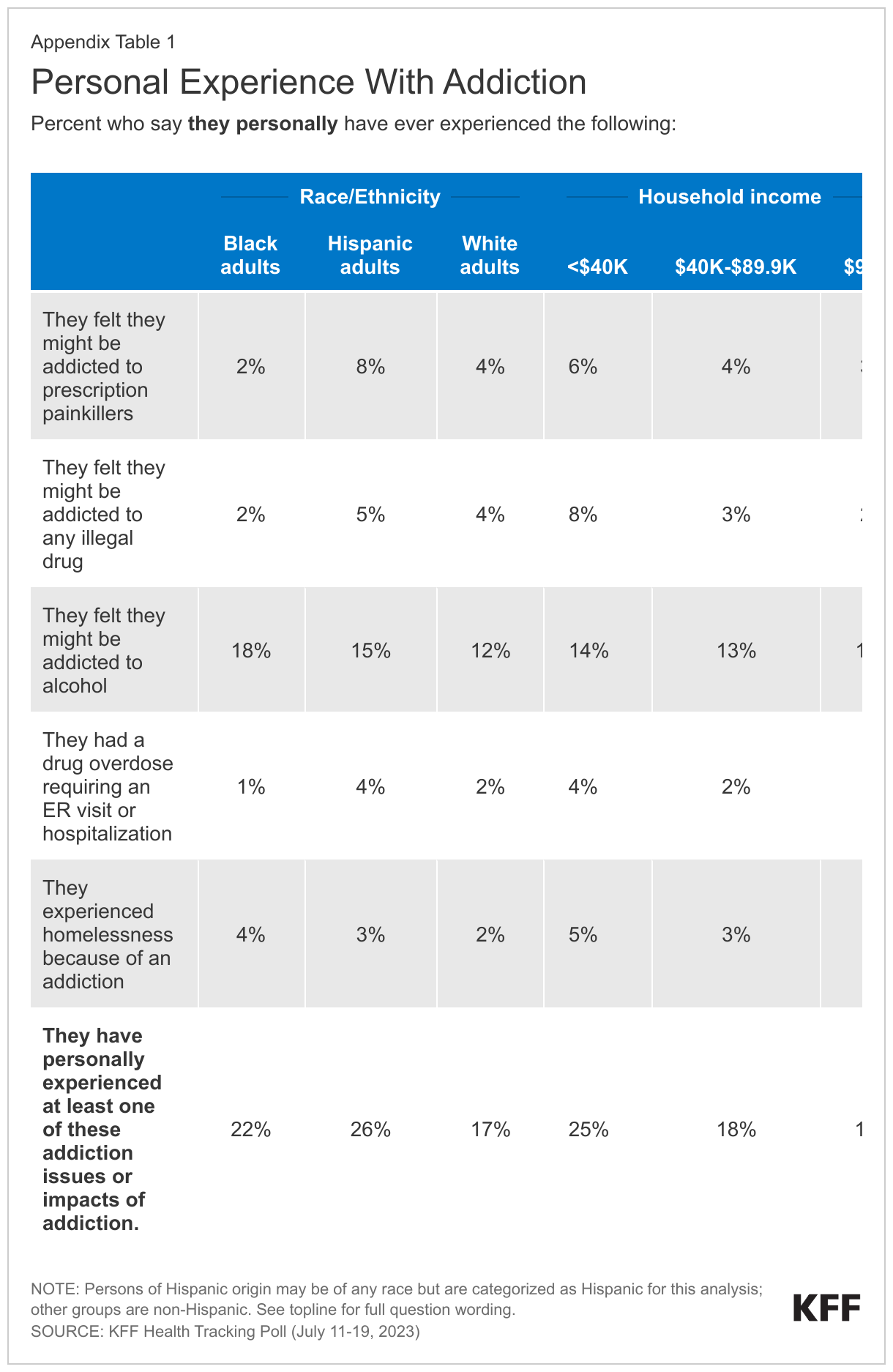
About one in eight (13%) say they have ever felt they might have been addicted to alcohol, while smaller shares say they felt they might have been addicted to prescription painkillers (5%), or illegal drugs, such as heroin, fentanyl, methamphetamine, or cocaine (4%). Small but notable shares say they have experienced homelessness because of an addiction (3%) or had a drug overdose that required an emergency room visit or hospitalization (2%).

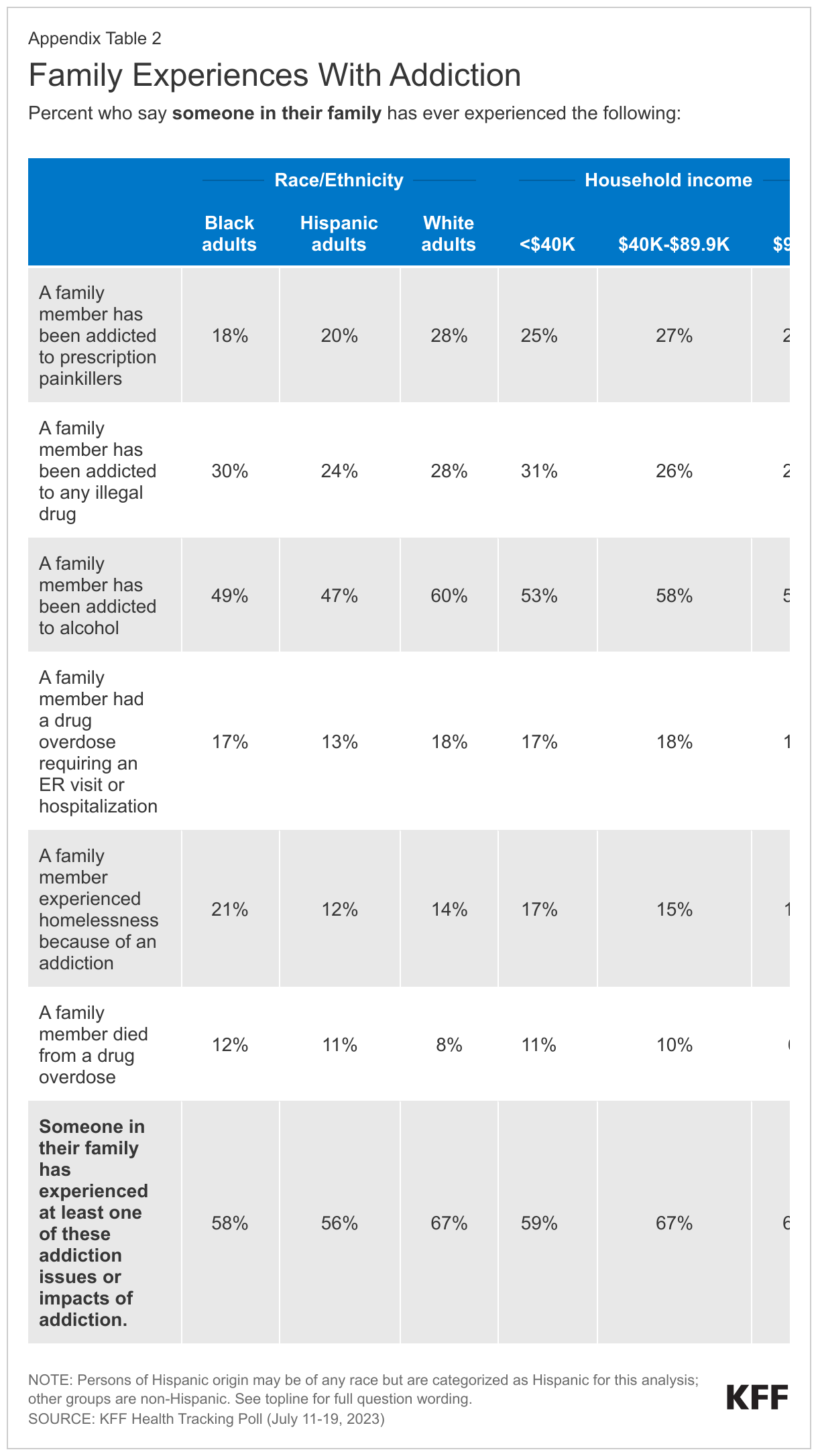
When asked about their family members, more than half of adults (54%) say someone in their family has ever been addicted to alcohol, while about a quarter say someone in their family has been addicted to any illegal drug (27%) or has been addicted to prescription painkillers (24%). One in six say someone in their family has had a drug overdose requiring an ER visit or hospitalization (16%), and one in seven say a family member has experienced homelessness because of an addiction (14%). About one in ten (9%) adults report that someone in their family has died from a drug overdose.
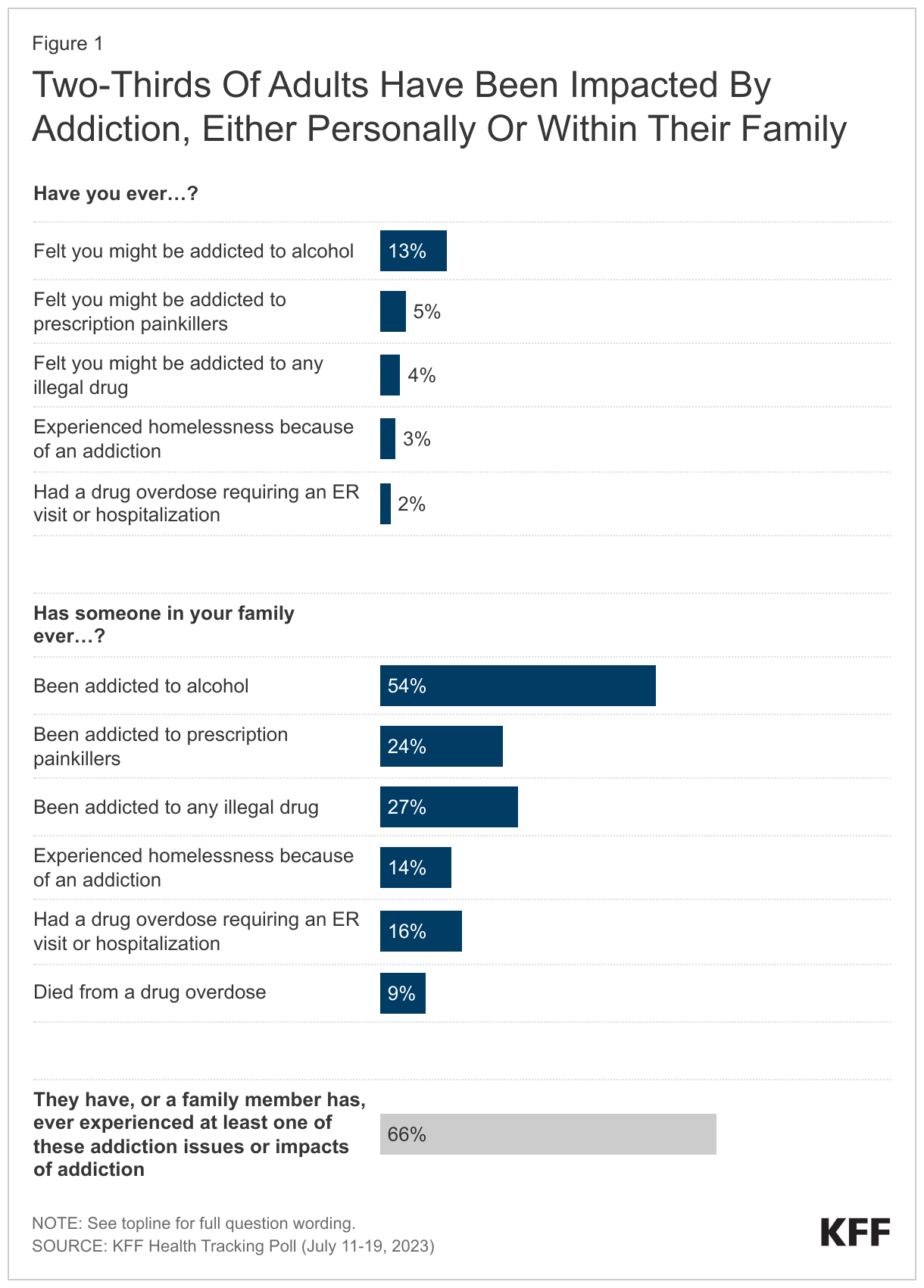
Bar chart showing percent who say that they or someone in their family have ever experienced specific items related to substance and alcohol addiction.

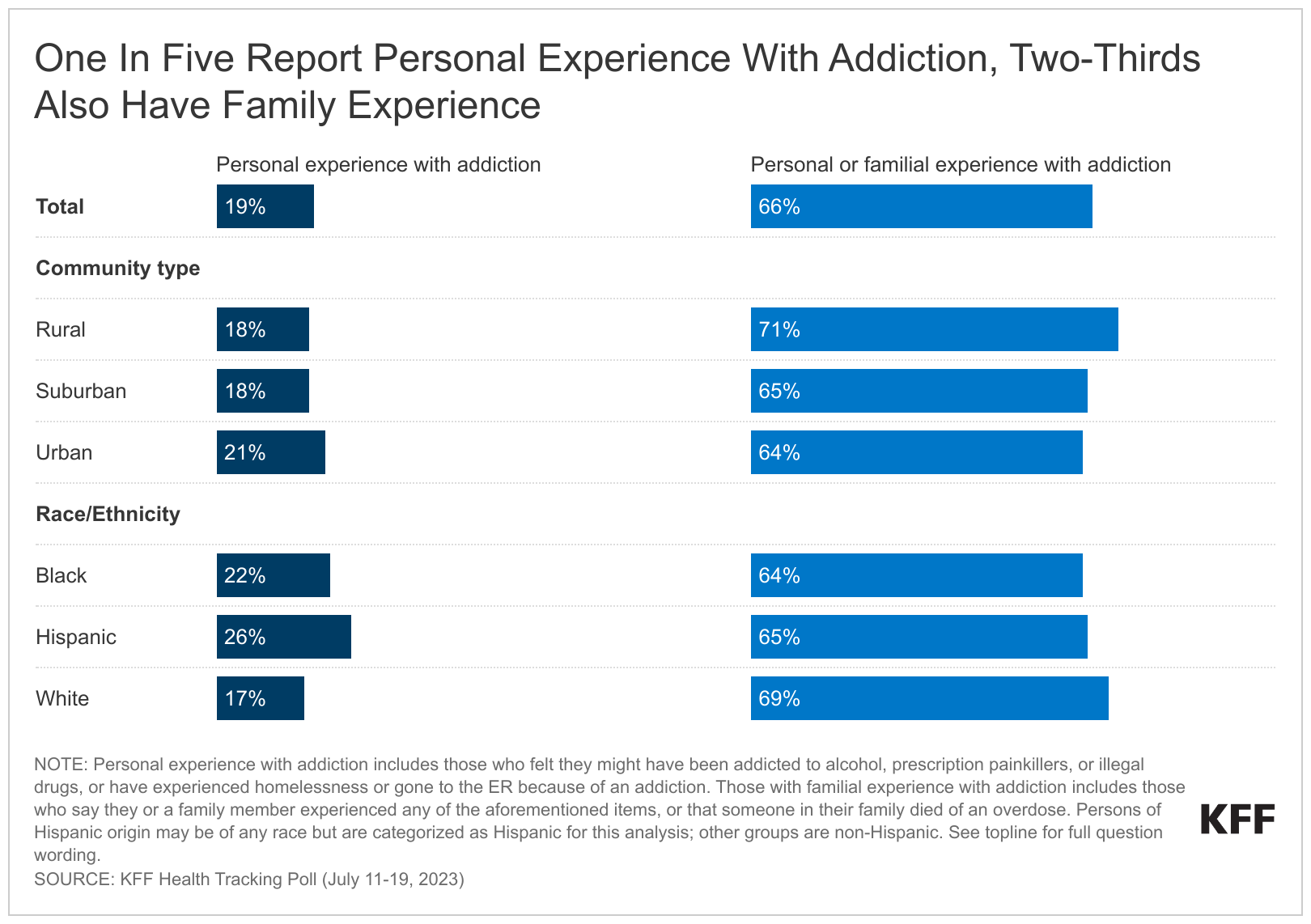
Experiences with addiction and overdose are widespread, with large shares across income groups, education, race and ethnicity, age, and urbanicity all reporting some experience, though some groups report higher incidence than others. Overall, one in five adults (19%) say they have personally been addicted to drugs or alcohol, had a drug overdose requiring an ER visit or hospitalization, or experienced homelessness because of an addiction.1  The share increases to a quarter (25%) among adults with a household income of under $40,000 a year, compared to almost one in five (18%) of those with an income between $40,000 and $90,000, and one in six (16%) of those with a household income of $90,000 or more annually.

Additionally, White adults are more likely than Black adults and Hispanic adults to say someone in their family has ever experienced addiction or overdose (67% compared to 58% and 56%, respectively). This gap is mostly driven by addiction to alcohol and prescription painkillers. Six in ten White adults (60%) report someone in their family has ever been addicted to alcohol compared to half of Black adults (49%) and Hispanic adults (47%), and nearly three in ten White adults (28%) say someone in their family has been addicted to prescription painkillers compared to two in ten Black adults (18%) and Hispanic adults (20%). Appendix Figures 1 and 2 show personal and familial addiction incidence by racial and ethnic groups as well as income. These racial and ethnicity differences are consistent with KFF analysis finding substance use disorder more common among White adults.

Opioid addiction

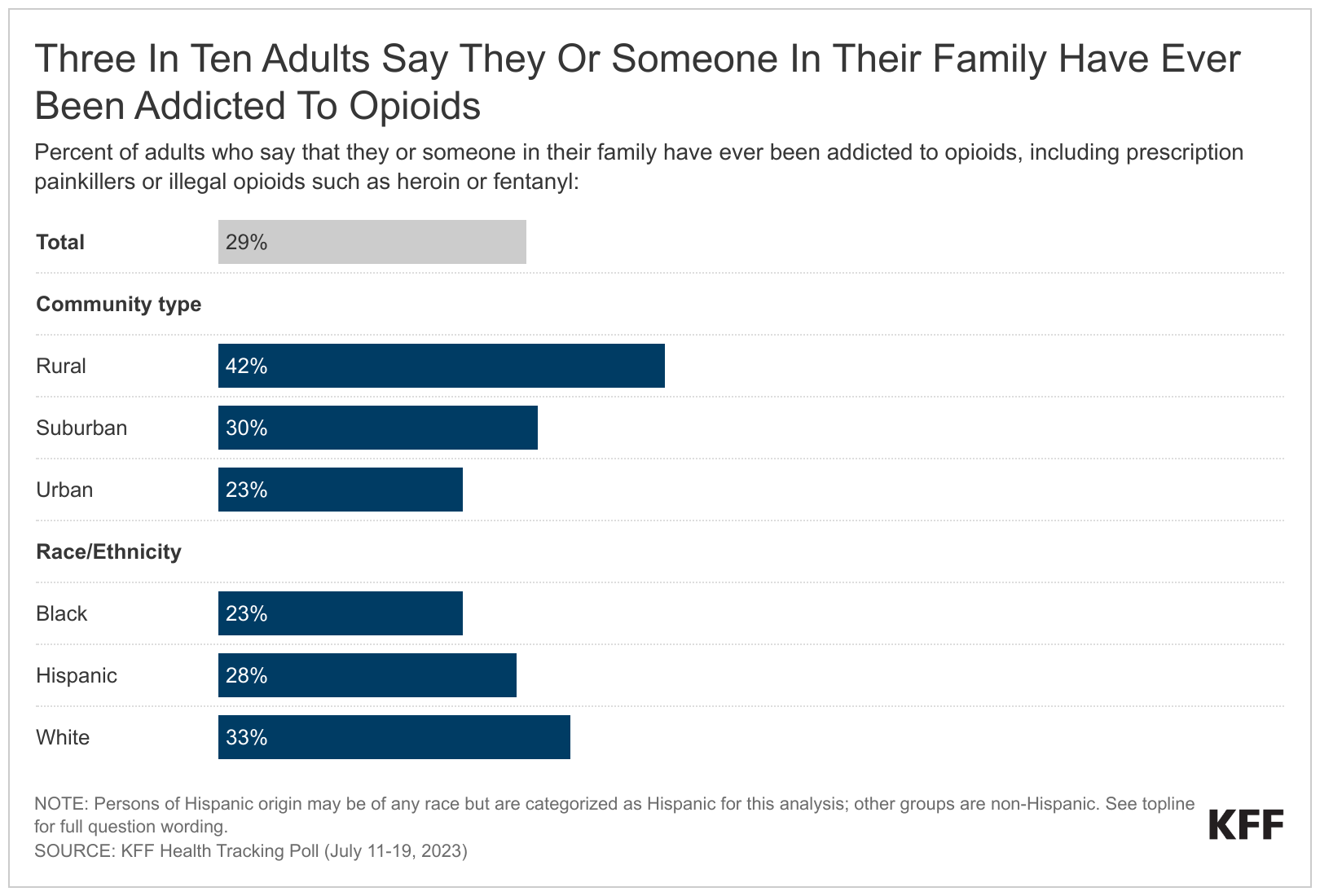
Three in ten (29%) say they or someone in their family have been addicted to opioids, including prescription painkillers or illegal opioids such as heroin or fentanyl. The share of adults who say they or a family member have been addicted to opioids increases to four in ten (42%) adults who live in rural areas, a larger share than those in suburban (30%) and urban (23%) areas. Similar to the racial differences reported above, a third of White adults (33%) say they or a family member have been addicted to opioids, a larger share compared to Black adults (23%), with the share of Hispanic adults in between (28%). The slightly larger share of White adults who report experiences with opioid addiction is consistent with KFF analysis,2  yet recent data shows a spike in opioid deaths among people of color.
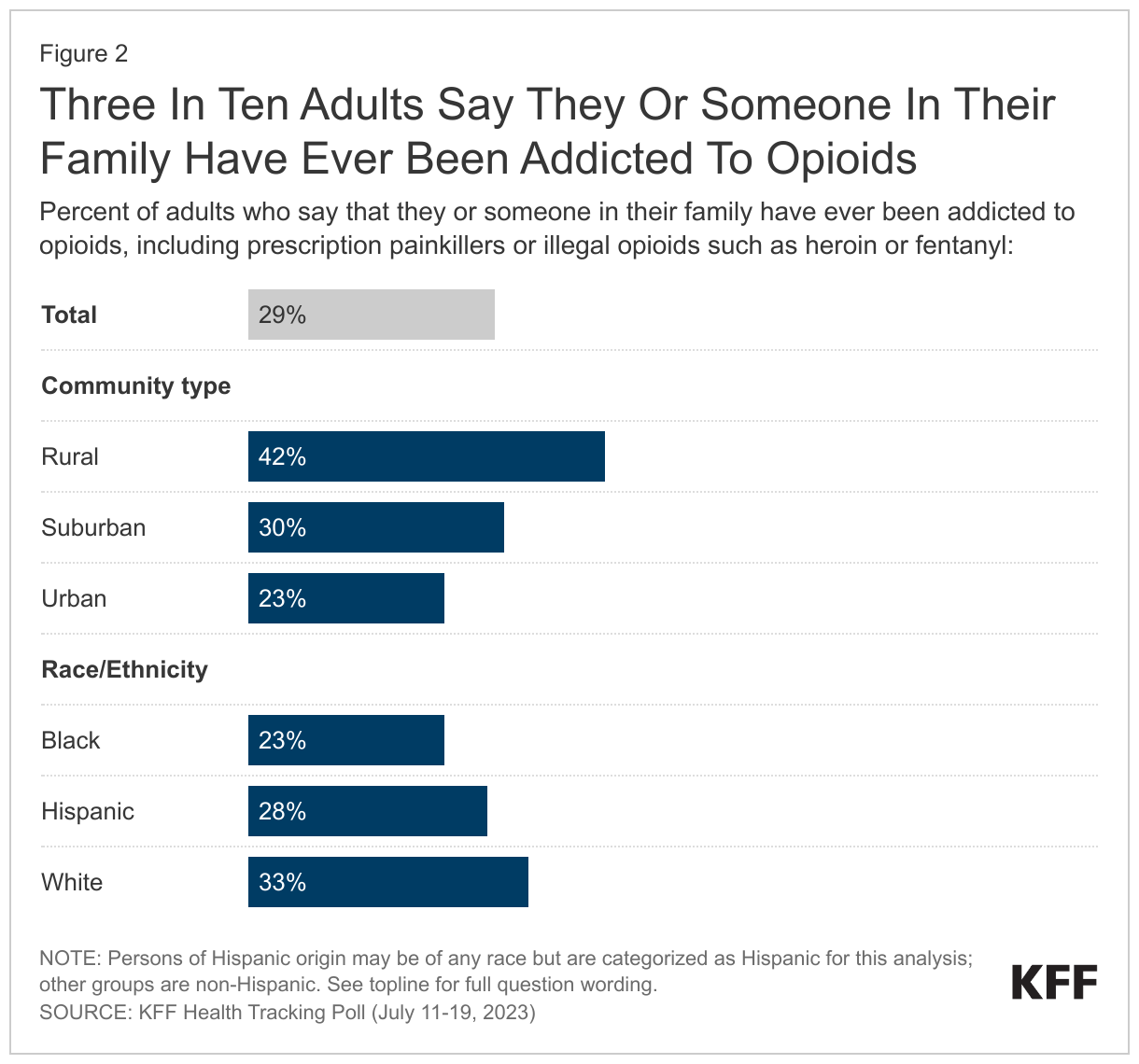
Bar chart by total, community type, and race/ethnicity showing the percent of adults who say they or someone in their family have ever been addicted to opioids.

The Impact of addiction on Families

Among the two-thirds who say they or a family member experienced addiction, three-quarters (76%), or 50% of all adults, say it had at least a minor impact on their relationship with their family. Most also say it impacted their mental health (70%, or 46% of all adults), or their family’s financial situation (57%, or 38% of all adults). Substantial shares say these were “major” impacts, with about three in ten adults who say so when asked about their mental health (32%) and their family’s financial situation (29%), and about four in ten (42%) when asked about familial relationships.

The impact of addiction isn’t just driven by personal addiction. A quarter (27%) of those who have had a family member suffer from addiction, but have not personally experienced addiction themselves, say their mental health was majorly impacted as a result.
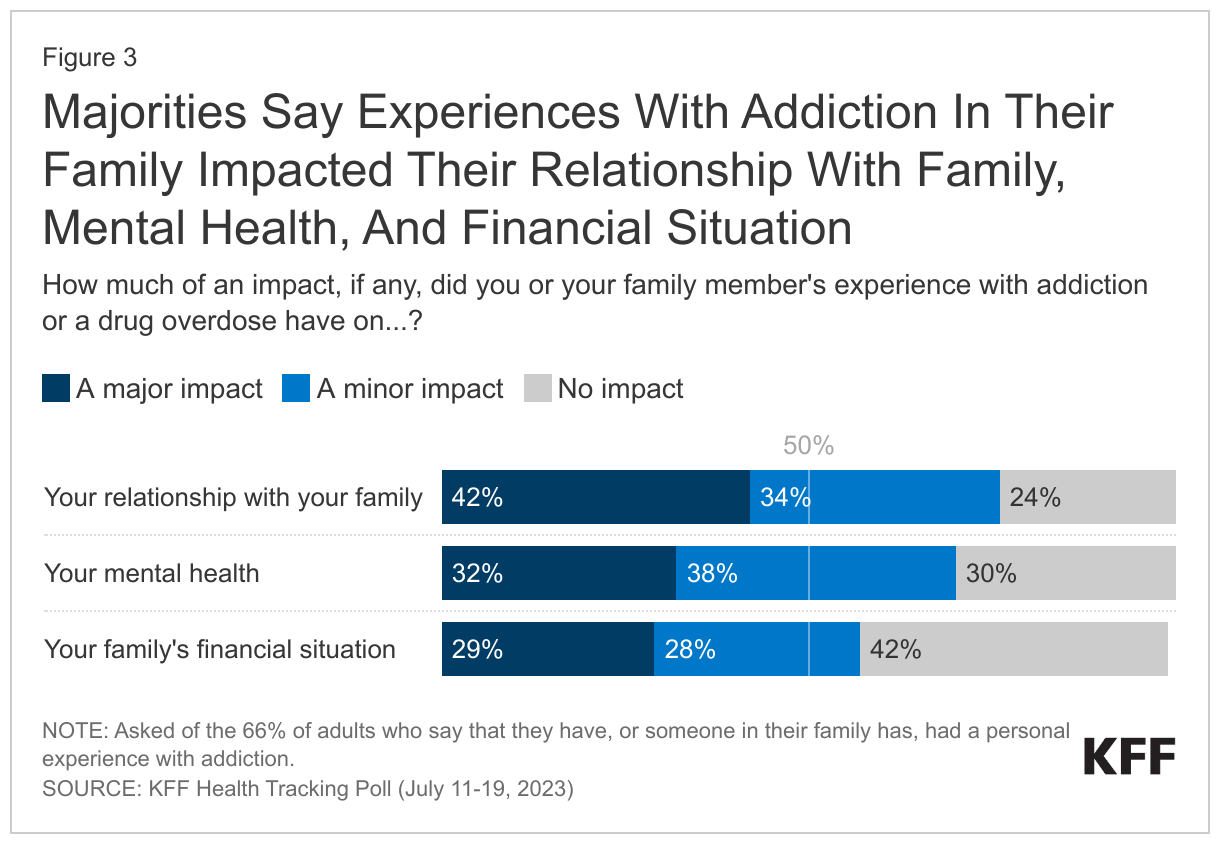
Stacked bar chart showing percent of adults who say they or their family member's experience with addiction or a drug overdose had a "major impact," a "minor impact," or "no impact," on their relationship with their family, their mental health, and their family's financial situation.

Overall, half (51%) of adults are worried that someone in their family will experience substance use disorder or an addiction to drugs or alcohol. Another four in ten are worried that someone in their family will unintentionally consume the drug fentanyl (39%), while a third (32%) are worried that someone in their family will overdose on opioids, such as prescription painkillers or illegal drugs like heroin.
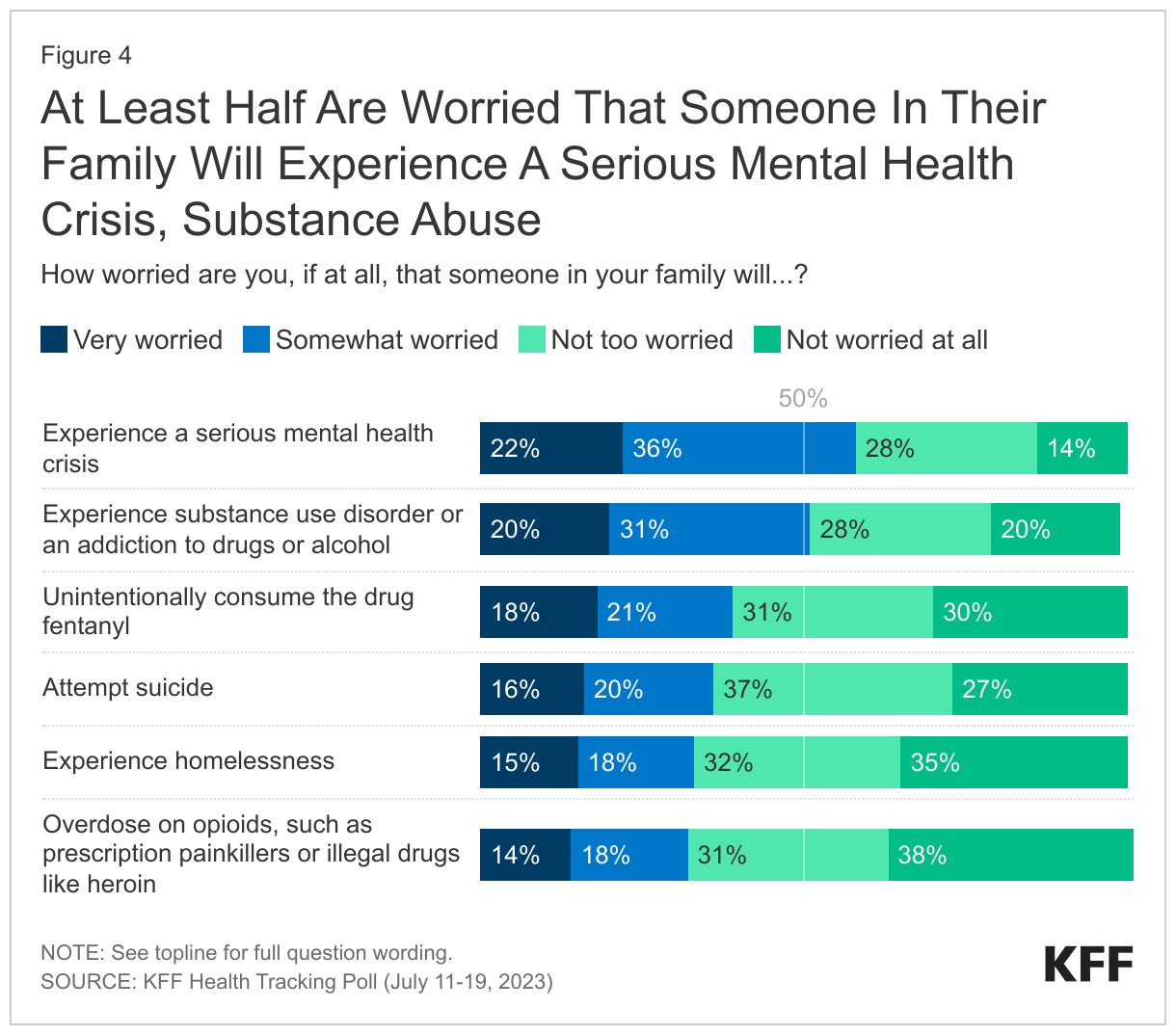
Stacked bar chart showing percent who say that they are "very worried," "somewhat worried," "not too worried," or "not worried at all" that someone in their family will experience a mental health crisis, substance use disorder, unintentionally consume fentanyl, attempt suicide, experience homelessness, and overdose on opioids.

Concerns about unintentionally consuming the drug fentanyl3  looms large in rural areas. About half (48%) of those who live in rural areas compared to around four in ten of those in urban (39%) or suburban (37%) areas say they are worried that someone in their family will unintentionally consume the drug.

MENTAL HEALTH AND SUBSTANCE USE

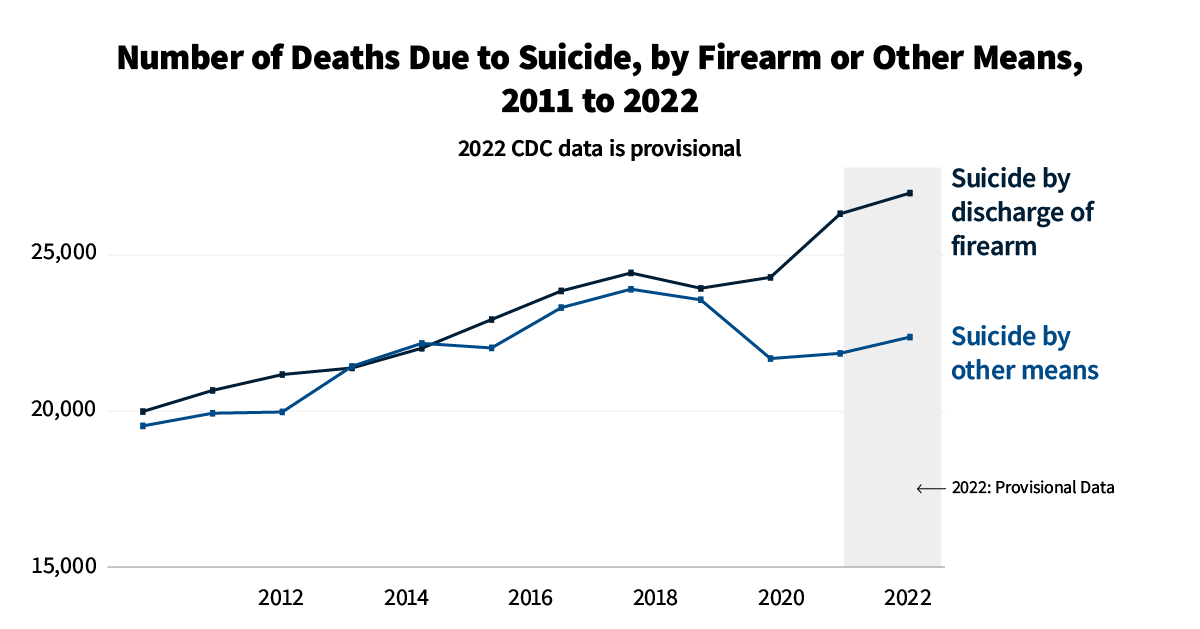
In addition to the substance use crisis, adults in the U.S. remain concerned about mental health issues for someone in their family, with new KFF analysis showing suicides at record levels. Significant shares of adults are worried about mental health issues for their families, with 58% who are “very” or “somewhat worried” that someone in their family will experience a serious mental health crisis, and a third who are worried someone in their family will attempt suicide (36%) or experience homelessness (33%). Three-quarters of Hispanic adults (75%), compared to six in ten Black adults (60%) and half of White adults (53%), say they are personally worried about someone in their family experiencing a serious mental health crisis.

Lower income populations are more likely to say they’re worried than those with higher household incomes about a family member experiencing any of the aforementioned concerns, including half (49%) of those with incomes of less than $40,000 a year who say they are worried someone in their family may experience homelessness, compared to one in four (25%) of those with incomes of more than $40,000 annually who say the same.
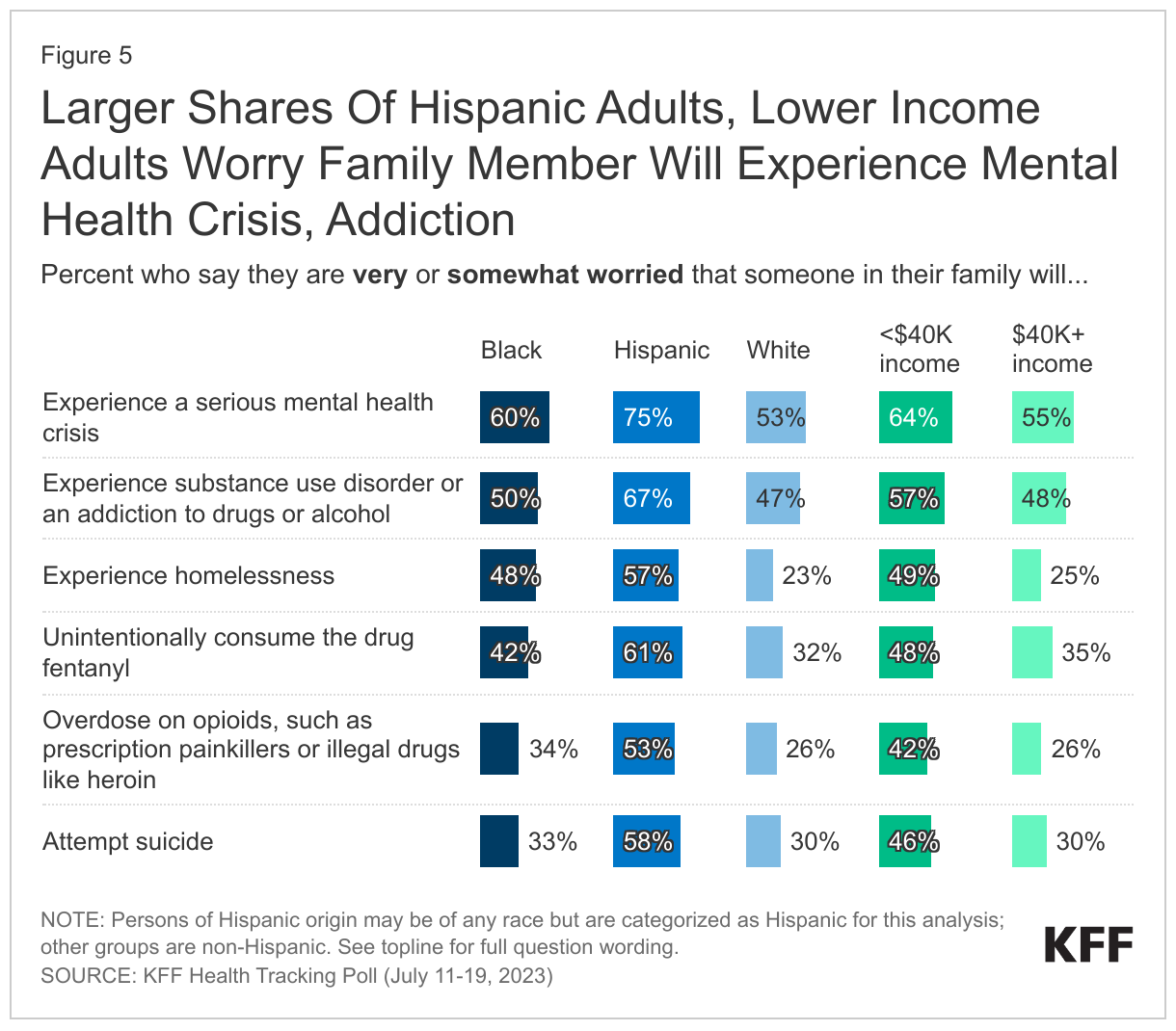
Split bar chart by race/ethnicity and household income, showing percent of adults who say they are "very" or "somewhat worried" that someone in their family will experience a serious mental health crisis, substance use disorder, homelessness, unintentionally consume fentanyl, overdose on opioids, and attempt suicide.

Treatment for Substance Use and Addiction

More than fifty years after the U.S. declared a war on drugs, evidence-based research has suggested that treatment rather than punishment may be the most impactful in addressing addiction, though White adults are more likely to report that they or their family member received treatment compared to Black adults and Hispanic adults.

Slightly less than half (46%) of those who say they or a family member experienced any addiction say the individual ever got treatment for drug addiction or substance use disorder (29% of all adults).4  White adults (51%) are more likely than Black adults (35%) and Hispanic adults (35%) to report that they or their family member received treatment for addiction or substance use disorder. The potential racial and ethnic disparities in accessing treatment, as have been highlighted by past research, may be exacerbated by the changing nature of the opioid epidemic with increasing prevalence among communities of color.
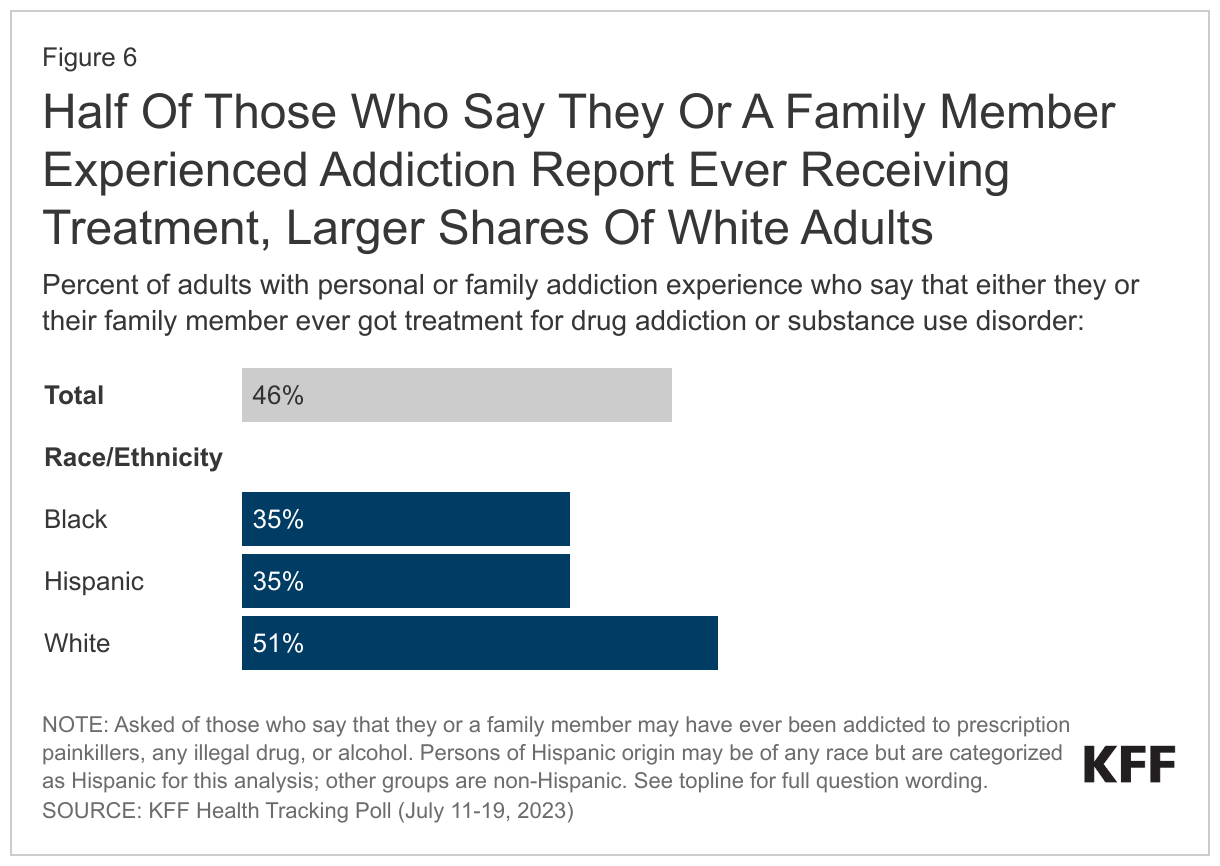
Bar chart by total and race/ethnicity showing percent of adults with personal or family addiction experience who say either they or their family member ever got treatment for drug addiction or substance use disorder.

Among those who say they or someone in their family experienced addiction to prescription painkillers, illegal drugs, or alcohol, three in ten (29%) said they received in-patient treatment, and a quarter (26%) received out-patient treatment.

A quarter (25%) of those who say they or a family member experienced opioid addiction say they or their family member were treated using medication for opioid use disorder such as buprenorphine or methadone. Despite the rise in opioid deaths, KFF analysis still finds that buprenorphine is being under prescribed for patients, especially Black patients.5 
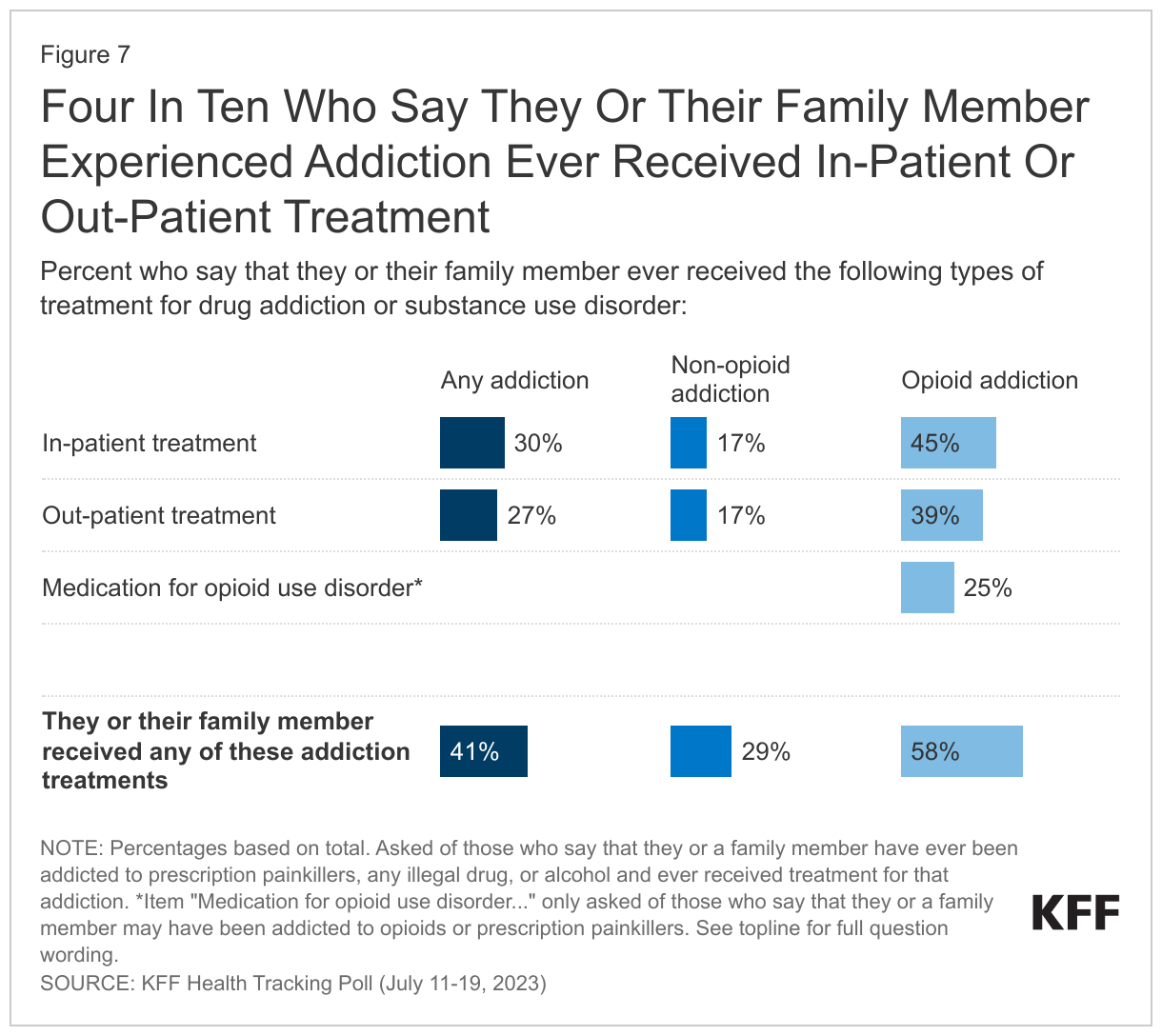
Split bar chart by type of addiction including any addiction, non-opioid addiction, and opioid addiction. Split bar chart shows percent who say they or their family member ever received in-patient treatment, out-patient treatment, medication for opioid use disorder, or any of those addiction treatments.

Reasons for not getting treatment

Those who say they or their family member experienced addiction and didn’t receive treatment cite a variety of reasons, including not wanting help or refusing help, overcoming or stopping their addiction on their own, denial that they have an addiction, the cost or affordability associated with care, the shame or stigma, or even that a family member died before they could get help.

In Their Own Words: What is the main reason why you or your family member did not get treatment?

“We are not raised that way.” – 22 year-old Black woman, Georgia

“Brother quit on his on and been sober for 2 years, my dad was addicted to cocaine quit on his own.” – 37 year-old Hispanic man, Texas

“Lack of funding, no insurance coverage- turned away for treatment.” – 50 year-old White woman, South Carolina

“He said he could get better on his own. It hasn’t happened yet.” – 28 year-old American Indian/Alaskan Native woman, Oklahoma

“They passed away before they could.” – 30 year-old White woman, Texas

“Because I was able to quit all on my own. I was just tired of being tired and losing all respect within my family, especially my daughter. It was a long road but I have been clean for 30 years and enjoying everyday of my life, with my daughter.” – 70 year-old, multiracial woman, Arizona

“Affordability and family member didn’t have health insurance.” – 31 year-old multiracial woman, Florida

Understanding the Dangers of Prescription Opioid Use

Though the opioid epidemic has shifted, doctors continue patient education about the risks of prescription opioids. In the past decade, many have examined the role of doctors in the opioid epidemic, including an American Medical Association task force formed in 2014 charged in part with reforming physician practices. Among adults (29% of total) who have been prescribed an opioid painkiller in the past five years, majorities say their doctor talked to them about the possible ramifications of the drugs. About seven in ten (69%) say their doctor talked to them about possible side-effects of the opioid painkillers when they were first prescribed. Around six in ten (60%) say they were talked to about other ways to manage their pain, say their doctors talked to them about keeping their medications in a safe place so they weren’t misused by others (58%), or say their doctors talked to them about the possibility of addiction or dependence (57%). About half (48%) of those who have been prescribed opioids in the past five years say their doctor talked to them about a plan for stopping the medication, while the other half say they did not.
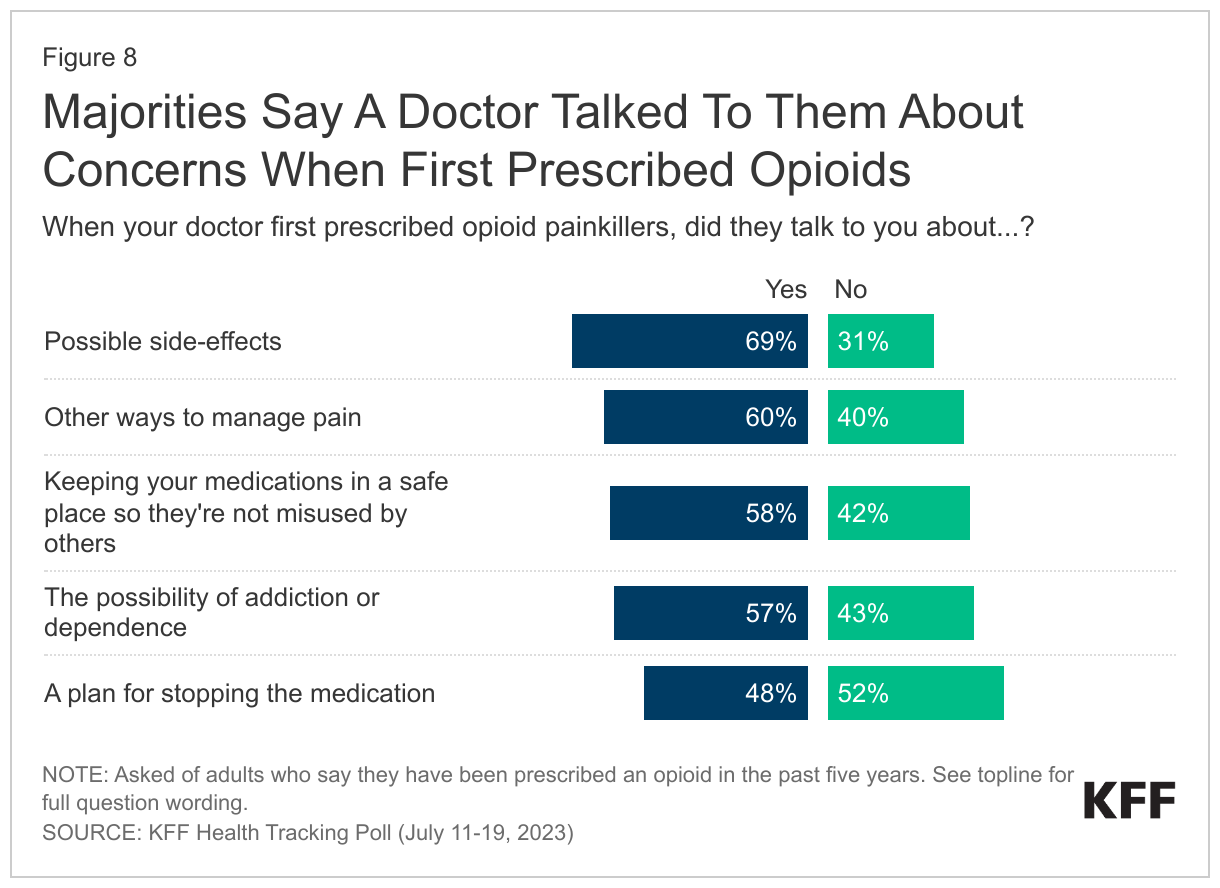
Mirrored bar chart showing percent who say "yes" or "no" to whether their doctor talked to them about specific side-effects and considerations when they were first prescribed opioid painkillers.

Policies Aimed at Reducing Drug Overdoses

When asked about several policies aimed at reducing drug overdoses, large majorities support addiction treatment centers in their community (90%) and making Narcan, a medicine that can reverse an opioid overdose, freely available in places likes bars, health clinics, and fire stations (82%) – including about half who “strongly support” either policy. Fewer, but still nearly half (45%), support safe consumption sites, places where people can use illegal drugs with trained personnel in case of emergency.
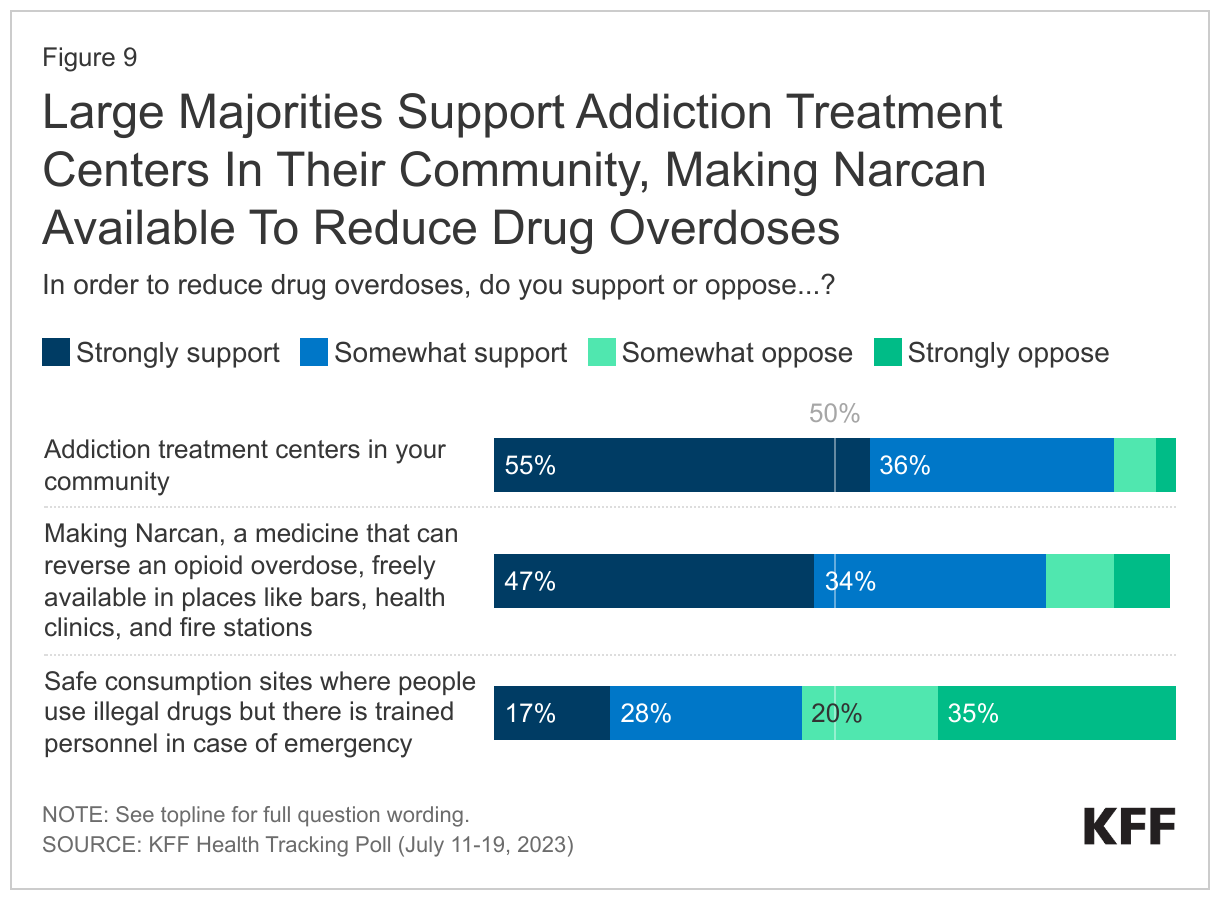
Split bar chart showing percent who say they "strongly support," "somewhat support," "somewhat oppose," or "strongly oppose" specific policies to reduce drug overdoses.

Large majorities across partisanship support addiction centers and Narcan availability. Nine in ten (92%) Democrats and independents (94%) support addiction treatment centers in their community, as do 86% of Republicans. Another nine in ten (89%) Democrats and eight in ten (83%) independents support making Narcan available publicly, compared to three-quarters (73%) of Republicans.

Partisan differences are larger when it comes to safe consumption sites. About a fourth of Republicans (23%) support places for people to use illicit drugs where there are trained personnel in case of emergency, compared to six in ten (61%) Democrats and half (49%) of independents.
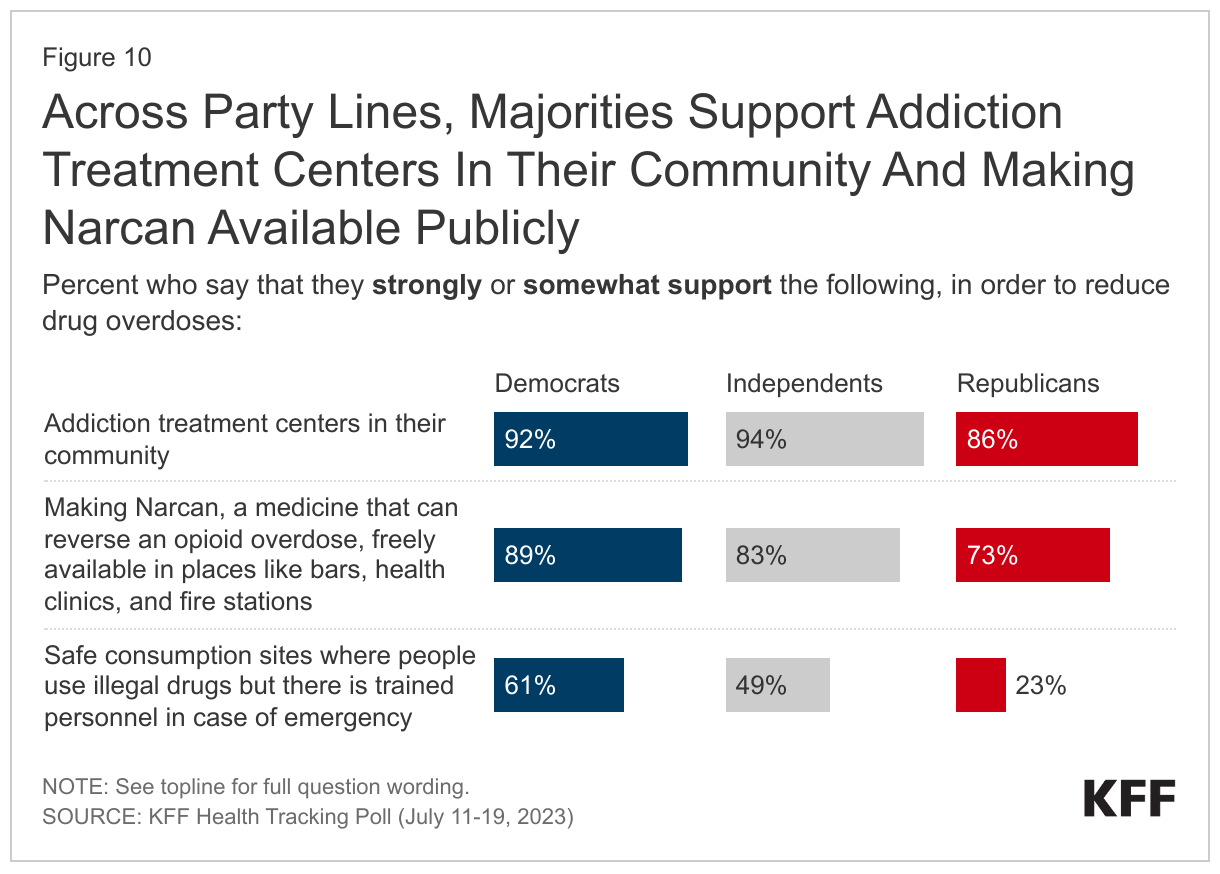
Split bar chart by party identification, showing percent who say they "strongly" or "somewhat support," specific policies in order to reduce drug overdoses.

Methodology

This KFF Health Tracking Poll was designed and analyzed by public opinion researchers at KFF. The survey was conducted July 11-19, 2023, online and by telephone among a nationally representative sample of 1,327 U.S. adults in English (1,246) and in Spanish (81). The sample includes 1,043 adults reached through the SSRS Opinion Panel either online or over the phone (n=46 in Spanish). The SSRS Opinion Panel is a nationally representative probability-based panel where panel members are recruited randomly in one of two ways: (a) Through invitations mailed to respondents randomly sampled from an Address-Based Sample (ABS) provided by Marketing Systems Groups (MSG) through the U.S. Postal Service’s Computerized Delivery Sequence (CDS); (b) from a dual-frame random digit dial (RDD) sample provided by MSG. For the online panel component, invitations were sent to panel members by email followed by up to three reminder emails. 1,022 panel members completed the survey online and panel members who do not use the internet were reached by phone (21).

Another 284 (n=35 in Spanish) interviews were conducted from a random digit dial telephone sample of prepaid cell phone numbers obtained through MSG. Phone numbers used for the prepaid cell phone component were randomly generated from a cell phone sampling frame with disproportionate stratification aimed at reaching Hispanic and non-Hispanic Black respondents. Stratification was based on incidence of the race/ethnicity groups within each frame. Respondents in the phone samples received a $15 incentive via a check received by mail, and web respondents received a $5 electronic gift card incentive (some harder-to-reach groups received a $10 electronic gift card).

The online questionnaire included two questions designed to establish that respondents were paying attention. Cases that failed both attention check questions, those with over 30% item non-response, and cases with a length less than one quarter of the mean length by mode were flagged and reviewed. Cases were removed from the data if they failed two or more of these quality checks. Based on this criterion, no cases were removed.

The combined cell phone and panel samples were weighted to match the sample’s demographics to the national U.S. adult population using data from the Census Bureau’s 2022 Current Population Survey (CPS). Weighting parameters included sex, age, education, race/ethnicity, region, and education. The sample was weighted to match patterns of civic engagement from the September 2019 Volunteering and Civic Life Supplement data from the CPS and to match frequency of internet use from the National Public Opinion Reference Survey (NPORS) for Pew Research Center.  Finally, the sample was weighted to match patterns of political party identification based on a parameter derived from recent ABS polls conducted by SSRS polls. The weights take into account differences in the probability of selection for each sample type (prepaid cell phone and panel). This includes adjustment for the sample design and geographic stratification of the cell phone sample, within household probability of selection, and the design of the panel-recruitment procedure.

The margin of sampling error including the design effect for the full sample is plus or minus 3 percentage points. Numbers of respondents and margins of sampling error for key subgroups are shown in the table below. For results based on other subgroups, the margin of sampling error may be higher. Sample sizes and margins of sampling error for other subgroups are available by request. Sampling error is only one of many potential sources of error and there may be other unmeasured error in this or any other public opinion poll. KFF public opinion and survey research is a charter member of the Transparency Initiative of the American Association for Public Opinion Research.

GroupN (unweighted)M.O.S.E.
Total1,327± 3 percentage points
Race/Ethnicity
White, non-Hispanic727± 4 percentage points
Black, non-Hispanic203± 9 percentage points
Hispanic276± 8 percentage points
Health care provider told them they are overweight or obese in past five years
Yes542± 5 percentage points
No784± 4 percentage points


Appendix

Appendix table showing percent, by race/ethnicity and household income, who say they have personally experienced specific items related to substance use or alcohol addiction.
Appendix table showing percent, by race/ethnicity and household income, who say someone in their family has ever experienced specific items related to substance use or alcohol addiction.

Endnotes

  1. KFF analysis of NSDUH data finds 18% have experienced mild, moderate, or severe substance use disorder, similar to the 19% of those in the poll findings who have personally experienced addiction to alcohol or drugs or experienced a drug overdose leading to an emergency room visit or hospitalization. ↩︎
  2. The incidence measured in this poll is slightly larger than measured in government data, the KFF polling data has a few key differences. KFF polling data asks about individual use as well as family member use and measures those who have ever experienced addiction to opioids, while the KFF’s State Health Facts, which includes government data, measures opioid addiction in the past year. ↩︎
  3. Fentanyl is recently being added to other illegally produced drugs, such as cocaine, causing fear among recreational drug users that their consumption of other drugs may carry an increased risk of death. ↩︎
  4. The question asked in the poll asks if those who say they or a family member ever experienced any addiction ever received treatment for drug addiction or substance use disorder, indicating a higher share of those who say they received treatment than in NSDUH analysis, with 6.3% of those who experienced substance use disorder received treatment that year, according to this data. ↩︎
  5. The use of medications, in combination with counseling and behavioral therapies are meant to provide a treatment plan for substance use disorders. In 2022, buprenorphine dispensing grew by 24% compared to pre-pandemic levels in 2019, but it remains unclear whether the progress in increasing prescriptions has reached people of color, a group that has remained under-prescribed for the opioid treatment. ↩︎
News Release

KFF Poll: Three-in-Ten People Say They or Someone in Their Family Has Been Addicted to Opioids, with Rural Families Hit Hardest

Two-thirds Report They or a Family Member Has Been Addicted to Alcohol or Drugs, or Has Experienced Homelessness, Hospitalization, or Death as a Result of Addiction

Published: Aug 15, 2023

A new KFF poll assessing the broad reach of the nation’s opioids crisis on families across the United States reveals that three-in-ten adults (29%) say they or someone in their family have ever been addicted to opioids, including prescription painkillers and illegal drugs like heroin. Rural residents (42%) and White adults (33%) are among the groups hardest hit.

The poll also showed that the opioid crisis is part of a much larger picture of addiction affecting American families: two-thirds (66%) of the public report that either they or a family member has been addicted to alcohol or drugs, experienced homelessness because of an addiction, or experienced a drug overdose leading to an emergency room visit, hospitalization, or death. This includes one-in-five adults (19%) who say they have personally been addicted to drugs or alcohol, had a drug overdose requiring an emergency room visit or hospitalization, or experienced homelessness because of an addiction.

Less than half (46%) of those who report addiction in their families say the person suffering from addiction got treatment. A larger share of White adults (51%) than Black adults (35%) and Hispanic adults (35%) report that they or their family member received treatment.

Large shares of those whose families have been impacted by addiction say it had at least a minor impact on their relationship with their family (76%), their mental health (70%), or their family’s financial situation (57%). On each of these questions, at least a quarter say it had a “major impact.”

Among the public overall, half (51%) worry that someone in their family will experience substance use disorder, and one-third (32%) are worried that someone in their family will overdose on opioids, such as prescription painkillers or illegal drugs like heroin. About four-in-ten adults are worried that someone in their family will unintentionally consume the opioid drug Fentanyl (39%). Respondents in rural areas expressed more concern about these issues overall. 

Most adults prescribed an opioid painkiller in the past five years say their doctor talked to them about the possible consequences of the drugs, including possible side-effects. Six in ten (60%) who say they were talked to about other ways to manage their pain also say their doctor has spoken to them about the possibility of addiction or dependence (57%). 

In addition to gauging the public’s experiences with addiction to drugs and alcohol, the poll examined public support for policies aimed at curbing drug overdoses. The public broadly supports two approaches aimed at reducing opioid overdoses, including majorities across partisans. Most people support addiction treatment centers in their community (90%) or making Narcan (naxolone), a medicine that can reverse an opioid overdose, freely available in places like bars, health clinics, and fire stations (82%). About half “strongly support” both policies, and they are also supported by at least three-quarters of Democrats, Republicans, and independents.

Fewer, but still nearly half (45%), support safe consumption sites where people can use illegal drugs monitored by trained personnel in an emergency. A majority of Democrats (61%), half of independents (49%), and fewer Republicans (23%) support safe consumption sites.

Designed and analyzed by public opinion researchers at KFF, the survey was conducted from July 11-19, 2023 online and by telephone among a nationally representative sample of 1,327 U.S. adults. Interviews were conducted in English and in Spanish. The margin of sampling error is plus or minus three percentage points for the full sample. For results based on other subgroups, the margin of sampling error may be higher.

How Many People Use Medicaid Long-Term Services and Supports and How Much Does Medicaid Spend on Those People?

Published: Aug 14, 2023

Data Note

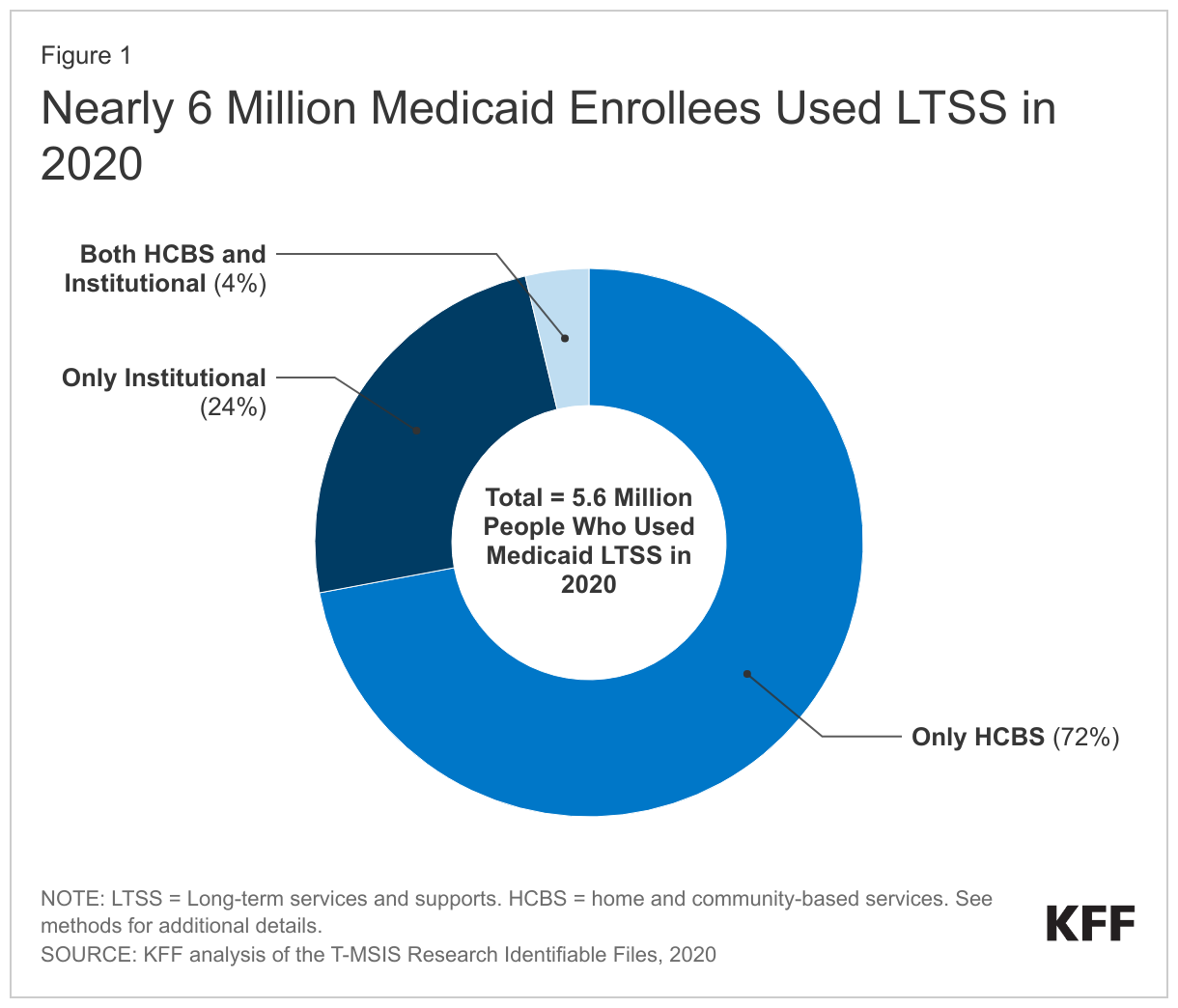
In 2020, KFF estimates that 4.2 million people used Medicaid long-term services and supports (LTSS) delivered in home and community settings and 1.6 million used LTSS delivered in institutional settings (Figure 1). LTSS encompass the broad range of paid and unpaid medical and personal care services that assist with activities of daily living (such as eating, bathing, and dressing) and instrumental activities of daily living (such as preparing meals, managing medication, and housekeeping). They are provided to people who need such services because of aging, chronic illness, or disability and may be provided in institutional settings such as nursing facilities or in people’s homes and the community. Services provided in non-institutional settings are usually referred to as home- and community-based services (HCBS) and include a wide range of services such as adult daycare, home health, personal care, transportation, and supported employment. In 2020, Medicaid was the primary payer for LTSS, covering over half of all LTSS spending in in the U.S. Despite Medicaid’s significant role in funding LTSS in the U.S., eligibility for Medicaid LTSS is complex and varies widely by state. This data note provides an overview of Medicaid coverage of LTSS, KFF estimates of how many Medicaid enrollees used LTSS in 2020, how much Medicaid spent on enrollees who used LTSS, and policy issues to watch in the coming years. Key takeaways include:

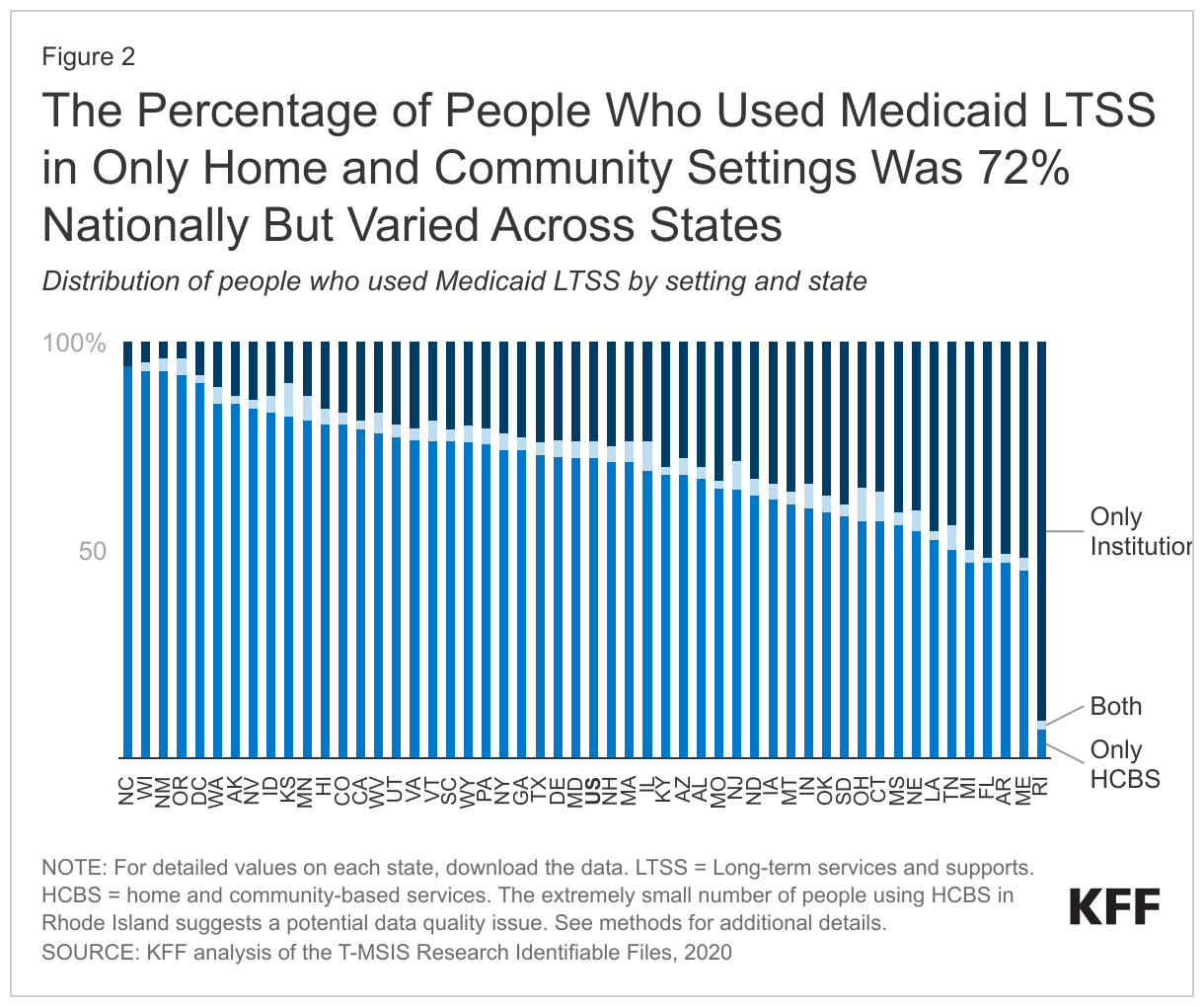
  • In 2020, there were 5.6 million people who used Medicaid LTSS, of which 4.0 million (72%) used only HCBS, 1.4 million (24%) used only institutional care, and 0.2 million used both (4%) (Figure 1). The share of people using Medicaid LTSS only in home and community-based settings ranged from 45% in Maine to 94% in North Carolina (Figure 2).
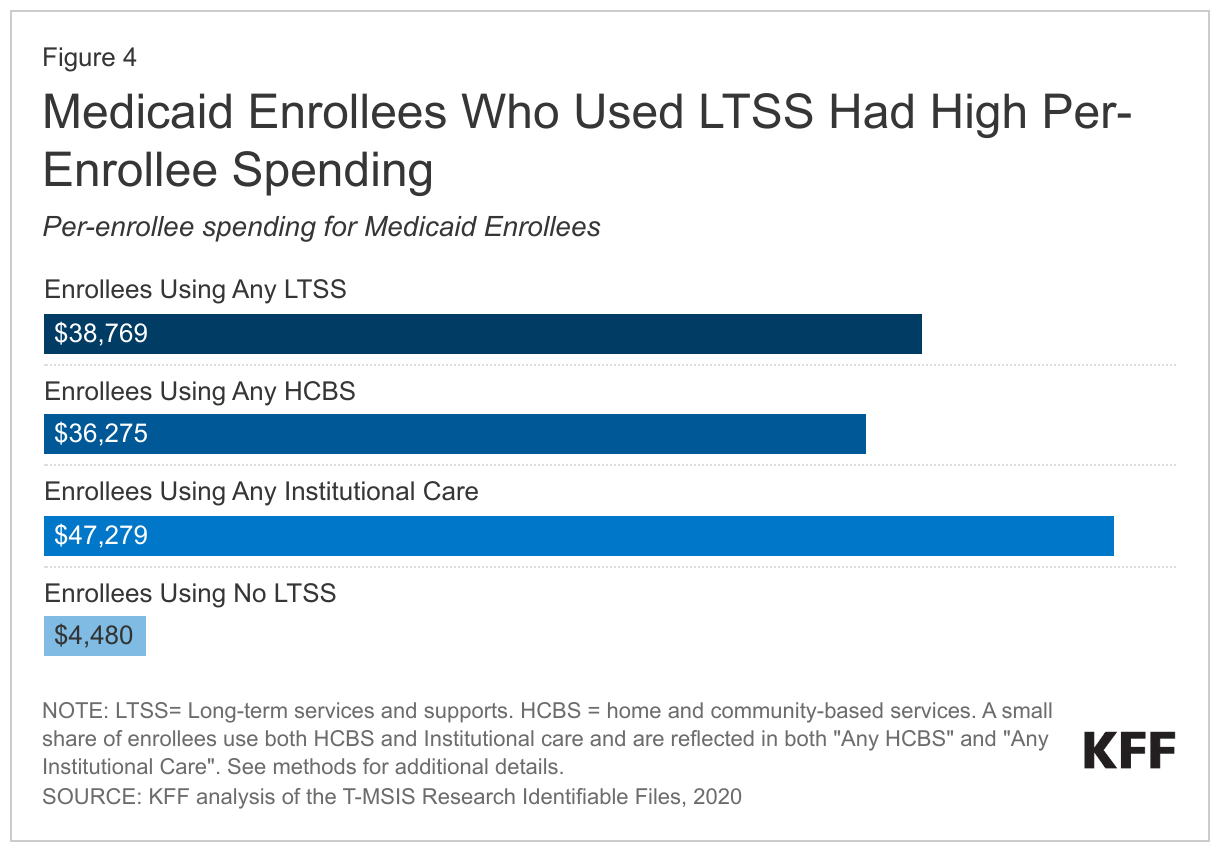
  • Medicaid spending per-person was nearly nine times higher for people who used LTSS than for those who did not use LTSS ($38,769 vs. $4,480), with particularly high spending for people who used institutional LTSS (Figure 4).
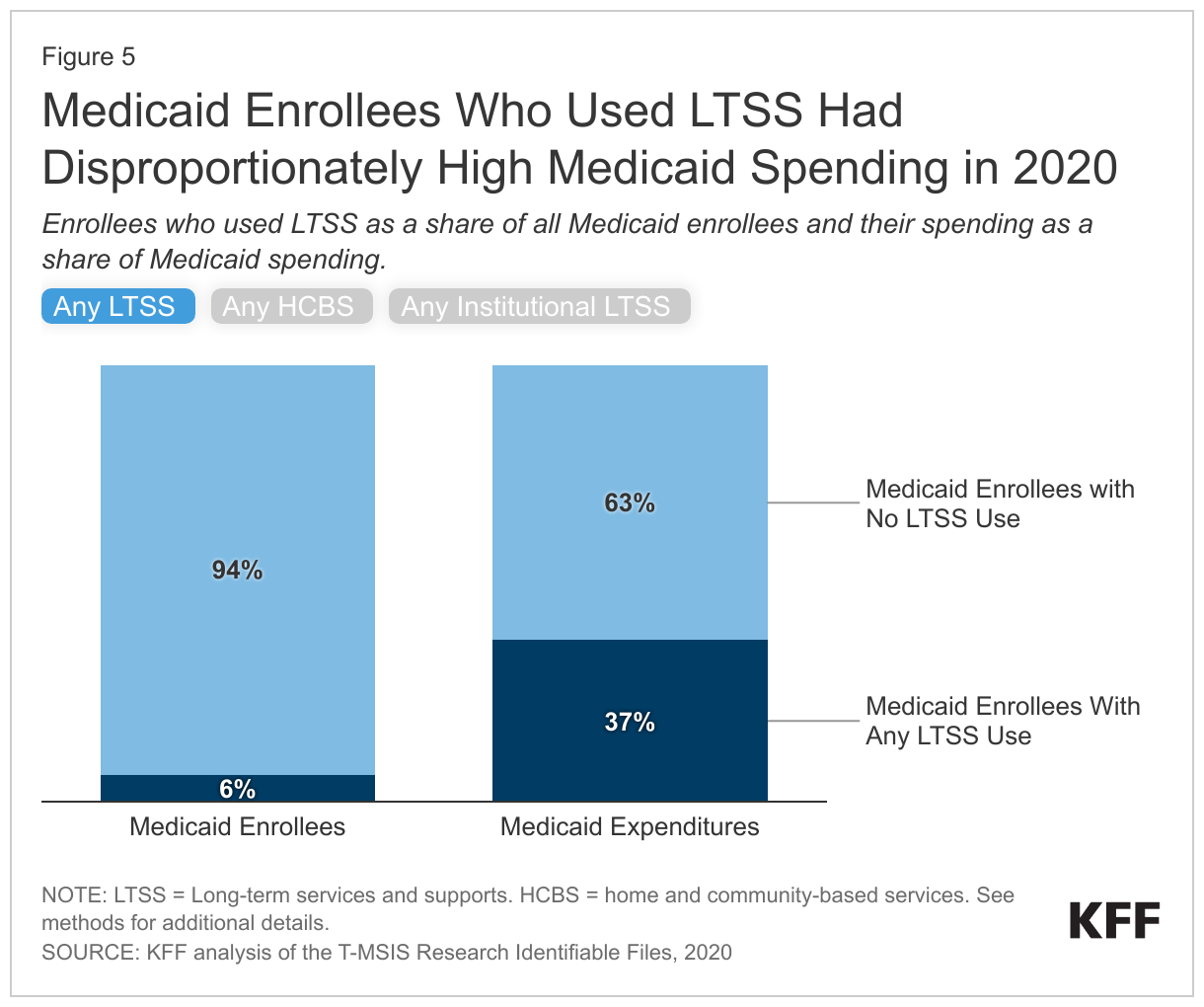
  • People who used Medicaid LTSS comprised 6% of Medicaid enrollment but 37% of federal and state Medicaid spending, reflecting the generally high cost of LTSS and more extensive health needs that lead to higher use of other health care services and drugs (Figure 5).

KFF’s estimates differ from the number of people using Medicaid LTSS reported by the Centers for Medicare & Medicaid Services (CMS), which found that about 11 million Medicaid enrollees used LTSS in 2019. CMS counts are higher than KFF counts because CMS defines LTSS more broadly and includes enrollees who may only use LTSS on a single day. CMS counts include people who are using services such as behavioral health, rehabilitation, health homes, and case management, but no other LTSS, whereas KFF only included enrollees if they were using the services identified in the data note below. CMS also counted people as using LTSS if they had one or more claims for a service, but KFF’s definition aims to capture only people who are using the services on an ongoing basis.

Nearly 6 Million Medicaid Enrollees Used LTSS in 2020

What are Medicaid Long-Term Services and Supports?

Medicaid LTSS are generally classified by the location in which they are provided: either in an institutional setting or in home- and community-based settings, also known as HCBS. Institutional care includes care provided in a nursing facility, which is a mandatory Medicaid benefit, and care provided in an intermediate care facility for people with intellectual disabilities, which is an optional benefit that all states currently choose to cover. HCBS include a broader range of benefits, which are all optional except for home health care. HCBS first became available as a Medicaid “waiver” option and in that capacity, services were generally available to certain types of Medicaid enrollees such as those with intellectual disabilities or those with physical disabilities.

In the last 20 years, several new authorities have been created, allowing states to also offer HCBS through the Medicaid state plan (see Appendix Table 1 for a list of HCBS authorities). If services are provided through a state plan, they must be offered to all eligible individuals. In contrast, services provided under waivers, such as 1115s or 1915(c)s, may be restricted to specific groups based on geographic region, income, or type of disability. Waivers may also include a wider range of service types than can be provided under state plans. Historically, Medicaid spent more money on LTSS in institutional settings than on LTSS delivered in home and community-based settings, but initiatives to balance HCBS and institutional care have changed that trend. Since 2013, Medicaid has spent more on HCBS than institutional care.

How Many People Used Medicaid LTSS in 2020?

In 2020, there were 5.6 million people who used Medicaid LTSS, of which 4.0 million (72%) used only HCBS, 1.4 million (24%) used only institutional care, and 0.2 million used both (4%) (Figure 1). These counts and shares did not change notably between 2018 and 2020. KFF’s current count of the number of people using Medicaid LTSS is lower than the number of people using LTSS reported by the Centers for Medicare & Medicaid Services (CMS) because KFF only counted people as using LTSS if they used institutional care or HCBS on an ongoing basis. CMS included a broader set of services in their definition of LTSS and did not require people to use the services on an ongoing basis. KFF’s current counts also differ somewhat from KFF’s annual HCBS survey on account of differences in how states report data in surveys versus how they are reflected in the claims. For example, states do not report unduplicated counts of total enrollees across different types of benefits in KFF’s survey data. See methods for more detail.

In 2020, nearly three-quarters (72%) of people who used Medicaid LTSS were exclusively served in home and community-based settings, but this ranged from 45% in Maine to 94% in North Carolina (Figure 2). The larger share of people receiving care in the community as opposed to in an institution reflects initiatives to make home and community-based care more widely available in recent years and to remove what has been referred to as the “institutional bias” in Medicaid. The shift towards HCBS is readily apparent in analyses of Medicaid spending on LTSS: The percentage of LTSS spending that pays for HCBS has increased from only 12% in 1988 to 59% in 2019. While the number of people using Medicaid HCBS exceeds the number who use institutional care nationally, several states still serve fewer than half of people in exclusively home and community-based settings. Over 5% of Medicaid LTSS users in eight states (MN, IN, TN, NJ, IL, CT, KS, and OH) used both institutional care and HCBS. Such people may have transitioned between institutional and community-based settings due to changes in their level of need during the year.

The Percentage of People Who Used Medicaid LTSS in Only Home and Community Settings Was 72% Nationally But Varied Across States

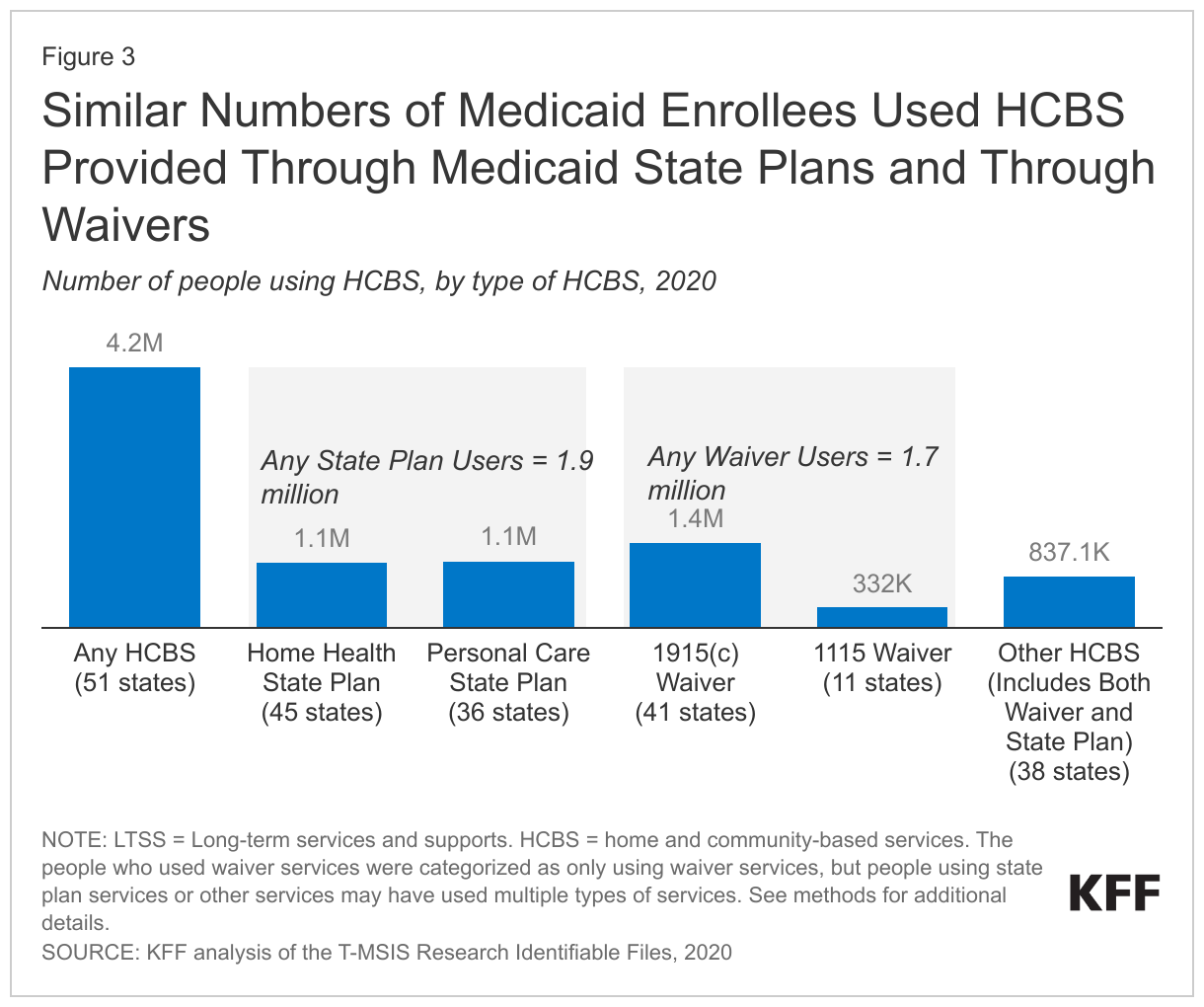
Among the 4.2 million people who used HCBS in 2020, at least 1.9 million used services provided through a state plan such as home health and personal care and at least 1.7 million received services through a waiver (Figure 3). Federal Medicaid statute requires states to cover home health, but the remainder of HCBS are optional. An additional 837,000 people used other HCBS services that were a mix of state plan and waiver services. Among people who used home health, personal care, and “other” HCBS, 0.5 million used more than one type of HCBS. (KFF categorized people using waiver services as only using waiver services, although in some states, people could potentially receive services through a waiver and through the state plan.) In most states, the range of benefits available through a waiver are more comprehensive than those available through the state plan (see Appendix Table), but most states limit the number of people who may use waiver services, often resulting in waiting lists. In a 2022 survey of states HCBS programs, states reported that there were 656,000 people on waiting lists, with people waiting an average of 45 months to receive waiver services.

Similar Numbers of Medicaid Enrollees Used HCBS Provided Through Medicaid State Plans and Through Waivers

What Do We Know About Spending for People Who Used Medicaid LTSS in 2020?

Medicaid spending per-person is higher for people who use institutional LTSS and people who use HCBS when compared to those who do not use any LTSS, but spending for people using institutional LTSS is particularly high (Figure 4). In 2020, Medicaid spending—including LTSS and other services such as hospital care and prescription drugs—for the 5.6 million enrollees who used Medicaid LTSS, totaled nearly $217 billion. Per-person spending for these enrollees was $38,769. In comparison, Medicaid spent $4,480 per enrollee who did not use Medicaid LTSS, although that total includes children who comprise 40% of Medicaid enrollees and tend to have much lower spending per person. Medicaid spent an average of $36,275 per person for people who used HCBS and $47,279 per person for people who used institutional LTSS.

Medicaid Enrollees Who Used LTSS Had High Per-Enrollee Spending

People who used Medicaid LTSS comprised 6% of Medicaid enrollment but 37% of federal and state Medicaid spending (Figure 5). The 5% of Medicaid enrollees who used HCBS comprised 26% of Medicaid spending and the 2% of Medicaid enrollees who used institutional LTSS comprised 13% of Medicaid spending. High per-person Medicaid spending among enrollees who use LTSS likely reflects the generally high cost of LTSS and more extensive health needs among such groups that lead to higher use of other health care services and drugs as well.

Medicaid Enrollees Who Used LTSS Had Disproportionately High Medicaid Spending in 2020

What Current Policy Questions Could Affect People Who Use Medicaid LTSS?

The COVID-19 pandemic greatly exacerbated shortages of LTSS workers, and many policy questions pertain to expanding the workforce caring for people who use Medicaid LTSS. Recent analysis on the Peterson-KFF Health System Tracker shows that, as of June 2023, the number of workers in LTSS settings was measurably lower than in early 2020. Shortages and high turnover among LTSS workers reflect demanding working conditions and relatively low wages. Workforce shortages have negative effects on the quality of care provided in institutional LTSS settings, and often result in people getting fewer hours or types of HCBS than they need. During the pandemic, states relied on family caregivers to help fill some of those gaps, but many pandemic-era policies will end in November 2023 if they are not transitioned into permanent policies.

The federal government may use its authority to require increased staffing for Medicaid LTSS, but it is not clear what the exact policies will be or how they will be implemented. The Biden Administration is expected to release a proposed rule that would increase nursing facility staffing levels in the near future, but it is unknown what the new staffing levels might be. KFF analysis finds that although nearly all facilities would meet a requirement of 2.5 or fewer HPRD and 85% of facilities would meet a requirement of 3.0 HPRD, but close to half (45%) of all nursing facilities would not meet a 3.5 HPRD requirements, and only 29% would meet an HPRD of 4.0. For HCBS, the Biden Administration recently released a proposed rule aimed at ensuring access to Medicaid services, which has several notable provisions aimed at addressing HCBS workforce challenges. Notably, the states would be required to report payment rates for certain HCBS, to demonstrate that payment rates are “adequate” to provide the level of services in enrollees’ personalized care plans, and to ensure at least 80% of payments are passed through to worker compensation for certain types of HCBS. Higher staffing levels could increase payment rates and spending for LTSS, but it’s unknown who would pay those additional costs.

Although most states have increased payment rates for LTSS, it is unclear where additional funding would come from to further increase payment rates and engage additional staff. In an FY 2022 survey conducted of Medicaid officials in all 50 states and D.C., 44 states implemented Medicaid rate increases in FY 2022 for nursing facilities. Similarly, a 2022 survey of Medicaid HCBS programs found that nearly all states reported experiencing shortages of direct care workers and many reported adopting policies to bolster the HCBS workforce, such as providing recruitment or retention bonuses and increasing provider payment rates. Many of the HCBS initiatives were funded by extra federal funding available through the American Rescue Plan Act, but as that funding expires, states will have to find alternative funding sources if they want to maintain spending levels.

Looking ahead, as the population continues to age, it is likely that more people will need Medicaid LTSS and that workforce challenges will persist. The data on LTSS users provide a rich source of information about who is using LTSS and this data note highlights how many people are currently using LTSS and what types of LTSS they are using.

Appendix Table 1: Medicaid Authorities for Home and Community-Based Services
State Plan Benefits
Home Health ServicesRequired
  • Part-time or intermittent nursing services, home health aide services, and medical supplies, equipment and appliances suitable for use in the home
  • At state option – physical therapy, occupational therapy, and speech pathology and audiology services
Home Health in T-MSIS
Personal CareOptional
  • Assistance with self-care (e.g., bathing, dressing) and household activities (e.g., preparing meals)
Personal Care in T-MSIS
Section 1915(i)Optional
  • Case management, homemaker/home health aide/personal care services, adult day health, habilitation, respite, day treatment/partial hospitalization, psychosocial rehabilitation, chronic mental health clinic services, and/or other services approved by the Secretary
  • Beneficiaries must be at risk of institutional care
  • Population targeting permitted
Personal Care or Other in T-MSIS
Section 1915(j)Optional
  • Allows people who are using HCBS to “self-direct” their services
  • Self-direction allows people to choose their own providers, establish payment rates, and allocated different services within a fixed budget
Home Health, Personal Care, or Other in T-MSIS
Community First Choice (1915(k))Optional
  • Attendant services and supports for beneficiaries who would otherwise require institutional care
  • Income up to 150% FPL or eligible for benefit package that includes nursing home services; state option to expand financial eligibility to those eligible for HCBS waiver
Personal Care or Other in T-MSIS
HCBS Waivers
Section 1915(c)Optional
  • Same services as available under Section 1915 (i)
  • Beneficiaries must otherwise require institutional care
  • Secretary can waive regular program income and asset limits
  • Cost neutrality required (average per enrollee cost of HCBS cannot exceed average per enrollee cost of institutional care)
  • Enrollment caps and waiting lists permitted
  • Geographic limits permitted
  • Population targeting permitted
1915(c) in T-MSIS*
Section 1115Optional
  • Secretary can waive certain Medicaid requirements and allow states to use Medicaid funds in ways that are not otherwise allowable under federal rules for experimental, pilot, or demonstration projects that are likely to assist in promoting program objectives
  • Federal budget neutrality required
  • HCBS enrollment caps permitted
1115 Waiver in T-MSIS*
NOTES: *Indicates the primary category in which KFF categorizes people who use HCBS, though not all states use all fields, so in some cases, many people will be grouped with home health or personal care even though they are using those services under another authority.

Methods

Methods

Data: The KFF State Health Facts on people who use LTSS use the T-MSIS Research Identifiable Demographic-Eligibility and Claims Files (T-MSIS data). Current State Health Facts include data from CY 2018, 2019, and 2020, but the methodology is intended to be applied in all years from 2016 onwards. Each year of data generally has multiple different releases and different releases will produce different counts of people using LTSS.

Overview of Methods: KFF included all people with at least one month of Medicaid enrollment who were using the following types of LTSS: institutional care (care provided in a nursing facility or intermediate care facility) and HCBS (home health, personal care, 1915(c) waiver, 1115 waiver, and “other” HCBS). Several summary level indicators categorize people who used specific types of LTSS as using only institutional care, only HCBS, or both types of care. KFF categorized claims using the type-of-service code from the first line claim, which was applied to the header claim in a merged dataset. More details are below.

Institutional LTSS: KFF defined enrollees who used institutional LTSS if they had a claim for care provided at either a nursing facility or intermediate care facility (see table below).

TOS_CD ValuesKFF Categorization Of Type of Institutional LTSS Description
9Nursing FacilityNursing facility services for individuals age 21 or older (other than services in an institution for mental disease)
45Nursing FacilityNursing facility services for individuals age 65 or older in institutions for mental diseases
46Intermediate Care FacilityIntermediate care facility (ICF)/Intermediate Care Facilities for individuals with Intellectual Disabilities (IIDICF)/Individuals with Intellectual Disabilities (IID) services
47Nursing FacilityNursing facility services, other than in institutions for mental diseases
59Nursing FacilitySkilled nursing facility services for individuals under age 21

Home and Community-Based Services: KFF used eligibility information and claims files to identify people who used HCBS.

  1. Enrollees who had at least one month of 1915(c) enrollment (WVR_1915C_MOS > 0) were identified as using 1915(c) waiver services.
  2. For people who did not have any enrollment in a 1915(c) waiver, KFF used the claims to determine whether they were using HCBS, including home health, personal care, or other HCBS (see table below).
  3. If enrollees used home health, personal care, or other HCBS; and were enrolled in an 1115 waiver (WVR_TYPE_CD equal to 01 or 29), and lived in a state that provided HCBS through an 1115 waiver, they were identified as using 1115 waiver services. From 2018-2020, the following states provided HCBS through an 1115 waiver: AZ, AR, CA, DE, HI, KS, MD, MN, NJ, NM, NY, RI, TN, TX, VT, and WA.
  4. For enrollees who used HCBS but were not enrolled in a 1915(c) or 1115 waiver as described above, KFF categorized the types of services they were using as home health, personal care, or other HCBS. Enrollees could use multiple types of HCBS in those categories. KFF compared the T-MSIS data to older HCBS surveys from 2018 and 2020 and identified discrepancies which suggest that the “other HCBS” group likely includes some people using HCBS through a 1915 state plan authority and some people using HCBS through a waiver in states that did not populate 1915(c) information on the eligibility file.
    • KFF counted only the enrollees with the top 50% of home health claims in each state as people who used home health to exclude people who used short-term home health. The cut-off point reflects the distribution of home health claim counts per enrollee in each state and was selected to calibrate counts such that the number of people using LTSS in each state was similar to the number identified in the older KFF surveys. The specific claim count cut-off varied by state and year. In 2020, the claim counts for the top 50% of people who used home health services in each state ranged from 1 claim in Utah to 28 claims in Massachusetts.
    • Similarly, KFF counted only enrollees with the top 75% of personal care claims as people who used personal care in each state. The claim count cut-off varies by state and year. In 2020, the claim counts for the top 75% of people who used personal care services in each state ranged from 2 claims in Illinois and Delaware to 126 claims in Massachusetts.
TOS_CD ValuesKFF Categorization Of Type of HCBS Description
16Home HealthHome health services — Nursing services
17Home HealthHome health services — Home health aide services
18Home HealthHome health services — Medical supplies, equipment, and appliances suitable for use in the home
19Home HealthHome health services — Physical therapy provided by a home health agency or by a facility licensed by the State to provide medical rehabilitation services
20Home HealthHome health services — Occupational therapy provided by a home health agency or by a facility licensed by the State to provide medical rehabilitation services
21Home HealthHome health services — Speech pathology and audiology services provided by a home health agency or by a facility licensed by the State to provide medical rehabilitation services
51Personal CarePersonal care services
62Other HCBSHCBS — Case management services
63Other HCBSHCBS — Homemaker services
64Home HealthHCBS — Home health aide services
65Personal CareHCBS — Personal care services
66Other HCBSHCBS — Adult day health services
67Other HCBSHCBS — Habilitation services
68Other HCBSHCBS — Respite care services
69Other HCBSHCBS — Day treatment or other partial hospitalization services, psychosocial rehabilitation services and clinic services (whether or not furnished in a facility) for individuals with chronic mental illness
70Other HCBSHCBS — Day Care
71Other HCBSHCBS — Training for family members
72Other HCBSHCBS — Minor modification to the home
73Other HCBSHCBS — Other services requested by the agency and approved by CMS as cost effective and necessary to avoid institutionalization
74Other HCBSHCBS — Expanded habilitation services — Prevocational services
75Other HCBSHCBS — Expanded habilitation services — Educational services
76Other HCBSHCBS — Expanded habilitation services — Supported employment services, which facilitate paid employment
77Other HCBSHCBS65-plus — Case management services
78Other HCBSHCBS-65-plus — Homemaker services
79Home HealthHCBS-65-plus — Home health aide services
80Personal CareHCBS-65-plus — Personal care services
81Other HCBSHCBS-65-plus — Adult day health services
82Other HCBSHCBS-65-plus — Respite care services
83Other HCBSHCBS-65-plus — Other medical and social services
144Other HCBSPayments to individuals for personal assistance services under 1915(j)
Notes: Only people who were not enrolled in either an 1915(c) or 1115 waiver were grouped into home health, personal care, and other HCBS based on the types of service they were using.

Key Limitations: For HCBS, where there are few established benchmarks on the number of people using services, KFF calibrated the selection criteria such that state-level counts were similar to the results from KFF’s HCBS survey. For most states, the approach yielded reasonable results but in several cases, there were significant discrepancies between the survey data and the T-MSIS output. Examples include Maine (where the 1915(c) enrollees appear to be showing up as people who used state plan services), Rhode Island (which has low counts of people using HCBS in all categories), and Wisconsin (where the 1915(c) enrollees are showing up as people who used other HCBS).

Do State Decisions to Prioritize Renewals for Medicaid Enrollees Who are Likely Ineligible Affect Early Disenrollment Rates?

Authors: Bradley Corallo, Jennifer Tolbert, and Robin Rudowitz
Published: Aug 11, 2023

As states resumed disenrolling people from Medicaid earlier this year as part of the “unwinding” of the continuous enrollment provision, early data have shown wide variation in disenrollment rates across states, ranging from 82% of completed renewals in Texas to 10% in Michigan. Although there are a range of state policy choices and other factors contributing to this variation, this policy watch examines which states are prioritizing renewals for enrollees that were flagged as likely ineligible and what effect that may have on disenrollment rates early in the unwinding period.

Prior to the start of the unwinding, many states flagged enrollees they deemed as likely ineligible. Although states could not disenroll anyone while the continuous enrollment provision, many states identified people as likely ineligible if there was information available showing the enrollee had a change in circumstance (e.g., aged out of children’s coverage), a change in income that would make them ineligible, or if they did not respond to renewal requests.

Early data from three states (Arizona, Idaho, and Pennsylvania) show that disenrollment rates for flagged enrollees are higher than for other enrollees. While several states publish total disenrollments among flagged enrollees, only Arizona, Idaho, and Pennsylvania publish enough information to be able to compare disenrollment rates for flagged enrollees to overall disenrollment rates. Based on early unwinding data, the disenrollment rate for flagged enrollees in each of these states exceeded the overall disenrollment rate by about 20 percentage points (Figure 1).

State-Reported Medicaid Disenrollments as a Share of Total Completed Renewals, Flagged Enrollees versus All Enrollees

Some states are prioritizing renewals for enrollees flagged as likely ineligible early in the unwinding period. States have taken different approaches to processing renewals during the unwinding period and some states have chosen to prioritize renewals for enrollees they identified as likely no longer eligible during the first six months. Based on unwinding plans submitted to the Centers for Medicare and Medicaid Services (CMS), a total of 17 states indicated that they would prioritize renewals for enrollees that the state flagged as likely ineligible at the start of their unwinding period (Figure 2). Of these, 11 states plan to work through renewals for flagged enrollees during the first two-to-six months of the unwinding, while the remaining six states will spread renewals for flagged enrollees over the first seven-to-nine months.

Timeframes for When States Plan to Conduct Renewals for Enrollees Flagged as "Likely Ineligible"

State approaches to renewing flagged enrollees may explain some – but not all – variation in disenrollment rates across states. Consistent with the data from Arizona, Idaho, and Pennsylvania showing higher disenrollment rates for flagged enrollees, states that prioritize renewals for flagged enrollees in the first two-to-six months have a higher median disenrollment rate (48%) compared to all other states with available data (33%). However, there is still considerable variation in disenrollment rates among these states, ranging from 82% in Texas to 27% in Maryland (Figure 3). Some variation may reflect how states identified likely ineligible enrollees and the share of flagged enrollees undergoing a renewal each month. Other state policies likely contribute to the variation as well, such as the approach states take to increase the number of automatic (or ex parte) renewals, how states use temporary flexibilities made available by the federal government during the unwinding, and the effectiveness of states’ outreach to enrollees.

Medicaid Disenrollments Rates Among States Renewing All Flagged Enrollees in the First 2-to-6 Months of the Unwinding Period

For states prioritizing likely ineligible enrollees, additional data may be required to identify potential reasons for high Medicaid disenrollments. Generally, states that heavily frontload renewals with flagged enrollees can be expected to have higher early disenrollment rates relative to states that spread out renewals for flagged enrollees over a longer period. But, over time, as these states work through renewals for flagged enrollees, disenrollment rates should moderate. However, if these higher disenrollment rates are because of other issues with a state’s renewal process, waiting several months to see whether disenrollment rates decrease could mean many eligible enrollees may lose coverage. More complete information on the reasons why individuals were flagged as likely ineligible, the share of flagged enrollees being renewed each month, as well as disenrollment data broken out by flagged enrollees versus all other enrollees could help identify the factors that underpin disenrollment rates early in the unwinding period.

News Release

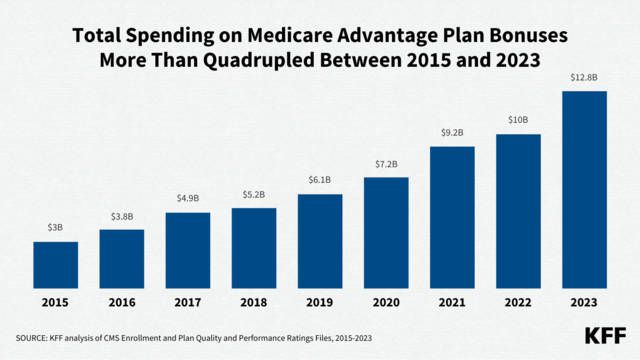
Medicare Advantage Insurers Will Collect at Least $12.8 Billion in Federal Bonus Payments in 2023—a Nearly 30% Increase from 2022

New KFF Analyses Highlight Trends in Enrollment, Benefits and Cost-Sharing, and Bonus Payments for Medicare Advantage Plans

Published: Aug 9, 2023

Federal spending on bonus payments to insurance companies that offer Medicare Advantage plans will reach at least $12.8 billion in 2023, according to a new KFF analysis. That is a nearly 30% increase from 2022, and more than quadruple the spending in 2015.

These data come from one of three analyses released today by KFF that examine various facets of the Medicare Advantage program, which provides health insurance coverage to nearly 31 million Americans. KFF examined trends in enrollment, premiums, out-of-pocket limits, cost sharing, supplemental benefits, prior authorization, star ratings and bonus payments.

Bonus payments, which were established by the Affordable Care Act, are based on a five-star rating system and are intended to encourage Medicare Advantage plans to compete for enrollees based on quality. The payments vary substantially across firms, with UnitedHealthcare receiving the largest total payments ($3.9 billion) and Kaiser Permanente the highest payment per enrollee ($523).

Eighty-five percent of Medicare Advantage enrollees are in plans that are receiving bonus payments in 2023. The impact of star ratings on bonus payments lags a year, and several policies in place during the COVID-19 Public Health Emergency have expired, reducing 2023 star ratings relative to 2022, which will likely lead to a smaller share of enrollees in plans that receive bonuses in the 2024 plan year. 

Enrollment in Medicare Advantage in 2023 comprises more than 51% of the eligible Medicare population — more than twice the share enrolled in 2007 (19%), as noted in a companion analysis that provides the latest information about Medicare Advantage enrollment, by plan type and firm, and shows how enrollment varies by state and county.

Enrollment continues to be highly concentrated among a handful of firms, with UnitedHealthcare (29%) followed by Humana (18%), comprising nearly half of all Medicare Advantage enrollees nationwide, according to the analysis. Blue Cross Blue Shield (BCBS) affiliates (including Anthem BCBS plans) account for another 14%. And four other firms (CVS Health, Kaiser Permanente, Centene, and Cigna) account for another 23%.

Additional research released by KFF today shows that 73% of Medicare Advantage enrollees are in plans with prescription drug coverage (MA-PDs) that require no premium other than the Medicare Part B premium. KFF also documents that the vast majority of enrollees in Medicare Advantage plans have access to some benefits not covered by traditional Medicare, such as eye exams and/or glasses, hearing exams and/or aids, a fitness benefit, dental care, and reduced cost-sharing.

Plans are able to offer these extra benefits, often for no additional premium, largely due to the current Medicare payment system that provides an additional $2,350 per enrollee above plans’ estimated costs of providing Medicare-covered services, on average.

One tradeoff of enrolling in Medicare Advantage is that many plans routinely require patients to obtain prior authorization for services. Virtually all Medicare Advantage enrollees (99%) are in plans that require authorization for some services, according to the analysis.

For more information, please visit:

Understanding the Role of the FTC, DOJ, and States in Challenging Anticompetitive Practices Of Hospitals and Other Health Care Providers

Published: Aug 7, 2023

Policymakers and the media have been increasingly attentive to mergers and acquisitions and other potentially anticompetitive practices of hospitals, physicians, and other health care providers. Consolidation has the potential to increase efficiency and help some struggling providers to keep their doors open in relatively underserved areas, but it can also reduce market competition and ease pressure on providers to lower prices or invest in quality improvements. A substantial body of evidence shows that consolidation has led to higher prices without clear evidence of improvements in quality, which has implications for consumers and employers. As a result, some have proposed strengthening antitrust regulation—which aims to protect competitive markets—as a tool for tackling rising health care costs, increasing the affordability of care, and reducing the large number of adults with medical debt.

Federal and state antitrust agencies play a role in challenging anticompetitive practices of health care providers and other businesses. At the federal level, the Federal Trade Commission (FTC) and the Department of Justice (DOJ) share responsibility for enforcing federal antitrust laws, including the Sherman Act, the Clayton Act, and the FTC Act. State attorneys general (AG) offices also have the authority to bring action under federal antitrust law, as well as under state statutes, which sometimes expand upon federal law.

This issue brief explains the role of federal and state antitrust agencies in challenging anticompetitive practices among health care providers, including the legal authority of federal and state agencies, the role that they play in enforcing antitrust laws, and proposed options for strengthening their authority. The brief focuses on health care providers, though many of the principles discussed in this issue brief apply to the practices of other health care entities as well, such as health insurers and pharmacy benefit managers (PBMs) (which are currently being reviewed by the FTC).  While the focus of this brief is on the role of government agencies, antitrust law also authorizes private parties, such as employer health plans, to challenge anticompetitive practices in the courts.

What types of anticompetitive practices do governments challenge and why?

Governments challenge anticompetitive practices to promote competitive markets, often for the benefit of consumers (e.g., patients and health plan enrollees).1  Governments seek to address a variety of anticompetitive practices that may lead to higher prices without commensurate improvements in quality of care. These include anticompetitive mergers and acquisitions (referred to as “mergers” in this brief), and other activities that hinder competition (referred to as “nonmerger anticompetitive practices” in this brief).

Provider consolidation can be beneficial to consumers in some instances and detrimental in others. On the one hand, consolidation has the potential to increase efficiency, such as by allowing providers to purchase supplies in bulk at a discount or by facilitating the coordination of care across different providers. On the other hand, consolidation has the potential to lead to worse outcomes for consumers by increasing providers’ market power and decreasing competition, which enhances the ability of providers to negotiate for higher prices (increasing costs for consumers and employers) and reduces the pressure on providers to invest in quality improvements. A substantial body of evidence shows that consolidation has led to higher prices without clear indications of quality improvements, though the strength of this evidence varies based on the type of consolidation and provider.

There are three main types of mergers:

  • Horizontal mergers occur when there is consolidation between providers that offer the same or similar services, such as when a health system acquires a hospital or when two physician practices that provide overlapping services merge. Horizontal mergers can raise concerns about competition because they, by definition, reduce competitiveness when occurring between providers in the same market, and because consolidated entities can take actions to increase and protect their market power.
  • Vertical mergers occur when there is consolidation between providers that offer different services along the same supply chain, such as when a hospital acquires a physician practice. Vertical mergers can raise anticompetitive concerns, for example, if physicians refer patients to hospitals within their health system rather than to competing hospitals. Some mergers may entail both vertical and horizontal consolidation (e.g., if a health system acquires a physician group that provides services offered by the system’s existing physician group).
  • Cross-market mergers occur when there is consolidation between providers that operate in different geographic markets.2  Cross-market mergers may raise concerns about competition, for example, if a health system with providers in different areas of a state is able to use its dominant position in one market to negotiate higher prices in another when contracting with a given health plan (e.g., a state employee plan with enrollees that reside in several markets).

Governments also challenge other types of anticompetitive practices, such as the use of anticompetitive clauses in contracts between providers and insurers or providers and workers. Anticompetitive contract clauses give dominant parties an unfair advantage over potential competitors and can lead to higher prices. For example, some health systems have highly regarded hospitals (also known as “must have” hospitals) that insurers need to include in their provider networks in order to attract enrollees, which gives these systems substantial bargaining leverage over insurers. These health care systems can in turn use this bargaining leverage to pressure insurers to contract with all providers in the system (through “all-or-nothing clauses”), shielding expensive or low-quality members from competition with more desirable providers. The textbox below provides definitions of various anticompetitive contract clauses.

Common Types of Anticompetitive Contract Clauses3 

  1. All-or-nothing clauses require an insurer that wants to contract with a particular provider in a system (such as a must-have hospital) to contract with all providers in that system.
  2. Anti-tiering/anti-steering clauses prevent an insurer from putting a given provider in a non-preferred provider network tier or from using other incentives or tools to steer patients to competing providers. This can incentivize patients to use that provider, even if a higher-value provider is also in-network.
  3. Exclusive contracting clauses prohibit an insurer from including competing providers in their provider network, so that a given provider is the only in-network option in a given area.
  4. Non-compete clauses prevent a worker employed with a given provider from taking a job with a competing provider or starting a new practice within a certain distance for some duration of time.
  5. Most favored nation clauses require a provider to offer an insurer the lowest rates of all the insurers with which it has contracted. While the examples above create favorable terms for providers in their contracts with insurers, most favored nation clauses create favorable terms for insurers in their contracts with providers.4 

What federal antitrust laws govern anticompetitive practices?

There are three primary federal antitrust laws—the Sherman Act, the Clayton Act, and the FTC Act—that prohibit anticompetitive mergers and other anticompetitive practices.

  • The Sherman Act (1890) broadly prohibits anticompetitive practices. It has been used to challenge various anticompetitive practices, such as mergers, wage suppression, agreements among competing businesses to fix prices, and anticompetitive contracting clauses.
  • The Clayton Act (1914) builds on the Sherman Act by explicitly prohibiting anticompetitive mergers as well as other types of anticompetitive practices that are not clearly addressed by the Sherman Act (such as by barring the same individual from serving on the board of directors for two competing health systems, with some exceptions). Additionally, as amended under the Hart-Scott-Rodino Act in 1976, the law requires that merging entities report their plans in advance to federal regulators in certain cases where the transaction exceeds a specified value ($111.4 million in 2023), which gives regulators time to investigate and intervene if needed.
  • The Federal Trade Commission (FTC) Act (1914) created the FTC and prohibits “unfair methods of competition” and “unfair or deceptive acts or practices.” The FTC Act encompasses the same types of violations that are covered by the Sherman Act and the Clayton Act, in addition to other anticompetitive practices, and grants the FTC regulatory authority. Unlike the Sherman Act and the Clayton Act, the Act generally cannot be applied to nonprofit entities.5 

Some forms of business practices, such as almost all instances where competitors coordinate to raise prices, are inherently illegal under federal law. The legality of other types of business practices depends on the context. For instance, when government agencies challenge a merger, courts assess whether the merger would likely harm competition in a given market.

What is the FTC’s role in enforcing federal antitrust law?

Two federal agencies—the FTC and DOJ—have overlapping, as well as distinct, authority to challenge anticompetitive practices under federal law. The FTC is the only entity that can enforce the FTC Act. Although this Act generally cannot be applied to nonprofit entities, the FTC has the authority to enforce the Clayton Act against nonprofit entities (in addition to for-profit entities), such as by challenging anticompetitive mergers among nonprofits. The DOJ has the authority to enforce the Sherman and Clayton Acts. States can also bring lawsuits under federal antitrust law, as can some private parties, such as competing providers.

The FTC focuses on “protecting the public from deceptive or unfair business practices and from unfair methods of competition.” This includes challenging activities such as misleading advertisements, violations of consumers’ data privacy, and efforts to accumulate market power through mergers and other anticompetitive practices. For instance, the FTC sued Facebook in 2020, alleging, in part, that the company had sought to maintain its monopoly power by buying up competitors, such as Instagram and WhatsApp.

The FTC plays a larger role than the DOJ in enforcing federal antitrust law in health care provider markets, though there are gaps in its authority. The FTC and DOJ have each developed expertise in certain areas and have tended to divide merger oversight accordingly, with the FTC typically overseeing provider markets and the DOJ typically overseeing insurance markets (see more below). However, although the FTC has broad authority to challenge anticompetitive mergers, its authority to challenge other anticompetitive practices often excludes nonprofits. Nonprofit ownership is common in provider markets. For example, nonprofits account for about three-fifths (58%) of community hospitals in 2023. The DOJ may fill in for the FTC when the FTC does not have the authority to challenge nonprofit providers that are engaging in certain anticompetitive practices (see example of Atrium Health below).

The FTC has successfully challenged several hospital mergers over the past two decades. Beginning in the 1990s and for several years afterwards, the FTC had difficulty challenging hospital mergers in the courts, allowing rapid consolidation in the hospital sector to continue unabated.6  Since the late 2000s, the FTC has since been more successful in challenging hospital mergers, reflecting advances in both economics and the FTC’s new legal strategies.7  However, the FTC challenges only a fraction of hospital mergers, and it is difficult to know the extent to which mergers that go unchallenged have an adverse impact on consumers, in terms of costs and quality. For instance, in 2022, the FTC challenged 3 hospital mergers and, in each case, the hospitals abandoned their plans to merge, while one analysis documented 53 hospital merger announcements in that year. The same analysis identified more hospital merger announcements in the years prior to the start of the COVID-19 pandemic (e.g., 92 in 2019).

Example: FTC & Advocate Health Care Network

In 2015, the FTC brought a legal challenge against a proposed merger of two Chicago-area health systems: Advocate Health Care Network and NorthShore University Health System. The FTC argued that the combined entity would control over half of the market for general acute care inpatient hospital services, compared to the next largest provider, which would have only controlled 15% of the market. The court placed a temporary block on the merger, and the systems ultimately abandoned their plans to merge before the case went to trial.

The FTC has played a smaller role in challenging physician mergers. A key challenge is that physician mergers tend to be smaller, and physician groups often grow slowly over time by acquiring small group practices and hiring new physicians. As a result, physician groups often do not need to report mergers to federal regulators as their transactions tend to fall below Hart-Scott-Rodino reporting thresholds (though regulators can still challenge mergers that they learn about in other ways). Additionally, because they tend to be small, any given merger may not have an appreciable effect on market power, even if the cumulative effect of these mergers leads to a large concentration of market power over time.

Vertical mergers in health care provider markets have largely escaped FTC enforcement and the FTC has never challenged a cross-market merger, though it has expressed interest in both practices. For instance, in 2021, the FTC announced that it would begin to study the effect of vertical mergers between health care facilities and physician groups. The FTC previously conducted studies of horizontal mergers in advance of successful litigation. The FTC has also investigated specific instances of cross-market mergers, although it has yet to bring a challenge.

Example: FTC & St. Luke’s Health System

In 2012, St. Luke’s Health System in Idaho attempted to acquire Saltzer Medical Group, a physician practice group. Although this proposed acquisition had elements of a vertical merger, the FTC challenged it as a horizontal merger, i.e., on the basis that St. Luke’s would obtain a dominant market share for adult primary care physician services. Courts ruled in favor of the FTC and ordered that St. Luke’s divest Saltzer Medical Group.  This was the first time that the FTC received a court decision for a case challenging a hospital or health system’s acquisition of competing physician practices.

The FTC has not played a large role in overseeing nonmerger anticompetitive practices in nonprofit health care provider markets, such as the use of anticompetitive contract clauses. This may reflect the fact that the FTC’s authority to challenge and regulate nonmerger anticompetitive practices generally excludes nonprofit entities. Nonetheless, the FTC has brought legal challenges in some instances, such as cases where separate physician groups have coordinated with each other to raise prices. Relatedly, the FTC drew on its regulatory authority when it proposed a rule in 2023 that would ban non-compete clauses between employers and workers.

What is the DOJ’s role in enforcing federal antitrust law?

The DOJ enforces a wide range of laws on behalf of the federal government, including—through its Antitrust Division—anticompetitive practices. For instance, in one landmark antitrust case in the 1990s, the DOJ sued Microsoft, alleging that the company had illegally sought to protect its monopoly power. The DOJ argued that the company had done so, in part, by requiring computer manufacturers that wanted to use Microsoft’s popular Windows operating system to also include Internet Explorer as a default.

Although the FTC typically oversees the conduct of health care providers, the DOJ has occasionally done so as well (see example below).

Example: DOJ & Atrium Health

In 2016, the DOJ filed a lawsuit against Carolinas Healthcare System, also known as “Atrium Health.” The DOJ claimed that Atrium had violated federal antitrust law by, among other things, entering into contracts with insurers that contained anti-steering and anti-tiering clauses. Atrium Health system and the DOJ reached a settlement agreement before trial where the system agreed, in part, to stop using these contract clauses.

The DOJ typically takes the lead in promoting competition in health insurance markets. For instance, in 2017, the DOJ, along with some state governments, successfully prevented a proposed merger between Anthem and Cigna—which would have been the largest merger of health insurance companies on record—and a proposed merger between Aetna and Humana.

How do the FTC and DOJ work together on antitrust issues?

The FTC and DOJ have a clearance process to determine which agency will investigate and challenge a given merger. The FTC and DOJ have each developed expertise in different areas and have tended to divide merger oversight accordingly, with the FTC typically overseeing provider markets and the DOJ typically overseeing insurance markets. The division of labor is formalized through a clearance process that determines which agency will investigate a proposed transaction based on its expertise and other factors, such as its capacity and ties to a given case.

The FTC and DOJ collaborate on guidelines that establish how they determine whether to challenge a given merger. This includes the Horizontal Merger Guidelines, which, as the name suggests, outline the criteria that the FTC and DOJ consider when reviewing horizontal mergers. For instance, the guidelines indicate that the agencies evaluate the effects of a merger on market concentration based on a measure known as the “Herfindahl-Hirschman Index” (HHI) (see textbox below). The guidelines also indicate that the agencies consider the possible benefits of a given merger, such as whether a merger might allow research to be conducted more effectively.

Herfindahl-Hirschman Index (HHI)

The HHI is calculated based on provider market shares for a given product—such as inpatient general acute care services or inpatient orthopedic surgical services—and geographic market. The HHI for a market can range from nearly 0 (a perfectly competitive market) to 10,000 (a market with a single provider).  The Horizontal Merger Guidelines define the level of market concentration as follows:

Unconcentrated: HHI < 1,500

Moderately concentrated: HHI between 1,500 and 2,500

Highly concentrated: HHI > 2,500

Although markets for inpatient hospital services are now often highly concentrated, there is wide variation across the country. For instance, one study estimated that, in 2021, the New York City metro area had an HHI of 753 for inpatient hospital services, while the Wilmington, North Carolina metro area had an HHI of 7,600.

The FTC and DOJ have also released a set of Vertical Merger Guidelines, though the FTC withdrew from these guidelines in 2021. Some economists are more critical of the Vertical Merger Guidelines than the Horizontal Merger Guidelines, perhaps reflecting the fact that there is less consensus about the effects of vertical consolidation and the proper role of antitrust enforcement.

In July 2023, the FTC and DOJ released a draft version of their updated merger guidelines, which would apply to both horizontal and vertical mergers and which indicate that the agencies will be scrutinizing a broader range of mergers. Among other changes, the draft guidelines expand the definition of highly concentrated markets, rely on a lower threshold for identifying large changes in market concentration, consider the combined effect of a series of acquisitions (e.g., of a health system acquiring several small physician practices over time), and add an explicit discussion of the agencies’ views on how workers may be negatively impacted when their employers merge. These guidelines might also be used to challenge cross-market mergers, although this is not yet clear. The deadline for public comments on the draft guidelines is September 18, 2023.

In addition to working together on general merger guidelines, the DOJ and FTC have in the past collaborated on antitrust policy statements that are specific to health care, though both agencies withdrew from these statements in February 2023 and July 2023, respectively, arguing that the statements are outdated based on changes in health care markets.8 

What is the role of states in enforcing antitrust law?

States can bring legal challenges under federal antitrust law. States may do so through their AG offices as either a purchaser of health care (for instance, through state employee health plans) or on behalf of their residents. States sometimes file lawsuits jointly with each other or with the federal government, which can help overcome resource constraints. States and the federal government may play complementary roles, with the federal government providing greater resources and general antitrust expertise and states providing more specialized knowledge of local market conditions.

Most states have passed laws that expand oversight of provider mergers, which may lead to additional legal challenges. Thirty-four states and DC require that at least some hospitals notify state AG offices of their plans to merge, expanding on federal reporting requirements. For instance, Rhode Island requires all hospitals to do so, regardless of the value of the transaction. Additionally, thirteen states and DC require that some or all types of providers receive approval from the government prior to merging, instead of requiring that the government file a lawsuit to challenge a merger. Eleven states require AG offices to consider relatively expansive criteria when reviewing health care mergers. For instance, California law requires the AG office to consider criteria such as the general public’s interest and the effect of a merger on access to care.

Some states have prohibited certain types of anticompetitive contract clauses. These laws either broadly prohibit a given type of clause or ban their use in only specific circumstances. Regarding contracts between insurers and dominant providers, two states (Massachusetts and Nevada) have laws restricting at least some all-or-nothing clauses and anti-tiering or anti-steering provisions, and five states (Massachusetts, Minnesota, Nevada, New Hampshire, and Wisconsin) have laws restricting exclusive contracting. Additionally, 22 states restrict non-compete provisions—which dominant providers sometimes use in contracts with their workers—and 20 states restrict most favored nation clauses, which dominant insurers sometimes use in their contracts with providers.

Example: California & Sutter Health

In 2018, the California AG joined a lawsuit that had been initiated on behalf of some group health plans against Sutter Health, a large nonprofit health system in the state. The parties argued that Sutter had used anticompetitive contract clauses—such as all-or-nothing and anti-tiering provisions—to increase prices. In 2019, Sutter agreed to a settlement agreement that required the system to abandon the relevant contract clauses and to pay $575 million in damages, among other things.

Some states have enacted laws that have the potential to shield health care providers from antitrust scrutiny in certain instances.  For example, 19 states have Certificate of Public Advantage (COPA) laws, which immunize a merger from antitrust challenges while directly regulating the merged entity for a period of time, such as by limiting price increases or prohibiting certain contracting practices. The intent of COPA laws is to facilitate mergers that are perceived as being beneficial overall while mitigating anticompetitive concerns through state oversight. However, the FTC and some researchers have been critical of these laws, arguing, for example, that states have not followed through in providing ongoing oversight following a given merger. Other state policies, such as Certificate of Need (CON) statutes—which attempt to reduce costs by restricting, for example, the construction of new facilities when they do not meet a community need—may also play a role in limiting competition or preventing antitrust scrutiny.

What are the potential remedies in antitrust enforcement?

Federal or state agencies challenging a merger can seek structural remedies or conduct remedies (also known as “behavioral remedies”).

  • Structural remedies mitigate consolidation by preventing a merger from moving forward, breaking up mergers that have already taken place, or requiring a merged entity to sell off a portion of its business.
  • Conduct remedies entail restrictions or requirements imposed on providers after a merger, such as by limiting the prices providers can charge, prohibiting providers from engaging in certain contracting practices, or requiring providers to spend a minimum amount on community benefits.

Conduct remedies may be less effective than structural remedies in certain circumstances, as they tend to be time-limited and government agencies may not have the resources to monitor and enforce them. However, where markets are already concentrated and regulators are reluctant to break up merged entities, conduct remedies may be the only option.

When the government challenges proposed mergers before they occur, the recourse is typically to prevent the merger from moving forward. Antitrust enforcers have only infrequently attempted to unwind mergers that have already taken place, which the FTC describes as a “difficult and potentially ineffective” process.

There are other ways in which the government can be successful in challenging anticompetitive mergers. For example, the government and merging providers may avoid trial through a settlement agreement or consent decree. In this scenario, the government drops its legal challenge in exchange for structural or conduct remedies. Additionally, providers may abandon a merger after a lawsuit is announced or a court makes a preliminary ruling against the merger or may decide not to attempt to merge in the first place in anticipation that doing so would be successfully challenged in court.

Example: FTC & Phoebe Putney Health System

In 2011, Phoebe Putney Health System acquired a hospital from HCA in Albany, Georgia. The FTC challenged the merger and eventually reached a settlement agreement with the providers. The settlement agreement allowed the merger to persist but imposed conduct remedies, including that Phoebe Putney notify the FTC before acquiring other health care providers in the area.

The outcomes of successful legal challenges to nonmerger anticompetitive practices are similar, though the remedy would involve abandoning the relevant business practice (e.g., no longer using anticompetitive contract clauses).

What are some practical challenges facing antitrust enforcement?

There are at least a few challenges that may limit the ability of the federal government and states to foster competitive provider markets through antitrust enforcement:

  • It is difficult to break up mergers after they have already occurred, and many provider markets are already highly concentrated. For example, one study estimated that the vast majority (90%) of metropolitan statistical areas (MSAs) had highly concentrated hospital markets in 2016 (i.e., with an HHI above 2,500), most (65%) had highly concentrated specialist physician markets, and nearly two in five (39%) had highly concentrated markets for primary care physicians. Breaking up a merger after providers have already consolidated can be difficult. At the same time, regulating the behavior of merged providers—such as through restrictions on the prices they charge—may be difficult to do on an ongoing basis.
  • Some regions cannot support competitive provider markets. For instance, rural communities may not have enough residents to support several providers that offer the same service.
  • Antitrust litigation can be complex and expensive. Without adequate funding, it may be impractical to challenge a large number of provider business practices that raise anticompetitive concerns.
  • Antitrust agencies may have difficulty staying ahead of market trends. For example, it could take time for the government to develop strong guidelines for challenging vertical or cross-market mergers and to accumulate enough evidence to convince courts that these practices harm competition. In the meantime, these mergers will likely continue.
  • The benefits of competitive provider markets for individuals with health insurance will depend in part on the competitiveness of health insurance markets. The study referenced above also estimated that most MSAs (57%) had highly concentrated insurance markets in 2016. When insurance markets are not competitive, cost savings from competitive provider markets might not be fully passed along to consumers.

What policies have been proposed to strengthen antitrust law and enforcement?

Several federal and state policy proposals have been floated to help antitrust regulators more easily identify and challenge anticompetitive mergers and regulate markets that are already concentrated. One set of policies would make it easier for governments to enforce antitrust law, such as by requiring more providers to report any planned mergers, lowering the legal standards by which mergers are deemed anticompetitive, and mandating that providers receive approval from the government before merging. Another set of policies would increase the scope of antitrust law, such as by giving the FTC full authority to regulate nonprofit providers and outlawing certain anticompetitive contracting clauses. A third set of proposals would improve the infrastructure of antitrust enforcement, such as by increasing funding for antitrust agencies, creating agencies to monitor health care markets (as some states have done), and establishing specialized courts for antitrust cases.

Discussion

The FTC, DOJ, and states seek to promote competition in health care markets to encourage providers to lower costs for consumers and provide high quality medical care. Over the years, FTC, DOJ, and some states have challenged mergers as well as other anticompetitive practices. Nonetheless, there are inherent challenges to an approach that relies solely on efforts to foster competitive provider markets through antitrust regulation, particularly given the already high level of market concentration of providers across the country.

Several policy ideas have been floated at the federal and state level that are intended to strengthen antitrust regulation. However, given the challenges facing antitrust regulation and pro-competition policies, some policymakers have proposed a more direct regulatory approach, such as by capping prices or price growth or by establishing global budgets for hospitals. Some proponents of these approaches have highlighted that antitrust efforts and regulatory approaches could play complimentary roles. For instance, caps on health care prices could serve as a backstop in concentrated markets where at least some providers would not otherwise offer competitive rates or in small markets that are unable to support competition. Antitrust regulation may also play a useful role under price regulation, for example, by encouraging providers to compete for patients by offering higher quality care.

This work was supported in part by Arnold Ventures. KFF maintains full editorial control over all of its policy analysis, polling, and journalism activities.

  1. Among other objectives, there has also been increasing interest in promoting competition to protect workers from large, dominant employers. For example, SEIU Healthcare Pennsylvania recently filed a complaint with the DOJ that UPMC, a large health system in Pennsylvania, had used its market power to suppress the wages of nurses and other health care workers, increase workloads, and restrict the ability of health care workers to seek better employment elsewhere. ↩︎
  2. For example, BJC Healthcare—which is based in St. Louis, Missouri—recently announced plans to merge with Saint Luke’s Health System, which is based across the state in Kansas City. ↩︎
  3. Gag clauses, which prevent insurers and providers from disclosing negotiated rates, are an additional type of anticompetitive contracting clause. However, these have been prohibited by the Consolidated Appropriations Act of 2021. ↩︎
  4. The benefits of these clauses to different parties may be more complicated in practice. For instance, while some dominant insurers may require most favored nation clauses in their contracts with providers, some dominant providers may offer these clauses to insurers to help facilitate increases in their prices. ↩︎
  5. One exception is that the FTC Act can be applied to nonprofit health insurance companies (in addition to for-profit health insurance companies), as authorized by the Competitive Health Insurance Reform Act of 2020. ↩︎
  6. The FTC and DOJ lost six consecutive cases against hospital mergers during this time and then refrained from bringing legal challenges for several years. Part of the reason for their limited success reflected the reliance of courts on an older economic framework that tended to suggest that geographic markets for hospital care were large, and therefore appeared to be more competitive than they were in reality. Courts at the time also questioned whether mergers between nonprofit hospitals would raise prices, though more recent research suggests that this may be the case. ↩︎
  7. One turning point occurred when the agency successfully challenged a merger between Evanston Hospital and Highland Park Hospital (both nonprofits) in the Chicagoland area. The FTC first filed a complaint in 2004 after the merger had already taken place, which allowed the FTC to introduce direct evidence that the merger had led to increases in prices. The agency also provided evidence suggesting that previous methods for defining geographic markets resulted in boundaries that were too large, and it presented new models developed by economists that implied much narrower geographic markets, with greater market concentration. Relatedly, the agency’s evidence of actual price changes weakened arguments that hospitals would behave differently because of their nonprofit status. Courts have continued to rely on the new economic models used in this case, and the evidence that hospital mergers lead to price increases has grown over time. ↩︎
  8. This included withdrawing from several statements that had discussed various scenarios involving providers, such as hospital mergers, certain joint ventures, information sharing arrangements, and joint purchasing agreements. These statements had described how the agencies would conduct antitrust analyses and identified scenarios, known as “safety zones,” that would have generally been exempt from antitrust scrutiny (e.g., hospital mergers involving small, low-volume hospitals). The FTC and DOJ also withdrew from a policy statement that had described the agencies’ approach to regulating accountable care organizations (and which had been timed with the release of the Centers for Medicare and Medicaid Services final rules for the Medicare Shared Savings Program). ↩︎
News Release

New KFF Analysis Shows Number of Suicide Deaths at Record Levels, Driven by an Increase in Firearm-Related Suicides

Published: Aug 4, 2023

More than 49,000 people died by suicide across the country in 2022, a record number driven largely by an increase in the number of firearm-related deaths, a new KFF analysis of provisional CDC data shows.

Firearm-related suicide deaths have been increasing in recent years and are now the most common method of suicide, accounting for 55% of all suicide deaths in both 2021 and 2022. Deaths from other suicide methods have remained relatively steady.

The recent increase in suicide deaths follows high levels of mental health symptoms during the COVID pandemic, financial stressors, and difficulty accessing needed mental health care—particularly for some populations.  

Suicide deaths are increasing fastest among people of color, younger individuals, and people who live in rural areas. Between 2011 and 2021, suicide death rates increased substantially among people of color, with the highest increase among American Indian or Alaska Native people (70%), followed by Black people (58%) and Hispanic people (39%). The suicide death rate also increased among adolescents (48%), young adults (39%), and people who live in rural areas (26%) during the same period.

In July 2022, a three-digit crisis number, 988, launched nationally to provide an easy-to-remember way for people who are suicidal or experiencing a mental health emergency to connect with a crisis counselor and other resources. In its first year, 988 improved answer rates and reduced wait times while handling nearly 5 million contacts because of surging demand; however, its influence on overall suicide rates, particularly among people of color or other vulnerable populations, remains to be seen.

From 2011 to 2022, over half a million people (539,810) died by suicide, with 2022 showing the highest number of deaths on record. Within this period, the adjusted suicide rate increased by 16%. The rate increased by 37% since 1999.

Read “A Look at the Latest Suicide Data and Change Over the Last Decade” for more information about suicide death rates between 2011 and 2022.

News Release

Marketplace Insurers are Proposing a 6% Average Premium Hike for 2024 and Pointing to Inflation as a Key Driver of Costs

Published: Aug 4, 2023

ACA Marketplace insurers are requesting a median premium increase of 6% for 2024, according to a new KFF analysis of the preliminary rate filings. Insurers’ proposed rate changes – most of which fall between 2% and 10% – may change during the review process.

Although most Marketplace enrollees receive subsidies and are not expected to face these added costs, premium increases could result in higher federal spending on subsidies.

Insurers cite price increases for medical care and prescription drugs as a key driver of premium growth in 2024, according to KFF’s examination of publicly-available documents from 58 insurers.

In addition to inflation’s impact on medical costs, insurers point to growth in the utilization of health care, which fell in 2020 but has since returned to more normal levels.

Meanwhile, the impact of COVID-19-related costs on premiums remains much more uncertain. While some of the 320 ACA Marketplace insurers expect vaccine commercialization to increase costs on a per-dose basis, drops in COVID treatments and new cost sharing for testing may lower insurer costs and offset some growth in premiums.

A small number of insurers cite other potential drivers of premium hikes, including the unwinding of the Medicaid continuous enrollment provision (which has already led to the disenrollment of at least 3.8 million people from Medicaid) and new high-cost weight loss drugs.

The full analysis and other data on health costs are available in the Peterson-KFF Health System Tracker, an online information hub dedicated to monitoring and assessing the performance of the U.S. health system.

Poll Finding

KFF Health Tracking Poll July 2023: The Public’s Views Of New Prescription Weight Loss Drugs And Prescription Drug Costs

Published: Aug 4, 2023

Findings

Key Findings

  • As a relatively new class of prescription drugs, initially approved to treat type 2 diabetes, have been gaining attention for their use as effective weight loss drugs, the latest KFF Health Tracking Poll finds that nearly half of adults (45%) say they would generally be interested in taking a safe and effective prescription weight loss drug, including nearly six in ten (59%) of those who are currently trying to lose weight and half (51%) of those who are trying to lose less than 10 pounds. About seven in ten adults say they have heard at least “a little” about this new class of weight loss drugs, which include Ozempic, Wegovy and Mounjaro.
  • While there is overall interest in taking a prescription weight loss drug, interest decreases substantially once people are asked if they would take a drug administered as routine injection (23% of all adults would still be interested), if it was not covered by their insurance (16%), if it was not approved by the FDA for weight loss specifically (16%), or if they heard they may gain weight back after stopping use (14%).
  • Most adults (80%) say that insurance companies should cover the cost of weight loss drugs for adults who are overweight or obese, while half of adults (53%) say insurance should cover the cost of these drugs for anyone who wants them to lose weight. Half of adults continue to say that health insurance should cover the cost of weight loss drugs, even if it meant that monthly health insurance premiums increased for everyone, including larger shares of Democrats (62%).
  • Interest and demand for these new weight loss drugs comes at a time when a majority of the public say they trust pharmaceutical companies to develop new drugs (75%) and provide reliable information about safety and side effects (66%) as well as drug effectiveness (64%) – but far fewer adults (22%) say they trust these pharmaceutical companies to price their products fairly. A large majority of adults (83%), including majorities across partisans, see pharmaceutical profits as a major factor contributing to the cost of prescription drugs.
  • Notable shares of adults (28%) report difficulty affording prescription drugs, with another three in ten adults (31%) reporting not taking their medicine as prescribed in the past year due to the cost. Lower income adults are more likely than those with higher household incomes to report experiencing these cost-related prescription drug issues.
  • Majorities across partisans say there is not enough regulation over drug pricing, however, just under a year after the passage of the Inflation Reduction Act, few adults in the U.S. are aware of the law’s provisions aimed at reducing the cost of prescription drugs in Medicare. While adults ages 65 and older – the group who will be most affected by the law’s Medicare provisions – are more likely than younger adults to know about some of these aspects of the law, a majority of older adults are still unaware whether these provisions are currently in place. About four in ten (44%) of those ages 65 and older say they are aware of insulin caps for people with Medicare, and about three in ten say they are aware of annual out-of-pocket prescription drug limits for people with Medicare (34%) or the requirement that the federal government negotiate the price of some prescription drugs for people with Medicare (31%), while just 5% say they are aware of penalties for drug companies for increasing prices faster than inflation for people with Medicare.

Public Opinion On A New Class Of Weight Loss Drugs

A new class of prescription drugs, initially developed to treat type 2 diabetes, have been garnering an increasing amount of attention due to their ability to act as highly effective weight loss drugs for overweight or obese adults. This class of drugs includes different medications, such as Ozempic, Wegovy, and Mounjaro.1  The latest KFF Tracking Poll examines public interest and awareness of these drugs as well as how views change once people hear more information about the accessibility and administration of the medications.

Seven in ten adults say they have heard at least “a little” about a new class of drugs being used for weight loss, such as Ozempic, Wegovy, and Mounjaro, with about one in five (19%) saying they have heard “a lot” about these drugs.

Awareness of the new weight loss drugs is high among all groups, but older adults are some of the most aware with at least eight in ten adults ages 65 and older (79%) saying they have heard about them. Three in four adults (76%) who have been told by a doctor in the past five years that they are overweight or obese are also aware of this new class of drugs being used for weight loss. Awareness is also high among adults who are currently trying to lose weight, with three in four (74%) saying they have heard about these drugs.

Stacked bar chart showing percent who say they have heard "a lot," "some," "a little," or "nothing at all," about a new class of drugs being used for weight loss, by total, age, if a doctor told them they were overweight or obese, and weight loss intent.

While most adults report having heard at least “a little” about this new class of weight loss drugs, very few report having ever taken any prescription drug to lose weight, with even fewer who report currently taking a prescription drug for weight loss. Just 4% of adults say they are currently taking a prescription drug to lose weight and one in ten say they have previously taken prescription drugs for weight loss but are not currently using them, leaving about nine in ten adults (87%) who say they have never taken any prescription weight loss drugs.

Overall, about six in ten adults (61%) say they are currently trying to lose weight, including 28% who are trying to lose more than 20 pounds. About four in ten (39%) adults say a doctor or other health care provider has told them that they are overweight or obese2  in the past five years. Prior use of weight loss drugs is also more common among these groups.

One in ten of those who are currently trying to lose more than 20 pounds and a similar share of adults who have been told by a doctor in the past five years that they are obese or overweight say they are currently taking medications for weight loss. An additional one in six among each of these groups say they have taken medications for weight loss in the past.

Women are about twice as likely as men to say they have ever used any prescription drug to lose weight (18% v. 8%) and are also more likely to say they are currently using these drugs to lose weight (5% v. 2%). Notably, women are also more likely than men to say that a doctor or other health care provider told them they were overweight or obese in the past five years (47% v. 32%).

Stacked bar chart showing percent of adults who say "yes, currently using a prescription drug to lose weight," "yes, but not currently using," or "no, never," by total, gender, if their doctor told them they were overweight or obese, and weight loss intent.

Nearly half of adults (45%) say they would be interested in taking a prescription drug to lose weight if they heard that it was safe and effective, including about one in five (18%) who say they are “very interested.” Women are significantly more likely than men to say they would be interested in taking a prescription drug for weight loss (51% v. 38%). About four in ten Black adults (41%), nearly half of White adults (45%), and just over half of Hispanic adults (55%) say they would be interested in taking a prescription weight loss drug. While similar shares of Black adults, Hispanic adults and White adults report being told by a doctor or health care provider in the past five years that they are overweight or obese, KFF’s analysis of Centers for Disease Control (CDC) data shows that Black and Hispanic adults in the U.S. have a higher rate of obesity than White adults. For additional information on obesity rates and racial disparities, see KFF’s policy watch: What are the Implications of New Anti-Obesity Drugs for Racial Disparities?

The share who say they are interested in taking prescription drugs for weight loss increases to two-thirds (67%) among those who have been told by a doctor or health care provider that they are overweight or obese in the past five years. In addition, about six in ten (59%) adults who say they are currently trying to lose weight say they would be interested in taking a weight loss drug.

Interest in taking a prescription drug for weight loss is even more common among those who say they are trying to lose relatively larger amounts of weight, however, notable shares of those who are trying to lose 10 pounds or less also say they would be interested in taking a safe, effective prescription drug for weight loss. About seven in ten (68%) adults who say they are currently trying to lose 20 pounds or more say they would be interested in taking a prescription drug for weight loss if they heard it was safe and effective, compared to about half of adults who are trying to lose 10 to 20 pounds (50%) or less than 10 pounds (51%). But interest for taking such medications isn’t limited to those currently trying to lose weight; a quarter (23%) of those who say they are not currently trying to lose weight say they would be interested in taking a drug to lose weight if they heard it was safe and effective.

While notable shares of adults who say they are trying to lose relatively small amounts of weight say they would be interested in taking a prescription drug for weight loss if they heard it was safe and effective, it is worth noting that among the relatively new class of drugs being used for weight loss, Wegovy, which is approved by the FDA for weight loss, is intended for chronic weight management in adults who are obese, or adults who are overweight and have one weight-related condition, such as type 2 diabetes.

Stacked bar chart showing percent of adults who say they would be "very interested," "somewhat interested," "not too interested," "not at all interested," or are already "currently taking weight loss drugs," by total, gender, if a doctor told them they were overweight or obese, and weight loss intent.

While about half of adults express interest in taking safe, effective prescription drugs for weight loss, some people are no longer interested after hearing additional information about these drugs. Similar to the share of adults who are interested in taking a drug for weight loss if it was safe and effective, nearly half of all adults (44%) continue to be either “very” or “somewhat” interested in taking medication like this if it could be taken it as a pill.3   But interest drops more than twenty percentage points when adults are asked if they would be interested if they had to administer it themselves as a weekly injection (23%), if it was not covered by their insurance (16%), or if it was not approved by the FDA for weight loss but was approved for another use (16%). Interest in taking a medication for weight loss drops to 14% when people hear they may gain weight back after stopping use.4 

Bar chart showing percent who would be interested in taking a prescription weight loss drug if there were specific attributes associated with the prescription weight loss drug.

Eight in ten adults say they think health insurance should cover the cost of prescription weight loss drugs for adults who have been diagnosed as overweight or obese, while about half (53%) of adults say health insurance should cover the cost of these drugs for anyone who wants to take them to lose weight. Half of adults continue to say they think health insurance should still cover these costs even if they heard that it could generally increase monthly health insurance premiums for everyone.

Bar chart showing percent of adults who say health insurance should cover the cost of prescription weight loss drugs for adults diagnosed as overweight or obese, for anyone who wants to take them to lose weight, and even if they heard it could increase monthly health insurance premiums for everyone.

While majorities across partisans say that health insurance should cover the cost of prescription weight loss drugs for either anyone who wants them or for adults diagnosed as overweight or obese, larger shares of Democrats say this (88%) compared to independents (81%) and Republicans (77%). Additionally, about six in ten Democrats (62%) say insurance should still cover the cost of weight loss drugs even at the expense of higher premiums for everyone compared to about half of independents (48%) and four in ten Republicans (39%).

While large majorities across age groups say health insurance should cover the cost of prescription weight loss drugs for either anyone who wants them or for adults diagnosed as overweight or obese, people under the age of 65 are more likely than those ages 65 and older to say they still think insurance should cover the cost of prescription weight loss drugs even if they heard that it might increase insurance premiums for everyone (53% v. 39%).

Views On Pharmaceutical Companies And Concerns Over Prescription Drug Pricing

Alongside public interest in new weight loss drugs and notable shares of adults saying they think health insurance should cover the cost of these drugs – even at the expense of increasing monthly premiums for everyone – most adults report a lack of trust in pharmaceutical companies to price their drugs fairly and say there is not enough regulation when it comes to prescription drug costs. Notable shares also experienced cost-related issues with prescription drugs in the past year, with three in ten adults reporting not taking their prescription medicine as prescribed due to the cost. Most adults, however, are trusting of drug companies when it comes developing new drugs and communicating reliable information about the safety and effectiveness of their drugs.

Three-quarters (75%) of adults say they trust pharmaceutical companies either “a lot” or “somewhat” to develop new, effective drugs, and just over six in ten say they trust drug companies to offer reliable information about the side effects and safety of their drugs (66%) or to offer reliable information about how well their drugs work (64%). Fewer, or about half (48%), of all adults say they trust pharmaceutical companies to inform the public quickly when they learn of a safety concern with their drugs. Adults are least trusting when it comes to drug pricing, with one in five (22%) saying they trust drug companies “a lot” or “somewhat” to price their products fairly.

Stacked bar chart showing percent of adults who say they trust pharmaceutical companies "a lot," "somewhat," "not too much," or "not at all" to develop new, effective drugs, to offer reliable information about side effects of their drugs, to offer reliable information about how well their drugs work, to inform the public quickly when they learn of a safety concern with one of their drugs, and to price their products fairly.

Most adults, including majorities across partisans, cite profits made by pharmaceutical companies as a “major factor” contributing to the price of prescription drugs. About eight in ten adults (83%) say profits made by pharmaceutical companies are a “major factor” contributing to the price of prescription drugs, compared to fewer who say the cost of research and development (54%) or the cost of marketing and advertising (45%) are major contributing factors. Additionally, majorities across partisans cite profits made by pharmaceutical companies as the main factor contributing prescription drug prices, including nine in ten Republicans (89%) and similar shares of Democrats (84%) and independents (78%).

Split bar chart by total and party identification showing percent who say profits made by pharmaceutical companies, the cost of research and development, and the cost of marketing and advertising are major factors contributing to the price of prescription drugs.

While many adults report a lack of trust in pharmaceutical companies to price their products fairly, notable shares of adults also report experiencing problems affording prescription drugs, with three in ten (28%) saying it is either “somewhat” or “very difficult” to afford prescription drugs, including larger shares of those with annual household incomes of less $40,000 a year (40%).

Another three in ten adults (31%) say they haven’t taken their medicine as prescribed due to cost. This includes one in five adults who say they have not filled a prescription for a medicine due to the cost (21%) or taken an over-the-counter drug instead of getting a prescription filled because of the cost, and about one in ten (12%) who say they have cut pills in half or skipped doses of medicine because of the cost in the past year.

Lower income adults are more likely than those with higher incomes to experience these cost-related prescription drug issues. Just under four in ten (37%) of those with annual household incomes of less than $40,000 say they haven’t taken their medicine as prescribed due to the cost in the past year compared to three in ten (30%) of those with annual incomes between $40,000 and less than $90,000 and a quarter (24%) of those with incomes of $90,000 or more.

Split bar chart by total and household income showing the percent who say they have taken specific actions in the past 12 months because of the cost of prescription drugs.

Public Opinion on Prescription Drugs

KFF has a long history of examining public opinion on prescription drugs including the latest update to our Public Opinion on Prescription Drug And Their Prices.

Most adults say there should be more regulation when it comes to prescription drug costs. Three quarters (73%) of adults say there is not enough government regulation when it comes to limiting the price of prescription drugs, with just 13% saying there is “about the right amount” of regulation in this area. About half (47%) of adults say there is not as much government regulation as there should be when it comes to making sure prescription drugs are safe for people to use, while four in ten say there is the right amount of government regulation in this area. The share of adults currently saying there is not as much regulation as there should be in each of these areas has increased by about 10 percentage points since 2021.

Stacked bar chart showing percent who say there is either "too much regulation," "about the right amount of regulation," or "not as much as there should be" when it comes to government regulation over making sure prescription drugs are safe for people to use and to limiting the price of prescription drugs.

Majorities of adults across partisans agree that there is not enough regulation over prescription drug prices, with eight in ten Democrats (82%) and just over two-thirds of Republicans (68%) and independents (67%) saying there is not as much regulation as there should be when it comes to limiting the price of prescription drugs. Similar to increases among the total population, the shares of Democrats and Republicans saying there is not enough regulation in limiting the price of prescription drugs has increased by about ten percentage points since 2021.

Split bar chart by total and party ID showing percent who say there is not as much regulation as there should be when it comes to limiting the price of prescription drugs, comparing responses from May 2021 and July 2023.

Half (49%) of adults ages 18 to 64 say there is not as much regulation as there should be when it comes to making sure prescription drugs are safe for people to use, while two in five (40%) of those ages 65 and older say there is not enough regulation in this area. When it comes to regulation over prescription drug prices, similar shares of those under the age of 65 (73%) and those 65 and older (72%) say there is not as much regulation as there should be.

The Public’s Knowledge of the Inflation Reduction Act

Even as many adults, regardless of partisanship or age, say there is not enough regulation over limiting prescription drug prices, few adults are aware of new prescription drug regulations included in the Inflation Reduction Act (IRA). Signed into law in August of 2022 by President Joe Biden, the IRA contains several provisions related to lowering prescription drug costs for people with Medicare. Namely, the law caps the cost of insulin for people with Medicare at $35 a month, requires the federal government to negotiate the price of some prescription drugs for people with Medicare, places an annual limit on out-of-pocket prescription drug costs for people with Medicare, and penalizes drug companies for increasing prices faster than the rate of inflation for people with Medicare. For more information, see KFF’s issue brief on the IRA’s prescription drug provisions.

Nearly a year after being signed into law, few adults are aware of the IRA’s provisions related to prescription drug costs in Medicare. A quarter of adults say they are aware there are federal laws in place that cap monthly insulin costs at $35 for people with Medicare (25%), that require the federal government to negotiate the price of some prescription drugs for people with Medicare (25%), or that place a limit on annual out-of-pocket drug costs for people with Medicare (24%). Even fewer adults are aware there is a law in place that penalizes drug companies for increasing prices faster than the rate of inflation for people with Medicare (10%).

Stacked bar chart showing percent of adults who say "yes, there is a law that does this," "not sure," or "no, there is not a law that does this," about specific provisions of the Inflation Reduction Act.

Adults ages 65 and older – most of whom are covered by Medicare– are more likely than younger adults to know these regulations are currently in place. But still, fewer than half of older adults are aware of these provisions. Twice the share of older adults (those ages 65 and older) are aware of the cap on monthly insulin costs for people with Medicare (44%) compared to those under the age of 65 (20%). Older adults are also more likely than younger adults to know there is a law that sets an annual limit on out-of-pocket drug costs for people with Medicare (34% v. 21%) and government negotiation requirements for some prescription drugs for people with Medicare (31% v. 23%). However, few adults in either age group are aware there is a law in place that penalizes drug companies for increasing prices faster than the rate of inflation (5% of those ages 65 and older and 11% of those under age 65).

Split bar chart showing percent by age group who say "yes, there is a federal law in place," about specific provisions of the Inflation Reduction Act.

Methodology

This KFF Health Tracking Poll was designed and analyzed by public opinion researchers at KFF. The survey was conducted July 11-19, 2023, online and by telephone among a nationally representative sample of 1,327 U.S. adults in English (1,246) and in Spanish (81). The sample includes 1,043 adults reached through the SSRS Opinion Panel either online or over the phone (n=46 in Spanish). The SSRS Opinion Panel is a nationally representative probability-based panel where panel members are recruited randomly in one of two ways: (a) Through invitations mailed to respondents randomly sampled from an Address-Based Sample (ABS) provided by Marketing Systems Groups (MSG) through the U.S. Postal Service’s Computerized Delivery Sequence (CDS); (b) from a dual-frame random digit dial (RDD) sample provided by MSG. For the online panel component, invitations were sent to panel members by email followed by up to three reminder emails. 1,022 panel members completed the survey online and panel members who do not use the internet were reached by phone (21).

Another 284 (n=35 in Spanish) interviews were conducted from a random digit dial telephone sample of prepaid cell phone numbers obtained through MSG. Phone numbers used for the prepaid cell phone component were randomly generated from a cell phone sampling frame with disproportionate stratification aimed at reaching Hispanic and non-Hispanic Black respondents. Stratification was based on incidence of the race/ethnicity groups within each frame. Respondents in the phone samples received a $15 incentive via a check received by mail, and web respondents received a $5 electronic gift card incentive (some harder-to-reach groups received a $10 electronic gift card).

The online questionnaire included two questions designed to establish that respondents were paying attention. Cases that failed both attention check questions, those with over 30% item non-response, and cases with a length less than one quarter of the mean length by mode were flagged and reviewed. Cases were removed from the data if they failed two or more of these quality checks. Based on this criterion, no cases were removed.

The combined cell phone and panel samples were weighted to match the sample’s demographics to the national U.S. adult population using data from the Census Bureau’s 2022 Current Population Survey (CPS). Weighting parameters included sex, age, education, race/ethnicity, region, and education. The sample was weighted to match patterns of civic engagement from the September 2019 Volunteering and Civic Life Supplement data from the CPS and to match frequency of internet use from the National Public Opinion Reference Survey (NPORS) for Pew Research Center.  Finally, the sample was weighted to match patterns of political party identification based on a parameter derived from recent ABS polls conducted by SSRS polls. The weights take into account differences in the probability of selection for each sample type (prepaid cell phone and panel). This includes adjustment for the sample design and geographic stratification of the cell phone sample, within household probability of selection, and the design of the panel-recruitment procedure.

The margin of sampling error including the design effect for the full sample is plus or minus 3 percentage points. Numbers of respondents and margins of sampling error for key subgroups are shown in the table below. For results based on other subgroups, the margin of sampling error may be higher. Sample sizes and margins of sampling error for other subgroups are available by request. Sampling error is only one of many potential sources of error and there may be other unmeasured error in this or any other public opinion poll. KFF public opinion and survey research is a charter member of the Transparency Initiative of the American Association for Public Opinion Research.

GroupN (unweighted)M.O.S.E.
Total1,327± 3 percentage points
Race/Ethnicity
White, non-Hispanic727± 4 percentage points
Black, non-Hispanic203± 9 percentage points
Hispanic276± 8 percentage points
Health care provider told them they are overweight or obese in past five years
Yes542± 5 percentage points

Endnotes

  1. Both Ozempic (semaglutide) and Mounjaro (tirzepatide) have been approved by the Food and Drug Administration (FDA) for treatment of type 2 diabetes; Wegovy (semaglutide) has been approved by the FDA for chronic weight management in adults who are obese or are overweight with at least one weight-related condition. These medications, all known as GLP-1 agonists, are typically administered as a routine injection. Currently, these prescription drugs come with a price tag for many adults, as insurance coverage is limited, out-of-pocket costs remain high and current US law prohibits Medicare from covering drugs used for weight loss. The most common side effects of these drugs include mild to moderate gastrointestinal issues, such as nausea and vomiting. ↩︎
  2. This is based upon adults who said a doctor or other health care provider has told them they are overweight or obese in the past five years and may differ from clinical estimates of obesity rates. For additional information on obesity rates in the U.S., see KFF’s State Health Facts on obesity. ↩︎
  3. Recent clinical trials have been studying the efficacy of these drugs when taken in pill form. ↩︎
  4. A recent study showed that participants regained most of their lost weight back after discontinuing semaglutide (the active ingredient in Ozempic and Wegovy) ↩︎
News Release

Poll: Nearly Half of Adults Would Be Interested in Prescription Weight-Loss Drugs, But Enthusiasm Fades Based on Lack of Coverage and Risk of Regaining Weight 

Most Adults, Including Most Seniors, are Unaware of Provisions Aimed at Lowering Medicare Drug Costs in Last Year’s Politically Contentious Inflation Reduction Act

Published: Aug 4, 2023

Nearly half (45%) of the public are at least somewhat interested in taking a prescription weight-loss drug, including many who say they only want to lose a little weight, though many people lose interest when presented with potential financial and medical drawbacks, the latest KFF Health Tracking Poll reveals.The poll gauges the public’s interest in using prescription drugs to lose weight as a relatively new class of drugs, initially approved to treat diabetes, is garnering attention for their potential to aid weight loss. Among those trying to lose weight, six in 10 (59%) say they would be interested in a safe and effective weight-loss drug, including half (51%) of those who say they are trying to lose less than 10 pounds.People’s interest in trying such drugs drops significantly when asked about potential obstacles and drawbacks. For instance, about one in six say they would remain interested if it were not covered by their insurance (16%) or if the U.S. Food and Drug Administration had not approved the drug for weight loss but for a different condition (16%). A similar share (14%) say they would still be interested if they might gain back the weight they lost if they stopped taking the drug. 

A large majority (80%) of the public says insurers should cover the cost of weight-loss drugs for adults who have been diagnosed as overweight or obese while half of adults (53%) says insurers should cover the cost of these drugs for anyone who wants to lose weight. Half (50%) say that insurers should cover the drugs’ cost even if it could increase monthly insurance premiums for everyone. Few Aware of Medicare Drug-Price Provisions Included in Last Year’s Inflation Reduction ActNearly a year after President Biden signed the Inflation Reduction Act into law, relatively few people are aware of its provisions aimed at lowering prescription drug costs in Medicare.For example, a quarter of the public are aware that there’s a law requiring the federal government to negotiate some drug prices for people with Medicare (25%); capping insulin costs for people with Medicare (25%); and placing an annual limit on Medicare enrollees’ out-of-pocket drug costs (24%). Fewer know that there’s a law penalizing drug companies that raise Medicare drug prices faster than the rate of inflation (10%).People ages 65 and older, who are largely covered by Medicare, are more likely than younger adults to be aware of most of these provisions, but still the shares are modest. For instance, among people who are at least 65 years old, 44% know about the insulin price caps and 34% know about the annual limit on out-of-pocket drug spending.The poll also gauges the public’s views about drug manufacturers and drug prices.

Key findings include:

  • About three in 10 (28%) adults, including 40% of those with annual household incomes under $40,000, say it’s difficult for them to afford prescription drugs. A similar share of adults (31%) say that they did not take their medicine as prescribed in the past year due to their costs.
  • About eight in 10 (83%) adults say drug companies’ profits are a major factor contributing to the price of prescription drugs, including large majorities of Republicans (89%), Democrats (84%), and independents (78%). Fewer adults say that research and development costs (54%) or marketing and advertising (45%) are major factors affecting drug prices.
  • Nearly three-quarters (73%) of the public say there is not enough regulation of prescription drug prices, up from 63% in May 2021. This includes two thirds of Republicans (68%), up from 57% in May 2021.

Designed and analyzed by public opinion researchers at KFF, the survey was conducted from July 11-19, 2023, online and by telephone among a nationally representative sample of 1,327 U.S. adults. Interviews were conducted in English and in Spanish. The margin of sampling error is plus or minus 3 percentage points for the full sample. For results based on other subgroups, the margin of sampling error may be higher.