Medicaid
Medicaid work requirements
Early Medicaid Work Requirement Insights From Nebraska
This brief describes the verification process for Medicaid work requirements in Nebraska and examines early data on outcomes for individuals subject to work requirements. Among Medicaid enrollees renewing coverage under Nebraska's work requirements, 93% met the requirements or qualified for an exemption —while 7% lost coverage.
new and noteworthy
State Fiscal Conditions: Context on Medicaid Budgets for FY 2027
This brief describes current fiscal conditions using the latest state revenue and spending data from the National Association of State Budget Officers (NASBO) and analyzes how these conditions may impact states’ Medicaid budget decisions going forward.
Medicaid Program Integrity: Tracking State-Specific and Nationwide Federal Action
This page tracks emerging developments in the federal government’s approach to Medicaid program integrity, along with the implications of those actions for different states.
understanding medicaid
Medicaid Financing
Medicaid represents $1 out of every $5 spent on health care in the U.S. and is the major source of financing for states to provide health coverage and long-term care. This brief examines key questions about Medicaid financing and how it works.
Medicaid Program Integrity
This brief explains what is known about improper payments and fraud and abuse in Medicaid and describes ongoing state and federal actions to address program integrity.
Medicaid and Provider Taxes
All states except Alaska cover some state Medicaid costs with taxes on health care providers. This brief describes states’ current provider taxes and explores how rules governing provider taxes are changing.
Medicaid and Hospitals
Absorbing reductions in Medicaid spending could be challenging for hospitals, particularly for those that are financially vulnerable. This brief provides data on the reach of Medicaid across hospitals, patients, and charity care.
Medicaid Home Care
This issue brief provides an overview of what Medicaid home care (also known as “home- and community-based services”) is, who is covered, and what services were available in 2025.
Dual Eligibles
-
A Profile of Dual-Eligible Individuals
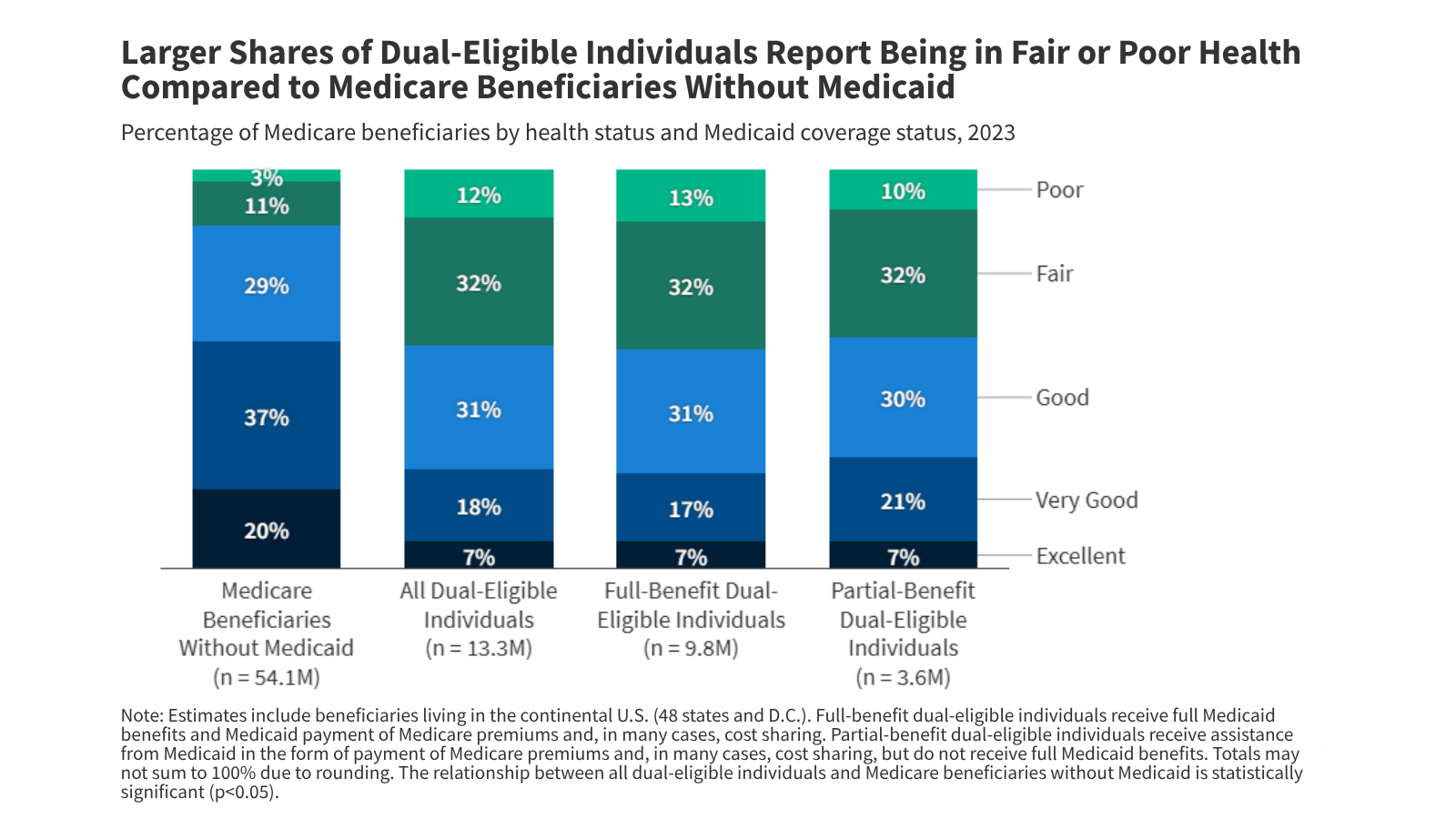
About 12 million people are enrolled in both Medicare and Medicaid. These dual eligible individuals are a diverse group, but are more likely than other Medicare beneficiaries to report fair or poor health and to have lower incomes and more chronic conditions.
-
5 Key Facts About Spending and Enrollment for People with Medicare and Medicaid
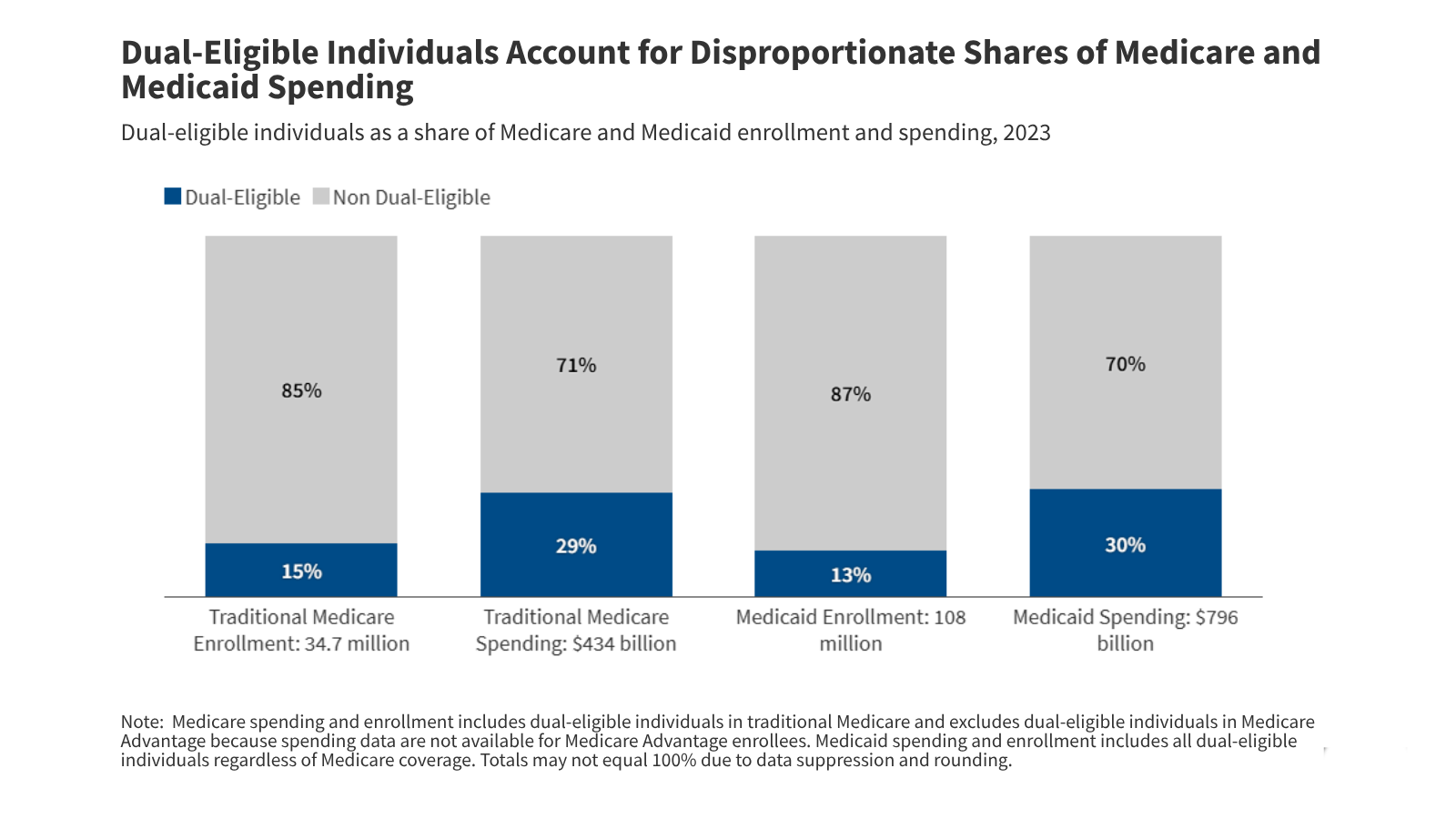
Dual-eligible individuals make up a disproportionately large share of Medicare and Medicaid spending relative to their enrollment, in part reflecting higher rates of chronic illness.
-
State Health Facts: Enrollment and Spending for Dual-Eligible Individuals

This data collection draws on Medicare and Medicaid administrative data to present national and state-level information on people covered by both Medicare and Medicaid.
Latest News
-

Midterms Have Revived Universal Healthcare Debate. These States Are Ahead of Everyone.
-

Rural MAHA Followers Say Trump Health Policies Haven’t Reached Their Communities
-

US Poised To Boot Legal Immigrants From Medicaid, Including Refugees and Sex-Trafficking Victims
-
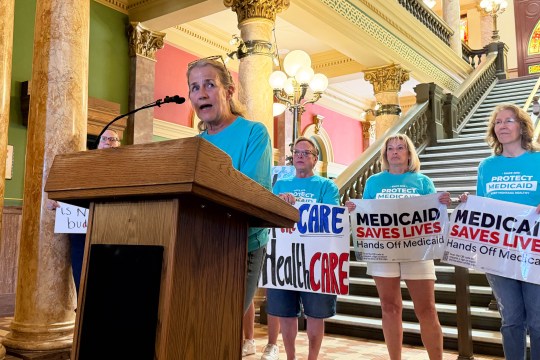
Confusion and Angst Follow State’s Early Rollout of Medicaid Work Rules

