KFF designs, conducts and analyzes original public opinion and survey research on Americans’ attitudes, knowledge, and experiences with the health care system to help amplify the public’s voice in major national debates.
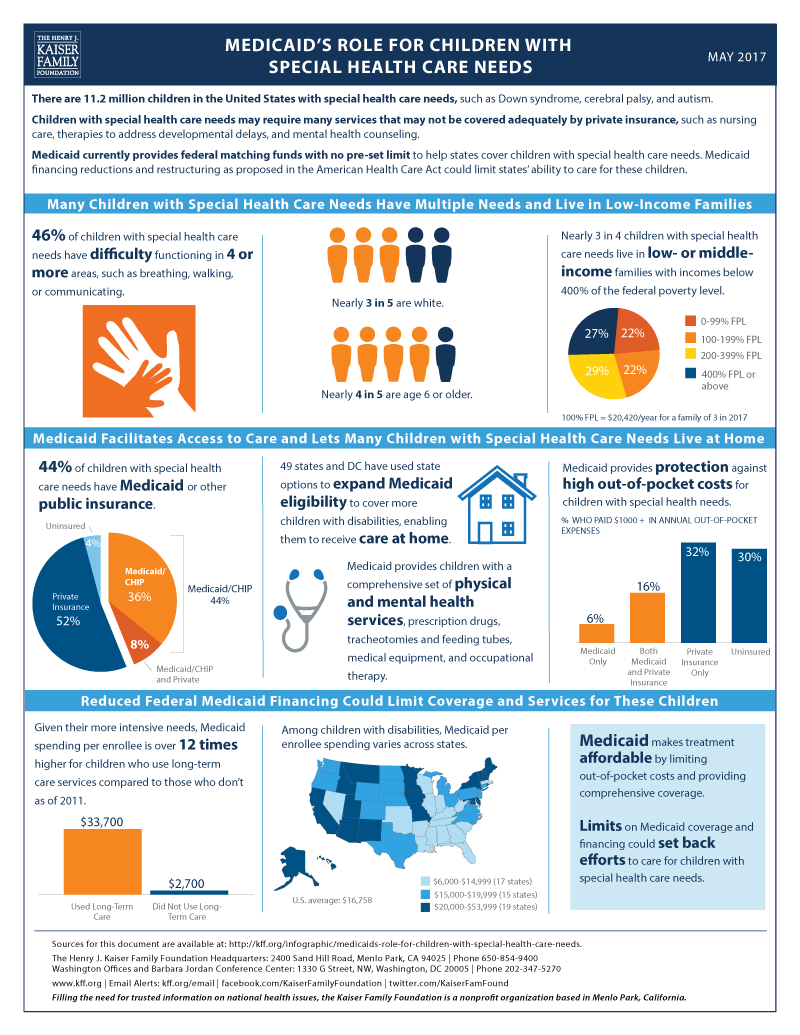
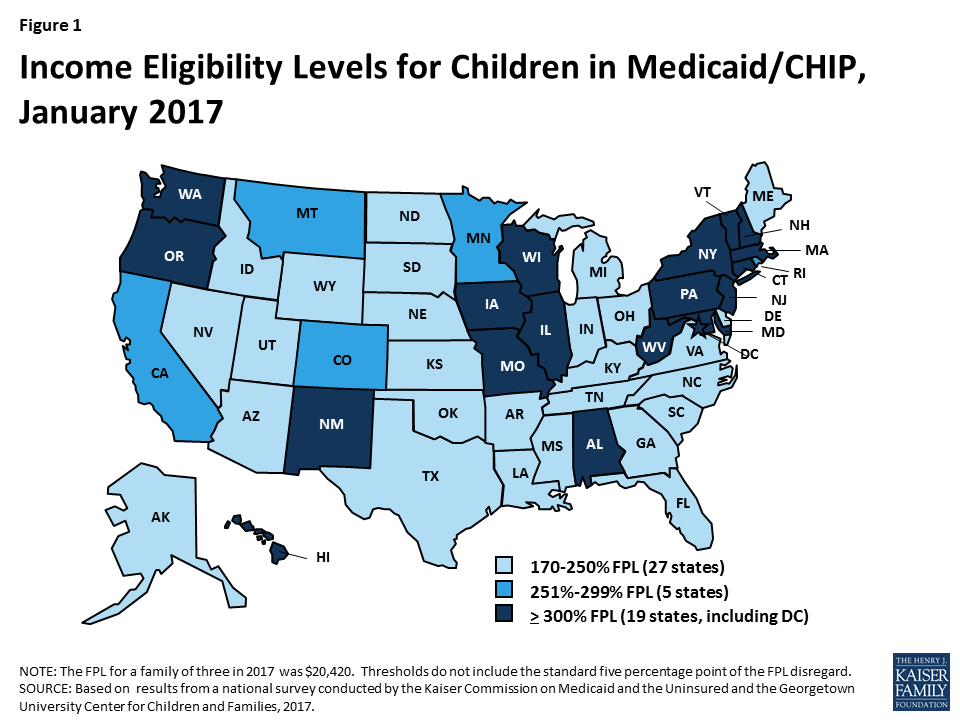
Medicaid and the Children’s Health Insurance Program (CHIP) are key sources of coverage for children, covering nearly four in ten children (39%) nationwide1and 44% of children with special health care needs. Medicaid covered over 37 million children in FY2016.2 CHIP serves as an important complement to Medicaid. In FY2016, it covered about 9 million children in families who earn too much to qualify for Medicaid but often lack access to affordable private coverage.3 States provide CHIP by creating a separate CHIP program, expanding Medicaid, or adopting a combination approach. All states have expanded eligibility for children through Medicaid and CHIP (Figure 1). New legislative authority is needed to continue CHIP funding beyond September 2017. If Congress does not extend CHIP funding, it is estimated that all states will exhaust their federal CHIP funds during FY2018.4
Figure 1: Income Eligibility Levels for Children in Medicaid/CHIP, January 2017
President Trump’s FY2018 proposed budget includes fundamental changes to Medicaid that would transition federal financing to a block grant or per capita cap for children and other groups, with reductions in federal funding of $610 billion. These changes are in addition to eliminating enhanced federal funding for the Affordable Care Act (ACA) Medicaid expansion to low-income adults. While the budget does not include many details, the provisions in the American Health Care Act (AHCA) would allow states to impose a block grant or per capita cap for children in Medicaid with requirements to cover mandatory children (under 100% of the federal poverty level (FPL) for school age children and under 133% FPL for children ages 0-5). Under the block grant option, states could cap enrollment or impose waiting lists for children above minimum levels and would not be required to provide comprehensive benefits.
The proposed budget also would reduce federal funding under CHIP and cap the eligibility level for which states could receive federal funding for children’s coverage at 250% FPL. The budget proposes to extend CHIP funding for two years through FY2019. However, it proposes several changes to CHIP. It would eliminate the 23 percentage point increase in the federal match that was provided to states under the Affordable Care Act (ACA), which would reduce funding for states. It also would cap the eligibility level for which states could receive federal CHIP matching funds at 250% FPL. In addition, it would eliminate the maintenance of effort requirement that the ACA established to protect existing coverage gains for children. This provision requires states to keep Medicaid and CHIP eligibility levels at least as high as those they had in place at the time the ACA was enacted through September 30, 2019. Lastly, it would allow states to move children ages 6 to 18 with incomes between 100% and 133% FPL who were transitioned from CHIP to Medicaid under the ACA back to CHIP. These changes would result in net saving in CHIP of $5.8 billion over ten years.
Under the proposed budget, about half of states would lose federal matching funds for children due to the 250% FPL eligibility cap on federal matching funds, which would likely lead them to reduce eligibility for children. As of January 2017, 24 states, including DC, have Medicaid/CHIP income eligibility limits above 250% FPL, including 19 states that cover children at or above 300% FPL (Table 1). These states would lose access to federal matching funds for coverage of children with incomes above 250% FPL under the proposed changes, which would increase state costs and likely lead to states reducing eligibility for children. In addition, states could further reduce children’s eligibility to the minimum levels (100% FPL for children ages 6 to 18 and 133% FPL for children ages 0-5) since the maintenance of effort provision would no longer apply.
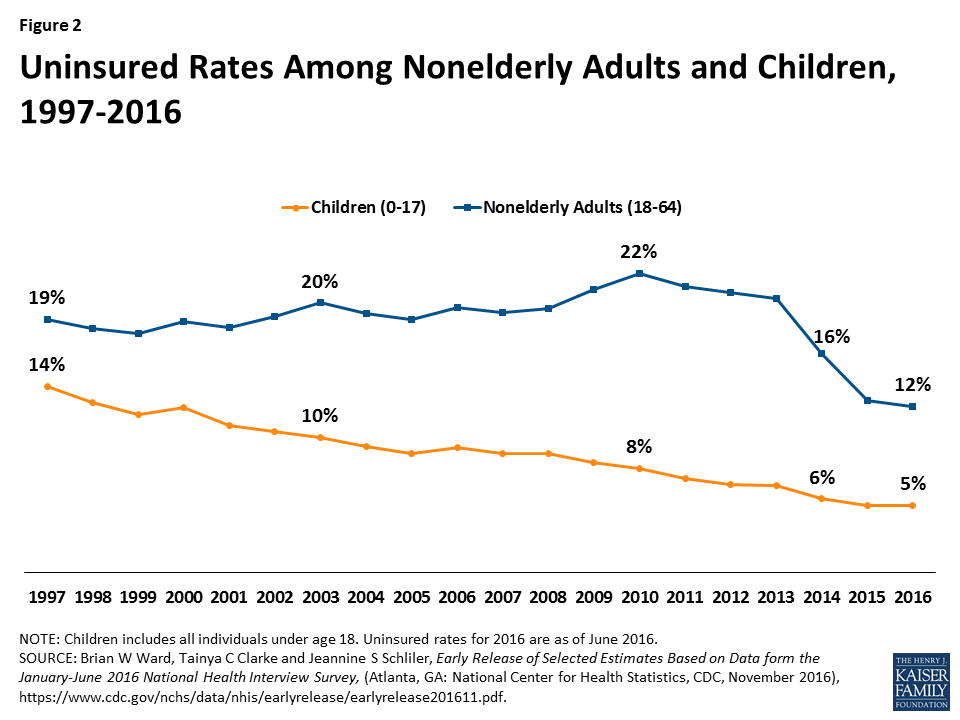
Together, the proposed changes to Medicaid and CHIP would result in significant reductions in federal financing for children’s coverage. In response to these reductions, states will likely need to make program cutbacks, including reductions in eligibility and benefits. Such reductions would likely reverse the recent progress achieved in making affordable coverage available to working families and reducing the children’s uninsured rate to a record low of 5% (Figure 2). Coverage losses among children would lead to reduced access to care and other long-term negative effects for children and increase financial pressure on states and providers.
Figure 2: Uninsured Rates Among Nonelderly Adults and Children, 1997-2016
Table 1: Upper Medicaid/CHIP Income Eligibility Limits for Children as a Percent of the Federal Poverty Level (FPL), January 2017
State
Upper Medicaid/CHIP Income Limit
Without Income Disregard
With Income Disregard1
Median
250%
255%
Alabama
312%
317%
Alaska
203%
208%
Arizona
200%
205%
Arkansas
211%
216%
California
261%
266%
Colorado
260%
265%
Connecticut
318%
323%
Delaware
212%
217%
District of Columbia
319%
324%
Florida
210%
215%
Georgia
247%
252%
Hawaii
308%
313%
Idaho
185%
190%
Illinois
313%
318%
Indiana2
250%
262%
Iowa
302%
307%
Kansas
239%
244%
Kentucky
213%
218%
Louisiana
250%
255%
Maine
208%
213%
Maryland
317%
322%
Massachusetts
300%
305%
Michigan
212%
217%
Minnesota
283%
288%
Mississippi
209%
214%
Missouri
300%
305%
Montana
261%
266%
Nebraska
213%
218%
Nevada
200%
205%
New Hampshire
318%
323%
New Jersey
350%
355%
New Mexico
300%
305%
New York
400%
405%
North Carolina
211%
216%
North Dakota
170%
175%
Ohio
206%
211%
Oklahoma
205%
210%
Oregon
300%
305%
Pennsylvania
314%
319%
Rhode Island
261%
266%
South Carolina
208%
213%
South Dakota
204%
209%
Tennessee
250%
255%
Texas
201%
206%
Utah
200%
205%
Vermont
312%
317%
Virginia
200%
205%
Washington
312%
317%
West Virginia
300%
305%
Wisconsin
301%
306%
Wyoming
200%
205%
SOURCE: Based on a national survey conducted by the Kaiser Commission on Medicaid and the Uninsured with the Georgetown University Center for Children and Families, 2017.1 Modified Adjusted Gross Income rules include an income disregard equal to five percentage points of the federal poverty level applied at the highest income level for Medicaid and separate CHIP coverage.2 Indiana uses a state-specific income disregard equal to five percent of the highest income eligiblity threshold for the group.
Kaiser Family Foundation analysis of the 2016 Annual Social and Economic Supplement to the Current Population Survey. ↩︎
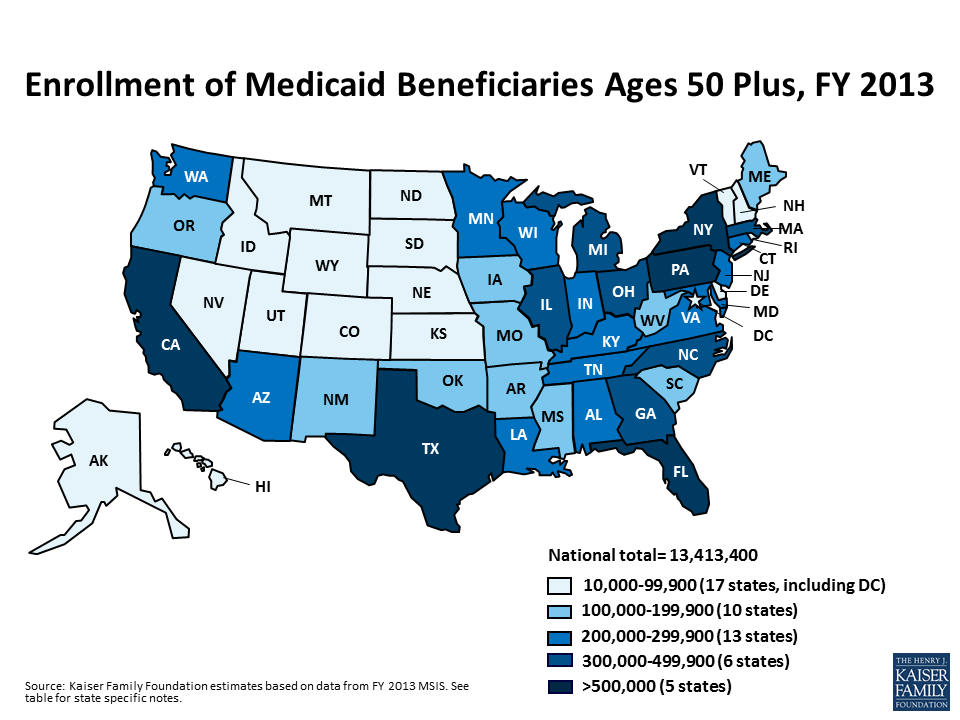
Source: Enrollment of Medicaid beneficiaries aged 50 and older from Kaiser Family Foundation estimates based on data from FY 2013 MSIS. FY 2013 Colorado and Rhode Island data were unavailable. FY 2011 data were used for Colorado. FY 2012 data were used for Rhode Island. Kansas enrollment only reflects the first quarter of FY 2013. North Carolina enrollment only reflects the first three quarters of FY 2013. Shares calculated using Kaiser Family Foundation analysis based on 2013 American Community Survey 1-Year Estimates. ACS numbers reflect the calendar year.Note: State enrollment totals may not sum to US total due to rounding.
Medicaid, the nation’s public health insurance program for people with low income, covers 74 million Americans today, including millions of low-income adults. The Affordable Care Act (ACA) expanded Medicaid to nonelderly adults with income up to 138% of the federal poverty level (FPL), and, in the 32 states (including DC) that implemented the expansion, more than 11 million adults have gained Medicaid as a result. Chronic illness is prevalent in the adult Medicaid population. Preventive care, including immunizations and regular screenings that permit early detection and treatment of chronic conditions, improves the prospects for better health outcomes. This Data Note focuses on Medicaid’s role in providing access to preventive care for low-income adults.
Why is preventive care for adult Medicaid enrollees important?
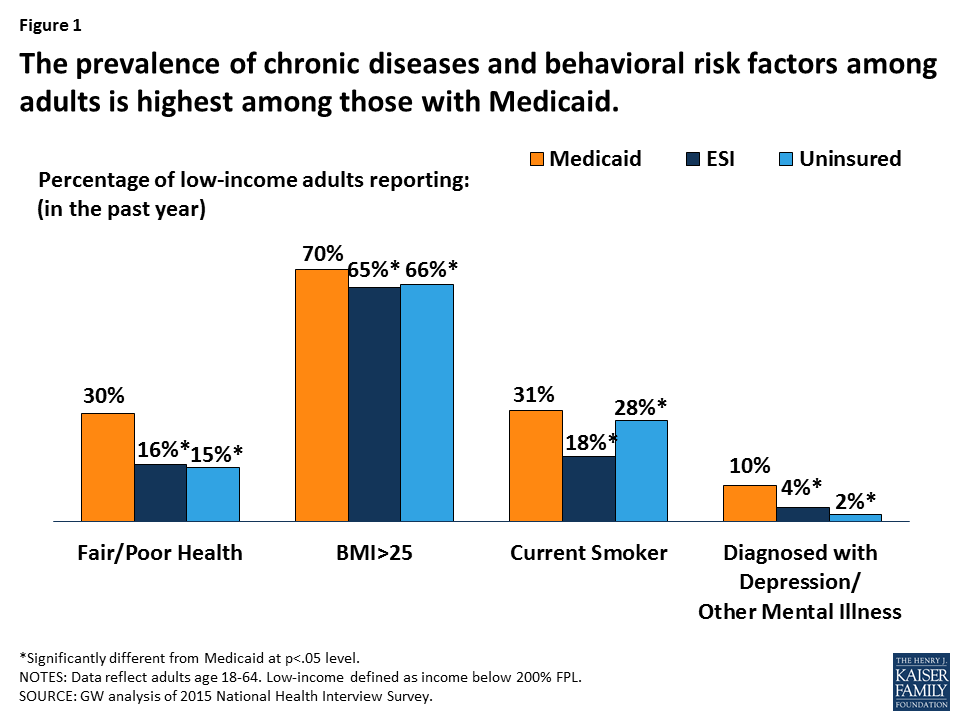
Adults in Medicaid have high rates of preventable and controllable conditions. Nearly one-third (30%) of non-elderly adult Medicaid beneficiaries report that they are in only fair or poor health – roughly double the percentage of low-income privately insured and uninsured adults who report fair or poor health (Figure 1). Medicaid adults also have significantly higher rates of chronic conditions and risky health behaviors that may be amenable to preventive care. One in 10 adult enrollees has a diagnosed mental illness; 7 in 10 are overweight or obese, and almost 1 in 3 smoke tobacco.
Figure 1: The prevalence of chronic diseases and behavioral risk factors among adults is highest among those with Medicaid.
Preventive care can reduce disease and avoidable use of high-cost services. Increased access to screening for diabetes, cancer, depression, and o ther chronic conditions, and counseling to address behavioral risk factors, have the potential to reduce disease and prevent exacerbations of conditions that can be medically managed. Improved health may reduce the use of avoidable hospital and other high-cost care, and reduce Medicaid spending. For example, smoking can cause heart disease and other chronic illnesses that one study estimated may be responsible for more than $75 billion in Medicaid costs. Medicaid coverage of smoking cessation services, including quit lines and medications, has the potential to mitigate both the health and cost impacts of smoking. Obesity, a major driver of preventable chronic illness and health care costs, affects about two-thirds of low-income adults. Findings from one study indicate that severe obesity in adults cost state Medicaid programs almost $8 billion in 2013, suggesting that “effective treatment for severe obesity should be part of each state’s strategy to mitigate rising obesity-related costs.”
What preventive services does Medicaid cover for adults?
Coverage of most adult preventive services has historically been optional for states. Medicaid coverage of preventive services for children has long been strong, as states must cover comprehensive preventive services at no cost for children in Medicaid under the Early and Periodic Screening, Diagnostic and Treatment (EPSDT) benefit. In contrast, historically, coverage of adult preventive care has been largely optional for states, with some exceptions – states must cover pregnancy-related care and family planning services without cost-sharing. In addition, within federal guidelines, states can charge adults cost-sharing for preventive services.
The ACA expanded coverage of adult preventive care. An important thrust of the ACA was an emphasis on preventive care. In particular, the ACA included recommended preventive services without patient cost-sharing as one of the 10 “essential health benefits” (EHBs) that most health plans are now required to cover. The required preventive services are based on the recommendations of independent, expert clinical panels and include, for adults: 1) screening and counseling services (e.g., cancer screening, diet counseling); 2) routine immunizations; and 3) preventive services for women. The EHB requirement applies to Medicaid benefits for adults who are newly eligible due to the ACA expansion, but not “traditional” Medicaid adults, for whom most preventive services are optional for states and can require cost-sharing within federal guidelines. To incentivize states to cover the EHB preventive services for all Medicaid adults, the ACA provided for a one percentage point increase in the federal Medicaid match rate for these services in states that opt to cover all of them without cost-sharing.
Selected EHB-required preventive services for adults:
All adults
Immunizations
Cancer screening
Diabetes screening
Depression screening
Obesity screening and counseling
Tobacco screening and smoking cessation services
Women
Well-woman visits to get recommended services for women
Breast and cervical cancer screening
Domestic and interpersonal violence screening and counseling
Osteoporosis screening
Breastfeeding support, counseling, and supplies for pregnant and nursing women
Expanded tobacco intervention for pregnant women
Most state Medicaid programs covered many adult preventive services before the ACA took effect. A 2014 study found that most state Medicaid programs covered all EHB-required adult preventive services in 2013, although some had cost-sharing charges. At the same time, another study found that documented state coverage policies in effect prior to the ACA did not always correspond precisely with the EHB requirements for preventive care, indicating there was room for improvement. Eight states – California, Minnesota, Nevada, New Hampshire, New Jersey, New York, Oklahoma, and West Virginia – have opted to cover the recommended adult preventive services without cost-sharing for all Medicaid adults. Seven of these states implemented the Medicaid expansion to low-income adults.
How do adults with Medicaid fare in accessing preventive care?
Nearly all adults with Medicaid have a usual place where they get routine or preventive care. One measure of Medicaid’s effectiveness is the extent to which beneficiaries have a usual source of care, which opens the door to the health care system, including preventive care. Over 90% of adults with Medicaid report having a usual place of care – the same as the percentage of low-income privately insured adults with a usual place, and significantly exceeding the share of low-income uninsured adults who do (Figure 2). Adults with Medicaid are also significantly more likely than adults in the other two groups to have had a primary care visit and a mental health visit in the past year. Research shows that people with a usual source of care have better outcomes and that having a primary care physician as the usual source of care increases the likelihood of receiving appropriate care.
Figure 2: Medicaid adults report rates of access to primary care comparable to private insurance benchmarks.
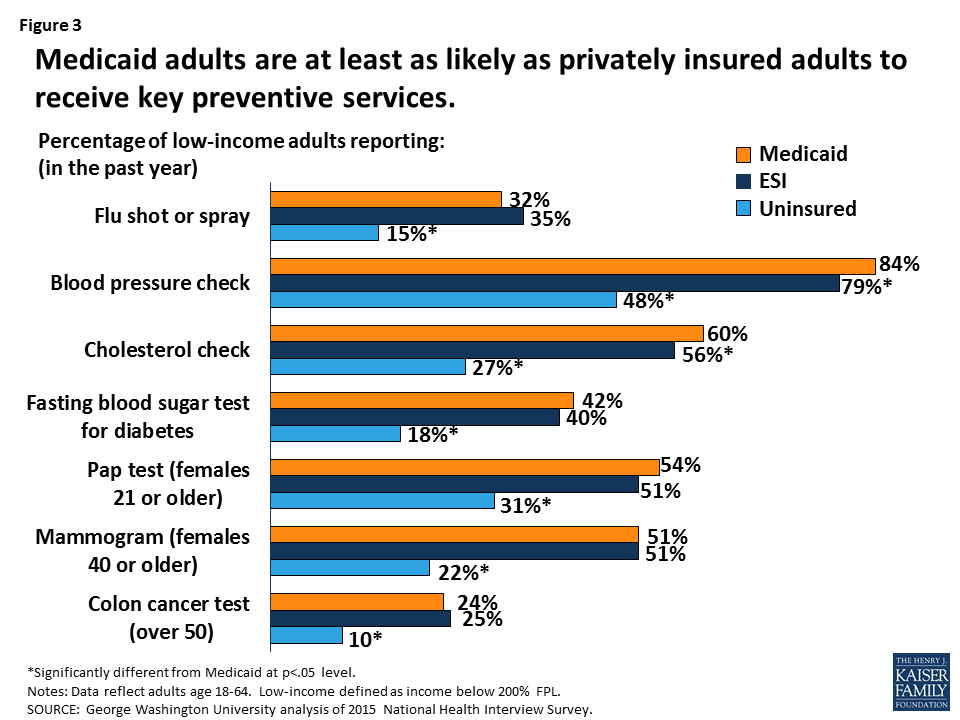
Medicaid is as effective as private insurance at connecting low-income adults with recommended clinical preventive services. The percentage of Medicaid adults who report receiving recommended clinical preventive services is at least as high as the percentage of low-income privately insured adults receiving these services (Figure 3). In fact, Medicaid adults are significantly more likely than the privately insured to report a blood pressure check (84% versus 79%) and a cholesterol check (60% versus 56%). Medicaid adults do significantly better than the uninsured on every measure of preventive care. Notably, the share of low-income adults who report receiving recommended cancer screenings is no more than about half, pointing to a need for increased investment and effort to improve access to these services as well as public education about their importance.
Figure 3: Medicaid adults are at least as likely as privately insured adults to receive key preventive services.
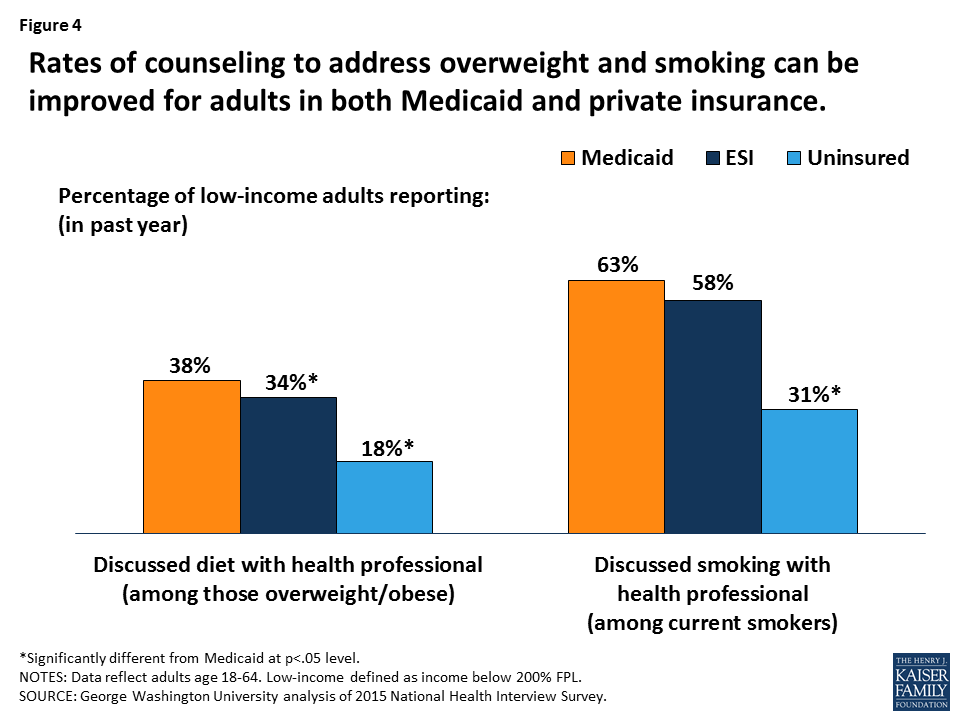
The major health risks and costs posed by overweight/obesity and smoking point to a need for more focus on patient counseling, including in Medicaid. As mentioned earlier, 70% of Medicaid adults are overweight or obese and nearly one-third smoke, somewhat higher rates than those for low-income privately insured adults (65% and 18% respectively). Both obesity and smoking are risk factors for preventable chronic diseases, including cancer, that increase morbidity and mortality as well as health care costs. The share of overweight/obese adults and adult smokers in Medicaid who report being counseled by their provider on diet (38%) or smoking (63%), while similar to the share for privately insured adults, highlights an important gap in preventive care and a need for more investment and effort (Figure 4).
Figure 4: Rates of counseling to address overweight and smoking can be improved for adults in both Medicaid and private insurance.
What impact has the Medicaid expansion had on access to preventive care for low-income adults?
Because Medicaid plays a large role in covering low-income adults and adult Medicaid enrollees are at elevated risk for preventable or treatable chronic conditions, ensuring access to preventive care and boosting utilization of these services among Medicaid adults is important to the national goal of improving population health while lowering health care costs. Medicaid expansion states have put preventive care within affordable reach of millions of previously low-income adults. State coverage of recommended preventive services without cost-sharing for all Medicaid adults would lower financial barriers to these services for many more of the nation’s poorest and sickest adults, increasing early detection and treatment of health conditions and risky behaviors, a necessary step to improve health outcomes and long-term trends in Medicaid costs. The House-passed American Health Care Act (AHCA) would both terminate enhanced federal funding for the Medicaid expansion to low-income adults and repeal the federal EHB requirements for Medicaid adults, threatening large losses of Medicaid coverage for adults as well as retrenchment in covered benefits, including preventive care for adults.
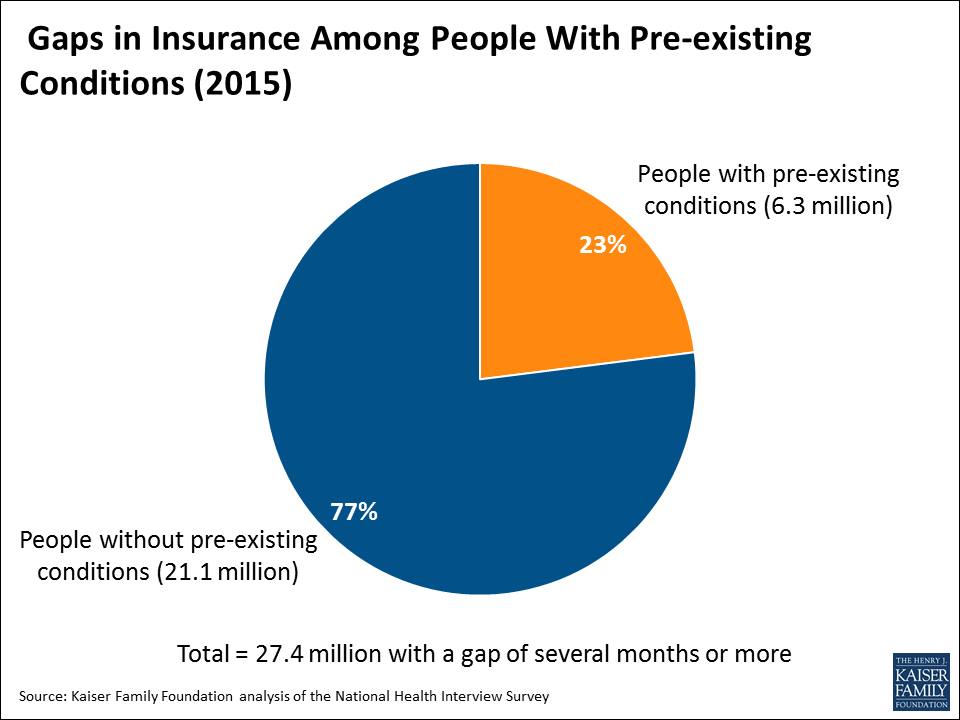
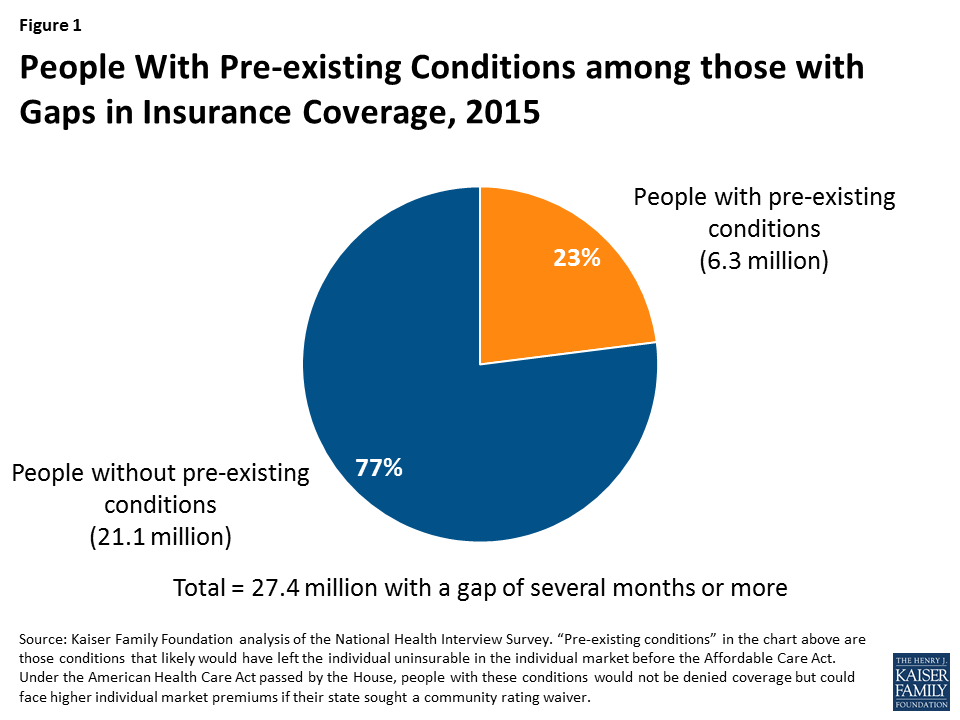
A new Kaiser Family Foundation analysis estimates that 6.3 million people — 23 percent of 27.4 million non-elderly adults with a gap of several months in insurance coverage in 2015 – could potentially face higher premiums under the House’s American Health Care Act (AHCA), due to pre-existing health conditions.
The bill, which passed the House earlier this month, allows states to waive community rating in the individual insurance market. Insurers in states with such waivers could vary premiums by health status for an entire plan year for enrollees with a gap in insurance of 63 or more consecutive days in the past year.
People with pre-existing conditions would likely face large premium surcharges under an AHCA waiver, according to the analysis, as insurers would be unable to decline coverage based on a person’s medical history, a practice that was permitted in nearly all states before it was prohibited by the Affordable Care Act in 2014. An earlier analysis from the Foundation estimated that 27 percent of non-elderly adults have a condition that would have led to a coverage refusal in the pre-ACA market.
The new analysis also identifies a second group of people who could be at risk of higher premiums: those with pre-existing conditions now buying their own insurance. It finds that an estimated 3.8 million adults, or about 25 percent of all adult enrollees in the 2015 individual insurance market, had a pre-existing condition that could subject them to higher premiums under an AHCA community rating waiver if they don’t maintain continuous coverage.
The AHCA allocates $8 billion over five years to states with community rating waivers, resources that can be used to help reduce premiums or pay out-of-pocket medical expenses for people rated based on their health status. However, the House bill does not require states to set up an alternate source of coverage for people who face higher premiums based on their health. It is uncertain how many states would waive community rating under the AHCA.
The American Health Care Act (AHCA), which has passed the House of Representatives, contains a controversial provision that would allow states to waive community rating in the individual insurance market. In this brief we estimate the number of people with pre-existing conditions who might be affected by such a policy.
How the State Waiver Provision Works
Under the provision, insurers in states with community rating waivers could vary premiums by health status for enrollees who have had a gap in insurance of 63 or more consecutive days in the last year. The higher (or lower) premiums due to health status would apply for an entire plan year (or the remainder of the year in case of people signing up during a special enrollment period), at which point enrollees would be eligible for a community-rated premium unrelated to their health.
States waiving community rating would be required to set up a mechanism to subsidize the cost of high-risk enrollees, such as a high-risk pool, or participate in a reinsurance arrangement that makes payments directly to insurers. States are not required to set up an alternative source of coverage for people who face higher premiums based on their health.
The bill makes $100 billion available to all states for a variety of purposes, including high-risk pools, reinsurance programs, and cost-sharing subsidies. An additional $15 billion is made available for a federal invisible risk-sharing program, which would be similar to a reinsurance arrangement. Another $15 billion is earmarked for spending on maternal and newborn care, mental health, and substance abuse services for the year 2020. The AHCA also allocates $8 billion over five years to states that implement community rating waivers; these resources can be used to help reduce premiums or pay out-of-pocket medical expenses for people rated based on their health status.
Premiums varied significantly based on health status in the individual market before the Affordable Care Act (ACA) prohibited that practice beginning in 2014. Insurers in nearly all states were also permitted to decline coverage to people with pre-existing conditions seeking individual market insurance. We estimate that 27% of non-elderly adults have a condition that would have led to a decline in coverage in the pre-ACA market. While insurers would have to offer insurance to everyone under the AHCA, people with declinable pre-existing conditions would likely face very large premium surcharges under an AHCA waiver, since insurers were unwilling to cover them at any price before the ACA.
How Many People Might be Affected by Community Rating Waivers?
The effect of a community rating waiver would depend crucially on how many people with pre-existing conditions have gaps in insurance that would leave them vulnerable to higher premiums.
Using the most recent National Health Interview Survey (NHIS), we estimate that 27.4 million non-elderly adults nationally had a gap in coverage of at least several months in 2015. This includes 6.3 million people (or 23% of everyone with at least a several-month gap) who have a pre-existing condition that would have led to a denial of insurance in the pre-ACA individual market and would lead to a substantial premium surcharge under AHCA community rating waiver.1
Figure 1: People With Pre-existing Conditions among those with Gaps in Insurance Coverage, 2015
Among the 21.1 million people who experienced a gap in coverage and did not have a declinable pre-existing condition, some also had pre-existing conditions (such as asthma, depression, or hypertension) that would not have resulted in an automatic denial by individual market health insurers pre-ACA but that nonetheless could also result in a premium surcharge.
In many cases, people uninsured for several months or more in a year have been without coverage for a long period of time. In other cases, people lose insurance and experience a gap as a result of loss of a job with health benefits or a decrease in income that makes coverage less affordable. Young people may have a gap in coverage as they turn 26 and are unable to stay on their parents’ insurance policies. Medicaid beneficiaries can also have a gap if their incomes rise and they are no longer eligible for the program.
Through expanded Medicaid eligibility and refundable tax credits that subsidized premium in insurance marketplaces, the ACA has substantially reduced coverage gaps. In 2013, before the major provisions of the ACA went into effect, 38.6 million people had a gap of several months, including 8.7 million with declinable pre-existing conditions.
Some people with a gap will ultimately regain coverage through an employer-based plan or Medicaid, and would not be subject to premium surcharges based on their health. However, anyone who has been uninsured for 63 days or more who tries to buy individual market insurance in a state with a community rating waiver would be subject to medical underwriting and potential premium surcharges based on their health.
Uncertainty Around the Estimate
There are a variety reasons why our estimates might understate or overstate number of people with pre-existing conditions who could be subject to premium surcharges under the AHCA.
People with health conditions would have a strong incentive under an AHCA waiver to maintain continuous coverage in order to avoid being charged premiums that could potentially price them out of the insurance market altogether. The question is how many would be able to do so, given the fact that the premium tax credits provided for in the AHCA would be 36% lower on average for marketplace enrollees than under the ACA and would grow more slowly over time. In 2013, before tax credits for individual insurance were available and the ACA’s Medicaid expansion took effect, the number of people with pre-existing conditions who experienced a gap in coverage was 41% higher. Among people with individual market insurance in 2015, we estimate that 3.8 million adults (representing 25% of all adult enrollees) had a pre-existing condition that would have led to a decline before the ACA. These individuals would not be subject to premium surcharges under AHCA community rating waivers, so long as they maintain continuous coverage. Because individual market subsidies would be significantly reduced under the AHCA, these individuals could face added challenges remaining continuously covered.
About 49% of people with pre-existing conditions who had a gap in coverage in 2015 had incomes at or below 138% of the poverty level, and some of them could be eligible for Medicaid (depending on whether their state has expanded eligibility under the ACA and what eligibility rules are in states that have not expanded). They would not face any coverage restrictions associated with their health status in Medicaid. However, under the AHCA enhanced federal funding for expanding Medicaid would be repealed, and federal matching funds would be capped. The Congressional Budget Office projects that 14 million fewer people would be enrolled in Medicaid by 2026. So, while some people we identify as having a coverage gap would be eligible for Medicaid under the AHCA, many more people currently enrolled in Medicaid would lose that coverage under the AHCA and be uninsured. They would be eligible for premium tax credits, but the AHCA’s subsidies do not scale by income so individual market insurance would likely be unaffordable for people who are poor, including those with pre-existing conditions.
There is also significant uncertainty surrounding how many states would seek to waive community rating under the AHCA. Some states might do so to roll back what they consider to be excessive regulation of the insurance market initiated by the ACA and preserved under the AHCA. Other states might come under pressure to implement waivers from insurers who believe the market would be unstable, given that the AHCA repeals the ACA’s individual mandate. What states decide to do may ultimately have the greatest effect on how many people with pre-existing conditions face potentially unaffordable insurance premiums.
Larry Levitt, Gary Claxton, Cynthia Cox, and Karen Pollitz are with the Kaiser Family Foundation. Anthony Damico is an independent consultant to the Kaiser Family Foundation.
Methods
To calculate nationwide prevalence rates of declinable health conditions, we reviewed the survey responses of nonelderly adults for all question items shown in Methods Table 1 using the CDC’s 2015 National Health Interview Survey (NHIS). Approximately 27% of 18-64 year olds, or 52 million nonelderly adults, reported having at least one of these declinable conditions in response to the 2015 survey. For more details on methods and a list of declinable conditions included in this analysis, see our earlier brief: Pre-existing Conditions and Medical Underwriting in the Individual Insurance Market Prior to the ACA.
The programming code, written using the statistical computing package R, is available upon request for people interested in replicating this approach for their own analysis.
Note that coverage gaps identified in NHIS do not match up precisely to the 63-day threshold in the AHCA. People who were uninsured at the time they were surveyed were asked if they had been uninsured for at least the prior six months, a longer period than the AHCA threshold. People who were insured at the time of the survey were asked if they had experienced any gaps in coverage totaling at least three months during the past year. These coverage gaps identified in NHIS may not have been consecutive months, but that would typically be the case. ↩︎
The American Health Care Act recently passed by the House of Representatives includes a provision to ban federal Medicaid funding of Planned Parenthood. The Trump administration has also proposed reducing funding to HHS, which funds the Title X family planning program and community health centers.
A new brief from the Kaiser Family Foundation assesses the role of these programs in providing family planning care services to low-income women as well as the potential impact of eliminating funding for Planned Parenthood. If Planned Parenthood is excluded as a Medicaid provider, community health centers may not have the capacity to meet additional demands that would be placed on them to provide family planning services, the brief finds.
Several states have enacted laws to block state funding to Planned Parenthood under the Title X program. Reducing or eliminating funding would disproportionately impact low-income women, who are more than eight times as likely as higher income women to seek family planning services at a safety-net clinic.
A new issue brief from the Kaiser Family Foundation highlights proposed changes to Medicaid programs in Wisconsin and Maine that include work requirements and time limits in both states, as well as drug screenings for some beneficiaries in Wisconsin. The waiver authority sought by both states would impose welfare-like restrictions and include a number of provisions that have never been approved for traditional, non-Medicaid expansion populations, such as locking beneficiaries out of coverage for failure to pay premiums.
Both states’ waiver proposals estimate less coverage and higher costs as a result of the waivers. The brief includes tables that summarize the key provisions of the proposed waivers for each state.
The requests from Wisconsin and Maine, which will be submitted to the U.S. Department of Health and Human Services, come at a time when the Trump Administration has signaled to states that the federal government would be open to considering waiver requests from states that want to redesign their Medicaid programs.
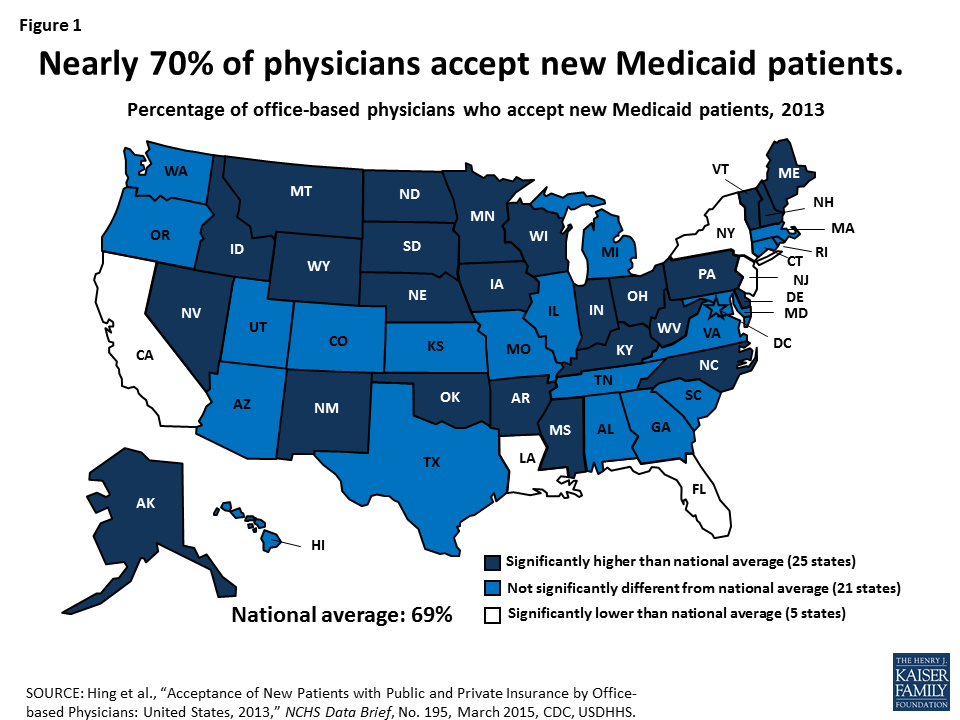
About 70% of all office-based physicians accept new Medicaid patients, including two-thirds of primary care physicians and close to three-quarters (72%) of specialists. The percentage of physicians accepting new Medicaid patients varies by state, ranging from 39% in New Jersey to 97% in Nebraska (Figure 1). Overall, about 85% of physicians accept new privately insured patients, but this rate also varies by state, ranging from 57% in the District of Columbia to 95% in Illinois. In one-quarter of states (14), more than 85% of physicians accept new Medicaid patients, including 10 states where at least 90% do. Physician participation in Medicaid is generally highest in the most rural states. In the 11 states where at least half the population lives in rural areas, the median Medicaid physician participation rate is 90%, compared to 71% in the 25 states where less than one-quarter of the population is rural. In many states, the responsibility for ensuring adequate physician participation in Medicaid rests largely with managed care plans, which serve a growing majority of Medicaid beneficiaries. There is no evidence that physician participation in Medicaid is declining. In a 2015 survey, 4 in 10 primary care physicians who accepted Medicaid reported seeing an increased number of Medicaid patients since January 2014, when the coverage expansions in the Affordable Care Act took full effect.
Figure 1: Nearly 70% of physicians accept new Medicaid patients.
Women have much at stake as the nation debates the future of coverage in the United States. Because the Affordable Care Act (ACA) made fundamental changes to women’s health coverage and benefits, changes to the law and the regulations that stem from it would have a direct impact on millions of women with private insurance and Medicaid. On May 4, 2017, the House of Representatives passed the American Health Care Act (AHCA), to repeal and replace elements of the ACA (Appendix Table 1). It would eliminate individual and employer insurance mandates, effectively end the ACA Medicaid expansion, cap federal funds for the Medicaid program, make major changes to the federal tax subsidies available to assist individuals who purchase private insurance, and ban federal Medicaid funds from going to Planned Parenthood. It would also allow states to waive the ACA’s Essential Health Benefits requirements and permit health status as a factor in insurance rating for individuals who do not maintain continuous coverage with the goal of reducing insurance costs.1 The Senate will now take up legislation to repeal and replace the ACA and may consider several elements that the House has approved in the AHCA. This brief reviews the implications of the AHCA for women’s access to care and coverage.
ACA’s Impact on Coverage and Access for Women
Since the ACA’s passage, the uninsured rate has declined to record low levels. Between 2013 and 2015, the uninsured rate among women ages 19 to 64 fell from 17% to 11% (Figure 1). This drop was due in large part to the Medicaid expansion that was adopted by 31 states and DC, and the availability of federal tax credits to subsidize premium costs for many low and modest-income women and men. In addition to coverage improvements, fewer women face affordability barriers since the ACA was enacted. Women have consistently been more likely than men to report that they delay or go without needed care because of costs. The ACA addressed some of these financial barriers by providing subsidies for premiums and cost sharing, eliminating out of pocket costs for preventive services, lifting the lifetime limits on expenses insurance will cover, and requiring minimum levels of coverage for ten Essential Health Benefit categories. Since its passage, the share of women who report that they delayed or went without care due to costs has fallen (Figure 2). This drop has been particularly marked among low-income women, although costs continue to be a greater challenge for this group as well.
Figure 1: The Uninsured Rate Fell Among all Groups of Women between 2013 and 2015Figure 2: The Share of Women Who Delayed or Did Not Get Care Due to Cost Is Falling
1. Medicaid Eligibility: Expansion and Work Requirements
Medicaid has been the foundation of coverage gains under the ACA. Eliminating federal funds for the ACA’s Medicaid expansion could leave many of the nation’s poorest women without a pathway to coverage.
Women comprise the majority of Medicaid beneficiaries—before the passage of the ACA and today. Prior to the ACA, compared to men, women were more likely to qualify for Medicaid because of their lower incomes and because they were more likely to meet one of the program’s eligibility categories: pregnancy, parent of a dependent child, over 65, or disability. The ACA eliminates the program’s “categorical” requirements, allowing states to extend Medicaid eligibility to all individuals based solely on income. In the 31 states and DC that have chosen to expand Medicaid, individuals with household incomes up to 138% of the Federal Poverty Level (FPL) qualify, and the federal government finances 95% of the costs.2
It is estimated that by 2015, 11 million adults had gained coverage as a result of the ACA’s Medicaid expansion. This opened the door for continuous coverage to pregnant women who often became ineligible for coverage 60 days after the birth of their baby and had no other pathway to coverage as new mothers. The Medicaid expansion has also helped women who do not have children gain access to coverage, since before the expansion they were ineligible for coverage in most states. If passed, the AHCA bill would withdraw the enhanced federal funds for the Medicaid expansion except for beneficiaries enrolled as of December 31, 2019 who do not have a break in eligibility for more than 1 month. This loss of federal financing would leave states without the funds needed to continue supporting this expansion, potentially forcing some states to roll back eligibility for parents to the very low levels that were in place before the ACA (Figure 3). For example, a single mother of two living in Louisiana or Indiana would not have qualified for Medicaid if her income exceeded $4,687. The Congressional Budget Office (CBO) estimates that, under the House AHCA bill, some states that have already expanded their Medicaid programs would not continue that coverage (some states might also begin to reduce coverage prior to 2020), and that no new states will adopt the expansion.
Figure 3: Prior to the ACA, Income Eligibility Levels for Parents Residing in Many States that Expanded Medicaid were Below Poverty
The AHCA bill would also amend the federal Medicaid statute to allow states to require some beneficiaries, including parents of children 6 and older and adults without disabilities, to show proof of employment. States would have flexibility to design the details of the work requirement within federal guidelines and would receive additional federal support to help cover the administrative costs of this change.Back to top
2. Capping Federal Medicaid Spending
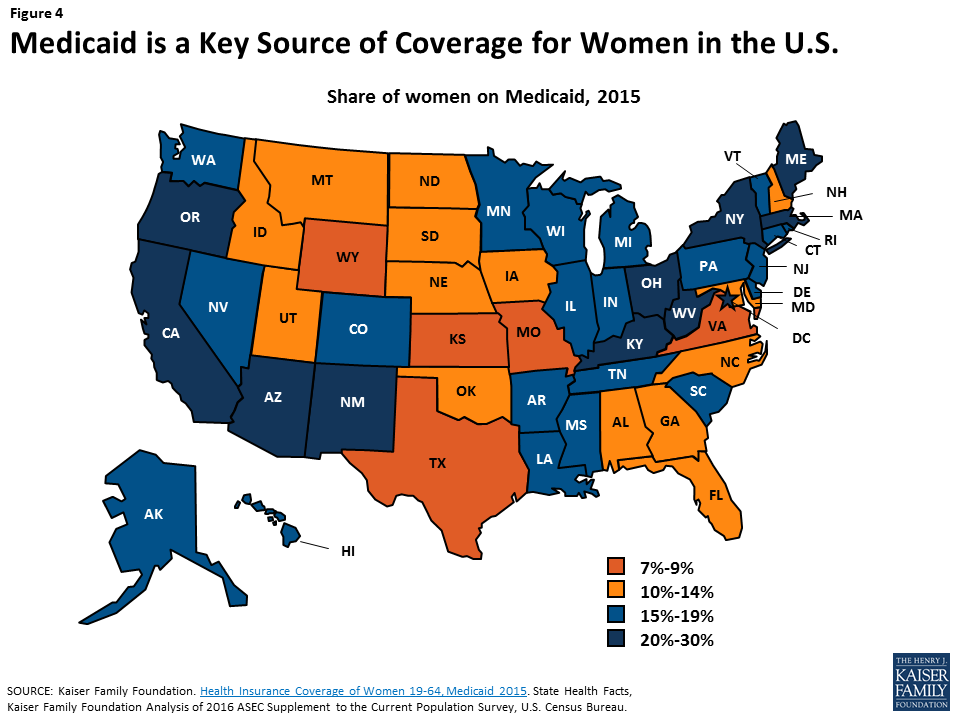
Medicaid provides health coverage to nearly one in five women in the U.S. Capping the program would limit the federal dollars that states would receive for a program that pays for half of births, three-quarters of all public family planning, and provides supplemental coverage for nearly 1 in 5 senior women on Medicare.
Since its inception in 1965, Medicaid has evolved to become a leading source of coverage for low-income women of all ages (Figure 4). The program provides health coverage to one in five women of reproductive age and one in four Latinas and African American women. Over the years, the program has also expanded to be the largest payor of maternity care and publicly-funded family planning in the U.S.
Figure 4: Medicaid is a Key Source of Coverage for Women in the U.S.
Medicaid is financed by a combination of federal and state dollars. For most beneficiaries, the federal government pays a percentage of costs, ranging between 50-75% depending on the state. Beginning in 2020, the AHCA would convert federal Medicaid funding from an open-ended matching system to an annual fixed amount of federal dollars. States could choose a “block grant” (for payment of services for children under 18 and poor parents of dependent children) or a “per capita cap” approach for five enrollment groups (the elderly, individuals with disabilities, children, newly eligible adults, and all other adults). While a capped approach would reduce federal spending, it would also shift more responsibility to states to pay more of their own dollars if they want to sustain the program at current levels.
While fixed federal financing would affect all individuals insured by Medicaid, one area that is particularly important for women is the program’s coverage of family planning services. Currently, the federal government requires coverage of family planning services and supplies and pays for 90% of the cost of these services, a higher match than for all other services.3 This higher federal payment rate provides states with an incentive to cover the full range of contraceptive methods. Under a per capita cap structure, states will still be required to cover family planning services, but there will no longer be an enhanced federal matching rate for family planning services provided to most beneficiaries. As a result, there may be less up-front financial incentive for states to cover the more expensive methods of contraception like IUDs, even though they are highly effective at preventing unintended pregnancies. Should states select a block grant option, family planning services would no longer be a mandatory benefit for non-disabled women on Medicaid.
If a state chooses a per capita cap structure, the AHCA would not change the financing structure for stand-alone family planning expansions that are currently in place in over half the states. These limited scope programs have allowed states to extend Medicaid coverage for family planning services to low-income women and men who do not have other family planning coverage. Since the AHCA’s per capita cap does not apply to these programs, states could continue to receive a 90% federal matching rate for them. These programs may become increasingly important to women because the CBO predicts that under this bill the number of uninsured would rise by 24 million over the next 10 years, and these Medicaid family planning programs are often an important source of reproductive care for uninsured women.
Both capped financing approaches would limit states’ ability to respond to rising costs, new and costly treatments, or public health emergencies such as the opioid epidemic or Zika. States may decide to make programmatic cuts such as cutting provider payments, particularly when facing fiscal pressures. For example, on average, Medicaid pays ob-gyns 76% of the Medicare rate4 and a smaller share of the commercial rate. If states were to make further cuts to provider payments or to plans, the pool of participating providers could shrink in response to reduced rates, which could make it harder for many women enrollees to find a participating ob-gyn or cause delays in scheduling appointments.Back to top
3. Medicaid and Planned Parenthood
Planned Parenthood provides reproductive health services for many low-income women across the nation. Cutting off federal Medicaid payments to the organization could limit the availability of the most effective contraceptives, as well as STI and cancer screenings for many women on Medicaid.
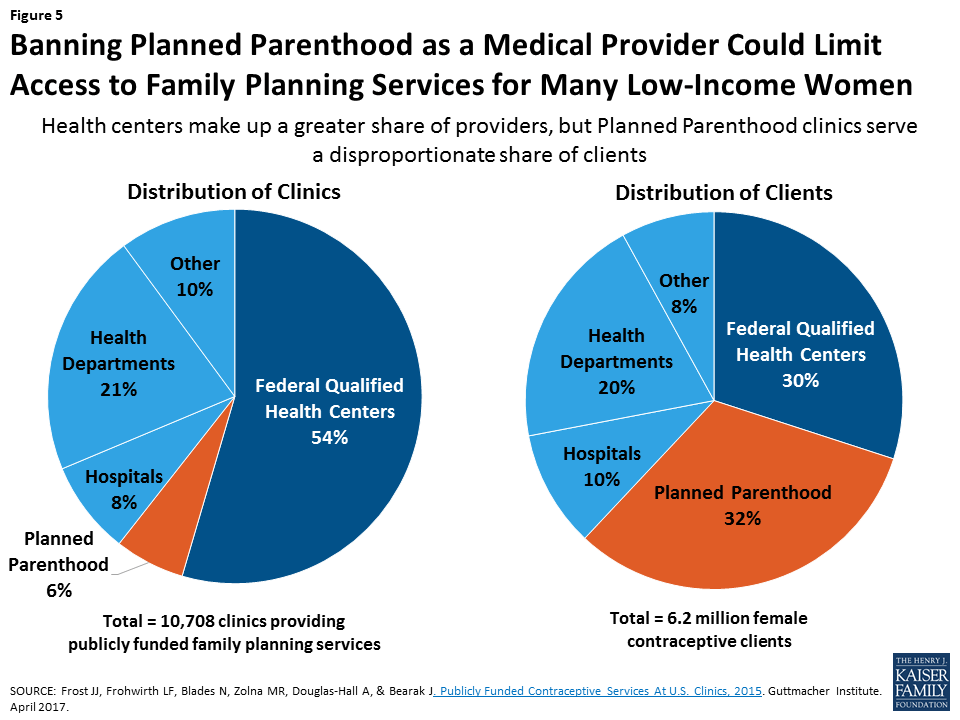
Many low–income women obtain reproductive care at safety-net clinics that receive public funds to pay for the care they provide. The network includes a range of clinics that provide a broad range of primary care services, such as community health centers (CHCs) and health departments as well as specialized clinics that focus on providing family planning services. The largest organization of specialized family planning clinics is Planned Parenthood, which receives federal support through reimbursement for care delivered to women and men on Medicaid, as well as grant funds from the federal Title X family planning program. Despite comprising only 6% of the safety-net clinics that provided subsidized family planning services in 2015, Planned Parenthood clinics served 32% of women (nearly 2 million women) seeking contraceptive care at these centers (Figure 5).
Figure 5: Banning Planned Parenthood as a Medical Provider Could Limit Access to Family Planning Services for Many Low-Income Women
Should it become law, the AHCA would prohibit federal Medicaid payments to Planned Parenthood for one year, even though federal law already prohibits federal dollars from being used to pay for abortions other than those to terminate pregnancies that are a result of rape, incest or a threat to the pregnant woman’s life. The AHCA bill would provide additional funds to CHCs, presumably to compensate for loss of a major provider of care to women, but there are no specifics in the bill that would require the health centers to use these funds to provide services to women. There is also concern that CHCs do not currently have the capacity to fill the gap in care that would arise if Planned Parenthood were no longer a participating Medicaid provider.5 Not all CHCs provide the same range of services as Planned Parenthood, and care at CHCs could be more costly than that provided by specialized family planning providers like Planned Parenthood.6 The CBO’s March 13, 2017 analysis of the AHCA stated that cutting off Medicaid payments to Planned Parenthood for one year would result in loss of access to services in some low-income communities because it is the only public provider in some regions. The report also stated that the policy would result in thousands of additional unintended pregnancies that would be financed by Medicaid.7Back to top
4. Abortion Coverage
Private and public coverage of abortion is currently limited in many states through the federal Hyde Amendment and state laws. The AHCA would go further than the ACA to restrict the availability of abortion coverage through private insurance policies.
Since 1976, the federal Hyde Amendment has limited the use of federal funds for abortion only to cases when the pregnancy is a result of rape or incest or is a threat to the woman’s life. Since its first passage over 40 years ago, the amendment has dramatically limited coverage of abortion under Medicaid, as well as other federal programs.8
In private insurance, the ACA explicitly bars abortion from being included as part of the Essential Health Benefit package defined by states and allows states to ban all plans in their Marketplaces from covering abortion. States can also ban abortion coverage in all state regulated private plans.9 As of March 2017, 25 states have laws limiting or banning coverage of abortion in ACA Marketplaces, and of these, 10 states ban abortion coverage in both the Marketplaces and in the private insurance market.
To ensure no federal dollars are used to subsidize abortion coverage, the AHCA bill would no longer make this a state option, rather it would ban abortion coverage in all Marketplace plans as well as prohibit the use of federal tax credits to purchase any plans that cover abortion that are available outside the Marketplace. The bill would limit employer coverage of abortion by disqualifying small employers from receiving tax credits if their plans cover abortion beyond Hyde limitations.
This provision would be in direct conflict with existing state policies in California and New York that require plans to cover abortion. Furthermore, no off market plans in these states would be able to enroll individuals who receive tax credits. Therefore, if enacted, the AHCA’s abortion coverage ban would likely face legal challenges.Back to top
5. Tax Credits, Premium and Cost-Sharing Subsidies
The AHCA would set the level of tax credit assistance using primarily age, and would repeal the ACA’s cost-sharing protections for low-income individuals. Because women have a lower income than men at all ages, this approach could place women at a disadvantage compared to men.
Women comprise more than half (54%) of ACA marketplace enrollees in the 34 states that use the federally facilitated marketplace, healthcare.gov. Approximately eight in ten (81%) Marketplace beneficiaries receive a premium tax credit, which offsets premium costs and makes them more affordable. In 2015, more than one-third (37%) of women who purchased insurance on their own were low-income ($23,540 for a single person) compared to 31% of men. 10 The current subsidy structure under the ACA provides higher levels of subsidies to those who are low-income, older, and who live in areas with more expensive coverage.
The AHCA, in contrast, would take a very different approach and reduce the amount that the federal government would contribute to subsidies with the goal of reducing federal spending. The AHCA would provide a flat tax credit based on age only up until an income of $75,000 for a single individual, and phases out at higher incomes. This would result in a large decrease in tax subsidies to older Marketplace enrollees compared to what is available to them today.
The AHCA would set aside additional federal funds to assist older enrollees as well as services for pregnant women and newborns and individuals with mental health and substance use disorders, but how those funds would be allocated is still to be determined. Nonetheless, under the AHCA’s tax credit methodology, people with lower incomes would receive significantly less than they do under current law. A higher share of women is poor or low-income than men, because women are more likely than men to head single parent households, work part-year or part-time, are paid less than men for similar work, and take breaks from the workforce to stay home and care for children and aging parents. As a result, this approach could disproportionately disadvantage women. In addition, the AHCA proposes to repeal the cost-sharing subsides available today under the ACA that provide additional protection from the high costs of deductibles, cost-sharing, and co-insurance to individuals with incomes below 250% of the federal poverty level.Back to top
6. Insurance reforms
The ACA banned many of the long-standing discriminatory practices in the individual insurance market that translated into higher cost burdens for women. While the AHCA maintains the gender-rating ban and the dependent coverage expansion, it could allow states to permit insurers to charge higher premiums to individuals with health problems if they have a lapse in coverage.
Dependent Coverage
A popular element of the ACA is the provision that requires private health insurers that offer dependent coverage to children to allow young adults up to age 26 to remain on their parents’ insurance plans. This provision was the first in the ACA to take effect, and it increased the availability of insurance to an age group that historically had a high uninsured rate (Table 1). In 2015, 39% of women ages 19 to 25 reported that they were covered as a dependent.11
Table 1: The ACA Made Many Insurance Reforms Affecting Women
Before the ACA
ACA Provision
AHCA Provision
Many employer plans did not offer coverage for adult dependent children.
30% of women ages 19-26 were uninsured in 2009, the highest among all age groups of women.
Requires plans to extend dependent coverage up to age 26
AHCA does not change
Many individual plans used gender rating to charge higher premiums to women for same coverage as men
A 2012 study found 1/3 of plans charged 25 and 40 year old women at least 30% more than men
Bans gender rating
AHCA does not change
Insurers could charge more or exclude those with pre-existing conditions including:
Pregnancy
Prior C-section
Depression
Bans pre-existing condition exclusions
Retains pre-existing condition ban, but would charge those with coverage gaps 30% higher premiums for 1 year upon resuming coverage or state could request a waiver to permit insurers to charge higher rates to those with pre-existing medical conditions for 1 year.
Gender Rating
Prior to the ACA, non-group insurers in many states charged women who purchase individual insurance more than men for the same coverage, a practice called gender rating.12 Yet, plans sold on the individual market often did not cover many important services for women, such as maternity care, mental health services, and prescription drugs.13 An estimated 6.5 million women purchased coverage on the individual insurance market in 2011, and many of these women paid higher rates than men. Prior to the ACA, most of the women in this market were of reproductive age, working, and had incomes below 250% FPL.14 The ACA bans gender rating and the AHCA would not change this.
Pre-Existing Conditions
One of the most popular provisions of the ACA has been the ban on pre-existing condition exclusions. In the years before the ACA was passed, insurance companies often denied or would not renew coverage to individuals with a “preexisting condition,” which included several conditions common among women such as pregnancy, breast cancer, or a prior C-section. The AHCA would not re-instate this practice, but individuals who do not maintain continuous coverage would be charged a penalty when they try to obtain health insurance after having a coverage gap. The penalty could be in the form of higher premium rates (30%) for one year. Alternatively, states could obtain a waiver to allow insurers to again engage in medical underwriting for one year, charging people with health problems higher rates. This would have the effect of raising premiums for people with pre-existing conditions such as pregnancy, prior C-section, or clinical depression.Back to top
7. Essential Health Benefits
The ACA instituted new rules that require all plans in the individual market as well as Medicaid expansion programs to cover ten categories of benefits. Of particular importance to women has been the inclusion of maternity care, preventive services, and mental health.
The ACA requires all Marketplace plans and Medicaid expansion programs to cover ten categories of “essential health benefits” (EHB). Each state chooses a benchmark benefit plan, which sets the floor for services that plans in that state must cover within each EHB category.15
ACA Required Essential Health Benefits
Ambulatory patient services
Emergency services
Hospitalization
Maternity and newborn care
Mental health and substance abuse disorder services including behavioral health treatments
Prescription drugs
Rehabilitative and habilitative services and devices
Laboratory services
Preventive and wellness services
Chronic disease management
Pediatric dental and vision care
Prior to the ACA, there were few federal requirements on what private plans in the individual market had to cover. The ACA established a floor for benefits that individual market plans must cover with the goal of reducing variation and adverse selection by standardizing “meaningful coverage.” This is particularly important for women, as they are the exclusive users of maternity care and more frequent users of services in some other EHB categories, such as prescription drugs and mental health. Mental health services in particular were routinely excluded in individual plans prior to the ACA. Depression, anxiety, and eating disorders are all more common among women than men.
The AHCA would allow states to apply for a waiver to define their own EHBs beginning in 2020. Waivers would be automatically approved unless the HHS Secretary issues a denial within 60 days of submission. This means states could choose to exclude mental health or maternity care (see pregnancy-related care section below) from their EHB requirements. While the idea of choice sounds appealing to some, it is antithetical to how insurance operates ─ by spreading the costs and risks across the pool of insured individuals. Plans that include a broader range of benefits would be considerably more expensive than they are today. In addition to state-level waivers, the AHCA bill would rescind the EHB requirement for Medicaid expansion programs, meaning that beneficiaries in this group would not be entitled to coverage for all ten categories. Existing Medicaid rules require states to cover some of the categories, such as hospitalization and maternity and newborn care, but others such as substance abuse treatment and prescription drugs are optional and offered at state discretion.Back to top
8. Preventive Services
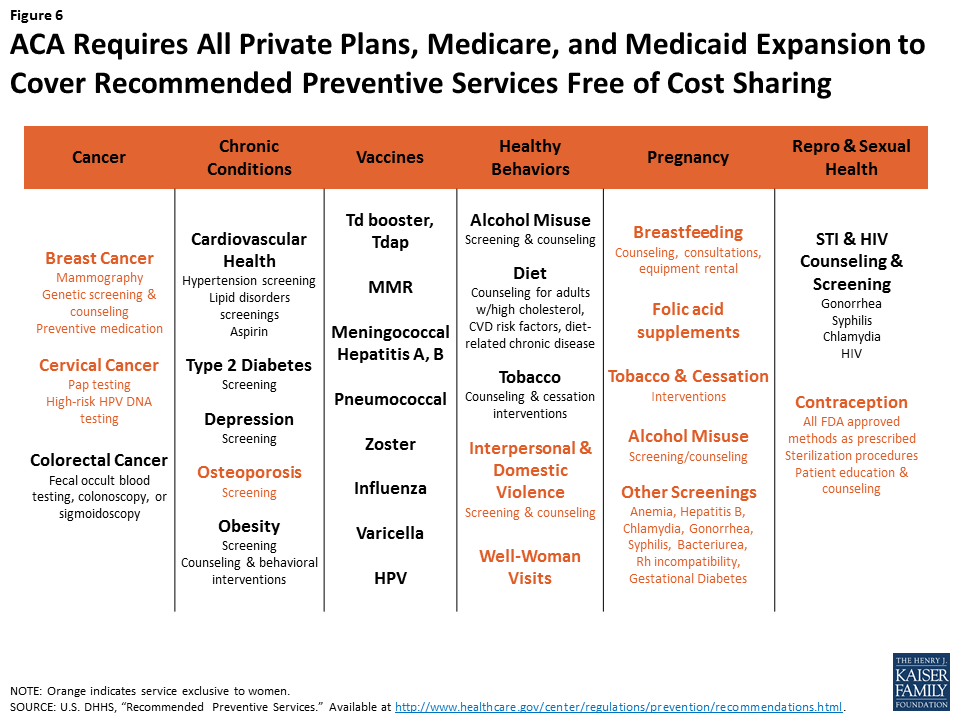
Currently, all private plans, Medicaid expansion programs, and Medicare must cover recommended preventive services without cost sharing. Important services for women include: breast and cervical cancer screening, osteoporosis screening, pregnancy related services, well woman visits, and contraception.
In addition to EHBs, the ACA included a related requirement that all private plans cover federally-recommended preventive services without charging cost-sharing. In contrast to EHBs, which apply to individually purchased plans and Medicaid expansion only, the preventive services requirement applies to all forms of private insurance, including employer-sponsored and individual market plans. Prior to the ACA, the only federal–level requirements that applied to group plans were for coverage of a minimum length of stay after a delivery, availability of reconstructive surgery following a mastectomy, and parity for mental health services. The preventive services coverage requirement also applies to the Medicaid expansion and Medicare programs. This means that most adults with some form of private or public insurance now have coverage without cost-sharing for all of the services recommended by the U.S. Preventive Services Task Force (USPSTF), immunizations recommended by the federal Advisory Committee on Immunization Practices (ACIP), and services for women recommended by the Health Resources and Services Administration.16
Among the slate of services covered, many are exclusively for women or address conditions that have a disproportionate impact on women (Figure 6). These services address some of the most common conditions for women, including breast cancer, cardiovascular disease, and obesity. For older women, the preventive services policy means that Medicare now covers the full cost of mammograms and bone density screenings, which were previously subject to 20% co-insurance before passage of the ACA.
Figure 6: ACA Requires All Private Plans, Medicare, and Medicaid Expansion to Cover Recommended Preventive Services Free of Cost Sharing
The AHCA would maintain preventive services requirements for private plans, but would repeal the requirements for the Medicaid expansion population. Preventive services for adults are covered at state option for other Medicaid beneficiaries. States could opt to roll back coverage of preventive services for this group.Back to top
9. Contraceptive Coverage
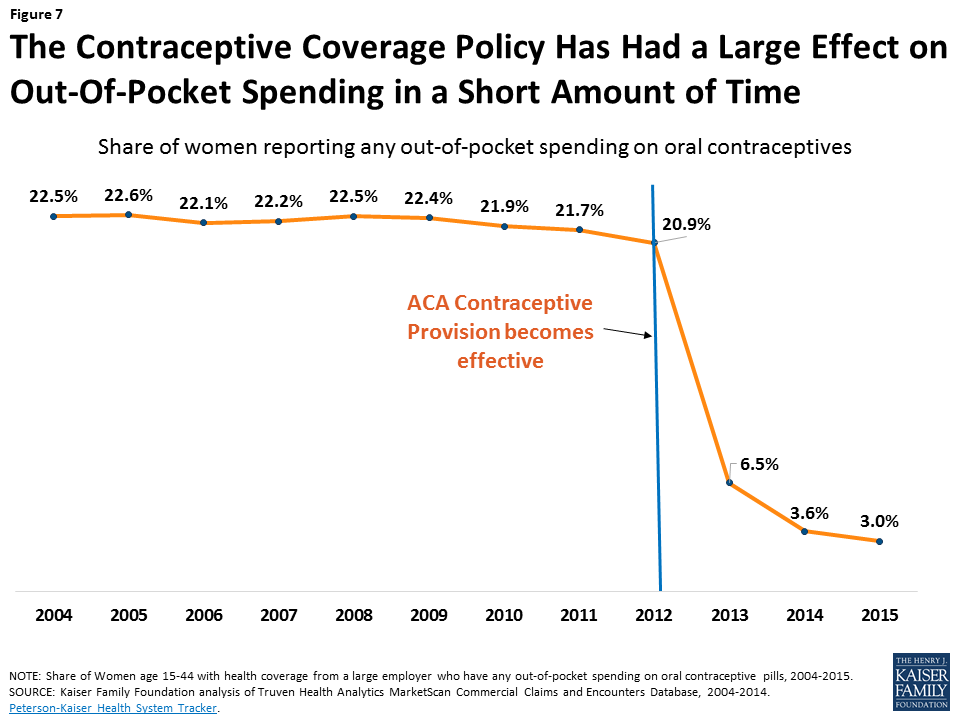
Today, the majority of women with private insurance have no cost contraceptive coverage. This preventive benefit has reduced women’s out-of-pocket spending on birth control and made the most effective, but often costly, contraceptive methods affordable for most insured women. This provision could be eliminated or modified through regulatory changes without the need for Congressional action.
Current law requires that most private plans include coverage of all FDA-approved contraceptive methods for women at no additional cost. Research has found that the requirement has had a large impact in a short amount of time. For example, in the first two years that the policy was in effect, the share of women with any out of pocket spending on oral contraceptives fell sharply to just 3.0% of women with employer-sponsored insurance (Figure7).17 Similar effects have been documented for other contraceptives, including IUDs.18
Figure 7: The Contraceptive Coverage Policy Has Had a Large Effect on Out-Of-Pocket Spending in a Short Amount of Time
The AHCA bill does not specifically address the contraceptive coverage requirement. However, President Trump and Secretary Price have expressed support for advancing “religious freedom,”19 and this provision has been at the heart of two cases that have reached the Supreme Court where employers have claimed that the requirement violates their religious beliefs. The contraceptive coverage requirement was implemented through a series of agency regulations that included contraception in the package of women’s preventive services, defined the religious exemption and accommodation available to houses of worship and faith-based nonprofits respectively, and clarified that plans must cover 18 contraceptive methods. Since these requirements are in regulations, the Trump Administration can issue new regulations and guidance to permit employers and insurers to cover fewer methods, or to exempt more employers with religious objections without the need for congressional action.20 President Trump’s Executive Order Promoting Free Speech and Religious Liberty specifically calls on the Secretaries of Labor, Treasury, and Health and Human Services to amend regulations to protect conscience-based objections to the ACA’s preventive-care mandate.21 The goal of this is to exempt any employer with a religious or moral objection from the contraceptive coverage requirement, even though current regulations already relieve employers from paying for such coverage while assuring that women have coverage for contraceptives.
If the federal requirement is eliminated or scaled back, the scope of contraceptive coverage would again be shaped by employers, insurance plans, and state policy. More than half (28) of states have laws requiring plans in their states to cover contraceptives, but these are more limited than the ACA. Only five of the 28 states require coverage of the full range of contraceptives without cost sharing, but these state-level mandates do not apply to self-funded plans, which cover most insured workers.22Back to top
10. Pregnancy-Related Care
Today, pregnant and postpartum women have a greater range of protections and benefits than they did prior to the ACA. These range from mandatory maternity and newborn coverage, to no-cost prenatal screening, and breastfeeding supports. The AHCA would allow states to define the Essential Health Benefits requirements with a waiver, potentially excluding coverage for maternity care.
Before the ACA, pregnant women seeking insurance in the individual market were routinely turned away as having a pre-existing condition. Furthermore, many individual plans did not cover maternity services because it was not required in this market. Some individual plans offered separate maternity coverage as a rider which could be costly, ranging from roughly $15 to $1600 a month.23 Some plans also imposed a waiting period before the rider took effect. These discriminatory practices were limited to the individual market because coverage for maternity services has been required for decades both under Medicaid and in most employer-sponsored plans due to the Pregnancy Discrimination Act. The ACA changed this by including maternity and newborn care as part of the EHB package that must be included in individual private plans as well as under Medicaid expansion. While some states had required individual plans in their states to cover maternity services to varying degrees prior to the ACA, most did not.24 In addition, the ACA made other improvements through coverage of preventive services such as no-cost prenatal screenings and breastfeeding supports.
ACA Reforms Improving the Availability of Maternity Care
Maternity and newborn care are essential health benefits
Pregnancy no longer a pre-existing condition
Prenatal visits, recommended screening tests, folic acid supplements covered without cost sharing in all new private plans, and Medicaid expansion
Medicaid expansion provides pathway to coverage for mothers who previously may have lost coverage postpartum
Breastfeeding supports for nursing mothers
Breast pumps and lactation consultation covered without cost sharing
Breaks and private area to express milk required in workplace
The AHCA would weaken some of the protections for pregnant women that are currently in place. By halting funds for Medicaid expansion, some new mothers would lose coverage once the 60-day postpartum period ends and become uninsured. Furthermore, it would permit states to waive the current federal EHB standards, potentially allowing states to remove or scale back maternity services as a required benefit. The bill would also allot funds to the Patient and State Stability Fund for pregnancy and newborn care, but there are no details on how it will be used.
Some have touted the benefits of excluding maternity coverage for those who will not need it such as men and older women as a way of giving policyholders more flexibility to choose their own coverage and purchase less expensive plans. However, this also means that the risk pool for plans that include maternity services would primarily be comprised of women who anticipate using maternity care, and would likely greatly increase costs for women who sought such coverage. Furthermore, given that nearly half of pregnancies are unintended some women would buy coverage that does not include maternity care thinking they won’t need it, only to find out their coverage falls short when they are pregnant.
Conclusion
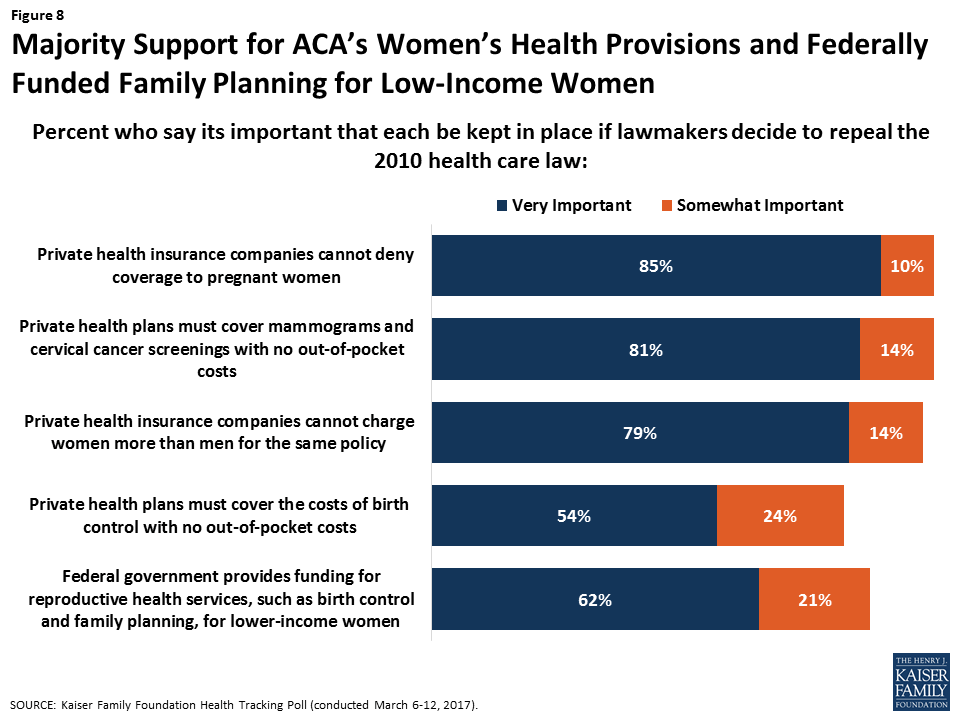
Today, women’s health coverage levels are at an all-time high. In addition to the coverage gains in the Marketplaces and Medicaid, many of the long-standing discriminatory practices in the individual insurance market that translated into higher cost burdens for women have been banned. Minimum standards for benefits that individual plans must cover through the EHB and the preventive services requirements for all private plans have assured that most insured women have coverage for a broad range of recommended services that they need such as maternity care, mental health services, and preventive services such as mammograms, pap smears, and contraceptives. Recent polling shows that the American public values these protections, including those for poorer women (Figure8). In addition, while the AHCA would prohibit federal Medicaid funds to Planned Parenthood for one year, 75% of Americans say they favor continued federal funding for Planned Parenthood.25
Figure 8: Majority Support for ACA’s Women’s Health Provisions and Federally Funded Family Planning for Low-Income Women
If enacted, the AHCA would alter subsidies for private insurance, eliminate the Medicaid expansion, ban Medicaid funding to Planned Parenthood, place a cap on Medicaid spending, and turn EHB standards over to the states. This legislation would have considerable impact on women, particularly low-income women who rely on subsidies and those who are on Medicaid. The Senate will now take up their own debate about the future of the ACA. In addition to legislation, many of the ACA’s other provisions could be amended through federal-level administrative actions. Given the gains that women have made in access to meaningful and affordable coverage, they have much at stake in the current debate over the future of our nation’s private and public insurance programs.
Appendix
Appendix 1: Comparison of Women’s Health Provisions in the ACA and House AHCA
Affordable Care Act (ACA)
House American Health Care Act (AHCA)
Medicaid Policy
Allow states to expand Medicaid eligibility to all adults up to 138% FPL.
Repeal enhanced federal match for Medicaid expansion except for those enrolled as of December 31, 2019 who do not have a break in eligibility of more than 1 month;
Convert federal Medicaid funding to a per capita allotment or block grant and limit growth beginning in 2020 using 2016 as a base year.
Planned Parenthood
Planned Parenthood may receive federal reimbursements under Medicaid’s “any willing provider” provision.
Prohibit federal Medicaid funding for Planned Parenthood clinics for one year.
Abortion
Prohibit abortion coverage from being required.
Federal premium and cost-sharing subsidies cannot pay for abortion beyond Hyde limitations.Allows qualified health plans to cover abortion, but plan must segregate federal subsidy funds from private premium payments or state funds.
Prohibit plans from discriminating against a provider because of unwillingness to provide, pay for, cover, or refer for abortions.
Prohibit all qualified health plans from covering abortion beyond Hyde limitations.
Prohibit federal premium tax credits from being applied to premiums of non-Marketplace plans that cover abortion services beyond Hyde limitations.
Ban small employers from receiving tax credits if their plans include abortion coverage beyond Hyde limitations.
Subsidies
Premium tax credits based on age, income and location to eligible individuals with incomes between 100-400% FPL on a sliding scale.
Provide cost-sharing subsidies to eligible individuals with household income between 100%-250% FPL.
Replace ACA income-based tax credits with flat tax credit adjusted for age only.
Repeals cost-sharing subsides as of January 1, 2020.
Preexisting conditions
Prohibit pre-existing conditions exclusions, which historically have included pregnancy, prior C-section, and mental illnesses, and rate surcharges based on health status.
Retain ban on pre-existing conditions exclusions. Those with coverage gaps could be charged 30% more for premiums for the first year of resuming coverage or state could request a waiver to permit insurers to medically underwrite for one year, charging sicker individuals higher rates for that year.
Gender Rating
Ban discriminatory premium pricing based on gender in all group and individual insurance plans.
Ban on gender rating is not changed.
Essential Health Benefits (EHB)
Require all private insurance plans to cover 10 EHB categories, including maternity care and mental health services.
EHB standards are repealed for the Medicaid expansion population.
States could apply for a waiver to re-define EHBs for the individual and small group health insurance markets.
Preventive Care
Require almost all private plans to cover preventive care without cost-sharing, including contraception and breast cancer screenings.
Requirement for individual and group plans to cover preventive benefits, without cost sharing is not changed.
Legislation extends Medicaid coverage to all individuals with incomes up to 133% of the poverty level (FPL) and includes a provision to disregard first 5% of income, effectively extending Medicaid to all individuals with incomes up to 138% FPL. ↩︎