News Release

Survey: OBGYNs Report That the Affordable Care Act Has Increased Use of Contraceptives Among Patients, but the Cost of Reproductive Health Care Still a Burden for Their Low-Income Patients

Published: Feb 25, 2021

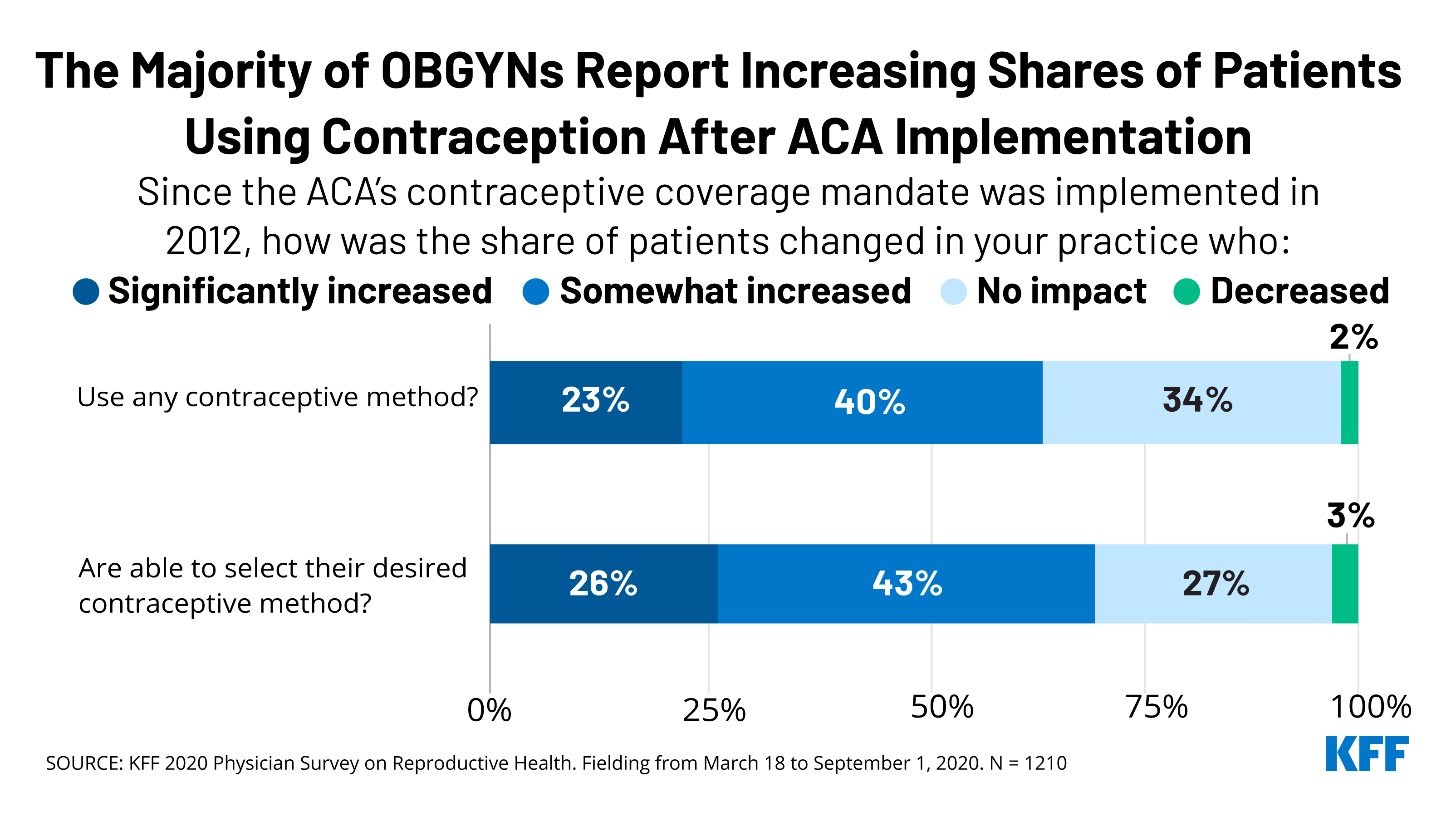
As the nation awaits the Supreme Court ruling on the future of the Affordable Care Act (ACA), a 2020 KFF survey of obstetrician-gynecologists (OBGYNs) finds that since implementation of the ACA’s contraceptive coverage requirement, nearly two-thirds of OBGYNs (63%) reported an increase in contraceptive uptake from their patients and 69% reported an increase in their patients use of their desired contraceptive method. However, nearly all OBGYNs (92%) reported the cost of reproductive health care services still presents a challenge for low-income patients.

The survey highlights issues of patient affordability and access to care. About half of OBGYNs found the issue of affordability comes up always or often when discussing treatment or test options with patients. While 78% of OBGYN practices accept Medicaid, physicians report challenges with specialists accepting Medicaid referrals and being reimbursed at a lower rate by the program compared to private insurance.

The survey found that a majority of OBGYNs provided some form of contraceptive care, but just 18% offered all non-permanent contraceptive methods to their patients. Notably, less than half of OBGYNs provide their patients with prescription forms of emergency contraception (copper IUD and Ella).

A limited number of OBGYNs (23%) provide abortions, but they were more commonly offered by OBGYNs in urban areas, the Northeast, and the West. The most frequently reported reasons for not providing abortion included their practice had policies against it (49%), that abortion services were available elsewhere (45%), and personal opposition (31%).

When asked about career satisfaction, 70% of OBGYNs reported they would choose the same medical specialty, while a minority reported they would choose a different specialty (19%) or not be a physician at all (10%).

For additional findings read the full report, OBGYNs and the Provision of Sexual and Reproductive Health Care: Key Findings from a National Survey.

Methodology

The 2020 KFF National Physician Survey on Reproductive Health surveyed 1,210 OBGYNs from March 18 to September 1, 2020. The survey received responses from a nationally representative sample of OBGYNs practicing in the U.S. who provide sexual and reproductive health care to patients. Following the beginning of the COVID-19 pandemic, additional questions were added regarding the impact of COVID-19. You can find the results here: How OBGYNs Adapted Provision of Sexual and Reproductive Health Care During the COVID-19 Pandemic.

37 States Explicitly Outline What Conditions are Considered “High-Risk” for Vaccine Prioritization

Authors: Jennifer Kates, Lindsey Dawson, Jennifer Tolbert, Daniel McDermott, Hanna Dingel, and Chelsea Rice
Published: Feb 24, 2021

Individuals with certain medical conditions are at increased risk of severe illness if they become infected with SARS-CoV-2, the virus that causes COVID-19, and as such are recommended by the Centers for Disease Control and Prevention (CDC) for vaccination in the first phases of vaccine roll-out. Most states have not yet opened up vaccine eligibility to those with high-risk medical conditions, although they represent some of the next in line.

A recent KFF analysis assessed how states are defining “high-risk medical conditions,” including whether they follow CDC’s recommendations or deviate in some way. This point in time analysis reflects information available as of February 16, 2021. Overall, there is wide variation across the country, including in the conditions listed by states, whether these are limited or allow for additional conditions to be considered, and how clearly the information is presented.

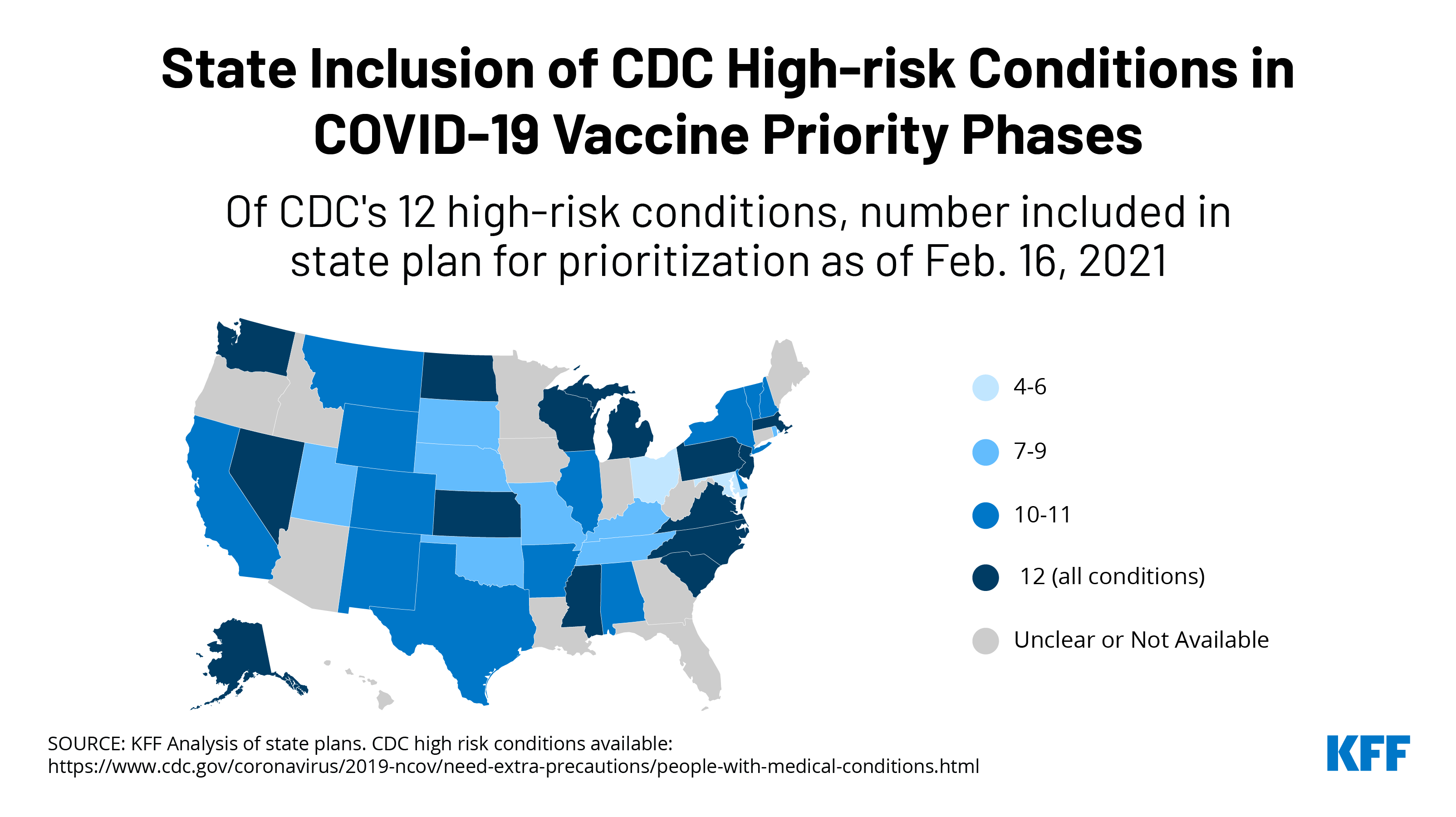
Among the 50 states and DC, 37 have provided explicit information on what conditions they consider “high risk” (Figure 1):

  • 14 include all twelve of the conditions on CDC’s list.
  • Almost all include the following conditions: cancer (35), chronic kidney disease (34), COPD (37), heart conditions (35), immunocompromised due to solid organ transplant (36), sickle cell disease (35), and Type 2 diabetes (34).
  • There is less consistent inclusion of other conditions: severe obesity (32 states), obesity (29), Down Syndrome (32), pregnancy (27), and smoking (16).

Given the challenges and confusion with vaccine roll-out thus far, this variation and lack of clarity could have significant bearing on the ability of those with high-risk medical conditions, some of whom may be among the most vulnerable, to access the vaccine in early phases.

Source

The Next Phase of Vaccine Distribution: High-Risk Medical Conditions

Key Issues to Watch for Justice-Involved Populations: COVID-19, Vaccines, & Medicaid

Author: Madeline Guth
Published: Feb 24, 2021

As COVID-19 vaccine distribution continues, the impact of the coronavirus on people moving into and out of the criminal justice system and the staff who work with justice-involved individuals is a key issue. This issue brief explores the impact of COVID-19 on justice-involved populations, examines how states have prioritized these populations for vaccination, and highlights the significance of Medicaid coverage for this population as well as proposals to expand access to Medicaid coverage. Looking ahead, key issues to watch include continued data on COVID-19 cases, deaths, and vaccinations among incarcerated populations as well as ongoing state and federal efforts to expand Medicaid access for this population. These efforts include the bipartisan Medicaid Reentry Act to allow Medicaid coverage for inmates 30 days prior to release, introduced in the Senate and also included in the House of Representatives COVID-19 relief budget reconciliation bill. This bill also includes funding for COVID-19 testing, contact tracing, and mitigation activities in congregate settings, including correctional facilities.

What does the data show about COVID-19 cases and deaths in prisons?

Although the Centers for Disease Control and Prevention (CDC) has published evidence that broad testing strategies in correctional facilities can help control transmission and provides considerations for such strategies, coronavirus testing policies vary across prison systems. Further, reporting of coronavirus cases and deaths data varies across states and prison systems and is often incomplete. In a February 9, 2021 letter to Congressional leadership, a group of Democrats indicated plans to reintroduce the COVID-19 in Corrections Data Transparency Act, a bill that would require correctional facilities to collect and publicly report detailed data on COVID-19 (including tests, cases, and deaths) and to disaggregate this data by demographics including sex, race, and disability. The group also urged leadership to include additional provisions related to correctional facilities in the upcoming COVID-19 relief package, including a requirement for routine diagnostic testing in correctional facilities.

Coronavirus infection rates among incarcerated populations have been higher than overall infection rates in nearly all states (Figure 1). Data shows 388,168 reported cases of coronavirus among people incarcerated in state and federal prisons as of February 22, 20211 , meaning that about 28% of this population has tested positive for the virus as compared to about 9% of the total US population. These case rates vary across states, ranging from 6% of prisoners in Alabama to 68% in Michigan. This variation in case rates may reflect variation in the number of prisoners being tested in addition to the prevalence of the virus. In all but three states, the coronavirus case rate among prisoners is higher than the case rate for the total population. The total coronavirus case rate among prisoners also reflects high case rates among the population detained by Immigration and Customs Enforcement (ICE) (69%) and among the population detained by the Federal Bureau of Prisons (29%). Additionally, since the start of the pandemic, an estimated 93,190 prison staff members have tested positive for coronavirus (22% of this population); however, data for staff is more limited as not all states report staff infections and even where this data is reported, prisons are less likely to systematically test staff and thus these counts may only include staff members who voluntarily report a positive diagnosis.

More than 2,300 deaths from coronavirus have been reported among prisoners, with death rates among prisoners higher than overall death rates in most states (Figure 2). A few states have not reported coronavirus deaths among prisoners2 , and the data that is available is subject to variation and limitations noted previously. This coronavirus death total includes deaths among the population detained by the Federal Bureau of Prisons (236 deaths) and by ICE (9 deaths). Coronavirus death rates vary across states, ranging from 4.1 deaths per 10,000 prisoners in Wyoming to 43.7 per 10,000 prisoners in Nevada. These rates among prisoners are higher than overall coronavirus death rates in 26 states, lower than overall rates in 15 states, and about the same (within one percentage point) in 9 states. Given the high case rates among prisoners, it is unsurprising that death rates are also high; however, coronavirus deaths in prisons are likely partially mitigated by the fact that on average, just over 10% of prisoners are over age 55 (as compared to just over 30% of the general population) and it is well-documented that older adults are at higher risk of dying if diagnosed with COVID-19. Since the start of the pandemic, 152 deaths from coronavirus have been reported among prison staff.

How are inmates in correctional facilities reflected in state vaccine prioritization plans?

Although not all states have fully defined the populations prioritized for receiving the COVID-19 vaccine in their state vaccination plans, of those that have, just over half include inmates in their Phase 1a, 1b or 1c groups and almost all include corrections officers. Vaccine recommendations from the CDC’s Advisory Committee on Immunization Practices (ACIP) classify corrections officers as frontline essential workers who should be eligible for the vaccine following Phase 1a. While ACIP does not explicitly recommend inmates as an early priority group, it does note that states may choose to vaccinate those residing in congregate living facilities, such as correctional/detention facilities, at the same time as frontline staff). Accordingly, state vaccine plans vary in their prioritization of inmates in correctional facilities, and states also vary widely in the number of incarcerated individuals who have been vaccinated thus far.3  As of February 22, 2021, inmates in correctional facilities are eligible for the COVID-19 vaccine in just 15 states. An additional three states are allowing vaccination for inmates only in some counties and an additional 15 states are allowing vaccination of staff but not inmates. Some (including members of Congress and current inmates) have argued that incarcerated individuals should be higher priority for the vaccine, while others have critiqued state policymakers for prioritizing incarcerated individuals ahead of others in their states.

Why is vaccine access particularly important for inmates?

Justice-involved populations may have a greater need for vaccines due to underlying health conditions and increased risk of transmission in correctional facilities. Coronavirus and other infectious diseases spread easily among people in jails and prisons given close quarters and shared spaces within correctional facilities, as is demonstrated by high coronavirus infection rates (Figure 1). Policies related to COVID-19 in prisons such as quarantining, isolation, and masking vary across states. In recognition of the increased risk of transmission in these types of facilities, the House of Representatives COVID-19 relief budget reconciliation bill includes funding for COVID-19 testing, contact tracing, and mitigation activities in congregate settings, including correctional facilities. Although on average younger than the general population, many incarcerated people are at risk for experiencing complications from coronavirus due to higher rates of chronic disease among this population as compared to the general population. Further, people of color are disproportionately likely to be incarcerated in jails and prisons, and data shows racial disparities in COVID-19 outcomes in part due to higher rates of underlying health conditions. Despite increased risks for the justice-involved population, reporting from some states suggests that inmates are reluctant to take the COVID-19 vaccine, citing concerns about side effects as well as distrust of the prison health care system.

What current and future options do justice-involved individuals have for accessing health care?

Correctional facilities are required to provide health services to incarcerated individuals, and Medicaid can help cover the costs of inpatient hospital care for this population. The provision of health care to incarcerated individuals varies significantly across states and types of correctional facilities, and may include on-site infirmaries and/or contracts with outside health care providers. In fiscal year 2015, state departments of correction on average spent $5,720 per inmate to provide health care services. Current rules allow individuals to be enrolled in Medicaid while incarcerated, but the Medicaid Inmate Exclusion Policy limits Medicaid reimbursement for incarcerated individuals to inpatient care provided at facilities that meet certain requirements, including hospitals. States can facilitate access to Medicaid coverage for incarcerated individuals by suspending rather than terminating Medicaid coverage for enrollees who become incarcerated, which over 40 states reported doing as of January 2019. Suspending eligibility expedites access to federal Medicaid funds if an individual receives inpatient care while incarcerated. Although data on prisoner hospitalizations due to coronavirus is largely unavailable, Medicaid would be an important payer for any such hospitalizations.

The Affordable Care Act (ACA) and its expansion of Medicaid provided new coverage options for individuals upon release from correctional facilities. Although incarcerated individuals are not eligible to buy private health insurance through the Health Insurance Marketplace established by the ACA, they can access a Special Enrollment Period to sign up for private health coverage within 60 days of release even if there is not currently a Marketplace Open Enrollment Period. Further, particularly in states that have adopted the ACA’s Medicaid expansion, many justice-involved individuals could be eligible for Medicaid coverage. Justice-involved individuals are disproportionately low-income, with a median income prior to incarceration 41% lower than the median income of non-incarcerated counterparts. Though incarcerated people in all gender, race, and ethnicity groups have substantially lower incomes as compared to their non-incarcerated counterparts, median incomes prior to incarceration are particularly low for women of color. In the 39 states that have adopted Medicaid expansion under the Affordable Care Act, nearly all adults with incomes up to 138% of the federal poverty level (FPL) ($17,774 for an individual in 2021) are eligible for Medicaid; however, eligibility for adults remains very limited in the remaining 12 states. In states which suspend Medicaid coverage for incarcerated individuals, individuals can have their coverage active immediately upon release, which facilitates access to health care services in the community. This policy is of particular importance during the coronavirus pandemic, as some prisons have implemented early or temporary release policies to reduce prison density and viral transmission. Researchers have urged states to establish and/or strengthen systems to help enroll individuals in Medicaid upon release to protect their health and that of the general population during the pandemic.

Looking ahead, policy proposals at the state and federal level could further expand Medicaid access and increase continuity of care for justice-involved populations during and beyond the pandemic. A few states are attempting to expand the scope of services provided to incarcerated individuals that can qualify for reimbursement through Section 1115 waiver requests. For example, Utah and Kentucky have pending requests that would provide limited benefits to certain inmates with substance use disorders prior to release. At the federal level, the Medicaid Reentry Act is a legislative proposal which would allow states to cover services for Medicaid beneficiaries who are incarcerated during the 30 days preceding their release, which could facilitate coverage and access to care post-release. This proposal is included in the House of Representatives COVID-19 relief budget reconciliation bill (to be funded for five years) and a bipartisan group of Senators has introduced similar legislation. The Congressional Budget Office (CBO) has estimated that the proposal in the reconciliation bill would increase federal costs by $3.7 billion over the five-year period and result in about 55% of all inmates being enrolled in Medicaid at the end of this period.
  1. This includes data from all 50 US states, Puerto Rico, the Federal Bureau of Prisons, and Immigration and Customs Enforcement (ICE). For more info, see https://covidprisonproject.com/ ↩︎
  2. However, a different dataset (from The Marshall Project) reports at least one coronavirus death among prisoners in every state except Vermont. ↩︎
  3. State counts of the number of incarcerated individuals who have been vaccinated may include inmates who receive the vaccine based on other eligibility criteria, even if they live in states where inmates are not currently priority populations themselves. ↩︎
News Release

COVID-19 Cases and Deaths Among Nursing Home Residents Have Declined Markedly Following the Introduction of Vaccines

Published: Feb 24, 2021

The number of residents contracting and dying of COVID-19 in nursing homes has declined markedly following the introduction of vaccination efforts in long-term care facilities, a KFF analysis finds.

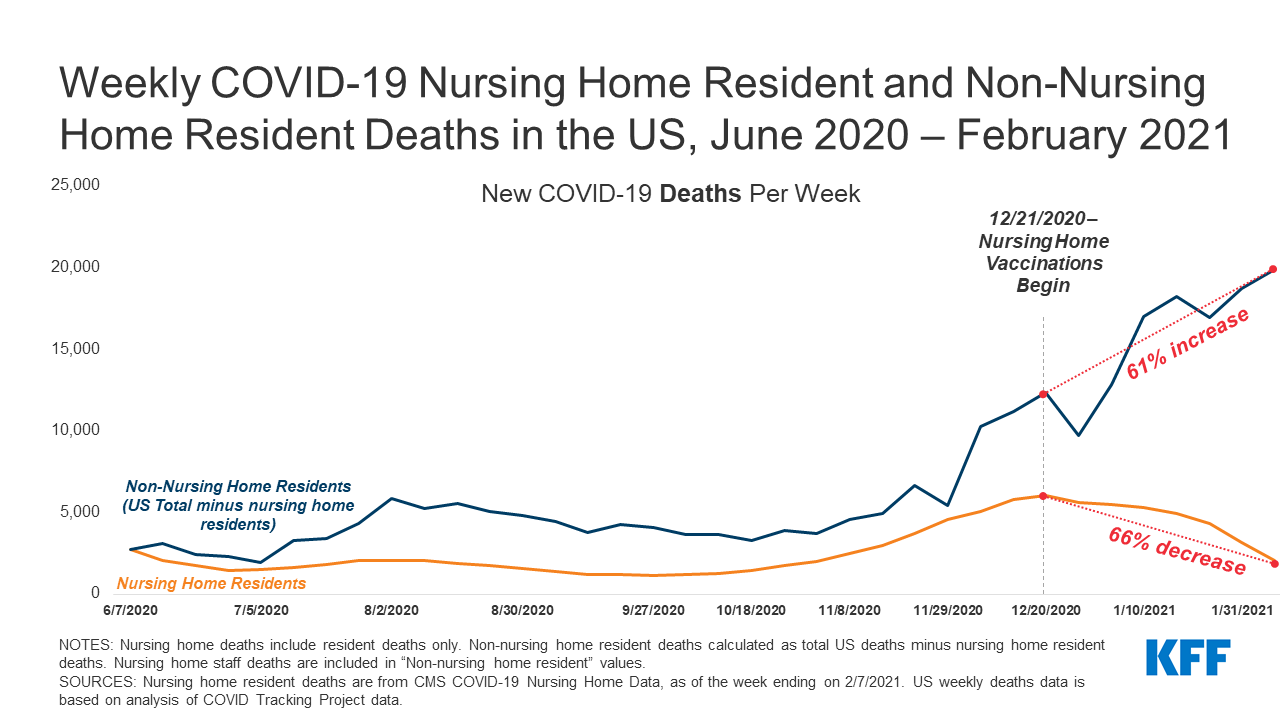
Resident deaths from COVID-19 in nursing homes have decreased by two-thirds (66%) since vaccination efforts began in late December. New cases of the novel coronavirus among residents have fallen even more sharply, by 83 percent.

At the same time, deaths from COVID-19 in the general population (excluding nursing home residents) have spiked by 61 percent in the weeks since December 20. New cases have declined in recent weeks, but by only 45 percent, far less than the decline seen among nursing home residents.

The new analysis compares trends in new COVID-19 cases and deaths among nursing facility residents with trends in new COVID-19 cases and deaths among non-nursing facility residents through February 7, 2021.

It’s still unclear how much the decline in cases and deaths can be attributed directly to the vaccine, the analysis finds, but the timing suggests that vaccination efforts are having an impact and improving the safety of long-term care settings. As of February 22, 2021, at least 4.5 million residents and staff in long-term care facilities had received one or more dose of vaccine, including over 2 million residents and staff who had received both doses.

Is the End of the Long-Term Care Crisis Within Sight? New COVID-19 Cases and Deaths in Long-Term Care Facilities Are Dropping

Authors: Priya Chidambaram, Rachel Garfield, Tricia Neuman, and Larry Levitt
Published: Feb 24, 2021

The final months of 2020 were the deadliest months of the pandemic for many long-term care facilities (LTCFs) across the country, with over 26,000 COVID-19 deaths in LTCFs reported between Thanksgiving weekend and December 31, 2020. The end of 2020 also saw the approval of the first coronavirus vaccines and the launch of vaccine administrations in LTCFs through the Pharmacy Partnership for Long-Term Care on December 21st, 2020 (Pfizer-BioNTech) and December 28th, 2020 (Moderna). As of February 22, 2021, about 4.5 million residents and staff have received one or more dose through the Partnership; over 2 million residents and staff have received both doses. In addition, some states and some LTCFs have vaccinated residents or staff outside the Partnership. Vaccinations have increased outside of LTCFs as well, though at a significantly lower rate.

This analysis compares trends in new COVID-19 cases and deaths among nursing facility residents with trends in all other new COVID-19 cases and deaths excluding nursing facility residents through February 7, 2021. Our prior analysis of trend data going from April 2020 through December 2020 found similar patterns in cases and deaths in long-term care facilities and in the general population. This updated analysis with more recent data shows a marked divergence in new cases and deaths per week between nursing facility residents and the rest of the US population since December 2020. This drop in new cases and deaths in nursing facility residents coincides with the start of vaccine administration in LTCFs, suggesting a link between the two, although the trends could also be influenced by other factors. See Methods for more details on data sources and analysis.

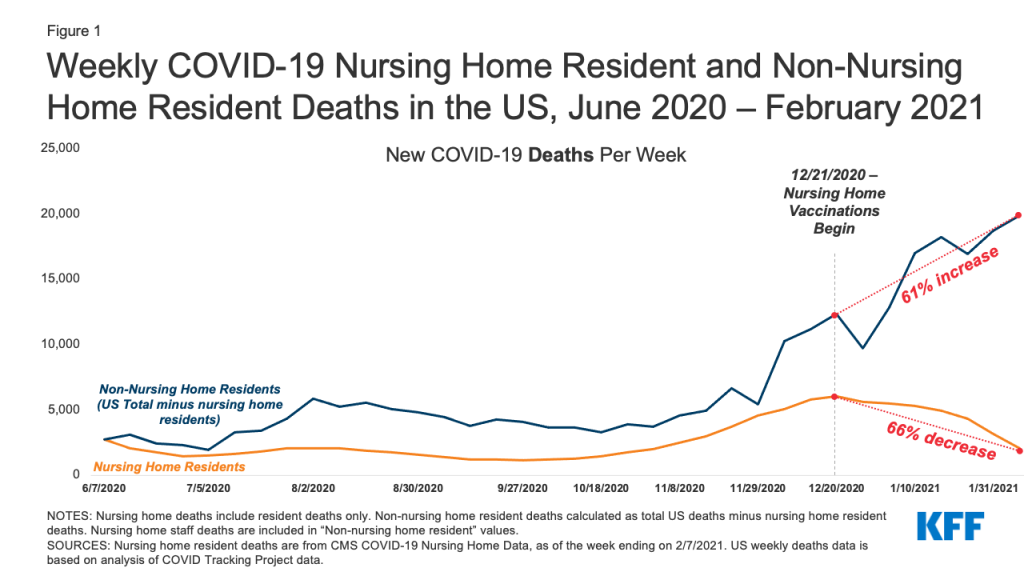
Weekly new deaths among nursing home residents have decreased by 66% since long-term care vaccination efforts started at the end of December, compared to a 61% increase in all other new deaths not among nursing home residents during the same period (Figure 1 and Table 1). In the period leading up to initiation of vaccination efforts in LTCFs, new deaths among nursing homes residents and non-nursing home residents had generally been increasing since late Fall 2020, peaking in the week ending December 20, 2020. Starting December 21, 2020, the week LTCF vaccination efforts began, weekly nursing home resident deaths began a steady decrease, which has continued through the most recent week of data available, dropping from 6,019 for the week ending December 20, 2020 to 2,054 for the week ending February 7th, 2021. The rate of decrease appears to have accelerated in recent weeks, as more LTCF residents got fully vaccinated. In contrast, non-nursing facility resident deaths increased overall (from 12,325 to 19,848 weekly deaths between the weeks ending December 20th 2020 and February 7th, 2021), with a slight drops the weeks ending December 27th and January 24th.

Figure 1: Weekly COVID-19 Nursing Home Resident and Non-Nursing Home Resident Deaths in the US, June 2020 – February 2021

Similarly, weekly new cases among nursing home residents have been steadily declining since December 20, 2020 and decreased faster than cases among non-nursing home residents (-83% and -45%, respectively) (Table 1). As has been widely reported, overall cases in the US have dropped precipitously in recent weeks. While cases have dropped both within and outside nursing facilities, new nursing facility resident cases peaked earlier (week ending December 20, 2020) as compared to in the general non-nursing facility resident population (week ending January 10, 2021) and declined at a faster rate in nursing facilities than outside nursing facilities.

While timing of vaccine initiation in LTCFs and declines in cases and deaths coincide and suggest a link between the two, it is still unclear how much of the decline in cases and deaths can be attributed directly to the vaccine. In particular, cases and deaths started declining upon rollout of the Partnership, but first vaccine clinics did not happen immediately in all locations. According to the CDC, there has been strong evidence that the vaccines prevent severe illness and death, and the sharp divergence in deaths inside and outside of LTCFs is consistent with that evidence. In addition, given the emerging research around the vaccines’ ability to prevent transmission of the virus, there is reason to believe that the vaccine may be playing a part in reducing virus transmission within nursing homes, contributing to the more rapid decline in new cases in nursing facility residents than in the overall population.

Table 1: Weekly COVID-19 Nursing Home Resident and Non-Nursing Home Resident Cases and Deaths in the US,June 2020-February 2021
Week EndingWeekly New CasesWeekly New Deaths
Nursing Home ResidentNon-Nursing Home Resident*Nursing Home ResidentNon-Nursing Home Resident*
6/7/202016,396129,0222,7502,748
6/14/202012,998133,8472,0783,082
6/21/202012,128172,3461,7252,400
6/28/202013,440254,6811,4682,291
7/5/202013,940331,1461,4721,946
7/12/202016,837387,4051,6123,266
7/19/202018,442441,3621,8023,403
7/26/202018,918440,6632,0504,312
8/2/202017,180408,9732,0735,850
8/9/202016,737346,7902,0815,252
8/16/202015,970341,3171,8795,565
8/23/202013,585280,8101,7305,073
8/30/202012,476273,7741,5434,829
9/6/202011,458265,8771,3644,462
9/13/202010,226227,7091,2193,754
9/20/202010,513267,3051,1764,233
9/27/202010,546295,0211,1394,080
10/4/202010,815287,7271,1863,618
10/11/202011,927330,3721,2473,628
10/18/202014,781367,8991,4683,297
10/25/202016,350464,2611,7363,881
11/1/202018,760613,8832,0123,690
11/8/202023,673775,1642,4644,584
11/15/202030,1641,014,8062,9824,940
11/22/202032,6651,165,5453,7216,624
11/29/202027,6411,094,8634,5825,424
12/6/202032,0311,345,6005,04310,229
12/13/202033,4281,448,9485,76211,170
12/20/202033,6011,468,0846,01912,325
Nursing Home Vaccinations Begin
12/27/202028,8151,240,8125,5869,679
1/3/202127,1441,459,0245,47412,853
1/10/202125,8871,683,0675,32616,984
1/17/202121,3491,489,3364,95818,206
1/24/202117,3831,163,9884,34116,926
1/31/202111,0841,012,7153,16418,738
2/7/20215,672812,3622,05419,848
Percent Change From 12/20/2020 to 2/7/2021-83%-45%-66%61%
NOTES: Nursing home cases/deaths include resident cases and deaths only. *Non-nursing home resident cases and deaths calculated as total US cases and deaths minus nursing home resident cases and deaths. These figures include nursing home staff cases and deaths.SOURCES: Nursing home cases and deaths are from CMS COVID-19 Nursing Home Data, as of the week ending on 2/7/2021. US weekly cases and deaths data is based on analysis of COVID Tracking Project data.

Methods

This analysis uses federal data on coronavirus cases and deaths in nursing facilities, which includes weekly data as of mid-May 2020 through February 7th, 2021. This analysis defines nursing facility cases and deaths as cases and deaths among nursing facility residents. Cases and deaths among nursing home staff are included in “non-nursing home resident” group. Data on non-nursing home cases and deaths are calculated based on the number of nationwide cases and deaths from the COVID Tracking Project minus nursing home resident cases and deaths; we make this adjustment to account for possible endogeneity (that is, cases or deaths in nursing homes contributing to the patterns in COVID-19 cases and deaths nationwide), particularly for deaths where long-term care deaths account for approximately 37% of overall COVID-19 deaths. The federal data includes only data on federally certified nursing facilities. This analysis therefore does not include data on other long-term care settings, such as assisted living facilities, residential care facilities, group homes, or intermediate care facilities.

COVID-19 is the Number One Cause of Death in the U.S. in Early 2021

Authors: Cynthia Cox and Krutika Amin
Published: Feb 22, 2021

A updated issue brief examines the most recent data on deaths from COVID-19 and other causes, and finds that COVID-19 is currently the number one cause of death in the United States.

As of February 20, 2021, an average of more than 2,400 people per day died of COVID-19 in the U.S. during February 2021 – a number nearly 20% higher than the next leading cause. Heart disease, which is typically the number one cause of death in the U.S. each year, leads to the death of about 2,000 Americans per day, and cancer claims about 1,600 American lives per day.

The issue brief is available in full on the Peterson-KFF Health System Tracker, an online information hub dedicated to monitoring and assessing the performance of the U.S. health system.

Growing Gaps in COVID-19 Vaccinations among Hispanic People

Author: Samantha Artiga
Published: Feb 22, 2021

As noted in our latest analysis of state vaccination data by race/ethnicity, a big gap is emerging in COVID-19 vaccination rates for Hispanic people. As of mid-February, White people were over three times more likely than Hispanic people to have received at least the first dose of a vaccination (10% vs. 3%) based on data from just over half the states. These data are early, with vaccinations still only available to limited groups in some states, which may affect demographic trends. They also are subject to a range of gaps and limitations. However, the consistency in patterns across states point to potential challenges for vaccinating Hispanic people, whose health and finances have been extremely hard hit by the pandemic. Low rates of vaccination among Hispanic people would leave them at increased risk for the virus, could further widen existing health disparities, and would leave gaps that hinder our ability to achieve overall population immunity.

There has been substantial focus on heightened concerns among Hispanic and Black adults about the vaccines’ safety and side effects that leave many wanting to “wait and see” how others fare before they receive it. As of late January 2021, just over a third of Hispanic adults (37%) said they wanted to “wait and see” how the vaccine works for other people, compared to 43% of Black adults and just over a quarter (26%) of White adults, while 42% had already gotten the vaccine or wanted to get it as soon as possible and the remaining roughly one in five said they would only get it if required or definitely will not get it.

However, these differences in “willingness” to get the vaccine do not appear large enough to explain disparities that are emerging in vaccination rates, suggesting that other factors, such as access barriers, may be playing a significant role. Hispanic people face a combination of factors that may make accessing the vaccine particularly challenging. They have a high uninsured rate, which has likely further increased due to the pandemic. As such, they may be more likely to be concerned about potential costs associated with obtaining the vaccine and less likely to have an existing relationship with a health care provider. Hispanic adults also are more likely than White adults to say it is difficult to find a health care location that is easy for them to get to. Moreover, some Hispanic people may face linguistic barriers to care. Those with an immigrant family member face potential added complications, including confusion about eligibility to obtain the vaccine and concerns about whether accessing the vaccine could negatively affect their or a family member’s immigration status or put them at risk for enforcement action.

The federal government is making COVID-19 vaccines available in ways that address many of these potential barriers. They currently are available for free to all individuals regardless of insurance status. The federal government is launching new efforts to make vaccines available through more locations, including community health centers, which are a key source of care for the Hispanic population and a place where many Hispanic adults currently receive their flu vaccine. Moreover, the Department of Homeland Security has clarified that vaccines are available to all individuals regardless of immigration status and that enforcement activities will not be conducted at or near vaccine distribution sites or clinics. Further, U.S. Citizen and Immigration Services has specified that it will not consider testing, treatment, or preventive care, including vaccines, related to COVID-19 as part of a public charge inadmissibility determination.

However, for these broad policies to be effective, it will be important for the information to be clearly communicated to people in the community through trusted messengers and in-language, when needed. Proactively communicating that the vaccination is available for free even for people without insurance, providing details on when and how to access the vaccine, and clarifying that receiving the vaccine will not negatively impact immigration status will likely be particularly important. Notably, about six in ten Hispanic adults say they do not have enough information about where to get the vaccine, compared to about half of White adults who say the same. Moreover, survey data show Hispanic adults are much more likely than White adults to report an increased likelihood of getting vaccinated after hearing that there is no cost to get vaccinated (54% vs. 32%) or that a friend or family member (53% vs. 26%) or a health care provider they trust (51% vs. 34%) got the vaccine. Like other groups, the majority (81%) of Hispanic adults point to health care providers as a trusted resource for information to help them decide whether to get the vaccine. The Centers for Disease Control and Prevention, state or local health departments, and family or friends are also top trusted resources for Hispanic adults.

Beyond providing information through trusted resources, it will be important to ensure that, at the provider level, vaccine sign-up processes do not leave some people facing barriers. For example, although insurance is not required to obtain the vaccine, many providers are requesting insurance information to cover costs of administering the vaccine, and anecdotal reports suggest some providers have insurance information as a required field to book a vaccine appointment. Providers may also be requesting personal identification or proof of state residency to obtain the vaccine, particularly while vaccines are limited to certain priority groups. Ensuring that vaccine providers offer clear options for people to make a vaccine appointment if they do not have insurance and providing alternative options for people to provide documentation if they do not have a government-issued identification card will also be important for facilitating access.

Addressing these potential barriers to vaccination can be done. However, doing so will require intentional and deliberate action. Working closely with community leaders to better understand access barriers, develop strategies to address them, and provide outreach and education through trusted messengers is one place to start.

Insurance coverage and financing landscape for HIV treatment and prevention in the USA

Authors: Jennifer Kates, Lindsey Dawson, and 5 co-authors
Published: Feb 19, 2021

In this article for The Lancet, KFF’s Jennifer Kates and Lindsey Dawson, and five co-authors provide an overview of the coverage and financing landscape for HIV treatment and prevention in the U.S., discuss how the Affordable Care Act has changed the domestic health care system, examine the major programs that provide coverage and services, and identify remaining challenges.

The article was published online on February 19, 2021. To access it at no charge, register for an online account at The Lancet.

In addition to KFF’s Jennifer Kates and Lindsey Dawson, the article’s other co-authors are: Tim Horn and Amy Killelea of National Alliance of State and Territorial AIDS Directors, Nicole McCann of the Department of Medicine, Medical Practice Evaluation Center, Massachusetts General Hospital, Jeffrey Crowley of the O’Neill Institute for National and Global Health Law, Georgetown University, and Rochelle Walensky of Division of Infectious Diseases, Massachusetts General Hospital.

News Release

KFF COVID-19 Vaccine Monitor: Attitudes Towards COVID-19 Vaccination Among Black Women and Men

Published: Feb 19, 2021

The latest from the KFF COVID-19 Vaccine Monitor finds that Black men (45%) and women (41%) are more likely than other groups to want to “wait and see” how the COVID-19 vaccine works for others before getting it themselves, making them a key target for public health officials seeking to boost vaccination rates equitably.

This analysis explores similarities and differences in the attitudes of Black men and women toward COVID-19 vaccination. Highlights include:

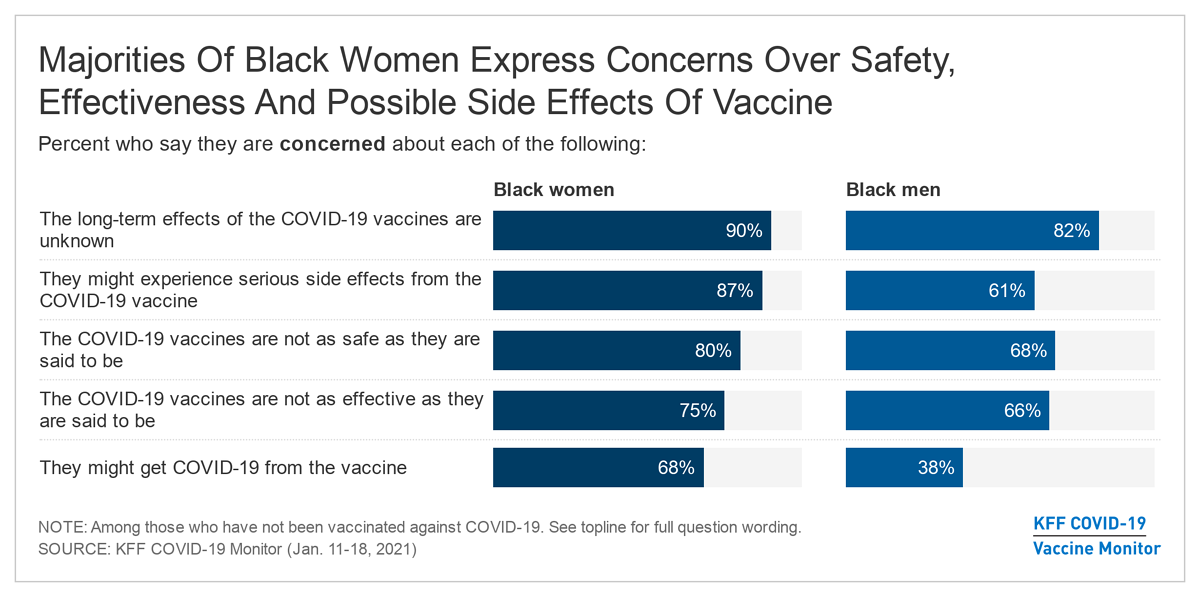
  • Providing accurate information about side effects may be key to communicating with this group. Among those not yet vaccinated, large shares of Black women (87%) and men (61%) say they are worried they might experience serious side effects from a COVID-19 vaccine. Many Black women (69%) and men (65%) who have not yet gotten the vaccine also say they do not have enough information about vaccine side effects.
  • About one in five (19%) Black women say they “definitely will not” get vaccinated for COVID-19, larger than the share of Black men (7%) who say the same. This greater reluctance may be related to Black women’s higher levels of concerns about side effects. In addition, among those not yet vaccinated, many more Black women (68%) than men (38%) say they worry about contracting COVID-19 from a vaccine, suggesting that learning that doesn’t happen could influence their decision.
  • About half of Black women (53%) and men (45%) say that they trust the health care system to do what is right for them and their community “only some” or “almost none” of the time. This suggests addressing historic mistreatment and inequities in the vaccine distribution process could help outreach efforts aimed at vaccine hesitancy among both Black women and men.

Available through the Monitor’s online dashboard, the new analysis also probes the messages that make Black men and women more or less likely to want to get vaccinated, as well as their confidence in the fairness of vaccine distribution efforts.

The KFF COVID-19 Vaccine Monitor is an ongoing research project tracking the public’s attitudes and experiences with COVID-19 vaccinations. Using a combination of surveys and qualitative research, this project tracks the dynamic nature of public opinion as vaccine development and distribution unfolds, including vaccine confidence and hesitancy, trusted messengers and messages, as well as the public’s experiences with vaccination.

Poll Finding

Attitudes Towards COVID-19 Vaccination Among Black Women And Men

Published: Feb 19, 2021

Findings

The KFF COVID-19 Vaccine Monitor is an ongoing research project tracking the public’s attitudes and experiences with COVID-19 vaccinations. Using a combination of surveys and qualitative research, this project tracks the dynamic nature of public opinion as vaccine development and distribution unfold, including vaccine confidence and hesitancy, trusted messengers and messages, as well as the public’s experiences with vaccination.

Introduction

The COVID-19 pandemic has had a disproportionate impact on people of color, and previous KFF analysis of federal, state and local data has found that people of color, particularly Black people, are experiencing a disproportionate burden of COVID-19 cases and deaths. This burden is reflected in survey data, as large shares of Black adults (72%) say they are worried that they or someone in their family will get sick from the coronavirus. As the vaccination efforts roll out, a recent KFF analysis shows that across states reporting vaccination data by race and ethnicity, patterns emerge with Black and Hispanic people receiving smaller shares of vaccinations compared to their share of COVID-19 cases and share among the total population. These disparities likely reflect a variety of factors, including availability of information about how and when to get the vaccines as well as the ability to navigate sign-up processes and access vaccine clinics. Individuals’ willingness to get the vaccine and their concerns and questions about the vaccine may also be a factor. As such, understanding attitudes towards COVID-19 vaccination within these communities is one step towards addressing these disparities. Despite Black adults being among the groups most impacted by the pandemic, the KFF COVID-19 Vaccine Monitor finds that many want to wait and see how the vaccine will work for others before getting vaccinated against COVID-19 themselves when it becomes available to them for free, and one in seven say they will definitely not get vaccinated.

This new analysis examines Black adults’ responses by gender and finds that, while Black men and women are similar in many of their views, there is a gender gap in some COVID-19 vaccine attitudes and intentions.

Key Takeaways:

  • Compared to other groups, a larger share of Black women (41%) and Black men (45%) say they want to “wait and see” how the vaccine is working for others before getting vaccinated themselves. Providing accurate information about side effects may be key to communicating with these groups, since large shares of Black women and men say they do not have enough information about the vaccine’s side effects and are worried they might experience serious side effects themselves.
  • As is true for the public overall, messages that emphasize the vaccine’s effectiveness, protection from illness, and the ability to return to normal life are the most effective with both Black women and Black men, and health care providers are the source they are most likely to turn to when making decisions.
  • About one in five (19%) Black women say they “definitely will not” get vaccinated for COVID-19, larger than the share of Black men (7%) who say the same. This greater reluctance among Black women may be related to the fact that Black women are more likely than Black men to say they are concerned about experiencing serious side effects (87% vs. 61%) or getting COVID-19 from the vaccine (68% vs. 38%). It may also be related to concerns about how the vaccine is being distributed, as about six in ten Black women do not believe the vaccine distribution is taking the needs of Black people into account and most have low levels of trust in the health care system to do what is right for their community.
  • Because women often play the role of health care decision-makers for their families, it may be particularly important to reach Black women with messages that emphasize the safety of the vaccine and address concerns about side effects. These messages could also convey accurate information about how the vaccine works to combat the misperception that it is possible to get COVID-19 from the vaccine. In addition, building trust by addressing historic mistreatment and inequities in the vaccine distribution process may play a part in helping alleviate vaccine hesitancy among Black women and men.

Vaccine Hesitancy And Enthusiasm Among Black Women And Men

About one-third of Black women and four in ten Black men say they have already gotten at least one dose of the COVID-19 vaccine or want to get vaccinated “as soon as they can,” while about four in ten Black women and men (41% and 45%, respectively) say they want to “wait and see” how the vaccine is working for others before getting vaccinated themselves. However, a much larger share of Black women (19%) compared to 7% of Black men say they “definitely will not” get the COVID-19 vaccine when it is available to them for free, suggesting greater reluctance to obtain the COVID-19 vaccination among Black women.

Several factors may influence people’s intentions and enthusiasm for getting a COVID-19 vaccine, including their level of worry about getting sick, historic experiences with health care institutions, and their views on the current vaccine distribution effort.

Reflecting historical mistreatment of people of color and ongoing racism and discrimination in the health care system, about half of Black women and men (53% and 45%, respectively), say that they trust the health care system to do what is right for them and their community “only some” or “almost none” of the time. This is consistent with a KFF/The Undefeated Survey conducted in summer 2020 that found that Black adults were less likely to trust doctors and hospitals, and that one in five Black adults, rising to one quarter of Black women and almost four in ten Black mothers, said they had personally experienced race-based discrimination while receiving health care in the past year.

When asked how they feel about the current status of COVID-19 vaccination in the U.S., a majority of Black women and men say they feel “optimistic” (65% and 66%, respectively), though six in ten Black women also report feeling “frustrated” (60%) compared to about half of Black men (48%). Further, about six in ten Black women (57%) and almost half of Black men (47%) say they are not confident that the distribution of COVID-19 vaccines in the U.S. is taking the needs of Black people into account.

Concerns About Getting A COVID-19 Vaccine Among Black Women And Men

The Monitor also reveals a gender difference among Black adults in the level of concern about certain aspects of the COVID-19 vaccine. Asked about a variety of things they might be concerned about, nine in ten Black women say they are concerned that “the long-term effects of the COVID-19 vaccines are unknown”, including six in ten who are “very” concerned. Large majorities of Black women not yet vaccinated are also concerned that they might experience serious side effects from the vaccine (87%), that the vaccines are not as safe (80%) or not as effective (75%) as they are said to be, or that they might get COVID-19 from the vaccine (68%). While large shares of Black men share these concerns, Black women are significantly more likely than Black men to say they are concerned they might experience serious side effects (87% vs. 61%) or that they might get COVID-19 from the vaccine (68% vs. 38%), indicating that there may be a greater need for messaging and information to address these concerns among Black women in particular.

In Their Own Words: What is the biggest concern you had/have, if any, about getting a COVID-19 vaccine?

The KFF COVID-19 Vaccine Monitor conducted interviews with a nationally representative sample of 1,009 adults, using open-ended questions to better understand public concerns around receiving a COVID-19 vaccine as well as to hear from the public in their own words about the messages and messengers that could increase the likelihood of people getting a COVID-19 vaccine.

“I have had 5 family members die from COVID-19. I don’t want to be next. The vaccine is very important to me because of all my underlying conditions that make me more susceptible to the disease and virus.” -Black man, age 50-64, Ohio

“I’m afraid that the vaccine might cause a divide between people who can get it and those who are unable due to whatever reason.” -Black man, age 18-29, New York

“This country is not to be trusted when rolling out anything in such a short time. The fallout will be massive.” -Black woman, age 30-49, Maryland

“Will it agree with my body for me not to have serious complications or even physical deformation?” -Black woman, age 30-49, California

Information Gaps

The concerns that Black women and men have may be alleviated by more information and discussions, as majorities say that they do not have enough information about many of the aspects of the COVID-19. While some of these gaps in information mirror their concerns regarding side effects and effectiveness, there is also a need for more information about the logistics (when and where) to get the vaccine.

Majorities of Black women and men who have not been vaccinated say they do not have enough information about the potential side effects of the COVID-19 vaccine (69% and 65%), where they will be able to get a COVID-19 vaccine (65% and 58%), the effectiveness of the vaccine (63% and 59%), when people like them will be able to get vaccinated (62% and 70%) and how their state is deciding priority groups (57% and 50%).

In Their Own Words: If there is one message or piece of information you could hear that would make you more likely to get vaccinated for COVID-19, what would it be?

“I would like to hear that the people that took the vaccine are fine and do not have any reaction to the vaccine.” -Black woman, age 18-29, Ohio

“Less chance of an allergic reaction and effectiveness for people of color.” -Black woman, age 50-64, Kentucky

“I am going to get the vaccine, I just will not be anywhere near the front of the line!” -Black man, age 50-64, Michigan

“More data about side-effects in pregnant women and those who are looking to become pregnant.” -Black woman, age 30-49, South Carolina

“That is has been tested multiple times on a variety of people before it was approved by the FDA.” -Black woman, age 50-64, Arkansas

“[More information on] the failure rate and the testing process.” -Black man, age 18-29, New York

Messages: Convincing And Deterrents

When it comes to specific messages that may make people more likely to get vaccinated, Black women and men react similarly as the public overall to many messages such as the ability to return to normal life (58% Black women, 63% Black men), protection from illness (56% vs. 68%) and the vaccine’s effectiveness (55% vs. 62%).

Table 1: Responses To Pro-Vaccine Messages And Information Among Total And By Gender Among Black Adults
Percent who say that hearing each of the following would make them more likely to get vaccinated:Total adultsTotal Black adultsBlack womenBlack men
The vaccines have been shown to be highly effective in preventing illness from COVID-1957%58%55%62%
The vaccine will help protect you from getting sick from COVID-1956615668
The quickest way for life to return to normal is for most people to get vaccinated54615863
Millions of people have already safely been vaccinated for COVID-1946504654
We need people to get vaccinated to get the U.S. economy back on track45514954
A doctor or health care provider you trust has gotten the vaccine38434343
There is no cost to get the vaccine36333334
A close friend or family member got vaccinated for COVID-1932353734
NOTE: Asked among those who say they have not been vaccinated against COVID-19.

Despite the positive reported reaction to pro-vaccination messages and information, a number of negative vaccine messages and information may make Black women and men less likely to receive the vaccine. Reflecting their heightened level of concern about vaccine side effects, about half of Black women and men who have not yet been vaccinated say that hearing that “a small number of people have experienced a serious allergic reaction” or that “some people were experiencing short-time side effects like pain or fever” from the vaccine would make them less likely to get vaccinated. Three in ten Black women also say that they would be deterred after hearing that masks and social distancing will still be required after getting vaccinated (28%), or that two vaccine doses several weeks apart are required (30%).

Table 2: Responses To Negative Vaccine Messages And Information Among Total And By Gender Among Black Adults
Percent who say that hearing each of the following would make them less likely to get vaccinated:Total adultsTotal Black adultsBlack womenBlack men
A small number of people have experienced a serious allergic reaction to the COVID-19 vaccine39%49%50%48%
Some people were experiencing short-term side effects like pain or fever from the COVID-19 vaccine33464647
You will need to continue to wear a mask and practice social distancing even after getting vaccinated20262824
You had to receive two doses of the vaccine several weeks apart18263022
NOTE: Asked among those who say they have not been vaccinated against COVID-19.

Messengers

As previously reported, 84% of Black adults who have not yet been vaccinated say they would be likely to turn to a doctor, nurse, or other health care provider for information when deciding whether to get a vaccination. At least six in ten say they would be likely to turn to other sources such as the U.S. Centers for Disease Control and Prevention (CDC) (71%), their state or local health department (71%), a pharmacist (65%), or family or friends (61%). One-third of Black adults say they would turn to a religious leader for information (33%). Similar shares of Black women and men say they would be likely to turn to each of these sources of information regarding the COVID-19 vaccine.

Table 3: Likely Sources of COVID-19 Vaccine Information Among Total And By Gender Among Black Adults
Percent who say that, when deciding whether to get a COVID-19 vaccine, they are very or somewhat likely to turn to each of the following for information:Total adultsTotal Black adults Black women Black men
A doctor, nurse, or other health care provider79%84%87%80%
The Centers for Disease Control and Prevention (CDC)60717170
Family or friends58616457
Their state or local public health department57717071
A pharmacist54656664
A religious leader such as minister, pastor, priest, or rabbi17333630
NOTE: Asked among those who say they have not been vaccinated against COVID-19.

Methodology

This KFF COVID-19 Vaccine Monitor was designed and analyzed by public opinion researchers at the Kaiser Family Foundation (KFF). The survey was conducted January 11-18, 2021, among a nationally representative random digit dial telephone sample of 1,563 adults ages 18 and older (including interviews from 306 Hispanic adults and 310 non-Hispanic Black adults), living in the United States, including Alaska and Hawaii (note: persons without a telephone could not be included in the random selection process). Phone numbers used for this study were randomly generated from cell phone and landline sampling frames, with an overlapping frame design, and disproportionate stratification aimed at reaching Hispanic and non-Hispanic Black respondents. Stratification was based on incidence of the race/ethnicity subgroups within each frame. Specifically, the cell phone frame was stratified as: (1) High Hispanic: Cell phone numbers associated with rate centers from counties where at least 35% of the population is Hispanic; (2) High Black: Cell phone numbers associated with remaining rate centers from counties where at least 35% of the population is non-Hispanic Black; (3) Else: numbers from all remaining rate centers. The landline frame was stratified as: (1) High Black: landline exchanges associated with Census block groups where at least 35% of the population is Black; (2) Else: all remaining landline exchanges. The sample also included 246 respondents reached by calling back respondents that had previously completed an interview on the KFF Health Tracking Poll at least nine months ago. Another 197 interviews were completed with respondents who had previously completed an interview on the SSRS Omnibus poll (and other RDD polls) and identified as Hispanic (n = 75; including 24 in Spanish) or non-Hispanic Black (n=122). Computer-assisted telephone interviews conducted by landline (287) and cell phone (1,276, including 931 who had no landline telephone) were carried out in English and Spanish by SSRS of Glen Mills, PA. To efficiently obtain a sample of lower-income and non-White respondents, the sample also included an oversample of prepaid (pay-as-you-go) telephone numbers (25% of the cell phone sample consisted of prepaid numbers) Both the random digit dial landline and cell phone samples were provided by Marketing Systems Group (MSG). For the landline sample, respondents were selected by asking for the youngest adult male or female currently at home based on a random rotation. If no one of that gender was available, interviewers asked to speak with the youngest adult of the opposite gender. For the cell phone sample, interviews were conducted with the adult who answered the phone. KFF paid for all costs associated with the survey.

The combined landline and cell phone sample was weighted to balance the sample demographics to match estimates for the national population using data from the Census Bureau’s  2019 U.S. American Community Survey (ACS), on sex, age, education, race, Hispanic origin, and region, within race-groups, along with data from the 2010 Census on population density. The sample was also weighted to match current patterns of telephone use using data from the January- June 2019 National Health Interview Survey. The weight takes into account the fact that respondents with both a landline and cell phone have a higher probability of selection in the combined sample and also adjusts for the household size for the landline sample, and design modifications, namely, the oversampling of prepaid cell phones and likelihood of non-response for the re-contacted sample. All statistical tests of significance account for the effect of weighting.

The margin of sampling error including the design effect for the full sample is plus or minus 3 percentage points. Numbers of respondents and margins of sampling error for key subgroups are shown in the table below. For results based on other subgroups, the margin of sampling error may be higher. Sample sizes and margins of sampling error for other subgroups are available by request. Note that sampling error is only one of many potential sources of error in this or any other public opinion poll. Kaiser Family Foundation public opinion and survey research is a charter member of the Transparency Initiative of the American Association for Public Opinion Research.

GroupN (unweighted)M.O.S.E.
Total1,563± 3 percentage points
Total Black adults310± 7 percentage points
Total Black adults who have not gotten a COVID-19 vaccine297± 7 percentage points
Black adults by Gender
Black women164± 10 percentage points
Black men146± 10 percentage points
Black adults by Gender, Not Vaccinated
Black women who have not gotten a COVID-19 vaccine156± 10 percentage points
Black men who have not gotten a COVID-19 vaccine141± 10 percentage points