Women's Health Policy

ABORTION IN THE U.S.

Women’s Experiences with Abortion, Access, and Concerns About Future Pregnancy

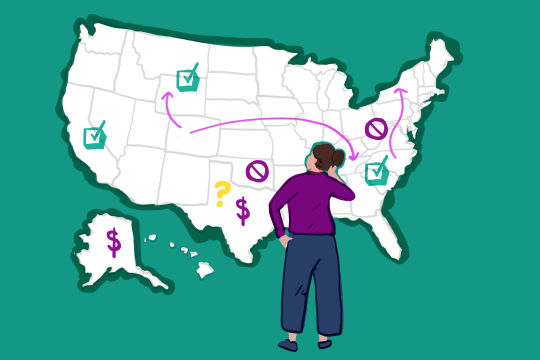
More than half (53%) of reproductive-age women living in states with abortion-provision bans say they would not know where to go or where to find information if they needed an abortion, up from 43% in 2024, according to the KFF's 2026 Women's Health Survey. Four in 10 (40%) women living in states with gestational limits between 6 and 12 weeks say the same, as do 1 in 3 (32%) reproductive-age women nationally, up from 1 in 4 (26%) in 2024. The findings come as the greater availability of medication abortion via telehealth has transformed how many women get abortions, including women living in states with bans.
CONTRACEPTIve care IN THE U.S.

Women’s Experiences with Contraception: Use, Coverage, and Preferences

More than a dozen years after the implementation of the Affordable Care Act rule requiring most plans to cover the full costs of contraceptive care, most women still don’t know about it. According to a new analysis of the 2026 KFF Women’s Health Survey, only 4 in 10 (40%) women ages 18 to 49 know that most insurance plans must pay the full cost of contraception (down slightly from 43% in 2024). Six in 10 women either think no such requirement exists (29%) or aren’t sure (31%).

SELECTED RESOURCES

featured

Women's Health Survey

The Women’s Health Survey is a series of nationally representative surveys on women’s health conducted by KFF since 2001. The survey aims to track and document women’s experiences with the health care system, access challenges and barriers to care, knowledge related to health and well-being, and differences between women by age, race/ethnicity, income level, and insurance type.

A promotional image for the the KFF Health Policy 101 Issues in Women’s Health chapter

Health Policy Issues in Women’s Health

Examine the core health coverage and access issues —shaped by federal and state policies—that affect women’s health today, including health coverage and costs, reproductive health services, maternal health, mental health, and intimate partner violence.

State Profiles for Womens Health

Explore the latest national and state-specific data and policies on women’s health. Topics include health status, insurance and Medicaid coverage, use of preventive services, sexual health, maternal and infant health, and abortion policies. Many indicators provide state-level information for women of different racial and ethnic groups.

The essentials
  • Women’s Health Insurance Coverage

    This factsheet reviews major sources of coverage for women residing in the U.S., discusses the ACA's impact on coverage, and the coverage challenges that many women continue to face.
  • Medicaid Coverage for Women

    This data note presents key data points describing the current state of the Medicaid program as it affects women, including eligibility, reproductive health, chronic conditions, and more.
  • Dobbs: What are the Implications for Racial Disparities?

    This analysis examines the implications of the Dobbs decision and state restrictions on abortion coverage for racial disparities in access to care and health outcomes.
  • State Health Facts: Women's Health Indicators

    Information on women’s health status, utilization of services, health insurance coverage, family planning and childbirth, and abortion statistics and policies.
  • Key Facts on Abortion in the United States

    This report answers some key questions about abortion in the United States and presents data collected before the overturn of Roe v. Wade.

Stay informed.

Stay informed.

Filter

471-480 of 886 results

  • Where President-elect Donald Trump Stands on Six Health Care Issues

    Issue Brief

    Where does President-elect Donald Trump stand on key health care issues? This snapshot outlines his positions and policy statements during the campaign on issues such as health insurance, the ACA, Medicaid, Medicare, the opioid epidemic, prescription drug costs, and women's reproductive health.

  • Financing Family Planning Services: The Impact of Reducing or Eliminating Funding

    News Release

    The American Health Care Act recently passed by the House of Representatives includes a provision to ban federal Medicaid funding of Planned Parenthood. The Trump administration has also proposed reducing funding to HHS, which funds the Title X family planning program and community health centers. A new brief from the Kaiser Family Foundation assesses the role of these programs in providing family planning care services to low-income women as well as the potential impact of…

  • Briefing on Access to Reproductive Health Care for Low-Income Women in Five Communities

    Event Date:
    Event

    As policy debates over the future of access to reproductive and sexual health services heat up at the national and state levels, understanding how these policies are playing out on the ground requires getting beyond the statistics. Earlier this year, KFF, working with Health Management Associates, conducted case studies and focus groups in five different communities to hear directly from providers and low-income women.  The study addressed how national, state, and local policies, as well…

  • HIV, Intimate Partner Violence (IPV), and Women: An Emerging Policy Landscape

    Issue Brief

    Intimate partner violence has been shown to be associated with increased risk for HIV among women, as well as poorer treatment outcomes for those already diagnosed. This brief reviews the link between IPV and HIV, key policy changes and initiatives that attempt to address these challenges.