Women's Health Policy

ABORTION IN THE U.S.

Women’s Experiences with Abortion, Access, and Concerns About Future Pregnancy

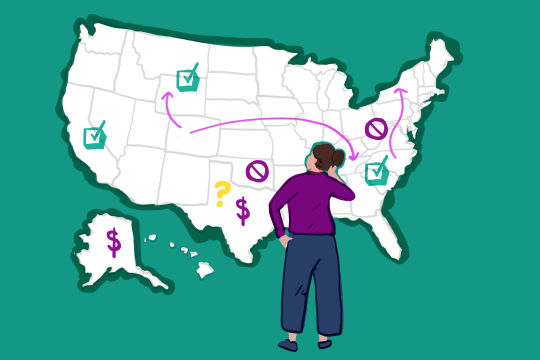
More than half (53%) of reproductive-age women living in states with abortion-provision bans say they would not know where to go or where to find information if they needed an abortion, up from 43% in 2024, according to the KFF's 2026 Women's Health Survey. Four in 10 (40%) women living in states with gestational limits between 6 and 12 weeks say the same, as do 1 in 3 (32%) reproductive-age women nationally, up from 1 in 4 (26%) in 2024. The findings come as the greater availability of medication abortion via telehealth has transformed how many women get abortions, including women living in states with bans.
CONTRACEPTIve care IN THE U.S.

Women’s Experiences with Contraception: Use, Coverage, and Preferences

More than a dozen years after the implementation of the Affordable Care Act rule requiring most plans to cover the full costs of contraceptive care, most women still don’t know about it. According to a new analysis of the 2026 KFF Women’s Health Survey, only 4 in 10 (40%) women ages 18 to 49 know that most insurance plans must pay the full cost of contraception (down slightly from 43% in 2024). Six in 10 women either think no such requirement exists (29%) or aren’t sure (31%).

SELECTED RESOURCES

featured

Women's Health Survey

The Women’s Health Survey is a series of nationally representative surveys on women’s health conducted by KFF since 2001. The survey aims to track and document women’s experiences with the health care system, access challenges and barriers to care, knowledge related to health and well-being, and differences between women by age, race/ethnicity, income level, and insurance type.

A promotional image for the the KFF Health Policy 101 Issues in Women’s Health chapter

Health Policy Issues in Women’s Health

Examine the core health coverage and access issues —shaped by federal and state policies—that affect women’s health today, including health coverage and costs, reproductive health services, maternal health, mental health, and intimate partner violence.

State Profiles for Womens Health

Explore the latest national and state-specific data and policies on women’s health. Topics include health status, insurance and Medicaid coverage, use of preventive services, sexual health, maternal and infant health, and abortion policies. Many indicators provide state-level information for women of different racial and ethnic groups.

The essentials
  • Women’s Health Insurance Coverage

    This factsheet reviews major sources of coverage for women residing in the U.S., discusses the ACA's impact on coverage, and the coverage challenges that many women continue to face.
  • Medicaid Coverage for Women

    This data note presents key data points describing the current state of the Medicaid program as it affects women, including eligibility, reproductive health, chronic conditions, and more.
  • Dobbs: What are the Implications for Racial Disparities?

    This analysis examines the implications of the Dobbs decision and state restrictions on abortion coverage for racial disparities in access to care and health outcomes.
  • State Health Facts: Women's Health Indicators

    Information on women’s health status, utilization of services, health insurance coverage, family planning and childbirth, and abortion statistics and policies.
  • Key Facts on Abortion in the United States

    This report answers some key questions about abortion in the United States and presents data collected before the overturn of Roe v. Wade.

Stay informed.

Stay informed.

Filter

181-190 of 886 results

  • Emergency Abortion Care to Preserve the Health of Pregnant People: SCOTUS, EMTALA, and Beyond

    Policy Watch

    This policy watch outlines SCOTUS' June 27, 2024, decision dismissing the case, Moyle v. United States, where the Court had been asked to determine if a federal law called the Emergency Medical Treatment and Labor Act preempted Idaho's abortion ban. The decision returns the case to the lower courts and reinstates a court order blocking enforcement of the Idaho ban where it prohibits abortion care for pregnant people having medical emergencies.

  • Polling Insight: 4 Takeaways About Suburban Women Voters

    Poll Finding

    This Polling Insight explores the demographic makeup, issue priorities, and sentiment toward presidential candidates of women voters living in suburban areas leading up to the election this fall.

  • Unraveling the Mysteries of Biden vs. Trump on Health Care

    From Drew Altman

    In his latest column, KFF President and CEO Drew Altman unravels the differences between Trump and Biden on Medicare, abortion, drug costs and other health-related issues that KFF's new side-by-side candidate analysis examines. From the bird’s eye view, these differences amount to a fork in the road in direction on the role of the federal government in health and federal health spending.

  • KFF Survey of Women Voters: Key Takeaways

    Poll Finding

    This survey examines the attitudes, motivations, and voting intentions of women voters nationally and in Arizona and Michigan prior to the 2024 election, including the top voting issues for key groups of women voters, how abortion on the ballot will impact turnout, and views on reproductive health policies.

  • Democratic Women are More Motivated to Vote in States with Potential Abortion Ballot Initiatives than in Other States

    News Release

    A new KFF poll of women voters reveals that the issue of abortion is boosting Democratic women’s eagerness to vote most in states with potential abortion-related ballot initiatives. As of mid-June, there are 10 states where voters may be deciding on abortion access in November, including 4 states where abortion is already set to appear on the ballot. In these states, more than half (53%) of Democratic women voters say that they are more motivated…

  • KFF Survey of Women Voters Dashboard

    Feature

    The KFF Survey of Women Voters examines differing motivations, attitudes, and experiences among women by race and ethnicity, age, and partisanship heading into the 2024 election nationally and in two battleground states, Arizona and Michigan.