Medicaid

new and noteworthy

Medicaid work requirements

Medicaid and the Road Ahead: Spending Cuts, Work Requirements and What’s Next for States, Providers and Families

Event Date:

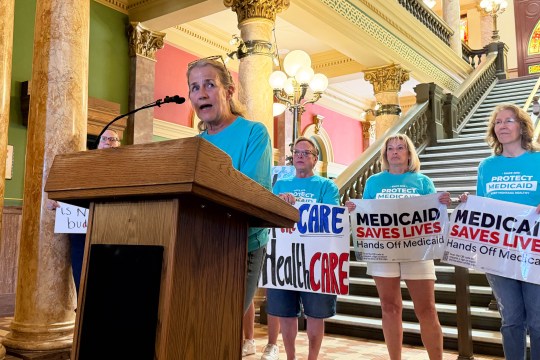
Passed last year, President Trump’s One Big Beautiful Bill Act made significant changes to Medicaid—the primary insurance provider for health and long-term care for people with low incomes. These changes are expected to lead to coverage loss for many current enrollees and will reduce funding for Medicaid, placing new financial pressures on states and health care providers. On July 23, KFF and States Newsroom hosted an event focused on the impacts of work requirements and other federal policy changes on states, health care systems, and people.

understanding medicaid

Medicaid Financing

Medicaid represents $1 out of every $5 spent on health care in the U.S. and is the major source of financing for states to provide health coverage and long-term care. This brief examines key questions about Medicaid financing and how it works.

Medicaid Program Integrity

This brief explains what is known about improper payments and fraud and abuse in Medicaid and describes ongoing state and federal actions to address program integrity.

Medicaid and Provider Taxes

All states except Alaska cover some state Medicaid costs with taxes on health care providers. This brief uses data from KFF’s 2024-2025 survey of Medicaid directors to describe current practices and the federal rules governing them.

Medicaid and Hospitals

Absorbing reductions in Medicaid spending could be challenging for hospitals, particularly for those that are financially vulnerable. This brief provides data on the reach of Medicaid across hospitals, patients, and charity care.

Medicaid Home Care

This issue brief provides an overview of what Medicaid home care (also known as “home- and community-based services”) is, who is covered, and what services were available in 2025.

Dual Eligibles

Stay informed.

Stay informed.

Filter

1,561 - 1,570 of 2,737 Results

  • Medicaid Work Requirements at the U.S. Supreme Court

    Policy Watch

    Though the Trump Administration has left office, the Supreme Court is set to decide whether Medicaid work requirements – a controversial policy advanced by the Trump Administration – are legal.

  • Voices of Paid and Family Caregivers for Medicaid Enrollees Receiving HCBS

    Issue Brief

    To help inform the ongoing debate, KFF conducted four focus groups in July and August 2021 with direct care workers and unpaid caregivers who provide HCBS, assisting seniors and people with disabilities with daily self-care and household activities. These focus groups are not necessarily generalizable to all caregivers, but can provide insight into their experiences to help inform current policy debates.

  • How Could the Build Back Better Act Affect Uninsured Children?

    Issue Brief

    This brief examines characteristics of uninsured children in 2020 and discusses how current policy proposals, including outreach efforts, continuous eligibility requirements, and closing the coverage gap, could affect children’s health coverage. Recent efforts to expand coverage for adults could benefit children’s coverage, especially for children in non-expansion states if the coverage gap is filled as proposed by the Build Back Better Act (BBBA).

  • What Are Some Policy Options for Reaching the 2.2 Million Uninsured People in the ACA’s “Coverage Gap”?

    News Release

    A new KFF issue brief explores several potential policy options that would help close the Affordable Care Act’s "coverage gap," including providing further new incentives for states to expand Medicaid, creating a new "public option" or extending ACA Marketplace premium subsidies to low-income people who don’t currently qualify for federal help. At stake is affordable health coverage for 2.2 million uninsured people with incomes below the federal poverty level ($12,880 annually for an individual in…

  • COVID-19 Deaths and Cases in Long-Term Care Facilities Have Fallen to All-Time Lows in the Four Months Since Vaccinations Began

    News Release

    COVID-19 deaths and cases among residents and staff of long-term care facilities have fallen dramatically since vaccinations began in December, with deaths declining by nearly 89 percent and cases declining by nearly 92 percent as of April 2021, according to a new KFF analysis. COVID-19 deaths in long-term care settings fell from 1.7 deaths per 100,000 state residents in December to just 0.2 deaths per 100,000 state residents in April, an all-time low, the analysis…

  • Many Nonelderly People With Disabilities Face COVID-19 Risks Similar to Those of the Elderly in Nursing Homes, But Do Not Have Equal Footing When it Comes to Vaccine Priority

    News Release

    While the toll of COVID-19 on nursing home residents has been well documented, less noticed has been the experience of nonelderly people with disabilities who rely on long-term care services and supports outside of nursing homes. In many ways the two groups face similar health risks from the virus, but nonelderly people with disabilities generally do not have the same high priority status for the vaccine, finds a new KFF analysis. As of early February…

  • Potential Impact of Additional Federal Funds for Medicaid HCBS for Seniors and People with Disabilities

    Issue Brief

    The American Rescue Plan includes a provision to increase the federal matching rate (FMAP) for spending on Medicaid HCBS by 10 percentage points from April 1, 2021 through March 31, 2022 provided states maintain state spending levels as of April 1, 2021. This brief discusses the proposal and provides state by state estimates of the potential effects of the policy change. It was updated on May 28 to include key points from the new CMS…

  • A Look at How Medicaid Agencies Are Assisting with the COVID-19 Vaccine Roll-Out

    Issue Brief

    As of February 2021, there are three COVID-19 vaccines approved for emergency use in the U.S. and states are playing a central role in their timely distribution and prioritizing eligible populations. Because Medicaid covers for over 77 million enrollees, including groups disproportionately at risk of contracting COVID-19 as well as hard-to-reach groups, Medicaid agencies can be important partners for the public health agencies that are typically leading the state COVID-19 vaccination efforts. This brief provides…