Medicaid

new and noteworthy

Medicaid work requirements

States Are Adopting a Variety of Outreach Strategies to Inform Individuals About Medicaid Work Requirements

Medicaid Work Requirements: Federal Outreach Requirements and State Plans

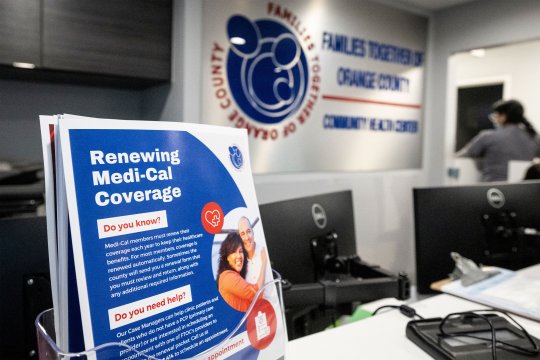
State Medicaid programs must inform people affected by new work requirements with federally required notices, and most states are planning other types of outreach, including phone calls, public ads, and social media posts. This brief describes the federal outreach requirements and state plans, as well as the complexities and tight implementation timelines states face.

Tracking Implementation of the 2025 Reconciliation Law: Medicaid Work Requirements

KFF’s interactive tracks key data and policies that will affect how states implement Medicaid work requirements, which are required under the 2025 budget reconciliation law starting in January 2027. The tracker includes state-level data on Medicaid enrollment and renewal outcomes as well as current state enrollment and renewal policies. The Congressional Budget Office estimates that the 2025 reconciliation law will increase the number of people who are uninsured in 2034 by 10 million. Coverage losses from Medicaid work requirements account for over half, or 5.3 million, of the increase in the number of uninsured.

understanding medicaid

Medicaid Financing

Medicaid represents $1 out of every $5 spent on health care in the U.S. and is the major source of financing for states to provide health coverage and long-term care. This brief examines key questions about Medicaid financing and how it works.

Medicaid Program Integrity

This brief explains what is known about improper payments and fraud and abuse in Medicaid and describes ongoing state and federal actions to address program integrity.

Medicaid and Provider Taxes

All states except Alaska cover some state Medicaid costs with taxes on health care providers. This brief describes states’ current provider taxes and explores how rules governing provider taxes are changing.

Medicaid and Hospitals

Absorbing reductions in Medicaid spending could be challenging for hospitals, particularly for those that are financially vulnerable. This brief provides data on the reach of Medicaid across hospitals, patients, and charity care.

Medicaid Home Care

This issue brief provides an overview of what Medicaid home care (also known as “home- and community-based services”) is, who is covered, and what services were available in 2025.

Dual Eligibles

Stay informed.

Stay informed.

Filter

1,381-1,390 of 2,740 results

  • More Than 1 in 3 Nursing Homes Received Relatively Low Overall Ratings on Nursing Home Compare

    News Release

    More than one third of the nation’s 15,500 nursing homes, accounting for 39 percent of all nursing home residents, received relatively low ratings of 1 or 2 stars under the federal government’s recently revamped Five-star Quality Rating System, according to a new analysis by the Kaiser Family Foundation. The rating system, overseen by the Centers for Medicare and Medicaid Services, assigns ratings of 1 to 5 stars to all Medicare- and Medicaid-certified nursing homes based…

  • Reading the Stars: Nursing Home Quality Star Ratings, Nationally and by State

    Issue Brief

    This issue brief presents national and state-level analysis of nursing homes based on the Five-Star Quality Rating System, recently updated by the Centers for Medicare and Medicaid Services (CMS) to help consumers compare nursing homes when selecting one for themselves or their family members. The issue brief finds that more than one-third (36%) of the nation’s 15,500 nursing homes certified by Medicare or Medicaid received relatively low ratings of 1 or 2 stars (out of…

  • Medicaid at 50: A Look Back – And Ahead

    Event Date:
    Event

    Medicaid, the main health insurance program for low-income people and the single largest source of public coverage in the U.S., turns 50 this year. In that time, it has grown to cover nearly 70 million Americans and become a key source of financing for safety net hospitals and health centers, as well as the main source of coverage and financing of long-term care. The program continues to be a focus of policy debate and partisan…

  • Medicaid at 50

    Report

    The Medicaid program, signed into law by President Lyndon B. Johnson on July 30, 1965, will reach its 50th anniversary this year, a historic milestone. This report reflects on Medicaid’s accomplishments and challenges and considers the issues on the horizon that will influence the course of this major health coverage and financing program moving forward.

  • How Are Hospitals Faring Under the Affordable Care Act? Early Experiences from Ascension Health

    Issue Brief

    Expanded health insurance coverage through the Affordable Care Act (ACA) is having a major impact on many of the nation’s hospitals through increases in the demand for care, increased patient revenues, and lower uncompensated care costs for the uninsured. This report examines the early experiences with the ACA by Ascension Health, the delivery subsidiary of the nation’s largest not-for-profit health system, Ascension. It finds that, overall, Ascension hospitals in Medicaid expansion states saw increased Medicaid…

  • Evolving Picture of Nine Safety-Net Hospitals: Implications of the ACA and Other Strategies

    Issue Brief

    Safety-net hospitals are an integral part of the U.S. health care landscape, providing care to some of the nation’s most medically vulnerable populations, including Medicaid enrollees and the uninsured. With the implementation of the Affordable Care Act (ACA), the U.S. health care system is rapidly changing, and safety-net hospitals need to make major adjustments to survive in the post-reform environment. This brief draws on interviews with executives at nine safety-net hospital systems and examines how…