Medicaid

new and noteworthy

Medicaid work requirements

States Are Adopting a Variety of Outreach Strategies to Inform Individuals About Medicaid Work Requirements

Medicaid Work Requirements: Federal Outreach Requirements and State Plans

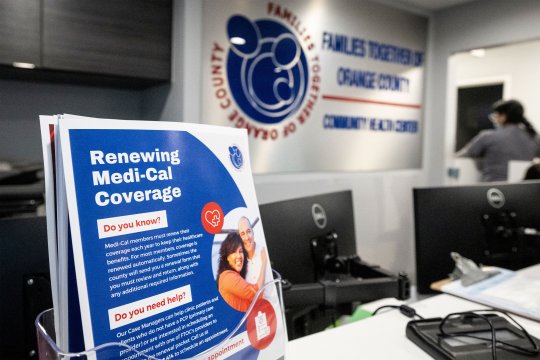
State Medicaid programs must inform people affected by new work requirements with federally required notices, and most states are planning other types of outreach, including phone calls, public ads, and social media posts. This brief describes the federal outreach requirements and state plans, as well as the complexities and tight implementation timelines states face.

Tracking Implementation of the 2025 Reconciliation Law: Medicaid Work Requirements

KFF’s interactive tracks key data and policies that will affect how states implement Medicaid work requirements, which are required under the 2025 budget reconciliation law starting in January 2027. The tracker includes state-level data on Medicaid enrollment and renewal outcomes as well as current state enrollment and renewal policies. The Congressional Budget Office estimates that the 2025 reconciliation law will increase the number of people who are uninsured in 2034 by 10 million. Coverage losses from Medicaid work requirements account for over half, or 5.3 million, of the increase in the number of uninsured.

understanding medicaid

Medicaid Financing

Medicaid represents $1 out of every $5 spent on health care in the U.S. and is the major source of financing for states to provide health coverage and long-term care. This brief examines key questions about Medicaid financing and how it works.

Medicaid Program Integrity

This brief explains what is known about improper payments and fraud and abuse in Medicaid and describes ongoing state and federal actions to address program integrity.

Medicaid and Provider Taxes

All states except Alaska cover some state Medicaid costs with taxes on health care providers. This brief describes states’ current provider taxes and explores how rules governing provider taxes are changing.

Medicaid and Hospitals

Absorbing reductions in Medicaid spending could be challenging for hospitals, particularly for those that are financially vulnerable. This brief provides data on the reach of Medicaid across hospitals, patients, and charity care.

Medicaid Home Care

This issue brief provides an overview of what Medicaid home care (also known as “home- and community-based services”) is, who is covered, and what services were available in 2025.

Dual Eligibles

Stay informed.

Stay informed.

Filter

1,311-1,320 of 2,740 results

  • GOP Views of Medicaid Expansion Differ From Conventional Wisdom

    News Release

    In his latest column for The Wall Street Journal’s Think Tank, Drew Altman examines Republican attitudes on Medicaid expansion in light of last night’s election of Republican Matt Bevin as Kentucky’s next governor. All previous columns by Drew Altman are available online.  

  • Medicaid Home and Community-Based Services Programs: 2012 Data Update

    Report

    This report summarizes the key participation and spending trends in 2012 for the three main Medicaid Home and Community-Based Services (HCBS) programs – (1) the mandatory home health services state plan benefit, (2) the optional personal care services state plan benefit, and (3) optional § 1915(c) HCBS waiver services. Also highlighted are 2014 state eligibility, enrollment, and provider reimbursement policies.

  • Estimates of Eligibility for ACA Coverage among the Uninsured by Race and Ethnicity

    Issue Brief

    This analysis provides national estimates of eligibility for ACA coverage options by race/ethnicity, including Whites, Blacks, and Hispanics. We estimate coverage and eligibility as of early 2015, which is prior to the end of the 2015 Marketplace open enrollment period. Overall, this analysis finds that more than half (55%) of the total 32.3 million nonelderly uninsured are people of color, including 34% who identify as Hispanic, 14% who identify as Black, and 8% who identify…

  • The Impact of the Coverage Gap for Adults in States not Expanding Medicaid by Race and Ethnicity

    Issue Brief

    The Affordable Care Act (ACA) expansion of Medicaid to adults with incomes at or below 138% of the federal poverty level (FPL) effectively became a state option following the Supreme Court decision, creating a “coverage gap” for many poor uninsured adults in states that do not expand Medicaid. This brief examines the coverage gap by race and ethnicity.

  • Medicaid’s Role for People with Dementia

    Issue Brief

    This issue brief describes Medicaid’s role for people with dementia, including how they qualify, what services Medicaid provides, and what their utilization and spending is, and builds on our work examining Medicaid’s role for vulnerable populations and Medicaid's role in the provision of long-term services and supports.

  • Lessons Learned from Eight Years of Supporting Institutional to Community Transitions Through Medicaid’s Money Follows the Person Demonstration

    Perspective

    Since 2008, the Kaiser Family Foundation’s Commission on Medicaid and the Uninsured has periodically surveyed state Money Follows the Person (MFP) programs, conducted state case studies, and profiled the experiences of individual MFP beneficiaries. Based on the information and data collected in our six surveys, we identify some lessons learned from MFP that could inform future Medicaid long-term services and supports rebalancing policies.

  • Money Follows the Person: A 2015 State Survey of Transitions, Services, and Costs

    Report

    The Money Follows the Person (MFP) demonstration provides enhanced federal matching funds, allowing states to better support Medicaid long-term services and supports beneficiaries in transitioning from institutions back to the community. This report highlights 2015 MFP enrollment and spending trends and services and supports offered across state MFP demonstrations.

  • Medicaid in a Time of Growth and Change: Findings from the Annual Kaiser 50-State Medicaid Budget Survey at a Forum with the National Association of Medicaid Directors

    Event Date:
    Event

    The Kaiser Family Foundation’s Commission on Medicaid and the Uninsured (KCMU) released its 15th annual 50-state Medicaid budget survey for state fiscal years 2015 and 2016. Kaiser and the National Association of Medicaid Directors (NAMD) held a joint briefing to discuss key findings and highlight trends in enrollment and spending as well as policy changes in Medicaid programs around the country.