KFF designs, conducts and analyzes original public opinion and survey research on Americans’ attitudes, knowledge, and experiences with the health care system to help amplify the public’s voice in major national debates.
Most Americans say they are concerned that there will be a major outbreak of the coronavirus in the U.S. (55%) and that it will negatively affect the U.S. economy (57%), the latest KFF tracking poll finds. A substantial share (43%) also say they are concerned that they or a family member will contract the virus.
Fielded prior to Monday’s steep U.S. stock market declines, the poll finds most Americans (83%) have read or heard at least some about the coronavirus outbreak that started in December in Wuhan province in China and has since spread to other countries, with dozens of confirmed cases so far in the U.S. A similar majority (87%) are aware there have been cases diagnosed in the U.S.
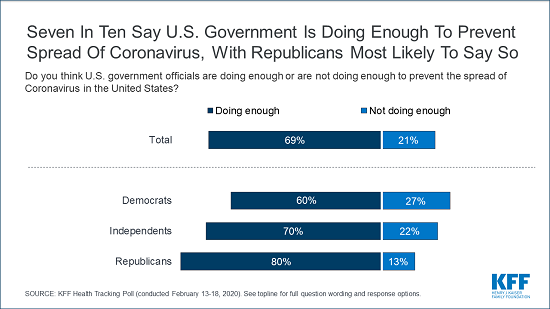
So far, nearly seven in 10 Americans (69%) say that U.S. government officials are “doing enough” to prevent the spread of coronavirus. This includes majorities of Republicans (80%), independents (70%) and Democrats (60%).
“The public largely seems comfortable with the government’s response so far, but those perceptions could change if we see more U.S. cases and deaths,” KFF Senior Vice President Jen Kates said.
Designed and analyzed by public opinion researchers at KFF, the poll was conducted February 13-18, 2020 among a nationally representative random digit dial telephone sample of 1,207. Interviews were conducted in English and Spanish by landline (302) and cell phone (905). The margin of sampling error is plus or minus 3 percentage points for the full sample. For results based on subgroups, the margin of sampling error may be higher.
KFF also has an interactive map, updated regularly, that captures the number of confirmed coronavirus cases and deaths by country across the globe.
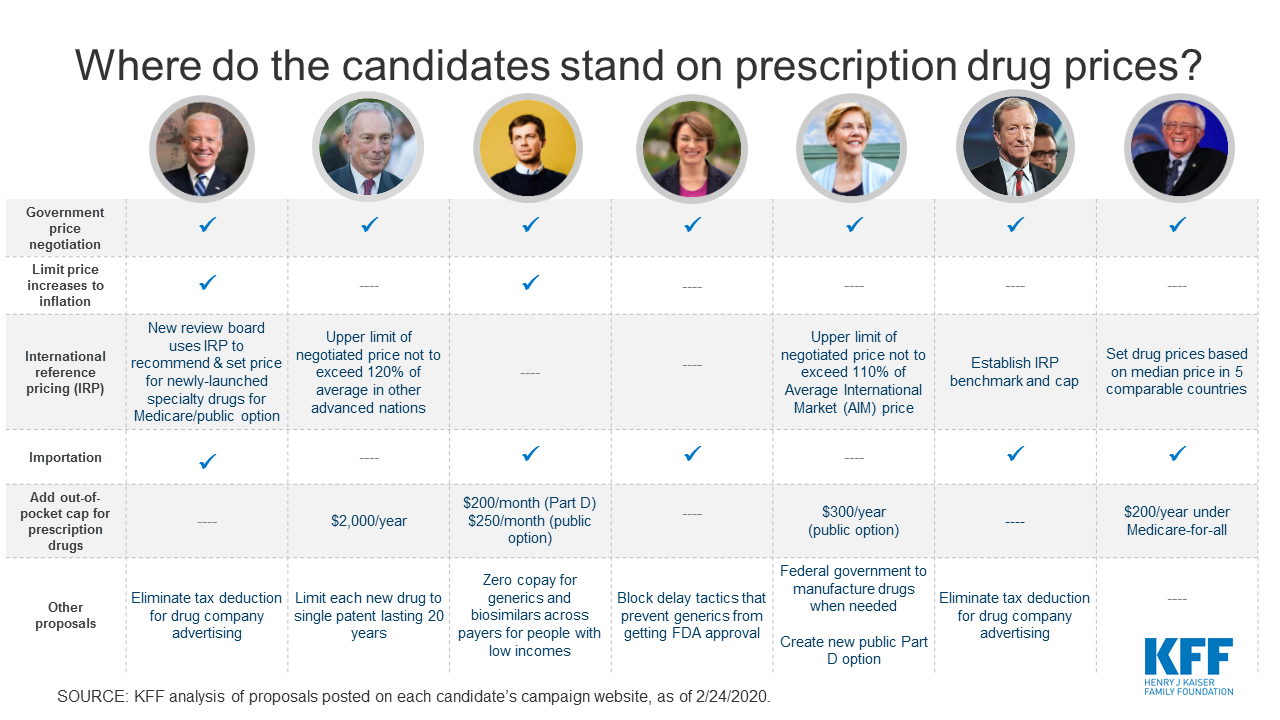
With lowering prescription drug costs a top priority for Americans, the Trump Administration, presidential candidates, members of Congress, and several states are proposing to allow the importation of drugs from abroad, chiefly Canada. The idea of allowing drugs to be imported from Canada and other countries is popular with Americans across the political spectrum, but has yet to be implemented due to concerns about safety, and strong opposition from the drug industry.
A new KFF resource, 10 FAQs on Prescription Drug Importation, provides answers to questions, such as:
How does current U.S. law regulate the importation of prescription drugs from other countries?
What are the safety concerns related to importation of prescription drugs?
What has the Trump Administration proposed regarding importation?
What are states currently doing regarding importation?
Importing drugs from abroad is just one of many proposals on the table for tackling rising drug costs. The House of Representatives recently passed a bill (H.R. 3) that would authorize the Secretary of HHS to negotiate prescription drug prices for Medicare, and curb annual increases in drug prices. The Senate Finance Committee has also passed legislation to address drug costs. (Neither H.R.3 nor the Senate bill, S.2543, includes a proposal to allow importation from other countries.) For more KFF resources on prescription drugs and the debate over how best to lower drug costs, visit kff.org.
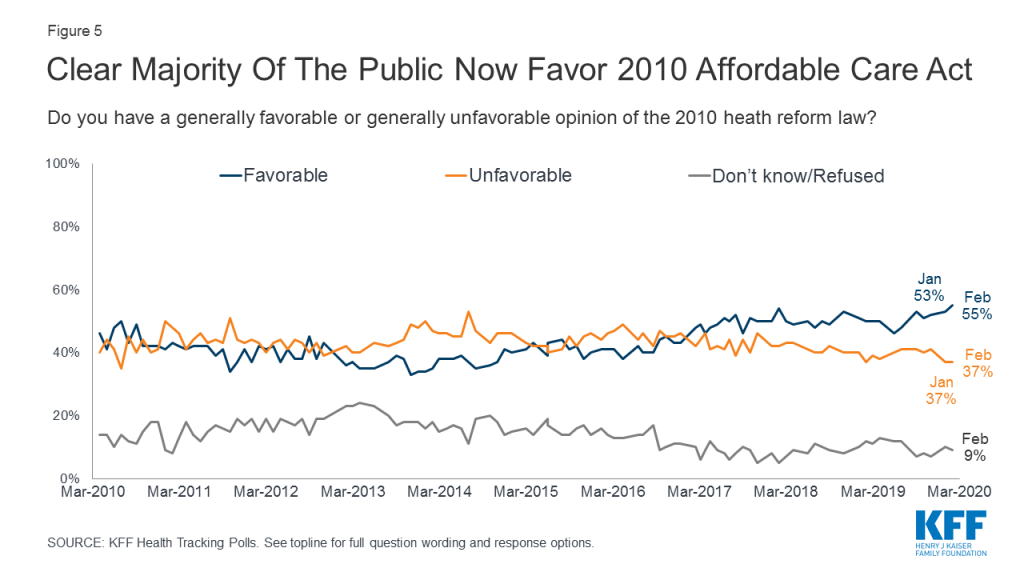
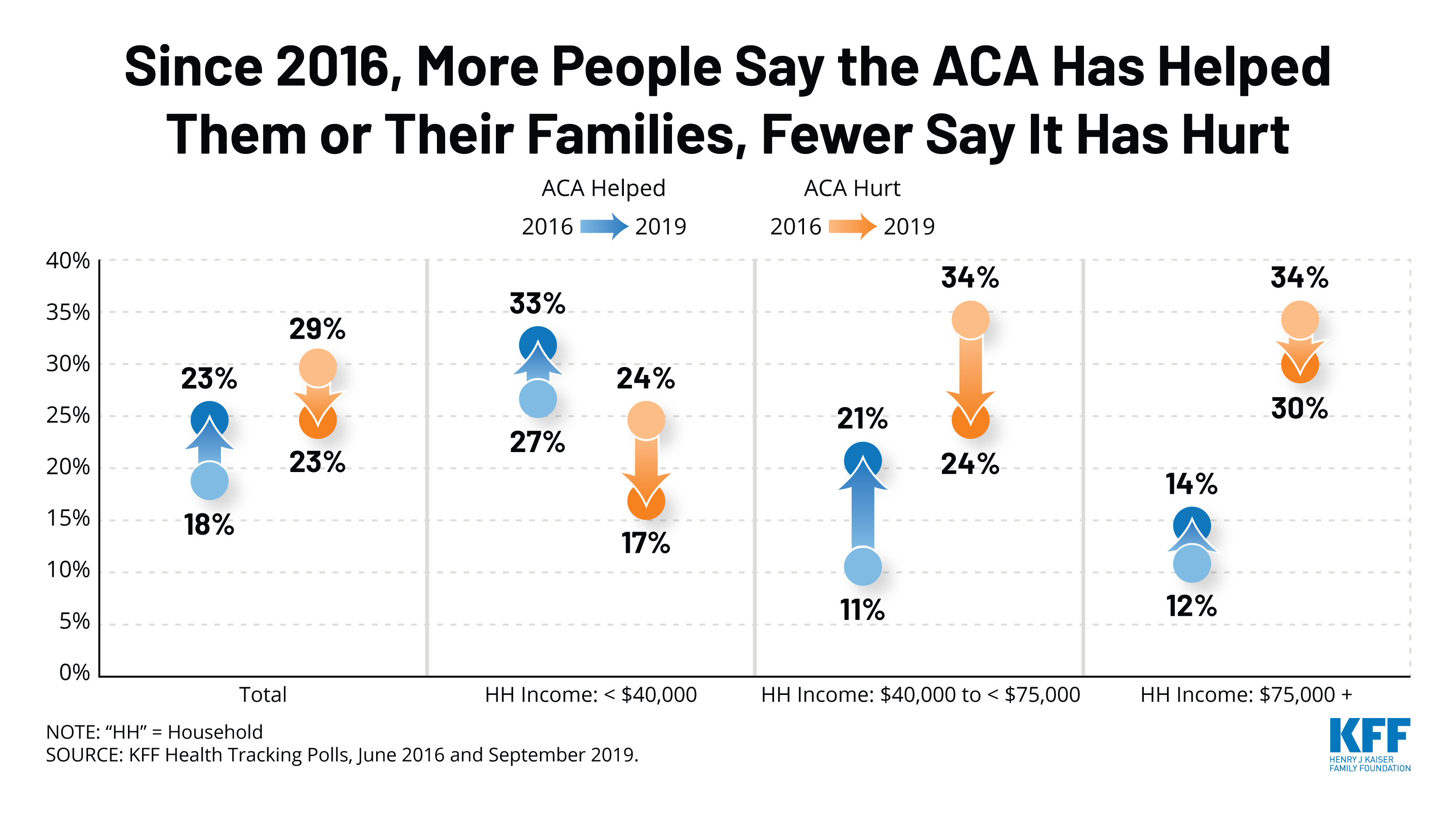
The U.S. Supreme Court will decide today whether to take up Texas v. United States, which challenges the constitutionality of the 2010 Affordable Care Act (ACA). The February KFF Health Tracking Poll finds attitudes towards the ACA has hit its highest favorability since KFF began tracking opinions nearly ten years ago. The latest KFF poll finds a clear majority of the public viewing the law favorably (55%), while slightly more than one-third (37%) of the public hold unfavorable views.
The Affordable Care Act took center stage in the Nevada Democratic presidential debate with Vice President Biden attacking Mayor Bloomberg’s record on the ACA. Nearly nine in ten Democrats (85%) and Democratic voters (86%) view the ACA favorably and while most Republicans view the unfavorably, significantly fewer Republicans offer repealing the 2010 health reform law as their top health care issue. Voters, overall, and across party identification, prioritize other health care issues such as health care costs.
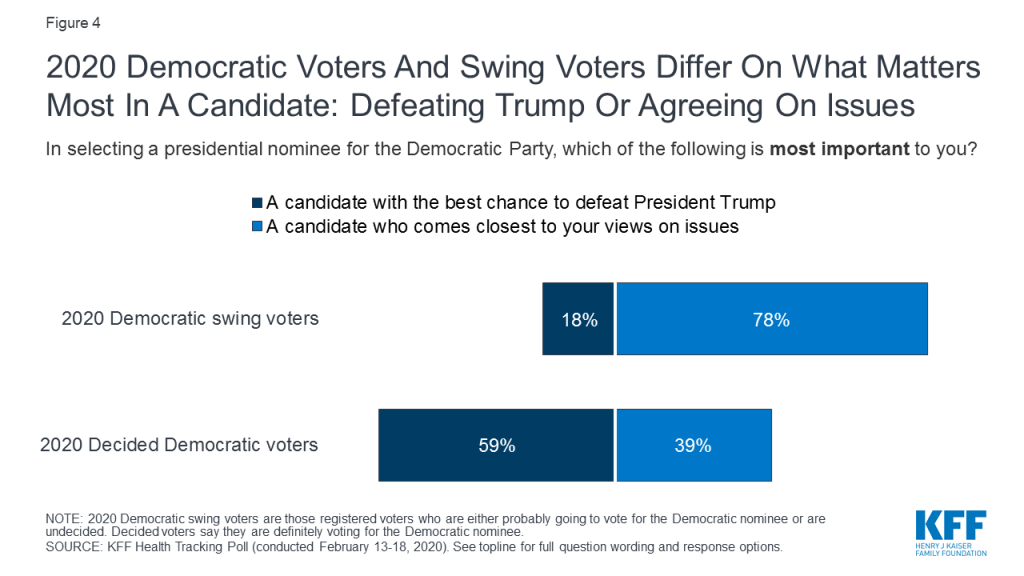
Health care remains a top issue for Democratic voters, independent voters, and the crucial group of voters who haven’t made up their minds yet – swing voters. More than one-third of Democratic voters (36%) say health care is the “most important” issue in their 2020 vote choice as do three in ten independent voters and 28% of swing voters. Yet, when asked what is the one thing that will motivate them to vote in 2020, a larger share of voters offer responses related to defeating President Trump and electing a Democrat than any issue, including health care. When voters who have decided to vote for the Democratic nominee are asked what is most important when choosing a Democratic candidate, a larger share say “a candidate with the best chance to defeat President Trump” (59%) than one “who comes closest to your views on issues” (39%).
Both a national Medicare-for-all plan and a government-administered public option continue to garner majority support in the KFF Health Tracking Polls, including large shares of Democrats who express positive attitudes towards both proposals. Yet, the public option holds the advantage over a national Medicare-for-all plan when supporters of both are forced to choose one. The public option garners more support among many key groups in the 2020 Democratic primary including swing voters (49% v. 25%).
Health Care Among Top Issues for Voters, But Trump Looms Large
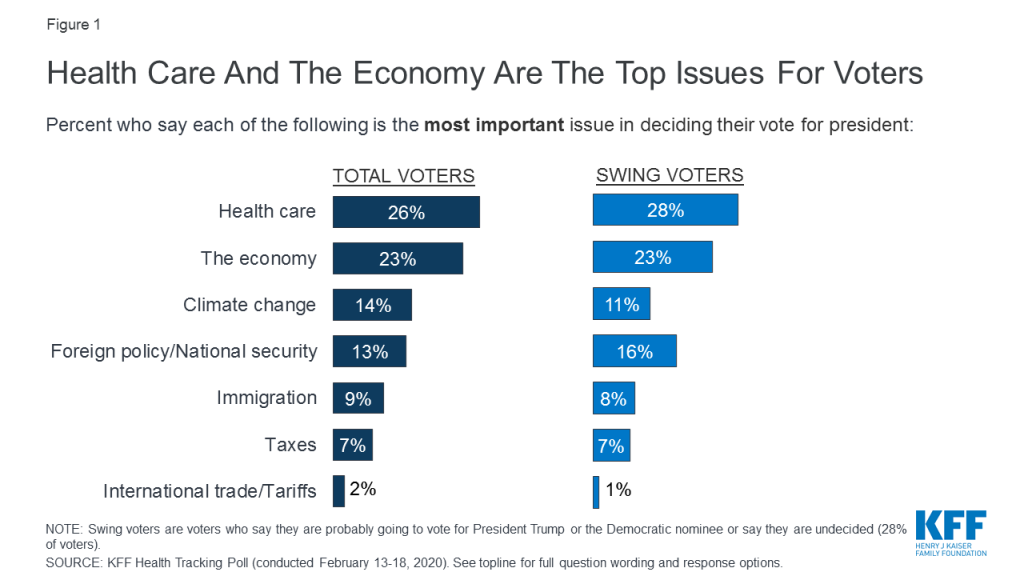
More than eight months before the 2020 general presidential election, health care (26%) and the economy (23%) are the top issues that registered voters say will be most important in deciding their vote for president. This is followed by climate change (14%), foreign policy (13%), immigration (9%), taxes (7%), and international trade and tariffs (2%).
Figure 1: Health Care And The Economy Are The Top Issues For Voters
Health care and the economy are also the top issues for these 2020 swing voters, with similar shares saying each is the most important issue in determining their vote choice (28% and 23%, respectively). A previous KFF analysis of swing voters along with The Cook Political Report found that swing voters give Democrats the advantage on health care while President Trump has the advantage on the economy.
Swing Voters
A majority of voters have already decided who they plan on voting for in the 2020 presidential election with nearly three in ten voters (28%) saying they are “definitely going to vote for President Trump” and four in ten (39%) saying they are “definitely going to vote for the Democratic nominee.” Yet, there is a crucial group of voters, “swing voters,” who have not made up their minds yet. When asked how they plan to vote in 2020, about three in ten (28%) registered voters either say they are either “undecided” (7%) or “probably going to vote for President Trump” (10%) or “probably going to vote for the Democratic nominee” (11%), but haven’t made up their minds yet.
More than one-third (36%) of registered voters who identify as Democrats say health care is the most important issue in deciding who they will vote for in 2020 while 29% say climate change is the most important issue, which is consistent with how N.H. Democratic primary voters prioritized these issues. Health care (30%) and the economy (24%) rank as the top issues for independent voters, while the economy (34%) is the top issue for Republican voters.
Table 1: Top Issues For Voters By Party Identification
Percent who say each of the following is the most important in deciding their vote for president:
Democratic voters
Independent voters
Republican voters
Health care
36%
30%
12%
Economy
14
24
34
Climate change
29
7
2
Foreign policy/National security
7
17
17
Immigration
4
6
19
Taxes
4
8
8
International trade and tariffs
1
1
2
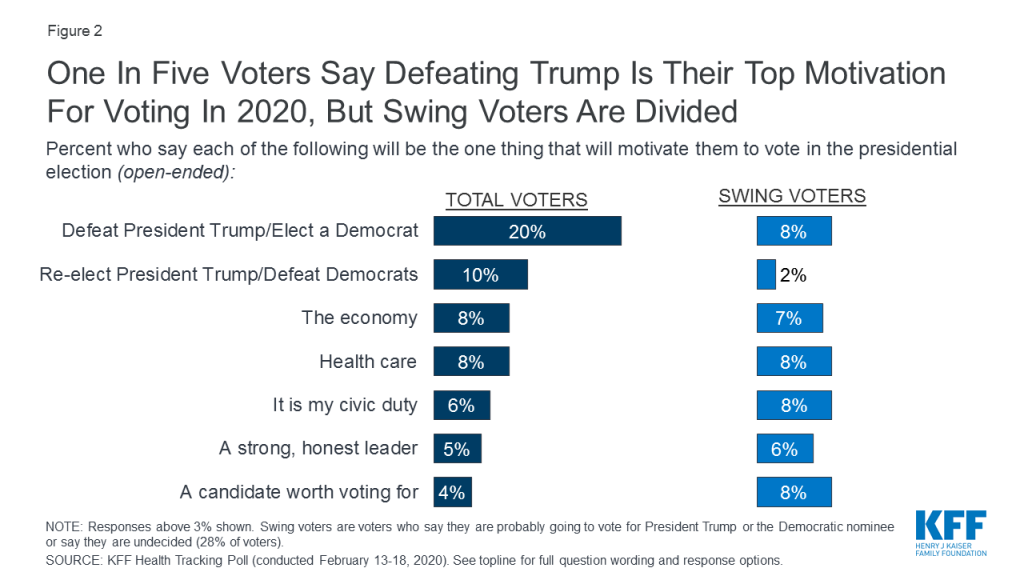
While health care and the economy are the top issues, President Trump and partisanship are also weighing heavily on the minds of voters. When voters are asked to say in their own words “the one thing that will motivate you to vote in the presidential election in 2020,” a larger share mention President Trump than any single issue including the economy and health care. Swing voters are more divided in their top motivation for voting in 2020 with similar shares offering responses related to defeating President Trump (8%), health care (8%), and the economy (7%).
Figure 2: One In Five Voters Say Defeating Trump Is Their Top Motivation For Voting In 2020, But Swing Voters Are Divided
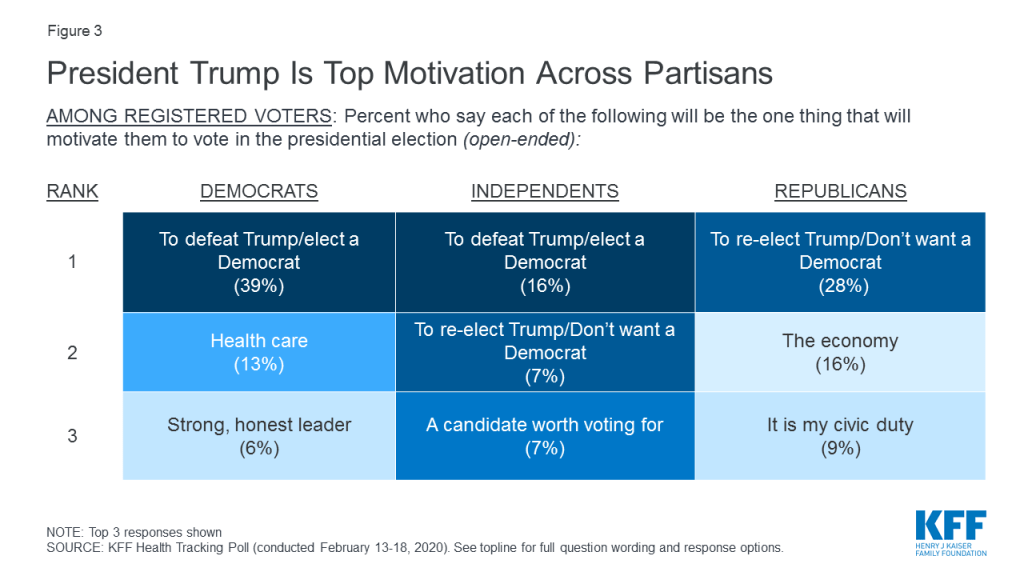
As expected, the role that President Trump is playing in voters’ minds is largely party-driven with four in ten Democratic voters (39%) and 16% of independent voters offering responses related to defeating President Trump and electing a Democrat as their top motivation, while 28% of Republican voters mention re-electing President Trump or defeating Democrats as their top motivation.
Figure 3: President Trump Is Top Motivation Across Partisans
With less than two weeks until March 3rd, when 11 states will hold their Democratic primary contests or caucuses, the latest KFF Health Tracking Poll finds that two groups that are key to the Democratic nominee winning in 2020 – Democratic voters and swing voters – have different preferences on what is most important when choosing a presidential nominee for the Democratic Party.
A larger share of voters who say they are either “definitely” going to vote for the Democratic nominee in 2020, say it is most important to choose a candidate with the best chance of defeating President Trump (59%) than one who comes closest to your view on issues (39%). Swing voters who are leaning Democrat or undecided, prioritize selecting a candidate who comes closest to their views on the issues (78%) over a candidate with the best chance of defeating President Trump (18%).
Figure 4: 2020 Democratic Voters And Swing Voters Differ On What Matters Most In A Candidate: Defeating Trump Or Agreeing On Issues
2010 Affordable Care Act
The most recent KFF Health Tracking Poll finds 55% of the public now favoring the 2010 Affordable Care Act (ACA) – marking the highest overall favorability recorded since KFF began tracking it in April 2010. This slight uptick is largely driven by a continued support among Democrats with 85% now expressing favorable views compared to 53% of independents and 18% of Republicans. A majority of Republicans (77%) continue to hold unfavorable views towards the law.
Figure 5: Clear Majority Of The Public Now Favor 2010 Affordable Care Act
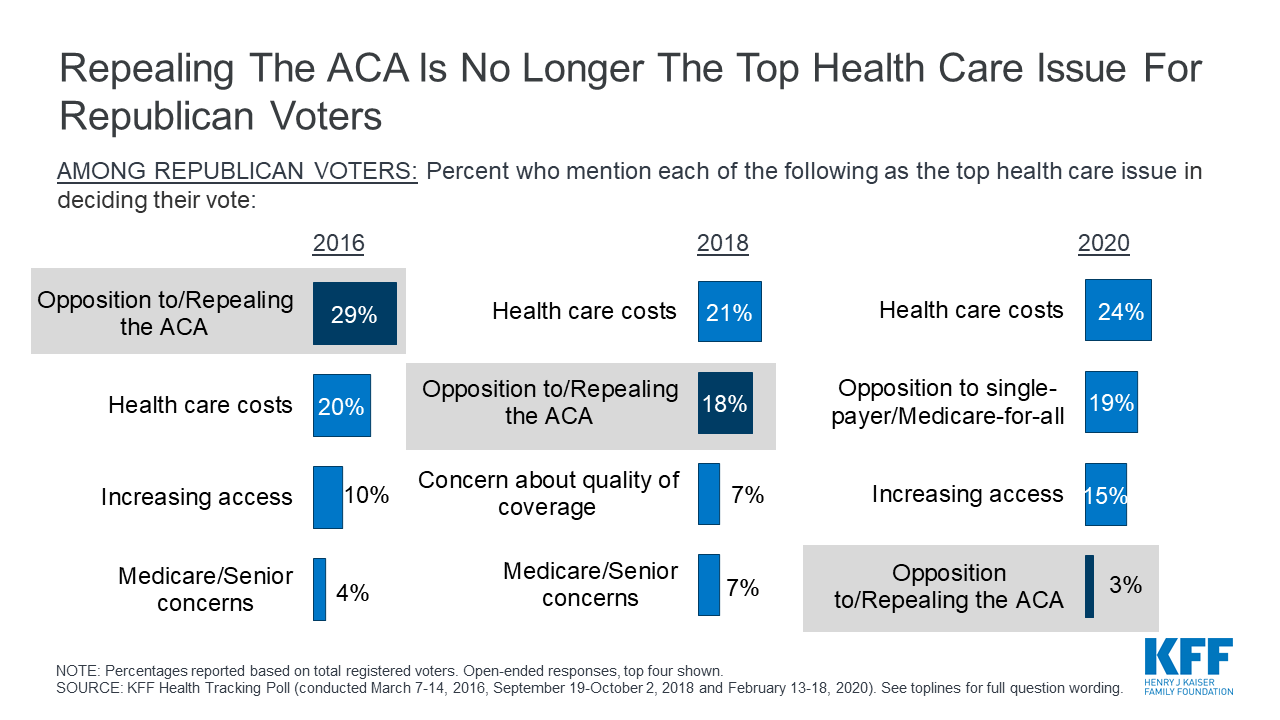
The role that the Affordable Care Act is playing during the 2020 presidential election is quite different than how it was in 2016, especially among Republican voters. While most Republican voters (84%) hold unfavorable views towards the ACA, few offer it when asked to say in their own words what about health care is important to their vote. Three percent of Republican voters offer opposition to or repealing the ACA as their top health care issue in the most recent KFF Tracking Poll. This is a considerable decrease from the 2016 presidential election, during which three in ten (29%) Republican voters offered it as their top health care issue. It is also a decline from the 2018 midterm elections in which 18% of Republican voters mentioned opposition to the ACA or repealing the ACA as their top health care issue.
Now when voters are asked to say in their own words what is it about health care that is important to their vote, Republican voters are more likely to mention health care costs (24%), opposition to single-payer or Medicare-for-all (19%), or increasing access to health care (15%).
Figure 6: Republicans Are Now Prioritizing Other Health Care Issues Over Repealing The ACA
Health care costs are also important to Democratic voters (24%) and independent voters (24%); however, a similar share of Democratic voters and independent voters offer responses related to increasing access (32% and 20%, respectively).
Health Care In The Democratic Primary: Medicare-for-all and Public Option
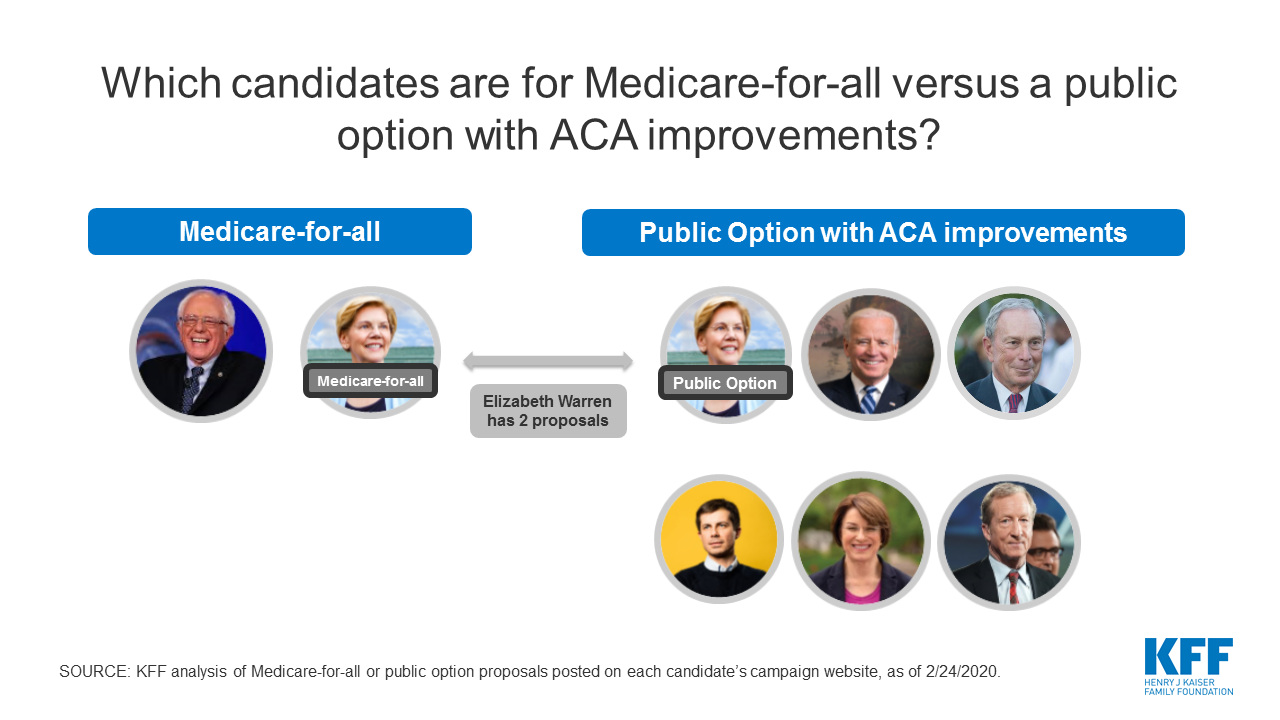
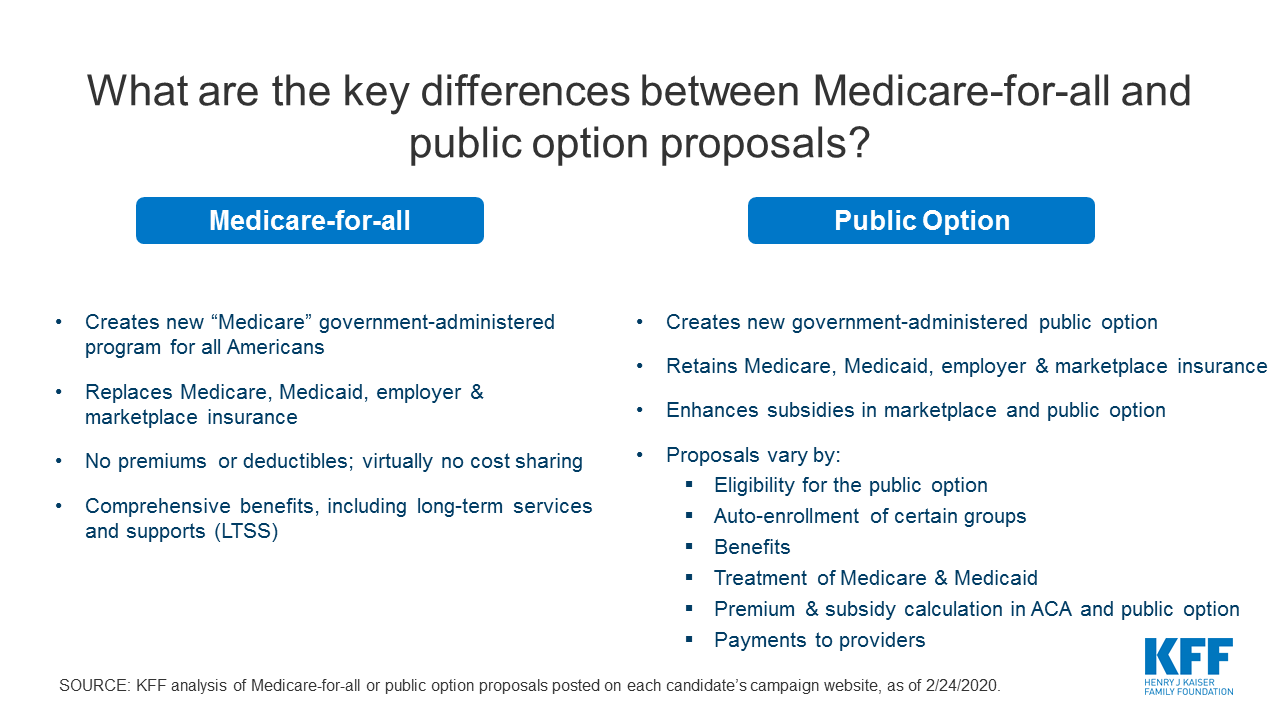
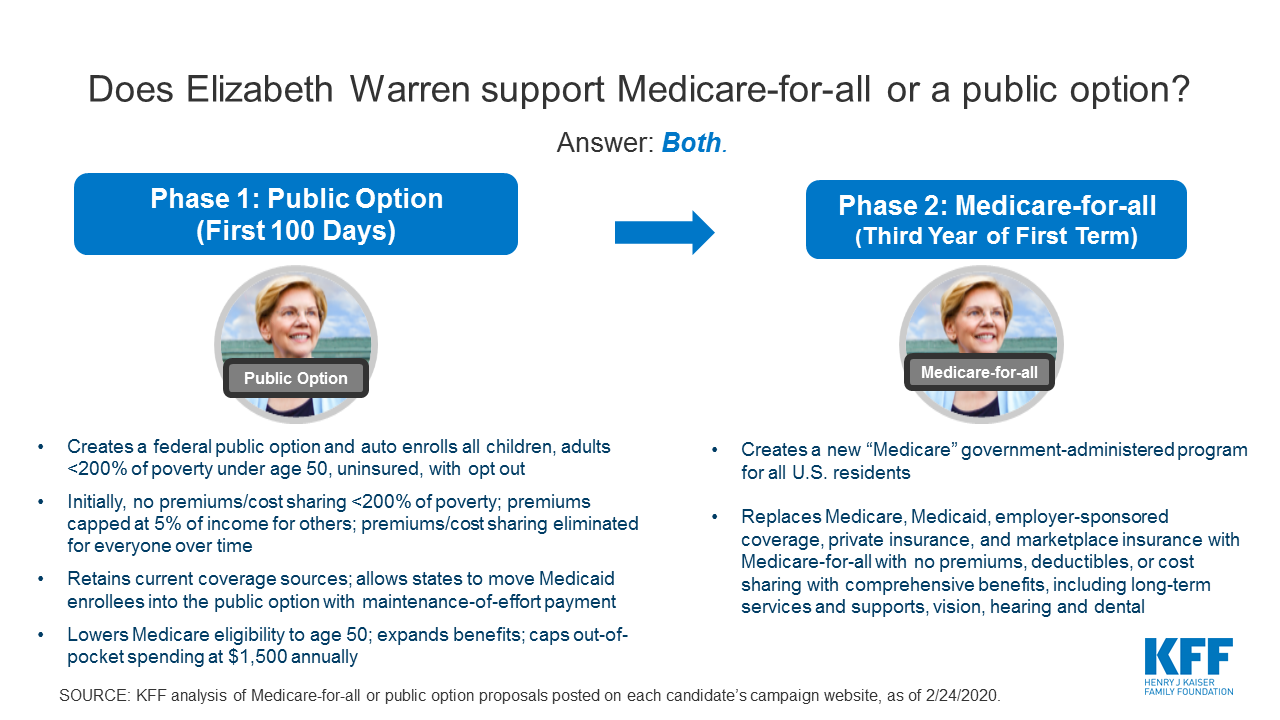
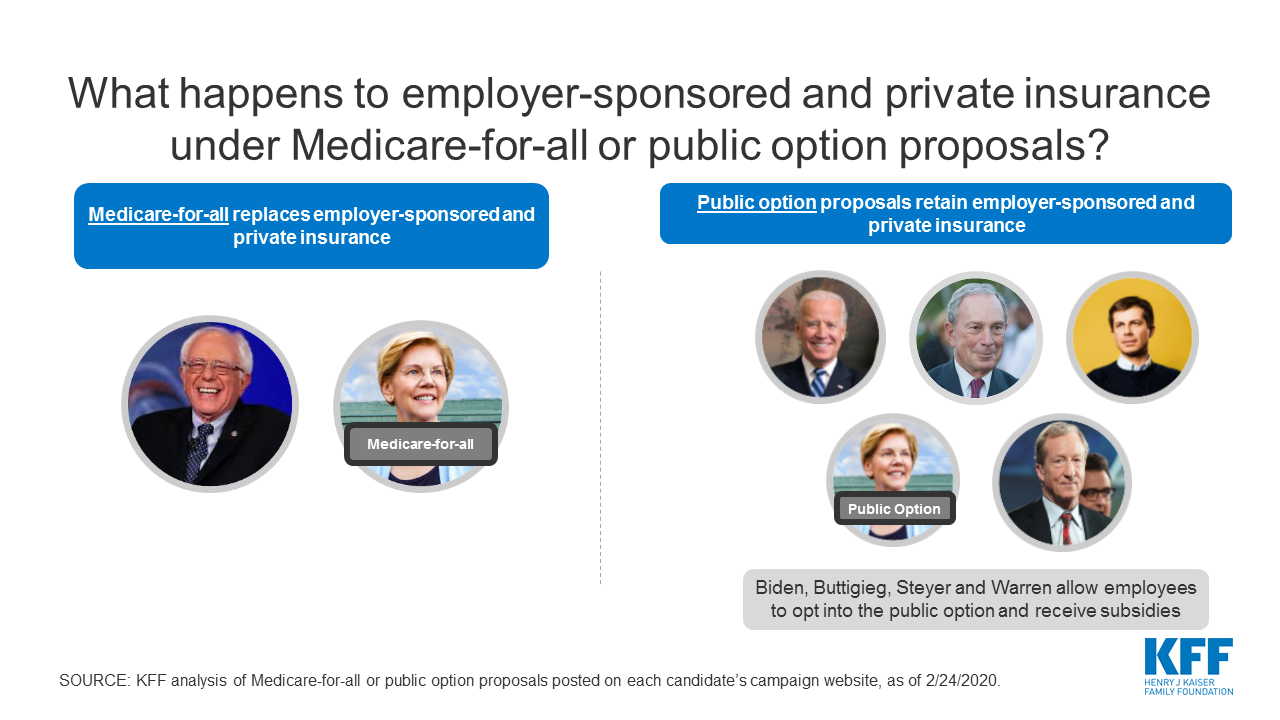
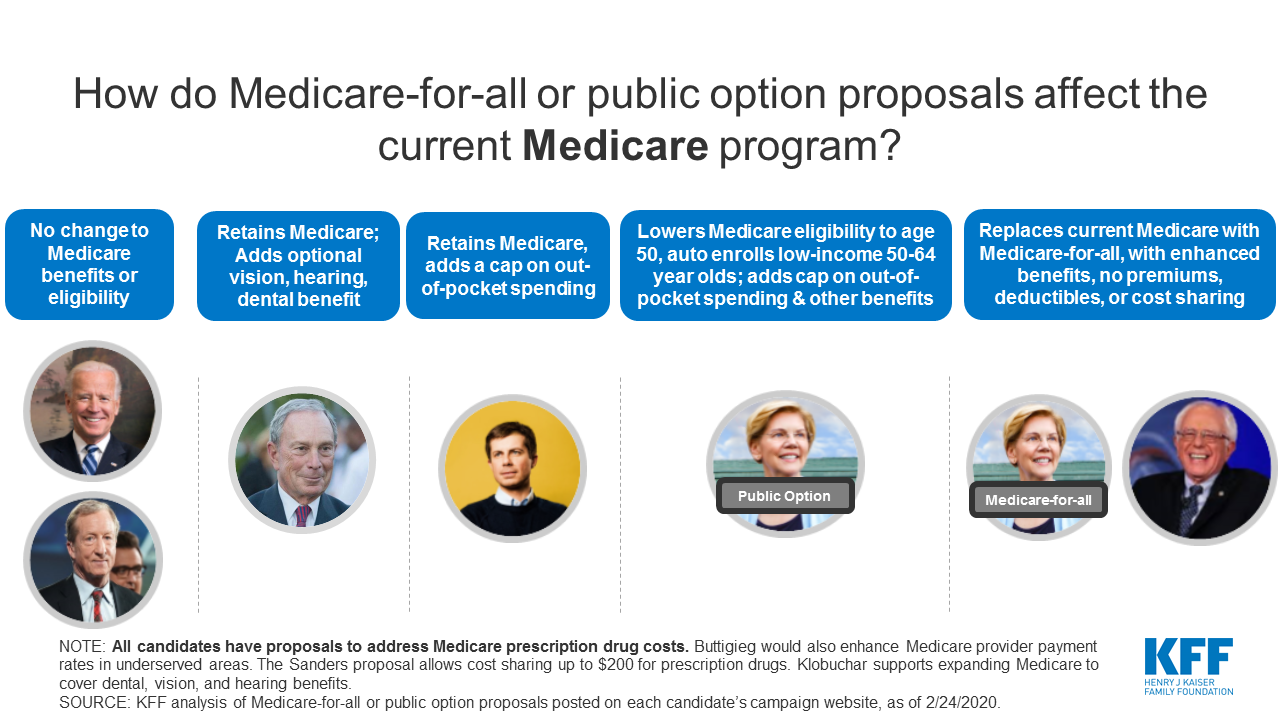
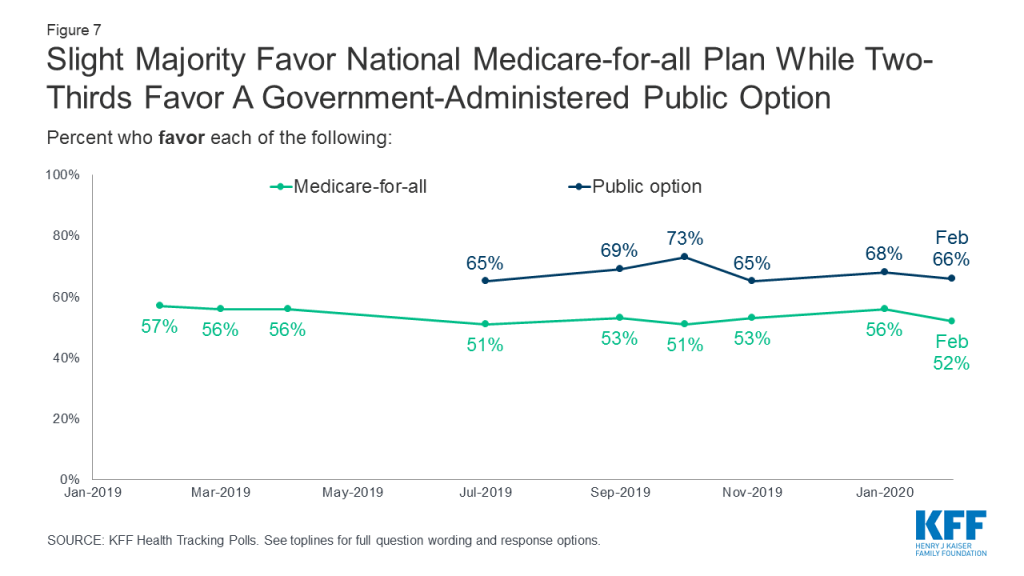
One of the major health policy stories of the 2020 Democratic presidential campaign has been the divide between the top candidates on proposals to expand the public health insurance program in this country. KFF has been tracking public opinion on both a national health plan, sometimes called Medicare-for-all, as well as more incremental changes such as an optional government-administered health plan, sometimes called a public option. About half (52%) of the public favor a Medicare-for-all plan in which all Americans would get their insurance from a single government plan, while two-thirds favor a public option that would compete with private health plans and be available to all Americans.
Figure 7: Slight Majority Favor National Medicare-for-all Plan While Two-Thirds Favor A Government-Administered Public Option
Four in ten Americans (43%) favor both a national Medicare-for-all plan and a government-administered public option including six in ten (62%) Democrats and four in ten (43%) independents. A smaller share (17 percent) of Republicans favor both Medicare-for-all and a public option, while half of Republicans oppose both plans.
Table 2: Support for Proposals To Expand The U.S. Public Health Insurance Program
Total
Democrats
Independents
Republicans
Only favor a national Medicare-for-all plan
8%
12%
6%
4%
Only favor a government-administered public option
23
20
26
27
Favor both
43
62
43
17
Oppose both
21
4
20
50
Don’t know/Refused
4
2
5
2
Choosing One: Medicare-for-all or Public Option
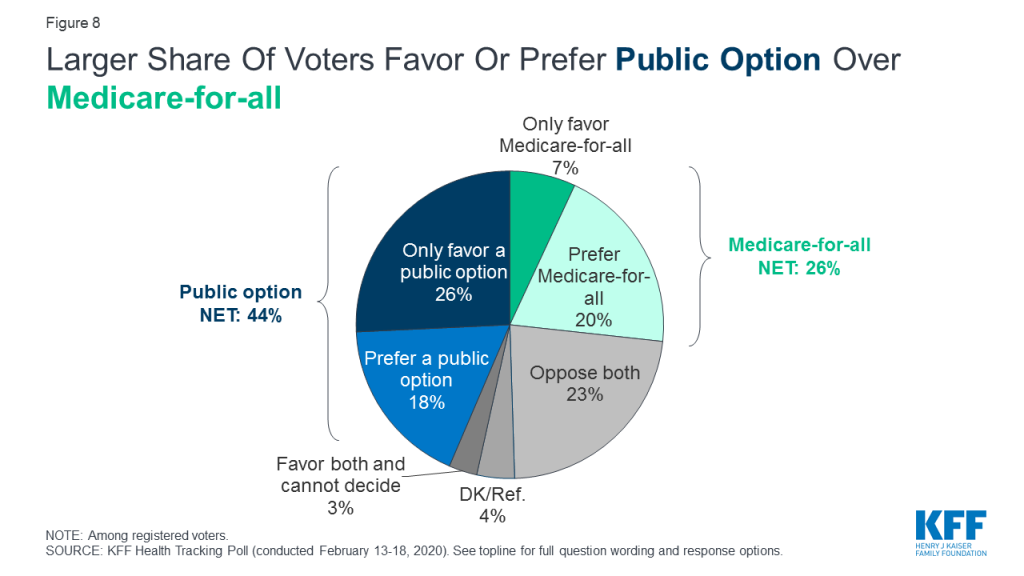
With the 2020 Democratic primary candidates strongly debating the two proposals, this month’s KFF poll wanted to see what happens to attitudes when voters are forced to choose between a national Medicare-for-all plan and a government-administered public option. When voters who favor both a national Medicare-for-all plan and a government-administered public option (40% of all registered voters) are asked which proposal they prefer, the public option retains its edge. More than four in ten voters (44%) either only favor a public option (26%) or prefer it (18%) compared to one-fourth of voters (26%) who either only favor a national Medicare-for-all plan (7%) or prefer it over a public option (20%).
Figure 8: Larger Share Of Voters Favor Or Prefer Public Option Over Medicare-for-all
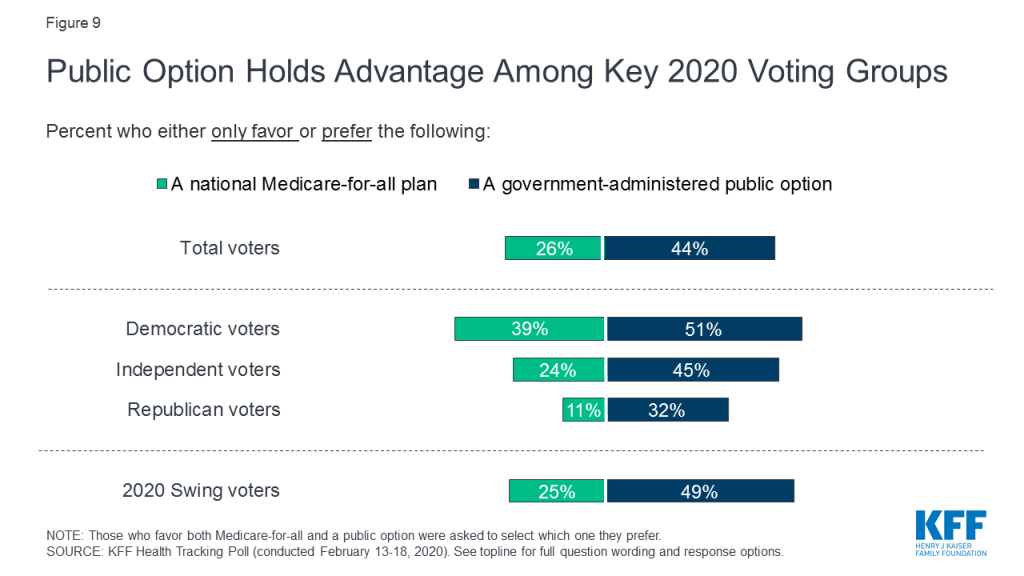
A government-administered public option has the edge over a national Medicare-for-all plan among Democratic voters, independent voters, and Republican voters; however, a significant share of Democratic voters (39%) either only favor or prefer a national Medicare-for-all plan.
Table 3: Pushed Support for Proposals To Expand The U.S. Public Health Insurance Program Among Voters
Total voters
Democratic voters
Independent voters
Republican voters
Medicare-for-all (NET)
26%
39%
24%
11%
Only favors a national Medicare-for-all plan
7
10
6
2
Prefers a national Medicare-for-all plan
20
29
19
9
Public option (NET)
44
51
45
32
Only favors a government-administered public option
26
22
30
27
Prefers a government-administered public option
18
29
15
5
Refused to choose
3
4
3
1
A government-administered public option also holds the advantage over a national Medicare-for-all plan among Democratic voters (51% v. 39%), independent voters (45% v. 24%), and swing voters (49% v. 25%).
Figure 9: Public Option Holds Advantage Among Key 2020 Voting Groups
Methodology
This KFF Health Tracking Poll was designed and analyzed by public opinion researchers at the Kaiser Family Foundation (KFF). The survey was conducted February 13th -18th, 2020, among a nationally representative random digit dial telephone sample of 1,207 adults ages 18 and older, living in the United States, including Alaska and Hawaii (note: persons without a telephone could not be included in the random selection process). The sample included 290 respondents reached by calling back respondents that had previously completed an interview on the KFF Tracking poll at least nine months ago. Computer-assisted telephone interviews conducted by landline (302) and cell phone (905, including 629 who had no landline telephone) were carried out in English and Spanish by SSRS of Glen Mills, PA. To efficiently obtain a sample of lower-income and non-White respondents, the sample also included an oversample of prepaid (pay-as-you-go) telephone numbers (25% of the cell phone sample consisted of prepaid numbers) as well as a subsample of respondents who had previously completed Spanish language interviews on the SSRS Omnibus poll (n=10). Both the random digit dial landline and cell phone samples were provided by Marketing Systems Group (MSG). For the landline sample, respondents were selected by asking for the youngest adult male or female currently at home based on a random rotation. If no one of that gender was available, interviewers asked to speak with the youngest adult of the opposite gender. For the cell phone sample, interviews were conducted with the adult who answered the phone. KFF paid for all costs associated with the survey.
The combined landline and cell phone sample was weighted to balance the sample demographics to match estimates for the national population using data from the Census Bureau’s 2018 American Community Survey (ACS) on sex, age, education, race, Hispanic origin, and region along with data from the 2010 Census on population density. The sample was also weighted to match current patterns of telephone use using data from the July-December 2018 National Health Interview Survey. The weight takes into account the fact that respondents with both a landline and cell phone have a higher probability of selection in the combined sample and also adjusts for the household size for the landline sample, and design modifications, namely, the oversampling of prepaid cell phones and likelihood of non-response for the re-contacted sample. All statistical tests of significance account for the effect of weighting.
The margin of sampling error including the design effect for the full sample is plus or minus 3 percentage points. Numbers of respondents and margins of sampling error for key subgroups are shown in the table below. For results based on other subgroups, the margin of sampling error may be higher. Sample sizes and margins of sampling error for other subgroups are available by request. Note that sampling error is only one of many potential sources of error in this or any other public opinion poll. Kaiser Family Foundation public opinion and survey research is a charter member of the Transparency Initiative of the American Association for Public Opinion Research.
With the Supreme Court today considering whether to take up a case that seeks to overturn the entire Affordable Care Act, the latest KFF tracking poll finds that a clear majority (55%) of the public now views the law favorably – its highest rating in more than 100 KFF polls since it became law nearly 10 years ago. In comparison, slightly more than a third (37%) hold unfavorable views.
The recent uptick reflects strong support among Democrats, 85% of whom now express favorable views. A narrow majority (53%) of independents also view the law favorably.
While most Republicans (77%) still hold unfavorable views towards the ACA, the poll suggests that Republican voters have largely moved on from efforts to repeal the Affordable Care Act and now rank opposition to a single-payer government health plan like Medicare-for-all among their top health priorities. When asked what about health care is important to their vote, few Republican voters (3%) say repealing the Affordable Care Act, while much larger shares say health care costs (24%) or opposition to Medicare-for-all (19%).
Repealing The ACA Is No Longer The Top Health Care Issue For Republican Voters
“Republicans seem to be shifting their ire from the ACA to Medicare-for-all,” KFF President and CEO Drew Altman said. “The gulf between Republicans and Democrats on health has never been wider.”
Health care ranks lower in a list of important issues in the 2020 election for Republican voters, compared to Democratic voters, independent voters, and the crucial group of voters who haven’t made up their minds yet – swing voters. More than one-third of Democratic voters (36%) say health care is the “most important” issue in their 2020 vote choice as do three in ten independent voters and 28% of swing voters. The economy is the top issue for Republican voters (34%).
Issues are not the only factor in the election. When asked what is the one thing that will motivate them to vote in 2020, a larger share of voters offer responses related to defeating President Trump and electing a Democrat (20%) than any issue, including health care (8%) or the economy (8%).
As the Democratic primary season heats up, the poll finds about two thirds (66%) of the public favor a government-run public insurance option that would compete with private insurance plans and be available to all Americans, while about half (52%) favor Medicare-for-all, in which all Americans would be insured through a single government plan. Four in 10 (43%) favor both a public option and Medicare-for-all
With both of these proposals garnering majority support and being front-and-center in the 2020 presidential campaign, the poll pushed voters who support both approaches to choose the one they prefer. The results show voters prefer the public option (44%) over Medicare-for-all (26%).
The public option retains this clear edge among Democratic, Republican and independent voters. Among the potentially crucial group of swing voters twice as many prefer a public option (49%) as Medicare-for-all (25%).
Additional findings from the poll will be released next week.
Designed and analyzed by public opinion researchers at KFF, the poll was conducted February 13-18, 2020 among a nationally representative random digit dial telephone sample of 1,207 adults including 998 self-reported registered voters. Interviews were conducted in English and Spanish by landline (302) and cell phone (905). The margin of sampling error is plus or minus 3 percentage points for the full sample and 4 percentage points for voters. For results based on subgroups, the margin of sampling error may be higher.
When the Affordable Care Act (ACA) became law in 2010, public opinion of it was narrowly divided and deeply partisan. This Health Affairs article reviews 102 nationally representative public opinion polls in the period 2010–19 and finds public opinion has shifted in a sustained way at only two points in time: in a negative direction following technical problems in the first enrollment period, and in a positive direction after President Donald Trump’s election and subsequent Republican repeal efforts.
In late 2019 the ACA was more popular than ever, yet partisan divisions have gotten larger rather than smaller. Many core elements of the law remain popular across partisan groups, even as fewer people recognize the ACA as the source of some of these provisions. While Republicans may never embrace the law that is seen as President Barack Obama’s legacy, the public’s reluctance to see certain benefits taken away will continue to be a roadblock for people who would seek to repeal or dismantle it.
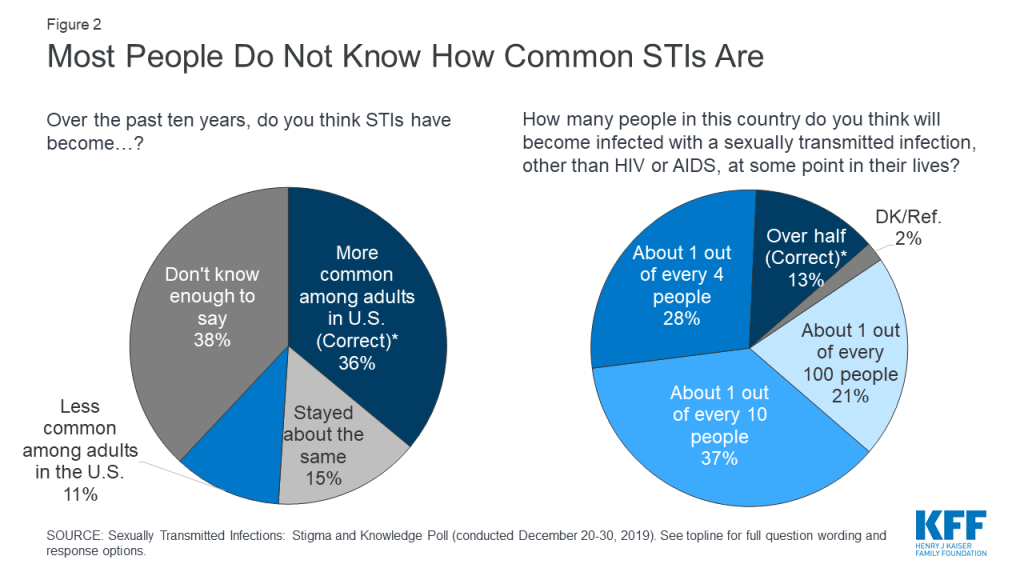
A new KFF poll examines the public’s knowledge and attitudes about sexually transmitted infections (STIs) and finds that while knowledge about how STIs are transmitted is high, large majorities are unaware of how common STIs are among adults in the U.S.
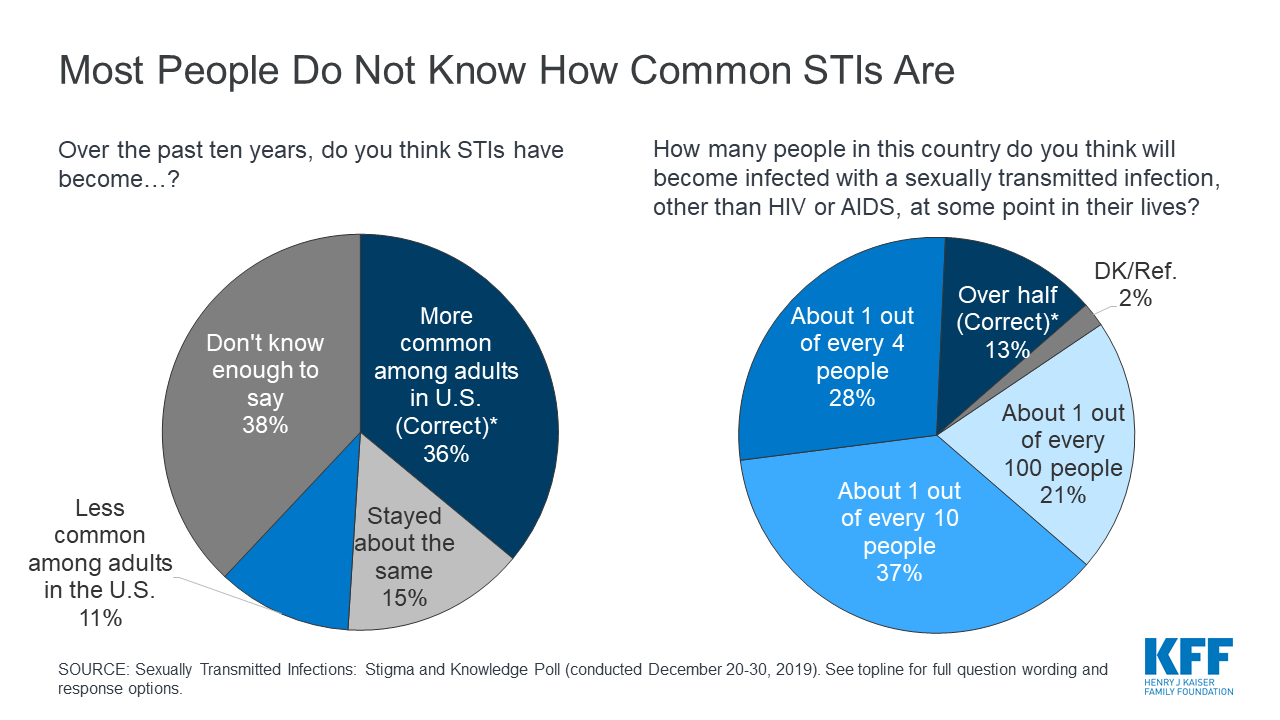
About one-third of adults (36%) know that STIs have become “more common” over the past ten years — similar to the share who say they “don’t know enough to say” (38%). In addition, few (13%) know that over half of the people in the U.S. will get an STI sometime during their lifetime.
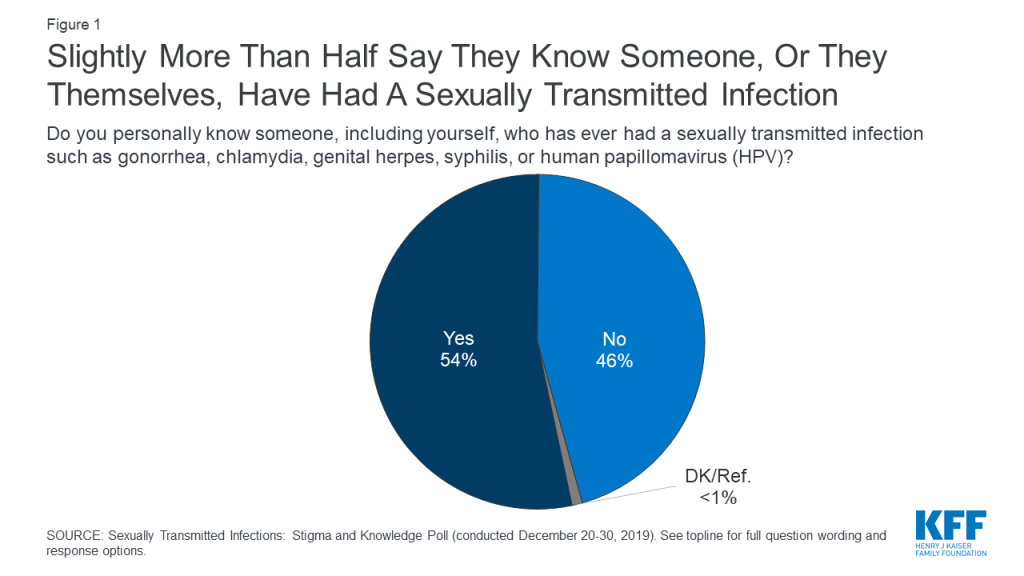
Slightly more than half (54%) of the public say they or someone they know has had an STI. Nearly six in 10 (58%) women say they know someone who has ever had an STI, as do half of men. Older adults are less likely to know someone compared to younger age groups (18-29 year olds: 54%; 30-49 year olds: 63%; 50-64 year olds: 57%; 65 and older: 36%).
Only a fraction of the public (8%) is worried about contracting an STI in the next year, but larger shares of younger people, ages 18-29, express concern (20%). About one in ten Black adults (13%) and Hispanic adults (13%) and 5% of White adults say they are worried they may personally contract an STI in the next year.
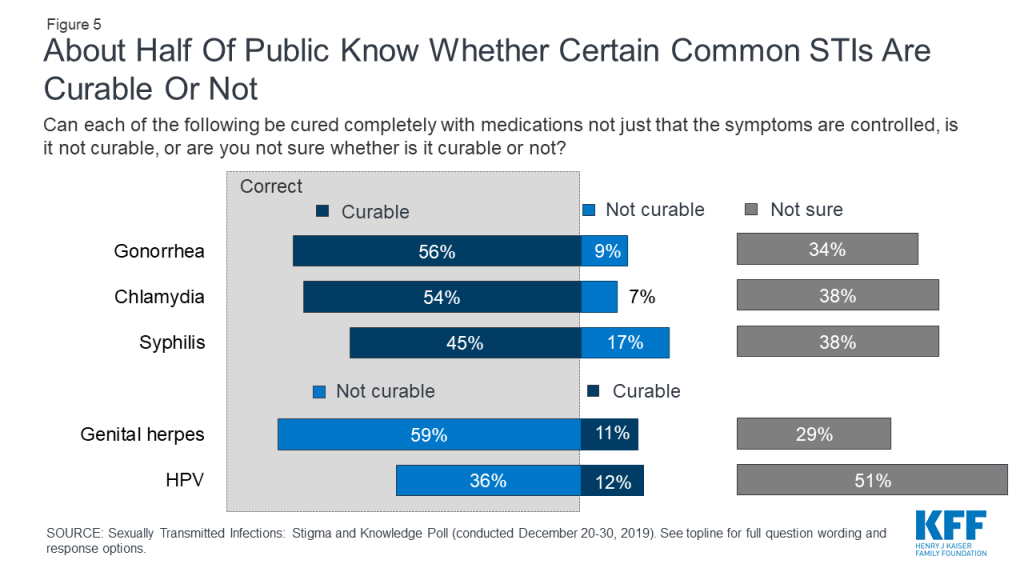
Knowledge about treatment is mixed, but knowledge about transmission is high. About half of the public know certain common STIs are curable with medications. Slightly more than half of adults know gonorrhea and chlamydia are curable (56% and 54%, respectively), and genital herpes is not curable (59%). Fewer are aware that syphilis is curable (45%). In contrast, a large share of the public is aware that STIs are often asymptomatic, yet transmissible.
In addition to these poll findings, KFF has an updated fact sheet about STIs that includes an overview of STIs and reviews how STI prevention and treatment services are financed in the United States.
Designed and analyzed by public opinion researchers at KFF, the poll was conducted December 20-30, 2019 among a nationally representative probability-based sample of 1,215 adults including an oversample of 351 women, 18-49 years old. Interviews were conducted in English and Spanish online (1,100) and on the phone (115). The margin of sampling error is plus or minus 3 percentage points for the full sample and 6 percentage points for women, 18-49. See topline for margin of sampling error for other subgroups.
There are an estimated 20 million new sexually transmitted infections (STIs) every year in the United States with rates of reported STIs continuing to rise, reaching record-breaking levels in 2018. This poll provides new data on the public’s knowledge and attitudes about STIs.
Large majorities of the public are unaware of how common STIs are among adults in the U.S. About one-third (36%) are aware that STIs have become more common over the past decade and few (13%) know that over half of people in the U.S. will get an STI sometime during the lifetime.
Slightly more than half (54%) say they know someone who has had an STI, including those who say they have personally had an STI. There are some differences by key demographic groups with larger shares of women and younger adults saying they personally know someone who has had an STI.
Small shares of the public (8%) are worried about contracting an STI in the next year, with larger shares of younger people, ages 18-29, expressing concern (20%). About one in ten Black adults (13%) and Hispanic adults (13%) and 5% of White adults say they are worried they may personally contract an STI in the next year.
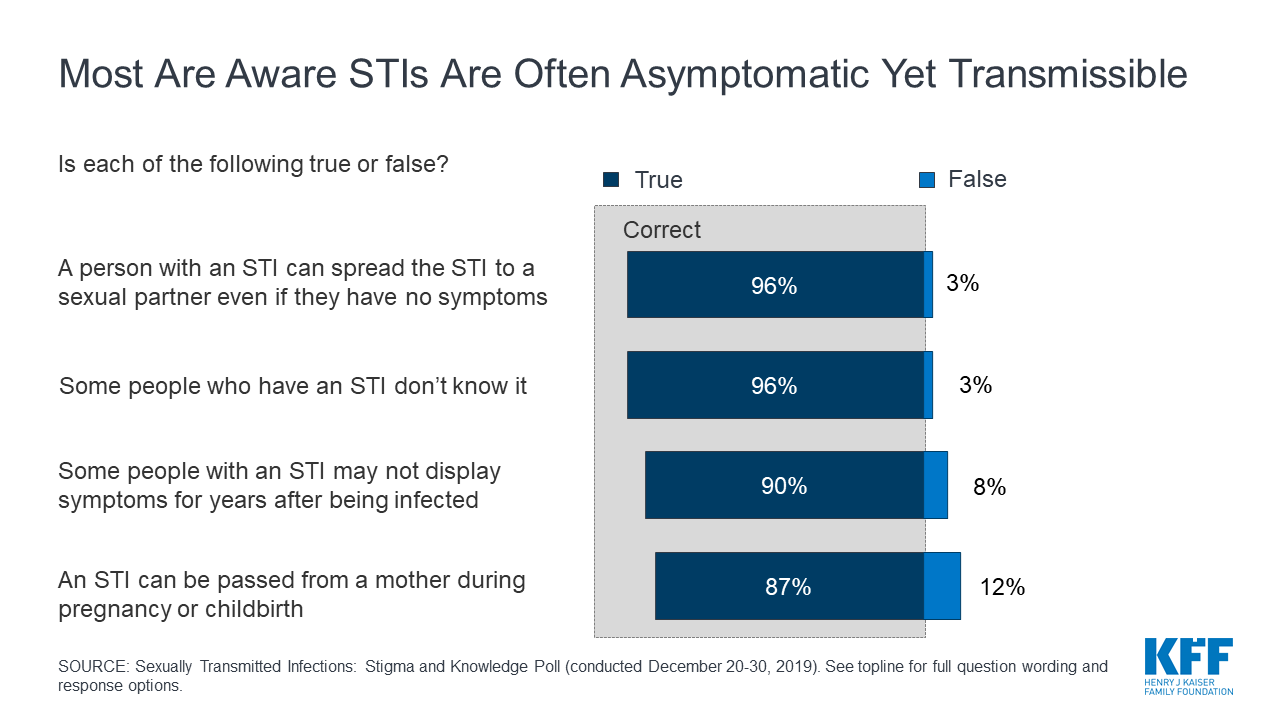
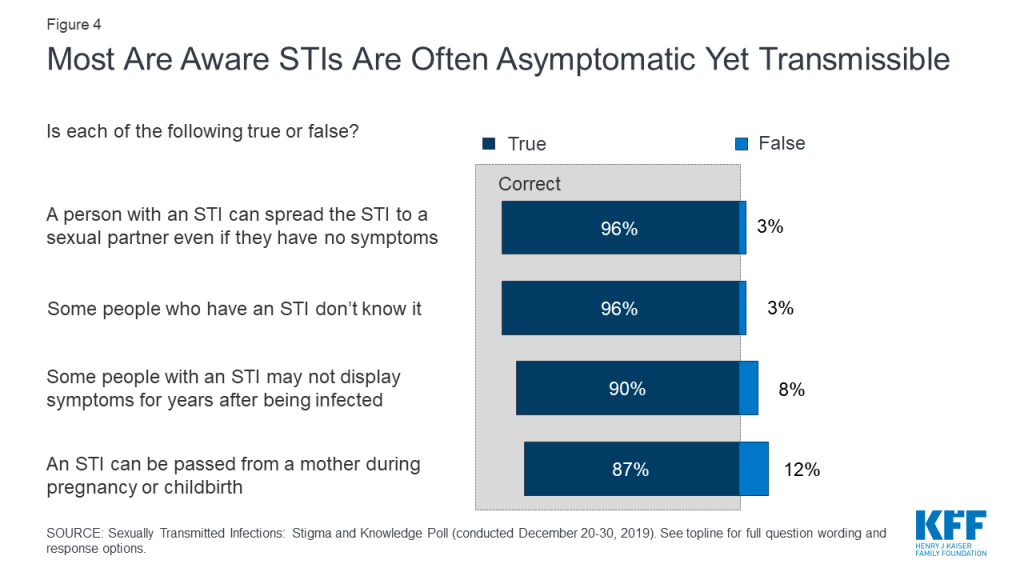
Overall, the public is aware that STIs are often asymptomatic, yet transmissible. Large majorities know that STIs can be transmitted even when that person is not showing any symptoms (96%) as well as during pregnancy and childbirth (87%). Equally large shares are aware some people who have an STI might not even know it (96%) and symptoms may not display in some people with an STI for years (90%).
About half know chlamydia (54%), gonorrhea (56%), and syphilis (45%) are curable. More than half (59%) know that genital herpes is not curable.
Sexually Transmitted Infections
Slightly more than half (54%) of adults say they personally know someone, including themselves, who has had an STI such as gonorrhea, chlamydia, genital herpes, syphilis, or human papillomavirus (HPV). Nearly six in ten women (58%) say they know someone who has ever had an STI, as do half of men. Older adults are less likely to know someone compared to younger age groups (18-29 year olds: 54%; 30-49 year olds: 63%; 50-64 year olds: 57%; 65 and older: 36%).
Figure 1: Slightly More Than Half Say They Know Someone, Or They Themselves, Have Had a Sexually Transmitted Infection
Despite this, few know how common STIs are in the U.S. today and that STIs are on the rise. One-third of adults (36%) are aware that STIs have become “more common” over the past ten years, but this is similar to the share who say they “don’t know enough to say” (38%) and only ten percentage points higher than the share (26%) who either say STIs have become “less common” or “stayed about the same.” About one-third of men (32%) are aware that STIs have become more common over the past decade and about four in ten women are aware (39%). Awareness is also higher among Black adults (48%) compared to White adults (33%). Four in ten Hispanic adults are also aware STIs have become more common.
Additionally, a small percentage (13%) know that “over half of the people in the U.S.” will have an STI, other than HIV, at some point in their lifetime.
Figure 2: Most People Do Not Know How Common STIs Are
How Common Are Sexually Transmitted Infections?
Sexually transmitted infections (STIs) are very common, and over half of people in the U.S. will have an STI in their lifetime. In fact, the CDC estimates there are over 110 million sexually transmitted infections among men and women in the U.S., with 20 million new cases each year.
HPV is the most common STI (79 million cases), followed by genital herpes (24 million), trichomoniasis (3.7 million) and chlamydia (1.6 million). Gonorrhea, syphilis, hepatitis B and HIV are less common, although rates of syphilis, gonorrhea and chlamydia are rising, up 71%, 63% and 19% respectively from 2014 to 2018.
About one in ten (8%) are worried that they personally will contract a new STI over the next year, yet there are some groups who worry more about contracting an STI. Larger shares (20%) of younger adults (18-29) report being worried which is consistent with data from the CDC which states that this age group is the group at the highest risk for STIs. Additionally, STI rates are higher among Black adults and Hispanic adults compared to White adults. At least one in ten Hispanic adults (13%) and Black adults (13%) say they were worried about contracting an STI, compared to 5% of White adults.
Table 1: Share of U.S. Adults Who Are Worried They Will Contract A New STI Over The Next Year
Percent who say they are either “very worried” or “somewhat worried”:
Total adults
8%
Men
10
Women
6
18-29 years old
20
30-49 years old
9
50-64 years old
4
65 and older
1
White, Non-Hispanic
5
Black, Non-Hispanic
13
Hispanic
13
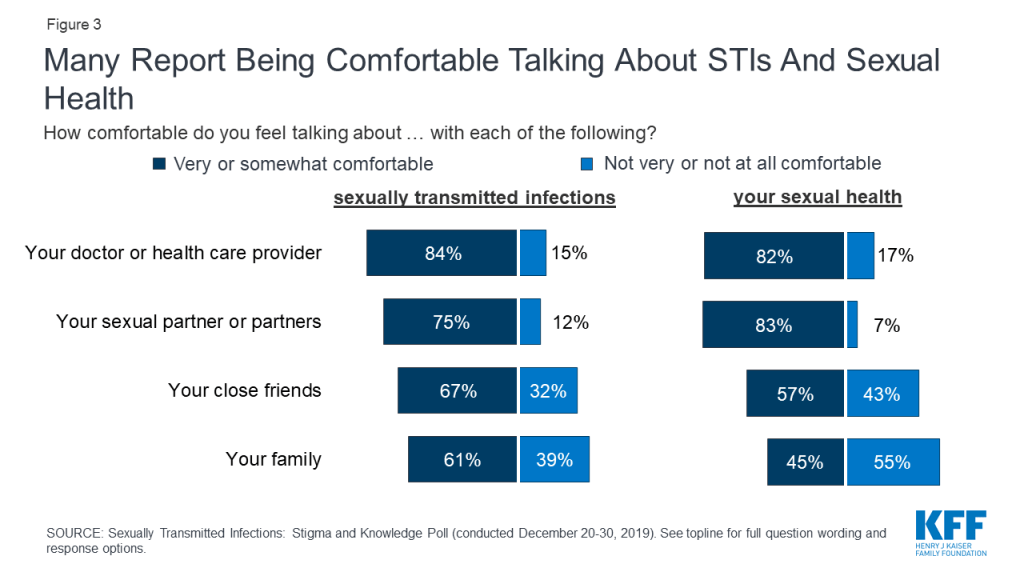
About one in eight say they are uncomfortable discussing STIs with a sexual partner (12%) and one in seven (15%) are uncomfortable talking about STIs with a doctor. In fact, large majorities of the public say they are “very comfortable” or “somewhat comfortable” talking about STIs with their doctor or health care provider (84%) or sexual partners (75%). Smaller majorities are comfortable talking about STIs with their close friends (67%) or family (61%). Similar shares also report feeling comfortable talking about their sexual health with these different groups. In a survey conducted more than two decades ago, KFF found that more than one-third of the public were uncomfortable discussing STIs with a sexual partner (37%) and three in ten (31%) were uncomfortable talking with a doctor about getting an STI test (compared to 12% and 15% in the most recent survey).
Figure 3: Many Report Being Comfortable Talking About STIs And Sexual Health
There are some differences by age and gender in how comfortable people are talking about the topic. A higher share of women than men said they were comfortable talking with their close friends about STIs (71% vs. 61%, respectively) and their sexual health (62% vs. 52%).
While most new STIs are among young adults, older adults are also at risk. A smaller share of those 65 and older say they are comfortable talking about STIs and their sexual health with a variety of audiences, compared to younger adults.
Table 2: Comfort Level Talking About STIs and Sexual Health, by Age
Share who feel very or somewhat comfortable talking about:
Adultsages 18-29
Adultsages 30-49
Adultsages 50-64
Adultsages 65+
Sexually transmitted infections with their…
Doctor or health care provider
83%
87%
88%
77%
Sexual partner(s)
79
85
75
60
Close friends
69
71
68
57
Family
51
59
71
60
Sexual health with their…
Doctor or health care provider
80
80
86
81
Sexual partner(s)
84
90
84
69
Close friends
66
68
51
38
Family
38
52
52
33
NOTE. Grey box indicates statistical significance at p<.05 compared to all other age groups.
Understanding of STI Transmission and Treatment Options
The vast majority of adults are aware that STIs are often asymptomatic, yet transmissible. More than nine in ten adults are aware that a person with an STI can spread it to a sexual partner even if they do not have any symptoms (96%) as well as during pregnancy and childbirth (87%). Equally large shares are aware some people who have an STI might not even know it (96%) and that some people with an STI may not display symptoms for years after contracting the STI (90%).
Figure 4: Most Are Aware STIs Are Often Asymptomatic Yet Transmissible
Large shares of the public are unsure about whether many STIs are curable with medication or not. Slightly more than half of adults know gonorrhea and chlamydia are curable with medication (56% and 54%, respectively), and genital herpes is not curable with medication (59%). Fewer are aware that syphilis is curable with medication (45%). About half (51%) of the public say they are unsure if HPV is curable with medication or not. HPV is a common STI that has more than 150 different strains (including some associated with cervical and other cancers and others that cause genital warts). There is no medical treatment for HPV, however, most people who acquire HPV (specifically those not associated with cancer or warts) will clear the infection on their own and without health problems. There is a vaccine available to protect against some of the more serious types of HPV.
In 1998, less than half of the public knew gonorrhea and chlamydia could be cured with medications (48% and 32%, respectively), while now more than half are aware of this (56% and 54%, respectively). Awareness that both genital herpes and HPV are not curable with medications has not changed over the past two decades.
Figure 5: About Half Of Public Know Whether Certain Common STIs Are Curable Or Not
Lifelong infection, but symptoms can be treated with antiviral medication
Human Papillomavirus (HPV)
Most people who acquire HPV will clear the infection on their own and without associated health problems. There is a vaccine for some types of HPV associated with cervical cancer that is recommended beginning at age nine.
Knowledge around treatment of STIs is generally higher among those who are under the age of 65. Majorities of younger adults are aware that chlamydia and gonorrhea are curable and that genital herpes is not curable with medication, compared to less than half of adults 65 and older who are aware of this. For each STI assessed, individuals aged 65+ were significantly less likely to correctly identify whether they are curable or not, compared to adults younger than 65 years old.
Table 3: Awareness of STI Treatment and Management, by Age
Percent who correctly know the following:
Adults ages 18-29
Adults ages 30-49
Adults ages 50-64
Adults ages 65+
Chlamydia is curable
57%
66%
55%
34%
Gonorrhea is curable
56
60
61
46
Syphilis is curable
34
49
53
39
Genital herpes is not curable
57
68
66
41
HPV is not curable
46
49
30
15
NOTE. Grey box indicates statistical significance at p<.05 compared to all other age groups.
There were also some differences by gender and race. A larger share of women than men correctly reported that chlamydia is curable and that HPV is not curable (even though most people who acquire HPV will clear the infection on their own and there is a vaccine for HPV prevention), while awareness about other infections was similar between women and men. A higher share of Black adults know that chlamydia, gonorrhea and syphilis are curable, compared to other races. A previous 2017 KFF survey showed a higher share of Black and Latina women compared to White women said their physician discussed STIs with them.
Table 4: Awareness About STI Treatment and Management, by Gender and Race/Ethnicity
Percent who correctly know the following:
Gender
Race/Ethnicity
Women
Men
Black
White
Hispanic
Chlamydia is curable
61%
47%
74%
51%
49%
Gonorrhea is curable
56
57
75
55
48
Syphilis is curable
44
46
54
44
39
Genital herpes is not curable
62
56
64
62
53
HPV is not curable
40
33
32
39
35
NOTE. Grey box indicates statistical significance at p<.05 compared to all other groups in demographic category.
Sexually transmitted infections encompass many different types of viral and bacterial infections. Every year, an estimated 20 million new sexually transmitted infections (STIs) are reported to the Centers for Disease Control and Prevention (CDC) in the United States. The rates of reported STIs reached record-breaking levels in 2018, continuing their recent rise. Despite these high rates, a 2019 KFF poll found that a large share of the public is unaware of how common STIs are, with less than half (36%) aware that STIs rates are increasing.
While all sexually active individuals are potentially at risk, rates are highest among 15-24 year olds, as well as gay and bisexual men. Black and Hispanic populations are also disproportionately affected relative to non-Hispanic White populations. Increasing rates of STIs highlight the importance of prevention, testing, treatment, as well as information and education, in curbing the transmission of these infections. This fact sheet examines trends and disparities in STI prevalence, reviews the STI screening and preventive care coverage policies for private insurance and public programs (including coverage gaps), and describes confidentiality in the provision of these services.
What are Sexually Transmitted Infections?
STIs are generally defined to include chlamydia, genital herpes, gonorrhea, hepatitis B, HIV, Human Papillomavirus (HPV), syphilis, and trichomoniasis . All STIs, including HIV, are preventable, and there are treatments to cure many, though not all, of them. Because some STIs often show no symptoms, at least initially, some people with an STI may not find out until more serious health concerns present. For this reason, preventive measures and routine screenings are important for the early identification of these infections in order to engage in treatment and to prevent further transmission and more serious complications.
Untreated STIs, particularly chlamydia and gonorrhea, can result in pelvic inflammatory disease (PID) in women and infertility. It is estimated that HPV, the most common STI in the United States, will be contracted at some point during the lifespan of nearly every sexually active individual. Most cases of HPV resolve on their own, but certain strains of HPV are linked to cervical, throat, penile, and anal cancers. The HPV vaccine protects against nine strains of this virus, including several that are associated with cancer.
Pregnant women with an untreated STI face increased risk of complications as do their infants. Exposure to an STI during pregnancy can result in preterm labor, low birth weight, premature rupture of membranes, and transmission to the infant during delivery. HIV and syphilis are particularly serious if transmitted to newborn infants. So long as a mother with HIV is engaged in consistent antiretroviral (ARV) treatment, it would be highly unlikely to transmit HIV to a baby. Up to 40% of babies born to women with untreated syphilis may be stillborn or die from the infection. Late or limited prenatal care has been associated with congenital syphilis (when the infection is present in utero or childbirth). Congenital syphilis is preventable in most cases, if women are screened for syphilis and treated early during prenatal care.
Prevalence of Sexually Transmitted Infections
While women still account for the highest reported cases of STIs (driven mainly by high numbers of chlamydia in women), men, in particular gay and bisexual men, saw greater increases in rates of syphilis, chlamydia, and gonorrhea in recent years. Syphilis infection rates nearly doubled among men from 2014 to 2018 (Figure 1).
Table 1: Sexually Transmitted Infection Rates of Reported Cases, by Selected Characteristics, 2018Rate per 100,00 population
Gonorrhea
Chlamydia
Syphilis (primary and secondary stages)
Congenital Syphilis
HIV
U.S. Total
179.1
539.9
10.8
33.1
11.4
Sex
Men
212.8
380.6
18.7
NR
22.5
Women
145.8
692.7
3
NR
5.1
Race
White
71.1
212.1
6
13.5
4.9
Black
548.9
1192.5
28.1
86.6
39.3
Hispanic
115.9
392.6
13
44.7
16.2
Asian/Pacific Islanders
35.1
132.1
4.6
9.2
NA
American Indian/Alaska Native
329.5
784.8
15.5
79.2
7.8
Age
15-19
432.4
2110.6
7.7
NR
8
20-24
713
2899.2
27.8
NR
27.6
25-29
553.6
1427.3
33
NR
32.5
30-34
366.4
701.5
26.9
NR
25.6
Region
Northeast
138.4
492.1
8.7
8.5
10
South
194.4
565.2
11.1
12.4
15.7
Midwest
184.5
524
7.1
44.7
7.2
West
179.7
548.5
15
48.5
9.3
NOTES: NR is Not Reported. Primary and secondary syphilis stages are the earliest stages of infection, reflect symptomatic disease, and are indicators of incident infection.SOURCE: Centers for Disease Control and Prevention (CDC), Sexually Transmitted Disease Surveillance 2018; CDC, Diagnoses of HIV Infection in the United States and Dependent Areas, 2018.
Figure 1: Rates of sexually transmitted infections by sex from 2014 to 2018
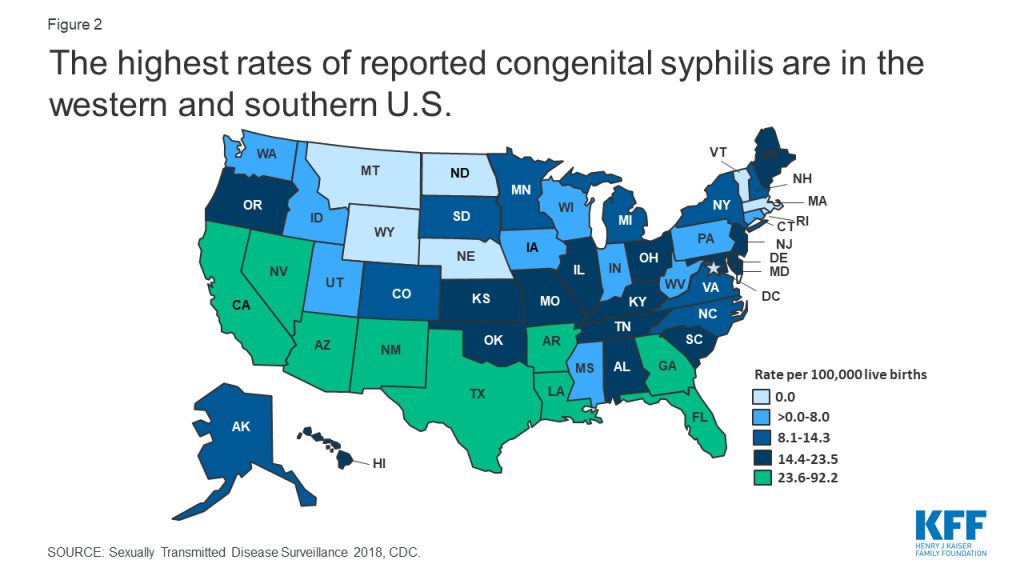
Congenital syphilis rates increased 173% between 2014 and 2018, with the number of cases the highest they have been since 1995. The highest rates of congenital syphilis were in the South, West, and Southwest (Figure 2).
Figure 2: The highest rates of reported congenital syphilis are in the western and southern U.S.
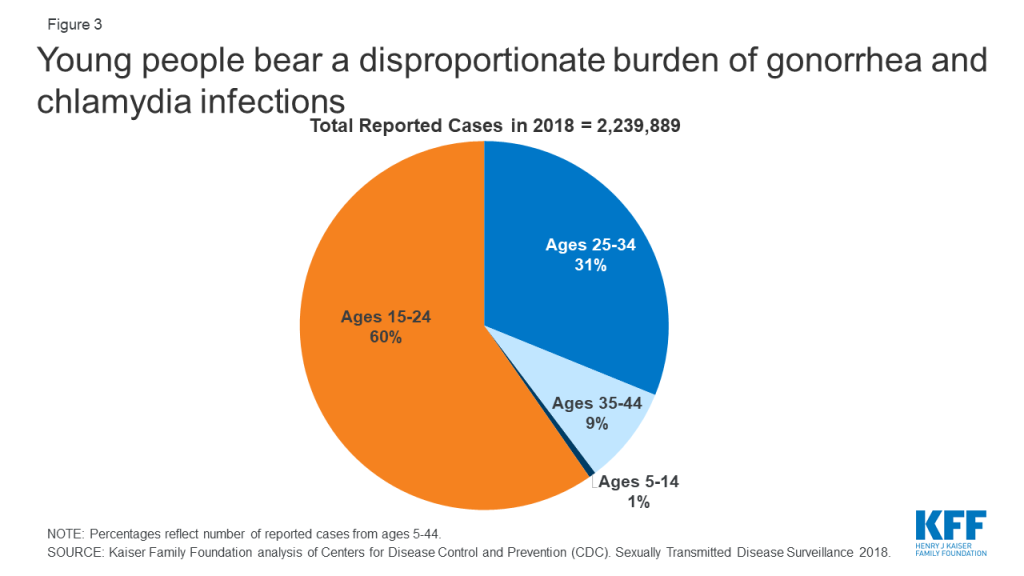
STIs also have a disproportionate impact on young people, ages 15-24, who acquire half of all new STIs, despite only representing 25% of the sexually active population (Figure 3). Young people, ages 15-24, account for 60% of all reported cases of gonorrhea and chlamydia.
Figure 3: Young people bear a disproportionate burden of gonorrhea and chlamydia infections
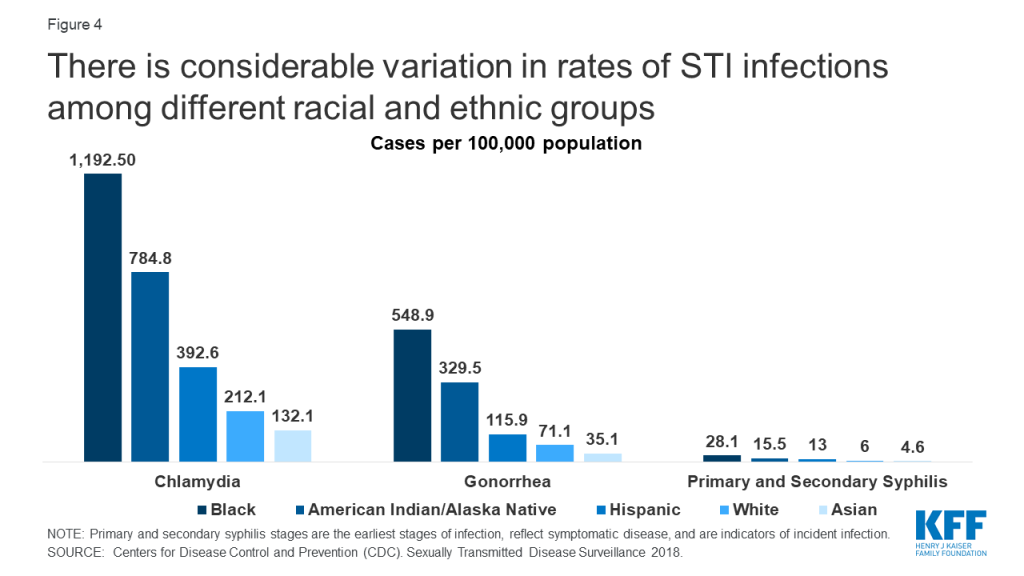
Due to a combination of social, structural, and economic inequities, HIV and other STIs disproportionately affect certain groups (Figure 4). In 2018, Blacks accounted for 38% of reported gonorrhea cases and 33% of primary and secondary syphilis cases, despite comprising just 13% of the population. Blacks also accounted for 42% of new HIV diagnoses in the U.S in 2018. Hispanics are also disproportionately affected, accounting for 27% of persons newly diagnosed with HIV and representing 18% of the population in 2018.
Figure 4: There is considerable variation in rates of STI infections among different racial and ethnic groups
Gay and bisexual men of all races have also been disproportionately affected since the start of the HIV/AIDS epidemic. In 2018, men who have sex with men (MSM) accounted for more than two thirds (69%) of all HIV diagnoses in the U.S., representing 86% of cases among males. MSM also accounted for 78% of male primary and secondary syphilis cases in 2018.
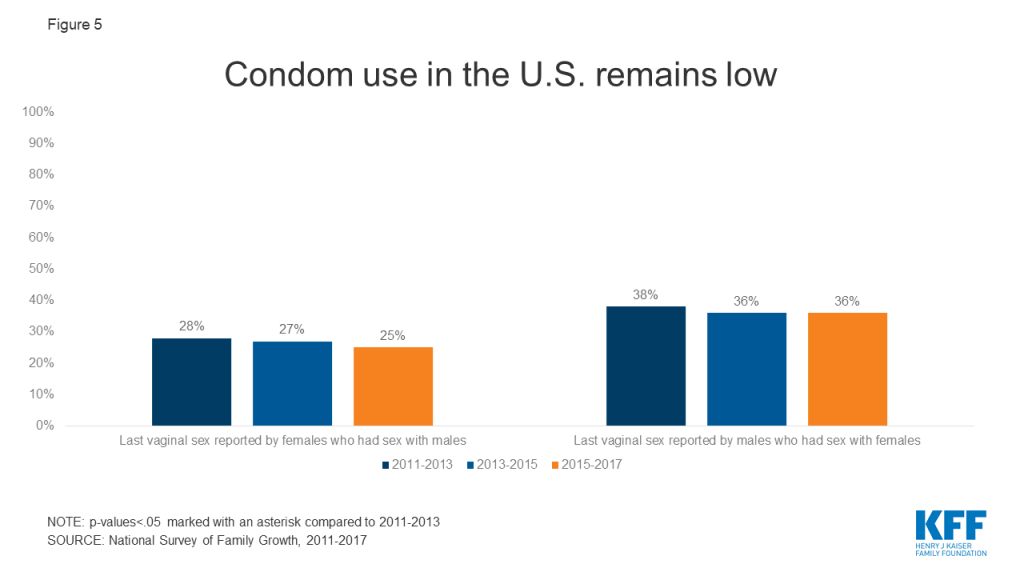
The higher prevalence of HIV and other STIs in certain communities can mean risk of exposure is also greater in these communities, particularly when sexual networks are close-knit. When used correctly, condoms are effective at preventing the transmission of HIV and other STIs. However, condom use in the U.S. remains low (Figure 5. Pre-exposure prophylaxis (PrEP), a daily pill approved by the FDA in 2012, reduces the risk of sexually contracting HIV by up to 99% among people at high risk.
Figure 5: Condom use in the U.S. remains low
Expedited Partner Therapy
Many states have laws allowing expedited partner therapy (EPT), which permits the treatment of partners of patients diagnosed with an STI without examination. The CDC has recommended this practice since 2006 in certain circumstances due to its success in reducing gonorrhea reinfection rates. Currently 39 states and DC allow physicians to provide at least some treatment to the partner of a patient diagnosed with a STI. Among publicly funded clinics, 79% provided expedited therapy for the patient’s partner at the same visit in 2015. However, even in states where EPT has been legalized, many do not allow the patient’s insurance coverage to be billed for the partner’s treatment, which can create a financial barrier to care.
Paying for STI Prevention and Treatment Services
Access to prevention, screening, testing and treatment services for STIs is facilitated by private insurance, public coverage such as Medicaid and Medicare, as well as publicly-supported health programs. The CDC estimates that in 2008 (the most recent estimate available), the annual direct medical costs in the US associated with STIs (including HIV) were nearly $16 billion.
Private Insurance
The Affordable Care Act (ACA) requires most private health insurance plans to cover recommended preventive services, including HIV and other STI screening, with no cost sharing. For adults, this includes US Preventive Services Taskforce (USPSTF) recommendations receiving an A or B grade, which include vaccines recommended by the CDC’s Advisory Committee for Immunization Practices, and services for women recommended by the Health Resources and Services Administration (HRSA). STI-related services that must be covered without cost-sharing by most plans are presented in Table 2.
In June 2019, the USPSTF Task Force added an A grade recommendation for PrEP for the prevention of HIV in high-risk populations, which means that most insurance plans must begin covering the full cost of the drug in the plan year that starts after June 2020. CDC guidelines on PrEP advise that individuals on PrEP have follow up visits and lab work, including being re-tested for HIV four times a year, but it is unclear whether these follow-up visits and lab work must be covered without cost-sharing by most insurance plans.
Plans are also required to cover prescription contraceptives for women, so coverage for female condoms would be required if an enrollee has a prescription but not when purchased over the counter. Twelve states (CA, CT, DE, IL, MD, MA, NJ (will apply to insurance plans in April 2020), NM, NV, NY, OR, WA) and DC currently require insurance coverage for over-the-counter contraceptive methods – of these however– 8 states (CA, DE, IL, MD, MA, NJ, NV, OR) exclude male condoms.
Medicaid
Medicaid, the national health coverage program for low-income individuals, is financed and operated jointly by the federal and state governments. For the 37 states and DC that have expanded Medicaid, STI counseling, screenings, preventive vaccinations, and PrEP must be covered at no cost for the newly eligible populations under the ACA just as they are for enrollees in private insurance plans (Table 2). However, this requirement does not apply to populations covered by Medicaid through other pathways, where coverage for specific STI screenings and treatments is determined by the state.
Some states extend access to STI services through limited-scope Medicaid family planning programs that provide Medicaid coverage solely for family planning services to women and men who do not qualify for full Medicaid benefits. Most of these programs cover STI screenings, but not all cover treatment if diagnosed. While all state Medicaid programs must cover medically necessary HIV testing, state coverage of routine HIV screening varies because it is an optional benefit under Medicaid. While several states cover condoms, they require prescriptions for this over-the-counter product. Medicaid is the largest public funder of HIV treatment and care, and all state Medicaid programs should cover PrEP.
Table 2: STI-related Preventive Care Benefits that Plans Must Cover without Cost-Sharing
Men who are sexually active or at higher risk
Women who are sexually active or at increased risk
Pregnant women
Young people
Gonorrhea screening
X – sexually active women <24 years, and older women at increased risk
X (for those at increased risk
Chlamydia screening
X – sexually active women <24 years, and older women at increased risk
X – under 25
Syphilis screening
X
X
X
HPV DNA Testing
X – 30 years and older
HPV vaccine
X – 11 to 26 years
X – 11 to 26 years
X – 11 to 26 years
Hepatitis B screening
X
X
X – at first prenatal visit
X
Hepatitis B vaccine
X
X
X – children under 18 years
STI prevention counseling
X
X
X – if sexually active
HIV screening and counseling
X – all aged 15 to 65 years, all others at higher risk
X – all aged 15 to 65 years, all others at higher risk
X
X
PrEP
X – all at high risk of HIV acquisition
X – all at high risk of HIV acquisition
X – all at high risk of HIV acquisition
X – all at high risk of HIV acquisition
Pap Test (cervical cancer screening)
X – All women ages 21 to 65
NOTES: Population covered and definition of high risk vary by condition. Coverage without cost sharing required in new private plans and Medicaid expansion groups.SOURCE: Kaiser Family Foundation, Preventive Services Tracker, October 2019.
Medicare
Medicare plays a key role in providing health coverage to 60 million people 65 and older as well as younger people with long-term disabilities. The ACA also requires Medicare to cover preventive services that are rated “A” or “B” by the USPSTF without cost-sharing. Medicare Part B (Medical Insurance) covers STI screenings for chlamydia, gonorrhea, syphilis, and/or Hepatitis B once every 12 months for individuals at increased risk for an STI or at certain times during pregnancy for pregnant individuals. Medicare also covers up to two individual 20-30 minute, face-to-face, high-intensity behavioral counseling sessions once each year for sexually active individuals at increased risk for STIs. Additionally, Medicare covers an HIV screening once per year for individuals age 15-65 without regard to perceived risk or for individuals outside of this age range who are at an increased risk for HIV. Medicare Part D is required to cover all approved antiretrovirals (one of “six protected” drug classes), which includes PrEP, but unlike most preventive services covered under Part B, plans are allowed to charge cost sharing for these drugs.
Services and Programs for Uninsured Individuals
Roughly 28 million people, 9% of the population, were uninsured in 2018. A patchwork of public-supported clinics and program make STI services available to uninsured individuals. STI programs funded by federal, state, and local governments, such as those that receive funding from various federal agencies such as HRSA, the CDC, or the Office of Population Affairs (OPA), are important sites of care for STI prevention and treatment, especially, those who are under- or uninsured. As part of the safety-net healthcare network, health centers and health departments provide low-income individuals with free or low-cost care, including counseling, testing, diagnosis and treatment. Research suggests that clinicians at these clinics are also more likely to provide routine STI care and discuss the use of condoms with patients than private providers.
The federal Title X family planning grant program, administered by OPA, also provides support to clinics to serve low-income and uninsured individuals in need of STI screening and treatment. In the past year, however, the network of clinics participating in the program has shrunk significantly. About one in four Title X funded sites have withdrawn from the program in response to the Trump Administration’s new regulations that block Title X support to clinics that provide abortion services and referrals in addition to family planning and STI services. The organizations that no longer participate in the program have not only lost funding available to provide low-income individuals with contraceptive services, but also may have had an impact on the availability of STI testing and treatment services in many communities.
For people living with HIV, the Ryan White HIV/AIDS Program works with health departments and local community-based organizations to provide HIV medical care and other support services for people living with HIV who have no insurance or are underinsured.
The AIDS Drug Assistance Program or ADAP is part of the Ryan White HIV/AIDS Program. It helps covers the cost of HIV-related prescription medications for low- to moderate- income people who have limited or no prescription drug coverage. Each state operates its own ADAP, so eligibility and program elements can vary state to state.
Gilead, the manufacturer of Truvada and Descivy, the PrEP medications, offers a Medication Assistance Program for PrEP that may provide the medication at no cost based on income, but does not cover the cost of the medical visits or the recommended lab testing. The program may also be available to those on Medicare who do not have Part D prescription drug coverage. In addition, some city and state health departments, and foundations offer navigation and other support services, as well as financial assistance to make PrEP free or low cost. In December 2019, the U.S. Department of Health and Human Services launched the Ready, Set, PrEP program, which makes PrEP prescriptions available at no cost to 200,000 at-risk, uninsured individuals each year for up to 11 years. The program does not support required labs and medical services, which can be expensive. This new program is still in early implementation stages.
Confidentiality
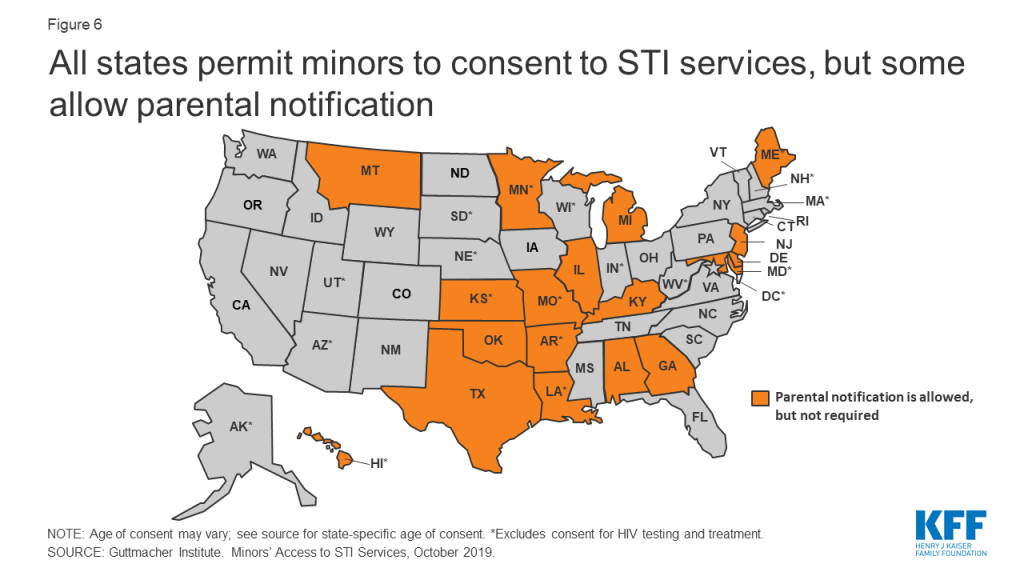
Confidentiality is a crucial factor in the provision of STI screening and treatment services. For minors in particular, it can be a challenge. Although all 50 states and DC allow minors to consent to STI services, 18 states allow physicians to inform a parent or guardian that the minor is seeking these services (Figure 6).
Figure 6: All states permit minors to consent to STI services, but some allow parental notification
Confidentiality has long been a fundamental principle of the Federal Title X family planning program; however, the Trump Administration’s new final regulations for the Title X program also have broadened its requirements to encourage family participation, require documentation of the specific actions taken to encourage family participation (or the specific reason why family participation was not encouraged) in minor’s records, and to document the age of the minor’s sexual partner. While the impact of this regulation on minors’ willingness to seek care at a Title X clinic has not yet been evaluated, there is concern that this new requirement will deter minors from seeking services because of their concerns about confidentiality.
Another confidentiality concern resulted from the ACA provision that allows dependents to remain covered under their parent’s plan up to the age of 26. In 2018, approximately 11.1 million young adults aged 19-25 were covered as dependents in an employer-sponsored insurance policy.1 Although this policy has expanded coverage for young adults, it has raised concerns about privacy and confidentiality in the use of sensitive health services such as STI screening and treatment for young adults covered as dependents. According to a 2013 Kaiser Family Foundation survey, 71% of women ages 18 to 25 rated confidentiality as important to them, but only 37% understood that an Explanation of Benefits (EOB) summary is sent to the primary policyholder (typically the parent) when health services are used.
However, seven states (CA, CO, HI, MD, ME, OR, and WA) have implemented broad laws to ensure confidentiality for minors seeking sensitive services such as STI screenings. Some states (CA, MD, and OR) require insurers to provide confidential communications upon the written request of the covered dependent, including minors. Other states (HI and ME) offer broader protections from disclosure of health information without the consent of the minor. Some states (CT, DE, and FL) have laws focusing specifically on the disclosure of STI treatment without a minor’s consent, including in the billing process.
Conclusion
High rates of STIs continue to be a public health concern. Women, people of color, and youth experience the highest rates of reported infections. Gay and bisexual men account for the majority of the increase between 2000 and 2018. The general public, however, appears to be unaware of the how commonly STIs occur and that their incidence is on the rise.
Publicly funded clinics, many funded by the CDC, OPA’s Title X program, and HRSA’s Ryan White program, including health centers, state and local health departments, STI clinics, and Planned Parenthood clinics, provide confidential STI and HIV care to at-risk and uninsured populations. With the passage of the ACA, most private health insurance plans and Medicaid expansion programs are now required to cover HIV and STI counseling and screening without cost sharing. In addition to coverage, access to and the availability of STI/HIV care will likely depend on a number of factors, including public funding for safety-net providers, adoption of practices aimed at the reduction of transmission such as patient education, expedited partner therapy, consistent routine screenings and treatment, as well as proximity to providers.
AppendixTable 1: Number of Reported Sexually Transmitted Infections, 2018
State
Chlamydia Cases
Gonorrhea Cases
Syphilis(Primary and Secondary) Cases
Congenital Syphilis Cases
HIV Prevalence (2017)
HIV Diagnoses
Alabama
28,437
12,742
477
7
13,124
572
Alaska
6,159
2,247
55
1
720
20
Arizona
40,807
12,870
1,047
61
16,062
806
Arkansas
17,663
7,300
288
25
5,634
281
California
231,415
79,192
7,607
332
128,153
4,398
Colorado
29,124
8,894
337
7
12,352
409
Connecticut
16,732
4,959
91
2
10,328
250
Delaware
6,038
1,691
30
0
3,285
91
DC
9,014
4,240
279
0
14,316
208
Florida
104,758
32,644
2,880
108
110,034
4,683
Georgia
65,936
20,867
1,607
31
52,528
2,552
Hawaii
7,735
1,495
92
4
2,524
66
Idaho
6,572
1,134
46
1
1,145
37
Illinois
77,325
25,422
1,408
29
35,076
1,352
Indiana
34,926
12,193
367
1
11,218
510
Iowa
14,682
4,839
86
3
2,671
116
Kansas
14,231
5,256
152
8
2,997
154
Kentucky
19,440
7,470
366
9
7,108
360
Louisiana
36,293
12,043
669
46
20,424
986
Maine
4,345
710
74
0
1,576
28
Maryland
35,482
10,305
737
29
32,436
979
Massachusetts
30,460
8,076
552
0
20,374
654
Michigan
50,592
16,688
649
13
15,667
718
Minnesota
23,569
7,542
292
10
8,304
283
Mississippi
22,086
9,749
464
3
9,399
479
Missouri
34,728
15,090
806
17
12,308
446
Montana
4,917
1,181
45
0
625
23
Nebraska
8,026
2,696
119
0
2,136
79
Nevada
17,508
6,475
682
31
9,609
508
New Hampshire
3,734
594
64
1
1,189
36
New Jersey
36,514
9,067
570
13
34,891
1,044
New Mexico
14,000
5,268
304
10
3,428
121
New York
119,571
37,262
2,654
28
126,495
2,470
North Carolina
66,553
23,725
1,098
17
30,953
1,200
North Dakota
3,525
1,369
41
0
407
36
Ohio
63,220
25,146
740
20
21,899
984
Oklahoma
21,974
8,998
531
12
6,084
234
Oregon
19,224
5,913
424
10
6,879
230
Pennsylvania
59,340
15,887
797
9
35,520
1,002
Rhode Island
5,487
1,336
96
0
2,547
76
South Carolina
33,910
13,801
384
9
16,858
719
South Dakota
4,432
1,689
41
1
568
28
Tennessee
38,212
14,627
553
12
16,612
759
Texas
146,510
47,231
2,538
367
88,099
4,483
Utah
10,541
2,895
169
1
2,757
121
Vermont
1,712
268
11
0
693
18
Virginia
42,965
11,776
702
9
22,149
867
Washington
34,449
11,207
802
7
13,205
503
West Virginia
3,599
1,143
65
1
1,810
85
Wisconsin
28,027
7,882
152
1
6,216
210
Wyoming
2,169
311
23
0
326
12
Sources: Centers for Disease Control and Prevention (CDC). 2018 Sexually Transmitted Diseases Surveillance. Atlanta: U.S. Department of Health and Human Services, October, 2019. CDC, National Center for HIV/AIDS, Viral Hepatitis, STD, and TB Prevention (HCHHSTP) AtlasPlus, accessed February 2019.
Kaiser Family Foundation estimates based on the Census Bureau’s American Community Survey, 2018. ↩︎