The Regulation of Private Health Insurance

Table of Contents

Introduction

Copy link to Introduction

Private health coverage is subject to significant requirements at the state and federal levels. While the Affordable Care Act (ACA) of 2010 ushered in many new requirements for the federal regulation of private health coverage, another federal law, the Employee Retirement Income Security Act (ERISA), has for over 50 years regulated the most predominant form of health coverage for people under age 65, employer-sponsored coverage.

States have traditionally been the primary regulators of health insurance, and state health insurance protections continue to play a major role alongside a growing list of federal protections aimed at addressing a variety of consumer concerns, including access to coverage, affordability, and adequacy. This chapter describes the landscape of laws and regulations that address health care coverage and the complicated interactions between state and federal requirements that can make these protections challenging for consumers to navigate. In this chapter, it is not possible to cover every single state and federal requirement for private plans, so the focus is on the primary laws and regulations that apply to private insurance coverage.

Timeline of Major Federal Laws for Private Health Insurance (Scatter Plot)

What Is Private Health Insurance?

Copy link to What Is Private Health Insurance?

Private health coverage is a mechanism for people to finance the health care services and medications they need, protecting them from the potentially extreme financial costs of this care.

At its core, health coverage is a financial contract between a private organization insuring the risk of loss and a policyholder. Where those insuring the risk or paying health claims are private entities such as insurance companies or private employers, this coverage is considered “private.” Coverage available in Health Insurance Marketplaces created by the ACA is considered private coverage, even though the Marketplaces are administered by state or federal government agencies. Public coverage, by contrast, involves financing arrangements for programs such as Medicare and Medicaid, which are paid primarily from public sources. This includes private plans participating in Medicare Advantage and Medicaid managed care arrangements. (See the chapters on Medicare and Medicaid for more information.)

A fundamental concept for the private provision of health coverage is pooling the health care “risk” of a group of people to make the costs of coverage more predictable and manageable. The goal typically is to maintain a risk pool of people whose health, on average, is the same as that of the general population. Private health coverage regulation has historically included steps to prevent insurers and plan sponsors from avoiding people in poor health, while also ensuring that risk pools include people in good health to guard against “adverse selection.”

A risk pool with adverse selection that attracts a disproportionate share of people in poor health, who are more likely to seek health coverage than people who are healthy, will result in increased costs to cover those in the pool, leaving those in better health to seek out a pool with lower costs.

Sources of private coverage. An individual with private coverage generally obtains it through one of two sources, either through their employer (“group” coverage) or by directly purchasing it from an insurer (“nongroup” coverage). Other related sources of coverage don’t exactly fit into one of these two categories, such as coverage provided by professional associations.

1. Employer coverage: In 2023, about 165 million people under age 65 had coverage through an employer. Employer-sponsored coverage is offered to eligible employees and usually to employees’ dependents, such as spouses and children. This coverage is referred to as “group” coverage, which is further broken down into small-group or large-group depending on the number of employees (Figure 1).

Private employers who “sponsor” group health plan coverage could include a range of entities, from a single nationwide retail employer with thousands of employees in many states to a small “mom and pop” operation with a handful of employees in one location. A single union can also be a group health plan sponsor of private coverage as an “employee organization,” as well as entities called “multiemployer” plans that are collectively bargained entities run by a joint board of trustees from labor and management that oversee collectively bargained benefits provided to employees of more than one employer, often in the same industry (for example, hotel workers or skilled workers in the building trades).

Public employers—federal, state, or local government—also sponsor group health coverage. The Federal Employee Health Benefit (FEHB) Program is the largest employer-sponsored health plan in the US. State and local government health plans are often referred to as non-federal governmental plans.

Employers, private and public, have at least two approaches to make coverage available to employees:

  • Fully-insured. An employer can purchase coverage from an insurer to cover their employees for a set premium. In this “fully-insured” arrangement, the insurer bears the financial risk if that group of employees ends up costing more than expected; these plans are regulated by the state in which they are sold. Each state has a group market for the sale of health insurance that is divided by size of the group for oversight and regulation: large group and small group.
    • Large Group Insurance Market typically involves insurance products sold to employers with 51 or more individuals (employees).
    • Small Group Insurance Market is generally an employer group of 50 or fewer individual employees. Small employers can purchase small group coverage from an insurer or through the state’s health insurance exchange or Small Business Health Options Program (SHOP). In a handful of states, the SHOP is the only place where a small employer can purchase state-regulated small group insurance coverage.
  • Self-insured. Employers can also use a “self-insured” (also often referred to as “self-funded”) arrangement where the employer assumes the financial risk by directly paying all covered claims. The employer typically contracts with a third-party administrator (TPA) to administer benefits by paying claims, designing benefits, establishing provider networks, and coordinating other aspects of coverage. TPAs are some of the same private organizations that provide health insurance as another line of business, as well as organizations called Pharmacy Benefit Managers (PBMs) that administer prescription drug benefits. As a result, coverage may not appear different to the covered worker than if they had fully-insured coverage. As explained in an upcoming section, unlike fully insured health coverage, self-insured coverage provided by private employers is largely not subject to state law but is governed primarily by federal law—mainly ERISA. Self-insuring health benefits are more common among larger employers because they can spread risk over a larger number of enrollees.

2. Individually-purchased insurance coverage: An individual can purchase private health coverage for themselves and their family without the involvement of their employer, referred to as “nongroup” coverage. Every state has an “individual insurance market” that consists of the following:

  • Marketplace. The ACA required the creation of health insurance Marketplaces in each state, where individuals can purchase insurance, with federal financial assistance for premiums and cost sharing if eligible. The coverage purchased from a Marketplace must meet certain minimum standards, including coverage of essential health benefits, no preexisting condition exclusions, and limits on varying premiums based on health status (“ACA-compliant” insurance). (See the ACA chapter for more information.)
  • Off Marketplace. People can also purchase individual insurance outside the Marketplace where federal financial assistance is unavailable. This could include ACA-compliant plans similar to those offered on the health insurance Marketplaces, and other types of coverage or financial products with lower premiums, but less comprehensive coverage than ACA-compliant plans, such as short-term limited duration coverage, fixed and hospital indemnity arrangements, health care sharing ministries, and others.

3. Other Sources of Private Health Coverage: Other sources of health coverage subject to unique regulatory standards include health coverage provided through entities called “multiple employer welfare arrangements” (MEWAs), “church plans,” and coverage provided by colleges and universities for their students.

  • A MEWA is generally any arrangement that provides benefits – in this case, health benefits – to employees of more than one unrelated employer. Historically, MEWAs have been vehicles for organizations to market less expensive health benefits to groups of employers, especially small employers. To address a history of MEWA insolvencies attributed to a lack of proper government oversight, changes to ERISA in 1983 created a complicated regulatory regime just for MEWAs, subjecting them to a mix of federal and state laws.
  • One type of MEWA, also governed by ERISA, allows groups of more than one employer to sponsor health coverage for their employees, known as an “Association Health Plan.Traditionally, these types of plans have been available to groups of small employers in a similar industry, such as those who sell real estate or work in a similar profession. In recent years, federal efforts to expand the criteria for what types of employers may form an AHP have been the subject of litigation and regulations.
  • Church plans are offered to employees by a church or association of churches, including entities controlled by or associated with a religion, such as religiously-affiliated hospitals and schools. Unlike other employer-sponsored plans, church plans are exempt from most ERISA requirements and some of the ACA’s health reforms. These regulatory gaps in church plans, including coverage of contraception, have been the subject of numerous legal proceedings.
  • A student health plan is any health coverage sponsored by a college or university for students. While it is not group coverage, it can be sponsored by a university in the same way employers sponsor health coverage. The ACA has special rules for this coverage. While an insured arrangement is considered individual market coverage, exceptions allow it to be provided without the insurer having to meet certain ACA market rules. A university can also sponsor a self-insured health plan for students. These arrangements do not have to meet the ACA’s market rules, although states may regulate them.

What Are the Different Types of Private Health Plans?

Copy link to What Are the Different Types of Private Health Plans?

Most private plans utilize a “network” of health care providers and hospitals, with some plans requiring a referral from a primary care provider (PCP) for enrollees to see a specialist. These types of arrangements, referred to as “managed care plans,” attempt to control costs and utilization through financial incentives, development of treatment protocols, prior authorization rules, and (in limited circumstances) dissemination of information on the quality of provider practices. Most private health coverage, whether employer-sponsored or individually purchased, falls into one of the following types:

Types of Private Insurance Plans

All of these plan types are available in the individual market, both on and off the Marketplace. Most employers that offer health benefits offer just one type of health plan, though larger firms may offer more. PPOs are the most common type of health plan offered by employers.

Other employer-sponsored health coverage arrangements: Employers also can offer a Health Reimbursement Arrangement (HRA), which is an employer-funded group health plan, sometimes paired with a high-deductible health plan (HDHP), that reimburses an employee up to a certain amount for qualified medical expenses and, in some instances, health insurance premiums. Reimbursements are tax-free to the employee, and amounts in the account can carry over to the following year, but employees lose any amounts when they leave the employer. Other variations of HRAs include an Individual Coverage HRA (ICHRA), where an employee can use funds in the HRA to purchase individual insurance either on or off the Marketplace. Qualified Small Employer Health Reimbursement Arrangements (QSEHRAs) are HRAs that certain small employers can make available for tax-free reimbursement of certain expenses.

Health Savings Accounts (HSAs): HSAs are tax-advantaged savings accounts that enrollees in certain HDHPs can use to pay for qualified medical expenses. While the HDHP associated with an HSA is usually sponsored by an employer or obtained through a Marketplace plan, the HSA itself is not usually considered employer-sponsored coverage (in contrast to HRAs). HSAs are owned by the individual and are portable, meaning consumers can carry them from job to job and use them after retirement.

Value-Based Arrangements: Some private health plans utilize “value-based” coverage and alternative payment models. These designs, primarily used in federal Medicare and Medicaid demonstration projects, aim to make providers more accountable for patient outcomes through various financial and other incentives. The objective of value-based care design is to shift the fee-for-service reimbursement model of paying for care based on “volume” to a system that pays based on the “value” of a service. Demonstration results to date have not shown major savings, but these designs are still discussed as a potential cost-containment tool for private health coverage. Payers and providers have also looked to value-based payment models to improve health disparities and to provide more patient-centered care.

How Do Federal and State Regulation of Health Insurance Interact?

Copy link to How Do Federal and State Regulation of Health Insurance Interact?

The regulatory framework for private health coverage has evolved into a complicated system of overlapping state and federal standards. This federalism framework creates a sometimes precarious “marriage” between state and federal authority in order to implement health policy goals.

At a high level, key aspects of the regulatory framework include the following five features: (Table)
1. States lead on insurance regulation, but with a federal fallback for most protections.

The regulation of insurance has traditionally been a state responsibility. States license entities that offer private health insurance and have a range of insurance standards, including financial requirements unique to state law. However, the federal government has played an increasingly significant regulatory role over the past 50 years.

The federal pension law, ERISA, passed in 1974, applies to insured and self-insured private employer-sponsored health coverage with similar legal and enforcement mechanisms to protect individuals covered by private group health plans as those created for pension plans.

Separately, the federal Health Insurance Portability and Accountability Act of 1996 (HIPAA) created new federal requirements and the basic framework for how state and federal law now interact. Under this “federal fallback” structure, states may require that insurers in the group and individual market (as well as state and local government self-insured plans) implement federal requirements on health coverage. If a state fails to “substantially enforce” the federal requirements, the federal government will enforce those protections. The federal fallback framework was intended to allow states to continue to regulate private coverage while ensuring that all consumers nationwide have a floor of federal protections when a state fails to implement them.

The federal fallback framework does not apply to self-insured employer-sponsored coverage. The U.S. Department of Labor (DOL) almost exclusively regulates private self-insured employer-sponsored plans. The Center for Medicare and Medicaid Services (CMS) directly enforces federal protections against state and local government self-insured employer plans (although states can also do so).

2. ERISA limits the application of state law for those with private employer-sponsored coverage.

ERISA specifically “preempts” or prevents state law from applying to most self-insured group health plans, limiting the scope and application of state protections for many Americans covered by employer-sponsored plans.

Aspects of this preemption have been the topic of almost 50 years of litigation, resulting in three overall conclusions:

  • Most state insurance laws, including state benefit mandates, don’t apply to self-insured ERISA plans, resulting in fewer regulatory requirements on these plans than on fully-insured plans.
  • State insurance laws generally do apply to fully-insured ERISA plans.
  • ERISA provides exclusive, yet limited, civil remedies for enrollees in ERISA plans who are harmed due to a violation of the law.

Today, some argue that ERISA preemption sustains the employer-based health coverage system because meeting an ever-growing list of state laws would be costly for employers, particularly those with employees in multiple states. Having national uniform standards, they argue, provides employers with an incentive to offer coverage. Others argue that preemption handcuffs states’ ability to protect consumers and control health care costs and that it is no longer needed given the ACA’s employer shared responsibility provision for larger employers and the increased regulation that applies a variety of rules to both fully-insured and self-insured plans. Prospects for change are limited, but some have explored the possibility of alternative approaches.

3.  Federal regulation of private health coverage can differ based on the market/source of coverage.

Private health insurance regulations vary based on the insurance market and the source of coverage. This is in part due to ERISA preemption and the ACA, which applies many reforms only to the individual and small-group markets.

Further complicating this are plans that existed before the ACA was passed, called “grandfathered” plans, that do not have to meet many of the ACA standards, so long as no significant changes in cost sharing and benefits are made to the plan.

The ACA did, however, alter federal law to create a large number of consumer protections that apply many of the same regulatory requirements across almost all sources of private health coverage. (See Table 7.)

Finally, some federal standards only apply to employer-sponsored plans (insured and self-insured) that are governed by ERISA, such as the requirement on employers with 20 or more employees to provide temporary continuation of coverage in certain situations, known as COBRA, which also applies to certain state and local government employers. There are also obligations on plan “fiduciaries” that are unique to ERISA plans.

This all means consumers can have different legal protections with their private coverage based on their coverage type and the state where they live.

4. Special exceptions in regulations allow certain types of private coverage to avoid having to meet many insurance protections.

Some private plans are specifically exempt from most federal private health coverage protections, including the ACA. These forms of coverage are often called “non-ACA compliant” coverage. While “non-ACA compliant” does not automatically mean it is illegal or inappropriate, some forms of this coverage have come under increasing scrutiny by federal and state authorities due to their gaps in consumer protections.

These types of coverage fall into these general categories:

  • Coverage that is an “excepted benefit” is specifically carved out of most of the ACA and other federal requirements. Some are considered health coverage under federal law, such as certain dental and vision benefits, and other forms of coverage may not be, such as fixed and hospital indemnity, cancer-only coverage, accidental death and dismemberment, and long-term care coverage. (This Health Affairs article provides a more detailed description of excepted benefits.)
  • Short-term limited-duration coverage and other forms of coverage are not regulated as health insurance under federal rules (as mentioned in the previous section).
  • Employer-sponsored plans with less than two participants who are current employees. This exception was included in the 1996 HIPAA law and has been interpreted as excluding employer-sponsored plans that cover only retirees from many federal insurance requirements.

Some of these forms of coverage are the focus of business promoters looking to market cheaper, largely unregulated forms of coverage. In some instances, this coverage might be promoted by unscrupulous actors who falsely market the coverage as meeting ACA requirements or as providing comprehensive coverage. In other cases, coverage is sold as supplemental “health” coverage along with ACA-compliant health insurance, sometimes with very high deductibles. These exceptions to the ACA’s broad coverage requirements can operate as loopholes in the implementation of consumer health coverage protections and may create ambiguities for consumers as well as employers.

5. Tax regulation matters for cost and access to health care and coverage.

Central to evaluating how private coverage works are the tax subsidies that reduce the cost of coverage and benefits, which can incentivize employers to sponsor and individuals to purchase private health coverage. Tax regulations also interpret what medical expenses (as opposed to general wellness or other non-medical expenses) get a tax preference.

The largest health care tax subsidy is applied to employer-sponsored coverage. Tax-exempt employer contributions for medical insurance premiums and medical care resulted in more than $224 billion in lost revenue for the federal government in 2022. Employer-sponsored health coverage is excluded from federal income tax, as well as federal employment taxes (and equivalent state taxes). The exclusion also applies to amounts reimbursed to employees by an employer under arrangements called “health flexible spending arrangements” (health FSAs), where an employee elects to have amounts withheld from their wages to pay for medical expenses. The exclusion provides considerable tax savings for employers and employees making contributions toward health coverage. The value of this exclusion increases as income increases, making income tax savings greater for higher-income individuals than for lower-income individuals. For various policy reasons, including to rein in health care costs, there have been efforts to change or cap this exclusion over the years, but to date, none have been successful. The most recent, the “Cadillac tax” provision of the ACA, was removed from the law before it was implemented (see the Employer-Sponsored Health Insurance chapter).

Additionally, the ACA created refundable tax credits based on household income to help individuals purchase coverage on a health insurance Marketplace (see the Affordable Care Act chapter). In contrast to the employer exclusion, tax subsidies for Marketplace participants are higher for those with lower incomes. Temporary increases in these credit amounts, passed as part of the American Rescue Plan and the Inflation Reduction Act, have led to record Marketplace enrollment. Unless Congress extends them, the temporary increases expire at the end of 2025. Unlike employer-sponsored insurance, Marketplace enrollees who pay a premium for their individual market insurance coverage generally do so with after-tax dollars (although an employer can sponsor tax-advantaged ICHRAs or QSEHRAs, as described above, to help employees pay for Marketplace and other individual market coverage).

In addition to the tax advantages related to employer-sponsored health coverage and tax subsidies received by lower-income individuals with Marketplace coverage, HSAs bring their own set of tax advantages for those who use funds in the account to pay for cost sharing and for items the IRS includes as qualified medical expenses. In 2025, a federal budget reconciliation law was enacted that may increase the use of HSAs.

What Federal Requirements Apply to Health Insurance?

Copy link to What Federal Requirements Apply to Health Insurance?

The scope and extent of federal regulation affecting private health coverage has vastly increased, especially with the passage of the Affordable Care Act (ACA) in 2010. The ACA largely retained the framework for the regulation of private coverage, adding a long list of new provisions to different regulated pieces of our fragmented health care system. This means specific and overlapping requirements on insurers, employer-sponsored plans, and, more recently, in the No Surprises Act, also on providers.

The ACA also unleashed a firestorm of activity resulting from longstanding political and philosophical differences on the role of federal government regulation of health care. Efforts to repeal and replace the ACA in 2017, several U.S. Supreme Court cases challenging ACA provisions, and hundreds of other cases in the lower courts on the ACA and other federal requirements mean the law in this area has and will continue to be in flux.

Regulatory priorities can and have shifted depending on what party controls the White House and Congress, resulting in ever-changing federal standards. This section reviews the current landscape of federal requirements. A discussion of every single relevant federal regulation is beyond the scope of this chapter, but the major requirements have been divided into six categories:

  • Access to health coverage
  • Affordability of health coverage
  • Benefit design and adequacy
  • Reporting and disclosure of information concerning coverage
  • Review and appeal of health claims
  • Other federal standards
1. Access to coverage

Federal health care reform has prioritized expanding health coverage to those without it for quite some time, especially for those not eligible for a public program such as Medicaid or Medicare, or who do not have coverage through their current employer. Prior to the passage of the Affordable Care Act in 2010, state laws and regulations were designed to address the potential for adverse selection in health insurance by allowing insurers to engage in certain practices such as “underwriting,” which allowed insurers in the individual and group markets to decline to cover or renew coverage due to a person’s health status or a group’s claims history, and helped plans maintain predictable and stable risk pools. Further, an insurer could cover the applicant, but charge a higher premium based on age, health status, gender, occupation, or geographic location. In addition, insurers could exclude benefits for certain health conditions if the person was diagnosed or treated for that condition before becoming insured (a “preexisting condition exclusion”).

States made some reforms, particularly in the small group market, to address these barriers to coverage. Some of these changes became part of the federal Health Insurance Portability and Accountability Act (HIPAA) of 1996. However, it was not until the ACA that the regulation of private insurance, at least for the individual and small group markets, was fundamentally changed.

Core Private Insurance Coverage Protections. The ACA established core market rules designed to expand coverage to most people in the U.S. New ACA legal requirements include:

Core Protections for Private Insurance Coverage

Requirements for premium stabilization and other efforts to protect the risk pool. The ACA’s private insurance market regulations also ushered in concerns that its protections, including guaranteed issue and the elimination of health underwriting for some coverage, would result in adverse selection (discussed in the first section). Regulatory efforts to prevent adverse selection have also focused on certain plans and products that do not have to meet most of the ACA rules, such as short-term limited-duration plans. Non-ACA-compliant coverage may be attractive to consumers looking for lower monthly costs, but these plans can leave consumers underinsured and may compromise the risk pool by drawing out healthier individuals.

Federal guidance and regulation aimed at protecting the risk pool as part of the ACA include:

ACA Requirements Aimed at Protecting the Risk Pool

Standards to prevent coverage gaps. Access to coverage is also enhanced by federal requirements to provide for the continuity of coverage or care to prevent gaps for those who do or could lose coverage, including:

Standards to Prevent Coverage Gaps (Table)
2. Financial Protection and Affordability

High costs, in the form of both premiums and cost sharing, have been a defining feature of employer-sponsored and individually-purchased (for unsubsidized enrollees) health coverage. Federal reforms have sought to address the stability and affordability of health insurance. Key provisions include:

Federal Insurance Financial and Affordability Protections (Table)
3. Benefit Design and Adequacy

Federal requirements also include a list of minimum standards for how a plan is designed or operated in an effort to ensure that enrollees have coverage that is comprehensive enough to cover medically necessary care, with processes that do not unnecessarily limit access to covered benefits. Such requirements include laws that prohibit plans from imposing annual dollar limits on coverage or requiring waiting periods longer than 90 days before employer-sponsored coverage kicks in. States may have additional benefit mandates for state-regulated plans, such as comprehensive coverage requirements for mental health or substance use disorders or fertility services.
Required coverage.

The ACA requires all private, non-grandfathered health plans to cover preventive services with no cost sharing for enrollees. These requirements change over time as preventive service recommendations are updated and new services are added. In general, these include:

Preventive Services Requirements for Private Health Plans

The preventive care coverage requirement has been the subject of extensive litigation since the ACA was passed. KFF briefs provide more detail on this litigation and a 2025 U.S. Supreme Court decision involving ACA preventive care standards. The contraceptive coverage requirement has been the topic of two U.S. Supreme Court cases and several regulations, now allowing employers to not cover contraception if they have a religious objection.

Other required design standards across most health plans.

Large group, small group, individual, and self-insured health plans are required to abide by other benefit design standards that aim to contain out-of-pocket costs and improve access to quality care. These design standards include:

Design Standards That Apply to Most Health Plans

Design standards limited to individual and small group plans. Federal requirements on health plan design standards for certain segments of the individual and small-group markets have evolved since the ACA was passed. Plans must meet these rules as part of annual certification requirements for qualified health plans. Examples of these standards include:

Design Standards for Individual and/or Small Group Health Plans
4. Disclosure, Reporting and Transparency

The 2023 KFF Survey of Consumer Experiences with Health Insurance found that most Marketplace and employer-sponsored insurance (ESI) enrollees reported difficulty understanding some aspect of their health insurance compared to consumers enrolled in Medicaid and Medicare:

Marketplace and ESI Enrollees Have Trouble Understanding at Least Some Aspect of Their Health Insurance

Lack of information or understanding about key features of an individual’s health coverage can put patients at financial risk and result in negative health outcomes. Employers and other health purchasers have also struggled to get the information they need to make prudent decisions about cost-effective coverage options and hold their service providers accountable for their plan designs, contracting, and administration activities. Regulations have increased over time to make more information available to enrollees or prospective enrollees, as well as to federal agencies to conduct their oversight responsibilities. What to disclose and how much information is useful is a continuing policy challenge.

Most federal disclosure, reporting, and transparency requirements fall into two categories: Disclosure of information to enrollees and/or the public (Table 9) and reporting to the federal government (Table 10). Note that the requirements provided in these tables are not exhaustive, but include examples of some of the main reporting, disclosure, and transparency requirements that plans, providers, and facilities are subject to.

Disclosure of Information to Enrollees and/or the Public (Table)

Ongoing reporting by private plans to federal agencies is a tool for agency oversight to assess compliance with regulations and evaluate trends. In some instances, agencies are required to use this information to report aggregate information to the public and Congress.

Requirements for Reporting to the Federal Government (Table)
5. Claims and Appeals Processes

Access to a fair system of review for consumer grievances about plan actions and claims denials has been a key element of federal consumer protection.

A 1997 Clinton Administration initiative, the Patient Bill of Rights, resulted in several federal agencies taking regulatory actions to enhance consumer protections for patients and workers. As part of this initiative, the DOL updated claims and appeals rules that applied to private-sector employer plans regulated by ERISA to make the claims review process:

  • Faster (shortened timeframe for plans to make a decision on claims and appeals)
  • Fairer (ensure plan decision makers were free of conflicts of interest)
  • Fuller (more transparent through the disclosure of more information to consumers–including language access standards–about the reason for a claim denial)

The DOL issued regulations in 2000 governing the “internal” claims review process, conducted internally by a plan or plan-sponsor employer. For the first time, these updated rules accounted for managed care features such as prior authorization, where health plans determine medical necessity before the plan covers an item or service, requiring, for example, shorter time frames for claim decisions and appeals for these “pre-service” claims.

Timelines for Private Health Plans' Internal Appeal Decisions

These rules were the basis for reforms applied across all private health coverage in the ACA. These reforms established a federal floor of protections for the internal claims and appeals process and added an option for consumers to appeal denied claims through an “external review” by an entity independent of the plan. Only certain types of claims, such as those that involve clinical judgment, are eligible for external review.

Policymakers have renewed scrutiny of the prior authorization process, as well as claims review and appeals generally. Claims and appeals standards that apply to Medicare Advantage plans, Medicaid, and some Marketplace plans were updated in 2024 to reduce delays in decision-making and to provide more transparency about the outcomes of claims and appeals decisions.

6. Other Federal Standards

Several other federal laws and regulations provide consumer protections in private health insurance, often indirectly, that sometimes have stronger enforcement mechanisms and penalties than federal insurance laws. These include:

Civil Rights Law. The Civil Rights Act of 1964 (and later amendments to it, including the Pregnancy Nondiscrimination Act) and the Americans With Disabilities Act of 1990 created protections against discrimination based on race, color, national origin, sex, age, and disability. At a minimum, these standards apply to employers with 15 or more employees, and, in effect, regulate those employers’ group health plan coverage.

Section 1557 of the ACA is a nondiscrimination provision that potentially applies many existing civil rights laws directly to health care entities, including insurers that receive federal funds. The extent of its reach has been the subject of several sets of regulations, with the iteration issued by the Biden administration addressing Section 1557’s ban on sex discrimination (among other issues) and reinstating protections against discrimination for LGBTQ+ people seeking health care and coverage, including for gender-affirming care. Trump administration actions will likely seek to undo this requirement and place restrictions on gender affirming care that the courts will be tasked with evaluating in the years to come.

Antitrust Laws. Antitrust laws in health care prohibit anticompetitive practices and mergers by health care providers, hospitals, and insurers, which can reduce competition and increase prices. As provider consolidation increases, federal agencies such as the Department of Justice (DOJ) and the Federal Trade Commission (FTC) have engaged in enforcement initiatives in recent years. Health insurers have also faced antitrust scrutiny as the market shares of the largest health insurers continue to dominate in most locations. Oversight of pharmacy benefit managers, now mostly owned by or affiliated with the largest health insurers, is one area of focus where Congress continues to debate whether additional standards are warranted, and state attorneys General are increasingly focusing their attention.

Privacy Laws. As digital health technology has advanced, so have concerns about protecting consumer health information, as the fast development of new technology (e.g., health-related apps, artificial intelligence) has made it difficult for regulation to keep up. The leading federal privacy requirements for health plans’ use of certain patient information, set out in HIPAA regulations, are now almost 25 years old. Efforts to update this regulation have been discussed, but have not yet been finalized. Updates to the HIPAA privacy rules were proposed toward the end of the first Trump administration. Updates to HIPAA’s security standards were proposed at the end of the Biden administration. It is unclear whether renewed proposals in this area are imminent. Regulatory changes to HIPAA in 2023 aimed at clarifying reproductive health care privacy were struck down by a federal court in 2025. The FTC has sought to regulate areas not covered directly by HIPAA, such as software applications increasingly marketed as part of health coverage. Continuing federal efforts to advance electronic information sharing (known as “interoperability”) will mean renewed calls for increased federal privacy and security protections.

Special privacy protections for substance use disorder information are regulated under a law known as “Part 2.” This law aims to protect the confidentiality of this information while still allowing providers to share patients’ mental health and substance use disorder information with plans and others to coordinate care and administer benefits.

Gag Clauses. Plans and issuers are prohibited from entering into an agreement with a provider, third-party administrator, or other service provider (including pharmacy benefit managers) that restricts the plan and issuer from accessing claim, cost, or quality information on providers, enrollees, plan sponsors, and other entities, known as a “gag clause.” Plans and issuers must annually submit an attestation of compliance with these requirements to the federal government.

Who Regulates Health Insurance at the Federal Level?

Copy link to Who Regulates Health Insurance at the Federal Level?

Three federal agencies have overlapping jurisdiction for most federal regulation of private health plans: the U.S. Department of Health and Human Services (HHS), the U.S. Department of Labor (DOL), and the U.S. Treasury Department. Through a structure created by HIPAA in 1996, these three agencies jointly issue regulations and other guidance on laws passed by Congress that place the same or similar standards across all private plans.

The same or similar federal requirements for private health plans are typically contained in three separate statutes that each agency oversees:

As an example, if Congress passes a federal law that requires all insurers of individual and group coverage and all employer-sponsored plans to meet a certain standard, any regulations issued to implement that standard are usually issued jointly by HHS, DOL, and Treasury with separate but identical language added to the Public Health Service Act (PHSA), ERISA, and the Internal Revenue Code (IRC). However, each agency has its own requirements for how these laws are enforced. In addition to these overlapping authorities, each of these three agencies has exclusive federal authority over certain aspects of private health insurance regulation (though the federal authority might be shared with states in some instances):

Federal Agency Enforcement of Private Health Plan Requirements (Table)

Other agencies with important oversight roles of private health coverage include:

  • HHS’s Office of Civil Rights: Implements HIPAA’s administrative simplification standards; ACA section 1557 nondiscrimination rules
  • HHS’s Office of the National Coordinator: Coordinates efforts to implement and use health information technology and health information exchange
  • HHS’s Food and Drug Administration: Regulates clinical investigations and supervises the safety of pharmaceutical drugs, biological products, and medical devices
  • Department of Justice: Antitrust enforcement
  • Federal Trade Commission: Antitrust enforcement
  • Equal Employment Opportunity Commission (EEOC): Nondiscrimination in health coverage and wellness program standards

How Are Federal Health Insurance Requirements Implemented and Enforced?

Copy link to How Are Federal Health Insurance Requirements Implemented and Enforced?

As the executive branch of the U.S. government, the federal government has the authority to execute laws passed by Congress and signed by the President, including issuing regulations to operationalize and implement a statute. In addition, specific agencies have the authority to investigate violations of the law and enforce the law through policy form review, market conduct exams, assessment of penalties, and/or bringing a court action to stop an insurer from violating the law (called an injunction).

Regulations and Other Guidance

Process: The federal regulatory process is governed primarily by the Administrative Procedure Act (APA). This law, along with specific executive orders, governs the process known as “notice and comment rulemaking,” where regulations are proposed (through a notice of proposed rulemaking or “NPRM”) and are subject to public comment for a certain period of time and then finalized. The process is administered by the Office of Management and Budget (OMB), an agency within the Executive Office of the President. The OMB’s Office of Information and Regulatory Affairs (OIRA) coordinates the review and release of regulations from the agencies. Regulations are published in the Federal Register, a daily publication of regulations and notices. Information about regulations under OIRA review is available by agency at Reginfo.gov, and the public can view all regulations and comment letters at Regulations.gov. Twice a year, OMB issues a regulatory agenda of regulations agencies expect to publish in the coming months.

Authority: Once a regulation has gone through the notice and comment process and a final rule is issued, it is generally considered to have the force of law, meaning private actors must comply with it, and individuals can rely on having the protections set out in the law and the regulation. However, regulations are subject to legal challenge under the APA if they are inconsistent with the statute.

Review of regulations by courts: Traditionally, if a regulation interprets a part of a statute that was not clear as drafted by Congress, and a federal court reviews a challenge to the regulation, the court would uphold the interpretation in a regulation unless it is unreasonable or arbitrary. Essentially, courts deferred to the expertise of government regulators and the regulatory review process to uphold a regulatory requirement if they deemed the interpretation reasonable. This practice is calledChevron deference,” named after a Supreme Court case from 1984, Chevron v. Natural Resources Defense Council, that set out the framework for court review of ambiguous language in a statute. This standard of review can result in agencies having discretion to implement policy changes through the interpretation of regulation. That discretion was challenged in recent years as too broad, giving regulators too much authority, and in June 2024, the U.S. Supreme Court overruled its previous decision, meaning federal courts are no longer required to defer to regulations of administrative agencies in circumstances where they traditionally would have. Eliminating Chevron deference could weaken the impact of regulation on public policy and shift more policy decisions to courts.

Sub-regulatory guidance: Other types of information and guidance commonly issued by a federal agency that do not go through the formal regulatory notice and comment process are referred to as “sub-regulatory.” Information and interpretation in sub-regulatory guidance usually do not have the force of law as regulations do, and typically do not create legally binding obligations on private parties. They are, however, useful in quickly communicating information to regulated entities and the public to signal how and when the agency plans to implement a new law, and the timing of that implementation. However, reliance on these types of guidance by consumers has its limits since regulated entities might still assert that this type of guidance is not binding on them. Examples of sub-regulatory guidance include:

  • Frequently asked questions, manuals, memos, and letters used by CMS, DOL, and the IRS: Certain provisions of the ACA have been the subject of numerous sub-regulatory guidance, including over 60 pieces of guidance in the form of frequently asked questions issued jointly by CMS, DOL, and the IRS. Sub-regulatory guidance also includes implementation manuals, policy letters, and enforcement memos.
  • Advisory opinion or information letters: The DOL and IRS have used advisory or information letters and chief counsel notices to address fact-specific questions at the request of regulated entities. DOL and IRS responses to these inquiries only apply to the specific parties and scenarios addressed, so they can’t be relied on by the public and can create ambiguities about what the law requires, which can remain unresolved for years until formal regulations are finalized. Note that the IRS also has several other types of guidance with varying levels of authority.

Enforcement

Given the federal fallback framework described in previous sections, the enforcement mechanism for most federal requirements on private coverage depends on the type of health plan and the federal agency enforcing the requirement, as summarized in Table 13 below.

Government enforcement. Under the existing federal fallback framework, CMS has developed a process for determining whether a state is substantially enforcing each specific federal insurance protection. This means that whether a state or CMS is responsible for enforcement can differ for each health coverage standard, resulting in a patchwork of federal and state enforcement responsibilities. In addition, both the DOL and the IRS each have their own separate enforcement processes for the federal standards they implement.

Private Right of Action and Remedies. Some laws also allow individual consumers or their representatives to bring a lawsuit independent of the government to address a violation. These laws may detail what types of “remedies” are available if the challenge is successful—for example, an injunction to stop a violation, a civil penalty, or compensatory or punitive damages. Without this “private right of action,” aggrieved consumers must rely solely on the government to act to address a violation of the law. Even federal laws, such as ERISA, that allow individual consumers to bring a lawsuit to resolve certain disputes, have limited remedies to address a violation. ERISA does not generally allow monetary damages as a remedy.

Federal and State Enforcement of Private Health Plan Requirements

The federal fallback framework also applies to most of the requirements on health care providers and facilities that are now part of federal law. In 2020, Congress passed and President Trump signed the Consolidated Appropriations Act (CAA), which includes new protections on balanced billing (the No Surprises Act) and various provider rules regarding disclosure and transparency. States are expected to enforce these standards against providers, with CMS as the federal fallback. State health departments or state agencies that oversee provider and facility licensing and practice standards oversee these rules. CMS has surveyed states and entered into collaborative enforcement agreements with each state, including which CAA rules the state is prepared to enforce and which ones CMS will need to implement. CMS can assess a penalty of up to $10,000 per violation against a provider or facility for non-compliance.

Enforcement of other standards. Outside of the above federal fallback framework, each agency has its own separate enforcement mechanisms for the laws it implements alone. For instance, HHS has the authority to assess fines under HIPAA privacy rules for violations, but individuals harmed by a HIPAA violation do not have a private right of action under that law. Enforcement processes and remedies available under federal nondiscrimination requirements under the Civil Rights Act or the Americans with Disabilities Act vary, but some include monetary damages in the form of compensatory damages.

Who Regulates Private Health Insurance at the State Level, and What Are the Primary Enforcement Tools Used?

Copy link to Who Regulates Private Health Insurance at the State Level, and What Are the Primary Enforcement Tools Used?

The McCarran-Ferguson Act, enacted by Congress in 1945, clarified that states have the primary role in regulating the business of insurance. Although changes have since been made to that law, states have several mechanisms in place to regulate insurance. States license entities that offer private health coverage in a process that reviews the insurer’s finances, management, and business practices to ensure it can provide the coverage promised to enrollees. States also license the insurance agents and brokers in the state (see the section “What Is the Role of Health Insurance Brokers and Other Assisters?” for more information).

State insurance laws and regulations vary by state, though commonly include:

State Responsibilities for Regulating Private Health Insurance

Most states require health plans to provide specific data that is included in the state’s all-payer claims databases (APCDs). These are state databases that include medical, pharmacy, and often dental claims, as well as eligibility and provider files collected from and aggregated across all private and public payers in a state. APCDs can provide states with a perspective on cost, service utilization, and quality of health care services across the full spectrum of payers in a state, which can be a tool in state efforts to control health care costs and promote value-based care.

Some states are also developing additional state-level regulations related to health plan network adequacy, health plan price transparency, public option plans, reinsurance programs, and more. These state-level regulations and protections do not apply to enrollees in self-insured plans offered by private employers (see the section “What is Private Health Insurance” for more information). However, these enrollees may have some of these protections through other federal laws and regulations.

State legislatures enact state insurance laws and typically grant regulatory authority to the state’s insurance regulator/commissioner. State enforcement mechanisms vary widely by state, regulation, state resources, and staffing capacity. Shifting political priorities at the state level can also influence enforcement priorities and actions. For example, state insurance agencies may ensure compliance with certain benefit mandates by primarily relying on complaints from consumers, consumer advocates, or health care providers to trigger a compliance review of the plan in question, while other state insurance agencies conduct periodic systematic reviews of all plans subject to the law or regulation.

What Is the Role of Health Insurance Brokers and ACA Consumer Assistance Programs?

Copy link to What Is the Role of Health Insurance Brokers and ACA Consumer Assistance Programs?

Navigating an increasingly complicated health coverage landscape has increased the focus on the availability and expertise of entities that assist purchasers of health coverage (consumers and employers). Assisters can include agents and brokers who are paid commissions from insurers, as well as consumer assistance programs created by the ACA, which are often publicly funded and nonprofit, who may provide similar assistance as agents and brokers, but also specialize in individuals transitioning in and out of public programs such as Medicaid or assisting those without insurance to find coverage.

Agents and brokers have long played a significant role in connecting individuals and employers to private health coverage by helping them understand health insurance options and costs. An “agent” typically represents a single insurer and provides information about that insurer’s coverage options. A “broker” is not aligned with any one insurer but could, in theory, place coverage from any insurer selling products in a state.

Agents and brokers assist individuals in choosing a qualified health plan on a health insurance Marketplace. Their role in Marketplace enrollment has grown over the years. In the 2024 plan year, 78% of ACA coverage was sold through health insurance agents compared to 43% in 2016. Web brokers, who facilitate plan selection online through Marketplace capabilities, have also played a large role in Marketplace enrollment.

Agents and brokers in the health insurance Marketplace have faced scrutiny for alleged fraudulent activity in recent years due to consumer reports of unauthorized enrollment and plan switches by agents and brokers. In response, CMS, under President Biden, began requiring additional steps to be taken before agents and brokers can make changes to a consumer’s HealthCare.gov enrollment, and hundreds of agents’ and brokers’ Marketplace agreements were suspended for reasonable suspicion of fraudulent activity. In an attempt to address Marketplace fraud, the Trump administration finalized a regulation in 2025 that, along with the 2025 budget reconciliation law, creates new administrative hurdles for consumers to enroll in Marketplace coverage and receive premium tax credits. These 2025 actions made few changes to broker oversight requirements for Marketplace plans. The Trump administration also reinstated many agents and brokers suspended in recent years, and federal indictments related to broker fraud for actions that allegedly occurred as far back as 2018 still await resolution.

Even before the creation of the Marketplaces, agents and brokers had been selling coverage in the individual and group insurance market, especially to small employers needing expertise in finding health insurance for their employees. Large employers also use agents and brokers, who often work for employee benefit consultants or brokerage firms and receive commissions (or, in some cases, a fixed fee) to find vendors to support their self-insured group health plan or for placing other forms of insurance that they provide or make available to employees as “voluntary” benefits.

Broker Compensation Reporting. Employer plans governed by ERISA must meet ERISA fiduciary standards. These standards prohibit plans from contracting with a “party-in-interest,” which is an entity that may have a conflict of interest because it is receiving compensation from a third party for activity it is doing for the employer plan. For instance, a benefits consultant may be helping an employer find a third-party administrator (TPA) for its group health plan, and the consultant is paid by the employer for their work but also gets a commission from the TPA if the employer decides to use its services. Employers are prohibited from entering into this type of transaction with the consultant unless they can show it was done in a “reasonable manner.”
Under rules added to ERISA by the CAA, one way an employer plan can demonstrate that its contract with a broker/consultant is reasonable is to show that it received information from the broker/consultant about the compensation the broker/consultant received from the TPA. Under these rules, an employer plan fiduciary violates ERISA if it does not receive from a broker or consultant information about the direct and indirect compensation the broker receives. Also, insurers offering individual insurance (on- and off-Marketplace) and those offering short-term limited-duration plans must disclose to enrollees and report to CMS any direct or indirect compensation they pay to agents and brokers for enrolling individuals in this coverage.

Consumer Assistance Programs. The ACA required the creation of other types of assisters to assist consumers with enrollment, plan selection, insurance problems, and, in some cases, post-enrollment support. These programs must provide impartial, no-cost help to consumers and cannot be affiliated with an insurance company.

Navigator programs, which are federally funded through grants, were created to raise public awareness and assist individuals in enrolling in qualified health plans as well as provide post-enrollment support. Navigators participate in trainings and are required to be knowledgeable in eligibility and enrollment rules and available QHP options, and maintain privacy and security standards. In 2025, CMS announced a 90% cut in Navigator funding, the largest funding cut since the program began. The current plan year funding of $100 million will be reduced to $10 million for 2026. These cuts come as enhanced Marketplace subsidies are set to expire at the end of 2025 and federal cuts to Medicaid begin to take effect in 2026, both of which could result in significant coverage losses.

Related assisters include Certified Application Counselors (CACs) who also assist consumers in resolving insurance issues and identifying the coverage option that best suits their needs. CACs, however, are not required to meet the same standards as Navigators or participate in all of the activities required of Navigators (e.g., providing post-enrollment assistance). In states using the federally-facilitated Marketplace (FFM), CACs are overseen by Certified Application Counselor Designated Organizations (CDOs), which are designated by CMS and include organizations such as community health centers, hospitals, and social services agencies. To serve as a CAC in an FFM state, the individual must be affiliated with a CDO and is typically a staff member or volunteer. CACs are not federally funded and instead rely primarily on outside non-profit organizations and foundations. 

The ACA also established Consumer Assistance Programs (CAPs) to assist consumers with insurance problems and identify their best options for health coverage. Unlike the Navigator program, which was specifically created to assist Marketplace, Medicaid, and CHIP consumers, CAP programs also assist consumers with employer-sponsored coverage and other types of coverage. The ACA provided an initial appropriation for CAPs, which 35 states and Washington, D.C., took advantage of, but CAP programs have received no federal funding since 2012. Many states have continued their CAP programs using their own funds, but others have discontinued their operations.

What is the Future Outlook for the Regulation of Health Insurance?

Copy link to What is the Future Outlook for the Regulation of Health Insurance?

2025 and beyond will likely see a retrenchment in regulation at the federal level that could impact the private coverage gains of the last decade. While states will still play a significant role in regulating private health insurance, the fragmented structure of private health care regulation and enforcement means that states alone are limited in what they can do to affect national change or influence private employer-based coverage, where most insured Americans under 65 get their coverage. The future regulatory outlook for private health coverage will be shaped by the following three key features:

Deregulation and Litigation. The Trump administration has put in motion, through several executive orders and other actions, deregulation across the health care sector. For example, a January 2025 executive order required that for every new regulation promulgated, federal agencies must identify at least ten existing regulations to repeal, which could impede future rulemaking. Another executive order required all federal agencies to coordinate with the president’s Department of Government Efficiency (DOGE) to review all regulations to make sure they are consistent with “law and Administration policy.” Using this executive order, the Trump administration has limited the enforcement of final regulations on mental health parity and short-term, limited-duration plans. Also in February 2025, President Trump issued an executive order that rescinded several executive orders issued by President Biden, including one aimed at strengthening the ACA.

These types of regulatory rescissions and a general deregulatory executive agenda, along with disruptions in agency structure and the personnel layoffs in the federal health care agencies, could have long-term impacts on private health care regulation. The outcome of court challenges to many of these deregulatory actions will determine future developments. In addition, changes in how courts review agency decisions—that is, the major decisions by the Supreme Court to limit agency discretion—could be a barrier to the Trump administration’s deregulation initiatives, as federal courts now have more power to second-guess policy decisions of the President. Look for attempts at codifying the Trump administration’s priorities through congressional action to get past any court barriers. Also, expect to see more actions from this administration through executive orders, voluntary industry agreements, and sub-regulatory guidance (e.g., advisory opinions that approve various industry arrangements). Changing enforcement priorities for federal agencies could leave patients looking to state and private mechanisms to get the protections written in federal law.

Technology Advancements. Expect wide-ranging recommendations from major stakeholders on which aspects of artificial intelligence (AI) and telehealth should be promoted and protected from federal regulation. The Trump administration has already announced its plans to speed up the development of AI and reduce regulation. With limited federal regulation anticipated during this administration, much of the future outlook for consumer protections will depend on the voluntary actions of industry and how transparent those activities are. For example, in July 2025, the Trump administration announced a new voluntary initiative aimed at enhancing health data interchange (known as “interoperability”) and expanding patients’ access to their own health data and reported that more than 60 companies had pledged to participate. Open questions about data privacy, security, and accuracy are key concerns as the details of this initiative and new apps are developed. Participation is optional, and the initiative does not create any new legally binding requirements for these companies. While the market for digital health care tools could benefit from the emphasis on AI and virtual care, without updated federal privacy and security rules, such as HIPAA, and nondiscrimination requirements, consumers may have to look to state regulation for these protections. Additionally, new, expensive gene therapies and blockbuster medications will likely increase the overall cost of health care and could also challenge policymakers to rethink existing reimbursement structures and government intervention in pricing.

Consumer Choice. Look for policy shifts from consumer assistance and protection to efforts to broaden the health coverage choices available to consumers to include those that may not meet all of the ACA’s consumer protection requirements. The emphasis on “choice” will likely include efforts to encourage consumers to use tax-advantaged accounts such as health savings accounts, which can be used to set aside funds to purchase an increasing variety of items and pay for health care services provided via direct primary care arrangements and telehealth before the deductible applies. Policy debates on whether low-income individuals and those with chronic illnesses are best served by these account-based models are also possible.

Resources

Copy link to Resources

Citation

Copy link to Citation

Pestaina, K., Wallace, R., & Long, M., The Regulation of Private Health Insurance. In Altman, Drew (Editor), Health Policy 101, (KFF, October 2025) https://www.kff.org/health-policy-101-the-regulation-of-private-health-insurance/ (date accessed).

Employer-Sponsored Health Insurance 101

Table of Contents

Introduction

Copy link to Introduction

Employer-sponsored health insurance (ESI) is the largest source of health coverage for non-elderly U.S. residents. Unlike many other nations, the U.S. relies on voluntary, private health insurance as the primary source of coverage for residents who are not elderly, poor or disabled. Providing health insurance through workplaces is an efficient way of offering coverage options to working families, and the tax benefits of employer-based coverage further enhance its attractiveness. Yet, ESI often results in uneven coverage, especially for those with low wages or those working at smaller firms. Overall, 60% of people under age 65, or about 164.7 million people, had employment-sponsored health insurance in 2023. The level of coverage varies significantly with income and other factors, even among working families.

Editorial Note: The estimate for the number of people with employer-sponsored health insurance includes all people under age 65, regardless of whether they report multiple types of coverage. A KFF analysis of the American Community Survey (ACS) found that 154 million people under age 65 are covered by employer-sponsored health insurance in the United States. To produce this estimate, coverage is assigned using a hierarchy, so each person reporting more than one type of insurance is counted under a single category.

What Is Employer-Sponsored Health Insurance?

Copy link to What Is Employer-Sponsored Health Insurance?

There are several ways people get private health insurance. One is by purchasing coverage directly from an insurer, often with the help of an insurance agent or through an online platform such as Healthcare.gov. Income-based premium assistance is available under the Affordable Care Act (ACA). This is called individual or non-group health insurance. The second is coverage under a policy or plan offered by a sponsoring group, such as an employer, union or trade association. This is called group health insurance. When an individual is sponsored specifically by an employer (or sometimes jointly by one or more employers and a union or by a group of employers), it is often referred to as employer-sponsored health insurance, or ESI.

The word “insurance” is something of a misnomer here. An employer providing health benefits for workers and their families (“plan enrollees”) can fund them in one of two ways. Employers may purchase a health insurance policy from a state-licensed health insurer, which is referred to as an insured plan. Alternatively, the employer can pay for health care for the plan enrollees directly with its own assets, referred to as a self-funded plan. Employers with self-funded plans often protect themselves from unexpected high claim amounts or volume by purchasing a type of insurance referred to as stop-loss coverage. As discussed below, most ESI plan enrollees are covered by large employers, and most large employers self-fund their health benefit plans.

Another confusing set of phrases used in conjunction with health insurance, including ESI, is “health plan” or just “plan”. The terms can refer to an entity offering coverage (e.g., Aetna) or a particular coverage option offered by an insurer or employer (e.g., the PPO plan option). However, the terms “employee benefit plan” and “plan” have specific meanings in federal law, and invoke several legal obligations for employers when they offer certain benefits to their workers and their family members. Under the Employee Retirement Income Security Act, or ERISA, an employee benefit plan, or plan, is created when a private employer creates a plan, fund or program to provide certain benefits, including health benefits, to employees. ERISA creates a structure of disclosure, enforcement and fair dealing regarding the promises made by employers to enrollees in employee benefit plans. However, ERISA does not apply to the health benefit plans created by public plans or churches, although the word plan is often still used to describe benefits offered in these settings.

ESI plans can be differentiated across several dimensions.

Comprehensive or limited benefits

Employers offer different types of health benefit options to employees. These include comprehensive benefit plans, which cover a large share of the cost of hospital, physician and prescription costs that a family might incur during a year; service-specific benefits, such as dental or vision care plans; and supplemental benefit plans, which may provide a limited additional benefit to enrollees if certain circumstances occur (e.g. $100 per day if hospitalized). The discussion here will be limited to comprehensive benefit plans.

Open or closed provider networks

Health plans contract with hospitals, physicians, pharmacies and other types of health providers to provide plan enrollees with access to medical care at a predetermined cost. Plan enrollees receiving services from one of these providers know that their financial liability is limited by their deductible and other cost sharing amounts specified in their benefit plan. A closed-network plan is one where, absent special circumstances, an enrollee is only covered if they receive care from a provider in their plan’s network of contracted providers. In an open-network plan, an enrollee still has some coverage if they receive care from a provider not in the plan network, although they will likely face higher cost sharing under their benefit plan, and the provider may ask them to pay an additional amount (known as balance billing). Health maintenance organization (HMO) and exclusive provider organization (EPO) plans are two types of closed network plans. Preferred provider organization (PPO) and point of service (POS) plans are two types of open network plans.

Small and large group markets

Federal and state laws divide ESI into the small group and the large group market, based on the number of full-time equivalent employees (FTEs) working for the employer sponsoring the plan. Federal regulation states that employers with fewer than 50 FTEs are often in the small group market and employers with at least 50 FTEs are in the large group market. However, states have the option to raise the small group market limit to fewer than 100 FTEs. The regulatory requirements for the small and large group markets differ somewhat. Generally, the small group insured market is subject to more extensive rules about benefits and ratings. Large employers are potentially subject to financial penalty under the ACA if they do not offer health insurance coverage meeting certain requirements to their full-time employees.

Are Employers Required to Offer Health Benefits?

Copy link to Are Employers Required to Offer Health Benefits?

The drafters of the ACA intended to provide coverage options to those without access to employer-sponsored coverage without encouraging employers to drop coverage. To achieve this balance, the ACA requires that employers with at least 50 FTEs offer health benefits which meet minimum standards for value and affordability or pay a penalty. The so-called ‘employer mandate’ constitutes two separate penalties.

First, employers are taxed if they do not offer minimum essential coverage to 95% of their full-time employees and their dependent children. This generally requires that employers offer major-medical coverage and not a limited benefit plan. Employers face this penalty when at least one of their employees receives an advance premium tax credit (APTC) to purchase coverage on the health insurance exchange markets or Marketplaces. In 2024, this penalty stipulates that employers will be assessed a tax of $2,900 for each full-time employee after their first 30 employees.

Secondly, employers are penalized if the coverage they offer is not affordable or does not provide minimum value. Plans are considered to meet the minimum value standard if they cover 60% of the health spending of a typical population. In 2025, coverage was deemed to be affordable if the employee premium contribution is less than or equal to 9.02% of their household income. Employers may be charged $4,350 for each employee enrolling in subsidized Marketplace coverage.

Defining what constitutes ‘affordable’ has been the focus of considerable attention in recent years. The Obama Administration initially issued rules that workers and their dependents would be considered to have an affordable offer if self-only coverage met the affordability test. With many employers requiring much larger premium contributions to enroll dependents, this meant that as many as 5.1 million people were in households where they had to pay a larger share of their income to enroll in the plan offered by their employers without being eligible for premium tax credits. Recent rules have addressed the so-called “family glitch”, by considering the cost of family coverage when assessing affordability. While most large employers offer health benefits, many may encourage spouses and other dependents to enroll in other plans if possible. For more information on eligibility for premium credits see the Affordable Care Act chapter.

Why Is Employer-Sponsored Health Insurance So Dominant?

Copy link to Why Is Employer-Sponsored Health Insurance So Dominant?

ESI is by far the most common source of private health insurance. There are two primary reasons for this. The first is that providing health insurance through the workplace is efficient, with advantages relating both to risk management and to the costs of administration. The second is that contributions towards premiums by employers and (in most cases) by employees are not subject to income or payroll taxes, providing a substantial federal and state subsidy towards the costs of ESI.

ESI Efficiencies

When people have choices about whether to buy insurance and the amount of coverage to buy, it is natural that people with the highest need for coverage (e.g., people in poorer health) will be more likely to purchase and be more willing to pay higher prices. This is called adverse selection. If insurers do not address these tendencies, their risk pools will become dominated by a relatively small share of people with the highest needs, and premiums will increase to levels that only make sense for those with very high expected costs.

There are several ways insurers seek to manage the risk profile of potential enrollees to avoid adverse selection. One is by examining the health profile of each applicant, which typically includes the applicant’s health history and pre-existing conditions. This strategy is reasonably effective, but an expensive and time-consuming process. A much lower-cost approach is to provide coverage to groups of people who are grouped together for reasons other than their health or their need for health insurance. Providing coverage through the workplace is a common way of doing this. Mostly, people choose a job because of the work, not because they need health insurance. Therefore, providing coverage through workplaces provides insurers with a fairly normal mix of healthy and less healthy enrollees if certain conditions are met. These conditions include enrolling a large share of the eligible workers in coverage (typically achieved by the employer paying a large share of the cost) and limiting the range of coverage options (to avoid adverse selection among plan types). Further, as the number of employees grows, the ability to predict future costs based on prior experience also increases, reducing the uncertainty in setting premiums for the group. As uncertainty decreases, insurers can reduce what they charge for insuring the group. Overall, the same scenario generally applies to situations where employers choose to offer a self-funded plan. Therefore, these advantages occur regardless of whether an insurer or an employer is taking on the risk.

In addition to the risk management advantages, ESI has many administrative advantages. Providing coverage through a workplace adds many employees to a risk pool through a single transaction, with no need to examine their health in most cases. Employers also provide and collect enrollment information to workers and collect the employee share of premiums, dramatically reducing the number of transactions and reducing the amount of unpaid premiums that typically occur when individuals purchase insurance directly from insurers.

Tax Advantages

Federal and state tax systems provide significant tax preferences for ESI. Generally, wages and other things of value employers provide as compensation to their workers are subject to federal and state taxes. The federal government taxes wages and other forms of income through a series of marginal rates that vary with income and the marital and filing status of the taxpayer. For example, the lowest marginal rate in 2024 for a single taxpayer was 10% for income below $11,601 and the highest rate was 37% for income above $609,350. Additionally, wages are subject to federal payroll taxes to support the Social Security and Medicare programs; employers and employees are each assessed 6.2% of wages up to a maximum wage for Social Security and 1.45% of wages with no wage limit for Medicare. Wages are also subject to state income and payroll taxes for unemployment which vary considerably.

Unlike wages, ESI provided by employers as part of their compensation to employees is not considered income under the federal income tax code, nor are they considered wages subject to federal payroll taxes (See 26 USC sections 105 and 106). Federal law also permits employers to establish programs that exclude employee contributions towards ESI from these taxes. These exclusions lower the cost of health insurance for employees. For example, just considering the federal tax advantages, if an employee earns annual wages of $100,000, an employer can provide the employee with a $20,000 family policy for an additional $20,000 in compensation. However, if ESI were subject to federal taxes, that same employee would need to earn an additional $27,460 in wages to be able to buy a $20,000 family policy with after-tax dollars, assuming a 22% marginal federal income tax rate and a combined 15.3% payroll tax for Social Security and Medicare. Looked at another way, for this employee, for every dollar that the employer raises the employee’s compensation, the employee can get a dollar of health benefits or just under 63 cents in wages after taxes. State tax laws, which follow federal definitions of income and wages in this situation, further lower the cost of ESI for workers, although the impacts are much smaller.

The exclusion of ESI from federal income tax is a long-standing and somewhat controversial part of federal tax policy, first appearing due to a decision by the War Labor Board in 1942, which in turn allowed employers to use fringe benefits to attract workers during the war. In 1954, ESI exclusion was enacted in the tax code. This tax policy, combined with the risk management and administrative advantages of group coverage, contributed to the rapid growth and continued market dominance of commercial hospital and medical insurance during this period. Detractors of the tax exclusion have argued that it encourages workers to over-consume health insurance by demanding health benefits that are richer than what they would want under a tax-neutral approach (e.g., if health benefits were taxed in the same way as wages). Richer benefits, it is argued, contribute to higher health care costs because people with better insurance use more health care than they otherwise would, since they are not facing the actual costs of care (sometimes called moral hazard). Another criticism is that the income tax exclusion favors higher-paid employees because they have higher marginal tax rates: the effective income tax benefit for a dollar of ESI is only 10 cents for a worker with very low wages, but can be up to 37 cents for those with the highest wages.

In contrast, the exclusion of health benefits from payroll taxes has the same dollar benefit for workers at all wage levels (up to the Social Security earning limit), which results in a higher percentage exclusion (share of wages) for those with lower wages. The tax exclusion was estimated to cost the federal government $312 billion (about $940 per person in the US) in income and payroll taxes in 2022.

Who Is Covered by Employer-Sponsored Health Insurance?

Copy link to Who Is Covered by Employer-Sponsored Health Insurance?
Share of non-elderly people with employer-sponsored health insurance (ESI), overall and by poverty level, March 2023 (Bar Chart)

As of March 2023, 60.4% of the non-elderly, or about 164.7 million people, had ESI. Of these, 84.2 million had ESI from their own job, 73.8 million were covered as a dependent by someone within their household, and 6.7 million were covered as a dependent by someone outside of their household.

A relatively small share of these people also held other coverage at that time: 3.2% were also covered by Medicaid or other public coverage and 0.6% were also covered by non-group coverage.

ESI coverage varies dramatically with income. In March 2023, more than 4 in 5 (84.2%) non-elderly adults with incomes at least 400% of the federal poverty level (FPL) had ESI, compared to 59.0% with incomes between 200% and 399% of the FPL and 23.9% with incomes below 200% of the FPL.

ESI also varies with age, as well as other worker characteristics. Among non-elderly people in March of 2023, people in younger age groups were less likely than those in older age groups to have ESI, and U.S. citizens were much more likely than non-citizens to have ESI. ESI coverage also varied across race and ethnic categories: compared to non-Hispanic White people, Hispanic people and non-Hispanic people who are Black, American Indian or Alaskan Native, or of mixed race were less likely to have ESI.

Share of non-elderly people with employer-sponsored health insurance (ESI), By select characteristics, March 2023 (Bar Chart)

How Many Workers Have Access to Employer-Sponsored Health Insurance at Their Job?

Copy link to How Many Workers Have Access to Employer-Sponsored Health Insurance at Their Job?

For people in working families to have ESI, one or more workers must work for an employer that makes coverage available to them. For workers to access ESI, they need to work for an employer that offers ESI and be eligible to enroll in coverage offered at their job. About four in five (80.8%) adult non-elderly workers worked for an employer that offered ESI to at least some employees as of March 2023. Most (93.1%) of these workers were eligible for the ESI offered at their job. Overall, in 2023, about 3 in 4 of all workers were eligible to enroll in the ESI offered at their job.

Among workers ages 18-64 years, share working for an  offering employer and share eligible for employer-sponsored health insurance (ESI) at job, overall and by poverty level, March 2023 (Grouped Bars)

Both the share of workers working for employers offering coverage and the share of workers eligible for coverage at their jobs vary significantly by income. Among adult non-elderly workers, the share working for an employer offering ESI ranged from 60.6% for workers with incomes under 200% of the FPL to 88.2% for workers with incomes at least 400% of the FPL. Similarly, the share eligible for coverage ranged from 49.5% for workers with incomes under 200% of the FPL to 84.6% for workers with incomes of at least 400% of the FPL.

Working for an offering employer and being eligible for the offered coverage are dependent on a combination of characteristics. As of March 2023, non-elderly workers working in construction, service, sales, and farm, fishing and forestry-related occupations were less likely to be working for an employer offering ESI and to be eligible for ESI at their jobs. Full-time workers were much more likely to be working for an employer offering ESI and to qualify for coverage at their job. There also was significant variation in offer rates and eligibility within sex, age group, race and ethnicity, and citizenship.

Among workers ages 18-64 years, share working for an offering employer and share eligible for employer-sponsored health insurance (ESI) at job, By occupation and full-time/part-time status, March 2023 (Grouped Bars)

How Many Workers Take Employer-Sponsored Health Insurance Available at Their Job?

Copy link to How Many Workers Take Employer-Sponsored Health Insurance Available at Their Job?
Among workers ages 18-64 years eligible for employer-sponsored health insurance (ESI) at work, share covered from own job or other sources, March 2023 (Bar Chart)

Among non-elderly adult workers eligible for ESI at their jobs in March 2023, 74.4% were ESI policyholders. Of those who did not have ESI from their own job, 14.6% were covered by ESI as a dependent, 4.6% had Medicaid or other public coverage, 2.0% had non-group coverage, 1.1% had some other coverage, and 3.7% were uninsured. A small share of workers with ESI from their job also had other coverage at the same time: 2.4% also had Medicaid or other public coverage and 0.6% also had non-group coverage.

What Share of Employers Offer Health Benefits to Their Workers?

Copy link to What Share of Employers Offer Health Benefits to Their Workers?
Percentage of Firms Offering Health Benefits, by Firm Size, 1999-2025 (Line chart)

Among firms with three or more workers, just over half (54%) offered health benefits to at least some of their workers in 2024. Firm offer rates differed significantly with firm size. Only 46% of firms with three to nine workers offered health benefits while virtually all (98%) firms with at least 200 employees did so. While a large majority of firms are small, 84% of firms with three or more employees have fewer than 25 employees, and these firms employ just 16% of workers. Sixty-four percent of workers work for firms with 200 or more employees, where the employer offer rate is almost 100%.

Among firms offering health benefits, 25% of firms with fewer than 200 workers and 26% of larger firms offered health benefits to part-time workers in 2024.

Eighty-nine percent of firms offering health benefits offered them to dependents (e.g., spouses and children) of their workers in 2024.

What Are the Premiums for Employer-Sponsored Health Insurance?

Copy link to What Are the Premiums for Employer-Sponsored Health Insurance?
Average Annual Worker and Employer Premium Contributions for Family Coverage, 2015, 2020 and 2025 (Stacked column chart)

Employer health insurance premiums are the total of what employers and employees pay to providers for health coverage through employment. Generally, premiums are the estimated cost of health spending for the covered population, as well as the administrative costs and fees associated with the plan. Therefore premiums usually increase when a covered population either uses more health services or the prices for health care increase. In 2024, the average total premiums for covered workers were $8,951 for single coverage and $25,572 for family coverage (for a family of four). Employer contributions to an employee’s health insurance premium are a sizeable share of an employee’s overall compensation (6.9% for private industry as of June 2023).

Premiums varied around these averages due to factors such as the age and the health of the workforce, the cost of the providers included in the network, and the generosity of the coverage. In 2024, 16% of covered workers worked at a firm with an average annual premium of at least $31,500 for family coverage. The robustness of plan offerings varies across firms, with some employers offering generous benefits to attract new employees, while others prioritize more affordable plan options. Some employers sponsor limited-benefit plans, which may cover a limited number of services but have lower costs. The average family premium for covered workers at firms with a relatively large share of lower-wage workers (firms where at least 35% of the workers earn $31,000 annually or less) is lower than at firms with fewer lower-wage workers. On the other hand, the average premiums for single and family coverage are relatively higher in the Northeast and in private not-for-profit firms. There is additional discussion of how premiums vary with firm characteristics here.

During the late 1990s and early 2000s, health insurance premiums grew at a rate considerably faster than inflation and workers’ wages. Recently, the rate of growth has moderated. For example, over the last five years, family premiums have grown 24%, roughly comparable to the rate of inflation (23%) and the change in wages (28%). When faced with higher premium costs employers can adjust their plan offerings, increase cost sharing, drop high-cost providers, or change how benefits are covered in other ways.

How Much Do Workers Contribute Towards the Premiums for Employer-Sponsored Health Insurance?

Copy link to How Much Do Workers Contribute Towards the Premiums for Employer-Sponsored Health Insurance?

Workers contribute to health insurance in two ways. First, through a premium contribution, which is typically deducted from an employee’s paycheck. Then, secondly, through cost-sharing such as copays, coinsurance, and/or deductibles, which are paid when the employee utilizes services covered by their plan. While all workers enrolled in the plan must pay their premium (or have it paid by the employer), overall cost sharing is higher for workers who use more services.
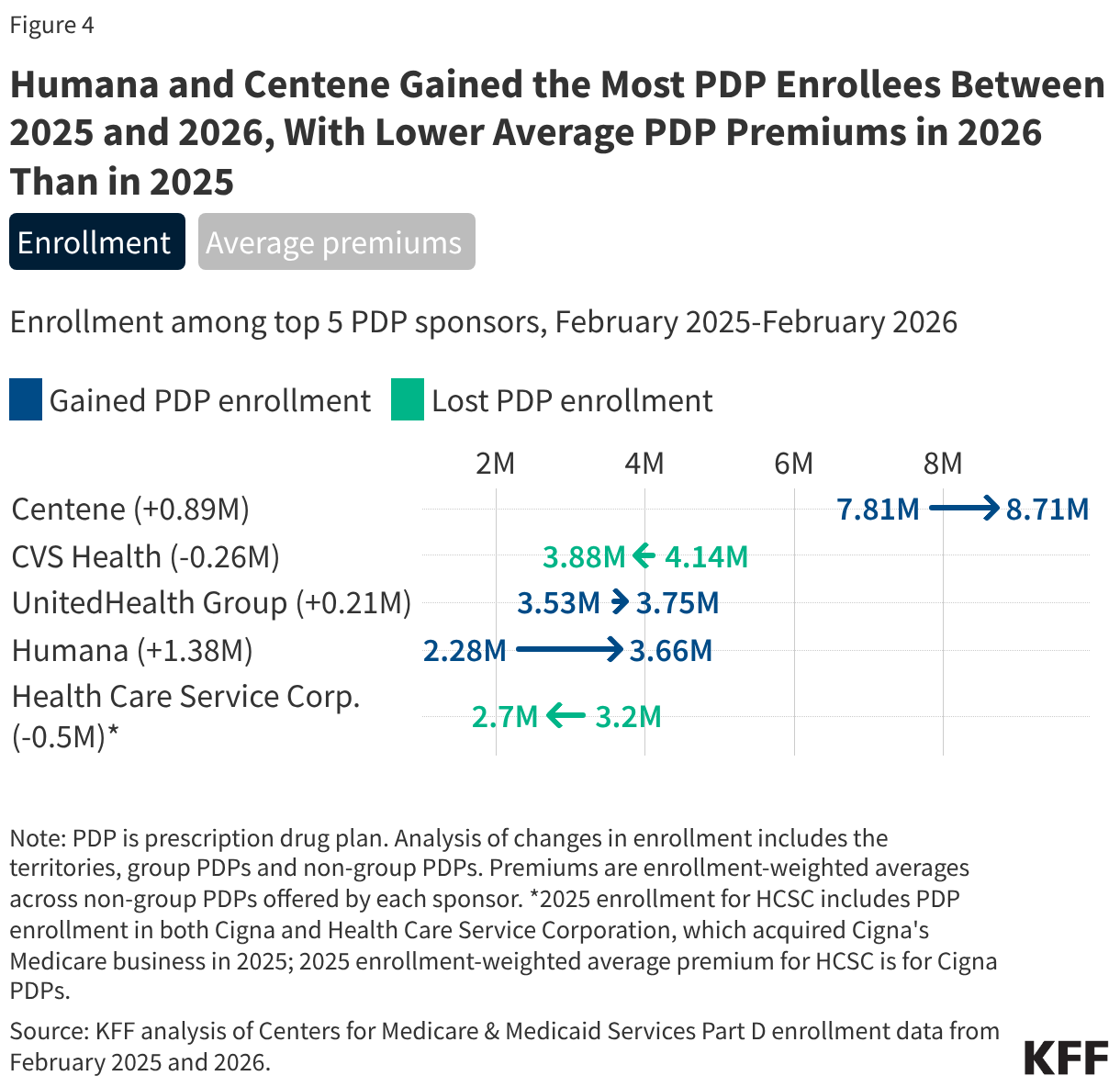
Workers with health coverage in 2024, on average, were responsible for 16% of the premium for single coverage and 25% of the premium for family coverage. In dollar terms, the average annual contribution for covered workers was $1,368 for single coverage and $6,296 for family coverage.

Over time, the average premium contribution for covered workers has increased. For example, over the last 10 years, the single coverage average contribution has increased 27% and the family coverage average contribution increased 31%. At the same time, the share of the premium paid by workers has remained relatively consistent. In 2024, covered workers contributed, on average, 16% of the premium for single coverage and 25% of the premium for family coverage, which was similar to these averages a decade ago. This is because as premiums have increased over time, both employers and employees have faced similar increases on average.

There remains a lot of variation in how much workers are required to contribute to their health plan across firms, particularly within firm size. In 2024, 37% of covered workers at small firms were enrolled in a plan where the employer paid the entire premium for single coverage. This was only the case for 5% of covered workers at large firms. However, 26% of covered workers at small firms were in a plan where they must contribute more than half of the premium for family coverage, compared to 6% of covered workers at large firms. The family average contribution rate for covered workers in firms with fewer than 200 employees was 33%, which is higher than the average contribution rate of 23% for covered workers in larger firms. Small firms often approach the cost of health insurance differently than large firms, sometimes making the same employer contribution regardless of whether the employee enrolls any dependents. Similarly, some large employers encourage spouses and dependents to enroll in other plans, if they have access, through spousal surcharges.

Distribution of Percentage of Premium Paid by Covered Workers for Single and Family Coverage, by Firm Size, 2025 (Stacked Bars)

In addition to any required premium contributions, most covered workers must pay a share of the cost of the medical services they use. The most common forms of cost-sharing are deductibles (an amount that must be paid before most services are covered by the plan), copayments (fixed dollar amounts), and coinsurance (a percentage of the charge for services). Some plans combine cost sharing forms, such as requiring coinsurance for a service up to a maximum amount or requiring either coinsurance or a copayment for a service, whichever is higher. The type and level of cost sharing may vary with the kind of plan in which the worker is enrolled. Cost sharing may also vary by the type of service, with separate classifications for office visits, hospitalizations, and prescription drugs. Plans often structure their cost sharing to encourage enrollees to reflect on their use, reducing overall utilization.

Among Covered Workers Who Face a Deductible for Single Coverage, Average General Annual Deductible for Single Coverage, by Firm Size, 2006-2025 (Line chart)

In recent years, general annual deductibles have grown in prominence in plan design. In 2024, 87% percent of covered workers were enrolled in a health plan that required an enrollee meet a deductible before the plan covered most services. The average deductible amount as of 2024 for workers with single coverage and a general annual deductible was $1,787. On average, covered workers at smaller firms face higher deductibles than those at large firms ($2,434 vs. $1,478). Generally, a substantial share of workers faced relatively high deductibles. Fifty percent of workers at small firms and 26% of workers at large firms had a general annual deductible of $2,000 or more. Over the last five years, the percentage of covered workers with a general annual deductible of $2,000 or more for single coverage has grown from 28% to 32%.

While average deductibles have not grown over the last few years, the growth over the last ten years outpaces the increases in premiums, wages and inflation. The rise in deductible costs has focused attention on consumerism in health care. Some believe that increasing deductibles will place a greater incentive on enrollees to shop for services, therefore reducing total plan spending. Alternatively, deductibles are less common in Health Maintenance Organization (HMO) plans, which use forms of gatekeeping to dissuade utilization. The growth of deductibles has had important consequences for the financial protection that health insurance provides. A multitude of plans require deductibles well in excess of the financial assets of many of their enrollees. As opposed to coinsurances and copays that accumulate throughout the year, deductible spending may require enrollees to finance relatively high expenses all at once.

Cumulative Increases in Family Coverage Premiums, General Annual Deductibles, Inflation, and Workers' Earnings, 2015-2025 (Line chart)

In addition to looking at the average obligations enrollees face under their health plan, we can look at the actual spending incurred by enrollees in large group plans. In 2021, deductibles accounted for more than 58% of an enrollee’s cost-sharing liability, which is significantly greater than 35% of enrollee liability ten years ago.

The amount of cost sharing large group enrollees face varies, particularly around how many health services a person uses. Individuals who have a hospitalization, or a chronic condition which requires ongoing management, often incur higher cost-sharing over the year. For example, large group enrollees faced an average of $779 in cost sharing, but individuals with a diabetes diagnosis (even without complications) incurred costs of $1,585 in 2017.

Distribution of out-of-pocket spending for people with large employer coverage, 2003-2021

While some employer health plans have relatively generous benefits, there remains a concern about affordability, particularly for lower-wage workers who do not have the assets to meet the cost-sharing required under their plan, as well as for individuals enrolling in family coverage at smaller firms. Overall, individuals in families with employer coverage spend 2.4% of their income on the worker contribution required to enroll in an employer-sponsored health plan, and another 1.4% of their income on typical out-of-pocket spending on cost-sharing. Individuals covered by employer-sponsored plans in households at or below 199% of the FPL contribute nearly 10% of their income on average towards their premiums and cost-sharing.

A key component of plan design is the out-of-pocket maximum, which caps the amount of money an enrollee spends on in-network covered benefits within a year.

The ACA requires that almost all plans have an out-of-pocket (OOP) maximum below a federally determined limit. In 2024, 14% of covered workers in plans with an OOP maximum had an OOP maximum of less than $2,000 for single coverage, while 24% of these workers had an OOP maximum above $6,000.

What Types of Employer-Sponsored Health Insurance Plans Do Workers Have?

Copy link to What Types of Employer-Sponsored Health Insurance Plans Do Workers Have?

Today virtually all plans have preferential cost sharing for enrollees to visit providers participating in a preferred provider network. Some plans require enrollees to visit a primary care physician or other gatekeeper before they are referred to a specialist. Plans are often categorized based on these characteristics. 

Preferred Provider Organization (PPO)

PPO plans are the most common plan type. These plans typically have broader provider networks and do not require gatekeeping for specialist services. However, insurers may still use utilization management tools, such as prior authorization, to determine appropriate use and which services will be paid for under the plan. Point-of-service (POS) plans have a provider network like a PPO plan but require gatekeeping for referrals. POS plans are more common in the Northeast and among smaller firms. 

Health Maintenance Organization (HMO)

HMO plans represented 13% of covered workers in 2024. HMO enrollment has decreased over the past few decades, compared to nearly 3 in 10 workers who were enrolled in HMOs in the late 1990s. HMOs do not cover non-emergency out-of-network services, and some integrate health care financing and service delivery. Since providers in these plans are not paid on a fee-for-service basis, they are designed to encourage lower utilization to reduce costs.

High Deductible Health Plan with a Savings Option (HDHP-SO)

HDHP-SO is a relatively new plan type. This plan pairs a high deductible with either a Health Reimbursement Arrangement (HRA) or Health Savings Account (HSA). HSA-qualified plans were first authorized in the Medicare Modernization Act of 2003 and grew precipitously until 2015. HDHP-SO plans now represent almost 3 in 10 covered workers, including almost a quarter enrolled in an HSA-qualified plan. These plans may be an HMO, PPO, or POS, meeting specified federal guidelines. HSA-qualified plans allow both employers and enrollees to contribute to a tax-preferred savings account, which enrollees can use to meet their cost-sharing requirements or save for future health spending. On average, HSA-qualified health plans have higher deductibles than other plan types and lower premiums. The growing enrollment in HSA-qualified plans has led to a growth in general annual deductibles overall. While having a higher deductible in other plan types generally increases enrollee out-of-pocket liability, this is not necessarily true for HDHP-SO plans. Many HDHP-SO enrollees receive an account contribution from their employers, reducing the higher cost-sharing in these plans. In 2024, 68% of employers offering single coverage and 77% of employers offering family coverage, as well as an HSA-qualified health plan, contributed to the enrollee’s account. On average, employers contributed $705 to single coverage HSA-qualified HDHPs and $1,297 to family coverage HSA-qualified HDHPs. Some employers may make their account contribution contingent on other factors, such as completing wellness programs

Distribution of Health Plan Enrollment for Covered Workers, by Plan Type, 1988-2025 (Stacked Bars)
Average Annual Premiums and Contributions for Covered Workers in HDHP/SOs and Non-HDHP/SOs, for Family Coverage, 2025 (Stacked column chart)

What Types of Network Strategies Do Employer-Sponsored Health Insurance Plans Use?

Copy link to What Types of Network Strategies Do Employer-Sponsored Health Insurance Plans Use?

Employer plans typically include provider networks, in which enrollees face lower out-of-pocket expenses if they receive care from a designated provider. Firms and health plans structure their networks of providers to ensure access to care to encourage enrollees to use providers who are lower cost or who provide better care. Employees generally prefer broad network plans, and job-based plans are typically broader than those offered on the Marketplaces. Even so, some employers offer a health plan with a relatively small network of providers. These narrow network plans limit the number of providers that can participate to reduce costs and are more restrictive than standard HMO networks. In 2024, 6% percent of firms offering health benefits reported that they offer at least one narrow network plan to their employees.

More frequently, firms use tiered or high-performance networks in which providers are selected and then grouped within the network based on the quality, cost, and/or efficiency of care they deliver. Enrollees then receive lower cost sharing by choosing a provider in a lower tier.

Another way plans designate preferred providers is through “Centers of Excellence”, which are facilities or providers that health plans and employers single out as suppliers of exceptionally high-value specialty care for specific conditions. Plans and employers may encourage or require enrollees to use these designated providers to receive coverage for certain types of care.

As major purchasers of health care, many view employers as having considerable leverage in health care markets based on their network design. This leverage is dampened by a combination of factors, including the prevalence of highly concentrated provider markets, employees’ preferences for broad network plans, and the challenges of building networks capable of delivering timely access.

One specific concern is the availability of mental health providers. In 2023, most firms (91%) reported that they believed their largest plan offered timely access to primary care providers. However, only 67% of firms believed there were enough mental health providers in their largest plan’s network to provide timely access to services. As plan costs continue to rise for employers, these networks may be further limited as high-cost providers are removed to mitigate costs.

Additional Strategies to Improve Health and Control Cost

Copy link to Additional Strategies to Improve Health and Control Cost

In addition to cost-sharing requirements and network design, many employers use other strategies to influence both the health of their workforce and the cost of their health plans.

One such strategy is utilization management, where insurers evaluate enrollees’ health care use. A common tool is prior authorization, where an insurer reviews the appropriateness of certain services or prescriptions before covering them. Plans may use prior authorization to limit the use of services they believe are often used inappropriately or to encourage lower-cost alternatives. In recent years, prior authorization has come under public scrutiny for delaying care and adding complexity for patients. Among large employers (those with 200 or more workers), 12% believe their employees have a high level of concern about the complexity of prior authorization requirements, and another 35% believe employees’ concern is moderate. In early 2025, many insurers pledged to voluntarily expedite their prior authorization processes and improve enrollee communication. How these changes will affect enrollees’ access to timely care remains to be seen, or if ultimately prior authorization becomes the target of new legislation.  While loosening restrictions could improve access, it may also lead to higher plan costs and premiums if more services are used.

Another approach is to promote population health, in order to improve the health and productivity of workers and their family members while also potentially reducing health care spending. Many employers try to achieve this through wellness programs, which may include initiatives such as exercise programs, health education classes, health coaching, and stress management counseling. Among large firms offering health benefits, 69% offer programs to help employees stop smoking or using tobacco, 62% offer programs to support weight loss, and 70% offer other forms of lifestyle or behavioral coaching. Overall, 79% of large firms offer at least one of these programs. Some wellness programs are tied to financial incentives or penalties, which can increase costs for enrollees who choose not to participate in wellness activities, decline health screenings, or, in some cases, fail to meet biometric targets.

Future Outlook

Copy link to Future Outlook

While ESI seems likely to remain the dominant source of health insurance for working families, employers and working families each face challenges relating to affordability and access to care. These include: 

Ultimately, health care is expensive, and the cost of good ESI coverage can place a strain on employers and employees, particularly for workers with lower wages. Additionally, only about half of workers with incomes below 200% of the FPL are even eligible for ESI at their workplace. Can ESI be a source of affordable coverage for all working families, or are novel approaches to providing affordable coverage options needed for these families? 

Many ESI policies have significant deductibles and other out-of-pocket costs to keep the premium costs down, while increasing the cost of obtaining care for enrollees. Can and will employers continue to increase out-of-pocket costs, and, if not, how will they control the costs of ESI going forward? 

What avenues are available to employers to increase access to care for people with mental health and substance use care needs? Is telehealth a sufficient response? 

Can employers and health plans develop provider networks that provide quality health care at lower costs? 

Resources

Copy link to Resources

Citation

Copy link to Citation

Claxton, G., Rae, M., & Winger, A., Employer-Sponsored Health Insurance 101. In Altman, Drew (Editor), Health Policy 101, (KFF, October, 2025) https://www.kff.org/health-policy-101-employer-sponsored-health-insurance/ (date accessed).

The Uninsured Population and Health Coverage

Table of Contents

Introduction

Copy link to Introduction

Health coverage in the United States is marked by a blend of private and public insurance options that leaves about 8% of the population uninsured. This coverage system has evolved over the years, most recently with the implementation of the Affordable Care Act (ACA), which aimed to reduce the uninsured rate by expanding Medicaid, creating health insurance Marketplaces for individuals, and providing subsidies to make the coverage more affordable. Many factors, including economic conditions, federal and state policy changes, and significant health crises, such as the COVID-19 pandemic, influence the uninsured rate. The ACA and policy changes designed to protect coverage during the pandemic led to increased health coverage overall; however, passage of the 2025 Federal Budget Reconciliation Bill (referred to as the One Big Beautiful Bill Act) along with other policy changes are expected to increase significantly the number of people who are uninsured over the next ten years.

What is the Landscape of Health Care Coverage in the United States?

Copy link to What is the Landscape of Health Care Coverage in the United States?

Health coverage in the U.S. is a complex patchwork of private and public insurance coverage options. In 2023, most residents had private insurance coverage, with nearly half covered by an employer-based plan. About 1 in 5 U.S. residents received coverage through the Medicaid program, the federal and state-financed comprehensive health coverage program for low-income people. Another roughly 15% of the population had health coverage from the federal Medicare program, which covers seniors and people under age 65 with long-term disabilities. About 6% of the population had private non-group insurance either purchased through the ACA Marketplace or off-market, and just over 1% of the population was covered through the military’s TRICARE or VA health care programs. The uninsured rate for the total population was 7.9% for the year (Figure 1). (In some cases, people have multiple forms of coverage. For example, about 12 million people are enrolled in both Medicare and Medicaid and are classified in these figures as covered by Medicaid.)

Health Insurance Coverage of the Total Population, 2023

Trends in the Uninsured Rate

Copy link to Trends in the Uninsured Rate

In 2023, there were 25.3 million uninsured residents ages 0-64, and the uninsured rate among the population ages 0-64 was 9.5%, the lowest rate in U.S. history (Figure 2). The analysis of the uninsured population focuses on coverage among people ages 0-64 since Medicare offers near-universal coverage for seniors—just 457,000, or less than 1%, of people over age 65 were uninsured.

 Uninsured Rate of People Ages 0-64, 2010-2023

Prior to the implementation of the ACA, gaps in the public insurance system and lack of access to affordable private coverage left over 40 million people without health insurance. The ACA expanded Medicaid coverage to nearly all adults with incomes up to 138% of the federal poverty level (FPL) (the poverty level in the continental U.S. is $15,650 for a single individual in 2025) and created new health insurance Marketplaces through which individuals can purchase coverage with financial help to afford premiums and cost-sharing. Following the passage of the ACA in 2010 and the rollout of the coverage provisions, the number of uninsured people ages 0-64 dropped to 27 million in 2016. The ACA envisioned that all states would adopt the Medicaid expansion; however, a Supreme Court ruling in 2012 made expansion optional for states. As of early 2025, 40 states and Washington, D.C. had adopted the ACA’s Medicaid expansion (Figure 3).

Status of State Action on the Medicaid Expansion Decision (Choropleth map)

The declines in uninsured rates following implementation of the ACA coverage expansions were largest among poor and near-poor individuals, particularly adults. People of color, who had higher uninsured rates than White people prior to 2014, had larger coverage gains from 2013 to 2016 than White people, although the coverage disparities were not eliminated.

Before implementation of the ACA, expansions of Medicaid coverage and the enactment of the Children’s Health Insurance Program (CHIP) helped to lower the uninsured rate for children. Changes in the 1980s and early 1990s expanded Medicaid eligibility levels for children and pregnant people, and the establishment of CHIP in 1997 provided coverage for children with incomes above Medicaid thresholds. When states implemented CHIP, extensive outreach efforts along with the adoption of streamlined processes facilitated enrollment of children in Medicaid and CHIP and reduced the number of uninsured children.

After declining through 2016, the number of uninsured people and the uninsured rate began increasing in 2017 and continued to grow through 2019. Generally favorable economic conditions as well as policy changes during the Trump Administration, such as reduced funding for outreach and enrollment assistance, encouraging periodic Medicaid eligibility checks, changes to immigration policy related to public charge rules, and approval of some demonstration waivers to restrict enrollment led to a decline in Medicaid enrollment, which likely contributed to the increase in uninsured people.  

With the arrival of the COVID-19 pandemic, policies adopted to protect coverage drove a decline in the uninsured population from 2019 to 2023. The Families First Coronavirus Response Act required states to keep people continuously enrolled in Medicaid in exchange for enhanced federal funding. Medicaid continuous enrollment ended in March 2023, and most states completed renewals for individuals who enrolled during continuous enrollment by December 2024. In addition, the American Rescue Plan Act (ARPA) provided temporary enhanced ACA Marketplace subsidies to make Marketplace coverage more affordable, and these subsidies were renewed for another three years in the Inflation Reduction Act of 2022. These enhanced subsidies will expire at the end of December 2025 unless Congress acts to extend them.

Who is Uninsured in the United States?

Copy link to Who is Uninsured in the United States?

Most people who are uninsured are adults under age 65, are in working low-income families, are people of color, and, reflecting geographic variation in income, immigration status, and the availability of public coverage, live in the South or West. In 2023, over 8 in 10 people ages 0-64 who were uninsured were adults and 16% were children.

Nearly three-quarters (73.7%) of the uninsured population ages 0-64 had at least one full-time worker in their family and an additional 11.2% had a part-time worker in their family (Figure 4). More than 8 in 10 (80.9%) people ages 0-64 who were uninsured were in families with incomes below 400% FPL in 2023 and nearly half (46.7%) had incomes below 200% FPL. People of color comprised 62.9% of the uninsured population ages 0-64 in 2023 despite making up about 46% of residents ages 0-64. Most uninsured individuals (74.2%) were U.S. citizens, while 25.8% were noncitizens in 2023. Nearly three-quarters lived in the South and West.

Family Work Status of Uninsured People Ages 0-64, 2023

Adults ages 19 to 64 are more likely to be uninsured than children. The uninsured rate among children (5.3%) was less than half the rate among adults ages 19-64 (11.1%) in 2023, largely due to the broader availability of Medicaid and CHIP coverage for children than for adults. Among adults ages 19-64, men had higher uninsured rates than women in 2023 (12.6% vs. 9.5%).

Reflecting persistent disparities in coverage, people of color are generally more likely to be uninsured than White people. In 2023, American Indian and Alaskan Native (AIAN) and Hispanic people ages 0-64 had the highest uninsured rates at 18.7% and 17.9%, respectively, which were nearly three times higher than the uninsured rate for White people (6.5%). Uninsured rates for Native Hawaiian or Pacific Islander (NHPI) (12.8%) and Black people (9.7%) ages 0-64 were also higher than the rate for their White counterparts (Figure 5). These differences in uninsured rates are driven by lower rates of private coverage among these groups. Medicaid coverage helps to narrow these differences but does not fully offset them.

Uninsured Rates among the Population Ages 0-64 by Selected Characteristics, 2023 (Bar Chart)

Noncitizens are more likely than citizens to be uninsured. Nearly one-third of noncitizen immigrants were uninsured in 2023 while the uninsured rate for U.S.-born citizens was 7.5% and 8.9% for naturalized citizens. One in 4 children has an immigrant parent, including over 1 in 10 (12%) who are citizen children with at least one noncitizen parent.

Uninsured rates vary by state and by region and were generally higher in states that had not taken up the ACA Medicaid expansion in 2023 (Figure 6). Economic conditions, availability of employer-sponsored coverage, and demographics are other factors contributing to variation in uninsured rates across states.

Uninsured Rates Among Population Ages 0-64 by State, 2023

Why are People Uninsured?

Copy link to Why are People Uninsured?

The fragmented U.S. health coverage system leads to gaps in coverage. While employer-based insurance is the prevalent source of coverage for the population ages 0-64, not all workers are offered coverage by their employer or, if offered, can afford their share of the premiums. Medicaid covers many low-income individuals, especially children, but eligibility for adults remains limited in most states that have not adopted the ACA Medicaid expansion. While subsidies for Marketplace coverage are available for many low and moderate-income people, few people can afford to purchase private coverage without financial assistance.

The cost of health coverage and care poses a challenge for the country broadly and is a significant barrier to coverage for people who are uninsured. In 2023, 63.2% of uninsured adults ages 18-64 said they were uninsured because coverage is not affordable, making it the most common reason cited for being uninsured (Figure 7). Other reasons included not being eligible for coverage (27.0%), not needing or wanting coverage (26.6%), and signing up being too difficult (23.9%).

Reasons for Being Uninsured Among Uninsured Adults Ages 18-64, 2023

Not all workers have access to coverage through their jobs. In 2023, 64.7% of uninsured workers worked for an employer that did not offer them health benefits. Among uninsured workers who are offered coverage by their employers, cost is often a barrier to taking up the offer. Low-income families with employer-based coverage spend a significantly higher share of their income toward premiums and out-of-pocket medical expenses compared to those with income above 200% FPL.

A decade after the implementation of the ACA coverage options, 10 states have not adopted the Medicaid expansion, leaving 1.4 million uninsured people without an affordable coverage option. A coverage gap exists in states that have not adopted the expansion for poor adults who earn too much to qualify for Medicaid coverage but not enough to be eligible for subsidies in the Marketplace.

Lawfully-present immigrants generally must meet a five-year waiting period after receiving qualified immigration status before they can qualify for Medicaid. States have the option to cover eligible children and pregnant people without a waiting period, and as of January 2025, 38 states have elected the option for children, and 32 states have taken up the option for lawfully-present pregnant individuals. Under current law, lawfully-present immigrants are eligible for Marketplace tax credits, including those who are not eligible for Medicaid because they have not met the five-year waiting period. Undocumented immigrants are ineligible for federally-funded coverage, including Medicaid and Marketplace coverage, although some states provide fully state-funded health coverage to these individuals.

Health care provisions in the 2025 reconciliation package narrow eligibility for federally-subsidized health coverage, including Medicaid and CHIP, Medicare, and Marketplace subsidies, to a limited group of lawfully-present immigrants. These changes take effect on January 1, 2027 and are expected to increase the number of lawfully residing immigrants without health coverage.

Though financial assistance is available to many of the remaining uninsured under the ACA, not everyone who is uninsured is eligible for free or subsidized coverage. Nearly 6 in 10 (14.5 million) uninsured individuals in 2023 were eligible for financial assistance through Medicaid or subsidized Marketplace coverage (Figure 8). However, over 4 in 10 uninsured (10.9 million) were outside the reach of the ACA because their state did not expand Medicaid, their immigration status made them ineligible, or they were deemed to have access to an affordable Marketplace plan or offer of employer coverage (Figure 8).

Eligibility for Coverage Among Uninsured Population Ages 0-64, 2023

What are the Consequences of Being Uninsured?

Copy link to What are the Consequences of Being Uninsured?

Lacking health insurance in the United States can impact a person’s access to health care, their financial situation, and their health status. It can also broadly impact a community’s public health (illustrated by the COVID-19 pandemic) and the economy through lower productivity.

Adults who are uninsured are almost five times more likely than adults with insurance to report not having a usual source of care, which is often a key entry point for accessing health care whether for preventive services or for treating existing conditions. Consequently, in 2023, nearly half (46.6%) of uninsured adults ages 18-64 reported not seeing a doctor or health care professional in the past 12 months compared to 15.6% with private insurance and 14.2% with public coverage (Figure 9). Uninsured individuals are also more likely to face cost barriers to accessing needed care. In 2023, uninsured adults were nearly three times more likely to report not getting medical care due to cost compared to publicly insured adults and four times more likely than privately insured adults (22.6% vs 7.7% and 5.1%, respectively).

Barriers to Health Care Among Adults Ages 18-64 by Insurance Status, 2023 

The lack of access to health care and a delay in seeking care due to costs mean uninsured people are more likely to be hospitalized for avoidable health problems and to experience declines in their overall health. Research also shows that when they are hospitalized, uninsured people receive fewer diagnostic and therapeutic services and have higher mortality rates than those with insurance.

Uninsured individuals often face unaffordable medical bills when they do seek care, which can lead to medical debt and other forms of financial instability. Nearly half of uninsured adults reported difficulty paying for health care, compared to 21% of insured adults and over 8 in 10 (84%) uninsured adults said they worried that health care costs would put them in debt or increase their existing debt, compared to 71% of adults with insurance (Figure 10). Uninsured adults are also more likely to face negative consequences due to health care debt, such as using up savings, having difficulty paying other living expenses, or borrowing money.

Problems Paying for Health Care  and Worries About Health Care Debt by Insurance Status

Future Outlook

Copy link to Future Outlook

Driven by pandemic-era policies to promote health coverage, the number of people without insurance and the uninsured rate dropped to historic lows in recent years. Although millions of people lost Medicaid coverage during the unwinding of continuous enrollment, Medicaid enrollment remains higher than in February 2020, before the start of the pandemic. Enhanced Marketplace subsidies adopted during the pandemic led to record Marketplace signups, with enrollment topping 25 million in 2025. States have also taken action to reduce the number of people who are uninsured. In 2023, two states, North Carolina and South Dakota, newly adopted the Medicaid expansion, and several states have expanded state-funded coverage for certain individuals regardless of immigration status.

However, actions by Congress and the Trump Administration threaten to reverse these recent coverage gains. Congress passed the 2025 Federal Budget Reconciliation package on July 3, 2025, which makes significant changes to Medicaid and ACA Marketplaces, and President Trump signed the reconciliation package into law on July 4, 2025.  The Congressional Budget Office (CBO) estimates that the law will increase the number of people without health insurance by 10 million. The expiration of the enhanced premium tax credits for Marketplace enrollees, which will happen at the end of 2025 unless Congress takes action to extend them, will further increase the number of people without health insurance. CBO projects that over 14 million more people will be uninsured in 2034 due to the combined effects of the reconciliation package and the expiration of the enhanced Marketplace subsidies. In addition to these potential coverage losses, the Trump administration’s increased immigration enforcement activities are likely to have a broad chilling effect that could cause immigrants to decide to disenroll or not enroll themselves or their children, most of whom are U.S. citizens, in health coverage programs even if they are eligible due to immigration-related fears.

Enactment of the ACA helped close some gaps in our fragmented health coverage system and led to a significant decline in the number of people who were uninsured. Recent efforts built on that success to further shrink the share of people without insurance. Yet, despite this success and the ACA’s continued favorability—the public has a favorable view of the ACA by a 2 to 1 margin—policymakers enacted cuts to federal support for Medicaid and ACA coverage to fund other budget priorities. The impact on health coverage and people’s ability to access needed health care services will be significant.

Resources

Copy link to Resources

Citation

Copy link to Citation

Tolbert, Jennifer, Bell, Clea, Cervantes, Sammy & Singh, Rakesh, The Uninsured Population and Health Coverage. In Altman, Drew (Editor), Health Policy 101, (KFF, October 2025) https://www.kff.org/health-policy-101-the-uninsured-population-and-health-coverage/ (date accessed).

International Comparison of Health Systems

KFF Authors:

Table of Contents

Introduction

Copy link to Introduction

Health systems aim to provide accessible, high-quality care that improves health outcomes at an affordable cost. One way to assess the performance of the United States’ health system is to benchmark it against those in similar countries.

Comparing health system performance internationally is complicated, though, as each country has unique political, economic, and social conditions. Because health spending and health outcomes are often correlated with a country’s wealth, this chapter focuses on comparisons between the U.S. and other large and wealthy OECD nations: Australia, Austria, Belgium, Canada, France, Germany, Japan, the Netherlands, Sweden, Switzerland, and the United Kingdom.

Despite spending far more money than any peer nation, Americans live shorter lives and often face more barriers to care. Some of this disparity can be attributed to aspects of the U.S. health system, but socioeconomic, health and other factors also play a role.

Health Insurance Systems and Coverage

Copy link to Health Insurance Systems and Coverage

From the late nineteenth to mid-twentieth centuries, many nations created health insurance systems that aimed to make health care accessible and affordable to their population. Some countries, like the United Kingdom, have health systems that are largely publicly funded and operated, while other countries, like Switzerland, have a compulsory private insurance system. Many countries’ health systems include a mix of private and public insurance. Regardless of financing mechanism, the health systems in many countries that are similarly large and wealthy as the U.S. are largely compulsory, resulting in universal or near-universal health coverage.

During this same period, the United States took a different approach, relying on a largely voluntary private insurance system that resulted in a substantial share of the population being uninsured. Despite decades of calls for a national public health insurance program, it was not until 1965 that two major public insurance programs were created – Medicare for people age 65 or older and Medicaid for low-income people – and it was not until the Affordable Care Act passed in 2010 that the U.S. health system was expanded to create near-universal eligibility for health insurance coverage for lawfully present residents. Even so, the U.S. health system is still largely voluntary and millions of people in the U.S. continue to go without insurance, often citing cost as a barrier.

Health Spending

Copy link to Health Spending

Wealthy countries, including the U.S., tend to spend more per person on health care and related expenses than lower-income countries. However, even among higher-income countries, the U.S. spends far more per person on health.

Spending Growth

Over the past five decades, the health spending gap between the U.S. and peer nations has widened. In 1970, the U.S. spent about 7% of its GDP on health, which was similar to spending in several comparable countries (the average of comparably wealthy countries was about 5% of GDP in 1970). The U.S. was relatively on pace with other countries until the 1980s, when health spending in the U.S. grew at a significantly faster rate relative to its GDP. 

The United States spends more per capita on total health expenditures, including government spending and household payments. In 2020, the U.S. spent 19.5% of its GDP on health consumption (up from 17.5% in 2019), largely due to the increased spending during the COVID-19 pandemic, along with the economic downturn. By 2023, health spending as a share of GDP had declined to 17.6% in the U.S.—but remains substantially higher than in peer countries.

Drivers of Health Spending

The largest category of health spending in both the U.S. and comparable countries is spending on inpatient and outpatient care, which includes payments to hospitals, clinics, and physicians for services and fees such as primary care or specialist visits, surgical care, provider-administered medications, and facility fees. Americans spent $8,353 per person on inpatient and outpatient care, compared to $3,636 in peer countries, on average. The U.S.’s higher spending on providers is driven more by higher prices than higher utilization of care. Patients in the U.S. have shorter average hospital stays and fewer physician visits per capita, while many hospital procedures have been shown to have higher prices in the U.S. Higher spending on inpatient and outpatient care drives most of the difference in health spending between the U.S. and its peers. In fact, the U.S. spends more on inpatient and outpatient care than most peer nations spend on their entire health systems (including long-term care, prescription drugs, administration, prevention, and other services).

The cost of prescription drugs is another factor that partially explains the U.S.’s higher health spending. Many of the same medications cost more in the U.S. than they do in other comparable nations. In 2022, the U.S. spent $1,765 per capita on prescription drugs and other medical goods (including over-the-counter and clinically delivered pharmaceuticals as well as durable and non-durable medical equipment). However, because prescription drugs represent a relatively small share of total health spending, even if per capita prescription drug spending in the U.S. were closer to that of comparable countries, that would make only a small dent in closing the gap on health spending.

Spending on health administration is similarly much higher in the U.S. than in comparable countries: $1,078.44 per capita. Administrative costs include spending on running governmental health programs and overhead from insurers, but exclude administrative expenditures from health care providers. This includes administrative spending for private health insurance, governmental health programs (such as Medicaid and Medicare), as well as other third-party payers and programs.

The U.S. also spends more per capita on preventive care than peer nations. Activities captured in this spending category vary among countries, but in the U.S., it generally consists of public health activities, including preventive health programs and education for immunizations, disease detection, emergency preparedness, and more. In the U.S., preventive care spending more than doubled between 2019 and 2020, from $343 to $741 per capita, but subsequently declined to $649 by 2022.

Meanwhile, the only category of spending in which the U.S. spends less than most comparable countries on a per-person basis is long-term care. Long-term care spending includes health and social services provided in long-term care institutions such as nursing homes as well as home- and community-based settings. After an increase from 2019 to 2020 at the onset of the COVID-19 pandemic, U.S. spending on long-term care declined by 4.9% between 2020 and 2021 but increased again by 5.4% between 2021 and 2022. Long-term care spending was already lower in the U.S. than in peer countries before the pandemic.

Health Outcomes

Copy link to Health Outcomes

Life Expectancy

Life expectancy is one of the most common measures of health outcomes. In 1980, the average American could expect to live 73.7 years – a similar life expectancy to residents of most wealthy countries. However, in subsequent years, life expectancy continued growing in most other nations at a pace far beyond that of the U.S.

In 1996, Japan became the first nation to report an average life expectancy of 80 years among its population. By 2012, all peer countries had also achieved this milestone. That same year, life expectancy in the U.S. was 78.5 years and began a decade-long plateau. By 2019, the life of the average U.S. resident would be almost four years shorter than the life of the average resident of these comparable nations (78.8 vs. 82.7 years).

This plateau and four-year gap were already highly concerning, but the health crisis brought on by the COVID-19 pandemic made the situation in the U.S. much worse. For the first time ever recorded, life expectancy dropped by almost two years, from 78.8 in 2019 to 77.0 in 2020. The pandemic was not unique to the United States, but this stunning life expectancy drop was – the average comparable nation saw a decline of less than half a year (82.7 to 82.3). By 2023, life expectancy rebounded to 78.4 years, still a full 1.3 years below pre-pandemic levels and over four years below the average among peer nations.

The life expectancy data presented here are period life expectancy estimates based on excess mortality observed in each year. Period life expectancy at birth represents the mortality experience of a hypothetical cohort if current conditions persisted into the future, and not the mortality experience of a birth cohort.

Years of Life Lost

The causes of this decrease in life expectancy are multifaceted. When people die before a certain age, the difference between their age at death and the specified age is recorded as life years lost. For example, when looking at years of life lost before age 75, a person who dies at age 60 would be considered to have lost 15 years of life. Examining the causes of these years of life lost can point to the factors which are decreasing life expectancy.

The United States had the highest rate of years of life lost per 100,000 population aged 75 years old in 2021, by a large margin. However, by examining the cause of these years of life lost, it is possible to notice where the U.S. underperforms. For example, the U.S. has a significantly higher rate of years of life lost due to heart disease, transport accidents, and accidental poisoning (a category that includes drug overdose).

While cancer is a common cause of premature years of life lost in the United States, most other countries have a similar rate of years of life lost due to cancer. This indicates that cancer is not a main cause of the discrepancy between the U.S. and peer nations.

Overall, the United States’ higher rates of premature death and disease burden do not necessarily reflect entirely on the quality of care that patients receive in doctors’ offices or hospitals. Life expectancy, mortality rates, and disease burden can also be influenced by factors outside of the health system, like socioeconomic conditions (e.g., income inequality, structural racism) and differences in health-related behaviors (e.g., diet, exercise, drug use). Children and teens in the U.S. are less likely to make it to adulthood than in peer countries, with the U.S having higher rates of motor vehicle accidents, firearm deaths, and suicide deaths among children and teens.

Quality of Care

Copy link to Quality of Care

Another, more direct way to measure the performance of the health system is to examine the quality of care provided in a hospital or clinical setting. However, inconsistent and imperfect quality metrics make it difficult to compare quality of care in the U.S. and its peers.

In comparison to peer nations, across the limited measures available internationally, the U.S. performs better on some and worse on other indicators of quality of care. For example, the U.S. performs worse on certain measures of treatment outcomes (such as maternal mortality) and some patient safety measures (such as obstetric trauma with instrument and medication or treatment errors). The U.S. performs similarly to or better than peer nations in other measures of treatment outcomes (such as mortality rates within 30 days of acute hospital treatment) and patient safety (such as rates of post–operative sepsis).

Hospital Mortality Rates

Mortality within 30 days of being admitted to a hospital is not entirely preventable, but high quality of care can reduce the mortality rate for certain diagnoses. The 30-day mortality rates after hospital admissions for heart attacks (acute myocardial infarction) are similar in the U.S. and the average of comparable countries. However, the 30-day mortality rates for ischemic strokes (caused by blood clots) were 4.5 deaths per 100 patients in the U.S. in 2022, compared to an average of 6.9 deaths per 100 patients in similar countries. Rates of mortality after hemorrhagic stroke (caused by bleeding) are also lower in the U.S. While the U.S. has lower rates of mortality due to these conditions than the average across peer nations, it is important to note that several peer nations have lower rates than the U.S.

Maternal Health

While wealth and economic prosperity are highly correlated with lower maternal mortality rates, the U.S. is an outlier with the highest rate of pregnancy-related deaths (18.6 deaths per 100,000 live births in 2023) when compared to similar countries (5.1 deaths per 100,000 live births). 

Within the U.S., there are significant racial disparities in maternal mortality rates. The maternal mortality rate for Black mothers is about 3 times the rate for White mothers — a disparity that persists across age and socioeconomic groups. Every race and ethnicity, socioeconomic, and age group in the United States sees higher maternal mortality rates than the average in comparable countries. Maternal mortality in the U.S. has risen in recent years, sparking concern from the medical community and policymakers. 

Obstetric trauma is more likely to occur in deliveries where instruments are utilized (i.e., forceps). The rate of obstetric trauma during deliveries with an instrument in the U.S. was 11.7 per 100 vaginal deliveries in 2022, higher than most comparable countries with available data. The rate of obstetric trauma during deliveries without an instrument in the U.S. was 1.7 per 100 vaginal deliveries in 2022, on the lower end among comparable countries with available data.

Hospital Admissions

Hospital admissions for certain chronic diseases, such as cardiac conditions, chronic obstructive pulmonary diseases (COPD), asthma, and diabetes, can arise for a variety of reasons, but preventive services — or lack thereof — play a large role. Hospital admission rates in the U.S. are higher than in comparable countries for congestive heart failure and complications due to diabetes, and some admissions for these chronic conditions could be avoided through primary care.

Post-Operative Complications

Rates of post-operative complications are an important measure of hospital safety. Pulmonary embolisms and deep vein thromboses are common complications after major surgeries, such as hip or knee replacement. The prevalence of post-operative clots for these procedures is higher in the U.S. than in the U.K., Sweden, Belgium, and the Netherlands, but lower than in Australia.

Sepsis is a life-threatening complication of infection that can lead to organ failure, shock, or death. Rates of post-operative infections and sepsis are an important marker of care quality for patients undergoing surgery, because this is a major source of morbidity and mortality that can sometimes be prevented. Prevention is multifactorial and can involve proper operative techniques and training, hygiene and safety protocols, and antibiotic utilization, among other things. The rate of post-operative sepsis following abdominal surgery is just under 2% in the U.S., lower than in most peer countries that report data.

Access to Care

Copy link to Access to Care

Out-of-Pocket Costs

Universal coverage means all residents have health insurance, but it does not mean health care is free. In many countries people contribute to health care costs through both out-of-pocket expenses—such as copays, coinsurance, and deductibles—as well as insurance premiums. Even in countries with universal coverage, residents often have at least nominal out-of-pocket costs. In fact, people in Switzerland pay more out-of-pocket on health care ($1,988), on average, than Americans do ($1,425) per capita.

Costs are a common barrier to accessing health care in the U.S. More than 1 in 4 Americans report skipping consultations, tests, treatment, or follow-up, and 21% report skipping medication. Only 9.2% of the United States population is uninsured, so these numbers include individuals who have health insurance, but still find medical care unaffordable. While cost-related access barriers are particularly prevalent in the U.S., residents of other countries with universal coverage also report skipping care due to costs.

Appointment Availability

Cost is not the only reason why a person may miss or delay needed medical care. The availability of physicians can also impact access to care. Among people who needed same or next-day medical care, about half (51%) of Americans were able to make a timely appointment, which is somewhat below the average of peer nations (57%).

Physicians

The U.S. has just 2.7 practicing physicians per 1,000 residents, compared to an average of 3.8 among peer nations. Also of concern in the U.S. is the ratio of primary to specialty care providers. Most other nations have somewhere between one-quarter and one-half physicians employed in primary care. Primary care is an integral part of the health system in many nations – a patient sees a primary care physician for most illnesses or injuries and only goes to a specialist or hospital if their primary care doctor decides it is necessary. In the United States, however, only 12% of doctors are general physicians, including primary care physicians.

The U.S. faces this physician shortage and high rates of specialization in part due to how medical education is structured. The U.S. has kept a tight lid on the number of medical schools, as well as the number of training spots available to new doctors. Furthermore, the higher education system in the U.S. places the burden of financing an education on the student, and university tuition is more expensive than in many peer countries. As a result, students borrow money, and most graduate from medical school with a significant amount of debt. Because primary care generally comes with a lower salary, some new physicians may pursue a higher-paid specialty, even if they would rather work in primary care.

Additionally, the U.S. has only 0.15 psychiatrists per 1,000 residents, the lowest of all peer nations. Although the U.S. has a high number of specialist providers, only 6% are psychiatrists, compared to an average of 10% of specialists in other countries examined. Despite clear and increasing demand for mental health treatment, psychiatry remains one of the lowest-paid physician specialties in the United States.

Future Outlook

Copy link to Future Outlook

The outlook of health systems will be shaped by various factors, including political and policy changes, technological advancements, economic and demographic shifts, social factors, and unforeseen events–as the COVID-19 pandemic demonstrated. Here are some issues to watch:

Health Outcomes: The United States was already performing worse than its peers across a wide range of health outcomes, but the COVID pandemic widened the gap, and it is not yet clear whether life expectancy and other measures will recover as quickly in the U.S. as in peer nations. In addition to the pandemic recovery, both the U.S. and peer countries face the challenge of aging populations and increases in chronic conditions, leading to increased demand for health care services and long-term care.

Access to Care: Unlike the U.S., other large and wealthy nations have long achieved universal or near-universal health coverage and offer more robust access to care. While the U.S. recently reached a record-high insurance coverage rate, the tax and spending legislation signed by President Trump includes the biggest reduction ever in federal spending on Medicaid and the Affordable Care Act Marketplaces—changes that are projected to increase the number of people uninsured by millions in the coming years. Moreover, even those with insurance in the U.S. often face high out-of-pocket costs, leading many to forgo needed care or incur medical debt.

Quality of Care: The adoption of new technologies will shape care delivery in both the United States and in other countries. Electronic health records, telemedicine, artificial intelligence, and other digital health tools are becoming more prevalent globally. However, many digital health tools are new, untested, and have unknown implications for quality of care.

Health Spending: Most peer nations place a strong emphasis on cost containment and efficiency and achieve this through regulation of and negotiation with health providers. In the U.S., by contrast, the federal and state governments less directly control commercial health insurance prices. However, with the passage of the Inflation Reduction Act, Medicare has negotiated drug prices for a selection of high cost drugs. There will likely be ongoing debate about further actions the federal government can take to lower drug prices, as well as taking other steps to restrain prices of health care generally.

Resources

Copy link to Resources

Health Costs:

Health Outcomes:

Access and Quality of Care

Citation

Copy link to Citation

Wager, E. & Cox, C., International Comparison of Health Systems. In Altman, Drew (Editor), Health Policy 101, (KFF, October 2025) https://www.kff.org/health-policy-101-international-comparison-of-health-systems/ (date accessed). 

The Politics of Health Care and Elections

Table of Contents

Introduction

Copy link to Introduction

Health policy and politics are inextricably linked. Policy is about what the government can do to shift the financing, delivery, and quality of health care, so who controls the government has the power to shape those policies.

Elections, therefore, always have consequences for the direction of health policy – who is the president and in control of the executive branch, which party has the majority in the House and the Senate with the ability to steer legislation, and who has control in state houses. When political power in Washington is divided, legislating on health care often comes to a standstill, though the president still has significant discretion over health policy through administrative actions. And, stalemates at the federal level often spur greater action by states.

Health care issues often, but not always, play a dominant role in political campaigns. Health care is a personal issue, so it often resonates with voters. The affordability of health care, in particular, is typically a top concern for voters, along with other pocketbook issues, and, at over 17% of the economy, health care has many industry stakeholders who seek influence through lobbying and campaign contributions. At the same time, individual policy issues are rarely decisive in elections.

Health Reform in Elections

Copy link to Health Reform in Elections

Health “reform” – a somewhat squishy term generally understood to mean proposals that significantly transform the financing, coverage, and delivery of health care – has a long history of playing a major role in elections.

Harry Truman campaigned on universal health insurance in 1948, but his plan went nowhere in the face of opposition from the American Medical Association and other groups. While falling short of universal coverage, the creation of Medicare and Medicaid in 1965 under Lyndon Johnson dramatically reduced the number of uninsured people. President Johnson signed the Medicare and Medicaid legislation at the Truman Library in Missouri, with Truman himself looking on.

Later, Bill Clinton campaigned on health reform in 1992, and proposed the sweeping Health Security Act in the first year of his presidency. That plan went down to defeat in Congress amidst opposition from nearly all segments of the health care industry, and the controversy over it has been cited by many as a factor in Democrats losing control of both the House and the Senate in the 1994 midterm elections.

For many years after the defeat of the Clinton health plan, Democrats were hesitant to push major health reforms. Then, in the 2008 campaign, Barack Obama campaigned once again on health reform, and proposed a plan that eventually became the Affordable Care Act (ACA). The ACA ultimately passed Congress in 2010 with only Democratic votes, after many twists and turns in the legislative process. The major provisions of the ACA were not slated to take effect until 2014, and opposition quickly galvanized against the requirement to have insurance or pay a tax penalty (the “individual mandate”) and in response to criticism that the legislation contained so-called “death panels” (which it did not). Republicans took control of the House and gained a substantial number of seats in the Senate during the 2010 midterm elections, fueled partly by opposition to the ACA.

The Affordable Care Act (Obamacare)

Copy link to The Affordable Care Act (Obamacare)

The ACA took full effect in 2014, with millions gaining coverage, but more people viewed the law unfavorably than favorably, and repeal became a Republican rallying cry in the 2016 campaign. After the election of Donald Trump, a high-profile effort to repeal the law was ultimately defeated following a public backlash. The ACA repeal debate was a good example of the trade-offs inherent in all health policies. Republicans sought to reduce federal spending and regulation, but the result would have been fewer people covered and weakened protections for people with pre-existing conditions. KFF polling showed that the ACA repeal effort led to increased public support for the law, which persists today.

KFF Health Tracking Poll: The Public's Views on the ACA

While President Trump failed in his first term to repeal the ACA, his administration repealed the individual mandate penalty, reduced federal funding for consumer assistance (navigators) by 84% and outreach by 90%, and expanded short-term insurance plans that can exclude coverage of preexisting conditions.

In a strange policy twist, the Trump administration ended payments to ACA insurers to compensate them for a requirement to provide reduced cost sharing for low-income patients. But, insurers responded by increasing premiums, which in turn increased federal premium subsidies and federal spending, likely strengthening the ACA.

Between President Trump’s presidential terms, the Biden administration restored outreach funding and signed legislation increasing the premium tax credits that help ACA Marketplace enrollees pay their premiums, leading to record enrollment and historically low uninsured rates.

The increased premium tax credits are set to expire at the end of 2025 unless Congress and President Trump take action. If these tax credits do expire, people purchasing subsidized coverage will face significant increases in their monthly premium payments and some may become priced out of the market.

President Trump’s second term has already brought federal policy changes that will significantly alter ACA Marketplace operations, consumer protections, and premium tax credit eligibility. Key changes in the 2025 budget reconciliation law, such as ending auto-renewals, removing repayment limits for tax credits when income rises, and tightening eligibility verification, are projected by the Congressional Budget Office (CBO) to result in 2 million people becoming uninsured.

Medicaid

Copy link to Medicaid

Since its establishment in 1965, Medicaid has evolved as states took up the optional joint federal-state program to the point that in the 1980s all 50 states were participating. Due to the nature of its federal and state management, there has been a give-and-take over the flexibility of and spending for the program, but it has generally expanded in its coverage of key population groups.

With the passage of the ACA, Medicaid experienced its largest federal policy coverage expansion with the addition of what was ultimately a state option to cover adults with incomes up to 138% of the federal poverty level in exchange for enhanced federal funding for the coverage. Much like the take-up of the original Medicaid program, states have gradually adopted the expansion so that only 10 states, mainly concentrated in the South, remain holdouts. However, recent federal actions may alter the expansion landscape.

Until 2025, the most serious attempt by federal policymakers to make cuts to the Medicaid program was during the 2017 failed attempt to repeal the ACA. Medicaid changes in the legislation included a rollback of enhanced federal matching funds for the Medicaid expansion and a per-enrollee cap of federal funds for most Medicaid enrollees. The 2025 budget reconciliation law includes the largest enacted cuts in Medicaid’s history, instituting Medicaid work requirements, tightening eligibility checks and reducing or capping types of provider funding. The CBO estimates that 7.5 million people will become uninsured due to the Medicaid provisions of the law. However, several of the Medicaid provisions will not be implemented until after the 2026 midterm elections.

Affordability of Health Care

Copy link to Affordability of Health Care

One persistent feature of health care as an election issue is that it is fundamentally an economic issue for the country and for individuals. If you are uninsured, you not only experience access issues, but also the high cost of health care treatment. If you have health insurance, you worry about annual premium changes, deductibles, and cost-sharing related to health care services and prescription drugs whose prices continue to rise.

President Trump has often spotlighted the high price of prescription drugs, criticizing both the pharmaceutical industry and pharmacy benefit managers. Although he kept the issue of drug prices on the political agenda as president, in the end, his first administration accomplished little to restrain them. 

President Biden signed the Inflation Reduction Act, which requires the federal government to negotiate the prices of certain drugs in Medicare, which was previously banned. How aggressively the prescription drug negotiation program proceeds during the second Trump administration is an open question. While President Trump has issued an executive order calling for a “most favored nation” policy for drug pricing, with prices in the U.S. matching the currently lower prices in other countries, it remains unclear how drug companies will respond to the call and whether there will be any enforcement mechanism.

Health Care Infrastructure of the Federal Government

Copy link to Health Care Infrastructure of the Federal Government

A feature of the second Trump administration has been the push to remake the executive branch of the federal government to reflect his priorities at a scale that hasn’t occurred in the recent past. Secretary of Health and Human Services (HHS), Robert F. Kennedy, Jr., announced a plan to restructure the department in March 2025 that would reduce the workforce substantially, create the new agency Administration for a Healthy America, reorganize and consolidate divisions and relocate offices.

HHS Secretary Kennedy is also leading the Make America Healthy Again (MAHA) Commission and making substantial changes to the vaccine approval process by remaking the roster for the Centers for Disease Control and Prevention’s Advisory Committee on Immunization Practices and having CDC change recommendations for who should receive the COVID-19 vaccine.

These changes to the federal health care infrastructure could impact the accessibility of vaccines and other preventive services, as well as undermine the confidence the public has in the government, particularly its scientific agencies.

Future Outlook

Copy link to Future Outlook

Ultimately, irrespective of the issues that get debated during the campaign, the outcome of federal elections – who controls the White House and Congress – has significant implications for the future direction of health care.

However, even with changes in party control of the federal government, generally incremental movement to the left or the right is the norm. Sweeping changes in health policy, such as the creation of Medicare and Medicaid or passage of the ACA, are rare in the U.S. political system and are usually preceded by one-party control of Congress and the presidency. More fundamental changes in health care financing and coverage, such as Medicare for All, face long odds. This is the case even though most of the public favors Medicare for All, though attitudes shift significantly after hearing messages about its potential impacts.

It has historically been politically difficult to take benefits away from people once they have them. That, and the fact that seniors are a strong voting bloc, has been why Social Security and Medicare have been considered political “third rails.” While Medicare and Social Security were largely untouched in the Republican tax and spending law passed in 2025, the law made substantial cuts to the ACA and Medicaid, and millions more people are projected to become uninsured in what will be the biggest rollback in federal support for health coverage ever. Looking toward the 2026 midterm election and beyond, changes to both the ACA and Medicaid, as well as fundamental changes to the health care infrastructure and public health policies of the federal government, may emerge as major campaign issues.

Resources

Copy link to Resources

Citation

Copy link to Citation

Levitt, L. & Singh, R., The Politics of Health Care and the 2024 Election. In Altman, Drew (Editor), Health Policy 101, (KFF, October 2025) https://www.kff.org/elections/health-policy-101-the-politics-of-health-care-and-elections/ (date accessed).

The Affordable Care Act 101

Table of Contents

What Is the Affordable Care Act?

Copy link to What Is the Affordable Care Act?

On March 23, 2010, President Obama signed the Affordable Care Act (ACA) into law, marking a significant overhaul of the U.S. health care system. Prior to the ACA, high rates of uninsurance were prevalent due to unaffordability and exclusions based on preexisting conditions. Additionally, some insured people faced extremely high out-of-pocket (OOP) costs and coverage limits. The ACA aimed to address these issues, though it did not eliminate all of them.

The ACA affects virtually all aspects of the health system, including insurers, providers, state governments, employers, taxpayers, and consumers. The law built on the existing health insurance system, making changes to Medicare, Medicaid, and employer-sponsored coverage. A fundamental change was the introduction of regulated health insurance exchange markets, or Marketplaces, which offer financial assistance for ACA-compliant coverage to those without traditional insurance sources. This chapter has a special focus on these Marketplaces that are integral to the ACA’s framework.

What Did the ACA Change About Health Coverage in the U.S.?

Copy link to What Did the ACA Change About Health Coverage in the U.S.?

A key goal of the ACA was to expand health insurance coverage. It did so by expanding Medicaid to people with incomes up to 138% of the federal poverty level (the poverty level in the continental U.S. is $15,650 for a single individual in 2025); creating new health insurance exchange markets through which individuals can purchase coverage and receive financial help to afford premiums and cost sharing, in addition to separate exchange markets through which small businesses can purchase coverage; and requiring employers that do not offer affordable coverage to pay penalties, with exceptions for small employers. In the years leading up to the passage of the ACA, about 14-16% of people in the United States were uninsured (across all ages). By 2023, the uninsured rate had fallen to a record low of 7.7%. Most of the gains in insurance coverage have come from the ACA’s expansion of Medicaid, followed by the creation of the exchange markets.

For people with private health insurance, the ACA also includes several consumer protections and market rules (discussed in more detail in the chapter on regulation of private insurance). For example, the ACA prohibits health plans from denying people coverage, charging them higher premiums, as well as rescinding or imposing exclusions to coverage due to preexisting health conditions. The ACA also prohibits annual and lifetime limits on the dollar amount of coverage and restricts the amount of out-of-pocket costs individuals and families may incur each year for in-network care. Additionally, the law requires most health plans to cover preventive health services with no out-of-pocket costs. Health insurers must also issue rebates to enrollees and businesses each year if they fail to meet Medical Loss Ratio standards. Moreover, people with private coverage can keep their young adult children on their health plan up to age 26.

The ACA imposes additional new regulations on private health plans sold to individuals and small businesses. These rules significantly limit the ways in which health plans can charge higher premiums. ACA-compliant health plans sold on the individual and small group markets can only vary premiums based on location, family size, tobacco use, and age (with older adults being charged no more than three times younger adults). This means that people with preexisting conditions cannot be charged higher premiums, nor can insurers charge higher rates based on gender or other factors. The ACA requires individual and small group insurers planning to increase premiums significantly to justify those rate increases publicly and also included grants for states to improve their rate review programs. The ACA also created risk programs in the individual and small group markets to mitigate adverse selection and to reduce health insurers’ incentives to avoid attracting sicker enrollees.

Federal Law Market Rules for Private Health Insurance Sold to Individuals And Groups (Table)

While Medicaid expansion is one of the most impactful provisions of the ACA, the law changed Medicaid in other ways too. For example, people gaining coverage through the Medicaid expansion are guaranteed a benchmark benefit package that covers essential health benefits. Furthermore, the ACA required state Medicaid programs to cover preventive services without cost sharing. The law also increased Medicaid payments to primary care providers, provided new options for states to cover in-home and community-based care, increased Medicaid drug rebates, and extended those rebates to Medicaid managed care plans.

The ACA also made a number of changes to Medicare. Notably, the ACA phased out the Medicare Part D prescription drug benefit coverage gap (colloquially known as the “donut hole”) and provides preventive benefits for Medicare enrollees without cost sharing. The ACA also includes several changes aimed at reducing the growth in Medicare spending. For example, the ACA includes reductions in the growth of Medicare payments to hospitals and other providers, and to Medicare Advantage plans. The law also created an Innovation Center within the Centers for Medicare and Medicaid Services (CMS) tasked with developing and testing new health care payment and delivery models and established the Medicare Shared Savings Program, a permanent accountable care organization (ACO) program in traditional Medicare that offers financial incentives to providers for meeting or exceeding savings targets and quality goals.

Finally, the ACA includes many other provisions that do not relate directly to health coverage. For example, the ACA authorizes the Food and Drug Administration to approve generic versions of biologic drugs. There are also provisions that aim to reduce waste and fraud, expand the health care workforce, increase data collection and reporting on health disparities, and improve public health preparedness.

When passed, the ACA was designed to be budget neutral, with health insurance subsidies and expansions of public programs financed through a variety of taxes and fees on individuals, employers, insurers, and certain businesses in the health sector, as well as savings from the Medicare program. As discussed in more detail below, some of these taxes or fees have since been repealed or reduced to zero dollars, including the individual mandate penalty, the medical device tax, and the so-called “Cadillac Tax,” which would have imposed an excise tax on high-cost employer health plans. Additionally, at times, a tax on health insurance carriers has been temporarily put on hold.

What are the ACA Marketplaces or Exchanges?

Copy link to What are the ACA Marketplaces or Exchanges?

Health Insurance Marketplaces (also known as exchanges) are organizations set up to create more organized and competitive markets for individuals and families buying their own health insurance. The Marketplaces offer a choice of different health plans, certify plans that participate, and provide information and in-person assistance to help consumers understand their options and apply for coverage. Premium and cost-sharing subsidies based on income are available through the Marketplace to make coverage more affordable for individuals and families. People with very low incomes can also find out if they are eligible for coverage through Medicaid and CHIP while shopping on the Marketplace.

Some small businesses can buy coverage for their employees through separate exchanges called Small Business Health Options Program (SHOP) Marketplace plans, but this chapter focuses primarily on the Marketplaces for individuals and families.

There is a health insurance Marketplace in every state for individuals and families and for small businesses. Some enrollment websites are operated by the state government or quasi-governmental bodies at the state level and have a special state name (such as Covered California or The Maryland Health Benefit Exchange). In 28 states where the federal government runs the enrollment website, it is called HealthCare.gov. As of early 2025, three state-based Marketplaces (Arkansas, Illinois, and Oregon) use the federal platform.

The Marketplaces exist alongside other coverage that is also sold to individuals or small businesses. The Marketplaces for individuals and families are part of what is called the “individual insurance market,” which also includes ACA-compliant and non-compliant insurance sold off the Marketplace (also called off-exchange coverage). Similarly, the “small group insurance market” includes the SHOP Marketplace plans as well as other ACA-compliant and non-compliant coverage sold to small businesses.

Who Can Enroll in Individual ACA Marketplace Coverage?

Copy link to Who Can Enroll in Individual ACA Marketplace Coverage?

While many Americans are allowed to purchase unsubsidized coverage on the ACA Marketplaces, these markets primarily exist to fill a gap in coverage options for people who cannot get insurance through work or public programs. Some people who sign up for Marketplace coverage are unemployed or between jobs, while others are students, self-employed or work at businesses that do not offer coverage (e.g., very small companies) or offer coverage that is deemed unaffordable.

To receive the premium tax credit for coverage starting in 2025, a Marketplace enrollee must meet the following criteria:

  • Have a household income at least equal to the Federal Poverty Level (FPL), which for the 2025 benefit year will be determined based on 2024 poverty guidelines.
  • Not have access to affordable coverage through an employer (including a family member’s employer).
  • Not be eligible for coverage through Medicare, Medicaid, or the Children’s Health Insurance Program (CHIP).
  • Have U.S. citizenship or proof of legal residency (lawfully present immigrants whose household income is below 100 percent FPL can also be eligible for tax subsidies through the Marketplace if they meet all other eligibility requirements, though this exception is set to end starting in 2026).
  • If married, must file taxes jointly.

Employer coverage: If a person’s employer offers health coverage but that coverage is deemed unaffordable or of insufficient value, the employee and/or their family may be able to receive subsidies to buy Marketplace coverage. Employer coverage is considered affordable if the required premium contribution is no more than 9.02 percent of household income in 2025. The Marketplace will look at both the required employee contribution for self-only and (if applicable) for family coverage. If the required employee contribution for self-only coverage is affordable, but the required employee contribution for family coverage is more than 9.02 percent of household income, the dependents can purchase subsidized exchange coverage while the employee stays on employer coverage.

The employer’s coverage must also meet a minimum value standard that requires the plan to provide substantial coverage for physician services and for inpatient hospital care with an actuarial value of at least 60 percent (meaning the plan pays for an average of at least 60 percent of all enrollees’ combined health spending, similar to a bronze plan). The plan must also have an annual OOP limit on cost sharing of no more than $9,200 for self-only coverage and $18,400 for family coverage in 2025.

People offered employer-sponsored coverage that fails to meet either the affordability threshold or minimum value requirements can qualify for Marketplace subsidies if they meet the other criteria listed above.

Eligibility for Medicaid: In states that have expanded Medicaid under the ACA, adults with income up to 138 percent FPL are generally eligible for Medicaid and, therefore, are ineligible for Marketplace subsidies. In the states that have not adopted the Medicaid expansion, adults with income as low as 100 percent of FPL can qualify for Marketplace subsidies, but those with lower incomes are not eligible for tax credits and generally not eligible for Medicaid unless they meet other state eligibility criteria.

Starting in 2026, federal policy changes will restrict premium tax credit eligibility for legal immigrants who are ineligible for Medicaid due to their alien status. An exception to the rule restricting tax credit eligibility for adults with income below the FPL was previously made for certain lawfully present immigrants. Other federal rules restrict Medicaid eligibility for lawfully present immigrants, other than pregnant women, refugees, and asylees, until they have resided in the U.S. for at least five years. Prior to the implementation of this policy change, immigrants who would otherwise have been eligible for Medicaid but had not yet completed their five-year waiting period instead qualified for tax credits through the Marketplace. If an individual in this circumstance has an income below 100 percent of FPL, for the purposes of tax credit eligibility, their income would have been treated as though it was equal to the FPL. Immigrants who are not lawfully present are ineligible to enroll in health insurance through the Marketplace, receive tax credits through the Marketplace, or enroll in non-emergency Medicaid and CHIP. In November 2024, the Biden administration published new rules that deemed Deferred Action for Childhood Arrivals (DACA) recipients as lawfully present, making them eligible for subsidized ACA Marketplace coverage. However, finalized Marketplace Integrity and Affordability rules undo this change.

What Services Do ACA Marketplace Plans Cover?

Copy link to What Services Do ACA Marketplace Plans Cover?

The ACA requires all qualified health benefits plans to cover essential health benefits, including those offered through the Marketplaces and those offered in the individual and small group markets off-exchange. Grandfathered individual and employer-sponsored plans (which existed before the ACA was passed) and non-compliant plans (which include short-term plans) do not have to cover essential health benefits.

The law specifies that the essential health benefits package must include at least 10 categories of items and services: ambulatory patient services; emergency services; hospitalization; pregnancy, maternity, and newborn care; mental health and substance use disorder services, including behavioral health treatment; prescription drugs; rehabilitative and habilitative services and devices; laboratory services; preventive and wellness services and chronic disease management; and pediatric services, including oral and vision care. It also requires that the scope of benefits be equal to that of a “typical employer plan.”

These categories are broad and subject to interpretation. For example, there could be limits on the number of physical therapy services an enrollee receives in a year. For more specific guidance on how to interpret these requirements, the federal government allows states to select a “benchmark” health plan (often one that was already offered to small businesses) as a standard.

Essential health benefits are a minimum standard. Plans can offer additional health benefits, like vision, dental, and medical management programs (for example, for weight loss). The ACA prohibits abortion coverage from being required as part of the essential health benefits package. The premium subsidy does not cover non-essential health benefits, meaning that people enrolling in a plan with non-essential benefits may have to pay a portion of the premium for these additional benefits.

Although plans must cover essential health benefits, they are allowed to apply cost sharing (deductibles, copayments, and coinsurance). This means enrollees may still face some out-of-pocket costs when receiving these services. However, preventive health services are required to be covered without cost sharing. Examples of preventive health services include vaccinations, cancer screenings, and birth control.

How Much Do People Pay for Marketplace Plans and How are Subsidies Calculated?

Copy link to How Much Do People Pay for Marketplace Plans and How are Subsidies Calculated?

There are two types of financial assistance available to Marketplace enrollees. The first type, called the premium tax credit (or premium subsidy), reduces enrollees’ monthly payments for insurance coverage. The second type of financial assistance, the cost-sharing reduction (CSR), reduces enrollees’ deductibles and other out-of-pocket costs when they go to the doctor or have a hospital stay. To receive either type of financial assistance, qualifying individuals and families must enroll in a plan offered through a health insurance Marketplace. In addition to the federal subsidies discussed here, some states that operate their own exchange markets offer additional state-funded subsidies that further lower premium payments and/or deductibles or other forms of cost sharing.

Premium Subsidies

Premium tax credits can be applied to Marketplace plans in any of four “metal” levels of coverage: bronze, silver, gold, and platinum. Bronze plans tend to have the lowest premiums but have the highest deductibles and other cost sharing, leaving the enrollee to pay more out-of-pocket when they receive covered health care services, while platinum plans have the highest premiums but very low out-of-pocket costs. There are also catastrophic plans, usually only available to younger enrollees, but the subsidy cannot be used to purchase one of these plans.

The premium tax credit works by limiting the amount an individual must contribute toward the premium for the “benchmark” plan – or the second-lowest cost silver plan available to the individual in their Marketplace. This “required individual contribution” is set on a sliding income scale. In 2025, for individuals with income up to 150 percent FPL, the required contribution is zero, while at an income of 400 percent FPL or above, the required contribution is 8.5 percent of household income. 

Required Individual Contribution to Benchmark Plan Premium for 2025 Coverage Year

These contribution amounts were set by the American Rescue Plan Act (ARPA) in 2021 and temporarily extended by the Inflation Reduction Act (IRA) through the end of 2025. Prior to the ARPA, the required contribution percentages ranged from about two percent of household income for people with income at the FPL to nearly 10 percent for people with income from 300 to 400 percent of FPL. Before the ARPA was passed, people with incomes above 400 percent of FPL were not eligible for premium tax credits. If Congress does not act to extend the IRA enhanced premium tax credits before the end of 2025, they will expire, and the original ACA premium caps will return.

The amount of tax credit is calculated by subtracting the individual’s required contribution from the actual cost of the “benchmark” plan. So, for example, if the benchmark plan costs $6,000 annually, the required contribution for someone with an income of 150 percent FPL is zero, resulting in a premium tax credit of $6,000. If that same person’s income equals 250 percent FPL (or $37,650 in 2025), the individual contribution is four percent of $37,650, or $1,506, resulting in a premium tax credit of $4,494.

The premium tax credit can then be applied toward any other plan sold through the Marketplace (except catastrophic coverage). The amount of the tax credit remains the same, so a person who chooses to purchase a plan that is more expensive than the benchmark plan will have to pay the difference in cost. If a person chooses a less expensive plan, such as the lowest-cost silver plan or a bronze plan, the tax credit will cover a greater share of that plan’s premium and possibly even the entire cost of the premium. When the tax credit exceeds the cost of a plan, it lowers the premium to zero and any remaining tax credit amount is unused.

As mentioned above, the premium tax credit will not apply for certain components of a Marketplace plan premium. First, the tax credit cannot be applied to the portion of a person’s premium attributable to covered benefits that are not essential health benefits (EHB). For example, a plan may offer adult dental benefits, which are currently not included in the definition of EHB. In that case, the person would have to pay the portion of the premium attributable to adult dental benefits without financial assistance. In addition, the ACA requires that premium tax credits may not be applied to the portion of premium attributable to “non-Hyde” abortion benefits. Marketplace plans that cover abortion are required to charge a separate minimum $1 monthly premium to cover the cost of this benefit; this means a consumer who is otherwise eligible for a fully subsidized, zero-premium policy would still need to pay $1 per month for a policy that covers abortion benefits. Finally, if the person smokes cigarettes and is charged a higher premium for smoking, the premium tax credit is not applied to the portion of the premium that is the tobacco surcharge.

Cost-Sharing Reductions

The second form of financial assistance available to Marketplace enrollees is a cost-sharing reduction. Cost-sharing reductions lower enrollees’ out-of-pocket cost due to deductibles, copayments, and coinsurance when they use covered health care services. People who are eligible to receive a premium tax credit and have household incomes from 100 to 250 percent of FPL are eligible for cost-sharing reductions.

Unlike the premium tax credit (which can be applied toward any metal level of coverage), cost-sharing reductions (CSR) are only offered through silver plans. For eligible individuals, cost-sharing reductions are applied to a silver plan, essentially making deductibles and other cost sharing under that plan more similar to that under a gold or platinum plan. Individuals with income between 100 and 250 percent FPL can continue to apply their premium tax credit to any metal level plan, but they can only receive the cost-sharing subsidies if they pick a silver-level plan.

Cost-sharing reductions are determined on a sliding scale based on income. The most generous cost-sharing reductions are available for people with income between 100 and 150 percent FPL. For these enrollees, silver plans that otherwise typically have higher cost sharing are modified to be more similar to a platinum plan by substantially reducing the silver plan deductibles, copays, and other cost sharing. For example, in 2025, the average annual deductible under a silver plan with no cost-sharing reduction is nearly $5,000, while the average annual deductible under a platinum plan is $0. Silver plans with the most generous level of cost-sharing reductions are sometimes called CSR 94 silver plans; these plans have 94 percent actuarial value (which represents the average share of health spending paid by the health plan) compared to 70 percent actuarial value for a silver plan with no cost-sharing reductions.

Somewhat less generous cost-sharing reductions are available for people with income greater than 150 and up to 200 percent FPL. These reduce cost sharing under silver plans to 87 percent actuarial value (CSR 87 plans). In 2025, the average annual deductible under a CSR 87 silver plan was about $700.

For people with income greater than 200 and up to 250 percent FPL, cost-sharing reductions are available to modestly reduce deductibles and copays to 73 percent actuarial value (sometimes called CSR 73 plans). In 2025, the average annual deductible under a CSR 73 silver plan was about $3,600.

Insurers have flexibility in how they set deductibles and copays to achieve the actuarial value under Marketplace plans, including CSR plans, so actual deductibles may vary from these averages. The ACA also requires maximum annual out-of-pocket spending limits on cost sharing under Marketplace plans, with reduced limits for CSR plans. In 2025, the maximum OOP limit is $9,200 for an individual and $18,400 for a family for all QHPs. Lower maximum OOP limits are permitted under cost-sharing reduction plans.

Maximum Annual Limitation on Cost Sharing, 2025

Cost-sharing reductions work differently for Native American and Alaska Native members of federally recognized tribes. For these individuals, cost-sharing reductions are available at higher incomes and can be applied to metal levels other than silver plans.

How Has the ACA Changed Since It Was First Passed?

Copy link to How Has the ACA Changed Since It Was First Passed?

Since it was first signed into law, the ACA has undergone many changes through regulation, legislation, and legal challenges. Some provisions never got off the ground, and others were repealed, while more recent changes have expanded and enhanced other provisions. This section summarizes some of the most significant changes to the law.

Medicaid Expansion: The ACA originally expanded Medicaid to all non-Medicare eligible individuals under age 65 with incomes up to 138% of the FPL. A Supreme Court ruling on the constitutionality of the ACA upheld the Medicaid expansion, but limited the ability of HHS to enforce it, thereby making the decision to expand Medicaid effectively optional for states. As of the beginning of 2025, 40 states and the District of Columbia had expanded Medicaid. Additionally, while not taking up Medicaid expansion under the ACA, Wisconsin did increase Medicaid eligibility to 100% of the FPL, which is where ACA Marketplace subsidy eligibility begins. In the remaining states that have not expanded Medicaid, an estimated 1.4 million people fall into the so-called Medicaid coverage gap, meaning their incomes are too high to qualify for Medicaid but too low to qualify for ACA Marketplace subsidies. The federal government covers 90% of the cost of Medicaid expansion.

Individual Mandate: The ACA also originally included an “individual mandate” or requirement for most people to maintain health insurance. In health insurance systems designed to protect people with pre-existing conditions and guarantee availability of coverage regardless of health status, countervailing measures are also needed to ensure people do not wait until they are sick to sign up for coverage, as doing so would drive up premiums. The ACA included a variety of these countervailing measures, with both “carrots” (e.g., premium tax credits and cost-sharing reductions) and “sticks” (e.g., the individual mandate penalty and limited enrollment opportunities) to encourage healthy as well as sick people to enroll in health insurance coverage.

American citizens and U.S. residents without qualifying health coverage had to pay a tax penalty of the greater of $695 per year up to a maximum of three times that amount ($2,085) per family or 2.5% of household income. The penalty was set to increase annually by the cost-of-living adjustment. Exemptions were granted for financial hardship, religious objections, American Indians, those without coverage for less than three months, undocumented immigrants, incarcerated individuals, those for whom the lowest cost plan option exceeds 8% of an individual’s income, and those with incomes below the tax filing threshold.

Despite the popularity of the ACA’s protections for people with pre-existing conditions, the individual mandate was politically controversial and consistently viewed negatively by a substantial share of the public. In early 2017, under President Trump, the Internal Revenue Service (IRS) stopped enforcing the individual mandate penalty. After several attempts to repeal and replace the ACA stalled out in the summer of 2017, Congress reduced the individual mandate penalty to $0, effective in 2019, as part of tax reform legislation passed in December 2017.

Cost-Sharing Reduction Payments: The ACA originally included two types of payments to insurers participating in the ACA Marketplace. First, insurers received advanced payments of the premium tax credit to subsidize monthly premiums for people buying their own coverage on the Marketplace. Second, insurers were required to reduce cost sharing (i.e., deductibles, copayments, and/or coinsurance) for low-income enrollees and the federal government was required to reimburse insurers for these cost-sharing reductions (CSRs). However, the funds for the payment of cost-sharing reductions were never appropriated. The Trump administration ended federal CSR payments to insurers weeks before ACA Marketplace Open Enrollment for 2018 coverage began. In response to this, most states allowed insurers to compensate for the lack of government payments by raising premiums. At the time, the Congressional Budget Office (CBO) estimated termination of CSR payments to insurers would increase the federal deficit by $194 billion over 10 years, because of these higher premiums and corresponding increased premium tax credit subsidies. Although the CSR payments have ceased, cost-sharing reduction plans continue to be available to low-income Marketplace enrollees.

Enhanced and Expanded ACA Marketplace Premium Tax Credits: Another controversial aspect of the ACA was the so-called “subsidy cliff,” where people with incomes over 400% of the FPL were ineligible for financial assistance on the Marketplace and, therefore, would have to pay a large share of their household income for unsubsidized health coverage. As a result, many middle-income people were being priced out of ACA coverage. The March 2021 COVID-19 relief legislation, the American Rescue Plan Act (ARPA), extended eligibility for ACA health insurance subsidies to people with incomes over 400% of FPL buying their health coverage on the Marketplace. The ARPA also increased the amount of financial assistance for people with lower incomes who were already eligible under the ACA, making many low-income people newly eligible for free or nearly free coverage. Both provisions were temporary, lasting for two years, but the Inflation Reduction Act extends those subsidies through the end of 2025.

Family Glitch: Financial assistance to buy health insurance on the Affordable Care Act (ACA) Marketplaces is primarily available for people who cannot get coverage through a public program or their employer. Some exceptions are made, however, including for people whose employer coverage offer is deemed unaffordable or of insufficient value. For example, people can qualify for ACA Marketplace subsidies if their employer requires them to spend more than about 8-9% (indexed each year) of their household income on the company’s health plan premium. For many years, this affordability threshold was based on the cost of the employee’s self-only coverage, not the premium required to cover any dependents. In other words, an employee whose contribution for self-only coverage was less than the threshold was deemed to have an affordable offer, which means that the employee and their family members were ineligible for financial assistance on the Marketplace, even if the cost of adding dependents to the employer-sponsored plan would far exceed the approximately 8-9% of the family’s income. This definition of “affordable” employer coverage has come to be known as the “family glitch,” which affected an estimated 5.1 million people. Under a Biden administration federal regulation, the worker’s required premium contributions for self-only coverage and for family coverage will be compared to the affordability threshold of approximately 8-9% of household income. If the cost of self-only coverage is affordable, but the cost for family coverage is not, the worker will stay on employer coverage while their family members can apply for subsidized exchange coverage.

Public Opinion: Americans’ views of the Affordable Care Act have evolved over time. From the time the ACA passed, to when the Marketplaces first opened in 2014, and through the months leading up to President Trump’s election in 2016, public opinion of the ACA was strongly divided and often leaned more negative than positive. Many individual provisions of the ACA, such as protections for people with preexisting conditions, were popular, but the individual mandate was particularly unpopular.

News coverage during the ACA Marketplaces’ early years often centered on the rocky rollout, from the early Healthcare.gov website glitches to skyrocketing premiums in subsequent years. Coverage in later years focused on how unprofitable insurers exited the market, leaving people in some counties at risk of having no Marketplace insurer—and thus, no Marketplace through which to access health insurance subsidies.

In 2017, during his first term, President Trump and Republicans in Congress attempted to repeal or fundamentally alter the ACA. As proposals to replace the ACA became more concrete, though, public support for the ACA, particularly among Democrats and Independents, began to grow. Ultimately, the only key aspect of the law that was removed was the penalty for not purchasing health insurance—now lowered to $0 as part of the 2017 tax reform package. Following repeal efforts and the removal of the individual mandate penalty, as well as a stabilization of the ACA Marketplaces, public support for the law has continued to grow and is now solidly more positive than negative. Although this support remains divided by party lines, several Republican-led states have adopted the ACA’s Medicaid expansion through popular votes.

Following repeal efforts and the removal of the individual mandate penalty, as well as a stabilization of the ACA Marketplaces, public support for the law has continued to grow and is now solidly more positive than negative. Although this support remains divided by party lines, several Republican-led states have adopted the ACA’s Medicaid expansion through popular votes.

KFF Health Tracking Poll: The Public's Views on the ACA

How Have the ACA Marketplaces Changed Over Time?

Copy link to How Have the ACA Marketplaces Changed Over Time?

After volatile initial years, the ACA Marketplaces have become more stable—a pattern which can be seen across a variety of measures, including enrollment, premiums and insurer participation.  

Enrollment

Affordable Care Act Marketplace Enrollment (Column Chart)

ACA Marketplace enrollment has more than tripled since its launch in 2014. The number of people who enrolled and effectuated their Marketplace coverage in early 2024 reached 20.8 million, surpassing prior record-setting years in 2021, 2022, and 2023. The recent enrollment growth was likely primarily driven by the enhanced tax credits in the American Rescue Plan Act and the Inflation Reduction Act, as well as the Biden administration’s decision to direct more resources toward marketing, outreach, and enrollment assistance, reversing substantial reductions in funding by the Trump administration.

Individual Market Enrollment Has Reached a Record High of 25.2M People in 2025

The ARPA’s subsidies didn’t simply bring people from off-Marketplace plans to the Marketplace; they also helped increase overall individual market enrollment. Enrollment grew to 25.2 million in early 2025, which is an increase of about 81% from early 2020.

With passage of enhanced tax credits in the American Rescue Plan Act (ARPA), combined with boosted outreach and an extended enrollment period, 2021 marked the first year since 2015 when individual market enrollment increased relative to the year prior. Individual market enrollment grew about 5% from 13.9 million in the first quarter of 2020 to 14.7 million in the first quarter of 2021.

In the early years of the rollout of the ACA Marketplaces, on-exchange enrollment was comparable to off-exchange enrollment, meaning that the Marketplaces represented about half of overall individual market enrollment. Some off-exchange enrollment was represented by people in ACA-compliant coverage (similar to that offered on-exchange, but without subsidies), while other individual market enrollees were signed up for non-compliant coverage, like “grandmothered” or short-term plans.

Non-compliant short-term plans often do not include certain benefits or coverage for pre-existing conditions and can impose a dollar limit on insurance coverage. For example, many short-term plans do not cover maternity care, prescription drugs, or mental health or substance use treatment, and most impose a dollar limit on covered services or drugs. In 2024, the Biden administration finalized a rule that reverses the Trump administration’s expansion of short-term plans.

Premiums

ACA Marketplace premiums have risen substantially over time. When insurers entered the ACA Marketplaces in 2014, most were operating with virtually no experience participating in an individual market like this (e.g., with subsidies, preexisting condition protections, and an individual mandate). Insurers also had to submit premiums almost a year in advance for review and approval by state regulators. Even 2015 premiums were submitted in early 2014, meaning insurers did not have much experience in the market on which to base their premium and claim projections. Eventually, though, it became clear that they were underpriced and unprofitable, so in 2016, many insurers began to raise premiums. By 2017, the temporary reinsurance and risk corridors programs had phased out, leading to another market correction. In 2018, with the discontinuation of cost-sharing reduction payments, insurers raised premiums yet again, though most insurers concentrated these premium increases on silver plans (a practice known as “silver loading”). More recently, though, as the markets have stabilized and as the pandemic led to a temporary reduction in health care utilization, premiums have at times fallen or at least grown at a slower pace. Heading into 2025, ACA Marketplace benchmark premiums rose by about 4% on average, driven primarily by inflation and increased utilization of specialty drugs.

Nationwide Average Lowest Cost Bronze and Benchmark Silver Marketplace Premiums, 2014-2025 (Grouped column chart)

Deductibles and other cost sharing

Generally, deductibles have also risen since the ACA Marketplaces were first launched in 2014. Bronze plans, which typically have the highest deductibles among ACA Marketplace plans, have an average deductible of $7,186 in 2025, compared to $5,113 in 2014. However, as discussed above, many ACA Marketplace enrollees are low income and therefore qualify for cost-sharing reductions if they purchase a silver plan. For the most generous cost-sharing reduction plans, which are available to people with incomes just above the FPL, the average deductible is $87 in 2025, compared to $183 in 2014.  

Average Deductible in ACA Marketplace Plans, 2014-2025 (Line chart)

Insurer participation

Insurer participation in 2025 is more robust than in recent years, surpassing record high levels of participation set in 2023 and 2024.

Insurer participation on the ACA Marketplaces fell dramatically in 2017 with the exit of UnitedHealthcare from most states. In 2018, with President Trump’s announcement that cost-sharing reduction payments would cease and the corresponding attempts to repeal the ACA in Congress, many more insurers exited or scaled back their participation. Though all counties in the country continued to have at least one ACA Marketplace insurer, there had initially been concern that there could have been counties left without any insurer, thus leaving residents in those counties without access to ACA subsidies.

However, in subsequent years, with premium increases and changes in strategies, it became apparent that the ACA Marketplaces could be quite profitable and many insurers entered or expanded their footprints.

Average Number of Issuers Participating in ACA Marketplaces,  Per State, 2014-2025 (Column Chart)

What Does the Federal Government Spend on ACA Subsidies?

Copy link to What Does the Federal Government Spend on ACA Subsidies?

The cost of the ACA subsidies largely depends on how many people enroll and the cost of monthly premiums. The Congressional Budget Office (CBO) expects the number of people with subsidized Marketplace coverage to continue to grow through 2025, but then drop after if the Inflation Reduction Act tax credits expire that year.

From 2025-2034, CBO expects the cost of federal Marketplace subsidies and related programs to total $1.32 trillion, ranging from $118 billion to $147 billion per year. This includes an estimated $966 billion in direct spending on ACA Marketplace subsidies, $177 billion on the Basic Health Program and 1332 waivers, as well as $176 billion in revenue reductions over ten years. These estimates, however, do not account for federal policy changes that were finalized in summer 2025 as part of the budget reconciliation legislation and finalized Marketplace Program Integrity and Affordability rule.

Future Outlook

Copy link to Future Outlook

The ACA has faced both support and opposition over time, and its fate has been subject to numerous political and legal debates, including efforts to repeal and replace the law and to overturn it in whole or in part in several court cases. Future changes in presidential administrations and shifts in the composition of Congress will likely continue to impact the implementation and stability of the ACA.

Key issues to watch include:

Federal Policy Changes: Federal policy changes finalized and passed in the summer of 2025 will change how the ACA Marketplaces will operate in the coming years. Combined, the finalized Marketplace Integrity and Affordability final rule as well as the budget reconciliation legislation will make several changes to consumer protections, ACA Marketplace coverage and premium tax credit eligibility, as well as verification processes. Implementation dates of specific policies vary, but some are set to begin in August of 2025. Changes include effectively ending auto-renewals, removing repayment limits on the premium tax credit, and implementing new eligibility verification procedures.  The CBO estimates that an additional  10 million people would become uninsured due to the impact of the budget reconciliation legislation, with about 2 million becoming uninsured due to changes to the ACA Marketplaces.

Enhanced Premium Tax Credits: Currently, the enhanced premium tax credits in the ACA Marketplaces are set to expire at the end of 2025. If these tax credits are allowed to expire, people purchasing subsidized coverage will face significant increases in their monthly premium payments and some may become priced out of the market. Some action has been taken ahead of a potential expiration. In preparation for the possibility of enhanced tax credits expiring, some states are working on ways to fund state subsidies that keep the cost of ACA Marketplace coverage affordable. The CBO previously projected that an additional 4.2 million people would become uninsured by 2034 if the enhanced premium tax credits expire.

State Actions: In recent years, some states have moved off the federal platform (Healthcare.gov) to implement their own enrollment websites. Additionally, more states have expanded Medicaid. Some states have sought 1332 waivers under the ACA to implement reinsurance programs, expand coverage to undocumented residents (though federal policy changes discussed above will undo these efforts), and create public options.

Consumer Protections: The ACA includes various consumer protections that continue to evolve through the regulatory process. For example, proposed and finalized rulemaking has focused on improving network adequacy, simplifying the shopping process, and reexamining essential health benefits. Planned federal policy changes will undo some of the consumer protection processes currently in place. In response to claims of mass fraudulent enrollment, the finalized Marketplace Integrity and Affordability Rule was issued in June 2025. In it, CMS issued rules permitting coverage denials for outstanding premium payments from prior coverage and eliminated the automatic 60-day extension to resolve income discrepancies.

Funding Cuts: In February 2025, CMS announced that it would be reducing funding for its navigator program down from $100 million to $10 million starting next year. This is equal tothe amount awarded to navigators in 2018-2020 during President Trump’s first administration.

Health Costs and Affordability: Though the ACA has made insurance coverage more accessible and affordable for millions of people, health costs in the United States continue to be high and many people with insurance nonetheless face cost-related barriers to care.

Resources

Copy link to Resources

Citation

Copy link to Citation

Ortaliza, J., McGough, M., & Cox, C., The Affordable Care Act 101. In Altman, Drew (Editor), Health Policy 101, (KFF, October 2025) https://www.kff.org/health-policy-101-the-affordable-care-act/ (date accessed).

ACA Marketplace Premium Payments Would More than Double on Average Next Year if Enhanced Premium Tax Credits Expire

Published: Sep 30, 2025

Affordable Care Act (ACA) enhanced premium tax credits are set to expire at the end of this year. Enhanced premium tax credits were introduced in 2021 and later extended through the end of 2025 by the Inflation Reduction Act. The enhanced tax credits both increased the amount of financial assistance already eligible ACA Marketplace enrollees received as well as made middle-income enrollees with income above 400% of federal poverty guidelines newly eligible for premium tax credits.

Since the introduction of the enhanced premium tax credits, enrollment in the Marketplace has more than doubled from about 11 to over 24 million people, the vast majority of whom receive an enhanced premium tax credit. If enhanced tax credits expire, many Marketplace enrollees will continue to qualify for a smaller tax credit, while others will lose eligibility altogether and be hit by a “double whammy” of losing their entire tax credit and being on the hook for rising premiums.

Since 2014, the ACA has capped how much subsidized enrollees pay for their health insurance premiums at a certain percent of their income, on a sliding scale, with the federal government covering the remainder in the form of a tax credit. Enhanced tax credits work by further lowering the share of income ACA Marketplace enrollees pay for a plan. For example, with the enhanced tax credits in place, an individual making $28,000 will pay no more than around 1% ($325) of their annual income towards a benchmark plan. If the enhanced tax credits expire, this same individual would pay nearly 6% of their income ($1,562 annually) towards a benchmark plan in 2026. In other words, if the enhanced tax credits expire, this individual would experience an increase of $1,238 in their annual premium payments net of the tax credit.

ACA Marketplace Enrollees Will Pay More for Benchmark Coverage if Enhanced Tax Credits Expire (Table)

A previous KFF analysis, based on data released by the federal government, showed the enhanced premium tax credits saved subsidized enrollees an average of $705 annually in 2024, bringing their annual premium payment down to $888. Without the enhanced premium tax credits, annual premium payments in 2024 would have averaged $1,593 (over 75% higher than the actual $888). More recent data have not been released.

Based on the earlier federal data and more recent other publicly available information, KFF now estimates that, if Congress extends enhanced premium tax credits, subsidized enrollees would save $1,016 in premium payments over the year in 2026 on average. In other words, expiration of the enhanced premium tax credits is estimated to more than double what subsidized enrollees currently pay annually for premiums—a 114% increase from an average of $888 in 2025 to $1,904 in 2026. (The average premium payment net of tax credits among subsidized enrollees held steady at $888 annually in 2024 and 2025 due to the enhanced premium tax credits).

Premium Payments in 2026 Will More than Double if ACA Enhanced Premium Tax Credits Expire (Grouped column chart)

The increase in premium payments with expiration of the enhanced premium tax credits is even higher than previously estimated for two reasons:

  • Trump administration changes to tax credit calculations, and
  • Rising 2026 premiums.

The Trump administration made changes to the way tax credits are calculated, which were finalized in the ACA Marketplace Integrity and Affordability rule. The required contribution levels that will be in place for 2026 if the enhanced tax credits are not renewed will be higher relative to the required contribution levels calculated under the original methodology based on rules in effect at the time. This means that enrollees are expected to pay a higher share of their income towards a benchmark premium plan in 2026 than they otherwise would have. Additionally, inflation in private insurance premiums has led to higher premium contribution levels than previously expected.

Additionally, insurers in the ACA Marketplace are proposing to raise their rates by a median of 18%. Fueled by rising health care costs and the expiration of the enhanced premium tax credits, insurers are proposing the largest rate increases in 2026 since 2018, the last time uncertainty over federal policy changes contributed to sharp premium increases. As premiums increase, the enhanced tax credits provide additional savings to enrollees that receive them. This means that middle-income enrollees, whose payment for a benchmark plan is currently capped at 8.5% of their income and will lose financial assistance altogether, will have to cover the cost of premium increases in addition to the amount their tax credits would have previously covered to keep their same plan.

Enrollees across the income spectrum can expect big increases in premium payments  

Annual Premium Payments Would Increase for Subsidized Enrollees by an Average of ,016 (114%) if Enhanced Premium Tax Credits Expire (Stacked column chart)

Enrollees with incomes above 400% of poverty will be subject to large increases in premium payments if enhanced premium tax credits expire. On average, a 60-year-old couple making $85,000 (or 402% FPL) would see yearly premium payments rise by over $22,600 in 2026, after accounting for an annual premium increase of 18%. This would bring the cost of a benchmark plan to about a quarter of this couple’s annual income, up from 8.5%. Meanwhile, a 45-year-old earning $20,000 (or 128% FPL) in a non-Medicaid expansion state would see their premium payments for a benchmark plan rise from $0 to $420 per year, on average, from the loss of enhanced premium tax credits. About half (45%) of ACA Marketplace enrollees have incomes between 100-150% of poverty, about a fourth (28%) have incomes between 150-250% of poverty, and roughly 1 in 10 have incomes above 400% of poverty.

Methods

The average savings by income group for 2024 were taken from the 2024 Open Enrollment report. The average yearly premium savings from enhanced premium tax credits (ePTC) for enrollees under 400% FPL were defined as the sum of the differences between the required contribution amounts with and without ePTC, using the estimated percent of plan selections with ePTC by income category and assuming a uniform income distribution within each category. To extrapolate to 2026, income was inflated by the ratio of the 2025 federal poverty guidelines to the 2023 federal poverty guidelines for an individual in the continental US. For each income category, the savings were assumed to grow as the ratio of the savings between 2026 and 2024. Due to a provision in the reconciliation bill related to subsidized ACA Marketplace eligibility for immigrants, no enrollees under 100% FPL are assumed to receive premium tax credits in 2026 and are thus not included in the calculation of average savings. For enrollees at or above 400% FPL, savings were defined as difference between the average unsubsidized premium and 8.5% of the average individual income, the required contribution under the enhanced tax credits for enrollees in this income category. For 2026, the average unsubsidized premium was assumed to be 18% higher than the 2025 average unsubsidized premium, based on analysis of rate filings. Calculations assume that there are no changes in plan selection, family composition, income relative to FPL, and geography between 2024 and 2026. The annual premium payment for 2026 comprises the estimated savings from enhanced tax credits in 2026 and the average premium payment among subsidized enrollees in 2025 obtained from the 2025 Open Enrollment State-Level Public Use File. State-funded subsidies might offset some increases of premiums but are not accounted for in the estimation. Numbers from the Open Enrollment report for estimated consumer APTC savings due to the ARP and IRA by income category (Table 8) were reported as whole numbers; a Monte Carlo method was used to account for this rounding, keeping all observations that rounded to the grand mean listed in the report.

Health Issues for Immigrants in Detention Centers

Published: Sep 30, 2025

President Trump has increased immigration enforcement activity to support mass deportation and detention. The administration has shifted enforcement actions from focusing on criminals and recent border crossers to prioritizing all of the estimated 14 million undocumented immigrants for deportation, even though many who have some form of temporary deportation protections. As a result, there has been a significant increase in the number of immigrants detained in Immigration and U.S. Customs Enforcement (ICE) detention facilities, which have a history of inadequate compliance with health and safety standards, insufficient health care, and limited oversight.

The extent to which President Trump will be able to implement interior enforcement policies in the face of potential court challenges remains uncertain. Meanwhile, Congressional Republicans and President Trump passed the tax and spending law in July 2025, which included $191 billion for the Department of Homeland Security (DHS) to support immigration enforcement and expand detention capacity. This brief provides an overview of recent trends in detention using ICE detention data and health care risks and challenges facing those held in detention facilities. These efforts also have broader ramifications for the nation’s workforce and economy given the role immigrants play.

Detention Policies under the Trump Administration

President Trump has identified deportation as a key priority and enhanced interior immigration enforcement efforts since taking office though some policies face legal challenges. President Trump has prioritized all undocumented immigrants for deportation and rescinded numerous Biden-era policies, including a policy that protected against enforcement in “sensitive areas,” such as schools and health care facilities; a ban on collateral arrests, which will allow ICE to pursue arrests without a warrant; and deportation protections for immigrants with humanitarian parole and Temporary Protected Status from numerous countries. The 2025 tax and spending law appropriated $191 billion to DHS to support these actions and increase detention capacity.

As of September 2025, the Trump administration has nearly 60,000 immigrants held in ICE detention facilities, a 50% increase from 39,000 immigrants held in ICE facilities at the end of the Biden administration in December 2024 (Figure 1). The number of immigrants held in detention increased slightly during the first few months of the year and then saw a sharp uptick in June 2025 due to heightened interior enforcement activity by ICE. ICE detention statistics likely undercount the number of immigrants held in detention due to reporting methodology issues and because they do not include immigrants held by local authorities on detainer requests, where local jails may detain immigrants upon request until they can be transferred to ICE. An analysis of ICE facilities in July 2025 found that many facilities were at or exceeded contractual capacity, which can lead to overcrowding conditions if deportations do not keep up with the pace of arrests. Due to facilities operating at capacity limits, ICE has expanded detaining immigrants in facilities such as hotels and military bases that may be excluded from public reporting. Reflecting the shift to prioritize all undocumented immigrants for deportation, seven in ten (72%) of immigrants in detention facilities have no criminal convictions as of September 2025. The number of immigrants held in detention varies by state, reflecting a combination of where immigrants live, logistics of ICE deportation operations, and the extent to which local laws support coordination with ICE.

Number of Immigrants Detained in ICE Facilities, December 2024 to September 2025 (Line chart)

Health Care Risks and Challenges for Immigrants in Detention Facilities

ICE is responsible for oversight and management of detention facilities, but it has a history of inadequate compliance with detention standards and insufficient health care, and research shows that immigrants in detention experience widespread health risks. ICE has published health care and safety standards for detention centers, including those that are privately run. As part of its published standards, immigrants arriving at detention facilities must undergo an initial health screening and have access to 24-hour emergency care, daily sick calls, and comprehensive health services including prevention, health education, screening, diagnosis, and treatment. However, ICE provides little to no publicly available data on health care use, quality, and outcomes, and oversight reporting is inconsistent. According to a Congressional Research Service (CRS) report, there is a history of inadequate health care standard compliance in ICE facilities. The Government Accountability Office (GAO) reported on the lack of informed consent for immigrants when receiving offsite medical care, and a DHS report found instances where ICE did not establish medical necessity for surgical procedures, including when performing sterilization procedures on migrant women. Research shows that detainees, including pregnant people and children, can receive inadequate care in detention facilities, and that most detention center deaths were associated with ICE violating their own medical standards. A study on LGBT detainees found they experienced higher rates of harassment than non-LGBT detainees. Immigrants in detention are increasingly being placed in solitary confinement, which can worsen mental health and tends more frequently utilized for those with serious mental illness. The suicide rate also significantly increased from 2010-2020 among immigrants in ICE facilities. Further, a study of immigrants released from detention found significantly higher likelihood of poor or fair self-rated health, mental illness, and PTSD among those detained 6 months or longer compared to those detained less than 6 months. Research also shows that family separation policies while in detention worsened the mental health of both children and caregivers.

The Trump administration has reduced oversight of operations in immigration detention facilities, which may have negative implications for conditions and health risks in detention centers, including for children and families in detention. The Trump administration has shut down watchdog agencies in DHS, including the Immigration Detention Ombudsman office that conducted oversight on conditions at immigration detention centers. Fewer watchdog agencies may further limit transparency and oversight of ICE operations, including on issues such as overcrowding and inadequate medical care. The administration has also attempted to terminate the Flores Settlement Agreement, which set standards for the detention, treatment, and release of immigrant children in federal custody, but federal court recently upheld the settlement. The settlement requires the government to hold minors in the least restrictive settings, prioritize release to family members, and ensure access to basic necessities like food, medical care, and sanitation. Minors may be held with their families in ICE family detention centers, while unaccompanied minors are sent to other facilities when their parents are detained or deported. The tax and spending law approved funds for indefinite family detention, which may be in violation of the Flores Settlement Agreement.

Recent reports suggest immigrants in detention facilities are facing poor and sometimes dangerous conditions for extended periods of time. Some immigrants may be held in holding facilities while they are processed, such as local jails and field offices not designed for long-term detention, and they may not be included in ICE detention statistics. An analysis of ICE detention found that most facilities exceeded contractual capacity, which can lead to overcrowding conditions if deportations do not keep up with the pace of arrests. ICE inspectors found that immigrants held in an unfinished Texas facility still under construction violated many detention standards and failed to properly treat medical conditions. Recent reports have also detailed how immigrants in detention face poor living conditions, including inadequate meals and sanitation, lack of ventilation, and exposure to extreme temperatures. Immigrants held in a Florida detention facility experienced severe overcrowding and a lack of food, and those in Texas and Louisiana experienced extreme cold that the facilities were not equipped to handle. A judge ordered a facility in New York to improve conditions after reports of immigrants being in overcrowded conditions deprived of showers, meals, and bedding. Immigrants held in detention facilities across states reported not receiving adequate meals and foodborne illnesses spreading due to poor hygiene. Families and children in a Texas family detention center reported experiencing extreme temperatures and lacked access to showers or toilets. As of September 2025, 15 immigrants have died in detention, compared to 8 deaths in all of 2024 and the most seen under ICE custody since 2020.

Mass detention efforts may lead to increased fears among immigrant families, which can have negative mental and physical health impacts on immigrants across statuses and their children. As of 2023, 19 million, or one in four, children in the U.S. had an immigrant parent, including one in ten (12%) who are citizen children with a noncitizen parent. An estimated 4.6 million U.S.-born children live with an undocumented immigrant parent. Enforcement efforts have increased worries about detention and deportation among immigrants, including among naturalized citizens, and worsened the mental health and well-being of immigrant families with undocumented immigrants. KFF survey data from March 2025 find that about a third (32%) of immigrants overall say they have experienced negative health repercussions due to worries about their own or a family member’s immigration status. Immigrants also reported they avoided seeking health care due to concerns about costs and fears, were fearful of accessing public programs, and were confused whether these programs can negatively impact immigration status. Research has found that living near areas subject to immigration enforcement raids increased the risk of negative mental health among children of immigrants and worse birth outcomes among both Hispanic immigrant mothers as well as U.S.-born Hispanic mothers as compared to non-Hispanic White mothers. Education outcomes also worsened among Hispanic children in areas impacted by raids compared to White children. Studies have also found that children and caregivers impacted by family separations experience worse mental health, including anxiety, depression, and posttraumatic stress disorder. Family separations can also lead to financial challenges for mixed-status households due to loss of income. Mass detention efforts may also have negative impacts on the nation’s economy and workforce given the outsized role immigrants play in certain industries, including health care. Over 1 million immigrants are estimated to have left the workforce since January 2025.

A Look at the Potential Impact of the High Unemployment Hardship Exception to Medicaid Work Requirements

Published: Sep 29, 2025

The Republican budget reconciliation package, signed into law on July 4th, will—for the first time—require some individuals enrolled in Medicaid to meet work requirements as a condition of eligibility. When implemented by January 2027 (or sooner at state option), adults enrolled through the Medicaid expansion and certain adults enrolled in Medicaid waiver programs in Wisconsin and Georgia, will be required to work or participate in work-related activity for 80 hours or more a month or attend school half time. The law exempts certain individuals from the requirements, including parents of children ages 13 and younger, people who are medically frail, and people who meet similar work requirements in the Supplemental Nutrition Assistance Program (SNAP). The law also permits states to allow for short-term hardship exceptions for individuals who live in areas of high unemployment, where it may be more difficult to find a job.

This issue brief describes the hardship exception for individuals living in counties with high unemployment, and using the most recent available county-level unemployment data from the Bureau of Labor Statistics (BLS) and county-level Medicaid expansion enrollment data, estimates the number of counties that could meet the criteria for this exception and the number of expansion enrollees living in those counties who could be exempt from the work requirements. Because county-level enrollment data for enrollees who would be subject to work requirements in Georgia and Wisconsin are not available, this analysis only includes expansion states.

Based on this analysis, the scope of this hardship exception may be limited; just 7% of counties meet the high unemployment criteria using a 12-month average unemployment rate and 7% of enrollees live in these counties and could be exempt if their state requests the hardship exception. However, how CMS operationalizes the criteria will affect the number of counties and enrollees that qualify. Allowing states to identify counties that meet the criteria using 6-month or 3-month average unemployment rates in addition to the 12-month average rate would increase the number of counties that qualify. Also, while the current national unemployment rate is low, changes in the economy and a tightening job market could cause unemployment rates to rise. If unemployment rates increase, the number of enrollees who would qualify for this hardship exception would also increase.

What is the High Unemployment Rate Hardship Exception?

The law allows states to request a hardship exception for individuals who live in counties with high unemployment rates. Specifically, the law permits states to request exemptions for individuals who reside in counties that have unemployment rates at or above 8% or below 8% but 1.5 or more times the national average unemployment rate. This exception is optional, but for states that request the exception and receive approval, all individuals who reside in counties that meet the criteria would be exempt from the work requirements for a specified period of time. The language in the reconciliation package is similar to the statutory language that defines a waiver exemption to the work requirements in SNAP, which permits states to request exemptions for areas that have unemployment rates over 10% or that lack a sufficient number of jobs.

The law grants the Secretary of Health and Human Services (HHS) discretion in how to implement this hardship exception, including what information states must submit. While the law lays out the broad criteria needed to meet the exception, the Secretary will have the discretion to set the parameters for how the criteria will be operationalized, including what information states must provide, the length of the exception period, and the process for applying for the exception. These decisions by the Secretary will affect how easy it is for states to apply for the exception and ultimately how many counties meet the criteria and how many enrollees will be exempt from the work requirements. The law requires the Secretary of HHS to issue an interim final rule implementing the Medicaid work requirements by June 1, 2026.

CMS may look to existing SNAP regulations to help guide the criteria for qualifying for an exception. CMS officials have indicated that they plan to follow sub-regulatory guidance that already exists in other programs with similar provisions, where possible. Existing SNAP regulations provide options for the data states can use to support a waiver request, including a readily approvable waiver using 12-month average unemployment rates. The regulation also specifies that the data states submit must rely on standard BLS data or methods. Waivers are generally approved for one year; however, waivers may be approved for a shorter or longer period, if deemed appropriate. CMS may choose to follow the SNAP regulations or allow for more or less flexibility in the data that states can use to identify counties with high unemployment. These decisions will affect the number of enrollees who could qualify for the exception. States can choose whether to apply for the exception, and some may decide not to for ideological reasons or because few counties and enrollees would meet the criteria. Notably, 18 states do not have SNAP work requirement waivers.

How Many Counties and Enrollees Could Meet the High Unemployment Exception?

KFF analysis uses 12-month average county unemployment rates from June 2024 through May 2025 to estimate the number of counties that meet the criteria for the high unemployment hardship exception. The 12-month average unemployment rate is the metric used in the readily-approvable SNAP exemption waivers. The analysis then uses enrollment data for the expansion population from the 2023 T-MSIS Research Identifiable Files to estimate the number of enrollees who live in qualifying counties and who could be exempt from the work requirements if all states applied for and were granted the exceptions.

Nationally, 158 counties in expansion states meet the high unemployment criteria, and 1.4 million enrollees in these states could qualify for the hardship exception, accounting for 7% of counties and enrollees. Alternative methods could have different effects. For example, using a method where counties could qualify for the exception by meeting the unemployment criteria in any month from June 2024 to May 2025, 386 counties in 34 expansion states had unemployment rates that met the criteria. These counties represented 17% of all counties in expansion states, and 4.6 million expansion enrollees, or 23% of all expansion enrollees, reside in these counties and could be exempt from the work requirements.

1.4 million Medicaid expansion enrollees live in counties with high unemployment rates and could qualify for a hardship exception to work requirements. (Choropleth map)

Overall, while 80% of counties that meet the criteria are rural, over 80% of expansion enrollees who could be exempt from work requirements live in urban counties (Figure 2). Of the 158 counties with unemployment rates that meet the statutory criteria, 126 are located in rural areas. Because of the higher unemployment rates in rural areas, a slightly larger share of all rural counties in expansion states meet the criteria (8.5% of rural counties vs. 7% of all counties). However, because the population in rural areas is smaller, over 80% of expansion enrollees who could qualify for the hardship exception live in urban counties. Of the 1.4 million expansion enrollees who could qualify for the exception, just 273,350 (19%) are in rural counties, accounting for 10% of all expansion enrollees who live in rural counties.

While 80% of counties that meet the high unemployment criteria are rural, 80% of enrollees who could be exempt from the work requirements live in urban counties. (Stacked column chart)

Nine in ten expansion enrollees who are in counties that meet the high unemployment criteria and could be exempt from the work requirements live in five states (Figure 3). Expansion enrollees who live in counties with high unemployment rates are concentrated in just five states—California, New York, Michigan, Kentucky, and Ohio. Expansion enrollees in California account for over 50% of all enrollees living in counties that meet the criteria. In New York, over 260,000 expansion enrollees, representing 18% of all enrollees who could be exempt, live in Bronx County, the only county in the state to meet the high unemployment criteria. Overall, 93% of enrollees who could be exempt live in states with Democratic governors, who would be expected to request the exception. Across the majority of expansion states, however, the impact of the high unemployment hardship exception is small. In nine states, 2,000 or fewer expansion enrollees live in counties that meet the criteria, and in 17 states no counties meet the criteria.

Nine in ten expansion enrollees who are in counties that meet the high unemployment criteria and could be exempt from the work requirements live in five states. (Donut Chart)

Rural expansion enrollees who could qualify for the hardship exception are similarly concentrated in seven states. Half of the 273,350 expansion enrollees who live in rural counties with unemployment rates that meet the criteria and who could be exempt from the work requirements live in Kentucky and Michigan (Figure 3). Another 14% live in California, 6% live in Oregon, and 5% each live in Arizona, Louisiana, and Ohio. As with counties overall, the impact of this hardship exception in rural counties is limited. Just 10% of rural expansion enrollees live in qualifying counties, and in 20 expansion states, no rural counties meet the high unemployment criteria.

Appendix

1.4 Million People May Be Exempt from the Medicaid Work Requirements through the High Unemployment Exception (Table)

Deja Vu: the Future of Abortion Coverage in ACA Marketplace Plans

Published: Sep 26, 2025

Abortion coverage was a key issue in the debate leading up to the passage of the Affordable Care Act.  Again, it could be an issue if Congress considers extending the enhanced premium tax credits that will expire by the end of the year absent Congressional action. Without the extension of these enhanced premium tax credits, out-of-pocket premiums would rise by over 75%  on average for the vast majority of individuals and families buying coverage through the ACA Marketplaces leading to an estimated  3.8 million more people becoming uninsured as they drop their coverage over the next 10 years. Anti-abortion advocates are currently urging Congress to prohibit any premium tax credits to be used towards any plans that include abortion coverage. This policy watch explains how abortion coverage works in ACA Marketplace plans, state actions to include or exclude abortion coverage in these plans, and the potential impact if Congress bans abortion coverage in all Marketplace plans.

The ACA Explicitly Says that Federal Funds May Not Be Used to Pay for Marketplace Abortion Coverage Beyond the Hyde Limitations

The ACA statute has specific language that applies Hyde Amendment restrictions to the use of premium tax credits, limiting them to using federal funds to pay for abortions only in cases that endanger the life of the woman or that are a result of rape or incest. The ACA also explicitly allows states to bar all plans participating in the state Marketplace from covering abortions, which 25 states have done since the ACA was signed into law in 2010. On the other hand, twelve states now have laws that require all fully-insured group plans and individual plans (including Marketplace plans) to include abortion coverage. Thirteen states and DC neither require nor prohibit abortion coverage in Marketplace plans (Figure 1). Federal law prohibits Marketplace plans from offering any riders, a supplemental benefit policy that covers certain services which are not included in a standard health insurance plan. So, if a plan does not include abortion coverage, an enrollee cannot buy a rider for abortion coverage.   

Twelve States Currently Require ACA Marketplace Plans to Cover Abortion Services (Choropleth map)

ACA Rules for Premiums for Abortion Coverage 

In states that do not bar coverage of abortions on plans available through the Marketplace, insurers may offer a plan that covers abortions beyond the permissible Hyde amendment situations when the pregnancy is a result of rape, or incest or the pregnant person’s life is endangered. , but this coverage cannot be paid with federal dollars. Plans must notify consumers of the abortion coverage as part of the summary of benefits and coverage explanation at the time of enrollment. The ACA outlines a methodology for states to follow to ensure that no federal funds are used towards coverage for abortions beyond the Hyde limitations. Any plan that covers abortions beyond Hyde limitations must estimate the actuarial value, the amount the plan expects to pay on behalf of its members on average, of such coverage by taking into account the cost of the abortion benefit (valued at least $1 per enrollee per month). The law says that this estimate cannot take into account any savings that might be achieved as a result of the abortions (such as prenatal care or delivery). 

The Anti-Abortion Advocates’ Claim That Federal Funds Are Subsidizing Abortion Coverage 

Abortion opponents are claiming that federal funds are being used to subsidize abortion because they believe these subsidies enable individuals to have coverage through the ACA Marketplace that includes abortion coverage, even though plans must charge each enrollee a $1 per month to pay for the costs of covered abortions and segregate these funds from other premium funds. While the anti-abortion advocates claim that the requirement for plans to segregate premiums for abortion coverage is an “accounting gimmick,” the required minimum of $1 per member per month that is specified in the ACA is higher than issuers estimate to be the actuarial value of the premium attributable to the cost of abortion coverage. In other words, the $1 month charge per enrollee (regardless of age or gender) exceeds the cost of abortions that plans are paying for with those funds.  For example, a recent review showed that Maryland plans were holding $25 million in unspent funds from policyholder payments for segregated premiums for abortion coverage and it is very likely that plans in other states have surplus funds that have been collected for abortion coverage.  

What Would Be the Impact if Congress Bans Premium Tax Credits for Plans that Include Abortion Coverage?  

Twelve states require plans that are not self-insured to cover abortion. If Congress were to ban the use of premium tax credits for Marketplace plans that include abortion coverage beyond the Hyde restrictions, individuals in these 12 states would not be able to use federal tax credits to obtain coverage in a Marketplace plan. In 2023, approximately 3.7 million people were enrolled in ACA marketplace plans in the 12 states that require abortion coverage.  In addition, it will also affect people in the 13 states and DC that allow abortion coverage but don’t mandate it. While Democrats  may not agree to a ban on the availability of ACA premium taxes for plans that cover abortion,  the lack of a ban could make it harder to attract Republican support for an extension of the enhanced tax credits.