Women's Health Policy

ABORTION IN THE U.S.

Abortion on the 2026 Ballot: The Evolving Landscape of State Abortion Initiatives 

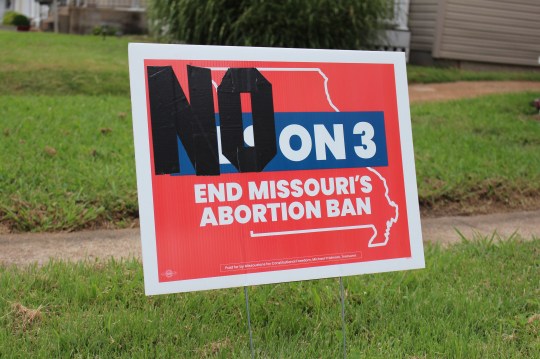
Since the Supreme Court’s Dobbs decision, overturning Roe v. Wade, voters in 17 states have weighed in on ballot measures regarding abortion — some more than once. In November 2026, voters in Idaho, Missouri, Nevada, and Virginia will weigh in on abortion measures that could change the legal status of abortion in their state. In addition, a measure in Colorado is in the process of collecting signatures.
CONTRACEPTIve care IN THE U.S.

SELECTED RESOURCES

featured

Women's Health Survey

The Women’s Health Survey is a series of nationally representative surveys on women’s health conducted by KFF since 2001. The survey aims to track and document women’s experiences with the health care system, access challenges and barriers to care, knowledge related to health and well-being, and differences between women by age, race/ethnicity, income level, and insurance type.

A promotional image for the the KFF Health Policy 101 Issues in Women’s Health chapter

Health Policy Issues in Women’s Health

Examine the core health coverage and access issues —shaped by federal and state policies—that affect women’s health today, including health coverage and costs, reproductive health services, maternal health, mental health, and intimate partner violence.

State Profiles for Womens Health

Explore the latest national and state-specific data and policies on women’s health. Topics include health status, insurance and Medicaid coverage, use of preventive services, sexual health, maternal and infant health, and abortion policies. Many indicators provide state-level information for women of different racial and ethnic groups.

The essentials
  • Women’s Health Insurance Coverage

    This factsheet reviews major sources of coverage for women residing in the U.S., discusses the ACA's impact on coverage, and the coverage challenges that many women continue to face.
  • Medicaid Coverage for Women

    This data note presents key data points describing the current state of the Medicaid program as it affects women, including eligibility, reproductive health, chronic conditions, and more.
  • Dobbs: What are the Implications for Racial Disparities?

    This analysis examines the implications of the Dobbs decision and state restrictions on abortion coverage for racial disparities in access to care and health outcomes.
  • State Health Facts: Women's Health Indicators

    Information on women’s health status, utilization of services, health insurance coverage, family planning and childbirth, and abortion statistics and policies.
  • Key Facts on Abortion in the United States

    This report answers some key questions about abortion in the United States and presents data collected before the overturn of Roe v. Wade.

Stay informed.

Stay informed.

Filter

841-850 of 880 results

  • Contraception in the 90’s:  Which Methods Are Most Widely Used? And, Who Uses What?

    Fact Sheet

    Contraception in the 90's: Which Methods Are Most Widely Used? And, Who Uses What? A fact sheet and resource list on new contraceptive use data from the 1995 National Survey of Family Growth (NSFG) from a briefing on the topic held in New York City on June 20, 1997. Contraception In The 90s: Which Methods Are Most Widely Used?And, Who Uses What? was co-sponsored by the Kaiser Family Foundation, the National Press Foundation and The…

  • Documenting the Power of Television – A Survey of Regular E.R. Viewers about Emergency Contraception

    Poll Finding

    A national random sample telephone survey of 700 regular ER viewers before and after the April 10th episode, featuring a date rape victim who learns that she still has contraceptive options to help prevent pregnancy, even after having unprotected sex. While in the emergency room, she learns that if she takes a heavy dose of regular birth control pills within three days of unprotected sex, she can reduce her chance of becoming pregnant by 75%.…

  • Emergency Contraception: Resources for Providers

    Other Post

    This publication is a resource manual for health care providers to increase awareness and access to emergency contraception to women by making available information about emergency contraception, and how to use this option. Emergency Contraception: Resources for Providers

  • Medicaid and Managed Care: Implications for Low-income Women

    Report

    This commentary reviews Medicaid's role for low-income women and examines the implications Medicaid managed care on the delivery of health services to this vulnerable population. Today 40% of the Medicaid population, mostly poor women and their children, is enrolled in managed care. Medicaid agencies are hoping managed care will control spending and address longstanding problems with access to care. Low-income women have a number of characteristics that make them doubly vulnerable to have trouble accessing…

  • Another Gender Gap?  Men’s Role in Preventing Pregnancy

    Report

    A chart pack, press release, and Q&A prepared for a briefing held in New York on March 19, 1997, co-sponsored by the Kaiser Family Foundation, the National Press Foundation and The Alan Guttmacher Institute. This briefing focused on men's role and responsibility in preventing pregnancy. A survey of men's and women's perceptions about men's role and responsibility when it comes to preventing unplanned pregnancy was released as part of this briefing and is also available,…

  • National Survey of Women about their Knowledge, Attitudes, and Practices Regarding their Reproductive Health

    Report

    Survey of Women About Their Knowledge, Attitudes, and Practices Regarding Their Reproductive Health Glamour; Kaiser Family Foundation; Princeton Survey Research Associates Summary of Major Findings February 1997 The Kaiser Family Foundation partnered with Glamour magazine on a national survey to find out how much women know about their reproductive health care needs and whether they are taking important steps to protect their reproductive health, covering such critical issues as: routine gynecological exams,contraception, emergency contraception, sexually…

  • National Survey of Women about Their Knowledge, Attitudes, and Practices Regarding Their Reproductive Health – Toplines/Survey

    Other Post

    The Kaiser Survey on Public Knowledge and Attitudes about STDs other than AIDS Questionnaire and Toplines November 20, 1996 Conducted for The Henry J. Kaiser Family Foundation by Market Facts, Inc. Number of Interviews: 707 men and women ages 18-64 Margin of Error: plus or minus 4 percentage points Dates of Interviewing: November 8-10, 1996 1. Can you tell me the names of any sexually transmitted diseases or S.T.D.s, which also used to be called…