Women's Health Policy

ABORTION IN THE U.S.

Women’s Experiences with Abortion, Access, and Concerns About Future Pregnancy

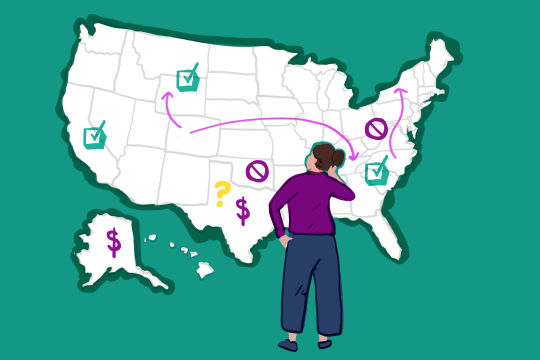
More than half (53%) of reproductive-age women living in states with abortion-provision bans say they would not know where to go or where to find information if they needed an abortion, up from 43% in 2024, according to the KFF's 2026 Women's Health Survey. Four in 10 (40%) women living in states with gestational limits between 6 and 12 weeks say the same, as do 1 in 3 (32%) reproductive-age women nationally, up from 1 in 4 (26%) in 2024. The findings come as the greater availability of medication abortion via telehealth has transformed how many women get abortions, including women living in states with bans.
CONTRACEPTIve care IN THE U.S.

Women’s Experiences with Contraception: Use, Coverage, and Preferences

More than a dozen years after the implementation of the Affordable Care Act rule requiring most plans to cover the full costs of contraceptive care, most women still don’t know about it. According to a new analysis of the 2026 KFF Women’s Health Survey, only 4 in 10 (40%) women ages 18 to 49 know that most insurance plans must pay the full cost of contraception (down slightly from 43% in 2024). Six in 10 women either think no such requirement exists (29%) or aren’t sure (31%).

SELECTED RESOURCES

featured

Women's Health Survey

The Women’s Health Survey is a series of nationally representative surveys on women’s health conducted by KFF since 2001. The survey aims to track and document women’s experiences with the health care system, access challenges and barriers to care, knowledge related to health and well-being, and differences between women by age, race/ethnicity, income level, and insurance type.

A promotional image for the the KFF Health Policy 101 Issues in Women’s Health chapter

Health Policy Issues in Women’s Health

Examine the core health coverage and access issues —shaped by federal and state policies—that affect women’s health today, including health coverage and costs, reproductive health services, maternal health, mental health, and intimate partner violence.

State Profiles for Womens Health

Explore the latest national and state-specific data and policies on women’s health. Topics include health status, insurance and Medicaid coverage, use of preventive services, sexual health, maternal and infant health, and abortion policies. Many indicators provide state-level information for women of different racial and ethnic groups.

The essentials
  • Women’s Health Insurance Coverage

    This factsheet reviews major sources of coverage for women residing in the U.S., discusses the ACA's impact on coverage, and the coverage challenges that many women continue to face.
  • Medicaid Coverage for Women

    This data note presents key data points describing the current state of the Medicaid program as it affects women, including eligibility, reproductive health, chronic conditions, and more.
  • Dobbs: What are the Implications for Racial Disparities?

    This analysis examines the implications of the Dobbs decision and state restrictions on abortion coverage for racial disparities in access to care and health outcomes.
  • State Health Facts: Women's Health Indicators

    Information on women’s health status, utilization of services, health insurance coverage, family planning and childbirth, and abortion statistics and policies.
  • Key Facts on Abortion in the United States

    This report answers some key questions about abortion in the United States and presents data collected before the overturn of Roe v. Wade.

Stay informed.

Stay informed.

Filter

701-710 of 886 results

  • Emergency Contraception Survey in California

    Poll Finding

    - Survey Toplines As the FDA continues to deliberate about whether emergency contraception will be made available "over-the-counter" without a prescription, a new Kaiser Family Foundation survey examines Californian's awareness of and experiences with emergency contraception, inlcuding findings on the state's "pharmacy access " program. California's "pharmacy access" program permits women to receive emergency contraception from participating pharmacists directly without contacting a physician , while the "over-the-counter" option the FDA is considering would allow people…

  • Emergency Contraception in California

    Poll Finding

    As the FDA continues to deliberate about whether emergency contraception will be made available "over-the-counter" without a prescription, a new Kaiser Family Foundation survey examines Californian's awareness of and experiences with emergency contraception, including findings on the state's "pharmacy access" program. California's "pharmacy access" program permits women to receive emergency contraception from participating pharmacists directly without contacting a physician, while the "over-the-counter" option the FDA is considering would allow people to obtain emergency contraception off-the-shelves…

  • Emergency Contraception Resources

    Other Post

    Fact Sheet The fact sheet below includes information on EC methods, safety and side effects, and access issues. The fact sheet also provides information women's knowledge and use as well as health care provider attitudes and practices. Emergency Contraception Fact Sheet Survey The survey snapshot and toplines/survey below from the Kaiser Family Foundation's 2001 National Survey of Women's Health Care Providers on Reproductive Health is a national random-sample survey of 790 physicians, including 595 obstetrician…

  • Teens and TANF: How Adolescents Fare Under the Nation’s Welfare Program

    Issue Brief

    This issue brief describes the history and main provisions of TANF, focusing on those that relate directly to teens, and describes what is currently known about the program’s impact on three different groups of adolescents: TANF teen parents, teenagers living in TANF households, and teens who are involved in TANF-funded initiatives. Issue Brief (.pdf)

  • Women and HIV/AIDS in the United States: Setting an Agenda for the Future

    Event Date:
    Event

    Women represent almost one in three new HIV infections in the U.S. and the share of women among reported AIDS cases has more than tripled since 1986 from 7% to 26% of reported cases in 2001. Women of color, particularly African American women, have been hard hit, accounting for the majority of new infections among women. In addition, many women with HIV/AIDS are low-income and face considerable challenges in obtaining optimal levels of health care.…

  • The Healthcare Experiences of Women with HIV/AIDS – Insights from Focus Groups

    Report

    The Healthcare Experiences of Women with HIV/AIDS: Insights from Focus Groups This report summarizes findings from a series of focus groups with women living with HIV/AIDS. Focus group participants describe their first-hand experience with the health care system, including issues of to financing and coverage, relationships with providers, the role of AIDS support organizations, and challenges in care and treatment. Report (.pdf)

  • The Healthcare Experience of Women with HIV/AIDS: Insights from Focus Groups – Executive Summary

    Report

    The Healthcare Experiences of Women with HIV/AIDS: Insights from Focus Groups This report summarizes findings from a series of focus groups with women living with HIV/AIDS. Focus group participants describe their first-hand experience with the health care system, including issues of to financing and coverage, relationships with providers, the role of AIDS support organizations, and challenges in care and treatment. Executive Summary (.pdf)

  • Key Facts: Women and HIV/AIDS in the United States

    Report

    Key Facts: Women and HIV/AIDS Key Facts: Women and HIV/AIDS provides comprehensive data on the impact of HIV/AIDS epidemic on women in the United States. Based on the most recent data and research on the epidemiology of HIV/AIDS among women, the report includes an overview of the epidemic profile, a profile of women living with HIV/AIDS, data on access to and use of health services, and women’s perceptions of HIV/AIDS. Report (.pdf)

  • Women’s Access to Care:  A State-Level Analysis of Key Health Policies

    Report

    Women's Access to Care: A State-Level Analysis of Key Health Policies State policies play a critical role in shaping women's access to health care. With authority over several important policy issues and the power to legislate, regulate, and enact programs that address women's needs, state policymakers have tackled several issues of importance to women. Women's Access to Care: A State-Level Analysis of Key Health Policies, prepared by the National Women's Law Center and Kaiser Family…