Women's Health Policy

ABORTION IN THE U.S.

KFF infographic explaining who regulates mifepristone, showing four entities and their roles: the U.S. Food and Drug Administration approves and regulates medications for safety and effectiveness; state legislatures pass laws that can restrict or protect access; courts rule on legal cases affecting regulation; and Congress can pass federal legislation influencing regulation.

Louisiana v. FDA: Access to Mifepristone Back at the Supreme Court

Louisiana sued the FDA in October 2025, claiming the FDA’s 2023 regulatory change eliminating the requirement that mifepristone be dispensed in-person—allowing it to be mailed or dispensed at retail pharmacies—harm the state's ability to enforce its abortion ban. This brief reviews the Louisiana v. FDA case now before the Supreme Court, and provides an overview of the other pending litigation involving mifepristone, as well as the mounting tension between states seeking to protect abortion and those banning the provision of abortion.

CONTRACEPTIve care IN THE U.S.

New and noteworthy

Over-the-Counter Oral Contraceptive Pills

In July 2023, the FDA approved Opill, the first daily oral contraceptive pill to become available over the counter (OTC) without a doctor’s prescription. This issue brief provides an overview of OTC oral contraceptives and laws and policies related to insurance coverage.

featured

A promotional image for the the KFF Health Policy 101 Issues in Women’s Health chapter

Health Policy Issues in Women’s Health

Examine the core health coverage and access issues —shaped by federal and state policies—that affect women’s health today, including health coverage and costs, reproductive health services, maternal health, mental health, and intimate partner violence.

State Profiles for Women’s Health

Explore the latest national and state-specific data and policies on women’s health. Topics include health status, insurance and Medicaid coverage, use of preventive services, sexual health, maternal and infant health, and abortion policies. Many indicators provide state-level information for women of different racial and ethnic groups.

The essentials
  • Women’s Health Insurance Coverage

    This factsheet reviews major sources of coverage for women residing in the U.S., discusses the ACA's impact on coverage, and the coverage challenges that many women continue to face.
  • Medicaid Coverage for Women

    This data note presents key data points describing the current state of the Medicaid program as it affects women, including eligibility, reproductive health, chronic conditions, and more.
  • Dobbs: What are the Implications for Racial Disparities?

    This analysis examines the implications of the Dobbs decision and state restrictions on abortion coverage for racial disparities in access to care and health outcomes.
  • State Health Facts: Women's Health Indicators

    Information on women’s health status, utilization of services, health insurance coverage, family planning and childbirth, and abortion statistics and policies.
  • Key Facts on Abortion in the United States

    This report answers some key questions about abortion in the United States and presents data collected before the overturn of Roe v. Wade.

Subscribe to KFF Emails

Choose which emails are best for you.
Sign up here

Filter

491 - 500 of 870 Results

  • Teens and TANF: How Adolescents Fare Under the Nation’s Welfare Program

    Issue Brief

    This issue brief describes the history and main provisions of TANF, focusing on those that relate directly to teens, and describes what is currently known about the program’s impact on three different groups of adolescents: TANF teen parents, teenagers living in TANF households, and teens who are involved in TANF-funded initiatives. Issue Brief (.pdf)

  • Health Coverage and Access:  Policy Issues For Women

    Report

    Health Coverage and Access: Policy Issues For Women This chartpack provides briefing materials that review the key health coverage and access concerns facing American women. Issues that are addressed include women's role in the health system, insurance coverage and access to care, managed care, contraceptive coverage, Medicare reform, and assistance with long-term care. Chart Pack

  • New KFF Analyses on Women and Medicaid: State Family Planning Benefits and Contraceptive Provision

    News Release

    Medicaid, the state and federal health coverage program for low-income people, finances family planning services for millions of women across the nation. National statistics, however, can mask important state-level Medicaid policy and utilization differences. Two new KFF state-level analyses have just been posted that provide up-to-date coverage policies and practices as well as new data on contraceptive provision under Medicaid. Medicaid Coverage of Family Planning Benefits: Findings from a 2021 State Survey Based on findings…

  • State Variations in the Role of the Reproductive Health Safety Net for Contraceptive Care Among Medicaid Enrollees

    Issue Brief

    This KFF analysis uses 2023 T-MSIS Research Identifiable Files to look at where reproductive-age female Medicaid enrollees received their last contraceptive visit by state. Overall, more than four in 10 (43%) female Medicaid enrollees received their last contraceptive visit of 2023 at a safety net provider, which includes Planned Parenthood clinics, community health centers, state and local health departments, and Indian health services, but there is wide variation by state.

  • Health Policy 101 Introduction

    Feature

    Health Policy 101 is a comprehensive guide covering fundamental aspects of U.S. health policy and programs, including Medicare, Medicaid, the Affordable Care Act, employer-sponsored insurance, the uninsured population, health care costs and affordability, women's health issues, and health care politics. It includes overviews of private health insurance regulation, racial and ethnic disparities, public health, international comparison of health systems, U.S. global health policy, and the federal role in health policy. The chapters can be downloaded…

  • Deja Vu: the Future of Abortion Coverage in ACA Marketplace Plans

    Policy Watch

    This policy watch explains how abortion coverage works in ACA Marketplace plans, state actions to include or exclude abortion coverage in these plans, and the potential impact if Congress bans abortion coverage in all Marketplace plans.

  • Quote from Alina Salganicoff, KFF Senior Vice President and Director for Women’s Health Policy. It says, “The Administration’s latest funding deadline and guidance shift intensifies pressure to the reproductive health safety net at a time when the number of uninsured individuals is projected to rise due to Medicaid cuts and expiration of enhanced Affordable Care Act premium tax credits, and Planned Parenthood clinics have lost their federal Medicaid funding.”

    Navigating Uncertainty: The Latest Challenge to the Title X Family Planning Safety Net

    Quick Take

    The Administration's latest funding deadline and guidance shift intensifies pressure to the reproductive health safety net at a time when the number of uninsured individuals is projected to rise due to Medicaid cuts and expiration of enhanced Affordable Care Act premium tax credits, and Planned Parenthood clinics have lost their federal Medicaid funding.

  • The Status of Abortion-related State Ballot Initiatives Since Dobbs

    Tracker

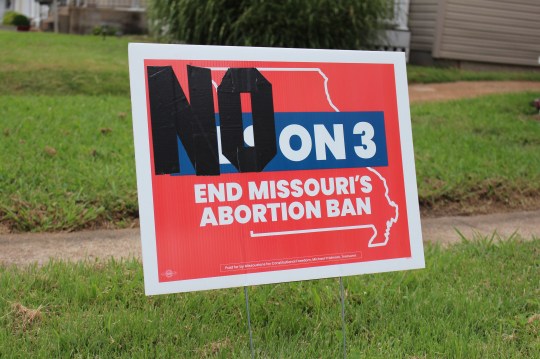
    Last updated on March 24, 2026 Since the Supreme Court’s Dobbs decision, overturning Roe v. Wade, voters in 17 states have weighed in on ballot measures regarding abortion-- some more than once. In November 2026, voters in Missouri, Nevada, and Virginia will weigh in on abortion measures that could change the legal status of abortion in their state. In addition, measures in Idaho and Nebraska are in the process of collecting signatures.   In 2024, 10 states voted on abortion measures that sought to affirm that the state constitution protects the right to abortion. Nebraska voted on two measures: one…