Public Opinion

HeaLTH in the Midterms

Health Care in the 2026 Midterm Election

This dashboard focuses on KFF’s analysis of the role health care costs and other health policy issues played in voters’ decisions in the 2026 midterm elections, including in key Senate races. It examines the role of rising health costs on voters’ decisions, views on the Trump administration’s health care policies, and opinions on the government’s role in health care amid discussions of Medicare for All.

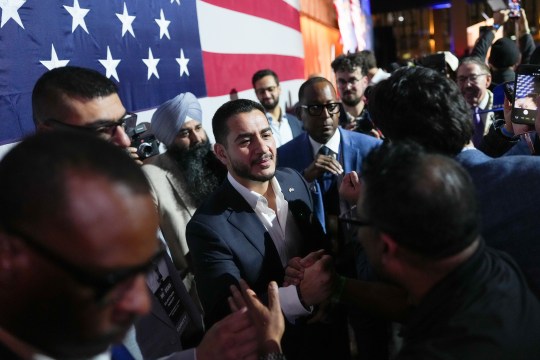
Abortion on the Ballot in 2026: Polling Insights from Voters in Four States

This dashboard provides KFF’s analysis of the role abortion played in voters’ decisions in the 2026 midterm elections, with a focus on four states with abortion-related ballot measures: Idaho, Missouri, Nevada, and Virginia. It examines support for each of the measures across groups, including additional questions in Missouri.

What Do the Midterm Election Results Mean for Health Care? 

Event Date:

On November 5 at Noon ET, join KFF for a special post-election discussion and live “What the Health” podcast taping. Part of the discussion will focus on public opinion survey data on how voters weighed health care as they went to the polls nationally and in the four states with abortion-related ballot initiatives. 

Midterm Voters Give Democrats a Big Advantage to Handle Health Care

Quick Insights

KFF’s analysis of the 2026 Voter Poll by SSRS shows midterm voters gave Democrats a 19-percentage-point advantage on which party is better able to handle health care. Voters also gave Democrats a narrow edge on handling the economy (43% vs. 37%), a reversal from 2024, when Trump had a 10-point advantage over Harris. "In an election focused on affordability, Democrats’ messaging on health care costs appears to have resonated with voters and may have contributed to the party’s gains."

KFF/AP Survey of RURAL VOTERS

Health Information and Trust

About Half of Parents Mistakenly Believe Spacing Out Vaccines Is Healthier for Children; Half Say No Strong Evidence to Support Such a Claim

KFF Tracking Poll on Health Information and Trust: Fall 2026 Update on Vaccine Views

The latest KFF Tracking Poll on Health Information and Trust finds about half of parents mistakenly believe spacing out vaccines is healthier for children, while confidence in many long-standing childhood vaccines is high across partisans. These findings take on new relevance following President Trump’s recent executive order calling for changes in U.S. childhood vaccine recommendations, including splitting the measles, mumps, and rubella (MMR) vaccine—currently given as a single combined shot—into three separate vaccines across multiple visits.

Dashboard: Polling on Health Information and Trust

Drawing on KFF’s poll findings, this interactive dashboard tracks the public’s trusted sources for health information, attitudes toward vaccines, and use of news, social media, and AI for health-related information.

Health Tracking PollS

Democrats Hold a Nearly 2-to-1 Advantage Over Republicans on Handling the Cost of Health Care

Health Care Issues in the Lead-Up to the 2026 Midterm Election 

In the lead up to the midterms, health care costs remained tied with gas as voters’ top midterm concerns. Two-thirds of U.S. adults also favored Medicare-for-all, a new high in KFF Polling, but support shifts when competing claims from critics and proponents are heard.

Most Democratic Voters Want To Hear Candidates Discuss Health Costs and Future of Health Programs; More Republicans Focused on Fraud

Public Views on Fraud in Health Programs

As the 2026 midterms approach, health care costs remain voters’ top health priority, but fraud in government health programs, including Medicaid and Medicare, is resonating with Republican voters, 55% of whom say it’s extremely important for candidates to address.

Mifepristone and the Midterms

Amid an ongoing FDA re-review of mifepristone, awareness of the safety and prevalence of the abortion pill remains limited. This KFF poll also finds that the voters who say abortion policy is an important issue for 2026 midterm candidates to discuss are disproportionately Democrats.

MAHA and the Midterms

This KFF Health Tracking Poll finds that the cost of health care is a more prominent focus for Make America Healthy Again (MAHA) voters than issues like food and vaccine policy. Four in ten MAHA voters (42%) choose lowering health costs as the most important health priority, outranking other MAHA priorities.

the essentials

Health Tracking Poll

Our signature survey project provides up-to-date data on the public’s health care views, knowledge, and experiences.

Tracking the Public’s Views on the ACA

Tracking the Public’s Views on the ACA

This interactive tool tracks public opinion on the Affordable Care Act, from the inception of the law to the present, including trends based on party identification, income, age, gender, and race/ethnicity.

Health Information and Trust Tracking Poll

The Health Information and Trust Tracking Poll is part of KFF’s Health Information and Trust Initiative, which tracks health misinformation and analyzes its impact on the public.

Stay informed.

Stay informed.

Filter

31-40 of 1,869 results

  • Untold KFF History Volume 2: Kaisernetwork.org

    From Drew Altman

    In the second of his “Untold KFF History” series, KFF’s Founding President and CEO Dr. Drew Altman discusses KFF’s first big foray into health news: Kaisernetwork.org, which was an online health policy resource and webcasting service called “HealthCast.”

  • Poll: People Without a Trusted Health Care Provider Are More Likely to Endorse Vaccine Myths, As Are Those Who Often Use Social Media or AI for Health Information

    News Release

    People who don’t have a trusted health care provider are more likely than people with one to believe or lean toward believing several common myths about vaccines, a new KFF Tracking Poll on Health Information and Trust reveals. Similarly, people who use social media or artificial intelligence (AI) chatbots at least weekly for health information are more likely than those who don’t to endorse these false vaccine claims. One example: Among adults who say they…

  • KFF Tracking Poll on Health Information and Trust: Update on Common Vaccine Myths

    Poll Finding

    This poll looks at exposure to and belief in several vaccine myths and finds that people without a trusted health care provider, and those who regularly use social media or AI for health information, are generally more likely than others to belief the false claims. It also analyzes belief across vaccine myths, showing the share of the public that are consistent myth believers, consistent myth deniers, and those who land in the "mixed middle."

  • KFF Tracking Poll on Health Information and Trust: Use of Social Media and AI For Health Information and Advice

    Poll Finding

    This poll finds that about 3 in 10 adults turn to social media for health information and advice at least monthly. Community connection and the need for immediate answers are the top reasons why people are turning to these tools. Slim majorities of those who use social media for health are confident they can tell what is true, and relatively few take steps to check the information they receive.

  • State Health Coverage for Immigrants and Implications for Health Coverage and Care

    Issue Brief

    Noncitizen immigrants, particularly those who are undocumented, face significant barriers to accessing health coverage and care and are significantly more likely than citizens to be uninsured. This brief provides an overview of state health coverage programs for immigrants, including among states that have taken up options in Medicaid and the Children’s Health Insurance Program (CHIP) to expand coverage for lawfully present immigrants and/or established fully state-funded programs to fill gaps in coverage for immigrants.

  • Key Facts on Health Coverage of Immigrants

    Fact Sheet

    This fact sheet provides an overview of health coverage for immigrants based on data from the 2023 KFF/LA Times Survey of Immigrants, the largest nationally representative survey focused on immigrants and discusses potential implications of incoming Trump administration policies for coverage of immigrants.

  • Mollyann Brodie Receives AAPOR Award for Exceptionally Distinguished Achievement

    News Release

    The American Association of Public Opinion Research (AAPOR) recognized KFF’s Mollyann Brodie, Ph.D., with the AAPOR Award for Distinguished Achievement for her outstanding leadership and contributions to the field of public opinion research over three decades. Also, KFF’s Surveys of Immigrants received the 2026 AAPOR Inclusive Voices Award, which recognizes work examining complex challenges related to underrepresented populations.

  • KFF Health Tracking Poll: Public Views on Foreign Aid and Global Health Spending

    Poll Finding

    This poll finds that less than half of the public now wants the U.S. to play at least a major role in improving the health of people in developing countries. When asked about the administration’s changes to foreign aid and global health, more people perceive a negative impact than a positive one.

  • There Are Many MAHAs

    From Drew Altman

    In a new column, Dr. Drew Altman, Founding President and CEO, dissects the MAHA “movement.” He writes: “There appear to be many MAHAs, not one. You can care about pesticides, or food additives, or vaccines, or child health, or corporate influence, or all of the above, to varying degrees. The reason so many Americans say they support MAHA when asked in polls is that, like a restaurant with a large menu, there is something in…