Americans May Be Smarter About Vaccines Than You Think
Many of us in health care are deeply concerned about misinformation (and declining trust), so it seems important to underscore that while the American people may not always be as science-based as we might like them to be, they may also not be as anti-science as you may think they are—only a sliver of the public are hard-core refusniks who believe the lies, myths, misinformation or misbeliefs about vaccines. Occasionally, a lie breaks through when it’s amplified by someone influential and by the media. For example, 41% of the American people believed there were death panels in the ACA, but that’s the exception, not the norm.
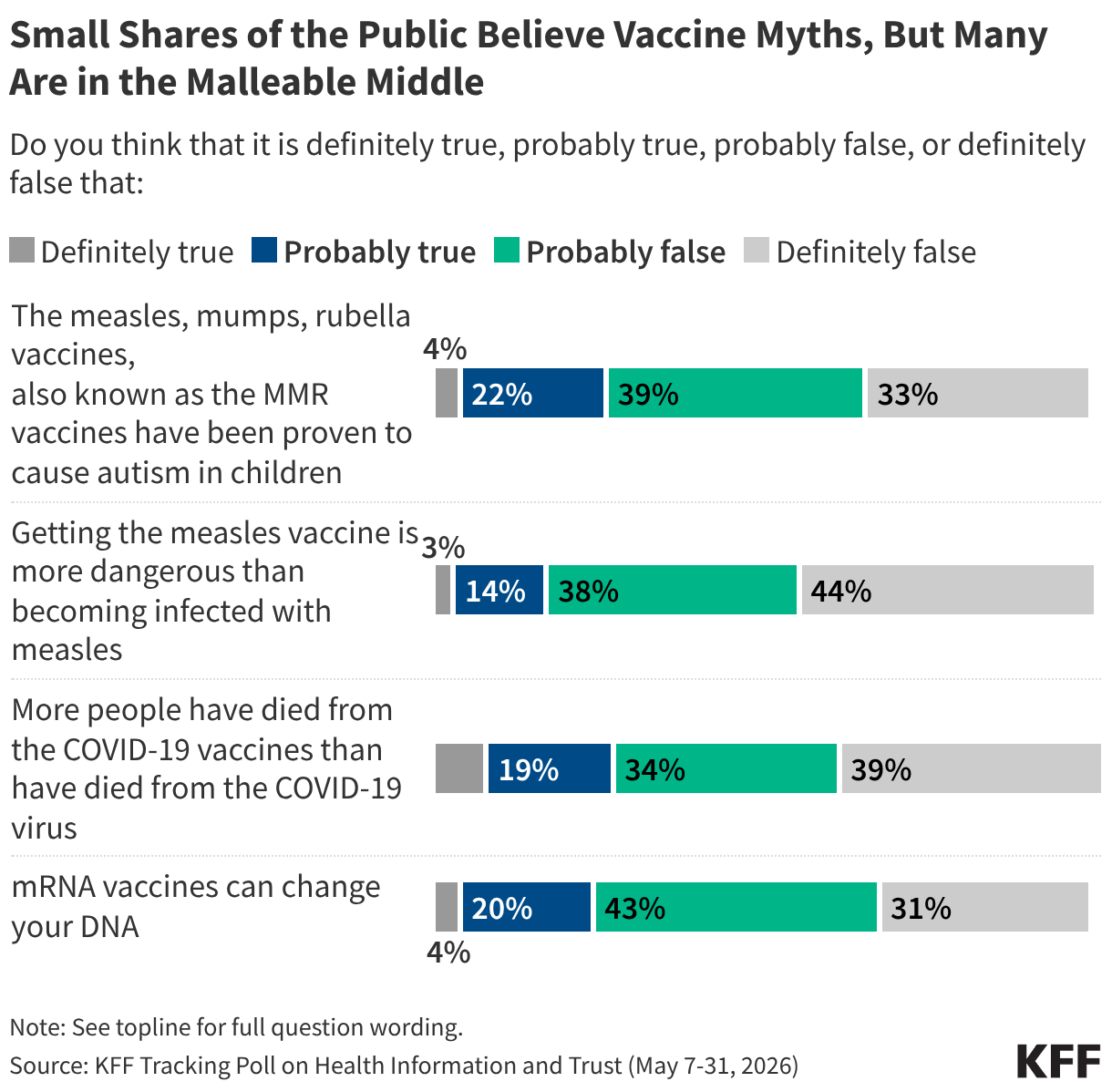
In our most recent Tracking Poll on Health Information and Trust, we tested out who believed and didn’t believe each of four vaccine-related myths: “Getting the measles vaccine is more dangerous than becoming infected with measles;” “mRNA vaccines can change your DNA;” “measles, mumps, and rubella vaccines, also known as the MMR vaccines, have been proven to cause autism in children;” and, “more people have died from the COVID-19 vaccines than have died from the COVID-19 virus.” Here’s what stood out to me from these findings:
- The share of the public who believe these four myths is very small. Between 3% and 8% of the adult population believe these different vaccine myths are “definitely true.” By any standard, that’s a small, even tiny share of the overall adult population (for context, about a quarter of adults say they are MAGA). These are likely most of the folks you see in the spikes in social media engagement we sometimes observe when influencers or leaders like Secretary Kennedy amplify vaccine or other myths.
- Looked at another way, the hard-core group is even smaller: Just 1.3% believe all four false claims about vaccines are “definitely true.”
- By contrast, between 31% and 44% of the public think these claims are basically nonsense, meaning the share who don’t believe these things at all outnumber those who definitely do by almost 5-to-1 or more. That’s hardly the impression you get when you read reports about social media posts and views with characterizations like “engagement spiked” or “views tripled.” It’s important to track social media engagement to know how misinformation is spreading and who is spreading it, but it doesn’t give us a real picture of reach or impact. How many people believe it? How strongly? Who are they? Where did they get their information? Who do they trust and not trust when it comes to health information? That’s why we do our information and trust surveys.
- As I have written before and we have widely reported, most people are floundering around in a muddled middle uncertain what to believe. Take, for example, the slam dunk falsehood that “more people have died from the COVID-19 vaccines than from COVID-19 itself.” As you can see in the chart below, 53% of the American people are not certain about the answer to that question, with 34% saying that’s “probably false” and 19% “probably true,” Estimates are that the vaccine saved 2.5 million lives, and many more years of life.
So, when you see reports of social media engagement spiking about a health myth, don’t overreact. It’s more likely than not that it’s a relatively small group of Americans who already believe it talking to themselves, and they are vastly outnumbered by those who believe the science. What we need to be on guard for are the breakout myths like death panels. And what deserves much more focus is the very large group of Americans in the middle who, just as in politics, are confused by the discussions on the edges and uncertain about what is true and what to do. And the biggest danger posed by amplifiers—leaders, influencers, and sometimes the news media who amplify misinformation—is probably less that they spread the myths and more that they further spread the confusion and uncertainty about them.