
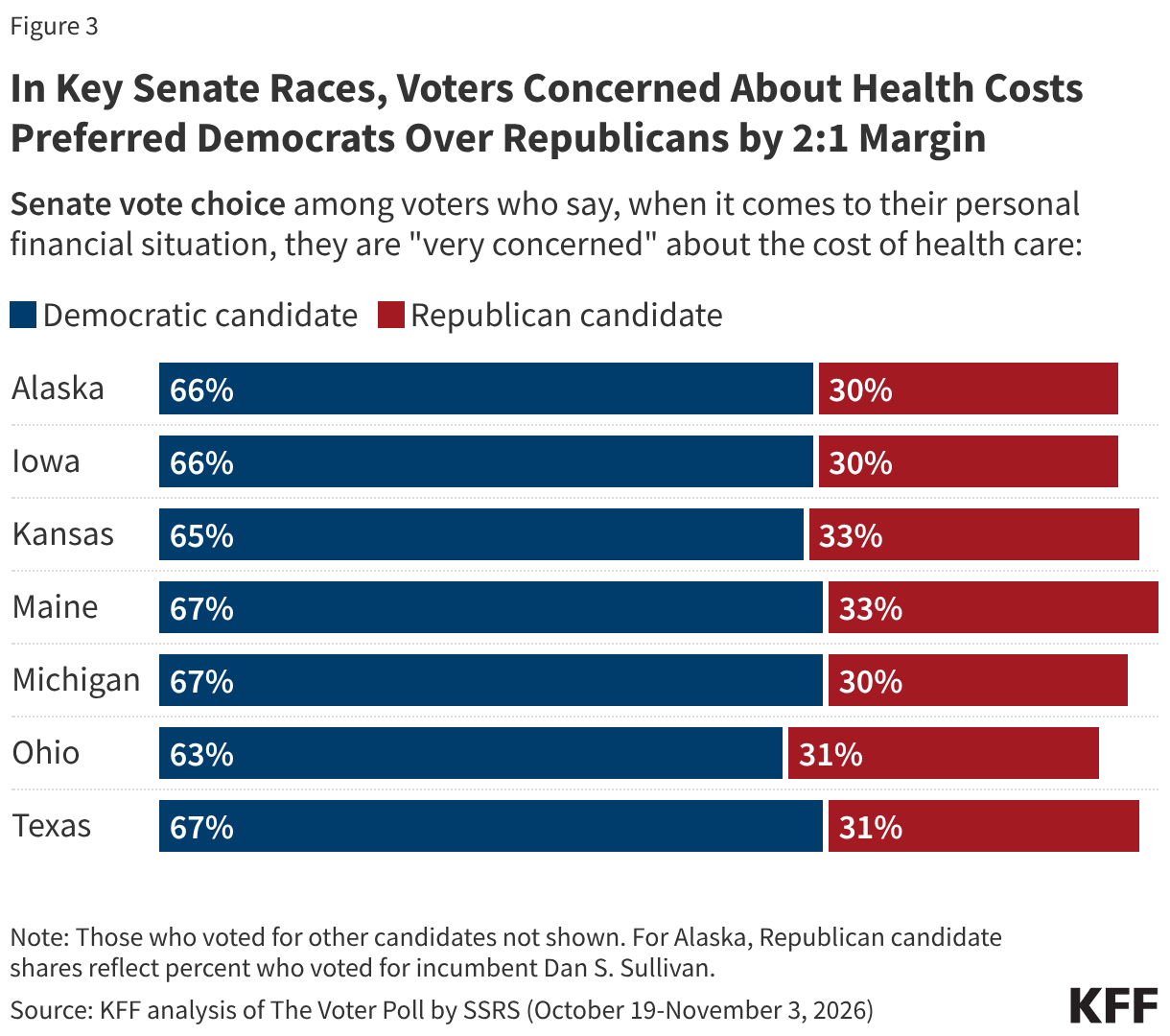
- The economy was voters’ top issue in the 2026 midterms, and the cost of living – including the cost of health care – was a key driver of their decisions, as voters pointed to health care costs among their most pressing affordability concerns. Overall, about six in ten voters said they were “very concerned” about the cost of health care, on par with concerns over affording gas and groceries. About two-thirds of voters in key battleground states who were “very concerned” about health care costs said they voted for the Democratic Senate candidate, while about three in ten of this group said they voted for the Republican. This is a shift from 2024, when President Trump had a 10-point advantage over Vice President Harris among voters who were most worried about health care costs (54% vs. 44%).
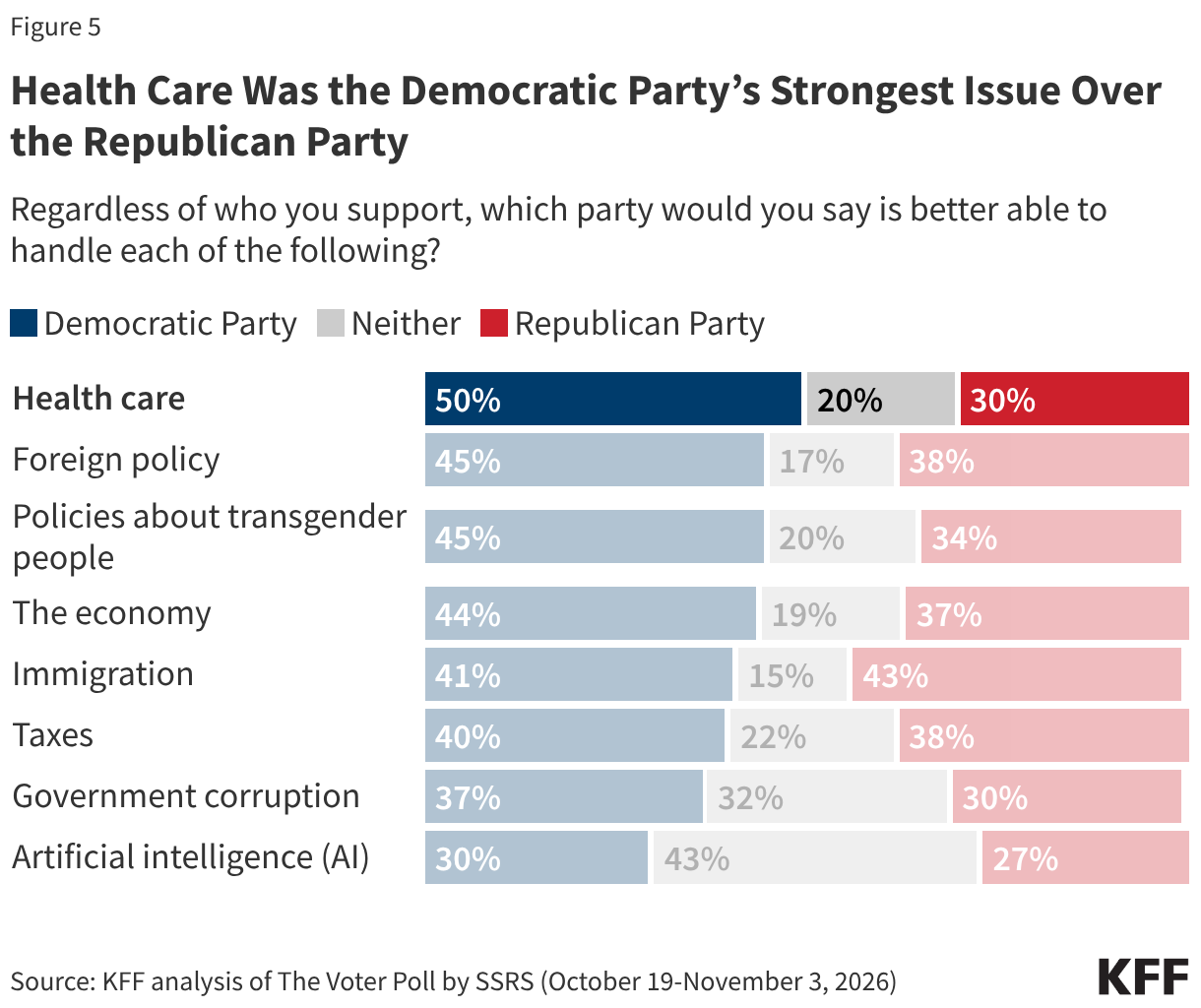
- Midterm voters said the Democratic Party was better equipped than the Republican Party to handle a range of issues, with the Democrats’ biggest advantage appearing on the issue of health care. Half of midterm voters said the Democratic Party is better able to handle health care, a 20-percentage point advantage over the Republican Party (30%). Voters also favored the Democrats over the Republicans on the economy (44% vs. 37%), a reversal from 2024, when President Trump had a 10-point advantage over Vice President Harris.
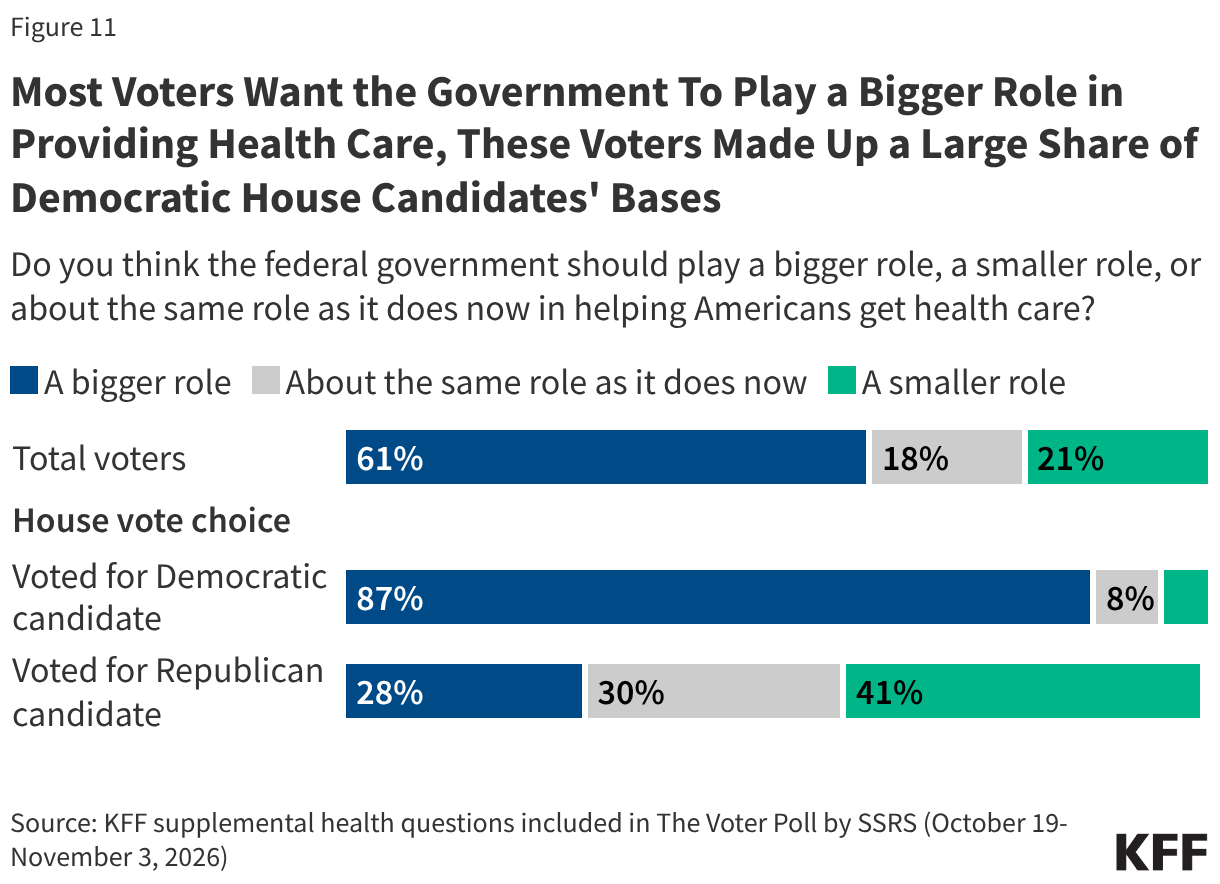
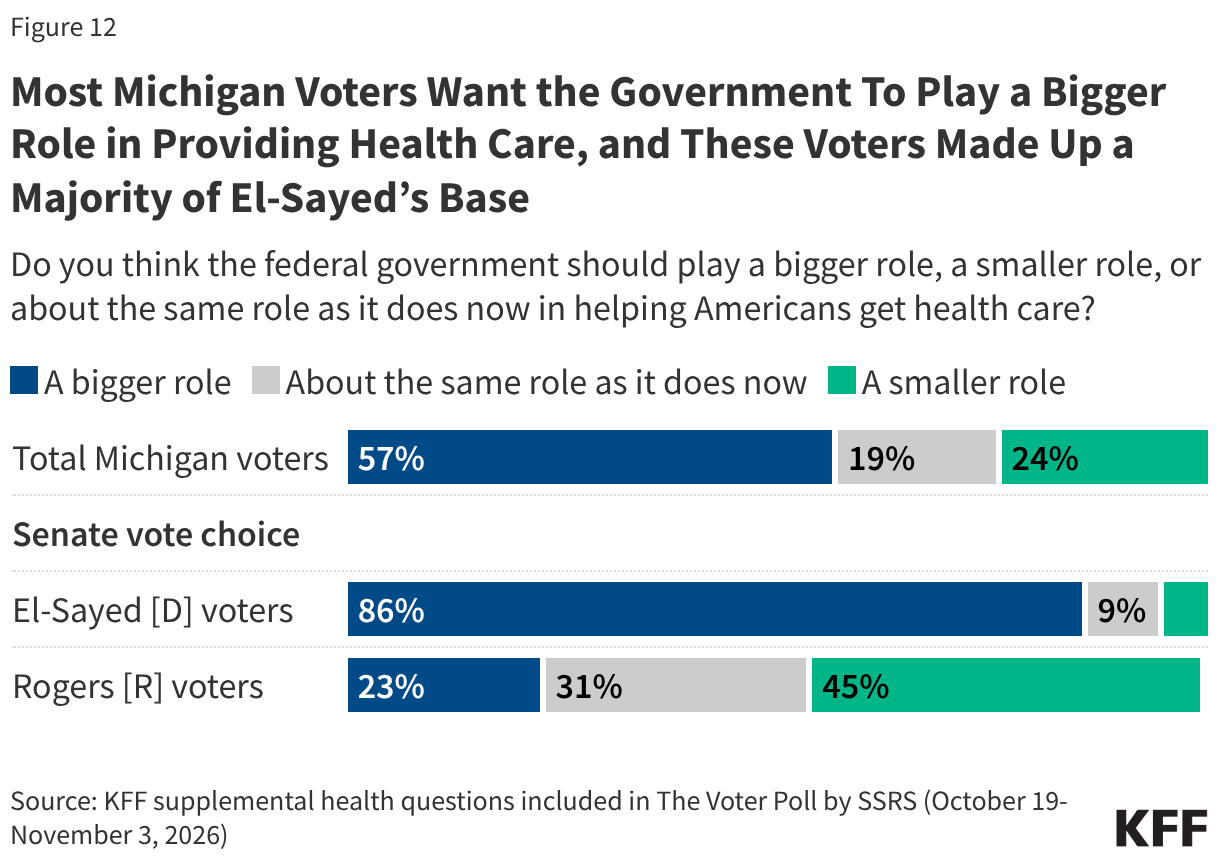
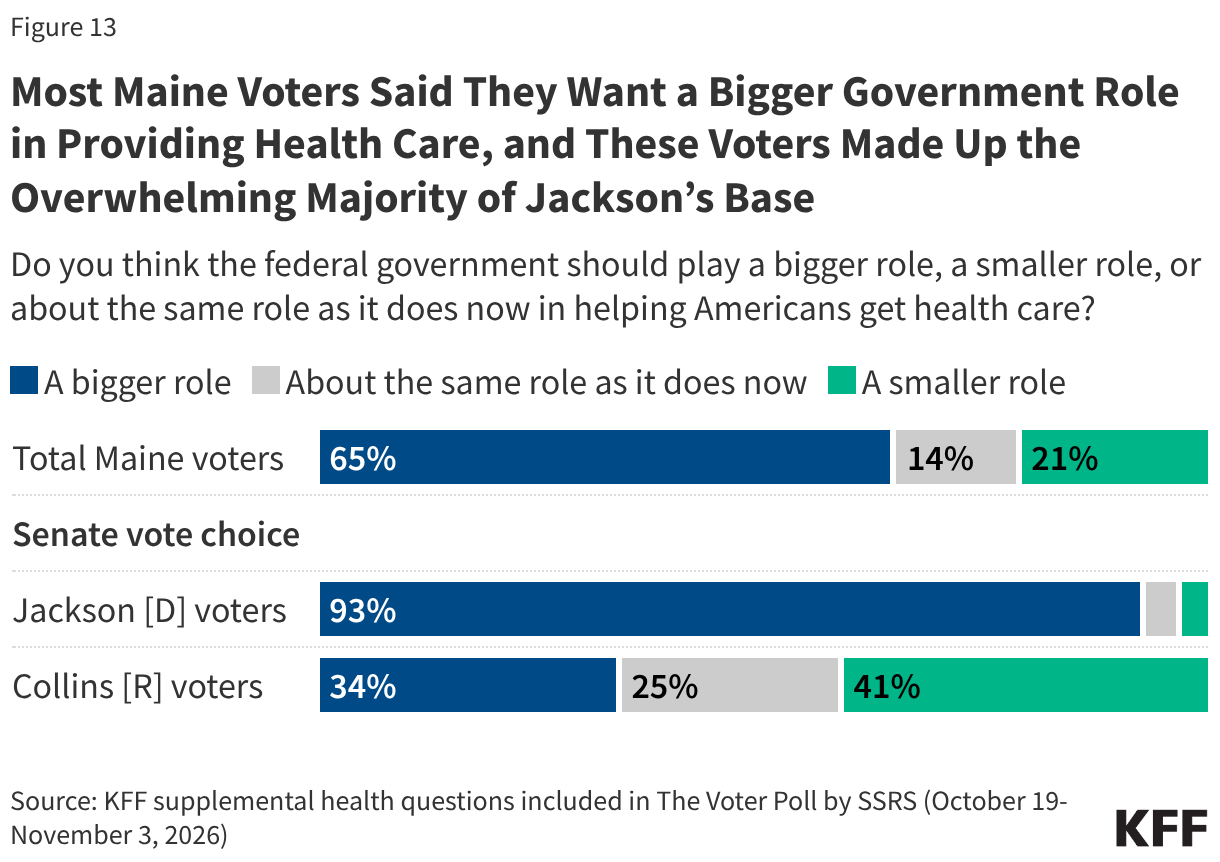
- In Michigan and Maine, where Democratic Senate candidates Abdul El-Sayed and Troy Jackson campaigned on Medicare-for-All, voters preferred the Democratic Party on health care by wide margins, and both candidates appeared able to capitalize on these voters’ desire for a larger government role in health care. In each of these elections, voters gave the Democratic Party about a twenty-percentage point advantage over the Republican Party on whom they trust to handle health care – a wider margin than in other Senate toss-up states. About six in ten midterm voters said they want the federal government to play a larger role in providing health care, including majorities of voters in Maine (65%) and Michigan (57%). In these two states, voters who wanted a larger government role in providing health care made up the overwhelming majority of those who voted for El-Sayed and Jackson.
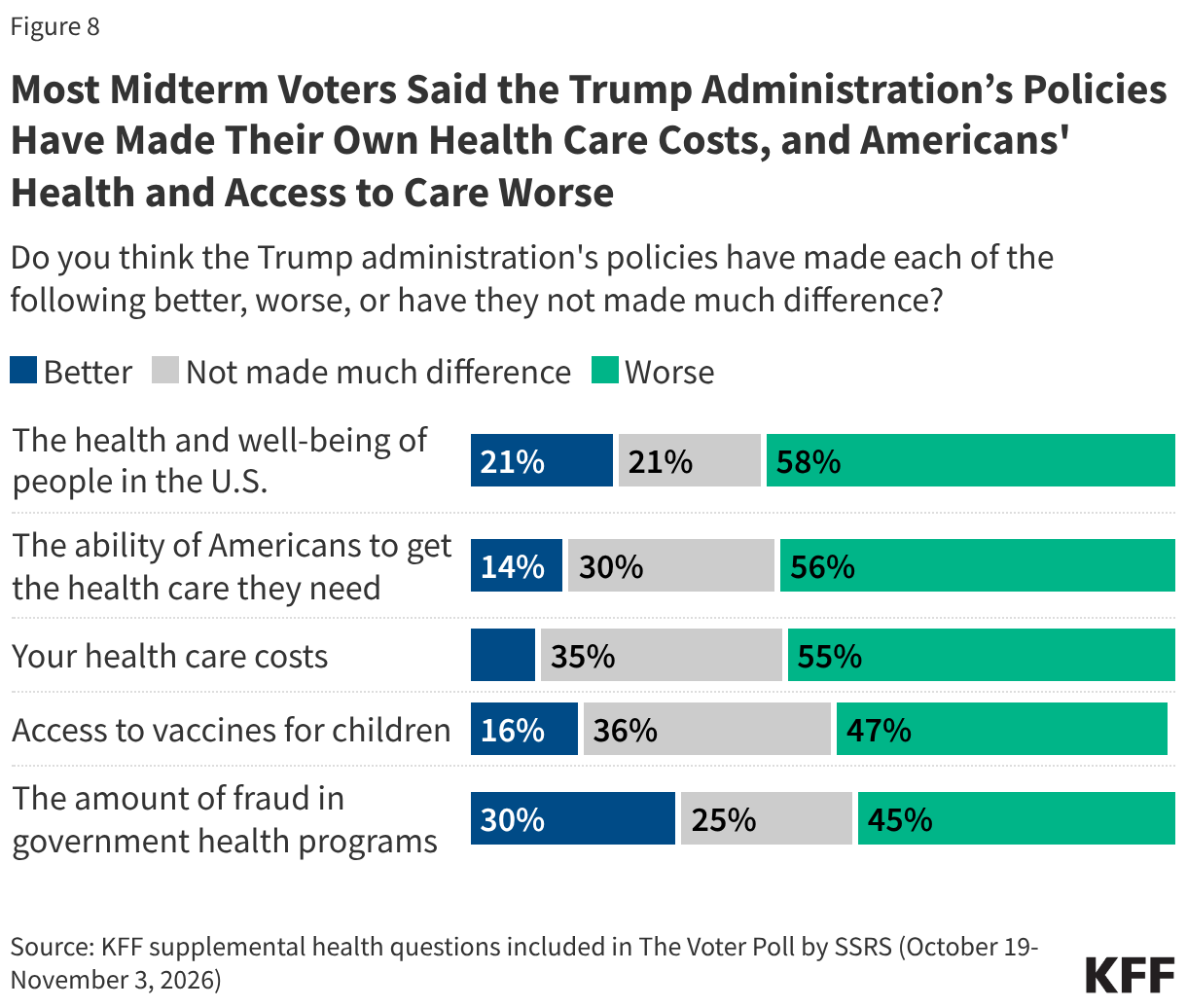
- In a rebuke of the Trump administration’s health care policies, majorities of midterm voters said these policies have worsened their own health care costs (55%) and the ability of Americans to get the health care they need (56%) – at least four times the share who said the administration made these “better.” Voters also expressed more negative than positive views on the administration’s impact on fraud in government health programs (45% worse vs. 30% better) and the health of Americans (58% worse vs. 21% better), two areas that were key policy focuses of the second Trump administration.
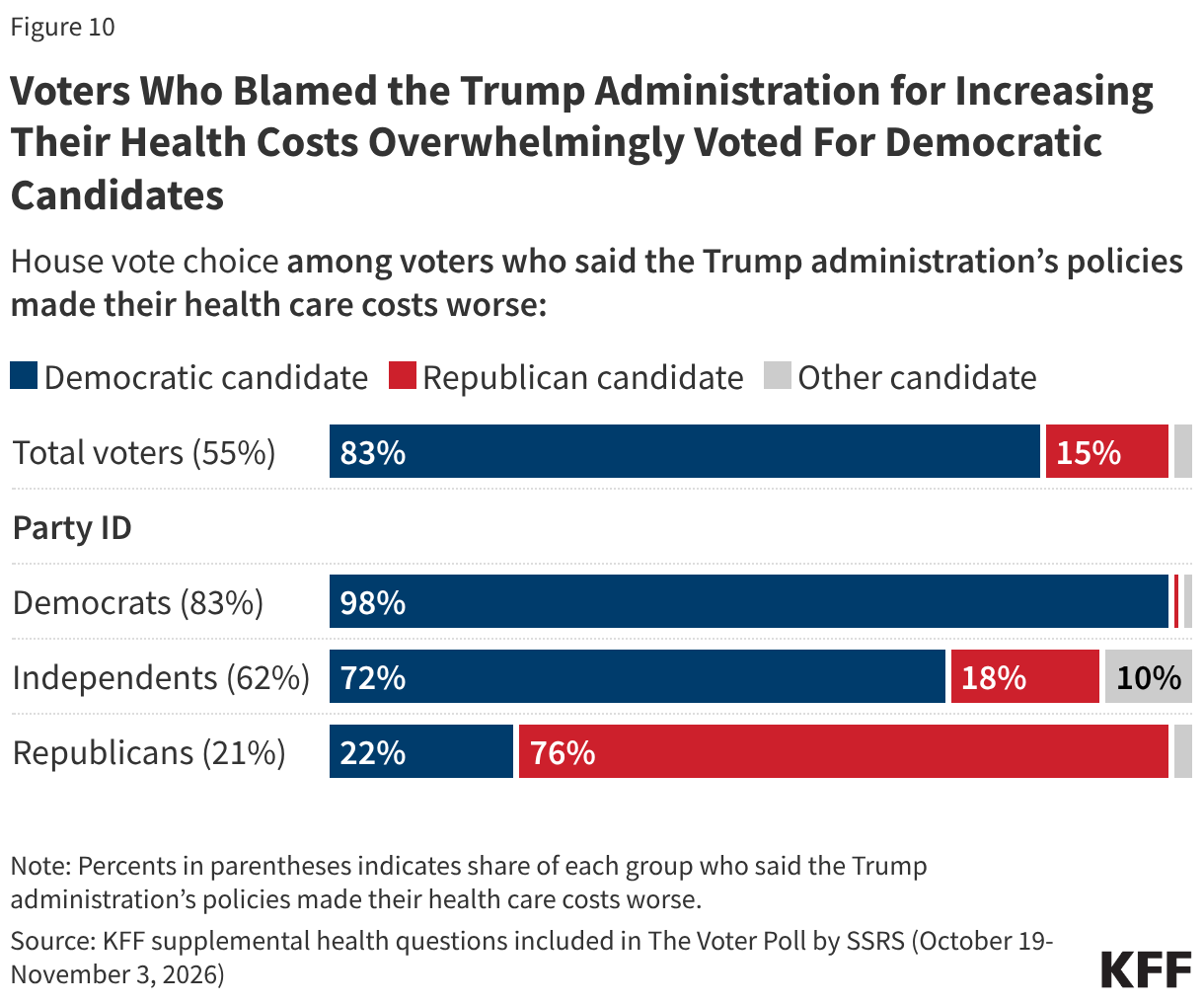
- Blame aimed at the Trump administration over rising health care costs was tied to support for Democratic candidates overall, and among independent voters – a key voting group. Among those who said the administration’s policies worsened their health care costs, eight in ten (83%) overall voted for Democratic House candidates. This pattern was not only true among voters who identify as Democrats; among voters who blame the Trump administration for their own rising health costs, seven in ten (72%) independents and one in five (22%) Republicans report voting for the Democratic House candidate.
KFF Election Poll Analysis
Health Care in the 2026 Midterm Election
This dashboard focuses on KFF’s analysis of the role health care costs and other health policy issues played in voters’ decisions in the 2026 midterm elections, including in key Senate races. For this analysis, KFF added supplemental questions to The Voter Poll by SSRS, a survey of the 2026 midterm electorate nationally and in all 50 states. It examines the role of rising health costs on voters’ decisions, views on the Trump administration’s health care policies, party preferences on health issues, and opinions on the government’s role in health care amid discussions of Medicare-for-All by candidates in key Senate races in Michigan and Maine. This dashboard also includes analysis of select questions from the NORC Civic Health and Elections Project, a separate survey of midterm voters.
For KFF’s analysis of the role of abortion in the 2026 midterms, focusing on states with abortion ballot measures, see: Abortion on the Ballot in 2026: Polling Insights from Voters in Four States
Last Updated: November 4, 2026, data as of 5:00pm ET
Table of Contents
Key Takeaways
The Role of Health Care Costs As a Voting Issue
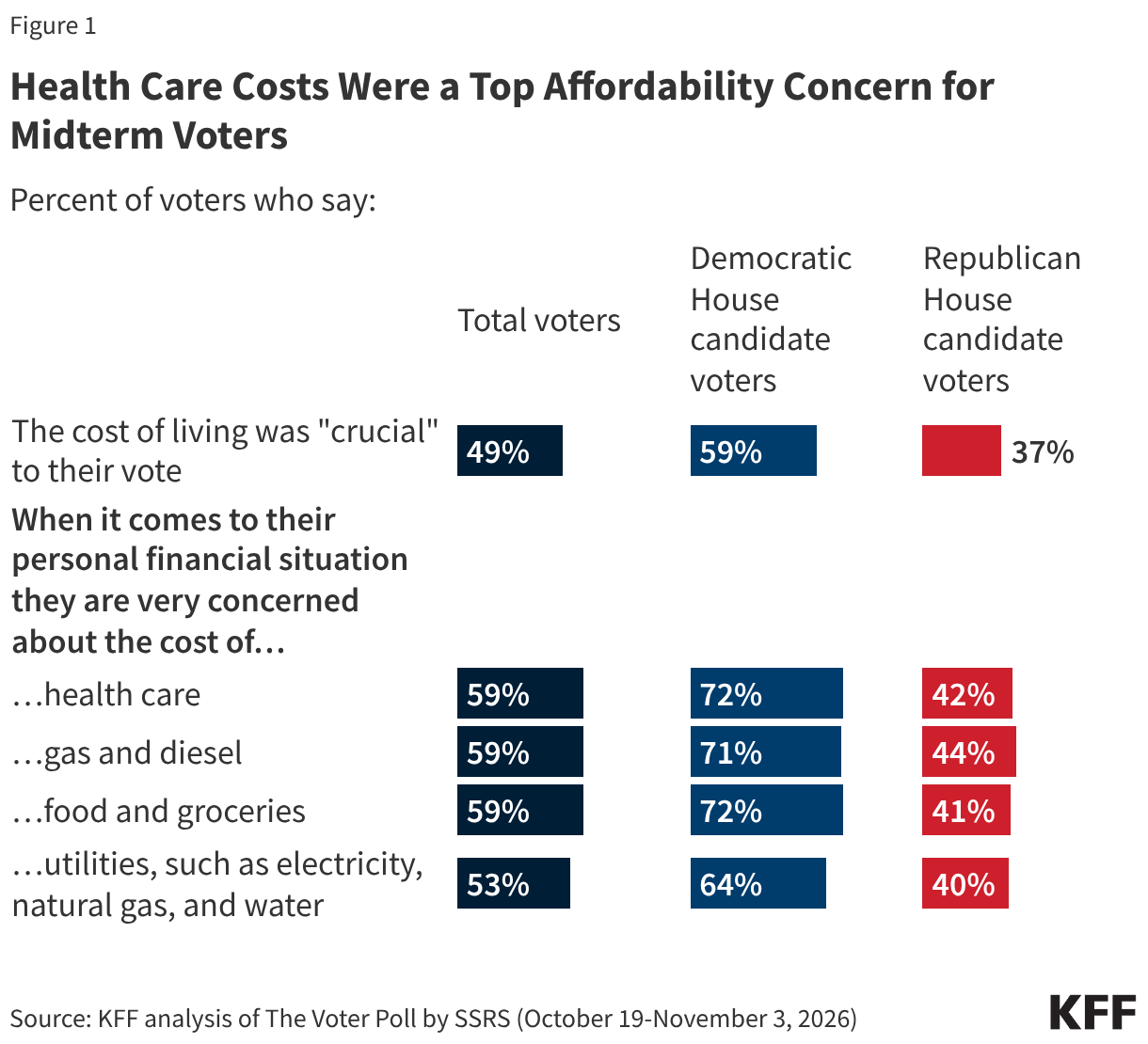
The cost of living was a top issue on voters’ minds this election, and health care costs played a key role in voters’ cost of living concerns alongside concerns over affording other essentials like gas and groceries. Among voters overall, about half said the cost of living was “crucial” to their vote for Congress, rising to about six in ten among those who voted for Democratic House candidates compared to fewer than four in ten who voted for Republican House candidates. Among voters overall, about six in ten said that when it comes to their personal financial situation, they were “very concerned” about gas and diesel, health care, food and groceries, while slightly fewer said the same about utilities. Among those who voted for Democratic House candidates, about two-thirds or more said they were concerned about the costs of these essentials, while fewer, about four in ten voters for Republican House candidates, said the same.
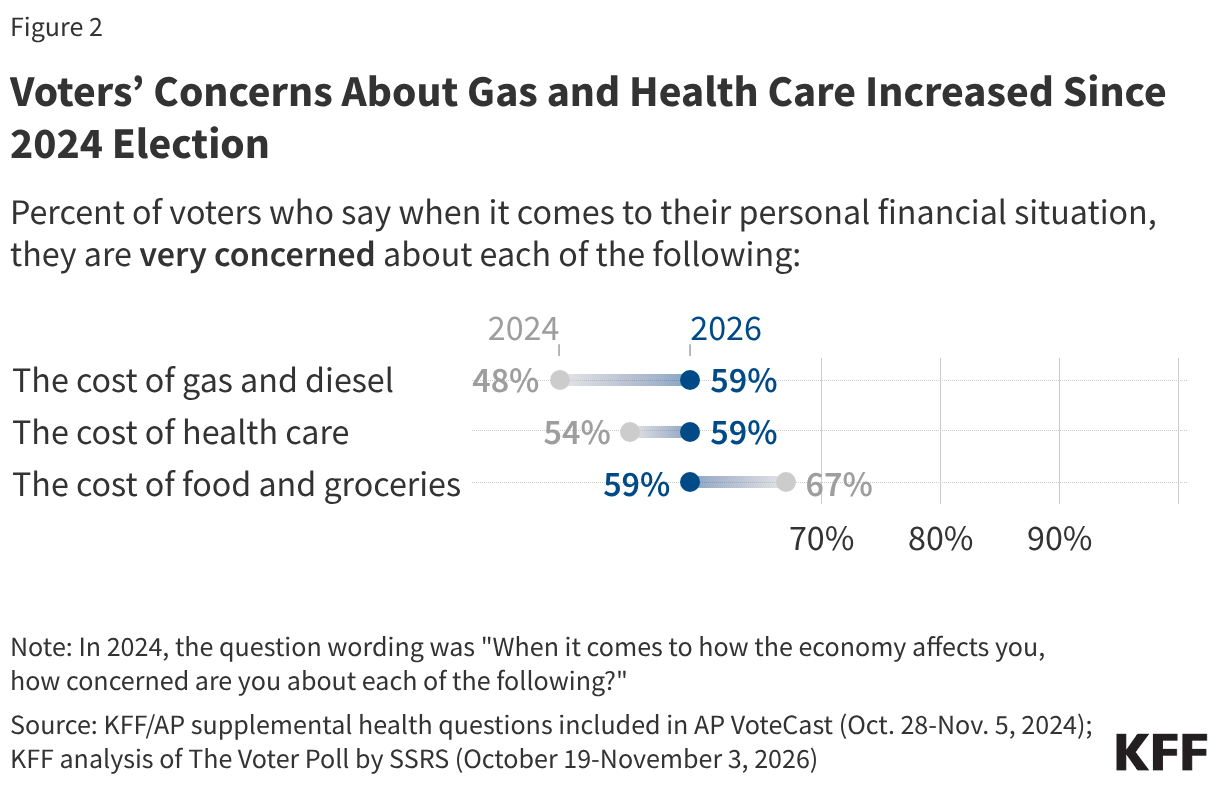
Compared to those who voted in the 2024 presidential election, voters’ concerns about the cost of gas and diesel were eleven percentage points higher in this election, and concerns about health care costs rose by five percentage points. At the same time, the share of voters who were “very concerned” about food and grocery costs declined by eight percentage points.
Democratic Senate candidates had a strong advantage among voters who were concerned about the cost of health care in key battleground states. About two-thirds of voters who were “very concerned” about health care costs said they voted for the Democratic Senate candidate across 7 states, while about three in ten of this group said they voted for the Republican Senate candidate. This reflects a reversal of dynamics from the 2024 presidential election, when voters who expressed similar cost concerns about health care favored President Trump over Vice President Harris by a ten-point margin.
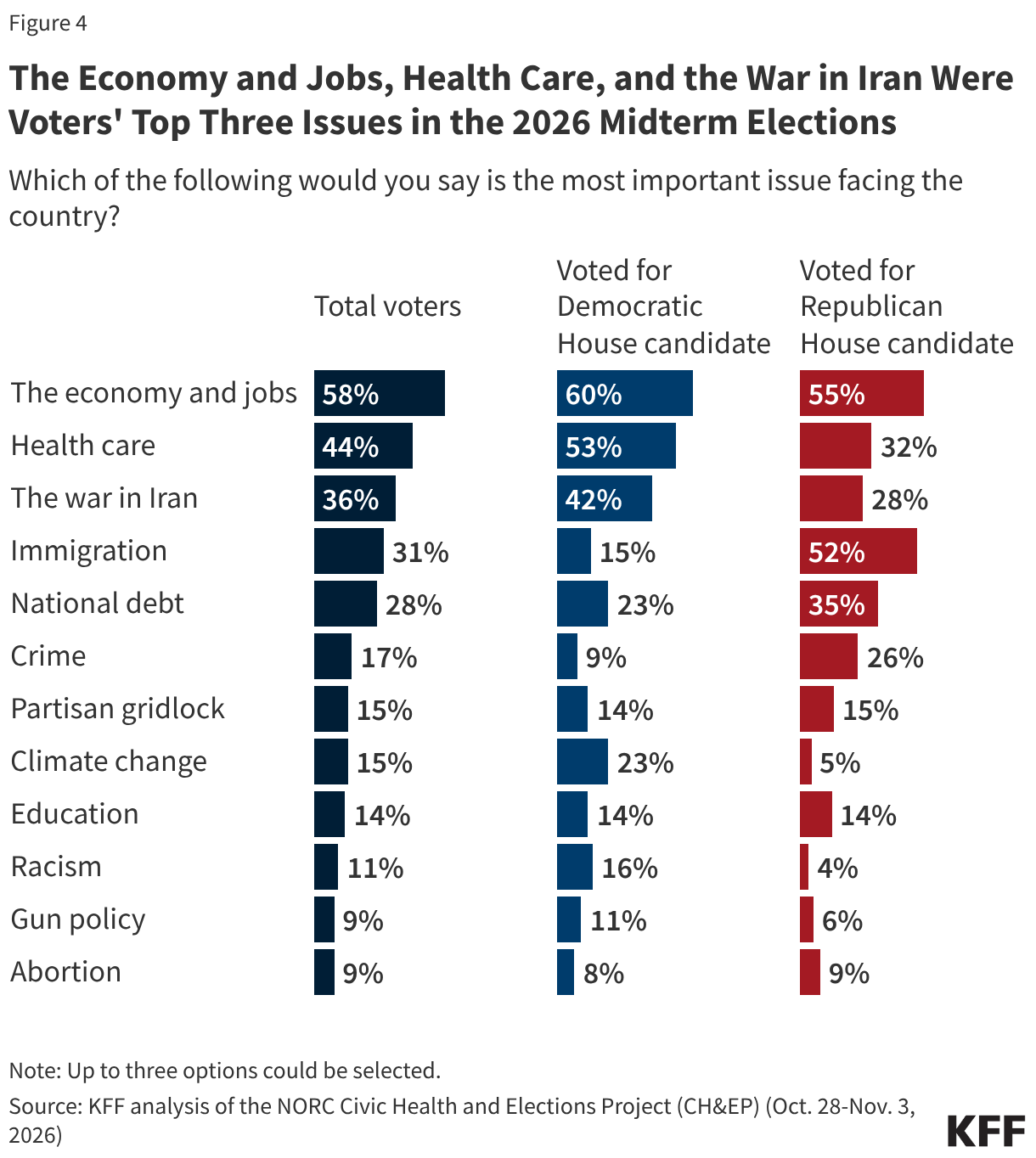
As with most previous elections, the economy was the number one issue in the 2026 midterms, with about six in ten voters overall saying “the economy and jobs” was the most important issue facing the country. While many polls ask voters to choose only one issue, NORC’s Civic Health and Elections Project poll allowed voters to choose up to three issues from a list, and health care was the second most selected issue among voters overall, with about four in ten saying it was an important issue. Health care was the second highest ranked issue for voters who said they voted for a Democratic House candidate, whereas more voters who chose Republican House candidates chose immigration as a top issue.
Party Preferences on Health Care
Midterm voters chose the Democratic Party over the Republican Party as better able to handle a range of issues, including on their top issue, the economy (44% vs. 37%), despite Republicans’ historical advantage on the issue. Health care was the biggest area of strength for the Democratic Party, as half of voters said they thought the Democratic Party could better handle the issue, compared to three in ten voters who chose the Republican Party, and one in five voters who said they thought “neither” party could better handle health care. Only on immigration, which was the second biggest issue facing the country for Republican voters, did voters overall give the Republican Party a slim advantage over Democrats.
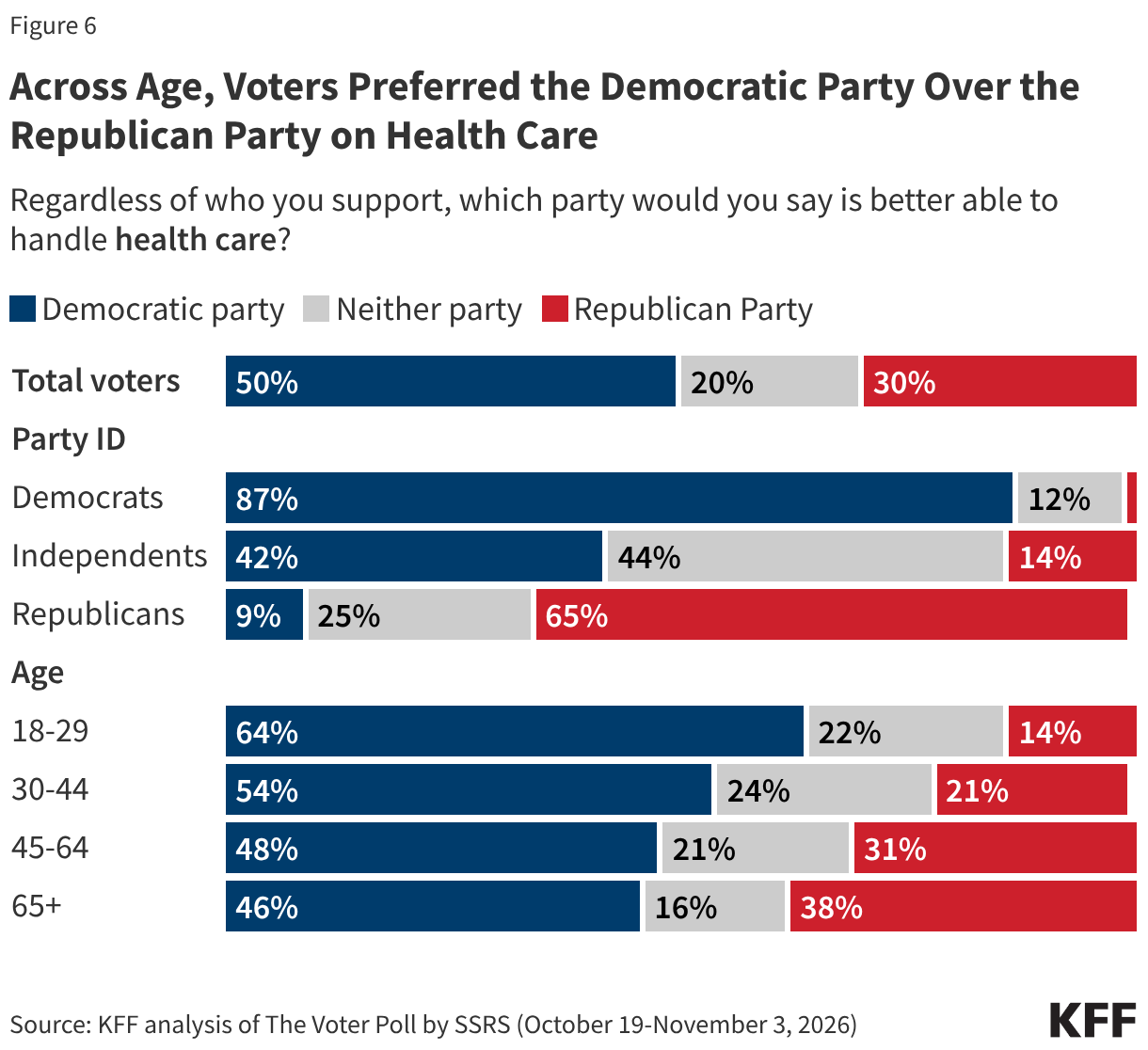
While partisans largely picked their own party to do a better job handling health care, independent voters favored Democrats over Republicans by roughly a 3-to-1 margin, though notably more than four in ten independent voters said they think neither party can better handle the issue. The Democratic party was seen as more capable on health care than the Republican party across age groups, though the margin between the two parties was narrower among voters age 65 and older.
The Democratic Party’s advantage over the Republican Party on health care held across all key battleground Senate states, especially in Michigan and Maine, where voters favored the Democratic Party by about twenty percentage points. In both Michigan and Maine, Democratic Senate candidates El-Sayed and Jackson campaigned on Medicare-for-All and made health care a central focus of their campaigns. About half of Michigan and Maine voters said they thought the Democratic Party was better able to handle health care compared to about three in ten who favored the Republican Party. Voters also said they trusted the Democratic Party over the Republican Party by double-digit margins in Ohio, Texas, and Iowa, while voters gave the Democratic Party a smaller advantage over the Republican Party in Kansas and Alaska on handling health care.
Views on the Trump Administration’s Health Care Policies
2026 midterm voters harbored largely negative views of the Trump administration’s health policies, including the impact of these policies on their own health costs, access to care, the health of Americans, fraud in government health programs, and vaccine access.
Majorities of voters said the Trump administration’s policies have made their own health care costs and the ability of Americans to get the health care they need “worse” – at least four times the share who said the administration made these “better.” Larger shares of midterm voters also said the administration’s policies worsened rather than improved fraud in government health programs and the health and well-being of people in the U.S., both of which had been a key focus of the second Trump administration’s health policy priorities.
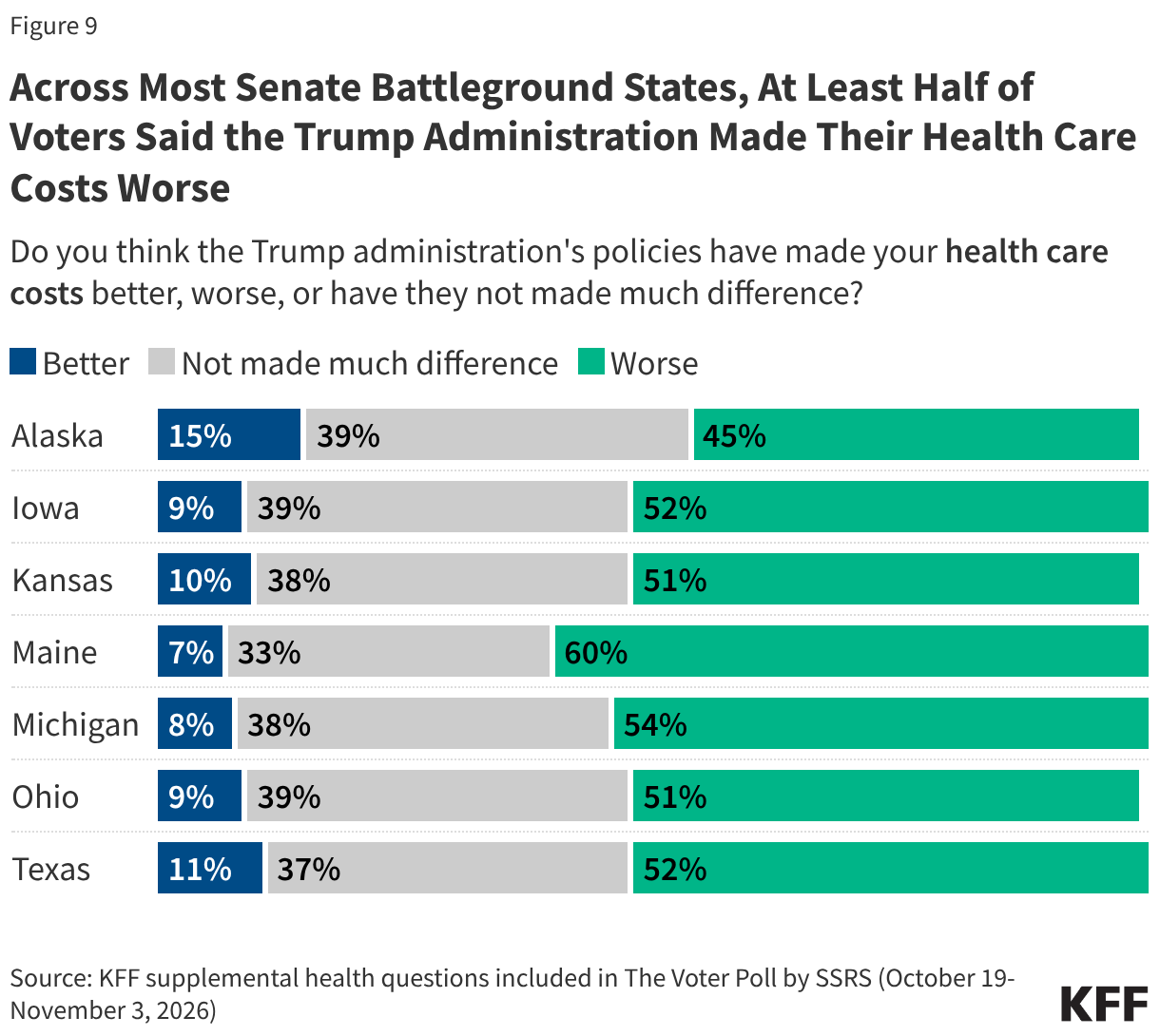
Across most key Senate battleground states, voters said the Trump administration’s policies had made their own health care costs worse rather than better by at least a 5-to-1 margin, while roughly four in ten across each state said the administration had no impact on their costs. One in six or fewer voters across all of these states said the administration had made their health care costs “better.”
Blame aimed at the Trump administration over rising health care costs was tied to support for Democratic House candidates overall, including among both Democratic and independent voters. Notably, about one in five Republicans who said the administration’s policies worsened their own health costs voted for the Democratic House candidate in their district.
Views on the Government's Role in Health Care
With large shares of voters expressing concerns over the cost of health care, most 2026 midterm voters said they want the government to play a “bigger role” in helping Americans get health care. This sentiment was even more common among those who voted for Democratic House candidates. Those who voted for Republicans were more divided on the question, though the largest shares said they wanted the government to play a smaller role.
As with the overall electorate, most voters in Michigan where Democratic Senate candidate Abdul El-Sayed campaigned on Medicare-for-All said they want government more involved in providing health care. El-Sayed’s base of voters was largely made up of these voters who want a larger government role in providing health care. A plurality of those who voted for Republican Senate candidate Mike Rogers in Michigan said they want the government to play a smaller role in health care, while smaller shares either said they want no change or for the government to play a bigger role.
Similar to dynamics in Michigan, most voters in Maine – where Democratic Senate candidate Troy Jackson campaigned on Medicare-for-All – said they want the government to play a bigger role in helping Americans get health care, and Jackson’s base was overwhelmingly made up of these voters. While a plurality of those who voted for Republican Senate candidate Susan Collins said they want a smaller government role in providing health care, a notable share of Collins voters said they want to see a bigger role.
Methodology and Additional Resources
The Voter Poll by SSRS is a survey of roughly 80,000 registered voters that includes representative samples of 2026 midterm voters nationally and in all 50 states. Interviews were conducted from Oct. 19 - Nov. 3 in Alaska and Oct. 22 - Nov. 3 in all other states. The Voter Poll conducts interviews with a random sample of registered voters drawn from state voter files combined with interviews from registered voters selected using nonprobability approaches. It also includes interviews conducted in-person on Election Day with voters in 15 states and at select early-voting centers in Alaska.
Find more details about the full methodology for the Voter Poll by SSRS, at https://ssrs.com/ssrs-solutions/voter-poll/.
The Civic Health and Elections Project (CH&EP) is a survey of about 95,000 registered voters conducted nationally and in all 50 states by NORC at the University of Chicago, beginning on Oct. 28 and concluding as polls closed on Nov. 3, 2026. CH&EP conducts interviews with a random sample of registered voters drawn from state voter files and combines them with interviews from self-identified registered voters selected using nonprobability approaches. It also includes interviews with self-identified registered voters conducted using NORC’s probability-based AmeriSpeak panel, which is designed to be representative of the U.S. population. Interviews are conducted in English and Spanish. The study is funded by a group of sponsors including KFF; NORC made all final decisions on questionnaire content.
Find more details about CH&EP’s methodology, including weighting, sample sizes, and question wording, at https://civichealth.norc.org/.
Note: Throughout this report, partisans include independents who lean toward either party.
For media inquiries contact KFFMedia@kff.org