Medicaid

Medicaid work requirements

Medicaid and the Road Ahead: Spending Cuts, Work Requirements and What’s Next for States, Providers and Families

Event Date:

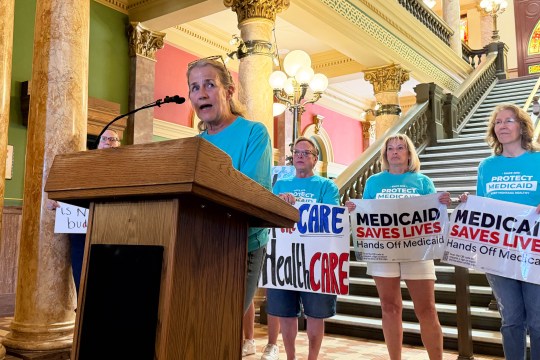
Passed last year, President Trump’s One Big Beautiful Bill Act made significant changes to Medicaid—the primary insurance provider for health and long-term care for people with low incomes. These changes are expected to lead to coverage loss for many current enrollees and will reduce funding for Medicaid, placing new financial pressures on states and health care providers. On July 23, KFF and States Newsroom hosted an event focused on the impacts of work requirements and other federal policy changes on states, health care systems, and people.

new and noteworthy

understanding medicaid

Medicaid Financing

Medicaid represents $1 out of every $5 spent on health care in the U.S. and is the major source of financing for states to provide health coverage and long-term care. This brief examines key questions about Medicaid financing and how it works.

Medicaid Program Integrity

This brief explains what is known about improper payments and fraud and abuse in Medicaid and describes ongoing state and federal actions to address program integrity.

Medicaid and Provider Taxes

All states except Alaska cover some state Medicaid costs with taxes on health care providers. This brief uses data from KFF’s 2024-2025 survey of Medicaid directors to describe current practices and the federal rules governing them.

Medicaid and Hospitals

Absorbing reductions in Medicaid spending could be challenging for hospitals, particularly for those that are financially vulnerable. This brief provides data on the reach of Medicaid across hospitals, patients, and charity care.

Medicaid Home Care

This issue brief provides an overview of what Medicaid home care (also known as “home- and community-based services”) is, who is covered, and what services were available in 2025.

Dual Eligibles

Stay informed.

Stay informed.

Filter

781 - 790 of 2,731 Results

  • The Landscape of Medicaid Demonstration Waivers Ahead of the 2020 Election

    Issue Brief

    As the Trump administration reaches the end of its first term, this issue brief considers the landscape of approved and pending Section 1115 Medicaid demonstration waivers under this administration and how the November 2020 presidential election may impact this landscape.

  • The COVID-19 Pandemic Has Taken a Higher Toll on Nursing Homes with Relatively High Shares of Black or Hispanic Residents

    News Release

    Nursing homes with a relatively high share of Black or Hispanic residents are more likely to have had a resident die of COVID-19 than homes with lower shares of such residents, finds a new KFF analysis. Nationwide, 63 percent of nursing homes with a relatively high share of Black residents reported one or more COVID-19 death, as did 55 percent of nursing homes with a relatively high share of Hispanic residents, finds the analysis. That…

  • Racial and Ethnic Disparities in COVID-19 Cases and Deaths in Nursing Homes

    Issue Brief

    This data note presents national data that shows that nursing homes with a high share of Black or Hispanic residents were more likely to have at least one coronavirus case, at least one COVID-19 death, and (among facilities with cases) more severe case outbreaks than facilities with a low share of Black or Hispanic residents. This piece also includes state-level data from 21 states where a sufficient sample of facilities with a high share of…

  • What Happens to Medicaid Drug Policy if the ACA is Overturned?

    Issue Brief

    The repeal of the ACA could mean loss of Medicaid coverage for up to 15 million that were enrolled in the ACA Medicaid expansion group prior to the COVID-19 pandemic; however, repeal could also mean significant changes to Medicaid prescription drug policy with implications for state and federal spending for prescription drugs for non-expansion Medicaid enrollees.

  • Health Policy Resources for Covering the 2020 Elections

    News Release

    As the 2020 Election Day approaches, many candidates continue to focus on health care issues, including on the public health and economic response to COVID-19, the future of the Affordable Care Act, health care costs and abortion. To help reporters understand and cover these issues, KFF offers independent, non-partisan policy analysis, polling and other research and has experts who can provide context, explain trade-offs and provide key data points on health care issues that may arise…

  • Medicaid Covers People with Pre-Existing Conditions, Too

    Policy Watch

    In recent weeks, the possible overturning of the Affordable Care Act (ACA) in court and the upcoming election have focused attention on the issue of protections for people with pre-existing conditions. While the focus has been on the ACA’s private insurance protections, Medicaid also plays a significant role in covering people with pre-existing conditions.

  • States Expect Medicaid Enrollment and Spending to Increase by Over 8 Percent Each in FY 2021, Primarily Driven By a Slumping Economy and Federal Conditions to Maintain Eligibility to Access Enhanced Federal Medicaid Funds

    News Release

    Following several years of declining or flat enrollment growth, states expect Medicaid enrollment and spending each to jump by more than 8 percent in fiscal year 2021, chiefly due to a slumping economy amid the pandemic and federal conditions to maintain coverage to access enhanced federal matching funds, according to a new KFF Medicaid budget survey. The 20th annual survey of state Medicaid directors finds that enrollment is expected to grow by 8.2 percent and…

  • Medicaid Enrollment & Spending Growth: FY 2020 & 2021

    Issue Brief

    This brief analyzes Medicaid enrollment and spending trends for FY 2020 and FY 2021 based on data provided by state Medicaid directors as part of the 20th annual survey of Medicaid directors in states across the country and the District of Columbia. After relatively flat enrollment growth in FY 2020, states responding to the survey expect Medicaid enrollment to jump in FY 2021, attributed to the Families First Coronavirus Response Act “maintenance of eligibility” (MOE)…