Women's Health Policy

ABORTION IN THE U.S.

KFF infographic explaining who regulates mifepristone, showing four entities and their roles: the U.S. Food and Drug Administration approves and regulates medications for safety and effectiveness; state legislatures pass laws that can restrict or protect access; courts rule on legal cases affecting regulation; and Congress can pass federal legislation influencing regulation.

Louisiana v. FDA: Access to Mifepristone Back at the Supreme Court

Louisiana sued the FDA in October 2025, claiming the FDA’s 2023 regulatory change eliminating the requirement that mifepristone be dispensed in-person—allowing it to be mailed or dispensed at retail pharmacies—harm the state's ability to enforce its abortion ban. This brief reviews the Louisiana v. FDA case now before the Supreme Court, and provides an overview of the other pending litigation involving mifepristone, as well as the mounting tension between states seeking to protect abortion and those banning the provision of abortion.

CONTRACEPTIve care IN THE U.S.

New and noteworthy

Over-the-Counter Oral Contraceptive Pills

In July 2023, the FDA approved Opill, the first daily oral contraceptive pill to become available over the counter (OTC) without a doctor’s prescription. This issue brief provides an overview of OTC oral contraceptives and laws and policies related to insurance coverage.

featured

A promotional image for the the KFF Health Policy 101 Issues in Women’s Health chapter

Health Policy Issues in Women’s Health

Examine the core health coverage and access issues —shaped by federal and state policies—that affect women’s health today, including health coverage and costs, reproductive health services, maternal health, mental health, and intimate partner violence.

State Profiles for Women’s Health

Explore the latest national and state-specific data and policies on women’s health. Topics include health status, insurance and Medicaid coverage, use of preventive services, sexual health, maternal and infant health, and abortion policies. Many indicators provide state-level information for women of different racial and ethnic groups.

The essentials
  • Women’s Health Insurance Coverage

    This factsheet reviews major sources of coverage for women residing in the U.S., discusses the ACA's impact on coverage, and the coverage challenges that many women continue to face.
  • Medicaid Coverage for Women

    This data note presents key data points describing the current state of the Medicaid program as it affects women, including eligibility, reproductive health, chronic conditions, and more.
  • Dobbs: What are the Implications for Racial Disparities?

    This analysis examines the implications of the Dobbs decision and state restrictions on abortion coverage for racial disparities in access to care and health outcomes.
  • State Health Facts: Women's Health Indicators

    Information on women’s health status, utilization of services, health insurance coverage, family planning and childbirth, and abortion statistics and policies.
  • Key Facts on Abortion in the United States

    This report answers some key questions about abortion in the United States and presents data collected before the overturn of Roe v. Wade.

Subscribe to KFF Emails

Choose which emails are best for you.
Sign up here

Filter

1 - 10 of 870 Results

  • Louisiana v. FDA: Access to Mifepristone Back at the Supreme Court

    Issue Brief

    This brief reviews the case now before the Supreme Court, Louisiana v. FDA, and provides an overview of the other pending litigation involving mifepristone, and the mounting tension between states seeking to protect abortion and the states banning the provision of abortion.

  • Abortion Coverage Limitations in Medicaid and Private Insurance Plans

    Issue Brief

    This brief reviews current federal and state policies on Medicaid and insurance coverage of abortion services in the U.S. and presents national and state estimates on the availability of abortion coverage for people enrolled in private plans, Marketplace plans, and Medicaid.

  • Abortion in the United States Dashboard

    Feature

    The Abortion in the U.S. Dashboard is an ongoing research project tracking state abortion policies and litigation following the overturning of Roe v. Wade.

  • The Latest on Medication Abortion Access: The Court Awaits the FDA Review

    Quick Take

    Despite for calls from Republican leaders and anti-abortion organizations for the FDA to act quickly, the Louisiana district court has given the FDA until October 7, 2026, one month before the midterms, to file a report with the status of its review and any updated timeframe for completion. In the meantime, clinicians may continue to mail mifepristone to pregnant patients seeking abortions regardless of where they live.

  • The HPV Vaccine: Access and Use in the U.S.

    Fact Sheet

    This factsheet discusses HPV and related cancers, use of the HPV vaccines for both females and males, and insurance coverage and access to the vaccines.

  • The Status of Abortion-related State Ballot Initiatives Since Dobbs

    Tracker

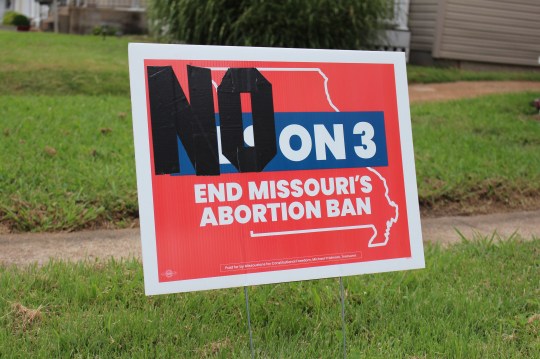
    Last updated on March 24, 2026 Since the Supreme Court’s Dobbs decision, overturning Roe v. Wade, voters in 17 states have weighed in on ballot measures regarding abortion-- some more than once. In November 2026, voters in Missouri, Nevada, and Virginia will weigh in on abortion measures that could change the legal status of abortion in their state. In addition, measures in Idaho and Nebraska are in the process of collecting signatures.   In 2024, 10 states voted on abortion measures that sought to affirm that the state constitution protects the right to abortion. Nebraska voted on two measures: one…