KFF designs, conducts and analyzes original public opinion and survey research on Americans’ attitudes, knowledge, and experiences with the health care system to help amplify the public’s voice in major national debates.
In March 2013, the Kaiser Family Foundation convened key HIV/AIDS stakeholders from a variety of backgrounds to explore opportunities for maximizing the beneficial impact of the Affordable Care Act (ACA) for people living with HIV and examine strategies to help them navigate the transition to new health coverage. This report summarizes the information shared and key issues discussed at the meeting.
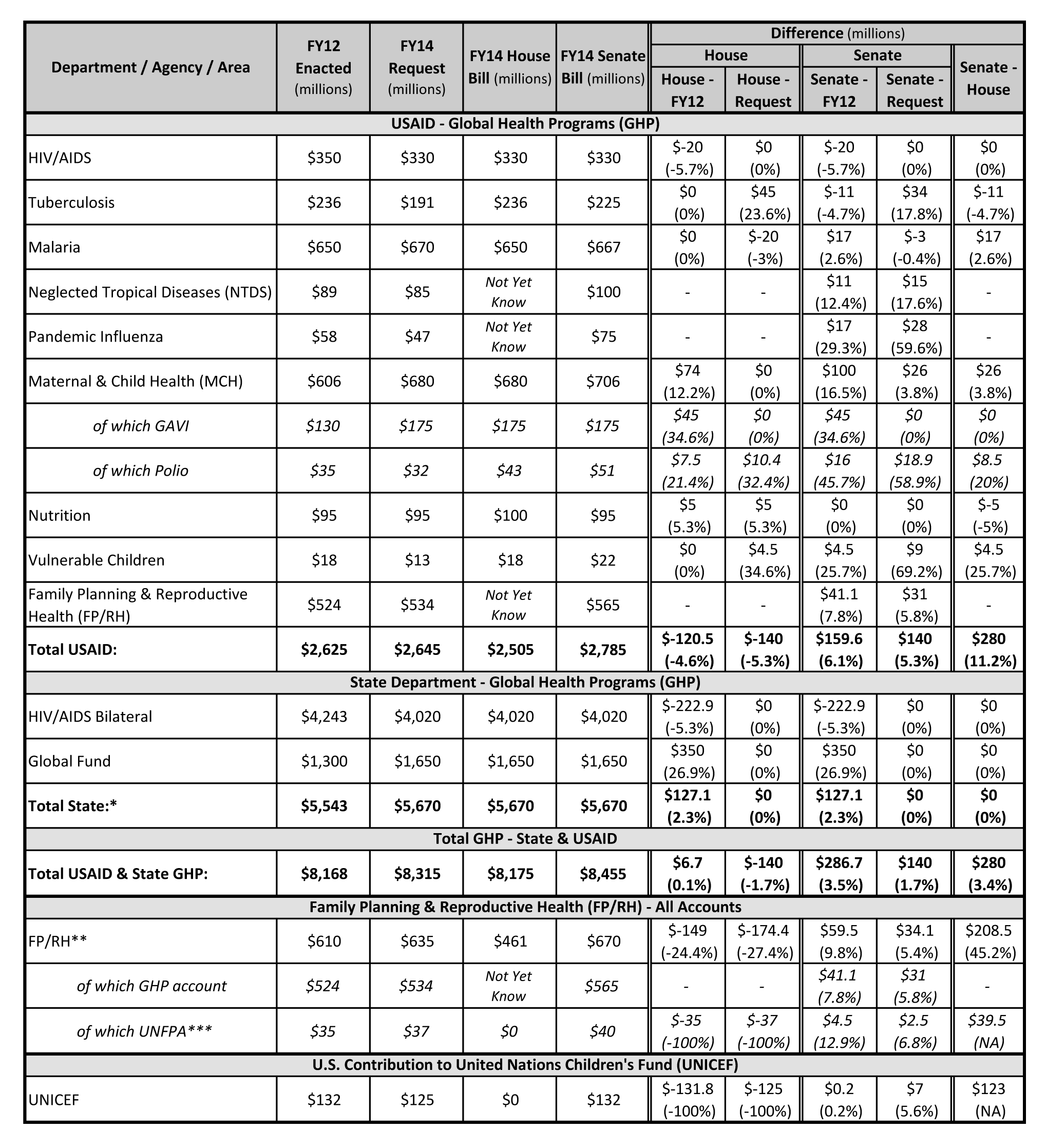
The Senate Committee on Appropriations approved, by a vote of 23-7, the FY 2014 State and Foreign Operations Appropriations bill (S.1372), which includes funding for U.S. global health programs at the U.S. Agency for International Development (USAID) and the State Department (see table below) comprising a significant portion of U.S. funding for global health (total funding for global health is not currently available as some funding provided through USAID, HHS, and DoD is not yet available).
According to a Committee Report accompanying the bill and a summary released by the Committee, funding for global health programs at USAID and the State Department would be $140 million (2%) above the President’s request and $280 million (3%) above the related House appropriations bill. Funding for PEPFAR at the State Department, which supports bilateral programs and the Global Fund to Fight AIDS, Tuberculosis and Malaria (Global Fund), is at the same level as both the President’s request and the related House appropriations bill. Funding in the bill for tuberculosis, neglected tropical diseases (NTDs), pandemic influenza, maternal and child health (MCH), and polio are above the President’s request. Total funding for family planning and reproductive health (FP/RH) programs in the bill, which includes $40 million for UNFPA, is above both the President’s request and the House appropriations bill.
Note: Final FY 2013 amounts are not yet available.*Represents combined PEPFAR funding (HIV bilateral and Global Fund) at the State Department.**FY 2012 FP/RH funding was enacted at “not less than” $610 million; according to ForeignAssistance.gov (accessed 7/19/14), the Administration had planned to provide $638 million for FP/RH in FY 2012. The House FY 2014 State and Foreign Operations bill states that “Of the funds appropriated by this Act, not more than $461,000,000 may be made available for family planning/reproductive health.”***In FY12, Congress approved $35m in funding for UNFPA. However, due to policy conditions put in place by Congress annually, the actual contribution to UNFPA totaled $30.2m.
Development of the Financial Alignment Demonstrations for Dual Eligible Beneficiaries: Perspectives from National and State Disability Stakeholders
Authors:
Jeffrey S. Crowley, O'Neill Institute for National and Global Health Law, Georgetown University Law Center, MaryBeth Musumeci, and Erica L. Reaves
As part of the implementation of the Affordable Care Act, 26 states submitted proposals to the Centers for Medicare and Medicaid Services (CMS) to implement demonstrations to integrate care and align financing for beneficiaries who are dually eligible for Medicare and Medicaid; as of July 2013, six states have received approval from CMS to implement a demonstration, and 16 proposals remain pending review. Given the degree of interest in these demonstrations, we sought to identify common issues and potential solutions to inform other states as they develop and implement demonstrations. With an emphasis on illuminating the specific concerns of beneficiaries under age 65 and those who use long-term services and supports, we conducted a series of 26 structured interviews with national and state disability stakeholders from October 2012 through January 2013. Respondents included representatives of cross disability coalitions and organizations representing people with physical, mental health, and developmental disabilities, as well as legal services providers. In addition to representatives of national organizations, we focused on examining the experience to date in Colorado, Massachusetts, Michigan, Ohio, and Washington. This issue brief provides an early snapshot into disability community perspectives on state design and implementation efforts related to the new demonstrations.
The House Committee on Appropriations approved, by a voice vote, the FY 2014 State and Foreign Operations Appropriations bill (.pdf), which includes funding for U.S. global health programs at the U.S. Agency for International Development (USAID) and the State Department (see table below) comprising a significant portion of U.S. funding for global health (total funding for global health is not currently available as some funding provided through USAID, HHS, and DoD is not yet available).
According to a Committee Report accompanying the bill, funding for global health programs at USAID and the State Department is $140 million (2%) below the President’s request. Funding for PEPFAR at the State Department, which supports bilateral HIV/AIDS programs and the Global Fund to Fight AIDS, Tuberculosis and Malaria (Global Fund), is at the same level as the President’s request. Additionally, the bill provides funding for tuberculosis, malaria, and vulnerable children at the FY 2012 enacted levels and maternal and child health (MCH) programs at “not less than the fiscal year 2014 request level.” Total funding for family planning and reproductive health (FP/RH) in the bill is below the President’s request and capped at $461 million. The bill eliminates funding for the International Organizations and Programs (IO&P) account, which includes U.S. contributions to specialized U.N. agencies such as the United Nations Children’s Fund (UNICEF).
The bill also included the following policy provisions:
Reinstates the Mexico City Policy (also known as the “Global Gag Rule”)
Prohibits funding for the United Nations Population Fund (UNFPA)
Prohibits funding for needle exchange programs
Learn more about the Senate FY 2014 State and Foreign Operations bill here.
Note: Final FY 2013 amounts are not yet available.*Represents combined PEPFAR funding (HIV bilateral and Global Fund) at the State Department.**FY 2012 FP/RH funding was enacted at “not less than” $610 million; according to ForeignAssistance.gov (accessed 7/19/14), the Administration had planned to provide a total of $638 million for FP/RH in FY 2012. The House FY 2014 State and Foreign Operations bill states that “Of the funds appropriated by this Act, not more than $461,000,000 may be made available for family planning/reproductive health.”***In FY12, Congress approved $35m in funding for UNFPA. However, due to policy conditions put in place by Congress annually, the actual contribution to UNFPA totaled $30.2m.
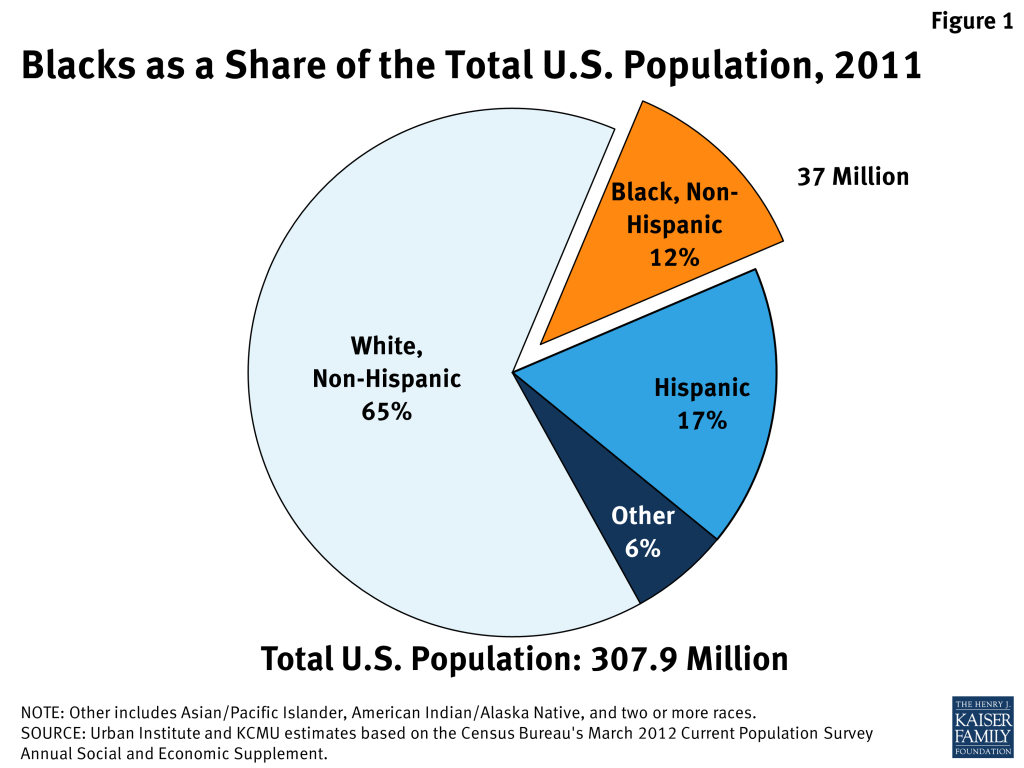
As of 2011, 37 million individuals living in the United States identified as Black or African American. Blacks currently comprise the third largest racial or ethnic group in the United States after non-Hispanic Whites and Hispanics (Figure 1). While it is projected that the nation will become increasingly diverse and the Black population will grow over the next few decades, Blacks are anticipated to maintain a consistent share of the population. The Affordable Care Act (ACA) has important implications for Blacks as they face longstanding and persistent disparities in health and health care.
One of the key goals of the ACA is to reduce the number of uninsured through an expansion of Medicaid and the creation of new health insurance exchange marketplaces with tax credits to help moderate-income individuals purchase coverage. Many uninsured Blacks could benefit from these new pathways to coverage, which would help increase their access to care and promote greater equity in health care. This brief provides an overview of the Black population in the U.S., their health coverage today, and how their coverage may be affected by the ACA coverage expansions.
Figure 1: Blacks as a Share of Total U.S. Population, 2011
Overview of the Black Population
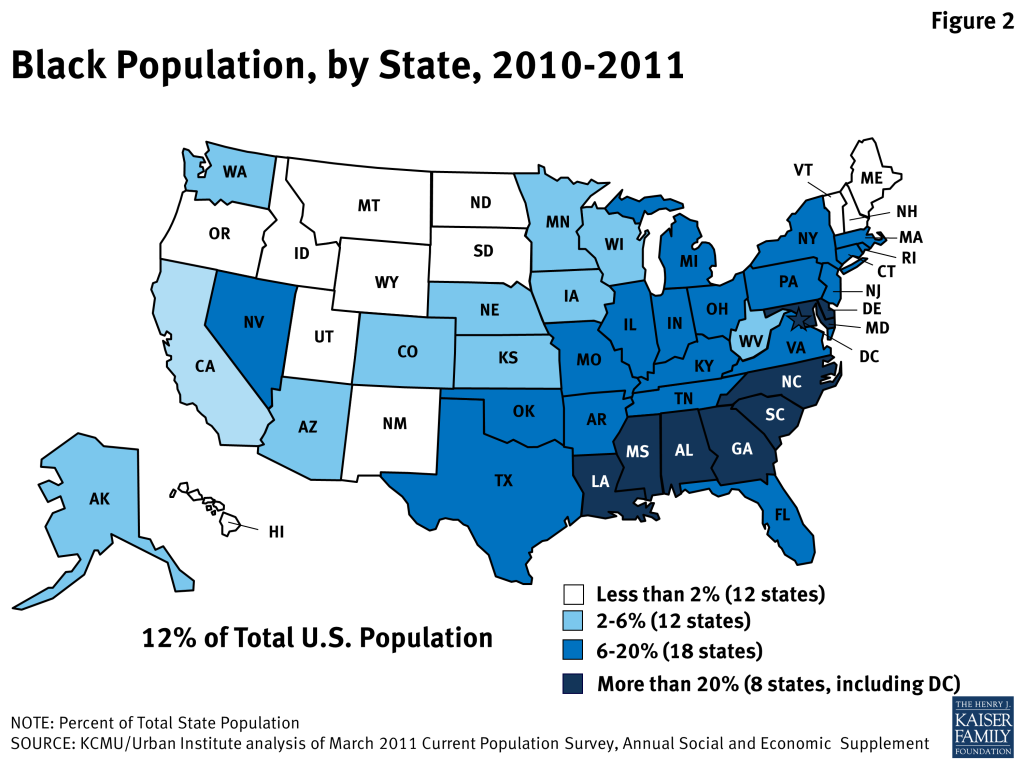
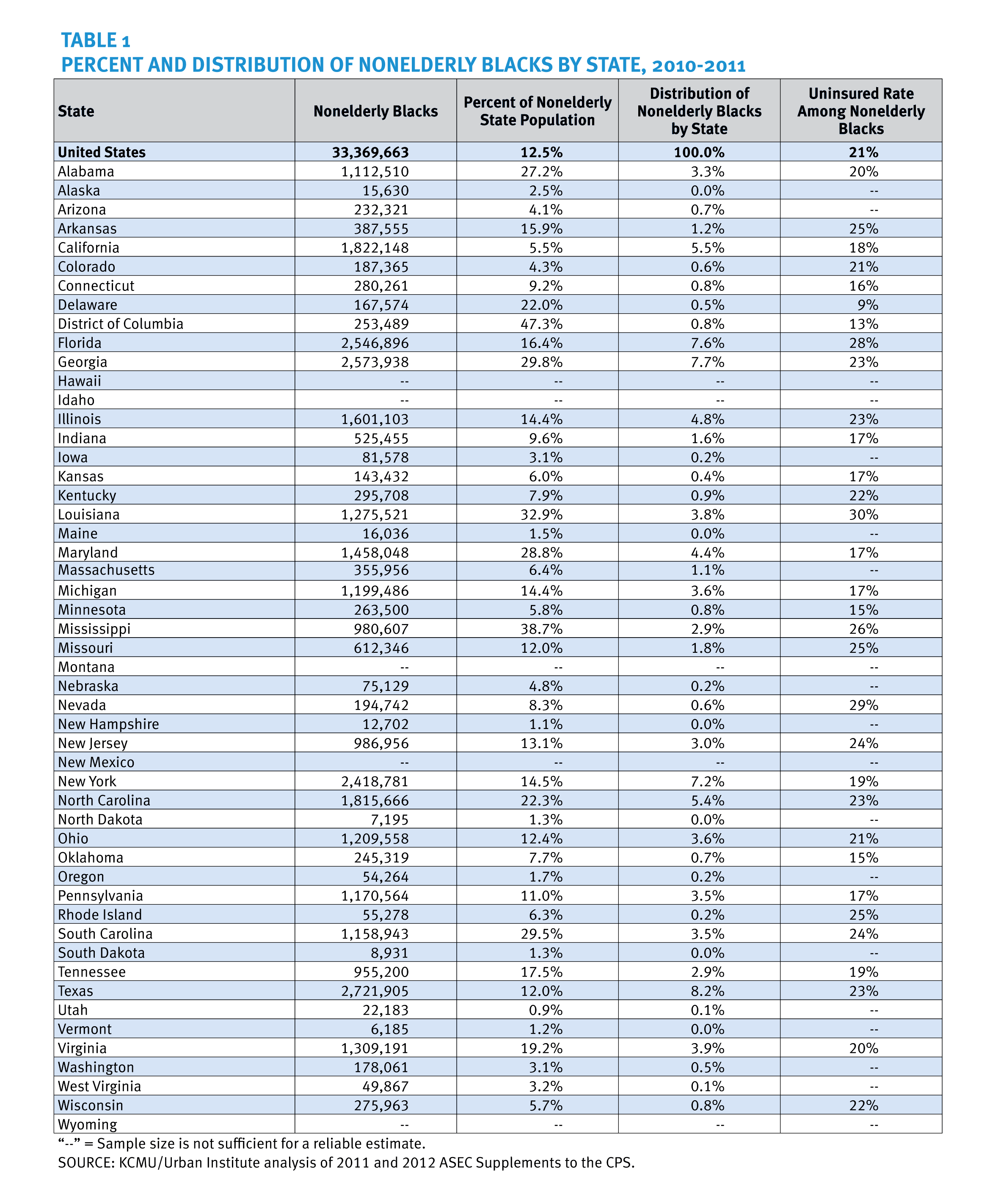
The 37 million Blacks residing in the United States make up more than a tenth of the total population. In eight states, largely concentrated in the South, and the District of Columbia, Blacks comprise at least 20% of the total population, whereas they comprise a very small share of the population in many states in the Northwest and Midwest (Figure 2). Over half of all Blacks live in just eight states, including Texas, Florida, Georgia, New York, California, North Carolina, Illinois, and Maryland.
Figure 2: Black Population, by State, 2010-2011
There is diversity within the Black population. The population includes individuals of varying ethnicities and immigration statuses. For example, while some African American families have been in the United States for many generations, others are more recent immigrants from places such as Africa, the Caribbean, or the West Indies. However, the vast majority of Blacks are U.S.-born citizens (92%). In addition, there is diversity in educational attainment, socioeconomic status, and other characteristics. Aggregate data can obscure many of these socio-demographic differences within the Black population.
Compared to non-Hispanic Whites, the Black population is notably younger. Overall, 40 percent of all Blacks are under the age 26, compared to 30 percent of non-Hispanic Whites and 35 percent of all U.S. residents. Blacks are also nearly half as likely as Whites to be over the age of 65. In 2011, 10 percent of Blacks were elderly adults, compared to 17 percent of Whites.
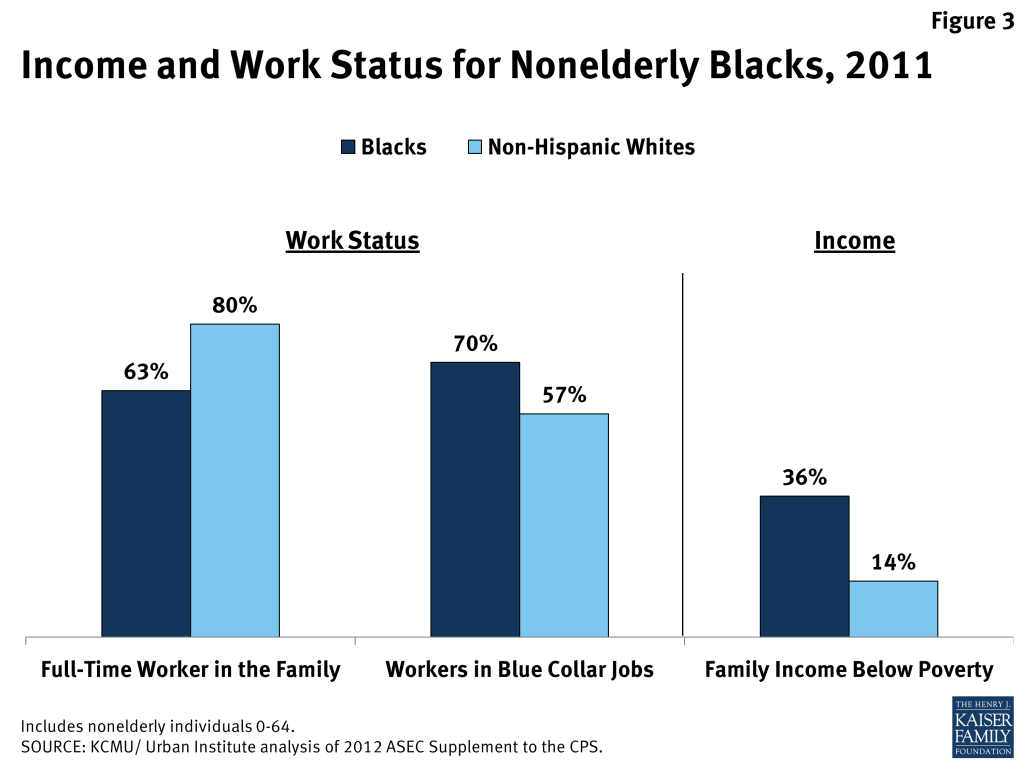
While the majority of nonelderly Blacks are in working families, they are significantly more likely than Whites to be poor. Overall, nearly two-thirds of nonelderly Blacks have a full-time worker in the family. However, the large majority of Black workers (70%) are employed in blue-collar jobs that typically provide low wages and are less likely than white collar jobs to offer health insurance coverage. Reflecting both lower full-time employment rates and higher concentrations of Black workers in blue-collar jobs, African Americans are two and half times more likely than Whites to have family income below the poverty level (Figure 3).
Figure 3: Income and Work Status for Nonelderly Black, 2011
Health Coverage of Nonelderly Blacks Today
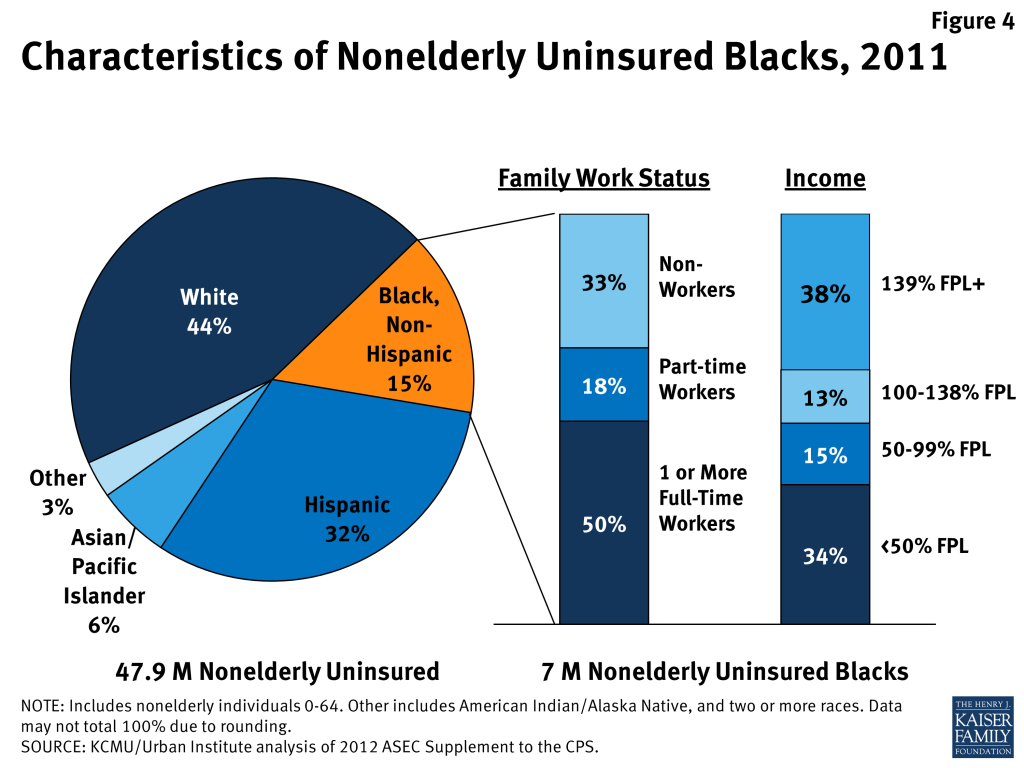
As of 2011, there are over 7 million uninsured nonelderly Blacks, who make up about 15% of the total nonelderly uninsured population (Figure 4). Over five in six (84%) uninsured Blacks are adults, while the remaining one million are children age 18 or younger. More than two-thirds are in a working family, including half who have at least one full-time worker in the family. However, the majority have low incomes (below 138% of poverty), including over a third who have very low-incomes below half the poverty level.
Figure 4: Characteristics of Nonelderly Uninsured Black, 2011
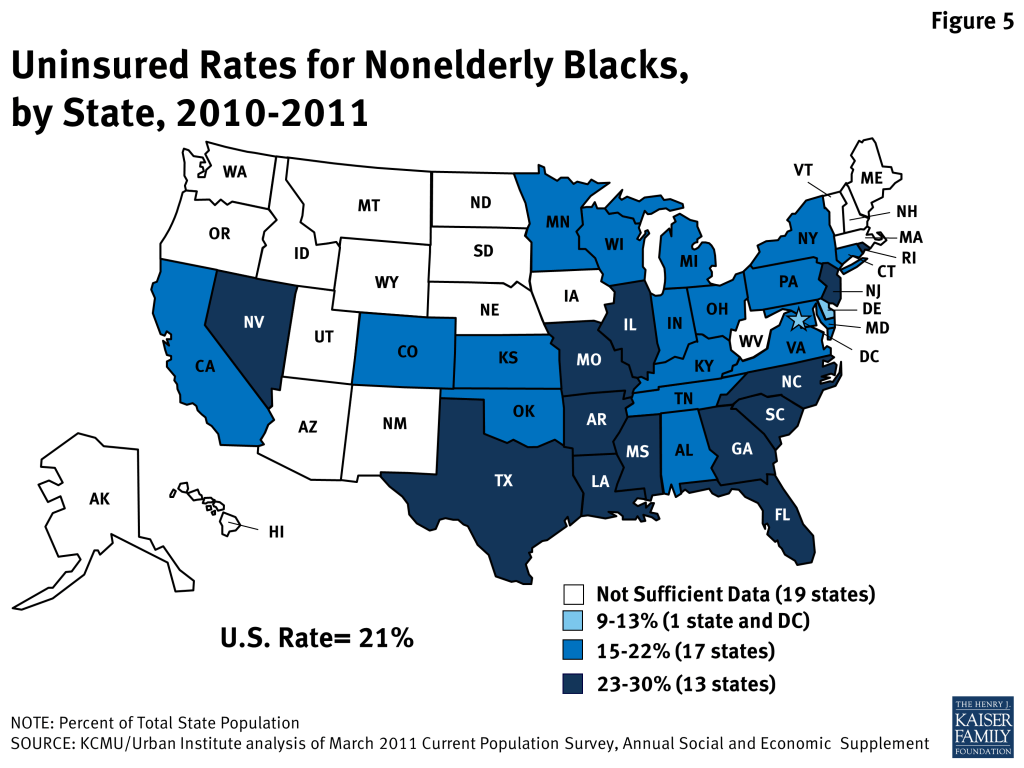
Nationwide, just over one in five (21%) of Blacks do not have health insurance. However, the likelihood of being uninsured varies widely across states, ranging from 9 percent of Blacks in Delaware to 30 percent in Louisiana. Uninsured rates for nonelderly Blacks are particularly high in the South (Figure 5). The largest uninsured nonelderly Black populations reside in Florida (718,800), Texas (613,100), and Georgia (594,600). In addition, Blacks comprise a large share of the uninsured population in the District of Columbia (52%), Mississippi (48%), and Louisiana (42%).
Figure 5: Uninsured Rates for Nonelderly Blacks, by State, 2010-2011
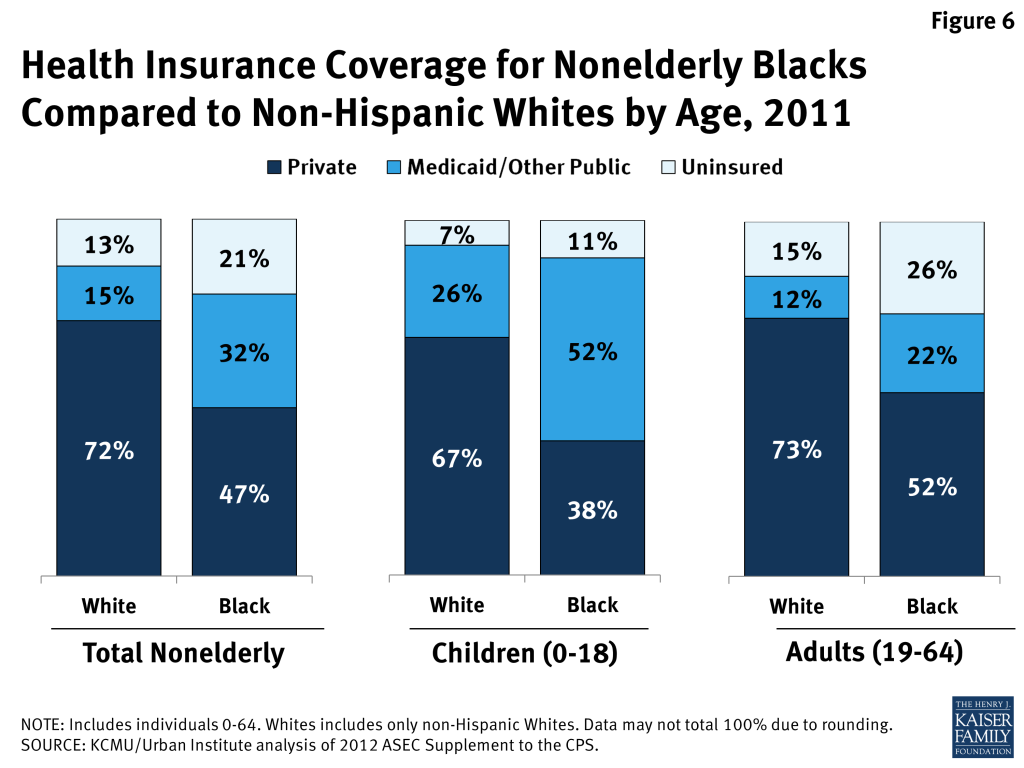
Blacks are significantly more likely than Whites to be uninsured. Reflecting their limited access to employer-sponsored insurance, less than half of nonelderly Blacks have private coverage compared to over seven in ten non-Hispanic Whites (Figure 6). Medicaid coverage helps fill some of the gap in private health insurance, covering nearly one in three of all nonelderly Blacks (32%). However, Medicaid does not fully offset the difference leaving more than one in five (21%) nonelderly Blacks uninsured, compared to 13% their White counterparts.
Medicaid covers over half of Black children (51%), helping to substantially fill their gap in private coverage. Medicaid plays a much more limited role for Black adults, leaving more than a quarter uninsured (26%). These coverage patterns reflect the fact that states have significantly expanded children’s eligibility for Medicaid and CHIP, while Medicaid eligibility for adults remains very limited in most states.
Figure 6: Health Insurance Coverage for Nonelderly Blacks Compared to Non-Hispanic Whites by Age, 2011
Coverage for Blacks Under the ACA Coverage Expansions
As noted, one of the key goals of the ACA is to reduce the number of uninsured. Beginning in 2014, Medicaid eligibility will expand to adults with incomes up to 138% of poverty ($26,951 for family of three in 2013), in states that implement the ACA’s Medicaid expansion. In addition, beginning in 2014, new health insurance marketplaces will become available through which individuals will be able to purchase coverage, and premium tax credit subsidies will be available to help moderate income individuals without access to affordable employer coverage pay for coverage offered through these marketplaces.
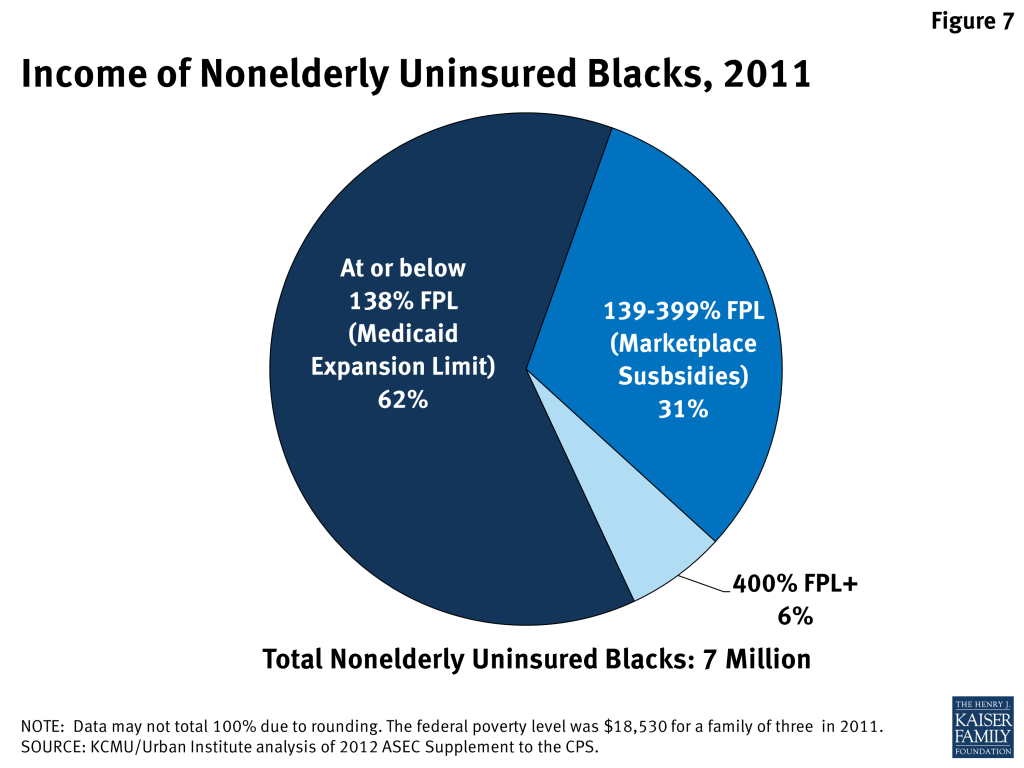
Given the low incomes of uninsured Blacks, nearly all (94%) would be in the income range to qualify for the Medicaid expansion or premium tax credits. Nearly two thirds (62%) of uninsured Blacks have incomes at or below the Medicaid expansion limit of 138% FPL, while an additional 31% would be income-eligible for tax subsidies to help cover the cost of buying health insurance through the exchange marketplaces (Figure 7). Uninsured Blacks have high stakes in state decisions to expand Medicaid. While the ACA intended for the Medicaid expansion to occur nationwide, the June 2012 Supreme Court decision on the ACA effectively made this expansion a state option. Given that the majority of uninsured Blacks have incomes below the Medicaid expansion limit, they will be significantly impacted by state decisions to expand Medicaid. In the absence of the expansion, poor uninsured adults will not gain a new coverage option and likely remain uninsured. Other analysis finds that Blacks are at highest risk of continuing to face coverage gaps due to state decisions not to expand at this time, with nearly six in ten (59%) uninsured Blacks with incomes below the Medicaid expansion limit residing in states that were not planning to expand Medicaid as of late June 2013.1
Figure 7: Income of Nonelderly Uninsured Blacks, 2011
Implications
Today, Blacks remain significantly more likely to be uninsured compared to Whites. This disparity, in large part, reflects that many Blacks do not have access to employer-sponsored insurance and cannot afford to purchase private coverage on the individual market due to their low incomes. Given limited access to private coverage and low incomes, Medicaid is an important source of coverage for 9.4 million Blacks, many of whom would otherwise go uninsured. However, Medicaid eligibility levels for adults remain limited in most states today, particularly in the South, where Blacks are more likely to live. As such, over 7 million Blacks remain uninsured, the majority of whom are adults.
The ACA coverage expansions provide an important opportunity to increase health coverage and access to care for uninsured Blacks. Given that most uninsured Blacks are in low-income families, the majority would be in the income range to qualify for the ACA coverage expansions, particularly the Medicaid expansion. As such, state decisions to implement the ACA Medicaid expansion have particularly important implications for Blacks. If a state does not implement the expansion, poor uninsured adults will not gain a new coverage option and will likely remain uninsured. Currently, Blacks are at the highest risk of continuing to face coverage gaps due to state expansion decisions. Even with the coverage expansions, targeted outreach and enrollment assistance will be important for ensuring eligible individuals enroll in coverage. The ACA will help address many historical procedural barriers to enrollment through new streamlined, data-driven enrollment processes that will go in place in 2014. However, targeted outreach and one-on-one application assistance from trusted individuals within the community will remain key for facilitating enrollment of eligible individuals.
Increasing health insurance coverage may significantly reduce disparities in access to care and health outcomes for Blacks. Widespread research shows that uninsured individuals experience worse access to care and poorer health outcomes.2 Moreover, evidence suggests that Blacks face wide and persistent disparities in health3 and health care.4 For example, infant mortality rates are significantly higher for Black infants and Black males of all ages have the shortest life expectancy compared to all other groups.5 Several chronic conditions affect a greater percentage of Blacks compared to non-Hispanic Whites, including diabetes and obesity.6 In addition, Blacks are less likely to have a usual source of care, compared to Whites.7 Increasing health coverage rates among Blacks could significantly increase access to care and eventually contribute to improved health outcomes as well as greater equity in health and health care. Conversely, coverage gaps, especially in states that do not move forward with the Medicaid expansion, may lead to widening disparities in coverage and care over time.
As states weigh whether to expand their Medicaid programs as provided by the Affordable Care Act, a few states have considered using Medicaid funds as premium assistance to purchase Marketplace (formerly called Exchange) coverage for newly eligible Medicaid beneficiaries, as an alternative to providing coverage through their traditional Medicaid programs. The Department of Health and Human Services has indicated that it will consider approving a limited number of such demonstrations. To date, Arkansas is the first of two states to enact legislation authorizing the expansion of its Medicaid program through premium assistance, and on June 24, 2013, Arkansas released for public comment its draft § 1115 demonstration waiver application. This issue brief provides background about Medicaid premium assistance in the individual health insurance market, summarizes major components of Arkansas’ proposal, and considers key issues affecting beneficiaries.
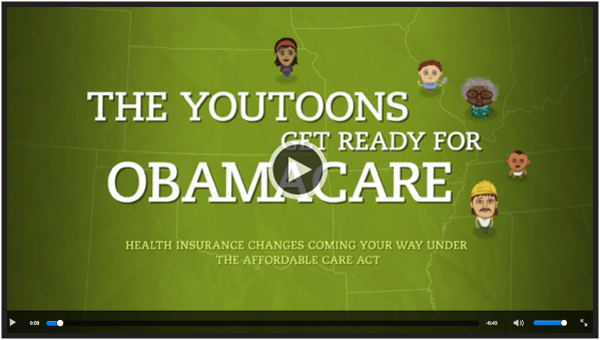
“The YouToons Get Ready For Obamacare” Follows Up On 2010 Video “Health Reform Hits Main Street”
With major parts of the Affordable Care Act (ACA) going into effect in 2014, the Kaiser Family Foundation released a new animated video to help people understand the health care system changes on the horizon. “The YouToons Get Ready for Obamacare” explains the basic changes in the way Americans will get health coverage and what it will cost starting in 2014, whether it’s through their employer, Medicaid, Medicare, or buying insurance on their own with the help of federal tax credits.
Written and produced by the Foundation and narrated by former ABC News anchor Charlie Gibson, a member of the Foundation’s Board of Trustees, the animation was developed to inform and educate Americans about what will – and what will not – change under the ACA. The April 2013 Kaiser Health Tracking Poll found that 42 percent of Americans were unaware that the ACA is still the law of the land, and about half of the public said they did not have enough information about the health reform law to understand how it would impact their own family. The video serves as a how-to guide to help viewers understand what benefits they qualify for and what they can do to prepare for open enrollment starting October 1, 2013. A Spanish-language version of the video will be released in the future.
“The reality is that nearly every American will be touched by the Affordable Care Act in ways small and large, and many will face important decisions this fall,” said Kaiser Family Foundation President Drew Altman. “This cartoon is meant to demystify a complex law and explain what it means for you, whether you support or oppose Obamacare.”
“The YouToons Get Ready For Obamacare” is just one of many resources on the Foundation’s website to help the American public better understand health care reform. Other resources include a health insurance subsidy calculator, an interactive ACA implementation timeline, frequently asked questions, and a ten-question quiz about the law. The Foundation will be producing new consumer-friendly informational materials to explain the ACA as implementation of the law proceeds. Additionally, the Foundation’s news service, Kaiser Health News, will work with partner news organizations to cover implementation and explain the law.
Watch the new animation and share the video with family and friends. Organizations are also welcome to embed the video on their websites or blogs.
As states wrap up legislative sessions and make decisions about whether to implement the Medicaid expansion included in the Affordable Care Act (ACA), this new analysis highlights the implications of these decisions for coverage, state finances and providers. As of July 2013, 24 states were moving forward with the Medicaid expansion, 21 states were not moving forward with the expansion and debate was on-going in the remaining 6 states. The decisions by as many as 27 states not to adopt the Medicaid expansion will leave many more uninsured; these states would also forgo billions in federal funds.
Join the YouToons as they walk through the basic changes in the way Americans will get health coverage and what it will cost starting in 2014, when major parts of the Affordable Care Act, also known as “Obamacare,” go into effect. A Spanish-language version of the video is now available here.Written and produced by the Kaiser Family Foundation. Narrated by Charlie Gibson, former anchor of ABC’s World News with Charlie Gibson and a member of the Foundation’s Board of Trustees. Creative production and animation by Free Range Studios.If you would like to share the video with audiences offline, you may request to download the video by filling out the form below. Permission from KFF to show the video during presentations, events or meetings is not required.To share the video on websites, please embed the video directly from YouTube (click the “Share” link.) We ask that you follow the citation language on our reprint information page — see the citation section for “Other Website Features.”Watch the latest YouToons video, “Health Insurance Explained: The YouToons Have it Covered” produced in Nov. 2014. The YouToons first appeared in the 2010 animated movie, “Health Reform Hits Main Street,” which explained how the health reform law would work. Also available in Spanish.