Summary of Medicare Provisions in the President’s Budget for Fiscal Year 2015

Authors: Gretchen Jacobson and Christina Swoope
Published: Mar 11, 2014

On March 4, 2014, the Office of Management and Budget released President Obama’s budget for fiscal year (FY) 2015, which includes provisions related to federal spending and revenues, including Medicare savings.  The President’s budget would use federal savings and revenues to reduce the deficit and replace sequestration of Medicare and other federal programs for 2015 through 2024.  This brief summarizes the Medicare provisions included in the President’s budget proposal for FY2015.

The President’s FY2015 budget would reduce Medicare spending by more than $400 billion between 2015 and 2024, accounting for about 25 percent of all reductions in federal spending included in the budget.  Most of the Medicare provisions in the FY2015 budget are similar to provisions that were included in the Administration’s FY2014 budget proposal.  The proposed Medicare spending reductions are projected to extend the solvency of the Medicare Hospital Insurance Trust Fund by approximately five years.

  • More than one-third (34%) of the proposed Medicare savings are due to reductions in payments for prescription drugs under Medicare Part B and Part D.  The single largest source of Medicare savings would require drug manufacturers to provide Medicaid rebates on prescriptions for Part D Low Income Subsidy enrollees, a proposal which was also included in the President’s FY2014 proposed budget.
  • One-third (33%) of the proposed Medicare savings are due to reductions in Medicare payments to providers, most of which are reduced payments to post-acute care providers (Figure 1).  The baseline of the proposed budget assumes no reduction in Medicare payments for physician services, relative to current levels, from 2015 through 2024, in contrast to the sustainable growth rate formula (SGR) under current law, which calls for significantly lower physician payments during this 10-year period.  The projected cost for adjusting the baseline for this period is $110 billion, plus additional amounts associated with eliminating cuts in 2014.
  • About 16 percent of the proposed Medicare savings are due to increases in beneficiary premiums, deductibles and cost-sharing.
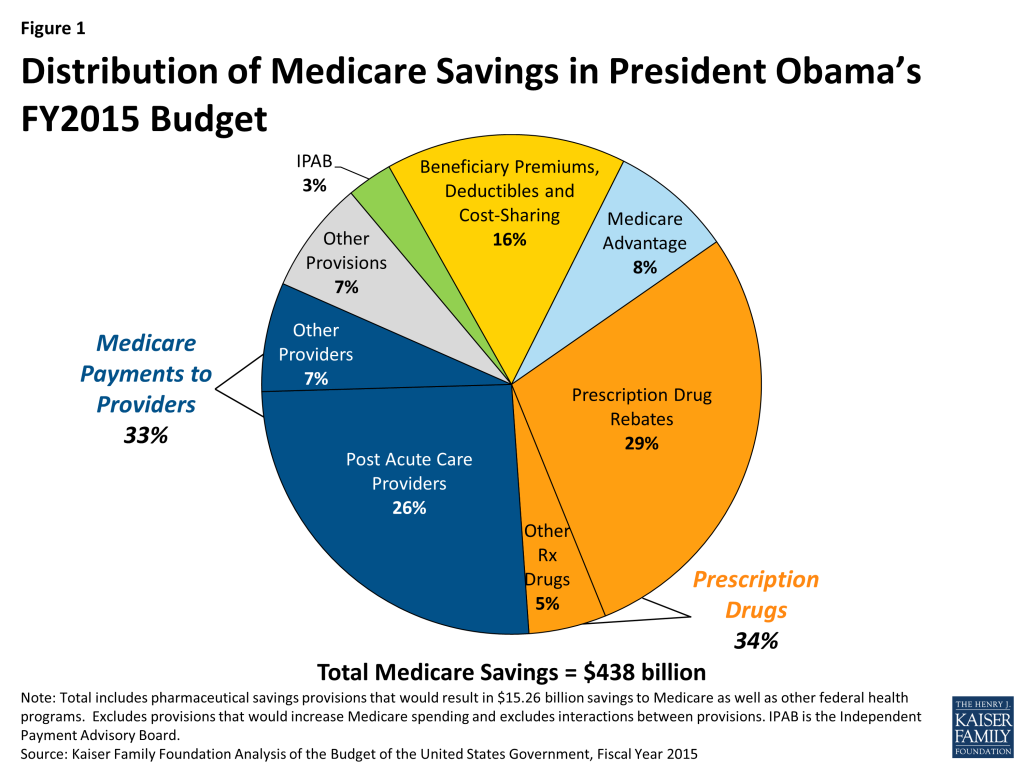
Figure 1: Distribution of Medicare Savings in President Obama’s FY2015 Budget

This brief will be updated as additional details about the provisions in the budget are released.

Summary of Medicare Provisions in the President’s Budget

General Provisions Pertaining to Medicare Expenditures

  • The Independent Payment Advisory Board (IPAB): Would “strengthen” the IPAB; details not specified.  Estimated budget impact, 2022-2024: -$12.94 billion
    • The FY2014 budget would have lowered the IPAB target growth rate for Medicare spending from GDP+1 percent to GDP+0.5 percent for 2020 and future years.
  • Sequestration of Medicare Spending:  Would replace sequestration with other savings and revenue provisions.
    • The FY2014 budget included a similar provision.

Beneficiary Premiums, Deductibles And Cost-Sharing

  • Income-Related Part B And Part D Premiums:  Would expand the share of beneficiaries who would be subject to income-related premiums under Medicare Part B and Part D, with modifications to the provision included in the FY2014 budget; details not specified.  Under current law, premiums for most people on Medicare equal 25 percent of projected average per capita Part B expenditures and 25.5 percent of average per capita Part D expenditures.  Beneficiaries with higher incomes (more than $85,000 for individuals and $170,000 for couples), including 5 percent of beneficiaries in 2014, are required to pay higher premiums, ranging from 35 percent to 80 percent of per capita costs, depending on their income.  Estimated budget impact, 2018-2024: -$52.79 billion
    • The FY2014 budget would have expanded income-related premiums under Medicare Parts B and D by increasing the lowest income-related premium from 35 percent to 40 percent of projected per capita expenditures, increasing the other income brackets, and adding new tiers of income-related premium payments, with a cap at 90 percent of projected per capita expenditures, and would have maintained a freeze on current-law income-related thresholds until 25 percent of beneficiaries pay income-related premiums.
  • Part B Deductible:  Would modify the Part B deductible for new beneficiaries; details not specified.  Under current law, the Part B deductible is uniform across all beneficiaries and is indexed to change each year in accordance with changes in Medicare Part B per capita spending.  Estimated budget impact, 2018-2024: -$3.41 billion
    • The FY2014 budget would have increased the Part B deductible for new beneficiaries by $25.
  • Home Health Copayment: Would introduce a copayment for home health episodes for new beneficiaries; details not specified.  Under current law, Medicare does not impose a copayment on home health services.  Estimated budget impact, 2018-2024: -$0.82 billion
    • The FY2014 budget would have introduced a copayment for home health services of $100 per home health episode, for episodes with 5 or more visits not preceded by a hospital or post-acute care stay, applicable only to new beneficiaries.      
  • Surcharge On Medigap Coverage:  Would apply a premium surcharge for new beneficiaries purchasing “near first-dollar” Medigap policies beginning in 2018; details not specified.  Estimated budget impact, 2018-2024: -$2.74 billion
    • The FY2014 budget would have introduced a surcharge on Part B premiums that would be equivalent to about 15 percent of the average Medigap premium for new beneficiaries that purchase Medigap policies with “particularly low cost-sharing requirements.” 
  • Part D Copayments: Would encourage utilization of generic drugs by low-income beneficiaries; details not specified.  Estimated budget impact, 2016-2024: -$8.49 billion
    • The FY2014 budget would have increased copayments (up to twice the level required under current law) for specified brand name drugs with appropriate generic substitutes, and lowered copayments for specified generic drugs by more than 15 percent for Part D Low Income Subsidy (LIS) beneficiaries; beneficiaries could have received drugs at current copayment levels with successful appeal of a coverage determination, and low-income beneficiaries qualifying for institutional care would have been excluded from the policy.

Dual-Eligible Beneficiaries

  • Program for All-Inclusive Care for the Elderly (PACE) Program:  Would initiate a budget-neutral pilot in a limited number of states to expand eligibility requirements for the PACE program to include beneficiaries dually eligible for Medicare and Medicaid who are between the ages of 55 and 21 to test whether PACE programs can effectively serve a younger population without increasing costs.  Current law limits the PACE program to dually eligible beneficiaries ages 55 and older.  Estimated budget impact, 2015-2024: less than $500 million
    • The FY2014 budget did not include a similar provision.
  • Appeals Process:  Would implement a single beneficiary appeals process for managed care plans that integrate Medicare and Medicaid payment and services and serve dual-eligible beneficiaries.  Estimated budget impact, 2015-2024: less than $500 million
    • The FY2014 budget included a similar provision.
  • Qualified Individuals:  Would extend the program to pay Part B premiums for qualified individuals (QIs) through 2016.  Estimated budget impact, 2014-2016: +$0.96 billion
    • The FY2014 budget included a similar provision.

Medicare Advantage

  • Coding Intensity Adjustment: Would increase the minimum coding intensity adjustment for payments to Medicare Advantage plans.  Estimated budget impact, 2016-2024: -$30.96 billion
    • The FY2014 budget included a similar provision.
  • Employer-Group Plans:  Would align payments for Medicare Advantage employer group waiver plans with the average individual Medicare Advantage bid in each Medicare Advantage payment area.  Estimated budget impact, 2016-2024: -$3.74 billion
    • The FY2014 budget included a similar provision.

Prescription Drugs

  • Part B Drugs: Would modify the reimbursement of Part B drugs; details not specified.  Estimated budget impact, 2015-2024: -$6.75 billion
    • The FY2014 budget would have reduced payments for Part B drugs from 106 percent to 103 percent of the average sales price.
  • Biologics:  Would shorten the length of exclusivity for biologics from 12 years to 7 years, and prohibit additional periods of exclusivity for brand name biologics due to minor changes in product formulations, beginning in 2015.  Estimated savings for Medicare and other federal healthcare programs, 2015-2024: -$4.21 billion
    • The FY2014 budget included a similar provision.
  • Part D Prescription Drug Rebate:  Would require drug manufacturers to provide rebates to Part D plans that are no lower than the Medicaid minimum rebate level for drugs prescribed to dual-eligible beneficiaries and other Part D low-income subsidy (LIS) beneficiaries, beginning in 2016.  Estimated budget impact, 2016-2024: -$117.25 billion
    • The FY2014 budget included a similar provision.
  • Part D Prescription Drug Discounts:  Would increase the manufacturer discounts for brand name drugs in the Part D coverage gap, closing the gap for brand name drugs by 2016, four years sooner than under current law; further details not specified.  Estimated budget impact, 2016-2024: -$7.85 billion
    • The FY2014 budget would have increased the manufacturer discounts for brand name drugs in the Part D coverage gap from 50 percent to 75 percent.
  • Part D Bonus Payments:  Would provide new bonus payments to Part D plans with high quality ratings.   Estimated budget impact, 2015-2024: less than $500 million
    • The FY2014 budget did not include a similar provision.
  • Part D Coverage:  Would provide the Secretary of HHS with the authority to suspend coverage and payment for questionable Part D prescriptions.  Estimated budget impact, 2015-2024: less than $500 million
    • The FY2014 budget did not include a similar provision.
  • Part D LIS beneficiaries:  Would permanently authorize a demonstration (the LI NET program) that provides retroactive drug coverage for certain Part D LIS beneficiaries.  Estimated budget impact, 2015-2024: less than $500 million
    • The FY2014 budget included a similar provision.
  • Pay for Delay:  Would prohibit “pay for delay” arrangements between brand and generic manufacturers.  Estimated budget impact, 2015-2024: -$11.05 billion
    • The FY2014 budget included a similar provision.

Physician Payments and the Sustainable Growth Rate (SGR) Formula

  • SGR Formula:  Includes statement that the President is “committed to working with Congress to continue progress toward reforming Medicare physician payments”; adjusted budget baseline assumes no reduction in Medicare payments for physician services for 2014 to 2024.  Estimated cost of preventing a reduction in Medicare physician payments, as reflected in the bridge to the adjusted baseline, 2015-2024: +$110 billion
    • The FY2014 budget included a similar assumption.
  • Alternative payment models:  Physicians would be encouraged to join accountable payment models and over time payment updates for physician services would be linked to participation in the organizations.  Streamlined value-based purchasing programs would be available for providers who do not participate in the organizations.  Estimated budget impact, 2015-2024: less than $500 million
    • The FY2014 budget included a similar provision.

Medicare Payments to Other Providers

  • Critical access hospitals:  Would reduce critical access hospital payments to 100 percent of reasonable costs, and eliminate the designation for those critical access hospitals within 10 miles of the nearest hospital, beginning in 2015.  Estimated budget impact, 2015-2024: -$2.41 billion
    • The FY2014 budget included a similar provision.
  • Indirect Medical Education (IME):  Would reduce provider payments for IME to align with patient care costs, beginning in 2015.  Estimated budget impact, 2015-2024: -$14.64 billion
    • The FY2014 budget included a similar provision.
  • Health Workforce:  Would create a competitive, value-based graduate medical education grant program that would be funded through the Medicare Hospital Insurance Trust Fund.  Estimated budget impact, 2015-2024: +$5.23 billion
    • The FY2014 budget did not include a similar provision.
  • Post-acute care providers:  Would restructure payments for post-acute care services using a bundled payment approach, beginning in 2019.  Would reduce payment updates for certain post-acute care providers, equalize payments for certain conditions commonly treated in inpatient rehabilitation facilities (IRFs) and skilled nursing facilities (SNFs), and require that 75 percent of IRF patients require intensive rehabilitative services, beginning in 2015.  Would reduce SNF payments to reduce hospital readmissions, beginning in 2019.  Estimated budget impact, 2015-2024: -$112.44 billion
    • The FY2014 budget included similar provisions.
  • Additional provider measures:  Would exclude certain services from the in-office ancillary services exception; modify the documentation requirements for face-to-face encounters for durable medical equipment, prosthetics, orthotics and supplies claims; reduce payments for clinical laboratory services; clarify the Medicare Fraction in the Medicare DSH statute; implement value-based purchasing for SNFs, home health agencies (HHAs), ambulatory surgical centers (ASCs), and hospital outpatient departments (HOPDs); and expand the availability of Medicare data released to providers.  Estimated budget impact, 2015-2024: -$13.92 billion
    • The FY2014 budget included similar provisions.

Other Medicare Provisions

  • Bad debt:  Would reduce bad debt payments to more closely match private sector standards; details not specified.  Estimated budget impact, 2015-2024: -$30.82 billion
    • The FY2014 budget would have reduced bad debt payments from 65 percent generally to 25 percent for all eligible providers over 3 years. 
  • Fraud, waste, and abuse:  Would reduce fraud, waste, and abuse in Medicare through several measures, including creating new initiatives to reduce improper payments in Medicare and requiring prior authorization for power mobility devices and advanced imaging, as well as other items and services at high risk of fraud and abuse.  Estimated budget impact, 2015-2024: -$0.40 billion
    • The FY2014 budget included similar provisions.
  • Delinquent tax debts:  Would levy up to 100 percent of payments to Medicare providers with delinquent tax debts, beginning in 2015.  Estimated budget impact, 2015-2024: – $0.7 billion
    • The FY2014 budget included similar provisions.

For information on Medicare provisions included in other budget proposals and laws, see Kaiser Family Foundation, “Medicare and the Federal Budget: Comparison of Medicare Provisions in Recent Federal Budget Proposals and Laws,” January 2014.
Profiles of Medicaid Outreach and Enrollment Strategies: Using Text Messaging to Reach and Enroll Uninsured Individuals into Medicaid and CHIP

Authors: Alexandra Gates, Jessica Stephens, and Samantha Artiga
Published: Mar 7, 2014

The 2014 Affordable Care Act (ACA) health coverage expansions provide millions of uninsured Americans a new coverage option through Medicaid or Health Insurance Marketplaces. However, effective outreach, enrollment, and retention efforts are essential for ensuring that these new coverage opportunities translate into increased coverage. Past Medicaid and CHIP experience demonstrates that a combination of broad and targeted outreach and enrollment approaches are key to reaching and enrolling eligible people, particularly hard-to-reach individuals.1  The Kaiser Commission on Medicaid and the Uninsured has previously examined a number of innovative strategies that may provide lessons for outreach and enrollment under the ACA, including providing one-on-one enrollment assistance through community health centers in Utah and using technology-based reminders to facilitate renewals of coverage in Michigan.2 ,3  Another potential avenue for targeted outreach is through text messaging and other mobile technology, which has become an increasingly common source of communication, particularly among low-income adults targeted by the coverage expansions. To provide greater insight into the potential role of text messaging as an outreach vehicle, this brief focuses on the use of standard cell phones and smartphones for text messages and Internet access and illustrates how one text messaging initiative, Text4baby, a free, personalized maternal child health education text messaging service for pregnant women and new mothers, is helping eligible pregnant women and their families connect to health coverage.

Use of Mobile Technology

Mobile technology includes a growing array of handheld or portable electronic devices such as cell phones, smartphones, and tablets. Adults are using these devices more frequently for a number of activities including text messaging, accessing the Internet, and conducting other Web-based activities such as online banking and accessing social media through applications.4 

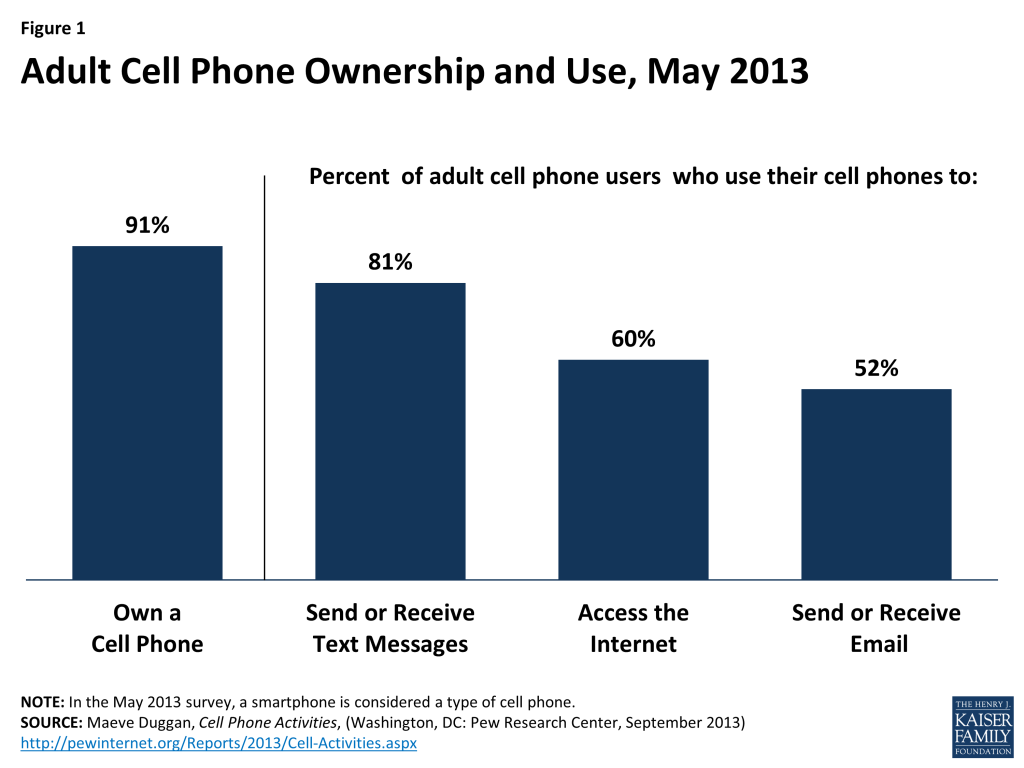
According to a recent study, more than nine in ten American adults (91%) owned a cell phone in 2013.5  Additionally, nearly six in ten of adults who owned a cell phone (59%) owned a smartphone, which is a type of cell phone with advanced features such as Internet and email accessibility.6  Cell phone ownership is widespread across income and demographic groups (Table 1). It is estimated that, as of May 2013, 88 percent of Hispanics, 93 percent of Blacks, and 90 percent of Whites owned cell phones. Although adults with higher incomes and educational attainment levels are more likely to own a cell phone than those with lower incomes and education levels, cell phone ownership is still high among low-income adults and those with lower education. Nearly nine in ten adults (86%) with annual income below $30,000 and 83% of adults with less than a high school education owned a cell phone as of May 2013. Cell phone ownership is also high among adults across age groups and urban, rural, and suburban contexts.

Table 1: Cell Phone Ownership Among Adults in the United States, May 2013
All Adults91%
Gender
Men93%
Women88%
Age
18-2497%
25-3497%
35-4496%
45-5492%
55-6487%
65+76%
Race/Ethnicity
White90%
Black93%
Hispanic88%
Educational Attainment
Less than High School83%
High School Graduate88%
Some College92%
College+95%
Annual Household Income
Less than $30,99986%
$30,000-$49,99990%
$50,000-$74,99996%
$75,000+98%
Urbanity
Urban92%
Suburban91%
Rural85%
SOURCE: Lee Rainie, Cell Phone ownership hits 91% of adults (Washington, DC: Pew Research Center: June 6, 2013), http://www.pewresearch.org/fact-tank/2013/06/06/cell-phone-ownership-hits-91-of-adults/

Adults use their cell phones for a variety of tasks, including text messaging and as their primary way to access the Internet. More than 4 in 5 adult cell phone owners (81%) use their cell phone to send or receive text messages, including 87 percent of Hispanics and 85 percent of non-Hispanic Blacks.7   Moreover, data suggest that 99 percent of text messages are read, with 91 percent of them read within three minutes8  Six in ten cell phone users (60%) access the Internet on their phones and over half (52%) use their cell phones to send or receive email (Figure 1).  More than one in three cell phone users (34%) who use their cell phones for Internet or email report that, when using the Internet, they do so mostly on a cell phone instead of through another device like a desktop, laptop, or tablet computer. The use of both text messaging and cell phones to access the Internet has risen dramatically in recent years, especially as smartphones have become more popular. 9 

Figure 1: Adult Cell Phone Ownership and Use, May 2013

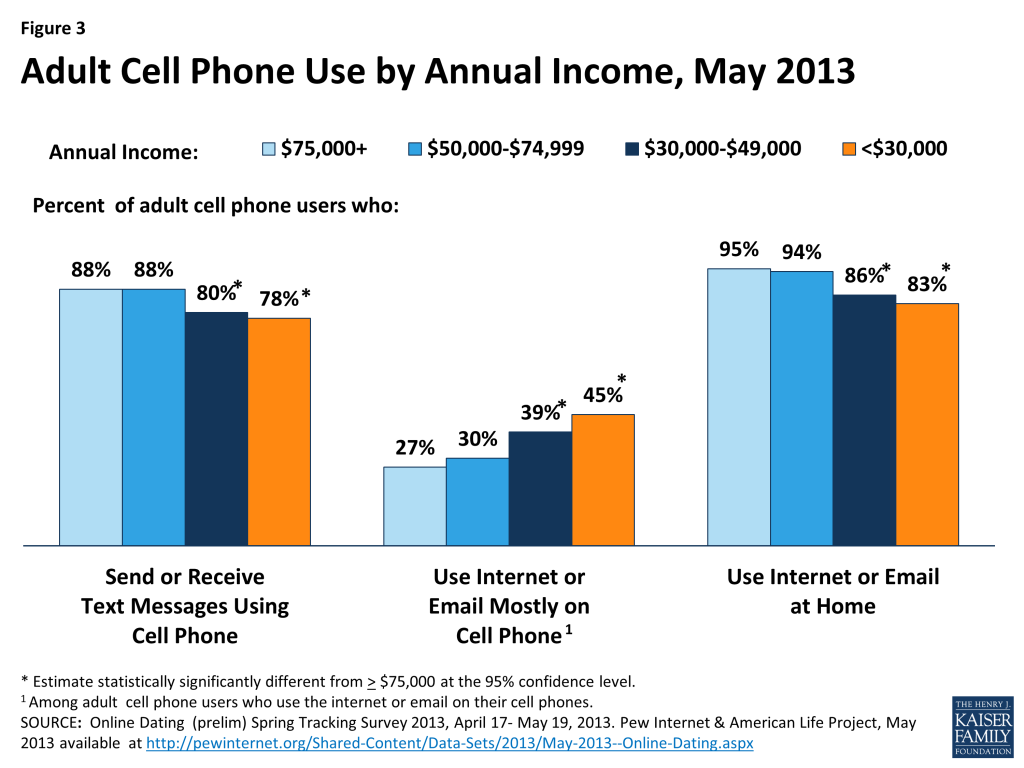
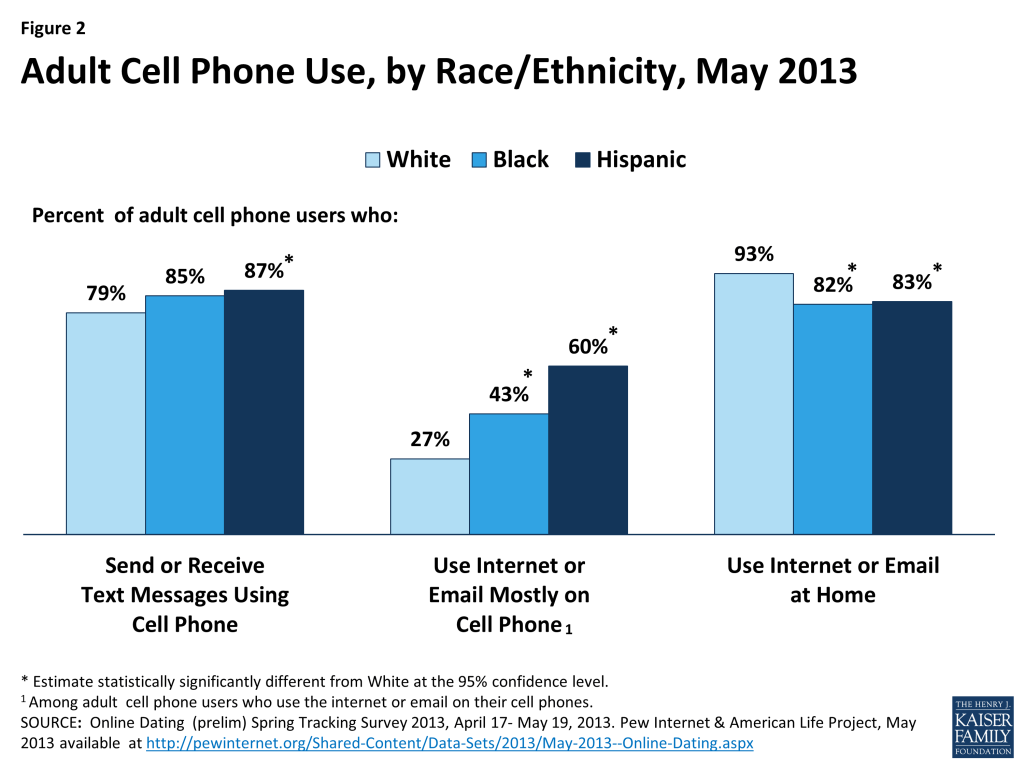
Low-income adults and people of color who are cell phone owners are particularly likely to use their phone as their primary way to access the Internet. Among adult cell phone owners, Hispanics are significantly more likely than Whites to use their cell phones to send or receive text messages (Figure 2). Hispanic and Black adults are also significantly more likely than their White counterparts to use their cell phones to access the Internet and to do so mostly on a cell phone instead of on another device such as a computer, laptop, or tablet. Similarly, lower income adults are more likely than those at higher incomes to say that they mostly access the Internet through their cell phone. Moreover, compared to Whites and those with higher family income, Blacks and Hispanics and low-income earners are less likely to use the Internet or email at home (Figure 3).

Figure 2: Adult Cell Phone Use, by Race/Ethnicity, May 2013
Figure 3: Adult Cell Phone Use by Annual Income, May 2013

Using Text Messaging as an Outreach and Enrollment Tool: The Text4Baby Example

There has been growing interest in using text messaging and mobile technology in health care. For example, a number of insurance companies have developed mobile applications that allow beneficiaries to search for physicians or facilities, view and share member health plan information, or contact a provider about a health care need.10  Researchers have also noted the potential value of cell phones and other mobile technology as a means to improve patient compliance through text message reminders and to help patients communicate with their clinicians and track and manage chronic conditions.11  Some initiatives are also exploring the use of text messaging to reach and enroll more people in health coverage. For example, as highlighted in a previous outreach and enrollment strategy profile, the Michigan Primary Care Association achieved success increasing retention through an innovative text messaging strategy that reminds Medicaid and CHIP enrollees about the need to renew Medicaid coverage and offer renewal assistance to families.12  Similarly, the National Alliance for Hispanic Health launched a text messaging service called the Buena Salud Club to provide free, bilingual health and health coverage information to Hispanic consumers through text messaging. 13   Beginning in 2012, Text4baby, a personalized maternal and child health program, also launched a text messaging outreach and enrollment campaign to connect more pregnant women and their families to Medicaid and CHIP. Early experiences from this initiative are discussed further below.

Text4baby is a free, personalized maternal child health education program that uses text messaging to provide health and safety information and support to pregnant women and new mothers. The program is a public-private partnership that conducts outreach through  over 1,100 promotional members including federal agencies, state and local health departments, Medicaid agencies, health plans, hospital networks, and the media.14  Since Text4baby launched in in February 2010, nearly 680,000 pregnant women and new mothers have enrolled in the program.15  External studies of Text4baby also suggest that it has been effective in reaching its target audience of individuals from underrepresented groups and people of lower economic statuses.16   Women who enroll in the program receive three free text messages a week, timed to their due date or their baby’s birth date, through pregnancy and up until the baby’s first birthday. Messages cover a range of health and safety topics. Recently, Text4baby incorporated use of a series of text messages, referred to as the “Medicaid module,” which were designed to increase enrollment of uninsured pregnant women and their families into Medicaid and CHIP.

Text4Baby and the Medicaid Module

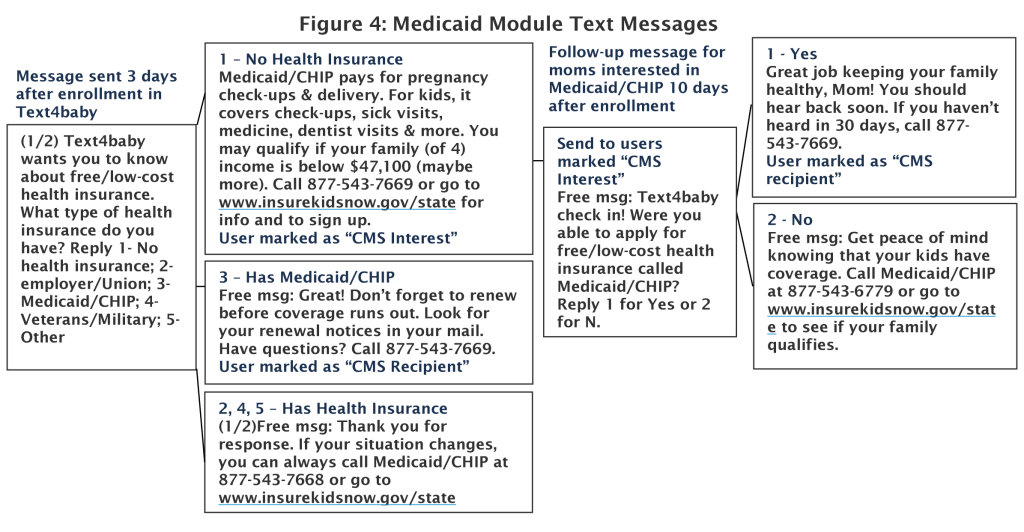
In February 2012, Text4baby partnered with the Connecting Kids to Coverage initiative of the Centers for Medicare and Medicaid Services to drive enrollment in Medicaid and CHIP through a series of interactive text messages. As part of this “Medicaid module,” three days after enrolling in Text4baby, individuals are asked about their type of health coverage. Those who respond with Medicaid or CHIP are then texted a supportive message and information on how to renew their coverage. Those who are uninsured are texted information about Medicaid and CHIP eligibility and how to enroll. They also receive a follow-up text seven days later asking if they applied for coverage (Figure 4). Women who respond they are enrolled in Medicaid or CHIP or applied for Medicaid or CHIP are reminded to renew their coverage. Nearly half (47%) of the over 110,000 women who enrolled in Text4baby between the end of December 2012 and August 2013 responded to the first question of the Medicaid module, and about 13 percent of these women reported they were uninsured.17 

Figure 4: Medicaid Module Text Messages

Experiences with the Text4baby Medicaid Module

In late summer 2013, the Kaiser Commission on Medicaid and the Uninsured and PerryUndem Research and Associates conducted structured telephone interviews with 43 women enrolled in Text4baby to take a qualitative look at the impact of the Medicaid module. All interview respondents were uninsured themselves or had at least one uninsured child when they enrolled in Text4baby and recalled receiving the text messages in the Medicaid module. The interviews were conducted in English and Spanish. Key findings are discussed below:

Text4baby respondents included young, low- and moderate-income women with diverse racial and ethnic backgrounds.  Nearly all respondents were between ages 18 and 35 years old, with many between 18 and 24 years old. Respondents included both those who already had children in the home and those who did not yet have any children in the household. They also included women of diverse racial and ethnic backgrounds and immigration statuses, with a number speaking a language other than English in the home. Almost all respondents reported having household income of less than $40,000, with a number reporting income below $20,000 per year.

Cell phones are a key source of connection to the Internet for respondents. Many of the Text4baby respondents reported that they primarily connect to the Internet through their cell phone. In a number of cases, respondents who said they primarily connect to the Internet through their phone indicated that they do not have access to a computer at home or work. A smaller number of respondents reported mostly connecting to the Internet through the computer and several said they use a cell phone and computer equally.

Most respondents had limited knowledge of Medicaid and CHIP when they signed up for Text4baby. At the time they enrolled in Text4baby, most said they had never been covered by Medicaid or CHIP or tried to sign themselves up for Medicaid or CHIP in the past. However, some reported that they knew a good amount or a lot about the programs, with a number having been previously enrolled in Medicaid and CHIP.

Many respondents said they sought out additional information about Medicaid and CHIP after receiving Text4baby’s messages about health coverage. Some visited the Insure Kids Now website through their phone or computer or called the Insure Kids Now toll free number. Some tried to learn more about coverage by talking to a health care provider, family and friends, someone from Medicaid, CHIP, or another government office, or a trusted individual in their community.

A number of the respondents said they applied for Medicaid or CHIP for themselves or an uninsured child after receiving Text4baby’s messages about health coverage. Most respondents who had applied had successfully enrolled by the time of the interview. However, several respondents were still waiting for an eligibility determination. Most respondents who reported applying for Medicaid and CHIP indicated that Text4baby’s messages about health coverage were an important factor in their decision to apply for Medicaid and CHIP. Moreover, regardless of whether they applied for Medicaid and CHIP, nearly all respondents said they found the Text4baby messages useful and said that they would like to receive more text messages about health insurance in the future.

Looking Ahead

With the continued rise in the use of mobile technology across the population, including lower-income and diverse groups, text messaging can serve as a useful vehicle to reach and communicate with uninsured individuals. Experience with the Text4baby Medicaid module shows that individuals found text messages about health insurance to be useful and that the messages helped spur them to seek out additional information about health coverage and apply for coverage. Looking ahead, as outreach and enrollment efforts for the ACA coverage expansions continue, these findings suggest that text messaging could be an effective outreach and education tool. Other experience suggests that text messaging may also be an effective tool to facilitate renewals of Medicaid and CHIP coverage. Given that some individuals primarily rely on cell phones to connect to the Internet, it may be useful to explore options that would enable individuals to apply for and renew health coverage directly through their phone. Overall, with the continued rise of use of mobile technology, it will be important to continue to explore its potential uses in enrolling and maintaining health coverage.

This issue brief is part of a Kaiser Commission on Medicaid and the Uninsured series of profiles on Medicaid and CHIP Outreach and Enrollment Strategies. The authors would like to extend their appreciation to Text4baby for providing data used in this report.

  1. See: Kaiser Commission on Medicaid and the Uninsured. “Key Lessons from Medicaid and CHIP for Outreach and Enrollment Under the Affordable Care Act.” June 2013. ↩︎
  2. Kaiser Commission on Medicaid and the Uninsured. “Profiles of Medicaid Outreach and Enrollment Strategies: One-on-One Assistance Through Community Health Centers in Utah.” March 2013. ↩︎
  3. Kaiser Commission on Medicaid and the Uninsured. “Profiles of Medicaid Outreach and Enrollment Strategies: Helping Families Maintain Coverage in Michigan.” May 2013. ↩︎
  4. Maeve Duggan, Cell Phone Activities, (Washington, DC: Pew Research Center, September 2013) http://pewinternet.org/Reports/2013/Cell-Activities.aspx ↩︎
  5. Ibid. ↩︎
  6. Ibid. ↩︎
  7. Ibid. ↩︎
  8. Simple Texting, Why is Text Message Marketing So Effective? (New York City, NY: Simple Texting.com, June 2012), ↩︎
  9. Ibid. ↩︎
  10. Health4Me Mobile Application. United Health Care. http://www.uhc.com/individuals_families/member_tools/health4me_mobile_application.htm ↩︎
  11. Steinbuhl, S., E Muse, and E.J. Topol. “Can Mobile Health Technologies Transform Health Care?” 310 (2013) 22. doi: 10.1001/jama.2013.281078. ↩︎
  12. Kaiser Commission on Medicaid and the Uninsured. “Profiles of Medicaid Outreach and Enrollment Strategies: Helping Families Maintain Coverage in Michigan.” May 2013. ↩︎
  13. Falcon,  Adolf. “Buena Salud: Hispanics and the Future of the Southern U.S.” Presented at the GIH Meeting on Latinos in Health Care: Assets and Opportunities in the South. West Palm Beach, FL, May 10, 2013. http://www.gih.org/files/Falcon.pdf ↩︎
  14. Murphy, Kathleen. “Harnessing the Power of Mobile for Maternal and Child Health: The Text4baby Program.” Presentation to the University of Maryland Health Sciences and Human Services Library’s Embracing mHealth: Mobilizing Healthcare Symposium.” October 22, 2013. Available at: https://archive.hshsl.umaryland.edu/bitstream/10713/3519/1/Murphyumd%20conference%2010%2022%2013.pdf ↩︎
  15. Text4babyEnrollment Data as of Feburary 8, 2014 available at https://Text4baby.org/index.php/partner-resources/105-Text4baby-enrollment-data ↩︎
  16. California State University San Marcos National Latino Research Center and University of California San Diego (2012). Maternal and Newborn Health: Text4baby San Diego. Evaluation Overview: October 2011-October 2012. Available: http://www.csusm.edu/nlrc/documents/report_archives/Text4Baby_SanDiego_Evaluation_Overview.pdf. Data collected via three surveys implemented October 2011 – October 2012. Total sample size = 626. Total respondents who provided income level = 480.  ↩︎
  17. Text4Baby. “Connecting to Health Care and Coverage: Preliminary Results from Text4baby Medicaid/CHIP Module.”  Available at: http://Text4baby.org/templates/beez_20/images/HMHB/t4b%20medicaid%20module%20factsheet%2010%2017%2013.pdf ↩︎

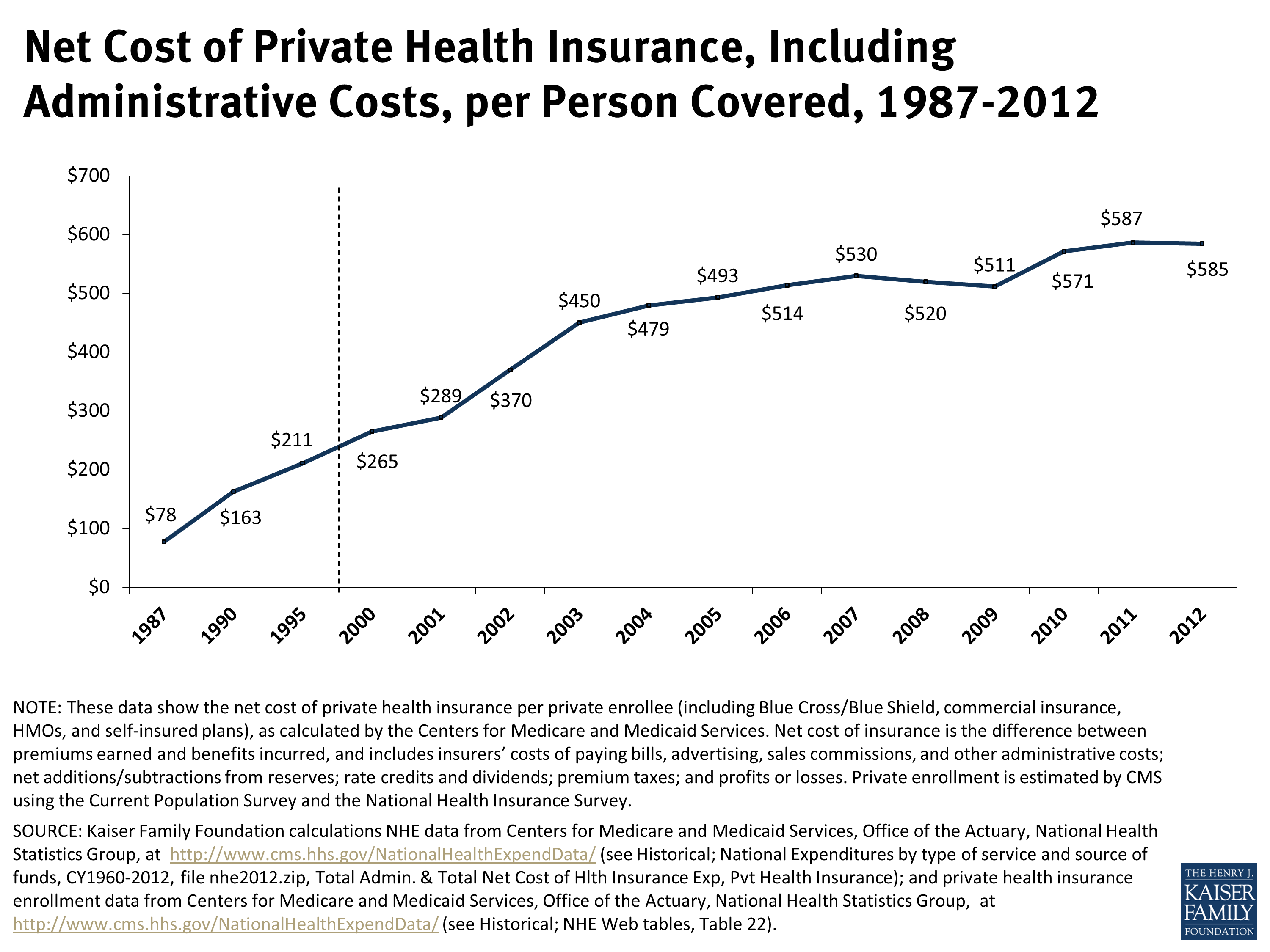
Net Cost of Private Health Insurance, Including Administrative Costs, per Person Covered, 1987-2012

Published: Mar 6, 2014

Source

Kaiser Family Foundation calculations NHE data from Centers for Medicare and Medicaid Services, Office of the Actuary, National Health Statistics Group, at  http://www.cms.hhs.gov/NationalHealthExpendData/ (see Historical; National Expenditures by type of service and source of funds, CY1960-2012, file nhe2012.zip, Total Admin. & Total Net Cost of Hlth Insurance Exp, Pvt Health Insurance); and private health insurance enrollment data from Centers for Medicare and Medicaid Services, Office of the Actuary, National Health Statistics Group,  at http://www.cms.hhs.gov/NationalHealthExpendData/ (see Historical; NHE Web tables, Table 22). 

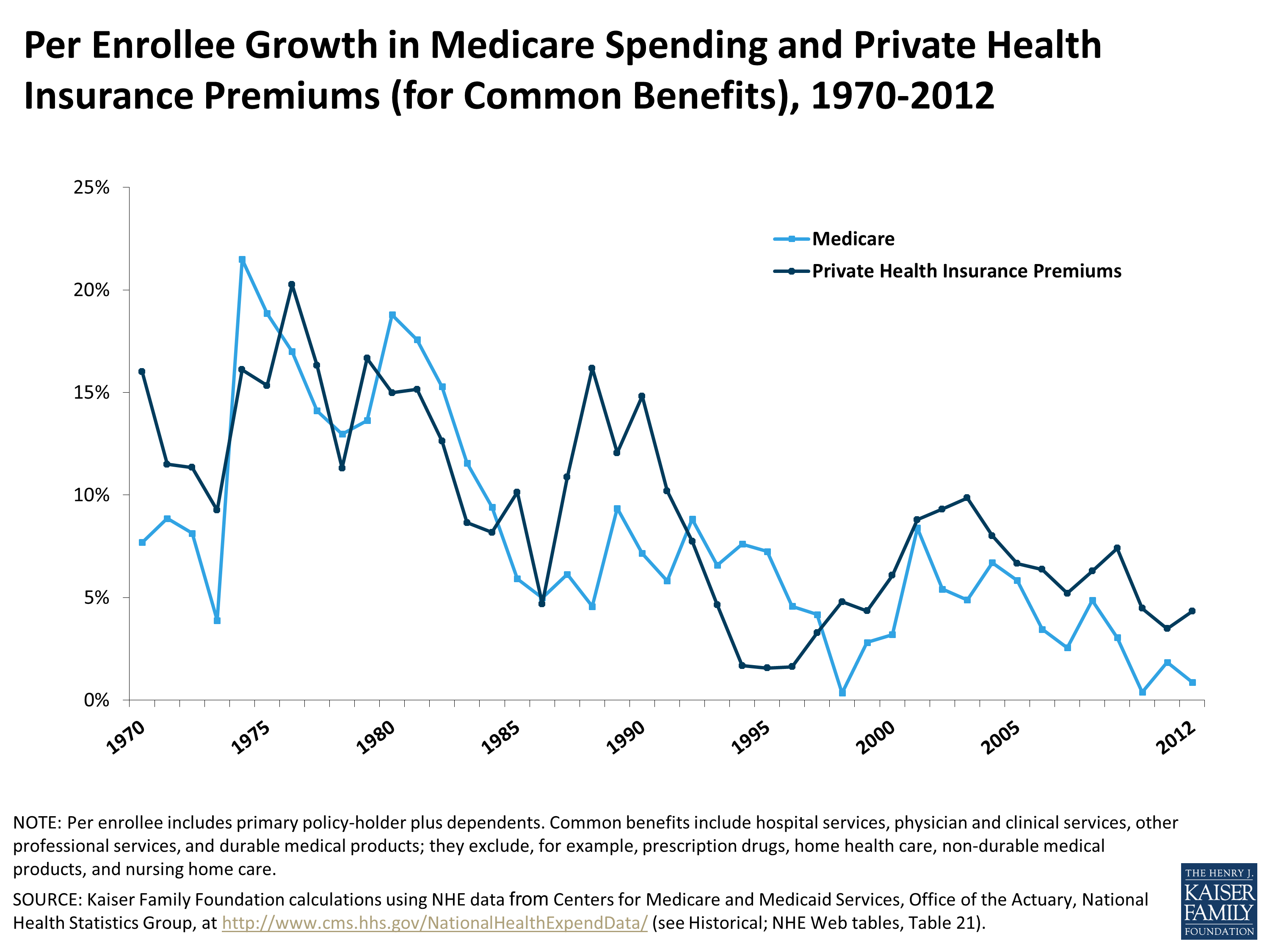
Per Enrollee Growth in Medicare Spending and Private Health Insurance Premiums (for Common Benefits), 1970-2012

Published: Mar 6, 2014

Source

Kaiser Family Foundation calculations using NHE data from Centers for Medicare and Medicaid Services, Office of the Actuary, National Health Statistics Group, at http://www.cms.hhs.gov/NationalHealthExpendData/ (see Historical; NHE Web tables, Table 21). 

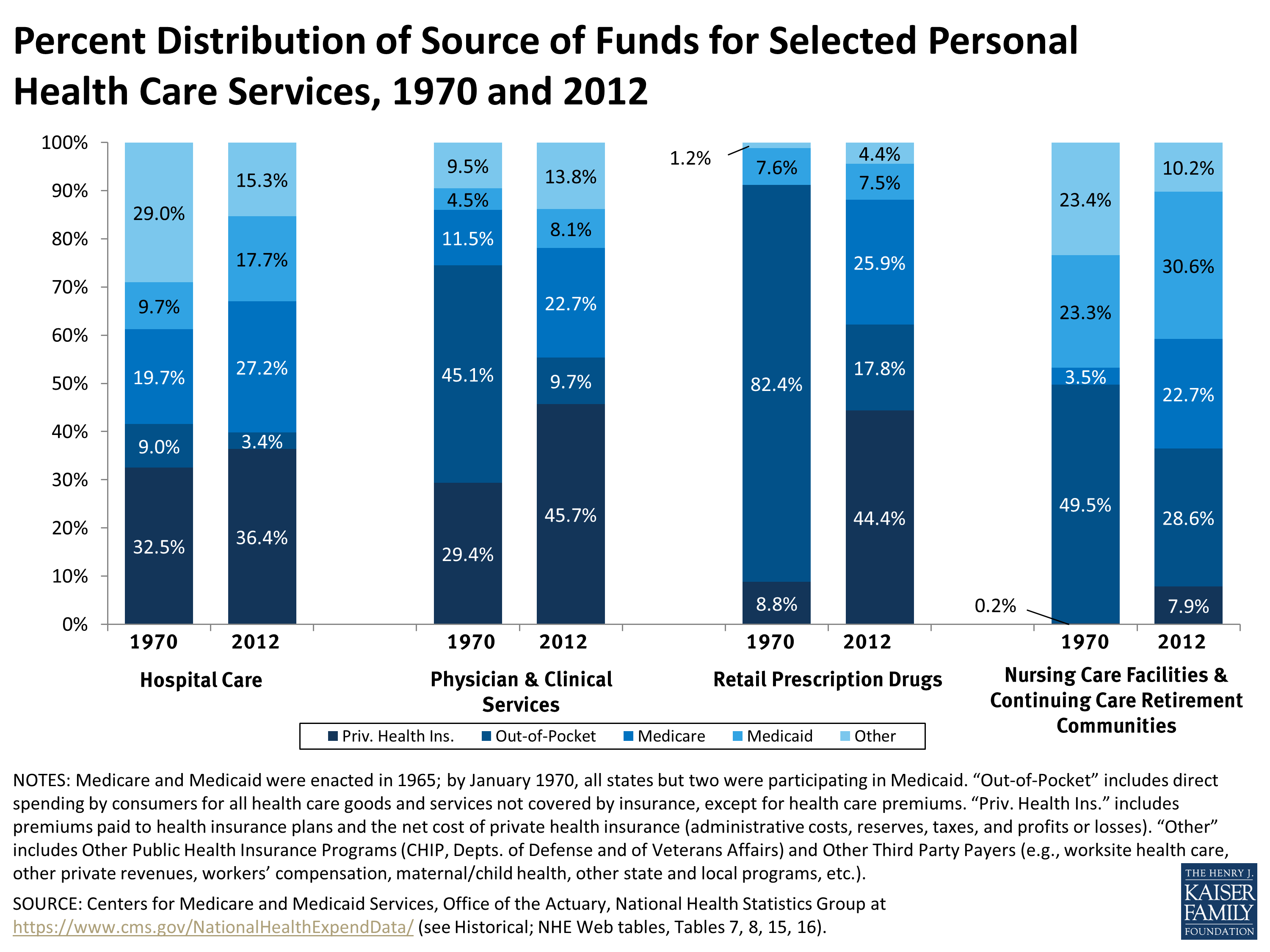
Percent Distribution of Source of Funds for Selected Personal Health Care Services, 1970 and 2012

Published: Mar 6, 2014

Source

Centers for Medicare and Medicaid Services, Office of the Actuary, National Health Statistics Group at https://www.cms.gov/NationalHealthExpendData/ (see Historical; NHE Web tables, Tables 7, 8, 15, 16).

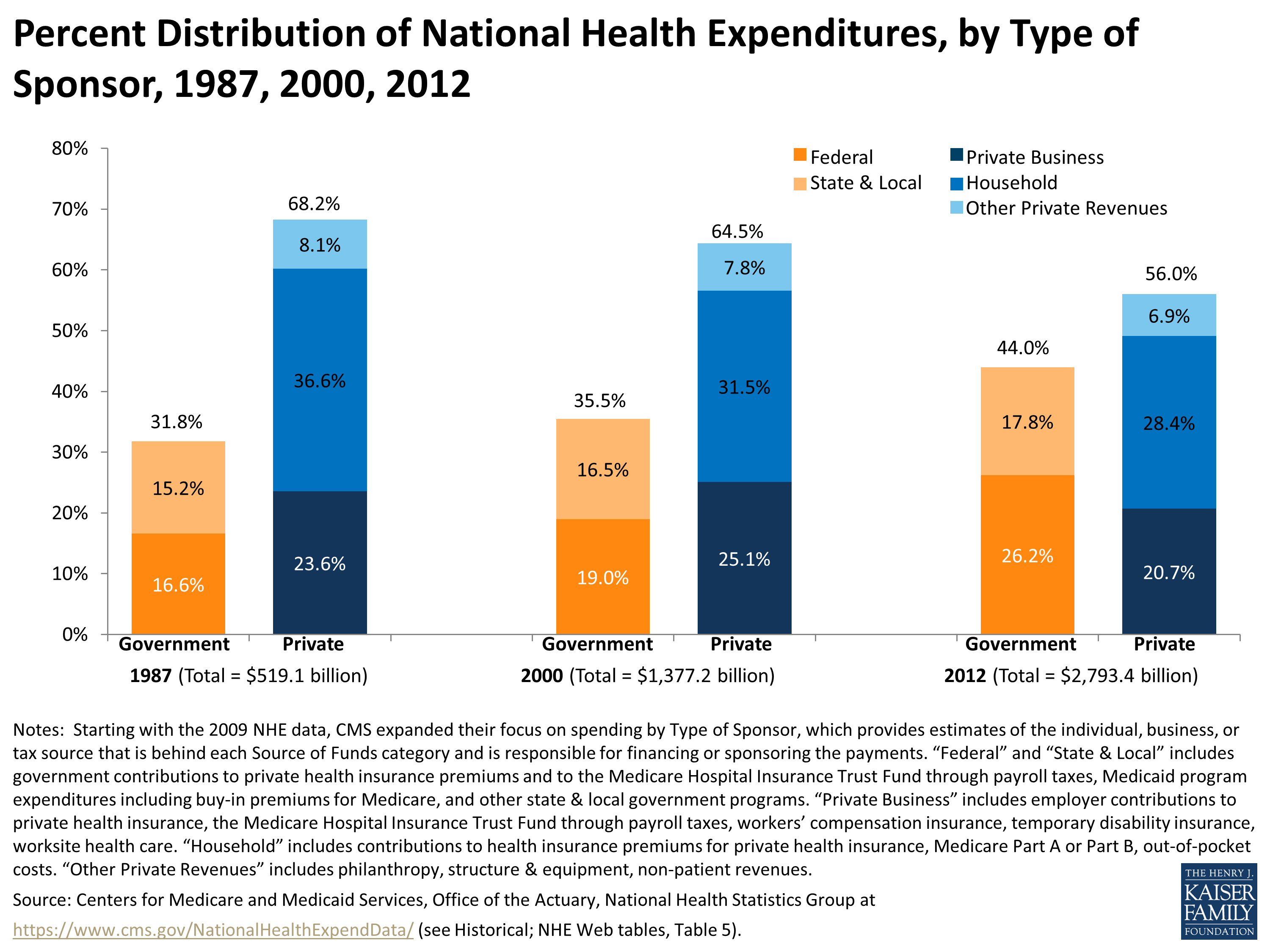
Percent Distribution of National Health Expenditures, by Type of Sponsor, 1987, 2000, 2012

Published: Mar 6, 2014

Source

Centers for Medicare and Medicaid Services, Office of the Actuary, National Health Statistics Group at https://www.cms.gov/NationalHealthExpendData/ (see Historical; NHE Web tables, Table 5).

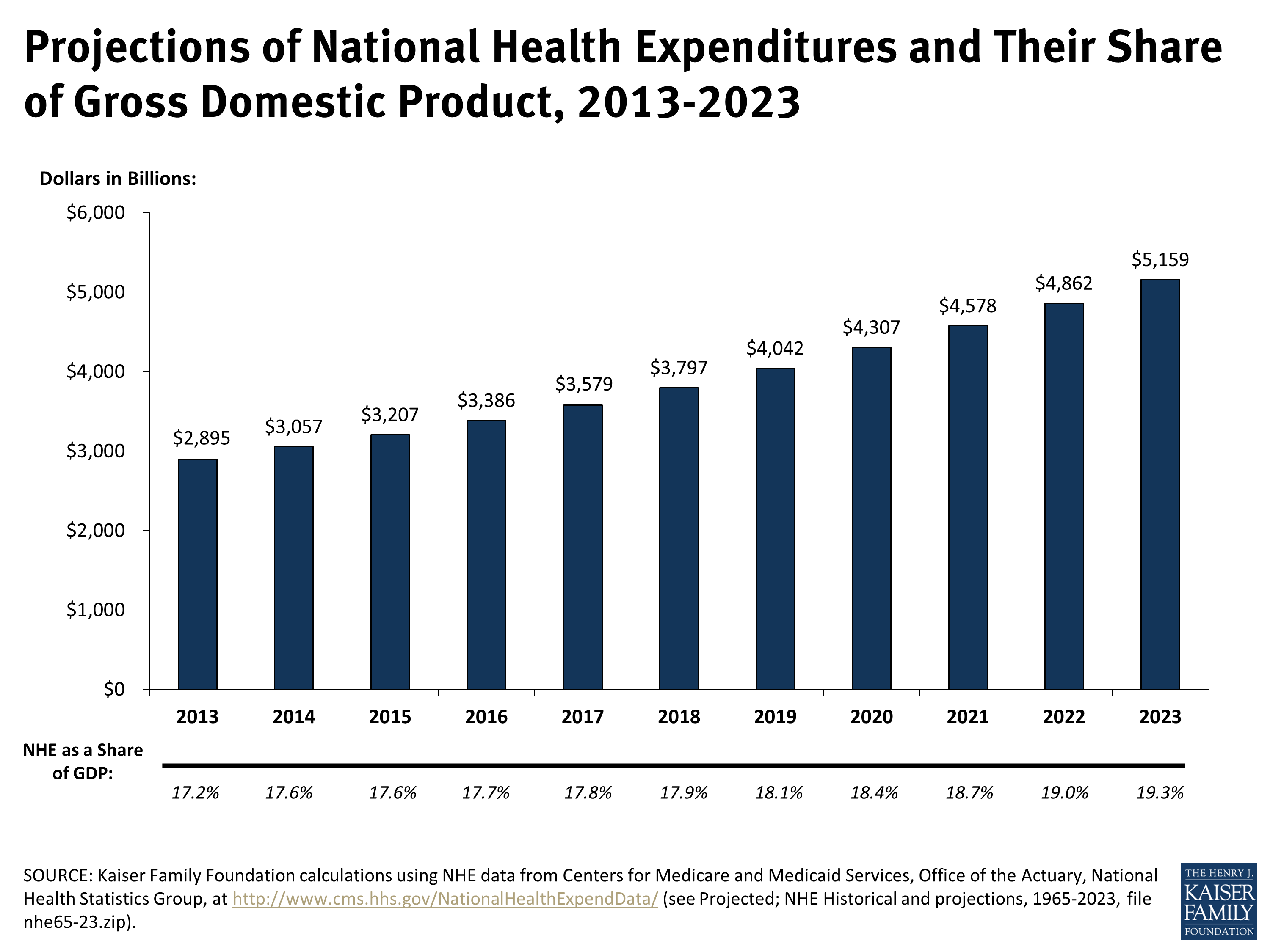
Projections of National Health Expenditures and Their Share of Gross Domestic Product, 2013-2023

Published: Mar 6, 2014

Source

Kaiser Family Foundation calculations using NHE data from Centers for Medicare and Medicaid Services, Office of the Actuary, National Health Statistics Group, at http://www.cms.hhs.gov/NationalHealthExpendData/ (see Projected; NHE Historical and projections, 1965-2023, file nhe65-23.zip).

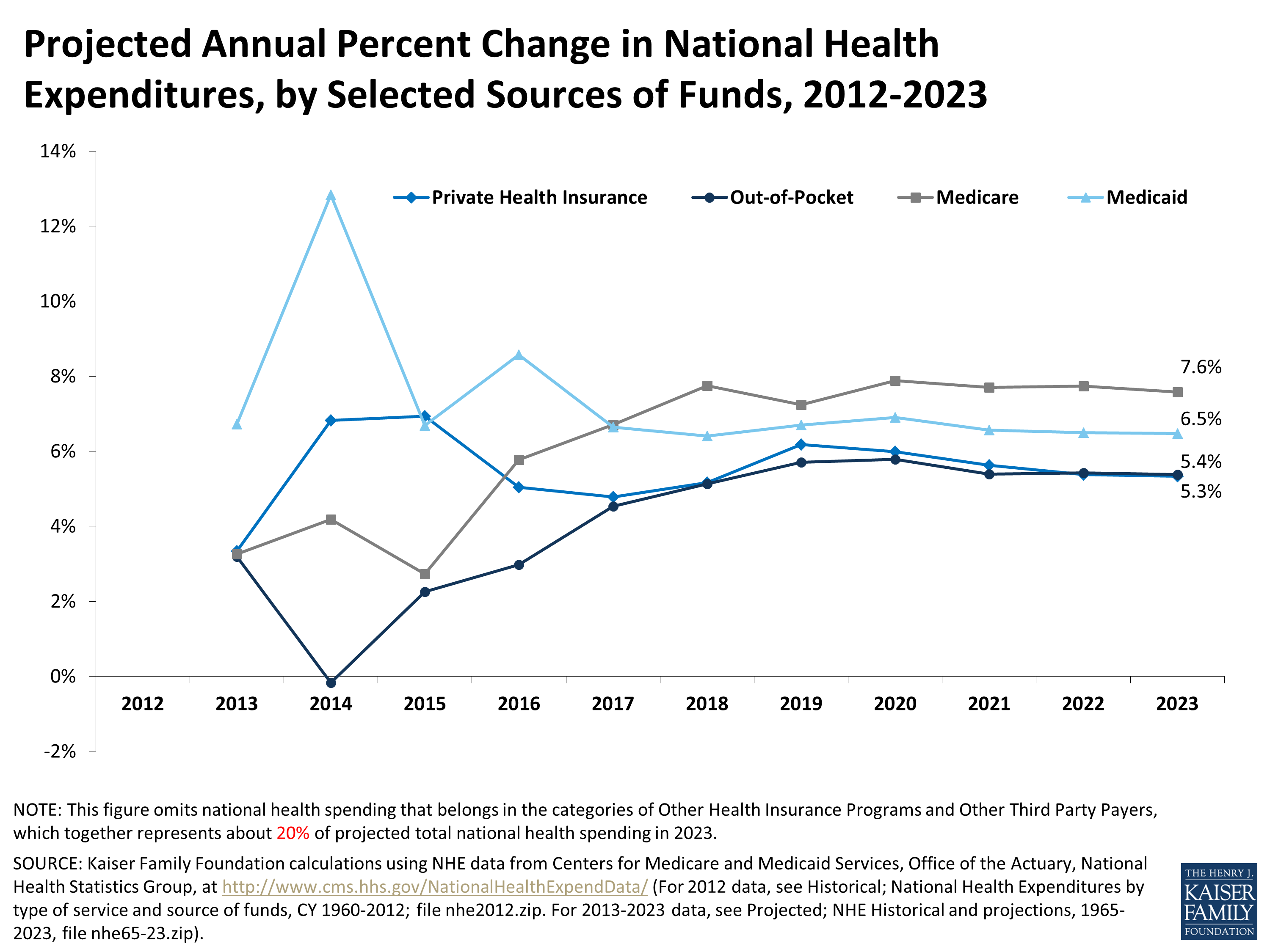
Projected Annual Percent Change in National Health Expenditures, by Selected Sources of Funds, 2012-2023

Published: Mar 6, 2014

Source

Kaiser Family Foundation calculations using NHE data from Centers for Medicare and Medicaid Services, Office of the Actuary, National Health Statistics Group, at http://www.cms.hhs.gov/NationalHealthExpendData/ (For 2012 data, see Historical; National Health Expenditures by type of service and source of funds, CY 1960-2012; file nhe2012.zip. For 2013-2023 data, see Projected; NHE Historical and projections, 1965-2023, file nhe65-23.zip).

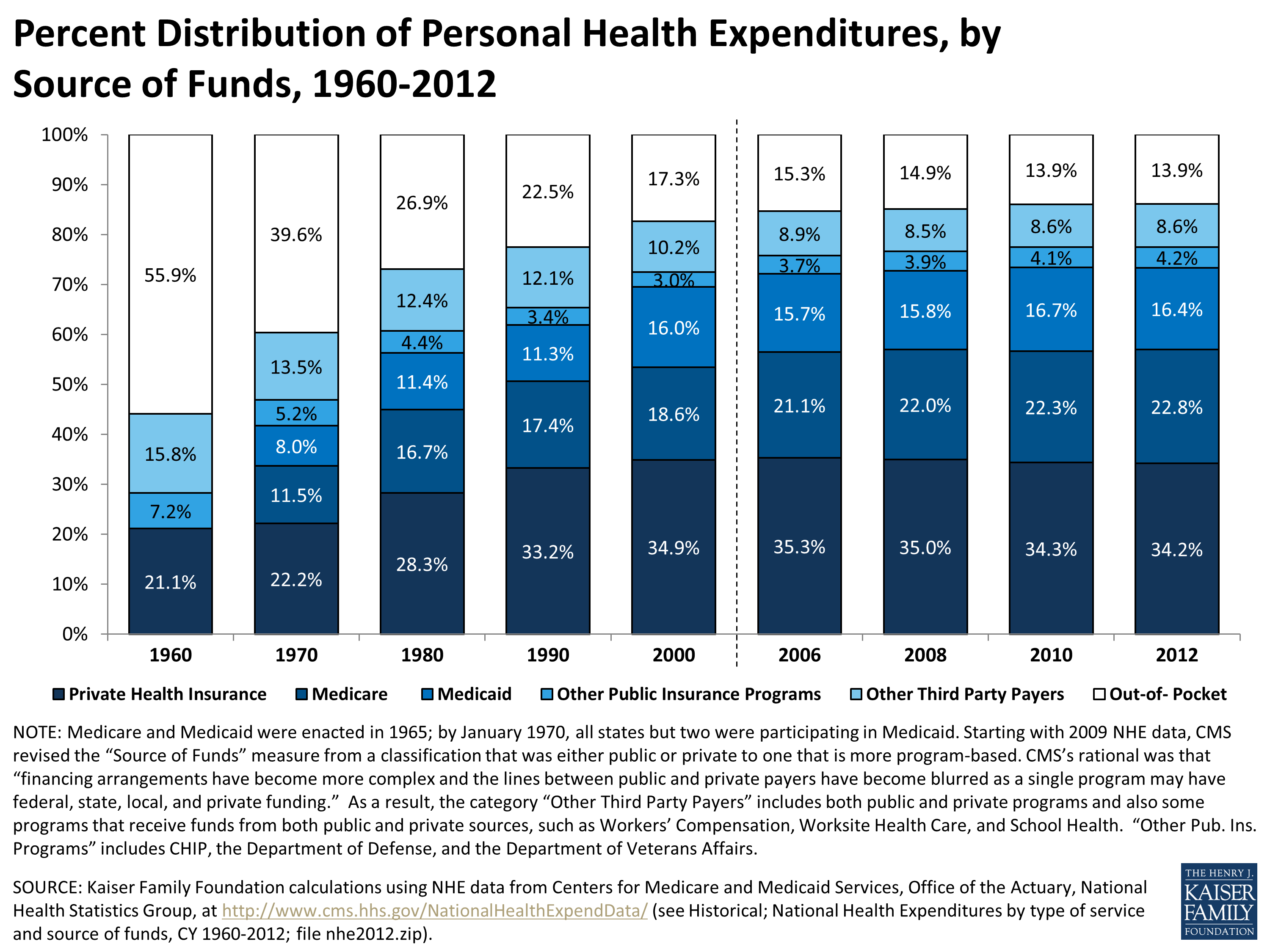
Percent Distribution of Personal Health Expenditures, by Source of Funds, 1960-2012

Published: Mar 6, 2014

Source

Kaiser Family Foundation calculations using NHE data from Centers for Medicare and Medicaid Services, Office of the Actuary, National Health Statistics Group, at http://www.cms.hhs.gov/NationalHealthExpendData/ (see Historical; National Health Expenditures by type of service and source of funds, CY 1960-2012; file nhe2012.zip).