Women's Health Policy

ABORTION IN THE U.S.

Variability in Rebimbursement Rates for State-funded Abortion Services for Medicaid Enrollees: A 2026 Update

This analysis reveals that while more states have begun using their own funds to cover abortion services for Medicaid enrollees since the U.S. Supreme Court’s Dobbs decision, only a handful have significantly increased reimbursement rates for providers, potentially undermining access to care for low-income patients. After examining physician fee schedules for abortions provided to Medicaid enrollees since 2024, KFF finds that reimbursement rates vary dramatically across states, and that most states don't substantially increase payment rates for later-pregnancy procedures, despite their higher costs and complexity.

CONTRACEPTIve care IN THE U.S.

An Update on Medicaid, Title X and Planned Parenthood

This brief provides an update on Planned Parenthood clinic closures and participation in the Title X program amid substantial policy changes resulting in funding reductions. These changes include the One Big Beautiful Bill Act and the withholding of federal Title X funding to Planned Parenthood clinics.

SELECTED RESOURCES

Over-the-Counter Oral Contraceptive Pills

In July 2023, the FDA approved Opill, the first daily oral contraceptive pill to become available over the counter (OTC) without a doctor’s prescription. This issue brief provides an overview of OTC oral contraceptives and laws and policies related to insurance coverage.

featured

A promotional image for the the KFF Health Policy 101 Issues in Women’s Health chapter

Health Policy Issues in Women’s Health

Examine the core health coverage and access issues —shaped by federal and state policies—that affect women’s health today, including health coverage and costs, reproductive health services, maternal health, mental health, and intimate partner violence.

State Profiles for Women’s Health

Explore the latest national and state-specific data and policies on women’s health. Topics include health status, insurance and Medicaid coverage, use of preventive services, sexual health, maternal and infant health, and abortion policies. Many indicators provide state-level information for women of different racial and ethnic groups.

The essentials
  • Women’s Health Insurance Coverage

    This factsheet reviews major sources of coverage for women residing in the U.S., discusses the ACA's impact on coverage, and the coverage challenges that many women continue to face.
  • Medicaid Coverage for Women

    This data note presents key data points describing the current state of the Medicaid program as it affects women, including eligibility, reproductive health, chronic conditions, and more.
  • Dobbs: What are the Implications for Racial Disparities?

    This analysis examines the implications of the Dobbs decision and state restrictions on abortion coverage for racial disparities in access to care and health outcomes.
  • State Health Facts: Women's Health Indicators

    Information on women’s health status, utilization of services, health insurance coverage, family planning and childbirth, and abortion statistics and policies.
  • Key Facts on Abortion in the United States

    This report answers some key questions about abortion in the United States and presents data collected before the overturn of Roe v. Wade.

Stay informed.

Stay informed.

Filter

861 - 870 of 876 Results

  • After Dobbs, Survey Seeks to Understand Telecontraception Clients Better

    News Release

    According to a new KFF survey with a nonprobability sample of clients from four online sources of contraception, one in four clients said they got emergency contraception to have on hand because of the Supreme Court’s decision to overturn Roe v. Wade. Additionally, more than a fifth (22%) said they have considered sterilization, 12% reported that they considered switching to or started using a more effective method of birth control, and eight percent said that…

  • Update on the Status of Medication Abortion and the Courts

    Policy Watch

    This policy watch explains the April 21, 2023 United States Supreme Court's ruling on Alliance for Hippocratic Medicine v. FDA, a case challening the FDA's approval of mifepristone, the medication abortion pill.

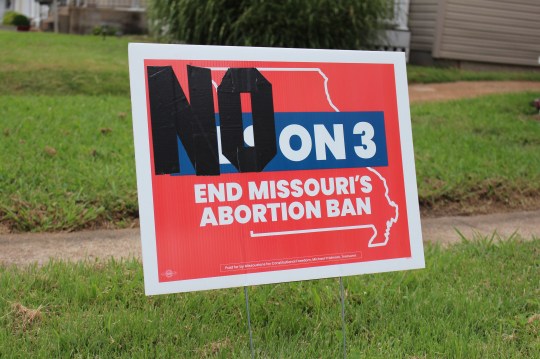
  • New KFF Brief Examines Potential Abortion-Related Ballot Initiatives in 13 States

    News Release

    Ahead of the 2024 general election, a new KFF brief examines abortion ballot initiatives in progress in 13 states. These 13 states could follow six other states that have voted on constitutional amendments to protect or restrict abortion since the Supreme Court’s Dobbs decision overturning Roe v. Wade in 2022. In those six states, the side favoring access to abortion prevailed. Citizen-led abortion ballot initiatives have captured nationwide attention and promise to be closely watched;…

  • Want to Learn About Women’s Health in your State? Check out KFF’s Updated Interactive Dashboard

    News Release

    KFF recently updated its interactive dashboard with national and state data on women’s health, as well as information about various policies that affect women’s health. The dashboard provides instant access the most up-to-date state level indicators of women’s health in the U.S. Many of the indicators also provide national and state-level information for women of different racial and ethnic groups. Dashboard topics include: Abortion availability, coverage, and use by race/ethnicity. Maternal and infant mortality, preterm…

  • 3 Charts: The Cost and Coverage of Opill—the First FDA-approved Over-the-Counter Daily Oral Contraceptive Pill in the United States 

    News Release

    The first FDA-approved over-the-counter daily oral contraceptive pill in the United States— Perrigo’s Opill— is now available for pre-order at major online retailers and will soon be available in stores. Although the new over-the-counter pill could broaden access to contraceptive options in the United States, KFF research suggests consumers are likely to face some hurdles if they seek to have their plan cover the costs. For example, while federal policy requires most private health insurance…

  • 1 in 8 Voters Say Abortion Is Most Important to Their Vote: They Lean Democratic, Support Biden, and Want Abortion to Be Legal

    News Release

    About 1 in 8 voters (12%) now say that abortion is the most important issue for their vote in the 2024 elections, highlighting how the issue could motivate groups of voters who largely say abortion should be legal in all or most cases, a new KFF Health Tracking Poll finds. The issue resonates with certain key groups of women voters. More than 1 in 4 Black women voters (28%), and about a fifth of Democratic…

  • The Supreme Court, Medication Abortion, and the FDA: What’s at Stake?

    News Release

    In advance of oral arguments about access to medication abortion before the Supreme Court on March 26, KFF examines how a Court ruling for the plaintiffs would limit access to mifepristone blocking its use in telehealth and distribution through pharmacies, including in states where abortion is legal and protected. In addition, it could potentially weaken the role of the Food and Drug Administration (FDA) in drug reviews—something the Court has never done before. As part…

  • Web Briefing: The Sexual and Reproductive Health Landscape in the US: Current Trends and the Impact of the Pandemic

    Event Date:
    Event

    At 12:30 p.m. ET on Wednesday, April 21, KFF will hold a web briefing to highlight key findings on sexual and reproductive health from KFF’s national Women’s Health Survey. The presentation will be followed by a discussion with leaders in sexual and reproductive care about what those findings mean for policy and practice, how the pandemic has begun to reshape the provision of sexual and reproductive health care, and implications for the future of the…