Women's Health Policy

ABORTION IN THE U.S.

Abortion on the 2026 Ballot: The Evolving Landscape of State Abortion Initiatives 

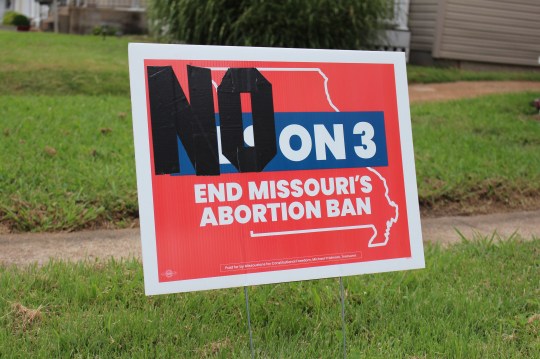
Since the Supreme Court’s Dobbs decision, overturning Roe v. Wade, voters in 17 states have weighed in on ballot measures regarding abortion — some more than once. In November 2026, voters in Idaho, Missouri, Nevada, and Virginia will weigh in on abortion measures that could change the legal status of abortion in their state. In addition, a measure in Colorado is in the process of collecting signatures.
CONTRACEPTIve care IN THE U.S.

SELECTED RESOURCES

featured

Women's Health Survey

The Women’s Health Survey is a series of nationally representative surveys on women’s health conducted by KFF since 2001. The survey aims to track and document women’s experiences with the health care system, access challenges and barriers to care, knowledge related to health and well-being, and differences between women by age, race/ethnicity, income level, and insurance type.

A promotional image for the the KFF Health Policy 101 Issues in Women’s Health chapter

Health Policy Issues in Women’s Health

Examine the core health coverage and access issues —shaped by federal and state policies—that affect women’s health today, including health coverage and costs, reproductive health services, maternal health, mental health, and intimate partner violence.

State Profiles for Womens Health

Explore the latest national and state-specific data and policies on women’s health. Topics include health status, insurance and Medicaid coverage, use of preventive services, sexual health, maternal and infant health, and abortion policies. Many indicators provide state-level information for women of different racial and ethnic groups.

The essentials
  • Women’s Health Insurance Coverage

    This factsheet reviews major sources of coverage for women residing in the U.S., discusses the ACA's impact on coverage, and the coverage challenges that many women continue to face.
  • Medicaid Coverage for Women

    This data note presents key data points describing the current state of the Medicaid program as it affects women, including eligibility, reproductive health, chronic conditions, and more.
  • Dobbs: What are the Implications for Racial Disparities?

    This analysis examines the implications of the Dobbs decision and state restrictions on abortion coverage for racial disparities in access to care and health outcomes.
  • State Health Facts: Women's Health Indicators

    Information on women’s health status, utilization of services, health insurance coverage, family planning and childbirth, and abortion statistics and policies.
  • Key Facts on Abortion in the United States

    This report answers some key questions about abortion in the United States and presents data collected before the overturn of Roe v. Wade.

Stay informed.

Stay informed.

Filter

841-850 of 880 results

  • At the Supreme Court: What’s at Stake for Emergency Abortion Care?

    News Release

    On April 24, the Supreme Court will hear Idaho v. United States—the second case this term involving access to abortion. In a new brief, KFF examines what’s at stake, focusing on whether the Emergency Medical Treatment and Active Labor Act (EMTALA)—a federal law requiring nearly all hospitals to ensure emergency room patients are stable before they are discharged from hospital care—preempts state abortion laws.  The new brief reviews the background on the case and EMTALA,…

  • What Are the Exceptions to State Abortion Bans?

    News Release

    A new KFF analysis reviews exceptions to abortion bans and describes how the stated aim to provide life-saving and health-preserving abortion care may not be achieved in practice. Abortion is currently banned in 14 states and many other states have attempted to ban or severely restrict abortion access. Exceptions to state abortion bans generally fall into four general categories: to prevent the death of the pregnant person, when there is risk to the health of…

  • One Year Since Dobbs: The Landscape of Abortion Policies Across the US  

    News Release

    There has been intense focus on abortion policies across the United States since the Supreme Court’s decision in Dobbs v. Jackson Women’s Health Organization on June 24, 2022. That decision overturned Roe v. Wade, eliminating federal constitutional protections for abortion and putting the decision to restrict or protect abortion with the states.  Now, nearly one year later, what is the status of federal and state developments? Where is abortion banned? Where is litigation pending? And…

  • A National Survey of OBGYNs’ Experiences After Dobbs

    Report

    This report, based on a nationally representative survey of office-based OBGYNs practicing in the United States, examines the provision of sexual and reproductive health care provided by OBGYNs before and after the Dobbs decision, comparing the experiences of OBGYNs practicing in states where abortion is fully banned, states with gestational restrictions, and states where abortion remains available under most circumstances.

  • Health Care Issues in the Early Stages of the 2024 Election

    Perspective

    In this JAMA Health Forum column, Larry Levitt examines differences in the Republican presidential candidates’ records and positions on health issues, including Medicaid and abortion, that could play a role in the primaries and would set up a sharp contrast in the general election against President Biden.

  • KFF Survey of Women Voters Dashboard

    Feature

    The KFF Survey of Women Voters examines differing motivations, attitudes, and experiences among women by race and ethnicity, age, and partisanship heading into the 2024 election nationally and in two battleground states, Arizona and Michigan.

  • KFF Survey of Women Voters: Key Takeaways

    Poll Finding

    This survey examines the attitudes, motivations, and voting intentions of women voters nationally and in Arizona and Michigan prior to the 2024 election, including the top voting issues for key groups of women voters, how abortion on the ballot will impact turnout, and views on reproductive health policies.

  • Democratic Women are More Motivated to Vote in States with Potential Abortion Ballot Initiatives than in Other States

    News Release

    A new KFF poll of women voters reveals that the issue of abortion is boosting Democratic women’s eagerness to vote most in states with potential abortion-related ballot initiatives. As of mid-June, there are 10 states where voters may be deciding on abortion access in November, including 4 states where abortion is already set to appear on the ballot. In these states, more than half (53%) of Democratic women voters say that they are more motivated…