Women's Health Policy

ABORTION IN THE U.S.

The Status of Abortion-related State Ballot Initiatives Since Dobbs

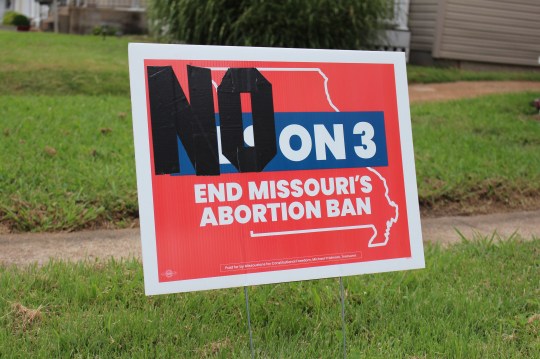
Since the Supreme Court’s Dobbs decision, overturning Roe v. Wade, voters in 17 states have weighed in on ballot measures regarding abortion — some more than once. In November 2026, voters in Idaho, Missouri, Nevada, and Virginia will weigh in on abortion measures that could change the legal status of abortion in their state. In addition, a measure in Colorado is in the process of collecting signatures.
CONTRACEPTIve care IN THE U.S.

SELECTED RESOURCES

Over-the-Counter Oral Contraceptive Pills

In July 2023, the FDA approved Opill, the first daily oral contraceptive pill to become available over the counter (OTC) without a doctor’s prescription. This issue brief provides an overview of OTC oral contraceptives and laws and policies related to insurance coverage.

featured

A promotional image for the the KFF Health Policy 101 Issues in Women’s Health chapter

Health Policy Issues in Women’s Health

Examine the core health coverage and access issues —shaped by federal and state policies—that affect women’s health today, including health coverage and costs, reproductive health services, maternal health, mental health, and intimate partner violence.

State Profiles for Women’s Health

Explore the latest national and state-specific data and policies on women’s health. Topics include health status, insurance and Medicaid coverage, use of preventive services, sexual health, maternal and infant health, and abortion policies. Many indicators provide state-level information for women of different racial and ethnic groups.

The essentials
  • Women’s Health Insurance Coverage

    This factsheet reviews major sources of coverage for women residing in the U.S., discusses the ACA's impact on coverage, and the coverage challenges that many women continue to face.
  • Medicaid Coverage for Women

    This data note presents key data points describing the current state of the Medicaid program as it affects women, including eligibility, reproductive health, chronic conditions, and more.
  • Dobbs: What are the Implications for Racial Disparities?

    This analysis examines the implications of the Dobbs decision and state restrictions on abortion coverage for racial disparities in access to care and health outcomes.
  • State Health Facts: Women's Health Indicators

    Information on women’s health status, utilization of services, health insurance coverage, family planning and childbirth, and abortion statistics and policies.
  • Key Facts on Abortion in the United States

    This report answers some key questions about abortion in the United States and presents data collected before the overturn of Roe v. Wade.

Stay informed.

Stay informed.

Filter

521-530 of 880 results

  • Ten Ways That the House American Health Care Act Could Affect Women

    Issue Brief

    In this brief, the Kaiser Family Foundation outlines 10 ways women could be affected under the House of Representatives’ American Health Care Act. In particular, the brief analyzes how changes might affect Medicaid and its expansion population, financial assistance in the individual insurance market, coverage for essential health benefits and preventive services such as contraception, abortion, and maternity care, as well as insurance reforms such as gender rating.

  • Contraceptive-Only Plans: Questions and Answers

    Perspective

    In this post on The Huffington Post, Alina Salganicoff and Laurie Sobel offer a Q&A on “contraceptive-only” plans, an approach mentioned during oral arguments in the U.S. Supreme Court case Zubik v. Burwell. In the Zubik case, a group of religiously affiliated nonprofits with religious objections to providing birth control coverage seek an exemption from the Affordable Care Act's provision requiring most plans to offer such coverage without cost-sharing.

  • State Profiles for Womens Health

    Feature

    The KFF State Profiles for Women’s Health database offers the latest national and state data and policies on a broad range of state-level statistics and policies of importance to women including health status, insurance and Medicaid coverage, use of preventive services, contraceptive coverage, sexual health, maternal and infant health, and abortion policies. Many indicators also provide state-level information for women of different racial and ethnic groups.

  • Four in 10 Women Voters Age 18-44 Are “More Enthusiastic” to Vote in Mid-Terms This Year, Almost Three Times Higher than the Last Mid-Term

    News Release

    With the 2018 primary election season concluding in August and the general congressional mid-term election season ramping up, Kaiser Family Foundation polling finds younger women (ages 18-44) voters are more enthusiastic about voting this year than in previous mid-term elections. In a new data note about KFF’s June Health Tracking Poll that is focused on women voters’ influence in this year’s elections and beyond, the 39 percent of younger women voters expressing “more enthusiasm” is…

  • Analysis: Insurance Riders to Cover Abortion Services Not Available to Women in States That Restrict Abortion Coverage

    News Release

    In 10 states, insurance plans are currently banned from including abortion as a covered service in state-regulated private plans -- all individually purchased policies and fully-insured group plans. Most of these laws do not include exceptions for rape, incest, or health endangerment. In nine of these states, insurers may sell health insurance riders for abortion coverage, but the availability of such riders has been unknown. A new Kaiser Family Foundation analysis of the insurance plans offered in…

  • Women’s Coverage, Access, and Affordability: Key Findings from the 2017 Kaiser Women’s Health Survey

    Issue Brief

    This brief presents findings from the 2017 Kaiser Women’s Health Survey, a nationally representative survey of women ages 18 to 64 on their coverage, use, and access to health care services. The Kaiser Family Foundation has conducted surveys on women’s health care in 2001, 2004, 2008, and 2013. This brief focuses on findings from the newest 2017 survey and also presents some findings compared to earlier years.

  • How State Policies Limiting Abortion Coverage Changed Over Time

    Feature

    This week, the Trump administration proposed new rules around abortion coverage in the ACA Marketplace plans. Here’s how state policies shaping access to abortion coverage in Medicaid and private insurance have changed before and after the passage of the health law.

  • KFF Poll: Public Opinion and Knowledge on Reproductive Health Policy

    Poll Finding

    The latest KFF Poll examines the public’s attitudes towards different facets of reproductive health care in light of recent policy changes made by the Trump administration. This poll examines attitudes towards major changes to the Title X program and attitudes toward state-level laws restricting abortions after a fetal heartbeat has been detected. The poll also looks at public awareness of provisions related to women’s health that are part of the 2010 Affordable Care Act.

  • Visualizing Health Policy: Barriers to Care Experienced by Women in the United States 

    News Release

    This Visualizing Health Policy infographic looks at barriers to care experienced by women in the United States. Women incur greater health care costs than men, particularly during the reproductive years. Despite a lower uninsured rate than men (11% vs 14%), women are more likely to skip a recommended medical test or treatment due to cost. However, cost barriers to contraception have decreased for insured women since the Affordable Care Act’s (ACA’s) coverage requirement took effect.…