Public Opinion

Caregivers in the U.S.

Experiences of Unpaid Caregivers in the U.S.

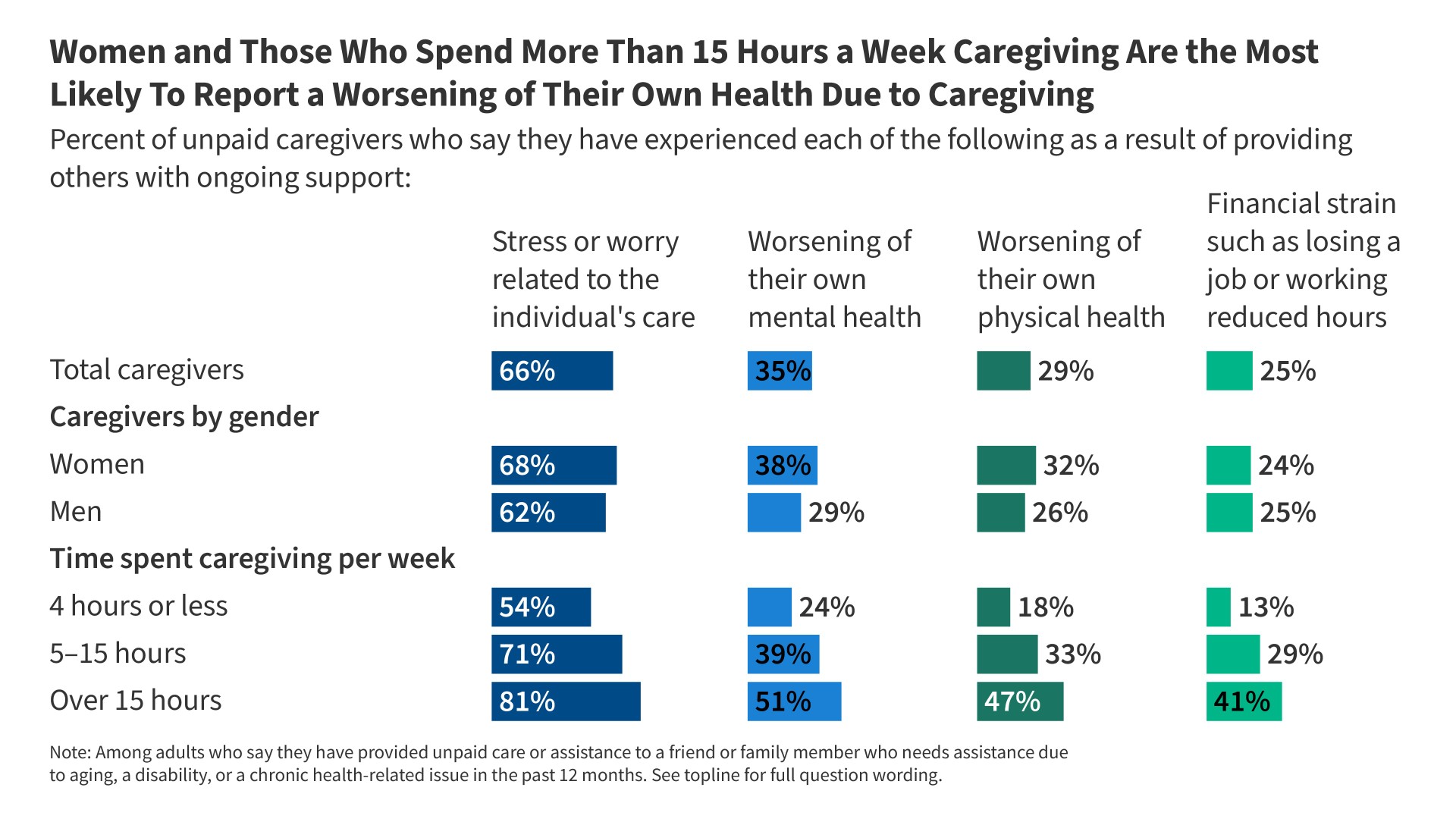
About 3 in 10 adults in the U.S. say they have provided unpaid care to a friend or family member who needs assistance due to aging, disability, or a chronic condition in the past 12 months. The median amount of time that such caregivers provide unpaid assistance is five hours per week, though the number of hours varies widely. Unpaid caregivers are disproportionately women. Read the news release.

HeaLTH in the Midterms

Health Care in the 2026 Midterm Election

This dashboard focuses on KFF’s analysis of the role health care costs and other health policy issues played in voters’ decisions in the 2026 midterm elections, including in key Senate races. It examines the role of rising health costs on voters’ decisions, views on the Trump administration’s health care policies, and opinions on the government’s role in health care amid discussions of Medicare for All.

Abortion on the Ballot in 2026: Polling Insights from Voters in Four States

This dashboard provides KFF’s analysis of the role abortion played in voters’ decisions in the 2026 midterm elections, with a focus on four states with abortion-related ballot measures: Idaho, Missouri, Nevada, and Virginia. It examines support for each of the measures across groups, including additional questions in Missouri.

What Do the Midterm Election Results Mean for Health Care? 

Event Date:

On November 5 at Noon ET, join KFF for a special post-election discussion and live “What the Health” podcast taping. Part of the discussion will focus on public opinion survey data on how voters weighed health care as they went to the polls nationally and in the four states with abortion-related ballot initiatives. 

Midterm Voters Give Democrats a Big Advantage to Handle Health Care

Quick Insights

KFF’s analysis of the 2026 Voter Poll by SSRS shows midterm voters gave Democrats a 19-percentage-point advantage on which party is better able to handle health care. Voters also gave Democrats a narrow edge on handling the economy (43% vs. 37%), a reversal from 2024, when Trump had a 10-point advantage over Harris. "In an election focused on affordability, Democrats’ messaging on health care costs appears to have resonated with voters and may have contributed to the party’s gains."

Health Information and Trust

About Half of Parents Mistakenly Believe Spacing Out Vaccines Is Healthier for Children; Half Say No Strong Evidence to Support Such a Claim

KFF Tracking Poll on Health Information and Trust: Fall 2026 Update on Vaccine Views

The latest KFF Tracking Poll on Health Information and Trust finds about half of parents mistakenly believe spacing out vaccines is healthier for children, while confidence in many long-standing childhood vaccines is high across partisans. These findings take on new relevance following President Trump’s recent executive order calling for changes in U.S. childhood vaccine recommendations, including splitting the measles, mumps, and rubella (MMR) vaccine—currently given as a single combined shot—into three separate vaccines across multiple visits.

Dashboard: Polling on Health Information and Trust

Drawing on KFF’s poll findings, this interactive dashboard tracks the public’s trusted sources for health information, attitudes toward vaccines, and use of news, social media, and AI for health-related information.

Health Tracking PollS

Democrats Hold a Nearly 2-to-1 Advantage Over Republicans on Handling the Cost of Health Care

Health Care Issues in the Lead-Up to the 2026 Midterm Election 

In the lead up to the midterms, health care costs remained tied with gas as voters’ top midterm concerns. Two-thirds of U.S. adults also favored Medicare-for-all, a new high in KFF Polling, but support shifts when competing claims from critics and proponents are heard.

Most Democratic Voters Want To Hear Candidates Discuss Health Costs and Future of Health Programs; More Republicans Focused on Fraud

Public Views on Fraud in Health Programs

As the 2026 midterms approach, health care costs remain voters’ top health priority, but fraud in government health programs, including Medicaid and Medicare, is resonating with Republican voters, 55% of whom say it’s extremely important for candidates to address.

Mifepristone and the Midterms

Amid an ongoing FDA re-review of mifepristone, awareness of the safety and prevalence of the abortion pill remains limited. This KFF poll also finds that the voters who say abortion policy is an important issue for 2026 midterm candidates to discuss are disproportionately Democrats.

MAHA and the Midterms

This KFF Health Tracking Poll finds that the cost of health care is a more prominent focus for Make America Healthy Again (MAHA) voters than issues like food and vaccine policy. Four in ten MAHA voters (42%) choose lowering health costs as the most important health priority, outranking other MAHA priorities.

the essentials

Health Tracking Poll

Our signature survey project provides up-to-date data on the public’s health care views, knowledge, and experiences.

Tracking the Public’s Views on the ACA

Tracking the Public’s Views on the ACA

This interactive tool tracks public opinion on the Affordable Care Act, from the inception of the law to the present, including trends based on party identification, income, age, gender, and race/ethnicity.

Health Information and Trust Tracking Poll

The Health Information and Trust Tracking Poll is part of KFF’s Health Information and Trust Initiative, which tracks health misinformation and analyzes its impact on the public.

Stay informed.

Stay informed.

Filter

731-740 of 1,871 results

  • Kaiser Health Tracking Poll: August 2016

    Feature

    In advance of the 2016 presidential election, the August Kaiser Health Tracking Poll examines what health care issues voters would most like to hear the presidential candidates talk about during their campaigns and which candidate voters trust to do a better job of dealing with certain health care issues. In addition, the August Tracking Poll continues KFF’s analysis on attitudes related to the Zika virus outbreak as well as provides an update on attitudes towards…

  • Campaign 2016: Voters Give Clinton Wide Edge Over Trump on Trust to Handle Health Care Issues; ACA Ranks Lower Among Health Issues Voters Want Discussed

    News Release

    Electronic Medical Records: Eight in 10 Americans Say It Is Important for Providers to Computerize Records, But Half Worry About Unauthorized Access to Online Information With the 2016 elections just 10 weeks away, voters give Democratic presidential nominee Hillary Clinton a substantial advantage over Republican nominee Donald Trump on a wide array of health care issues, the latest Kaiser Health Tracking Poll finds. Two thirds of voters (66%), including large shares of Democrats, Republicans, and…

  • A Final Look: California’s Previously Uninsured after the ACA’s Third Open Enrollment Period

    Report

    The Kaiser Family Foundation California Longitudinal Panel Survey is a series of surveys that, over time, tracked the experiences and views of a representative, randomly selected sample of Californians who were uninsured prior to the major coverage expansions under the Affordable Care Act (ACA). The initial baseline survey was conducted with a representative sample of 2,001 nonelderly uninsured Californian adults in summer 2013, prior to the ACA’s initial open enrollment period. After each enrollment period…

  • New Survey Finds 72% of Previously Uninsured Californians Now Have Coverage, Including 78% of Those Eligible for New Affordable Care Act Options

    News Release

    For Remaining Uninsured Residents, Cost and Immigration Status Are Main Obstacles Three years after the Affordable Care Act’s coverage expansions were fully implemented in California, nearly three quarters (72%) of the state’s previously uninsured residents now have health coverage, finds the fourth Kaiser Family Foundation Longitudinal Panel Survey, which is tracking the experiences of a randomly selected group of Californian adults who were uninsured in 2013. This is similar to the share who reported having insurance…

  • On Health Care Issues, Voters Give Hillary Clinton a Substantial Edge Over Donald Trump  

    News Release

    Most Americans Worry about Large Number of Zika Cases in U.S. Over Next Year While the public tilts narrowly toward unfavorable views of the Affordable Care Act, presumptive Democratic nominee Hillary Clinton holds a clear advantage on health care issues over presumptive Republican nominee Donald Trump as the 2016 national political conventions approach, and voters generally, including independents, favor Democrats on health issues, the latest Kaiser Health Tracking Poll finds. When asked which of the…

  • Kaiser Health Tracking Poll: July 2016

    Feature

    In advance of the Democratic and Republican National Conventions, the July Kaiser Health Tracking Poll examines the role that health care may play in the 2016 presidential election: how important health care is to voters, what health care issues voters would most like to hear the candidates discuss, and which party and candidates voters feel most closely aligned with on health care issues.

  • In Wake of Dallas, Minnesota and Baton Rouge Shootings, an Opening for Local Leaders

    From Drew Altman

    In this The Wall Street Journal Think Tank column, Drew Altman discusses how incidents in Dallas, Baton Rouge and Minnesota create opportunities for local leaders to take steps to reduce police-involved violence, citing data from the KFF-CNN survey of Americans on Race and KFF-New York Times Survey of Chicago Residents.

  • Majorities Across Party Lines Support Investing More Money in Zika Research and Preventing the Virus’ Spread

    News Release

    Democrats More Favorable to ACA in June, Leading to 44% Unfavorable, 42% Favorable Overall Split Majorities of the public say the United States should invest more money in Zika research and in preventing its spread in this country, the latest Kaiser Health Tracking Poll finds. More than seven in 10 people, including majorities of Democrats, Republicans, and independents, say they support investing in Zika research and to prevent its spread. About two thirds of the…

  • Kaiser Health Tracking Poll: June 2016

    Feature

    The June Kaiser Health Tracking Poll examines attitudes on the Affordable Care Act and provides an in-depth analysis of two of the biggest health policy stories of the month: the Zika virus outbreak and reports about the rising costs of ACA health insurance premiums.