
Experiences of Unpaid Caregivers in the U.S.
Findings
Many people require assistance with everyday self-care due to chronic health conditions, disability, or aging. Informal caregivers, often family members, are unpaid and provide a wide range of assistance and help people live independently. Formal, paid caregiving, such as nursing home and home care, is typically very expensive, not covered by health insurance, and financially out of reach for many people. Therefore, informal caregivers often step in to fill this gap. This Poll Finding draws on data from the KFF Survey of Health Access and Caregiving to examine the experiences of unpaid caregivers in the United States, including the types of assistance they provide, which demographic groups spend the most time doing this work, and the toll that caregiving can have on the caregivers themselves.
Key Takeaways
- About three in ten (29%) adults in the U.S. say they have provided unpaid care to a friend or family member who needs assistance due to aging, a disability, or a chronic health-related issue in the past 12 months. While the amount of time spent providing this type of assistance varies greatly, 5 hours per week is the median amount of time unpaid caregivers spend on caregiving tasks, with about a quarter of caregivers (7% of all adults) spending more than 15 hours a week on these tasks.
- Many adults, regardless of age, income, race or ethnicity, and partisanship, provide caregiving assistance to a friend or family member, but women and those ages 50 to 64 are somewhat more likely than their counterparts to report engaging in these tasks. Across age and racial and ethnic groups, women are somewhat more likely than men to report being unpaid caregivers. Women also spend more time providing care, with one in four women caregivers (8% of all women ages 18 and over) spending more than 15 hours weekly on caregiving duties.
- One-quarter (26%) of unpaid caregivers are parents or guardians of a child under 18 living in their household. Among caregivers under 50 years old, nearly half (45%) say they are parents or guardians of a child under 18.
- Many caregivers say the work they do takes a toll on their own health and finances, including sizeable shares of caregivers who are actively managing their own health conditions, those who are also employed part-time, and those providing care for many hours per week. For example, about half of caregivers who spend over 15 hours weekly providing care, and four in ten who are managing three or more health conditions of their own, say their own physical or mental health got worse because of their caregiving duties.
- Unpaid caregivers provide an array of essential assistance to the person they care for. Most commonly, these tasks include “housekeeping, grocery shopping, or preparing meals” (70%) and managing medical care (51%). Women caregivers are more likely to provide three or more types of assistance asked about in this survey compared to men (40% vs. 32%), rising to three-quarters of women caregivers who spend over 15 hours weekly on caregiving duties.
Unpaid Caregiving in the U.S.
Who Are Unpaid Caregivers?
About three in ten (29%) adults in the U.S. say they have provided unpaid care or assistance to a friend or family member who needs assistance due to aging, a disability, or a chronic health-related issue in the past 12 months.
The KFF Survey of Health Access and Caregiving finds unpaid caregivers (n=8,209) are comprised disproportionately of women (57% are women, 42% are men) and skew older than the adult population who do not provide unpaid caregiving (53% of caregivers are ages 50+ compared to 44% of non-caregivers). Unpaid caregivers reflect the racial diversity of the country as 63% of unpaid caregivers are White, 15% are Hispanic, 12% are Black, and 5% are Asian or Pacific Islander.1
Many unpaid caregivers (44%) report being employed full-time, though about four in ten say they are not employed at all, including 21% who are retired. One-quarter (26%) are parents or guardians of a child under 18 living in their household. Among caregivers under 50 years old, nearly half (45%) say they are parents or guardians of children under 18. One in six (16%) unpaid caregivers are parents or guardians to children under the age of 18 and are employed full-time, balancing multiple responsibilities along with providing caregiving assistance.
In addition to family demands, many unpaid caregivers are also actively managing their own health challenges, with three in ten saying they have been treated or have taken medication for 3 or more health conditions from a list of 18 conditions in the past 12 months2 (see here for a full KFF analysis on U.S. adults with multiple or complex health conditions).
See Appendix, Table 2 for a more detailed analysis of the demographic characteristics of unpaid caregivers in the U.S.
How Many Adults in the U.S. Are Unpaid Caregivers?
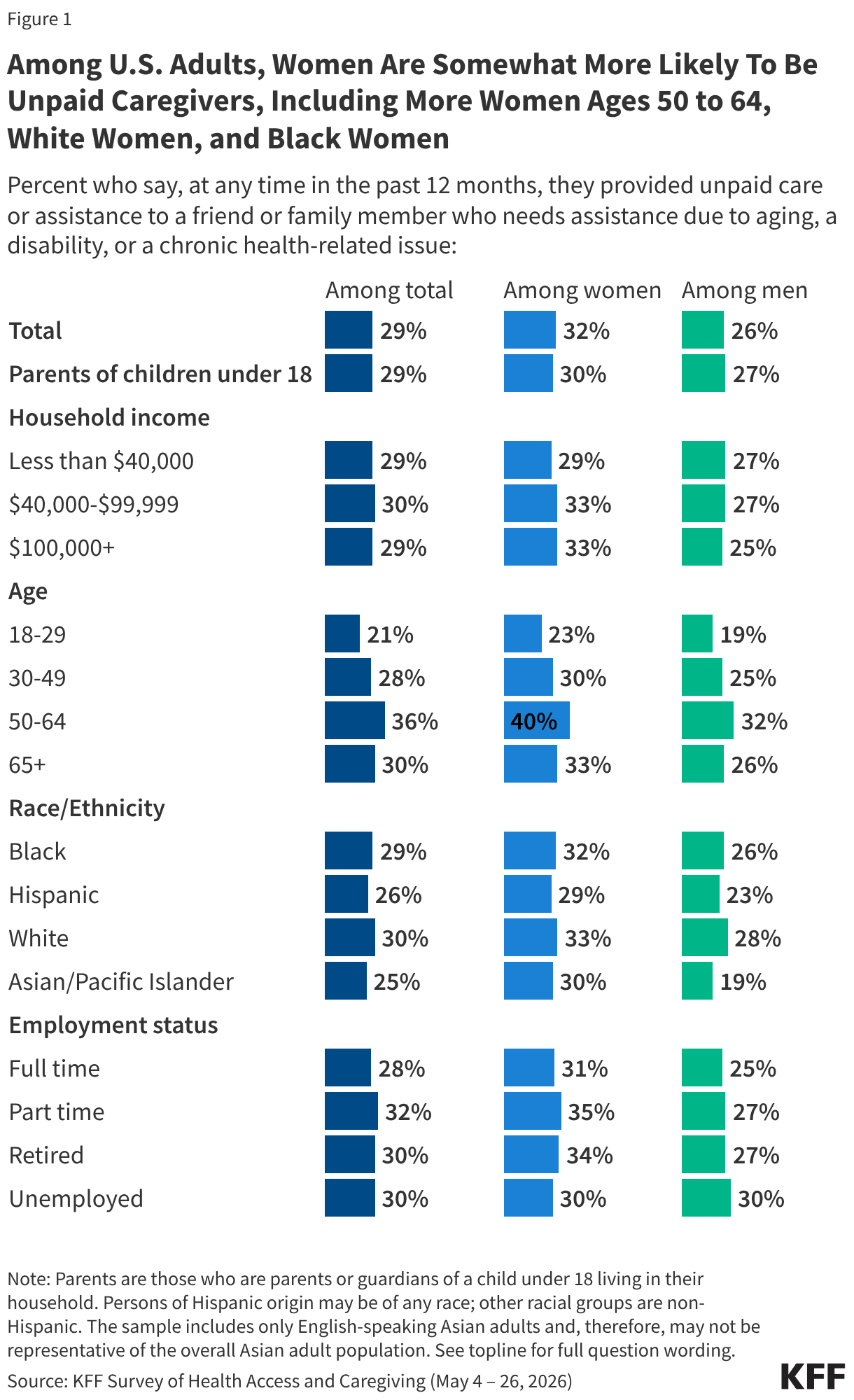
About three in ten (29%) adults in the U.S. provide unpaid care or assistance to a friend or family member, including a somewhat larger share of women (32%) compared to men (26%), and larger shares of adults ages 50 to 64 (36%) compared to younger and older age groups. Three in ten White adults (30%) and Black adults (29%) report engaging in unpaid caregiving over the past year, slightly higher than the shares among Hispanic (26%) and Asian or Pacific Islander adults (25%).
Gender plays a role in caregiving across most demographic groups, with somewhat larger shares of women than men reporting they are caregivers.3 For example, four in ten women between the ages of 50 to 64 say they have provided unpaid care or assistance to a friend or family member in the past 12 months, compared to 32% of men in the same age group. Similarly, about one-third of White women (33%) and Black women (32%) say they are unpaid caregivers, compared to somewhat smaller shares of White men (28%) and Black men (26%). Mothers of children under age 18 are also slightly more likely to be unpaid caregivers than fathers (30% vs. 27%).
Across most employment statuses (employed full-time, part-time, and retirees) and among those with household incomes over $40,000, women are somewhat more likely to be caregivers than their male counterparts, though among unemployed adults and those with annual incomes less than $40,000, similar shares are caregivers across gender.
How Much Time Adults Spend Providing Unpaid Care
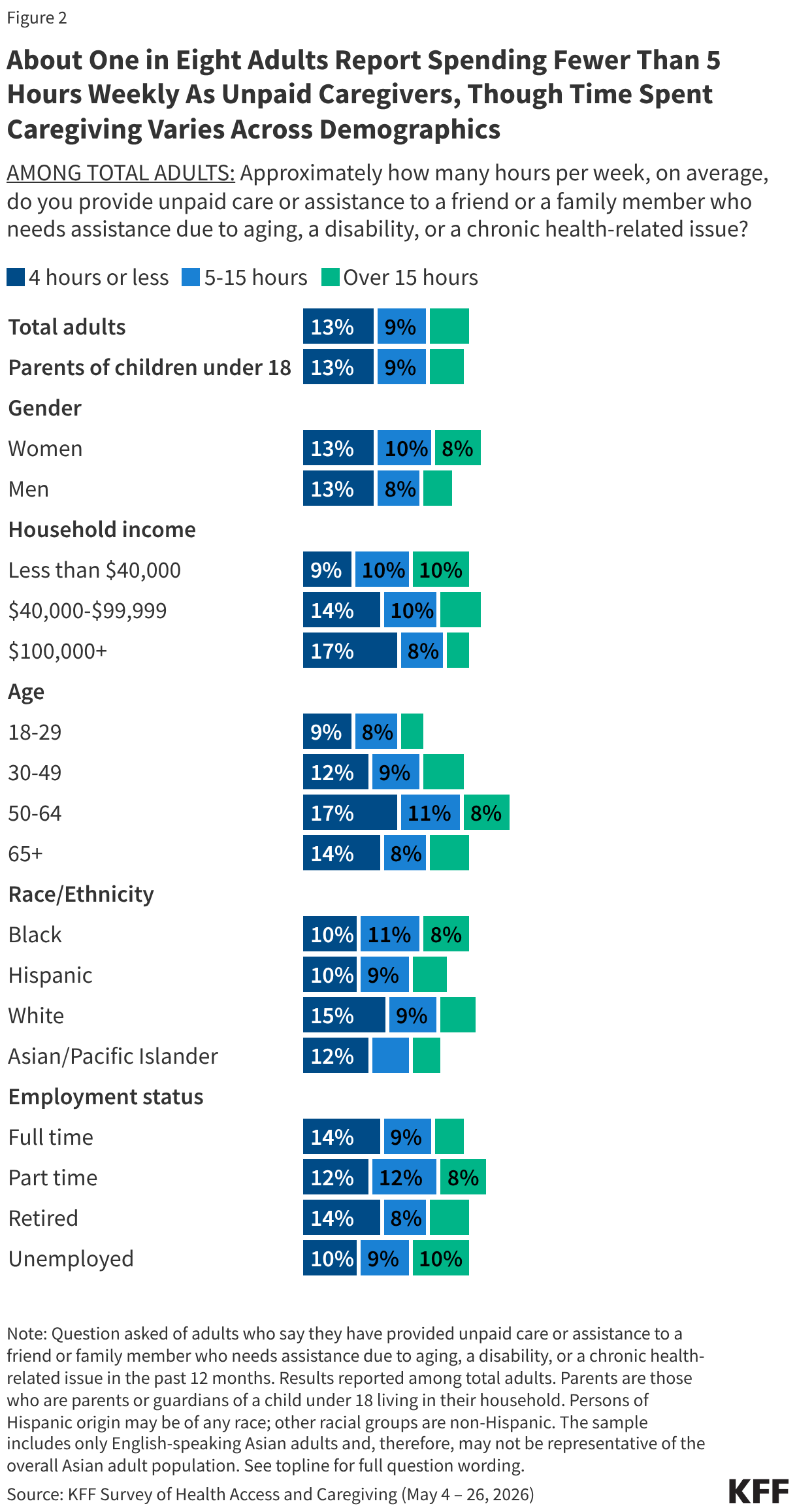
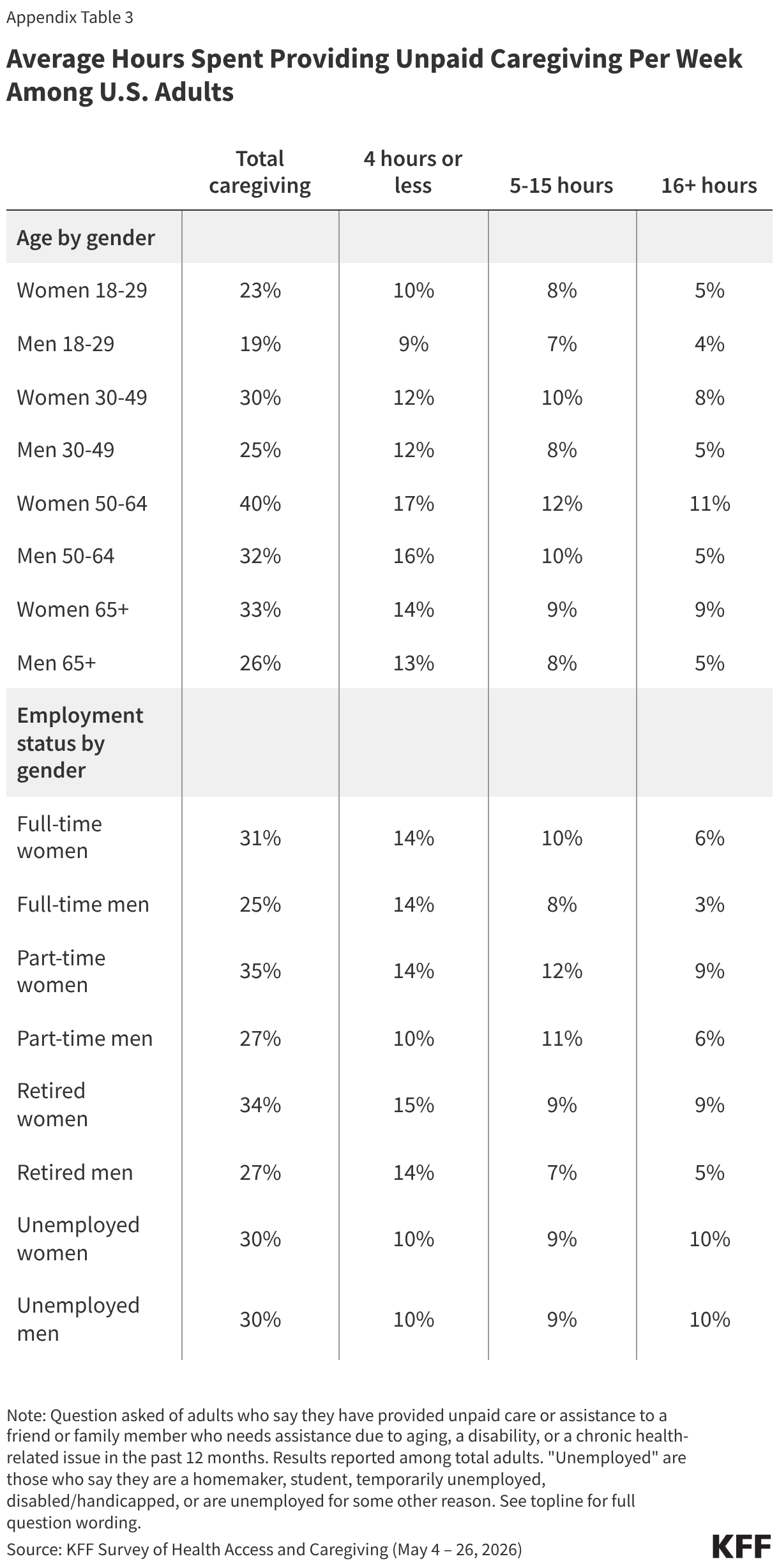
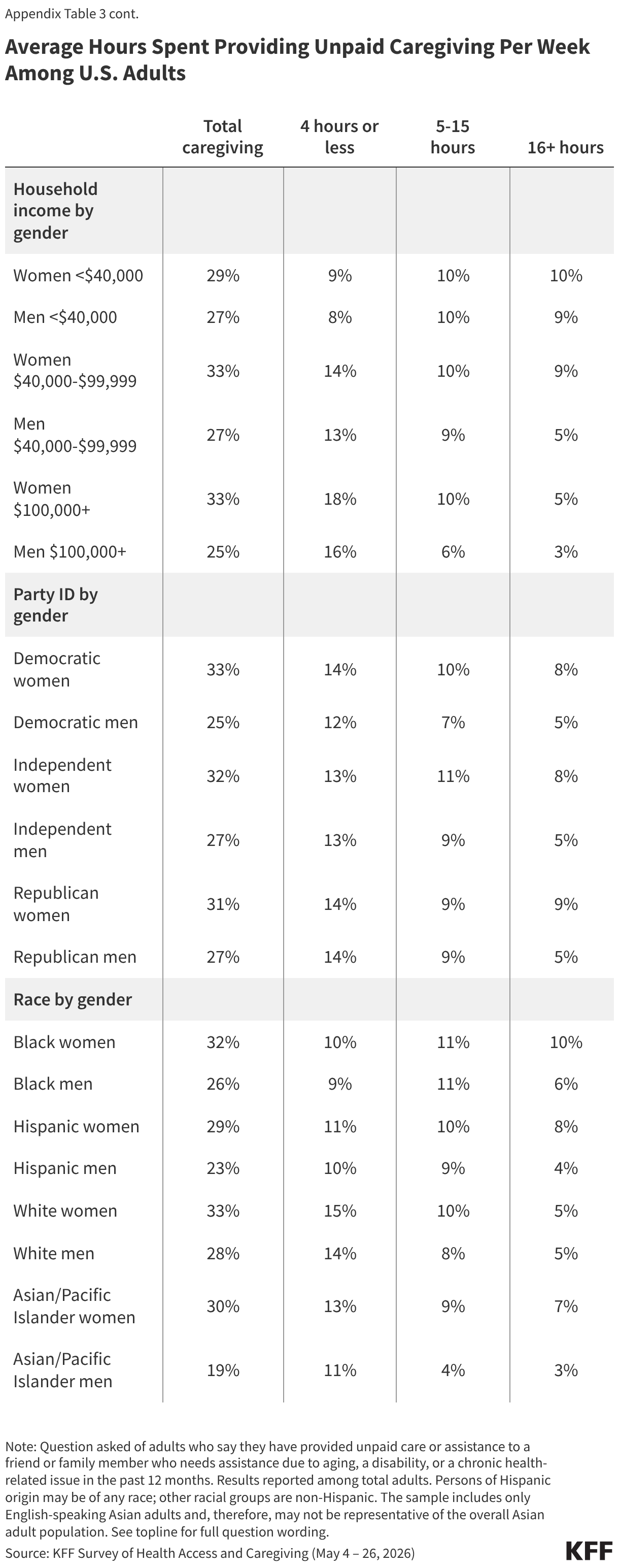
Five hours per week is the median amount of time unpaid caregivers spend providing assistance to a friend or family member. Yet, the experience varies widely with nearly half (45%) of unpaid caregivers (13% of total adults) spending 4 hours or less per week on these tasks, while about a quarter (23%; 7% of total adults) say they spend more than 15 hours a week. Women are somewhat more likely than men to spend over 15 hours weekly as unpaid caregivers (8% of all women vs. 5% of all men), rising to about one in ten among women ages 50 to 64 (11%) and among Black women (10%). See Appendix, Table 3 for more analysis on time spent caregiving among women and men across several demographics.
Perhaps reflecting the high costs of paying for caregiving or that they may have cut back on employment to provide caregiving assistance, lower-income adults spend more time caregiving weekly compared to higher-income adults, with one in ten of those with household incomes below $40,000 caregiving for over 15 hours compared to 4% of those with incomes over $100,000. Additionally, while those who work full-time report spending fewer hours caregiving than adults working part-time and unemployed adults, 5% of full-time workers still report spending over 15 hours a week as unpaid caregivers.
The Toll of Unpaid Caregiving
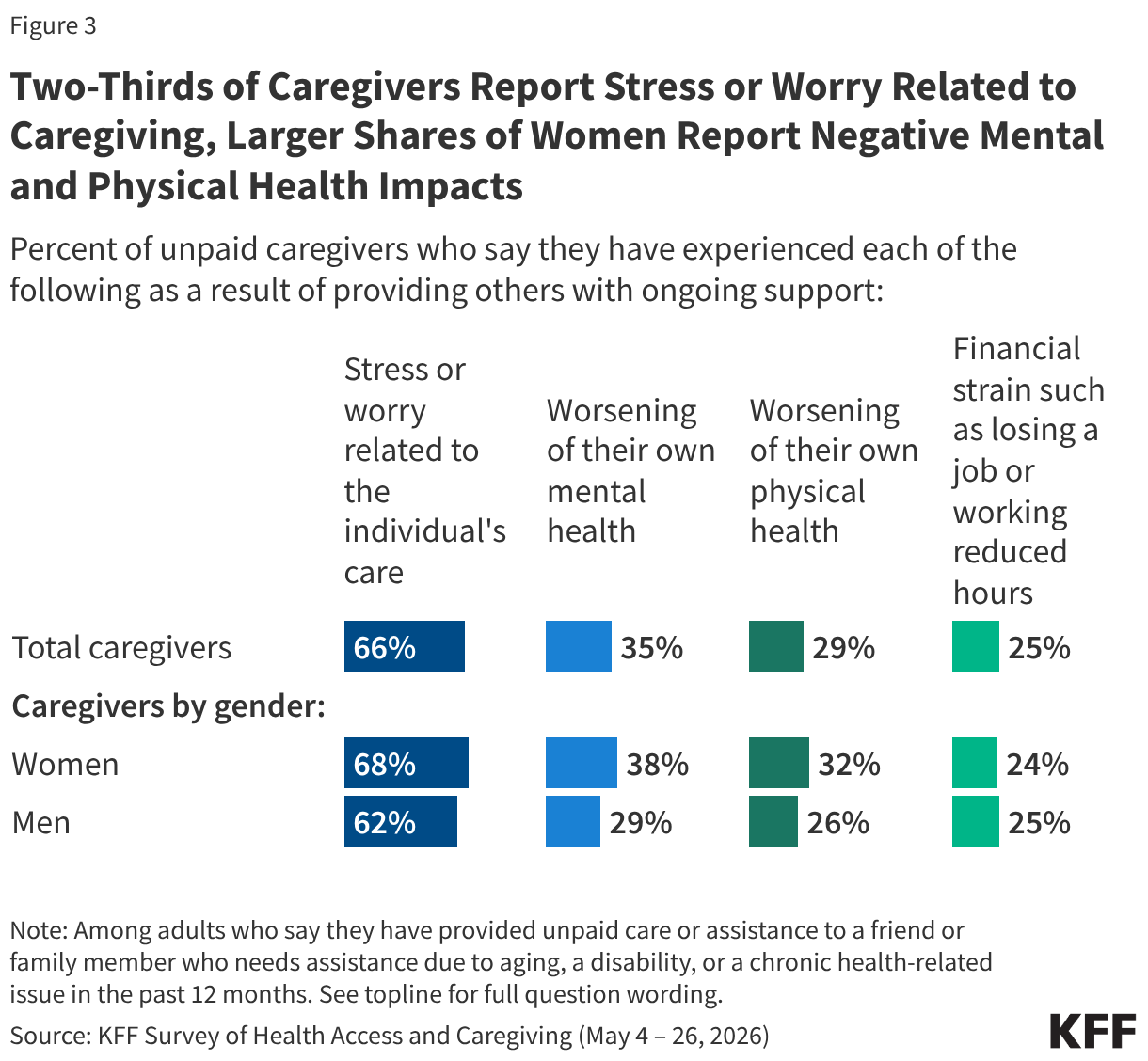
The survey shows the physical, mental, and financial toll on unpaid caregivers. Two-thirds (66%) of unpaid caregivers say they have experienced stress or worry related to their caregiving duties. In addition, at least a quarter say they have experienced worsening of their own mental (35%) or physical (29%) health or say they have experienced financial strain such as losing a job or having to work reduced hours (25%). Previous KFF focus groups of unpaid family caregivers found some participants emphasized reducing their number of working hours because of caregiving and difficulty balancing their own health care needs.
Women who are unpaid caregivers are somewhat more likely to report stress or worry related to caregiving (68% vs. 62% of men), as well as a worsening of their mental (38%) and physical (32%) health compared to men (29% and 26%, respectively).
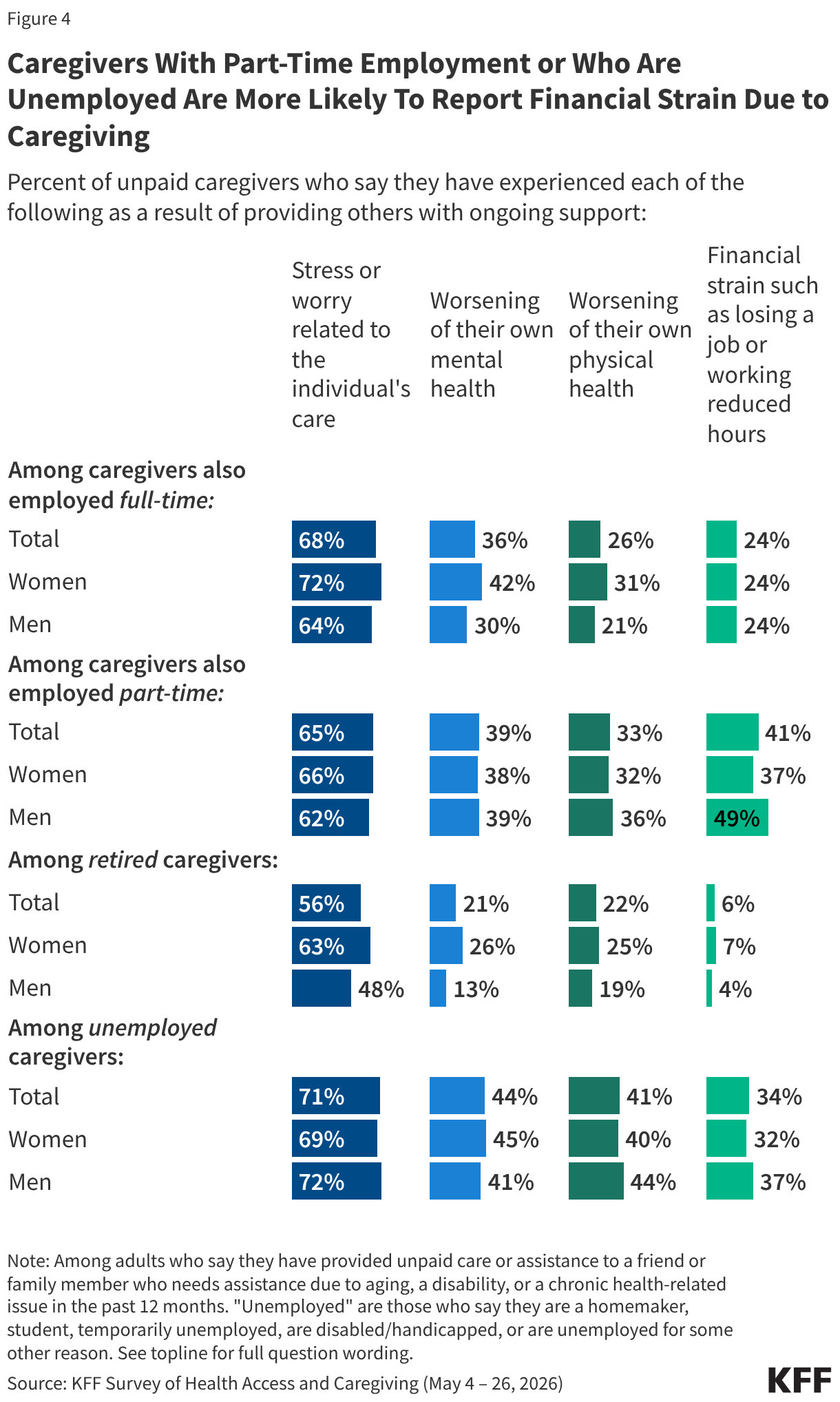
Many unpaid caregivers also report either full-time (44%) or part-time (16%) employment in addition to their caregiving duties, while a smaller share is either retired (21%) or unemployed (19%). The share reporting negative financial impacts due to caregiving is highest among those who are working part-time (41%) and those who are unemployed (34%), suggesting at least some of these caregivers may have had to switch from full-time to part-time work or have stopped working altogether because of caregiving duties. This is more common among men employed part-time compared to women (49% vs. 37%), while unemployed caregivers report financial strain at similar rates across gender. It’s also notable that among caregivers who are working full-time or are retired, women are more likely than men to report worsening of their own mental and physical health due to providing care.
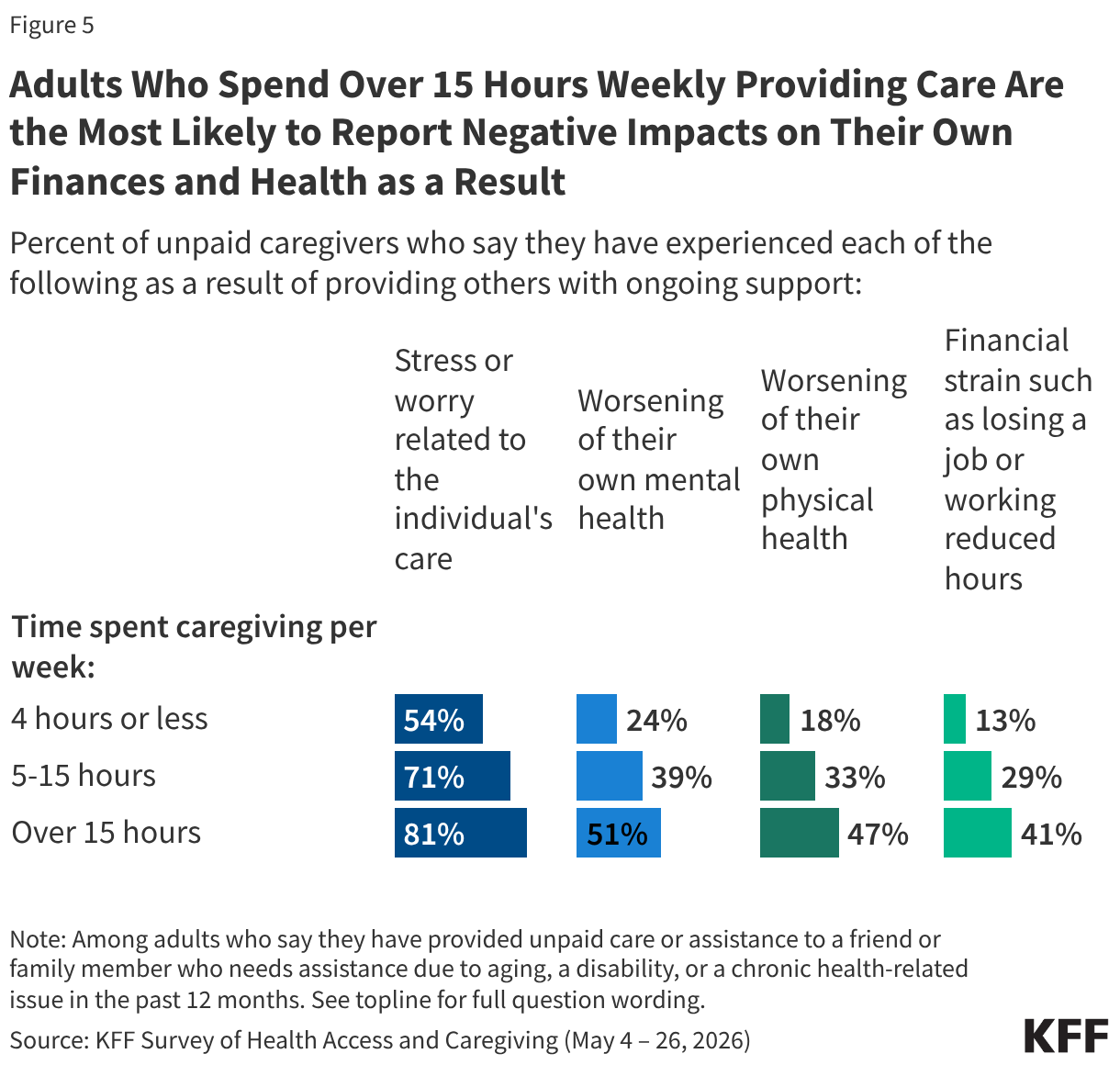
The KFF Survey of Health Access and Caregiving also finds the more time unpaid caregivers spend weekly on providing assistance to friends and family, the greater the financial, physical, and mental toll they experience. About eight in ten caregivers (81%) who spend over 15 hours weekly providing care say they have experienced stress or worry as a result, about half each say they have experienced a worsening of their own mental health (51%) or physical health (47%), and four in ten (41%) have experienced financial strain. Across all measures, these shares are substantially higher compared to those who spend fewer hours caregiving each week.
Experiences of Unpaid Caregivers Who Are Managing Their Own Health Conditions
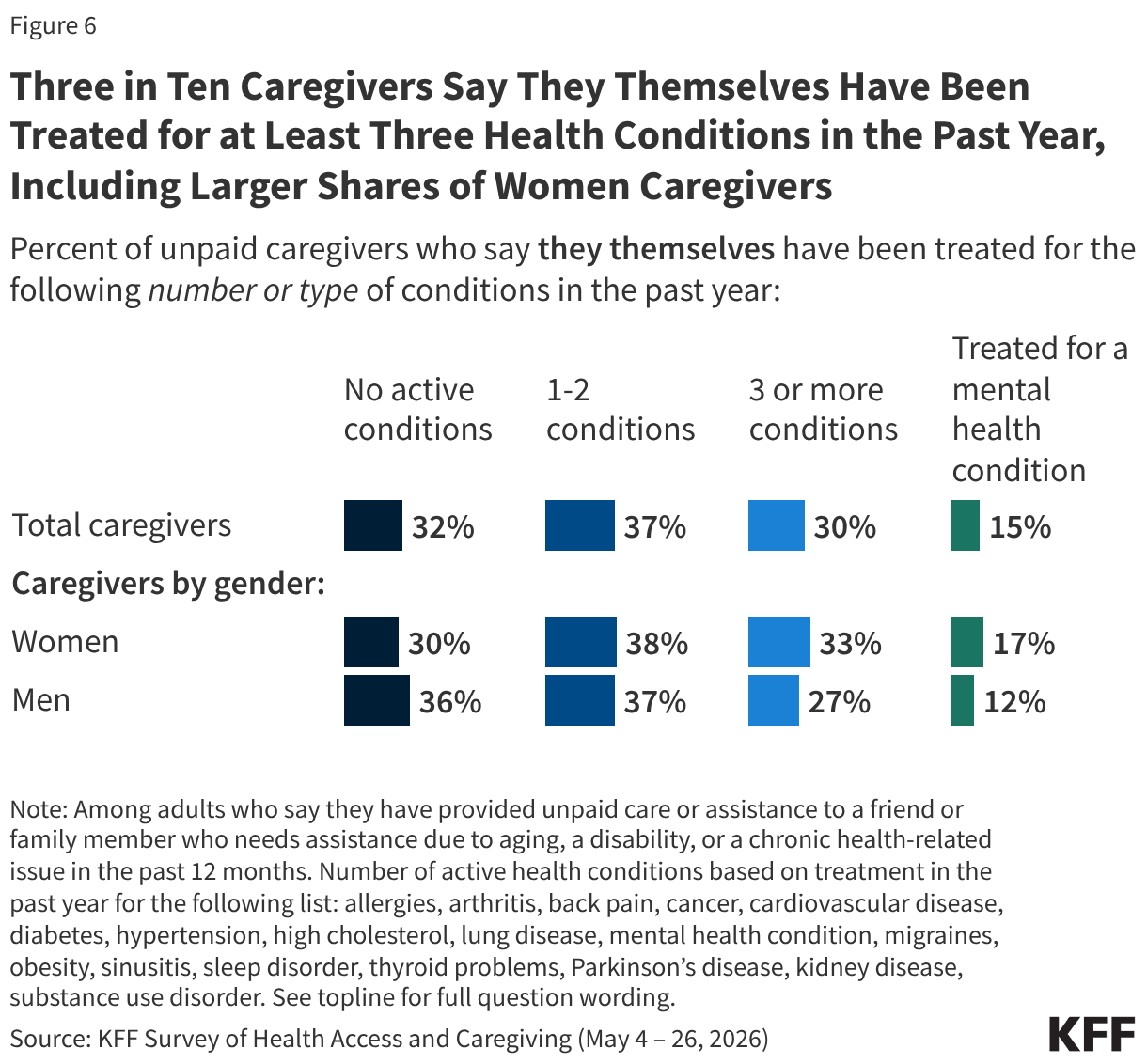
Some unpaid caregivers are managing their own health conditions alongside providing health assistance for others, including three in ten who say they are dealing with multiple health conditions—defined as those who have been treated or taken medication for 3 or more health conditions from a list of 18 conditions in the past year. Given the mental and emotional strain that can often accompany caregiving, it’s also notable that 15% of caregivers report receiving treatment for a mental health condition in the past year.
Notably, a slightly larger share of women caregivers report dealing with these health challenges compared to their male counterparts, with more women caregivers managing three or more of their own health conditions (33% vs. 27% of men caregivers) or receiving treatment for a mental health condition (17% vs 12% of men caregivers).
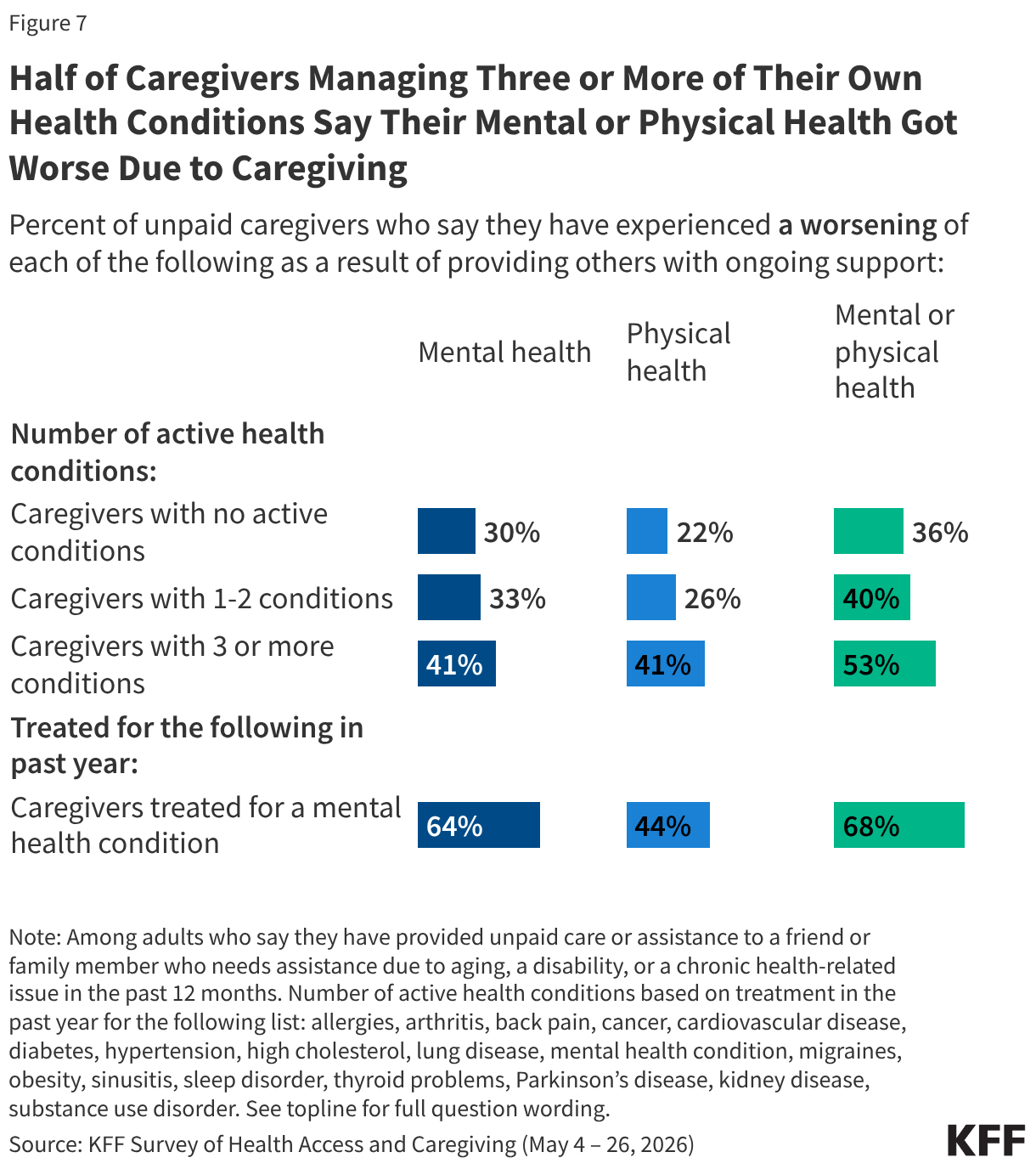
Many unpaid caregivers who have their own health concerns report a worsening of their own physical or mental health due to providing care for others. For example, half (53%) of caregivers who are managing three or more of their own health conditions report a worsening of their own health because of their caregiving duties, including 41% who say their mental health got worse and the same share who report a worsening of their physical health. Among unpaid caregivers who are in active treatment for a mental health condition, about two-thirds (64%) say their mental health got worse as a result of their caregiving duties and 44% report a worsening of their physical health.
Types of Assistance Unpaid Caregivers Provide
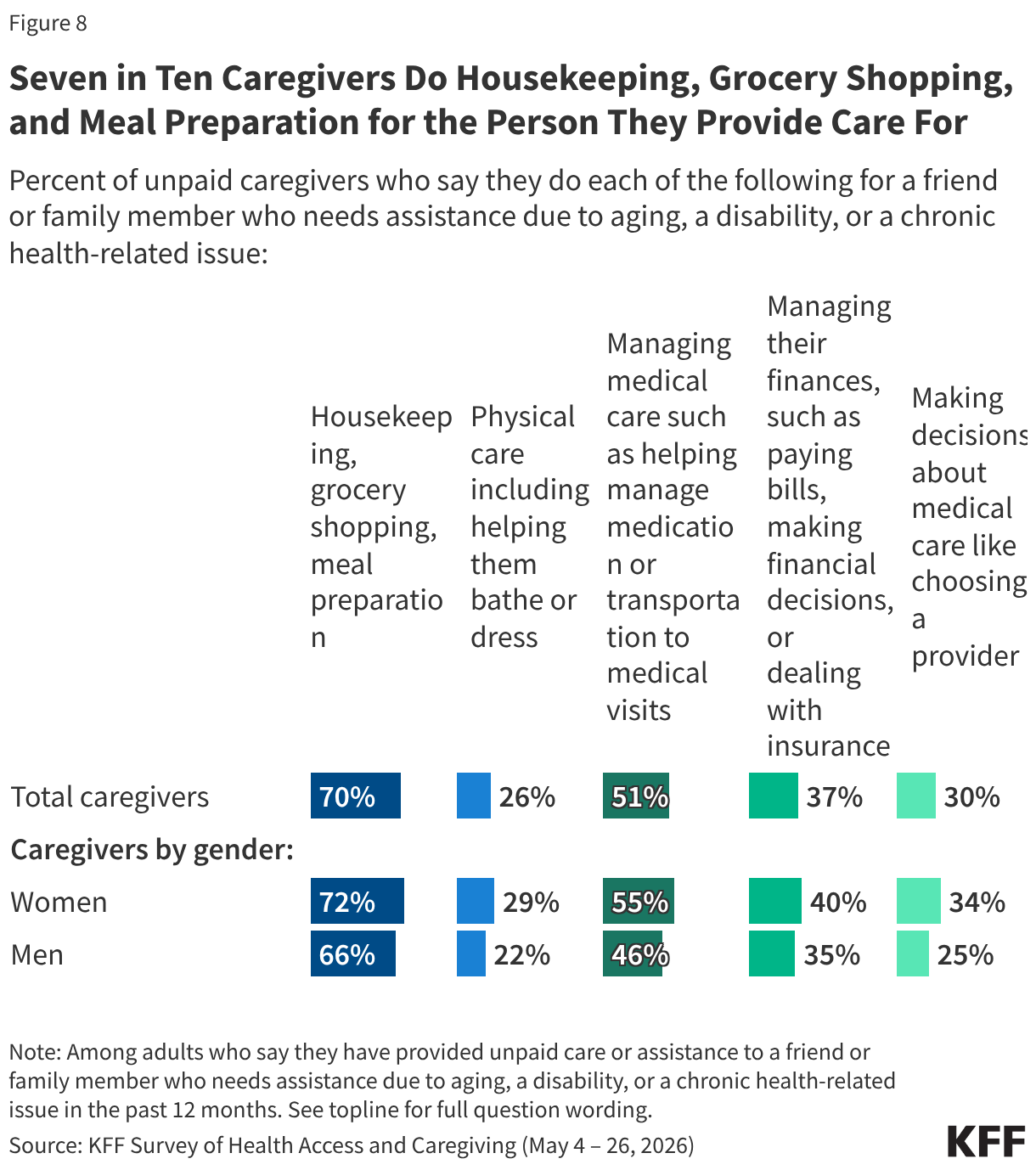
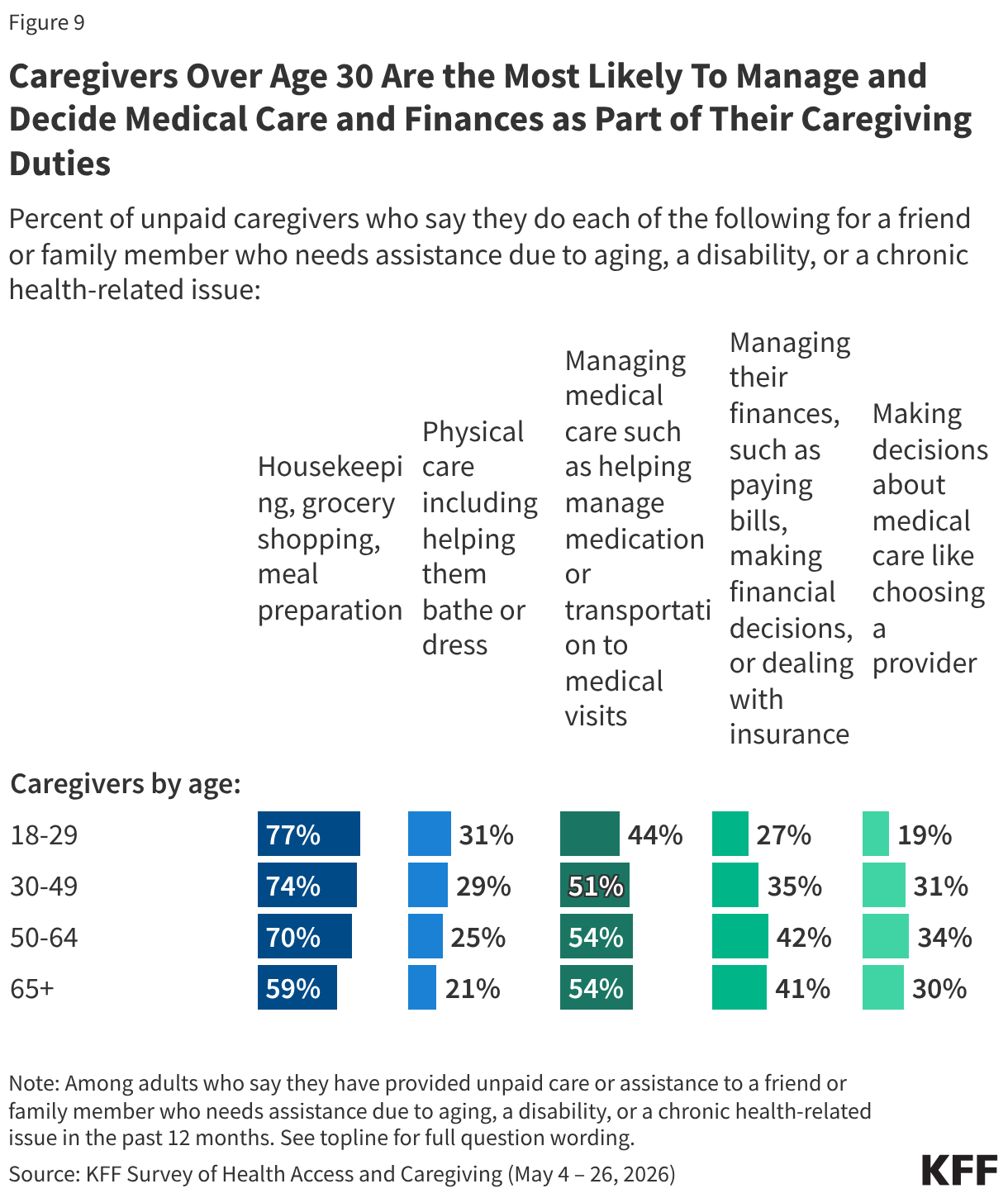
Unpaid caregivers provide an array of essential assistance to the people they care for. Most commonly, these tasks include “housekeeping, grocery shopping, or preparing meals” (70% of all caregivers, including 72% of women and 66% of men). About half (51%) of unpaid caregivers say they manage an individual’s medical care, such as helping manage medications or transportation to medical appointments. Smaller, though still sizeable, shares report managing their finances (37%), making decisions about medical care (30%), and providing physical care including helping them bathe or dress (26%).
Younger caregivers (those between ages 18 to 29) are slightly less likely than older caregivers (ages 30 and older) to report making financial and medical choices for the friend or family member they assist. About two in ten of this younger cohort say they make decisions about medical care, like choosing a provider, compared to at least three in ten older caregivers, and they are also less likely to say they manage their medical care or finances. Instead, caregivers under 30 report higher incidence of providing essential daily tasks, such as “housekeeping, grocery shopping, or meal preparation” (77%) or physical care (31%), than their older counterparts.
In contrast, the oldest group of unpaid caregivers—ages 65 and older—are less likely to say they are involved in more physically demanding caregiving tasks such as housekeeping, grocery shopping, or meal preparation (59%) and physical care (21%) than their younger counterparts. However, among caregivers ages 65 and older, women are somewhat more likely than men to report providing “housekeeping, grocery shopping, or meal preparation” (62% vs. 55%) and physical care (23% vs. 19%).
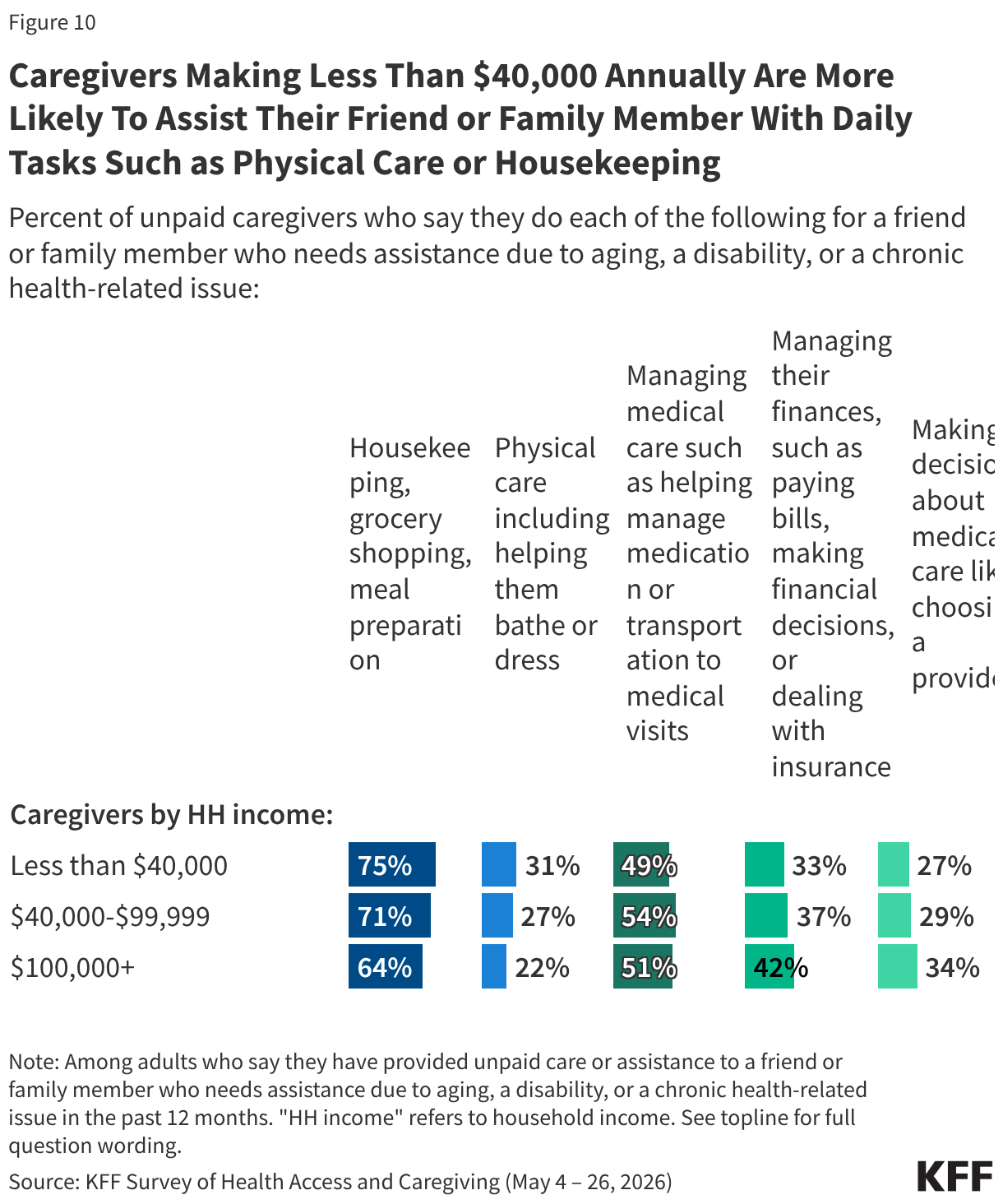
The types of assistance that unpaid caregivers provide also varies somewhat by household income. For example, unpaid caregivers who earn less than $40,000 annually are more likely than their higher earning counterparts to provide more physically demanding tasks such as physical care (31%) or “housekeeping, grocery shopping, and meal preparation” (75%). In contrast, higher-earning unpaid caregivers report higher rates of managing medical care and finances, as well as making decisions about medical care like choosing a provider for the person they are assisting.
Notably, many unpaid caregivers provide multiple types of assistance to their friends or family members. Nearly four in ten (37%) say they provide at least three types of care asked about in this survey. Women caregivers are more likely to provide three or more types of care compared to men (40% vs. 32%), rising to three-quarters (76%) among women who spend over 15 hours a week caregiving.
Methodology
The KFF Survey of Health Access and Caregiving was a series of questions designed and implemented by KFF with the SSRS Opinion Panel Mega-Omnibus. The survey was conducted May 4 – May 26, 2026, online and by telephone among a nationally representative sample of 25,873 U.S. adults in English (n=25,422) and in Spanish (n=451).
The SSRS Opinion Panel is a nationally representative probability-based panel where panel members are recruited randomly in one of two ways: (a) Through invitations mailed to respondents randomly sampled from an Address-Based Sample (ABS) through the U.S. Postal Service’s Computerized Delivery Sequence (CDS); (b) recruited via random digit dial (RDD) telephone sample of cell phone numbers connected to a prepaid cell phone. Both samples were provided by Marketing Systems Group (MSG). The combined sample was reached either online (n=24,875) or over the phone (n=998) based on the panelist’s stated preference. For the online panel component, invitations were sent to panel members by email followed by up to four reminder emails and up to two reminder text messages (if consented to receive SMS).
The questions designed by KFF were included as part of a multi-stakeholder effort designed to survey all individuals currently empaneled in the SSRS Opinion Panel, with each organization paying for and having independent editorial control over its survey questions. Substantive questions from other outside stakeholders are redacted in this report. The SSRS survey team designed the questionnaire in order to minimize potential bias from question ordering. For more information, please contact SSRS.
Respondents who completed on the web received a $5 electronic gift card incentive (some harder-to-reach groups received a $10 electronic gift card). Respondents who completed the survey on the phone received $10 via a physical check in the mail. In order to ensure data quality, cases were removed if they failed two or more quality checks: (1) attention check questions in the online version of the questionnaire, (2) had over 10% item non-response, or (3) had a length of less than 30% of the mean length by mode. Based on this criterion, 69 cases were removed.
Data were weighted to represent adults 18+ in the United States. The Panel-wide base weight adjusts for the SSRS Opinion Panel recruitment and retention process. Because all current panelists (except 2026 recruits) were invited to participate and no further sampling was performed, no further adjustments to the Panel-wide base weight were necessary before applying it to the survey data.
With the Panel-wide base weight applied, the survey-data were weighted to match the sample’s demographic profile to the same target population parameters used in the calibration of the entire SSRS Opinion Panel. The demographic variables included in weighting for the general population sample are gender, age, race/ethnicity, and education (including interactions between these categories), as well as region, civic engagement, density, frequency of internet use, voter registration, political party identification, religion, household makeup, and home ownership. Final calibrated weights are trimmed at the 2nd and 98th percentiles to prevent individual interviews from having too much influence.
The margin of sampling error including the design effect for the full sample is plus or minus 1 percentage points. Numbers of respondents and margins of sampling error for key subgroups are shown in the table below. For results based on other subgroups, the margin of sampling error may be higher. Sample sizes and margins of sampling error for other subgroups are available on request. Sampling error is only one of many potential sources of error and there may be other unmeasured error in this or any other public opinion poll. KFF public opinion and survey research is a charter member of the Transparency Initiative of the American Association for Public Opinion Research.
| Group | N (unweighted) | M.O.S.E. |
| Total adults | 25,873 | ±1 percentage point |
| Unpaid Caregivers | 8,209 | ± 2 percentage points |
| Women caregivers | 5,204 | ± 2 percentage points |
| Men caregivers | 2,902 | ± 3 percentage points |
| Caregivers by Age | ||
| 18-29 | 505 | ± 6 percentage points |
| 30-49 | 3,221 | ± 2 percentage points |
| 50-64 | 2,448 | ± 3 percentage points |
| 65+ | 2,035 | ± 3 percentage points |
| Caregivers by Hours Spent Providing Care | ||
| 0-4 hours | 3,852 | ± 2 percentage points |
| 5-15 hours | 2,546 | ± 3 percentage points |
| 16+ hours | 1,771 | ± 3 percentage points |
Appendix
Table 1. Prevalence of Unpaid Caregivers by Gender Across Studies
Estimates of the population prevalence of unpaid caregivers differ somewhat based on the population surveyed and the question wording used to define caregiving. The table below includes estimates of caregiving overall and by gender from some recent studies.
| Study | Question Wording or Definition | Population Prevalence of Unpaid Caregiving | Population Surveyed |
|---|---|---|---|
| KFF Survey of Health Access and Caregiving (May 4-26, 2026) | At any time in the past 12 months have you provided unpaid care or assistance to a friend or family member who needs assistance due to aging, a disability, or a chronic health-related issue? By care or assistance, we are referring to providing help with activities (like bathing/dressing, grocery shopping, housekeeping, meal preparation, providing transportation to medical appointments, managing medications, help with bill-paying or managing their finances, arranging for outside services, etc.) for someone who needs assistance due to aging, a chronic condition, or other health issues. | 29% of total population; 32% of women; 26% of men | U.S. adults ages 18+ |
| Caregiving in the US 2025, National Alliance for Caregiving and AARP (August 6-October 14, 2024) | Family caregiver: Someone who has provided paid or unpaid care to a relative or friend 18 years or older to help them take care of themselves, or unpaid care to any child under 18 because of a medical, behavioral, or other condition or disability, in the last 12 months. | 24% of total population; 29% of women; 19% of men4 | U.S. adults ages 18+ |
| American Time Use Survey, Bureau of Labor Statistics (2023-2024 averages) | Eldercare provider: Someone who has provided unpaid care or assistance more than one time in the 3-4 months prior to the interview day to a person who needed help because of a condition related to aging. Estimates are restricted to eldercare providers caring for at least one person aged 65 or older. | 14% of total population; 15% of women; 13% of men | U.S. individuals ages 15+ |
| National Poll on Healthy Aging, University of Michigan (February 22-March 12, 2024) | In the past year, have you provided regular care or assistance to a family member or friend (adult or child) who has a health problem or disability? Data shown are those who said “Yes, to someone who lives with me” or “Yes, to someone who does not live with me” | 27% of total population; 32% of women; 22% of men | U.S. adults ages 50+ |
Table 2. Demographic Profile of Unpaid Caregivers in the U.S.
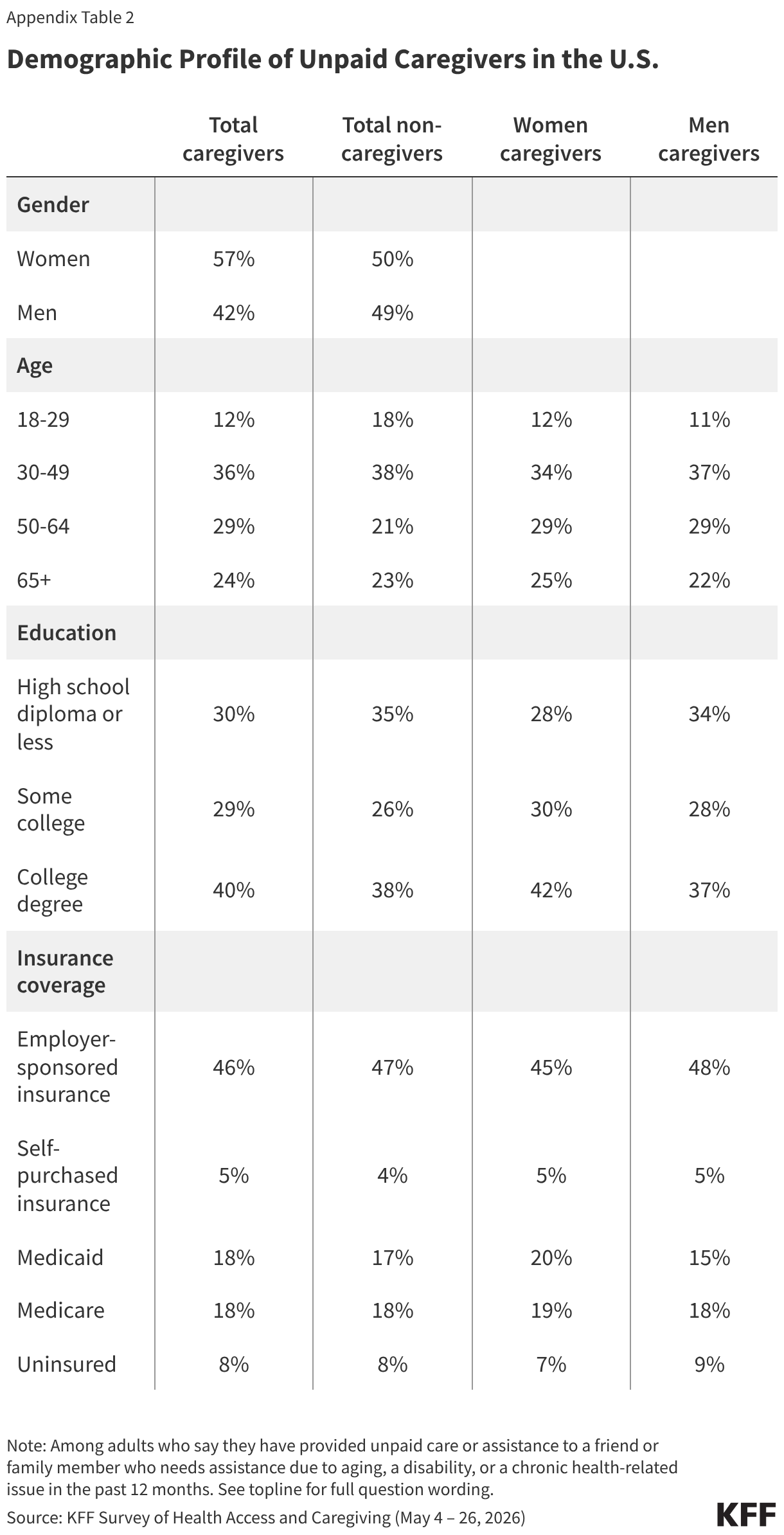
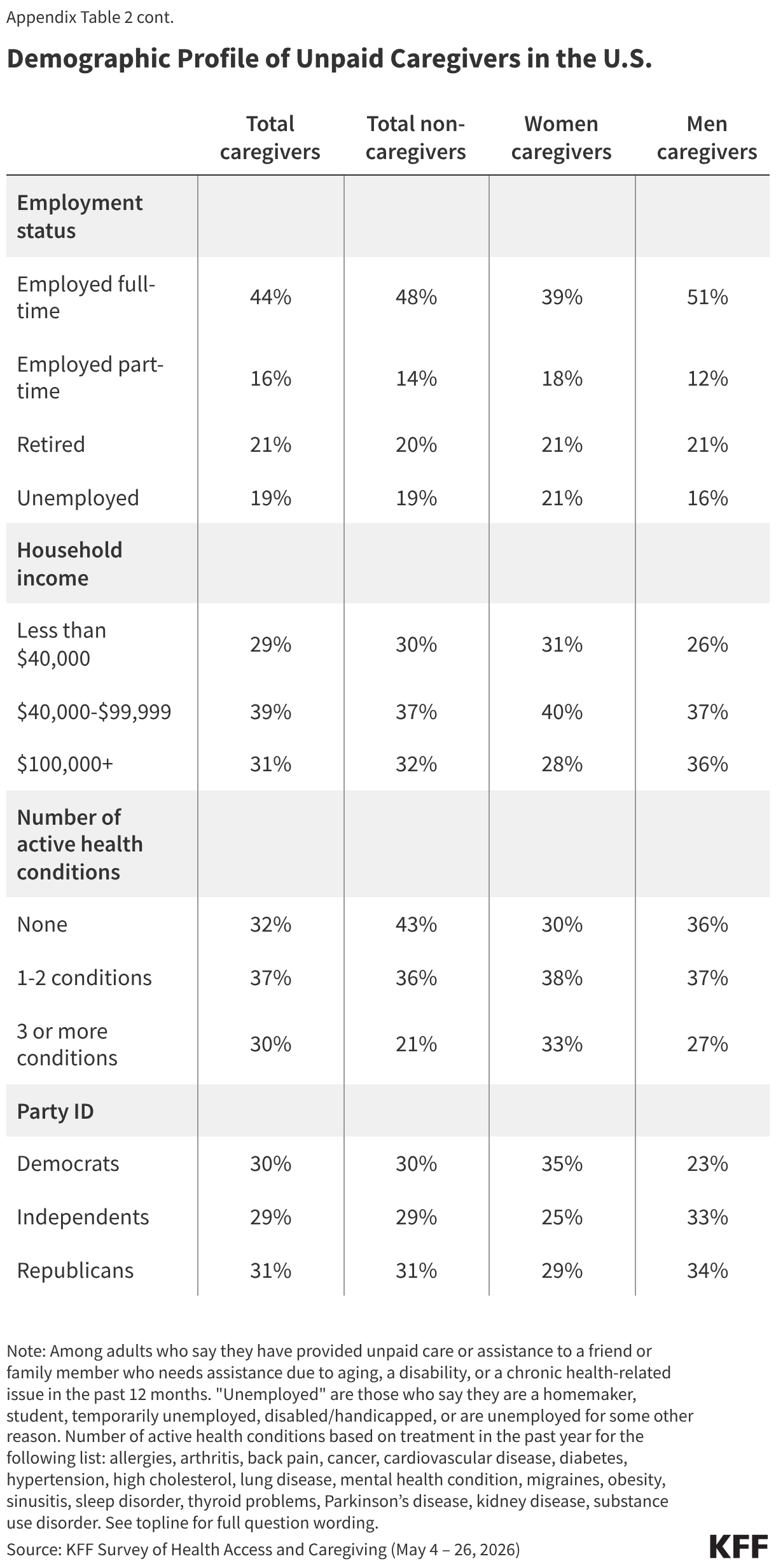
Table 3. Time Spent Providing Unpaid Care Weekly Among Total U.S. Adults
Endnotes
- 4% of unpaid caregivers identify as some other race (non-Hispanic) or multiple race (non-Hispanic). Persons of Hispanic origin may be of any race; other racial groups are non-Hispanic. The sample includes only English-speaking Asian adults and, therefore, may not be representative of the overall Asian adult population. ↩︎
- Number of active health conditions based on treatment in the past year for the following list: allergies, arthritis, back pain, cancer, cardiovascular disease, diabetes, hypertension, high cholesterol, lung disease, mental health condition, migraines, obesity, sinusitis, sleep disorder, thyroid problems, Parkinson’s disease, kidney disease, substance use disorder. ↩︎
- Other estimates of the population prevalence of unpaid caregivers across gender can be found in Table 1 of this report’s Appendix. ↩︎
- These estimates include family caregivers who provided unpaid care, paid care, or a combination of both, though AARP estimates only 1.9 million of 59 million caregivers are solely paid family caregivers. ↩︎