Medicare

Medicare Open Enrollment

Medicare Advantage Plan Availability Varies Widely by County for 2027

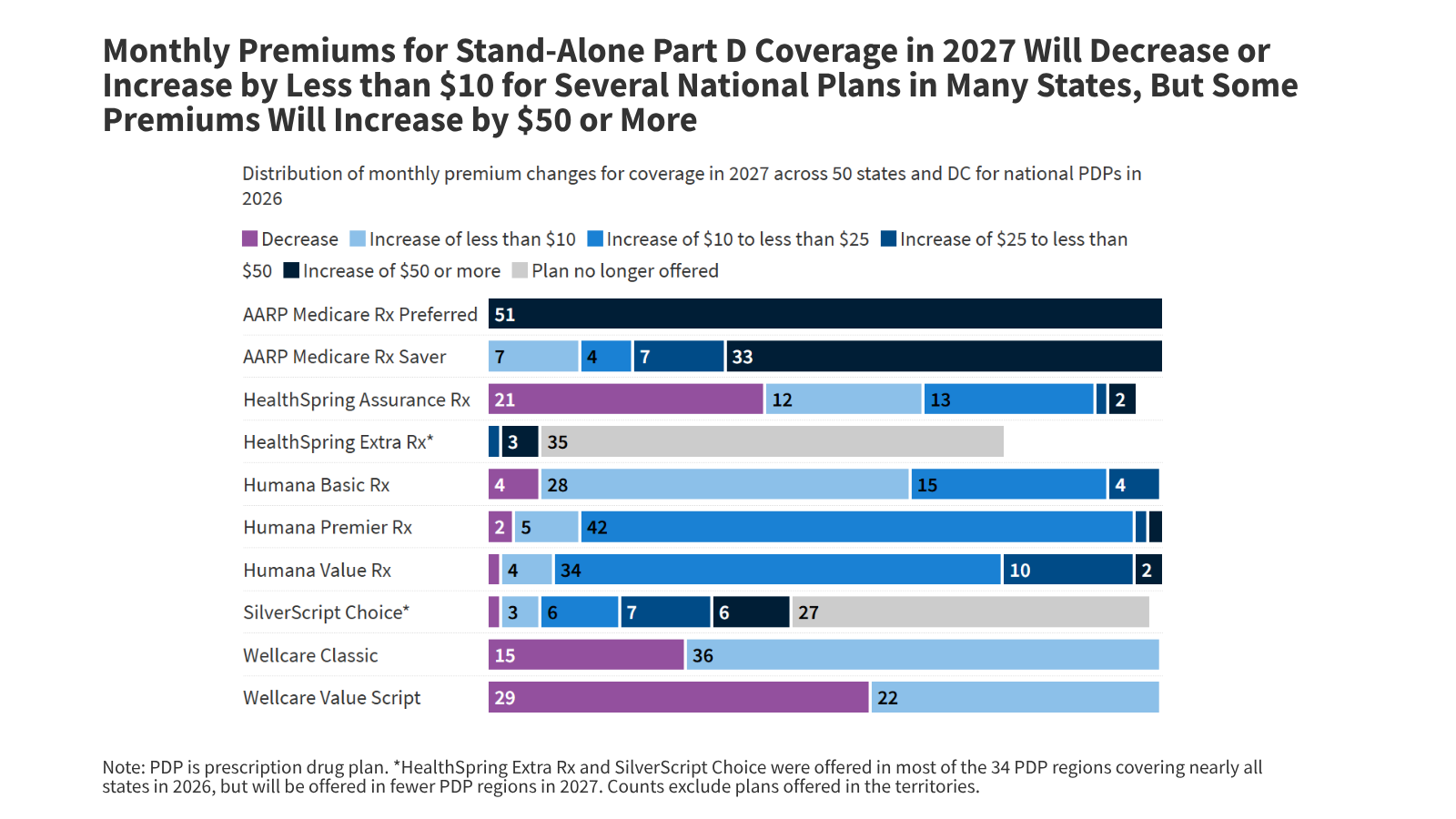
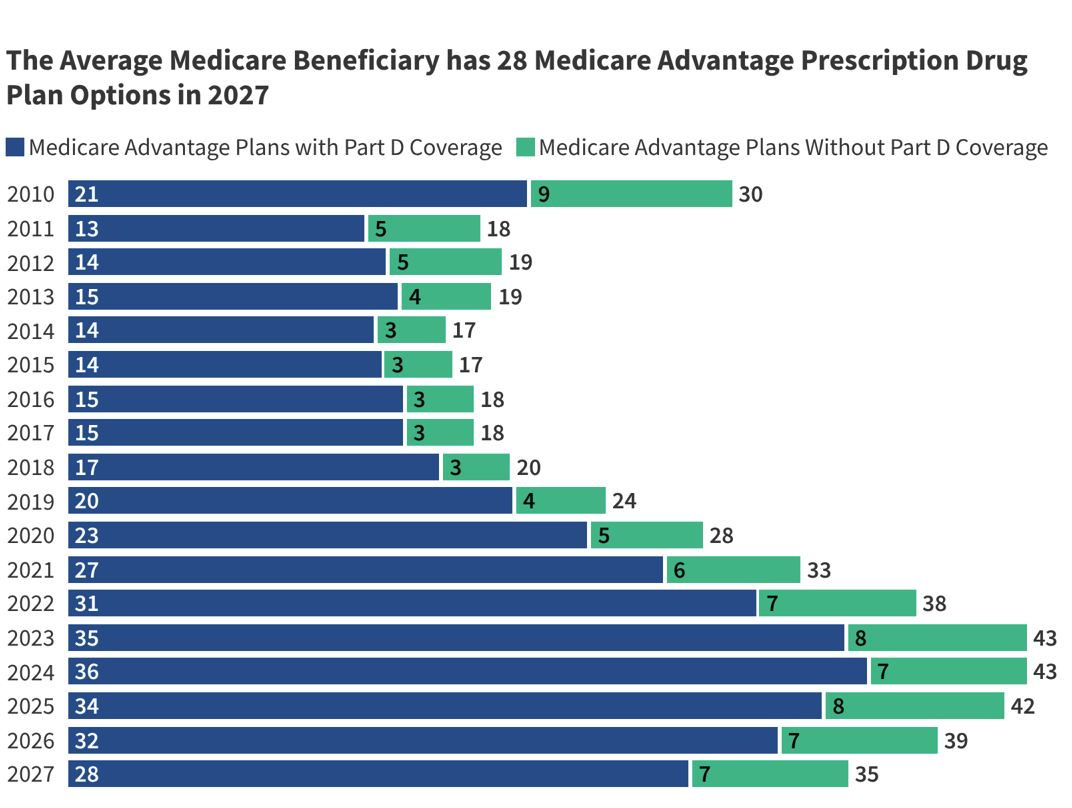
Medicare Advantage prescription drug plan (MA-PD) availability varies widely by county in 2027, with a modest reduction in the share of enrollees with more than 40 plans to choose from and some major insurers exiting many more counties than they are entering. 1 in 5 Medicare beneficiaries (20%) can choose from among more than 40 MA-PDs for 2027, down from 27% in 2026. 1% of all beneficiaries will have no plan option for 2027.
Medicare Open Enrollment and Coverage Options: Key Questions and Answers

Each year, Medicare beneficiaries have an opportunity to make changes to how they receive their Medicare coverage during the nearly 8-week annual open enrollment period, which runs from October 15 through December 7. This brief answers key questions about the Medicare open enrollment period and Medicare coverage options.

Medigap

Medigap Guaranteed Issue Requirements: An Overview of Federal and State Rules

This issue brief analyzes federal and state rules related to guaranteed issue requirements for Medigap policies and how they impact beneficiaries’ access to Medigap, including the implications for Medicare beneficiaries with pre-existing medical conditions and those under age 65 with long-term disabilities.

NEW AND NOTEWORTHY

Decoding Medicare Advantage Coding Intensity

Federal payments to Medicare Advantage plans, and adjustments for health status, have come under increased scrutiny. This brief answers key questions about coding intensity, recent steps taken by CMS, the effects on beneficiaries, and other proposals to improve payment accuracy.

Data Visualization

The Facts About Medicare Spending

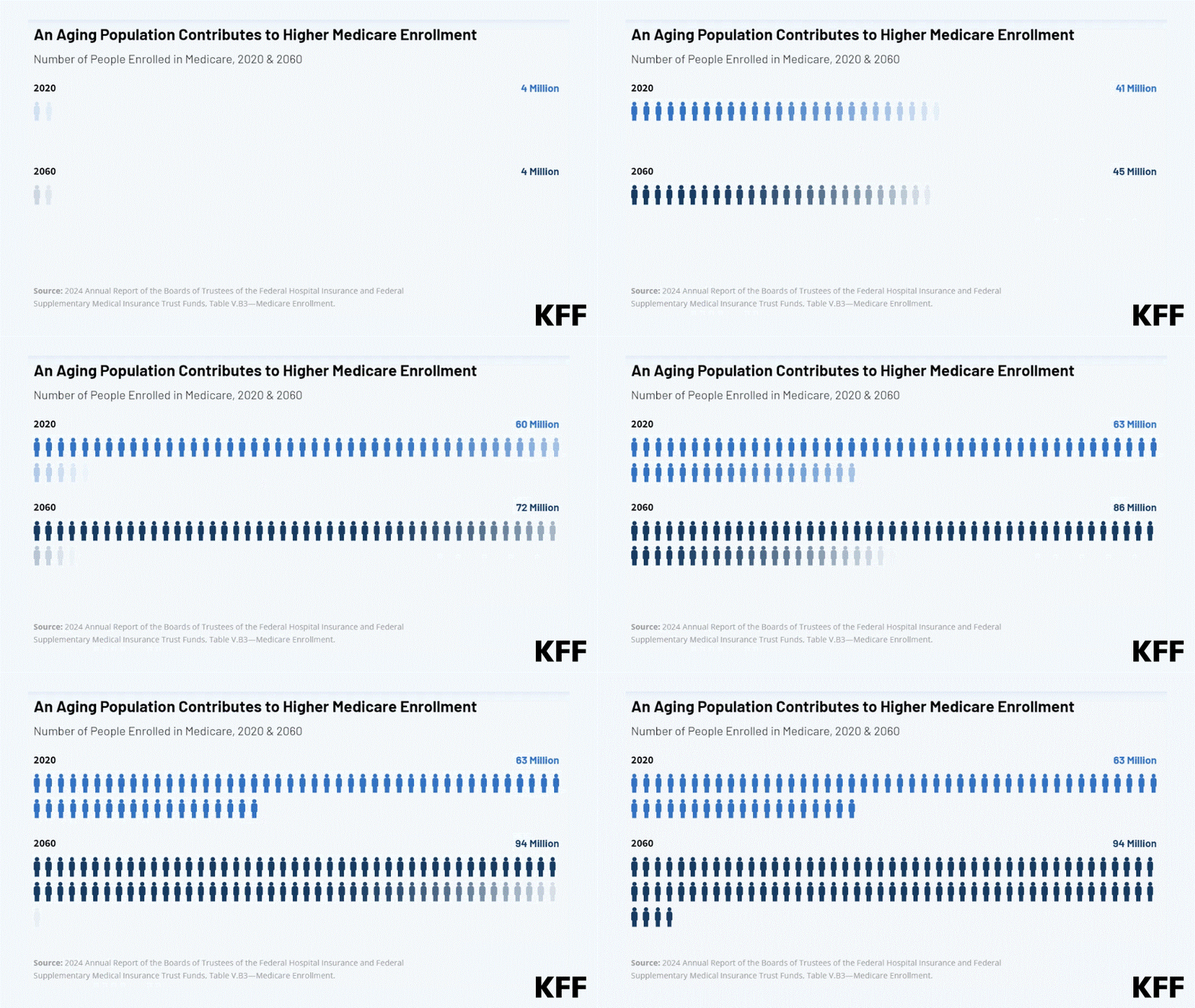
This interactive provides the facts on Medicare spending. Medicare, which serves 67 million people and accounts for 12 percent of the federal budget and 21 percent of national health spending, is often the focus of discussions about health expenditures, health care affordability and the sustainability of federal health programs. Explore data on enrollment growth, Medicare spending trends overall and per person, growth in Medicare spending relative to private insurance, spending on benefits and Medicare Advantage, Part A trust fund solvency challenges, and growth in out-of-pocket spending by beneficiaries.

Read More

Stay informed.

Stay informed.

Filter

191-200 of 1,623 results

  • Nearly Four Million Medicare Beneficiaries Could Be Eligible for the Temporary Medicare GLP-1 Bridge Program Covering These Drugs for Weight Loss

    Issue Brief

    This news release highlights that a KFF analysis finds that 3.8 million Medicare beneficiaries met the criteria to be eligible for the new Medicare GLP-1 Bridge, based on claims data from 2023. The temporary program will provide coverage of three GLP-1 drugs used for weight reduction and weight management to eligible Medicare beneficiaries.

  • Talking About Medicare: Your Guide to Understanding the Program, 2012

    Report

    Medicare is the federal health insurance program for people 65 and older and for some younger adults with permanent disabilities and medical conditions.  Prior to 1965, the year in which the Medicare program was established, about half of all seniors lacked health insurance.  Today, virtually all people 65 and older have coverage under Medicare, and are eligible for this coverage without regard to their income or medical history.  Medicare currently provides health insurance coverage for…

  • An Overview of Medicare

    Issue Brief

    This issue brief provides an overview of Medicare, the health insurance program for people ages 65 and over and younger people with long-term disabilities. The brief review the characteristics of people on Medicare, what Medicare covers, benefit gaps and supplemental coverage, beneficiaries' out-of-pocket health care spending, program spending and financing, payment and delivery system reform, and issues for the future of Medicare.

  • Seven Million People with Medicare Spend More Than 10% of Income on Part B Premiums – The Reconciliation Bill Could Drive the Number Higher

    Issue Brief

    People with low incomes and limited financial resources can qualify for the Medicare Savings Programs, through which state Medicaid programs provide financial assistance with Medicare premiums and cost sharing. However, provisions in the GOP’s budget reconciliation bill would make it harder for people to enroll in these programs. Many people with Medicare are facing a relatively high financial burden associated with paying Part B premiums, and the reconciliation bill could drive that number higher.

  • Medicare Advantage Insurers Deny Prior Authorization Requests for Post Acute Care at Substantially Higher Rates Than the Overall Denial Rate

    Policy Watch

    Two recent reports find that Medicare Advantage organizations deny prior authorization requests for long-term care hospital, inpatient rehabilitation hospital, and skilled nursing facility stays at higher rates than requests overall. When these decisions are appealed, they are frequently overturned, particularly for skilled nursing facility stays. This may cause delays for Medicare beneficiaries who are particularly vulnerable or have high care needs.

  • Digital Health Tools and Technologies: An Overview of CMS’ Recent Efforts to Expand Their Use in Medicare

    Issue Brief

    As an increasing share of older adults have adopted digital health technologies over the past several years, and with most expressing interest in using them to manage their health care, the Centers for Medicare & Medicaid Services (CMS) has introduced several initiatives to expand the use of digital health technologies in Medicare. This brief summarizes these initiatives and draws on data from various surveys, including KFF Tracking Polls from September 2025 and March 2026, to…

  • The Impact of H.R. 1 on Two Medicaid Eligibility Rules

    Issue Brief

    This issue brief describes the impact of H.R.1's 10-year delay in implementing provisions in two Medicaid eligibility rules that would have reduced red tape. The delayed rules are projected to decrease federal spending and future Medicaid and CHIP enrollment and increase coverage loss.