Medicaid

new and noteworthy

Medicaid work requirements

Medicaid and the Road Ahead: Spending Cuts, Work Requirements and What’s Next for States, Providers and Families

Event Date:

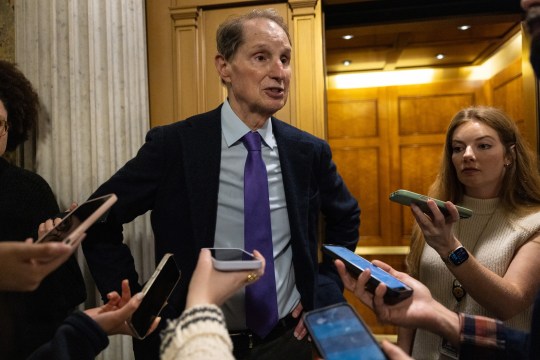
Passed last year, President Trump’s One Big Beautiful Bill Act made significant changes to Medicaid—the primary insurance provider for health and long-term care for people with low incomes. These changes are expected to lead to coverage loss for many current enrollees and will reduce funding for Medicaid, placing new financial pressures on states and health care providers. On July 23, KFF and States Newsroom hosted an event focused on the impacts of work requirements and other federal policy changes on states, health care systems, and people.

understanding medicaid

Medicaid Financing

Medicaid represents $1 out of every $5 spent on health care in the U.S. and is the major source of financing for states to provide health coverage and long-term care. This brief examines key questions about Medicaid financing and how it works.

Medicaid Program Integrity

This brief explains what is known about improper payments and fraud and abuse in Medicaid and describes ongoing state and federal actions to address program integrity.

Medicaid and Provider Taxes

All states except Alaska cover some state Medicaid costs with taxes on health care providers. This brief describes states’ current provider taxes and explores how rules governing provider taxes are changing.

Medicaid and Hospitals

Absorbing reductions in Medicaid spending could be challenging for hospitals, particularly for those that are financially vulnerable. This brief provides data on the reach of Medicaid across hospitals, patients, and charity care.

Medicaid Home Care

This issue brief provides an overview of what Medicaid home care (also known as “home- and community-based services”) is, who is covered, and what services were available in 2025.

Dual Eligibles

Stay informed.

Stay informed.

Filter

221 - 230 of 2,738 Results

  • Current and Emerging Issues in Medicaid Risk-Based Managed Care: Insights from an Expert Roundtable

    Issue Brief

    Half of all Medicaid enrollees receive care through comprehensive risk-based managed care organizations (MCOs). Most Medicaid MCO enrollees today are low-income children and parents, but states are increasingly moving beneficiaries with more complex needs into MCOs. Managed care enrollment may grow more rapidly as states work with the Centers for Medicare & Medicare Services (CMS) to implement initiatives to better integrate Medicare and Medicaid benefits and care for dual eligibles. The Foundation’s Kaiser Commission on…

  • Kaiser Health Tracking Poll: July 2012

    Feature

    July's second Health Tracking Poll reports in further depth on public opinion toward the Affordable Care Act (ACA) in the wake of last month's key Supreme Court decision. When it comes to the individual mandate, the Court’s verdict that the controversial provision is constitutional as a tax appears to have had little impact on opinion, with upwards of six in ten viewing the mandate unfavorably whether it is described as "tax" or as a "fine."…

  • Program Integrity in Medicaid: A Primer

    Issue Brief

    Medicaid covers more than 60 million Americans and accounts for about one in six dollars spent on health care in the United States. Multiple agencies at the state and federal levels are involved in efforts to prevent waste, fraud and abuse in the program and ensure appropriate use of taxpayer dollars, and many program integrity initiatives are yielding positive results. The Affordable Care Act (ACA) builds on earlier efforts through the Deficit Reduction Act to…

  • States Getting a Jump Start on Health Reform’s Medicaid Expansion

    Issue Brief

    One of the primary goals of the Affordable Care Act (ACA) is to decrease the number of uninsured through a Medicaid expansion to nearly all individuals with incomes up to 133 percent of the federal poverty level (FPL) ($14,856 for an individual or $25,390 for a family of three in 2012) and the creation of new health insurance exchanges. These coverage expansions, which will take effect in 2014, will eventually cover about 32 million uninsured…

  • Federal Core Requirements And State Options In Medicaid: Current Policies And Key Issues

    Fact Sheet

    Medicaid is a jointly financed partnership between the federal government and states. The federal-state financing and administrative structure of Medicaid provides a framework of federal core requirements along with broad state options for program design and administration. This issue brief presents an overview of the current Medicaid program framework, with a focus on eligibility, benefits and cost sharing, care delivery and provider payment, long-term services and supports, and dual eligibles, as well as key issues…

  • Assessing Congressional Budget Office Estimates of the Cost and Coverage Implications of Health Reform Proposals

    Issue Brief

    This issue brief explains key elements of the Congressional Budget Office's estimates of the major health reform bills pending in Congress, the Affordable Health Care for America Act (H.R. 3962) and the Patient Protection and Affordable Care Act (H.R. 3590). Throughout the health reform debate, CBO has analyzed these and other bills and provided projections of the costs and savings to the federal government associated with the plans over a 10-year period, as well as…

  • The Impact of the “Medigrant” Plan on the Federal Payments to States

    Report

    The Impact of the "Medigrant" Plan on the Federal Payments to States The analysis examines the conference agreement plan for the redistribution of federal funds under a block grant for the Medicaid program. It also discusses the implications of the reductions in federal spending for beneficiary coverage. Report: The Impact Of The "Medigrant" Plan On Federal Payments To States                          

  • Recent Publications on Medicaid and State Budgets

    Other Post

    Medicaid is a joint federal-state program in which Federal Medicaid matching payments are projected to be $147 billion FY 2002, while state spending is estimated at about $100 billion. Because Medicaid is such a large part of state budgets and states are struggling with their overall fiscal situations, the Kaiser Commission on Medicaid and the Uninsured continues to follow developments in Medicaid progams related to state budgets. Below are the most recent publications on this…

  • Managed Care and Low-Income Populations: A Case Study of Managed Care in Tennessee

    Report

    TennCare represents one of the most ambitious state-level efforts to restructure Medicaid and expand insurance coverage to the uninsured. The case study shows that the rapid change caused considerable confusion for patients, providers, and health plans. The TennCare experience provides early insights into the issues that states will face as they move to enroll more of their low-income populations into managed care arrangements.