Medicaid

new and noteworthy

Medicaid work requirements

Medicaid and the Road Ahead: Spending Cuts, Work Requirements and What’s Next for States, Providers and Families

Event Date:

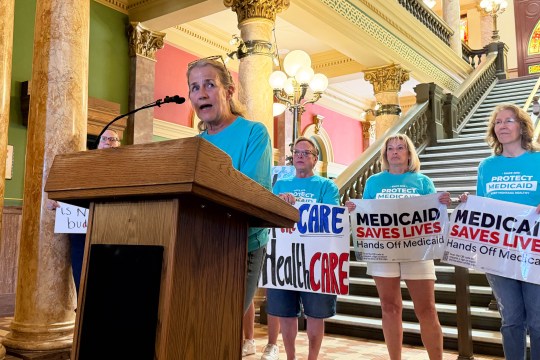
Passed last year, President Trump’s One Big Beautiful Bill Act made significant changes to Medicaid—the primary insurance provider for health and long-term care for people with low incomes. These changes are expected to lead to coverage loss for many current enrollees and will reduce funding for Medicaid, placing new financial pressures on states and health care providers. On July 23, KFF and States Newsroom hosted an event focused on the impacts of work requirements and other federal policy changes on states, health care systems, and people.

understanding medicaid

Medicaid Financing

Medicaid represents $1 out of every $5 spent on health care in the U.S. and is the major source of financing for states to provide health coverage and long-term care. This brief examines key questions about Medicaid financing and how it works.

Medicaid Program Integrity

This brief explains what is known about improper payments and fraud and abuse in Medicaid and describes ongoing state and federal actions to address program integrity.

Medicaid and Provider Taxes

All states except Alaska cover some state Medicaid costs with taxes on health care providers. This brief describes states’ current provider taxes and explores how rules governing provider taxes are changing.

Medicaid and Hospitals

Absorbing reductions in Medicaid spending could be challenging for hospitals, particularly for those that are financially vulnerable. This brief provides data on the reach of Medicaid across hospitals, patients, and charity care.

Medicaid Home Care

This issue brief provides an overview of what Medicaid home care (also known as “home- and community-based services”) is, who is covered, and what services were available in 2025.

Dual Eligibles

Stay informed.

Stay informed.

Filter

1,331 - 1,340 of 2,737 Results

  • Financial Alignment Models for Dual Eligibles: An Update

    Issue Brief

    The nearly nine million dual eligibles who receive both Medicare and Medicaid benefits are a high cost, high need population, accounting for a disproportionate share of expenditures relative to their enrollment in both programs. In April 2011, the Centers for Medicare and Medicaid Services (CMS) announced the award of design contracts to 15 states to develop service delivery and payment models to integrate care for dual eligibles. CMS and the participating states have recognized that…

  • Assessing the Role of Recent Waivers in Providing New Coverage

    Issue Brief

    This analysis finds that recent waivers have expanded coverage in important ways in a few states, but, overall, the number of people who have gained new coverage under recent waivers has been quite limited, well below projections and small compared to overall growth in Medicaid enrollment. Issue Paper (.pdf)

  • Medicaid Financing Issues:  Intergovernmental Transfers and Fiscal Integrity

    Fact Sheet

    Medicaid Financing Issues: Intergovernmental Transfers and Fiscal Integrity Since its enactment in 1965, Medicaid has been a joint venture between the states and the federal government. While each state administers its own Medicaid program within broad federal guidelines, the federal government provides over half of the program’s financing. As a result, Medicaid represents a spending item, but it is also the single largest source of federal revenue to the states. In recent years there has…

  • Current Issues in Medicaid Financing

    Report

    In recent years there has been much discussion about states’ use of creative financing to draw down additional federal funds for Medicaid financing. Some suggest a curb on these practices and the President’s FY2006 budget includes provisions targeting intergovernmental transfers (IGTs). The Commission has produced a fact sheet and briefs on Medicaid financing issues. Medicaid Financing Issues: Intergovernmental Transfers and Fiscal Integrity - An Overview of IGTs, UPLs, and DSH - Issue Brief Medicaid's Federal-State…

  • Home Transition Programs: Perspectives of Medicaid Care Planners

    Report

    Home Transition Programs: Perspectives of Medicaid Care Planners This report draws on interviews with Medicaid care planners for insight into the issues that arise in establishing programs to move individuals with significant long-term care needs from institutional to community settings. The five states that participated in this study—Florida, Louisiana, New Jersey, Ohio and Washington—each received federal grants for nursing home transition activities and had varied experiences. Report (.pdf)

  • Understanding the Recent Changes in Medicaid Spending and Enrollment Growth Between 2000-2004

    Report

    This report analyzes Medicaid enrollment and spending trends for the years 2000-2004. Rising enrollment and health care inflation produced most of Medicaid's spending increases during the period. Even with a stronger economy, however, Medicaid's enrollment pressures remain due to demographic trends and continued declines in employer sponsored insurance. Report (.pdf)

  • Medicaid’s Long-Term Care Users: Spending Patterns Across Institutional and Community-based Settings

    Issue Brief

    The nation's primary payer for long-term services and supports, Medicaid finances 43 percent of all spending on long-term care services and covers a range of services and supports, including those needed by people to live independently in the community, as well as services provided in institutions. This report provides an overview of long-term care users and their acute and long-term care service spending. The report finds that although the individuals who rely on long-term care…

  • Health Coverage For Low-Income Children.

    Fact Sheet

    Health Coverage For Low-Income Children This fact sheet profiles the low-income children population, describes sources of health insurance coverage for the population, and summarizes trends and issues about their health coverage. Fact Sheet (.pdf)