
Rural and Urban Health Center Patients and Financing
Introduction
Community health centers are a national network of safety-net primary care providers located in medically underserved rural and urban communities. They provide comprehensive primary care services to patients regardless of their ability to pay, offering a range of medical, mental health, and supportive services. The Health Resources and Services Administration (HRSA) designates health centers as rural if they serve non-metropolitan areas with specific population density and geographic characteristics. Rural health centers served one in five rural residents in 2025.
Rural area health care provider shortages and limited access to health care services, including as a result of hospital closures, may increase rural residents’ reliance on health centers for services. Research on hospital closures between 2006 and 2018 found that areas with rural hospital closures were more likely to have new health center sites in the years that followed, suggesting that the rural health centers may help offset reduced access to primary and preventive care services in these areas.
Changes to Medicaid and the Affordable Care Act (ACA) Marketplace included in the 2025 reconciliation law and the expiration of ACA Marketplace enhanced premium tax credits at the end of 2025 may increase the number of uninsured rural health center patients and place additional financial burdens on rural health centers, hampering their ability to serve as a safety net. KFF estimated that the reductions in federal spending due to Medicaid changes included in the law alone could be $137 billion over 10 years in rural areas. To address the impacts on rural areas, Congress added $50 billion in funding over a five-year period for a Rural Health Transformation Program to the 2025 reconciliation law, but it is unclear the extent to which the funds will offset health center revenue losses due to federal policy changes and spending cuts.
This brief reports on rural and urban health center patients and financing in 2025 using national data from the Uniform Data System (UDS), to which all health centers are required to report annually.
Key takeaways include the following:
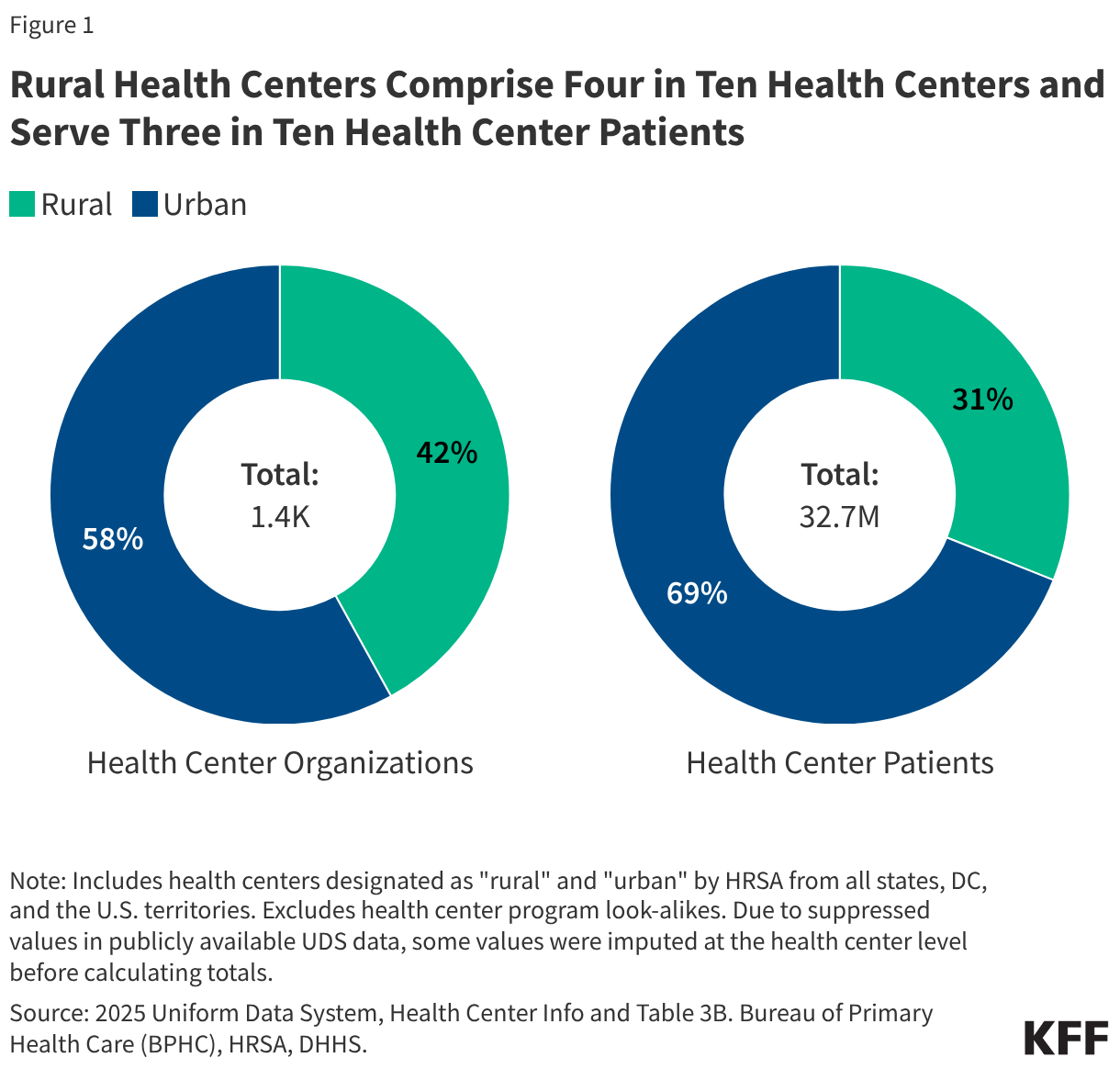
- Rural health center organizations made up four in ten health centers nationwide, serving three in ten (31%, or 10.2 million) health center patients at over 6,900 delivery sites.
- White patients represented the majority of patients at rural health centers while patients of color made up a majority at urban health centers. Compared with urban health centers, rural health centers served a higher share of patients ages 65 and older, and an outsized share of rural health center patients were veterans, worked in agriculture, or were patients at school-based health centers.
- Medicaid was the primary source of health coverage among both rural and urban health center patients, with nearly four in ten (37%) rural health center patients covered by Medicaid.
- Medicaid was the primary source of revenue for both rural and urban health centers, accounting for about one-third (32%) of revenue among rural health centers.
Rural and Urban Health Centers and Patients
Rural health centers made up four in ten (42%) health center organizations and served three in ten (31%, or 10.2 million) health center patients in 2025 (Figure 1). Nearly 600 rural health center organizations operated over 6,900 health center sites in 2025. Meanwhile, urban health centers made up nearly six in ten (58%, or about 800) health center organizations and served seven in ten (69%, or about 22.6 million) health center patients across over 9,700 health center sites. Rural health center organizations generally served fewer patients and had an average annual patient volume that was 38% lower than that of urban health centers.
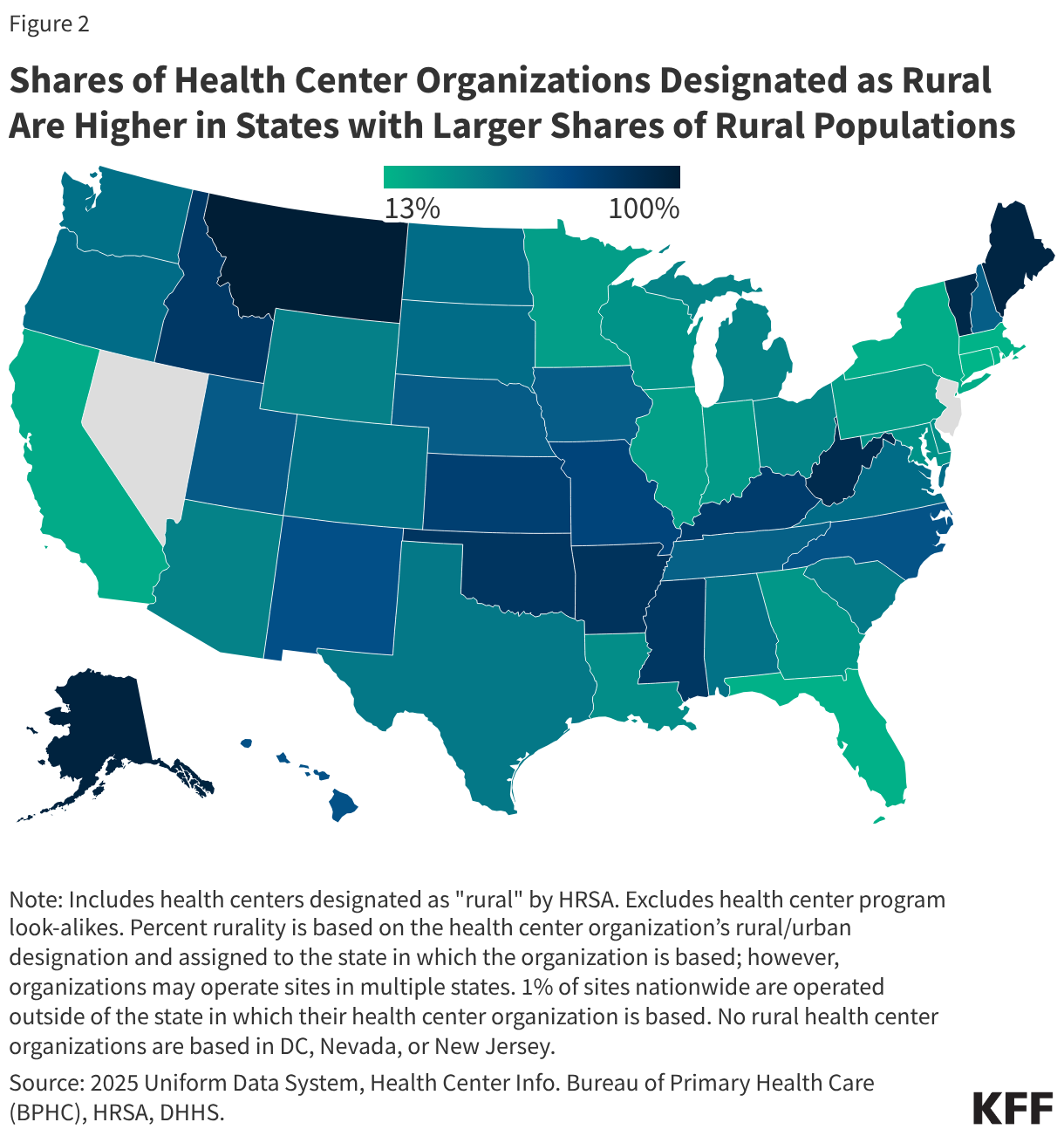
The share of health center organizations designated as rural varied widely by state in 2025. States with relatively high shares of their population living in rural areas had higher shares of health centers designated as rural, with over 90% of health center organizations designated as rural in Montana (100%), Alaska (96%), Maine (94%), and Vermont (91%) (Figure 2). In contrast, shares of health centers designated as urban were higher in states with small shares of their population living in rural areas, with at least 80% of health center organizations designated urban in Connecticut (88%), Rhode Island (88%), Massachusetts (86%), Florida (85%), New York (83%), and California (82%). All health center organizations were designated as urban in DC, New Jersey, and Nevada. However, a rural health center organization based in Arizona operated one rural clinic in Nevada in 2025.
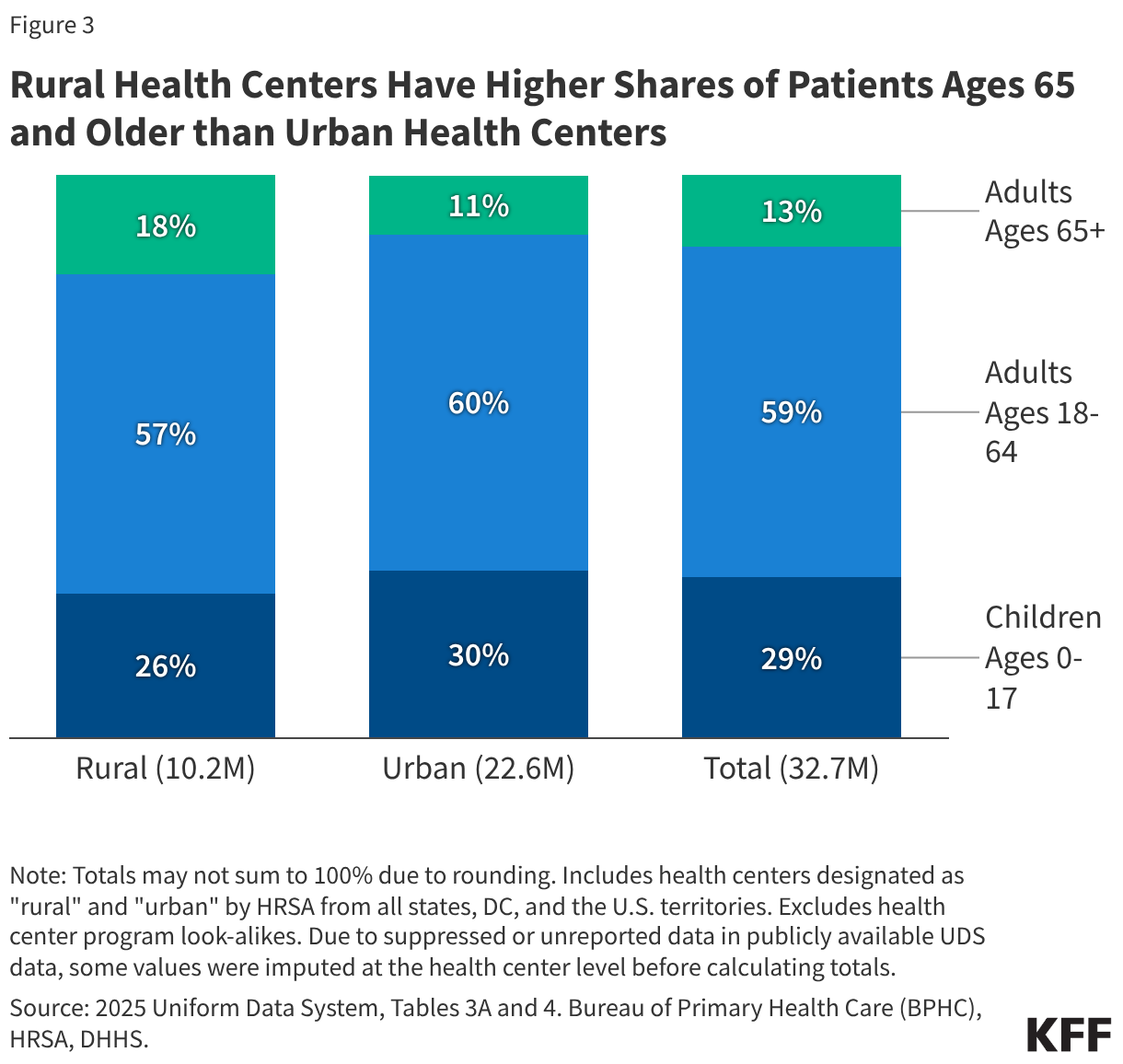
Rural health centers served higher shares of adult patients ages 65 and older than urban health centers in 2025. Rural health centers had higher shares of adult patients ages 65 and older (18%) compared with urban health centers (11%), reflecting national trends of disproportionately higher shares of older adults in rural areas (Figure 3). Rural health centers also had slightly smaller shares of adult patients ages 18–64 (57% vs. 60%) and children ages 0–17 (26% vs. 30%) compared with urban health centers.
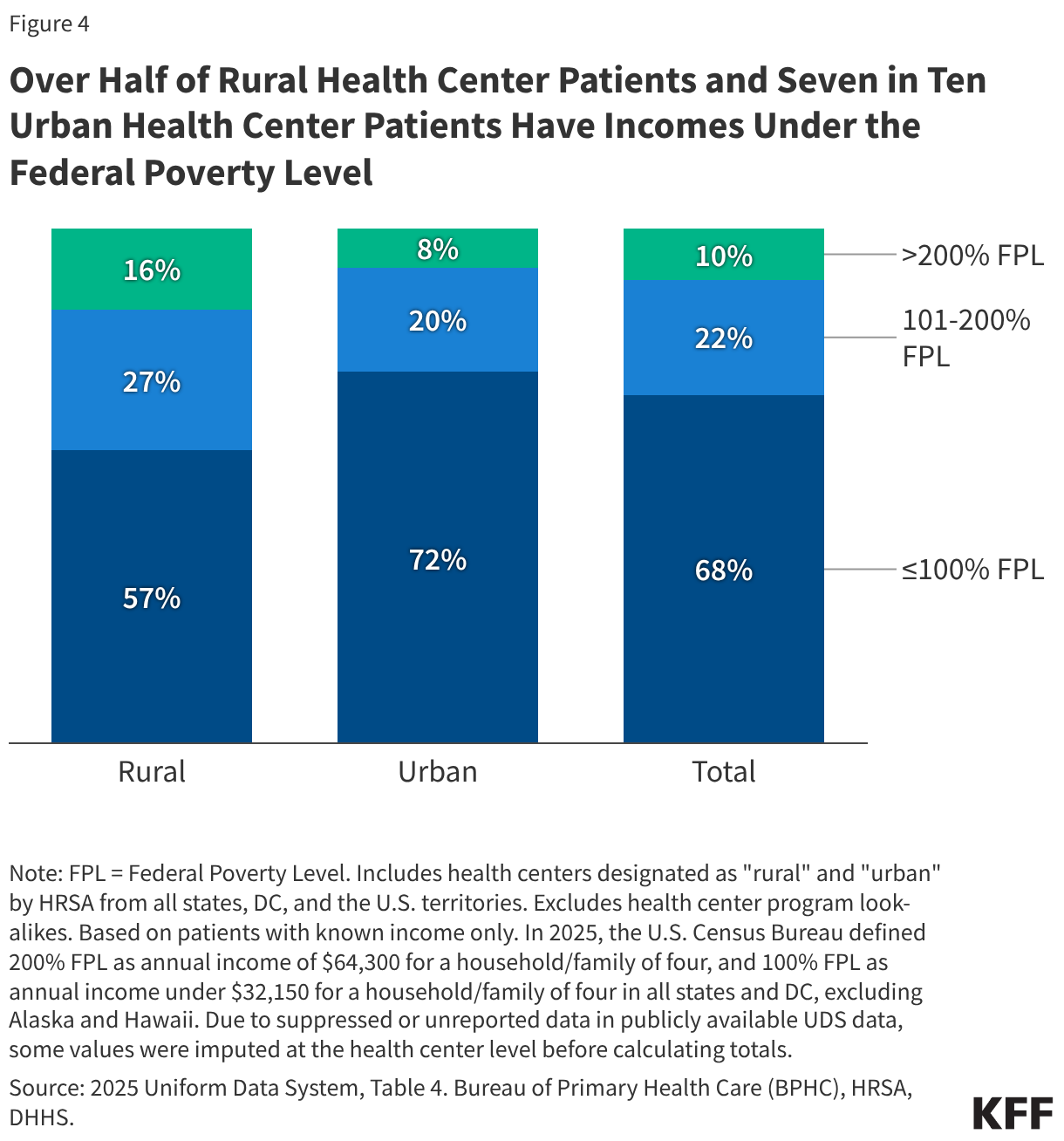
Over half (57%) of rural health center patients had income under 100% of the federal poverty level (FPL) in 2025, lower than among urban health center patients (72%) (Figure 4). Most health center patients at both rural and urban health centers had income under 200% FPL; however, 16% of patients at rural health centers had income above 200% FPL, double the share at urban health centers (8%). While rural areas have higher poverty rates than urban areas, rural health centers are more likely to serve entire rural communities and serve smaller shares of patients facing substantial economic hardship, such as patients experiencing homelessness, compared with urban health centers. These factors may partly explain the differences in the income distribution of patients across rural and urban health centers.
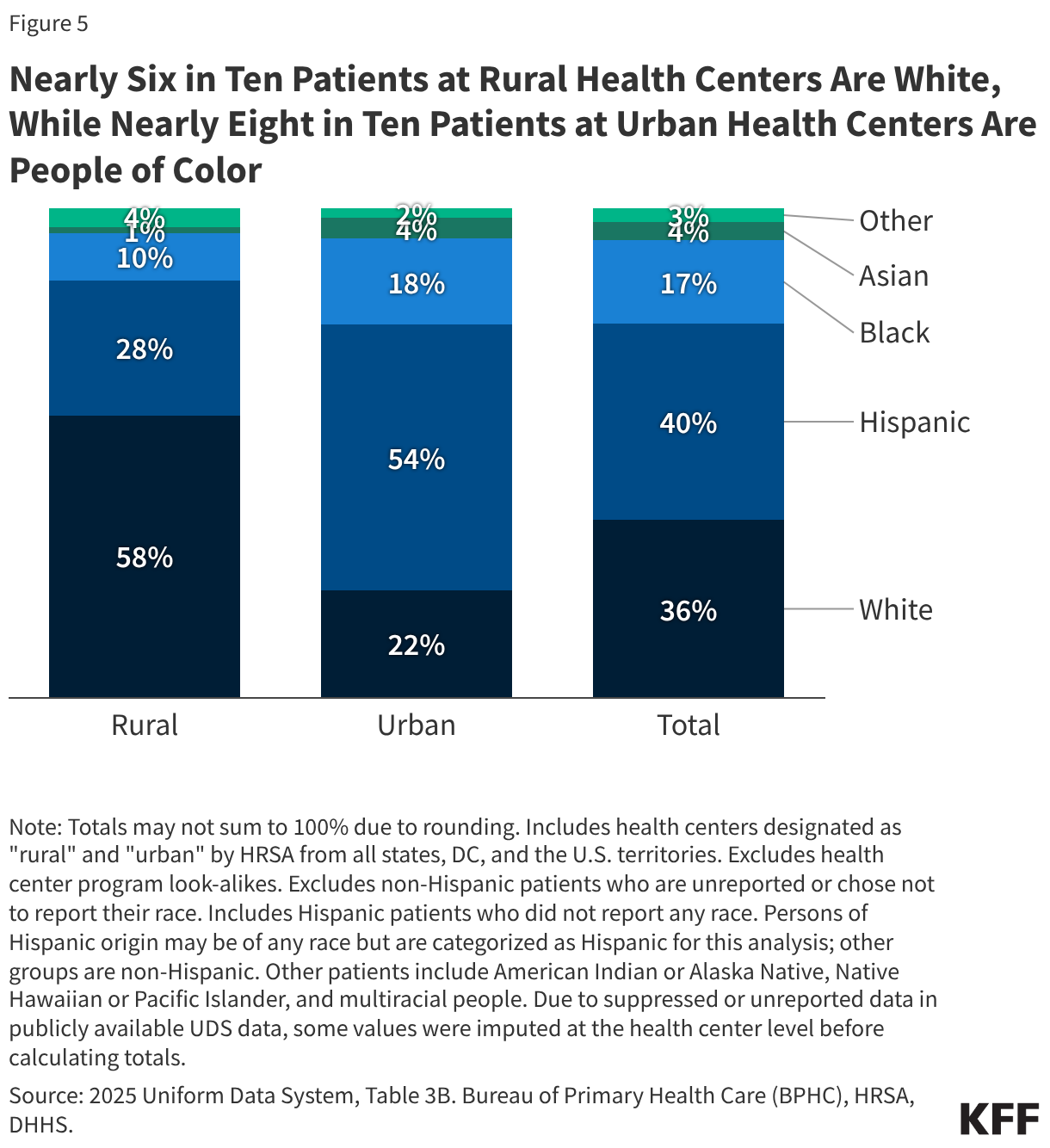
White patients represented the majority (58%) of patients at rural health centers while patients of color made up a majority (78%) of patients at urban health centers in 2025 (Figure 5). These differences in patient race and ethnicity reflect broader demographic differences between low-income populations in rural and urban areas. Rural health centers serve a higher share of people of color than are represented in the overall rural population, where about one in four residents are people of color.
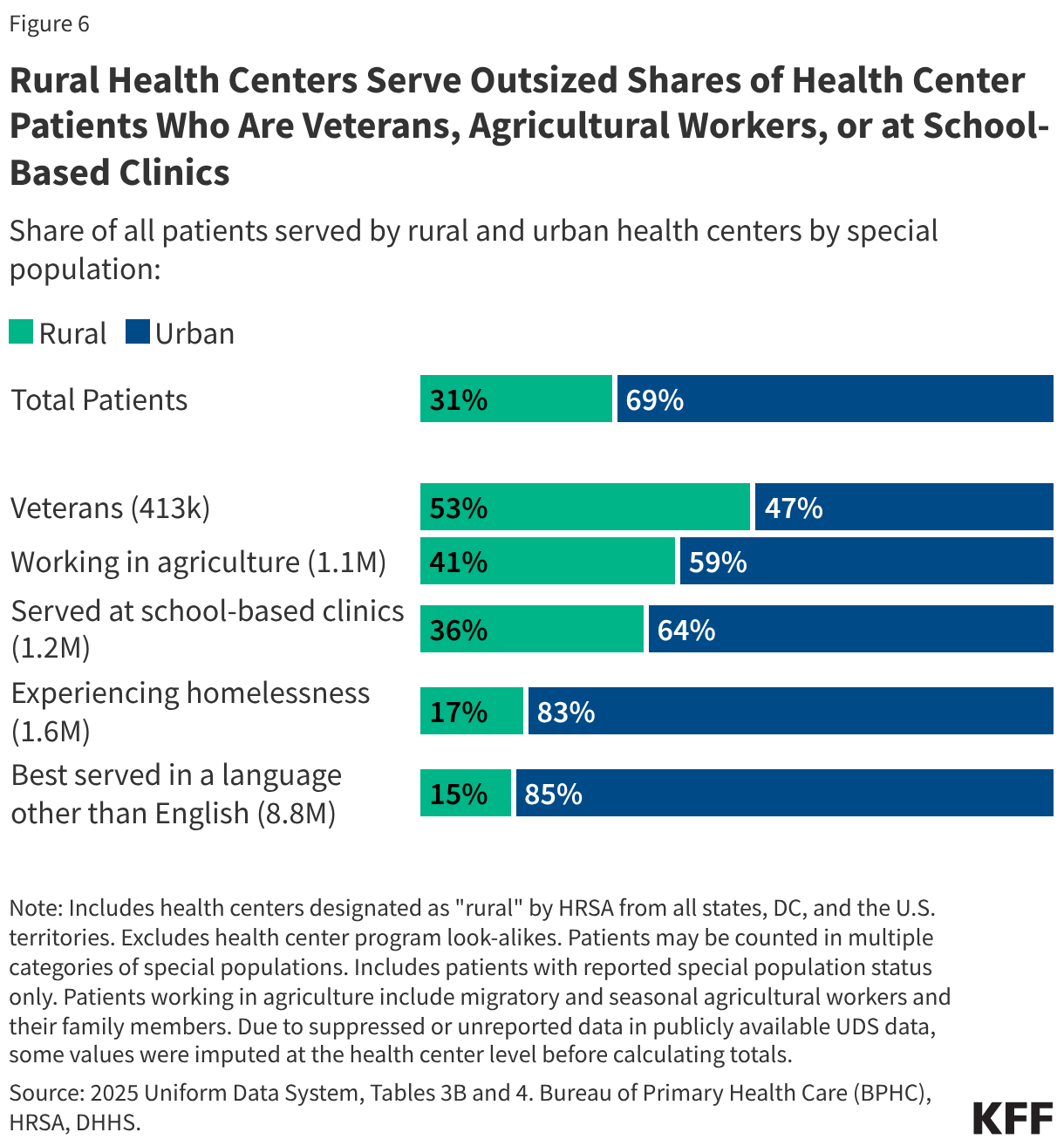
Rural health centers served an outsized share of veterans, agricultural workers, and patients at school-based clinics relative to their share of the total health center patient population in 2025. While rural health centers served 31% of all health center patients, they served 53% of health center patients who were veterans, 41% of health center patients and their family members who worked in agriculture, and 36% of patients served at school-based clinics (Figure 6). Rural health centers served a relatively lower share of all health center patients experiencing homelessness (17%) and patients best served in a language other than English (15%). These patterns reflect national trends where rural areas have a higher concentration of agricultural jobs and veterans compared with urban areas, while urban areas have higher concentrations of people experiencing homelessness and with limited English proficiency.
Health Coverage of Rural and Urban Health Center Patients
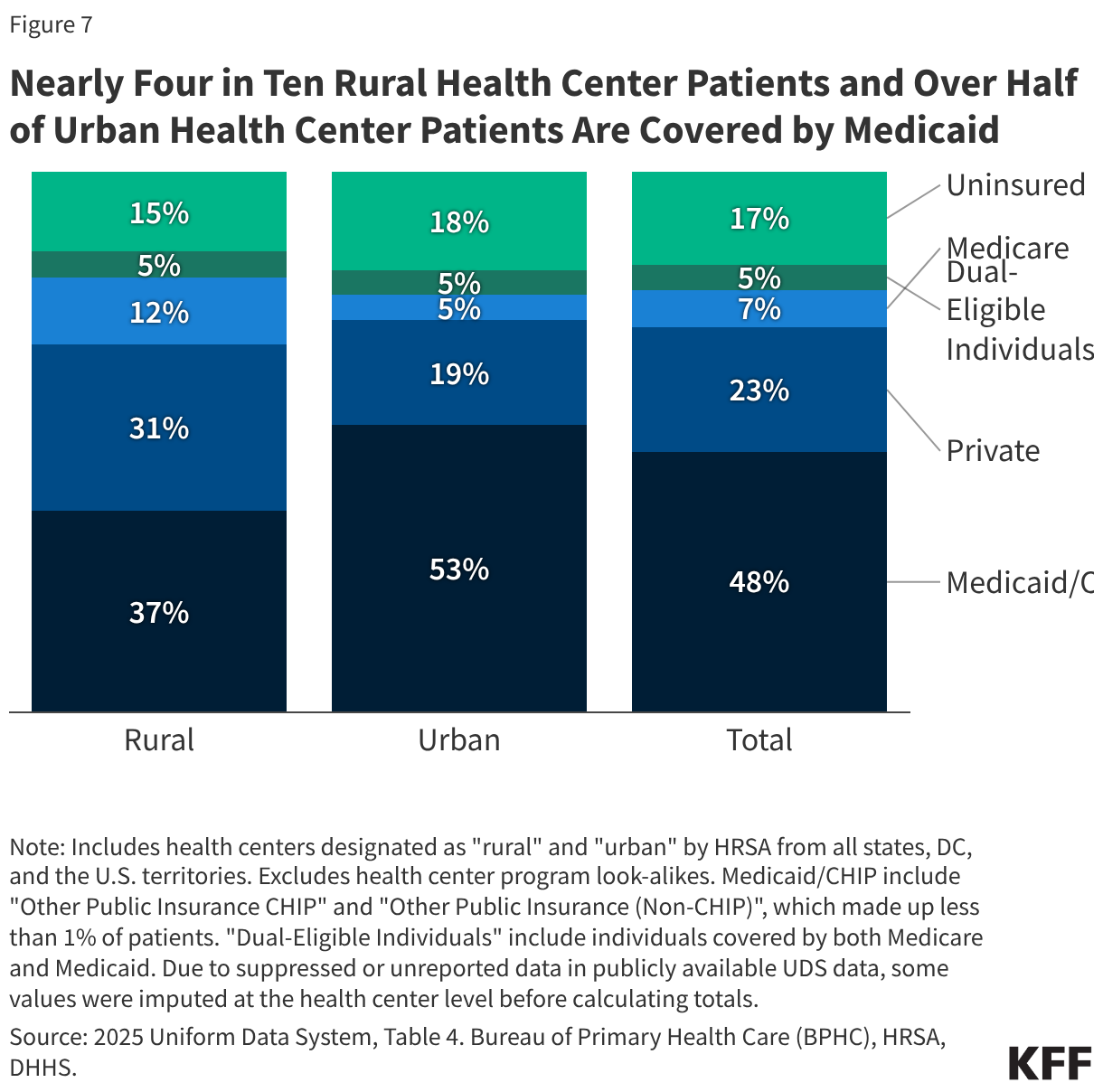
Medicaid was the primary source of health coverage among both rural and urban health center patients, with nearly four in ten (37%) rural health center patients covered by Medicaid in 2025, compared with over half (53%) of urban health center patients (Figure 7). Compared with urban health centers, rural health centers had higher shares of patients covered by Medicare (12% vs. 5%) and private coverage (31% vs. 19%). Patients with ACA Marketplace coverage are enrolled in private health insurance plans and are, therefore, categorized as private coverage. The share of patients who were uninsured was also lower among rural health centers compared with urban health centers (15% vs. 18%). Health coverage patterns reflect the composition of rural health center patients, particularly the smaller share of patients living in poverty and higher share of patients ages 65 and older compared with urban health center patients. The higher share of uninsured urban health center patients may also reflect the more limited availability of health care providers for those who are uninsured in rural areas.
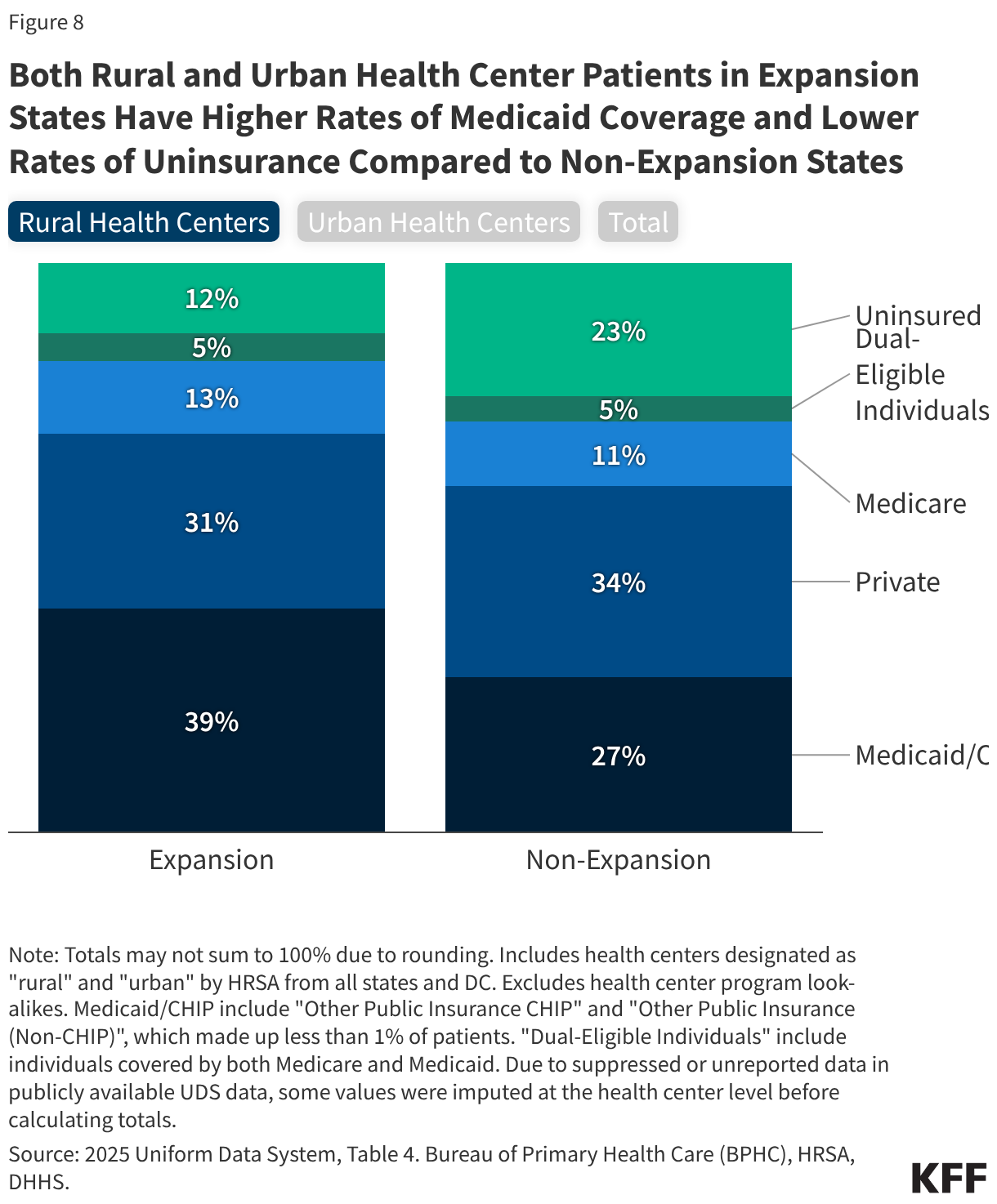
Both rural and urban health centers in Medicaid expansion states had higher shares of patients covered by Medicaid and lower shares of patients who were uninsured than those in non-expansion states in 2025. Rural health centers in Medicaid expansion states had higher shares of patients covered by Medicaid (39% vs. 27%) and about half the share of uninsured patients (12% vs. 23%) compared with those in non-expansion states (Figure 8). The same trend occurred among urban health center patients, though the differences were starker. Urban health centers in expansion states had higher shares of patients covered by Medicaid (57% vs. 36%) and lower shares of patients who were uninsured (16% vs. 29%) compared with urban health centers in non-expansion states. Medicaid expansion is linked to reduced rates of uninsurance, increased health care affordability, improvements in access to care and health outcomes, and economic benefits for states and providers.
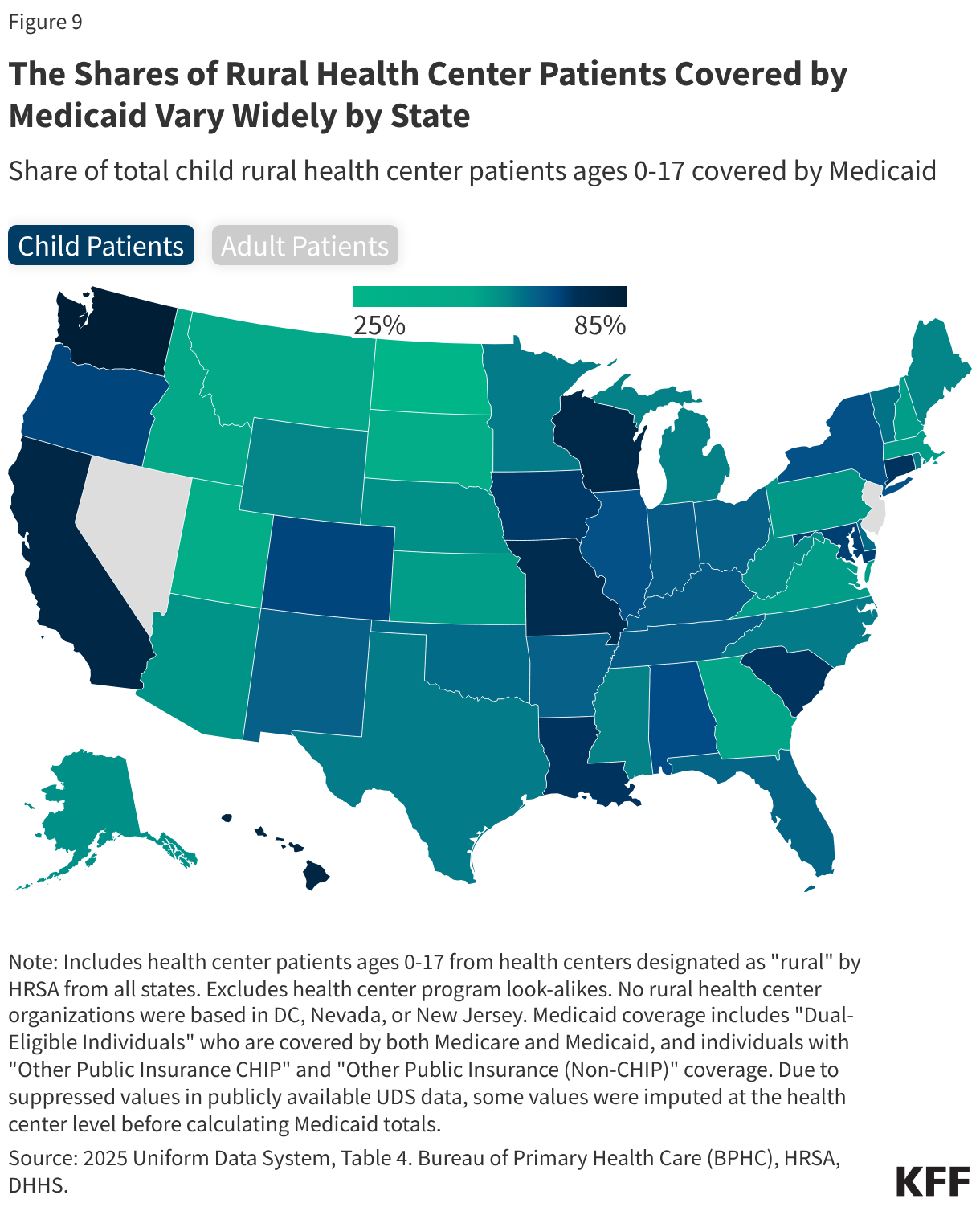
While Medicaid is an important source of coverage for rural health center patients, the share of child and adult rural health center patients covered by Medicaid varied widely by state in 2025 (Figure 9). Nationwide, about 1.7 million (66%) child rural health center patients ages 0–17 and 2.4 million (33%) adult rural health center patients ages 18 and older were covered by Medicaid and the Children's Health Insurance Program (CHIP), including dual-eligible health center patients who had both Medicare and Medicaid coverage. The share of child rural health center patients covered by Medicaid ranged from less than 50% in three states to more than 75% in five states. The share of adult rural health center patients covered by Medicaid ranged from less than 20% in eight states to more than 50% in five states.
Rural and Urban Health Center Financing
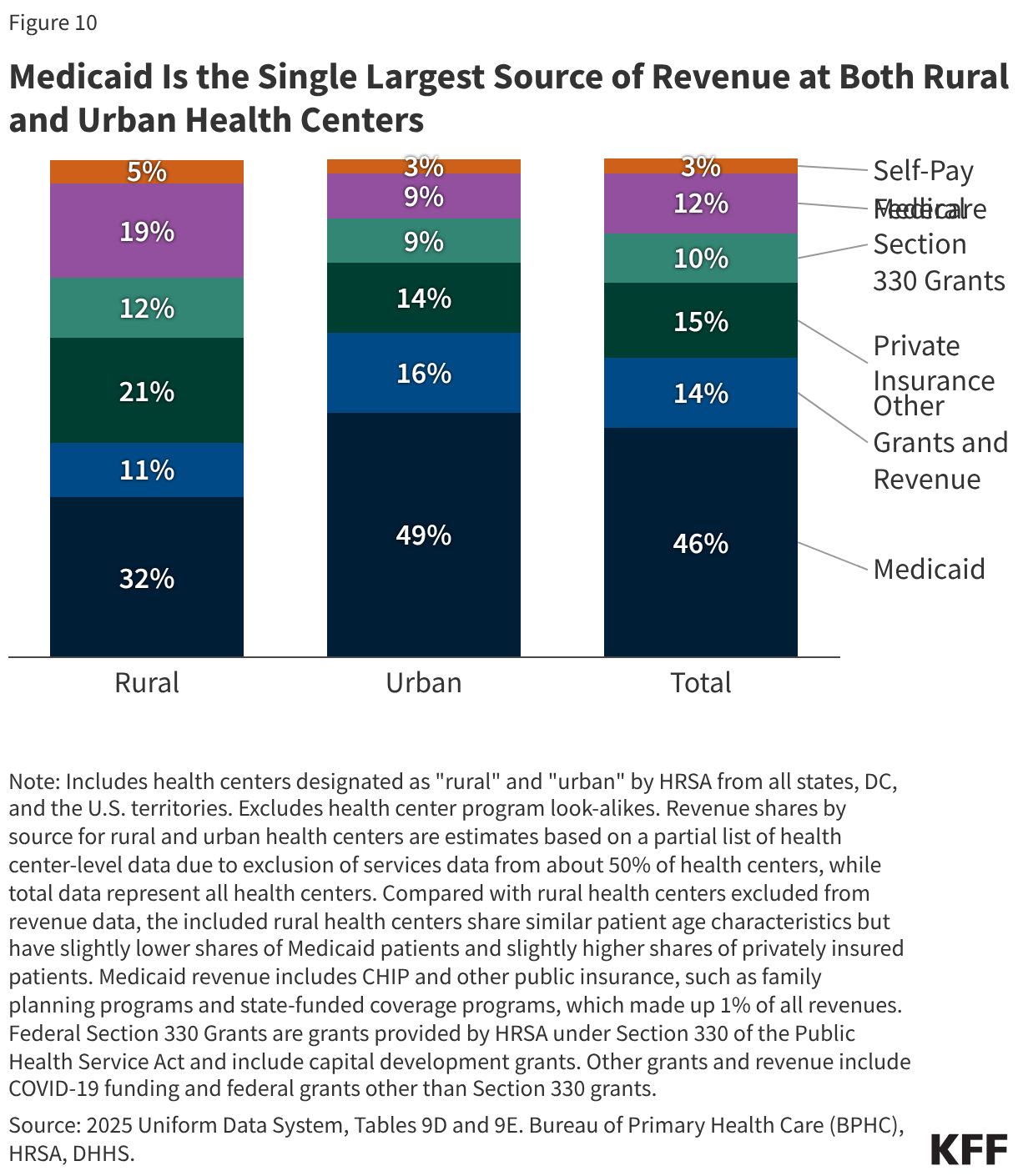
Medicaid was the primary source of revenue for both rural and urban health centers, accounting for about one-third (32%) of revenue among rural health centers compared with about half (49%) among urban health centers in 2025 (Figure 10). A greater share of revenue at rural health centers came from private insurance (21% vs. 14%) and Medicare (19% vs. 9%) compared with urban health centers. Differences in shares of revenue by payer source between rural and urban health centers reflect patterns of health coverage among health center patients in rural and urban areas. Federal Section 330 grant funding, which supports health centers’ role as safety-net providers, made up 12% of total revenue among rural health centers, a slightly higher share than the 9% for urban health centers.
Impact of Federal Policy Changes and Rural Health Transformation Grants
Changes to Medicaid included in the 2025 reconciliation law, including Medicaid work requirements and immigrant eligibility restrictions for federally-funded health coverage, along with expiration of ACA Marketplace enhanced premium tax credits will likely increase the number of uninsured rural health center patients. New Medicaid policies like mandatory work requirements and the requirement for states to conduct eligibility redeterminations every six months rather than annually for the ACA adult expansion population as well as Marketplace changes are expected to lead to some health center patients losing coverage. KFF estimated that the federal Medicaid spending reductions to Medicaid alone could be $137 billion over 10 years in rural areas, with the largest reductions occurring in states that have expanded Medicaid and have large rural populations. KFF analysis of federal data also showed that ACA Marketplace enrollment declined 12% as of May 2026 while premium payments rose sharply for many enrollees following the expiration of enhanced premium tax credits at the end of 2025. Premium payment increases and lapses in coverage due to rising ACA Marketplace premiums may disproportionately affect rural health center patients as they are more likely to have private health coverage compared with those at urban health centers. Increases in the share of uninsured patients at rural health centers are likely to exacerbate existing financial pressures and could lead to service cuts or limit service expansions.
While states may award funds from the Rural Health Transformation Program to select rural health organizations, it is unclear the extent to which these funds will offset revenue losses due to federal policy changes and spending cuts. Congress included $50 billion in the rural health fund for the Centers for Medicare & Medicaid Services (CMS) to distribute through state grants over a five-year period to help offset the impact of the law on rural areas and to address a wide range of priorities. Some states have allocated funding in their first-year approved budgets to address primary care access, workforce development, technology infrastructure, and other initiatives at rural health centers. However, it is unclear how much funding from the program will benefit rural health centers either directly or indirectly and the extent to which any funding rural health centers receive will offset revenue losses under the 2025 reconciliation law. More broadly, according to KFF analysis, it is unlikely that any state will receive more money from the rural health fund than it will lose from the historic cuts to federal funding for health care in the 2025 reconciliation law and from other federal policy changes since coverage impacts will grow over time and the grant funding ends after five years.